Tag: MANPADS

  • Military Knowledge: STARStreak Anti-Aircraft Missile

    Military Knowledge: STARStreak Anti-Aircraft Missile

    After STARStreak missile launch, the missile accelerates to more than Mach 4, making it the fastest short-range surface-to-air missile in existence. It then launches three laser beam-riding submunitions, increasing the likelihood of a successful hit on the target. The darts are guided to the target at a maximum distance of 1.5 meters from each other.

    Starstreak has been in service with the British Army since 1997 And in 2012 Thales relaunched the system as ForceSHIELD.

    The warhead of this missile consists of three darts. Each dart or submunition has 450 grams of PBX-98 explosive and the total weight of the darts is 900 grams. Each dart is 396 mm long and 22 mm in diameter. Each dart consists of a rotating fore-body, with two canard fins, attached to a non-rotating rear assembly with four fins. The rear assembly of each dart also houses the guidance electronics including a rearwards facing sensor.

    The submunitions on this missile is made from a tungsten alloy; Because tungsten has a density about three times that of steel, which increases its kinetic energy and range and height, and the impact of its fragments on the body of the target aircraft is greater. The reason why tungsten fragments are most effective is the high hardness of tungsten-based alloys, which is very suitable for penetrating the aircraft body.

    Delayed impact mechanism is used in darts. On impact with the target a delayed-action fuse is triggered, allowing the projectile to penetrate the target before the explosive warhead detonates. This activation mechanism is designed to fragment and maximise damage inside the target.

    STARStreak air defense missile performance

    The first stage rocket motor has a very short burning time; this launches the missile from the tube but burns out before leaving the tube to protect the operator. This is to prevent damage to the operator due to the high speed and temperature of the exhaust gases. Four metres away from the operator, when the missile is at a safe distance, the second stage motor fires. This rapidly accelerates the missile to a burn-out velocity exceeding Mach 4. As the second stage burns out, three dart sub-munitions are released. The three sub-munitions have enough kinetic energy to manoeuvre to meet a target evading at 9 g at 7,000 metres.

    In the new versions of this missile, the maximum effective firing range has been increased to more than 7 km and the maximum operating ceiling to 5 km.

    Variants of STARStreak missile:
    ATASK (Air To Air Starstreak) Variant: This type is made for shooting from a helicopter. This was developed in combination with McDonnell-Douglas and Lockheed-Martin electronics between 1995 and 1998 specifically for use with the AH-64 Apache. However, this type of missile has not yet entered service.
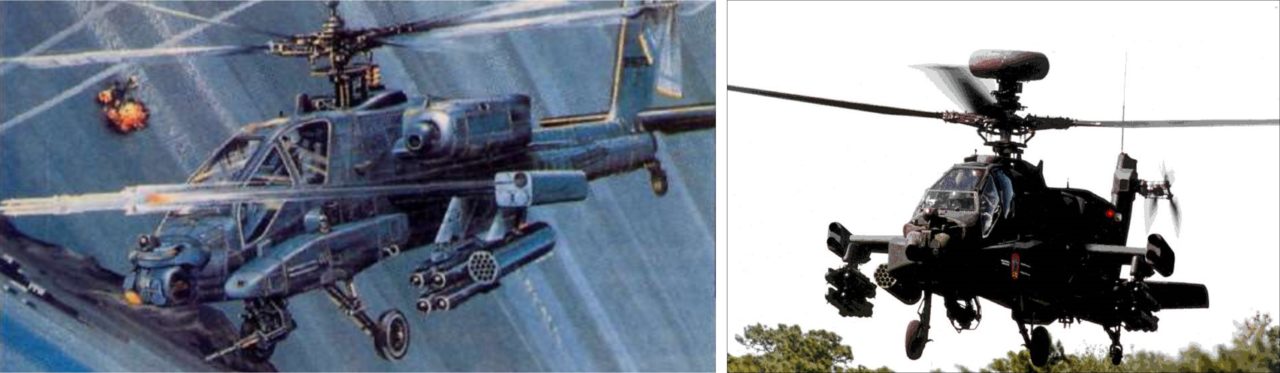
    ATASK (Air To Air Starstreak) Variant

    Lightweight Multiple Launcher (LML) Variant: The Lightweight Multiple Launcher can be mounted on a tripod as a fixed launcher or on a light vehicle such as a Land Rover or Humvee. This type holds three STARStreak missiles ready for firing. While STARStreak missiles are designed to target high-speed air targets, the LML adds the capability to defeat surface targets such as Light Armoured Vehicles, trucks and fixed installations, as well as aerial targets such as drones and helicopters. A very precise laser guidance system is also included in this system, which allows the operator to select target tracking modes manually or automatically.
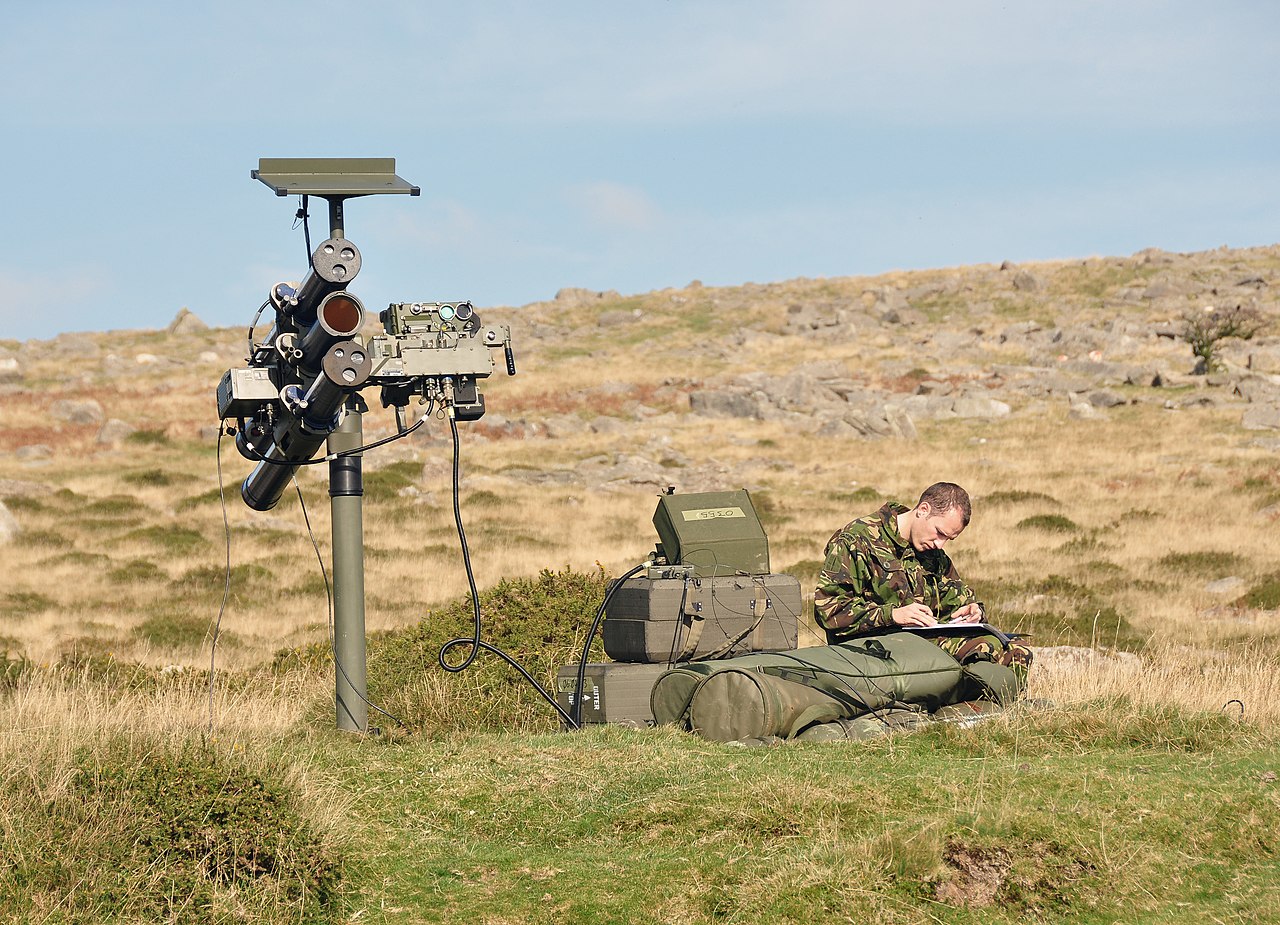
    Lightweight Multiple Launcher (LML) Variant

    RAPIDRanger Variant: RAPIDRanger is a lightweight, highly automated multi-missile launcher which can be fitted to most tracked and wheeled military vehicles. In this type, a four-round launcher is installed on various armored vehicles. RAPIDRanger can also be loaded with a range of missiles from Thales and other providers, adding the ability to attack ground targets such as armoured personnel carriers, static installations and platforms. The addition of an integral 360° surveillance sensor provides the RAPIDRanger with completely autonomous system operation for 24/7 force protection.
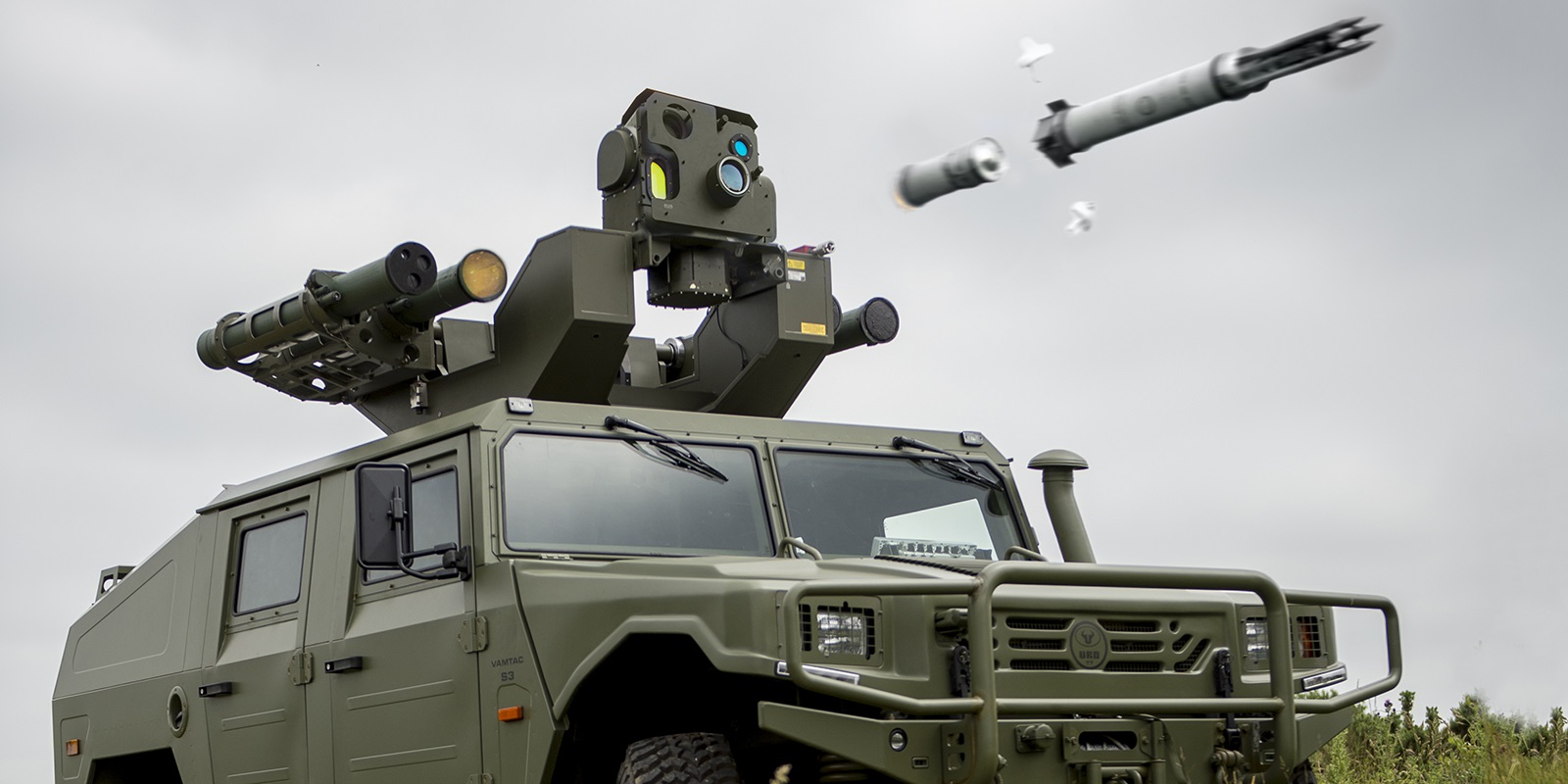
    RAPIDRanger Variant

    Seastreak Variant: Seastreak is a naval type of this missile. In this model, the CIWS (close-in weapon system), which includes 24 STARStreak missiles, is formatted in two blocks of 12 missiles. This system is used on warships to deal with short-range targets.
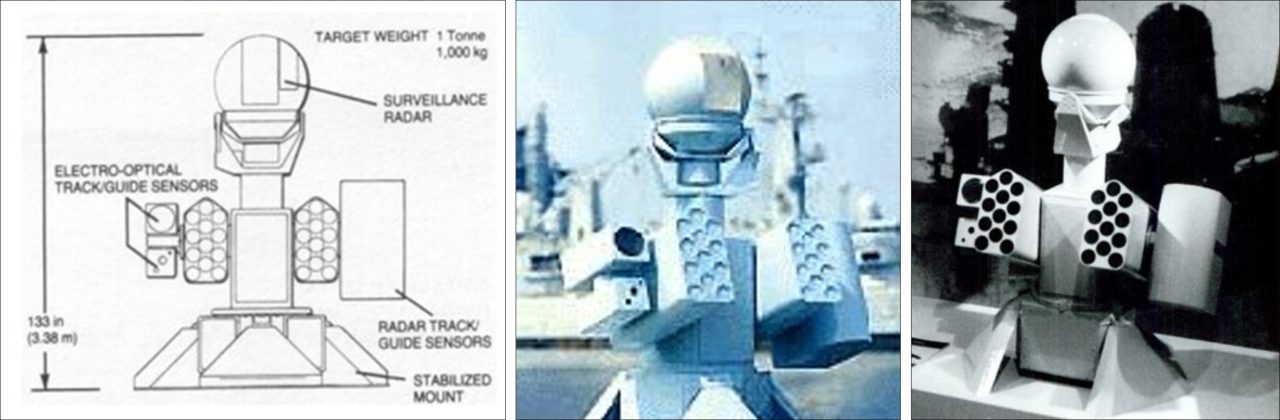
    Seastreak Variant

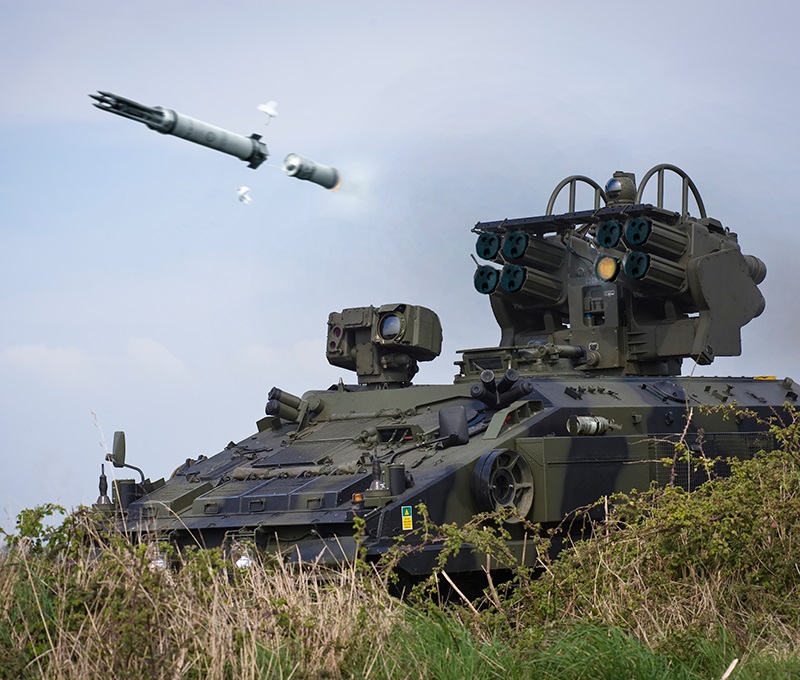
    Self-propelled high-velocity missile (SP HVM) Variant: In this type, an eight-round launcher with internal storage for a further 8 missiles is mounted on the Alvis Stormer armored vehicle.
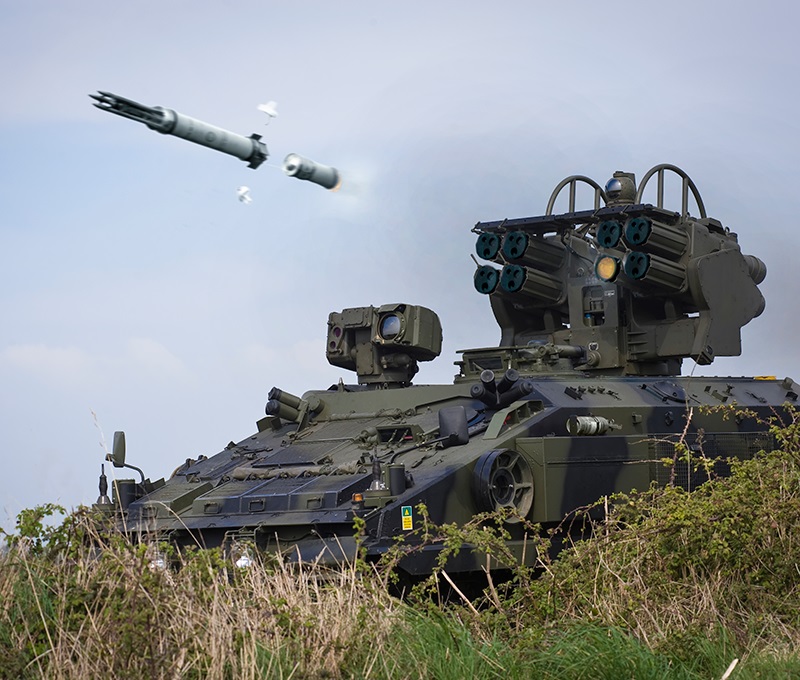
    Self-propelled high-velocity missile Variant

    Starstreak Avenger Variant: This system was built based on the needs of the US military in the early 1990s. In this type, the Starstreak missile launcher is installed on the Boeing Avenger vehicles replacing one pod of Stinger missiles with one pod of four Starstreak missiles. As a result, the vehicle has a quadruple pod of the Stinger missile and a quadruple pod of the Stinger missile.

    Starstreak Mark II Variant: This is an upgraded version of the Starstreak missile. In this type, the missile range has been increased to more than 7 km.
    THOR/Multi Mission System (MMS) Variant: This type has a four-round Starstreak missile launcher mounted on the Austrian Pinzgauer cross-country chassis.

    THOR/Multi Mission System Variant

    Starstreak anti-aircraft missile specifications:
    Length: 1.397 m
    Diameter: 13 cm
    Weight: 14 kg
    Range: 7 km
    Speed: Mach 4 +
    Flight ceiling: 5 km
    Guidance: SACLOS
    Origin: UK
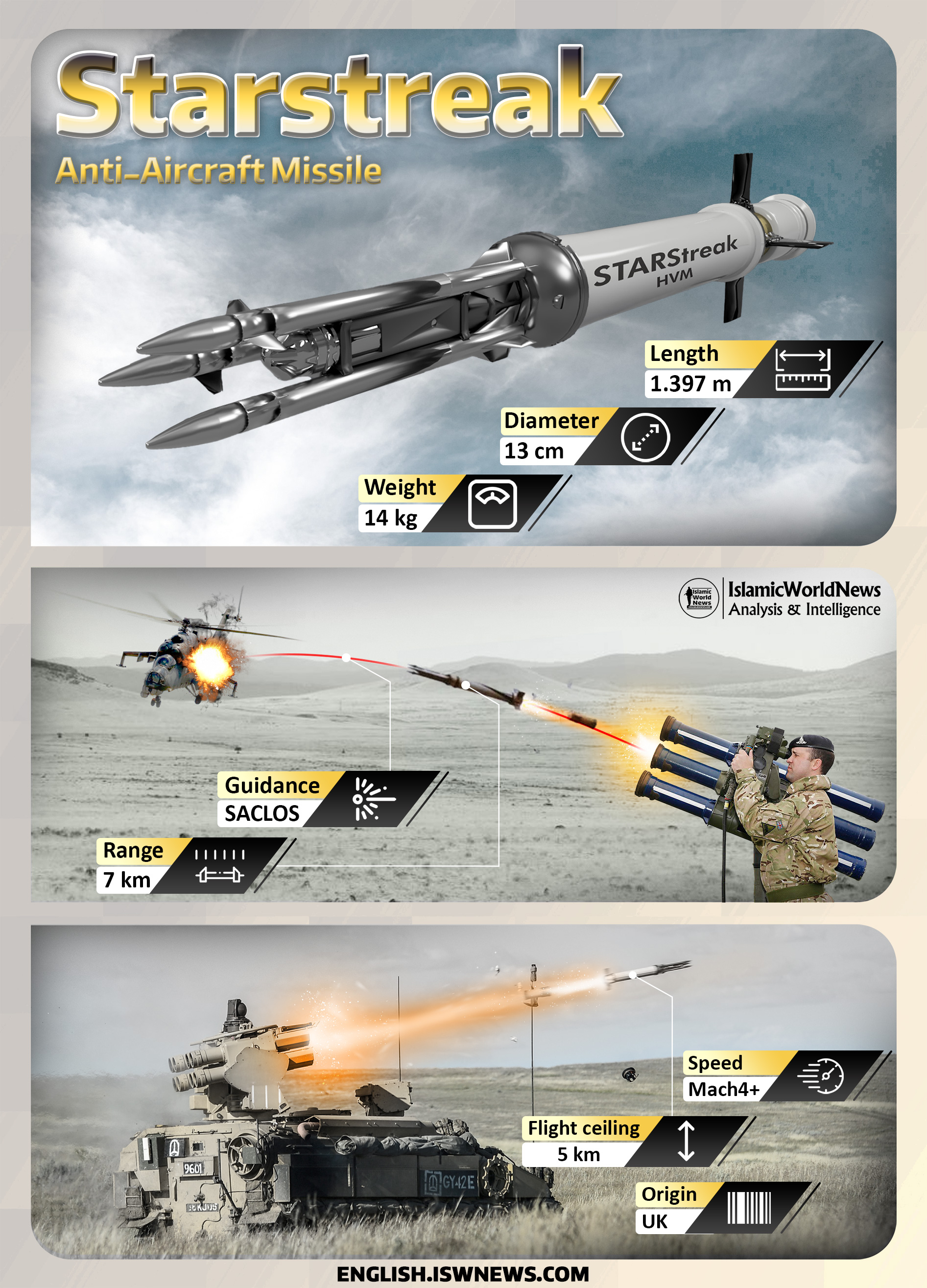
    Click to view full size

    “STARStreak Anti-Aircraft Missile” collection of posters in Arabic, Kurdish, Azeri, Russian, Persian for social media:

    Source:
    RAPIDRanger and LMLNG
    Starstreak

    Starstreak High-Velocity Missile (HVM)
  • Military Knowledge: M141 Bunker Defeat Munition

    Military Knowledge: M141 Bunker Defeat Munition

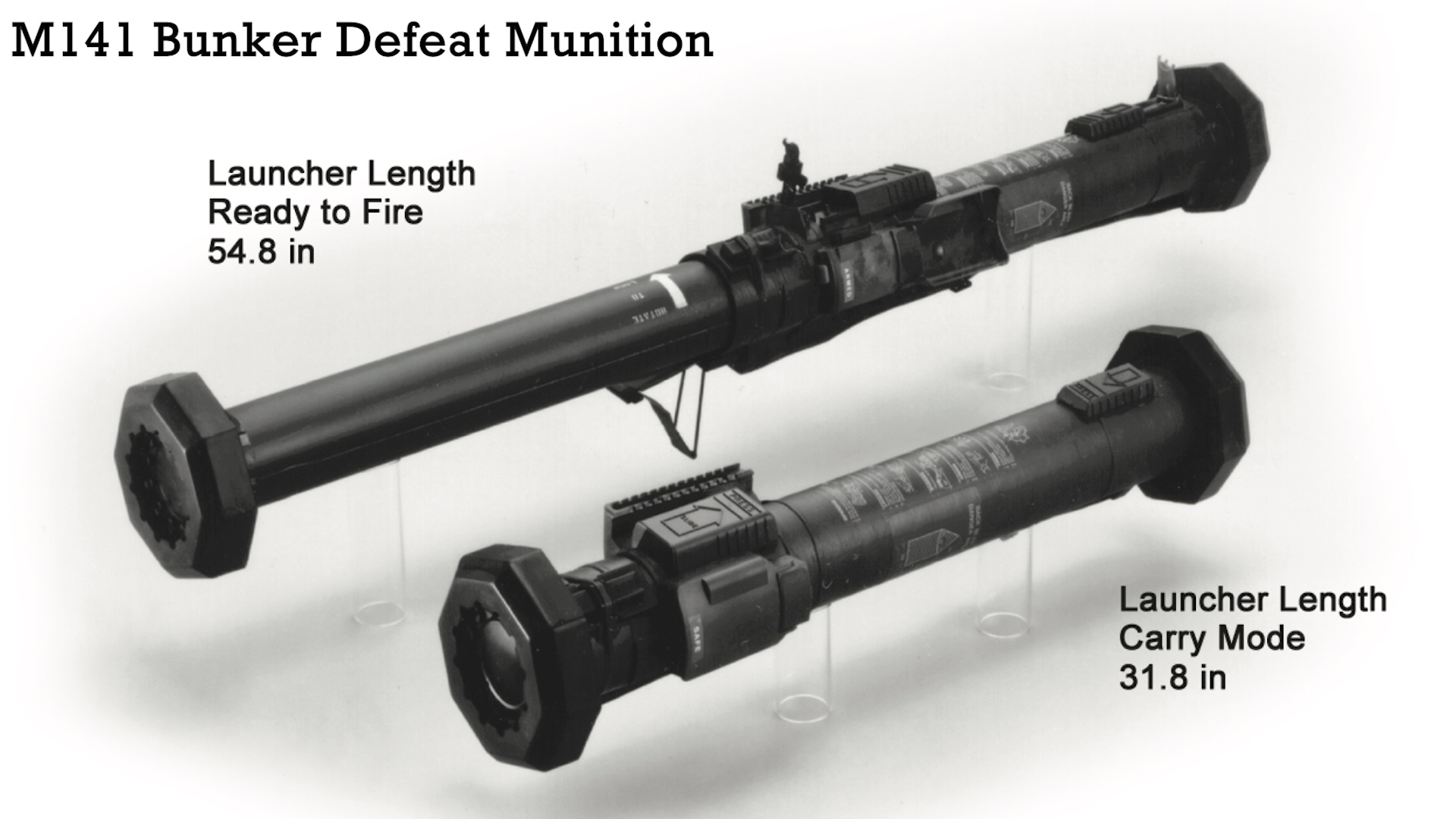
    M141 or SMAW-D (“Disposable”), is a single-shot, shoulder-launched weapon designed to defeat hardened structures. The weapon was designed as a modification of the United States Marine Corps Shoulder-launched Multipurpose Assault Weapon (SMAW) to fill the void in the United States Army inventory of a “bunker buster” weapon.

    The SMAW-D operates on the principle that the recoil created by launching the rocket is counteracted by a “backblast” of gases fired from the rear of the weapon like RPGs. This makes the SMAW-D inherently dangerous, especially in confined, urban areas, as is with all weapons of this design.

    M141 Bunker Defeat Munition has two configurations: a “carry mode” in which the launcher is 810 mm long, and a “ready to fire mode” in which the launcher is extended to its full length of 1,400 mm.

    The warhead is the same High Explosive, Dual Purpose (HEDP) as the United States Marine Corps SMAW. It is effective against masonry and concrete bunkers as well as lightly armored vehicles. The projectile is capable of penetrating up to 200 mm of concrete, 300 mm of brick, or 2.1 m of sandbags. The warhead is activated by a crush switch in its nose that is able to distinguish between hard and soft targets. On soft targets, such as sandbags, the detonation is delayed until the projectile is buried in the target, producing a devastating effect. The warhead detonates immediately on contact with hard targets.

    M141 Bunker Defeat Munition specifications:
    Weight: 1.7 kg
    Length: 810 mm
    In service (US Army): Since 1999
    Caliber: 83.5 mm rockets
    Range: 15-1000 meters
    Penetration rate in concrete: 200 mm
    Penetration rate in brick: 300 mm
    Penetration rate in sandbags: 2.1 meters

    Source: Wikipedia

  • What shoulder-launched systems are Ukrainian forces using to counter Russia?

    What shoulder-launched systems are Ukrainian forces using to counter Russia?

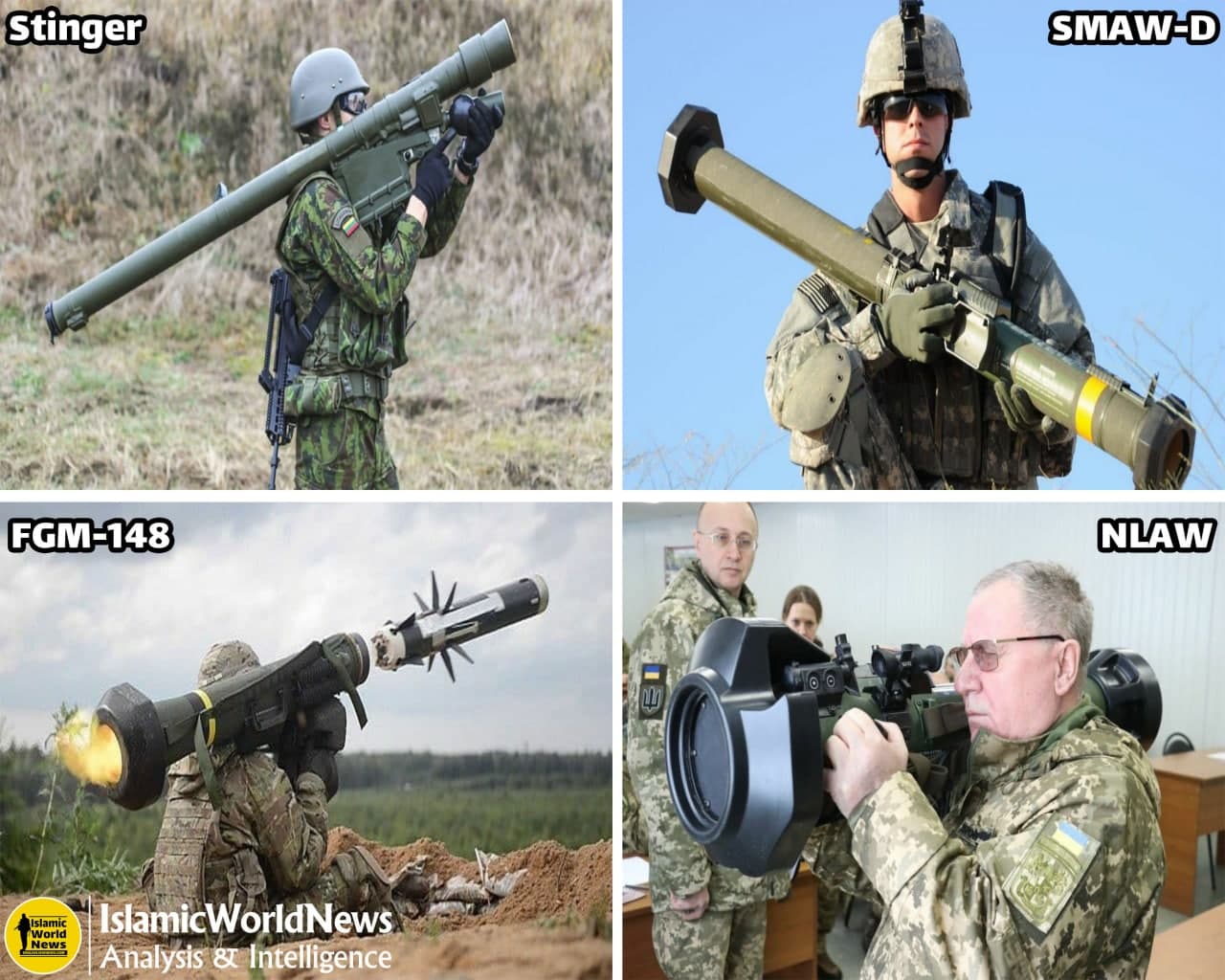
    Before the start of Russian military operation in Ukraine, as well as in the last two weeks, the United States and European countries, including Germany, the Netherlands and Lithuania, etc. sent man-portable air-defense systems and Anti-tank missiles to Ukraine. These missiles have played an important role in preventing the advance of Russian Army armored columns in Ukraine, and have so far caused significant damage to Russian armored vehicles and equipment.

    The most important systems donated by European countries to the Ukrainian army are the NLAW missile, the FGM-148 Javelin missile, the SMAW-D missile and the Stinger missile, the details of which are as follows:

    1- NLAW missile:
    The NLAW is a top attack anti-tank, fire-and-forget missile system. Its penetration is not exactly known, but its effective firing range is between 20 and 600 meters and with maximum firing range of 1000 meters. The missile operates in such a way that it explodes on top of the target and its fragments penetrate the target. The ability to fire from inside buildings makes this missile suitable for urban warfare. The NLAW is a joint product of Sweden and Britain. According to European sources, Britain has sent more than 2,000 such missiles to Ukraine.

    Read more: Military Knowledge: NLAW short-range anti-tank missile

    Next generation Light Anti-tank Weapon (NLAW)

    2- Javelin FGM-148 missile:
    The Javelin FGM-148 is a top attack anti-tank, fire-and-forget missile system made by United States. Its effective firing range is between 75 to 2500 meters. The penetration rate of this missile is between 600 to 800 mm on RHA. This missile also has the ability to fire from inside buildings and closed places. The United States and Lithuania have sent more than 2,000 such missiles to Ukraine.

    Read more: Javelin FGM-148 anti-tank missile

    Javelin FGM-148 missile system

    3- SMAW-D missile:
    The SMAW-D (Disposable), or M141 Bunker Defeat Munition is a single-shot, shoulder-launched weapon designed to defeat hardened structures. The effective firing range of SMAW-D missile is between 15 to 1000 meters. SMAW-D is made by the United States exclusively for its Army to fill the void in the United States Army inventory of a bunker buster weapon. The United States has delivered 100 such missiles to the Ukrainian army so far.

    Read more: Military Knowledge: M141 Bunker Defeat Munition

    SMAW-D missile system

    4- FIM-92 Stinger missile:
    The FIM-92 Stinger is an originally US-made man-portable air-defense system that operates as an infrared homing surface-to-air missile. Its effective range is between 180 to 3800 meters with a maximum range of 4800 meters. Germany has sent more than 500 of these missiles and the Netherlands more than 200 of these missiles to Ukraine.

    Read more: Military Knowledge: FIM-92 Stinger MANPADS

    FIM-92 Stinger missile system

    PS: The date of this text is March 1, 2022, and the number of missiles donated to Ukraine will be higher after this date.