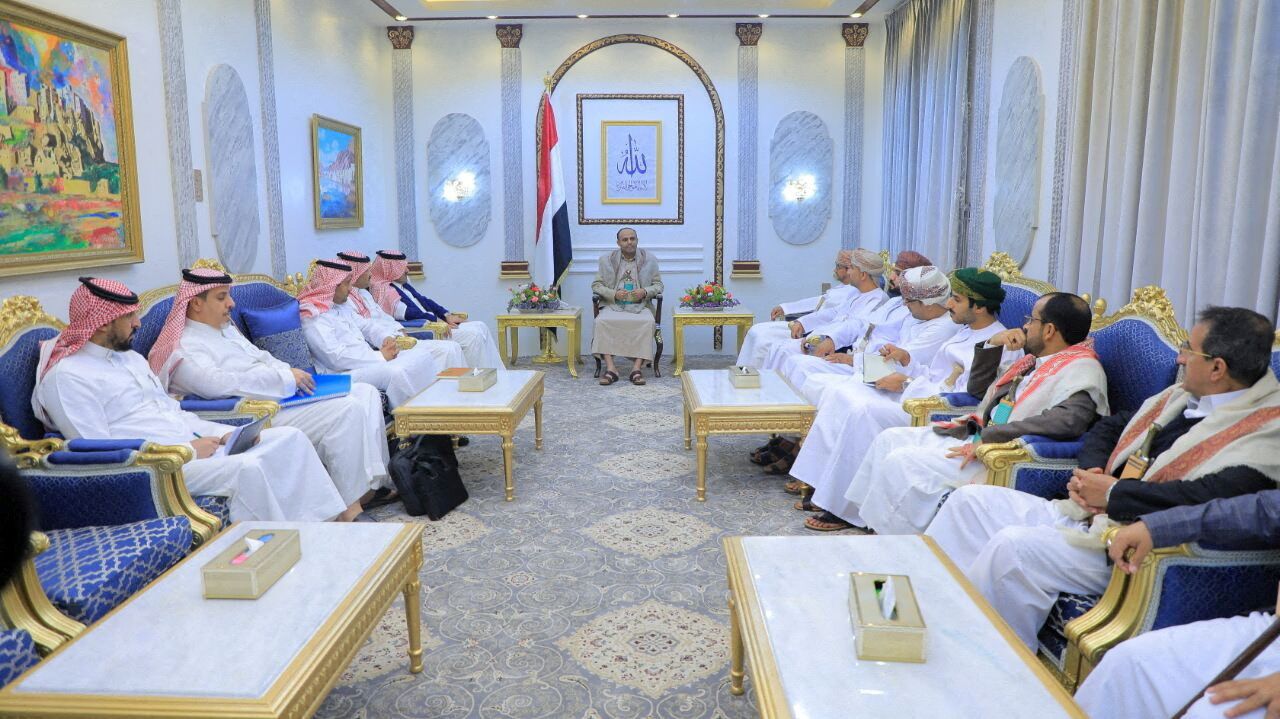
In a joint statement, the committee expressed support for the naval forces of the Saudi-backed Yemeni government and confirmed its commitment to strengthening the Coast Guard’s maritime security, particularly in intercepting arms and narcotics shipments.
The formation of this committee follows the September 16 meeting in Riyadh, where these states, along with representatives from China, Australia and Persian Gulf countries convened. At that earlier session, Saudi Arabia and the UK sought to secure China’s and other nations’ backing for long‑term security commitments and capacity‑building of Yemen’s Coast Guard.
However, the second meeting revealed that only certain regional and Western allies joined the program. These are the same parties whose shipping and economies have suffered heavy losses due to Yemeni armed forces’ naval operations against Israel.
Al-Mashat also urged Saudi Arabia to move beyond de-escalation and toward ending the war, blockade, and occupation, while fulfilling its commitments. He warned against Riyadh’s alignment with U.S. interests that serve Israel’s agenda.
This recurring stance reflects Yemen’s view that the recent conflict between the Resistance Axis and Israel is a key reason for stalled negotiations with Saudi Arabia following the 2022 ceasefire. From Yemen’s perspective, Saudi Arabia interprets Iran and the Resistance’s performance in the war as a sign of weakness, reinforcing its own position and making it unwilling to honor previous concessions or support the formation of a unified Yemeni government.
The initiative was unveiled during a summit hosted by the Saudi Foreign Ministry in Riyadh, attended by representatives from over 35 countries—including the U.S., UK, Canada, Australia, China, Japan, the European Union, Gulf Arab states, and Yemen’s exiled government.
British Ambassador to Yemen, Abdo Sharif, explained that the goal of this maritime security partnership is to address serious threats such as smuggling and piracy, while also promoting regional stability and safeguarding global trade routes.
Under the ten-year plan, participating nations will provide financial aid and military equipment to enhance the capabilities of Yemen’s coast guard. Saudi Arabia has taken the lead by pledging $4 million in aid, along with a package of training and military gear for the Yemeni forces.
The initiative, titled “Partnership for Yemen’s Maritime Security,” is being spearheaded by Saudi Ambassador Mohammed Al Jaber and British Ambassador Abdo Sharif. Despite broad international participation in the launch event, substantial military and financial support is unlikely to materialize within the current calendar year. However, growing economic pressure from the naval blockade in the Red Sea and Gulf of Aden may eventually compel the EU and other U.S.-Israeli allies to take more decisive action in Yemen.
Over the past two years, the Red Sea and Gulf of Aden have become focal points for Yemeni armed forces targeting commercial and military vessels linked to Israeli, American, and British interests. These operations—carried out in solidarity with the Palestinian cause—have included more than 215 maritime attacks using ballistic missiles, cruise missiles, drones, and explosive-laden unmanned surface vessels.
Khalid bin Salman bin Abdulaziz Al Saud will be the highest-ranking official in the Saudi royal family to visit Iran in recent years.
His visit to Iran these days certainly carries an important message and is considered a very important event. In this meeting, views will definitely be exchanged on the Iran-US negotiations and perhaps solutions will be proposed.
▫️It can also be speculated that Saudi Arabia is worried about the new sedition of the UAE and the US to resume ground operations against Ansarullah in Yemen and is trying to distance itself from this issue. They have tasted the bitter consequences of aggression against Yemen in the past…
Kurilla met with General Fayyad bin Hamed Al-Ruwaili, Chief of Staff of the Saudi Armed Forces, and other Saudi military commanders to discuss security issues, mutual commitment, and joint cooperation to address evolving threats in the region. They emphasized the importance of joint military maneuvers and the strategic partnership between their countries.
Specifically, these terms refer to the issue of “Yemen.” It seems that Kurilla and Al-Ruwaili discussed the upcoming US operations against Yemen and the need for Saudi cooperation against Ansar Allah.
Kurilla also met with Lieutenant General Saghir bin Aziz, Chief of Staff of the Armed Forces of the resigned Yemeni government (aligned with the Saudi coalition), in Riyadh. They focused on strengthening security cooperation, combating Ansar Allah, and enhancing the operational capacity.
These discussions suggest that the United States, in exchange for providing military weapons to the resigned Yemeni government, seeks intelligence cooperation and participation in ground attacks on Ansar Allah positions.
Kurilla’s visit to Riyadh marks the beginning of a comprehensive and decisive plan to create a coalition against Ansar Allah. Airstrikes by the Israeli army and the American-British coalition against Yemen have had limited impact on reducing the operations of Yemeni armed forces against Israel. The United States is aiming for increased attacks on Yemen by forming a new coalition with Saudi Arabia and the resigned Yemeni government.
Border attacks by Saudi forces in Saada province have been a persistent issue since the onset of the Yemeni war and the ceasefire that began three years ago. The Saudi government claims that Yemenis should refrain from approaching their southern borders due to security concerns. This characterization comes at a time when many villages are situated along the northern borders of Saada, where numerous African migrant workers are employed.
Some domestic media outlets, due to their lack of knowledge over developments in Yemen, have mistakenly reported these attacks as the beginning of a ground offensive against Yemen, attributing them to American and Israeli plans. However, these attacks are unrelated to such issues; they are merely violations of the ceasefire and exacerbate border tensions.
A Yemeni soldier named Mohammed Saleh Hassan Al-Arousi, who is aligned with the Saudi-backed government of Hadi, opened fire on Saudi coalition soldiers at a training camp in the city of Seiyun. He killed two senior Saudi army officers, injured another, and then fled the scene.
This attack happened while the Saudi soldiers were in sports training.
The Security and Police Department of Hadhramout has set a $15,000 reward for arresting or providing information about the assailant’s whereabouts.
The bodies of the Saudi officers who were killed have been transported to Riyadh.
Let’s scrutinize why the nature of the resigned government of Yemen is illegal and the Saudi-led coalition’s operations in Yemen are considered an invasion.
A few days ago, the [Persian] Gulf Cooperation Council, led by Jassim Mohammed Al-Budaiwi, the Secretary-General of the council, traveled to the city of Aden in Yemen. This trip was the first visit by officials of this council to Yemen after 2014. In this meeting, Al-Budaiwi emphasized an issue that is the root cause of the crisis and lack of progress in Yemen’s negotiations, and that issue is nothing but the three references.
The three references include the 2011 [Persian] Gulf Cooperation Council initiative, United Nations Security Council Resolution 2216, and national dialogues recognized by Arab countries as a reference for resolving the Yemeni crisis. However, these references are not solution to the Yemeni crisis but have become a major obstacle to advancing peace negotiations. To clarify the aspects of these three references, we explain them in general:
1- The 2011 [Persian] Gulf Cooperation Council initiative:
This [Persian] Gulf Cooperation Council initiative was presented on April 3, 2011, by the United States and Saudi Arabia to resolve the Yemeni crisis. This initiative is also known as the “Gulf Initiative,” according to which Ali Abdullah Saleh, the then-president of Yemen, was given a 30-day deadline to step down and transfer power to his deputy, Abd Rabbuh Mansur Hadi. Mansur Hadi also had 60 days to form an interim government and prepare the ground for power transfer through elections. This initiative did not end with the resignation of Ali Abdullah Saleh, and Abd Rabbuh Mansur Hadi became the president of Yemen with the support of Arab countries in a one-person election. The seizure of power by the Yemeni revolution and the intervention of Arab countries in the affairs of this country provoked the anger of the Yemenis and led the Ansar Allah movement fighters towards capital Sanaa. Eventually, the Ansar Allah forces entered Sanaa by breaking the defensive lines of Abd Rabbuh Mansur Hadi’s supporters and took control of the government. After the unsuccessful political negotiations between the two sides, Mansur Hadi went to parliament on January 22, 2015 and resigned from his position. A month after his resignation, he was interrogated by intelligence and judicial authorities and finally fled from the presidential palace in Sanaa to Aden on February 21, 2015. This move was followed shortly with an invasion by the Saudi-led coalition, which complicated the political crisis in Yemen with the foreign invasion.
2- United Nations Security Council Resolution 2216:
On April 14, 2015, the United Nations Security Council, without mentioning the Saudi-led coalition’s invasion of Yemen, declared the prohibition of sending any weapons to the Ansar Allah fighters and Ali Abdullah Saleh’s forces in a resolution. This resolution also called on the Ansar Allah movement to hand over power and retreat from Sanaa as well as other cities in Yemen. The UN Security Council also approved the inspection of all ships heading to the war-stricken Arab country. It also banned travel for Abdul-Malik Badruldeen al-Houthi as well as Ahmed, the senior son of Ali Abdullah Saleh.
3- National dialogues:
Following the Saudi-led coalition’s invasion of Yemen, Yemeni national dialogues in Sanaa were halted, and prominent factions such as the al-Islah Party (Yemeni Congregation for Reform), and southern parties and so on, could raise the banner of opposition to the central government in Sanaa due to the support they received from Saudi Arabia, the United Arab Emirates (UAE), and other Arab countries. Following negotiations by the Ansar Allah movement in Sanaa, various political parties that were led by the General People’s Congress under the leadership of Ali Abdullah Saleh united with the Yemeni National Salvation Government. This move weakened the opposition; so, the Ansar Allah movement, after months of heavy defense, was able to repel the Saudi-led coalition’s attacks on Sanaa and Al Hudaydah Governorate in a short period as well as cleanse a large part of the areas under the control of the Yemeni government in Marib, Al Jawf, Saada, and Al Hudaydah governorates.
Over the recent years, many events, such as Ali Abdullah Saleh’s betrayal of the Ansar Allah movement, the Stockholm Agreement, the assassination of Saleh Ali al-Samad, the head of the Supreme Political Council of the National Salvation Government, etc., have changed the course of developments in the Arab country. However, none of these events, like the Ansar Allah’s missile-drone operations against deep areas in both Saudi Arabia and the UAE, had a significant impact on peace negotiations, and ultimately a UN-mediated ceasefire between the Ansar Allah movement and the Saudi-led coalition was established in April 2022.
Despite the establishment of a ceasefire and the Ansar Allah’s efforts to engage in talks with the Islah Party and southern factions in various incidents, intra-Yemeni political dialogue have not been held at any time or place. The main reason for this is the opposition groups’ dependence on Saudi Arabia and the UAE, as well as recent US interventions in Yemen’s developments.
Therefore, the three references are chiefly a hindrance to peace negotiations and the unity of different groups in Yemen rather than a solution to the Yemeni crisis. The [Persian] Gulf Cooperation Council’s initiative can be seen as direct interference in the affairs of an independent country, and UN Security Council Resolution 2216 is interpreted as supporting Arab and Western countries’ goals in Yemen. When a political figure speaks against the three references, it can be inferred that there is no intention to resolve the Yemeni crisis, and some are trying to escalate the war in the country.
In addition to these issues, there are numerous obstacles to Yemeni negotiations that prevent them from reaching a conclusion. These obstacles include US pressure on Saudi Arabia, the United Nations’ involvement in Yemen’s internal affairs, the dependence of Yemeni factions on Saudi Arabia and the UAE, the separatist tendencies of some southern parties with British support, the presence of terrorist groups particularly Al-Qaeda in occupied areas, the disregard of global powers such as Russia and China for Yemen’s developments, internal issues such as the lack of payment of salaries to Yemeni employees from oil revenues, and the ongoing blockade of Yemen.
As a result of preventing the Ansar Allah movement from exporting Yemen’s oil and gas, the resigned government’s budget has reportedly faced a 50% deficit, which will put significant financial pressure on their Saudi and Emirati supporters. International organizations under the auspices of the United Nations, especially the World Food Program, have also significantly reduced their aid to Yemen, forcing UN representatives to hold a special session in New York to collect humanitarian assistance.
Overall, Yemeni peace negotiations, in addition to internal differences and challenges, have become entangled in a more significant regional issue. The success of the Shia Muslims in gaining control of the Yemeni government and the Saudi-led coalition’s invasion of the Arab country with Western support led to Yemen becoming a proxy war between Iran and the United States. Nowadays, this war has entered a new phase with the agreement between Iran and Saudi Arabia, which has led to the resolution of some issues such as the maritime and aerial blockade of Yemen. However, fundamental differences remain, and there is still a long way to go in starting discussions on the formation of a united government and the path to achieving lasting peace.
As a result of the Saudi-led coalition’s artillery and drone attacks on Shada’a, Munbah, Razih, Qatabir, and Al Ghumr in the northwestern and western parts of Saada Governorate during the first four days of September 2023, a Yemeni civilian and an African immigrant were killed, and three other African immigrants were injured.
Meanwhile, the Yemen Executive Mine Action Centre (YEMAC) has also announced that cluster bombs and mine explosions by the Saudi-led coalition in Yemen have killed 37 people, including 12 children, from the beginning of 2023 until now.
Saudis’ scattered attacks, mine explosions, and unexploded bombs from the war in Yemen continue to take civilian lives.
The Saudi-led coalition and the Yemeni government declared a ceasefire in all fronts in an unofficial agreement and are negotiating for peace with the mediation of the United Nations and Oman.
The United Nations has also suspended financial aid to Yemen’s mine clearance executive agencies for the second consecutive month for unknown reasons and it has called for Yemeni cooperation in political cases.
The Human Rights Office in Taiz Governorate slammed the heinous crime and considered it as part of the series of crimes committed by the Saudi-led coalition’s mercenaries in this governorate.
Despite the ceasefire in Yemen came into effect from April 2, 2022, the southern front of Al-Hudaydah and Taiz governorate have experienced ceasefire violations and attacks by forces affiliated to the Saudi-led coalition.
Also, rocket attacks and shootings in border villages of the Munbah and Shada districts in the north of Saada Governorate by the Saudi-led forces have been repeated on a daily basis and led to the martyrdom and injury of dozens of Yemeni civilians.
1- Saudi F15S fighter on March 27, 2015, Gulf of Aden 2- Saudi AH-64D helicopter on May 7, 2015, Al-Boqa, Saada area 3- Moroccan F16C fighter on May 10, 2015, Wadi Nashur 4- Saudi Seeker400 UAV, July 3, 2015, Al-Boqa 5- Saudi AH-64D helicopter, August 5, 2015, Jizan 6- Saudi AH-64D helicopter, August 21, 2015, Jizan 7- UAE Schiebel Camcopter S-100, August 25, 2015, Makiras, Abyan Province 8- UAE Schiebel Camcopter S-100, October 25, 2015, Al-Abdiyah, Marib Province 9- Bahrain F16C fighter, December 30, 2015, Jizan 10- UAE MQ-1 Predator UAV, January 19, 2016, Sanaa 11- Saudi Selex ES Falco UAV, February 3, 2016, Midi, Hajjah province 12- UAE Schiebel Camcopter S-100, February 27, 2016, Dhubab, Taiz province 13- UAE Mirage 2000 fighter, March 13, 2016, Al-Bariqa, Aden 14- UAE AH-64D UAE helicopter, June 12, 2016, Gulf of Aden 15- UAE NSA407 helicopter, June 13, 2016, Al-Bariqa, Aden 16- Saudi AH-64D helicopter, July 25, 2016, Beer Al-Maraziq, Al-Jawf 17- Saudi Seeker400 UAV, August 16, 2016, Kataf, Saada province 18- UAE Wing Loong UAV, September 26, 2016, Kholan, Sanaa province 19- Saudi AH-64D helicopter, December 30, 2016, Najran 20- US V-22 Osprey Helicopter, January 29, 2017, Al-Baydha province 21- Saudi SA 365F Helicopter, January 30, 2017, Al-Hudaydah coast (on the Al-Madinah frigate) 22- UAE MQ-1B Predator UAV, February 14, 2017, Al-Manin, Marib province 23- Jordanian F16A fighter, February 24, 2017, Najran 24- Saudi S-70A helicopter, April 18, 2017, Marib province 25- UAE Schiebel Camcopter S-100, June 21, 2017, Dhubab, Taiz province 26- UAE AH-60L helicopter, August 11, 2017, Wadi Amaqin, Shabwa province 27- Saudi Seeker 400 UAV, August 15, 2017, Al-Boqa, Saada province 28- US UH-60M helicopter, August 25, 2017, Gulf of Aden 29- UAE AT-802U aircraft, September 11, 2017, Gulf of Aden 30- Saudi Eurofighter Typhoon fighter, September 13, 2017, Abyan province 31- US MQ-9 UAV, October 1, 2017, Sanaa 32- UAE AH-64D Helicopter, October 17, 2017, Khab and Shaaf, Jawf province 33- Saudi S-70A helicopter, November 5, 2017, Abha 34- Saudi Panavia Tornado fighter, January 7, 2018, Kataf, Saada province 35- Saudi F-15S fighter, March 21, 2018, Saada province 36- Saudi CH-4B UAV, July 12, 2018, Al-Rabu’ah 37- Saudi Panavia Tornado fighter, July 12, 2018, Asir 38- Saudi CH-4B UAV, August 30, 2018, Jizan 39- UAE Schiebel Camcopter S-100, September 2, 2018, Al-Jah, Hudaydah province 40- Saudi AH-64D helicopter, September 14, 2018, Al-Mahra province 41- Seeker 400 UAE UAV, November 26, 2018, Al-Jabaliya, Hudaydah province 42- Saudi CH-4V UAV, December 23, 2018, Saada province 43- US MQ-9 UAV, March 23, 2019, Hamdan, Saada province 44- Saudi CH-4B UAV, April 11, 2019, Hadhramaut province 45- UAE Wing Loong, April 19, 2019, Saada province 46- UAE RQ-1E Predator UAV, May 15, 2019, Bani Matar, Sanaa 47- UAE Schiebel Camcopter S-100, June 2, 2019, Hays, Hudaydah area 48- US MQ-9 UAV, June 7, 2019, Al-Zaafran, Hudaydah province 49- US MQ-9 UAV, August 20, 2019, Al-Dhamar province 50- UAE Shiebel Camcopter S-100, November 1, 2019, Raas Issa, Hudaydah province 51- Saudi AH-64D helicopter, November 29, 2019, Asir 52- Saudi Wing Loong UAV, November 30, 2019, Hayran, Hajjah province 53- Saudi Luna X2000 UAV, December 4, 2019, Saada province 54- Saudi Karayel UAV, December 30, 2019, Al-Salif, Hudaydah province 55- Saudi CH-4V UAV, January 7, 2020, Khab and Shaaf, Jawf province 56- Saudi Panavia Tornado fighter, February 14, 2020, Jawf province 57- Saudi RQ-20 UAV, August 2, 2021, Haradh, Al-Hajjah province 58- Saudi CH-4B UAV, December 21, 2020, Marib Province 59- Saudi Karayel UAV, January 6, 2021, Jawf province 60- Saudi CH-4B UAV, February 12, 2021, Marib province 61- Saudi Karayel UAV, March 7, 2021, Jawf province 62- Saudi CH-4B UAV, March 23, 2021, Sarwah, Marib province 63- Saudi Wing Loong UAV, May 21, 2021, Najran 64- Saudi CH-4B drone, May 23, 2021, Jawf province 65- Saudi Scan Eagle UAV, June 19, 2021, Marib province 66- Saudi Scan Eagle UAV, June 21, 2021, Marib province 67- Saudi Scan Eagle UAV, August 14, 2021, Madghal, Marib province 68- Saudi Wing Loong UAV, September 13, 2021, Kataf, Saada province 69- Saudi Scan Eagle UAV, September 27, 2021, Madghal, Marib province 70- Saudi CH-4 UAV, October 6, 2021, Jubah, Marib province 71- Saudi RQ-20 UAV, October 7, 2021, at the Jizan border 72- Saudi Scan Eagle UAV, November 9, 2021, Al-Juba, Marib province 73- Saudi Scan Eagle UAV, November 13, 2021, Al-Juba, Marib province 74- Saudi CH-4 UAV, December 1, 2021, in Al-Amshia area, Amran province 75- Saudi Scan Eagle UAV, December 4, 2021, Al-Juba, Marib province 76- Saudi Scan Eagle UAV, December 8, 2021, Al-Juba, Marib province 77- Saudi CH-4 UAV, December 8, 2021, Al-Wadi, Marib province 78- Saudi Scan Eagle UAV, December 10, 2021, Sarwah, Marib province 79- Saudi CH-4 UAV, December 14, 2021, Usaylan, Shabwa province 80- Saudi Scan Eagle UAV, December 16, 2021, Al-Wadi, Marib province 81- Saudi Scan Eagle UAV, December 25, 2021, Yatmah, Khab and Al-Shaaf, Al-Jawf province 82- UAE Wing Loong UAV, January 5, 2022, Usaylan, Shabwa province 83- UAE Wing Loong UAV, January 11, 2022, Ain Shabwah province 84- Saudi Scan Eagle UAV, January 29, 2022, Al Juba, Marib Province 85- Saudi CH-4 UAV, February 10, 2022, Harad, Hajjah province 86- UAE MQ-1 UAV, February 25, 2022, Al-Jawf province 87- Saudi Scan Eagle UAV, February 25, 2022, Al Juba, Marib Province 88- Saudi Scan Eagle UAV, February 28, 2022, Harad, Hajjah province 89- Saudi Scan Eagle UAV, March 8, 2022, Harad, Hajjah province 90- Saudi Scan Eagle UAV, March 29, 2022, Al-Wadi, Marib province 91- Saudi CH-4 UAV, May 4, 2022, Harad, Hajjah province 92- Saudi Karayel UAV, May 21, 2022, Hayran, Hajjah province 93- Saudi CH-4 UAV, May 23, 2022, Sana’a, Sana’a province 94- Saudi Wing Loong UAV, May 24, 2022, Kataf, Saada province
(Last update on 16 January 2023)
Click to view full size
“Saudi Coalition and US Aircraft Losses in Yemen War” poster in Persian, Arabic, Kurdish, Azerbaijani, Russian:
Following the heavy and barbaric attacks of the Saudi coalition warplanes on Yemen, yesterday morning, Saada prison was also targeted by the Saudi coalition warplanes. According to the latest reports from Saada, more than 300 people were killed and injured during the attack.
The death toll from the Saudi coalition airstrike on a prison in the city of Saada has risen to 87, with more than 265 wounded, according to the Yemeni Ministry of Health.
The attack comes as Saudi coalition airstrikes in al-Hudaidah and Imran provinces also killed five people and wounded more than 19, including children.
Pictures of the Republic Hospital and Saada Prison