Tag: Saudi

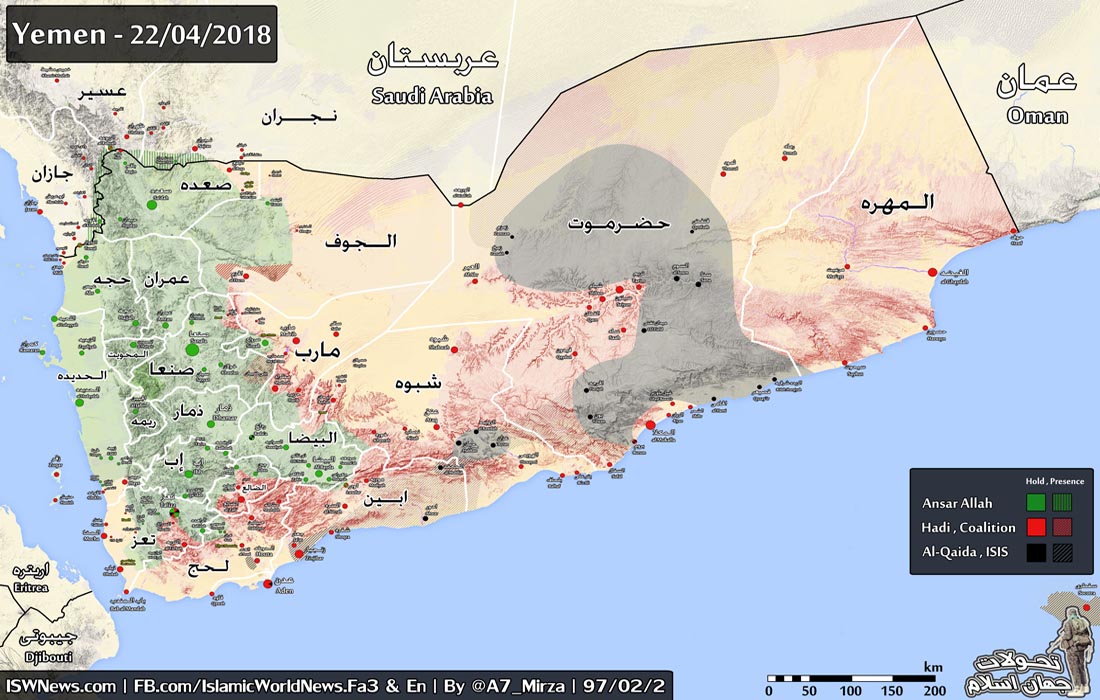
  • Monthly Report on Yemen’s developments 22 April 2018; Map Update

    Monthly Report on Yemen’s developments 22 April 2018; Map Update

    In this regard, the UAE, with help of Tariq Saleh(nephew of Ali Abdullah Saleh) and organizing his troops, wants to achieve full control over the south of Yemen.


    This goal follows two purposes:

    1- Attack on Sana’a and bring power to one of the Saleh’s family member
    2. The separation of southern Yemen (Perhaps this is the main reason for the southerners to welcome the war with AnsarAllah).


    For this purpose, on the other hand, another operation is under way to seize al-Hudaydah, which will cut off Ansarullah’s access to the sea and will lead to complete siege.

    AnsarAllah has recently shown the green light to the UN representatives to resume talks, but they have some concerns. AnsarAllah preconditions for negotiations is the cease-fire and end of Saudi bombardment on Yemen. But so far, the results of these consultations have been nothing but just expression of the optimism from the United Nations representatives.


    About the Sa’adah and Sana’a fronts, due to the unstable and slow progress of the Saudi coalition, there are no conclusive results. But with the time passing and the prolongation of the war with these conditions (the siege and spreading of diseases and bombardment of residential areas, etc.) it is not in favor of AnsarAllah.


    In the last month, attacks by the Yemeni Army and Ansarallah (aimed at deterring and responding to Saudi-led coalition airstrikes) have entered in a new and wider stage with missile and drone operations, which will surely lead to heavier consequences for the Saudis.

    Undoubtedly, insecurity ends with heavy losses for the Saudi economy. Including the need of deploying security systems such as Patriot and S-400, which the Saudis paid (or will pay) a great amount of money for that to Americans and the Russians. While the Yemen missile power is native and have no special cost to them, and also now they are done more precisely.


    The Saudis and UAE with hiring soldiers from Sudan and Uganda and even Afghanistan and luring Morocco and Pakistan airforce into Yemen war, trying to fulfill their goals and cover their defeats in Yemen.

    But this situation will definitely lead to the collapse of the economy and the end of Saudi financial power one day; If AnsarAllah does not succeed in the negotiating field and the Saudi bombardment continue, they may target Saudi tankers and display multi layer missile attacks which the Patriot defense systems do not have the ability to deal with it.


    ? Last changes:
    1- Hays in Hudaydah province captured by coalition.
    2- The conflict line reached to the north and northeast of al-Bayda province with the fall of the Bayhan in Shabwa province.
    3- The conflict line reached to al-Motoun and Al-Maslub district in Jawf province.
    4- The Alab passageway in north of Sa’ada captured by Saudis.
    5- Midi in the northwest of al-Hijah captured by Saudis.


    ▪️ Note:
    – There are minor changes or unstable situation in the Nehem and Taiz and other areas.
    – When the southerner situation become more distinct, their controlled areas like Aden, Ataq, Dhala`, Mukalla and etc will be added to the map.


    Download HD MAP

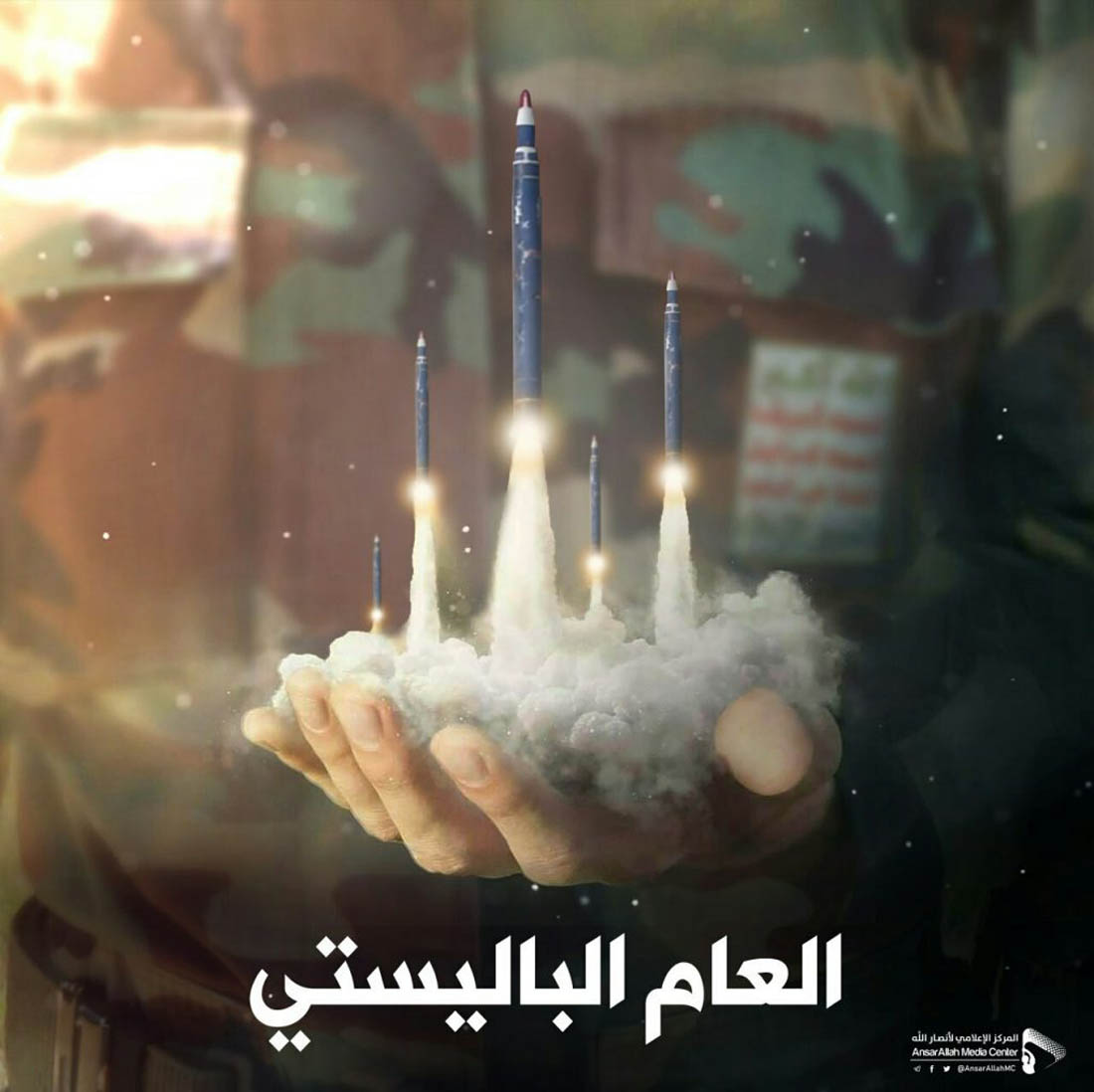
  • “Year Of Ballistic Missiles”; Response to Saudi-led Coalition missiles, will be missiles !

    “Year Of Ballistic Missiles”; Response to Saudi-led Coalition missiles, will be missiles !

    Saleh al-Samad the president of the Supreme Political Council of Yemen: “This year will be the year of firing ballistic missiles at Saudi Arabia, We will see launch of missiles everyday and it’s not important how Saudis activate their air defenses, there is no place to hide from our missiles.

    Just as the enemy has intensified its attacks, We shall start this year with decisiveness & intensify our attacks against Saudi aggressions.
    The internal front is in its most powerful time and any thought of collapse of this front is completely wrong. ”


    “and for [all] violations is legal retribution. So whoever has assaulted you, then assault him in the same way that he has assaulted you. And fear Allah and know that Allah is with those who fear Him.” Surah Al-Baqarah [2:194] – Quran

    “فمَنِ اعْتَدَى عَلَيْكُمْ فَاعْتَدُواْ عَلَيْهِ بِمِثْلِ مَا اعْتَدَى عَلَيْكُمْ وَاتَّقُواْ اللّهَ وَاعْلَمُواْ أَنَّ اللّهَ مَعَ الْمُتَّقِينَ” ﴿۱۹۴﴾بقره


  • Latest Updates on Yemen 11 April 2018; Wide Missile Attack and UAV Attack to Saudi

    Latest Updates on Yemen 11 April 2018; Wide Missile Attack and UAV Attack to Saudi

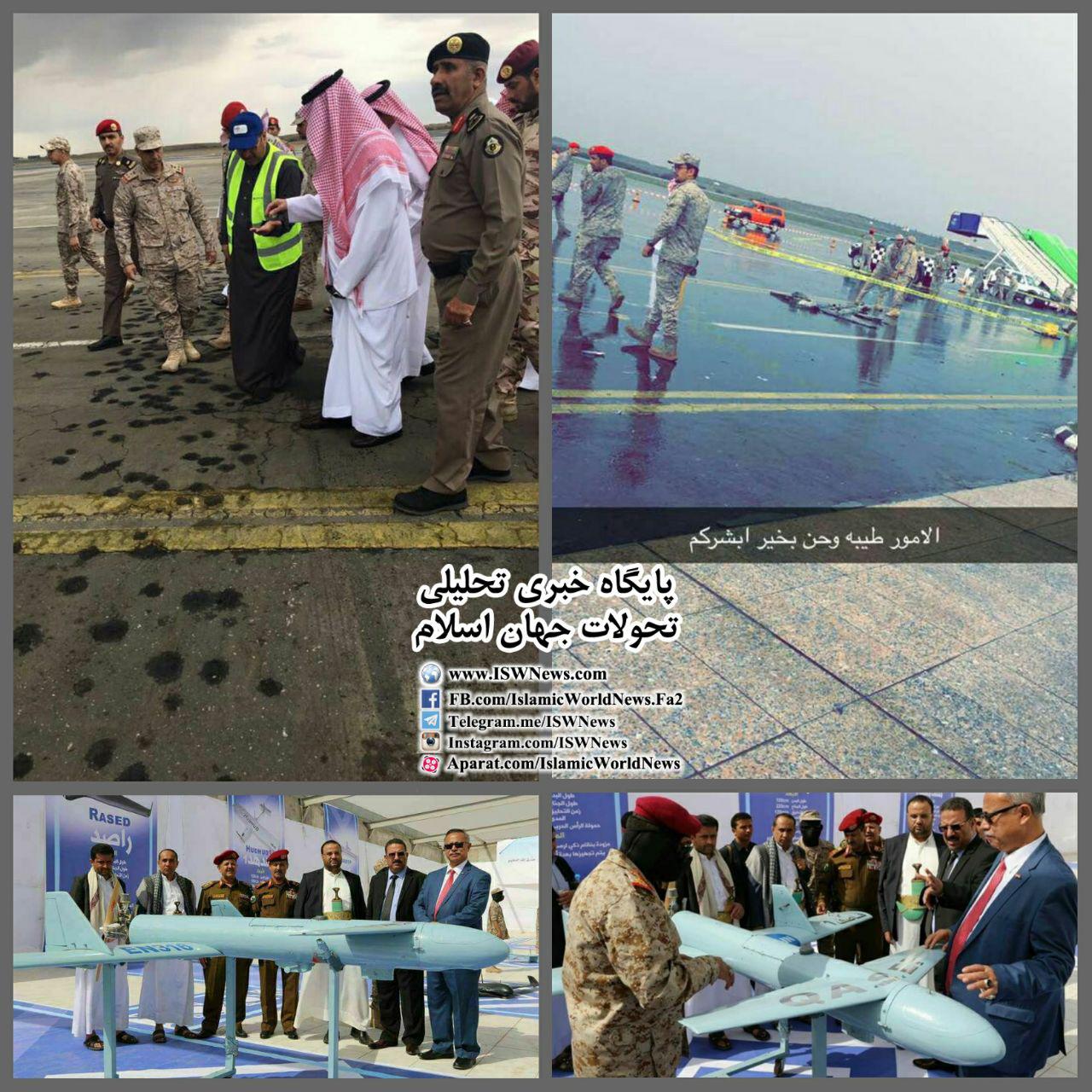
    1. Drone Qasef-1 of AnsarAllah attack to Abha airport in Asir and Aramco oil company.

    Due to this attack, flights to/from this airport are diverted to Jizan, Jedda and Riyadh airports.

    This drone was hit by Saudi Coalition after the attack.

    (This drone can fly up to two hours and 150 km and carry 30 kg of explosives.)

    Photos showing Saudi officials visiting Abha airport after the drone attack and also the demonstration of Qasef-1 by Yemeni Army.


    2. Wide missile attack by missile unit of Yemeni Army to Saudi positions

    In these attacks, defense ministry of Saudi in Riyadh, Aramco oil company and King Abdullah Economic city in Jizan governorate were hit.

    Yemeni Army spokesperson Sharaf Loqman: “Missile year that was mentioned by Saleh Ali al-Sammad (chief of Supreme Political Council of Yemen) starts from today with the wide missile attacks to Saudi. This year is full of surprises and will change the balance. We answer missile by missile and to answer Yemeni infrastructure attack, we attack Saudi infrastructures and centers.”


    3. Defeating Mansour Hadi forces attack in front Jawf; engagements in Masloub district are continuing.

  • Latest News on Yemen 26 March 2018; Images Showing Glorious Parade of Yemenis in the Anniversary of Third Year of Resistance

    Latest News on Yemen 26 March 2018; Images Showing Glorious Parade of Yemenis in the Anniversary of Third Year of Resistance

    1. Eight missiles are fired by missile unit of Yemeni Army under the missile operation “Martyr Abu Aqeel”.

    “Turki al Maleki” Saudi alliance spokesperson claiming interception of seven of them.

    The eight fired missiles: three toward Riyadh, one toward Khamis Mashit, two toward Nijran and two toward Jizan.

    The released videos by Saudi citizens showing some of the missiles hitting Riyadh.


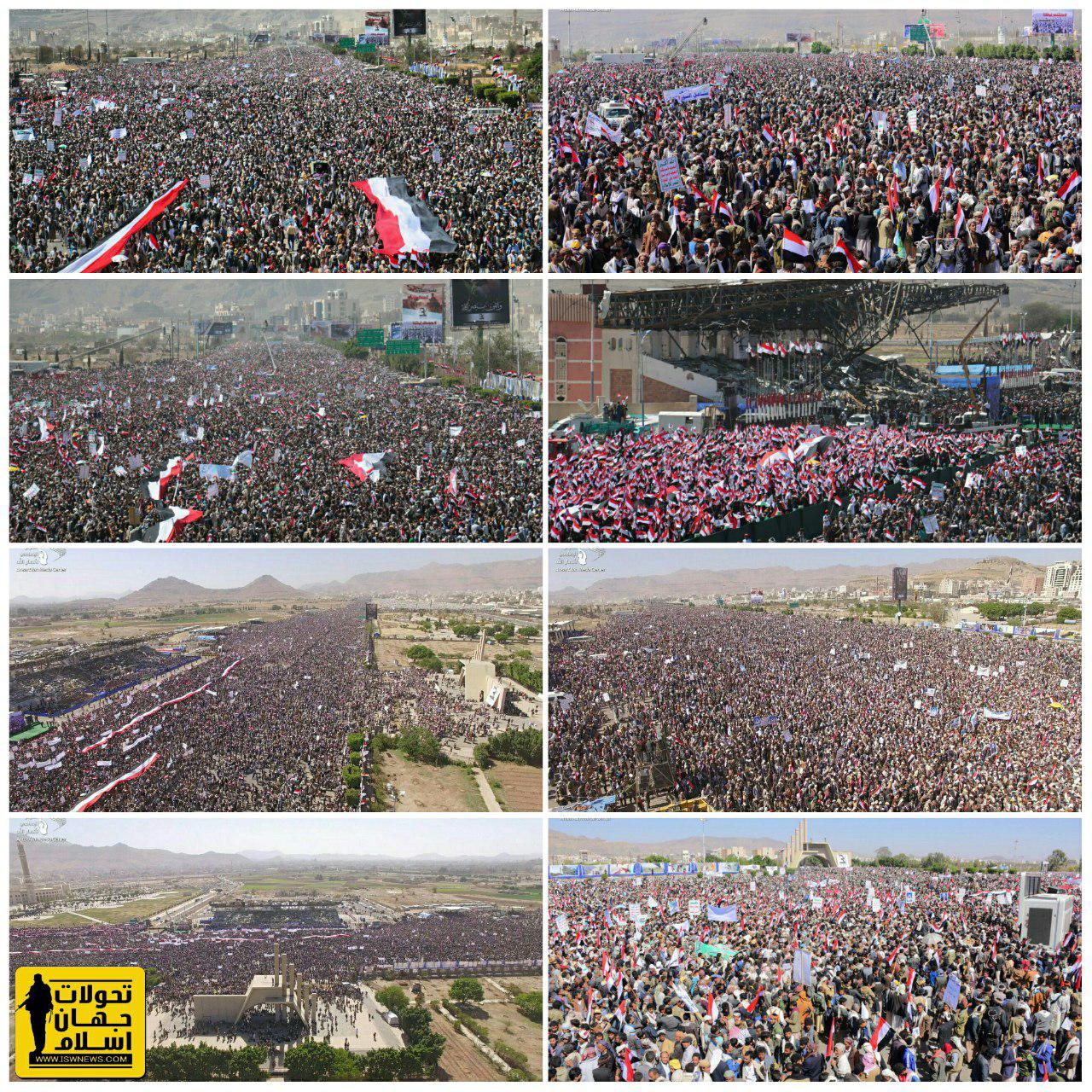
    2. Glorious and massive parade of Yemeni people in square Sab`ein in Sanaa and opposing war and crime by Saudi alliance against this country.


    3. The third day of engagement in Al Jawf governorate, the heaviest fights are in region Mahashima in district Khab al Sha`f.

    The claim of Hadi’s forces occupying Taibat al Esm military base is still questionable.


    P.S.

    Latest articles about Yemen to look at again in the third anniversary of war and people’s persistence against Saudi alliance:

    Latest News on Yemen 25 March 2018; Statistics of Three Years of People’s Resistance against Saudi Alliance Aggression

  • Hariri’s Resignation and More Plans for War

    Hariri’s Resignation and More Plans for War

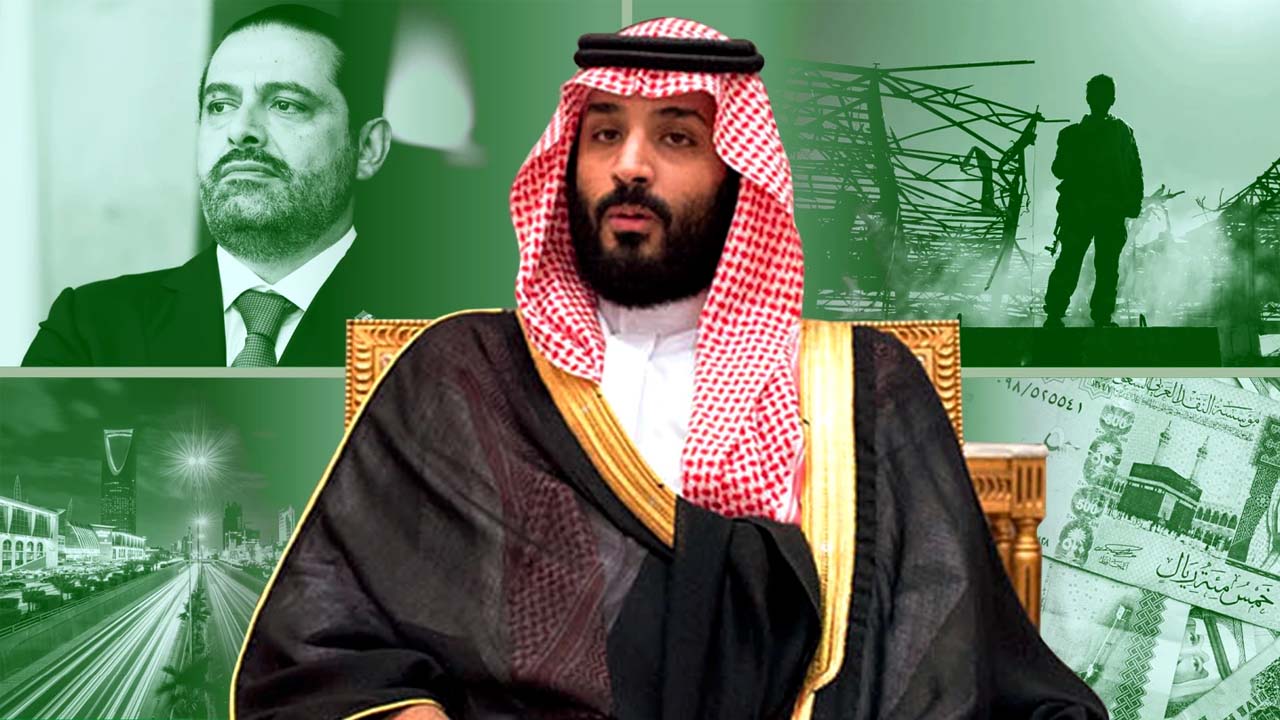
    As Hariri is a Saudi-US asset, the ‘forced’ resignation seems more like the sacking of a company executive who has not lived up to expectations. Told to step out of office Hariri did what he was told, following through by issuing a Saudi-scripted statement accusing Hezbollah and Iran of sowing discord across the region, and talking of a plot to assassinate him.


    In fact, it was Saudi Arabia sowing discord, by blaming Hezbollah and Iran for Hariri’s resignation, with the apparent aim of throwing Lebanon into chaos. Predictably, Netanyahu jumped in immediately, saying the resignation was a call to the ‘international community’ to take action against Iranian aggression but no-one else bought it, not even Lebanon’s Sunni Muslims. Hezbollah reacted calmly and if anyone came out of it badly it was Saudi Arabia. In the Iranian view the removal of Hariri was a plot cooked up by Trump and Crown Prince Muhammad bin Salman.


    Hariri himself did not return to Lebanon where he could have defied the Saudis and resumed his position but moved on to France, where he was welcomed by President Macron at the Elysee Palace. Soon after talking to Hariri, Macron was on the phone to Trump, discussing the Iranian ‘threat’ and how to deal with it. According to Lebanon’s President Michel Aoun, Hariri told him he would return to Beirut by Independence Day, November 22, marking the end of the French mandate. The Lebanese parties, including Hezbollah, still regard Hariri as the country’s Prime Minister so how all of this plays after Hariri’s return will be interesting to see.


    What lies behind all this?

    What is the connection between Hariri’s resignation (forced or otherwise) and the other events running concurrently in Saudi Arabia, namely the arrest of some of the most powerful figures in the kingdom and the confiscation of their assets, estimated at about $800 billion? One has to assume there is a connection. It seems far too much of a coincidence for there not to be one.


    The claim that the purge of the princes was part of an anti-corruption drive is bunk, seeing that corruption is intrinsic to how the Saudi government operates, domestically and in its foreign policy. If corruption is a cover story, why were these princes removed? Could it be their opposition to Saudi Arabia’s policy failures, in Syria and Yemen, and their opposition to what is now clearly being moved from the drawing board to implementation, a war on Iran, involving the US, Israel and Saudi Arabia? They would hardly be alone in seeing Crown Prince Muhamad bin Salman as reckless, foolhardy and lethally dangerous to the stability of the Saudi kingdom: his accession to the throne they would regard, literally, as a crowning act of folly.


    That another war is on the horizon is clear from all the signals coming out of Israel in the past six months. That not just the US but Saudi Arabia will be part of it is obvious. Intermittently, Israel and Saudi Arabia have been pushing for war on Iran for a decade. With the US refusing to bite, to the extent of launching an open military attack, Syria was chosen as the next best target: if the government in Damascus could be destroyed, the strategic alliance between Iran, Syria and Hezbollah would collapse at its central arch. This plan B was partly foiled by the refusal of the UN Security Council, thanks to the vetoes of Russia and China, to sanction an aerial war on Syria along the lines of the assault on Libya. Plan C had to come into effect, reliance on a war of attrition fought by takfiri proxies organised, financed and armed mainly by the US, Saudi Arabia, Qatar, Israel, Britain and France, and coordinated with the assistance of governments ranging from the Balkans to Central Asia. Seven years later Plan C has now ground to a halt. The ‘axis of reaction’ (the US, Israel and Saudi Arabia) has suffered a crushing defeat at the hands of the ‘axis of resistance’ (Iran, Syria and Hezbollah). Russian intervention has been critical, so the victory is Russia’s as well, and a particular humiliation for the US.


    This does not end the list of defeats suffered by the ‘axis of reaction.’ Another severe blow has been suffered through the collapse of the Kurdish drive for independence in northern Iraq. Both the US and Israel have assiduously cultivated the Kurds for decades, seeing northern Iraq as a new strategic centre for military and intelligence operations across the Middle East. The US and British ‘no fly’ zone and ‘safe haven’ initiatives of 1990/91 were the first steps in the planned breakup of an Iraq that no longer suited imperial purposes. The invasion of 2003 and the imposition of a constitution dictated by the US, weakening the authority of the central government, led to Kurdish autonomy which, in time, would have been expected to end in independence and a new base for US/Israeli operations across the Middle East.

    Even the US was against the referendum called by Masoud Barzani: seeing that it was already getting what it wanted, the referendum would be premature and cause more trouble than it was worth.


    This proved to be the case. Turkey and Iran reacted viscerally, ending flights and closing border crossings: the Iraqi army retook Kirkuk and all the territory conquered by the Peshmerga in 2014. Barzani stepped down as president of the KRG: Jalal Talabani, the head of the Patriotic Union of Kurdistan (PUK), had died only recently, leaving the Kurds leaderless and at each other’s throats over who was responsible for this debacle. Iraq is now being reconstituted as a unitary state. The largely Shia Popular Mobilization Forces (PMF) has developed into a powerful annex to the regular army. Moreover, the government in Baghdad has a close working relationship with the government of the Islamic Republic in Tehran.

    The paradox of these defeats is that they increase to a critical level the danger of a new attack by the ‘axis of reaction’ on the ‘axis of resistance.’ Russia, Iran, Syria and Hezbollah cannot be allowed to get away with these victories. The Israeli chief of staff, Gabi Eisenkot, hardly needed to say, as he did recently, that there is ‘complete agreement between us and the Kingdom of Saudi Arabia’ on the question of Iran’s spreading influence across the Middle East, or ‘control’ of the region as he put it. Unable to impose its will on one of the poorest countries in the world, Yemen, Saudi Arabia would be of little help on the front line in a war against dangerous targets such as Hezbollah and Iran. But it has money and according to Hasan Nasrallah, has offered to pay Israel billions of dollars for a new war on Hezbollah.


    As Israel always has the next war on the drawing board, the central question is ‘when’ rather than ‘if’ it will be launched. In recent months it has held some of the largest-scale land and air exercises in its recent history in preparation for a new war on Hezbollah, including training for fighting in tunnels. It has warned repeatedly over the years that the next time around the ‘Dahiyeh strategy’ will be applied across Lebanon and is busy selling the propaganda package that there really is no Lebanon any more but only a Hezbollah enclave controlled by Iran.

    Dahiyeh, of course, is the largely Shia Beirut suburb and urban HQ of Hezbollah that was pulverised from the air in 2006. Given the huge civilian casualties Israel is willing to inflict in the next war, Iran and Syria would be hard pressed to stay out but the moment they intervene, Israel, the US and Saudi Arabia will have their three primal enemies directly in their line of fire. The refusal of the US to withdraw its forces and dismantle its air bases in Syria now that the Islamic State has been ‘defeated’ (if still being used as an American tool) is probably connected with preparation for the coming conflict.

    Israel’s existential struggle in the Middle East since 1948 has now reached the point of crisis. Israel may think it has all the time it needs to completely engorge the West Bank but it does not have such a luxury on the regional front. If Iran is stronger now than before the wars on Iraq and Syria, it will be even stronger in two or three years’ time. It has a large standing army, fought an extremely destructive war against Iraq (1980-89), has been deeply involved at the planning and combat level in the defence of Syria and has built up a large arsenal of locally developed short and long-range missiles.

    By comparison, Israel has not even fought a regular army since 1973: in 2000 it was driven out of Lebanon by a guerrilla force and when it attempted to retrieve lost ground by launching a new war in 2006 its ground troops proved incapable of taking villages even a few kilometres from the armistice line. Its attacks on Gaza have been onslaughts on a largely defenceless civilian population.

    Given that since 1948 its security/insecurity situation has ultimately been based not on diplomacy but on full spectrum military domination from the possession of nuclear weapons down to conventional warfare, Israel cannot allow the current situation of strengthening enemies to continue. Hostile to any kind of diplomatic settlement that would generate a real peace, Israel must go to war. It says it is much stronger and better prepared than in 2006 but so are Hezbollah and Iran. Hezbollah alone has a large stockpile of missiles able to reach any corner of occupied Palestine: Israel’s Iron Dome anti-missile system will stop some of them but not all.

    If it does go to war Israel is certainly going to suffer civilian casualties unprecedented in its history but the politicians and generals around Netanyahu will argue that its existential situation will demand these sacrifices. The US would come in behind Israel, but Russia could not be expected to sit by while its diplomatic alliances and strategic assets in the Middle East are destroyed. The commentator Abd al Bari Atwan has warned that such a war would be the most destructive in the region’s history, developing into a global conflict, and has raised the question of whether Israel, having started it, could survive it. This is a truly apocalyptic scenario.


    As usual the Palestinians find themselves caught in the middle. Mahmud Abbas is being told to go along with the Trump-Kushner-Israel ‘peace initiative’ or else, even by Saudi Arabia. This would involve Abbas publicly sharing the anti-Iranian, anti-Hezbollah and anti-Shia views of the Saudis at a time he is engaged in a reconciliation process with Hamas, which has refused to take a stand against Hezbollah. Furthermore, several of its senior leaders have recently been in Tehran. For the moment all eyes are on Hariri as he returns to Beirut: how will he explain himself, will he resume his position as Prime Minister and on what terms?


    Source
  • Saudi-led coalition has committed another crime, 48 people were martyred by targeting a hotel.

    Saudi-led coalition has committed another crime, 48 people were martyred by targeting a hotel.

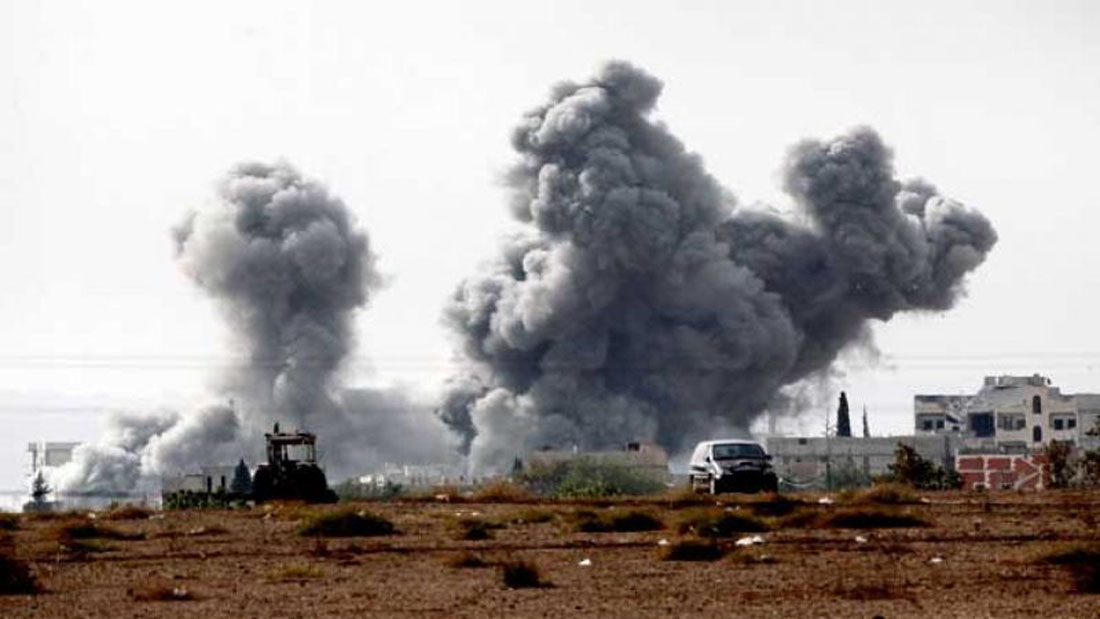
    The spokesman for the Arab coalition claims that the attack is targeting a “legitimate military high-value target” and victims are military soldiers. However, the released images show the presence of children and civilians.

    After this attack, the roof of the hotel collapsed and, as it is evident from the pictures, many people remained debris and martyred.

    In recent months, the severity of Saudi crimes has been more than ever before, and the killings are so severe and cruel that the UN and human rights institutions have spoken and protested. Organizations that usually do not respond to Saudi crimes against the people of Yemen.

    According to reports from the same human rights organizations, Yemen suffered more air strikes in the first half of this year than in the whole of 2016. These bombings, more than anything else, force people to leave their homes .

    According to the latest information, by the beginning of April 2017, about 12,000 people in Yemen have been martyred in the past two years.

  • Leaked UN Report: Saudi-led Coalition Is Responsible For Over Half Of Child Deaths In Yemen

    Leaked UN Report: Saudi-led Coalition Is Responsible For Over Half Of Child Deaths In Yemen

    According to the report obtained by Reuters, “attacks carried out by air caused over half of all child casualties, with at least 349 killed and 333 injured”. The report says that the deaths were “unacceptably high”.

    The report insists that 51% of all child deaths and injuries in Yemen last year were the result of military actions of the Saudi-led coalition.

    The Saudi-led coalition destroyed more than 28 schools in Yemen, the report added.

    The obtained text was reportedly drafted by UN Secretary-General Antonio Guterres’ special envoy for children and armed conflict, Virginia Gamba, acting on a request from the UN Security Council.

    However, Guterres still has to approve the report. If this is done, the report will be released this month.

    The report will be a serious problem for the UN secretary-general because if he releases the report, he will damage the UN’s relations with Saudi Arabia and its allies. If he does not release the report, he will be accused of undermining the UN’s commitment to human rights.

    In February, Gutierrez suggested to his senior advisors to postpone the release of the report for three to six month in hope that it may motivate Saudi-led coalition to improve its human right performance in Yemen and particularly the rights of children in war.

    Gutierrez will allegedly receive the final report this week.

    The signing of the de-escalation agreement in Avril 2016 reportedly reduced the civilian casualties. However, the actual death toll can be higher than the provided in the report because of a lack of access to documents that can provide accurate info on the civilian casualties.

    According to reports, there is still no final decision on the countries that would be added to the final list of countries that violate the human rights.

  • Saudi king relieves Nayef as crown prince

    Saudi king relieves Nayef as crown prince

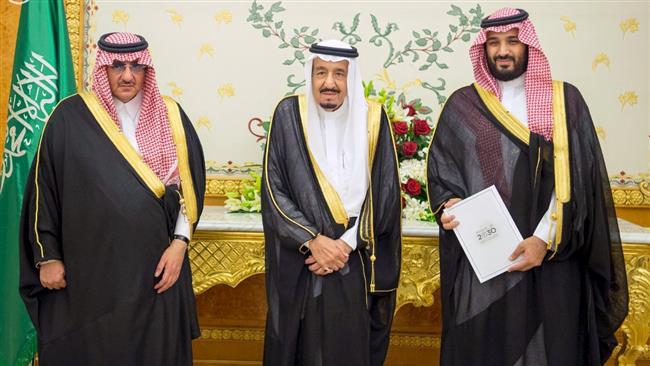
    Saudi King Salman bin Abdulaziz Al Saud has replaced Crown Prince Mohammed bin Nayef bin Abdulaziz Al Saud with his own son, Mohammed bin Salman Al Saud, the deputy crown prince and defense minister.

    According to a royal decree, Mohammed bin Salman, 31, was also named deputy prime minister, and shall maintain his post as defense minister, the official Saudi Press Agency (SPA) reported on Wednesday.

    Saudi media say King Salman has called for a public pledge of allegiance to the new crown prince in the holy city of Mecca on Wednesday night.

    The SPA also confirmed that 31 out of 34 members of Saudi Arabia’s succession committee chose Mohammed bin Salman as the crown prince.

    Just days ago,  the Saudi king stripped Nayef of his powers overseeing criminal investigations and designated a new public prosecution office to function directly under the king’s authority.

    In a similar move back in 2015, the Saudi king had appointed his nephew, then deputy crown prince Mohammed bin Nayef as the heir to the throne after removing his own half-brother Prince Muqrin bin Abdulaziz Al Saud from the position.

    Under the new decree, King Salman further relieved Mohammed bin Nayef of his duties as the interior minister. He appointed Prince Abdulaziz bin Saud bin Nayef as the new interior minister and Ahmed bin Mohammed Al Salem as deputy interior minister.

    Mohammed bin Salman is already in charge of a vast portfolio as chief of the House of Saud royal court and chairman of the Council for Economic and Development Affairs, which is tasked with overhauling the country’s economy.

    The young prince was little known both at home and abroad before Salman became king in January 2015.

    However, King Salman has significantly increased the powers of Mohammed, with observers describing the prince as the real power behind his father’s throne.