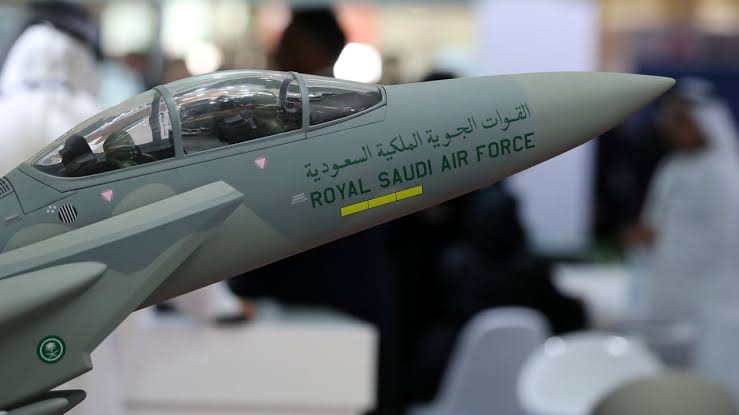
Brigadier General Yahya Saree, in a statement on this operation, announced that Saudi fighter jets this week carried out more than 450 airstrikes using F-15 and Typhoon fighter jets from the Khamis Mushait and Taif bases against the areas of Taiz, Lahij, Al-Jawf, Hajjah, Marib, Saada, and Al-Bayda, which led to the martyrdom and wounding of civilians.
The Yemeni armed forces, in the face of this brutal aggression, succeeded in downing an F-15 fighter jet in the skies over Marib province, which was carrying out hostile operations to support the enemy’s military movements in Taiz and Marib. This fighter jet was downed using a Yemeni surface-to-air missile.
Also, the Yemeni armed forces, during an air defense operation, targeted two groups of Saudi fighter jets that were searching for the wreckage of the downed fighter jet and drove them away from the skies over Marib.
Brigadier General Yahya Saree also rejected the false claims of the Saudi regime regarding targeting Mecca, and stated that it is the Saudis who have polluted this holy site with corruption and immorality, and there is no danger from Yemen to the holy sites, because Yemen’s operations only target oil facilities and military bases.
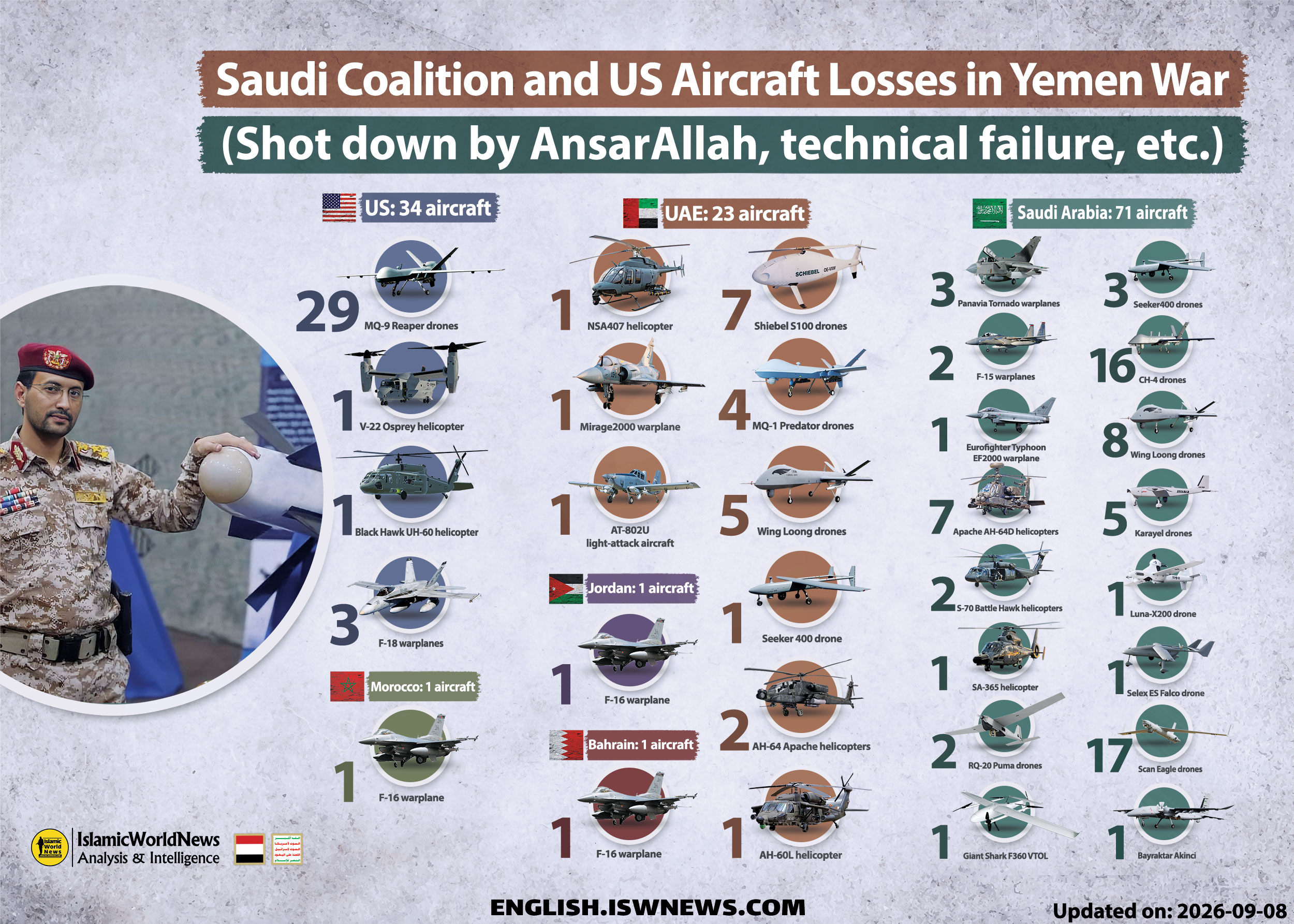
According to statistics collected by the IWN, this fighter jet is the third F-15 of its kind to be downed during the Yemen war. Therefore, the number of aircraft destroyed by the Saudi-American coalition during the Yemen war has reached 133.
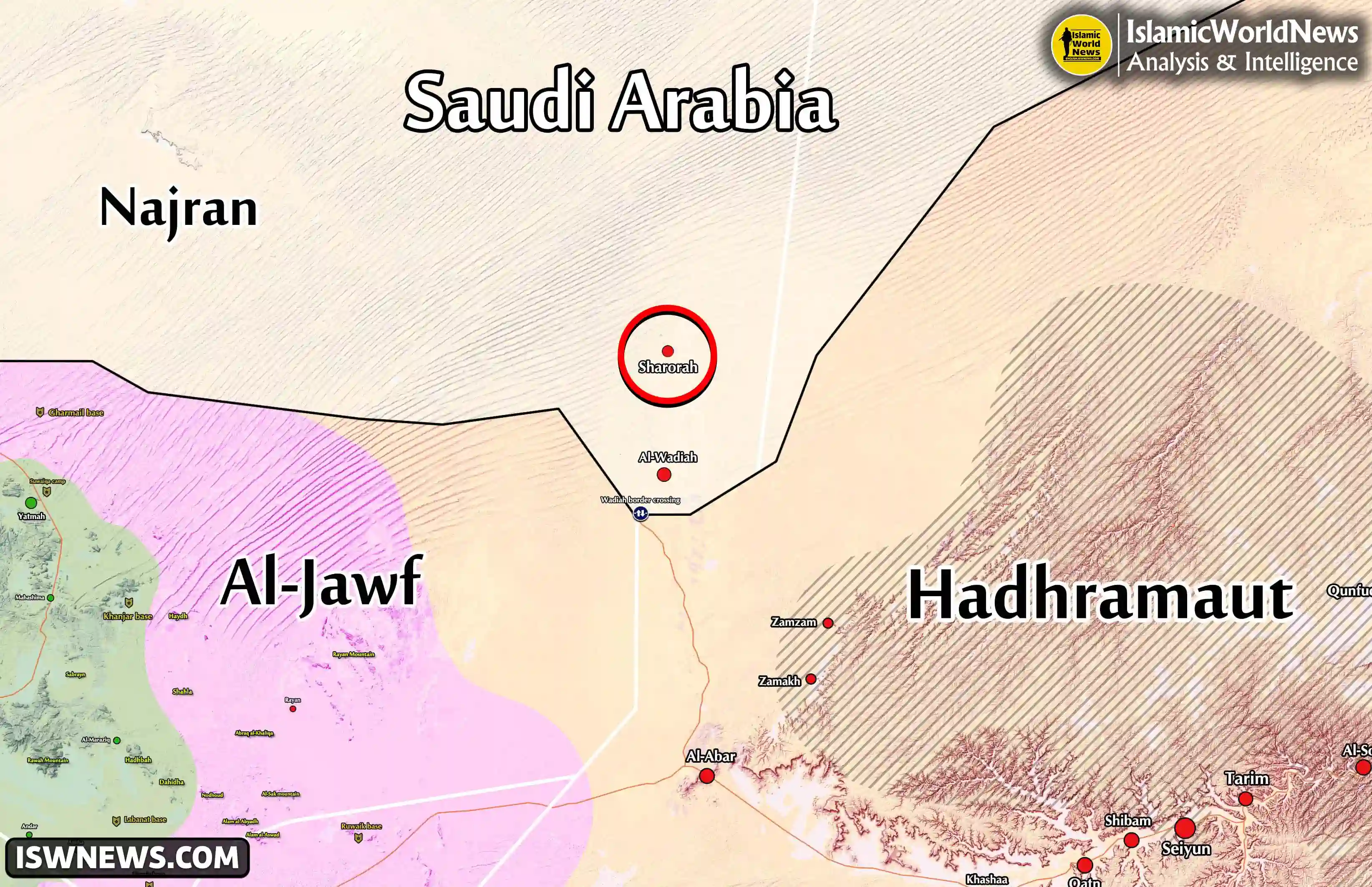
Yahya Saree, spokesman for the Yemeni armed forces, stated that in this operation, weapons depots and command-and-control rooms that were managing the aggression against Yemen and its people were targeted at the Saudi military base in the Sharorah area with a large volley of ballistic missiles and combat drones, and—thanks to God—the strikes were precise and direct.
The Al-Wadiah crossing and the Sharorah area north of it, in northern Yemen, constitute the primary land route for logistical supply of Saudi coalition forces in the occupied areas of Yemen. Since the beginning of the conflict, the Yemeni army has, through precise monitoring of coalition force movements and gatherings, delivered accurate and effective blows to the enemy’s rear. These targeted strikes undermine the operational capability of Saudi mercenaries to conduct any offensive operations.
Newly released satellite imagery of the targeted facilities reveals extensive damage. The damage is so severe that repairs and reopening will require a considerable amount of time. Therefore, the Saudi Energy Ministry’s claim attributing the shutdown to precautionary measures is fundamentally incorrect!
For example, the imagery you are viewing pertains to Al-Dhukra station and Al-Masba’ah station southeast of Medina. In the image, Al-Masba’ah station has sustained very heavy damage.
‼On the other hand, in a surprising move, Saudi Arabia’s Foreign Ministry issued a statement accusing Iraqi groups of attacking the East-West pipeline! In the released statement, it is claimed that the East-West pipelines in the Riyadh and Medina regions were attacked by drones launched from Iraqi territory. It is also claimed that the Saudi kingdom will currently not respond to the attacks by Iraqi groups, in order to give the Iraqi government an opportunity to deal with these groups.
Regardless of who carried out these attacks, the reality of the matter is that there is no difference between the Yemeni army and Ansar Allah, Iraqi resistance groups, Iran, and others. They all stand together as a single hand on one front, jointly fighting against their enemies. Wherever necessary, tactics change, and each component will carry out its duties as required. It is not acceptable for Saudi Arabia to be a partner and accomplice with America in oppressing the people of Iran and Yemen, and on the other hand, escape this war unscathed! If it diverts the Strait of Hormuz to serve America, then it should expect the missiles and drones of the Resistance—no matter from which direction they come, it makes no difference. The tactics of war have changed!
At the same time, at Al Udeid Air Base, U.S. and Qatari personnel participated in a parade and a 25-kilometer endurance exercise hosted by the U.S. Army’s 25th Strategic Signal Battalion.
CENTCOM stated that the purpose of these activities is to strengthen operational capability and joint readiness with regional partners.
In the 21st century, Persian Gulf countries have set ambitious geopolitical objectives, heavily relying on their rich oil revenues. As this trend continues and the oil market remains volatile, diversifying income sources becomes essential. Saudi Arabia’s “Vision 2030,” which focuses on expanding the non-oil sector and investing in foreign assets, aligns with this goal. Consequently, as oil resources decline, the Persian Gulf nations are aiming to diversify their economies and safeguard key assets like ports and farmland. The 2008 global financial crisis further accelerated this effort, prompting the Gulf countries to make significant investments in the Horn of Africa to broaden their economic bases.
Recently, Saudi Arabia’s Red Sea Gateway Terminal (RSGT) signed a 30-year contract with Djibouti Ports and Free Zones Authority (DPFZA) to operate and develop the port of Tajoura. RSGT aims to turn Tajoura into a major multi-purpose terminal, expecting it to handle five million tons of cargo annually, strengthening its role as a gateway for Ethiopian imports and exports. However, there has been a shift from purely economic involvement to more direct political and military actions, with Gulf states establishing military bases and brokering peace in the region. Saudi Arabia’s strategy in the Red Sea focuses mainly on security, evident in its diplomatic and military moves such as a 2017 defense agreement with Djibouti and a 2018 peace treaty between Ethiopia and Eritrea. Its leadership in creating the Red Sea and Gulf of Aden Council in 2020 underscores its commitment to regional security cooperation. Riyadh’s presence in the Horn of Africa appears aimed at controlling the Red Sea to counter threats, especially from Yemen’s Ansarullah. It’s noteworthy that Western media claim Yemen’s Ansarullah and Somalia’s Al-Shabaab are cooperating in arms shipments.
UAE Movements While the UAE and Saudi Arabia often pursue Western strategies in various regions, this has occasionally caused rivalry, as seen in Sudan and eastern Yemen. Consequently, much of the UAE’s effort to expand influence in the Horn of Africa revolves around controlling western Yemen to attain its objectives in the oil-rich Hadramaut area. This region has recently become a conflict zone involving tribes near Saudi Arabia. The UAE has adopted a more assertive approach, establishing a strong military and economic footprint across the Horn of Africa. Over the last ten years, it has developed military bases in Eritrea, Somalia, and Ethiopia. Its air base in Assab, Eritrea, symbolizes Abu Dhabi’s commitment to maintaining a lasting presence in the area. Although this base was later dismantled, the UAE’s control over port rights in Mukalla, Aden, and Berbera indicates its strategic goal of dominating maritime routes and influencing the Red Sea and Gulf of Aden regions.
In fact, the events in Yemen and the Horn of Africa are closely linked. Growing influence in this region could enhance Yemen’s power by diminishing Ansar Allah’s influence. Interestingly, the Emirates’ ambitions appear more aggressive and far-reaching than Riyadh’s. They are even prepared to collaborate closely with the Zionist regime in this area. Recently, Western media have reported that Iran and Yemen’s Ansar Allah are gaining influence in the Horn of Africa, particularly in Eritrea, Djibouti, and Somalia. This situation has prompted the Emirates and the Zionist regime to adopt a more coordinated strategy to address the issue. Some sources suggest that, along with Ethiopia, these two regimes have formed a secret alliance in the region.
Eritrean President Isaias Afwerki recently made surprising statements, blaming the current Yemen crisis on the militarization of the country’s islands. He also emphasized that coastal nations should be responsible for securing the Red Sea, rather than relying on foreign military bases. His primary concern is the potential establishment of a military base on Yemen’s “Zaqr” island by the Emirates, which could pose a serious threat to Eritrea if completed. The presence of the Zionist regime via the Emirates on Yemeni islands threatens regional sovereignty and international interests. These actions form a dangerous shadow alliance that endangers Yemen’s sovereignty and risks transforming it into a shared military domain of the regime and Abu Dhabi.
Another key point near the Emirates axis involves Somaliland, which is strongly supported by the Zionists and Ethiopia, each with different aims. Ethiopia sees Somaliland as a route to the sea to further its economic ambitions. Meanwhile, Abu Dhabi and Tel Aviv aim to establish a base there, possibly to target Yemen’s Ansarullah.
Along with security concerns, the Emirates also aims to achieve its economic objectives, emphasizing food security. The region’s potential for agriculture and its proximity to the Gulf states make it appealing as a source of essential foods. The Horn of Africa plays a critical role in the Gulf states’ food security due to its fertile land and established trade routes. The Gulf region relies heavily on food imports, obtaining 85 percent of its staple foods from other countries.
The Southern Transitional Council’s sinister plan for Ansar Allah Besides the explanations about the UAE’s regional influence, the Times reports that a delegation from the Southern Transitional Council recently visited Tel Aviv. They expressed willingness to recognize the “Israeli regime” (supporting the Zionist regime) and to sign the “Abraham Pact” in favor of Trump. However, this is conditional on the Zionist regime and the US participating in a joint ground (Southern Transitional Council) and air (Zionist regime and US) attack on Yemen’s Ansar Allah as a “common problem,” and on the Southern Transitional Council being able to establish the country of “South Yemen.”
Conclusion Generally, the UAE and Saudi Arabia’s roles in the Horn of Africa involve both competition and cooperation. While they share the goal of countering Iran and Yemeni AnsarAllah’s influence, they also have significant disagreements, as dominance in this region can boost their rivalry over Yemeni oil resources. The main reasons for their presence in the Horn of Africa can be summarized as follows:
1- As the new global order emerges with multipolarity and diminishing US influence, Washington is delegating its objectives to other regions. Boosting the presence of the UAE, Saudi Arabia, and the Zionist regime aligns with US interests. Similarly, recognizing Somaliland in exchange for permission to establish a military base fits this pattern.
2- The Persian Gulf countries’ involvement in the Horn of Africa and the broader Red Sea region is driven by security needs and economic ambitions. Heightened security concerns have increased the region’s importance, especially as Iran’s influence, supported by the “axis of resistance” and strengthened by the Yemeni war, extends to the Horn of Africa. Naval bases serve as strategic footholds, broadening the Persian Gulf’s influence over regional politics and economics. Recently, Western media have suggested cooperation between Ansar Allah and Somali al-Shabaab, despite their differing motives.
3- Gaining control over the Horn of Africa allows influence into East, North, and even the Sahel regions of Africa. For instance, without Eritrean cooperation, access to trade routes leading to the Sudanese port would be difficult. Cooperation with Ethiopia could expand influence in Central and East Africa. However, Egypt, an Arab country typically aligned with the UAE and Saudi Arabia, often holds opposing views in this region, which may impact future political dynamics.
This base serves a logistical and supply role for U.S. forces in western Saudi Arabia and has recently undergone expansion. Development began in early 2025 and includes the construction of underground storage facilities, ammunition depots, new logistics and support infrastructure, as well as housing for U.S. personnel.
Given its capabilities, the base could potentially serve as an alternative to Al Udeid Air Base in Qatar. Qatar’s proximity to Iran and the presence of Iran’s short-range missile stockpiles have highlighted Al Udeid’s vulnerability, prompting the U.S. to consider substituting it with other bases. That said, the mission profile of U.S. forces in Saudi Arabia is largely defensive and training-oriented. For instance, during the Saudi-Emirati coalition’s war in Yemen, these forces repeatedly took part in air defense operations, intercepting Yemeni missiles and drones and thereby indirectly engaging in the conflict.
LSA Jenkins base in Yanbu port, western Saudi Arabia
Overall, despite Saudi Arabia’s neutral stance in recent Iran–U.S. tensions, L.S.A. Jenkins could be considered a potential target of Iranian missile strikes. The base is approximately 1,300 km from Iran’s Ahvaz and 990 km from Saada.
After consecutive defeats of the Southern Transitional Council (STC) in Hadhramaut and Al-Mahra — and their withdrawal without fighting from the Balhaf gas facility and the strategic Marra base in Shabwah — the focus of pro-government forces shifted to southern Yemen. In initial negotiations, local authorities in Abyan agreed to hand over their positions to Al-Dara’ Al-Watan forces. Southern militants and allied tribes have not yet surrendered their positions, but they also have not shown resistance.
In Aden, government and service facilities — including the Presidential Palace (Al-Ma’ashiq) and Aden Airport — had already been evacuated by STC fighters and handed over to representatives of the government-in-exile. Early this morning, Al-Dara’ Al-Watan forces entered Aden via the coastal road and Al-Anad base, taking control of military and security sites. Elements of the Giants Brigades also assumed control of parts of Aden at the order of the Saudi-led coalition. Their commander, Abu Zarah Al-Muharrami, officially split from the STC yesterday and pledged allegiance to Saudi Defense Minister Khalid bin Salman.
The Saudi-backed forces captured Aden and Abyan provinces
The disappearance of Aidarus al-Zoubaidi — head of the Southern Transitional Council — at dawn today, and his failure to travel to Riyadh, has angered the Saudis and escalated tensions between the STC and the government-in-exile. Rashad Al-Alimi has revoked his membership in the Presidential Leadership Council. This situation suggests instability will continue in the occupied regions of Yemen — and it is likely that Al-Dhale and Lahij will soon witness Saudi attacks and further Southern capitulations.
The strikes followed a warning message urging civilians to stay away from the port area. The northern parking lot of Mukalla port was hit, with the main objective being recently imported Emirati military vehicles. These vehicles had arrived aboard two cargo ships from Fujairah port to supply fighters of the Southern Transitional Council (STC).
Saudi Strike Targets Emirati Military Gear in Mukalla
Brigadier General Turki al‑Maliki, spokesperson for the Saudi‑led coalition, stressed that the transfer of Emirati military equipment to Mukalla port constitutes a clear violation of efforts to reduce tensions, pursue a peaceful solution, and breaches UN Security Council Resolution 2216 (2015).
This strike marks the first official and overt Saudi action against the STC and its Emirati backers. By escalating their warnings, the Saudis signaled to southern forces and the UAE that they are capable of fighting them if necessary. However, Riyadh’s primary objective in Yemen remains confronting Ansar Allah, with southerners considered allies in that effort. In reality, the alliance in Yemen has been challenged by Emirati moves, while the Saudis remain reluctant to deepen conflict with their long‑time partner.
In addition to this withdrawal, the Southern Transitional Council has issued directives to prepare for an exit from the Hadhramaut Valley and to transfer control of the area to the Saudi-backed al‑Dara‘ al‑Watan forces.
As expected, Saudi warnings prompted the southern forces to retreat from their recent advances in Hadhramaut and to hand over the valley to Saudi‑aligned factions. However, the withdrawal process is still in its early stages, and it remains unclear how far the retreat—or the tensions between Emirati‑backed and Saudi‑backed groups—will go.
It appears the southern forces, through cautious and calculated maneuvers, are seeking to secure a larger share of Hadhramaut’s oil wealth and intend to continue these moves as long as possible.
Following a preliminary meeting of experts and diplomats from the three countries, a trilateral session was held to review progress on implementing the Beijing Agreement signed in March 2023. The meeting was attended by Saudi Deputy Foreign Minister Waleed Al-Khereiji, Chinese Deputy Foreign Minister Miao Diao, and Iran’s Deputy Foreign Minister Majid Takht-Ravanchi.
In their final statement, the three countries welcomed the continued improvement in Iran–Saudi relations, called for an end to Israeli attacks on Palestine, Lebanon, and Syria, condemned violations of Iran’s sovereignty and territorial integrity, highlighted advances in consular cooperation—especially regarding the Hajj—and reaffirmed support for an inclusive political solution in Yemen based on recognized international principles and under UN supervision.
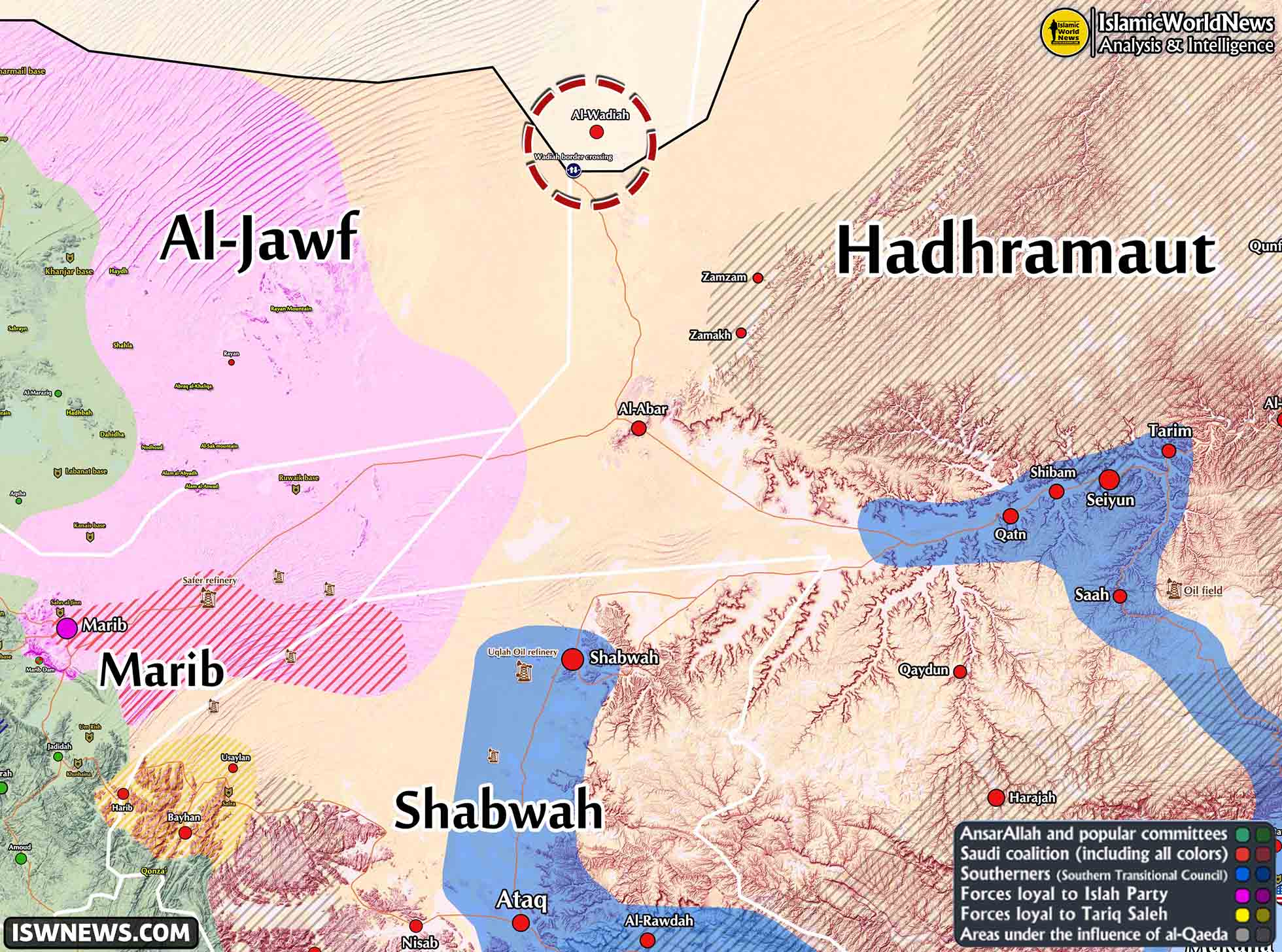
At the same time, Saudi Arabia’s closure of the crossing coincided with the deployment of Al‑Dara‘ al‑Watan forces and armed groups loyal to Hashem al‑Ahmar (a parliament member and former Yemeni army officer under Ali Abdullah Saleh) along the road in the al‑Abr area, blocking vehicles from heading toward the border.
Currently, the al‑Abr region and the 23rd Mika Brigade base are under the control of Al‑Dara‘ al‑Watan forces. Saudi Arabia is reportedly fortifying this position to support unspecified security measures. It appears Riyadh is preparing to counter the recent advances of the Southern Transitional Council in Hadhramaut and Shabwa provinces and to reclaim oil‑rich areas.