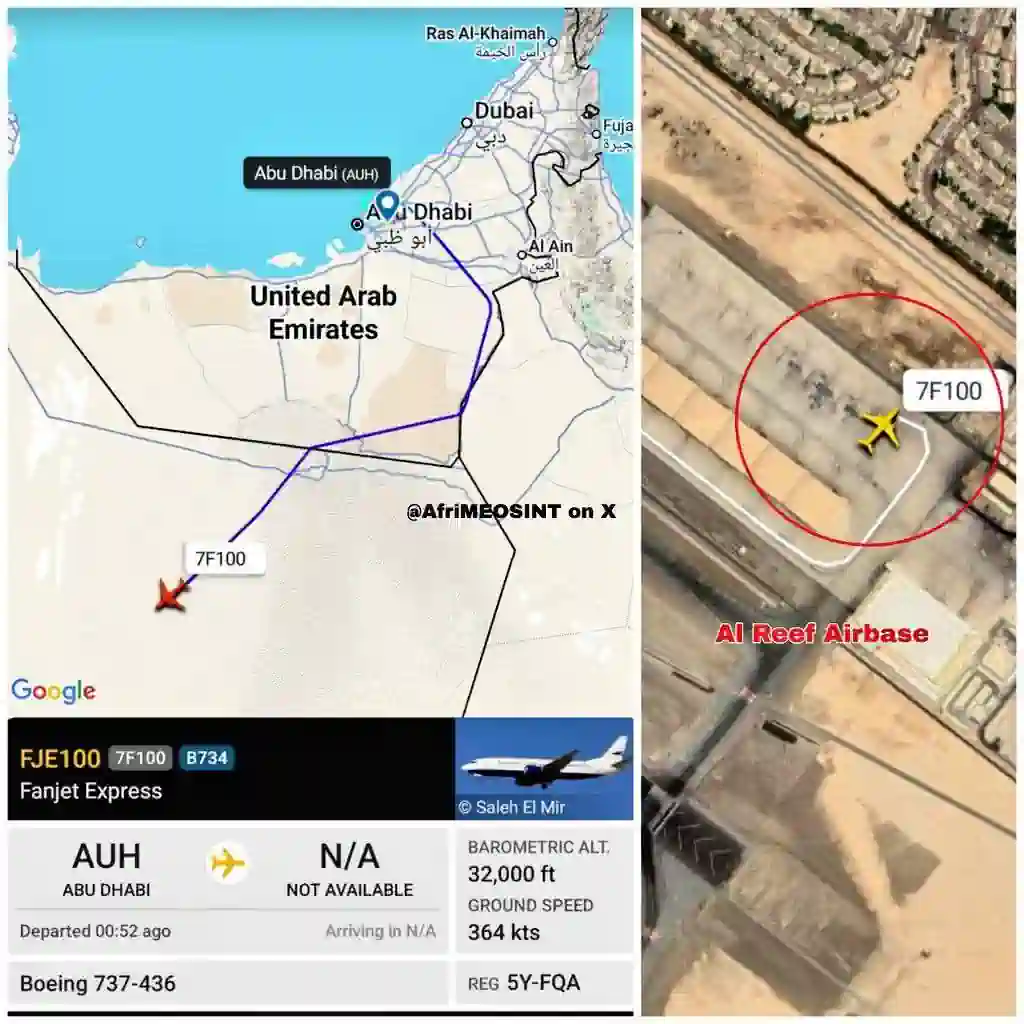
The shipment was transported via a Boeing 737 aircraft operated by the Emirati company Fanjet Express, departing from Al-Rif Air Base in Abu Dhabi and arriving at Al-Rayyan Airport on Yemen’s Hadramaut coast. This marks the third military consignment sent by the UAE to southern forces in recent days.
By supplying new weapons to southern groups, Abu Dhabi aims to strengthen their positions in Hadramaut and prevent future offensives by Saudi-aligned factions.
Khaled al-Shayef, director of Sana’a International Airport, told Al-Masirah TV that the air blockade is being used by the Saudi–Emirati coalition as a tool of political pressure against Yemen. He noted that over 500,000 patients in Yemen currently require travel abroad for treatment.
Al-Shayef also confirmed the airport’s readiness to resume flights, stating that aircraft could be arranged if the blockade were lifted, but the coalition continues to impose restrictions and intimidate many airlines.
According to Yemeni government estimates, under normal conditions the number of flights and passengers was expected to reach 4 million by the end of 2025. However, this projection was derailed due to repeated Zionist airstrikes on the airport, which disabled its facilities on two separate occasions.
Major General Talib Barjash, commander of the ousted government’s forces in the Second Military Region (covering al-Mahra and Yemen’s southeastern coasts), has broken away from the ousted government and aligned himself with the Southern Transitional Council. He ordered the removal of Rashad al-Alimi’s portraits—the head of the Presidential Leadership Council of the ousted government—and the Yemeni national flag from all bases under his command, replacing them with portraits of Aidarus al-Zoubaidi, the head of the Southern Transitional Council, and the flag of South Yemen.
During the Hadhramaut conflict, Talib Barjash remained neutral and at times assisted Hadhramaut tribes. However, with recent developments in Yemen’s east and south, his stance has shifted, and he has now joined the Southern Transitional Council.
STC took control of the Mahra province – click to view larger image
A similar incident has occurred in Abyan, where the Rapid Response Forces stationed in the Jayshan district have broken away from the Islah Party and the ousted government, joining the Southern Transitional Council.
Movements of Southern forces in the outskirts of the al-Khasha area came under aerial drone strikes by unidentified aircraft. The Saudi Arabian army has not issued any report regarding these attacks, suggesting they were likely carried out by armed elements of the Islah Party. Some Islah sheikhs, due to their close ties with Turkey, have received limited support, including small quantities of weaponry such as Turkish-made quadcopters.
Rapid Response Forces stationed in the Jayshan district have broken away from the Islah Party and the ousted government, and joined the Southern Transitional Council.
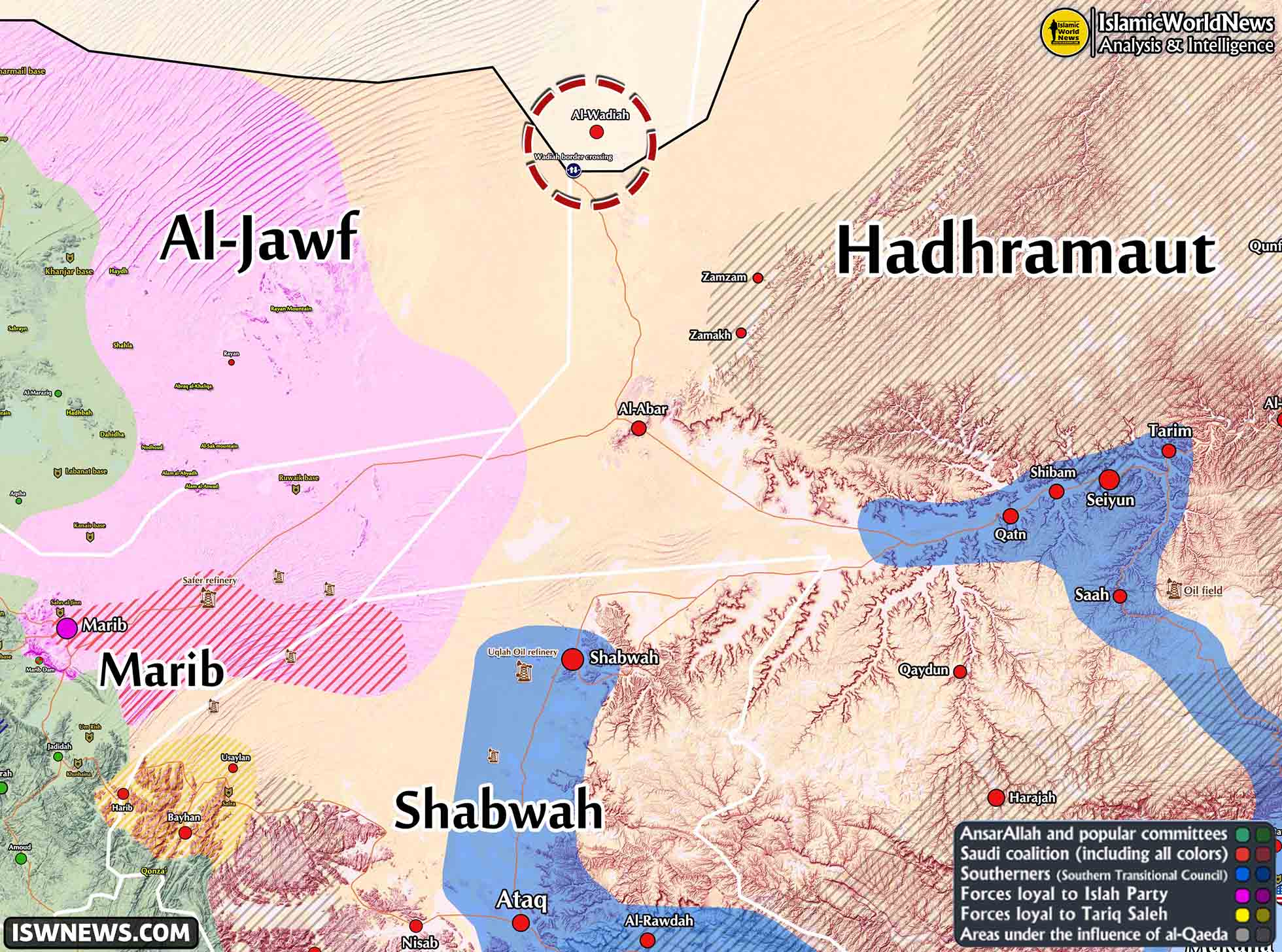
Jordanian Military Aid Convoy Enters al-Wadi‘ah Border Crossing
A Jordanian military aid convoy has entered Yemen through Saudi territory via the al-Wadi‘ah border crossing. In addition to these supplies, a large number of Jordanian advisors have arrived in the al-Wadi‘ah and al-‘Abr areas to train al-Dera‘ al-Watan forces in the use of Canadian armored vehicles and other delivered weaponry.
A Jordanian military aid convoy has entered Yemen via the al-Wadi‘ah border crossing
Some Arab sources have attributed Jordan’s aid shipments to Israel, but this claim is inaccurate. Israel’s positions in Yemen are more closely aligned with the actions of the Southern Transitional Council and the UAE. Through Emirati control of Yemeni islands and air bases, Israel has gained significant intelligence advantages on the Yemeni front. Therefore, it would never act to weaken its allies.
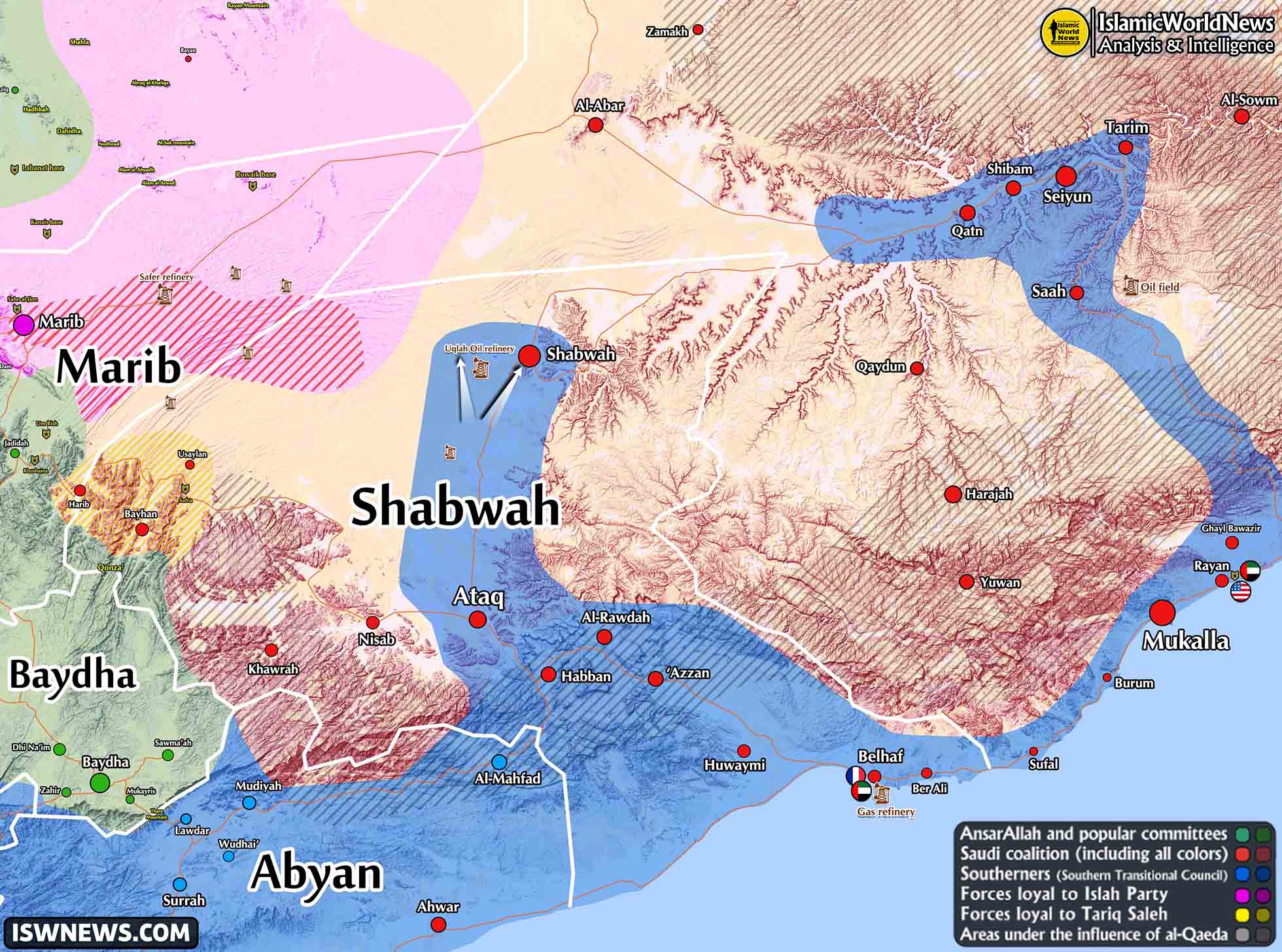
These developments indicate Saudi Arabia’s preparations for a new operation against the Southern Transitional Council in Yemen’s eastern and southern provinces. Contrary to their initial agreement with Riyadh, the STC has taken control of Hadhramaut’s oil fields and northern Shabwah. Despite repeated Saudi requests for withdrawal, the STC is moving toward declaring independence and partitioning Yemen.
STC forces and Saudi‑aligned groups continue to struggle for dominance in Hadhramaut and Shabwa. Reports of southern fighters withdrawing from the Hadhramaut Valley are inaccurate.
On other fronts, the Yemeni Armed Forces (Ansar Allah) and Saudi‑Emirati coalition forces remain under a ceasefire. These lines have held steady for 33 months without change.
In addition to this withdrawal, the Southern Transitional Council has issued directives to prepare for an exit from the Hadhramaut Valley and to transfer control of the area to the Saudi-backed al‑Dara‘ al‑Watan forces.
As expected, Saudi warnings prompted the southern forces to retreat from their recent advances in Hadhramaut and to hand over the valley to Saudi‑aligned factions. However, the withdrawal process is still in its early stages, and it remains unclear how far the retreat—or the tensions between Emirati‑backed and Saudi‑backed groups—will go.
It appears the southern forces, through cautious and calculated maneuvers, are seeking to secure a larger share of Hadhramaut’s oil wealth and intend to continue these moves as long as possible.
At the same time, Saudi Arabia’s closure of the crossing coincided with the deployment of Al‑Dara‘ al‑Watan forces and armed groups loyal to Hashem al‑Ahmar (a parliament member and former Yemeni army officer under Ali Abdullah Saleh) along the road in the al‑Abr area, blocking vehicles from heading toward the border.
Currently, the al‑Abr region and the 23rd Mika Brigade base are under the control of Al‑Dara‘ al‑Watan forces. Saudi Arabia is reportedly fortifying this position to support unspecified security measures. It appears Riyadh is preparing to counter the recent advances of the Southern Transitional Council in Hadhramaut and Shabwa provinces and to reclaim oil‑rich areas.
American drones carried out a strike in Marib province, killing two senior figures of the al‑Qaeda terrorist organization.
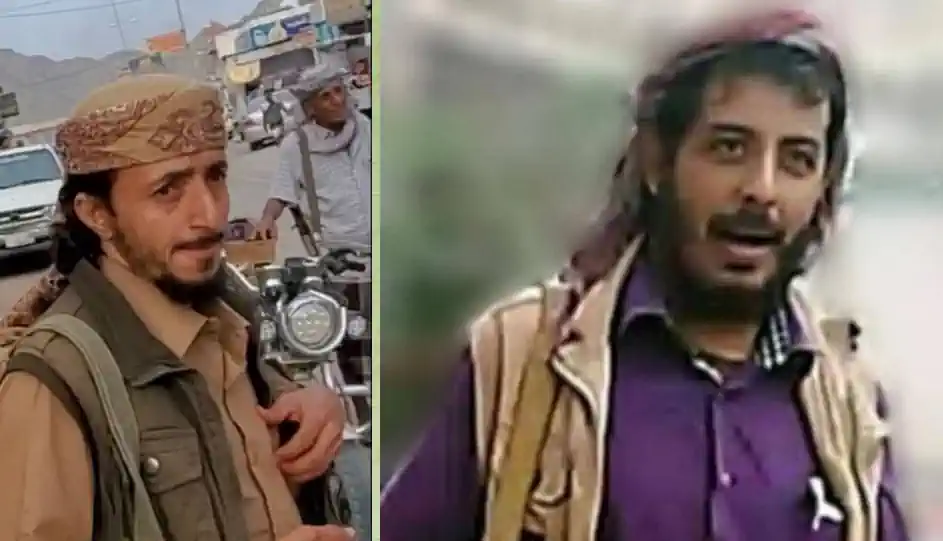
On the evening of Monday, December 8, U.S. military drones targeted a motorcycle near a farm in the al‑Hadhun area, northeast of Marib city. The attack killed Abu Ubaidah al‑Hadhrami, a field commander of al‑Qaeda, and Anis al‑Hasili, a senior intelligence and security operative of the group.
Al‑Hadhrami was a prominent member of al‑Qaeda’s Yemen branch, known for publishing a booklet titled “Thus We Were Killed in the Name of Jihad” criticizing ISIS actions against al‑Qaeda. In recent months, he had also engaged in activities supporting Gaza. Anis al‑Hasili, meanwhile, was a senior intelligence official within al‑Qaeda and maintained close ties with Mabkhout bin Aboud al‑Sharif, head of the Islah Party organization in Marib.
According to Western media statistics on U.S. airstrikes in Yemen over the past two decades, more than 386 operations have been carried out against al‑Qaeda members in the country.
UPDATE, December 11:
Local sources in Marib report that Abu Ubaidah al‑Hadhrami, a senior al‑Qaeda member, was not killed in the recent U.S. drone strike on the al‑Hadhun area. The individual who was actually killed has been identified as Mohammed Saeed al‑Kazmi, known as al‑Saqi, a field commander of al‑Qaeda from Abyan province. Al‑Kazmi was one of the key figures overseeing al‑Qaeda’s operations and movements in Abyan.
Analysts note that his elimination effectively aided the Southern Transitional Council in consolidating control over Abyan. Meanwhile, the initial reports of al‑Hadhrami’s death appear to have been part of an intelligence tactic—either by Western security agencies or al‑Qaeda itself—intended to mislead and confuse opposing intelligence networks.
At the same time, STC fighters seized all checkpoints and outposts surrounding the PetroMasila oil company (affiliated with Saudi Arabia) in Hadhramaut province.
The advance of Emirati‑aligned forces in Hadramaut and Shabwa, coupled with the repeated withdrawals of Islah fighters, marks a significant shift. The STC does not have the capacity to control these areas without support from other Emirati‑backed factions, indicating Abu Dhabi’s role behind the scenes.
In the coming days, attention will turn to Saudi Arabia’s response to these southern advances and what orders will be issued to the al‑Dara al‑Watan forces. Opponents of the UAE in Hadramaut are awaiting action by al‑Dara al‑Watan against the southerners.
The Eternity C, owned by a Greek company cooperating with Israel was attacked and sunk by Yemeni armed forces in the Red Sea on July 7.
This move is likely linked to recent UN‑ and Oman‑mediated talks between Ansarallah and Saudi Arabia. Ansarallah often undertakes such gestures to demonstrate good faith in fulfilling its commitments.
Following the STC’s takeover of Hadhramaut’s administrative center and surrounding areas, STC representatives and Hadhramaut tribal leaders reached an agreement through the mediation of a Saudi security‑military delegation. The talks focused on safeguarding oil fields and negotiating toward a comprehensive settlement.
Under the deal, military tensions between the sides will cease starting Thursday morning, with a ceasefire in place until the mediation committee concludes its work and a full agreement is reached. All fighters under the Saudi‑led coalition must withdraw at least one kilometer from oil facilities, allowing personnel and security forces free movement. Once withdrawals are implemented, meetings between al‑Khanbashi and Amr bin Habreesh will be held to finalize the settlement under mediator supervision.
The Hadhramaut confrontation appeared to end with the Southern Transitional Council expanding its influence in occupied Yemeni territories, Saudi interests secured in the oil‑rich areas, and tribal leaders brought under control. Yet it left behind important lessons.
The first was the defeat of the Islah Party in Hadhramaut, which showed that Saudi Arabia places little value on them, limiting cooperation to countering Ansarallah and holding populous, religiously sensitive cities such as Marib and Taiz. The second was the strengthening of STC military power, now equipped with new weapons including drones and micro‑drones, aligned with UAE objectives.
Behind the STC’s success in Wadi Hadhramaut lay support from Tariq Saleh’s forces, the Giants Brigades, and Shabwa Defense units, which allowed southern forces to fully concentrate on northern Hadhramaut while these allies managed other areas until the clashes ended. This scenario could also be replicated against Ansarallah positions, potentially delivering significant blows to the central government’s authority in Sanaa.
In a joint statement, the committee expressed support for the naval forces of the Saudi-backed Yemeni government and confirmed its commitment to strengthening the Coast Guard’s maritime security, particularly in intercepting arms and narcotics shipments.
The formation of this committee follows the September 16 meeting in Riyadh, where these states, along with representatives from China, Australia and Persian Gulf countries convened. At that earlier session, Saudi Arabia and the UK sought to secure China’s and other nations’ backing for long‑term security commitments and capacity‑building of Yemen’s Coast Guard.
However, the second meeting revealed that only certain regional and Western allies joined the program. These are the same parties whose shipping and economies have suffered heavy losses due to Yemeni armed forces’ naval operations against Israel.
This move aims to prevent a possible offensive by Southern Transitional Council (STC) forces against the Hadhramaut desert and the province’s oil-rich regions.
Al-Dara’ Al-Watan (Shield of the Nation) militias were formed in late November 2022 with Saudi backing and the involvement of Sagheer bin Aziz and Tariq Saleh. They were assembled from Hadhramaut tribal fighters, Yemen Al-Saeed forces (aligned with Sagheer bin Aziz), and elements of Tariq Saleh’s units in western Lahj province. Saudi Arabia has equipped these forces to counter the STC and secure control over Hadhramaut’s oil fields and ports.
Tensions between Hadhramaut tribes and STC factions stationed along the province’s southern coast are escalating as both sides mobilize reinforcements from other regions to gain dominance over oil resources. Despite their alliance against Ansar Allah, Saudi-backed proxy groups are locked in fierce competition to divide the wealth and resources of Yemen’s occupied territories.