
Military Knowledge: Eitan (Heron TP) Drone
The IAI Eitan drone—known in Hebrew as “Steadfast” within the Israeli Air Force and marketed internationally as the Heron TP—represents a shift from traditional tactical border surveillance toward projecting power deep into distant territories. This evolution marks a transition from the successful Heron-1 system, a medium-altitude long-endurance (MALE) UAV, to the Eitan platform, which belongs to the high-altitude long-endurance (HALE) class. The deployment of such a drone by the Israeli Air Force reflects a longstanding strategic ambition by the Israeli regime to develop capabilities for conducting long-range, high-impact missions.
Introduction
The Eitan UAV is rooted in Israel’s legacy of innovation in unmanned aerial systems. The primary driver behind the development of advanced drones in Israel was the intelligence failures during the 1973 Yom Kippur War—an experience that underscored the urgent need for real-time, persistent situational awareness for ground and air forces, without risking pilot lives. Today, UAVs account for nearly 80% of the Israeli Air Force’s total operational flight hours, highlighting their central role in modern military strategy.
Israel Aerospace Industries (IAI), originally founded in 1953 under the name Bedek Aviation, evolved from a modest aircraft repair facility into a leading aerospace and defense manufacturer. It took on the mission of bridging the intelligence gap exposed by past conflicts.
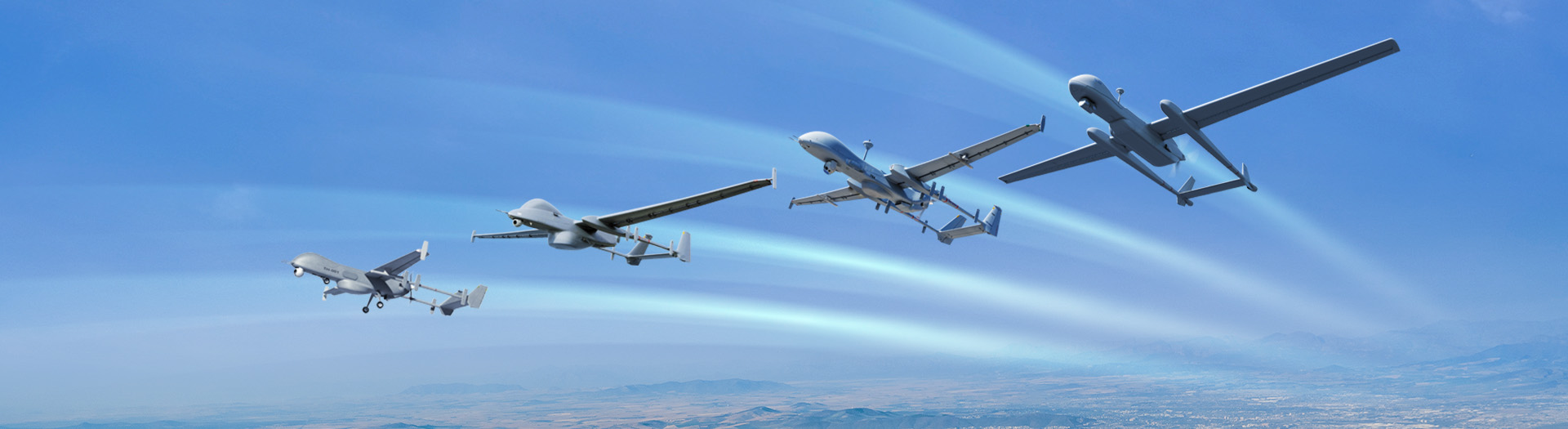
The predecessor to the Eitan—marketed as Heron TP—is the highly successful Heron-1, also known as Shoval or Machatz-1, which first flew in 1994. Heron became the backbone of Israel’s drone fleet, logging hundreds of thousands of operational flight hours both domestically and with over 13 international clients. It played a critical role in strategic and tactical ISR (Intelligence, Surveillance, Reconnaissance) missions, including operations in Gaza and Lebanon. Heron’s design philosophy centered on three pillars: long endurance, multi-role flexibility, and high levels of automation—principles that later formed the foundation for the more advanced Eitan platform.
The Heron-1 has the following specifications: its wingspan is 16.6 meters and its length is 8.5 meters long. The drone is capable of climbing to an altitude of 10,000 meters (30,000 feet) and has an endurance of more than 50 hours. The Heron-1 has a maximum takeoff weight of about 1,150 kilograms and can carry up to 250 kilograms of surveillance and combat payload under the wings.
Strategic Shift and Operational Demands
In the early 2000s, Israel’s strategic threat landscape underwent significant transformation. The Israeli regime faced a complex network of non-state actors equipped with advanced technologies, as well as hostile state adversaries located beyond its immediate borders. These evolving threats exposed the limitations of existing UAVs like the Heron, particularly in terms of altitude, range, and payload capacity.
This shift created an urgent operational need for a High-Altitude Long-Endurance (HALE) platform capable of multi-role intelligence gathering across vast geographic areas. The new UAV had to sustain flight for over 24 hours, carry heavy payloads—including advanced radar systems, optical sensors, and signal intelligence equipment—and operate at altitudes that would place it beyond the reach of most air defense systems.
More than just an intelligence-gathering tool, this platform was designed to support the entire operational cycle, including joint missions with fighter aircraft. Its role was to reinforce Israel’s proactive military doctrine known as the “campaign between wars,” aimed at neutralizing threats before they escalate into full-scale conflict.


Israel’s “Campaign Between Wars” strategy is built on the premise that the country periodically faces short but significant military confrontations. The core objective of this doctrine is to delay the onset of future conflicts while simultaneously strengthening Israel’s strategic posture—ensuring that the quasi-state regime is well-prepared for the next round of tensions.
The development path of the Eitan UAV reflects Israel’s distinctive model of defense innovation, which prioritizes rapid advancement and operational feedback over linear, incremental progress. The program was first publicly acknowledged in April 2004 by the Israeli Air Force magazine, which reported the flight of two prototype units. In March 2005, a brief collaboration was initiated with the U.S.-based Aurora Flight Sciences to develop a platform named “Orion,” though the effort did not yield results. Conflicting reports about Eitan’s maiden flight—citing both July 2006 and January 2007—suggest a development process marked by continuous testing and iterative refinement.
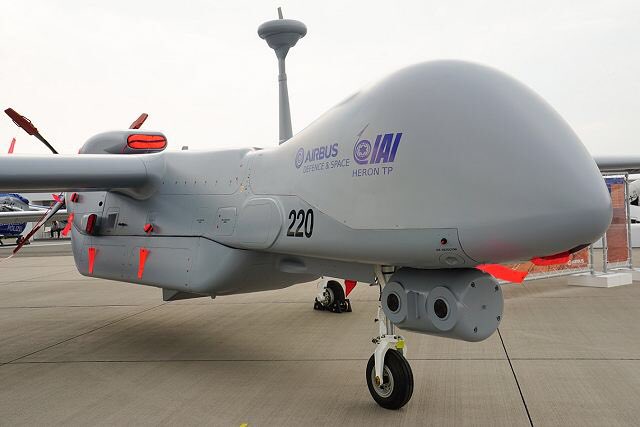
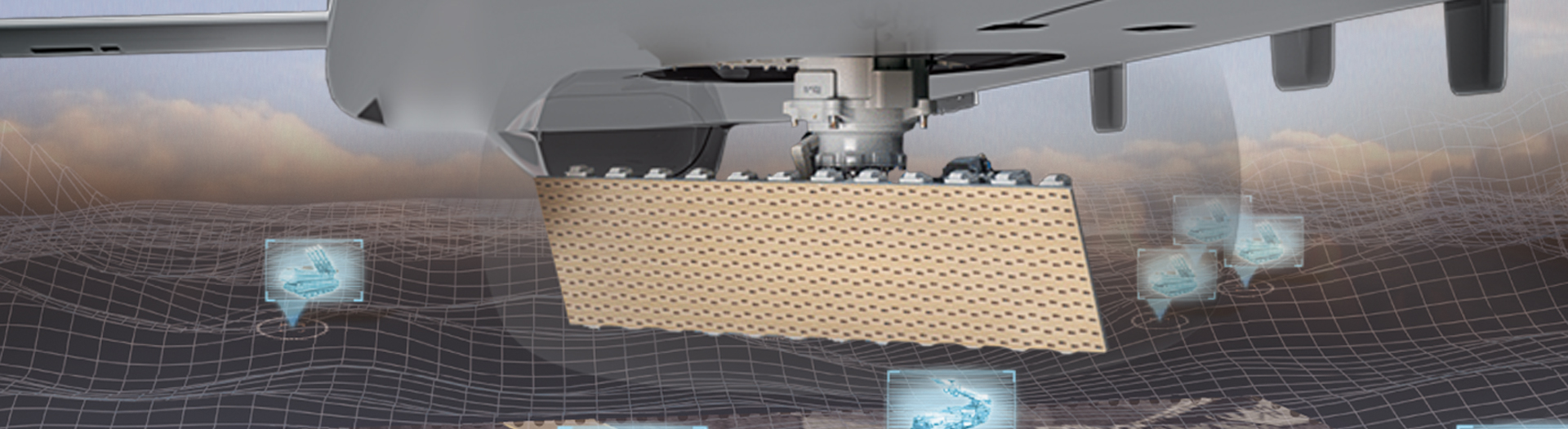
The drone was officially unveiled on October 8, 2007, at Tel Nof Airbase. The showcased configuration featured a large Synthetic Aperture Radar (SAR) pod mounted beneath the fuselage, a multispectral electro-optical sensor suite, and signal intelligence (SIGINT) arrays—confirming its role as a versatile, multi-mission platform.
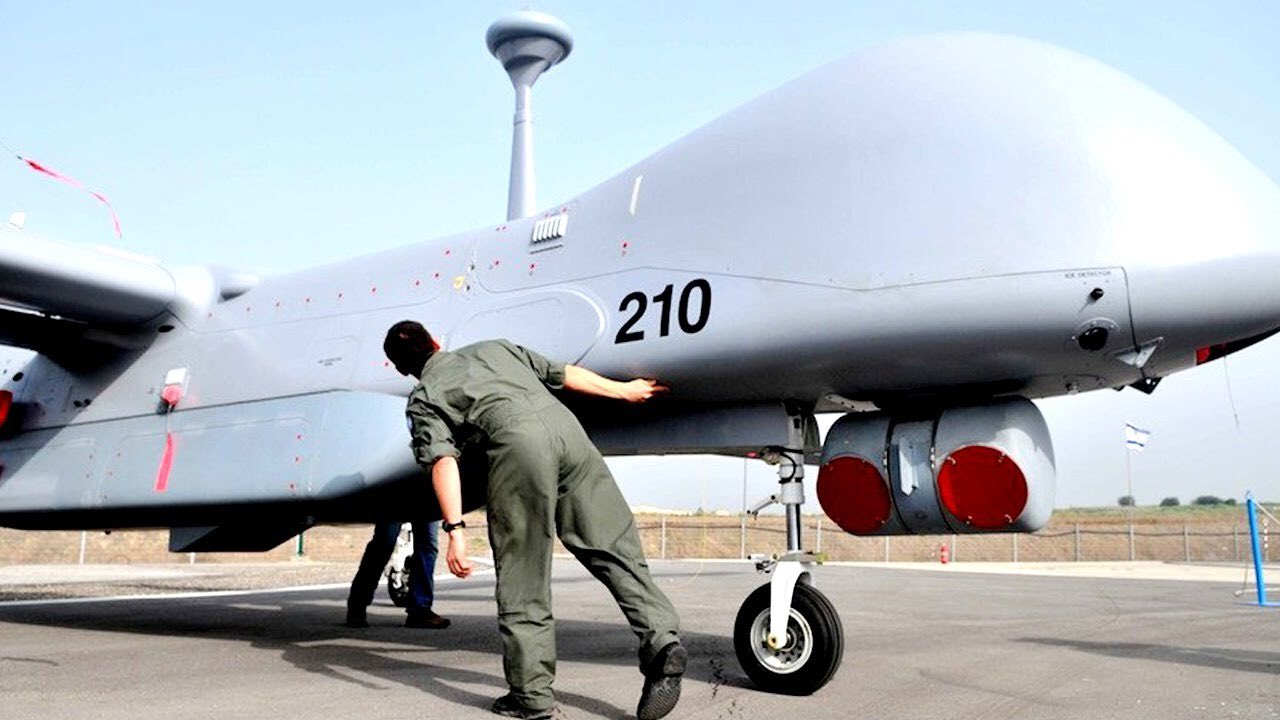
Notably, Eitan was reportedly deployed during Operation Cast Lead in Gaza (2008–2009), prior to its formal induction into the Israeli Air Force’s 210th “White Eagle” Squadron in December 2010. This pattern of combat deployment before official service entry exemplifies Israel’s “spiral” development approach, where systems are battle-tested before public rollout—a critical advantage in the competitive global defense market.
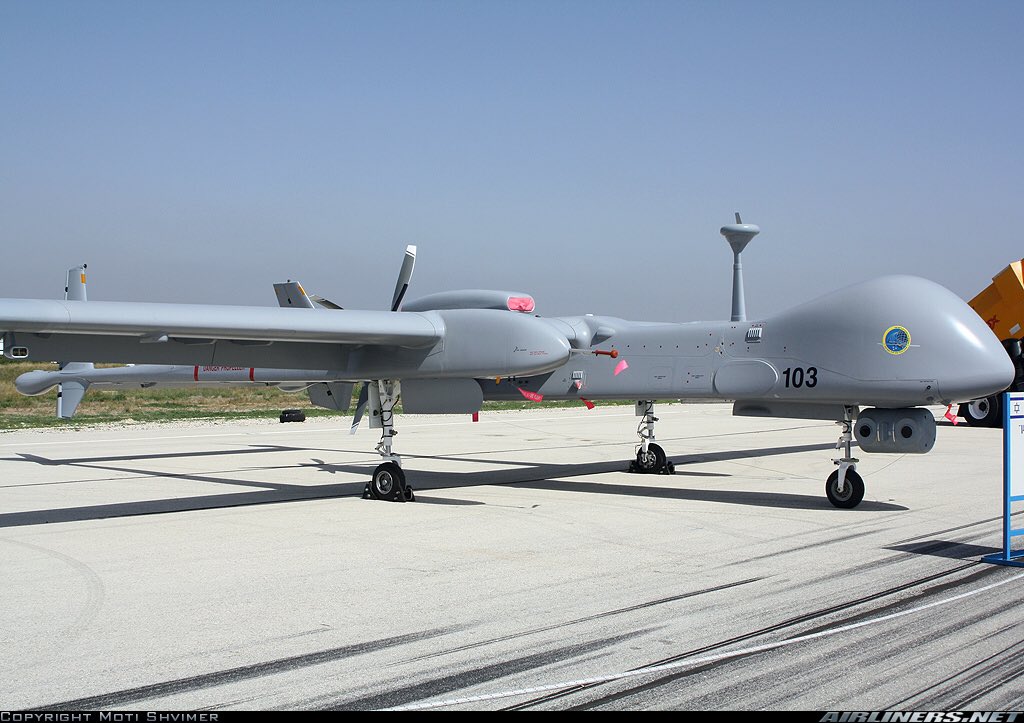
Technical Specifications and Design Features of the Eitan UAV
The Eitan is a large unmanned aerial vehicle, measuring 14 meters in length with a wingspan of 26 meters—comparable to that of a Boeing 737 passenger jet. These dimensions are essential for generating sufficient lift to support long-endurance, high-altitude missions.
Its airframe is constructed entirely from lightweight composite materials, offering a high strength-to-weight ratio that enhances both performance and durability. The aerodynamic design features a cantilever wing structure and a twin-boom tail configuration. This layout not only provides excellent flight stability but also preserves unobstructed space beneath the fuselage, allowing for the integration of large payloads such as advanced sensors and radar systems.
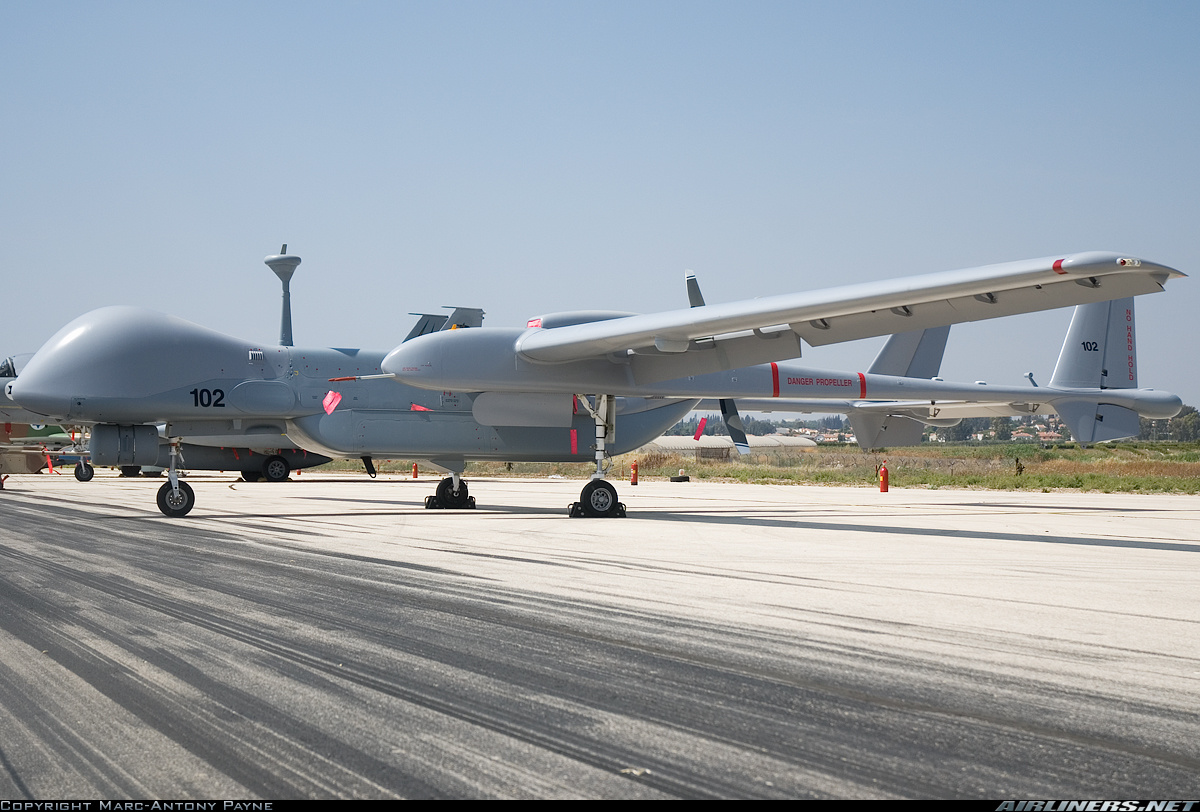
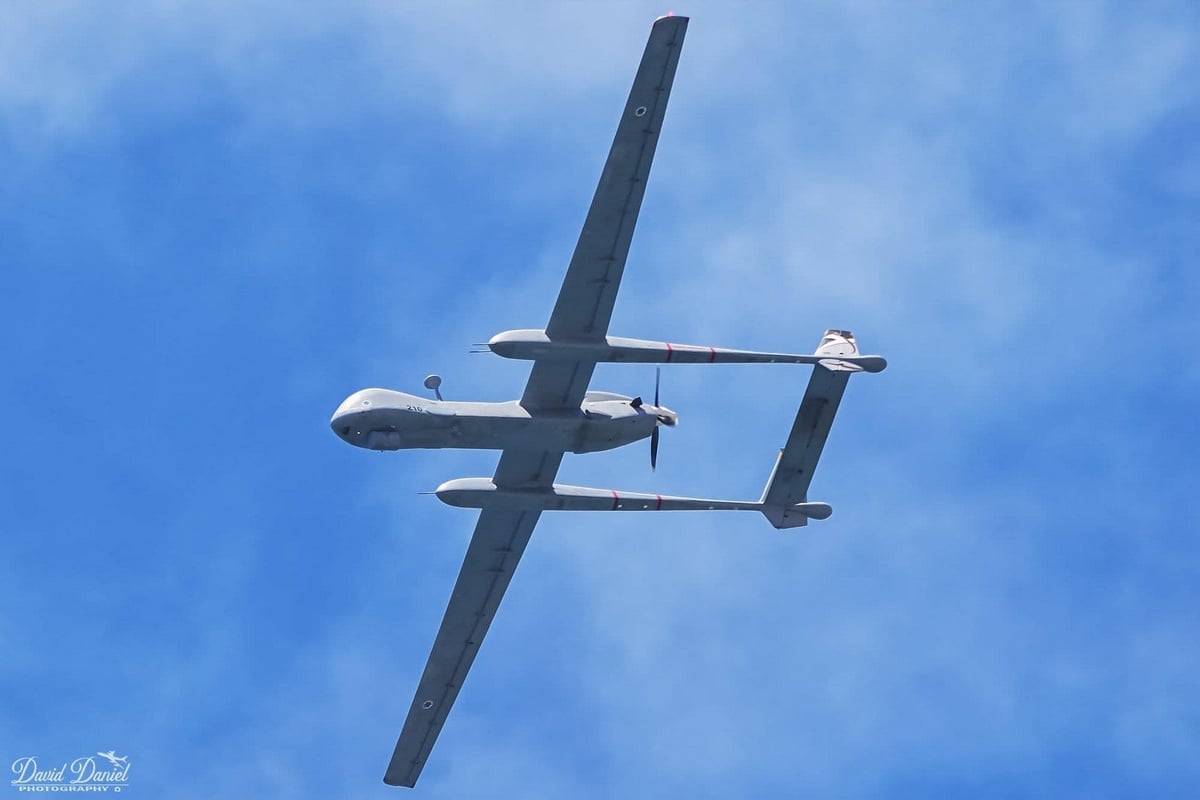
The Eitan UAV is powered by a Pratt & Whitney Canada PT6A-67A turboprop engine, delivering 1,200 horsepower. This robust propulsion system enables the drone to reach altitudes exceeding 45,000 feet (approximately 14,000 meters)—well above commercial air traffic and beyond the effective range of most short-range air defense systems.
With a top speed of 407 kilometers per hour, Eitan offers sufficient velocity for tactical responsiveness, allowing it to adapt quickly to dynamic mission requirements while maintaining high-altitude endurance.

Estimates regarding the Eitan UAV’s range and endurance vary across sources. Typically, its flight endurance is reported between 30 and approximately 70 hours, with a maximum range exceeding 7,400 kilometers. Its operational Beyond-Line-of-Sight (BLOS) range surpasses 1,000 kilometers, though this is primarily constrained by command-and-control limitations rather than fuel capacity.
In armed missions carrying heavier payloads, endurance naturally decreases. The drone’s maximum takeoff weight is reported to range between 4,650 and 5,670 kilograms, while its standard payload capacity is around 1,000 kilograms—sufficient for a wide array of surveillance and combat equipment.
For export purposes, the Heron TP-XP variant has been introduced with a reduced payload capacity of 450 kilograms to comply with the Missile Technology Control Regime (MTCR) restrictions. This ensures the platform remains within international arms control guidelines while still offering robust ISR capabilities to foreign clients.
Avionics, Autonomy, and Data Link Systems of the Eitan UAV
The Eitan UAV is equipped with a triple-redundant avionics architecture, ensuring that the failure of a single subsystem does not compromise the integrity or control of the platform. This robust design enhances mission reliability and survivability in contested environments.
Eitan is capable of fully autonomous operation—from takeoff to landing—thanks to its advanced Automatic Takeoff and Landing (ATOL) systems. These allow the drone to follow pre-programmed flight profiles with minimal operator intervention, significantly reducing workload and enabling safe return in the event of communication loss.
The platform is also equipped with de-icing systems and is engineered to operate in harsh weather conditions, expanding its mission envelope across diverse climates.
To counter electronic warfare threats, Eitan integrates advanced anti-jamming GNSS and communication systems, including IAI’s proprietary ADA system. These technologies ensure resilient positioning, navigation, and secure data transmission even under electronic attack.
As a Multi-INT platform, Eitan can simultaneously carry and operate multiple high-end sensors. Its modular design allows flexible sensor integration tailored to specific mission requirements. Key payloads include:
- Electro-Optical/Infrared (EO/IR): Featuring multi-sensor suites such as the Tamam M-19HD and AMPS systems, equipped with HD cameras, laser rangefinders, and laser designators for precision targeting and surveillance.


• Radar Systems: Eitan is equipped with a high-resolution Synthetic Aperture Radar (SAR), enabling detailed imaging in all weather conditions and across day-night cycles. It also features Ground Moving Target Indicator (GMTI) functionality for tracking mobile ground targets in real time. Additionally, the platform includes a maritime patrol radar with Identification Friend or Foe (IFF) and Automatic Identification System (AIS) capabilities, allowing it to monitor and classify naval traffic with precision.
• Signal and Electronic Intelligence (SIGINT/ELINT): The UAV carries advanced antenna arrays designed for intercepting and analyzing radar emissions and radio communications. These systems enable Eitan to perform strategic electronic surveillance, contributing to situational awareness and threat assessment across multiple domains.
Collected data is transmitted in real time to the command center via direct Line-of-Sight (LOS) links and satellite communications (SATCOM). Israel’s collaboration with Western partners such as Thales has enabled NATO-compatible data links (STANAG 7085) for export users like Germany. Additionally, advanced Software-Defined Radios (SDRs), such as the ARC-840 ELTA, ensure interoperability among various forces.
Combat and Strike Capabilities of the Eitan UAV
Although the Israeli military maintains a policy of ambiguity regarding the arming of its drones, various reports and analyses describe Eitan as a potent strike platform. It is believed to be capable of carrying a range of Israeli-made guided munitions, including missiles from the Spike family.
Germany’s decision to arm its Heron TP fleet—following extensive political debate—further validates the drone’s weaponization potential. This confirms that Eitan’s role extends well beyond intelligence gathering.
Mission Profile and Operational Roles
Eitan serves as a persistent Intelligence, Surveillance, and Reconnaissance (ISR) platform. Its primary function is to act as an “ever-watchful eye in the sky,” delivering a continuous, real-time stream of high-precision data to battlefield commanders. This capability underpins nearly all modern military operations. With its extended flight endurance, Eitan can loiter over target areas for days, enabling intelligence analysts to build detailed assessments of enemy movement patterns and behavioral profiles—tasks that are impractical for manned aircraft with limited flight durations.
Beyond ISR, Eitan excels in target acquisition. Using advanced EO/IR sensors and laser designators, it can precisely locate and mark targets for engagement by other assets such as artillery, attack helicopters, or fighter jets. After a strike, it performs Battle Damage Assessment (BDA), using its sensors to provide immediate feedback on the effectiveness of the attack.
Eitan also functions as a critical airborne node for Command, Control, Communications, Computers, and Intelligence (C4I). Its altitude and endurance allow it to serve as a stable relay, connecting ground forces, naval units, and other aircraft that may be beyond each other’s line of sight. This capability is foundational to network-centric warfare, ensuring a shared operational picture across all levels of the combat force.
Electronic Warfare (EW) and Cyber Support
Eitan is a powerful electronic warfare platform. It can map the enemy’s electromagnetic spectrum, identifying command nodes, communication links, and radar frequencies. This intelligence can then be used to jam or deceive enemy systems, effectively blinding and silencing them at critical moments during operations.
Eitan’s versatility extends to the maritime domain, where it is deployed for patrol missions within Israel’s Exclusive Economic Zone (EEZ) and for monitoring offshore infrastructure. Its long-range sensors and endurance make it ideal for persistent surveillance over vast oceanic areas.
Operational History
- Gaza: Eitan, alongside the broader Heron family, has been a cornerstone of Israeli operations in Gaza for over a decade. It played key roles in major campaigns such as Operation Cast Lead (2008–09), Operation Protective Edge (2014), and Operation Iron Swords (2023). In densely populated urban environments, its ability to provide 24/7 surveillance has been critical. During Operation Iron Swords, which began on October 7, 2023, Heron and Eitan drones were among the first assets deployed. With ground command posts caught off guard by Hamas’s initial assault, these UAVs became the primary source of real-time intelligence for higher command levels.
- Northern Front (Syria and Lebanon): Eitan is routinely used for surveillance along the Lebanese border and for deep reconnaissance and strike missions inside Syria. These missions often target weapons shipments and military infrastructure linked to Iranian interests. Its high altitude and long range allow it to monitor vast territories and engage fleeting targets with precision.

Export and International Operators of the Eitan UAV
- Germany: The acquisition of Heron TP drones by Germany marked a significant milestone in defense cooperation between Tel Aviv and Berlin. For Germany, the platform serves as a critical interim solution to bridge operational capability gaps in the HALE UAV domain until the joint European “Eurodrone” becomes operational. The 2022 Russian invasion of Ukraine acted as a key geopolitical catalyst, accelerating political decisions to arm the fleet.
- India: India operates a large fleet of Heron-1 drones and has procured the more advanced Heron TP variant—referred to as Heron Mk2—to enhance its surveillance and strike capabilities along its tense borders with China and Pakistan.
- Greece: Amid rising tensions with Turkey, the Hellenic Air Force has temporarily leased the Heron TP in a maritime configuration, using it for coastal surveillance and strategic monitoring in the Aegean region.
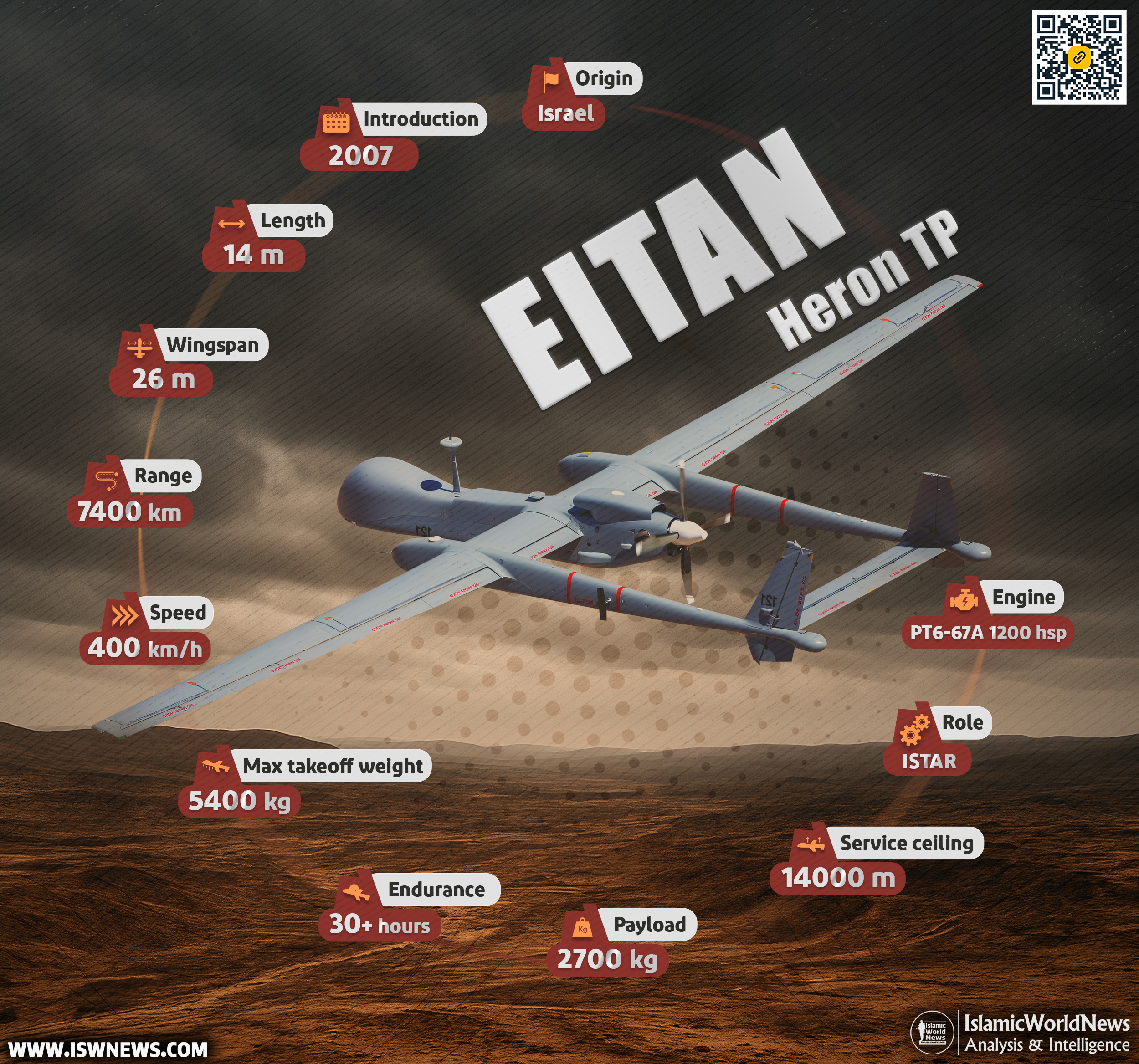
Eitan (Heron TP) drone specifications:
Type: Surveillance and reconnaissance (and possibly combat)
Origin: Israel
Manufacturer: Israel Aerospace Industries
First flight: 2004
Unveiled: 2007
Length: 14 m
Wingspan: 26 m
Engine: PT6-67A, 1,200 hp
Range: 7,400 km
Speed: 400 km/h
Service ceiling: 14,000 m (46,000 ft)
Endurance: +30 hours
Maximum takeoff weight: 5,400 kg
Payload weight: 2,700 kg


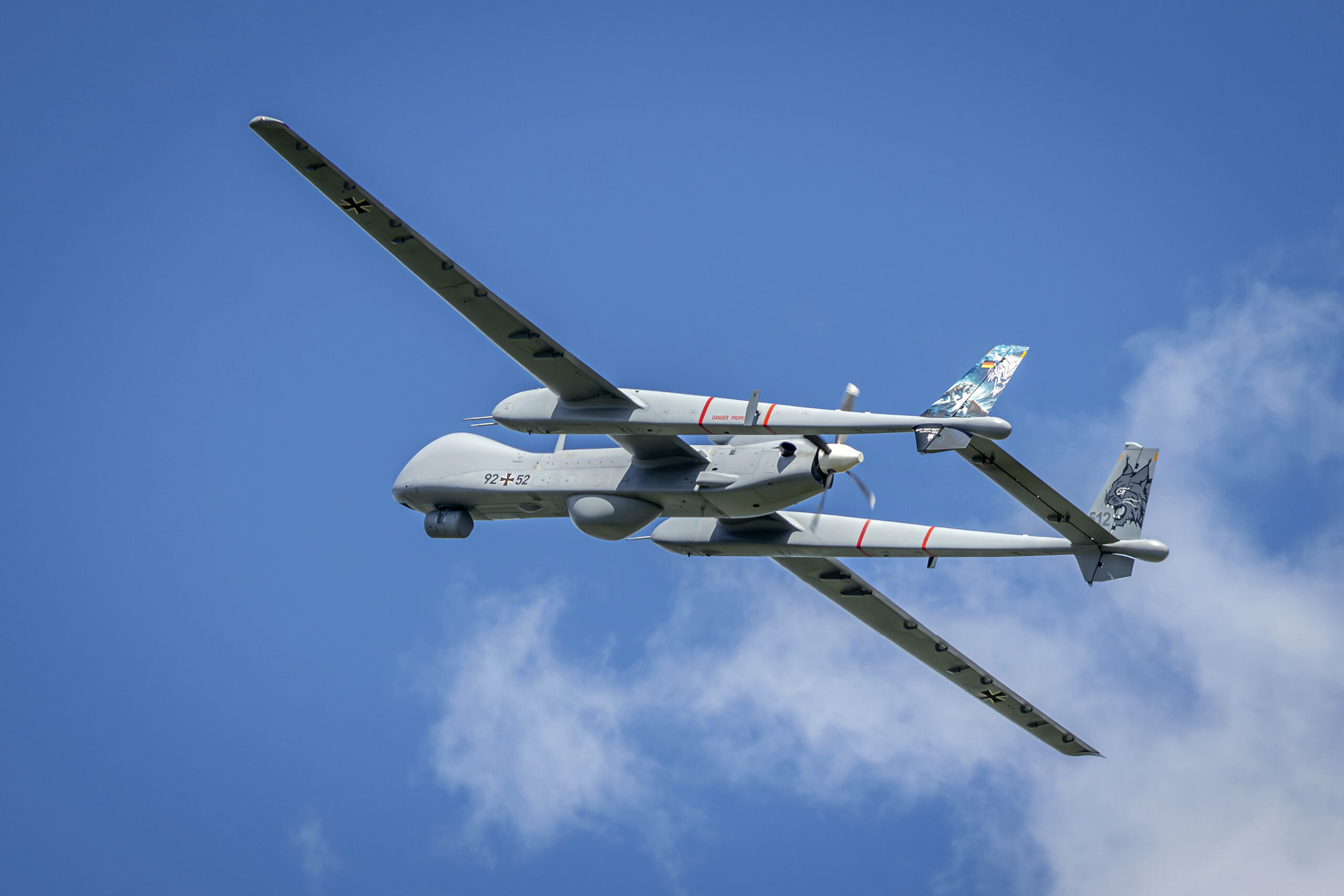
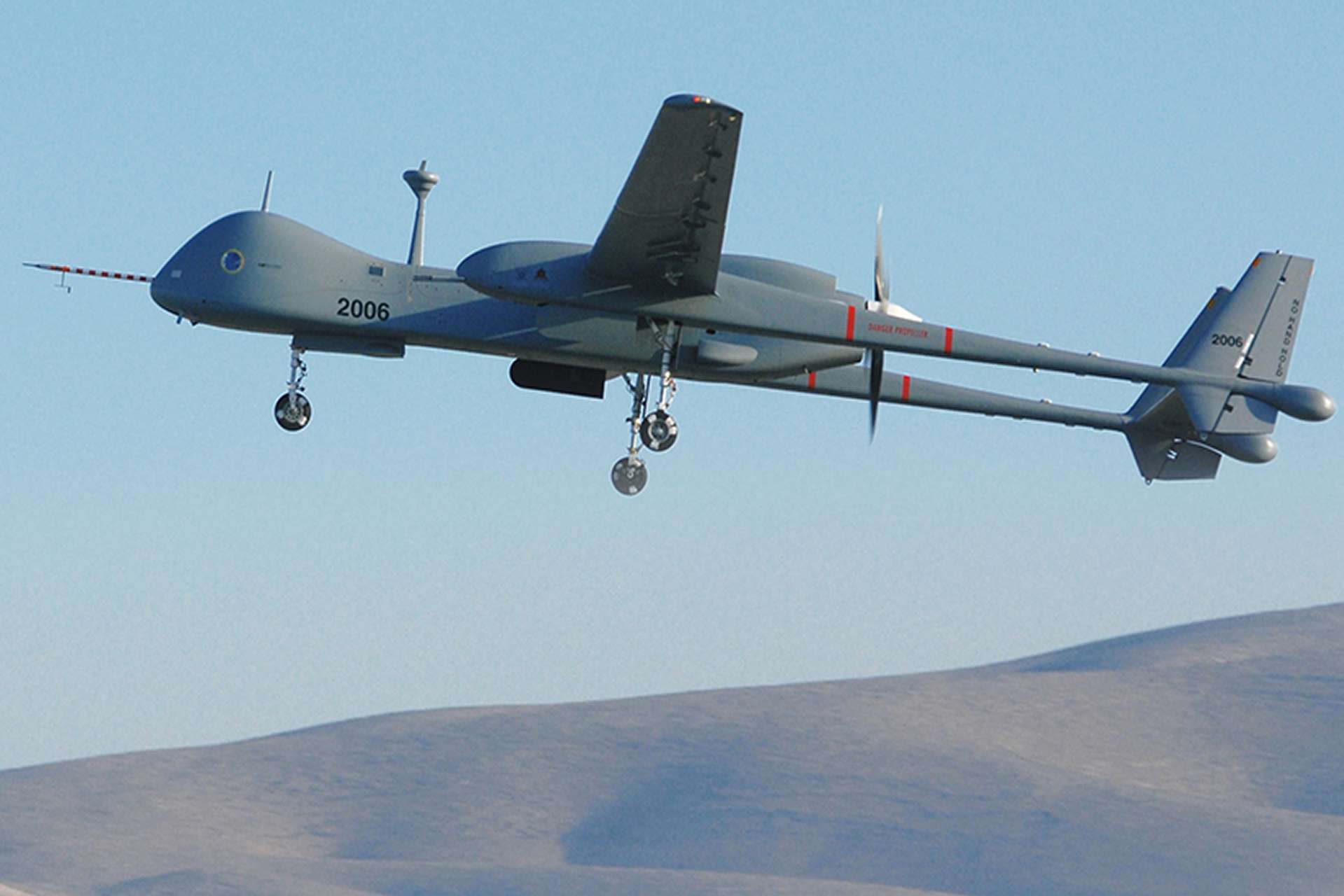
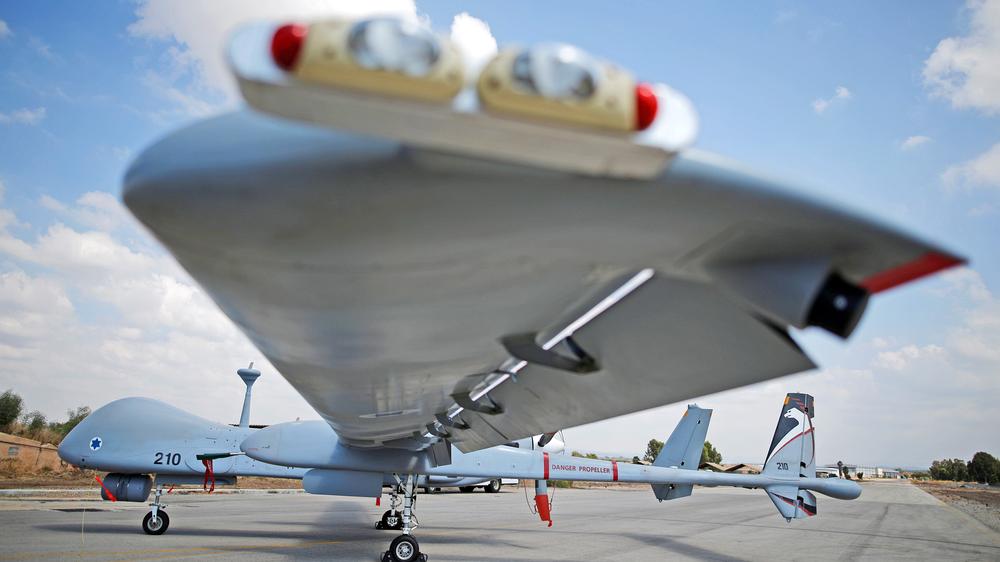
More pictures of Eitan’s drone:





Comment