American Hashd al‑Shaabi!
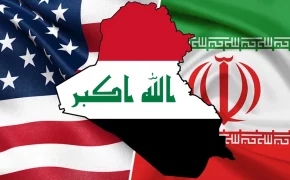
The appointment of Mark Savaya, a Chaldean‑Assyrian Iraqi‑American entrepreneur, as the U.S. President’s Special Envoy for Iraq in November 2025 was seen as more than a routine diplomatic move. It came at a time of rising tensions between Washington and resistance groups, with Iraq approaching parliamentary elections. Analysts view this as part of the Trump administration’s broader strategy to redefine Iraq’s role in the regional order and curb Iranian influence. Sawaya, beyond his symbolic position as a representative of Christian minorities, has been tasked with a multi‑faceted mission: rebuilding Baghdad–Washington relations, strengthening U.S. investment and economic presence, and reshaping Iraq’s security structure in line with Western interests.
Return of Trump’s Personal Diplomacy
Al‑Arab Weekly reported that Savaya’s appointment—made without congressional approval—signals Donald Trump’s intent to restore direct control of foreign policy to his inner circle in the White House. This reflects a recurring pattern in his foreign policy: major international decisions bypassing the State Department and pursued through personal and political ties with loyal associates. As seen in direct talks with North Korea’s leader or the Abraham Accords, Trump favors “personal, fast‑track diplomacy” over formal channels. In Iraq, choosing a non‑diplomat close to the president shows his preference for informal but controllable pathways. Savaya thus embodies a model where the president directly manages foreign relations to advance political, security, and electoral goals. His appointment marks the return of Trump’s personalized diplomacy to the Middle East—enhancing Washington’s direct influence but risking the weakening of professional, institutional foreign policy structures.
Redefining Sovereignty in Iraq
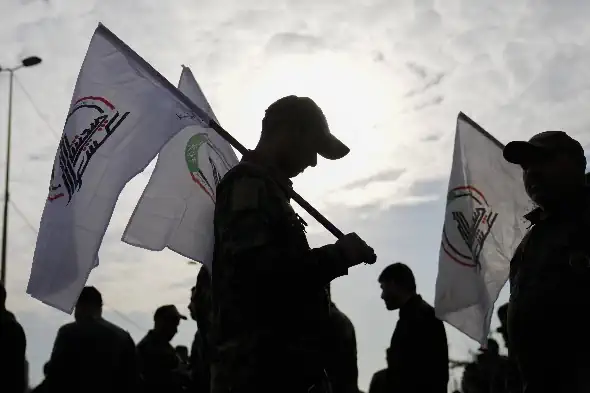
In his first official statements, Savaya stressed the need for centralized command and ending the activities of armed groups outside government control—remarks clearly aimed at Hashd al‑Shaabi and Iran‑aligned forces. From Washington’s perspective, curbing these groups is a prerequisite for Baghdad’s “real sovereignty” and future security and economic cooperation. At a deeper level, this policy redefines sovereignty itself: Iraqi independence is framed as alignment with U.S. policies. Analysts argue this is part of Trump’s broader plan to contain Iran from within Iraq’s structures, not through direct confrontation but via reconstruction, investment, and minority support. A symbolic example is the reintegration of the Christian “Nineveh Plains Protection Units” into the army, signaling centralization of power and weakening of non‑state actors. Savaya’s mission can thus be seen as an effort to reconfigure Iraq’s security architecture to serve Western interests—ostensibly strengthening the central government but in practice shifting the balance toward Washington’s preferred order.
Linking Security Policy with Economic Reconstruction
Savaya’s statements place economic recovery on par with security reform. He repeatedly emphasized the need for foreign investment, rebuilding Iraq’s worn‑out infrastructure, and opening the economy to international companies. For Washington, economic development is a prerequisite for political stability and central government authority. Observers note, however, that deeper political and strategic aims lie behind this economic agenda. U.S. reconstruction plans are not merely humanitarian or technical—they are part of a wider policy to redefine Iraq’s role in the regional order and secure American access to its energy resources. Linking reconstruction with Western economic presence ensures continued U.S. political influence while reducing rivals’ roles in energy. Analysts highlight similarities with past U.S. experiences in rebuilding crisis‑stricken states, where investment and infrastructure projects became tools of political and security engineering. With about 11% of global oil reserves, Iraq holds a special place in this strategy. Savaya spoke of “reviving Iraq’s historic role in the region,” suggesting economic engagement as a prelude to “restoring state authority and social trust.” Yet in practice, foreign corporate expansion and concentrated reconstruction projects may reshape Iraq’s economy in ways more aligned with external powers than with national priorities.
Soft Power Through Religious Minorities
Savaya’s appointment carries a clear political message: reasserting U.S. influence in Iraq’s social fabric via religious minorities. He hails from a Chaldean‑Assyrian family rooted in Tal Afar, Nineveh, and maintains close ties with Iraqi Christian diaspora communities in the U.S. Analysts see this as a cultural and social lever in areas once dominated by resistance groups and Iran‑aligned forces. Assyrian media outlets such as Syri Press and Baghdad Tribune framed his appointment as “the return of Iraq’s Christian voice.” In reality, it represents an attempt to build a new social base for Washington’s policies in northern Iraq, particularly in regions where sectarian tension and ethnic divides facilitate external involvement. In this context, the revival of the “Nineveh Plains Protection Units” within the Iraqi army—coinciding with Savaya’s mission—carries symbolic weight. Though presented as enhancing minority security and rebuilding war‑damaged areas, it may in practice foster military and social structures aligned with Western‑oriented currents. Thus, leveraging religious minorities serves not only humanitarian purposes but also as part of America’s soft‑power strategy to re‑embed its political and economic presence in Iraq.
Dual Function of Savaya’s Appointment
The timing of Savaya’s appointment, coinciding with Iraq’s parliamentary elections, adds another dimension. Reports suggest the move aims to exert indirect influence on Iraq’s political landscape, steering it toward coalitions more aligned with Washington’s policies. Savaya’s mission includes mediating among Sunni, Kurdish, and minority groups, encouraging their participation in a U.S.‑backed political framework. While presented as fostering stability and reducing armed groups’ influence, this is part of a broader strategy to reshape Iraq’s power balance so that future government decisions align more closely with Western interests.
Iraq’s Role in the New U.S. Strategy
Regionally, Sawaya’s appointment is seen as part of Trump’s overarching plan to reconfigure Middle Eastern order. Analysts link it to Washington’s efforts to advance normalization between Arab states and Israel. Iraq, with its geographic position between Saudi Arabia, Jordan, the UAE, and the Kurdistan Region, is viewed as a potential connecting hub for America’s allies. Sawaya’s mission thus extends beyond economic cooperation and reconstruction—he is positioned to facilitate Baghdad’s political and security ties with regional coalitions favored by Washington.
In summary, Sawaya’s appointment represents a multi‑layered initiative pursuing political, economic, and symbolic goals simultaneously. Individually, he embodies the use of minority social capital in U.S. policy; politically and security‑wise, he is tasked with limiting armed groups and strengthening central authority; strategically, his mission consolidates Washington’s foothold in Iraq’s economy and energy sector, aligning the country more closely with the Western bloc. His slogan of a “Strong Iraq” reflects a broader ambition: to reintegrate Baghdad into an order designed to secure U.S. and allied interests in the region.
Would you like me to refine this into a policy brief format (executive summary + key implications) or keep it as a long‑form analytical translation?
Comment