
Taiwan Strait Time!
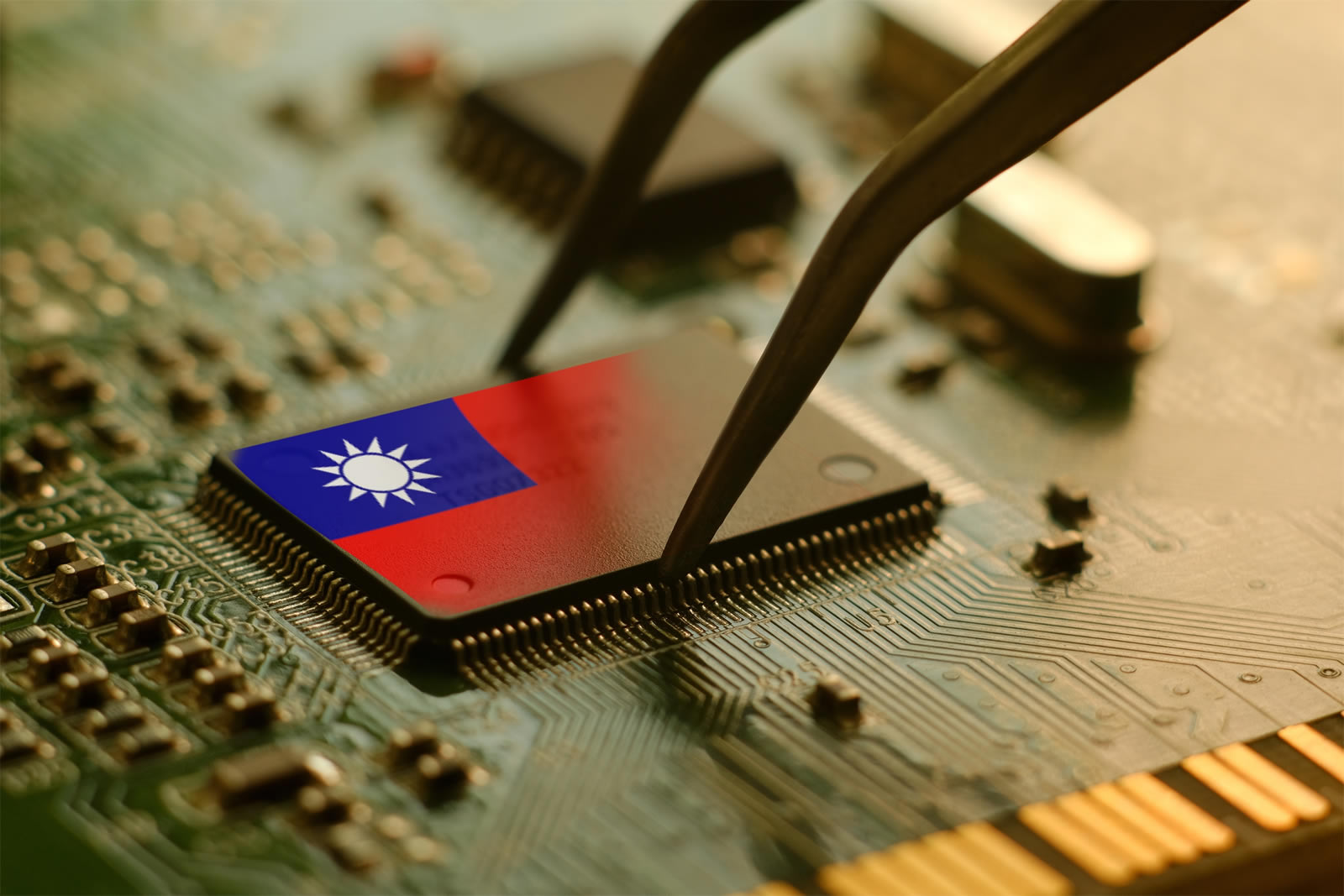
The Iran war and the Strait of Hormuz crisis served for China as a practical test in the use of strategic chokepoints, demonstrating that disruption to vital global trade routes can impose heavy costs on rivals without direct warfare. This experience is likely to push Beijing toward reinforcing a strategy of encirclement and gradual control over Taiwan—an approach in which the world’s dependence on Taiwan’s semiconductor industry becomes a geoeconomic leverage point. Consequently, the Taiwan conflict may shift from a deterrence model based on military power toward one grounded in control over supply chains and critical global economic chokepoints.
The Longstanding Dispute
Prior to the outbreak of the Iran war in February 2026, China had consistently upheld the “One China” principle, regarding Taiwan as an inalienable part of its territory. Beijing’s policy combined gradual pressure with avoidance of direct confrontation: regular military patrols around Taiwan, diplomatic pressure to limit Taiwan’s international recognition, and deepening economic ties aimed at eroding the island’s operational autonomy. At the same time, China presented peaceful reunification as the preferred option, while reserving the right to use force to prevent Taiwan’s formal independence. Tensions mainly escalated during Taiwan’s electoral periods, but Beijing’s strategic priority prior to the crisis was maintaining stability and focusing on economic development.
The Encirclment Policy Laboratory
Concurrently with the Iran war, China closely monitored developments in the Strait of Hormuz as an operational model for “controlling critical chokepoints.” The most important lesson for Beijing was that even a weaker power, by blockading a vital route (Hormuz) and disrupting roughly one-fifth of global oil supplies, could pressure the United States and alter its behavior. This experience holds strategic significance for China: a blockade of Taiwan, which produces nearly 90% of the world’s advanced microchips, could deliver a far deeper shock to the global economy. Within this framework, Iran’s ability to use the global supply chain as leverage demonstrated that geoeconomic tools can serve as substitutes for, or complements to, military superiority.
The Failure of the Silicon Shield
In light of the Hormuz experience, the effectiveness of Taiwan’s “Silicon Shield” strategy—which relied on U.S. dependence on the semiconductor industry to guarantee the island’s security—has been somewhat called into question. Analysts such as Eric Freeman argue that if China moves toward controlling trade routes and gradually encircling Taiwan, the United States will face a stark dilemma: accepting the new reality and retreating, or entering a costly confrontation. In this scenario, China could, without direct invasion, shift the deterrence balance in its favor by exerting pressure on trade and technology flows. The outcome would be a transition from interdependence-based deterrence to deterrence rooted in the control of critical chokepoints.
Comments