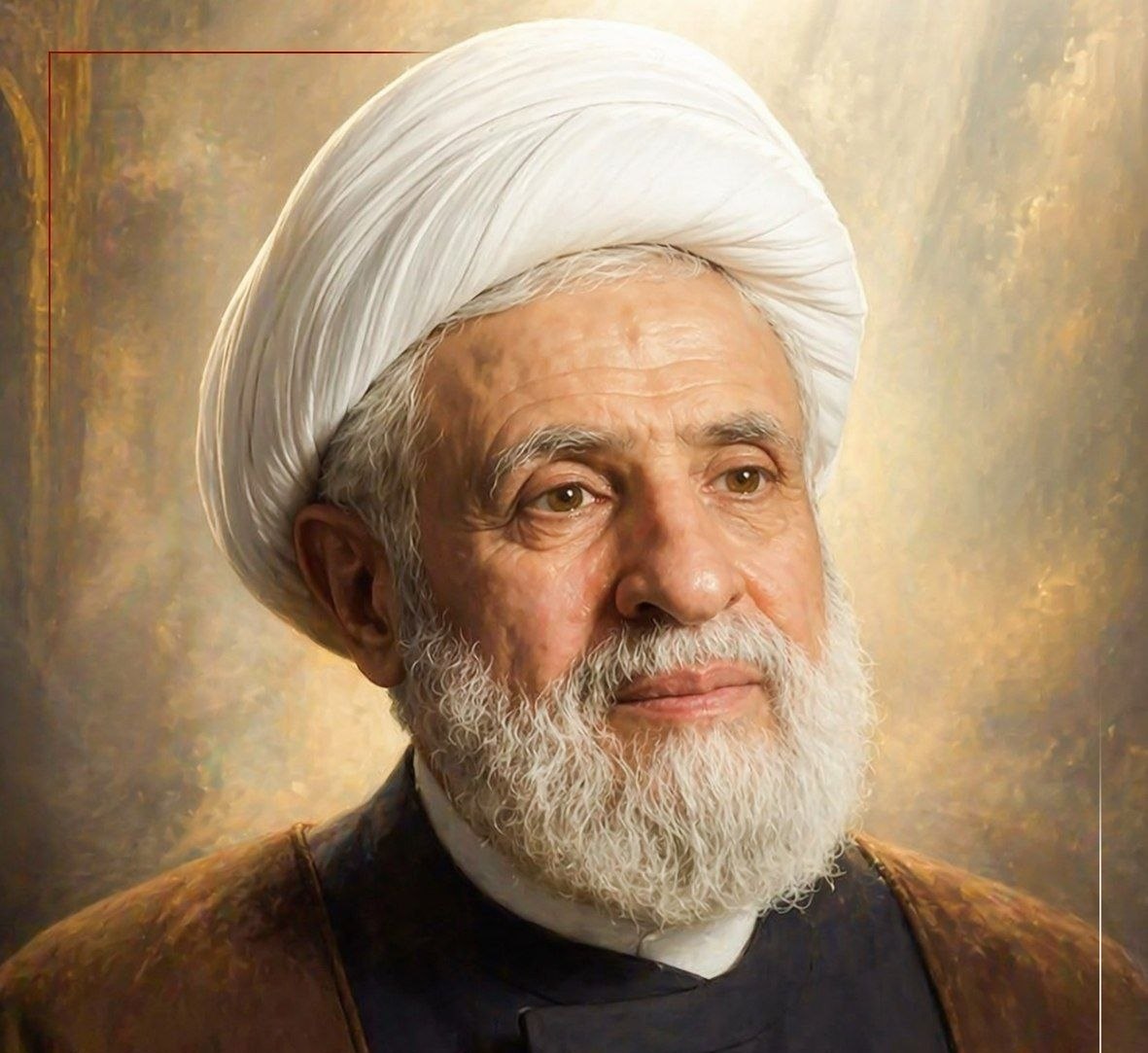
Referring to the words of Imam Hussein (PBUH), “I see death as nothing but happiness, and life with oppressors as nothing but misery and disgrace,” Hezbollah Secretary-General Sheikh Naim Qassem emphasized that martyrdom represents the highest degree of sacrifice and Islamic upbringing, and holds an exalted position on the human and spiritual path.
He stated that the message of the martyrs brings glad tidings of peace and an end to sorrow for the Muslim community, as, according to God’s promise, the future belongs to the front of truth and resistance. Defending the homeland, humanity, freedom of the land, and supporting the oppressed Palestinian people are all part of the martyrs’ divine path.
Sheikh Naim Qassem described Martyrs’ Day as an opportunity to honor the patient and proud families of the martyrs and renew allegiance to their ideals. Praising the fathers and mothers who have sacrificed one or more of their children in defense of their homeland and divine ideals, he said that some families have offered two, three, four, or even five martyrs, yet continue to declare that if they had more children, they would make the same sacrifice again. This demonstrates how deeply rooted the culture of sacrifice and resistance is in society.
Addressing Palestine, the Hezbollah Secretary-General stressed that, contrary to Western propaganda, the roots of the crisis do not lie in Operation Al-Aqsa Flood. Rather, they must be traced back to British colonialism and the establishment of the Zionist regime in 1948—a process accompanied by massacres, the displacement of millions of people, and the destruction of infrastructure.
Referring to the humanitarian catastrophe in Gaza, he described the martyrdom and injury of tens of thousands of women and children, along with the siege imposed on more than 2.5 million people, as a continuation of the same historic policy of genocide and forced displacement, pursued with the silence and complicity of Western powers.
Sheikh Naim Qassem described blaming the Palestinian and Lebanese peoples for defending themselves as a distortion of reality, emphasizing that the root cause of the crises is the inherently expansionist and aggressive nature of the Zionist regime’s occupation, not the existence of resistance.
Regarding Iran, he stated that raising objections to uranium enrichment, despite Iran’s legal right to the peaceful use of nuclear energy under the 2015 agreement, is merely a pretext for restricting the power and independence of the resistance front.
The Hezbollah Secretary-General emphasized that the primary objective of the US and the Zionist regime is not to uphold the law or address nuclear concerns, but rather to gain control over the region’s strategic resources and wealth. He described the aggression against Iran as a blatant violation of international law and affirmed Iran’s legitimate right to self-defense and retaliation.
He also stressed the need for unity among the various fronts and coordination between the region’s armies, peoples, and resistance forces, describing such cooperation as a means of confronting aggression and safeguarding regional security and stability.
Regarding Lebanon, Sheikh Naim Qassem said that the Zionist regime’s expansionist plan to weaken Lebanon and pave the way for new settlements had been thwarted by the steadfastness of the people and resistance forces. He added: “Had it not been for the resistance and honorable people, the enemy would have advanced as far as the heart of Sidon.” He stressed that the root cause of Lebanon’s crises is occupation, not the existence of resistance.
He described the patience and steadfastness of the people and resistance forces, alongside active diplomacy and regional agreements—including the Islamabad Agreement and Iran’s efforts to de-escalate tensions—as important factors contributing to strength and stability in the face of aggressors.
Leave a Reply