Sources told the Lebanese network Al-Mayadeen that last Thursday two “Israeli or Israeli-related oil tankers” were attacked in the Indian Ocean. According to this report, a Liberian-flagged tanker CHEM SILICON was attacked in the northwest of Maldives. This ship belongs to Dutch “ACE Tankers” company. According to these sources, the second ship is also a Liberian-flagged tanker named PACIFIC GOLD which belongs to “Eastern” company.
As we said, this news is related to the drone attack last week, January 4, that happened near the Maldives islands. Some news sources claimed that this attack was carried out from Yemen, but the distance between Ansar Allah’s positions and the Maldives is more than 3,000 kilometers. So, it is possible that maybe this attack was carried out by the Iranian Armed Forces.
It should be noted that the drone fleet of the Iranian Navy is capable of carrying out various operations with all types of offensive, suicide and reconnaissance drones in the Arabian Sea and the Indian Ocean.
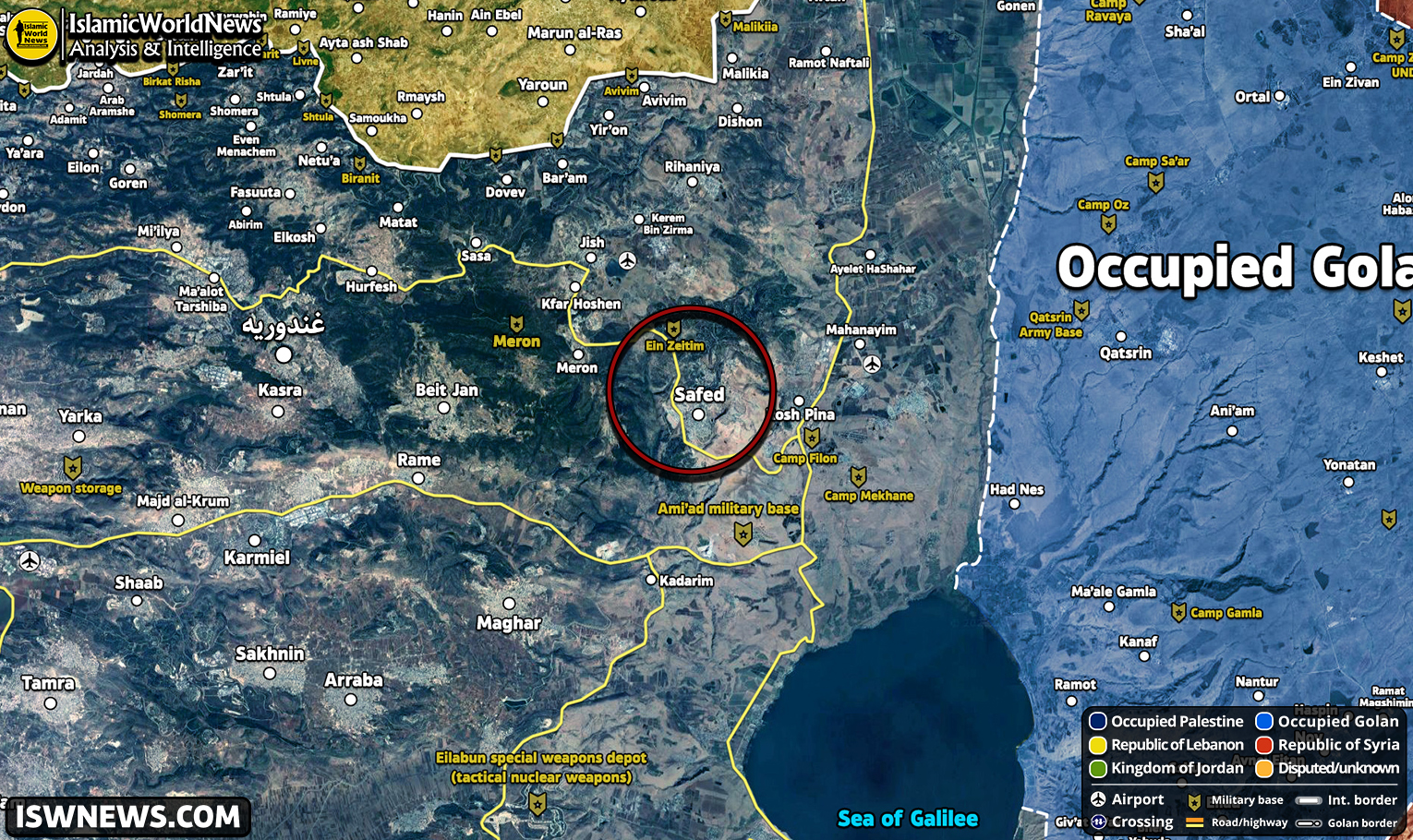
Lebanon’s Hezbollah announced in a statement that in response to the assassination of Sheikh Saleh al-Arouri and his martyred Mujahid brothers in the southern suburbs of Beirut, as well as the assassination of Wissam Tawil (Haj Javad), one of the field commanders of the resistance in Lebanon, attacked the headquarters of the Israeli army in Safed with several suicide drones.
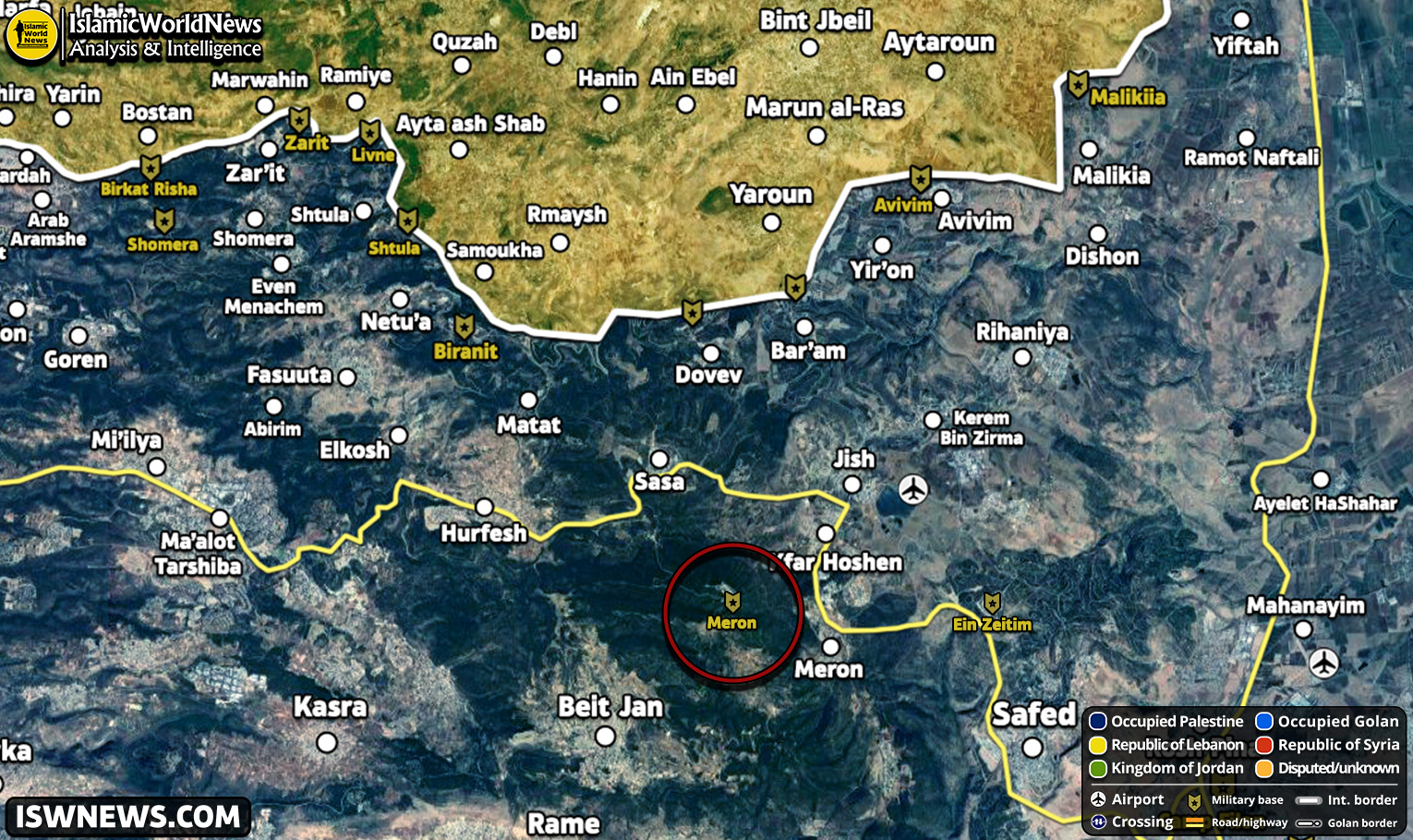
This is the fourth attack by Hezbollah deep into the positions of the Israeli army in the north of occupied Palestine. Previously, Hezbollah attacked Ain Zetim base, Israeli army headquarters in Ayelet HaShahar, and Meron air control base with rockets, drones and anti-armor missiles.
On January 7, US aircraft targeted a convoy of several trucks that had entered Syrian territory from Iraq near the city of Al-Bukamal. This attack did not result in any casualties.
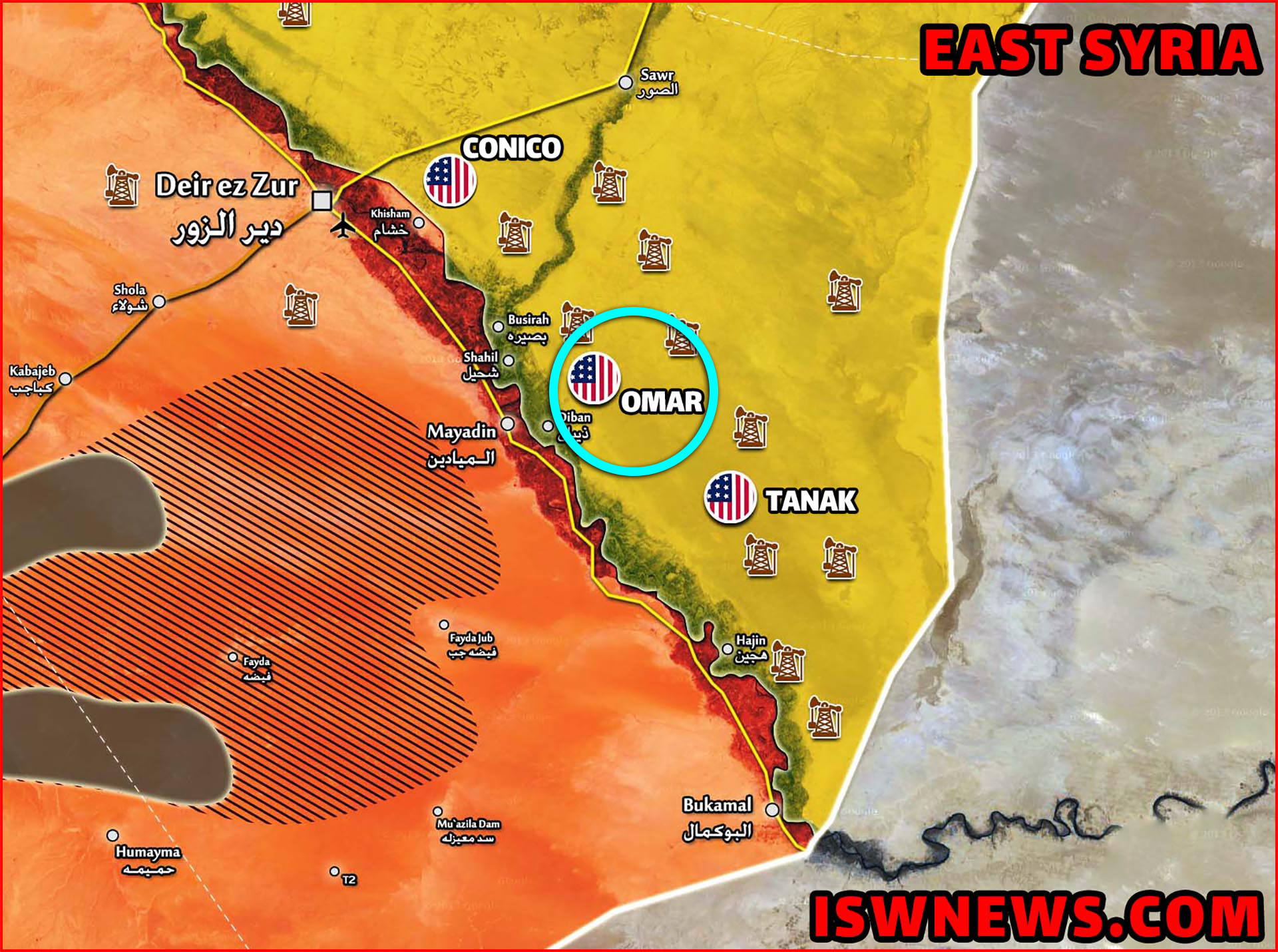
Shortly after this air strike, Islamic resistance groups in Syria launched rocket attacks on the positions of the US-led coalition in the Al-Omar oil field located in the Deir ez-Zor Governorate of eastern Syria near the border with Iraq. It is said that this attack, involving 30 rockets, was carried out in response to the US air strikes on Al-Bukamal.
American airstrikes on Al-Bukamal
The exchange of fire and clashes between the Islamic resistance axis and US terrorist army have intensified in recent weeks, with both sides responding to each other’s actions within less than 24 hours.
According to an analysis by the IWN, this is the twenty-third attack against US military bases in the Al-Omar oil field in recent weeks.
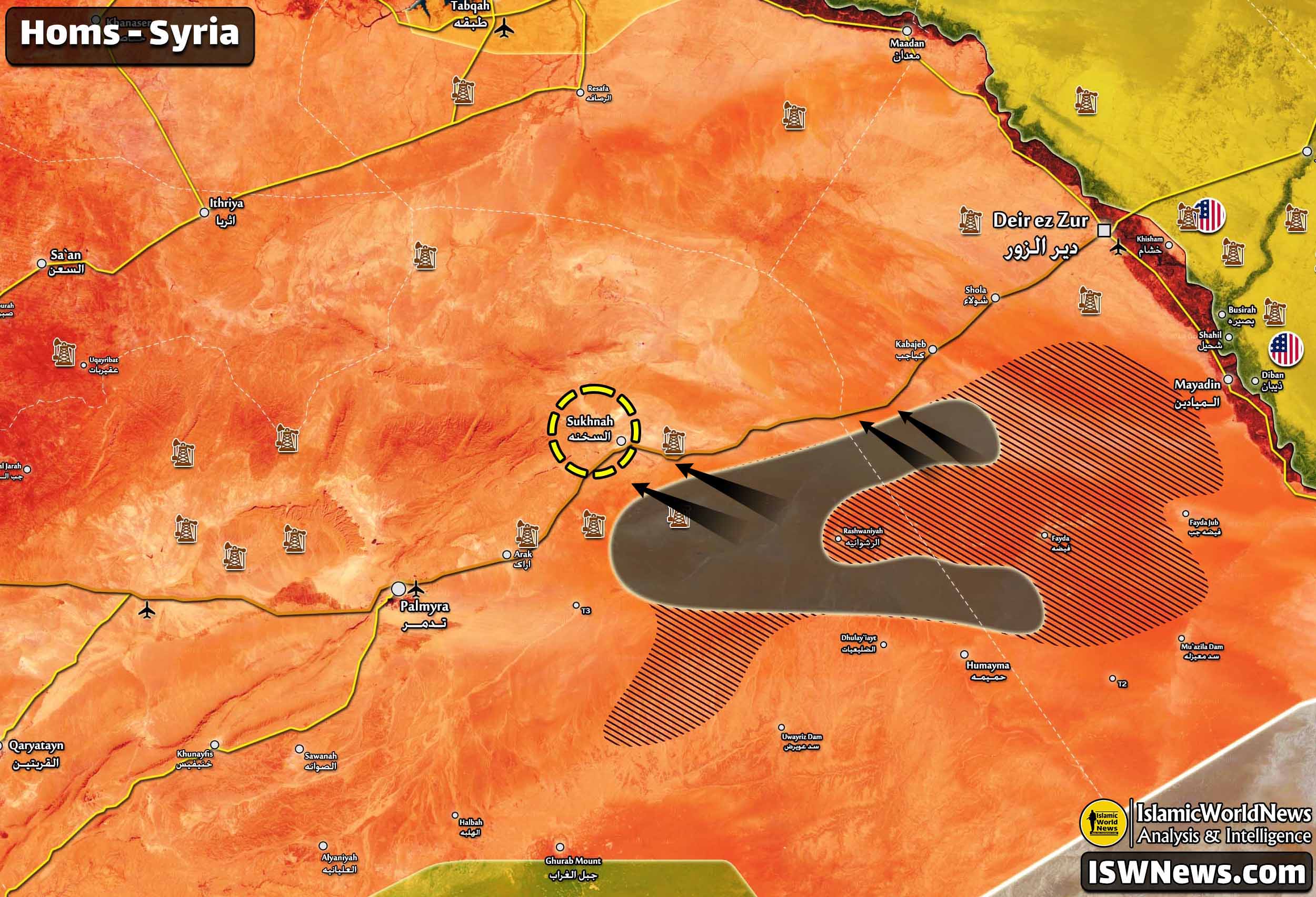
On January 7, ISIS terrorists launched their attack on Al-Sukhnah, located in the Homs Governorate, from the Al-Taybah and Al-Kum axes (in north), Al-Zabiat axis (in south), and the Arak axis (in west). This led to intense clashes between the terrorists and the Syrian armed forces.
As a result of this confrontation, three Syrian soldiers were martyred, and several others were injured. Additionally, several ISIS terrorists were also killed.
It is worth mentioning that the geographic location of Al-Sukhnah, close to areas under ISIS infiltration, which are also their hideouts (southwest of Deir ez-Zor desert and east of Palmyra ancient city), has made it a frequent target of attacks by ISIS terrorists.
The analysis of raids and movements made by the ISIS group indicates an increase in their activities through the support and requests of the United States. The major aim of these ISIS attacks in the Syrian governorates such as Deir ez-Zor, Homs, etc., is to disrupt and weaken the resistance axis.
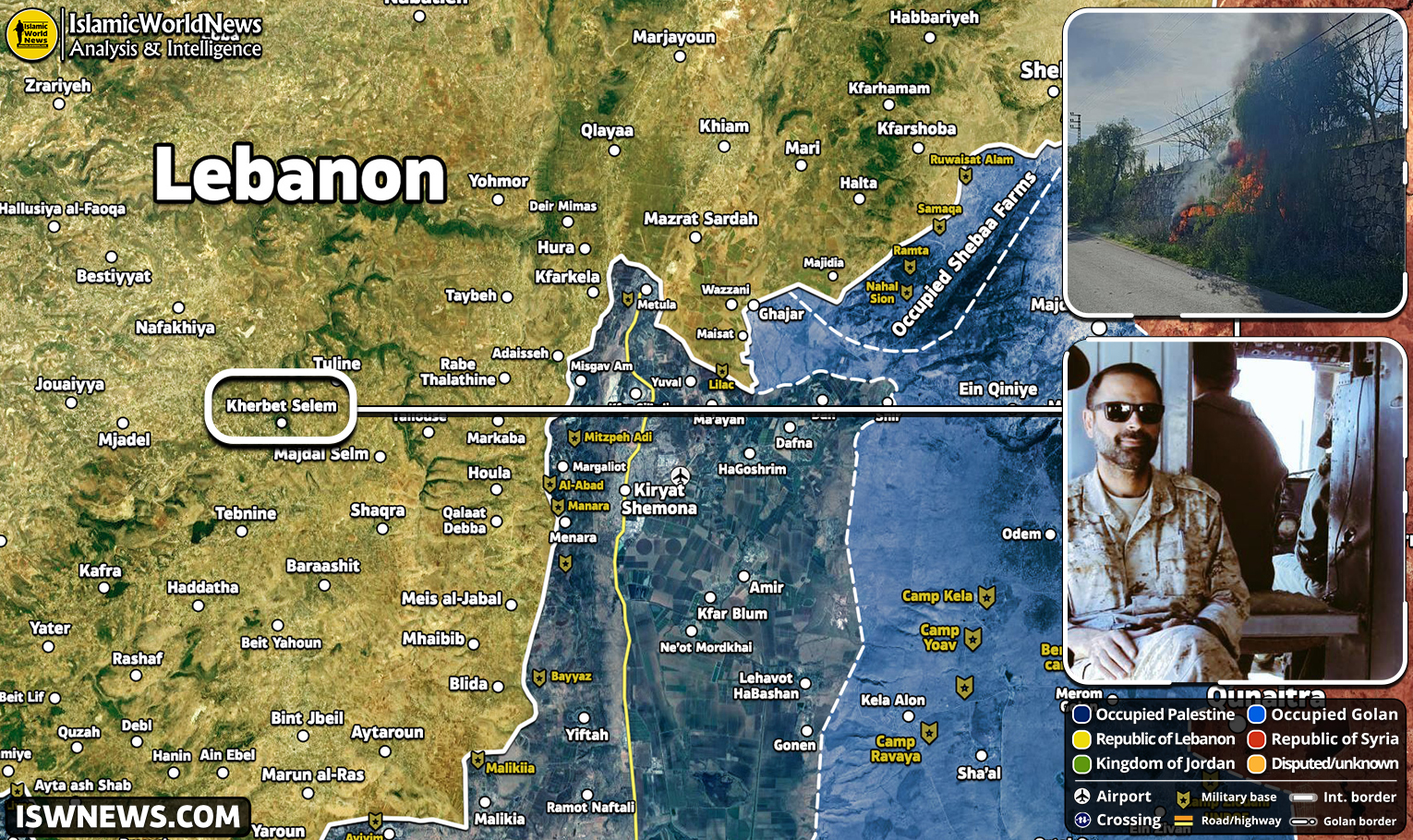
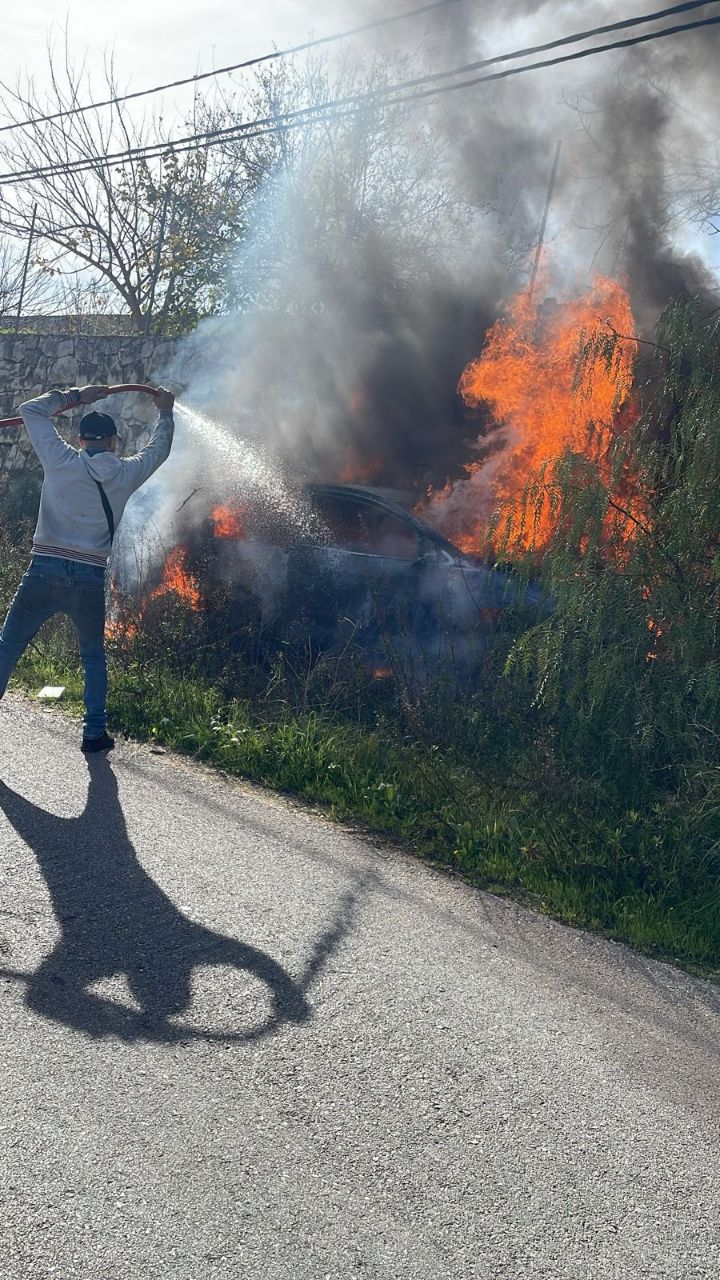
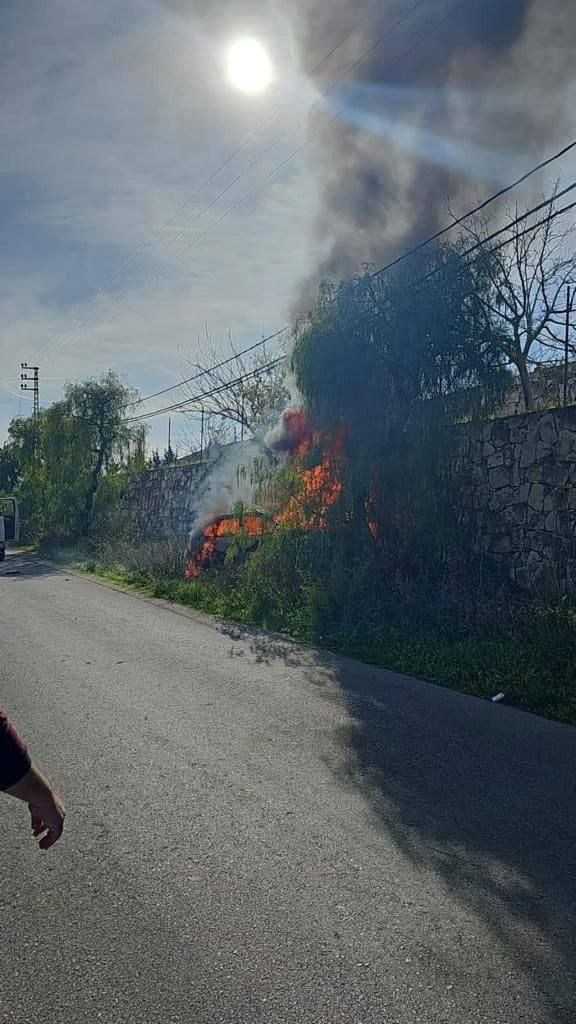
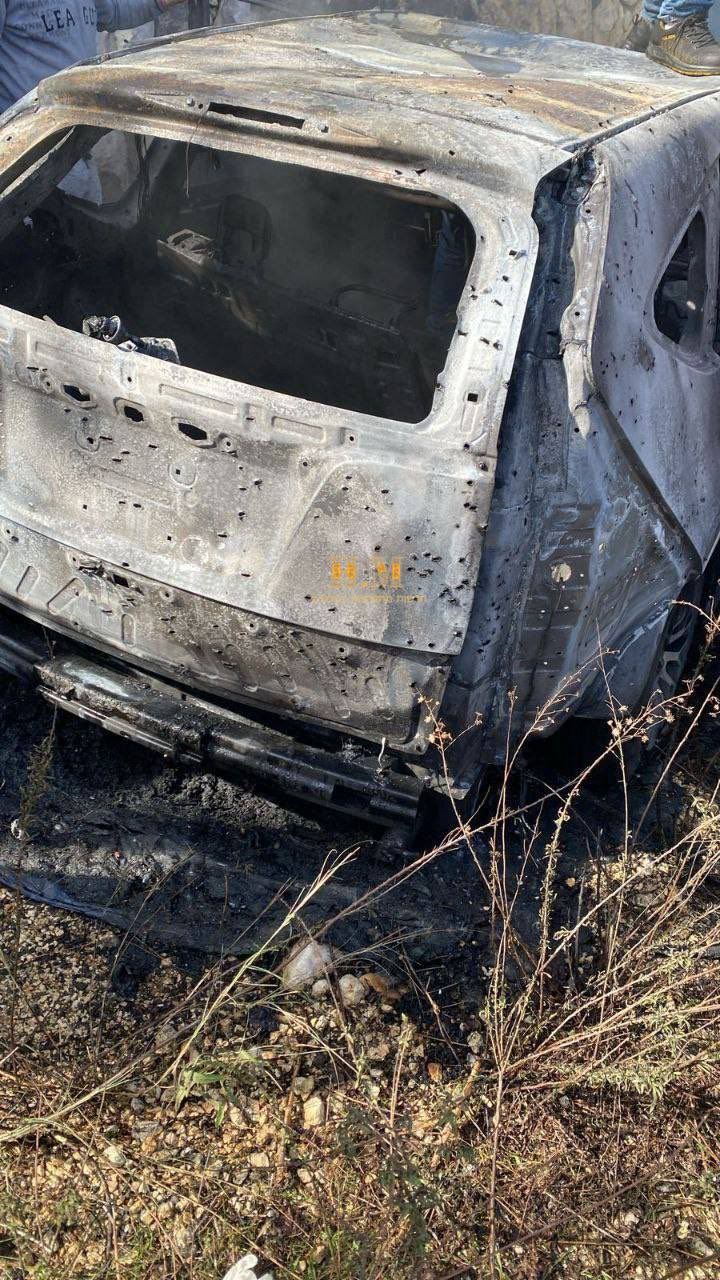
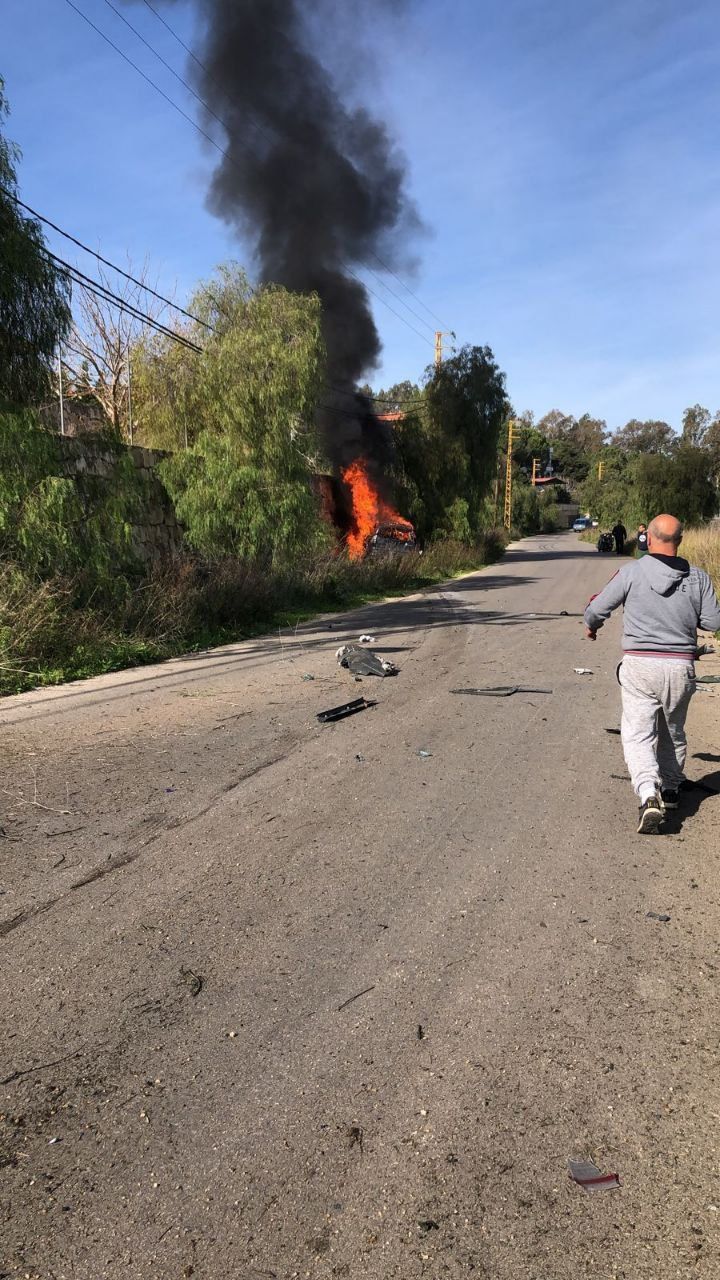
Local media earlier reported the injury of two individuals in this attack prior to announcing the martyrdom of this Lebanese commander. These sources also referred to Hajj Jawad as one of the commanders of Al-Ridwan Brigade, also known as Al-Ridwan Special Forces (Hezbollah’s special forces).
The assassination of field commanders and key figures of resistance groups in Lebanon, Syria, Iraq, and Palestine remains at the forefront of the joint plans of the United States and the Israeli regime.
It should be noted that the skies of Arab countries and the Mediterranean Sea are filled day and night with the US, Israeli, and British spy planes and drones, and all the movements of resistance forces on the ground are under the surveillance of the United States and the Tel Aviv regime.
The execution of these assassinations is a top priority in the third stage of the Israeli army’s operations, and its implementation is pursued under the supervision of American and European military advisors.
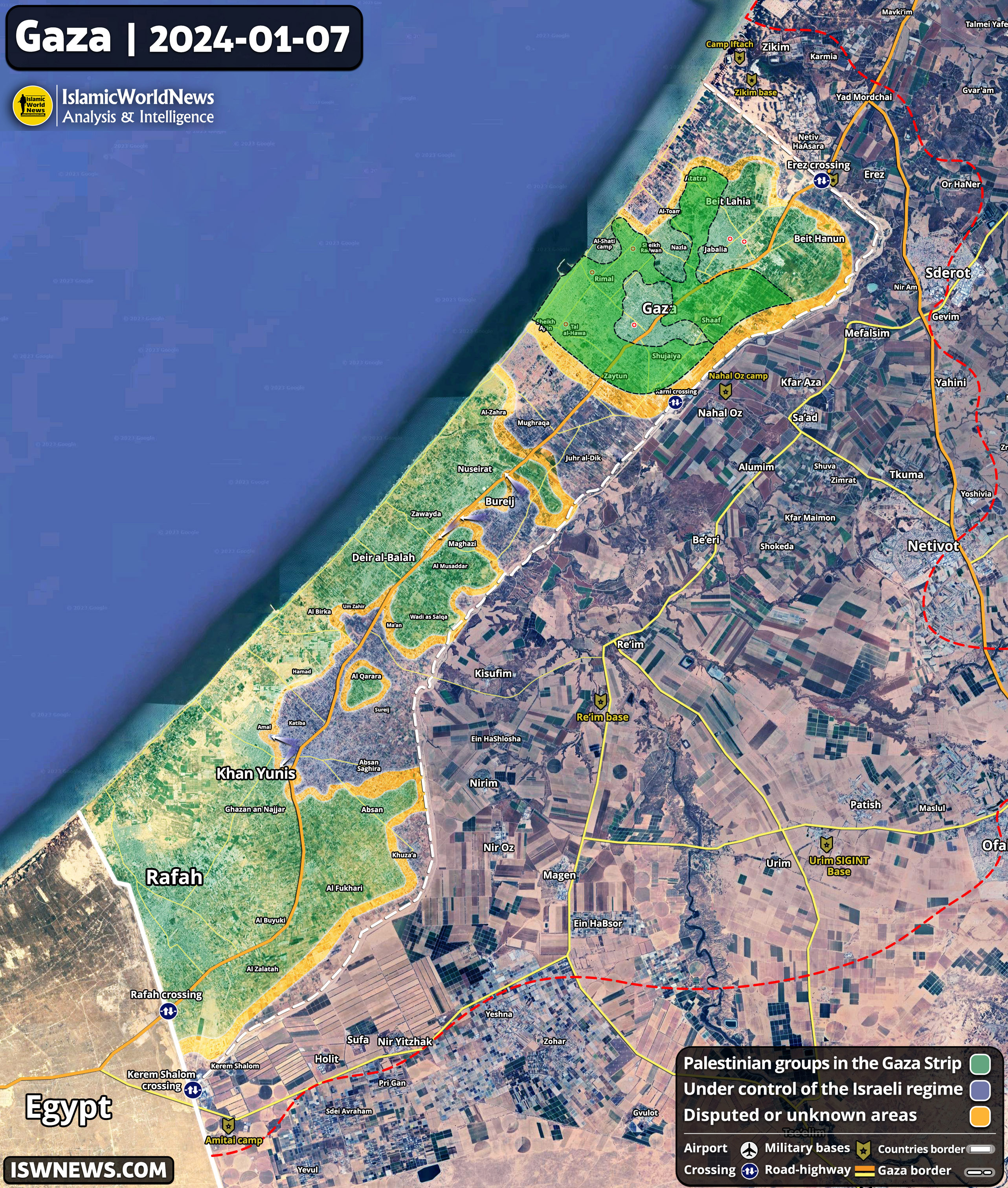
As the IWN reported yesterday that the Israeli regime has been retreating from more areas in the northern Gaza Strip; this issue has been confirmed today following the publication of videos and images of battlefields from northern Gaza. Also, senior member of the Palestinian resistance movement Hamas Osama Hamdan emphasized this afternoon (Jan 7) that the Israeli regime has retreated from the northern Gaza Strip.
However, it is necessary to mention that Israeli army forces are present in small parts of western areas of Beit Lahia city and western Al-Tawam Street, but they will probably also retreat soon. Israeli forces entered the northern Gaza Strip during the first days of the war and will now leave those areas in the final stage of their retreat.
In the south of Gaza City, according to available information, the tenth street has been determined as the last line of retreat for the Israeli regime’s army forces. In other words, the Israeli regime’s military forces have retreated from neighborhoods such as Al-Zeitoun, Tel Al-Hawa, Al-Sheikh Ijlin, and so on, to behind the tenth street. It seems that these areas will remain under Israeli occupation until the end of the Israeli regime’s operation in the center of the Gaza Strip.
So, what did the Israeli regime achieve in the northern Gaza Strip?
Yesterday (Jan 6), the spokesperson for the Israeli regime’s army claimed that Israeli armed forces have completed dismantling Hamas’s military structure in the northern Gaza Strip! And that the Israeli regime’s military forces have done so many efforts and that how many commanders and fighters they have killed and how many tunnel networks we have destroyed, etc., and now the focus of the Israeli regime’s army is on operations in the center and south of the Gaza Strip.
However, contrary to the Israeli regime’s claim, the fact is that the Israeli regime did not even come close to achieve its main goal of destroying the Palestinian resistance movement Hamas even for a moment during the Gaza war and its only achievement in the northern Gaza Strip was destruction of buildings and mass murder. It is certain that the Israeli regime will not succeed in achieving its goal in the center and south of the Gaza Strip either.
On the other hand, it is true that so far, international observers have witnessed unprecedented destruction in northern Gaza and some Palestinian resistance commanders and fighters have been martyred, and a network of tunnels has been destroyed, but all of these can be replaced and repaired. Tunnels and buildings will be rebuilt, and forces will be replaced. The very important point is that during these three months, the Israeli regime never managed to take full control of the northern Gaza Strip, and now after the withdrawal of occupying forces from this region, Palestinian fighters are still present in Gaza and have control over the areas.
In the center of the Gaza Strip, clashes continue in Al-Bureij and Al-Mughazi refugee camps as well as around Al-Nuseirat refugee camp. The Israeli regime’s armed forces have made partial advances in the Juhr al-Dik area. Also, the Israeli regime’s military forces have advanced between Al-Bureij and Al-Mughazi refugee camps and have reached Salah al-Din Road, the main highway that runs through the strip from north to south and connects all of its towns. Given that the Israeli regime’s forces have been dispatched from the northern Gaza Strip to the central and southern axes of the Gaza Strip, ground battles in this axis are truly unequal, and Palestinian resistance fighters face a difficult task of preserving these areas.
In the south of the Gaza Strip, clashes continue in the central neighborhoods of Khan Yunis city, and the Israeli regime’s army is struggling to make progress in this area. The steadfastness and resilience of Palestinian resistance fighters in Khan Yunis are exemplary. According to the latest field information, the Israeli regime’s armed forces have advanced several blocks along Jamal Abdul Naser Street and Osama Al-Najjar Street.
Khan Yunis, like other areas, has witnessed a lot of destruction. After advancing in each area, the Israeli regime’s occupying forces explode and destroy buildings and homes as much as possible. Large parts of eastern Khan Yunis have been completely destroyed so far.
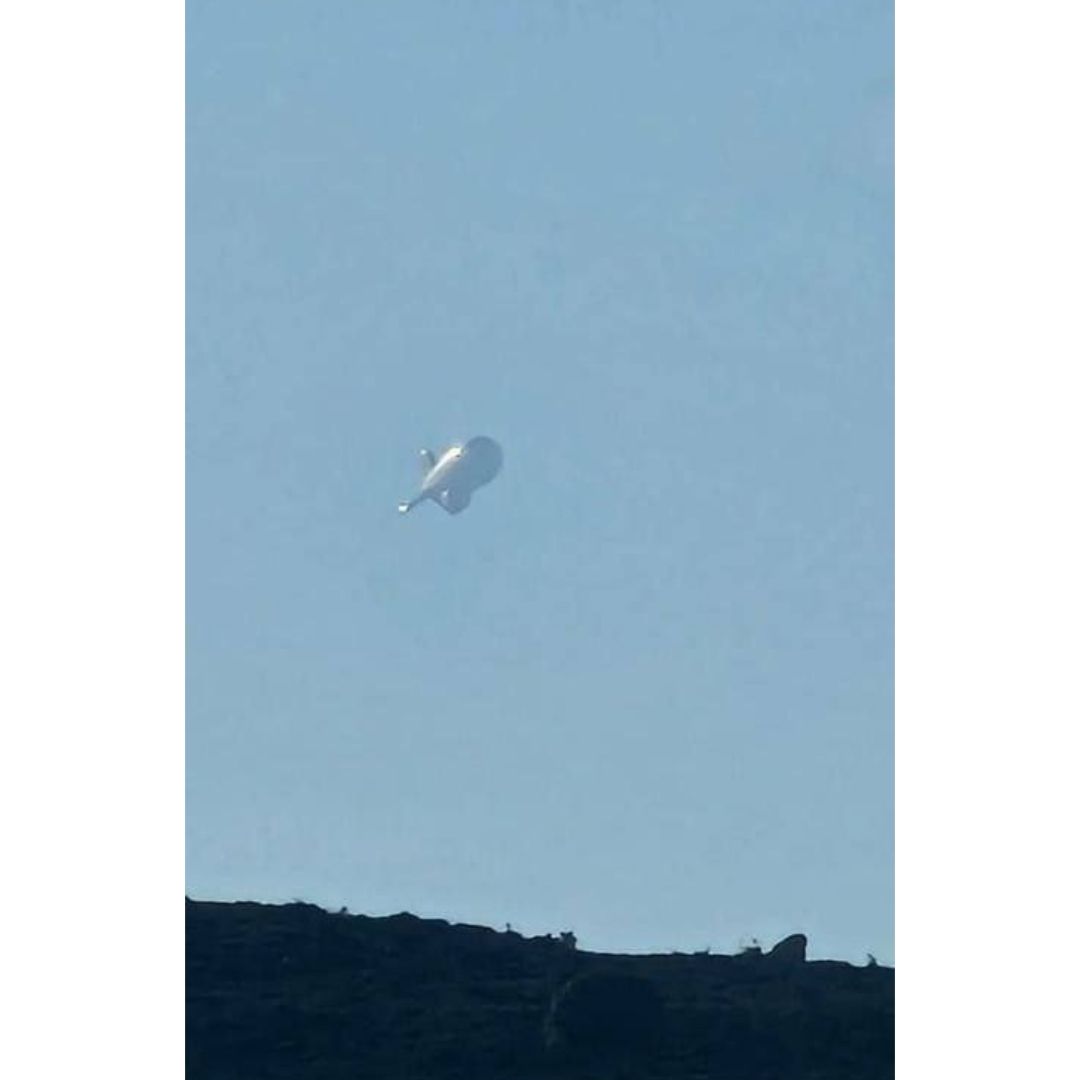
On January 6th, Lebanese media reported the sighting of a balloon in the sky over occupied territories of northern Palestine, in front of the Bint Jbeil town in the Nabatiye Governorate in Southern Lebanon.
The intention of the Israeli regime in deploying this spy balloon is to identify and monitor various threats from southern Lebanese areas, including drone attacks, cruise missiles, and ballistic missiles. This balloon was built in the United States upon the request of the Israeli army and assembled by an American team at military bases of the Israeli regime.
According to the Israeli regime’s media outlets, which cited the Israeli Air Force, this balloon is considered the largest of its kind in the world and is equipped with dozens of specialized cameras, small computers, and large data processors. The balloon also measures 117 meters in length and weighs several tons.
The process of transportation and deployment was not a simple task, and it required one of the most complex logistical operations for this purpose. The transfer of this balloon was carried out in separate parts inside containers, which were then assembled and stationed by specialized American teams.
The deployment of this balloon indicates serious US support for the Israeli regime and their commitment to enhancing the aerial surveillance capabilities of Israeli armed forces against the threats of the resistance axis. This spy balloon serves as an additional defensive layer for the Tel Aviv regime, as its deployment in a strategic location will enable the monitoring of threats from Lebanon, Syria, and Jordan.
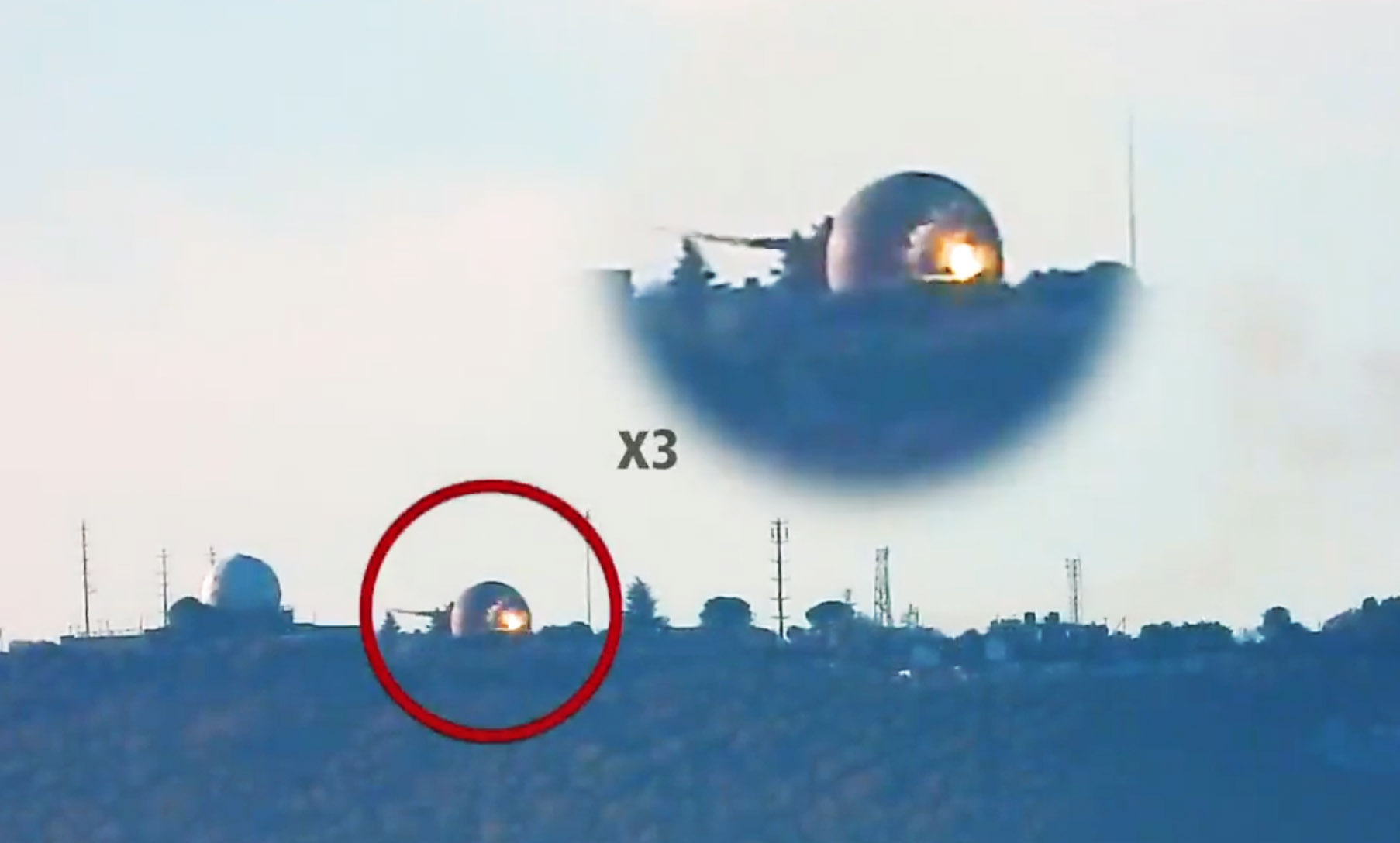
According to the published video, Hezbollah probably used Iranian Fajr-1 rockets and Dehlavieh-3 anti-armor guided missiles (Iranian version of the Russian 9m133M-2 missile) in this attack, which is considered the longest-range ground-based anti-armor missile in the world.
Hizbollah’s video of rocket and ATGM attack on Meron base
Meron Air Surveillance Base is located approximately 7 to 8 kilometers from the Lebanese border, and accurate hitting with Dehlavieh3 ATGM missiles at a distance of 8,000 meters is a very important issue!
All in all, Hezbollah’s attack on Meron was carried out with enough amount of munitions and high accuracy, and the Israeli defense systems were unable to counter it. In this distance, the use of Mersad suicide drones (Ababil 2) can also be effective, but Hezbollah currently prefers to carry out its attacks with short-range rockets and anti-armor missiles and strike at a shallower depth.
Disabling the Meron base through repeated attacks will multiply the costs and problems of the Israeli regime in the northern regions.
The summit of Mount Carmel is the highest mountain peak in northern occupied Palestine and the Meron Air Surveillance Base in this summit serves as a crucial center for administration, monitoring and air control in the northern areas. It should be noted that this base is one of the two main surveillance bases of Israel, along with the Mitzpeh Ramon base in the south of the occupied territories.
The distance between Hezbollah positions in southern Lebanon and this base is about 10 kilometers. Therefore, Hezbollah can also use Mersad suicide drones (Ababil 2) to carry out attacks with more precision.
Hezbollah declared that the attack on Meron base is a preliminary response to the assassination of Saleh Al-Arouri, the Deputy Head of the Political Bureau of Hamas in Beirut.
The moment when a number of Hezbollah cruise missiles or rockets hit the Meron base on the summit of Mount Carmel
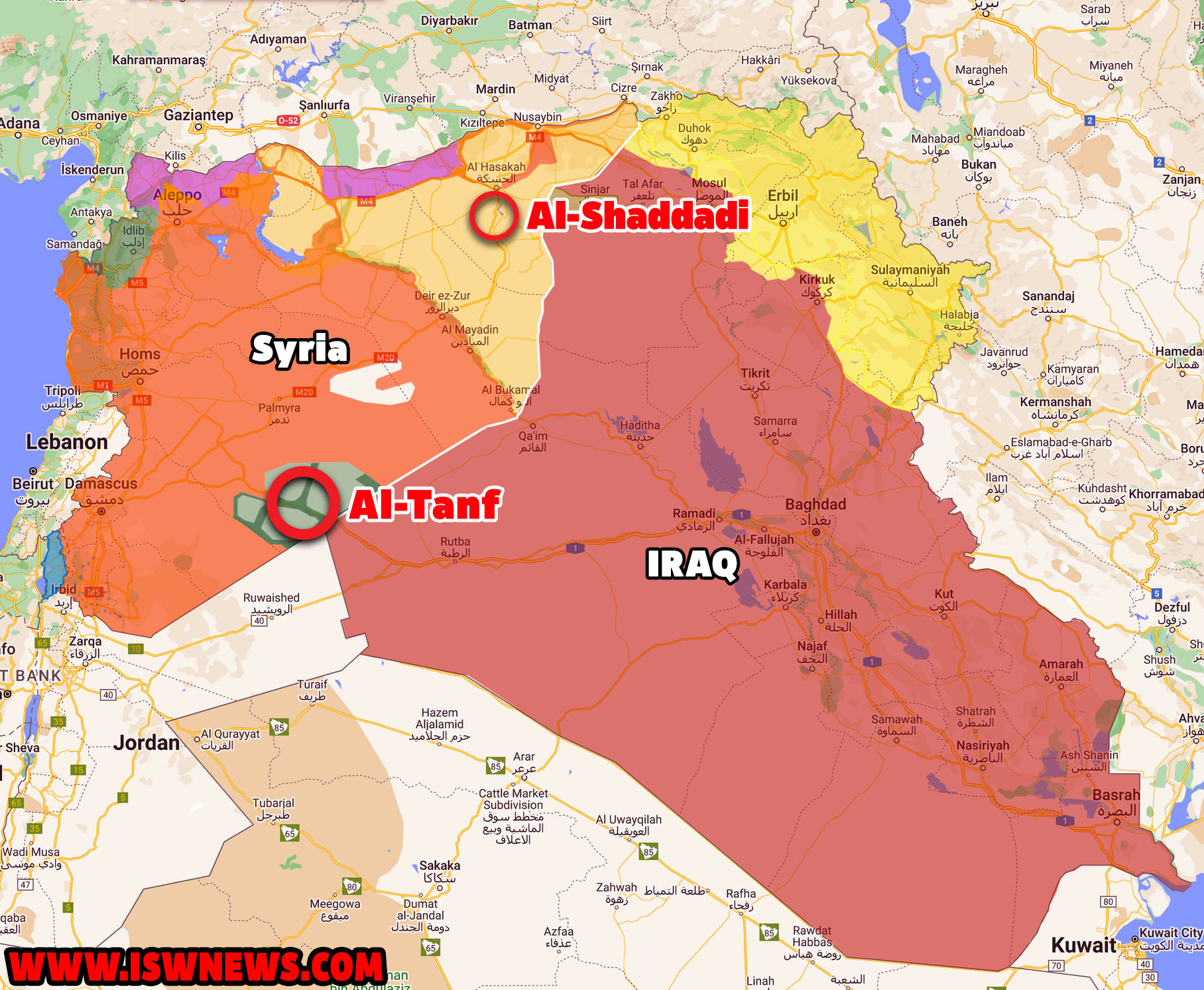
On January 5, the Islamic Resistance in Iraq targeted the US-led coalition forces stationed at the al-Shaddadi base in the Al-Hasakah Governorate and al-Tanf region in southern Syria with two suicide drones.
According to investigations made by the IWN, this round of strike was the 11th attack on the positions of the US military forces in the al-Tanf area and the 17th attack on American positions at the al-Shaddadi base in recent weeks.
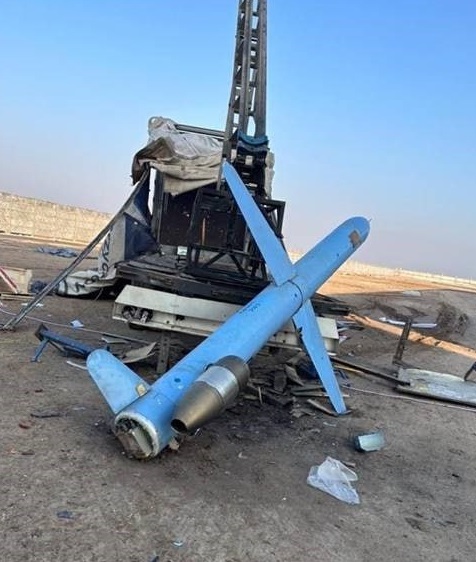
The US CENTCOM published a picture of a cruise missile on January 5 and stated that on January 3, Iraqi police in Babylon discovered a land attack cruise missile of Iranian design that was failed to launch.
It seems this cruise missile is a type of 351 series cruise missiles (Quds series in Yemen), which was previously used by the Yemeni army against the Saudi coalition in Saudi Arabia, the UAE and the Red Sea.
It is worth noting that some time ago, the Iraqi Islamic Resistance had announced the beginning of a new phase of operations against American bases in the region by publishing a picture of a cruise missile. It is said that this missile has been used in several operations to attack the positions of American occupation in Iraq and Syria in recent days.
A loitering munition, also known as a suicide drone or kamikaze drone is a kind of aerial weapon with a built-in munition (warhead), which can loiter (wait passively) around the target area until a target is located; it then attacks the target by crashing into it. Loitering munitions enable faster reaction times against hidden targets that emerge for short periods without placing high-value platforms near the target area and also allow more selective targeting as the attack can be changed mid-flight or aborted.
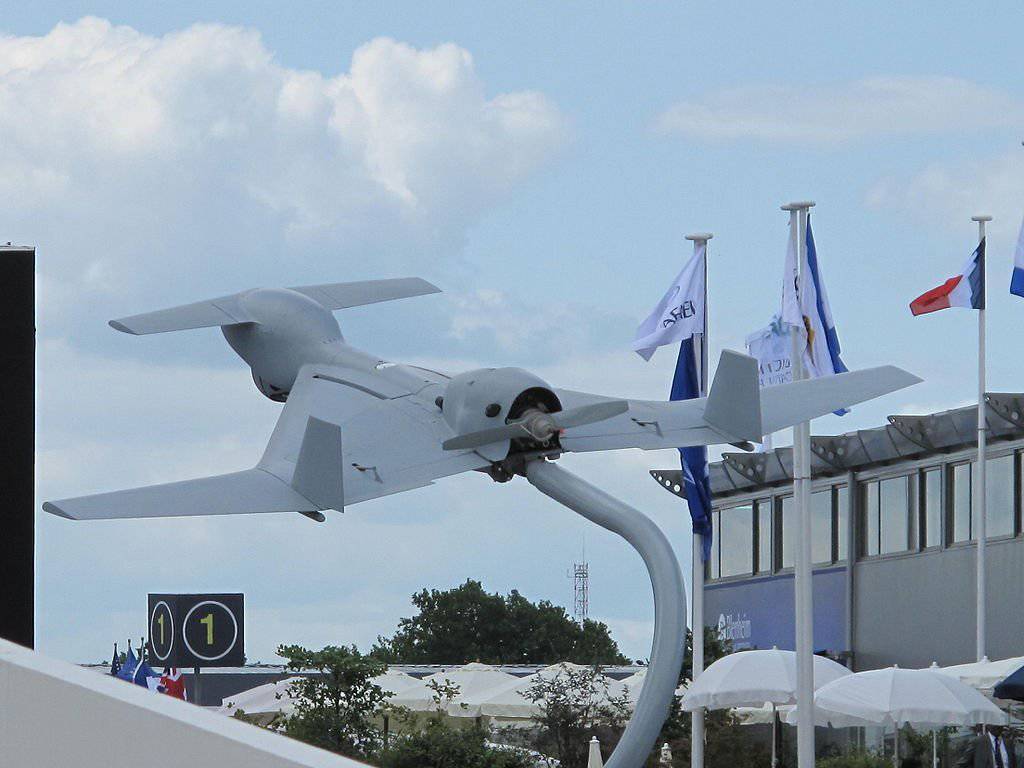
History: The Harop suicide drone was designed and built by Israel Aerospace Industries (IAI) between 2001 and 2003. This drone was first publicly displayed in 2009 at the Indian Air Show. In the same year, the Indian Army signed a contract worth 100 million dollars to receive 10 Harop drones. The details of this contract have not been published. But the announced figure for each drone in this contract is 10 million dollars, which seems very expensive.
The multinational company MBDA showed interest in this loitering ammunition, but the contract was not concluded due to political reasons. Although the German version of the Harup was developed in collaboration with Rheinmetall Defense to meet the specific needs of the German military in 2009, this drone only progressed to the testing stage and was never put into operation by the German military.
Morocco, Azerbaijan and Singapore are other buyers of Harop suicide drones. This drone was used by Azerbaijan in the Nagorno-Karabakh war and destroyed several buses carrying Armenian forces. There are also evidences of targeting Armenian S-300 defenses in the Second Karabakh War.
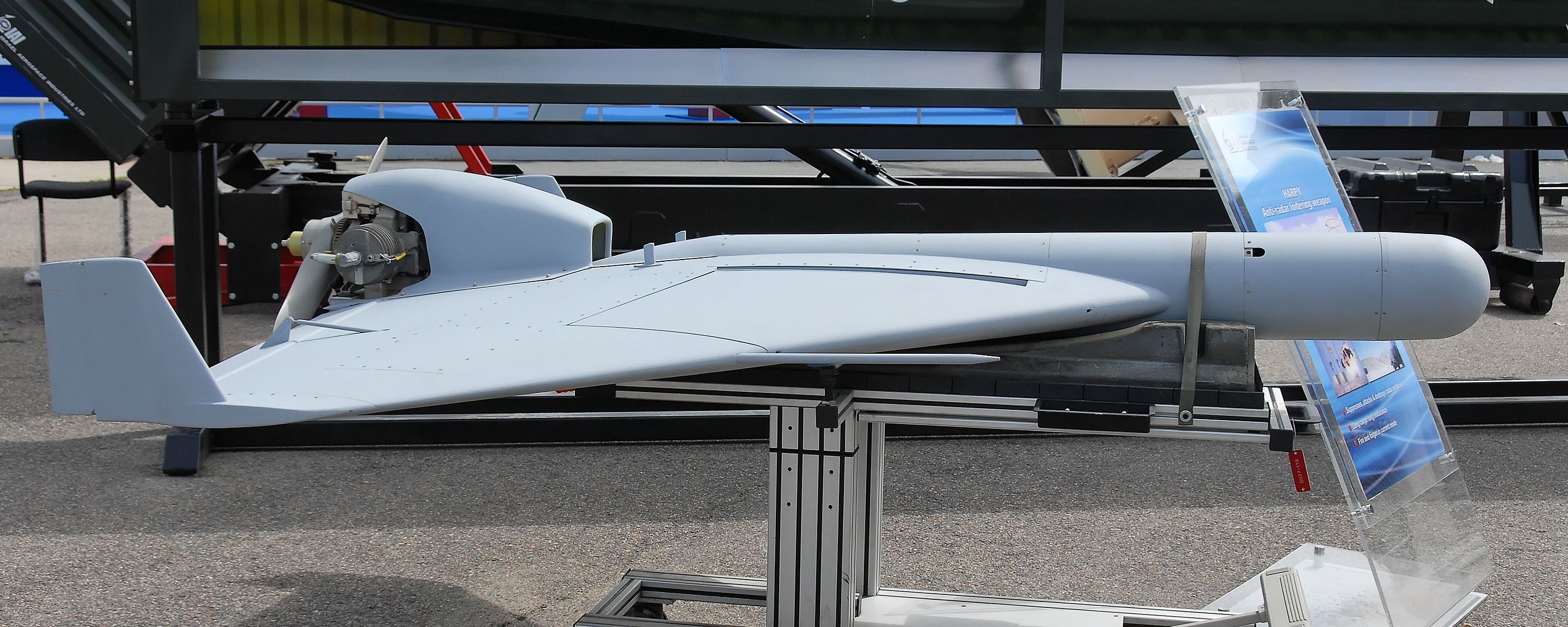
Design: The Harop UAV is actually a developed version based on the Harpy suicide drone (IAI Harpy), which made its first flight in 1989. The Harop drone is designed and built with the same features as the Harpy.
Harpy drone at Paris Air Show 2007
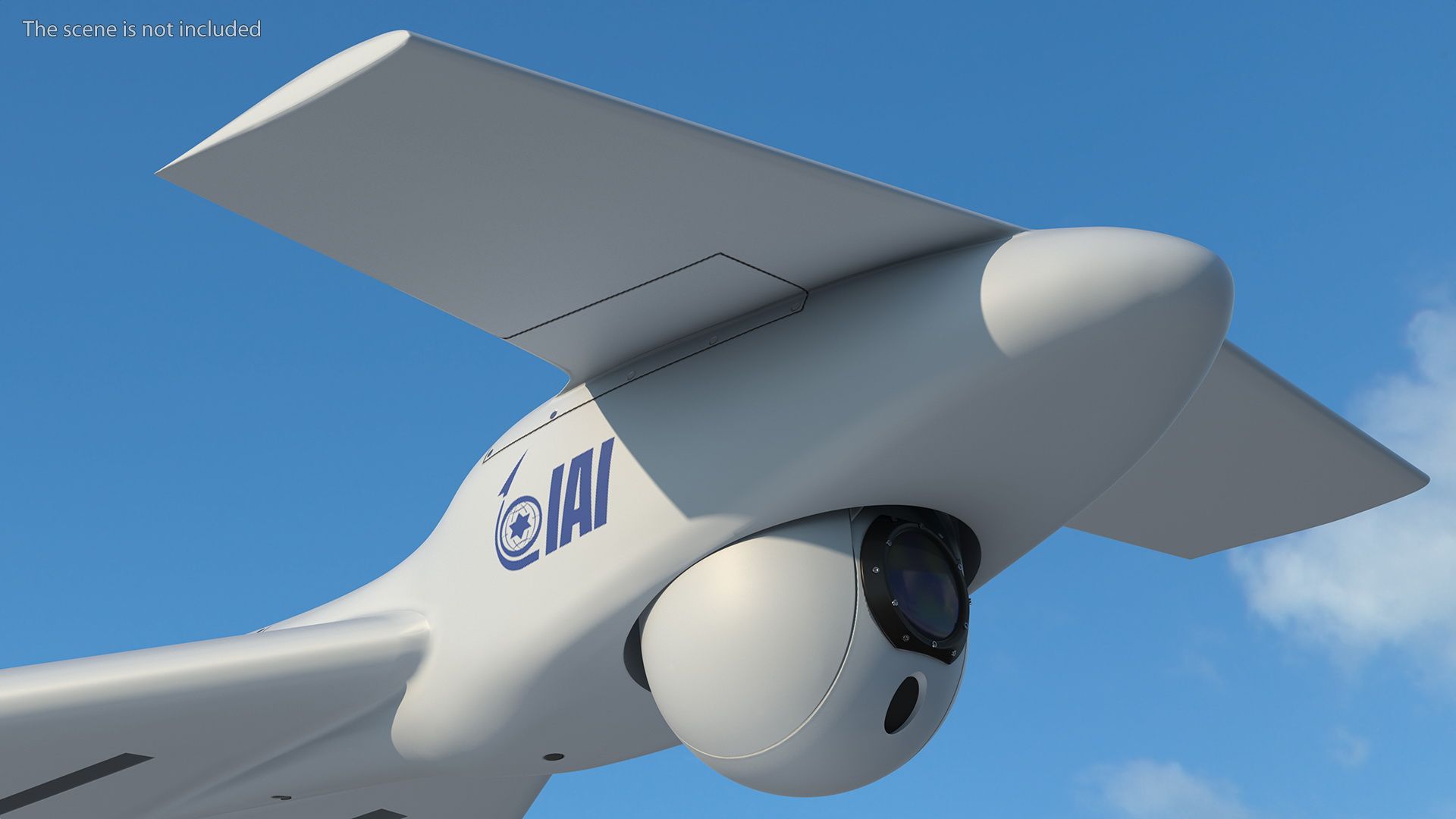
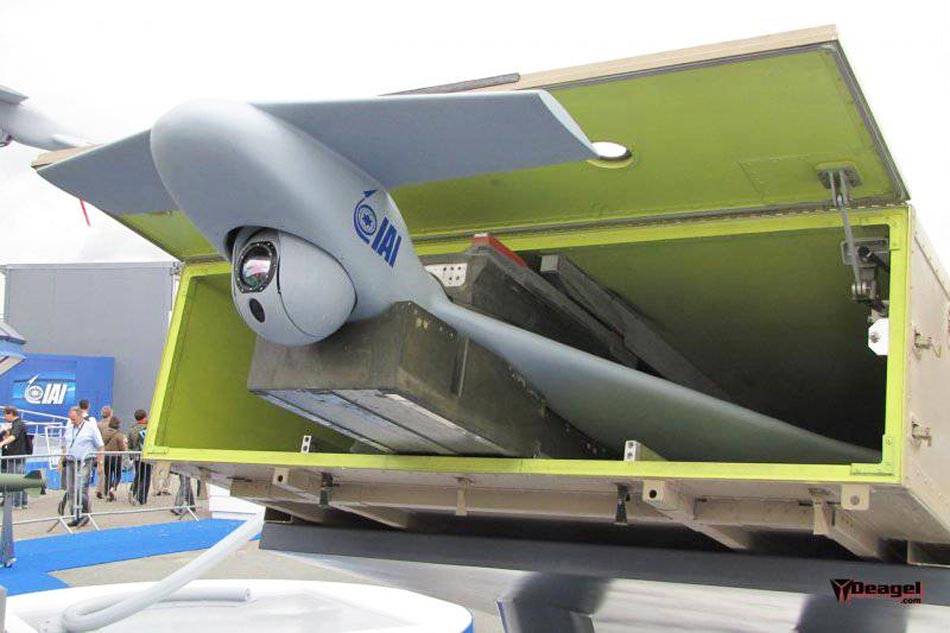
Harop uses a carbon fiber body that reduces its weight and radar cross-section. The diameter of the nose is greater than the diameter of the body. A forward-looking infrared (FLIR) camera with automatic tracking and 360 degree rotation is installed under the nose. The infrared camera is suitable for use at night and day and in all weather conditions such as fog and dust.
The camera used in the Harop drone
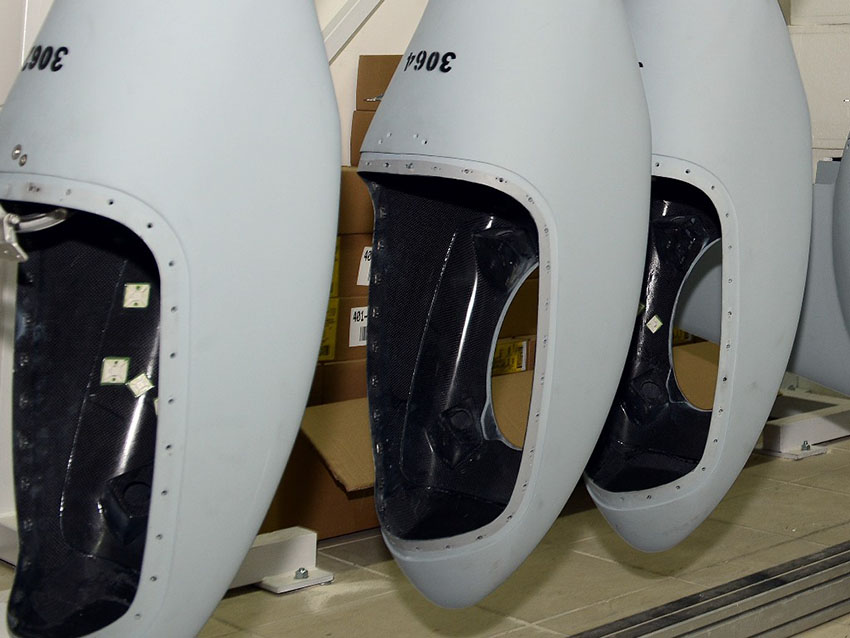
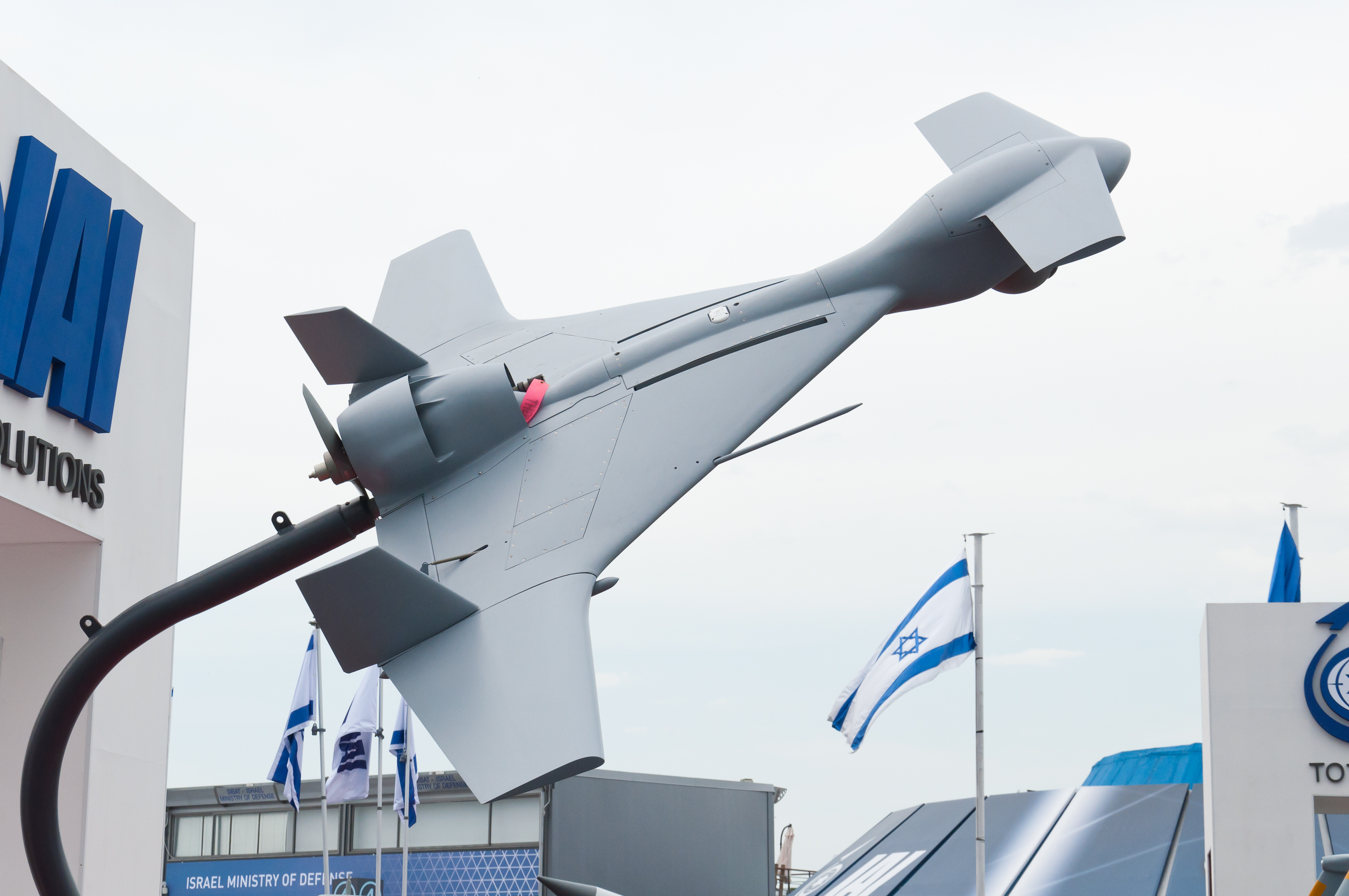
The nose has a very large empty space that allows the installation of a camera and some guidance equipment. There are two fins on the upper part of the nose. These fins provide enough lift for this heavy nose.
The empty space in the nose to install communication equipment, cameras and fins
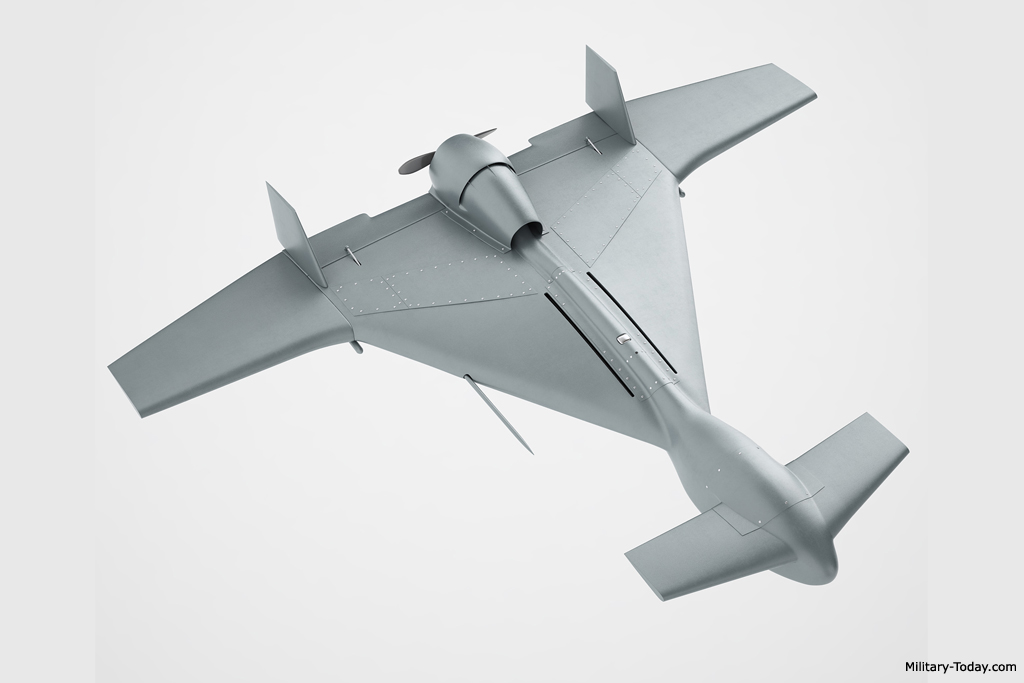
The wing is designed as a trapezoid and extends from near the nose to the end of the body and is connected to the main cylindrical body. The wings are thinner at the end of the body and are designed perpendicular to the body to create the maximum lift force. This part of the wing is made with the ability to be folded so that the drone can be placed in special rectangular launchers.
Two vertical fins with the ability to rotate are placed at the end of the body and on the wing, which provides the possibility of changing the direction of the drone during flight.
Harop drone
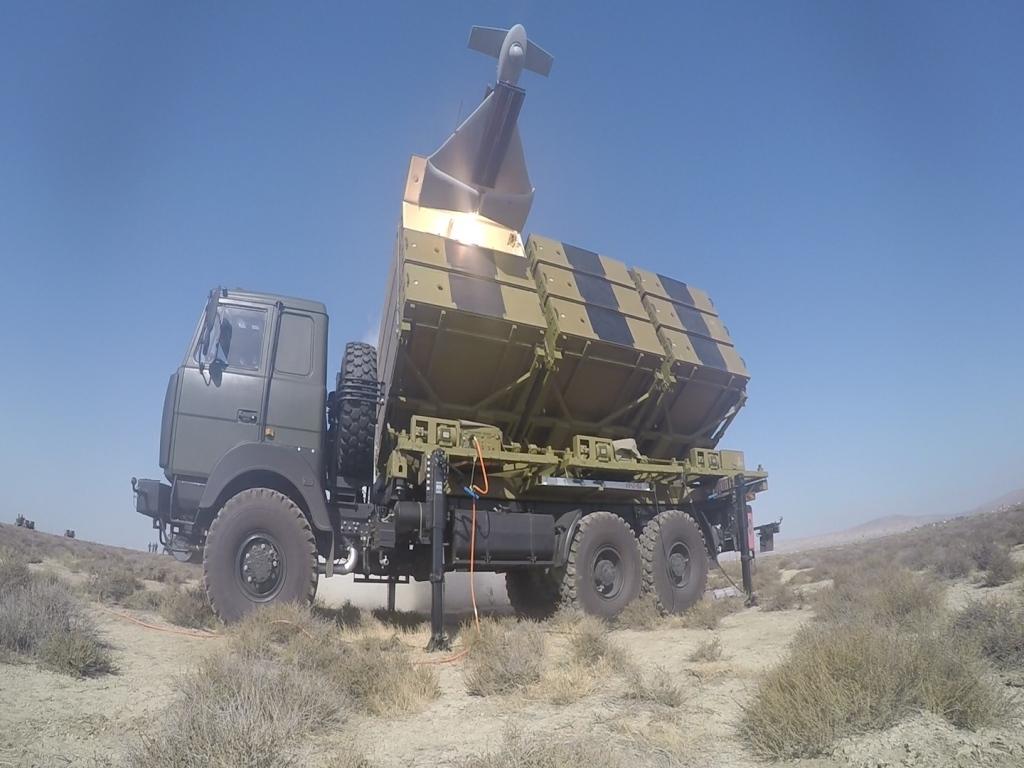
One of the Harop launcher systems is a box launcher that is placed on a commercial truck or any other truck. The wings of the Harop suicide drone fold down to fit into the box. In this way, the drone occupies the least possible space.
Harop drone launch from MAZ-631705 truck in the service of Azerbaijan army. In this picture, it is clear how the wings are folded
A solid fuel booster is used to launch the Harop in the first stage, which allows the Harop, and after reaching a sufficient height and speed, the UAV’s main engine is activated.
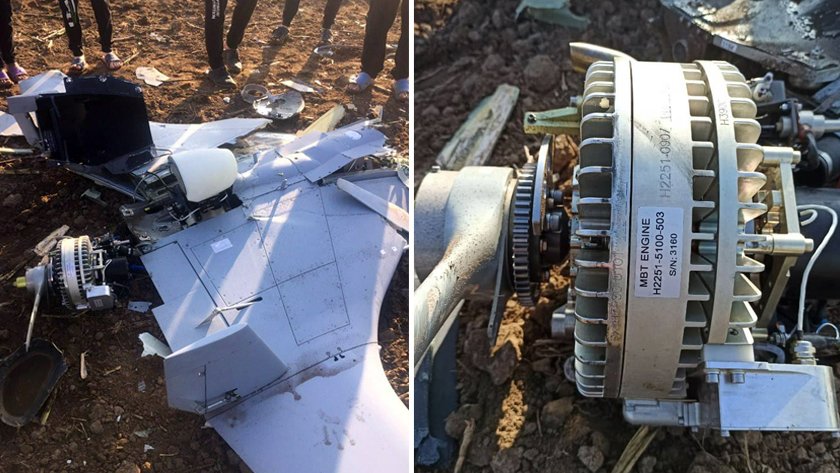
The Harop UAV uses a Wankel MBT ENGINE H2251 engine, which is connected to a two-bladed propeller. This engine brings Harop to a maximum speed of 400 km/h and a maximum height of 4500 meters.
The wreckage of the Harop UAV that fell during the Second Karabakh War in the northern borders of Iran. On the engine, its type and name are known.
Harop suicide drone has a flight duration of 6 hours and a range of 1000 km. As mentioned, this drone is launched from land and sea from box launchers. But it is also possible to configure the drone to be launched from the air by aircraft.
The Haroop UAV uses the Human-in-the-Loop (HITL) method for guidance and targeting. In this method, crews work together with machines to perform tasks, combining their abilities to make the best results in every situations. New experiences and decisions are stored in the decision cycle to increase the autonomy of the UAV in similar conditions.
The operator can select static or moving targets detected by the UAV camera. It is also possible to select static targets before the operation and flight, by entering the target information into the system.
It should be noted that a smaller type of drone called Mini-Harop or Green Dragon has also been made with a flight duration of 2 to 3 hours and a warhead of 3 to 4 kg.
Mini-Harop drone
The Mini-Harop UAV, which uses an electric motor, is suitable for monitoring and targeting enemy personnel and equipment with a low level of protection. Considering the high price of each version of the Harop drone, the Mini-Harop seems to be built to fill the void of a low-cost drone and reduce operational costs for destroying less important targets.
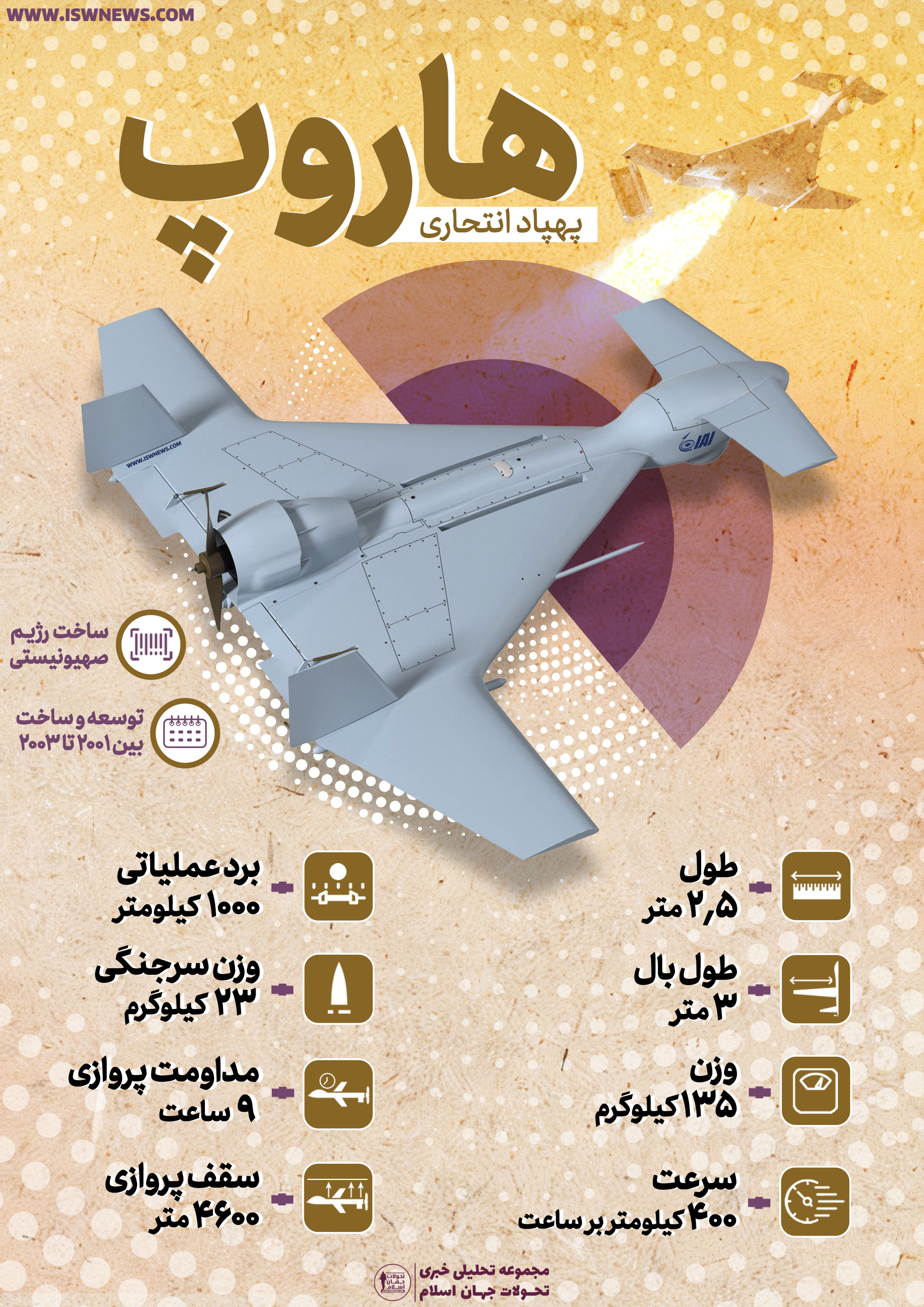
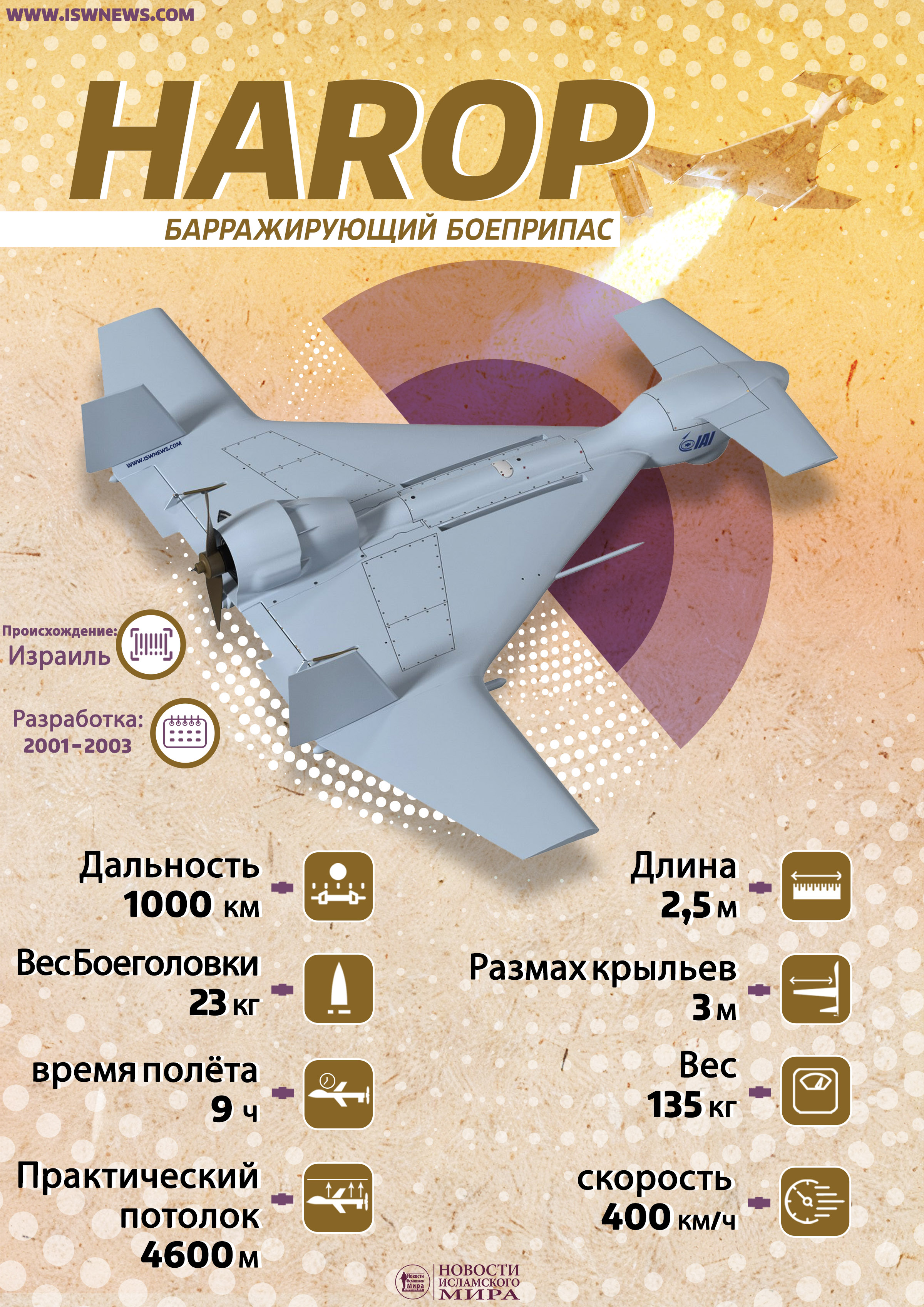
Specifications of Harop suicide drone: Type: Suicide drone (loitering munitions) Manufacturer: Israel Aerospace Industries Origin: Israeli regime Development: between 2001 and 2003 Length: 2.5 meters Wingspan: 3 meters Range: 1000 km Communication range (ground station): 200 km Radar cross section: less than 0.5 square meters Speed: 400 km/h Flight ceiling: 4600 meters Flight endurance: 9 hours Warhead weight: 23 kg Weight: 135 kg
Harop Suicide Drone – click to view full sizeClick to view full size
Infographics of Harop loitering munitions in Russian, Hebrew, Farsi: