1- Saada: – On April 3, American drones attacked a passenger vehicle in the Al-Jamleh area of the Majaz district in Saada province. It remains unclear whether this attack was aimed at commanders or members of Ansar Allah. However, it indicates that American efforts to gather intelligence on senior Ansar Allah members and to carry out assassinations are intensifying.
Click to view full size
– On April 11, the Saudi coalition conducted artillery attacks in the Shada district.
– On April 11, artillery from the Saudi coalition targeted border villages in the Baqim district.
2- On April 14, some Israeli media outlets reported that American forces stationed in Saudi Arabia successfully countered a missile attack launched by the Yemeni armed forces against occupied territories. The missile was intercepted in Saudi Arabia with support from Saudi air defense systems. These media outlets expressed gratitude to Arab countries for their cooperation in repelling Yemeni attacks.
3- The National Interest magazine published a critical report on the performance of the U.S. military in the Red Sea, stating, “Washington has failed to maintain freedom of navigation in one of the world’s most important choke points.”
As an American investigative media outlet focusing on international relations, The National Interest described the situation in the Red Sea as precarious due to attacks by Yemeni armed forces.
The report added, “The Navy, having lost its position as the ‘world’s largest navy,’ is seeking new methods to counter drones and anti-ship missiles. Traditional aircraft carriers and warships, outfitted with costly and sophisticated fighter jets and missile systems, are inadequate for this new era of warfare.”
The naval operations of Yemeni armed forces against the Israeli regime, which have included closing the port of Eilat and halting Israeli shipping in the Red Sea, have inflicted significant losses on the United States. More serious consequences are anticipated for both the U.S. and European nations, increasing domestic pressure on the Trump administration to continue military actions in Yemen.
4- On April 9, U.S. defense systems, with assistance from Saudi Arabia, successfully countered a ballistic missile attack originating from Yemen. This missile was aimed at positions of the Israeli regime in occupied Palestine and ultimately landed in northern Saudi Arabia.
5- On April 11, in response to a call from the leader of Ansar Allah to resume weekly marches supporting Palestine, the Yemeni people organized a march titled “Jihad, Steadfastness, and Courage: We Will Not Abandon Gaza” in the cities of Sana’a, Sa’ada, Al-Hudaydah, and others. In the final statement of the march, the Yemeni people emphasized the need for general mobilization and the activation of an economic boycott against American and Israeli goods.
Click to view full size
6- U.S. warplanes conducted at least 93 airstrikes in the past week, targeting sites in the governorates of Hudaydah, Sana’a, Sa’ada, Hajjah, Imran, Dhamar, and Ibb. The majority of these attacks focused on civilian targets, including residential areas, shops selling solar energy equipment, water facilities, and communication networks.
7- On April 10, the Yemeni Ministry of Foreign Affairs reported that the death toll from U.S. airstrikes in Yemen since mid-March 2025 had reached 107, with 223 people injured. Most of the casualties are children and women.
8- The American media outlet Media Line reported on the impact of Yemeni missile attacks on Israeli tourism, stating:
“With the end of the short ceasefire in Gaza, Israel’s tourism industry is once again on the verge of collapse. The Passover holiday presents a good opportunity to travel to Israel, but the renewed attacks from Yemen threaten this sector. The Houthis’ explicit announcement of a flight ban at Ben Gurion Airport disrupts airline operations, placing the tourism industry in a precarious situation.”
Additionally, the media outlet interviewed Mark Feldman, CEO of Zion Tours, a travel agency in occupied Jerusalem. He commented, “Foreign airlines have confirmed that if missiles fall on Ben Gurion Airport again, they will immediately leave Israel. The Houthis know what they are doing. They are targeting Ben Gurion Airport to harm Israel economically and psychologically, and unfortunately, they have succeeded so far.”
The wreckage of the drone caused a fire in the Ma’in area. Shortly after local residents reported the flames, security and government forces were dispatched to the site of the crash. They managed to control the fire and declared the area off-limits until further notice.
The Ma’in region is part of the Madaba province in western Jordan, located near the Dead Sea. The trajectory of the drone suggests that the attack likely originated from Iraq. The Yemeni armed forces have not clarified how the attack was executed or if they coordinated with Iraqi resistance groups. Meanwhile, both the Israeli and Jordanian military have not addressed the attack’s origin in their statements, focusing instead on their response to the Yemeni drone attack.
The wreckage of the drone caused a fire in the Ma’in area in western Jordan
The renewed participation of the Iraqi resistance in attacks on Israeli positions has broadened the scope of conflict and heightened tensions, potentially imposing greater pressure and damage on Israel. The recent suspension of Iraqi resistance attacks against Israel was shaped by internal pressure from the Iraqi government and the United States.
With the recent developments in Syria and the withdrawal of the new government from the resistance front, the Iraqi front has gained increased significance in confronting Israel; And it is anticipated to play a crucial role in regional developments in the coming months.
According to the leader of Ansar Allah movement, Israel is trying to expand its aerial operations in the region. Consequently, it is inevitable that the Zionists will take more serious measures against Iraqi groups, which could prompt the Americans to directly engage in the conflict with Iraq.
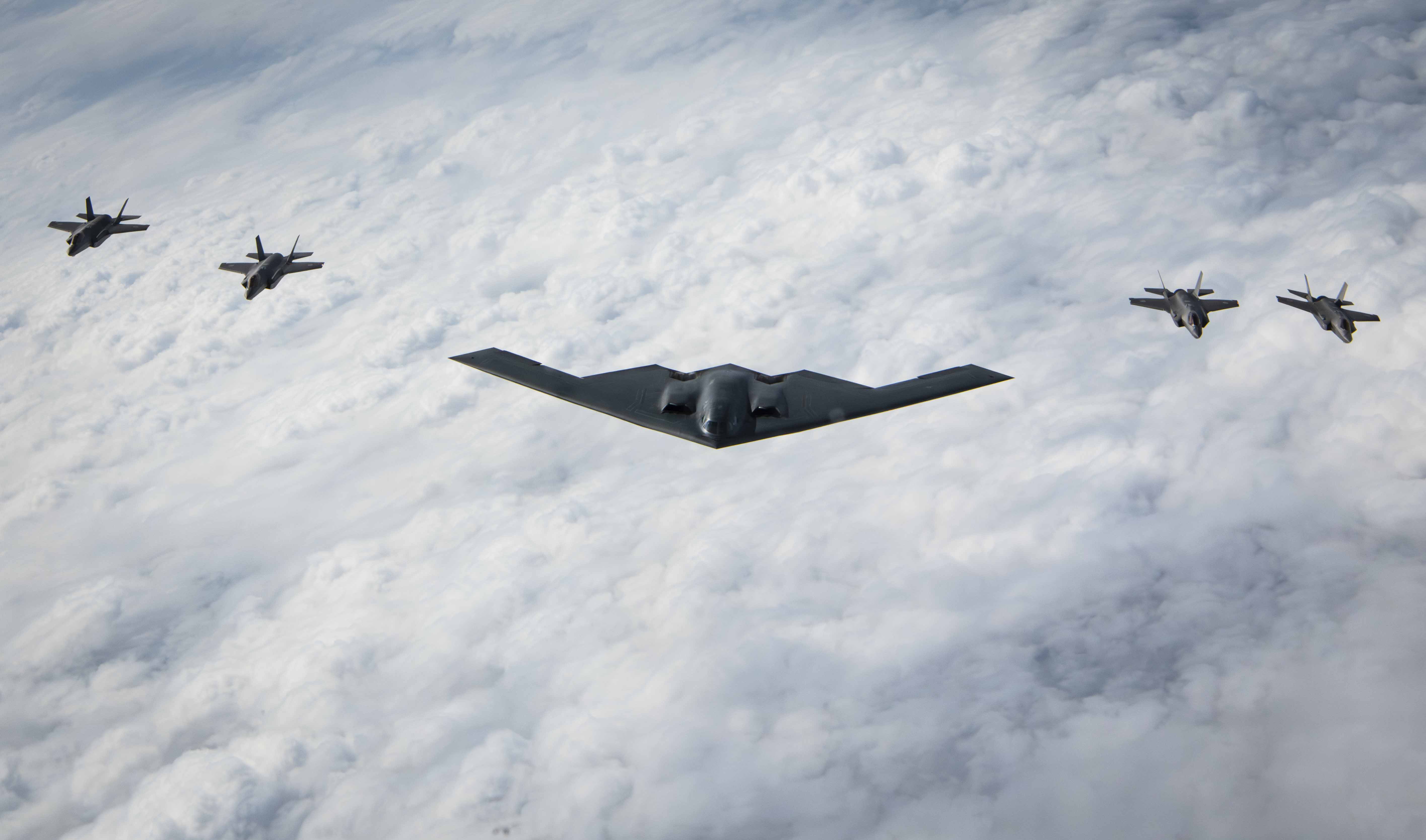
Introduction: In the 1980s, global advancements in air defense systems significantly threatened the United States Air Force’s capability to hit crucial enemy targets. To counter this challenge, the Air Force adopted cutting-edge stealth technology for a long-range bomber designed to carry substantial payloads, both conventional and nuclear. The B-2 Spirit, developed by Northrop Grumman, achieved a level of invisibility to advanced radars that was unprecedented at the time, utilizing a flying wing configuration, innovative composite materials, specialized coatings, and secret stealth technologies.
B-2 bomber
The aircraft was first unveiled to the public in November 22, 1988, at Air Force Plant 42 in California and completed its first test flight in July 17, 1989. After undergoing development, the first operational B-2 was delivered to the United States Air Force in December 17, 1993. The bomber, whose primary base is Whiteman Air Force Base in Missouri, has participated in various operations, the most significant of which include Operation Allied Force in Serbia in 1999, Operation Enduring Freedom in Afghanistan in 2001, and Operation Iraqi Freedom in Iraq in 2003.
The B-2 bomber was unveiled on November 22, 1988 at Air Force Plant 42.
The B-2 Spirit can conduct combat missions for over 30 hours without a break, operated by a crew of two (a pilot and a mission commander). It has the capacity to carry precision-guided munitions weighing up to 40,000 pounds for each mission. Earlier B-2 models were subjected to extensive environmental tests, including 1,000 hours of temperature evaluations at the McKinley Climatic Laboratory, ranging from -65 to 120 degrees Fahrenheit. The results of these tests, later confirmed in Alaska, proved that the B-2 Spirit is not only capable of withstanding various climatic challenges but also effectively executes strategic missions with minimal radar detection by adversaries.
B-2 bombers parade and fly from Whiteman Air Force Base during the annual Spirit Vigilance exercise in 2024.
History and development of the B-2 bomber:
The concept of designing a stealth bomber dates back to the 1940s and 1950s when Northrop sought to introduce a new approach to military aircraft by developing advanced flying wing designs like the YB-35 and YB-49. This design, lacking a traditional tail, significantly reduced the radar cross-section and could have revolutionized air tactics if completed. However, at that time, the absence of advanced control systems and technological limitations led to these projects being shelved.
YB-35YB-49YB-35 and YB-49 projects
In the 1970s, advances in radar-absorbing technologies, advanced composite materials, and digital computing reignited the United States Air Force’s interest in developing a stealth bomber. The Vietnam War experience and the increasing threat of Soviet air defenses underscored the necessity for a strategic aircraft capable of penetrating deep into enemy territory undetected.
In 1979, the United States Air Force launched the Advanced Technology Bomber (ATB) program, which aimed to develop a stealthy strategic bomber capable of striking deep into enemy territory. The project was highly classified, with information only available to a select few senior officials.
Northrop and Lockheed competed for the program. Lockheed, known for its success with the F-117 Nighthawk stealth fighter, proposed a design aligned with those principles. However, Northrop ultimately proved its superiority by creating a flying-wing bomber, securing the contract for the program’s development in 1981.
Lockheed’s proposed design based on the F-117
However, Northrop’s design, which integrated a distinctive aerodynamic shape, radar-absorbing materials, and fully digital flight systems, set the stage for a new era of strategic bombers. The outcome of this initiative, the B-2 Spirit, surpassed all previous bombers in both design sophistication and operational capabilities at the time.
Visual comparison of Northrop (top image) and Lockheed and McDonnell-Douglas designs
The soaring costs and technical difficulties of the program attracted significant criticism in Congress. By the early 1980s, the estimated project cost was $22.1 billion, but as it advanced, the combination of technical hurdles and escalating research and development expenses caused this estimate to climb to $44.7 billion by 1988. Ultimately, taking into account research and development, production, maintenance, and upgrades, the entire B-2 program cost totaled $101 billion, making each aircraft approximately $2.1 billion. In 1992, the Bush administration opted to cut the aircraft production from 132 to a mere 21. The anticipated cost for producing the 20 aircraft was about $26.8 billion. This assessment bolstered the case against any additional B-2 production. Consequently, Congress decided to stop further production, maintaining 20 operational aircraft and 1 experimental one in service.
Its high maintenance costs and limited fleet prompted the US Air Force to announce in 2018 that the bomber would be retired by 2032, to be replaced by the B-21 Raider, a new generation of stealth bombers.
B-2 design and technical features:
A standout aspect of the B-2’s design is its distinctive flying wing structure, which lacks any vertical or horizontal tails. This feature is intended to minimize radar reflection. The tailless configuration, combined with its expansive wings, effectively lowers the radar cross-section (RCS), enhancing its stealth capabilities. Consequently, the B-2 can operate at high speeds and altitudes while remaining undetectable to enemy radars. Measuring 21 meters in length, 5.18 meters in height, and boasting a wingspan of 52.4 meters, this aircraft ranks among the largest stealth platforms globally.
The B-2’s flying wing design
Since the B-2 is a traditional airframeless aircraft, integrating strength into its structure required the use of advanced materials. For this purpose, special composites such as carbon fiber and metal compounds were used in the fuselage structure, as they are lightweight while also providing high strength and excellent radar absorption. Additionally, to withstand the stresses and pressures from flying at very high altitudes, the body was designed to endure extreme changes in temperature and air pressure.
Bottom view of B2 – click to view larger
B-2 Avionics and Guidance Systems:
Another notable feature of the B-2 is its advanced avionics. One of these systems is the AN/APQ-181 multi-purpose radar, designed to detect and track targets under various flight conditions. With its capability to operate in multiple bands, this radar enables the B-2 to identify its targets across a broad spectrum. The system employs radar stealth technology to conduct precise reconnaissance without being detected by enemy defense systems.
AN/APQ-181 radar antenna
The AN/APQ-181 radar is among the most advanced terrain mapping and tracking systems designed specifically for the B-2 Spirit stealth bomber. It operates in the G-band and features 21 operational modes, including terrain tracking, navigation, target acquisition, tracking, and weapons guidance.
The AN/APQ-181 features a modular design that enhances capabilities and reduces failure rates. This system employs two electronically scanned array antennas, providing a broad field of view that covers the front and sides of the aircraft. The radar consists of 10 modular replaceable units (LRUs), with a combined weight of 955 kg and a volume of 1.485 cubic meters. Each antenna has a weight of 260 kg. Designed to meet the MIL-STD-1553 standard, the AN/APQ-181 system is resistant to electromagnetic interference as well as the effects of electromagnetic pulses (EMP). Additionally, the radar is optimized for challenging operating conditions, including low-altitude and high-speed flights. In response to the growing demand for the frequency spectrum by commercial communications systems, the US Air Force initiated a program in 2004 to upgrade this radar to an active phased array (AESA) system.
Alongside radar, the B-2’s sophisticated navigation system incorporates GPS and astro-inertial technology, ensuring accurate guidance through lengthy and perilous routes. These systems are designed to function optimally, even in electronic warfare environments, with the ability to autonomously correct their course when necessary.
Stealth of the B-2 bomber:
Stealth is a key feature of the B-2, enabling the aircraft to stay concealed from modern detection systems such as multi-band radars and infrared sensors. To achieve this goal, the B-2’s airframe was designed to minimize radar reflection by reducing its radar cross-section (RCS). The delta-shaped flying wing configuration, along with the airframe’s sharply angled surfaces that reduce radar reflection, collectively enhance the B-2’s stealth capabilities. The B-2 reportedly has a radar cross-section of about 0.1 square meters.
Image of the B-2 radar’s initial reflection angles
Another stealth feature of the B-2 is the use of special radar-absorbing coatings called Radar Absorbent Material (RAM). These coatings are applied throughout the aircraft’s body to absorb radar waves, thereby minimizing its radar cross-section.
Special wave-absorbing coatings to reduce radar cross-section
To lower its thermal signature, the B-2’s engines are uniquely positioned within the body, and their exhaust is carefully shrouded to reduce heat visibility. Additionally, ventilation and cooling systems for the engine’s intake air, combined with efforts to decrease exhaust temperature, effectively minimize the B-2’s thermal signature.
B2 engines specially designed within the body to minimize thermal signature
Engine power and performance of the B-2 bomber:
The B-2 bomber features four General Electric GE-100 non-afterburning turbofan engines, generating 77 kilonewtons (17,300 pounds) of thrust. These uniquely designed engines enable the B-2 to achieve speeds exceeding 630 mph (1,010 km/h) at an altitude of 40,000 feet (12,000 m). Additionally, the aircraft can cruise at 560 mph (900 km/h) at the same elevation. With an operational range of approximately 6,800 miles (11,000 km), the B-2 is equipped for long-range missions.
General Electric F118-GE-100 engine
Armament and carrying capacity of the B-2 bomber:
The bomber can carry 40,000 pounds (18,000 kg) of ordnance, which may consist of both nuclear and conventional weapons. Since the Cold War concluded, modifications have enabled the aircraft to effectively deploy conventional armaments as well. It has the capacity to hold up to 80 500-pound bombs, 36 750-pound bombs, and 16 2,000-pound bombs in its two bays. Additionally, the bomber is outfitted with long-range weapons such as the AGM-154 Joint Standoff Weapon (JSOW) and the AGM-158 Joint Air-to-Surface Standoff Missile (JASSM).
B-2 weapons at a glanceTwo internal bomb bays in the B-2The release of 47 500-pound Mark 82 bombs during a military exercise near Point Mugu, California in 1994.Click to view larger images
To complement the aircraft’s military capabilities, the B-2 is also designed to carry two massive Massive Ordnance Penetrator (MOP) bombs. The 14-ton GBU-57 bunker-busting bomb is ideal for destroying bomb-resistant structures such as bunkers and fortified underground facilities. The B-2 is one of the few platforms capable of delivering these bombs.
GBU-57 Massive Ordnance Penetrator
The cockpit and flight crew of the B-2 bomber:
The B-2 bomber features an advanced, automated cockpit managed by two pilots. The primary pilot sits on the left, while the mission commander is located on the right. This arrangement enables the flight crew to continuously and seamlessly monitor systems and conduct intricate operations. Additionally, the aircraft is equipped with sophisticated systems that minimize flight crew fatigue, enabling one member to rest or utilize the aircraft’s amenities during extended flights.
B-2 bomber cockpit
B-2 Missions and Operations:
Since entering service in the 1990s, the B-2 Spirit has participated in numerous important military missions. Its first operational appearance occurred during the Kosovo War in 1999, where the B-2 played a significant role in destroying targeted sites, dropping 11 percent of the bombs used in the conflict. The aircraft also marked the first use of JDAM smart bombs.
In the 2000s, B-2 bombers played a crucial role in the Afghanistan and Iraq wars. They undertook one of their longest missions, flying from Whiteman Air Force Base in the United States to Afghanistan and back after refueling. The B-2 also took part in attacks on Iraq from Diego Garcia in the Pacific and other US bases, dropping over 1.5 million pounds of munitions. Additionally, in 2011, B-2 bombers entered Libya as the first American aircraft involved in Operation Odyssey Dawn. By 2025, the bombers were again stationed at Diego Garcia, conducting bombing operations in Yemen.
B-2 bomber specifications:
Type: Strategic heavy bomber Manufacturer: Northrop Grumman Country of manufacture: United States First flight: 1989 Entered service: 1993 Crew: 2 Length: 21 m Wingspan: 52.4 m Height: 5.18 m Engine: 4 × General Electric F118-GE-100 engines without afterburner Maximum range: 11,000 km Combat range: 9,600 km Cruise speed: 900 km/h Maximum speed: 1,010 km/h Rate of climb: 3,000 ft/min Service ceiling: 15,240 m Endurance: up to 40 hours (estimated) Empty weight: 71,700 kg Maximum takeoff weight: 170,500 kg Payload: 18,000 kg (official), 23,000 kg (estimated) Armament: Two internal bays with a capacity of 18,000 kg (46,000 lb) of ordnance 80 × 500 lb class bombs (Mk-82, GBU-38) 36 × 750 lb class cluster bombs (CBU) 16 × 2,000 lb class bombs (Mk-84, GBU-31) 16 × B61 or B83 nuclear bombs AGM-154 JSOW and AGM-158 JASSM missiles 2 × GBU-57 heavy bunker buster bombs
In their statement regarding these attacks, the Yemeni armed forces reiterated their support for the Palestinian people and resistance. They announced that the Great Yemeni forces will persist in conducting naval operations against Israeli shipping in the Red and Arabian Seas, as well as in confronting American attacks, until the war concludes and the siege of the Gaza Strip is lifted.
IWN‘s findings indicate that the drone strike on Tel Aviv marks the 90th air operation conducted by the Yemeni army targeting Israeli positions in occupied Palestine. Additionally, the attack on US warships represents the 201st operation by the Yemeni army against illicit vessels linked to Israel, the US, and Britain.
The operation launched by the Yemeni armed forces to support the Palestinian resistance against the Israeli regime began on October 19, 2023. This initiative resulted in the capture of the Israeli ship, Galaxy Leader, and ongoing missile, drone, and airstrike attacks on over 200 ships associated with Israel. Consequently, shipping by Israeli companies through the Red Sea route has been suspended.
In addition to these attacks on ships, the Yemeni army has conducted over 85 missile and drone operations targeting positions held by the Israeli regime in occupied Palestine. Furthermore, an F-18 Super Hornet fighter jet and 18 American MQ-9 drones have been shot down during the Yemeni conflict with the American-British coalition.
In the past 24 hours, US warplanes have carried out a series of airstrikes across Yemen. A residential building in Amin Muqbil, south of Hudaydah, was hit, along with a communication network in Shawaba, Imran province, disrupting connections. The Zara’iyah area west of Dhamar city and the Jabal Shamahi area in Ibb province also faced destruction. Additionally, Jabal Al-Naqam, on the eastern outskirts of Sanaa province was targeted.
As a result of the attack by US warplanes on the area of Amin Muqbil, south of Hudaydah, 12 people were martyred, including six women and four children, and 15 others were injured.
American officials claim that the primary targets of their airstrikes are military installations and weapons depots, yet the reality on the ground reveals a different situation. Most American attacks are conducted against residential areas, and there are no reports of secondary explosions or heavy smoke indicating the presence of weapons or ammunition. The American military in Yemen is clearly committing war crimes and targeting civilians!
Brigadier General Yahya Saree stated that the Yemeni Armed Forces’ air defense successfully targeted and struck an MQ-9 drone conducting hostile operations in the airspace above Al-Jawf province. This operation utilized a surface-to-air missile developed by Yemeni Defense Industries.
On April 3, the Yemeni Army’s defense forces also successfully destroyed a U.S. MQ-9 drone in Marib province.
This impressive operation highlights the determination and expertise of the Yemeni forces in strengthening their aerial defense capabilities. It’s a testament to their resilience and commitment to protecting their airspace.
This drone marks the 22nd American MQ-9 drone to be shot down during the Yemeni war. Eighteen of these drones were downed during the Yemeni operation to support the Palestinian people and their resistance, titled the “Promised Conquest and Holy Jihad” campaign.
The wreckage of a downed American MQ-9 drone in Al-Jawf. The drone was shot down this morning by a Yemeni army air defense missile.
Since the onset of the Yemeni war, the Yemeni Armed Forces have successfully downed 115 military aircraft from the US, Saudi Arabia, UAE, Morocco, Bahrain, and Jordan across various fronts. Among these, 25 aircraft are attributed to the US military, comprising 22 MQ-9 drones, one F/A-18F fighter jet, one UH-60M helicopter, and one V-22 Osprey helicopter.
Based on the provided images and information, the 359 loitering missile is larger than the 358 missile, with both its length and diameter nearly doubled.
The missile features four movable wings at the front and four large fixed wings at the rear. These wings have been proportionately enlarged to match the dimensions of the fuselage. Notably, the rear fixed wings include small control surfaces at their tips, which enhance the missile’s maneuverability and control.
Control surfaces at the ends of the 359 missile’s rear wings
The 359 missile features a new, larger engine that boosts its speed to 1,000 kilometers per hour. It has a range of over 150 kilometers and can reach a flight altitude of more than 30,000 feet (9,200 meters).
One notable improvement of the 359 missile compared to the previous 358 model is its recoverable capability. Unlike the 358, which could not be recovered, the 359 is equipped with a recovery parachute. This means that if the missile fails to intercept a hostile target or is used for reconnaissance and surveillance operations, it can be safely recovered using the parachute.
The recovery parachute of 359 missile
The 359 missile is equipped with a significantly larger warhead, which provides enhanced destructive and explosive power compared to its predecessor, the 358 missile. This increased capacity makes the 359 a formidable weapon on the battlefield. Additionally, it can be equipped with an electro-optical payload specifically designed for reconnaissance and surveillance operations, allowing it to gather critical intelligence in situations where a high-explosive warhead may not be necessary.
In terms of performance, the 359 missile has undergone comprehensive improvements, making it more advanced and effective than the 358. It is now capable of targeting adversaries at higher altitudes and achieving faster speeds. With a maximum flight altitude that surpasses 30,000 feet and a top speed of 1,000 kilometers per hour, the 359 missile can effectively engage airborne warning and control system (AWACS) aircraft as well as aerial refueling tankers.
Moreover, the missile boasts an extended cruising range of over 150 kilometers, which significantly enhances Iran’s strategic capabilities in air defense. This extended range not only allows for greater flexibility in deployment but also improves the country’s ability to monitor and protect its airspace from potential aerial threats. Overall, the advancements in the 359 missile position it as a critical asset in Iran’s defense arsenal.
Click to view full sizeUnveiling of the 359 missile in the television documentary Guardian of the Sky
Following the onset of armed clashes in Aleppo, prior to the collapse of Bashar al-Assad’s government, a contingent of the Syrian Democratic Forces (SDF) was deployed to the Sheikh Maqsoud and Ashrafiyah neighborhoods, where the majority of residents are Kurds.
After the fall of Assad’s regime and the city’s capture by Tahrir al-Sham and its allies, the SDF maintained their presence in these areas and engaged in ongoing clashes with militant groups. Consequently, Sheikh Maqsoud and Ashrafiyah have experienced numerous armed confrontations in recent months. However, these clashes have significantly decreased following an agreement between Mazloum Abdi and Abu Muhammad al-Julani.
With tensions lowered and clashes ceased, members of the Civil Council representing Sheikh Maqsoud and Ashrafiyah neighborhoods held a meeting with representatives of the Syrian government. During this meeting, the parties signed an agreement consisting of 14 clauses regarding the status of the aforementioned neighborhoods.
Image of the agreement between the SDF and the Syrian government
The provisions of the agreement are as follows:
Neighborhood Status: Sheikh Maqsoud and Ashrafiyah are recognized as part of Aleppo city and are administratively affiliated with it. Ensuring the protection of both neighborhoods is essential for promoting peaceful living.
Temporary Nature: This agreement is temporary and will remain in effect until a permanent arrangement is established by joint committees.
Security Responsibility: The Syrian Ministry of Interior and the Internal Security Forces will be responsible for the protection of these neighborhoods.
Weapon Prohibition: To maintain security and tranquility, carrying weapons within these neighborhoods is prohibited. Only the Internal Security Forces under the oversight of the Syrian Ministry of Interior are authorized to possess weapons.
Public Road Access: All public roads will remain open, and the main checkpoints will be controlled by the Syrian Internal Security Forces until conditions stabilize in these neighborhoods.
Withdrawal of Armed Elements: Armed elements present in Sheikh Maqsoud and Ashrafiyah must withdraw to areas east of the Euphrates River.
Establishment of Security Centers: Two centers affiliated with the Syrian Internal Security Forces will be established in the Sheikh Maqsoud and Ashrafiyah neighborhoods.
Freedom of Movement: Residents of these neighborhoods will be allowed free movement, and no one not involved in crimes against Syrians should be detained.
Coordination Committee: A coordination committee will be created to facilitate movement between Aleppo city and the northern and eastern regions of Syria.
Implementation Committees: Committees will be established in both neighborhoods to oversee the implementation of this agreement.
Civil Institutions Coordination: All civil institutions in these neighborhoods will coordinate with other civil entities. They will assist other institutions and provide services through the two branches of the Sheikh Maqsoud and Ashrafiyah municipalities, without discrimination.
Prisoner Release and Exchange: Prisoners from both sides will be released, and all individuals detained after the liberation of the city will be exchanged.
Representation in Local Governance: Representatives from Sheikh Maqsoud and Ashrafiyah will participate in the Aleppo Governorate Council, the Chamber of Commerce, and all other relevant departments in accordance with existing laws.
Continued Operation of Local Councils: All service, executive, educational, municipal, and local councils in these neighborhoods will continue to function until a permanent agreement is finalized by the joint committees.
In accordance with the sixth provision of the agreement, the withdrawal of the Syrian Democratic Forces from Sheikh Maqsoud and Ashrafiyah began yesterday, with the SDF leaving the neighborhoods armed. Furthermore, as stipulated in the twelfth clause, a total of 146 prisoners from Sheikh Maqsoud and Ashrafiyah, along with 97 individuals affiliated with the Syrian government, were released by both sides.
In his message, Trump the thug claimed that the attendees were gathered to receive orders for attacks on American ships(!) and asserted that this operation would prevent any further attacks on American vessels.
Western media also justified this terrorist act by claiming that these people were responsible for the USV attacks on ships in the Red Sea.
The Video released by Trump about an airstrike in Yemen
However, these claims appear to be unsubstantiated. The evidence from the video suggests that the U.S. has not achieved its objectives in Yemen and has resorted to mass civilian casualties, targeting non-military facilities such as power plants, drinking water facilities, schools, and hospitals in an attempt to exert pressure on Yemeni leaders and people.
Our investigations reveal that the attack occurred in an area near the southern coast of the Tuhayta district, situated in the southern part of Al-Hudaydah province. 📌 Location of the US airstrike. This region has been a site of ongoing clashes between Saudi coalition forces and Ansar Allah fighters in recent years. It’s important to note that Ansar Allah does not have any established bases in this area.
The geolocation of the US airstrike in Yemen
The coastal area of the Tuhayta district and Al-Faza are among the most significant coastal points in Al-Hudaydah province. They are situated opposite the island of Zaqar and provide crucial control over the passage of ships in the southern Red Sea.
These areas have been the site of guerilla attacks by Ansar Allah against the Saudi coalition during past conflicts, and remnants of numerous Emirati and Saudi military vehicles remain there. It appears that the United States aims to weaken Ansar Allah’s positions in these regions and prevent potential activities by the Yemeni army along the coast through such attacks.
Zionist media outlets claim that the attack involved several suicide drones, all of which were intercepted and destroyed en route to occupied Palestine.
This drone attack on Tel Aviv marks the 88th air operation conducted by the Yemeni army against the positions of the Zionist regime in occupied Palestine.
In another development, the air defense systems of the Yemeni armed forces successfully destroyed a Giant Shark F360 reconnaissance drone over Saada province by firing a surface-to-air missile.
The downing of this drone marks the first official instance of Giant Shark F360 drones being destroyed in the Yemeni conflict.
This drone most likely belongs to Saudi Arabia and originated from one of its military bases in southern Saudi Arabia. The drone was reportedly conducting a spying mission for either the United States or the Israeli regime in Saada province.
Some Yemeni media outlets suggest that a drone of this type was also targeted and crashed by Ansar Allah on the Marib front in recent months. However, due to the drone’s intact body and the fact that it crashed in areas controlled by the Saudi-backed forces, along with the Yemeni armed forces not reporting the destruction of this drone, it is believed that the cause of the crash was a technical malfunction rather than an attack.
Video related to the giant shark F360 that crashed due to a malfunction.
This incident marks the 21st American MQ-9 drone destroyed during the Yemeni conflict. Notably, 17 of these drones were downed during the Yemeni Armed Forces’ support operation for Palestine, known as “Promised Conquest and Holy Jihad.”
On March 31, the Yemeni Army’s defense forces also successfully destroyed a U.S. MQ-9 drone in Marib province.
The MQ-9 Reaper drone is one of the U.S. Army’s heavy, multi-purpose drones that has been involved in numerous reconnaissance, surveillance, and offensive operations in Yemen since the start of the Yemeni Armed Forces’ campaign against the Zionist regime.
This drone has proven to be one of the most significant weapons used by the United States in conflicts in Iraq, Afghanistan, Syria, and other regions; however, it has faced more significant losses in Yemen than in any of these other conflicts. To date, the air defenses of the Yemeni Armed Forces have shot down 21 MQ-9 drones, causing substantial damage to the United States, estimated at $672 million.
The drone was reportedly shot down in the sky of Marib province using a surface-to-air missile, and its wreckage fell in the desert between Marib and Al-Jawf provinces.
The American military uses MQ-9 drones to conduct attacks and identify important targets in real-time in Yemen.
Wreckage of the US MQ-9 Drone in Maribdesert
The Marib and Al-Jawf deserts represent the frontline in the conflict between Ansar Allah and the Saudi coalition forces. However, the supremacy of Ansar Allah fighters in battle and the intimidation of mercenary troops have led to the majority of American drone wreckage landing in the possession of Ansar Allah forces.
It is important to note that the Yemeni army had previously shot down 4 of this type of drone during the conflict with the Saudi coalition over the past years. However, in the recent war, particularly during the Yemeni operation to support the Palestinian people and their resistance, titled the “Promised Conquest and Holy Jihad” campaign, the Yemeni army has shot down an additional 16 MQ-9 drones in less than two years, including the one downed tonight.