Author: Mirza

  • Military Knowledge: Raad Suicide Drones

    Military Knowledge: Raad Suicide Drones

    An overview of the Raad drone family

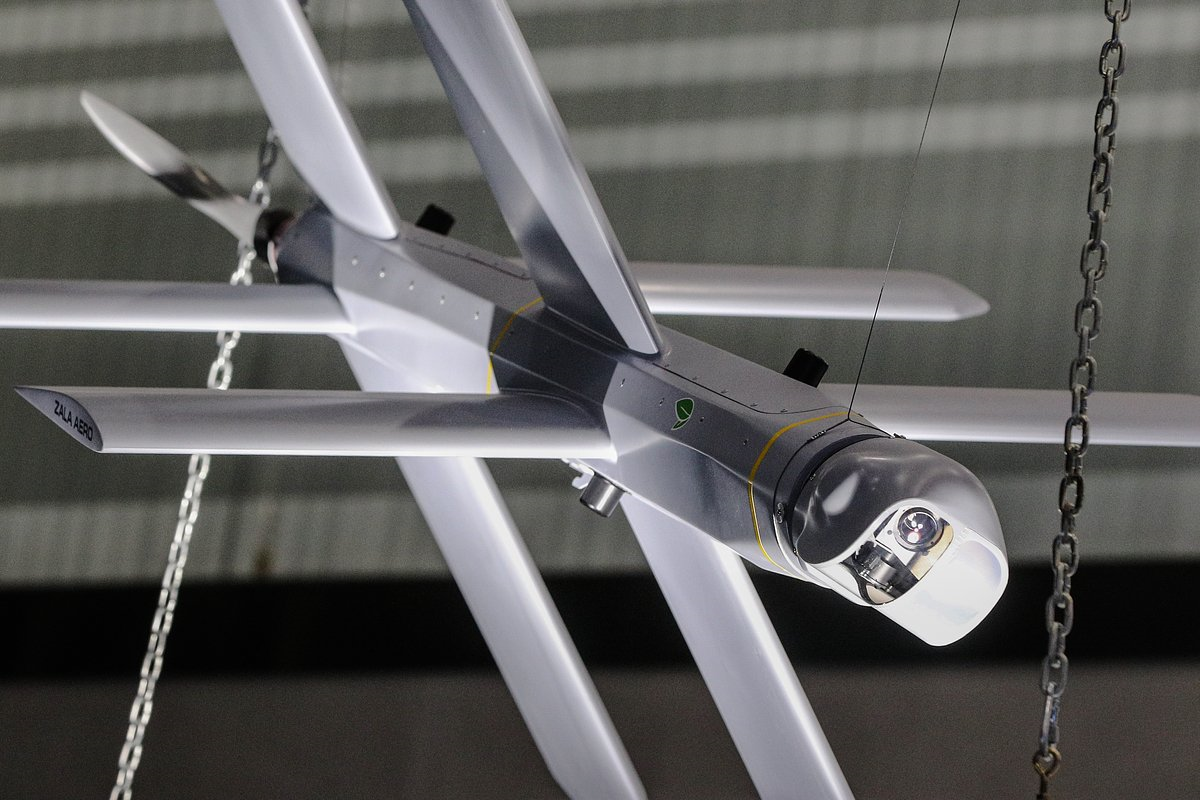
    The Raad family of drones is among the first Iranian unmanned munitions specifically designed for infantry use. These drones feature a standard aerodynamic design similar to other models like the Russian Lancet and the Israeli Hero. With a cylindrical body, two rows of wings, and electric propulsion, along with an electro-optical system integrated into the nose, the Raad drones have a familiar appearance.

    Read more: Military Knowledge: Lancet-3 Suicide Drone
    After modeling itself on Switchblade drones and developing an indigenous version called Meraj 521, the IRGC Ground Force has now also begun to explore the use of other prominent global models.

    Military Knowledge: Meraj-521 Loitering Munition

    Raad-1 drone:

    Currently, there are no available details regarding this drone, leaving its specifications and capabilities shrouded in mystery.

    Raad-2 drone:

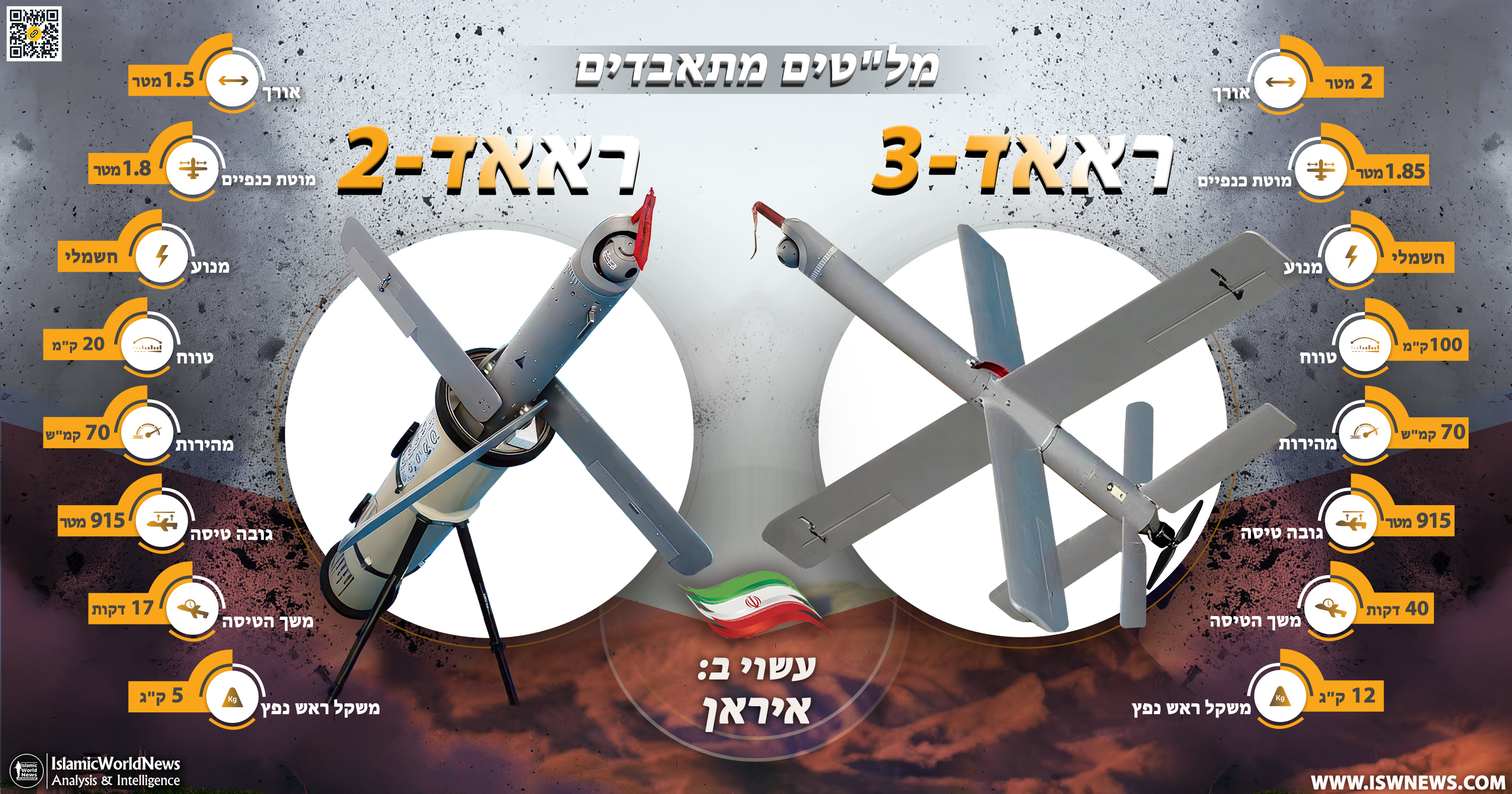
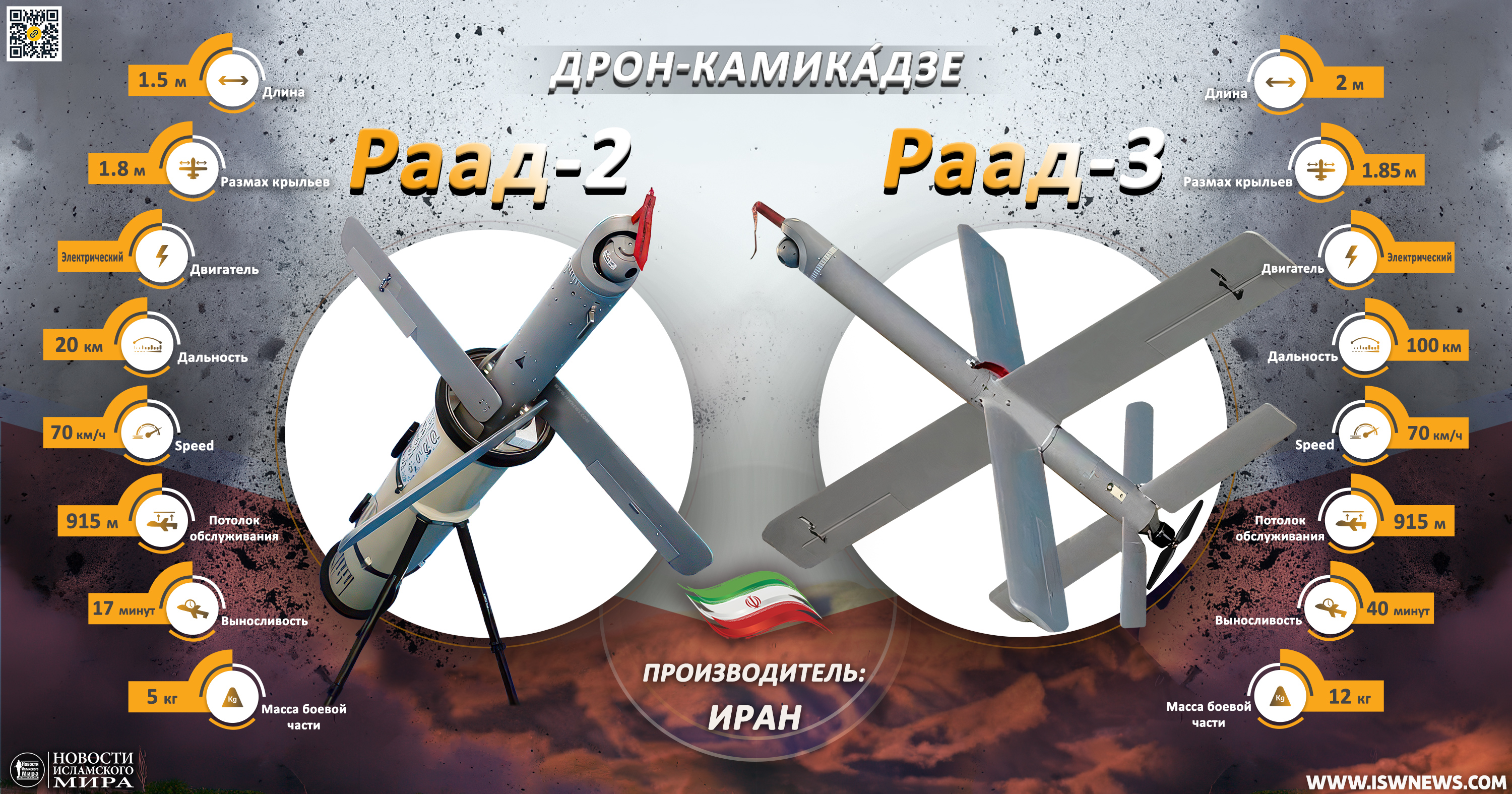
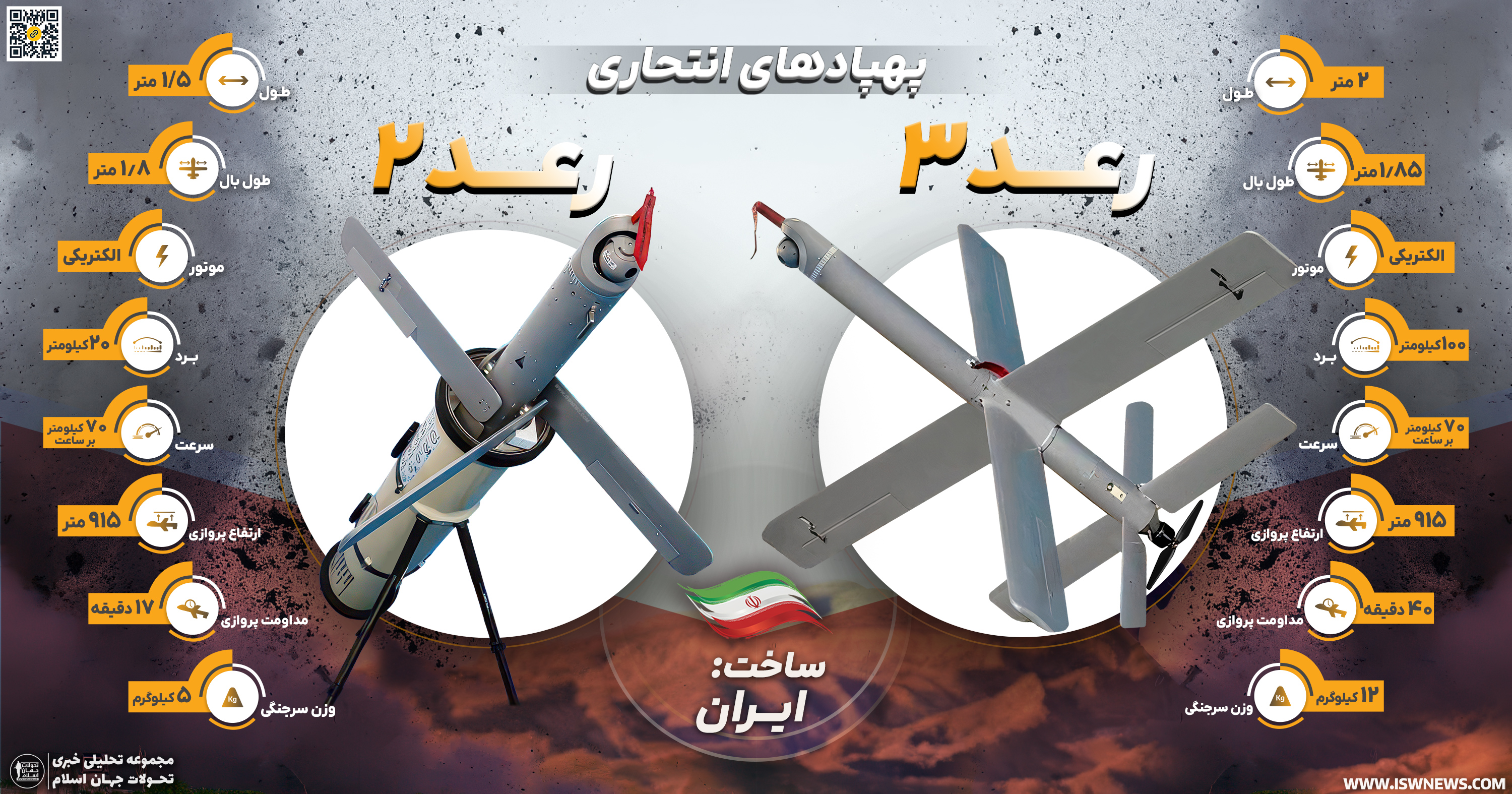
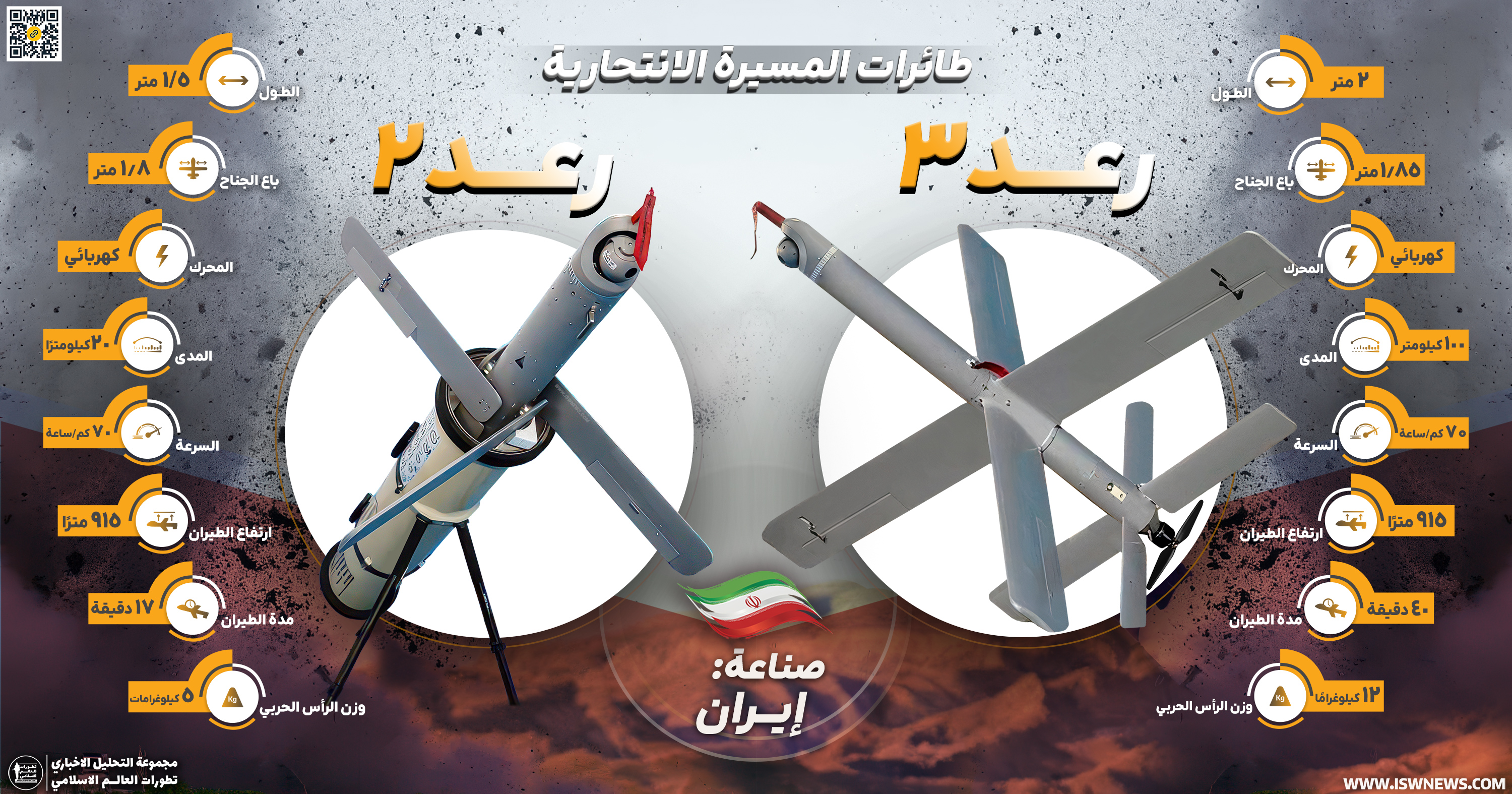
    The Raad-2 suicide drone features a wingspan of 1.8 meters and a fuselage length of 1.5 meters. It is capable of flying for up to 17 minutes using an electric motor. With a declared operational range of 20 kilometers, the drone can achieve speeds estimated between 60 and 70 kilometers per hour. Additionally, the Raad-2 carries a 5-kilogram warhead, which can be fitted with various types of fragmentation or explosive warheads.

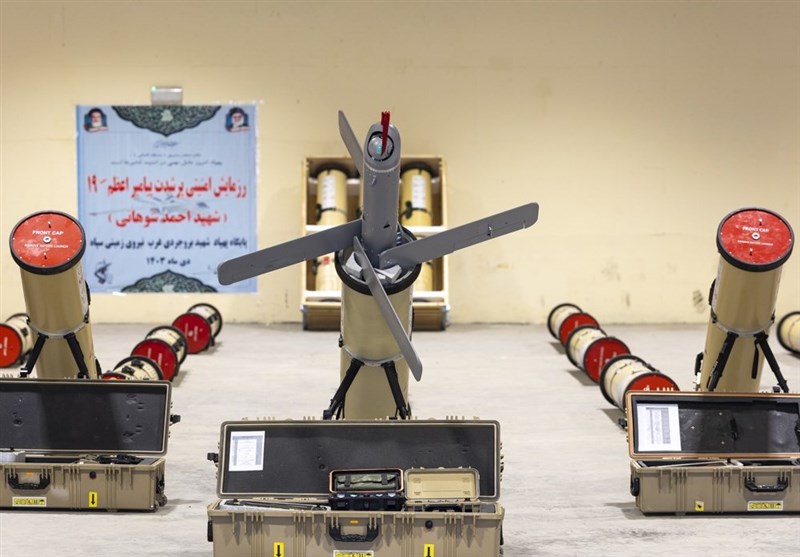
    It’s worth mentioning that prior to its official unveiling during the second phase of the Great Prophet-19 exercise in 2025, the Ra’ad-2 suicide drone was informally referred to as the Rezvan drone.
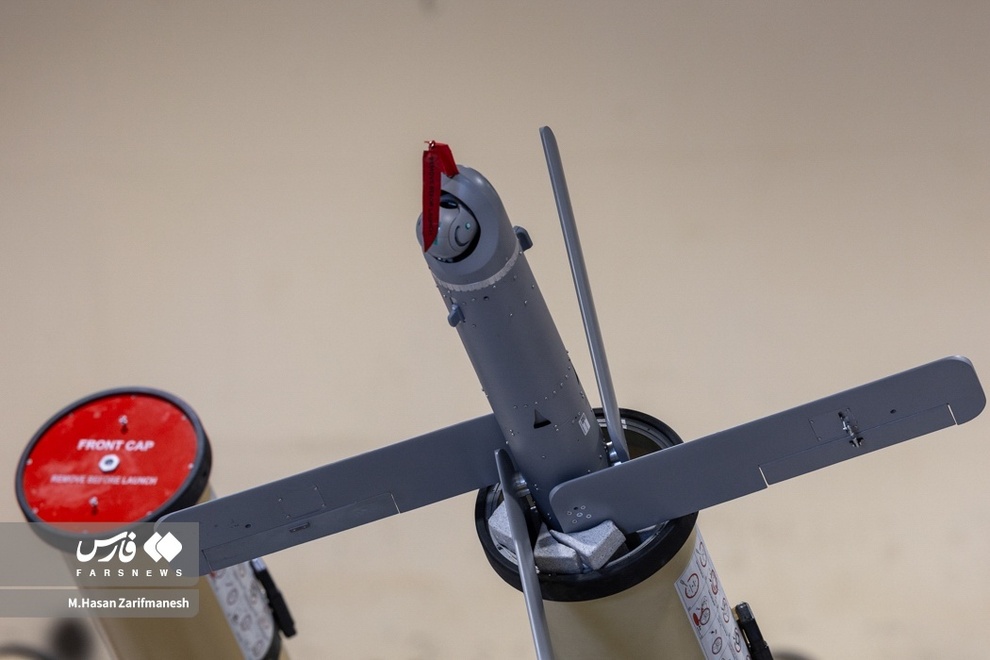
    Raad-3 drone:

    The Raad-3 drone has a mission similar to that of the Raad-2, but with some enhancements. It features an increased wingspan of approximately 1.85 meters and a slightly larger fuselage measuring about 2 meters in length. These larger dimensions, along with a more powerful engine, likely enable the drone to carry a greater energy storage capacity. As a result, its flight duration has been extended to 40 minutes, and it can now support a warhead weighing up to 12 kilograms.
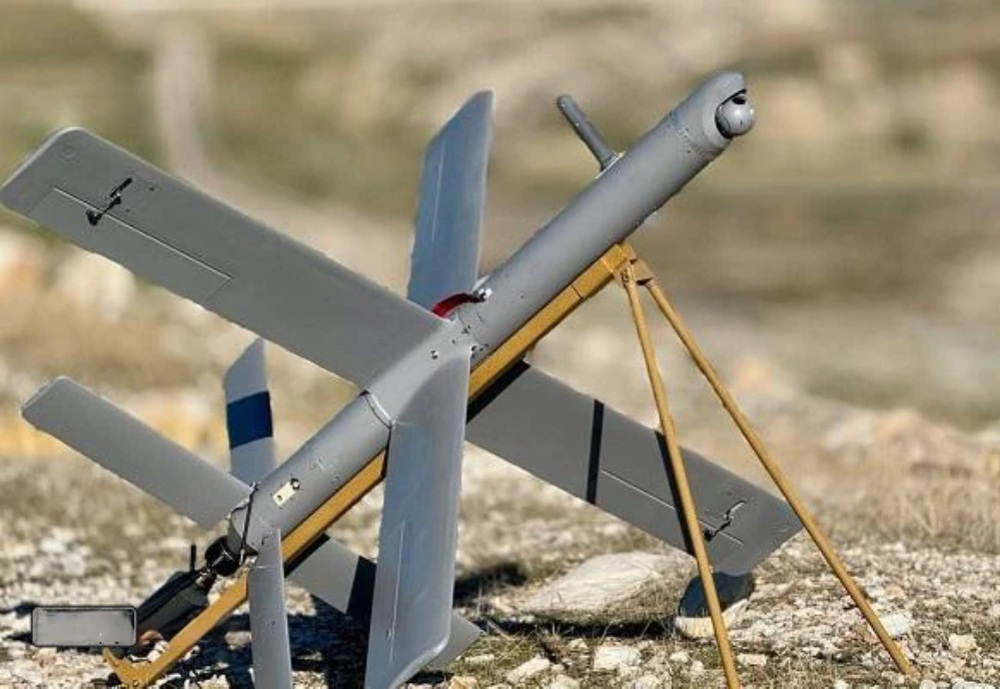
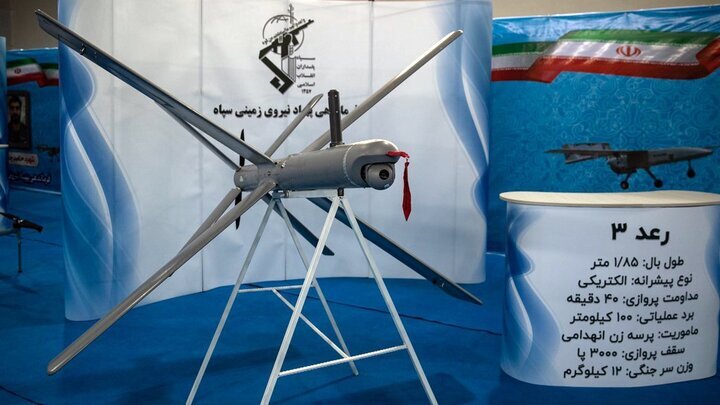
    Despite the fact that the Raad family of drones, which have been produced in three versions so far, all use electric propulsion, their launching method is different.

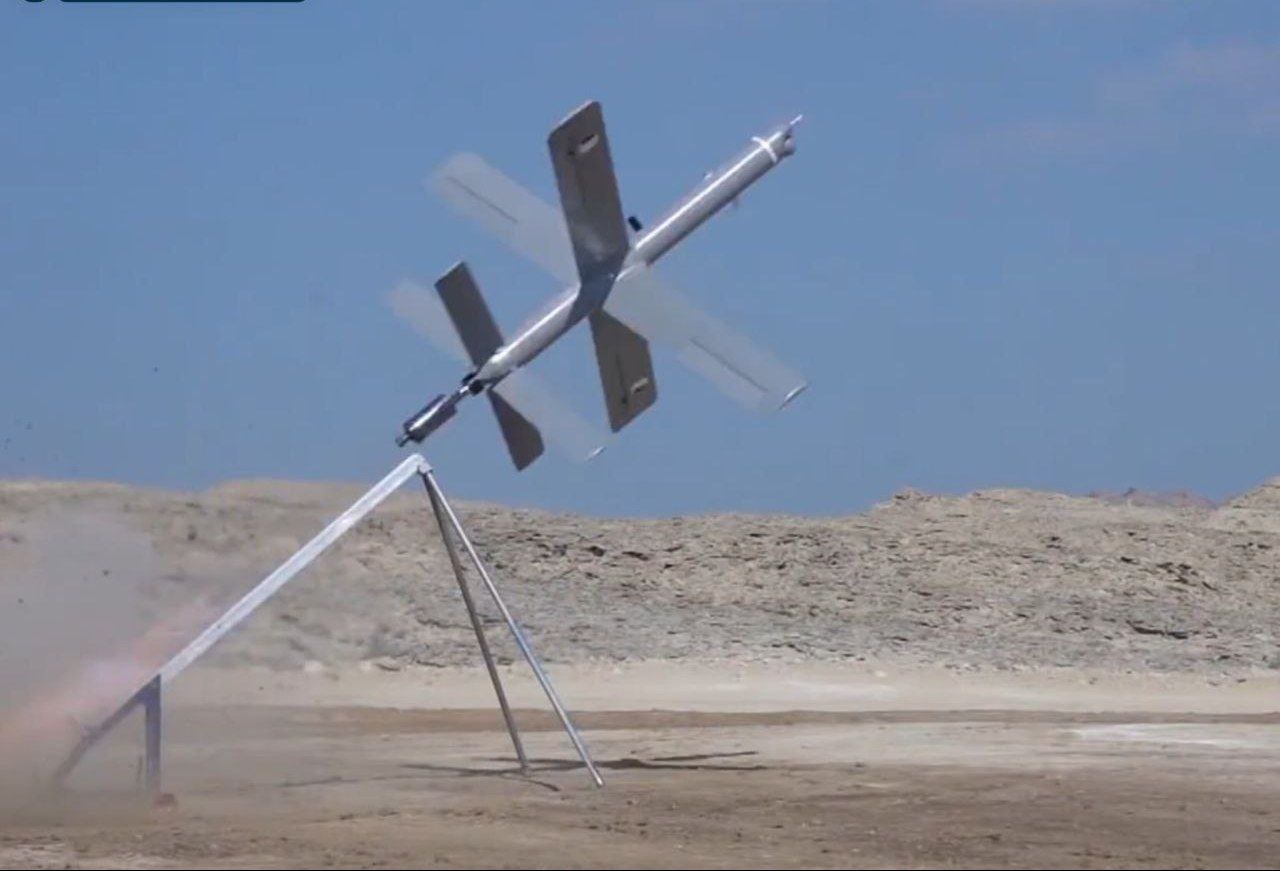
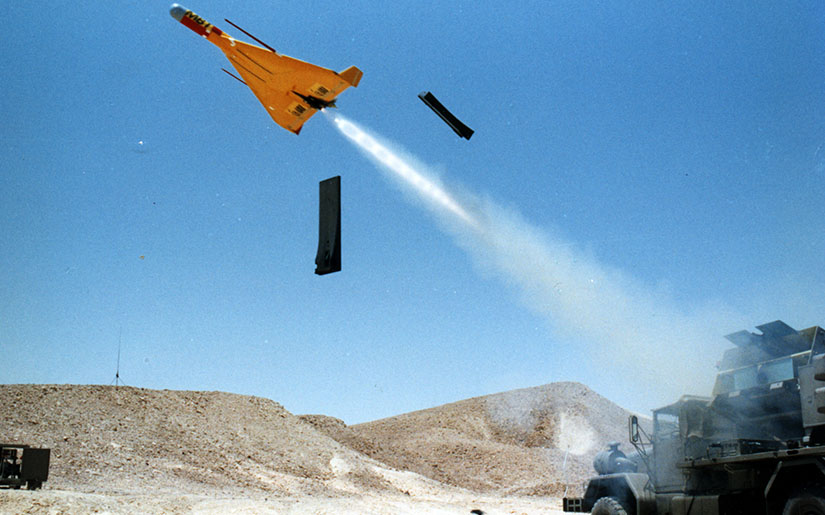
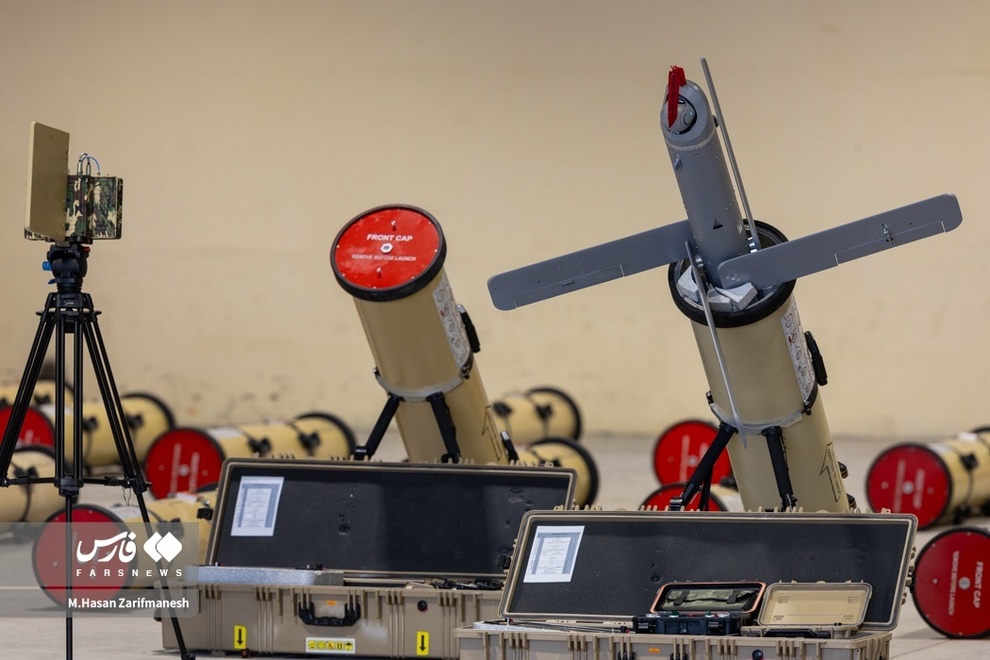
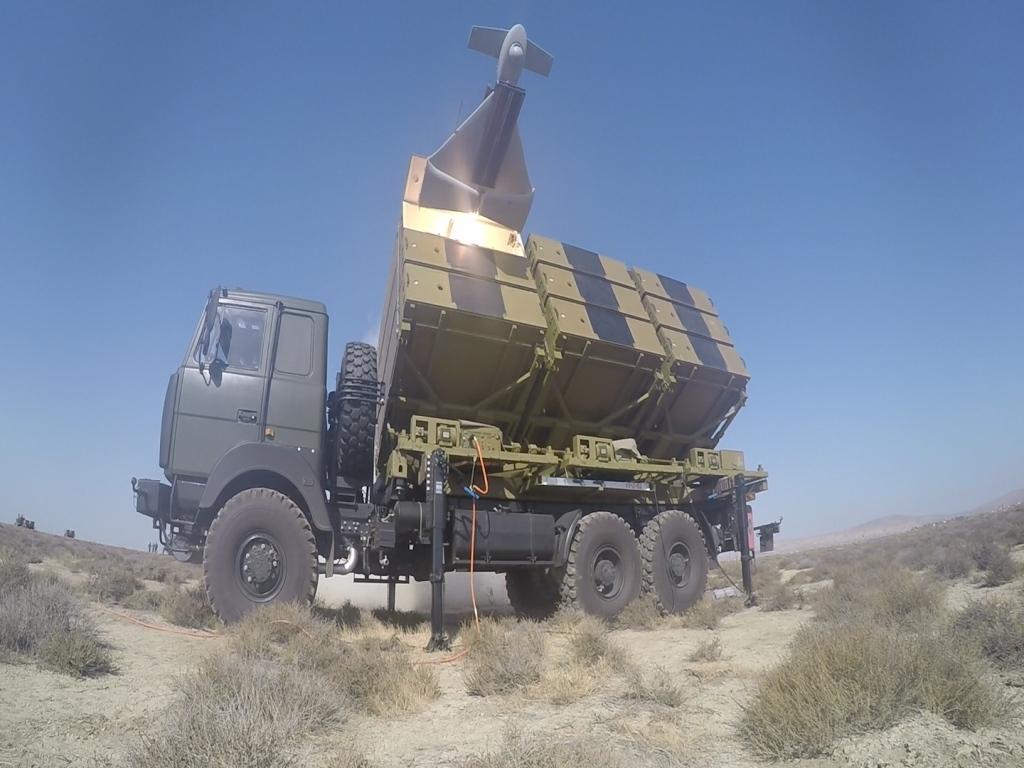
    The Raad-2 UAV features a compact design with retractable wings, enabling efficient storage and launch from a cylindrical chamber. Its wings, each attached by a spring joint, are compressed towards the nose when in the chamber. Upon launch, a rocket booster propels the UAV out of the chamber, and the wings deploy by rotating 90 degrees. This innovative design allows the UAV to be stored and launched from a confined space using a hot gas blast.
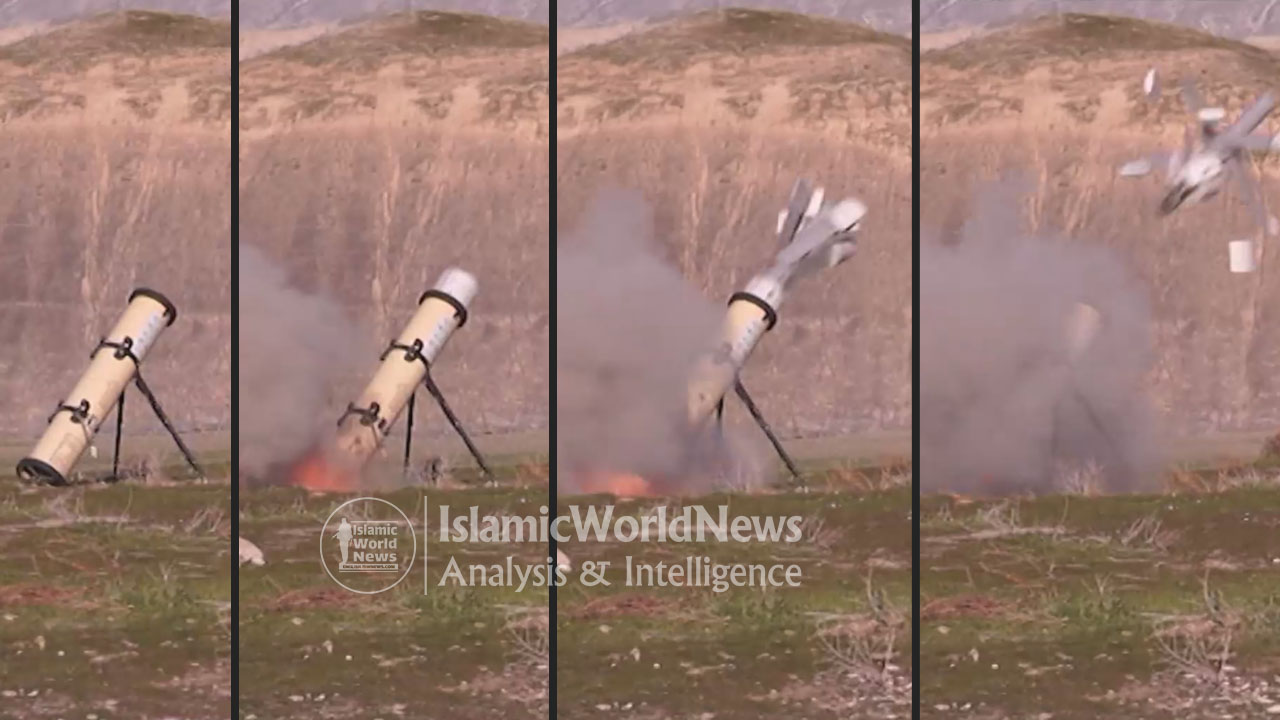
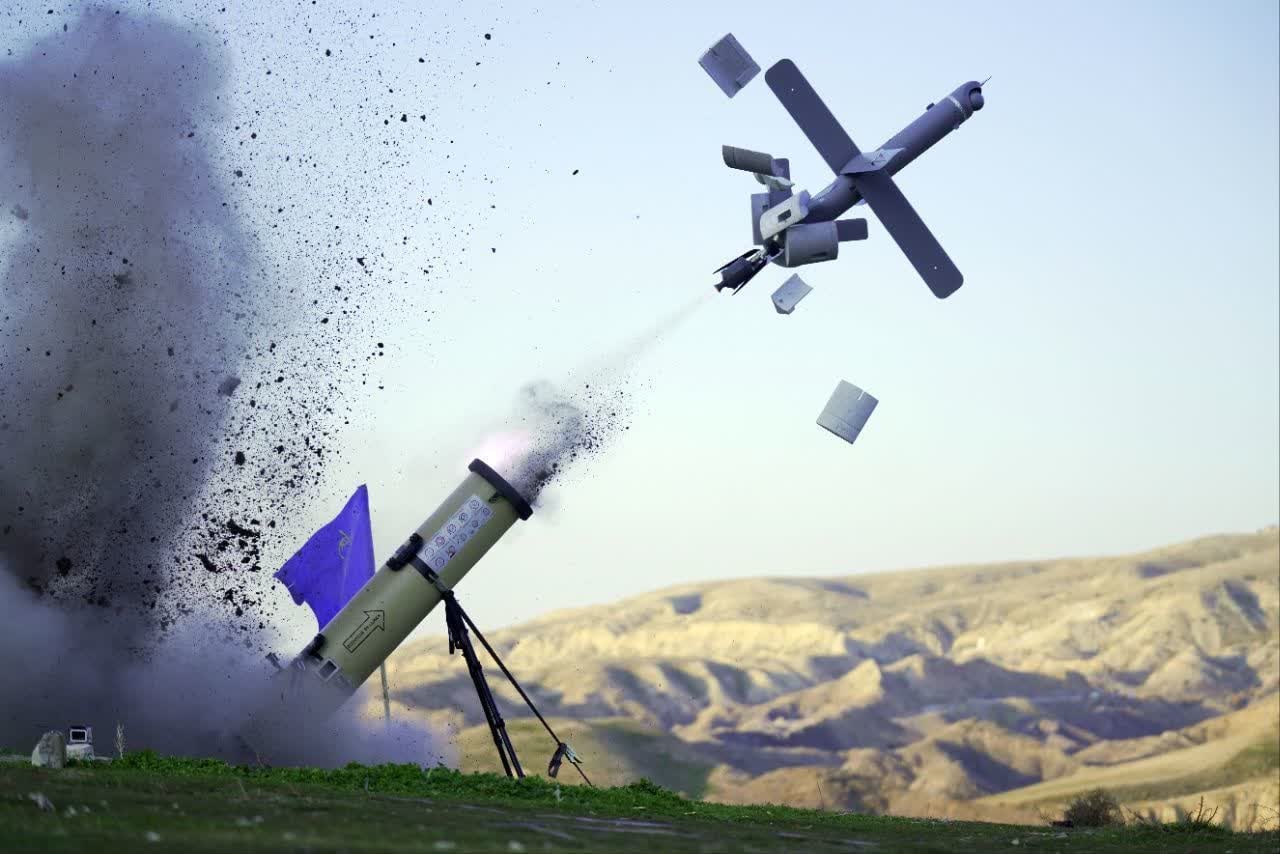
    The moment the Raad-2 drone launches and exits the cylindrical chamber
    Launch of the Ra’ad-2 drone during the Great Prophet-19 exercise in 2025

    On the other hand, the box-launching capability of the Raad-2 UAV has enabled the development of multi-launchers for this drone. A specialized multi-purpose launcher has been created for both the Raad-2 and Ghaem-118 UAVs, allowing for the deployment of up to 8 box launchers on Toyota tactical vehicles as well as on the Aras family of vehicles.
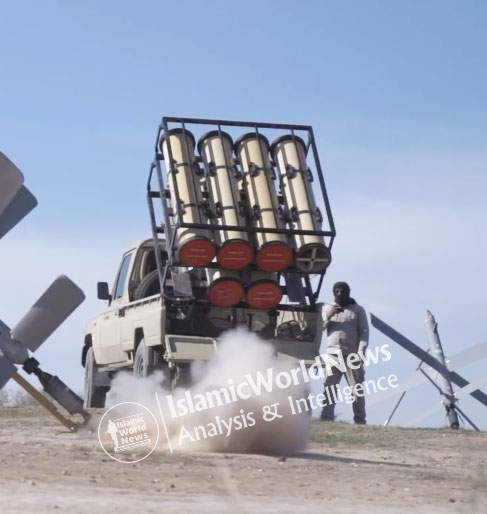
    Ra’ad-2 multiple launchers on a tactical vehicle

    Unlike the Raad-2, the Raad-3 features fixed wings and is launched from a rail with the assistance of a rocket booster. The use of rail launchers to provide initial acceleration for drones is common, utilizing hydraulic, pneumatic, or JATO (Jet-Assisted Take-Off) systems. This approach is seen, for example, in different variants of the Russian Lancet-E and other similar drones.

    Raad-3 drone launched from the rail

    The Raad family of drones is equipped with an electro-optical system located in the nose, likely a simple and cost-effective type of television camera. This capability allows the drone to transmit images to the operator via radio communication with low latency. Consequently, the operator can use these images to identify the environment or make decisions about targeting specific objectives.

    It is expected that Raad drones, similar to their foreign counterparts, will eventually be capable of being outfitted with more advanced and multifunctional electro-optical systems, such as thermal or semi-visible cameras for nighttime operations. However, there is currently no official information confirming this.

    Regardless, it is evident that the development of loitering ammunition for infantry and special forces is crucial on modern battlefields.

    Raad-3 UAV Electro-Optical System

    In modern warfare, mobility has become a fundamental principle in the design of ground combat systems. Enhancing the survivability of weapons on the battlefield—especially against enemy counterfire and other threats—demands agility and rapid movement. In this context, mobile multiple rocket launcher systems (MLRS) and self-propelled guns equipped with automatic loading systems are effective weapons. They enable precise and rapid attacks while allowing for immediate repositioning after each operation. This strategy not only boosts firepower but also decreases the likelihood of detection and destruction by the enemy, which is crucial in dynamic, rapid-response combat scenarios. Thus, the significance of the Ra’ad family of drones can be understood within this framework.
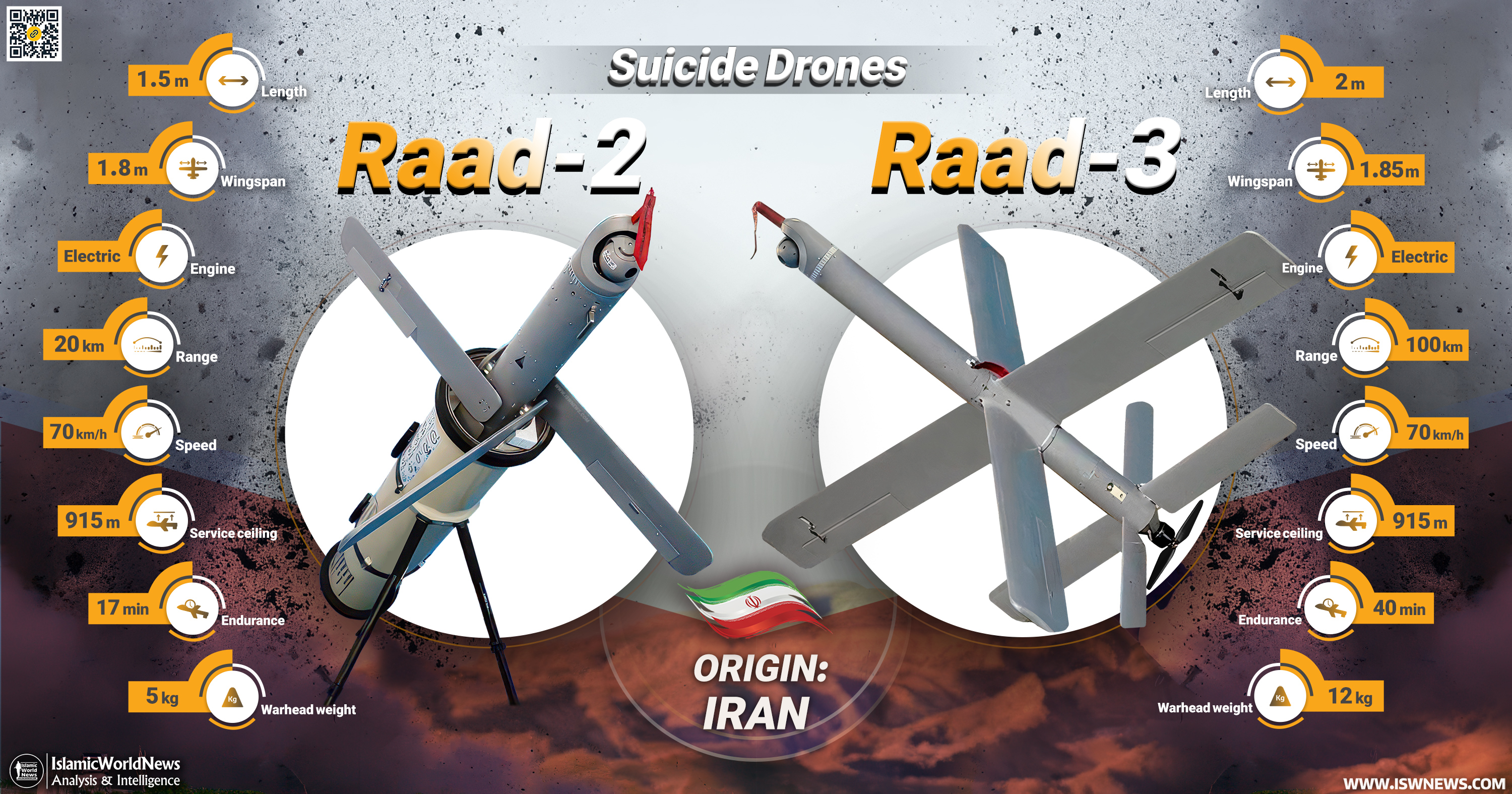
    Raad-2 and Raad-3 suicide drones

    It is important to note that, in addition to the Raad family of drones, the IRGC Ground Forces also utilize another similar type of drone known as the Saeqeh family. According to available information, this family was produced as a more cost-effective option and comes in three versions.

    The Saeqeh-1 drone has a flight endurance of 30 minutes and an operational range of 20 kilometers, with the capacity to carry a 1-kilogram warhead. At least in the Saeqeh-1 version, this family of drones is equipped with only a small fixed forward-looking camera located in the nose.
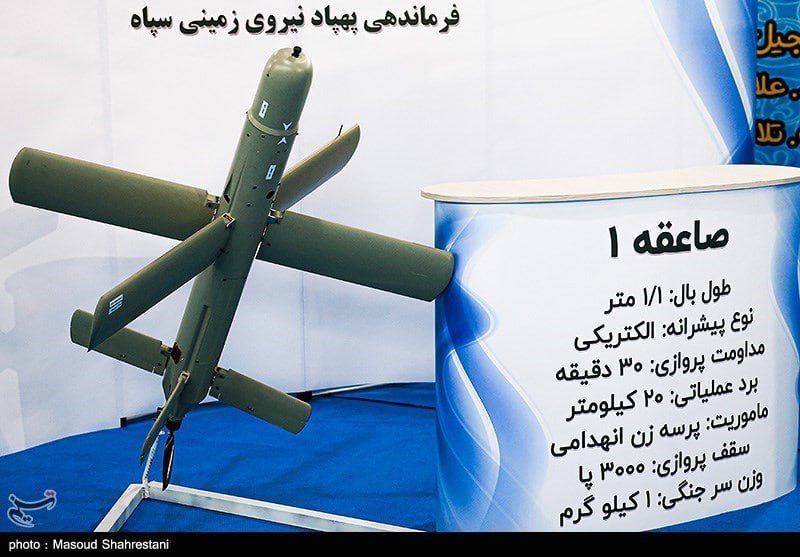
    Saegheh-1 drone

    The concurrent development of these two families of drones raises questions about their roles within the IRGC Ground Forces combat organization. One key question is whether these drones can operate in a network-based manner. This would allow an operator to simultaneously control multiple drones, utilizing one Raad family drone for reconnaissance while deploying several Saeqeh drones for attack missions.

    Today, loitering munitions have evolved beyond their traditional roles, becoming essential in both offensive and defensive missions, including the suppression of enemy air defenses (SEAD). Recent conflicts in the Middle East and Ukraine have underscored the need for tactical advancements that meet infantry requirements, and this has become a pivotal focus for enhancing combat effectiveness. The Iranian armed forces have keenly recognized this trend, dedicating significant attention to developing new technologies and operational capabilities. Notably, this includes innovations such as the Ra’ad and Sa’eqeh suicide drones from the IRGC Ground Force, showcasing a commitment to advancing military strategies. It’s exciting to see how these developments can shape future operations and strengthen Iraninan defense systems!

    The history and evolution of loitering ammunition:

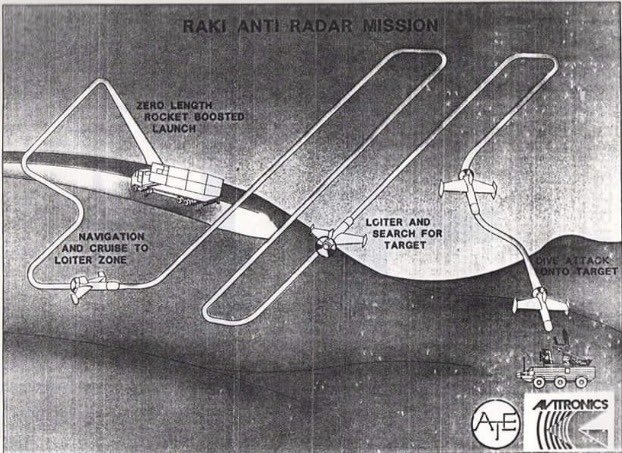
    The concept of “loitering” was first introduced in the military field in the early 1980s. It emerged in response to the widespread development of mobile air defense systems in the Soviet Union and, subsequently, in Eastern Bloc countries. Systems like the SAM-6 (SA-6 Gainful) challenged the doctrine of Western air superiority because, unlike traditional fixed defense systems, they were not permanently stationed in one location. Instead, these mobile systems were activated only when a threat arose and then concealed again after completing their mission.

    At that time, advanced reconnaissance technologies such as modern drones and imaging satellites with today’s capabilities did not exist. Existing spy planes were limited to the technology available during that era. Consequently, detecting mobile defense systems became one of the most challenging military problems.
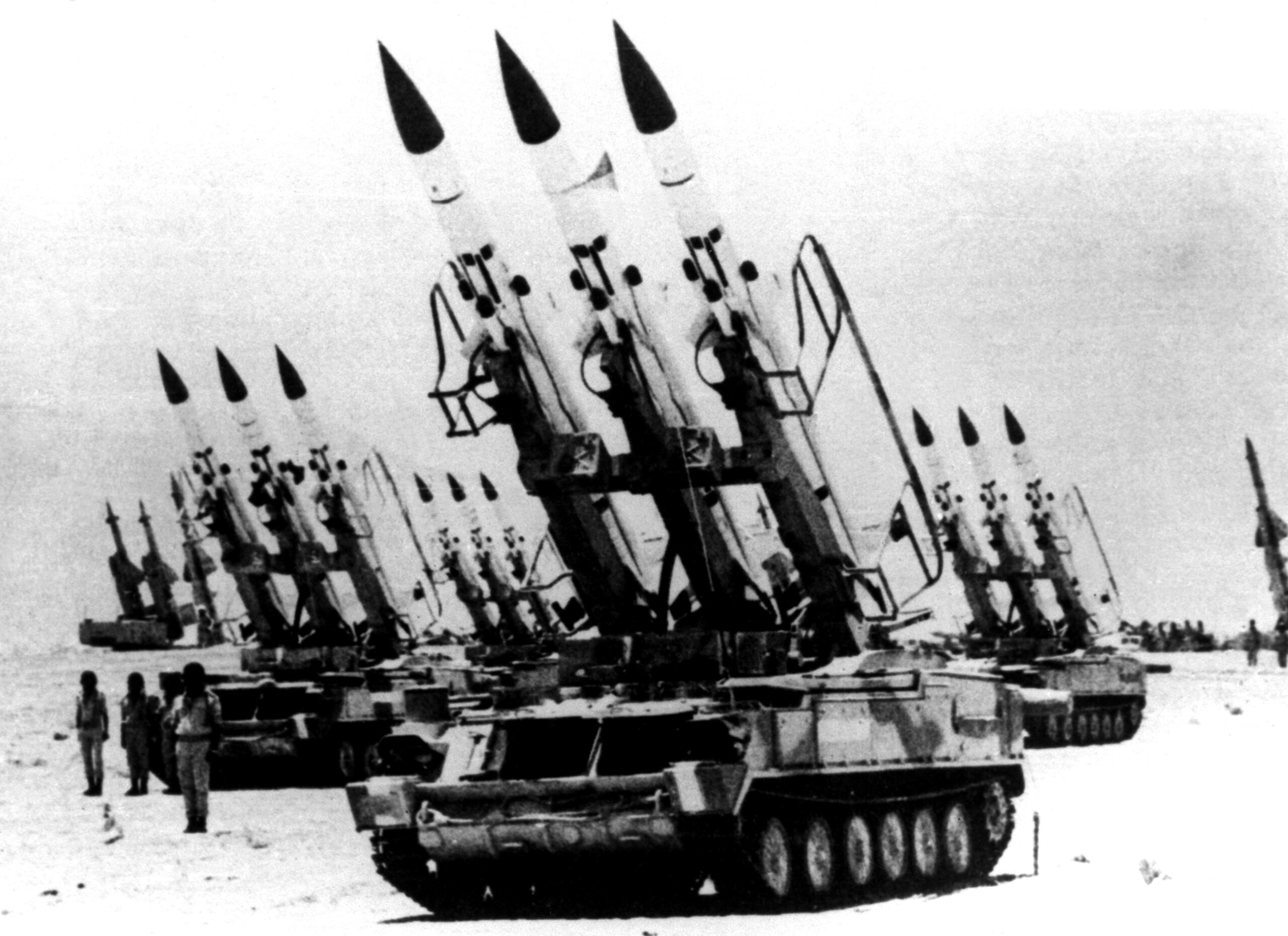
    SAM6 air defense system mounted on an armored chassis

    For this reason, the United States, as one of the two main poles of the Cold War, along with the Zionist regime, which was involved in severe conflicts with Arab countries at that time, sought to develop weapons that could remain in the operational area for an extended period after launch. These weapons were designed to eliminate targets as soon as they were identified, unlike conventional air-launched or cruise missiles.

    The roots of this strategy can be traced back to the painful experiences of Israeli forces during the Yom Kippur War, where they faced the Soviet-made defense systems of Syria and Egypt. However, new tactics were quickly implemented during Operation Mole Cricket 19 in 1982, aimed at suppressing Syrian air defenses. In this operation, a significant number of unmanned aerial vehicles were used as bait to provoke ground-based defense systems, creating opportunities for the use of anti-radar weapons.

    The successful results of this operation encouraged further investment in drones and loitering munitions throughout the 1980s.

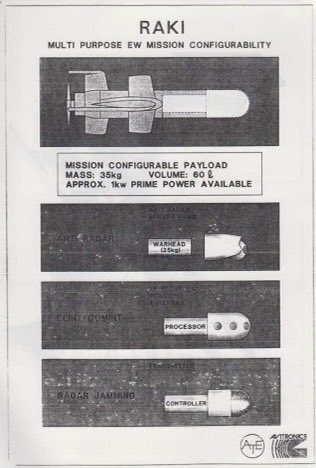
    The Harpy drone, which is based on the South African ARD-10 Lark, along with the American Tacit Rainbow anti-radar missile, were some of the earliest weapons to have this capability in the 1980s. These weapons could essentially “scroll” through the sky to identify and destroy targets at the appropriate moment. However, due to the absence of advanced optical sensors, complex image processing algorithms, and limited radio and satellite communications, these weapons relied heavily on anti-radiation seekers.

    Read more: Military Knowledge: Harop Suicide Drone
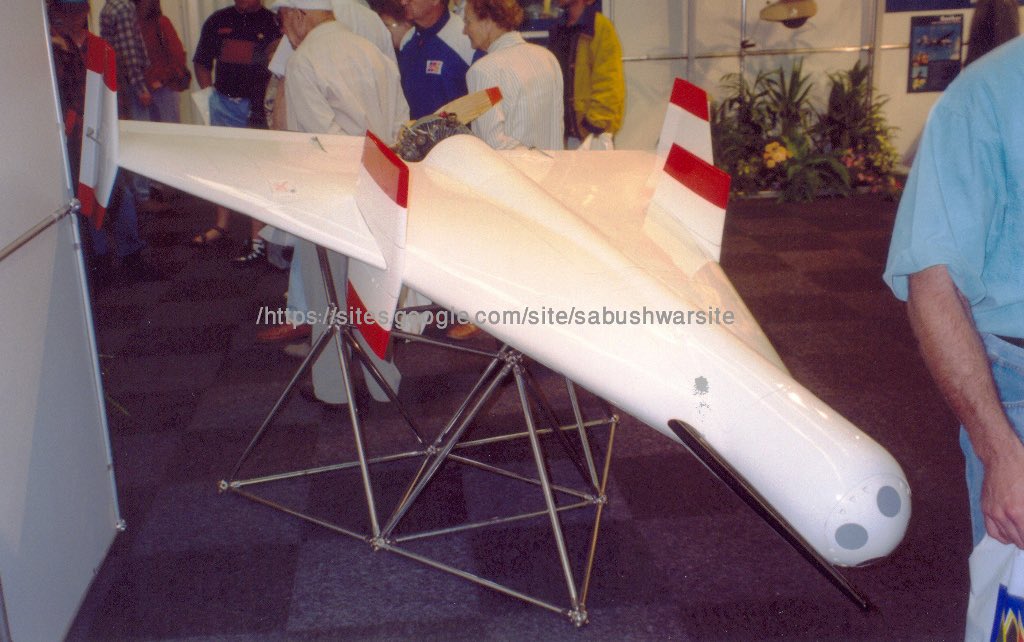
    As the 2000s progressed, the limitations of loitering munitions diminished, allowing their role to expand beyond suppressing enemy air defenses (SEAD). The integration of electro-optical systems with advanced image processing and sensors shaped the modern concept of these drones. A notable example is the transformation of the Harpy drone into the Harop. While militaries worldwide began to adopt drones during this period, the focus largely remained on cruise missiles and air-launched weapons. However, this perspective shifted significantly over the following two decades.
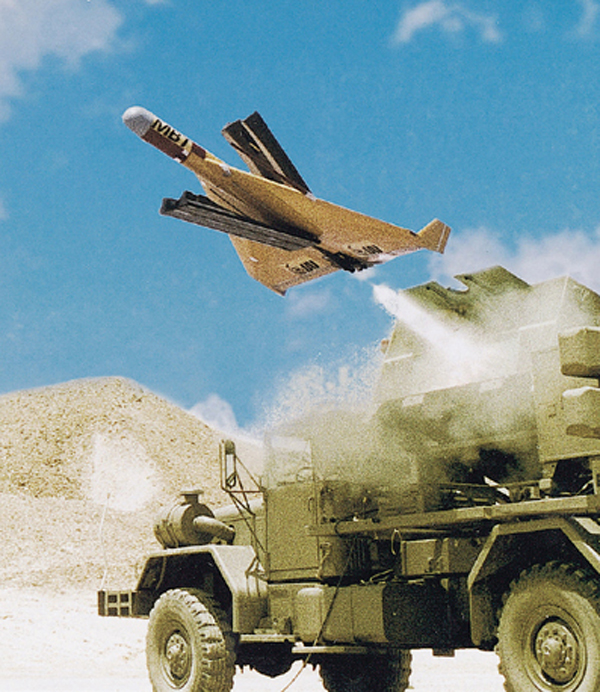
    The evolution of loitering munitions advanced with the creation of special forces and infantry versions, emphasizing drone miniaturization to reduce mass and occupied space. This allowed for faster transport and deployment by infantry. Traditional aerodynamic designs like delta wings proved less effective, prompting the exploration of unconventional alternatives. During the 2000s, the United States experimented with small-sized battlefield drones through projects like GLUAV, CCLR, and SBIR, which largely met with limited success. However, these efforts culminated in the development of the Switchblade Block-0 drone in 2004.

    Read more: Military Knowledge: Switchblade Loitering Munition
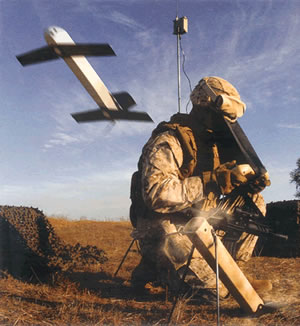
    Switch-blade drone

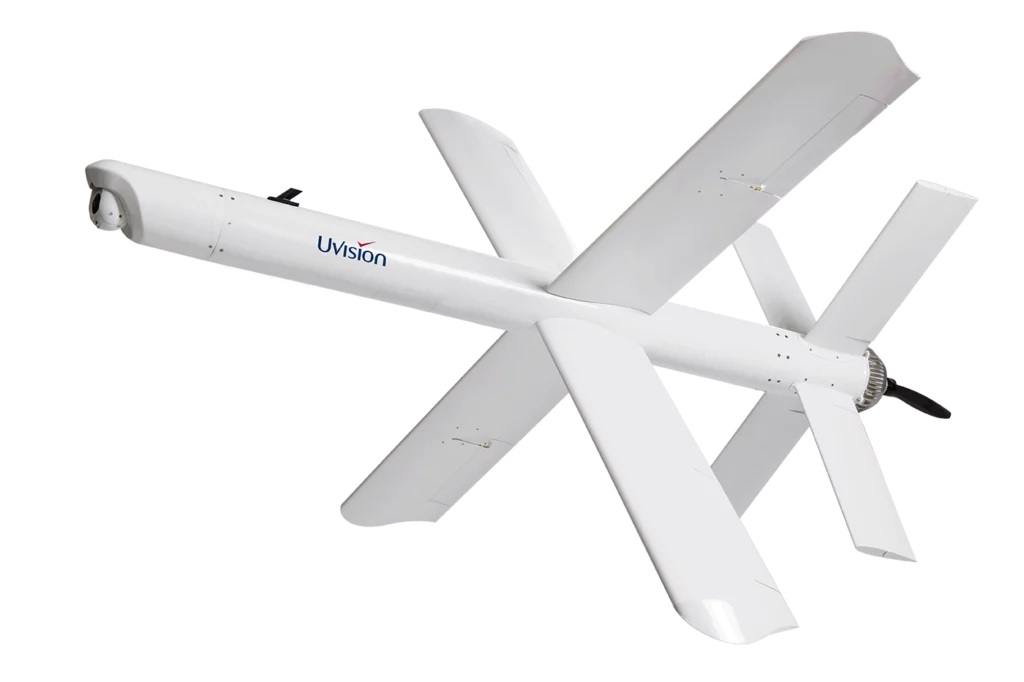
    Besides the Switchblade, the Hero series of drones, developed by Israel’s UVision Industries, was among the earliest operational models in this category. Established in 2011, UVision introduced the innovative X-wing design, which has since become a widely adopted standard across various drone manufacturers.

    Hero-30, Hero-120 and Hero-400 drones

    Raad drone posters in Farsi, Russian, Arabic and Hebrew:
  • Yemeni Armed Forces Strike Back Against US and Israeli Aggression

    Yemeni Armed Forces Strike Back Against US and Israeli Aggression

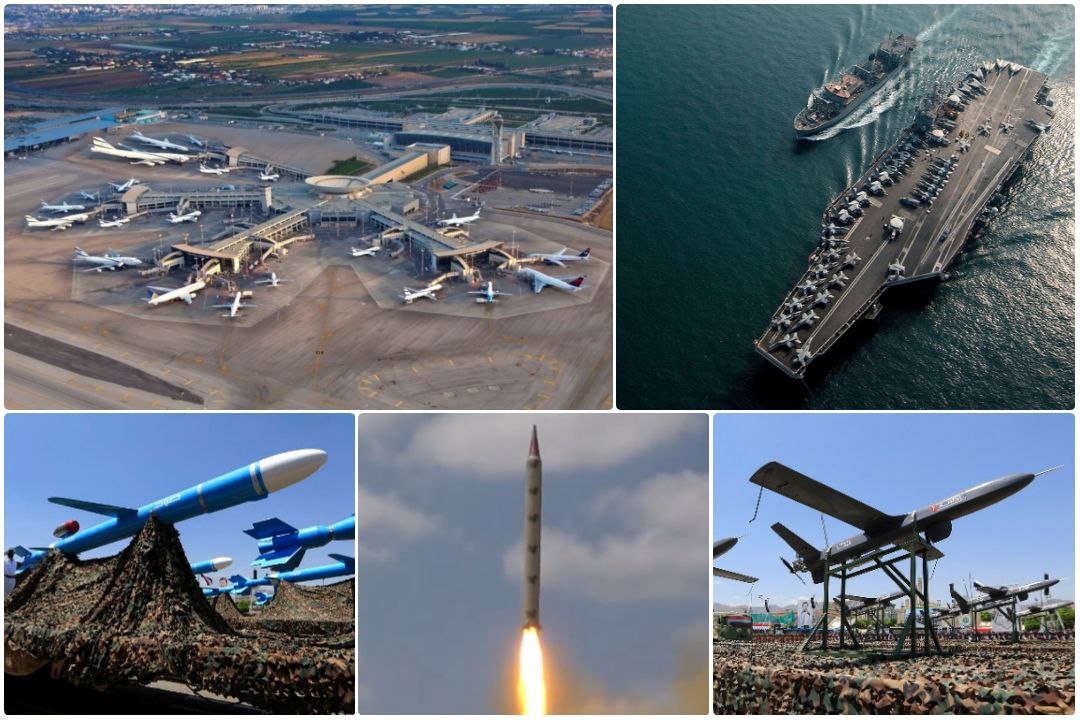
    The Yemeni armed forces have launched missile and drone attacks against US warships, including the aircraft carrier USS Harry Truman, in the Red Sea. Additionally, Yemeni drone units targeted Israeli military installations in Tel Aviv with multiple suicide drones.

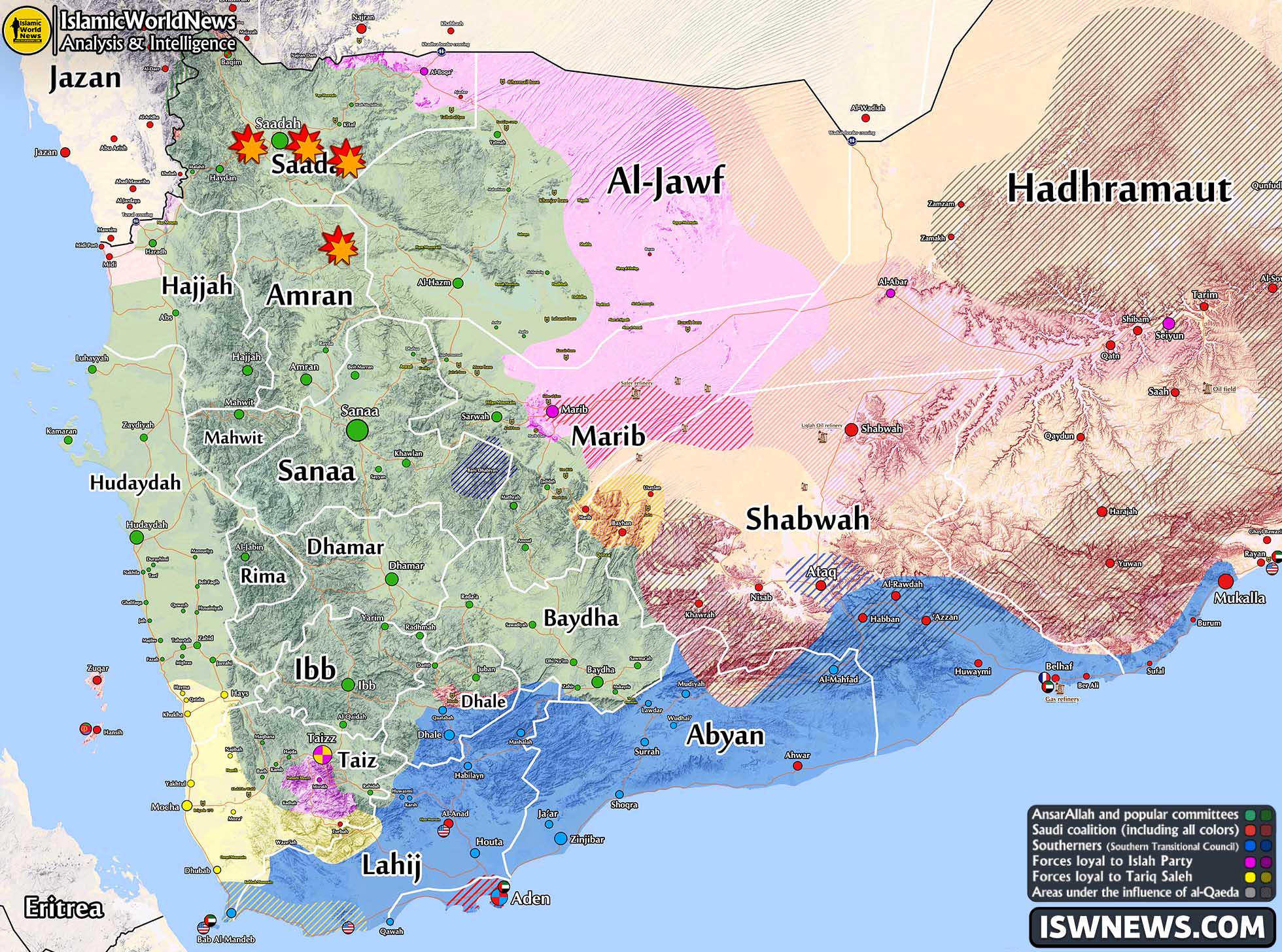
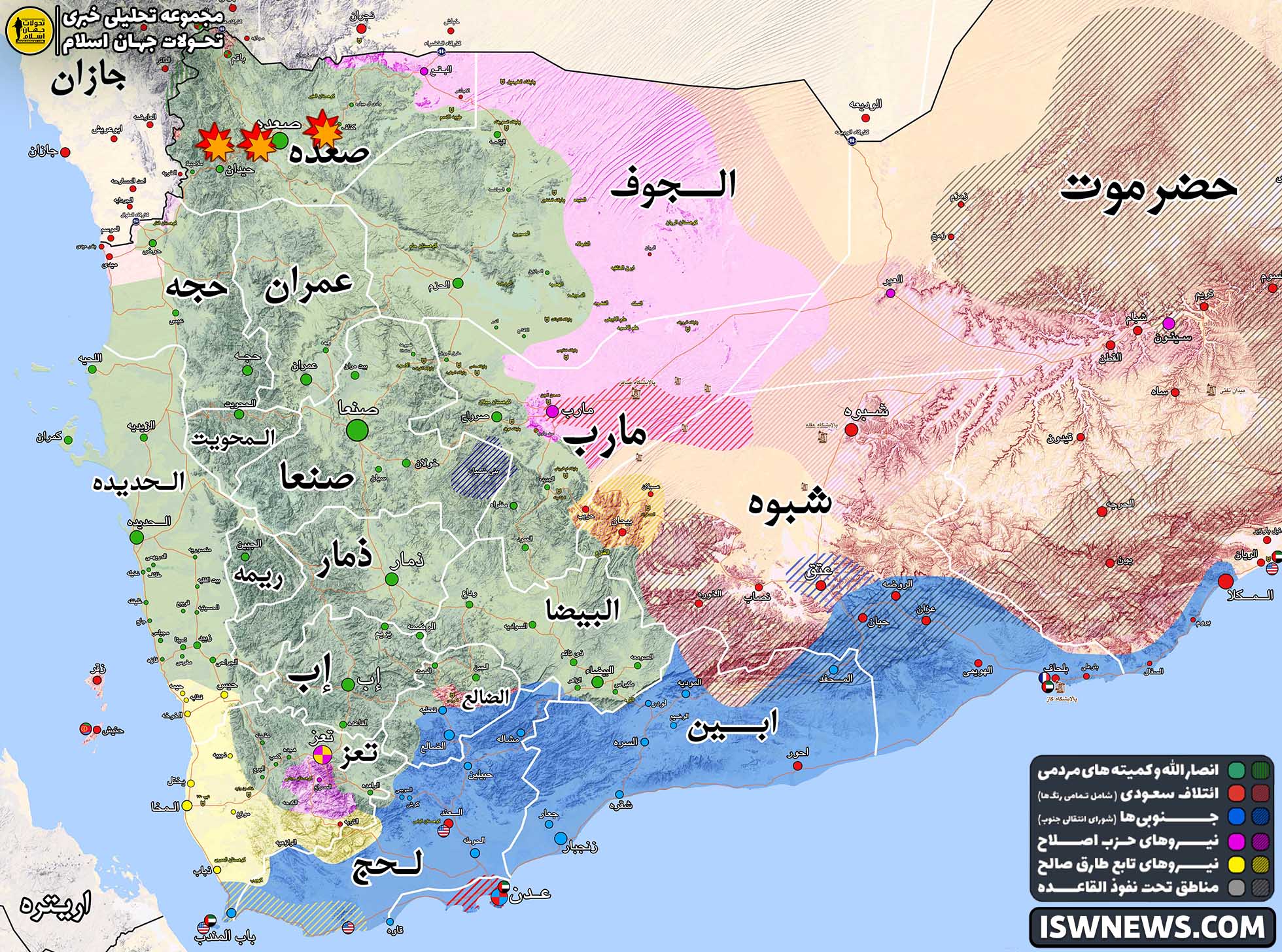
    In conjunction with these attacks, US military fighter jets have conducted airstrikes on Saada and Imran provinces at least 19 times within the last 24 hours.

    These airstrikes include seven on the Sahar district, seven east of Saada city, three on the Al Salem district in Saada province, and two on the Sufyan district in Imran province.

    US strikes in Yemen in the past 24 hours

    The drone strike on Tel Aviv marks the 85th airstrike by the Yemeni army against Israeli positions in occupied Palestine. The operation against the US fleet is also recognized as the 17th operation against the 8th Strike Fleet and the 192nd Yemeni military operation targeting illegal ships.

    The operation launched by the Yemeni armed forces to support the Palestinian resistance against the Israeli regime began on October 19, 2023. This effort led to the capture of the Israeli ship, Galaxy Leader, and the ongoing missile, drone, and airstrike attacks on over 190 ships linked to Israel. As a result, shipping by Israeli companies through the Red Sea route has been suspended. In addition to these attacks on ships, the Yemeni army has conducted more than 85 missile and drone operations targeting positions held by the Israeli regime in occupied Palestine. Furthermore, an F-18 Super Hornet fighter jet and 19 American MQ-9 drones have been shot down during the Yemeni conflict with the American-British coalition.

  • Yemeni Army Attacks Ben Gurion Airport and U.S. Fleet in the Red Sea

    Yemeni Army Attacks Ben Gurion Airport and U.S. Fleet in the Red Sea

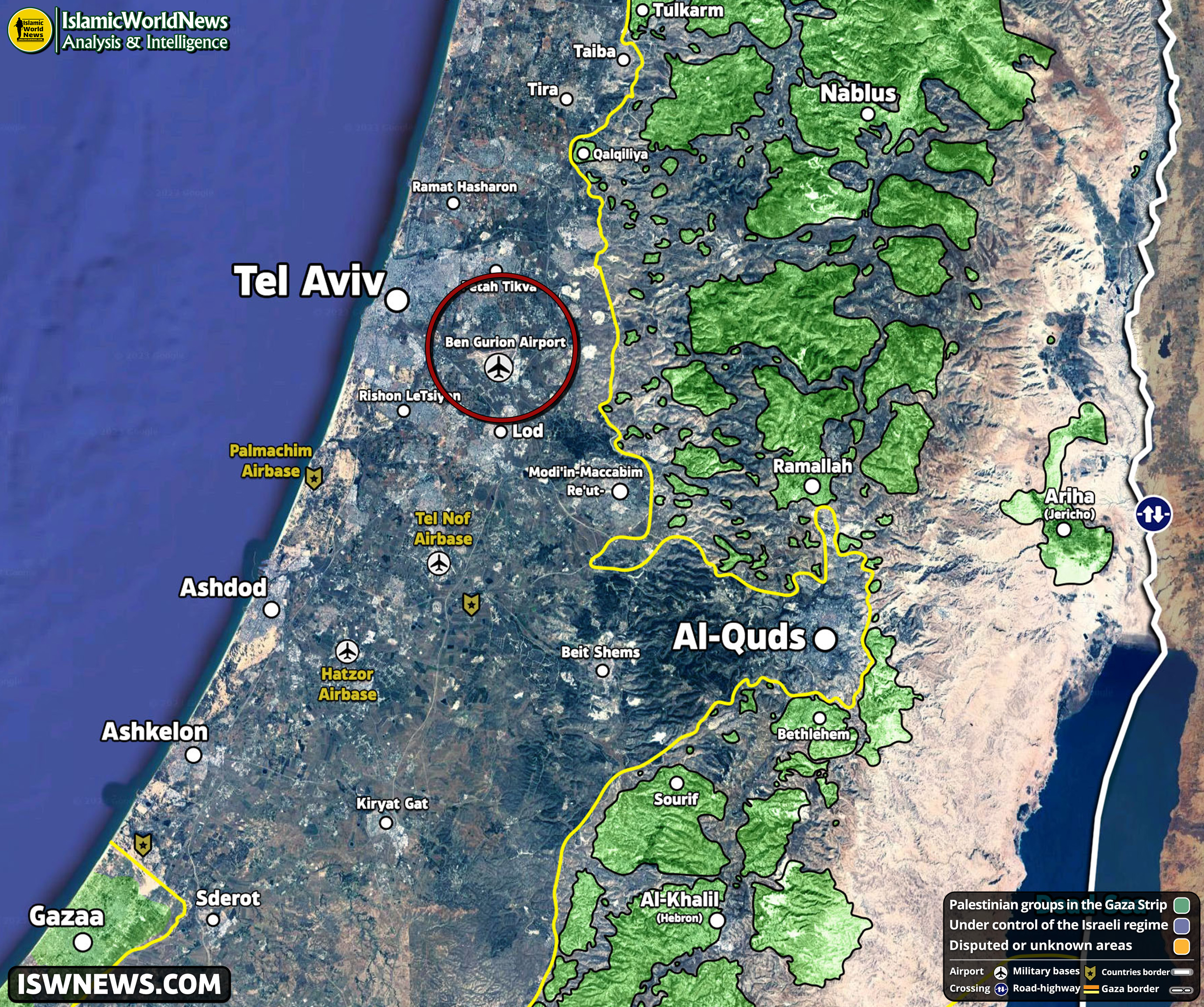
    Brigadier General Yahya Saree provided details about these new attacks, stating that the Yemeni missile force fired a Zulfiqar ballistic missile and a Palestine 2 hypersonic ballistic missile at Ben Gurion Airport, located on the outskirts of Tel Aviv.

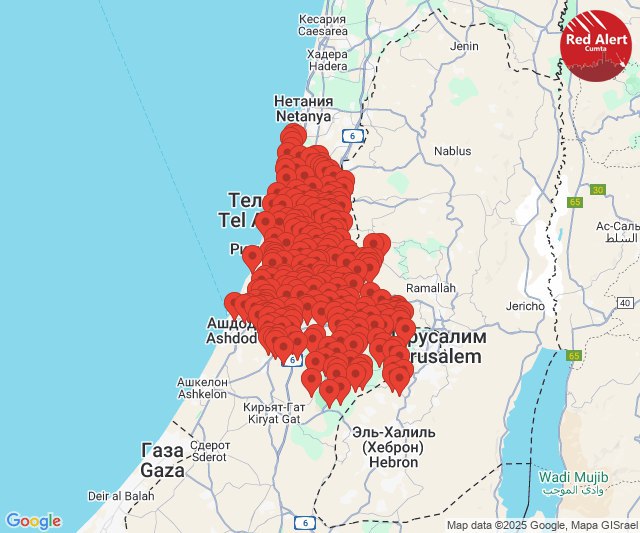
    This attack triggered alarm sirens in over 300 locations throughout the occupied territories, causing thousands of people to seek shelter.

    According to IWN statistics, this missile attack on Ben Gurion Airport marks the 84th air operation conducted by the Yemeni army against Israeli positions in occupied Palestine.

    The Yemeni government’s objective in these ongoing attacks on Ben Gurion Airport is to disrupt and halt flights at this key facility. Ben Gurion Airport serves as a major hub for receiving military cargo and essential goods into the occupied territories. Reducing its operations and closing the Red Sea route for vessels associated with Israel would impose significant economic pressure on the Israeli regime.

    Siren sounds in central occupied Palestine
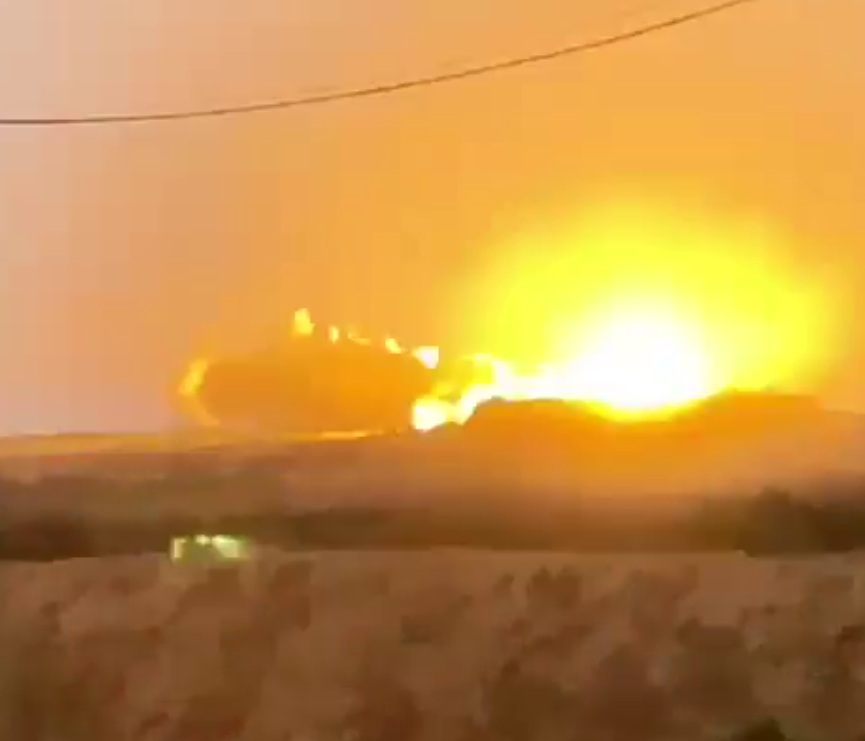
    Debris from an intercepted missile over occupied Palestine
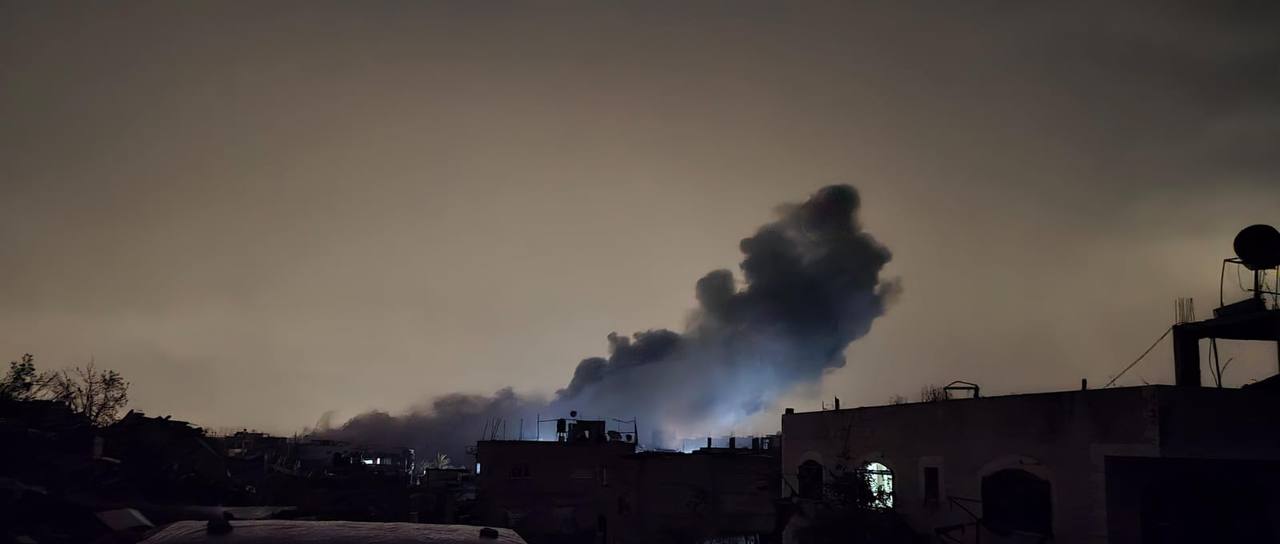
    Smoke rising from a falling wreckage or missile strike at Ben Gurion Airport

    The Yemeni armed forces conducted missile, naval, and drone attacks on the USS Harry Truman aircraft carrier and US destroyers in the Red Sea, launching several ballistic and cruise missiles as well as suicide drones. This assault was a response to recent airstrikes by US warplanes on Yemen. It marks the second confrontation between Yemeni forces and the US Navy within the past 24 hours and effectively neutralized air operations against Yemen.

    In the last day, US warplanes carried out 12 airstrikes near Saada city, targeting the Kataf, Sahar, and Saqeen districts. One significant target of these airstrikes was the Rasool Al-Azam (PBUH) Specialized Cancer Hospital in Saada city, which has been bombed twice in recent days.

    Targets bombed in US airstrikes in Yemen in the last 24 hours

    At the end of his statement, the spokesman for the Yemeni Armed Forces called on all free individuals in the Islamic Ummah to fulfill their religious, moral, and humanitarian duties toward the oppressed Palestinian people. He emphasized that the operations conducted by the Yemeni Armed Forces to impede Israeli shipping and target the depths of the occupying regime will continue until the aggression ends and the siege on the Gaza Strip is lifted.

    The Yemeni army’s operation against the US Navy’s 8th strike fleet is the 16th missile and drone operation targeting this fleet in recent weeks. Additionally, this operation marks the 191st Yemeni military action against illegal ships, including those from Israel, the United States, Britain, and their affiliated entities.

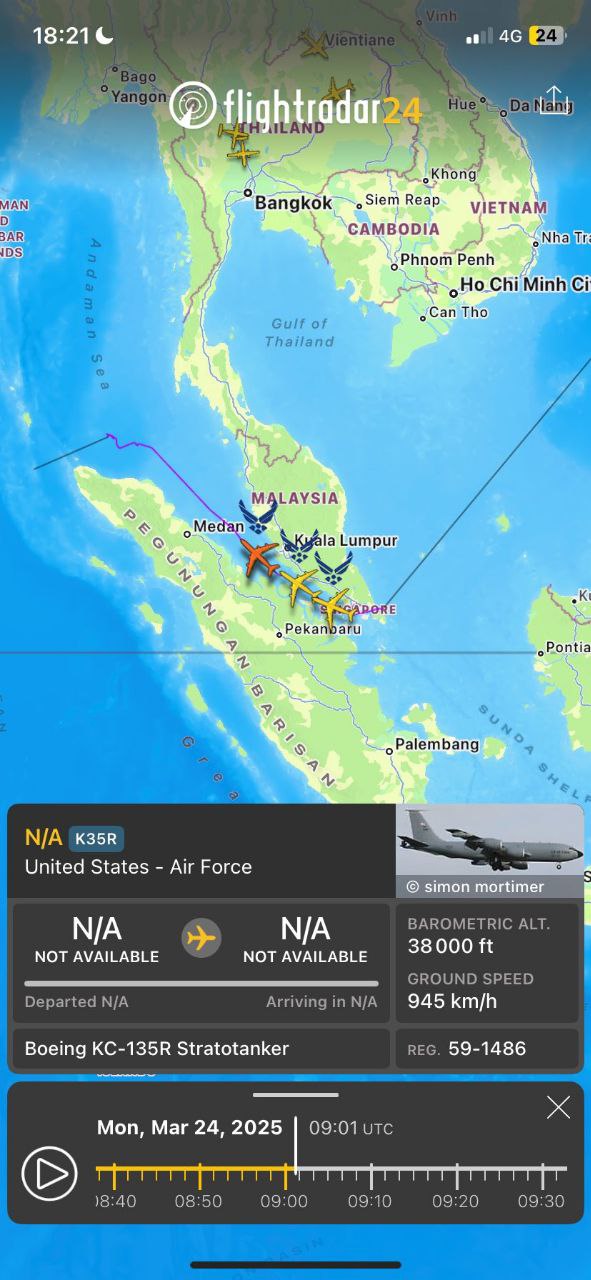
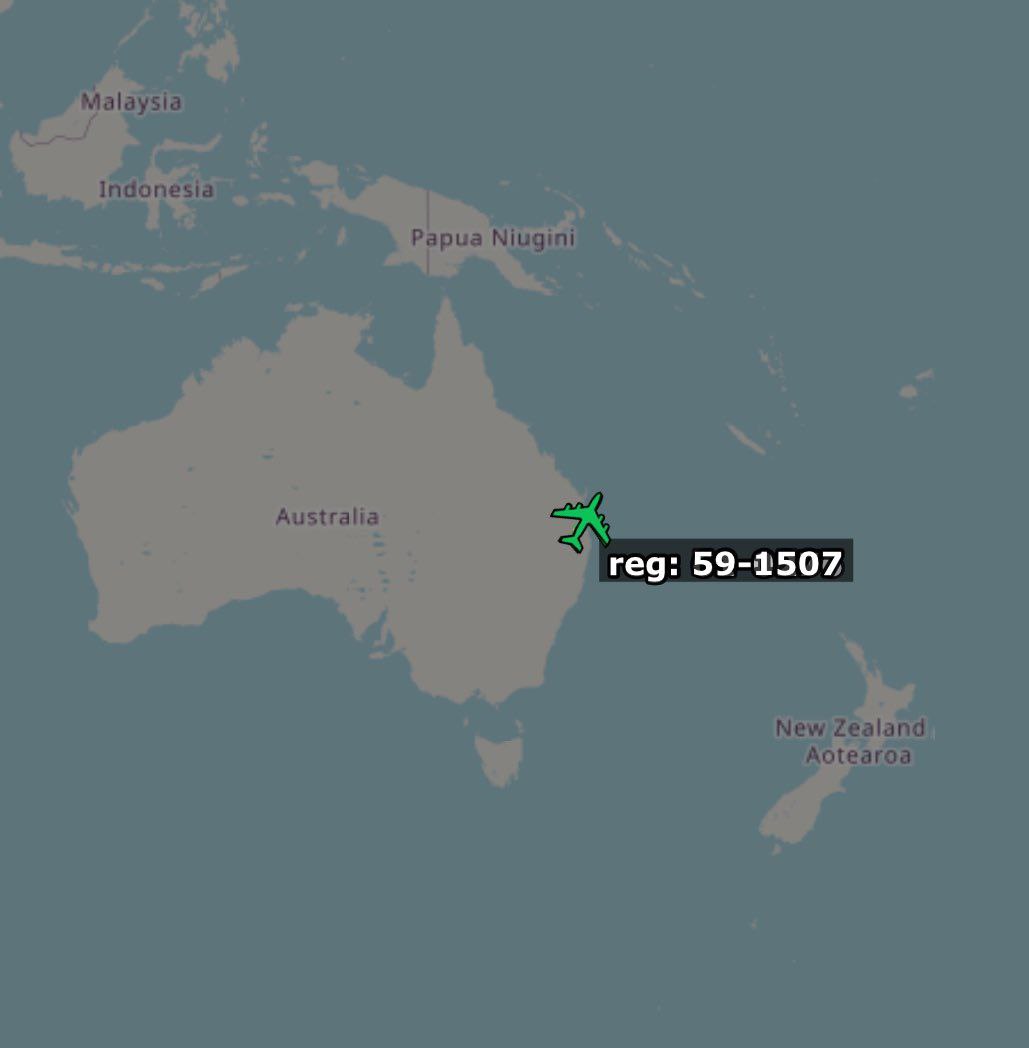
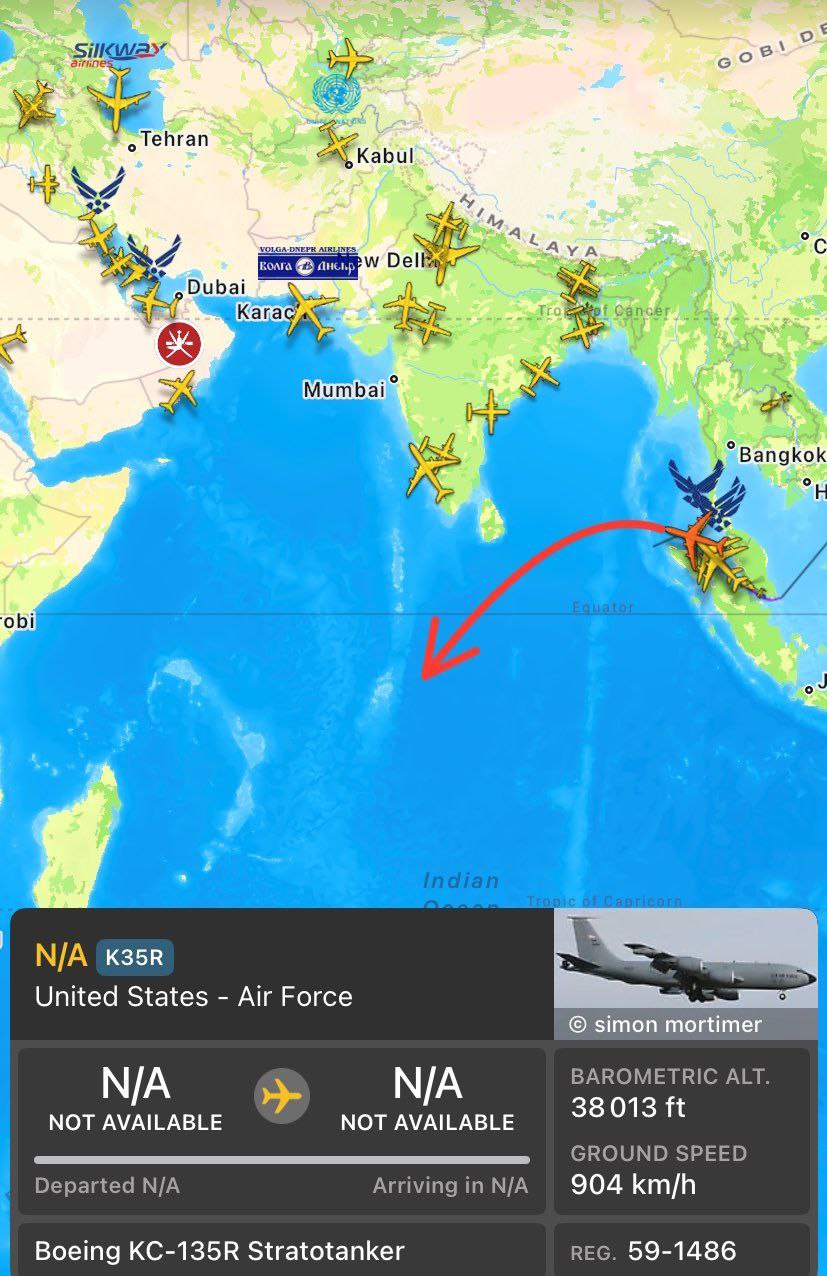
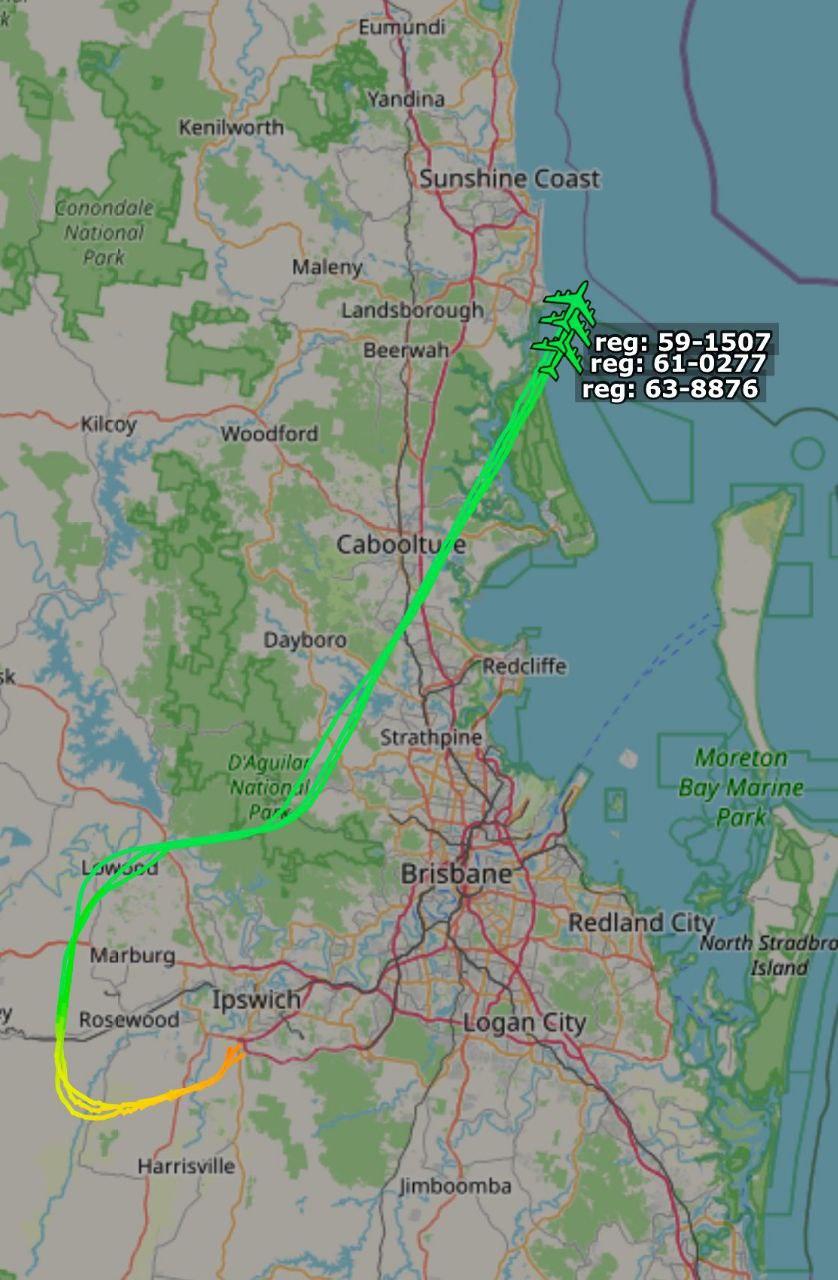
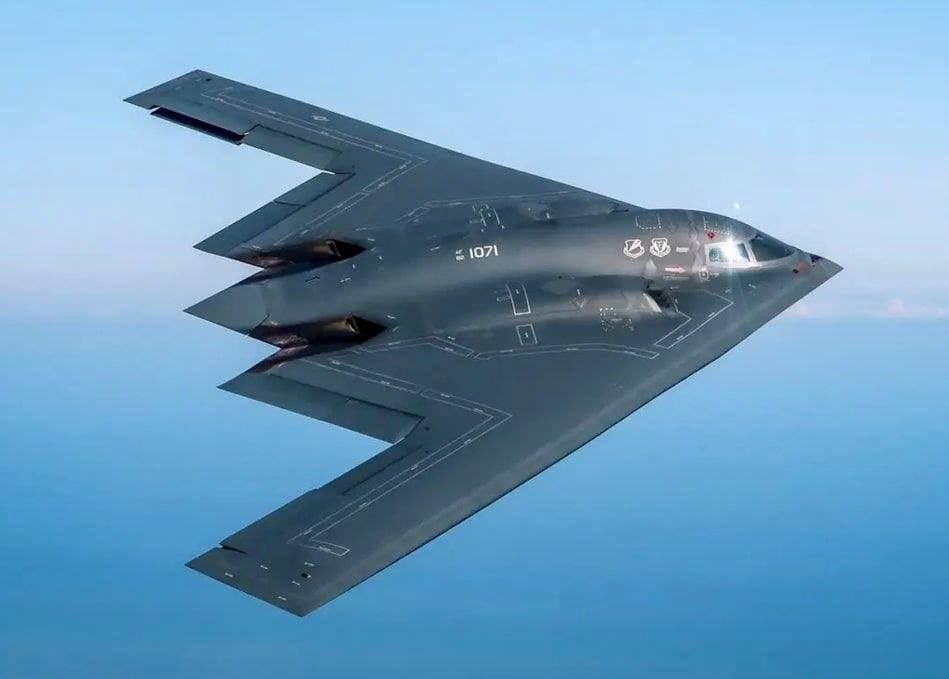
    The ongoing conflict between the US military and the Yemeni armed forces, along with the regional conditions, has prompted American officials to deploy strategic bombers to US bases in the Indian Ocean to escalate their attacks. Three B-2 bombers are being moved toward Diego Garcia Island.

    Diego Garcia Island is located 3,500 kilometers from Yemen and has served as the primary base for US strategic bombers during previous operations in West Asia and Central Asia. While the Yemeni army currently lacks the capability to carry out military operations against this base, if it is used to conduct attacks against Yemen, the Yemenis could retaliate by targeting other US bases in West Asia and Africa.

  • Two Palestinian Journalists Were Murdered By The Zionist Regime in Gaza

    Two Palestinian Journalists Were Murdered By The Zionist Regime in Gaza

    Due to yesterday’s attacks by the Israeli army in the Khan Yunis area of the southern Gaza Strip, Mohammad Mansour, a reporter for the Palestine Today channel, was martyred.

    In addition to Mohammad Mansour, another Palestinian journalist, Hossam Shabat, a reporter for Al-Jazeera was also martyred in an Israeli army attack in the northern Gaza Strip.

    As a result, the total number of journalist martyrs in Gaza has now risen to 208 since the beginning of the conflict.

  • Israeli Airstrikes Continue Targeting Central and Southern Syria

    Israeli Airstrikes Continue Targeting Central and Southern Syria

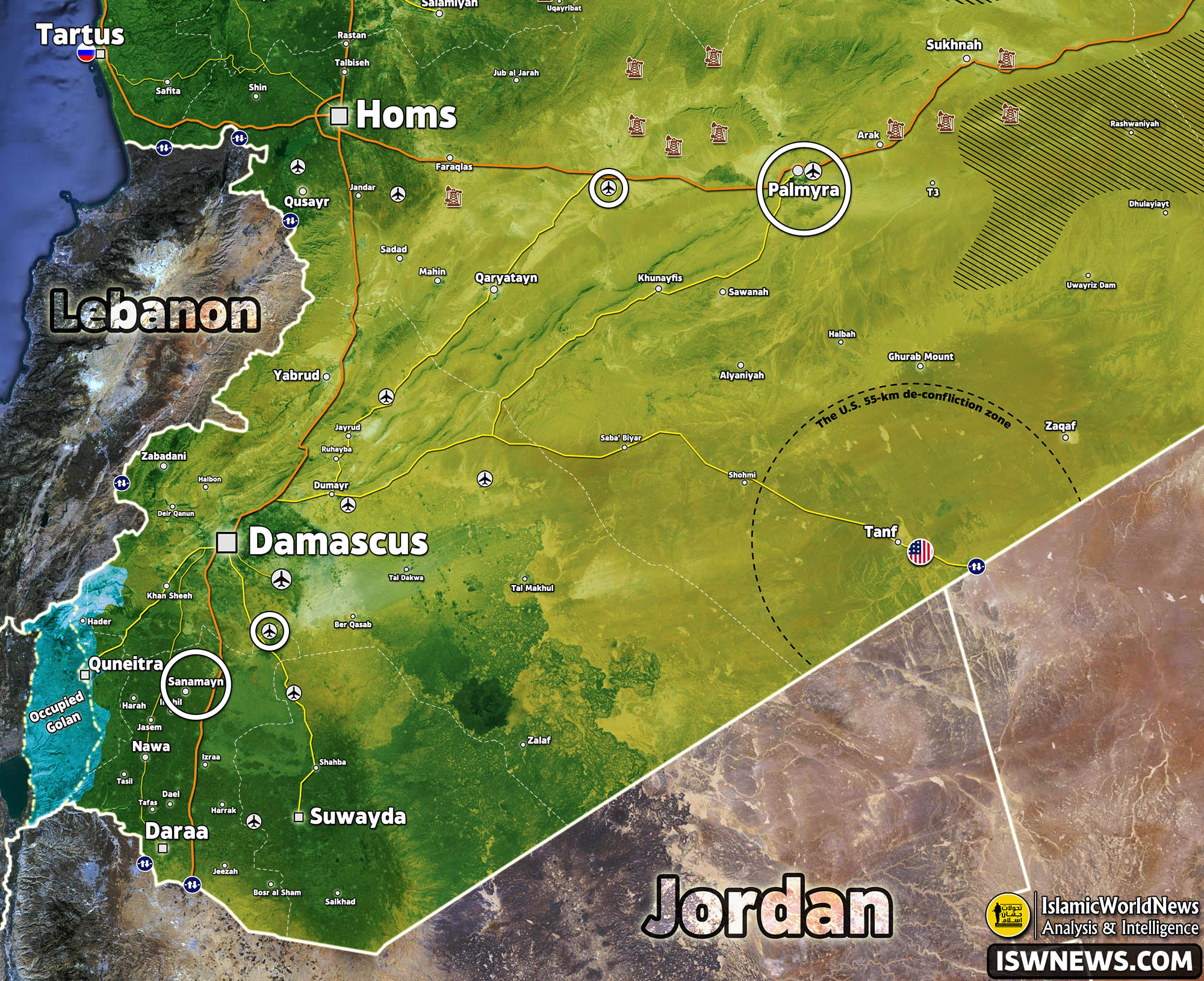
    The Beli military airport in Rif Dimashq Governorate and a military headquarters east of Sanamayn in Daraa province were hit.

    Additionally, Israeli aircraft targeted Palmyra airport and the T4 airbase in Homs province again this morning, marking the second time in recent days that these locations have been bombed.

    Hebrew media report that the Israeli army focused on destroying remaining military equipment at both Palmyra airport and the T4 military airbase. It appears that the Israeli forces aim to eliminate the infrastructure that the Turkish army might need for deployment in Palmyra and T4!

  • Israeli Regime’s Artillery and Airstrikes Continue Across Gaza Strip

    Israeli Regime’s Artillery and Airstrikes Continue Across Gaza Strip

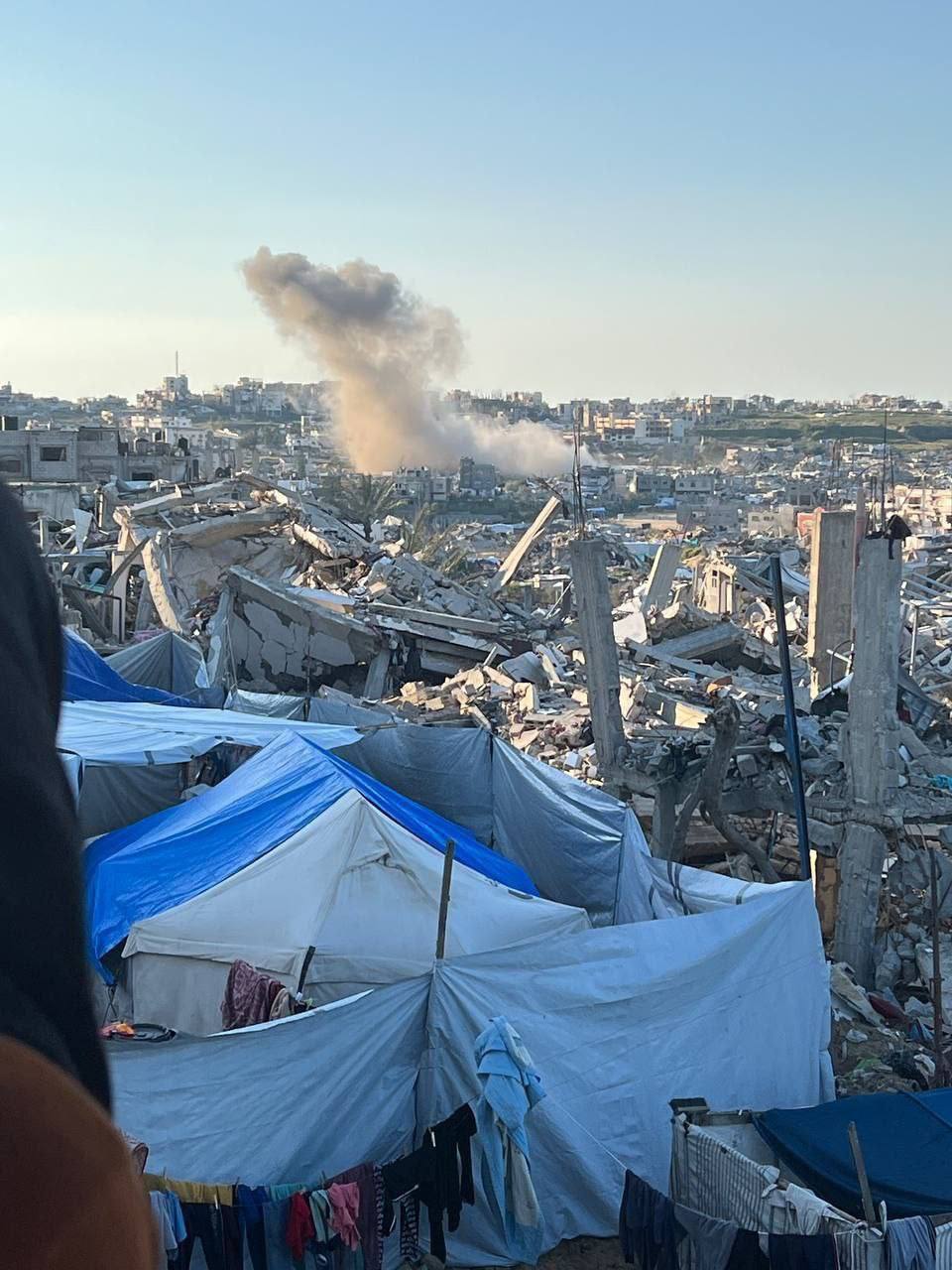
    Since this morning, the Israeli regime has targeted areas to the west, east, and north of Beit Lahia, as well as regions north of the Al-Bureij camp, north of the Al-Nuseirat camp, west of Rafah, north of Gaza City, and within Rafah city itself.

    Israeli aircraft have also struck targets in areas west and east of Khan Yunis, including Bani Suhaila, Khan Yunis city, east of Gaza City, the Ma’an area on the outskirts of Khan Yunis, and the Jabalia camp.

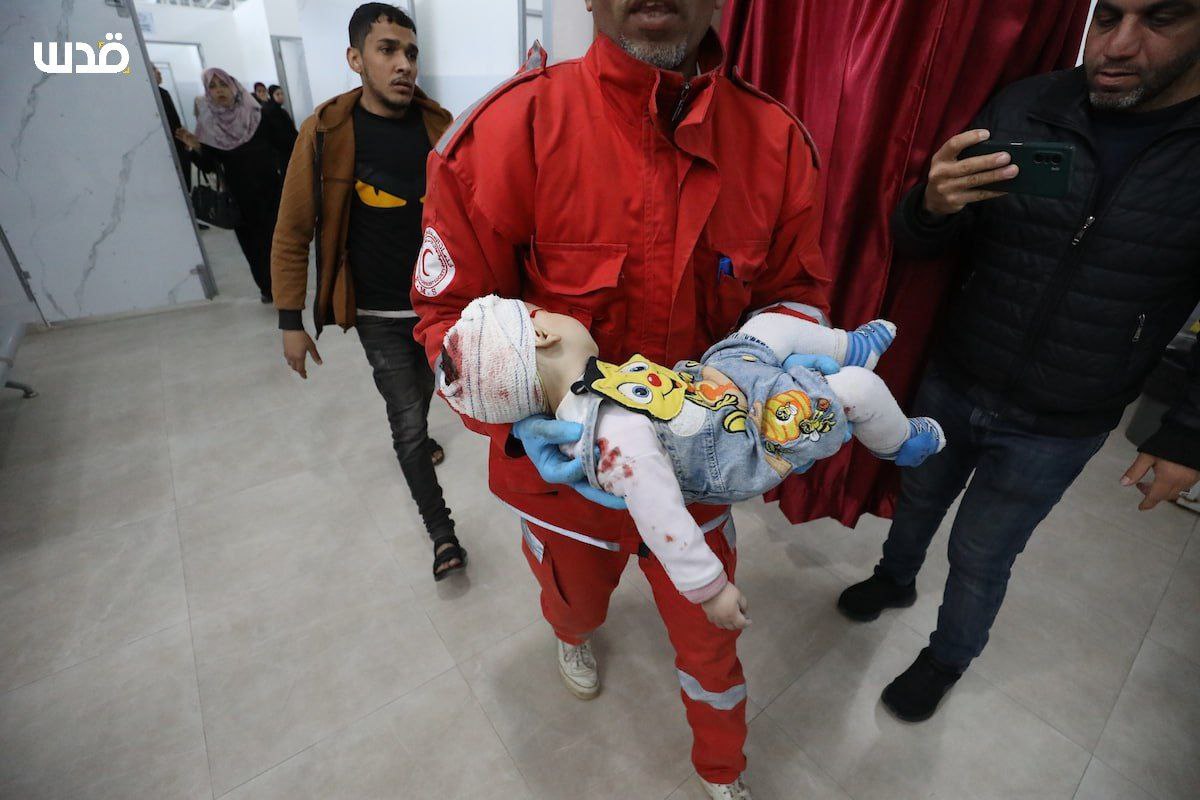
    At least 61 Palestinians have been murdered, and 134 others have been injured by the Israeli terrorist regime. This brings the total number of fatalities in the Gaza Strip to more than 50082, while the number of injured has reached over 113,408.

  • Israel Destroyed the Only Cancer Treatment Center in Gaza

    Israel Destroyed the Only Cancer Treatment Center in Gaza

    Before the ceasefire and evacuation of the Netzarim area, the Israeli army used Al-Sadaqa Hospital as an operational base.

    Since the beginning of the conflict, the Israeli regime has carried out targeted attacks on medical centers in the Gaza Strip, justifying these actions with claims of the presence of resistance forces in hospitals. This tactic aimed at increasing pressure on the Palestinian population. During these attacks, hundreds of patients and medical personnel have lost their lives. The targeting and destruction of medical facilities indicate that Israel is disregarding international law and is taking extreme inhuman actions to exert pressure on the residents of Gaza.

  • Yemen’s Missile Attack Ben Gurion Airport

    Yemen’s Missile Attack Ben Gurion Airport

    Following the missile attack on Israel, sirens sounded in more than 300 locations in the occupied territories, causing thousands of Israelis to seek shelter.

    Sirens in the occupied territories

    A spokesman for the Yemeni armed forces warned all airlines that Ben Gurion Airport has become unsafe for air traffic and will remain so.

    This attack on Ben Gurion was the third missile strike by the Yemeni army on Israel in the past 48 hours.

  • Yemen’s Army Resume Attacks on Israel

    Yemen’s Army Resume Attacks on Israel

    Brigadier General Yahya Saree, spokesperson for the Yemeni armed forces, stated, “The Yemeni armed forces will expand their range of targets in occupied Palestine in the coming hours and days unless the attacks on Gaza cease.”

    He emphasized that Yemen—the leadership, the people, and the army—will not remain spectators to the ongoing slaughter of their brothers in Gaza. They will continue operations against the United States and the Israeli forces until the blockade is lifted and humanitarian aid is permitted to enter the Gaza Strip.

    Sirens in Israel after the Yemeni missile attack
  • Israeli Army Airstrikes on Southern Syria

    Israeli Army Airstrikes on Southern Syria

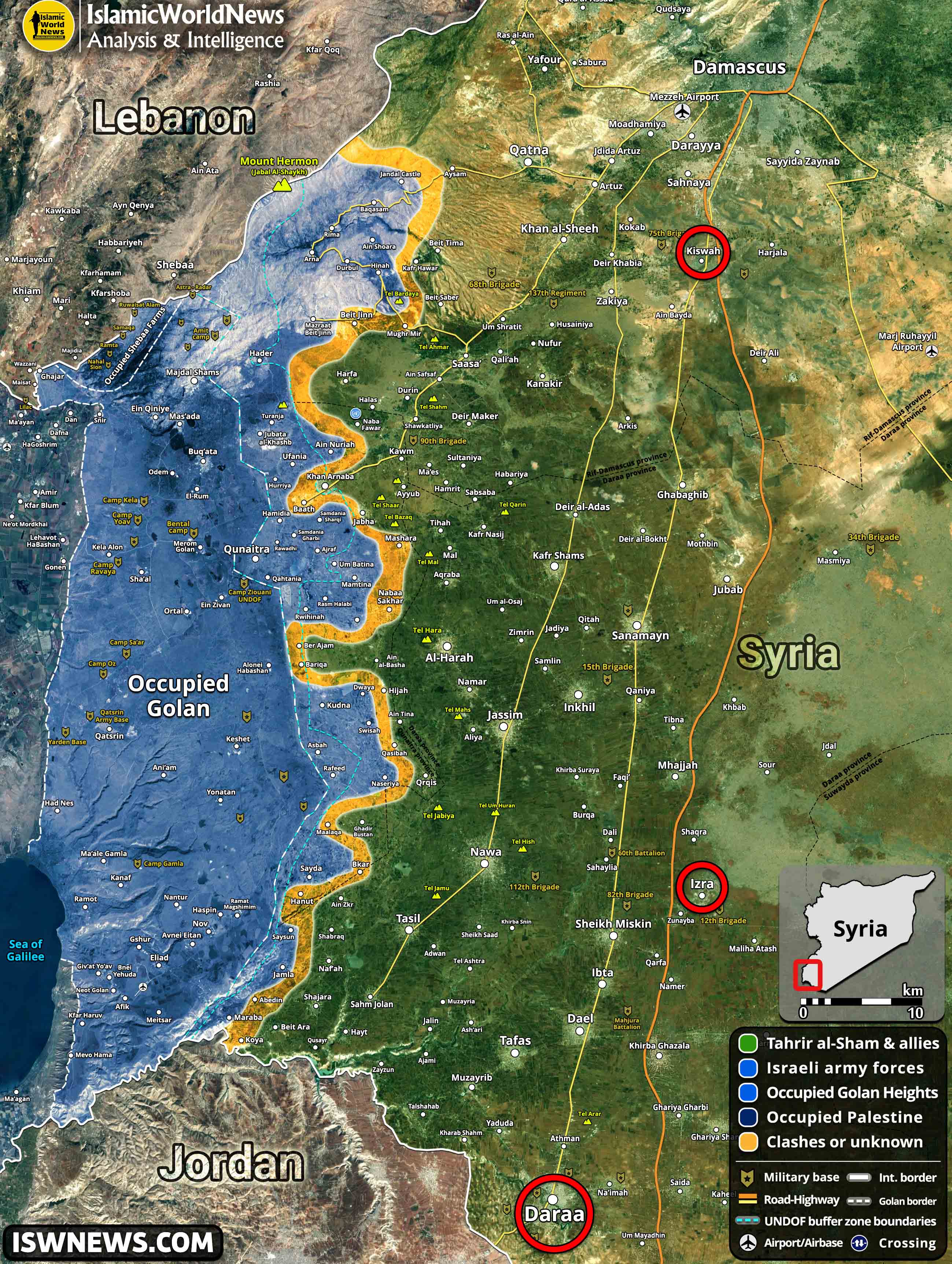
    Investigations revealed that several military headquarters were struck, including those in the Al-Kiswah area of Damascus, Brigade 132 in the suburbs of Daraa, and Brigade 175 in the suburbs of Izra’.

    Local sources reported that as a result of these airstrikes, at least three people were killed, and 19 others were injured, including several women and children.

    Following these attacks, the Israeli army issued a statement asserting, “In the recent airstrikes on southern Syria, we destroyed headquarters and facilities used for storing weapons and equipment belonging to the Syrian army.”

    The Israeli forces claimed that the presence of these weapons in southern Syria poses a threat to Israel. They emphasized that the army would not allow a military threat to persist in southern Syria and would take necessary action against it.

  • Operation “Strength and Sword”: Israel Resumes Military Operations Against the Gaza Strip

    Operation “Strength and Sword”: Israel Resumes Military Operations Against the Gaza Strip

    Today, Avichay Adraee, the Arabic spokesperson for the Israeli army, announced the immediate evacuation of border areas in Gaza adjacent to occupied Palestine. Residents have been instructed to move to the western parts of Gaza City and Khan Yunis. The Israeli regime has classified the areas of Beit Hanoun, Al-Khuza’a, and the outskirts of Abasan as “dangerous war zones,” urging residents to leave their homes without delay.

    Israeli evacuation warning

    As a result of these brutal airstrikes, more than 412 Palestinians have been killed and approximately 500 others injured.

    The military actions began after negotiations between the Israeli regime and Palestinian resistance failed due to Israel’s unreasonable demands. During these negotiations, Israel and the United States requested that Hamas release all Israeli prisoners unconditionally, without offering any guarantees or commitments to end the conflict. Hamas representatives rejected this proposal.

    In response to the ongoing situation, the Hamas movement has called on the United Nations and the Security Council to convene an urgent meeting and adopt a binding resolution to halt the Israeli aggression.

    With the new irrational U.S. president taking office, Israel perceives an opportunity to escalate its actions against the Palestinian people and is taking advantage of this situation.

  • US Airstrikes in Yemen Leave 31 Dead Amid Rising Tensions

    US Airstrikes in Yemen Leave 31 Dead Amid Rising Tensions

    According to Yemeni media, the targets of these attacks included the following areas:

    1. Sanaa: Residential neighborhoods in the Shu’ub district and the Atan and Jarban areas in the Sanhan district.
    2. Saada: The Qahza area in northern Saada, Izlat al-Sha’af in the Saqin district, and the areas of al-Talh, al-Saba’, and al-Alaaf in the Sahar district, as well as the power plant in the city of Dhahan.
    3. Dhamar: Surroundings of the city of Dhamar, Anas district, and a stone quarry.
    4. Al-Bayda: The Mukayras and al-Qurayshiyyah districts.
    5. Hajjah: Mubin district.
    6. Marib: East of the Majzar district.

    As of now, accurate information regarding the extent of the attacks and details of the US air operations against Yemen have not been fully disclosed. However, US warships and fighter jets, with the support of British refueling aircraft and operations from bases in Qatar, the UAE, Bahrain, and Cyprus, have conducted a large-scale attack on Yemen. Also, the US reportedly carried out 40 airstrikes against Yemen from the Saudi airspace.

    According to the latest statistics from the Yemeni Ministry of Health, these attacks have resulted in the deaths of 31 people and injuries to 101 civilians, with many of the casualties being women and children.

    Mahdi Al-Mashat, Chairman of the Supreme Political Council, Mohammed Abdul Salam, spokesman for the Ansar Allah movement, and representatives from the Yemeni Foreign Ministry along with several other official Yemeni institutions condemned these attacks. They emphasized that the US aggression will not go unanswered and that Yemen will continue to support its people and the Palestinian resistance.

    Palestinian groups, particularly Hamas and Islamic Jihad, as well as the Iraqi resistance and the Iranian Foreign Ministry, issued statements condemning the US attacks and expressing solidarity with the Yemeni people.

    In his remarks about the operation, US President Donald Trump described Ansar Allah as engaged in an alleged continuous campaign of piracy, violence, and terrorism, blaming them for obstructing shipping in one of the world’s most important waterways, the Red Sea. Trump also issued a direct warning to Iran, stating that the era of the Houthis is over, and called for an end to support for Yemen and their attacks. He also threatened that if these attacks do not cease, Yemenis would experience unimaginable suffering.