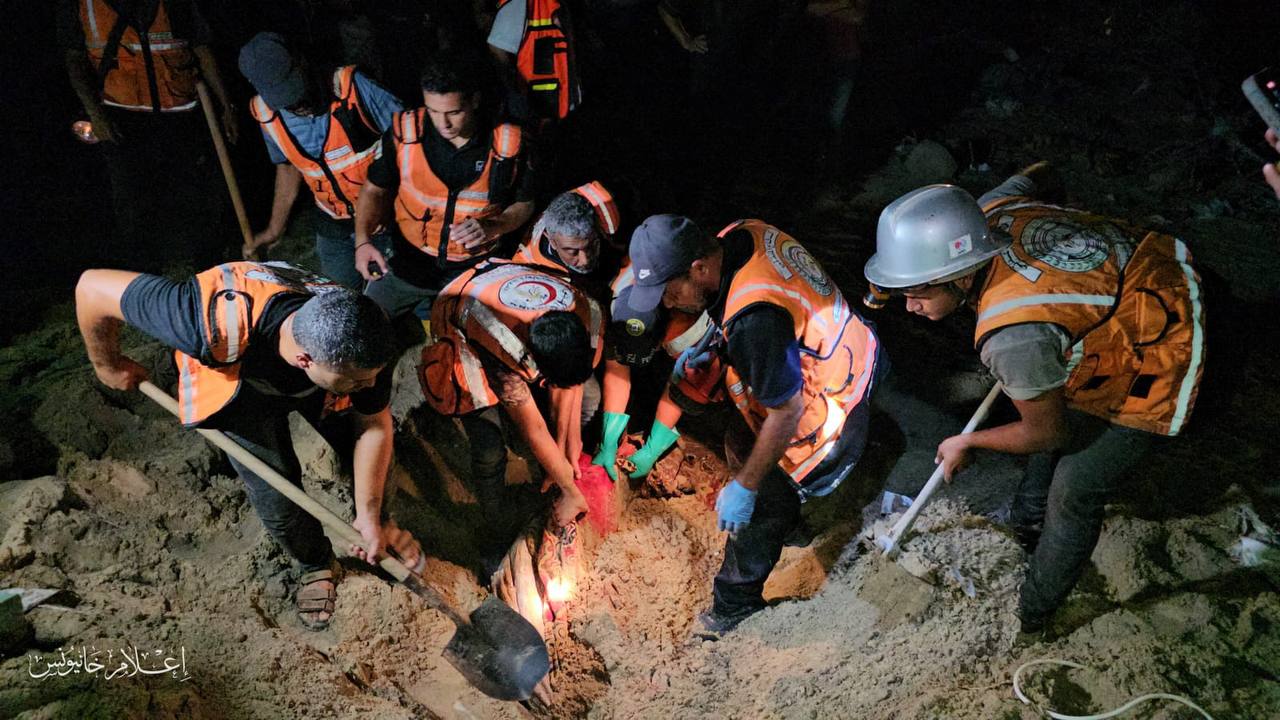
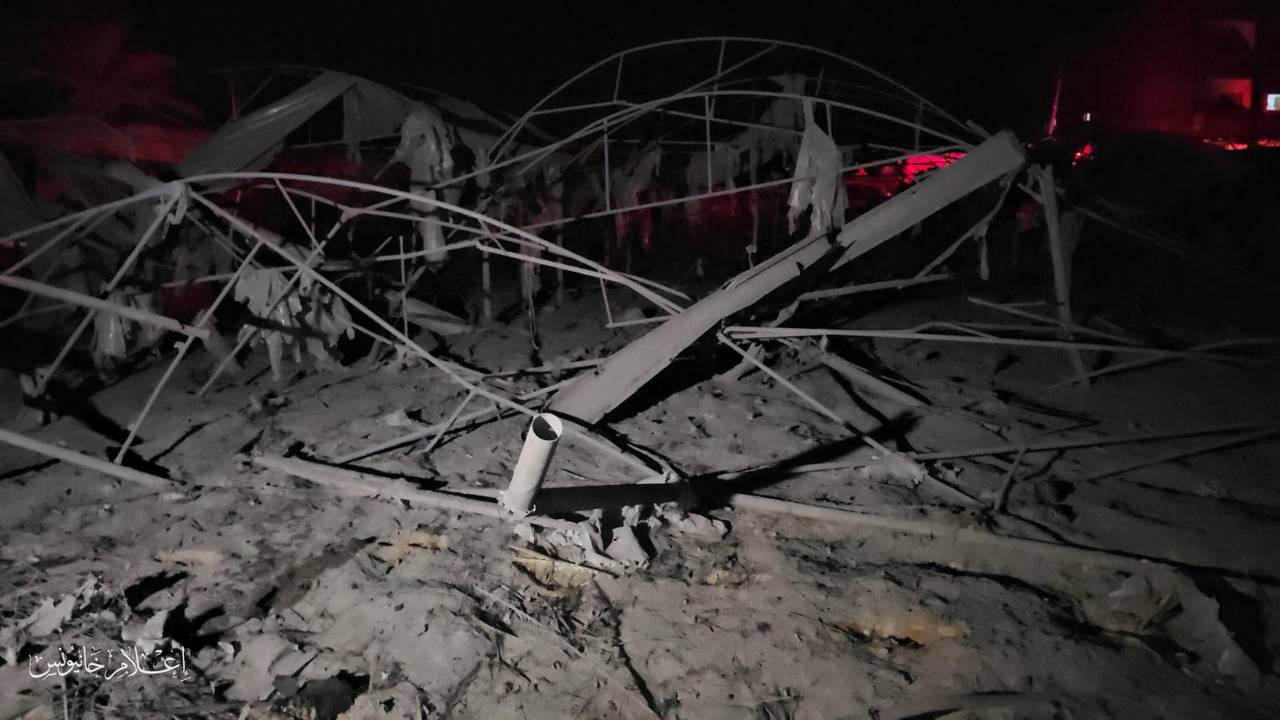
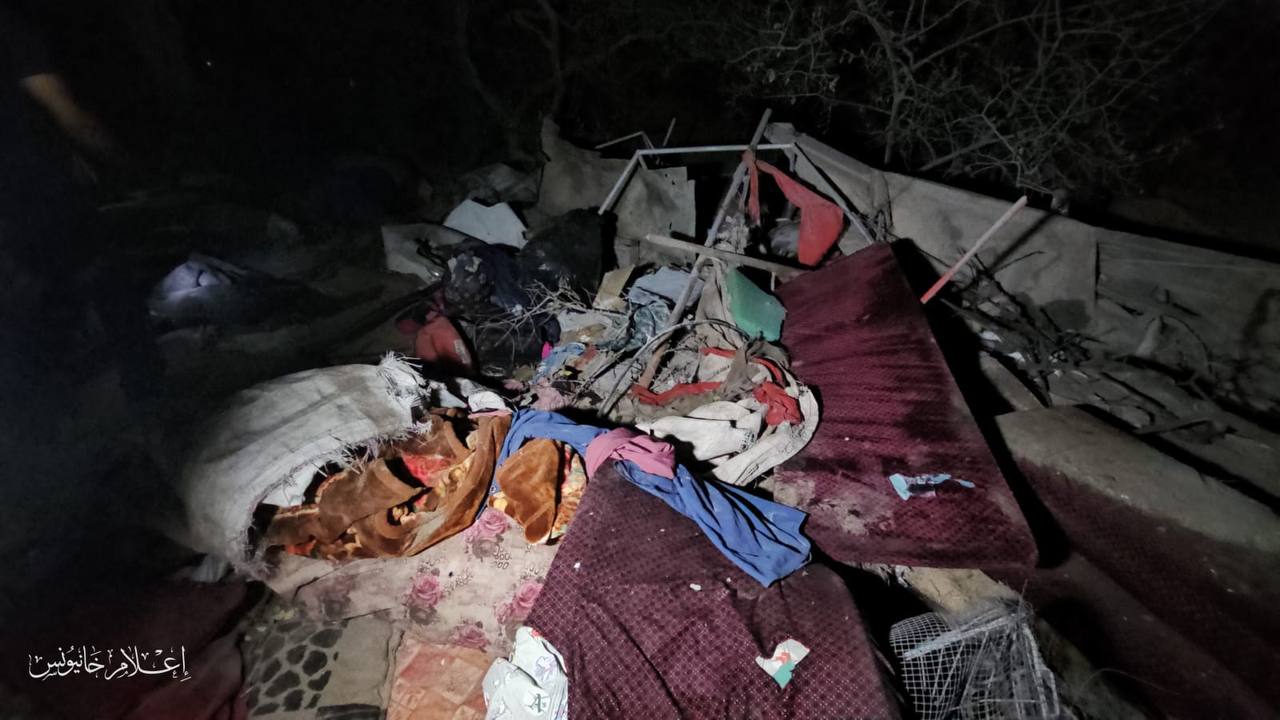
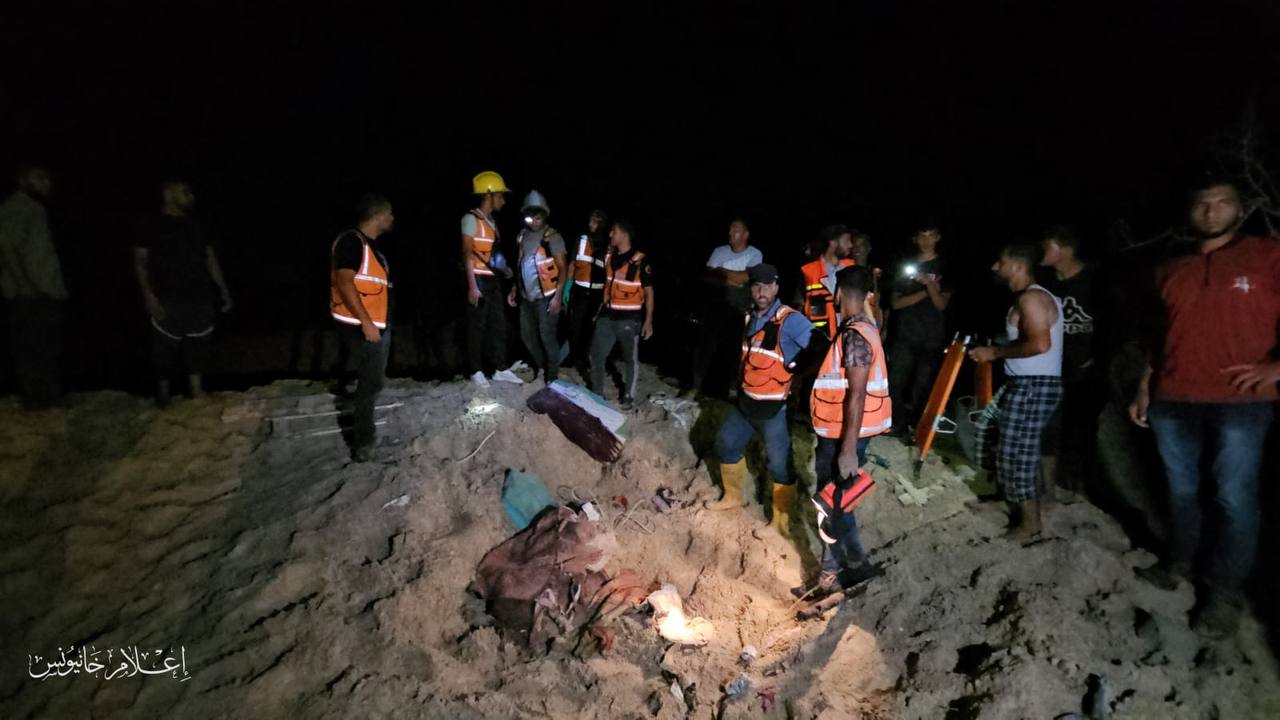
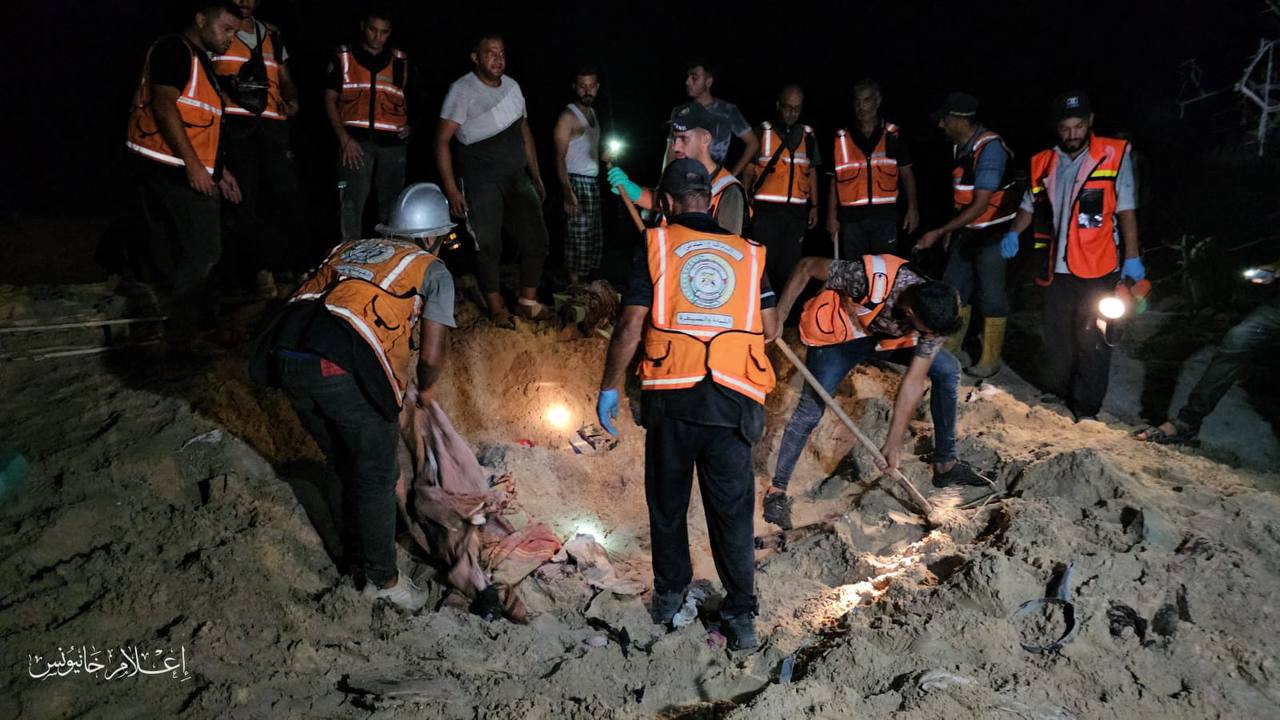
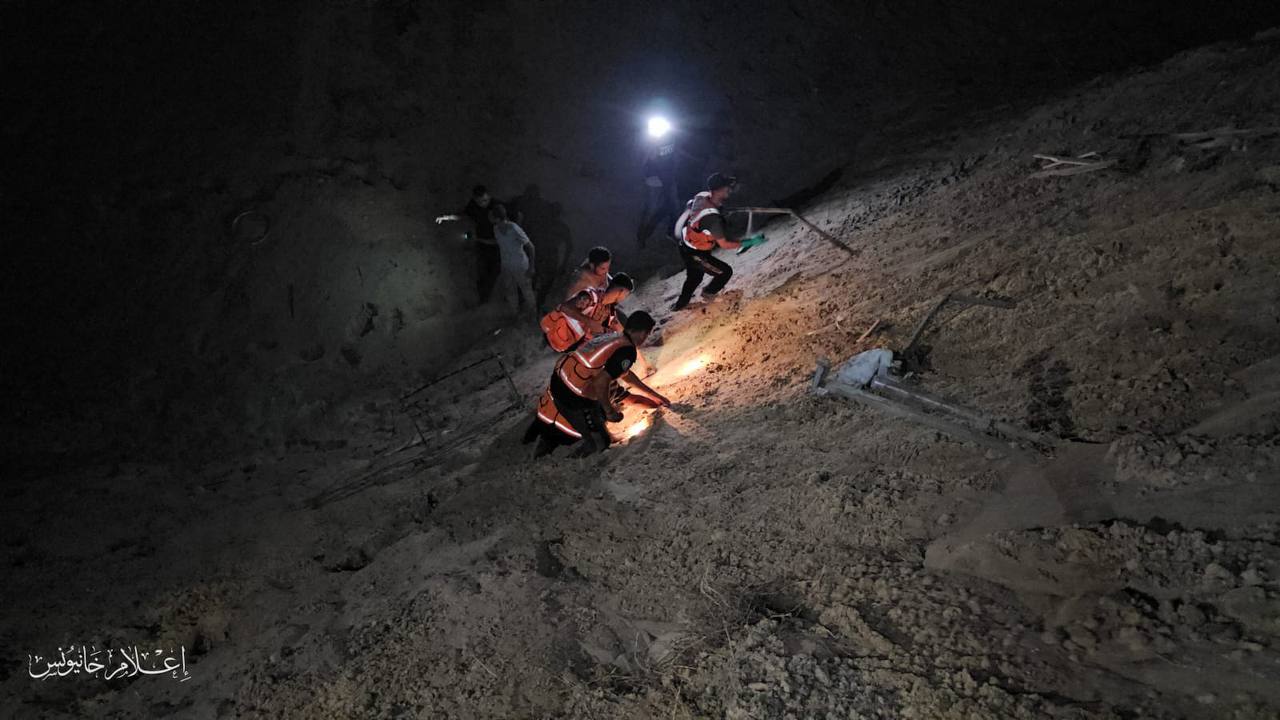
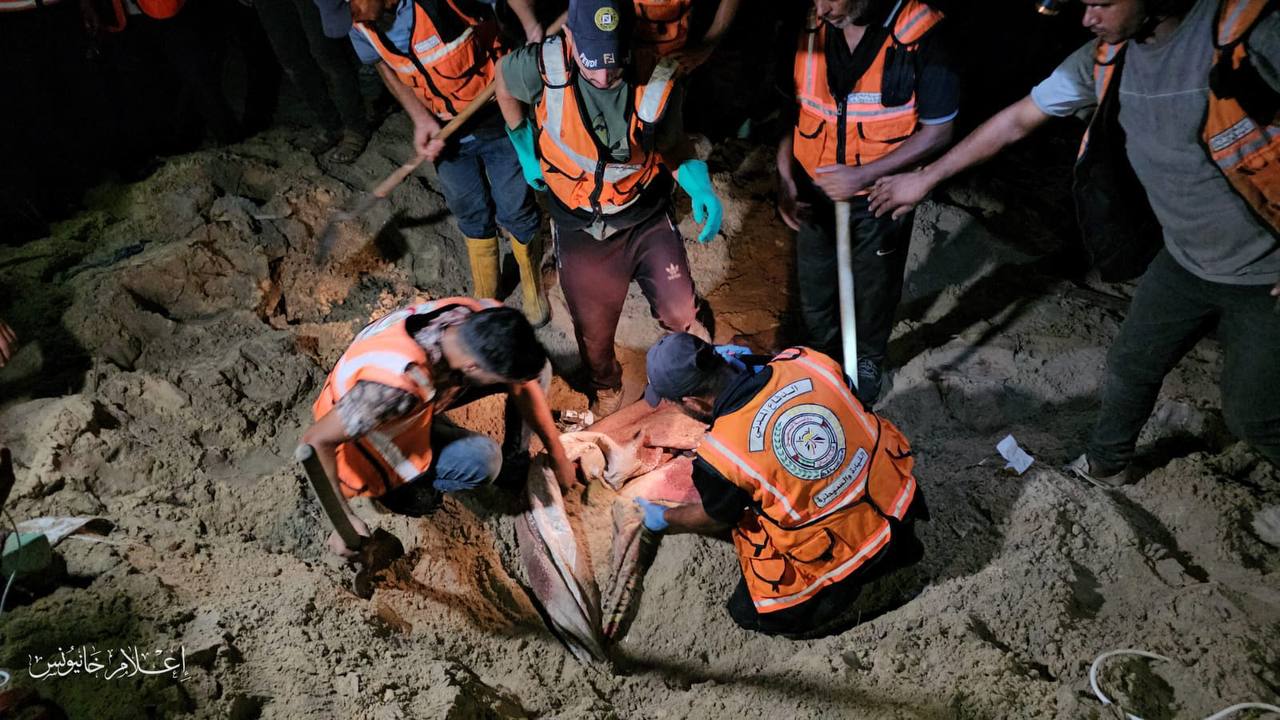
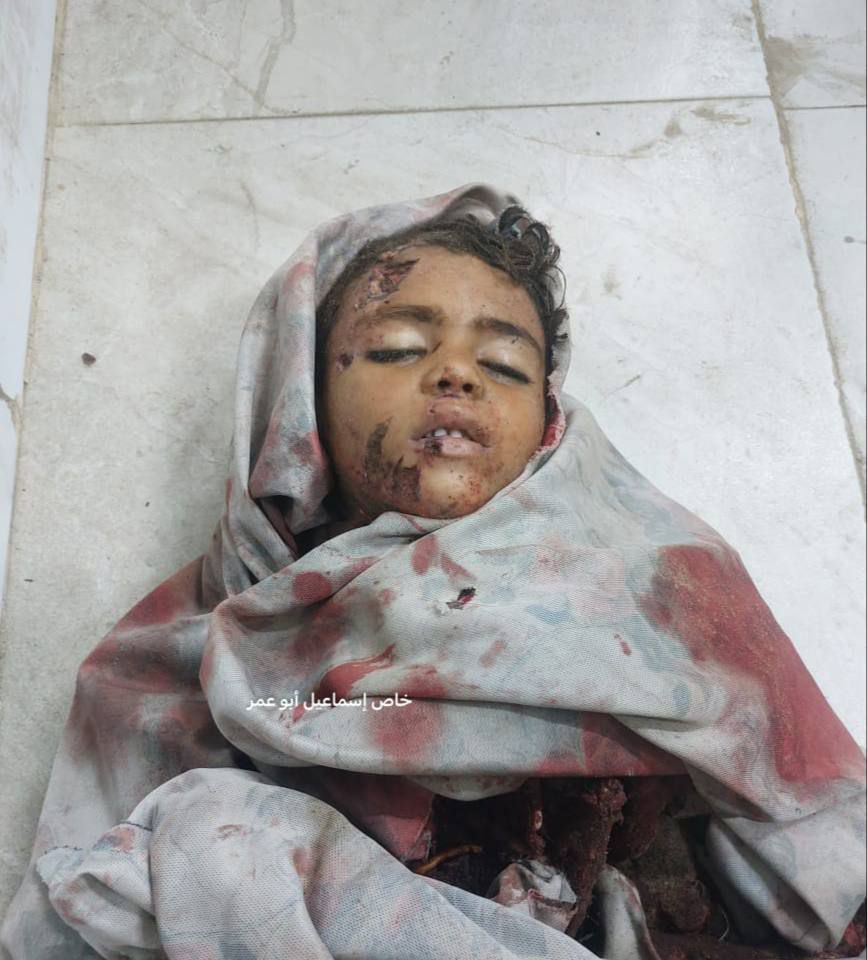
In a horrific crime, this morning, the Zionist army bombed the tents of Palestinian refugees in the Mawasi area of Khan Yunis city in the south of the Gaza Strip.
As a result of this heinous crime, at least 40 Palestinians were martyred and more than 60 others were wounded. A large number of martyrs and injured are women and children.
Preliminary investigations show that the Israeli army used 2,000-pound MK-84 free-fall bombs in this attack.
Aftermath of Israeli strikes in Mawasi
Hours after the attack, the Zionist regime claimed that the target of this attack was the senior commanders of Kataib al-Qassam, the military wing of Hamas, and as a result of this attack, “Samer Abu Daqe”, the commander of the Hamas Air Force, and Osameh Tabash, the head of the intelligence department in Kataib al-Qassam intelligence unit and Ayman al-Mabhouh, one of the senior commanders of Hamas, were killed.
According to Israeli army, the mentioned people were directly involved in the October 7 operation and participated in the attacks against the Israeli soldiers in recent months.
Islamic resistance movement Hamas and the Islamic Jihad movement issued a statement and strongly condemned the barbaric crime committed by the Zionist regime army in the Mawasi area of Khan Yunis.
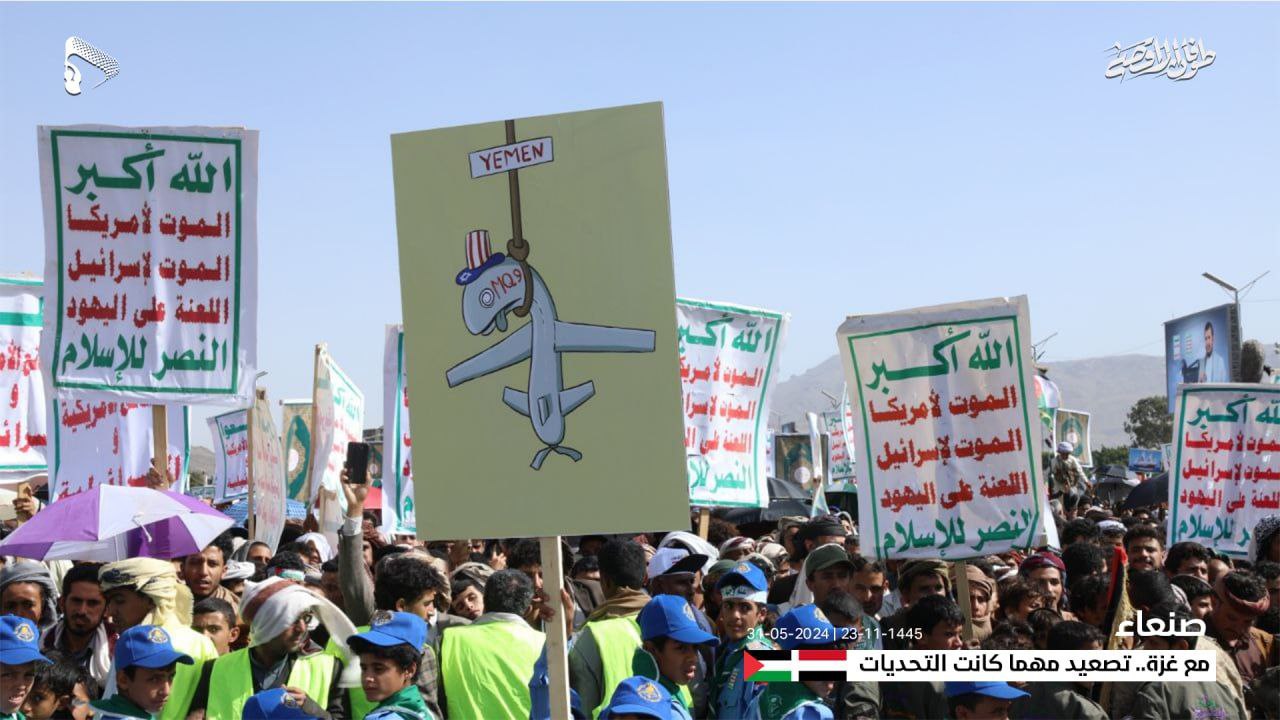
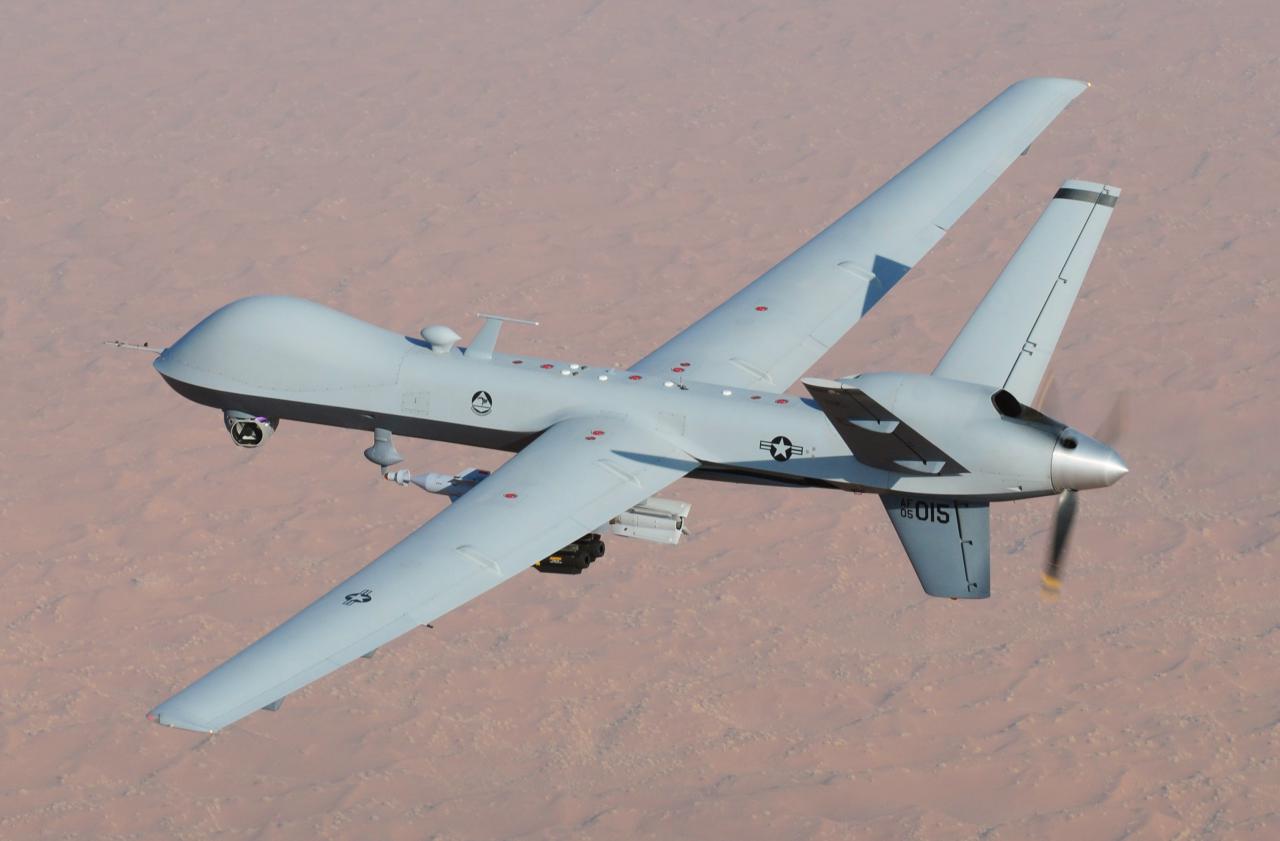
According to the statement by Brigadier General Yahya Saree, the spokesperson of the Yemeni Armed Forces, an MQ-9 drone of the American army was observed and shot down by the air defense forces while conducting reconnaissance and combat operations in the airspace of Saada.
This drone is the second American drone that has been shot down in the sky of Yemen in the last 72 hours.
The targeted drone is the 13th MQ-9 Reaper to be shot down during the aggression against Yemen. Nine of the aircraft were shot down as part of the Yemeni Armed Forces’ operations in support of the Palestinian people as well as their efforts to counter the US-British coalition’s assaults in Yemen.
The shooting down of numerous US combat drones in Yemen shows that the Yemeni armed forces have well understood the role of these drones in carrying out assassination operations and airstrikes on important facilities. Thus, the Yemenis are using all their power to intercept and destroy US drones over the Yemen’s airspace.
The US officials also stated in the past that their attacks are not effective due to the lack of their military intelligence from the Ansar Allah-controlled areas in Yemen.
Experts believe that the Israeli army does not have the ability to completely occupy the Gaza Strip, and most of these operations are carried out with the aim of clearing possible areas where Hamas forces are present.
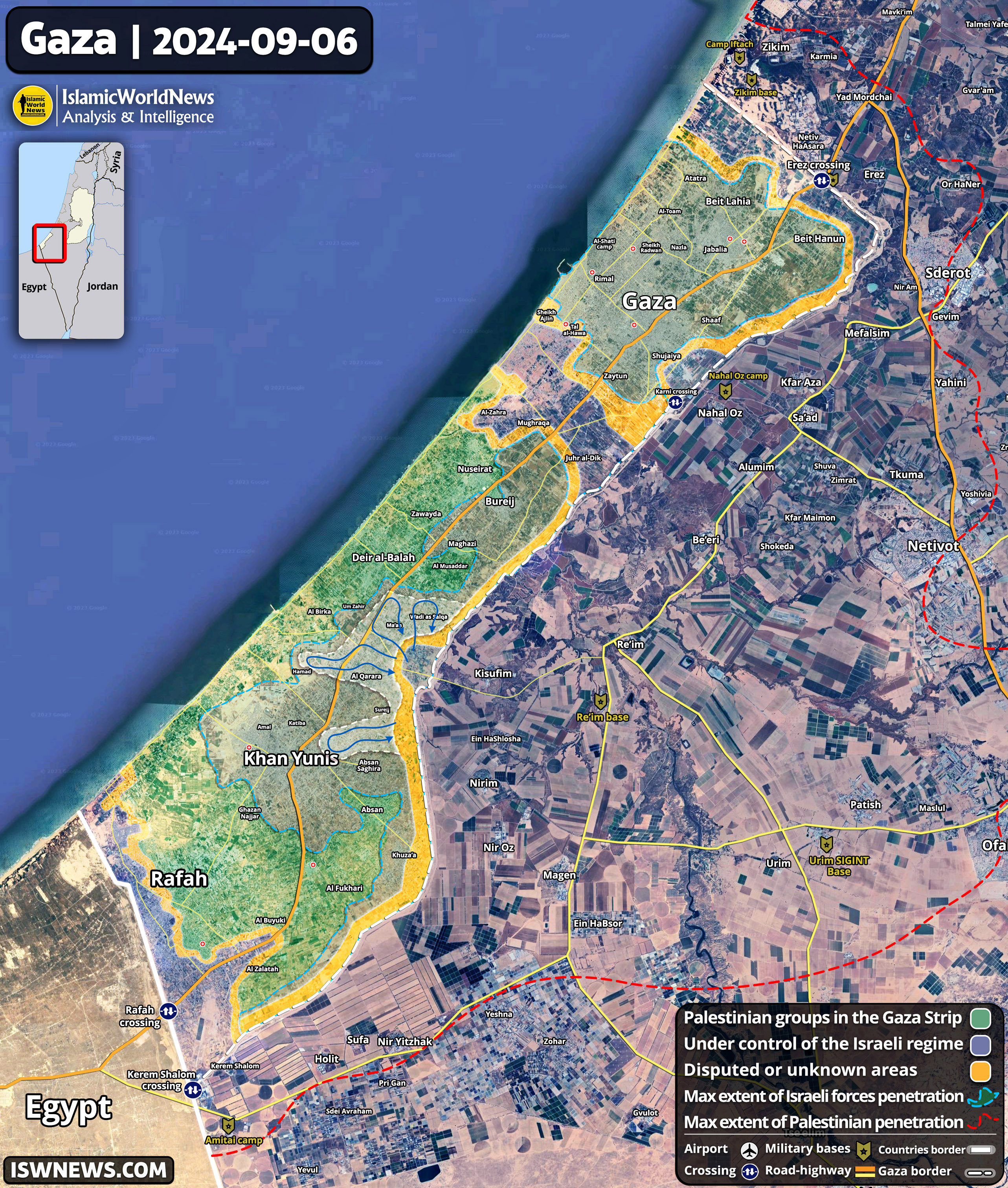
Clashes continue in Rafah city and the southern areas of Gaza city, also known as the Netzarim corridor, amidst ceasefire negotiations.
Recently, the director of the American Central Intelligence Agency held talks with Israel, Qatar and Egypt to amend the details of the proposal. The Egyptian and Qatari mediators are pessimistic about the chances of reaching an agreement, and they estimate that Netanyahu does not want to reach an agreement before the US presidential elections.
On the other hand, after the discovery of the bodies of 6 Israeli prisoners in the Gaza Strip, internal pressure has increased on Netanyahu and his government to agree to a peace agreement with Hamas and return the Israeli prisoners.
Six Israeli dead prisoners found in southern Gaza Strip
On September 1, Israeli army announced that it recovered the bodies of six hostages, who were captured alive by the Hamas on October 7, from a tunnel in the southern Gaza Strip city of Rafah, shortly after they were murdered by their captors.
Hamas rejected the claim of the Israeli army. It is said that two of these prisoners were supposed to be released in the first phase of a possible ceasefire agreement and exchange of prisoners. It seems that Netanyahu will use this opportunity to continue the war in the Gaza Strip and put pressure on Hamas and achieve his so-called goals in the Gaza Strip.
Still, important problems such as the Philadelphia and Netzarim axis prevent a lasting ceasefire agreement in the Gaza Strip. Netanyahu and his hard-line cabinet are not willing to withdraw from these areas.
Actually, Netanyahu’s cabinet decision to remain in Philadelphia was a public blow to Defense Minister Yoav Galant and Chief of Staff Herzi Halevi, who recommended a temporary withdrawal from the strategic axis in order to free 20-30 prisoners.
As tensions persist in the Gaza Strip and internal divisions arise among Israeli officials regarding the strip, the Israeli Defense Minister is issuing threats to engage in a wide-scale conflict with Hezbollah on the Northern Front!
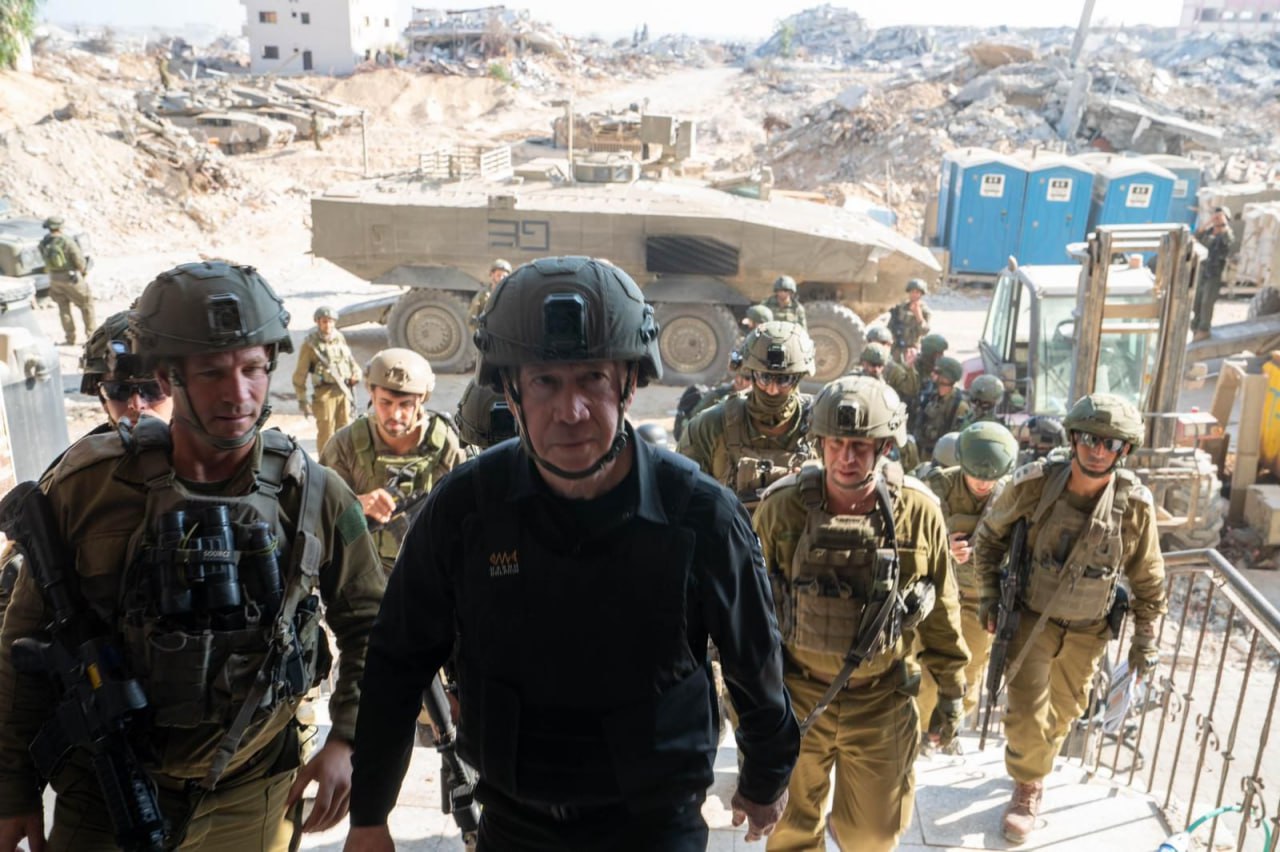
Israeli Defense Minister Yoav Gallant announced today while visiting the Netzarim axis, “While we are fighting in Gaza, we are preparing for anything that could happen in the north and we are ready to transfer the center of military gravity to the northern front immediately.”
Israeli Defense Minister Yoav Gallant in Netzarim corridor
The battles in the northern front have been going on for months and tensions along the northern borders have led to widespread evacuations of settlements. More than 250,000 Israeli citizens have been displaced by the war and the number of Israeli refugees increases daily.
The current situation in the northern front has caused the reverse migration of Israelis and huge political and financial losses to the Israeli regime. The security of the settlers in northern Palestine has been completely destroyed and it is difficult and unbearable for Israel to continue the current situation.
The Israeli army and Lebanese Hezbollah continue to exchange artillery fire on a daily basis. Hezbollah attacks Israeli army positions and bases in the region using light rockets, suicide drones, and anti-armor missiles. On the other hand, Israeli fighter jets target the eastern and southern towns of Lebanon using heavy bombs and Israeli drones conduct targeted assassinations against Lebanese resistance fighters and commanders.
Israeli warplanes targeting alleged Hezbollah targets in southern Lebanon
In recent months, Israeli authorities have repeatedly threatened Lebanon with a large-scale ground military operation. Gallant’s recent threat from the heart of the Gaza Strip is the latest example of these threats.
However, it seems very unlikely that the Israeli regime has the ability to fight on three fronts. Especially since the Israeli army recently opened a new front in the West Bank.
Therefore, the outcome of the ceasefire negotiations in the Gaza Strip is crucial for the Israeli regime and has a direct impact on the continuation of the war in the northern front. In fact, Hezbollah’s goal of waging war with Israel is about to secure a lasting ceasefire in the south. Hezbollah has announced the end of Israel’s aggression in the Gaza Strip as a condition for the cessation of the war and the end of insecurity on the northern front.
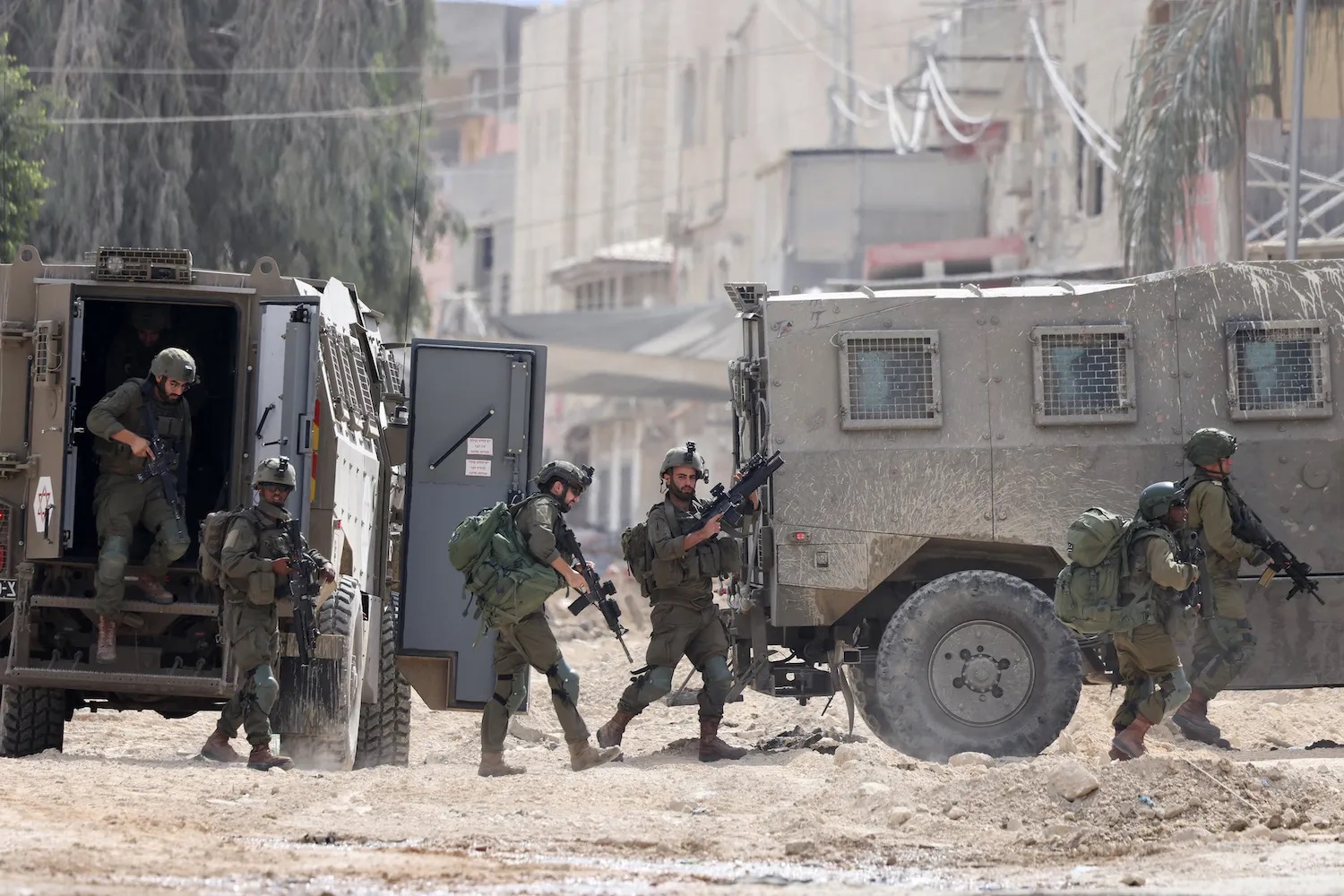
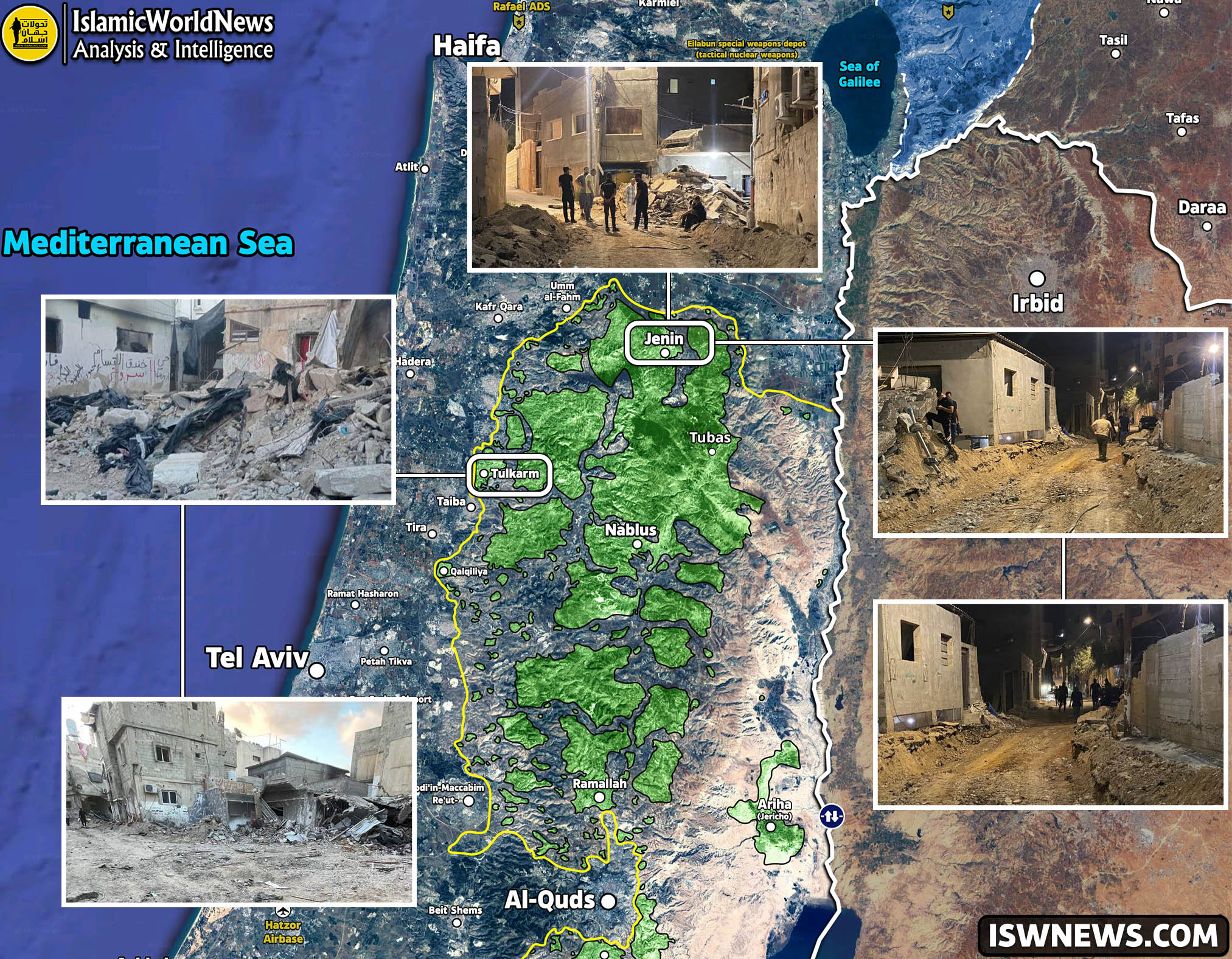
Israel stated that the purpose of the operation in the West Bank is to deal with the increasing insecurity of the last few months and to destroy the so-called Iranian terrorism.
It is said that the Israeli army has now classified the West Bank as the second most important and sensitive front after Gaza. This directive is currently in its early stages, and it is expected to take time to compile and finalize, but the Israeli military has organized a series of operations against resistance groups in areas of the West Bank. Israeli officials emphasized: “The operation in the West Bank is just the beginning.”
The Israeli operation is currently focused on the northern half of the West Bank and the cities of Jenin, Tulkarm, Tubas and Nablus. According to the Palestinian Ministry of Health, since the onset of the Israeli offensive in the West Bank, 39 Palestinians have been martyred and 145 others have been wounded.
However, after the start of military operations in the West Bank, the security situation in this area has worsened and anti-Israeli operations have greatly increased.
On August 31, an Israeli squad commander in the ranks of the Bislamach Brigade’s 906th Battalion was killed and three others were wounded during clashes with fighters from the Hamas Movement in Jenin. On September 1, three Israeli police officers were killed in a shooting attack near the city of Tarqumiyah. And the latest incident was today, on September 8, that three Israelis were killed in a shooting attack at the Allenby Bridge crossing between Jordan and the occupied West Bank.
Three Israelis killed in a shooting attack at the Allenby Bridge crossing
The recent developments in the West Bank clearly indicate that escalating pressure from the Israeli army on the people of the West Bank may have the opposite effect. Furthermore, the expansion of the conflict in this region could pose a serious threat to the security of Israel’s capital.
Many experts believe that the Israeli regime’s new military aggression in the West Bank, due to Netanyahu’s extremist and warlike cabinet, can eventually turn into something similar to the genocide that is going on in the Gaza Strip.
The Israeli aggression in Gaza has so far claimed the lives of more than 40,500 Palestinians, most of whom are women and children. The Israeli forces also killed more than 670 Palestinians in the West Bank since the start of the war on October 7.
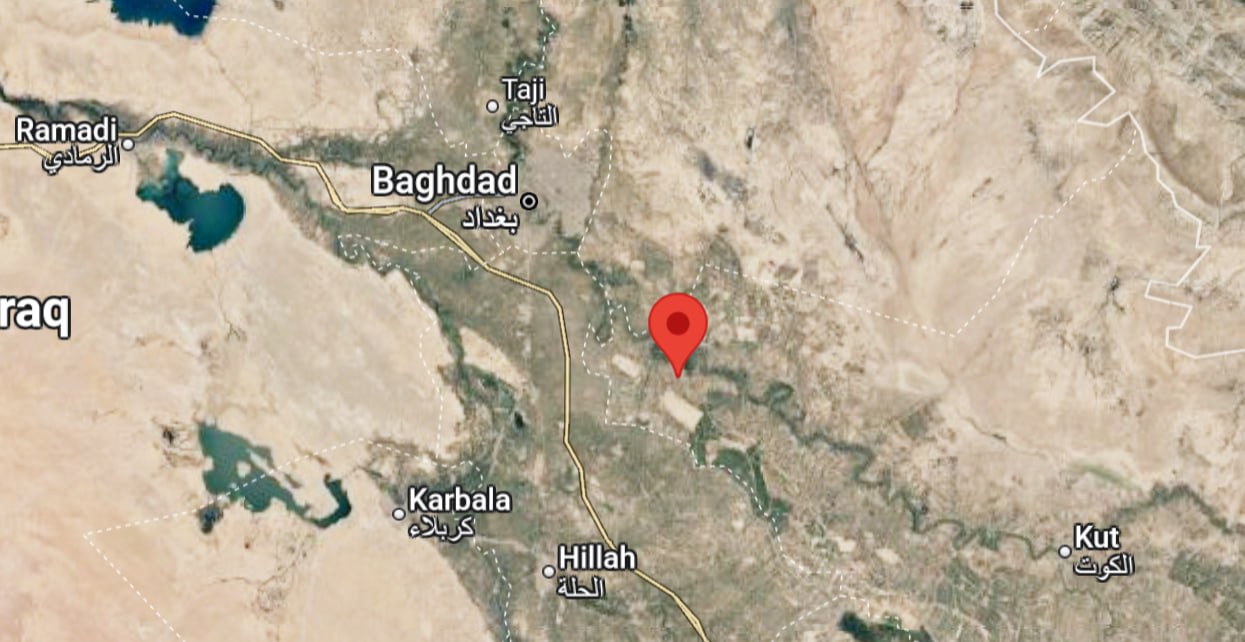
Minutes after the alleged assault, the Iraqi Ministry of Interior (MOI) denied the likelihood of a drone strike on the headquarters of the Popular Mobilization Units (PMU) and announced that the thick smoke that was seen between the city of Al-Suwaira and the town of Al-Aziziyah was caused by a bushfire in a meadow, which had spread to some equipment. The fire has been contained and the incident has not led to any casualties among the residents of that region.
Although, the Ministry of Interior in Iraq issued a statement rejecting the possible US drone strike on the headquarters of the Popular Mobilization Units in the Al-Suwaira area, a video footage released from that area shows that the smoke from the scene of the incident resembles fires after being pounded by a projectile.
Video from the scene of the incidentVideo from the scene of the incident
Furthermore, local Iraqi sources spotted a General Atomics MQ-1C Gray Eagle drone belonging to the terrorist US army over the affected region minutes before the fire broke out.
The mentioned issues enhance speculation about a drone strike by the terrorist US army. Moreover, the Iraqi Ministry of Interior does not possess any radar system to detect drones, and the ministry denied several US air strikes in the past, despite the existence of sufficient documentation and eyewitnesses.
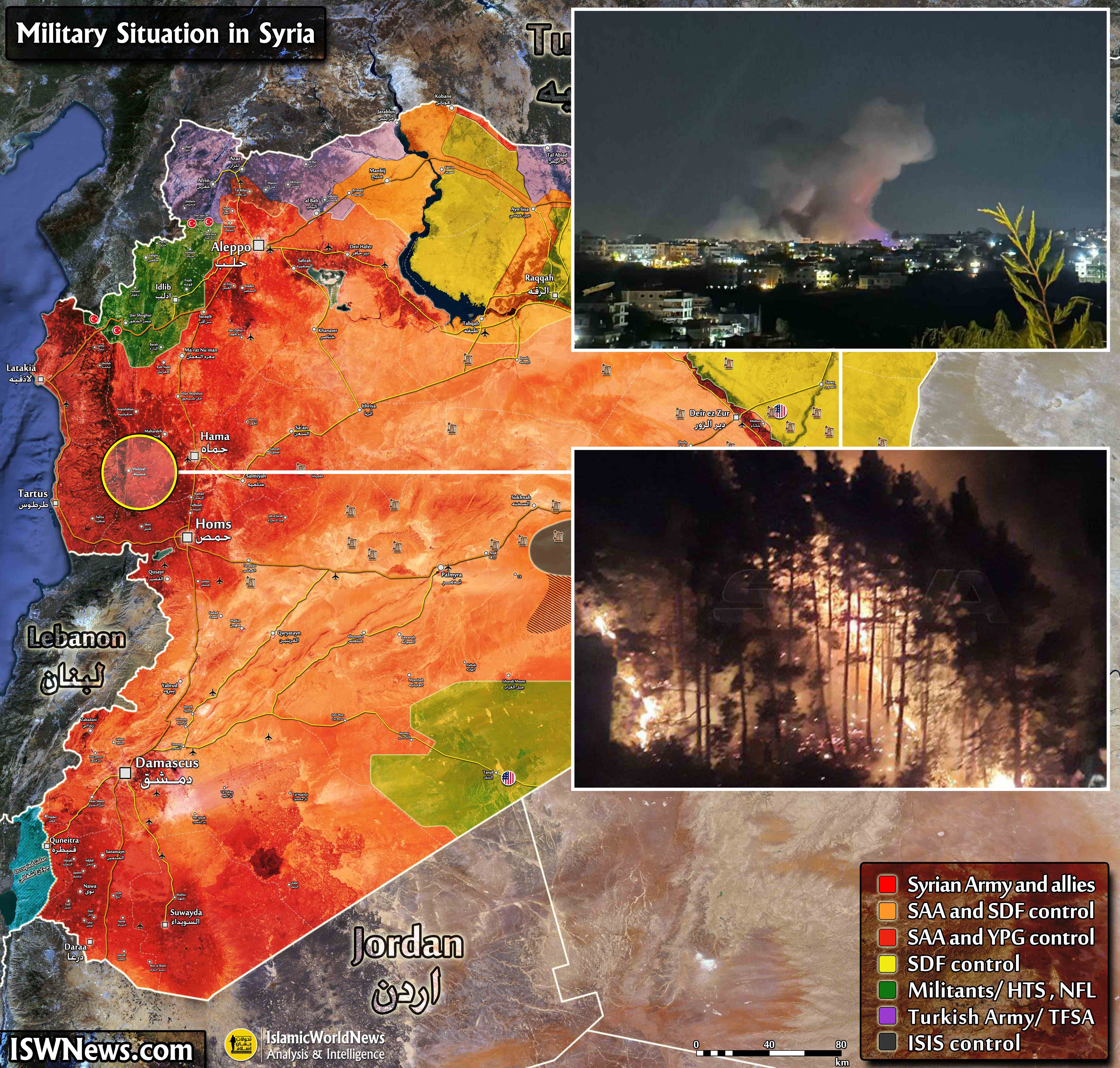
Late on September 8, some warplanes of the Israeli regime’s Air Force pounded the Syrian army’s research centers in Masyaf and several other places around the city, situated in northwestern Syria.
It is said that one of the positions pounded by the Israeli regime’s fighter jets is a military base southwest of the city of Masyaf. After Israeli missiles hit the Syrian military base, the plants around the facility caught fire.
A video of the moment of targeting the research centers of the Syrian army in Masyaf.
Local Syrian sources claimed that Israeli fighter jets attacked a number of targets in Masyaf in the first round of strikes, and in the second and third phases of the assaults, they targeted the Syrian army’s defense systems there.
Concurrent with the news stories released concerning the Israeli regime’s air raid on Masyaf city, certain sources reported an airstrike on targets in Tartus port city on the Mediterranean coast of Syria; however, the sound of explosions in Tartus was caused by the activation of the Syrian army’s defense systems to intercept the Israeli regime’s missiles.
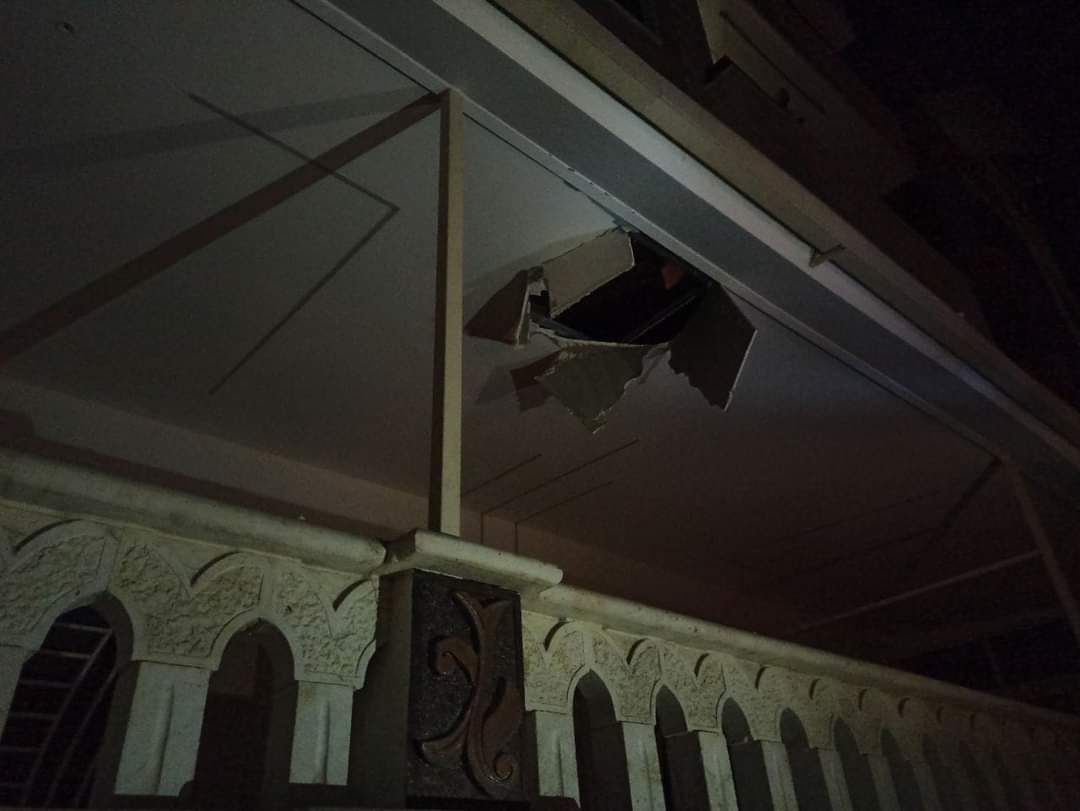
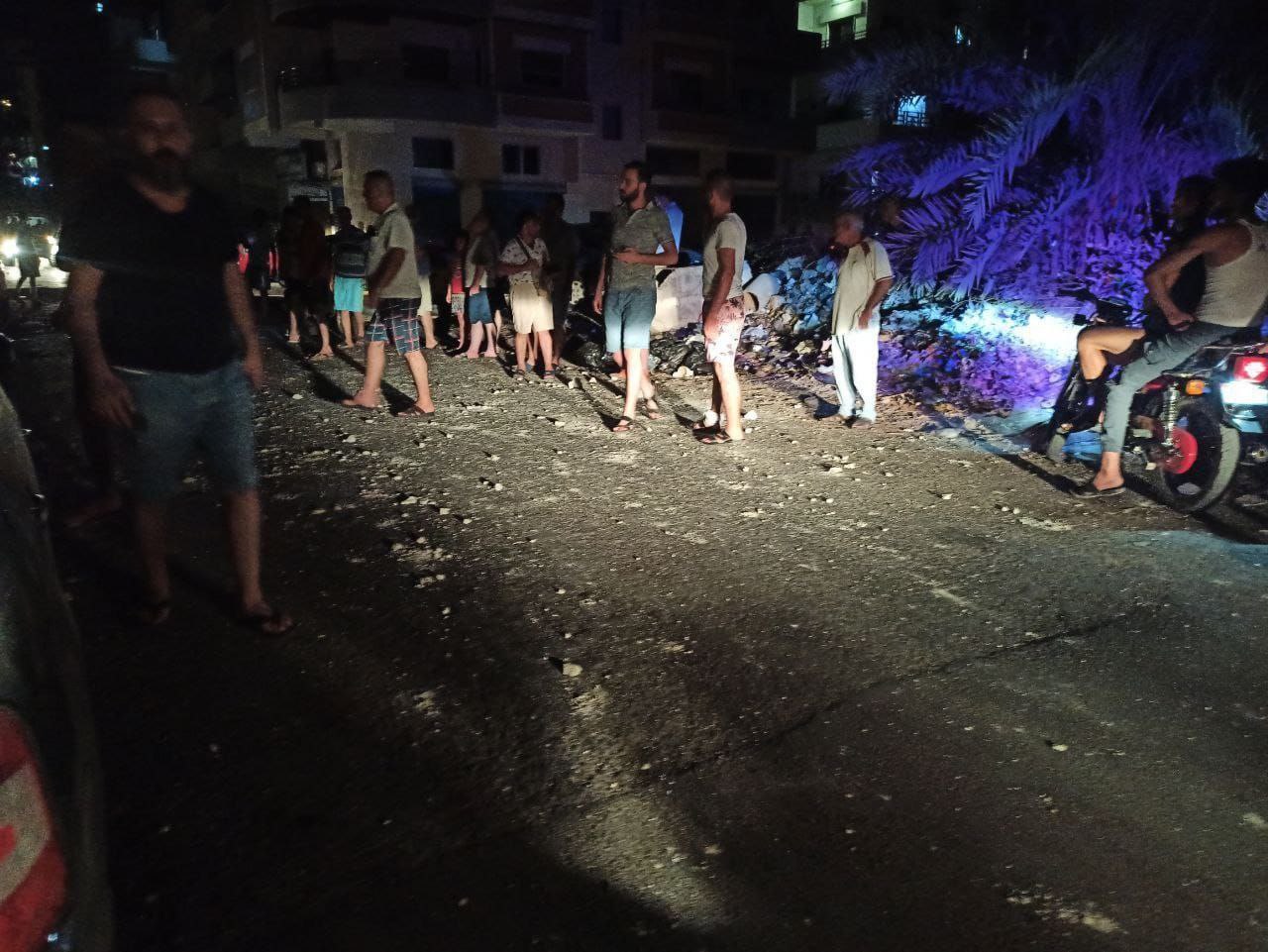
Images posted on social media networks proved that the fall of Syrian defensive missiles wreckage in the city caused some material damage.
The damage caused by the fall of the Syrian defense missile wreckage in Tartus
A Syrian military source announced that the Israeli enemy launched an air strike from the northwest of Lebanon, pounding a number of military bases in the central districts of Syria, and that the Syrian army’s air defense system succeeded in destroying a quantity of missiles fired by the Israeli regime.
According to the latest statistics, 16 people were martyred and 36 others were wounded in Sunday night’s air strikes by the Israeli regime’s army on positions in and around Masyaf city. The condition of six of the wounded Syrians is reported to be critical.
It is worth mentioning that the Sunday night’s air strike was one of the most intense aggressions conducted by the Israeli regime’s army on Syrian soil in recent months. The Israeli regime’s warplanes fired several missiles at positions in central Syria on August 23, which led to the injury of seven civilians.
Yemeni Armed Forces Spokesman Brigadier General Yahya Saree announced in a statement that the Arab country’s army destroyed another US MQ-9 drone in the skies over Marib Governorate, located in northeastern Yemen.
The Yemeni Armed Forces underlined the need to reinforce the country’s defense capabilities in order to pave the way for confronting the assaults of the US-British coalition, arguing that the Yemeni forces will continue to carry out their jihadi obligations in assisting the oppressed nation of Palestine and defending Yemen, and will also respond to the foes’ hostile military actions in Yemenis’ naval operation areas.
The targeted drone is the 12th General Atomics MQ-9 Reaper to be shot down during the aggression against Yemen. Eight of the aircraft were shot down as part of the Yemeni Armed Forces’ operations in support of the Palestinian people as well as their efforts to counter the US-British coalition’s assaults in Yemen.
The flight of US combat and reconnaissance drones in the Yemeni sky is a threat to the Arab country’s security, and moreover, it is considered the violation of its sovereignty and aggression against the country’s airspace protection.
The United States’ drones are mostly conducting their reconnaissance and combat missions in the central, northern and coastal districts of Al Hudaydah Governorate, perhaps aimed at monitoring and detecting the movement of Yemeni leaders in the capital city Sanaa as well as Saada Governorate and military movements in Al Hudaydah Governorate, situated in western Yemen.
Israeli security officials and media outlets have time and again said that the regime’s army is seeking to assassinate the heads of the government and army in Yemen, as well as senior officials of the Ansar Allah movement; therefore, the flight of US drones in Yemen is perceived as a great threat.
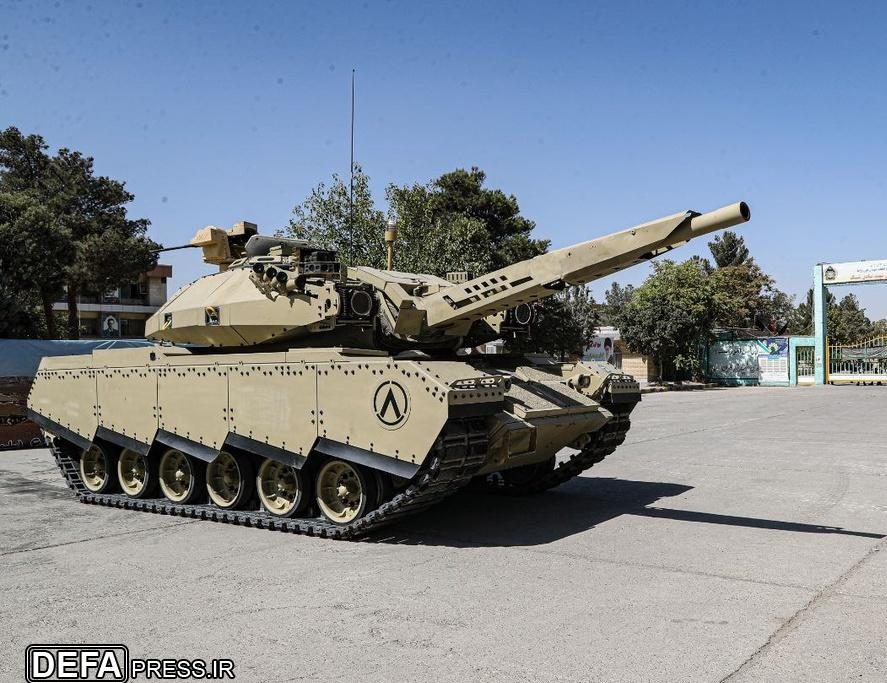
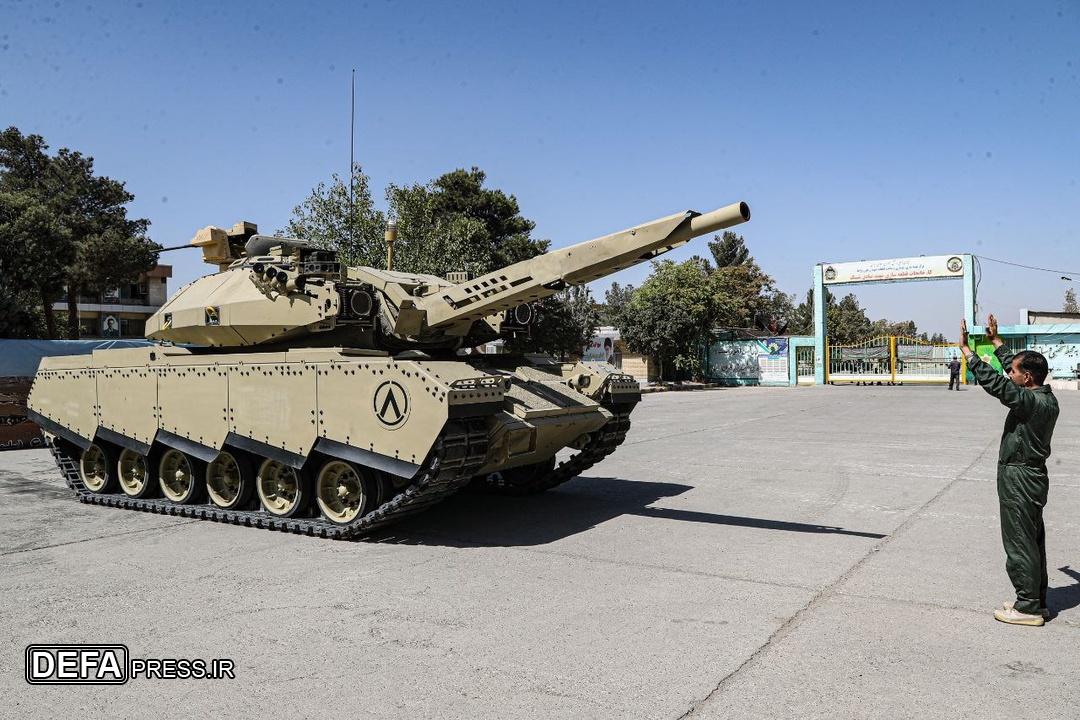
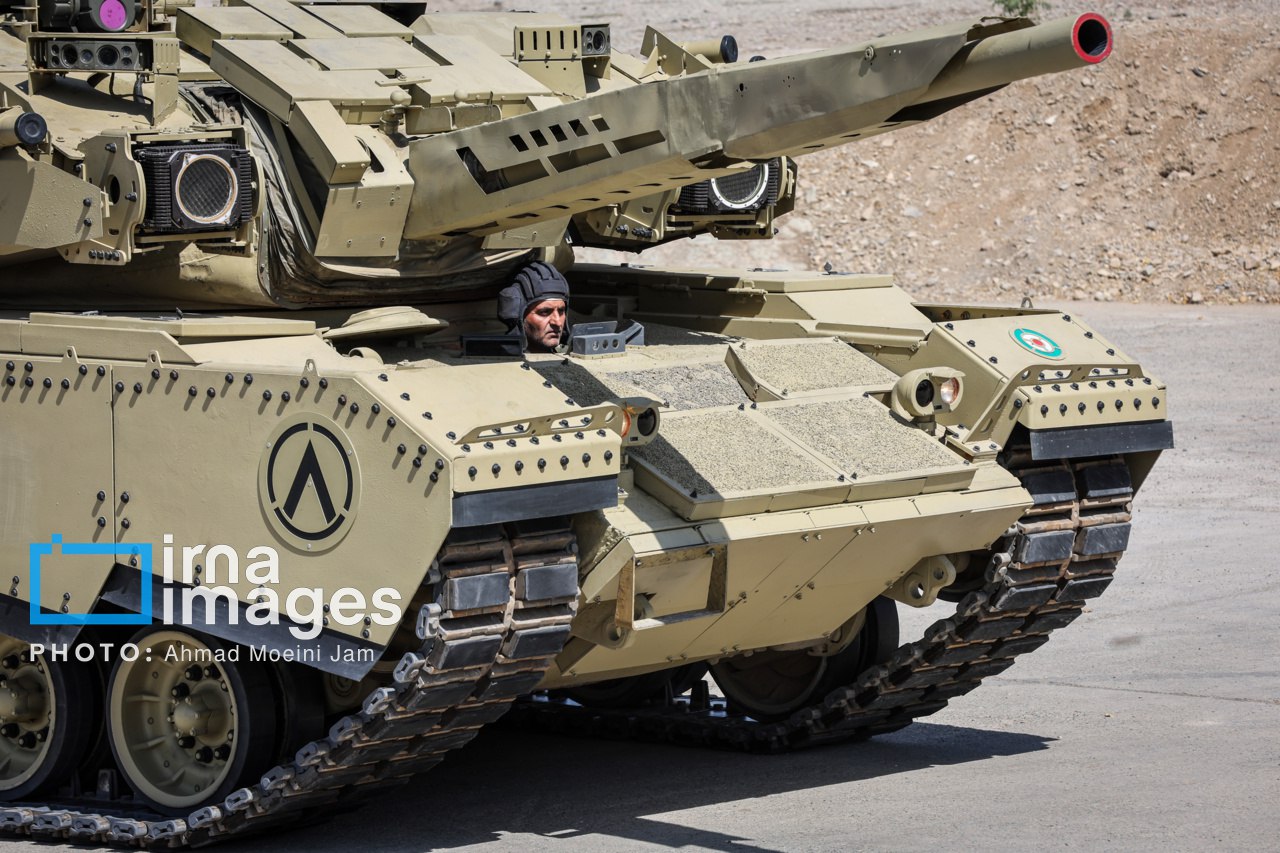
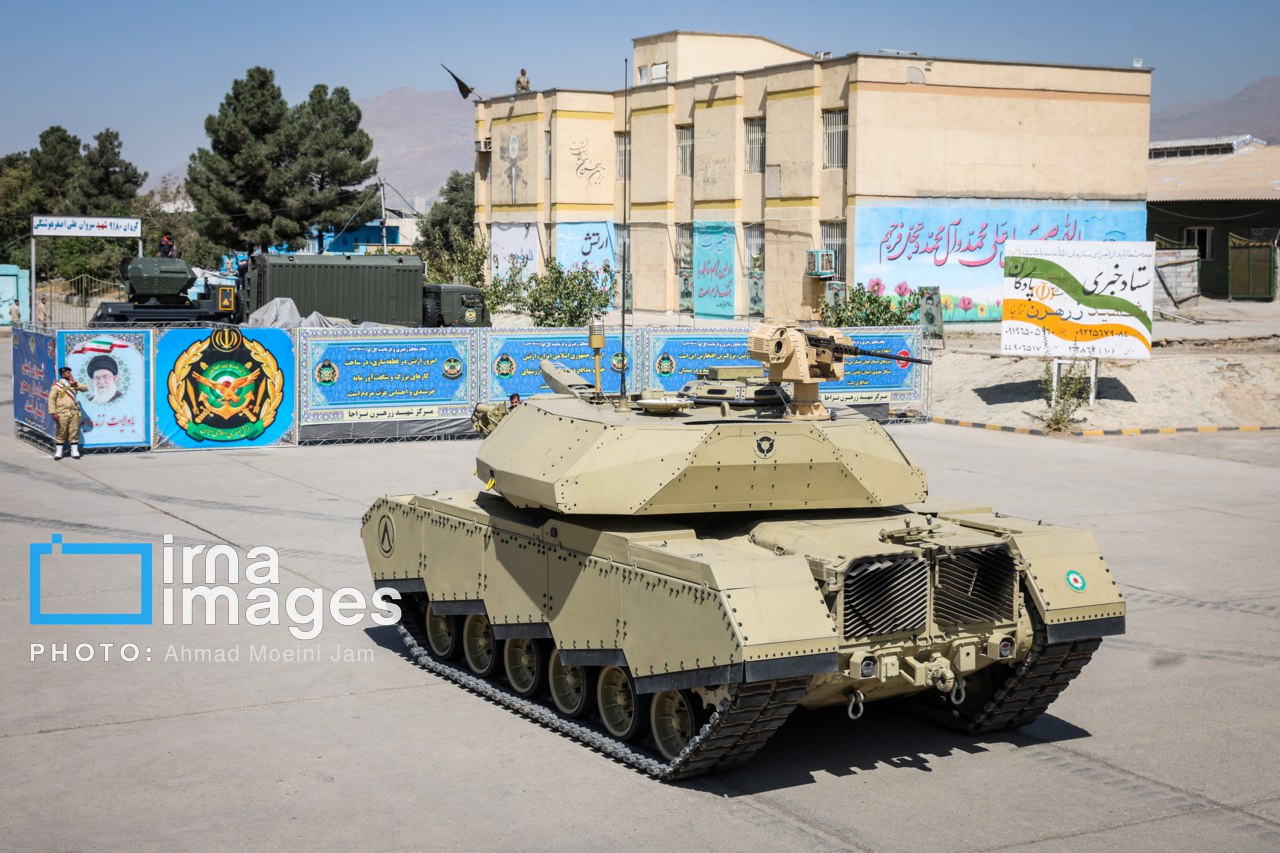
The upgraded tank was showcased during a ceremony held at the Shahid Zarharan Center of the Army Ground Force. The ceremony was attended by Iranian Army chief commander, Major General Abdolrahim Mousavi, and Commander of the Ground Force of the Iranian Army Brigadier General Kiumars Heidari.
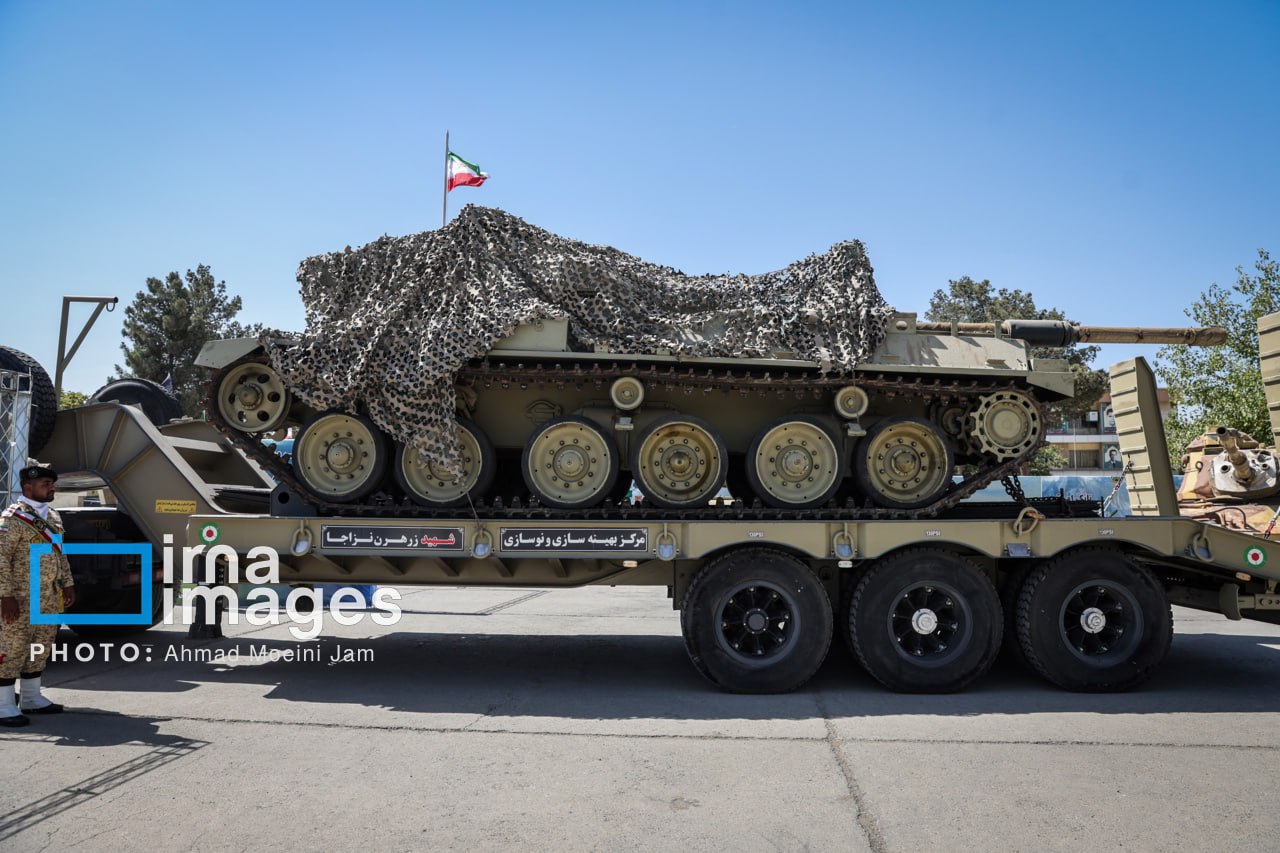
Some M60A1 tanks were supplied by the United States to Iran prior to the Islamic revolution of 1979. Currently, some 150 tanks of this type remain in service with the Iranian military.
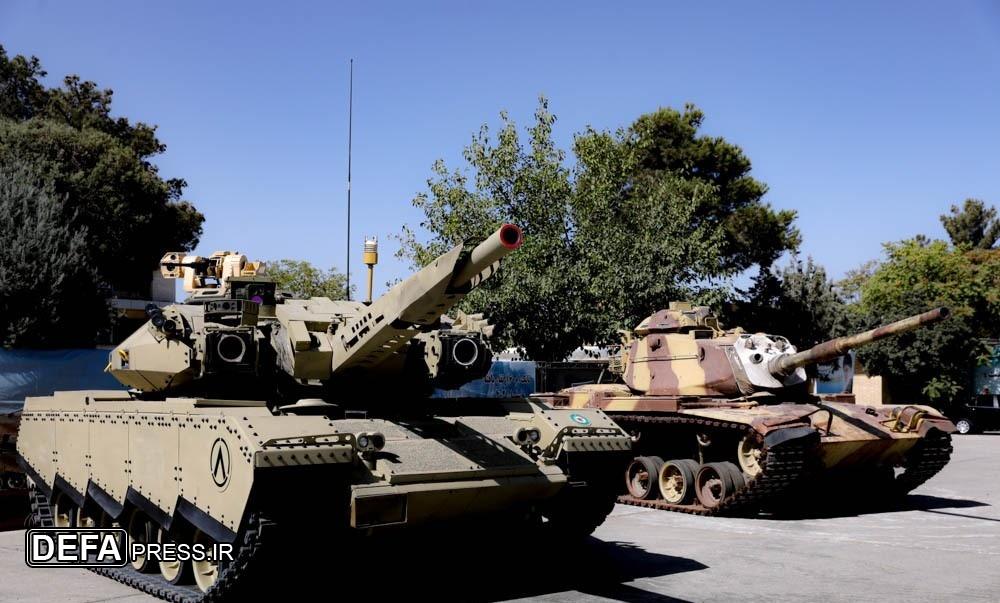
The “Soleiman 402” upgrade includes a new armor package, fire control system, a remotely-controlled machine gun, a laser warning system and an infrared jammer for anti-tank guided missiles.
Left: upgraded M60 tank dubbed “Soleiman 402”; Right: the original version of M60 tank
It is still unclear if the Iranian military is planning to upgrade all of its M60 tanks to this standard.
Click to view full size
Faced with serious threats from the United States, Israel and others, Iran has been working non stop to boost its military capabilities.
While most media attention has been forced on Iran’s massive missile and drone program, the country’s development of more traditional military means, like firearms, combat vehicles and artillery, has been also moving forward with much success.
The Israeli military operation continue in various areas of the West Bank, and the regime’s military is carrying out a series of attacks against the resistance movements and the infrastructure of the cities of Tulkarm and Jenin.
The regime’s forces clashed with the fighters of the Izz al-Din al-Qassam Brigades (IQB), the military wing of Hamas, in the Tulkarm refugee camp, and IQB announced that it had inflicted definite casualties upon the Israeli occupying forces during the confrontations. A few days after the Israeli assault in Tulkarm, the head of the services department of the Tulkarm camp declared that the Israeli regime had entirely demolished 100 houses during its latest attack on the region.
The official referred to the demolition of the two-kilometer-long electricity and communications networks in the Tulkarm camp, and clarified that 200 residential buildings in the camp are no longer fit for human habitation, and that the Israeli occupying forces destroyed 300 shops as well.
The city of Jenin has also witnessed armed clashes between the Palestinian resistance fighters and the Israeli military in recent days. The Israeli regime’s assault in Jenin was supposed to end on Tuesday evening September 3, but the regime’s army extended its military operation in the city.
The Hebrew-language media outlet Walla quoted military sources as announcing that the extension of the assault on the Jenin camp was taken place based on the intelligence attained about the military infrastructure in the camp.
Throughout the last 48 hours, Palestinian resistance fighters in the northern districts of the West Bank targeted the forces and equipment of the regime’s army. These clashes prompted the Hebrew-language newspaper Yedioth Ahronoth to acknowledge that the bombs of the resistance in the northern West Bank have caused a lot of damage to the Israeli army, despite their use of heavy machinery. Resistance fighters in Judea and Samaria refugee camps blew up certain buildings with powerful explosives, inflicting heavy casualties to Israeli forces.
According to the Palestinian Ministry of Health, since the onset of the Israeli regime’s most recent military offensive in the West Bank, 39 Palestinians have been martyred and 145 others have been wounded. The number of martyrs in the West Bank since the start of the genocidal war against Gaza, which began on October 7, 2023, has reached 691 and the number of wounded has mounted to 5,700.
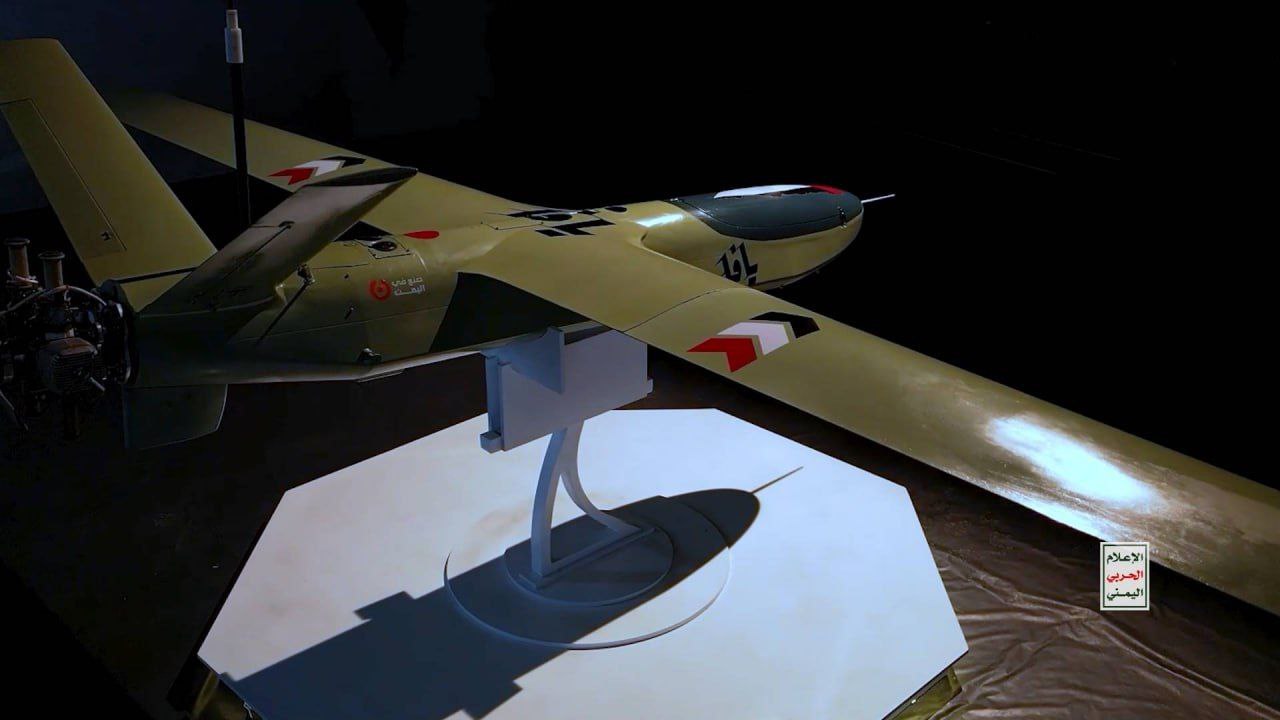
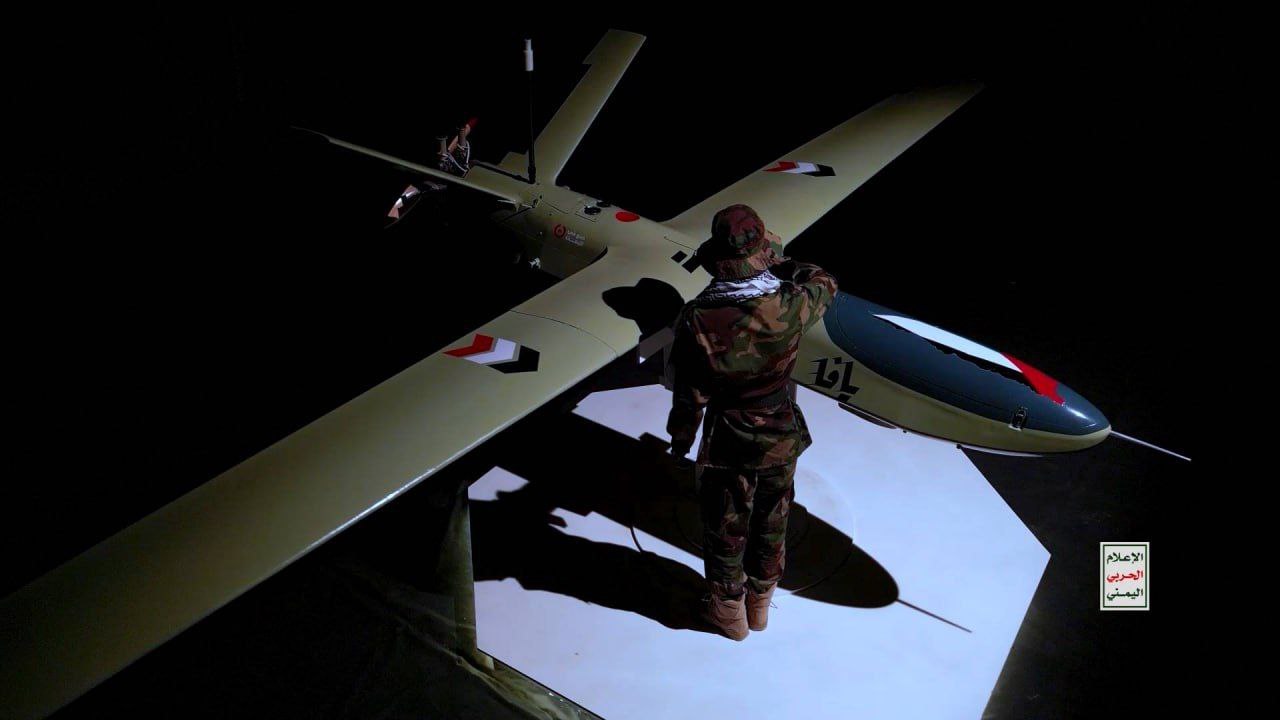
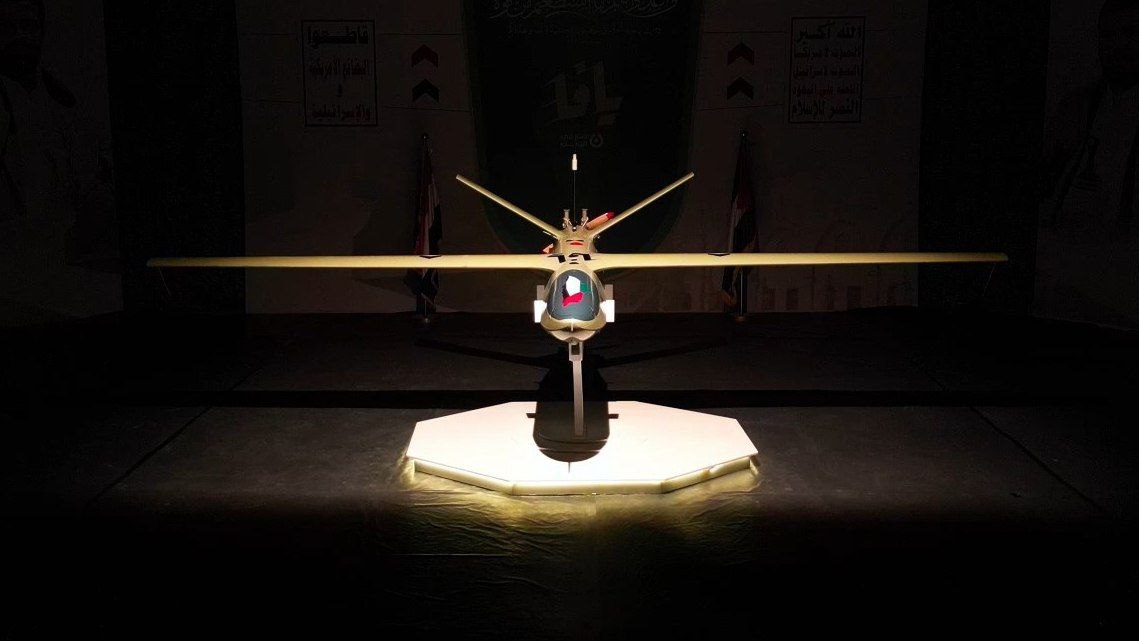
It seems that the “need for greater range” of attack is a good explanation for the reason behind the manufacturing of Yafa drone, which is a UAV that has its roots in the Sammad class, and is considered as a big development in terms of range, compared to previous drones.
The first prototype of the Samad class drones was unveiled in 2018. Like Yaffa UAV, Samad had a long and flat wing design, which could reach a greater range, while it rises high in the air. The aircraft needs to fly at high altitudes in order to be able to reach a greater range in this flying method. The high flight altitude provides the enemy with the opportunity to detect the presence of the drone more quickly and its radars will be able to issue early warning.
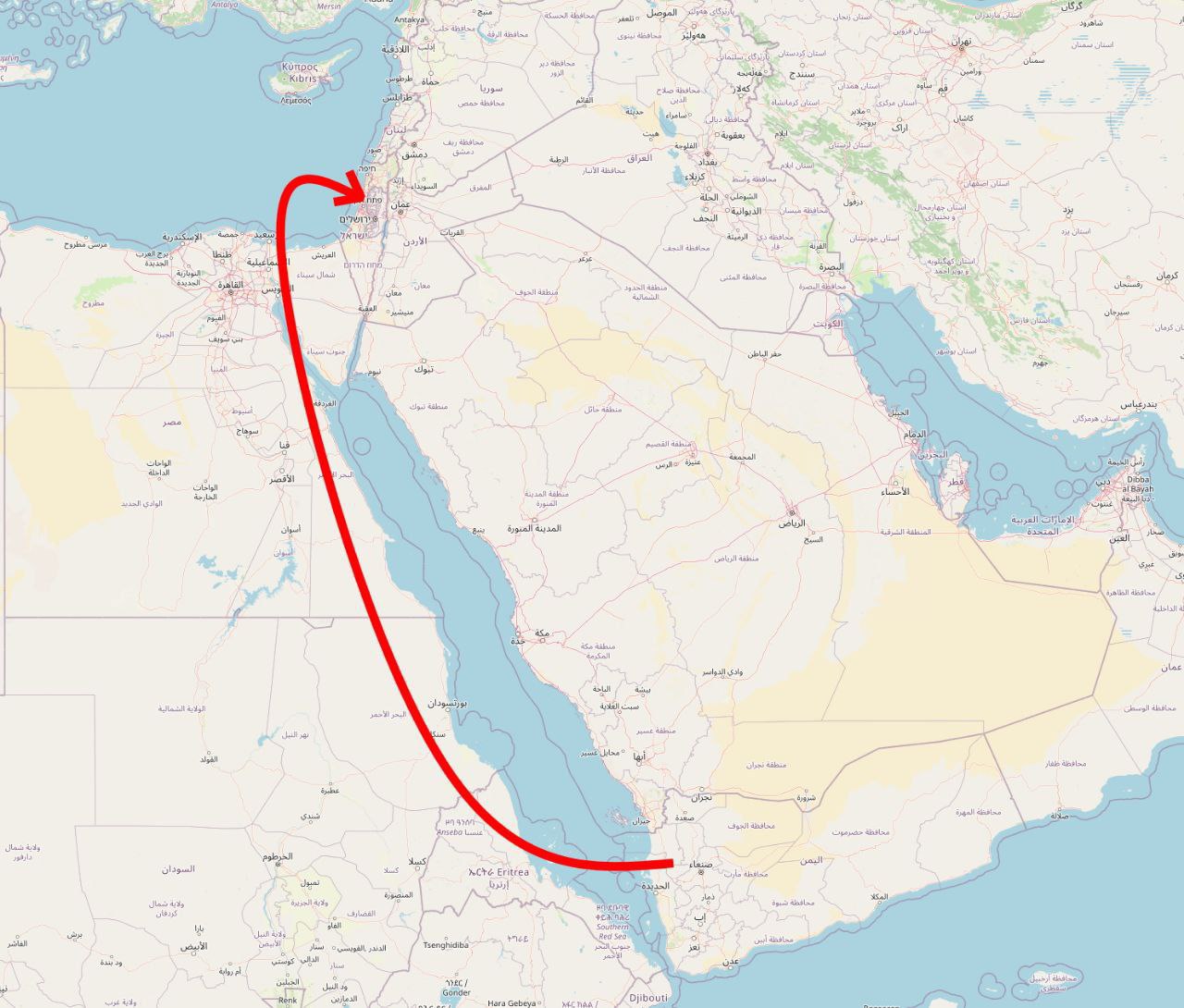
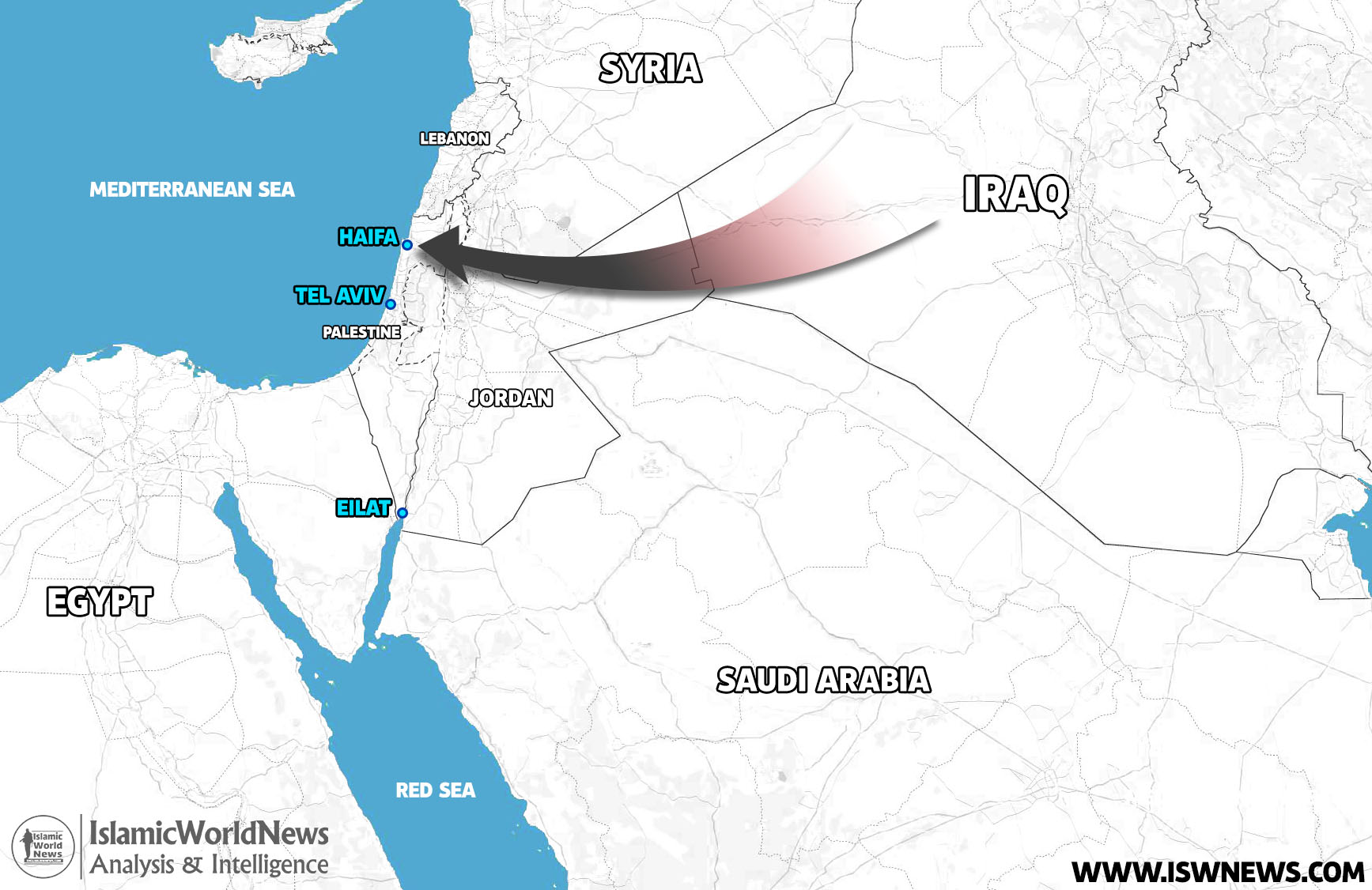
The possible path of the Yafa drone towards Tel Aviv
The path that the drone had flown, was effective in misleading the Israelis. The long route of the drone flight and its circumvention over the waters far from the Israeli-occupied territories may have played a role in confusing them.
One of the most vital segments of an aircraft is its propulsion system. In the Sammad drone, two German two-cylinder engines 3W-110i B2 with 10 horsepower have been utilized, and a Chinese two-cylinder DLE-170 engine with approximately 17 horsepower has been applied in the more advanced versions.
The state of affairs in Yemen and the sanctions imposed on the Arab country make the usage of accessible equipment a priority for the Yemeni army. The aforementioned engines have dual capabilities and are being utilized in civilian aerial industries and are easily accessible. Of course, the extensive usage of the German engine by the Axis of Resistance has forced Germany to adopt a more vigilant approach in this respect, and the Germans have attempted to cut the access of resistance groups to the 3W-110i B2 engines.
For instance, based on the findings of Germany’s intelligence services, some 42 engines of this class were purchased in Greece in 2015 and then ended up in Iran. For this reason, the German officials have imposed a series of restrictions on the dealing of this sort of dual-use engine. The usage of a Chinese engine, which is both more powerful, on the other hand, the seller does not have a significant problem with the type of usage, as well as Iran’s success in developing a more powerful version of this class of engine, were among Tehran’s response to the restrictions imposed by the West.
It can be predicted that similar Chinese engine or an upgraded Iranian version of that engine will be used on Jaffa suicide drone.
Video of the unveiling of the Yafa suicide drone
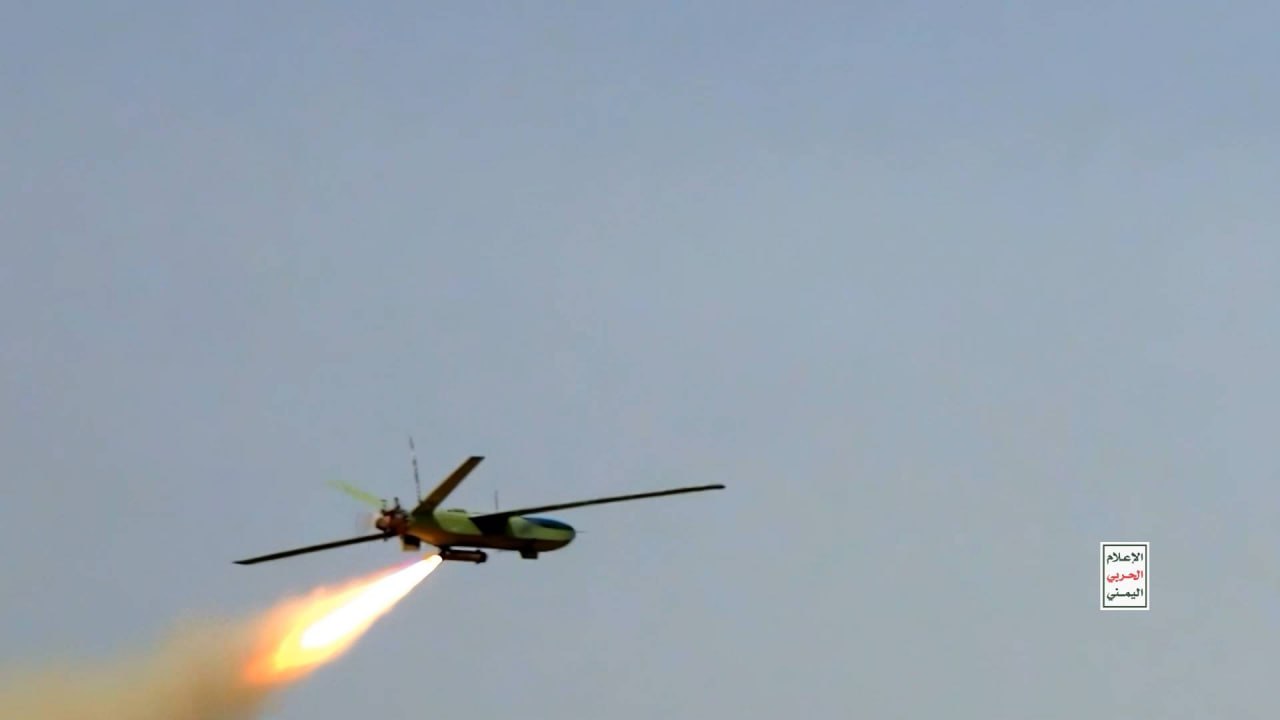
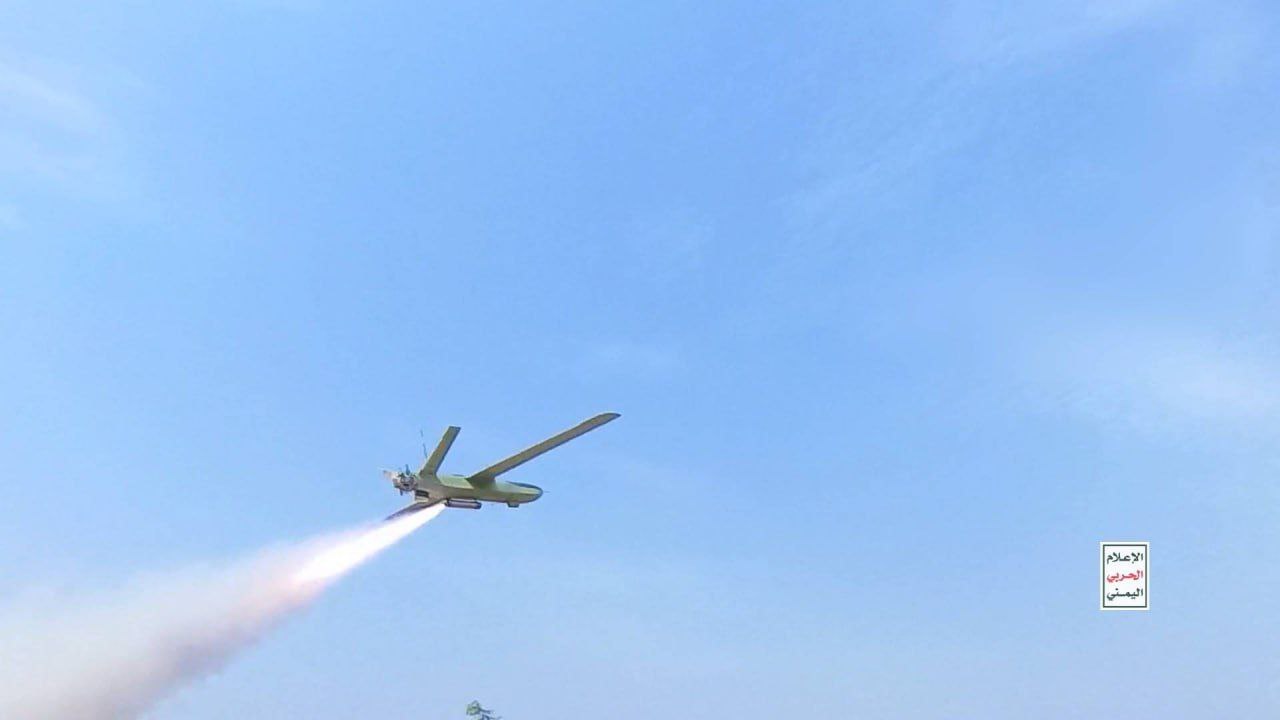
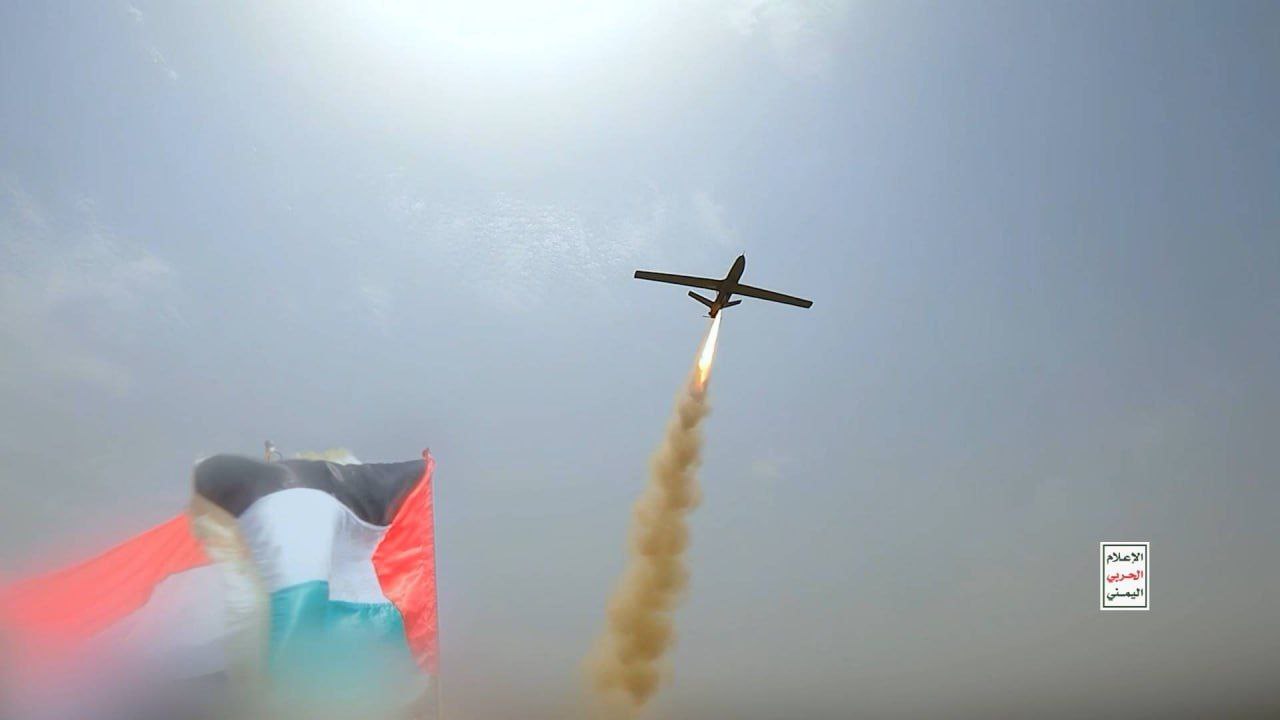
The Yaffa UAV requires a rocket booster to be able to start moving and speed up, like the previous variants of the Samad drone, and after reaching the appropriate speed and altitude, a piston engine begins working.
Yafa drone’s rocket booster
The prototypes of the Samad drone are probably utilize civilian GPS for navigation in the guidance and navigation segment, which naturally allows the UAVs to strike fixed targets, but it cannot be expected to perform appropriately, when it comes to encountering GPS disruptors.
The Yemeni Armed Forces have applied a combination of inertial and GPS guidance to resolve this problem during the overhaul of the Yafa drone. A computer set controls the UAV’s trajectory. The suicide Yafa drone can improve the chances of reaching its target by choosing a more proper route. According to data released by the United States, two types of gyroscopes, the V-9 and V-10, have been installed on Yemeni drones. For instance, the V-10 version has been found among the remnants of Qasef drone. One of the advantages of an inertial conduction system is that it is very hard to be disrupted.
V10 gyroscope
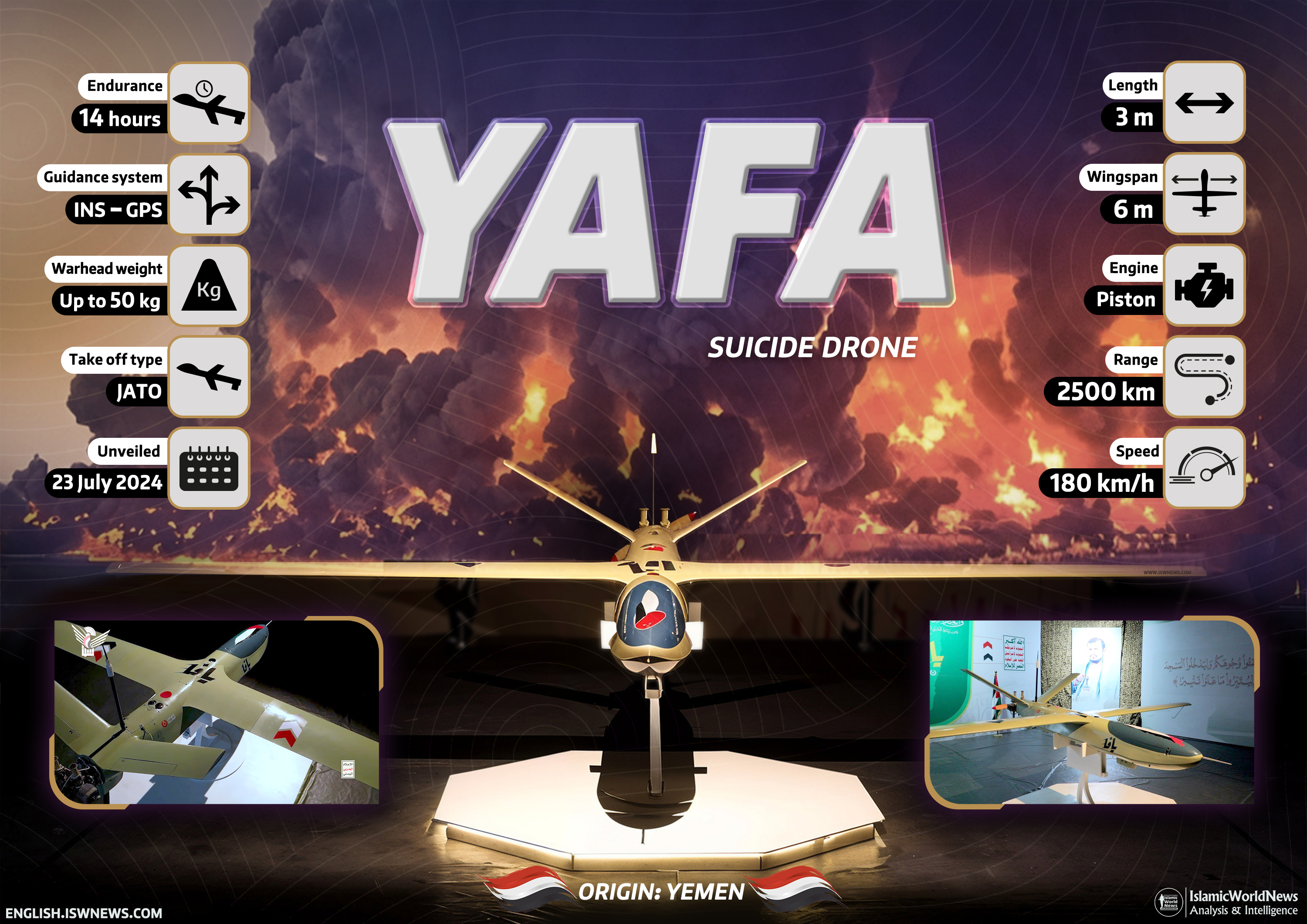
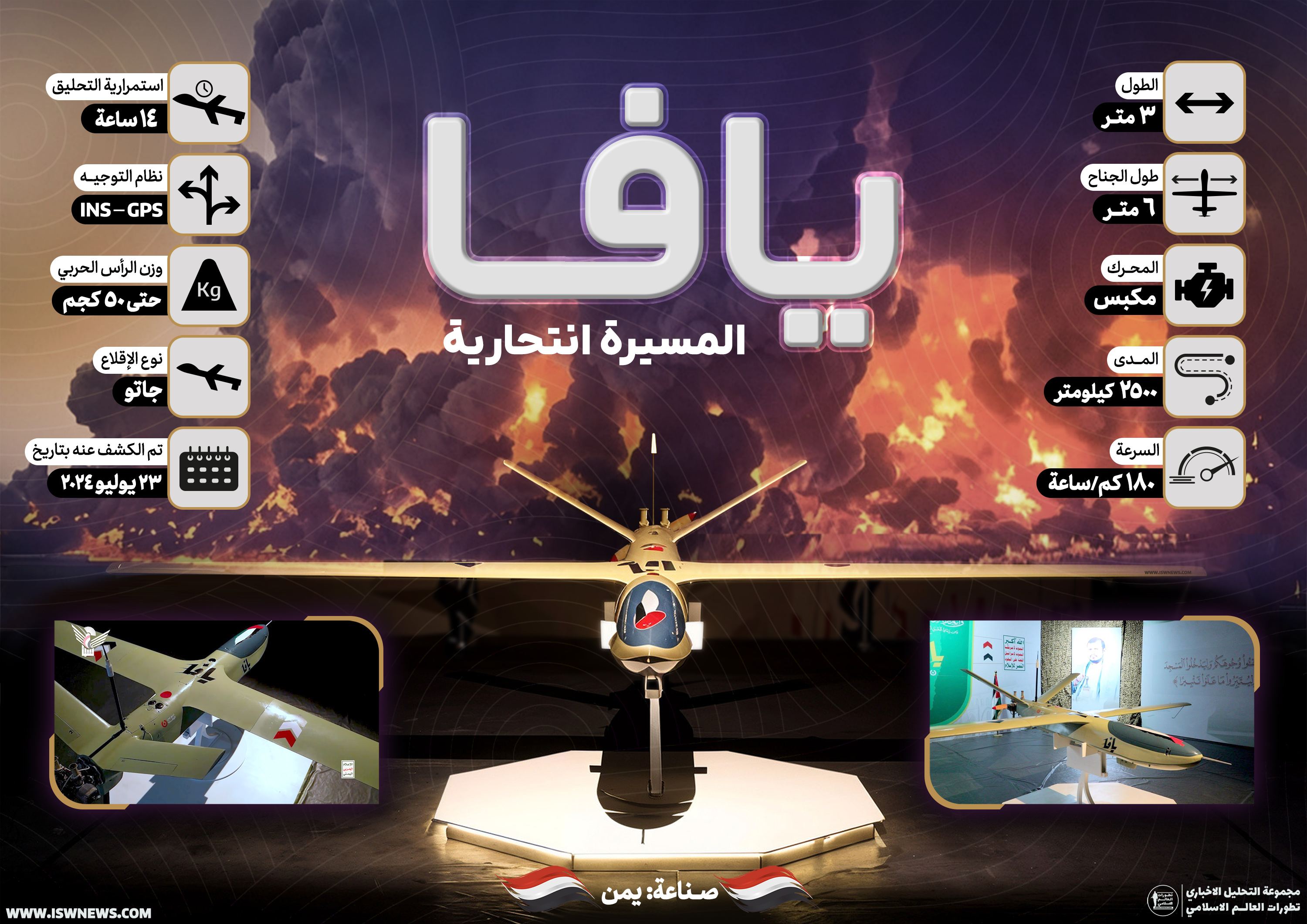
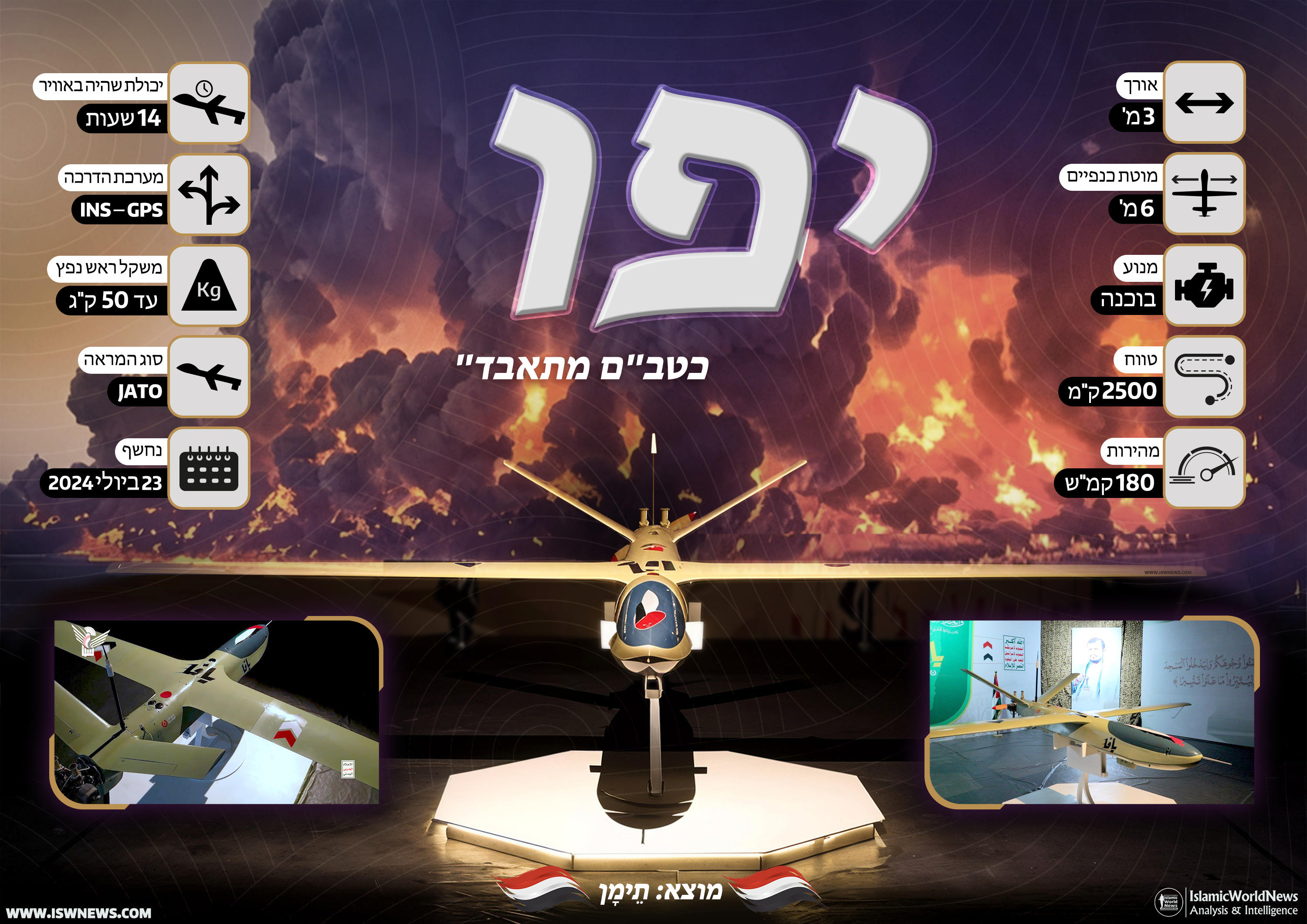
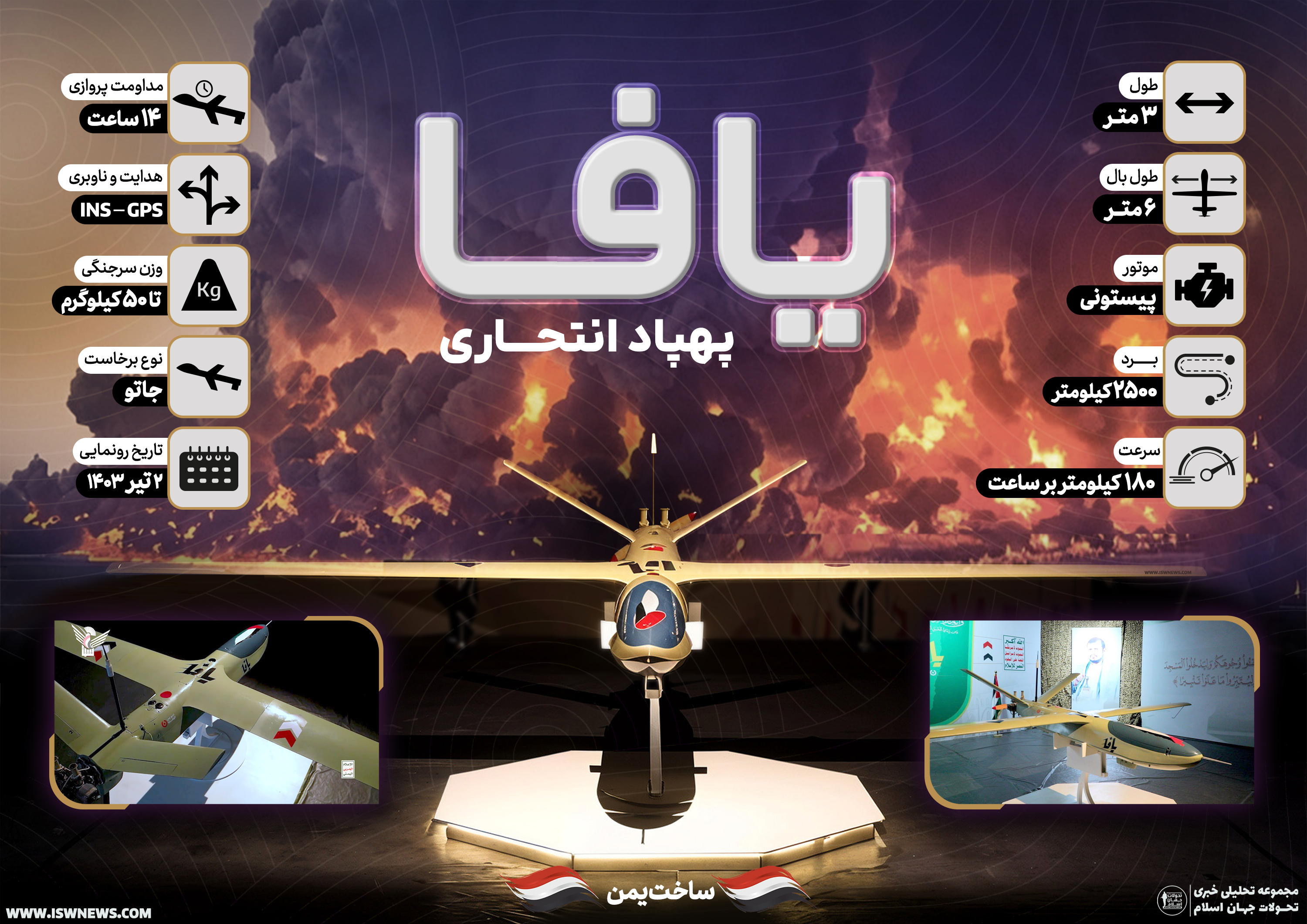
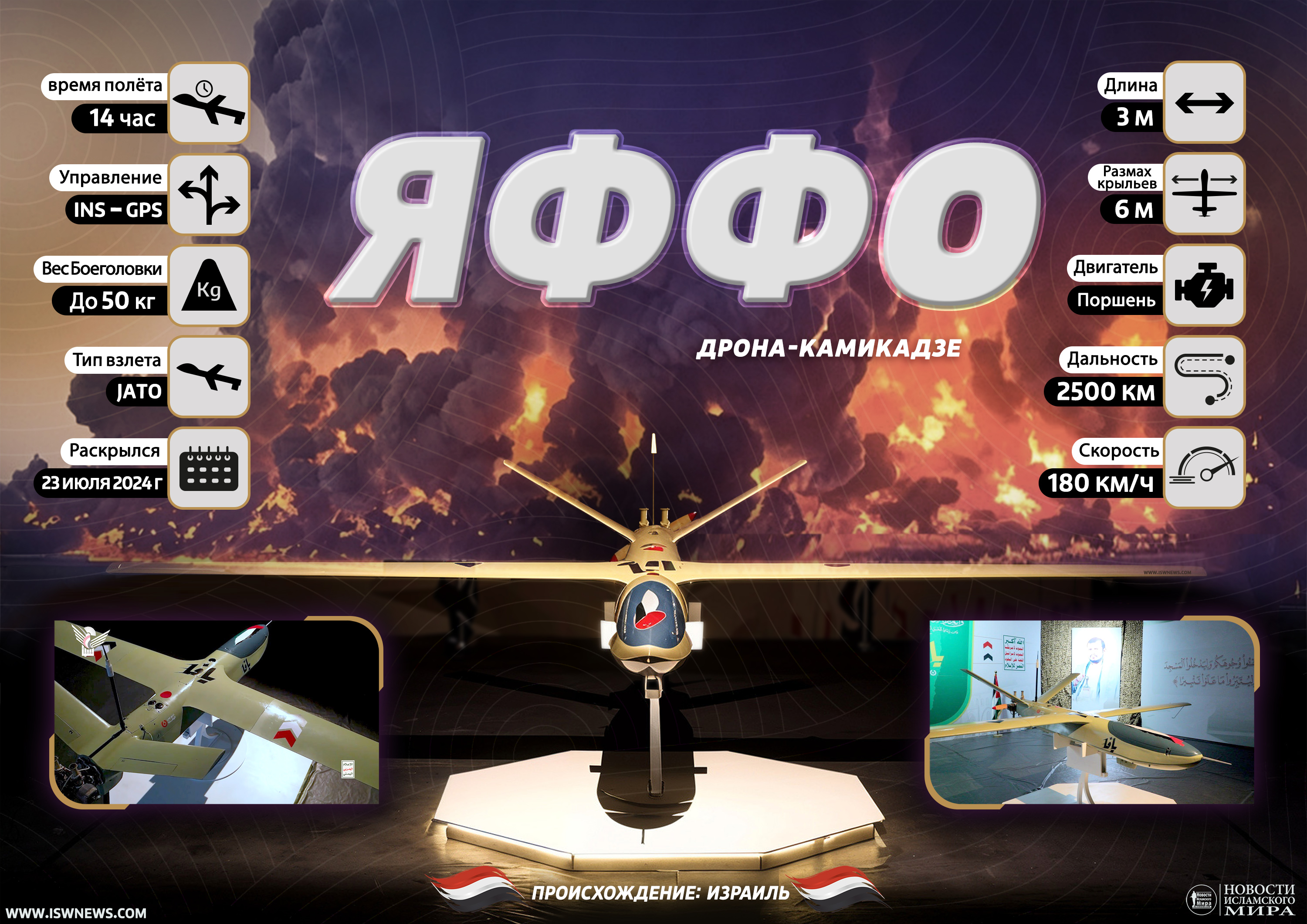
In terms of dimensions, the Yafa UAV is obviously larger than the previous versions so that it can carry more fuel inside its fuselage. More fuel will help Yafa drone to fly a longer range. In accordance with the images of Yaffa drone, the aircraft has a length of 3 meters and a wingspan of about 6 meters. With these features, the range of Yafa drone is perhaps about 2,500 kilometers. This range is consistent with the expected 2,600-kilometer route flown to conduct air strike on Tel Aviv city.
Consistent with the route covered and the type of its engine, the average speed of Yafa UAV is between 140 and 180 kilometers per hour and enjoys a flight duration of 14 hours.
The drone has a high-explosive warhead, which weighs between 20 and 50 kilograms.
Based on the official announcement by the Yemeni authorities, the drone is classified among stealth aircraft, possibly due to the fact that a honeycomb structure is being used inside its fuselage.
On the whole, the Yafa UAV is considered as a long-range suicide drone, which has extended the space of operations of the Yemeni Armed Forces to the city of Tel Aviv as well as the southern half of occupied Palestine. It is also considered a significant breakthrough in terms of the range and guidance compared to the Samad class drone. Given that Israel is a regime, which possesses a powerful defense system and is widely supported by extra-regional powers, this UAV is certainly not an armament that changes the balance of war against the Israeli regime. Nonetheless, the Yafa drone represents a growing trend of cutting-edge modern technologies in the Yemeni army.
Specifications of the Yafa suicide drone: Type: Suicide Drone Country of Manufacture: Yemen Unveiled: July 23, 2024 Length: 3 m Wingspan: 6 m Engine: Piston Range: 2,500 km Speed: 180 km/h Flight Duration: 14 hours Navigation: INS – GPS – Radio Warhead Weight: Up to 50 kg Takeoff Type: JATO
Yafa suicide drone – click to view full size
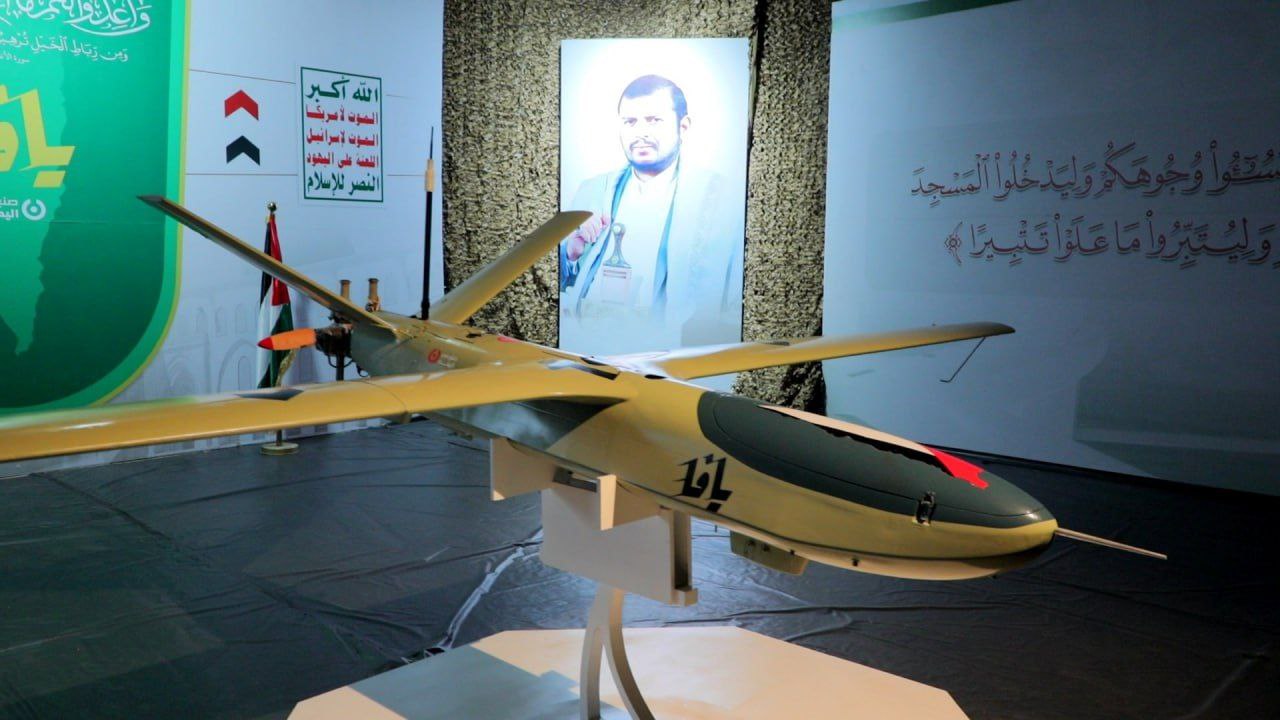
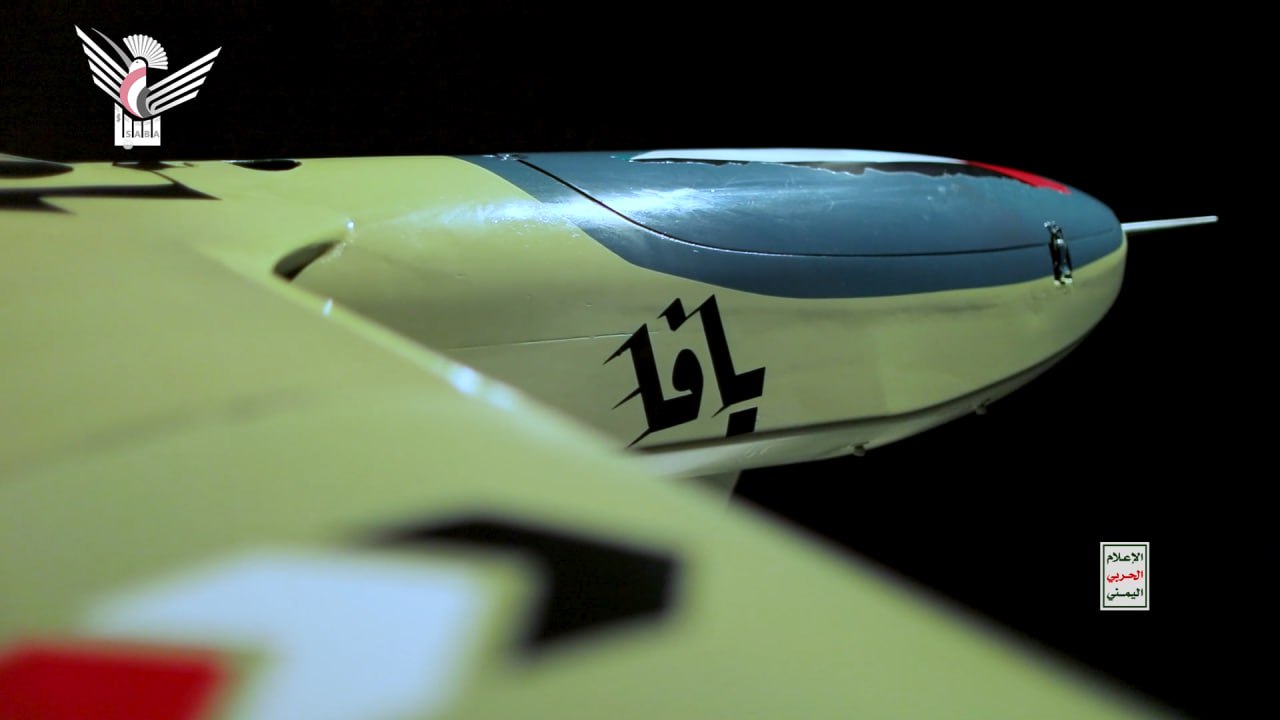
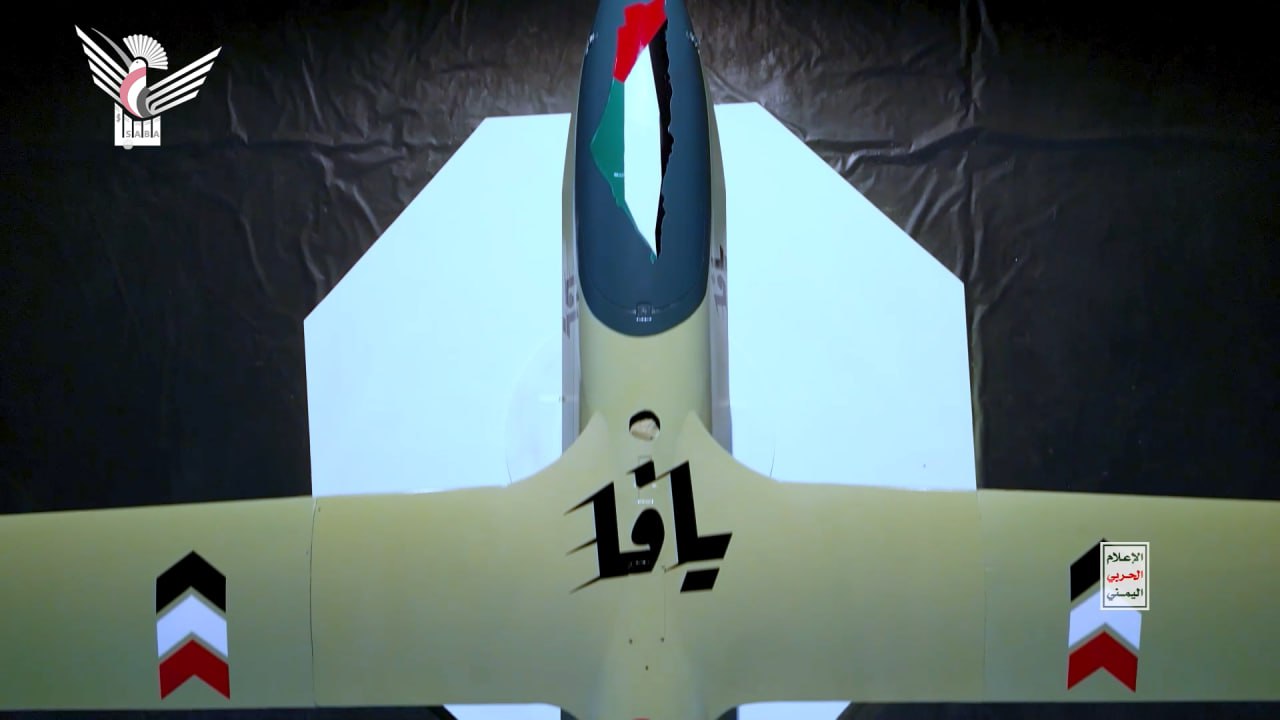
More images of Yafa drone:
Click to view full size
The collection of Yaffa suicide drone posters in Arabic, Hebrew, Farsi and Russian languages:
There has been no change in the lines of contact, and the conflict between the Israeli military forces and Palestinian resistance fighters continue in the city of Rafah located in the southern Gaza Strip.
The Israeli forces are still present on the Netzarim axis in the south of Gaza City, situated in the northern Gaza Strip. The confrontations are also underway in the regions in the vicinity of Tel al-Hawa and around the Islamic University of Gaza (IUG).
Given the process of the confrontations in the course of the past month, it seems that the regime’s military is not only incapable of capturing the Gaza Strip entirely, but also has slight desire to do so, and the fights have long entered a post-attrition stage.
The battles on the northern front of Palestine, the skirmishes in the West Bank, the uncertain condition in the Israeli-occupied territories due to the likelihood of a retaliatory attack by Iran, as well as the unclear and indecisive process of the indirect talks between the warrying parties for a ceasefire in the Gaza Strip are among the reasons that have caused a relative tranquility in the circumstances in the besieged area.
The IRI statement said: “To help and support the people of Gaza and in response to the crimes committed by the usurping regime against Palestinian civilians, including women, children, and the elderly, the fighters of the Iraqi Islamic Resistance attacked Haifa port with a suicide drone. The Islamic Resistance emphasizes that the operation to destroy the enemy’s bastions will continue at an increasing pace.”
This is the 143rd attack of the Iraqi resistance against the positions of the Israeli regime after the onset of the genocidal war on Gaza.
The Islamic Resistance in Iraq carried out tens of attacks on the Israeli-occupied territories as of April 25, 2024.
The Iraqi resistance group along with other resistance movements in Lebanon and Yemen have called for the end of Israeli aggression against the Gaza Strip and the delivery of aid into the besieged area.
The Israeli military said that the slain soldier was serving as a squad commander in the ranks of the Bislamach Brigade’s 906th Battalion.
According to an initial Israeli army probe, troops carrying out a raid in Jenin encountered two fighters, considered to be prominent members of Hamas. The soldiers exchange fire with the fighters from a close range, killing both of them. Four soldiers were hit by the fighters, including the soldier who later died. One of the wounded troops, an officer, is listed in serious condition.
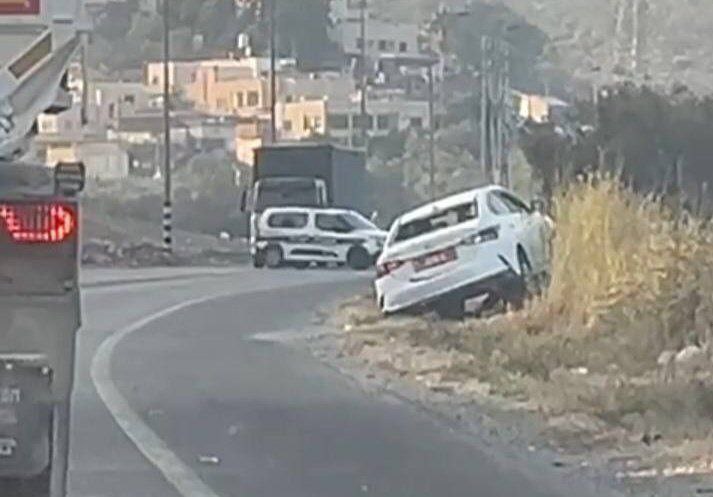
Separately, three Israeli police officers were killed in a shooting attack near the city of Tarqumiyah in the West Bank on September 1.
Palestinian fighters opened fire from a passing vehicle at a police car on Route 35 near the Idhna-Tarqumiyah junction, before fleeing the scene. Israel Police Commissioner Danny Levy confirmed to Hebrew media later that the casualties were officers from the police’s West Bank district.
Violence in the West Bank surged after the outbreak of the Israeli war on the Palestinian enclave of the Gaza Strip last October. According to the Palestinian Authority health ministry, more than 670 Palestinians have been killed in the West Bank since the start of the war. More than 5,000 others have been arrested.
During the same period, 35 people, including Israeli soldiers and police officers, have been killed in attacks in Israel and the West Bank.