Bashar al-Assad, President of Syria, expressed confidence in Moscow’s victory in the war in Ukraine in an interview with Channel One Russia, stating that the course of history will be corrected.
“Everyone knows that history, language, and culture unite Russia and Belarus, and the population of eastern Ukraine is predominantly Russian; Ukrainian Nazis also have specific goals, but I am sure that this war will end with Russia’s victory and the unity of two brotherly nations,” Syrian President said.
He further stated in this interview: “Russia, as a great power, resists Western intervention in the internal affairs of other countries. It does not matter to me where Russia fights global terrorism, in Syria or Ukraine, in the political or military dimension; Russia does this because it has been affected by terrorism itself.”
The President of Syria pointed to the issue of Palestine and the Gaza war in another part of his speech and stated that Americans benefit from every conflict and the policy of the country is based on sowing division and ruling. The US, with extensive support for the Israeli regime and supplying weapons to this regime, plays a major role in the genocide of the people of Gaza.
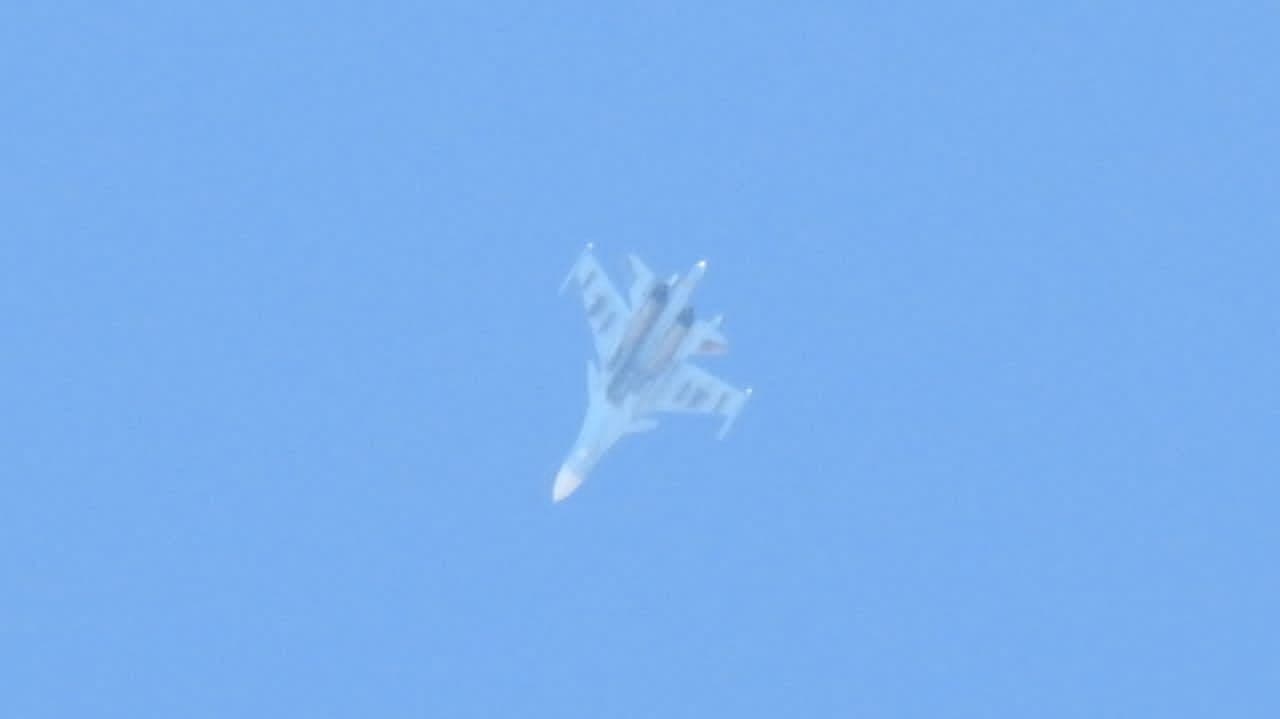
General Yuri Popov, deputy head of the Russian Center for the Reconciliation of Warring Parties in the Syrian Arab Republic, announced that Russian army fighter jets destroyed three hideouts belonging to the militants in mountainous and hard-to-reach areas in Homs Governorate in central Syria.
According to Popov, these militants were transferred from the Al-Tanf military base to a mountainous region in Homs known as “Al-Amour,” and after they were stationed in three hideouts, Russian fighter jets targeted them.
More details have not been released so far, but it appears that these individuals were among the militants of the Free Syrian Army. The most active terrorist group in Homs Governorate is the ISIS group, which has carried out numerous attacks against the Syrian army and its allies in recent months.
It is worth mentioning that about 200 US troops, along with hundreds of Free Syrian Army militants, are stationed at the Al-Tanf military base. The US-led coalition has declared a 55-kilometer radius around this military base a no-fly zone, but nevertheless, Russian army fighter jets regularly fly over the base or its surrounding areas.
US officials claim that American soldiers are present in Al-Tanf to combat the ISIS terrorist group, but in reality, the main purpose of this military base is to block the strategic Damascus-Baghdad highway. In addition, it is said that this base is used as a center for gathering intelligence and facilitating Israeli attacks against Syria. Syrian and Russian authorities have repeatedly accused US forces in Al-Tanf military base of training and even arming terrorists, including ISIS.
The airstrikes targeted hideouts of the terrorist group near the town of al-Resafa in the southern Raqqa countryside, close to the towns of Palmyra and al-Sukhnah in the eastern Homs countryside as well as in the desert of Mount Bushri in the southwestern countryside of Deir Ezzor.
The Russian Air Force and the Syrian Air Force intensified operations in the central region after two deadly attacks last week. Videos showing some of the recent Russian and Syria airstrikes have already surfaced online.
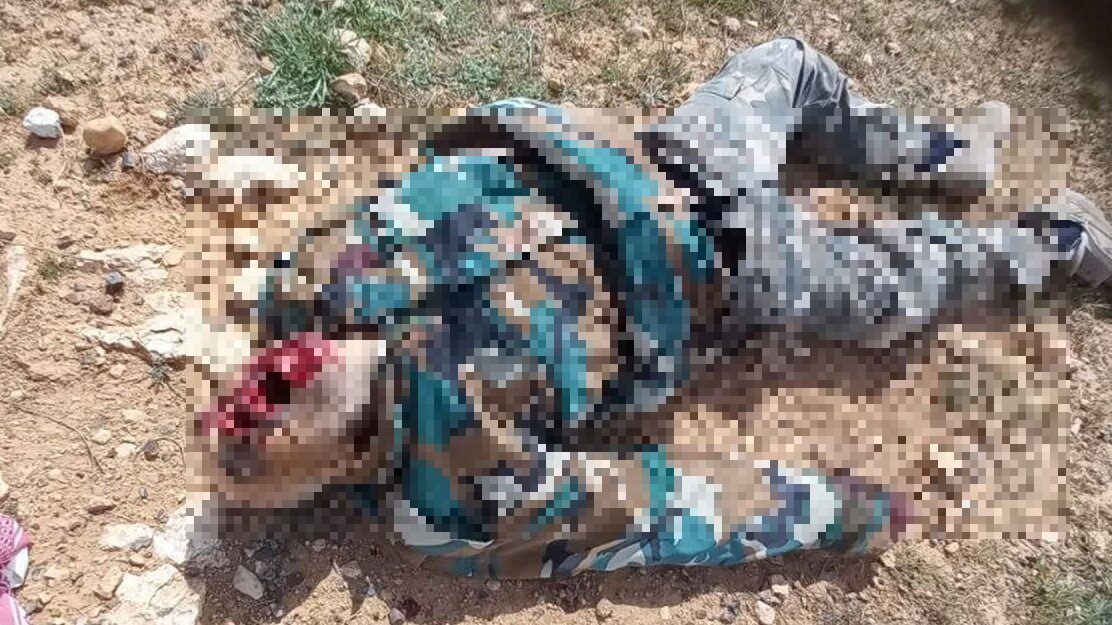
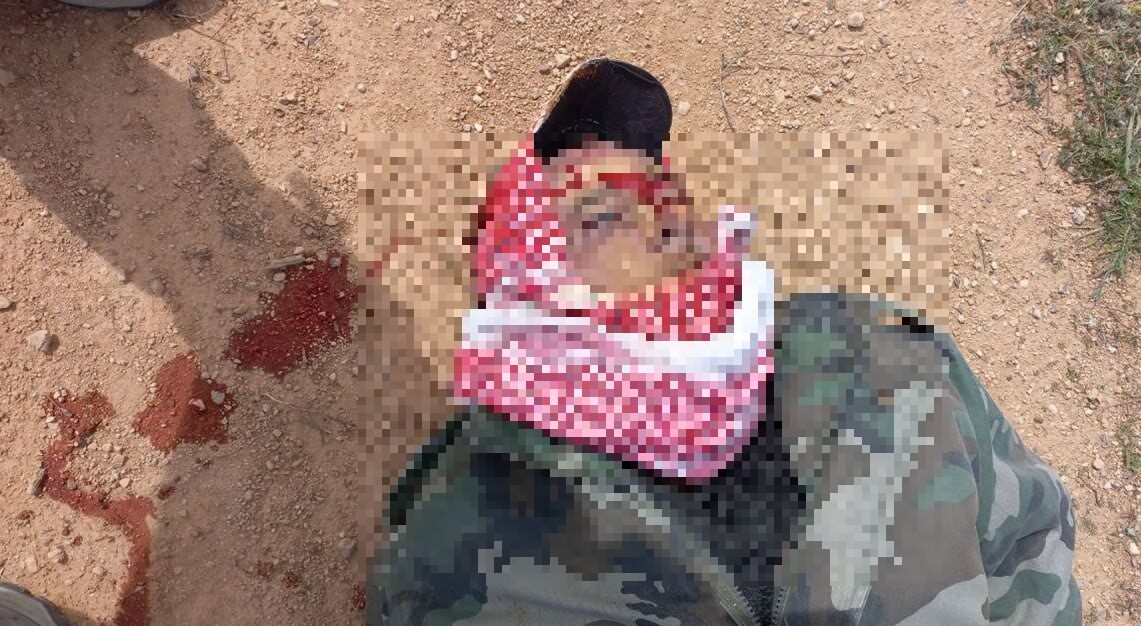
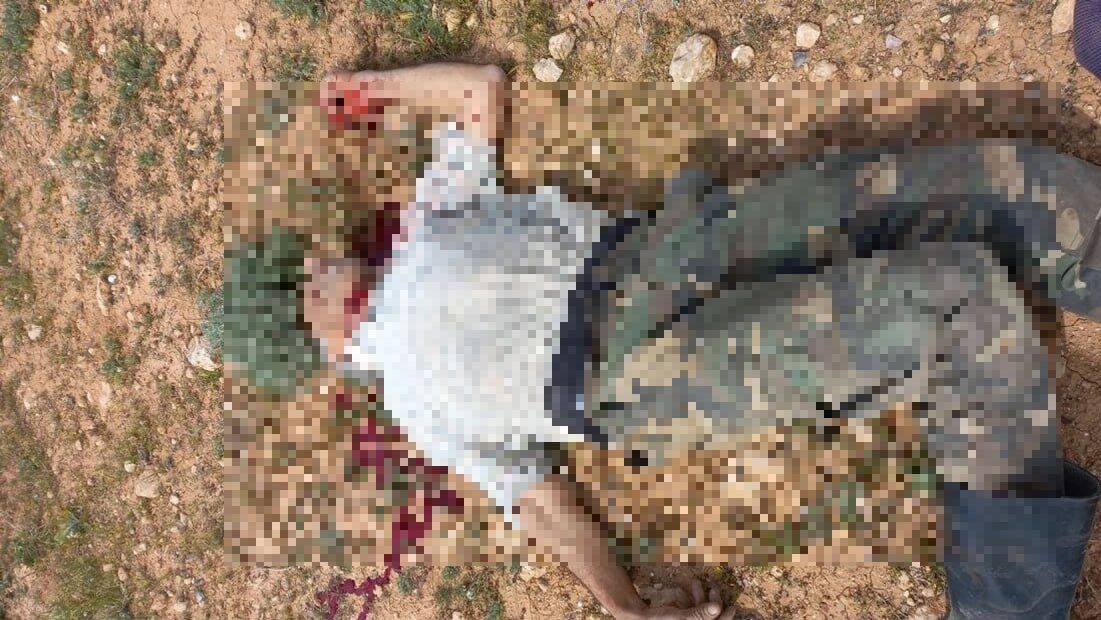
On March 24, ISIS cells abducted then executed two pro-government fighters near Palmyra. Four others were abducted then executed by the terrorists close to al-Sukhnah the following day, March 25. The group’s news agency, Amaq, released photos of the crime.
ISIS cells have been waging an insurgency in central Syria for over six years now. The terrorists receive serious support from their comrades in the northeastern region, which is held by the U.S. and its proxies.
In addition, Syrian and Russian officials have accused U.S. forces at the al-Tanf garrison in the southeastern region of training and even arming terrorists, including members of ISIS, on several occasions in the past.
Earlier this month, the Syrian Arab Army amassed a large force, including units from the elite 4th Armored Division, in the central region. Despite reports of a plan to launch a full-blown operation against ISIS cells, the military is yet to make a move.
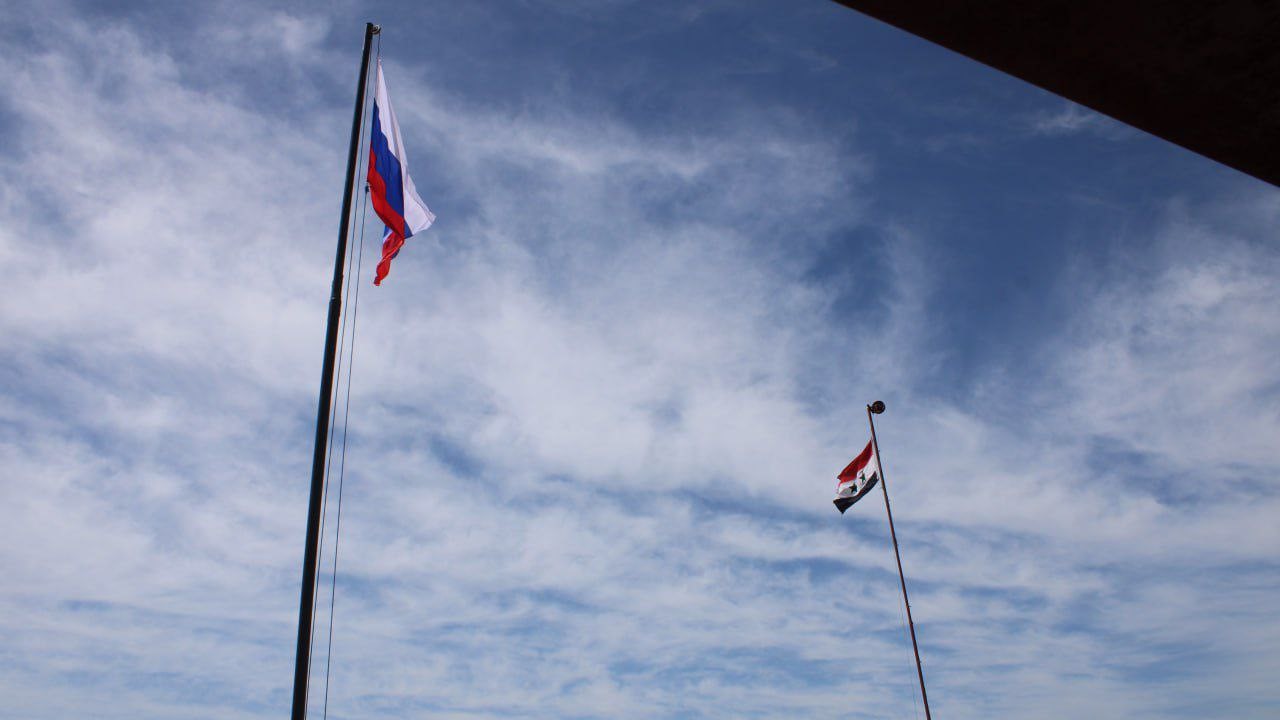
The post was apparently established to help de-escalate tensions on the front, which surged after the outbreak of the Israeli war on the Gaza Strip on October 7. Russian troops manning the joint post reportedly served beforehand in the special military operation zone in Ukraine.
Israel has significantly escalated its attacks on Syria since the outbreak of the war in Gaza, mainly targeting SAA sites and personnel of Iran’s Islamic Revolutionary Guard Corps, Lebanon’s Hezbollah and other affiliated forces.
Just a day before the joint Syrian-Russian post was opened, Israel struck two SAA sites in the countryside of the southern governorate of al-Qunaitra where Hezbollah personnel were allegedly deployed.
The Russian Military Police began increasing its presence along the Golan front last December to de-escalate tensions caused by the Israeli war on Gaza. Russian military helicopters also began to patrol the front on a regular basis.
Russia is clearly worried of the Israel escalation against Syria. While the Israeli army has so far limited its operations against the country to air and missile strikes, the possibility of a more serious Israeli attack, like a limited ground incursion, can’t be ruled out.
In recent months, the Israeli army blew up several minefields along the Golan front. The latest one was in fact cleared on March 12.
Israel has clearly failed to defeat the Hamas Movement in Gaza. It is also failing to deter Hezbollah in Lebanon and can’t afford a direct confrontation with Iran. Faced with these failures, the Israeli leadership could see in war-torn Syria an easy target to make up for its defeat. This would be however a mistake no less costly than Israel made in Gaza and Lebanon before.
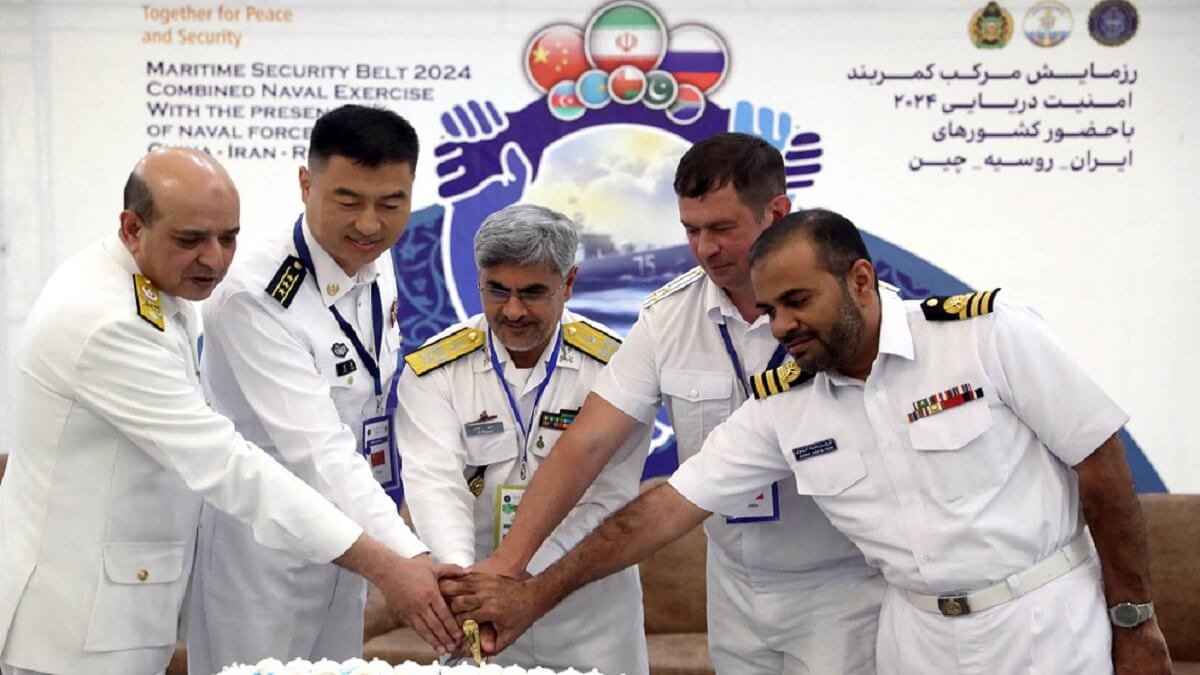
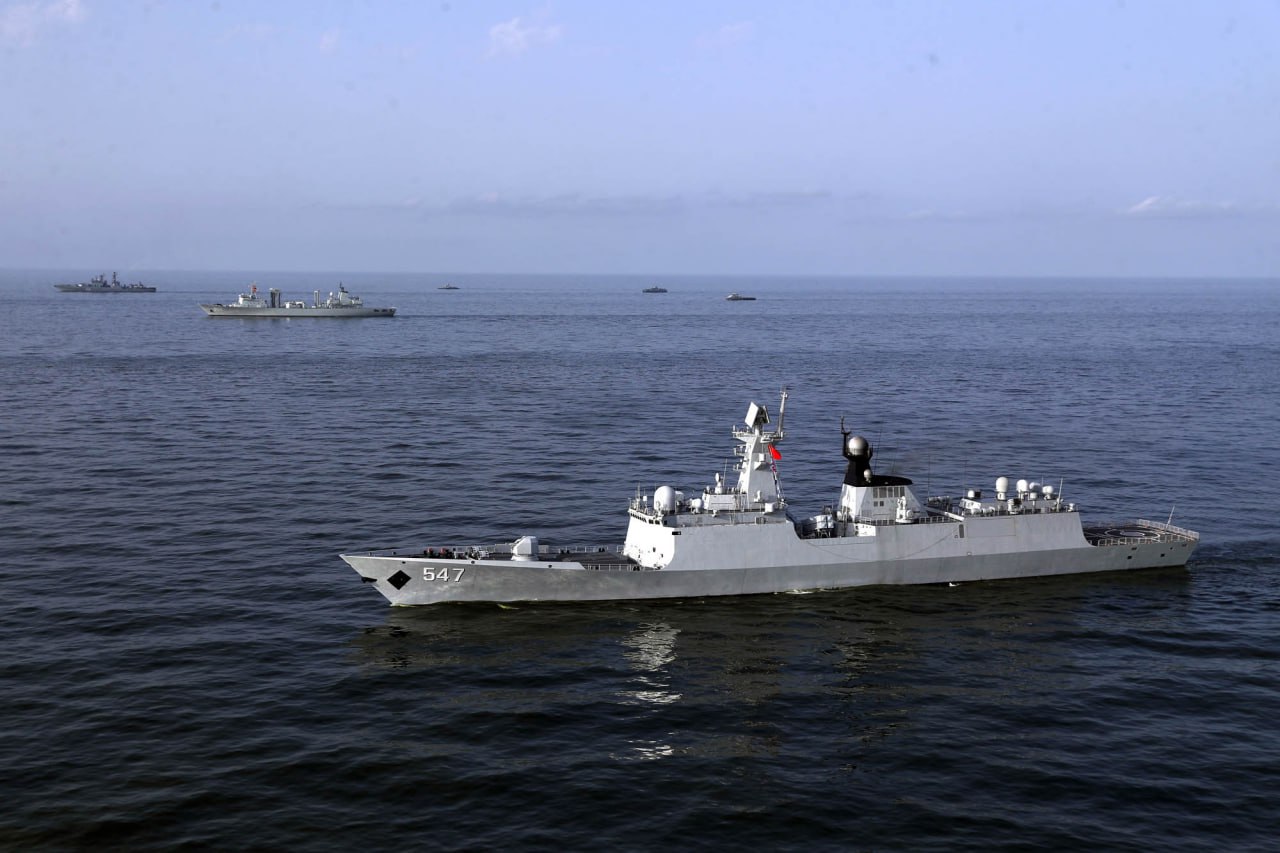
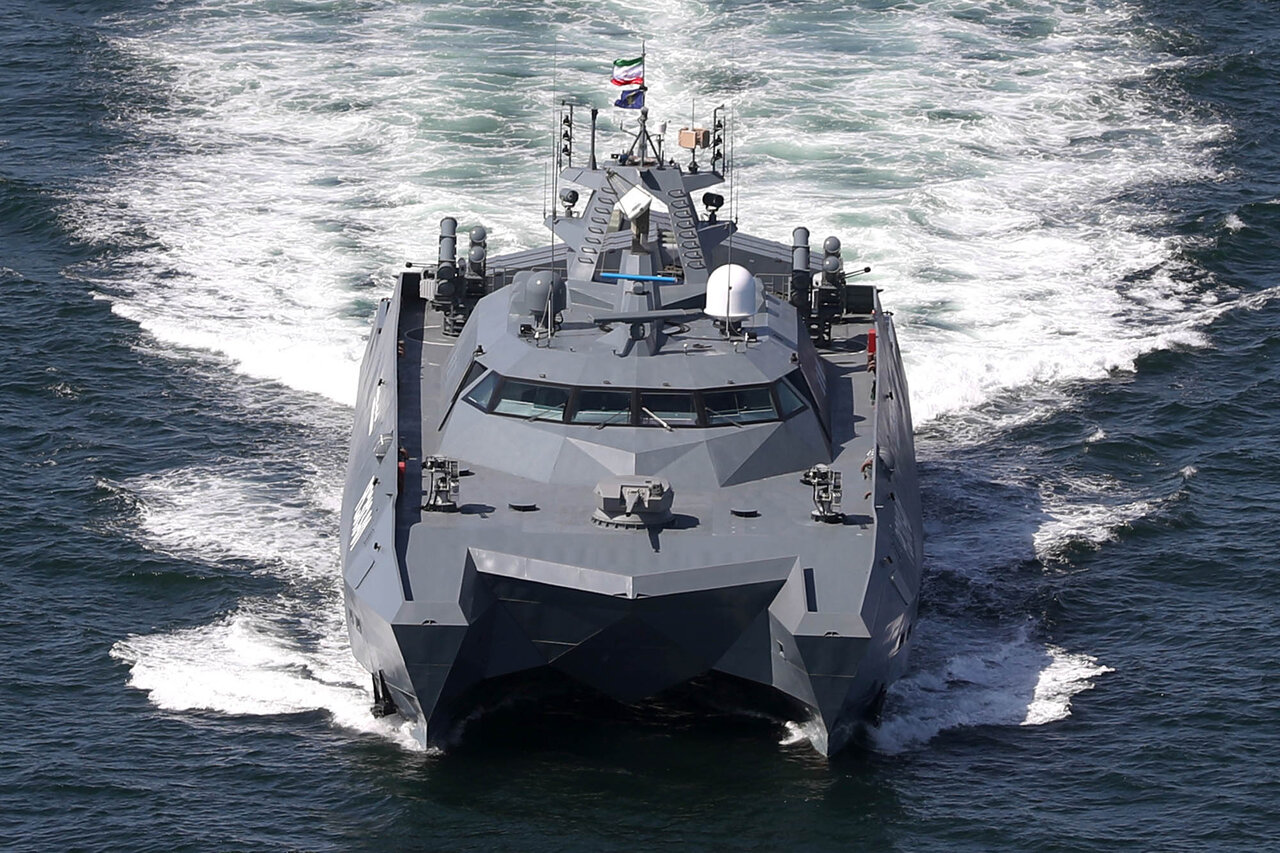
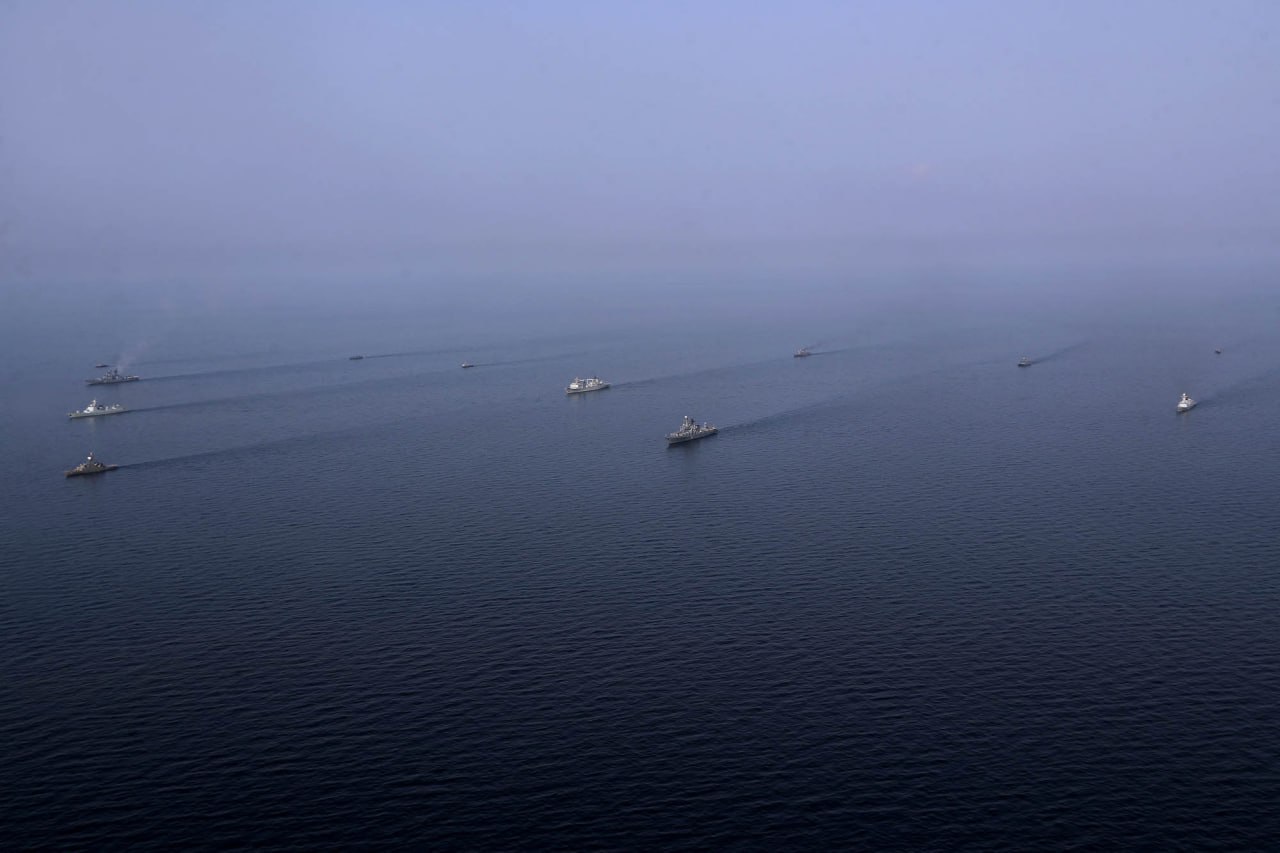
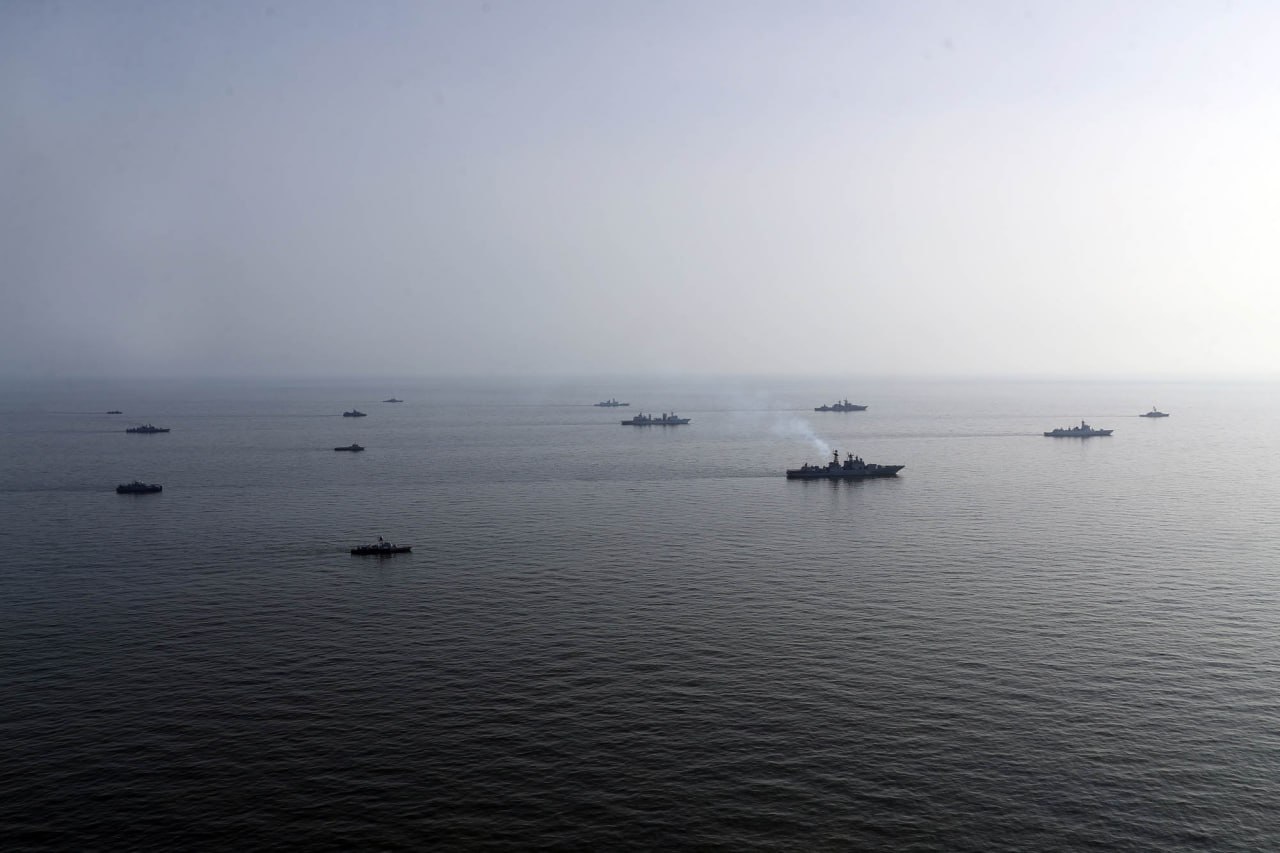
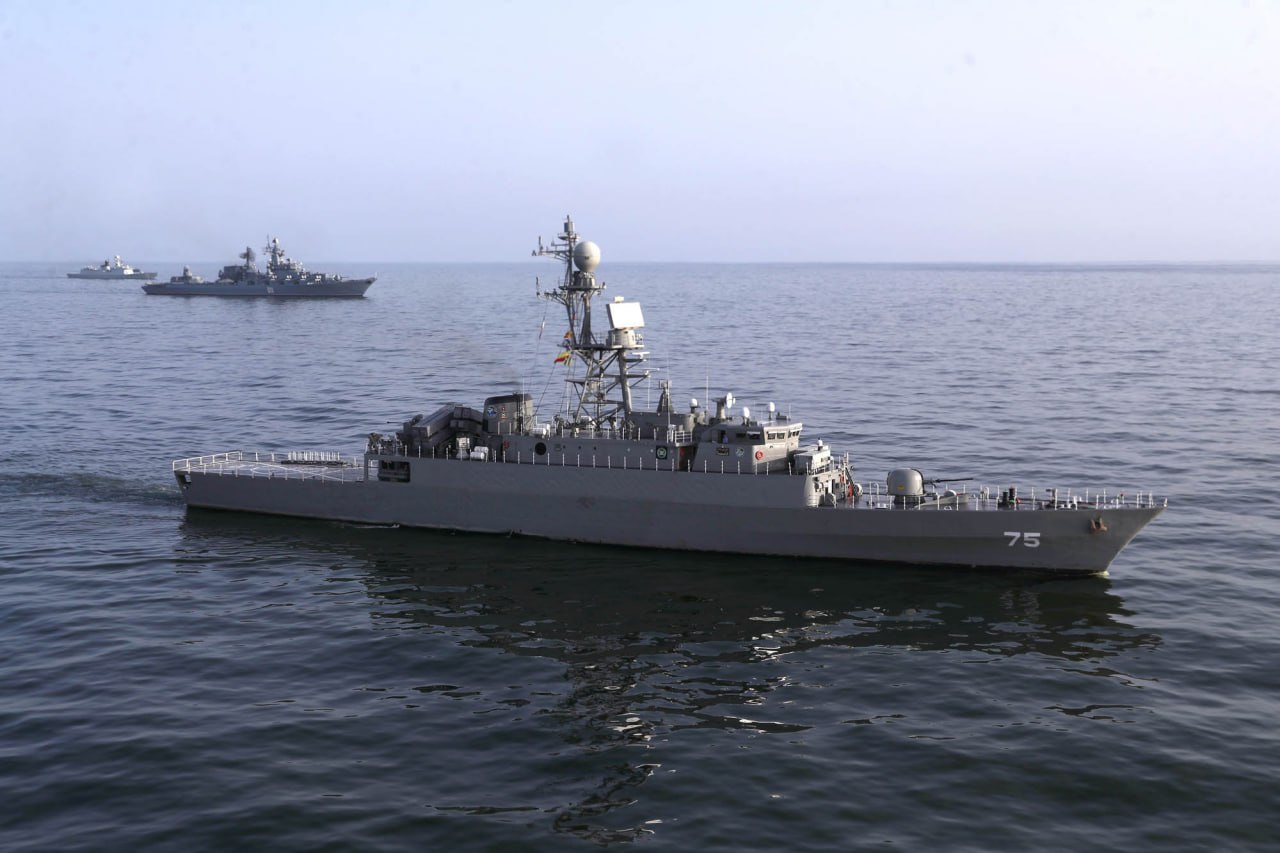
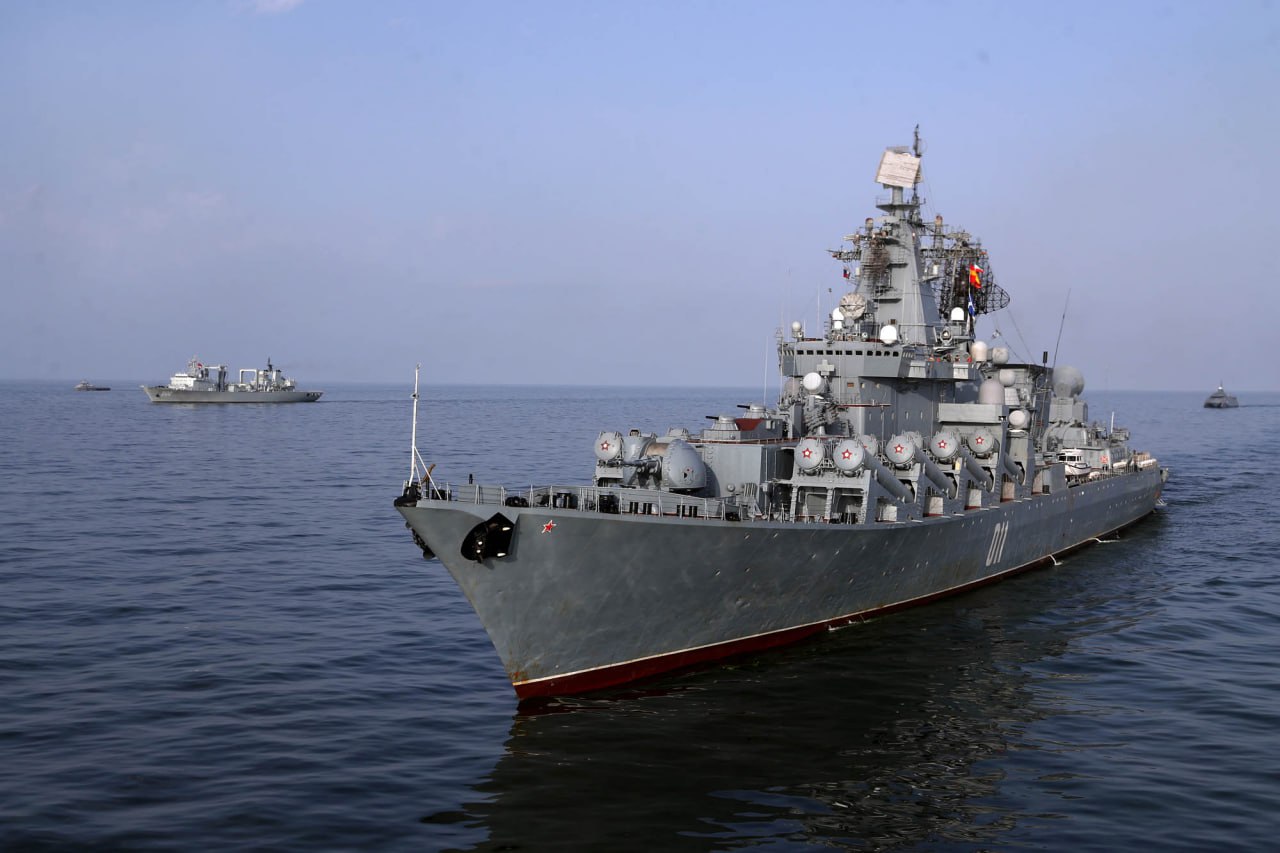
The Maritime Security Belt 2024 drills involved Iran, China, and Russia, with the presence of commanders of naval and aerial units of the Islamic Republic of Iran Army and the Islamic Revolution Guards Corps (IRGC), as well as the naval forces from China and Russia, along with representatives from Oman, Pakistan, South Africa, Kazakhstan, and the Republic of Azerbaijan as observing countries in the northern Indian Ocean.
This military exercise is aimed at protecting economic activities in the region (Indian Ocean) by surface and aerial units of the naval forces of the Iranian army and the Islamic Revolution Guards Corps of Iran, as well as surface, subsurface, and aerial units of the armies from China and Russia. The main phase of the Maritime Security Belt 2024 exercise started on March 12 and will the tripartite drills continue until Friday, March 15.
Over the course of this exercise, Iranian, Chinese, and Russian naval units will conduct various tactical exercises including rescuing a ship on fire, liberating a hijacked vessel, shooting at specific targets, night shooting at aerial targets, and other tactical and practical exercises.
The Maritime Security Belt 2024 drills was held with the participation of the armed forces from Iran, China, and Russiain the northern Indian Ocean.
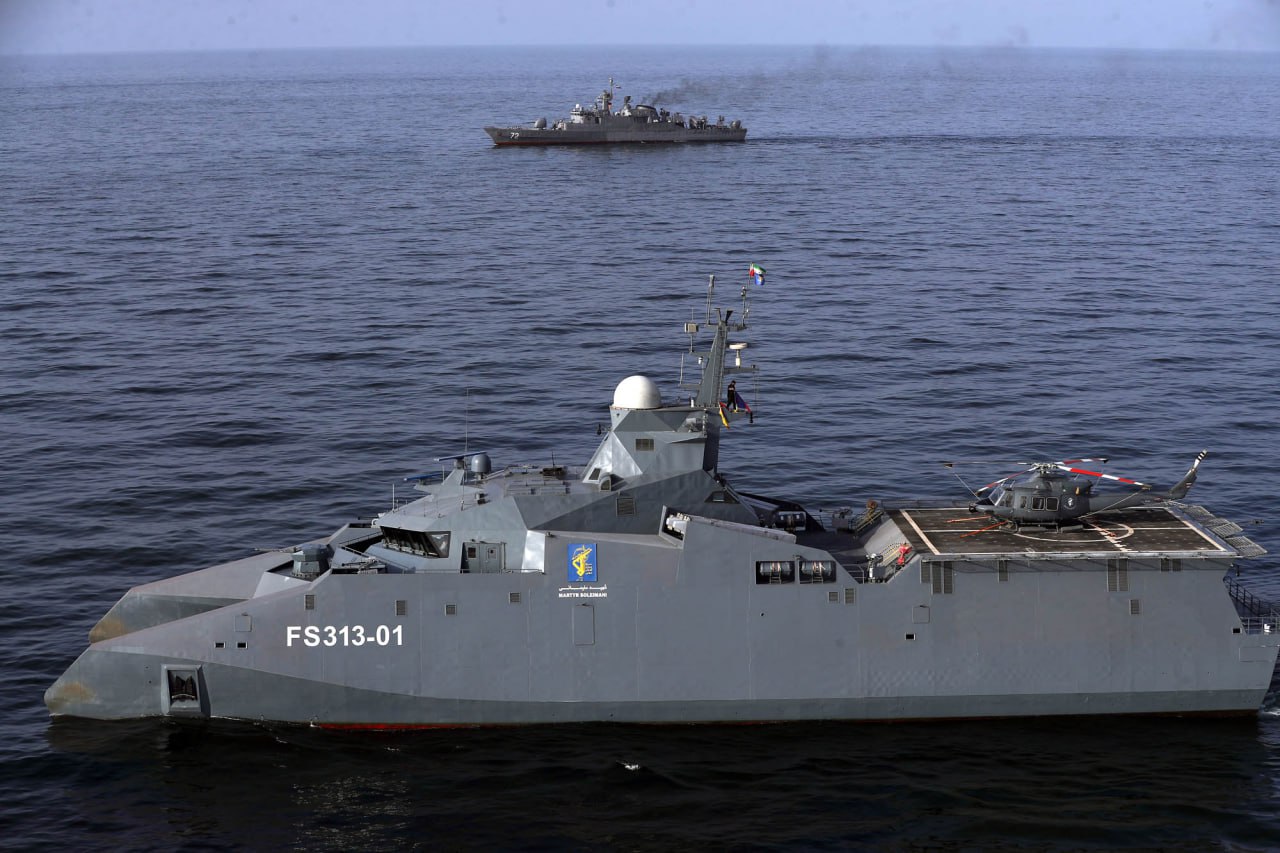
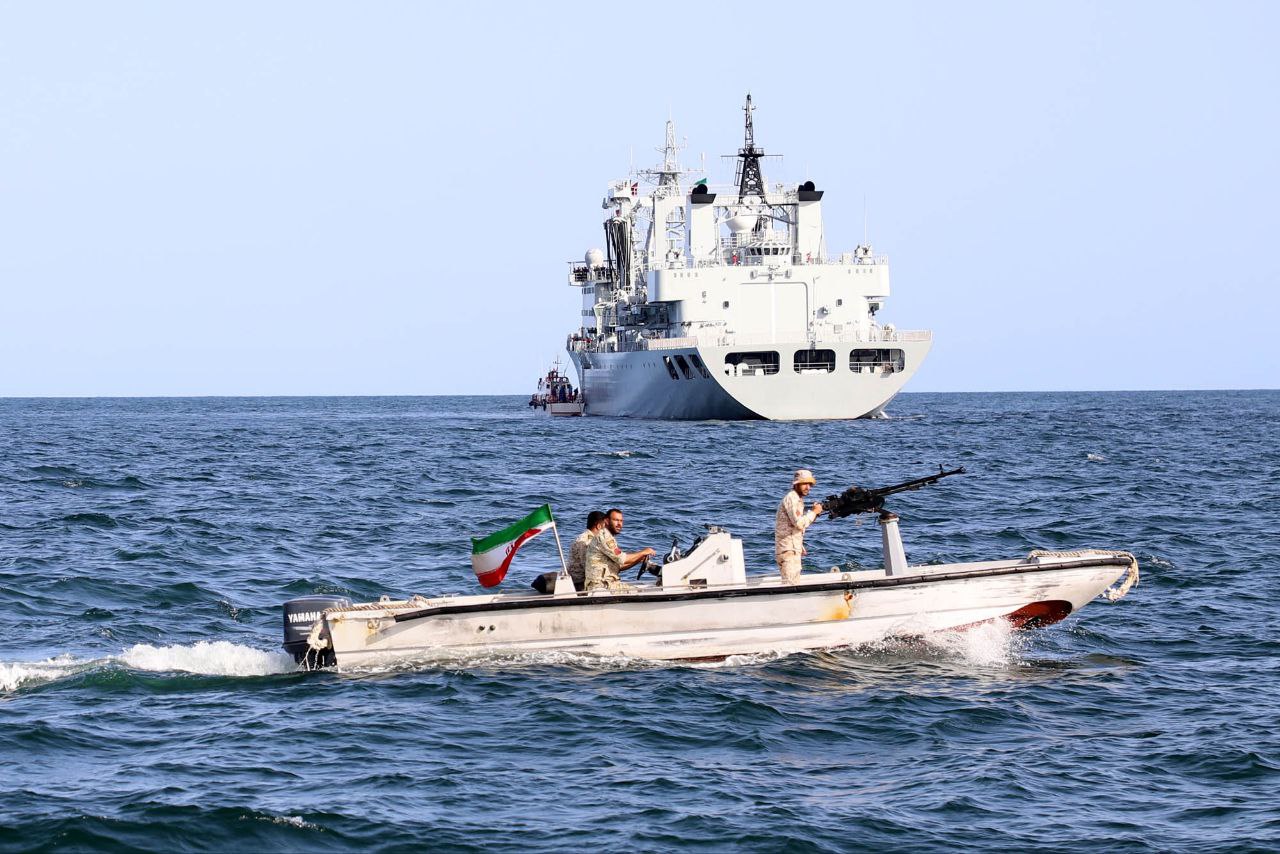
In the drills, warships dubbed Shahid Mahmoudi, Shahid Haj Qasem Soleimani, naval vessel Shahid Abu Mahdi al-Muhandis, fast attack craft Shahid Tousi, and helicopters of the naval forces of the Islamic Revolution Guards Corps are present alongside naval personnel from the Iranian army. Additionally, all stages of the military exercise are monitored and supervised by the aerial surveillance of the naval helicopters of the Islamic Republic of Iran Army and the IRGC.
This exercise is being held in an area of 17,000 square kilometers, encompassing the strategic straits of Hormuz, Bab al-Mandab, and Malacca in the northern Indian Ocean. This strategic region is the most important in terms of energy and trade in the world, and the joint presence of Iran, Russia, and China shows that safeguarding the security of regional shipping lanes is carried out by the naval forces of these three regional countries.
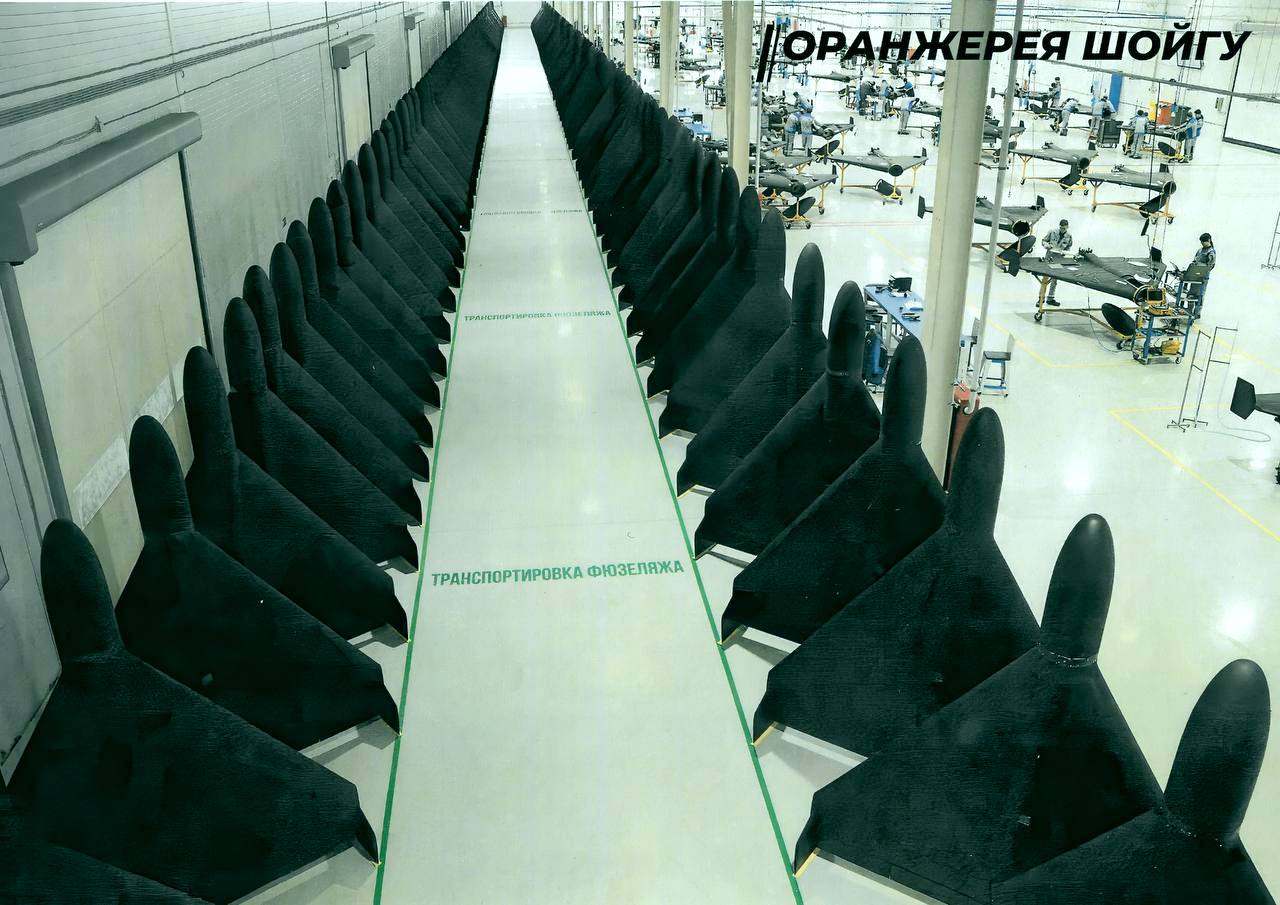
According to the video, hundreds of Geran drones have been assembled and they will be utilized against military targets in Ukraine in the near future. The factory’s capacity is reported to be production of dozens of drones per week.
Geran drones are one of the key emblems of Russia’s military operations in Ukraine, causing significant damage to enemy positions wherever they are deployed.
The Armed Forces of the Russian Federation uses these suicide drones to target Ukrainian defenses, logistics, and infrastructure. The entry of these drones into the Ukrainian conflict significantly shifted the balance in favor of Russia.
It is worth mentioning that, according to information provided by Iranian military officials, the production license for these drones was sold to the Russian army before the Russia-Ukraine war. Currently, Russia mass-produces the drones by launching the Geran production line on its soil.
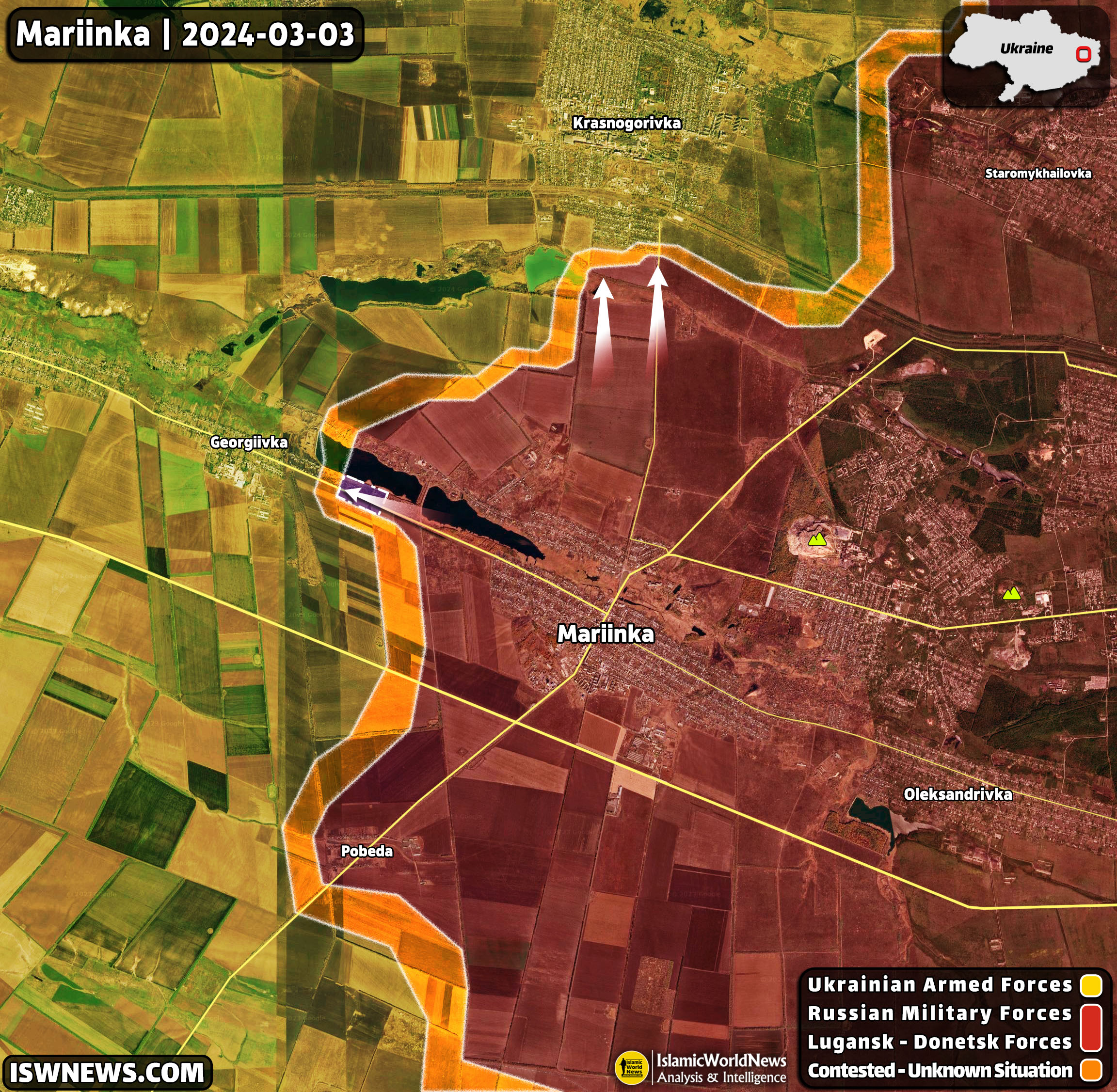
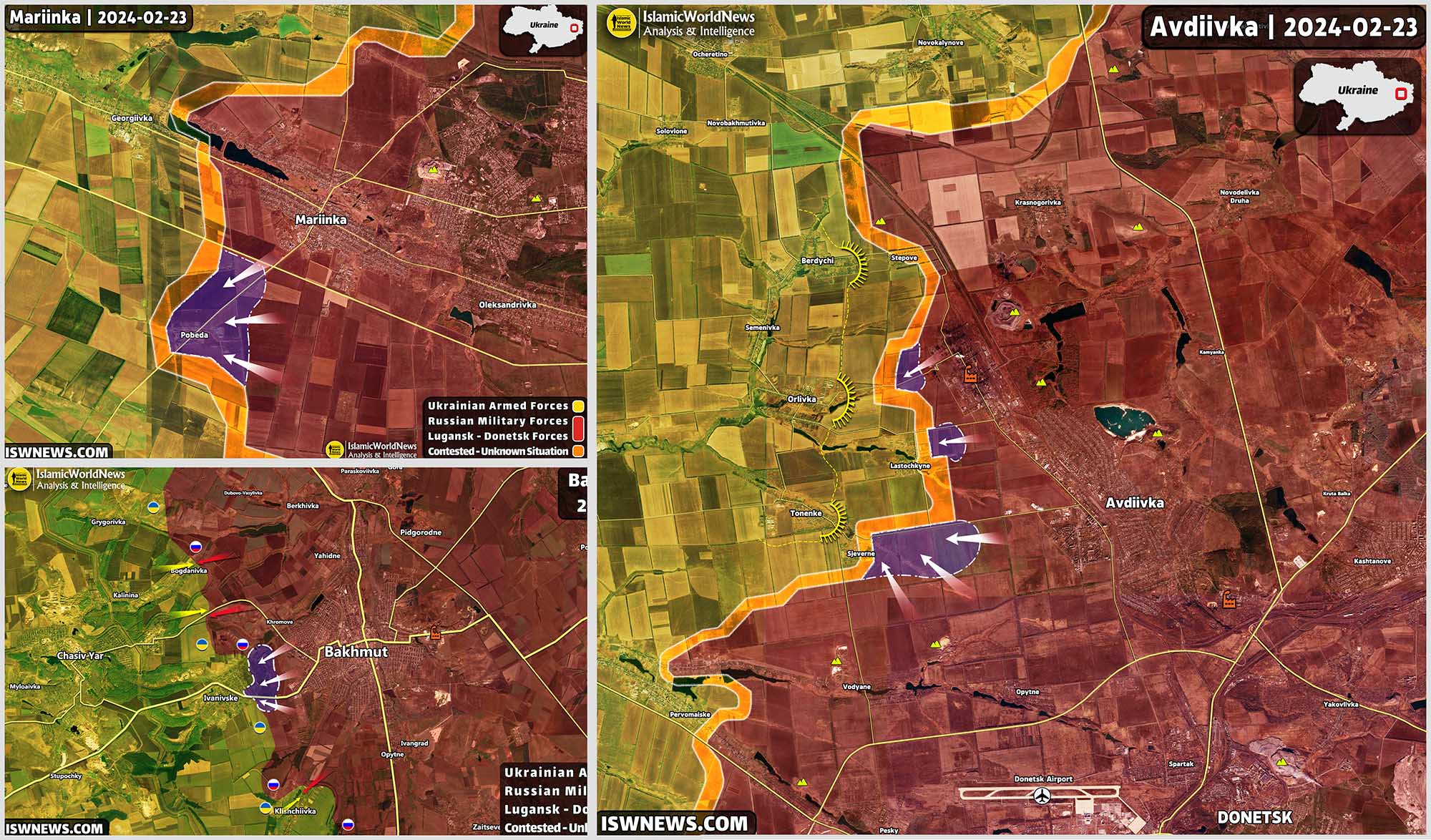
After about 10 days of fighting on the Mariinka-Georgiivka axis, the Russian army forces managed to advance a few hundred meters south of the Georgiivka reservoir. In this axis, the main parts of Georgiivka village are still under the control of the Ukrainian army.
Also, in the last week, Russian forces advanced in the northern fields of Mariinka, reached the south of Krasnogorivka and entered Shevchenka street. Krasnogorivka is considered as one of the most important defense fortifications of the Ukrainian army in the western axis of Donetsk city, and in recent years it has played an important role in feeding the Ukrainian lines in this axis.
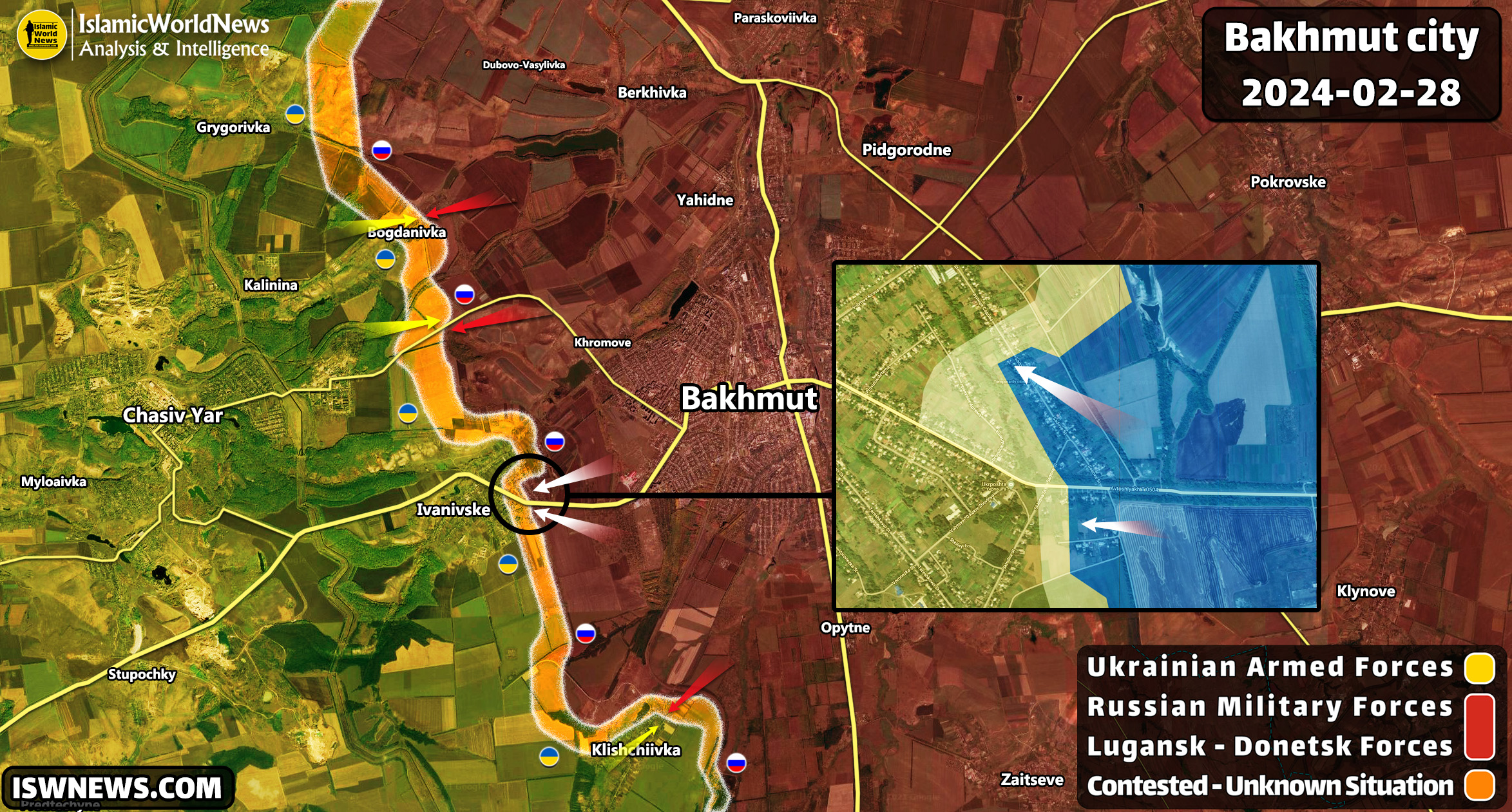
In the last week, Russian forces managed to reach the entrance of this village by advancing in the northern and eastern areas of Ivanivske; And gained a foothold in the Sadova Street. Now, clashes continue in the eastern parts of Ivanivske village.
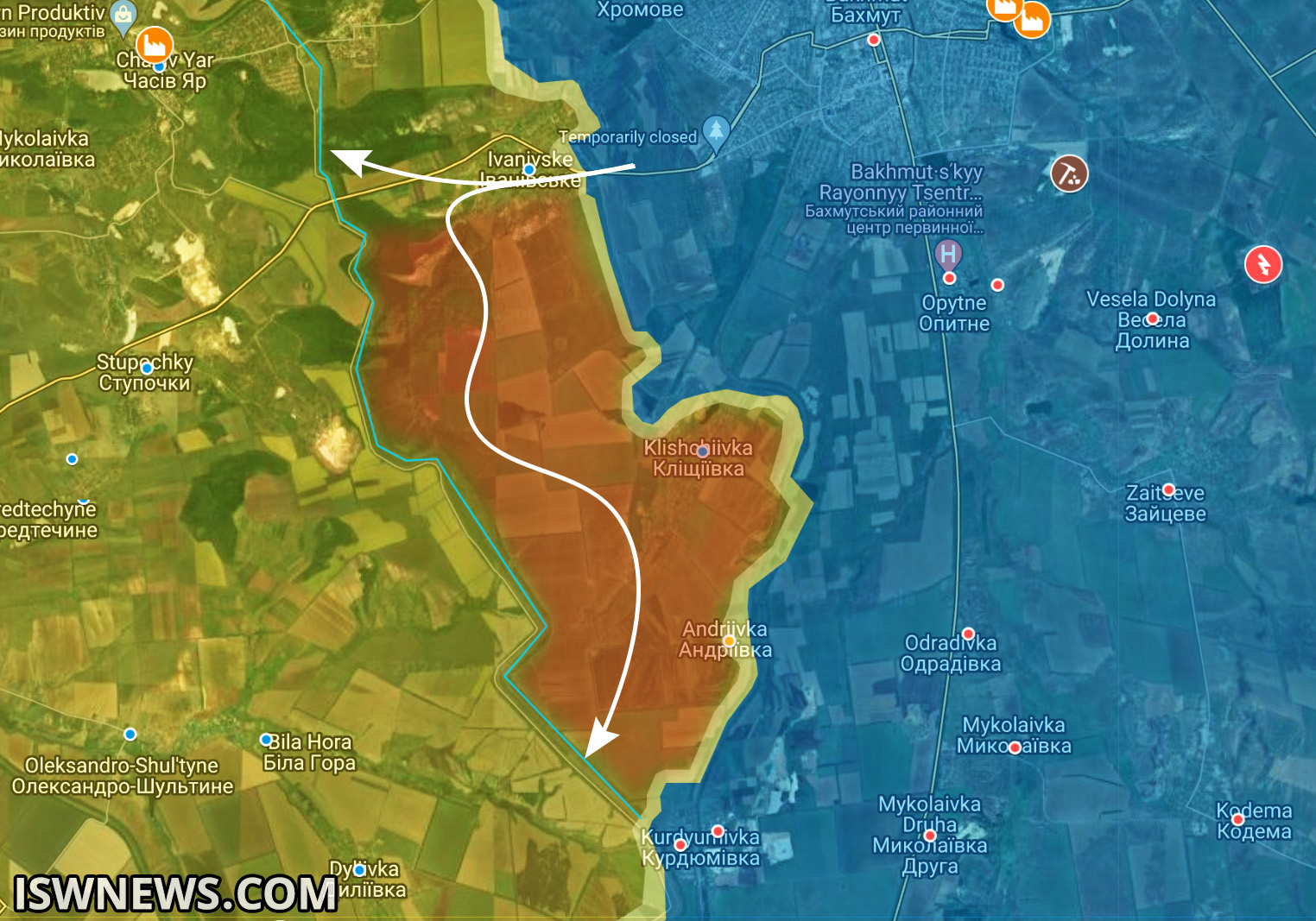
Ivanivske plays a very important role in the stability of Ukrainian frontlines in the west of Bakhmut. Last year, by bypassing Ivanivske from the south, the Russian army even advanced to the vicinity of Chasov Yar from the south, but due to the Ukrainian army control over Ivanivske and the attacks they made against Russia from this axis, Russian forces were finally forced to retreat from the mentioned areas. But this year, the Russian army chose another plan to advance on this axis and has reached Ivanivske from the east and north. If the Russian army succeeds and captures Ivanivske, the Ukrainian forces will have to retreat to behind the “Siverskyi Donets canal” and the Russian forces, in addition to transfer the battle lines to near Chasov Yar, will be able to regain control over the southern areas of Ivanivske to Klishchiivka and Andriivka.
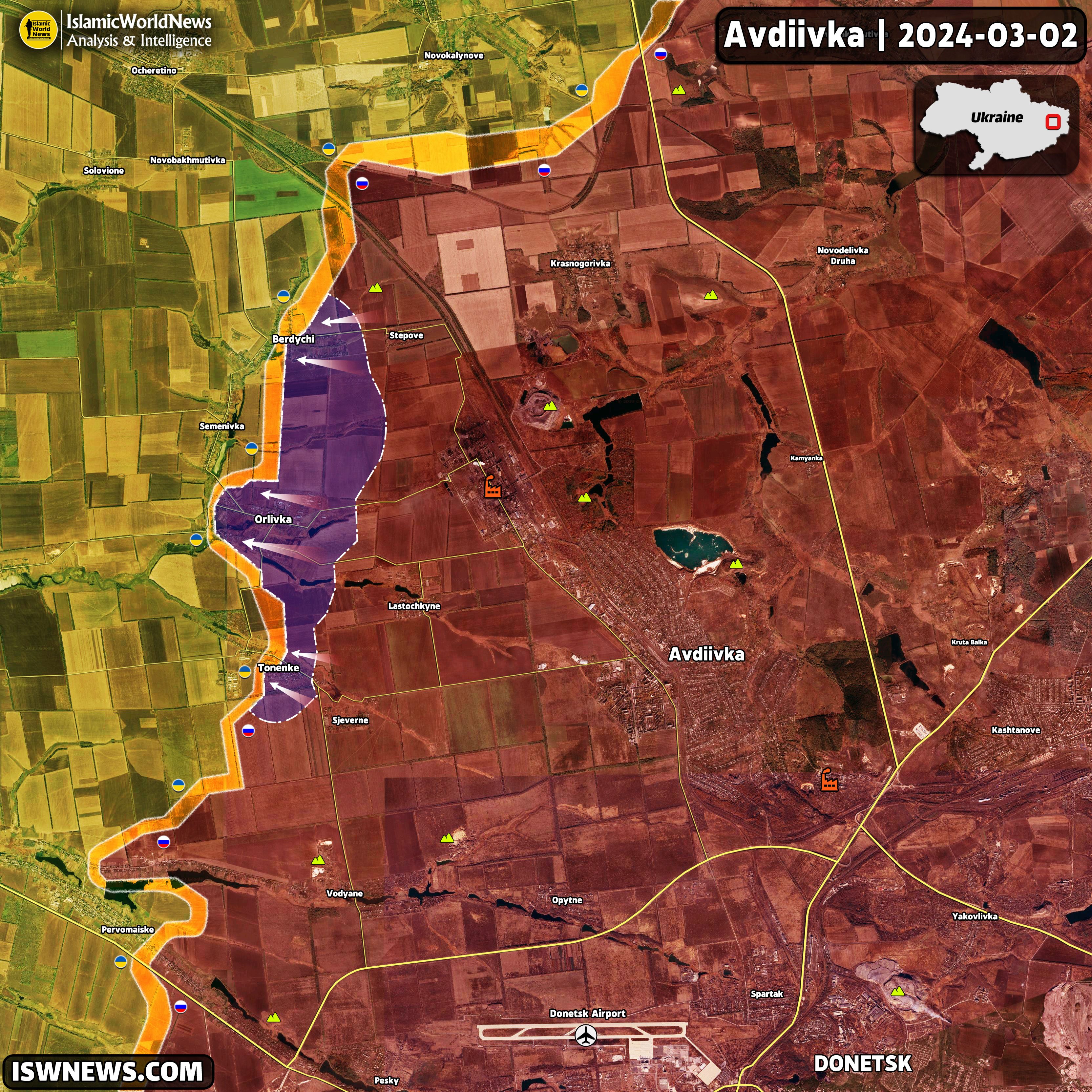
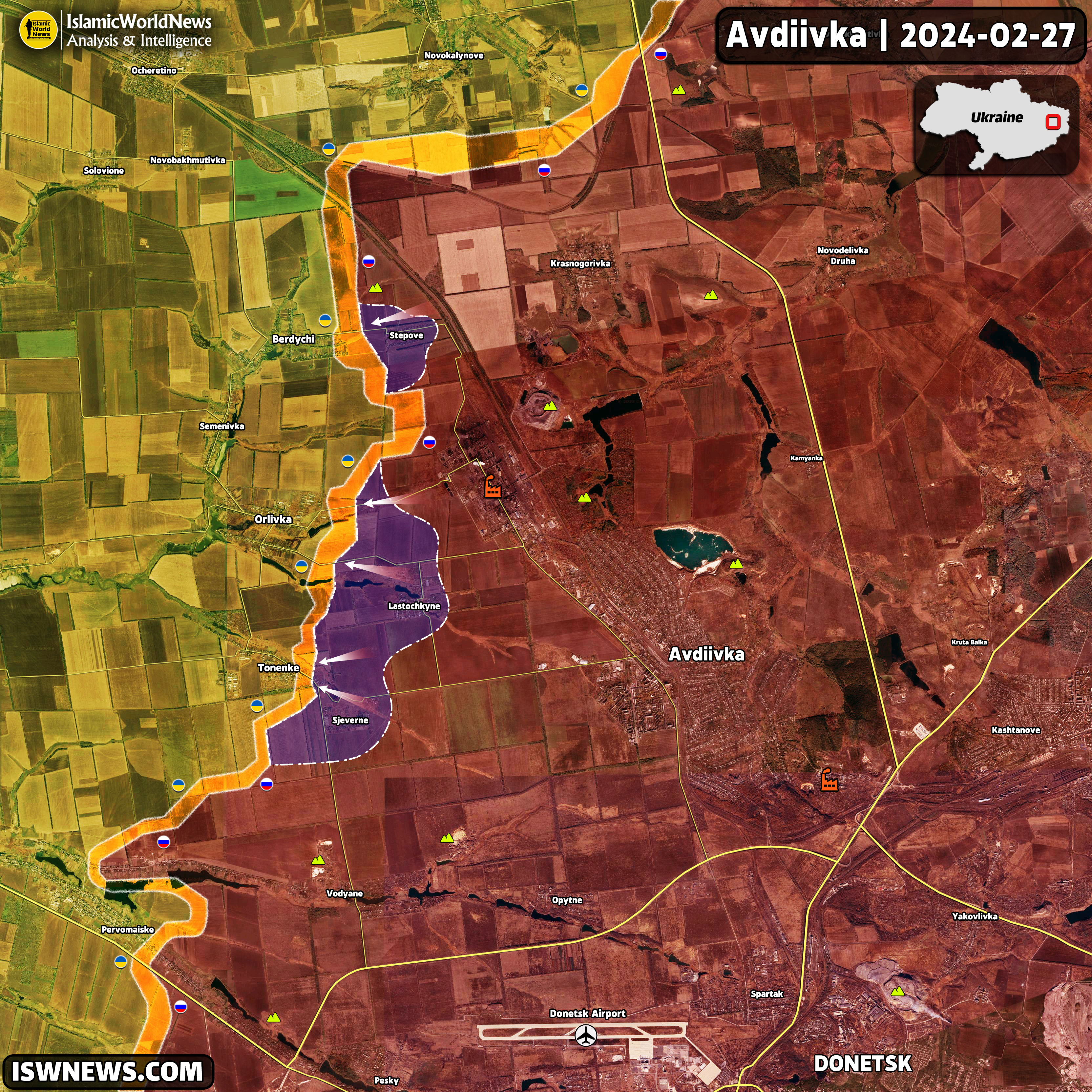
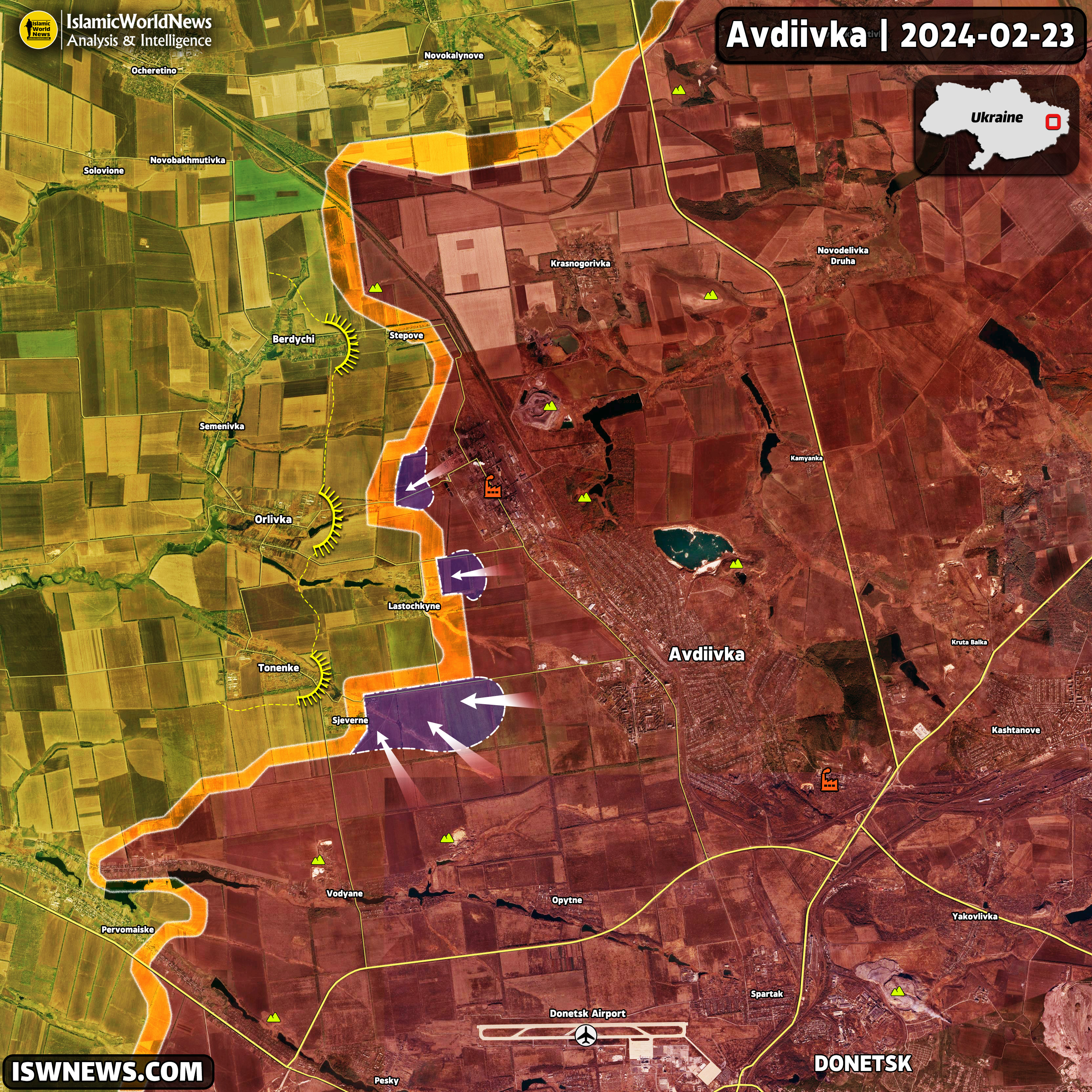
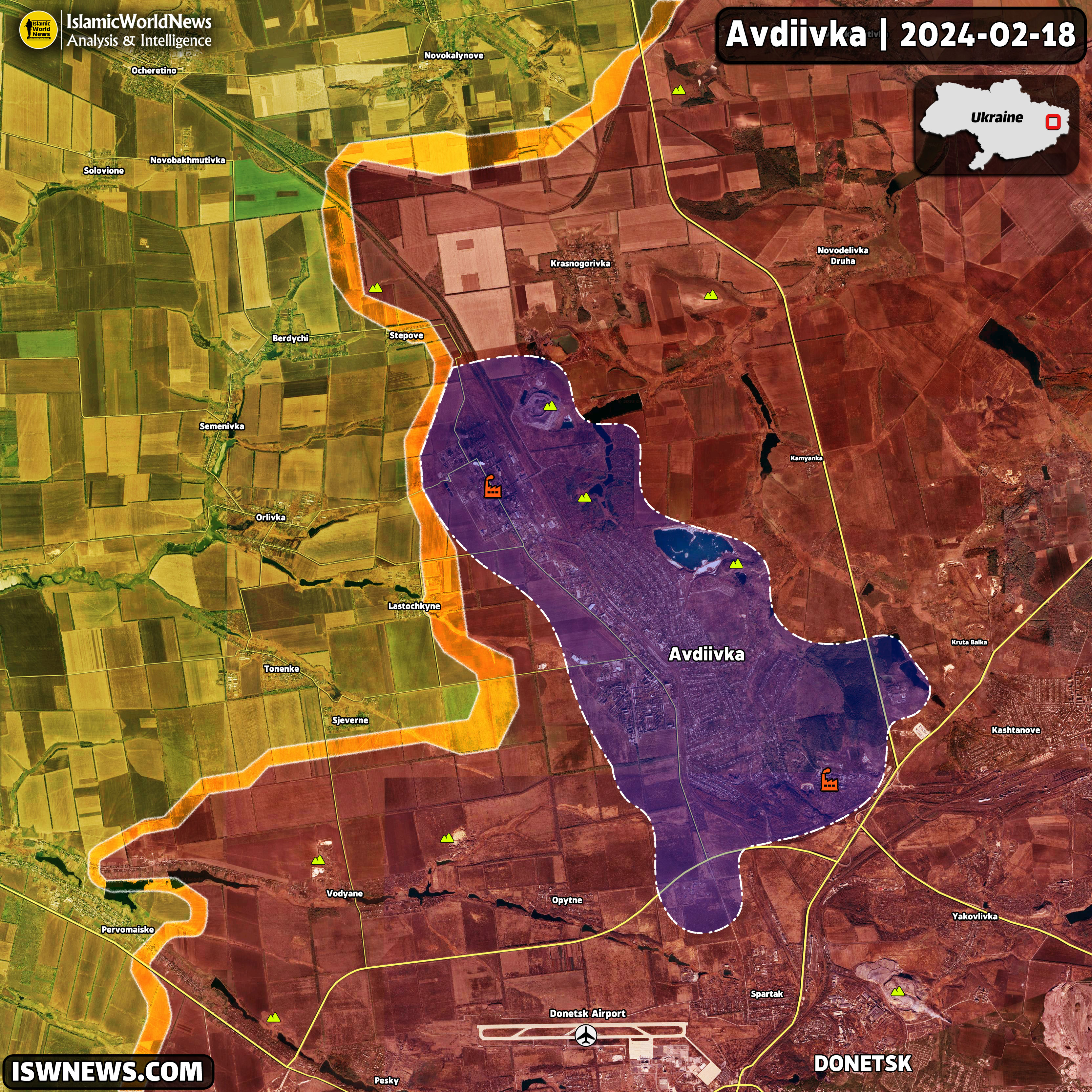
After the complete capture of Avdiivka town on 17th of February, the Russian army has continued its offensive process and continues to attack the villages and western areas of Avdiivka. During the last few days, Russian forces consolidated their control over the settlements of Sjeverne, Lastochkyne and Stepove in this axis.
Currently, the Russian army operation in this area is being pursued with the aim of capturing three other villages: after the capture of Stepove, the Russian forces have reached the outskirts of Berdychi; The capture of Lastochkyne and the advance from the west of Coke Plant have brought the Russian forces to the outskirts of Orlivka in two axes; And the capture of Sjeverne has paved the way for advancing towards Tonenke.
It should be noted that according to the latest information, Russian forces have entered the village of Tonenke.
Generally, after retreating from Avdiivka, Ukrainian forces have placed their main line of defense in Berdychi-Orlivka-Tonenke line. If this defense line is broken, the Ukrainian forces will have to retreat further to a depth of 5 to 10 kilometers to create a new defense line.
These days, the news and developments of the Avdiivka front in the north of Donetsk city are at the top of all fronts, and Russian forces still have the upper hand in this front and other fronts of the war.
After the complete capture of Avdiivka town on February 17, the Russian offensive operations have been extended to the western areas of Avdiivka. Logically, the Russian army needs to increase the buffer zone on this front in order to protect Avdiivka from Ukrainian counterattacks. Therefore, Sjeverne, Lastochkyne, Tonenke, Orlivka, Semenivka, Berdychi settlements in the west of Avdiivka will be the next target of the Russian army. Knowing about this, the Ukrainian army is building new and more defensive barriers on the Berdychi-Orlivka-Tonenke line.
According to the latest information, during the last 48 hours, Russian forces advanced from the north of Vodyane and Khimik district and reached the Sjeverne settlement. Clashes continue inside the Sjeverne settlement. Also, Russian forces are present around the settlement of Lastochkyne, and the battles for the control of this village continue. In the west of Coke Plant, Russian forces slightly advanced towards Orlivka.
Military situation on the Avdiivka front – click to view full size
Another important front is the Bakhmut front. During the last week, Russian army forces, continuing their advance in the west of Bakhmut city, managed to take the forest areas and the eastern and northeastern farmlands of Ivanivske village and clashes reached to the eastern suburbs of this village. According to the latest information, Russian forces have entered Sadova Street in the east of Ivanivske.
Sporadic fighting between the Russian army and the Ukrainian army continues on other lines of this front near Klishchiivka, Andriivka, Kurdyumivka and inside Bogdanivka.
Military situation on the Bakhmut front – click to view in full size
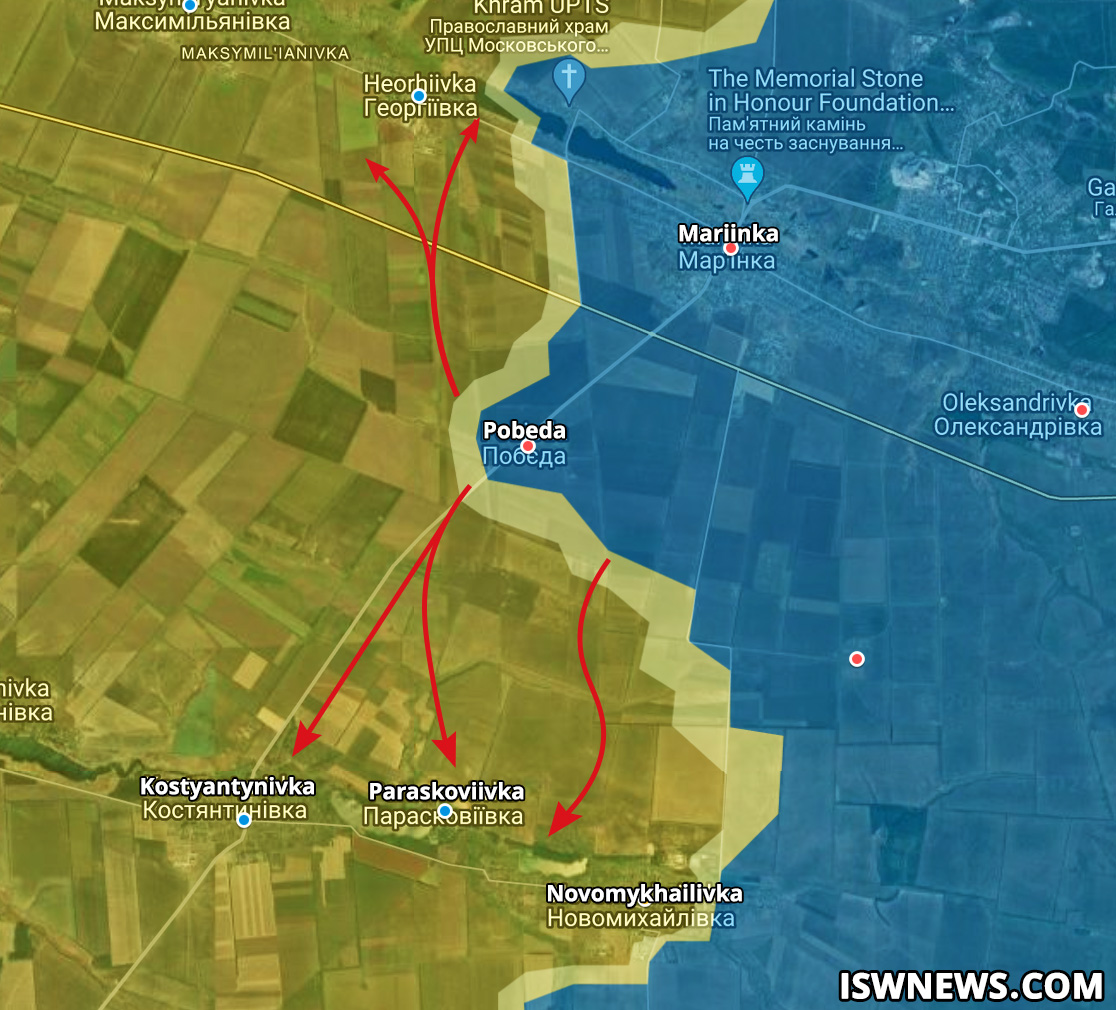
On the Mariinka front, after several weeks of fighting, the Russian army finally managed to take control of Pobeda village in the south of Mariinka. The village of Pobeda and its surrounding areas were considered as an important stronghold for the Ukrainian forces in this area. With the capture of Pobeda, the resistance of the Ukrainian forces in the south of Mariinka and the north of Novomykhailivka has been broken. Now, the the Russian forces practically do not face a heavy obstacle in the open plains of this region up to Novomykhailivka, Paraskoviivka and Kostyantynivka.
In this axis, clashes continue in Georgiivka. By advancing in Georgiivka, the Russian army is trying to eliminate the danger of Ukrainian counterattacks against Mariinka.
Following the failure of Ukrainian army’s offensive operations in various fronts in the past year and the weakening of the Ukrainian army due to various reasons such as the high number of human casualties, lack of necessary logistics to overcome Russian military power, and the beginning of the war in Gaza which diverted most attention to Palestine, Russian forces intensified operations on the Avdiivka front once again.
Over the past four months, Russian and Donetsk (DPR) forces gradually besieged the town of Avdiivka through a series of continuous and coordinated operations from the north and south.
On January 20th, Russian forces managed to break through Avdiivka’s defensive lines from the south and entered urban areas. In further battles, on February 3, Russian army forces also broke Ukrainian defense lines from the north and entered the northern areas of Avdiivka, practically cutting off all main supply and support lines for Ukrainian forces in Avdiivka, leaving only the western areas of the city for retreat. Therefore, Ukrainian armed forces began gradually retreating from Avdiivka from February 4, and finally on February 17, they announced a complete withdrawal from the town of Avdiivka in a statement.
According to the Russian Ministry of Defense, the area that came under Russian army’s control during the Avdiivka operation is over 31.75 square kilometers.
It can boldly be stated that the Russian army’s control over the town of Avdiivka is Russia’s most significant victory in the Ukraine war after the occupation of the city of Bakhmut in 2023.
The important town of Avdiivka was considered one of the strongest defense and military lines of the Ukrainian army in the north of Donetsk city. Previously, Ukrainian army’s control over this town was the main obstacle to the expansion of Russian military operations in the Donbass region. Now, with the occupation of Avdiivka by Russia and its allies, the security of Donetsk city from the north has been significantly ensured, and the Russian army finds the opportunity to expand battle lines around Donetsk city with more concentration and power.