Introduction and Development History of the GBU-57 MOP:
As a heavy-duty penetrator bomb, the GBU-57 MOP (Massive Ordnance Penetrator) can target and destroy heavily fortified underground facilities like bunkers, command centers, and weapons depots. Designed for daytime or nighttime attacks on targets deep underground, as well as for deterring enemies with buried infrastructure, the bomb is built for planned strikes.
The GBU-57 MOP project started in the early 2000s, a joint effort by Northrop Grumman and Lockheed Martin. However, due to financial and technical hurdles, the initial attempt was halted. After the US invasion of Iraq in 2003, an analysis of bunker-busting bombs used showed they lacked the penetration power to take out fortified targets.
This sparked renewed interest in developing a larger bunker-busting bomb, and the MOP project was launched by the Defense Threat Reduction Agency (DTRA) to meet a long-standing Air Force need. The concept of “Big BLU” – large penetrating and explosive bombs like MOP and MOAB – was also proposed. In the end, Boeing won the contract to design and produce the bomb.
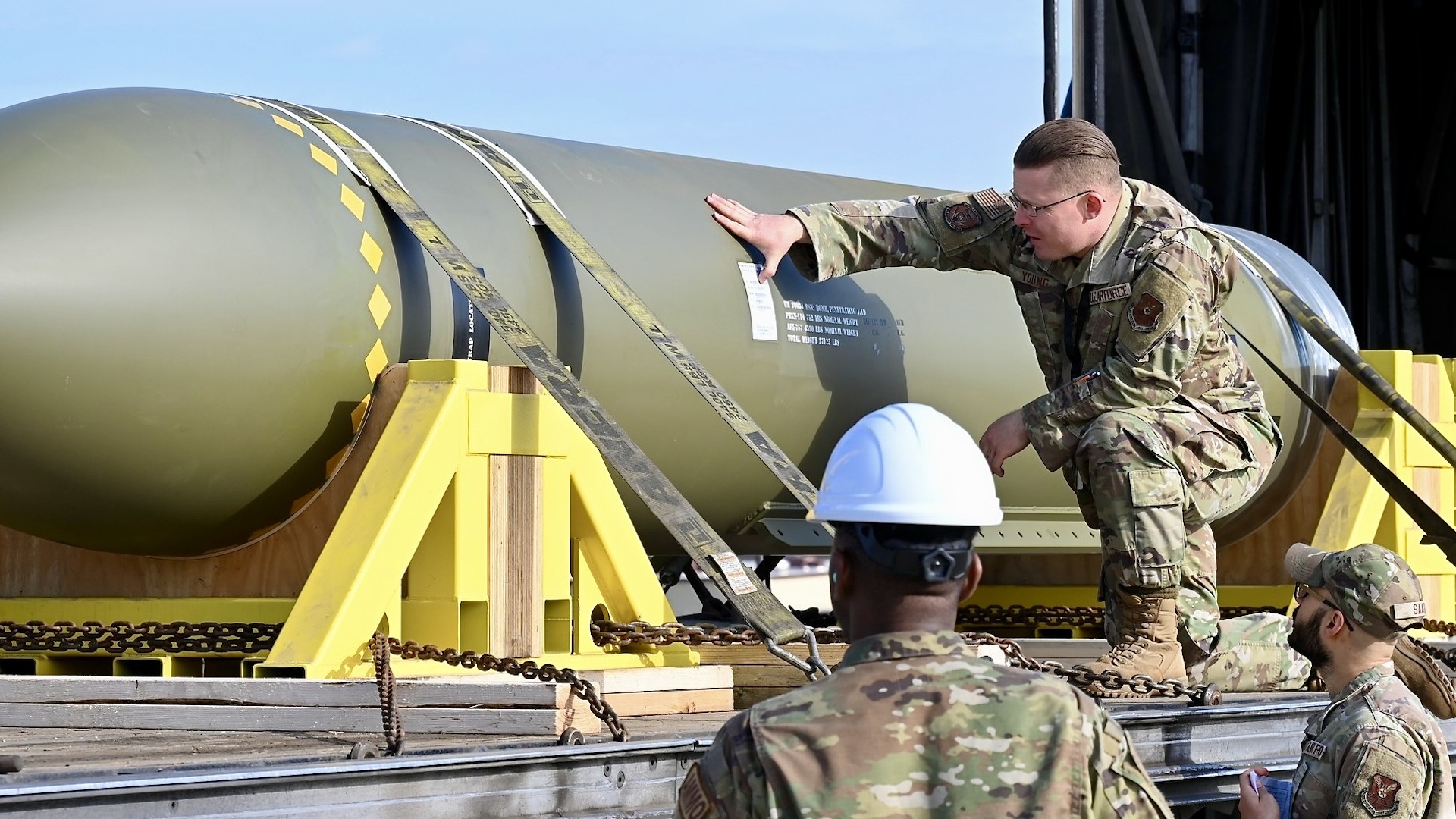
Boeing and US Army weapons specialists stand in front of a mock-up of the MOP bomb at Whiteman Air Force Base
The first static detonation test of the bomb was conducted in 2007 at the White Sands Missile Range. Flight tests of the weapon were conducted from 2008 to 2010, including launches from B-52 and B-2 bombers. In February 2010, the project was transferred to the Air Force, and the first deliveries of operational units of the bomb began in September 2011.
MOP test by B-2 bomberMOP test by B-52 bomberGBU-57 MOP bomb testB-2 bomber releases and tests GBU-57 MOP bomb
The estimated weight of the GBU-57 Massive Ordnance Penetrator (MOP) is between 12,300 and 13,600 kilograms, depending on various sources. The bomb measures approximately 6.2 meters in length and about 0.8 meters in diameter. To put this into perspective, its weight is comparable to that of two adult African elephants, highlighting its significant scale.
The warhead of this bomb is composed of a mixture of AFX-757 and PBXN-114 explosives. The total weight of the warhead ranges from 2,400 to 2,600 kilograms, which includes around 2,080 kilograms of AFX-757 and 341 kilograms of PBXN-114. The body of the warhead is made from a high-performance steel alloy, designed to maintain its integrity upon impact. This construction enables the bomb to deliver a substantial explosive payload while preserving the penetrator’s structure during impact. The bomb’s considerable weight and specialized alloy are crucial to its penetration capability, much like driving a steel nail into rock. Most of the bomb’s weight resides in its body.
The GBU-57 MOP is estimated to penetrate approximately 60 meters of reinforced concrete with a strength of 5,000 PSI. It can also penetrate about 40 meters of relatively hard rock and around 8 meters of reinforced concrete with a strength of 10,000 PSI. It is important to note that the reported penetration capabilities of 60 meters are based on preliminary information and prototypes of the bomb, and there is currently no precise information available regarding the ultimate penetration capacity of the latest model.
Comparison of penetration of the MOP bomb (possibly a prototype) with the BLU-109 and GBU-28 bombs
The GBU-57 Massive Ordnance Penetrator (MOP) is a precision-guided munition that utilizes a GPS/INS (Global Positioning System/Inertial Navigation System) for enhanced targeting accuracy, achieving precision within a few meters. The bomb features four fixed trapezoidal wings along its midsection and four lattice fins at its tail, which help adjust its trajectory during flight.
Equipped with a smart fuze (LPSF), the GBU-57 MOP can modify its detonation timing based on the depth and configuration of the underground target. It incorporates void-sensing fuzes that trigger detonation if a large cavity is detected within the bunker. Additionally, the weapon includes a delay fuse, allowing the warhead to survive the initial impact upon penetrating the target before it detonates.
In comparison to BLU-109, the MOP bomb possesses over ten times the explosive power and significantly greater penetration capabilities. The BLU-109 weighs only 910 kg and has a much shallower penetration depth.
Comparison of penetration of the MOP bomb (probably a prototype) with the BLU-109 and GBU-28 bombs
Variants of GBU-57:
The GBU-57 has undergone numerous upgrades and modifications over the years, resulting in a variety of variants. These upgrades have included improvements to the fuze system, advanced guidance systems, and increased penetration capabilities, currently spanning seven generations. Common variants of this bomb use the BLU-127A/B, BLU-127B/B, and BLU-127C/B warheads, respectively.
GBU-57/B: This version is equipped with the BLU-127/B warhead. The United States Air Force has addressed an integration issue that existed with the original version of the bomb on the B-2 Spirit stealth bomber. A new smart fuse has also been tested to enhance its effectiveness in situations where the depth or precise location of a buried target is uncertain.
GBU-57A/B: This version uses the BLU-127A/B warhead.
GBU-57B/B: This model is equipped with the BLU-127B/B warhead.
GBU-57C/B: The specific upgrades made by Boeing to this version are not detailed in the available sources.
GBU-57D/B: Information about the modifications made by Boeing to this version is also unclear, but it is believed that its fuse and primer have been upgraded.
GBU-57E/B: This version has been part of the operational inventory since at least 2016 and is equipped with the BLU-127C/B warhead. It has improved capabilities for penetrating concrete structures compared to earlier models. It can be reasonably assumed to have greater penetration power than the 2007 models, which could penetrate to a depth of 60 meters. The BLU-127C/B warhead features a booster in its front section, although its exact function remains unknown. Currently, the US Air Force does not have a newer version of the GBU-57E/B in operational use.
GBU-57F/B: This model is described as the latest version, but little is known about its exact capabilities.
GBU-57 MOP bomb
Overall, the US is working to boost the effectiveness of this bomb by continually upgrading it. As noted, the 60-meter penetration power is from the early models, and there’s no information available on the bomb’s penetration after receiving later upgrades. Additionally, the US is reportedly developing a version of this bomb with similar characteristics to the GBU-57, but lighter in weight, to enable its use in fighter jets.
Production numbers and costs of the GBU-57:
Developing the GBU-57 MOP weapon is expected to cost around $400 to $500 million. Each unit’s production cost is estimated to be roughly $3.5 million, with upgraded versions likely to be even more expensive. Although the exact number of MOP bombs produced is classified, estimates suggest a relatively small stockpile – about 20 by 2015, with potential for increased production.
GBU-57 MOP specifications:
Type: bunker buster bomb Origin: U.S. Manufacturer: Boeing Length: 6.2 m Diameter: 80 cm Total bomb weight: around 12.5 tons Warhead weight: around 2.5 tons Penetration: 61 m Guidance: GPS/INS
The Aegis Ballistic Missile Defense System (ABMD) is a component of the AEGIS comprehensive combat system. It is an integrated, sea-based defense system designed to protect US naval fleets from enemy aircraft and cruise missiles. The system employs various types of missiles, including the Standard-2 (SM-2), Standard-3 (SM-3), Standard-6 (SM-6), and Sea Sparrow, alongside Phalanx Close-In Weapon System to counter potential threats.
Additionally, Aegis can launch Tomahawk land-attack cruise missiles. A specific subset of Aegis-equipped vessels operates in key regions, including the Mediterranean Sea, Red Sea, Black Sea, Western Pacific, and Persian Gulf, providing a defensive shield against potential ballistic missile attacks from countries such as Russia, China, North Korea, and Iran.
SM-3 and SM-6 missile replicas
The Aegis anti-ballistic system consists of three main components: sensors, interceptors, and a command and control system.
The main interceptor missile of this system is the RIM-161 Standard Missile 3 (SM-3), which is designed in three versions: Block IA, IB, and IIA. Each version has been improved in range and performance capabilities compared to its predecessor. This missile employs a kinetic warhead to destroy ballistic missile warheads during the midcourse phase of flight, which occurs outside the Earth’s atmosphere. Additionally, the Aegis system utilizes intra-atmospheric missiles such as the SM-2 Block IV and SM-6, designed to intercept missiles in the terminal phase of flight. All of these interceptors are deployed through the Mark 41 Vertical Launch System (VLS).
Mark 41 Vertical Launch System
The primary sensor used in the Aegis system is the AN/SPY-1D radar, which operates in the S-band and provides nearly 360-degree coverage. As technology has advanced, newer Aegis platforms have been equipped with upgraded radars, such as the SPY-6 and SPY-7. Additionally, enhanced Aegis platforms can launch interceptor missiles based on data from long-range sensors, including the THAAD TPY-2 radar, which operates in the X-band.
The anti-ballistic component of the Aegis system is managed by the Aegis comprehensive combat system, which has undergone upgrades over time through hardware and software enhancements known as “Baseline.” The latest version of this system, called Baseline 9, enables a ship to simultaneously conduct air defense and missile defense operations. Previous versions of the software could only support one of these two missions at a time, often requiring Aegis ships to operate in pairs—one ship managing air defense while the other focused on anti-ballistic defense.
An overview of how US missile defense systems intercept threats
Background and history of the development of the Aegis system:
The development of the Aegis system was initially driven by the increasing threat of Soviet anti-ship missiles in the 1960s. The sinking of the Israeli warship Eilat in 1967 by four Soviet-made Styx missiles highlighted the vulnerability of naval assets to new-generation weapons. In the aftermath of World War II, the United States aimed to strengthen its naval fleet, while the Soviet defense strategy relied on utilizing heavy cruise missiles, sometimes equipped with nuclear warheads, launched from smaller vessels or bombers and fighter jets. These missiles, flying at high speeds and close to the water’s surface, made detection and interception extremely difficult.
The United States Navy recognized that existing radar technology was inadequate for tracking and effectively engaging multiple high-speed, near-surface missiles simultaneously. To address this critical gap, the Advanced Missile System (ASMS) program was initiated in 1964, marking the beginning of what would later become known as Aegis. In December 1969, the ASMS program was officially renamed “Aegis,” inspired by the shield of Zeus in Greek mythology.
The Aegis program was later expanded to include the emerging threat of ballistic missiles. In the mid-1980s, the Aegis Anti-Ballistic Missile Defense System (Aegis BMD) program was launched as part of Ronald Reagan’s Strategic Defense Initiative (SDI), informally known as “Star Wars.” This program was developed as a defense measure against potential attacks from long-range ballistic missiles launched by the former Soviet Union.
Initially, the Aegis BMD concept included a space-based railgun system. However, technological limitations prompted the exploration of alternative solutions, leading to the development of anti-ballistic missiles instead. The first successful interception test of the Aegis BMD system occurred in January 2002, marking a significant milestone in its evolution. The experiences gained from the first and second Persian Gulf Wars, alongside the growing proliferation of short- and intermediate-range ballistic missiles by countries like North Korea and Iran in the late 1990s and early 2000s, further emphasized the necessity for a robust sea-based ballistic missile defense capability like Aegis. This evolution transformed Aegis from a purely anti-ship system into one with a crucial anti-ballistic missile capability.
Role of Aegis in the US Navy and the National Missile Defense Program:
As mentioned earlier, the Aegis anti-ballistic system is part of the larger Aegis Combat System. Note that almost all US Navy warships and destroyers are considered Aegis vessels because they’re equipped with the Aegis combat system, which includes sensors, computers, software, displays, and weapon launchers. However, not all these vessels can engage ballistic targets or have received the Aegis BMD upgrade. This article will focus specifically on the Aegis anti-ballistic capabilities.
Ticonderoga-class cruiser
A total of 27 Ticonderoga-class ships were purchased between 1978 and 1988, and entered service between 1983 and 1994. The Navy retired the first five ships of the class, which were technically built to an older standard, by 2005. Retirement of the remaining 22 ships began in 2022 and has now reached nine, with at least five of the class reportedly upgraded to anti-ballistic capabilities.
USS Ticonderoga (CG-47)
Arleigh Burke-class destroyers
The U.S. Navy began purchasing the DDG-51 class in 1985, with a total of 94 ships expected to be purchased by 2024. The first destroyer of the class entered service in 1991, and a total of 74 ships will be operational by the end of 2023. Retirement of the older ships will begin in fiscal year 2028. The DDG-51 design has been updated many times over the years. The first 28 ships are known as Class I/II, the next 34 as Class IIA, and the next ships as Generation III. The third generation of the class will use the new SPY-6 radar instead of the older SPY-1. According to the Missile Defense Agency, by the end of fiscal year 2025, there will be a total of 56 ships of the class with anti-ballistic capabilities. By 2023, that number had increased to 49, increasing to 69 by fiscal year 2030.
USS Arleigh Burke (DDG-51)
The Aegis missile defense system is a key part of the U.S. and allied strategies to defend against ballistic missiles. It’s part of the U.S. National Ballistic Missile Defense System, mainly designed to protect against short- to intermediate-range ballistic missiles, which have a range of around 2,200 miles (3,500 km). However, recent upgrades have also given it the ability to counter intercontinental ballistic missiles, which can travel up to 6,200 miles (10,000 km). That’s why the system gets its own funding from the Department of Defense’s Missile Defense Agency.
US Comprehensive Ballistic Missile Defense Program
The Aegis system, led by the Missile Defense Agency, is integrated with other components of the Ballistic Missile Defense System (BMDS), such as THAAD and Patriot defense systems, through the Command, Control, Battle Management, and Communications (C2BMC) system. This integration enables a coordinated response to missile threats by utilizing the strengths of each system. As a result, Aegis can support other interceptors by providing long-range surveillance and radar data.
In addition to the United States, the Aegis combat system is currently deployed by Australia, Canada, Japan, South Korea, Norway, and Spain, all of which share intelligence data.
First Intercontinental Ballistic Missile Intercept Test by SM-3 Block IIA Missile in 2020 in Hawaiian Sea Area
The video above shows a graphical representation of the first live test of an intercontinental ballistic missile (ICBM) interception. On November 17, 2020, a prototype ICBM was launched from the Ronald Reagan Ballistic Missile Defense Test Site on Kwajalein Atoll in the Marshall Islands, headed toward the Hawaiian Sea. In this test, a destroyer used remote engagement capabilities through the Command and Control Battle Management communications network, as part of a scenario to defend Hawaii. After getting tracking data from the system, the destroyer fired an SM-3 Block IIA missile that successfully hit the target.
Review of the radar and satellite capabilities of the Aegis system:
The Aegis system uses a set of advanced radar systems to detect, track, and engage ballistic missile threats. The main fire control radar for Aegis, the AN/SPY-1, is a Lockheed Martin Advanced Passive Electronically Scanned Array (PESA) radar that operates in the S-band. This powerful radar has four array panels for 360-degree coverage and can search, track, and guide missiles at the same time. Although the official range of the radar is not publicly disclosed, its estimated range is between 310 and 370 kilometers, making it capable of detecting various ballistic, cruise, and air targets.
AN/SPY-1 radar
Originally, Aegis wasn’t built for anti-ballistic missions. Despite policymakers allocating funds to update the system, the SPY-1 radar is still a major weakness in the Aegis chain, limiting interception by standard missiles.
AN/SPY1D(V) radar on the Japanese destroyer GS Ashigara, an Atago-class destroyer.
SPY-1 radar gives interceptors enough accuracy to track targets up to about 370 km. This is enough for the Standard-2 missile, which has a range of around 160 km. However, it’s not enough for Standard-3 anti-ballistic missiles, especially the Block IA/B versions with a range of up to 700 km and the Block IIA with a range of up to 2500 km. The SPY-1 radar also has limitations for the Standard-6, which has an active seeker and can reach a range of about 460 km.
Variants of AN/SPY-1 radar
Raytheon’s AN/SPY-6 radar, also referred to as AMDR, is the next generation of radar for Aegis. This active electronically scanned array (AESA) radar works in both S and X bands, providing significantly more advanced capabilities.
ANSPY-6 radar being assembled at RaytheonVarious AN/SPY-6 radar models
The system comprises two main radars and a Radar Set Controller (RSC) that coordinates these sensors. The S-band radar is responsible for tasks such as searching for and tracking targets, accurately detecting ballistic missile warheads, and communicating with interceptor missiles. In contrast, the X-band radar is designed for near-horizon search, offering more accurate tracking and guidance for short- and medium-range missiles. This radar is reported to be 30 times more sensitive than the SPY-1, allowing it to handle 30 times more targets. Different versions of this radar, varying in dimensions, are used on various vessels, including the new generation of Arleigh Burke destroyers.
AN/SPY-6 System Overview
The AN/SPY-7 radar, manufactured by Lockheed Martin, is another advanced radar being integrated into the Aegis system. This radar is currently installed on some Japanese ships equipped with the Aegis system (ASEV), as well as on the Spanish F-110 ships and the Canadian River-class ships. Additionally, the AN/SPY-7 radar is intended for land-based Aegis systems in the United States, specifically in Hawaii and Alaska, as well as in Japan, where it will be deployed in Yamaguchi and Akita. Overall, the AN/SPY-7 radar is expected to be used on more ships belonging to the United States and its allies in the future.
AN/SPY-7 radar at Clear Space Force Station, Alaska
The land-based version of Aegis is being developed under the name Aegis Ashore. This development began in 2014, with the first site opened in Romania in 2016 as part of the NATO missile defense network in Europe. A second site is scheduled to open in Poland in 2024. Additionally, Japan is developing its own land-based version of Aegis in the prefectures of Yamaguchi and Akita. The United States also has three other land-based Aegis systems located in Guam, Hawaii, and Alaska.
Lockheed Martin’s video of the Aegis land-based prototype explaining that Aegis Ashore uses the same components used in Aegis-equipped destroyers.Aegis land-based version in PolandAegis land-based version in Poland in RomaniaAegis land-based version in HawaiiAEGIS Ashore system
Satellite networks serve as the backbone of the Aegis missile defense system, significantly enhancing its range, accuracy, and speed of response. A crucial component of this network is the Space Tracking and Surveillance System (STSS), which is designed to intercept ballistic missiles during all phases of their flight: from launch (boost phase) through the ascent (midcourse phase) and re-entry into the atmosphere. STSS satellites are capable of detecting and tracking a wide variety of missiles, including short-range, intermediate-range, and intercontinental missiles. The data collected by these satellites is transmitted to Aegis-equipped ships, enabling a critical capability known as Launch on Remote, which substantially extends the effective range of interception.
Overview of the Space Tracking and Surveillance System (STSS) operation
Along with STSS, the Defense Support Program (DSP) and Spaceborne Infrared System (SBIRS) also provide crucial early warning capabilities. By using infrared sensors, these systems pick up the thermal signatures of missile launches early on and transmit valuable data on position and velocity to Aegis and other parts of the US missile defense system.
Review of AEGIS interceptor missiles:
AEGIS Missile Defense System – SM-3 and SM-6 missiles
RIM-161 SM-3 missile
The Standard Missile-3 (SM-3) is the main interceptor used in the Aegis system. The SM-3 program was developed as a variant of the Standard SM-2ER Block IV missile, known as NTW-TBMD. Initial testing took place from 1992 to 1995 as part of Project Terrier/LEAP. The first test flight of the RIM-161A SM-3 occurred in September 1999, and the program achieved its first successful intercept of a ballistic target in January 2002. The Standard Missile officially entered operational service in 2005. Its first combat deployment took place in April 2024, when U.S. Navy warships used the missile to intercept ballistic missiles fired by Iran toward Israel.
The SM-3 missile closely resembles the Standard-2 but has two key differences: first, it employs a solid-fuel booster as a third stage, enabling greater range and altitude engagement; second, it uses a kinetic warhead instead of a conventional high-explosive warhead. The SM-3 family is specifically designed to intercept ballistic missiles outside the atmosphere, at altitudes above 100 km. Because ballistic missiles follow a parabolic flight path, they maintain a relatively constant speed after the boost phase and during the midcourse phase or reentry into the atmosphere, losing the ability to perform complex maneuvers. This characteristic allows anti-ballistic interceptors equipped with heat seekers to detect ballistic warheads and destroy them through direct collision.
The different generations of the Standard-3 missile are as follows:
SM-3 Block IA: Following the prototype, this version was launched to boost reliability, ease of maintenance, and lower costs, marking the first model in this family to go into mass production.
SM-3 Block IB: Set to enter service in 2010, this missile featured a dual-spectral infrared seeker and a new space propulsion system in its warhead. These upgrades boosted the missile’s ability to counter maneuvering warheads, enabling it to defend against intermediate-range ballistic missiles and some medium-to-long-range missiles.
SM-3 Block II: For this version, we increased the fuselage diameter to 530 mm and scaled down the wings to boost speed and range. However, this model never made it into operational use.
SM-3 Block IIA: Co-developed by Raytheon and Mitsubishi Heavy Industries, this system boasted a larger warhead, improved maneuverability, and more advanced sensors. It can also intercept certain intercontinental ballistic missiles (ICBMs) and satellites, and went into service in 2015.
Infographic released by RaytheonInfographic released by the US Missile Defense AgencyThe evolution of different generations of the Standard-3 missile
In terms of operational performance, the Block IA and Block IB versions have an estimated range of between 900 and 1,200 kilometers. The more advanced Block IIA version significantly increases this range to around 2,500 kilometers and even exceeds 5,500 kilometers. Regarding engagement altitude, the Block IA and IB versions can intercept targets at altitudes of up to 500 kilometers, while the Block IIA can operate at altitudes between 900 and 1,050 kilometers, depending on the type of target. Additionally, the terminal speed of the Block IA and IB versions is approximately Mach 8.8, whereas the Block IIA can attain a speed equivalent to Mach 13.2.
How the SM-3 interceptor missile works:
When the Aegis missile defense system detects an incoming ballistic missile, an SM-3 interceptor missile is fired from one of the ships in the engagement zone. The Aerojet MK 72 solid-fuel rocket booster launches the SM-3 from the ship’s Mark 41 vertical launch system. Once launched, the missile communicates with the ship that fired it. After the booster burn is complete, the booster separates, and the Aerojet MK 104 solid-fuel rocket motor takes over propulsion while the missile is in the atmosphere. The rocket continues to receive mid-course guidance information from the launch vessel and is also assisted by GPS data.
The ATK MK 136 solid-fuel third-stage rocket motor ignites after the second stage burns out, propelling the missile (if necessary) into the upper atmosphere and providing pulsed propulsion for the SM-3 until the final 30 seconds before interception.
In the final, fourth stage, the third stage engine separates, and the Lightweight Extra-Atmospheric Projectile (LEAP) kinetic warhead begins to search for the target using targeting data from the launch vehicle. Aerojet’s Tunable Direction and Attitude Control System (TDACS) allows the warhead to maneuver in the final phase of engagement. The kinetic warhead’s sensors identify the target and attempt to locate the most vulnerable part of the target, guiding the warhead to that point. If the kinetic warhead successfully engages the target, it generates 130 megajoules of kinetic energy at the point of impact, equivalent to 31 kilograms of TNT, thereby neutralizing the target.
The accompanying video illustrates the four stages, from launch to the moment of interception and destruction of the target.
How the SM-3 interceptor missile works, from the moment it is launched to the moment it intercepts and destroys the target
RIM-161 SM-3 missile specifications:
Type: Kinetic anti ballistic missile Manufacturer: Raytheon and Aerojet (Block I) and Raytheon and Mitsubishi (Block IIA) Country of manufacture: USA and Japan Entered service: 2014 (Block IB) Length: 6.55 m Wingspan: 1.57 m Diameter: 34.3 cm Block I 53.3 cm Block II Engine: Four-stage solid fuel Range: 900 km Block IA 1200 km Block IB 5500 + km Block IIA Ceiling: 1050 km Block IIA Speed: 8.8 Mach Block IA – IB 13.2 Mach Block IIA Weight: 1.5 tons Warhead: Light extra-atmospheric kinetic warhead for Block I and heavy for Block II Guidance: GPS/INS/SARH/Passive IR homing
SM-3 Block IBmissileSM-3 Block IBmissileSM-3 Block IIAmissileFirst official flight test of the Standard-III Block IIA missile from Point Mugu Naval Area, San Nicolas Island, CaliforniaSM-3 missile
RIM-156 SM-2ER missile
The Block IV (RIM-156A) was the first long-range missile in the Standard family, specifically designed for use with Mk 41 vertical launch systems. It features more advanced guidance and control systems than previous models. This version primarily serves as a final-stage interceptor, which means it intercepts and destroys ballistic missiles during the final phase of their flight within the Earth’s atmosphere. The missile has an estimated engagement range of 185 to 370 km and can reach a maximum engagement altitude of up to 33 km, with a top speed of approximately Mach 3.5.
At the time of the Block IV’s development, older missiles like the RIM-67 could only be launched from inclined deck-mounted launchers due to their large size. These launchers were heavy and bulky, restricting their use to larger vessels such as cruisers. In contrast, the SM-2 Block IV’s compatibility with the Mk 41 Vertical Launch System enabled its deployment on Ticonderoga-class cruisers and Arleigh Burke-class destroyers. Development of the Block IV missile began in July 1987, with the first test conducted at White Sands Missile Range in 1990 and its inaugural sea trial occurring in 1994. Initial limited production of the missile was authorized in 1995.
The RIM-156 was not an overall successful interceptor due to instability in the development program. As a result, the U.S. Navy funded modifications for 75 of the 100 RIM-156 missiles that were produced. Of these, five were used for testing, while about 70 modified SM-2 Block IVs remain in the Aegis fleet, providing temporary defense against anti-ship ballistic missiles. The experiences gained from producing the RIM-156 also contributed to the development of the Standard-3 and Standard-6 missile families.
Additionally, it is important to note that the SM-2 missile is the same type that the U.S. military fired twice on July 3, 1988, at Iran Air Flight IR655, resulting in the tragic loss of all 290 passengers on board, including 66 children under the age of 13.
SM-2ER Block IV missile specifications:
Type: Surface-to-air and anti-ship missile Manufacturer: Raytheon Country of manufacture: United States Length: 6.55 m (with booster) Wingspan: 1.07 m Diameter: 34.3 cm Engine: Two-stage solid fuel Range: 370 km Ceiling: 24.4 km Speed: Mach 3.5 Weight: 1.463 tons Warhead: 64 kg Blast-Frag Guidance: INS/SARH
The ERAM (Standard Extended Range Active Missile), also known as the Standard Missile 6 (SM-6), provides a wide range of multi-mission capabilities, including long-range air defense, terminal ballistic missile defense, and anti-surface attack. The development of the SM-6 addressed a significant gap in long-range air defense following the cancellation of the SM-2ER Block IVA project. Manufactured by Raytheon, the missile utilizes the airframe of the SM-2ER Block IV (RIM-156A) and features an active radar seeker derived from the AIM-120C AMRAAM air-to-air missile.
The SM-6’s development began around 2005, with the first missile being delivered to the United States Navy in April 2011. It achieved initial operational capability in November 2013. In 2016, the SM-6 demonstrated its anti-surface warfare capability, and an air-launched version, the AIM-174B, is anticipated to be introduced in 2024.
The primary purpose of the SM-6 is to counter long-range aerial threats, effectively engaging aircraft, fighters, cruise missiles, and drones at extended ranges. Additionally, the Block IA and IB versions of the missile possess anti-surface warfare capabilities, allowing them to target both surface ships and ground installations. The missile has an official range of 240 miles (approximately 240 km), but in practical scenarios, its range can exceed 250 miles (around 370 km) against ground or sea targets. The air-launched version, the AIM-174B, has an estimated range of 250 miles (approximately 400 km).
The SM-6 can engage targets at altitudes of up to 25 miles (33 km) and at a maximum speed of Mach 3.5. To enable these capabilities, the missile is equipped with a 140-pound (64 kg) high-explosive warhead.
RIM-174 SM-6 missile specifications:
Type: Surface-to-air, anti-ballistic (terminal phase), and anti-ship missile Manufacturer: Raytheon Country of manufacture: United States Entered service: 2013 Length: 6.6 m Wingspan: 1.57 m Diameter: 34 cm Block I 53 cm Block II Engine: Two-stage solid fuel Range: Up to 500 km Ceiling: 34 km Speed: Mach 3.5 Weight: 1.5 tons Warhead: 64 kg Blast-Frag Guidance: GPS/INS/ARH, SARH
SM-6 missile
Overall, the Aegis system serves as the core of the U.S. anti-ballistic defense program, which has two primary objectives. First, it aims to protect the naval fleet and strike groups. Second, it enhances the overall anti-ballistic program by relaying supplementary data to other land-based defense systems. It’s important to note that the Aegis system was initially developed to counter the long-range missiles of North Korea, China, and Russia—countries that have greater access to the oceans and are geographically closer to the United States. Additionally, the technology behind this system has been specifically provided to allied nations neighboring China or Russia.
A look at the USS Harry S. Truman aircraft carrier:
This vessel is named to honor Harry S. Truman, the 33rd President of the United States. Truman guided the nation through pivotal events such as World War II and the early Cold War, playing a crucial role in shaping global political dynamics.
The construction of this ship commenced on November 29, 1993, at Newport News Shipyard in Virginia. Its naming ceremony took place on September 7, 1996; shortly thereafter, on September 13 of that same year, the ship was launched. The final construction phase wrapped up on July 25, 1998, and she was officially commissioned into active duty during a ceremony at Norfolk Naval Base in Virginia, featuring a speech by then-President Bill Clinton.
The construction process of the USS Harry S. Truman at the Newport News Shipyard in Virginia.
In the context of US military doctrine, the Harry S. Truman aircraft carrier is crucial for projecting naval power. Its capability to swiftly deploy a large carrier group anywhere globally makes it essential for quick crisis responses and safeguarding US interests.
The carrier group is comprised of a varied assortment of air superiority fighters, attack planes, electronic warfare systems, and anti-submarine platforms, establishing the ship as a formidable and self-sufficient combat unit.
Thanks to its nuclear propulsion, the ship can remain at sea for extended durations without needing to refuel, enhancing its strategic value and operational reach. Additionally, the recent design trend for this class of ships, which focuses on boosting anti-submarine capabilities, exemplifies the adaptability of US naval doctrine in response to emerging geopolitical challenges.
We will explore the capabilities of this ship in greater detail below.
General view of the aircraft carrier USS Harry S. Truman
Physical specifications of the USS Harry S. Truman:
The ship measures 332.85 meters in length, although some sources round this figure to approximately 333 meters. This significant length facilitates extensive flight operations. The flight deck’s width at its widest point is 76.8 meters, while the hull’s width at the waterline is 40.84 meters. This variation in width helps maintain the ship’s balance and provides ample space for air operations.
The ship’s draft, which is the vertical distance from the waterline to the lowest point of the hull, is about 11.3 meters, with a maximum navigation draft of 12.5 meters. When fully loaded, the ship’s total weight is reported to be around 104,600 tons, indicating its substantial capacity to carry aircraft, ammunition, fuel, and crew members.
Nimitz-class aircraft carrier configuration
The ship’s flight deck covers an area of approximately 18,215 square meters. This large surface is perfectly suited for continuous takeoff and landing of aircraft. The angled design of this deck, with a 9-degree deviation from the longitudinal axis of the ship, allows simultaneous takeoff and landing.
USS Harry S. Truman Command Island
The command island, situated on the starboard side of the deck, serves as the flight control center and is outfitted with various communication and radar systems. Within the ship, there are three spacious aircraft maintenance hangars, divided by robust steel doors to inhibit the spread of fire or explosion. Four large elevators, each approximately 360 square meters in size, facilitate the movement of aircraft between the hangars and the deck.
Large elevators on Nimitz-class aircraft carriers
The maintenance department features advanced facilities, such as an Aviation Intermediate Repair Department (AIMD) for specialized aircraft repairs and an engine rewinding shop dedicated to electrical systems upkeep, both essential for maintaining the ship’s operational capability.
USS Harry S. Truman’s propulsion and power distribution system:
The USS Harry S. Truman achieves its remarkable operational capabilities through a nuclear propulsion system. Central to this system are two Westinghouse A4W pressurized water reactors, utilizing 93.5% pure highly enriched uranium (HEU) to produce heat via a controlled nuclear fission reaction. Each reactor generates approximately 550 megawatts of thermal power, supplying high-pressure steam that drives four steam turbines. These turbines deliver propulsion power to four propeller shafts, each linked to a five-blade propeller with a diameter of 7.62 meters. This formidable setup enables the ship to reach speeds exceeding 56 km/h (30 knots), with an estimated total power output of around 194 megawatts (260,000 horsepower).
A key strategic benefit of this nuclear propulsion is its long-term operational stability, permitting the carrier to execute combat missions for 20 to 25 years without the need for refueling, which is vital for sustaining a constant presence in remote global regions.
Alongside the propulsion system, the vessel incorporates a sophisticated power distribution network that supplies electricity to thousands of internal systems. While specific details on its structure and combat damage resilience are not elucidated in the sources, reports of electrical failures suggest that a robust, multi-layered design is essential for this component.
Moreover, the steam generated by the reactors also powers four C-13 steam launchers, which are instrumental in accelerating aircraft during takeoff, thus playing a critical role in the ship’s air operations capabilities. In contrast, the newer Ford-class vessels are outfitted with the Electromagnetic Launch System (EMALS).
USS Harry S. Truman combat and defense systems:
The USS Harry S. Truman is equipped with a comprehensive suite of combat systems designed to counter a variety of threats. While aircraft carriers typically rely on other vessels, particularly destroyers, for long-range air defense, this does not mean that Truman is defenseless. It is equipped with medium- and short-range air defense systems located on islands around its hull.
For medium-range air defense, the ship utilizes the Evolved Sea Sparrow Missile (ESSM), which is a medium-range, semi-actively guided missile. These missiles are mounted on eight Mk 29 launchers or Mk 57 vertical launch systems. The ESSM provides effective protection against fast, low-altitude anti-ship cruise missiles and other aerial threats.
RIM-162 missile being fired from an MK-29 launcherRIM-162 missileClick to view full-size image
For closer-range defense, the ship is equipped with two Mk 49 guided missile launchers carrying RIM-116 Rolling Airframe (RAM) missiles, each capable of hosting 21 missiles. The lightweight, infrared-guided RAM missile is designed to engage anti-ship missiles and asymmetric threats at short ranges.
RIM-116 Rolling Airframe Missile and Mk 49 launcher
Ultimately, the ship features three Mk 15 Phalanx CIWS systems as an additional layer of defense. These systems consist of radar-guided, automatic Gatling guns designed to engage incoming missiles and aircraft at extremely close ranges.
Phalanx Close-In Weapon System (CIWS)
The AN/SLQ-32(V)4 system equips the ship with electronic warfare capabilities, enabling passive detection, comprehensive analysis, and active jamming of enemy radar systems. Additionally, the Mk 53 Nulka decoy launch system is employed; this active decoy missile generates a false radar signature, drawing anti-ship missiles away. Furthermore, the ship employs passive systems like chaff, which consists of metal projectiles that increase the radar cross-section, and flare, which are high-temperature flares designed to mislead heat-seeking missiles.
AN/SLQ-32(V)4 radar
It is important to highlight that the ship, as a part of a Carrier Strike Group, reaps the advantages of coordination and synergy with AEGIS-equipped vessels, such as interceptors and destroyers. The AEGIS system ensures comprehensive air and missile defense for the entire group, as detailed in earlier discussions.
Read more: Aegis Missile Defense System
The ship’s main sensor array features the AN/SPQ-9B radar, an X-band pulse-Doppler radar that delivers accurate fire control for both air and surface targets. For extended air search capabilities, the AN/SPS-49(V)5 radar is employed, offering a range of up to 475 km.
AN/SPQ-9B radarAN/SPS-49(V)5 radarClick to view full-size image
Aircraft landings are conducted with the AN/SPN-46 Precision Approach and Landing System (PALS), offering pilots comprehensive guidance regardless of weather conditions. Air traffic control is managed by the AN/SPN-43C radar, which monitors and directs aircraft surrounding the ship.
AN/SPN-43C radarANSPN-46(V) radarClick to view full-size image
Furthermore, the ship features advanced navigation radars and uses 3D systems, likely the AN/SPS-48E radar, to transmit essential information to other task force ships through data links like Link 16 and potentially CEC.
AN/SPS-48E radarSensor array on the USS Harry S. TrumanRadar complex on Command Island of the USS Harry S. TrumanClick to view full-size image
USS Harry S. Truman’s aviation capabilities:
Aircraft carriers are specifically built to transport various types of aircraft, including those from the United States Navy, Marine Corps, and Air Force. The USS Harry S. Truman typically accommodates around 75 aircraft, with the number potentially rising to 85 or 90 depending on the mission.
The air wing onboard the USS Harry S. Truman mainly features:
The central strike and fighter planes comprise the single-seat F/A-18E Super Hornet and the dual-seat F/A-18F. Usually, four fighter-attack squadrons (VFA) operate on Nimitz-class carriers. Moreover, both the F-35C and F-35B stealth jets (the Marine variant) are capable of being launched from these carriers.
For electronic warfare activities, the Electronic Warfare Squadron (VAQ) employs EA-18G Growler, which play a crucial role in electronic jamming and countermeasures.
The Airborne Warning Squadron (VAW) handles airborne early warning and control, utilizing approximately four to five E-2D Advanced Hawkeye aircraft.
Additional air units include the Reconnaissance Air Support Squadron (VRM), Helicopter Sea Combat Squadron (HSC), and Helicopter Sea Strike Squadron (HSM), which perform anti-submarine warfare, search and rescue, and logistical support operations with MH-60S and MH-60R Seahawks, respectively.
F-18EF-18FEA18G GrowlerF-35CF-35BE2D Advanced HawkeyeMH-60SMH-60R SeahawksClick to view full-size image
Flight operations on the ship are facilitated by four C-13 steam catapults and four arrestor wires, which allow for rapid launch and recovery of aircraft. An Optical Landing System (OLS) equipped with a Fresnel lens assists pilots during landing and provides a visual sightline for the landing.
Arrestor system that helps stop the fighter jet after landing on the ship.
Under operational stress, the carrier can achieve high sortie rates, with Nimitz-class carriers reportedly reaching up to 125 attack sorties daily. The Aviation Maintenance Department (AIMD) on board supports air wing maintenance by conducting mid-level aircraft system repairs.
Equipment and ammunition are securely managed in designated ammunition stores.
It’s important to note that a carrier may operate with various Carrier Air Wings (CVW) at different times, depending on the readiness levels of the air squadrons. During its most recent deployment, the carrier was paired with the 1st Aviation Wing, which includes the following squadrons: VFA-11, VFA-143, VFA-81, VFA-136, VAQ-144, VAW-126, HSC-11, HSM-72, and VRM-40.
Command, Control, Communications, Computers, and Intelligence (C4I):
The Combat Information Center (CIC) on the USS Harry S. Truman aircraft carrier functions as the core of command and control, where tactical data is gathered, analyzed, and relayed to the ship’s command to support operational decisions. This center is a component of the Navy’s integrated C4ISR framework, utilizing secure satellite communications to ensure stable and reliable connectivity across long distances. Truman employs the Joint Tactical Radio System (JTRS) and the Integrated and Floating Enterprise Network, referred to as CANES, to improve its communication capabilities. This sophisticated communications framework enables simultaneous connections to joint and coalition networks through Link 16 and the CEC Information Exchange System, facilitating real-time coordination of combat operations. Furthermore, the ship is likely linked to the Navy Integrated Fire Control System (NIFC-CA), which enhances the ability to track and engage airborne threats over extensive distances using a network of sensors and firing systems, significantly bolstering the task force’s air defense capabilities.
Crew and operational history:
The Nimitz-class generally accommodates around 3,200 personnel on board and roughly 2,480 aircrew members. The crew is divided into various departments, such as operations, engineering, navigation, weapons, medical, and logistics. The class features multiple facilities, including mess halls, gymnasiums, a media center, and medical and dental clinics. In-house logistical needs are fulfilled as well, with capabilities like desalination to produce drinking water and waste management.
The Truman has a rich history and has been deployed to the Middle East multiple times, notably in the Persian Gulf and Red Sea as part of Operations Iraqi Freedom, Enduring Freedom, and Inherent Resolve. It has also played a significant role in NATO exercises in the Mediterranean and has responded to regional developments. Additionally, its operational record includes missions in the Indian Ocean.
With an anticipated operational lifespan of about 50 years from its commissioning in 1998, and considering the execution of the Renovation and Overhaul (RCOH) program, the ship is projected to remain a key component of U.S. naval power into the 2040s. Ultimately, the USS Harry S. Truman will be succeeded by the next generation of Gerald R. Ford-class carriers.
Specifications of USS Harry S. Trumanaircraft carrier:
Type: Nimitz-class aircraft carrier Origin: United States Manufacturer: Newport News Shipyard Commissioned: 1998 Length: 332.8 m Breadth: 76.8 m Draft: 11.3 m Propulsion: Two A4W nuclear reactors, 260,000 hp Range: Unlimited Speed: 30 knots (56 km/h) Weight: 105,600 tons Armament: 2 × Mk 57 launcher RIM-162 missile 2 × Mk 49 launcher RIM-116 missile 3 × Phalanx close-in weapon systems Aircraft carried: 90 fixed-wing and helicopters
USS Harry S. Trumanaircraft carrier
More images of the aircraft carrier USS Harry S. Truman:
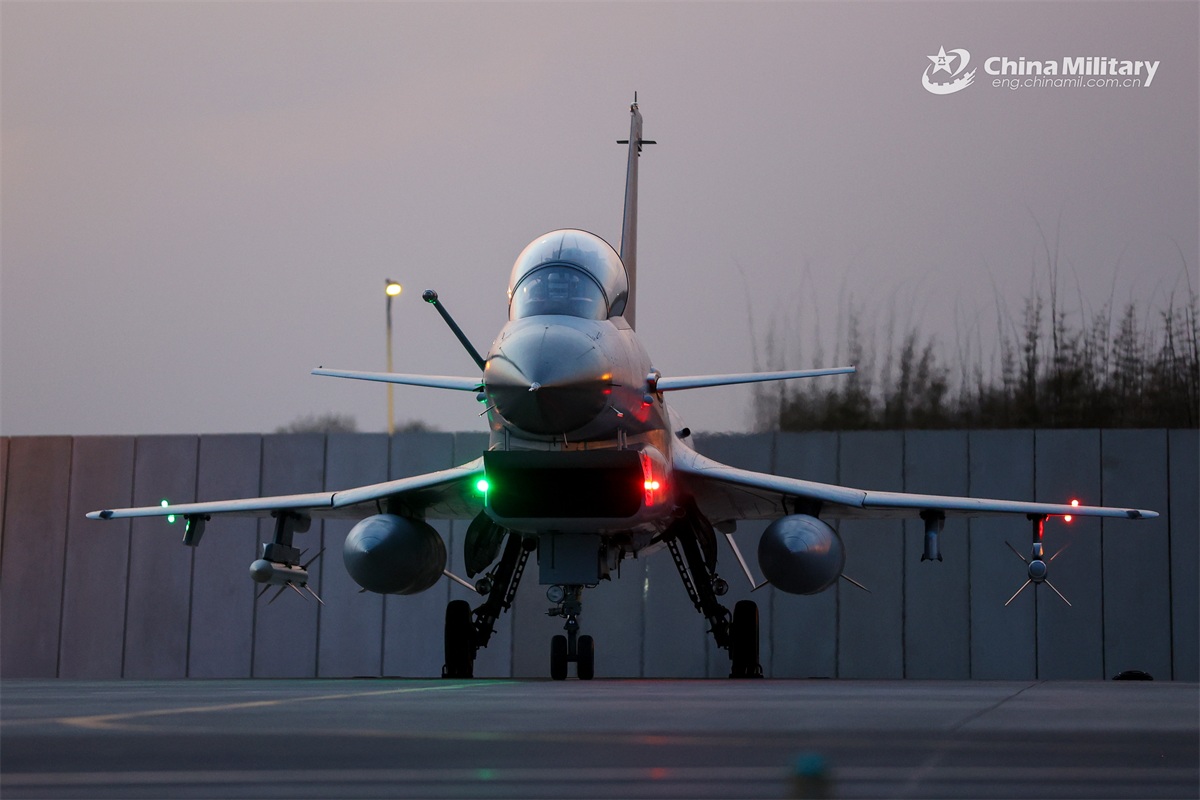
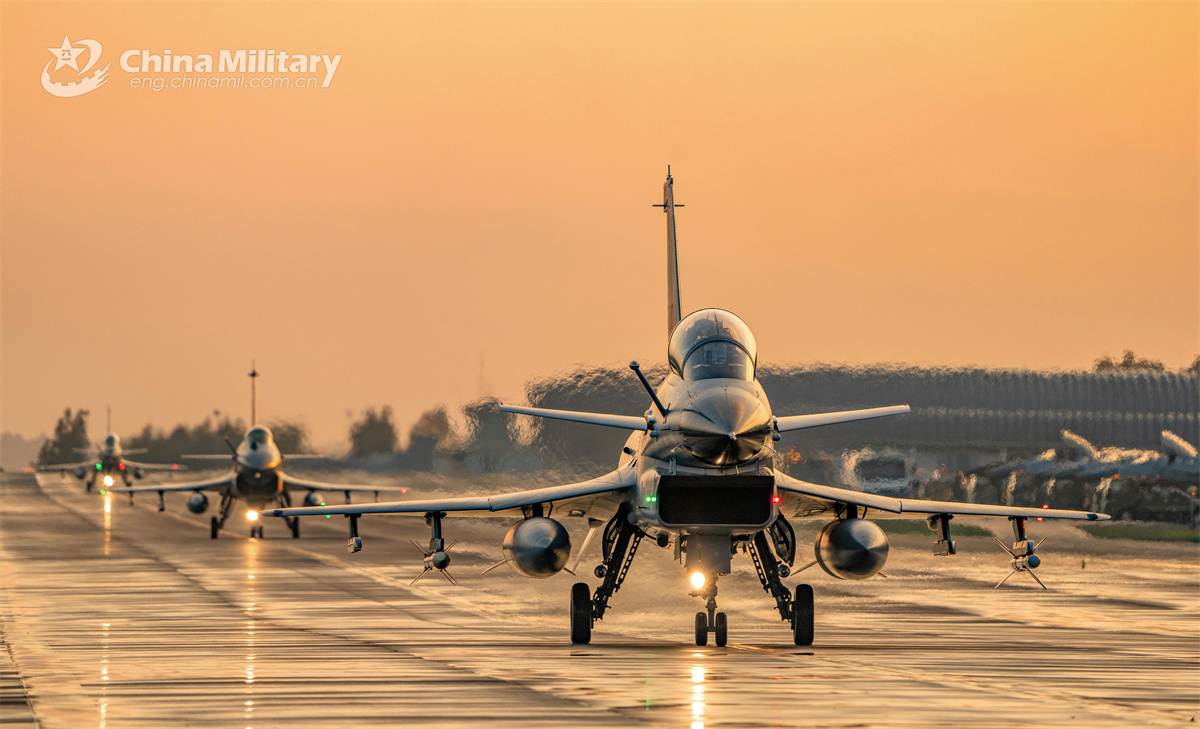
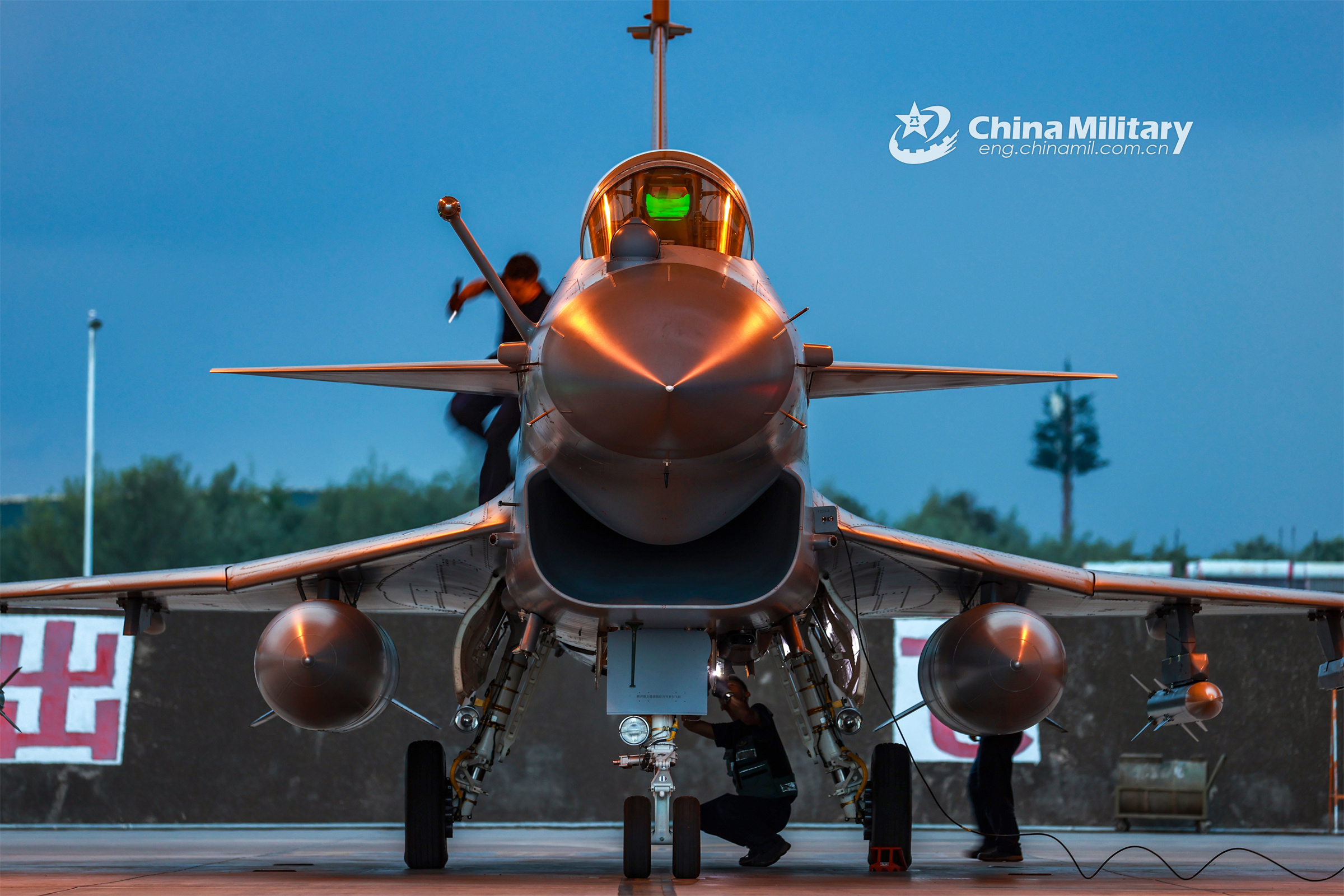
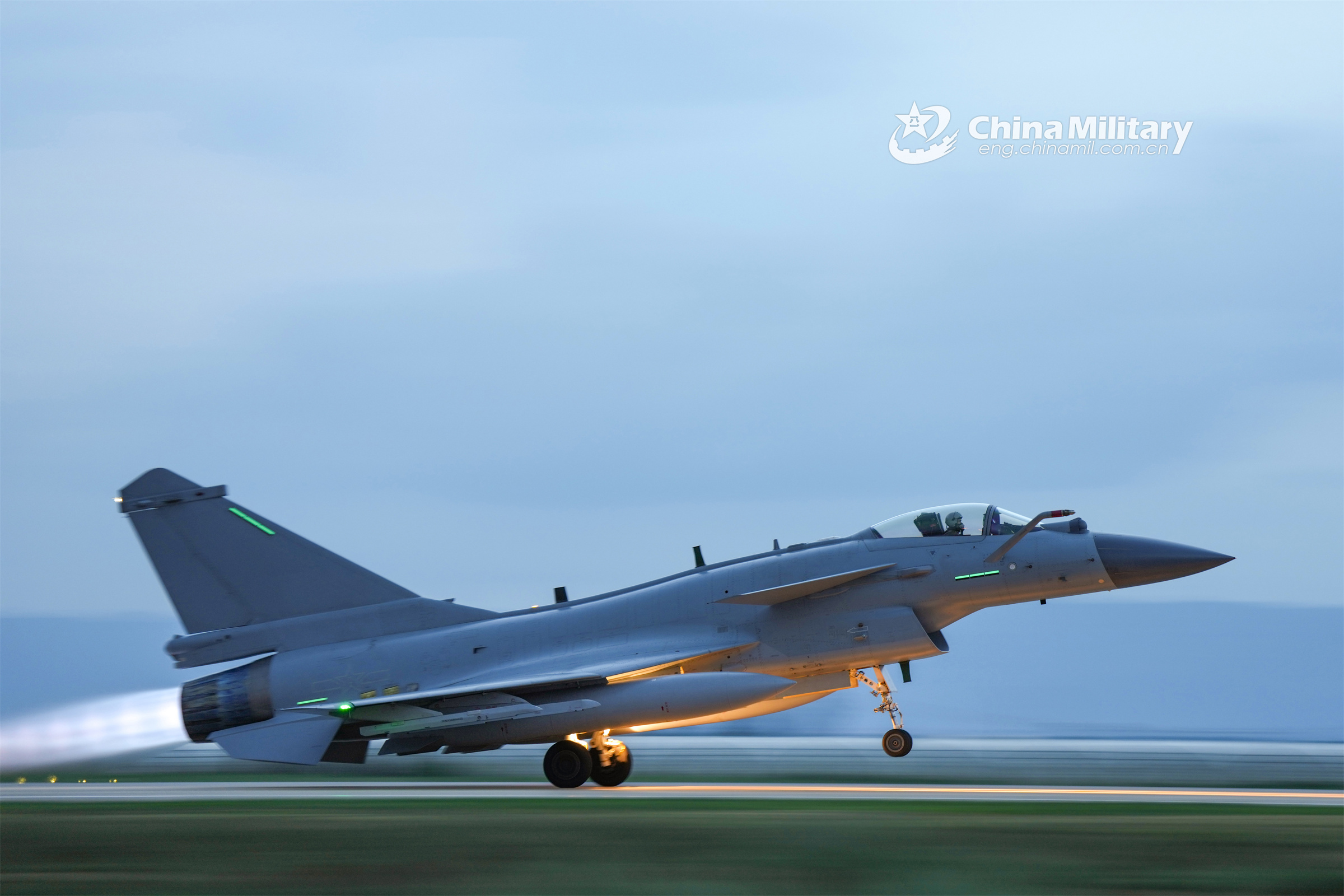
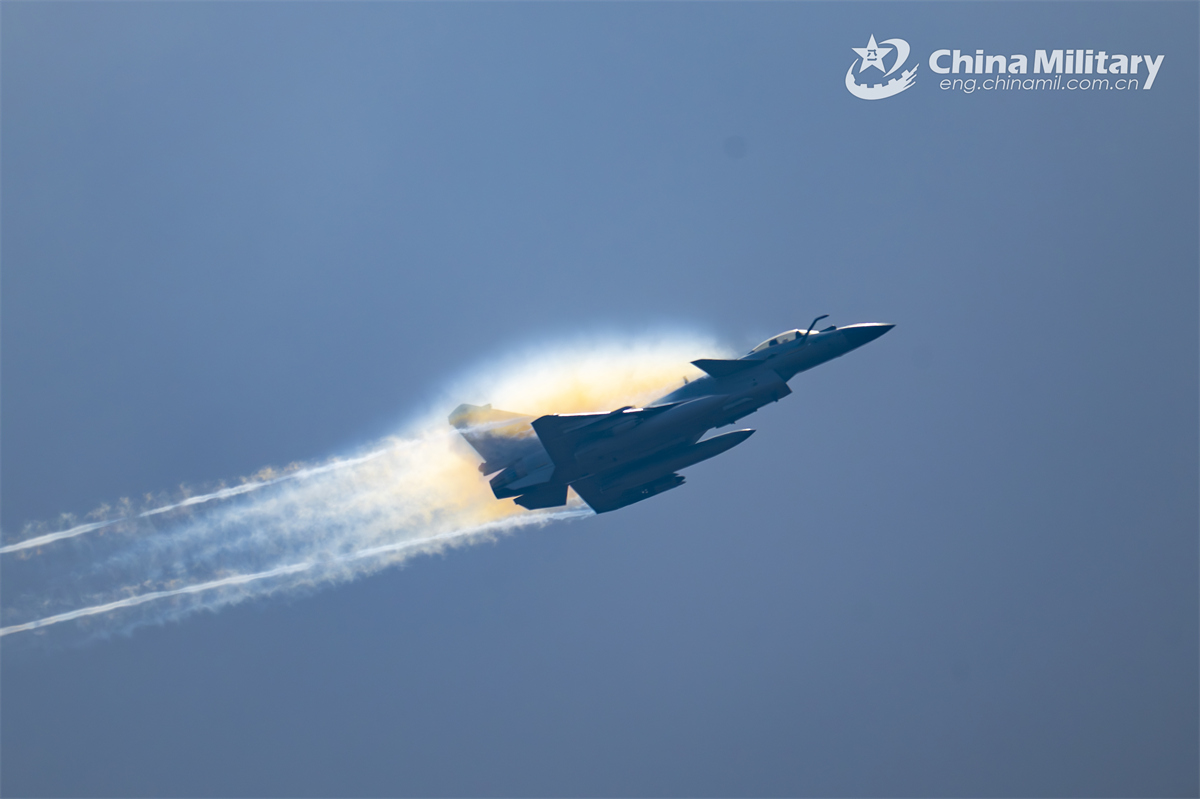
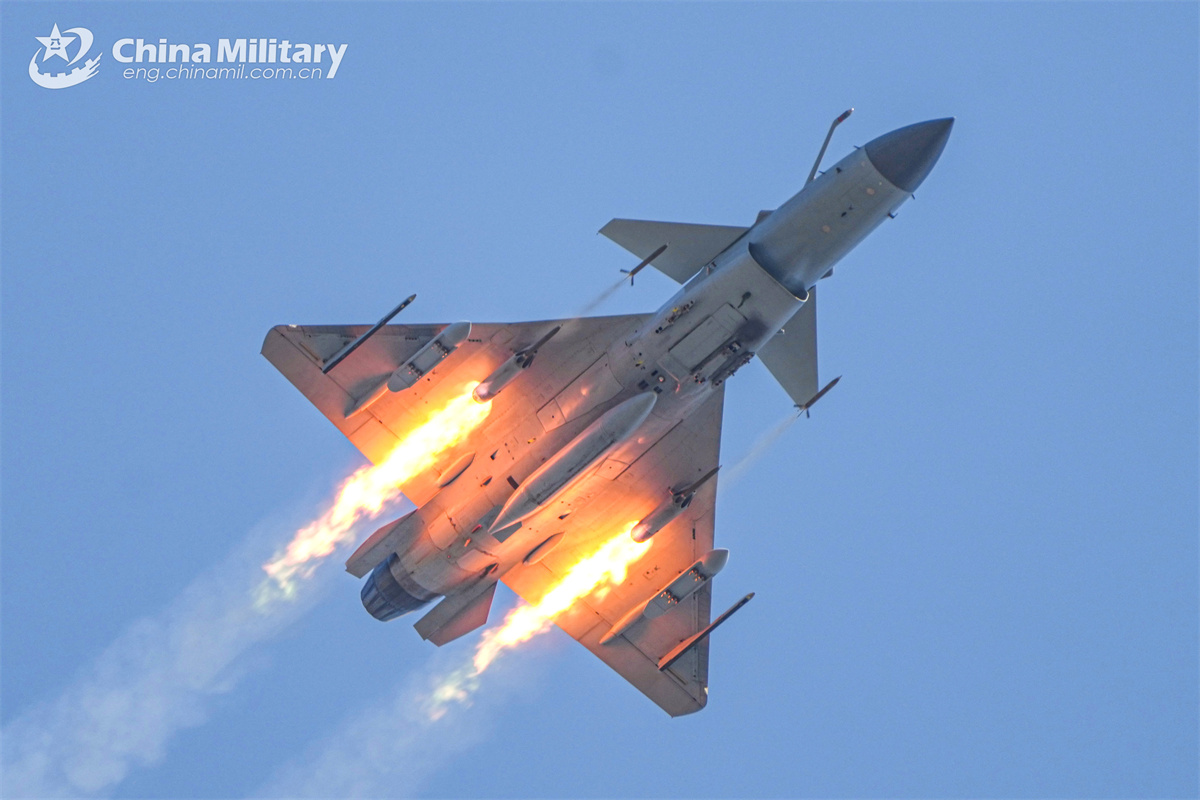
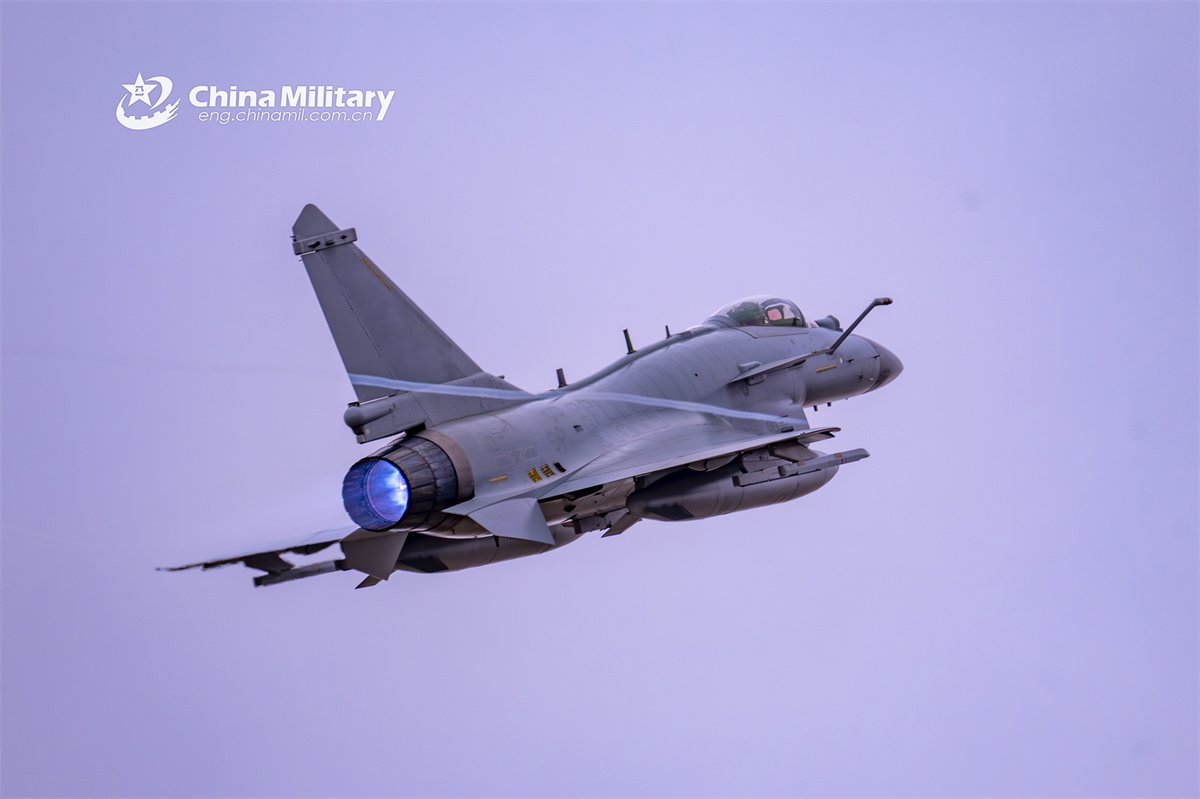
The development of the J-10 fighter program started in the mid-1980s, initially referred to as Project 8610. It was originally designed as a high-performance air superiority fighter to face emerging fourth-generation aircraft, including the F-16 and MiG-29. However, with the Cold War’s conclusion and evolving requirements, the focus shifted towards creating a multi-role fighter suitable for both air-to-air and ground attack missions. Ultimately, the J-10 serves as a successor to the older Chinese J-7 and Q-5 fighters.
The development of the J-10 benefited from the canceled Israeli Lavi lightweight fighter project, which itself is similar to and derived from the American F-16.
The J-10 was originally intended to be powered by a Western jet engine, but the arms embargo imposed on China by the United States and the European Union in 1989 forced China to seek assistance from Russia. As a result, the J-10’s airframe underwent modifications to accommodate the larger Russian Saturn AL-31F engine.
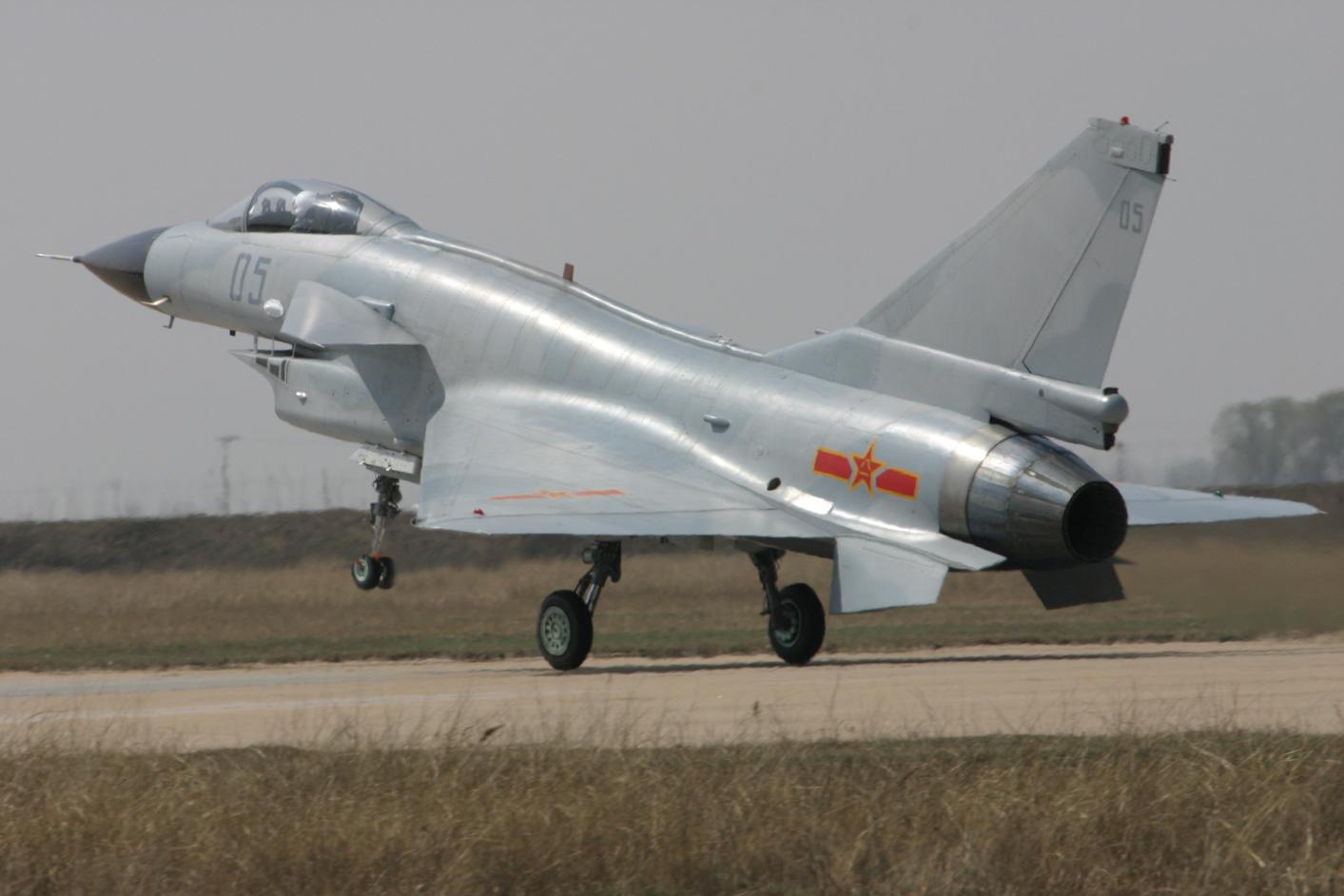
J-10A fighter jet with Russian AL-31 engine
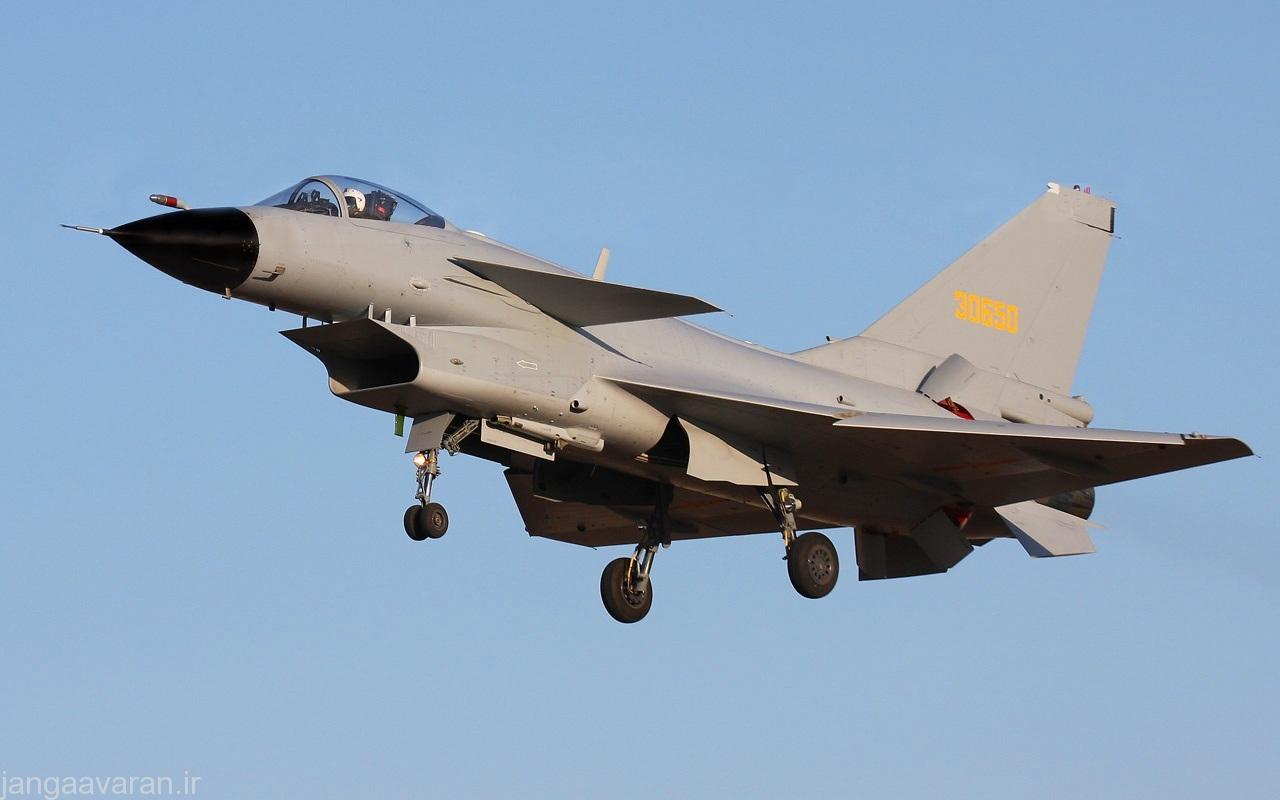
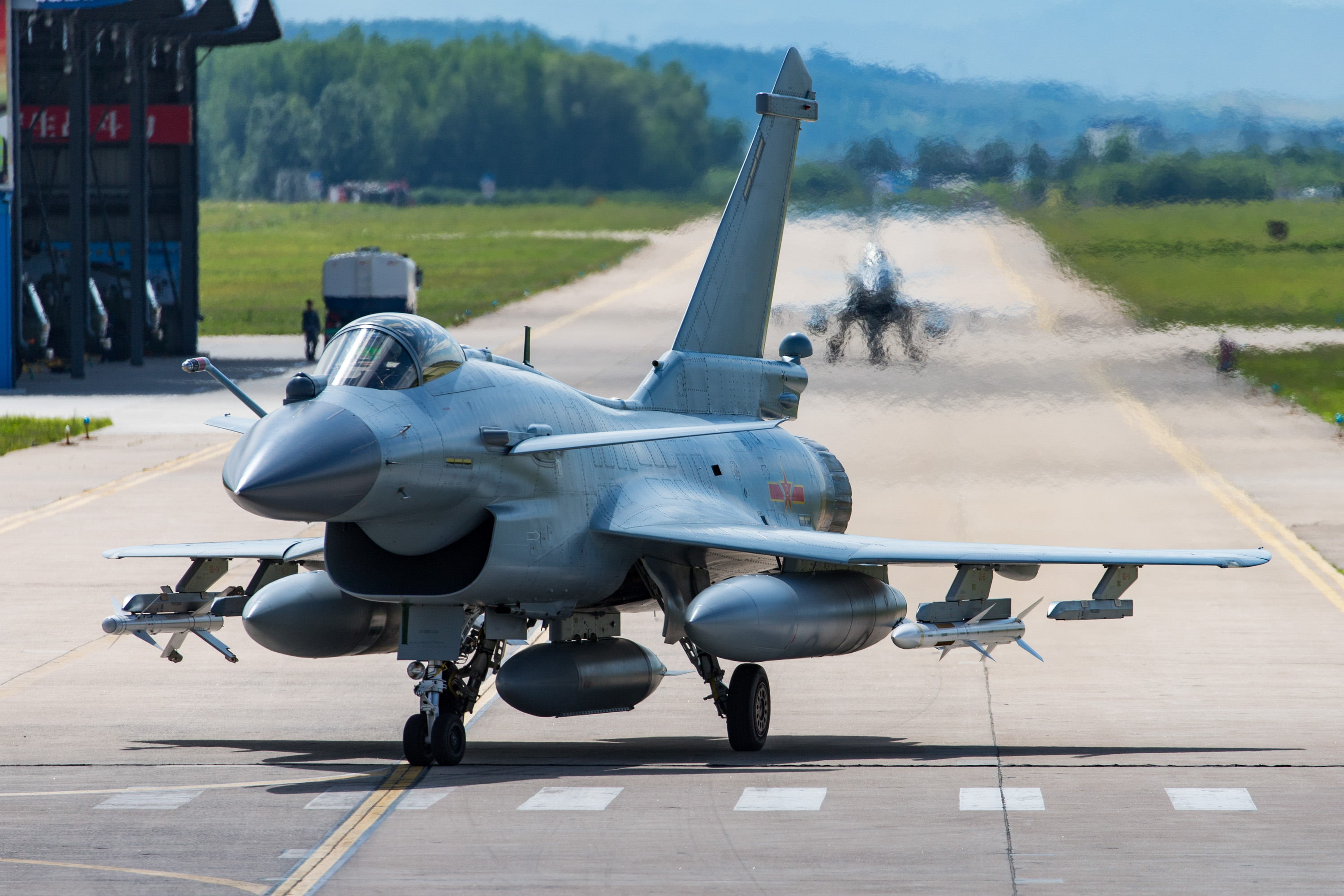
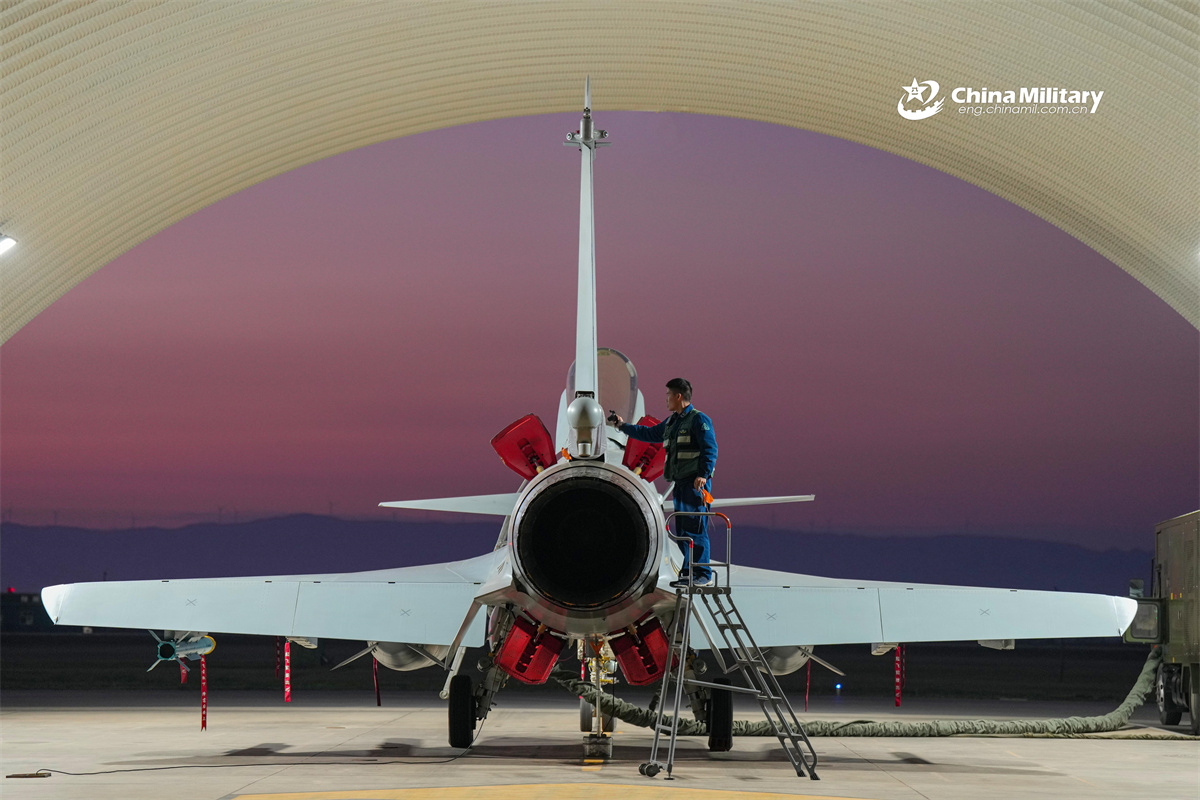
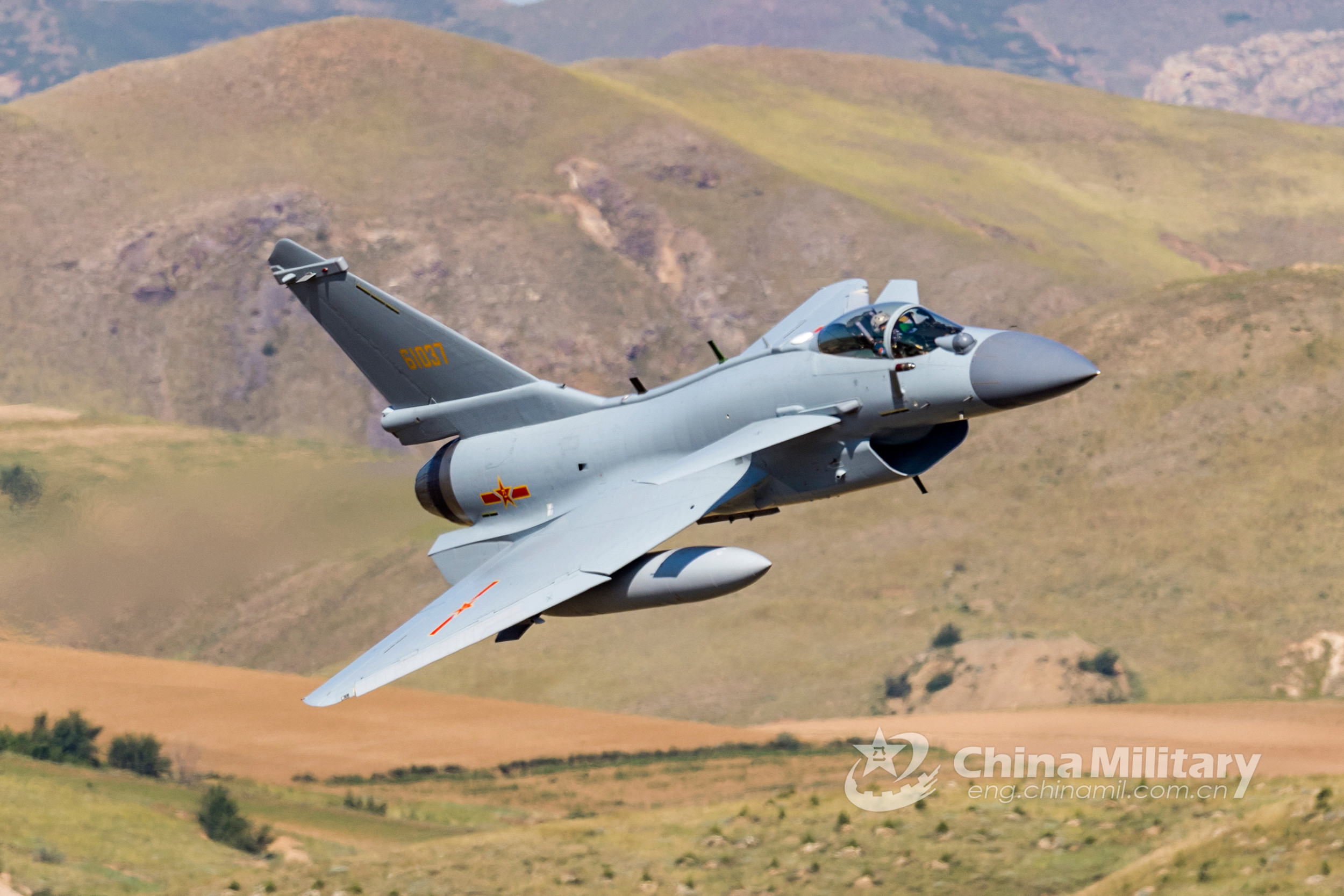
The design of the J-10 features a tailless delta wing, incorporating a vertical rudder and two fixed inverted ventral fins located on the underside of the fuselage near the tail (engine). Additionally, it has two canards positioned at the nose.
The J-10 fighter made its inaugural flight on March 22, 1998, and began operational service with the People’s Liberation Army in 2003. Between 2004 and 2006, an initial batch of 100 units in both single-seat and two-seat variants was delivered to the PLA Air Force (PLAAF).
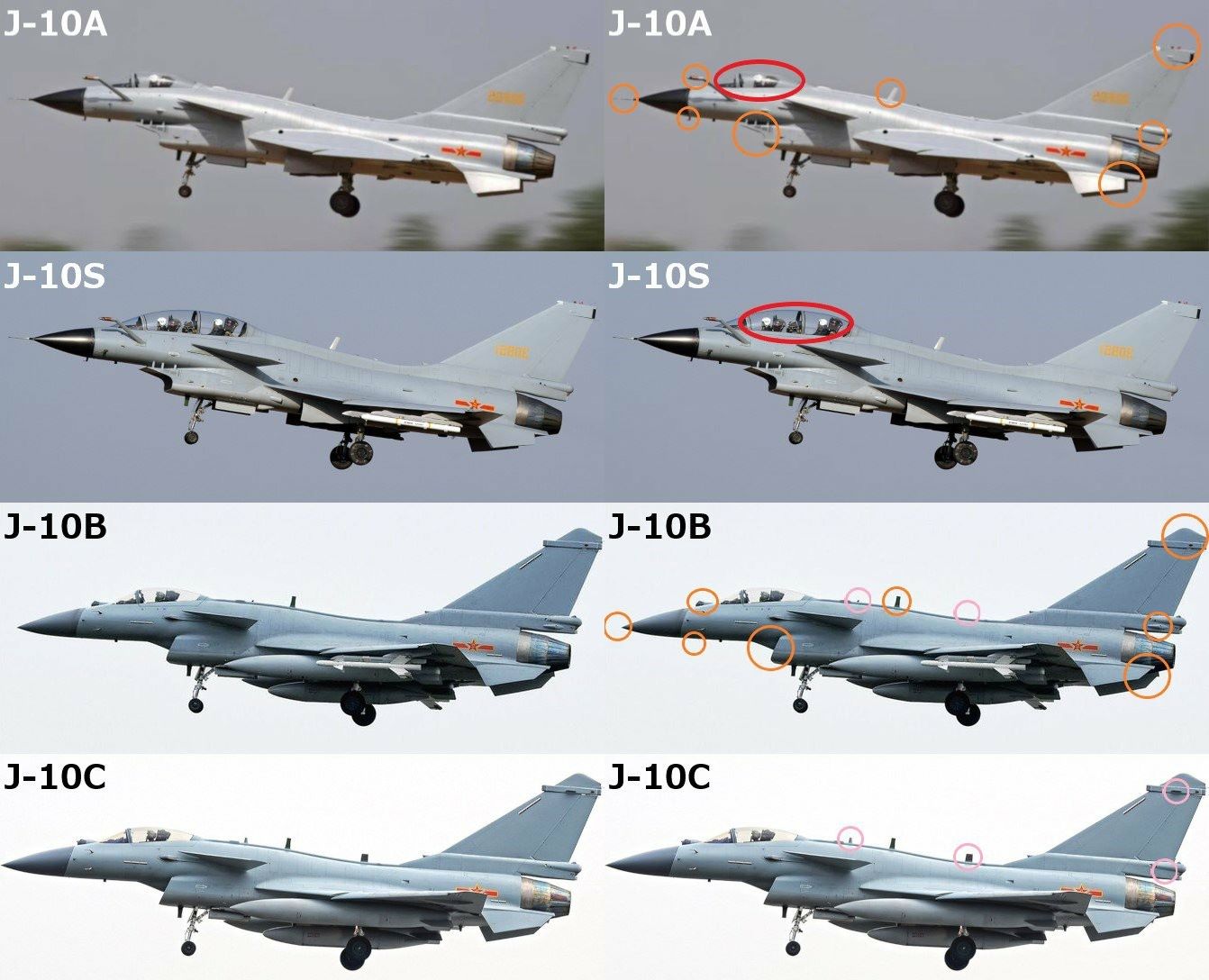
The Chengdu J-10 has been developed into four variants, designated with the suffixes A, S, B, and C, each featuring slight differences in appearance.
Appearance differences in different models of the J-10 fighter jet
J-10A: The J-10A is the first variant introduced in the J-10 family. It is reported that approximately 300 units of this model are currently in service, although production has now ceased. The J-10A is equipped with a domestic Type 1473 pulse-Doppler radar, which can track up to 10 targets simultaneously and engage 2 targets with semi-active radar-guided PL-11 air-to-air missiles, or 4 targets using active radar-guided PL-12 (SD-10) air-to-air missiles. The Type 1473 radar is recognized as China’s first successful and operational pulse-Doppler radar system. The J-10A fighter is powered by a Russian Saturn AL-31FN turbofan engine, providing 79.43 kN of thrust in dry mode and 122.58 kN with afterburner. The naval variant of this model is known as the J-10AH.
J-10A
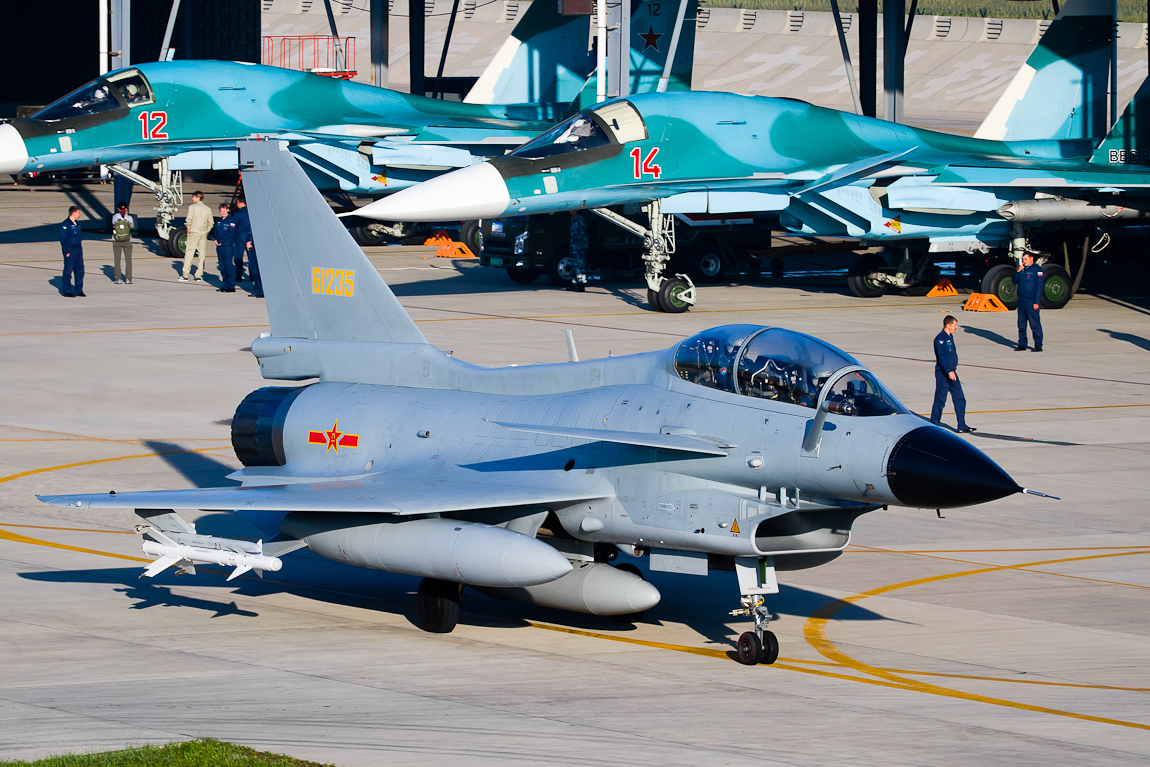
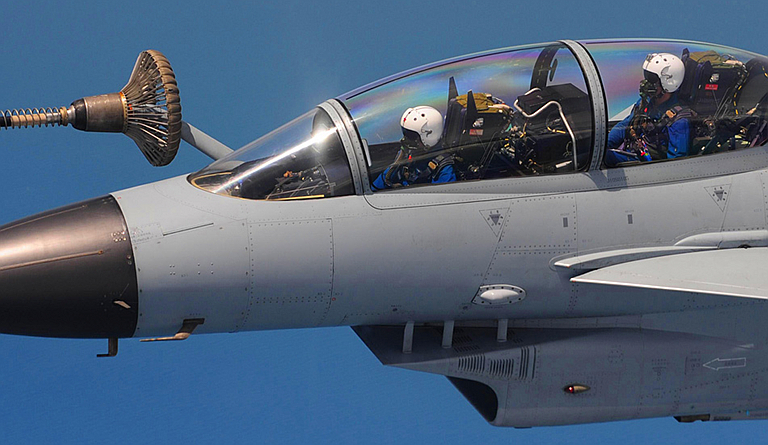
J-10S: A two-seat, trainer version of the J-10, which matches the performance and avionics of the J-10A. It features an extended front fuselage to fit an additional pilot seat. This aircraft serves both pilot training and standard fighter roles. The two-seat naval version is commonly referred to as the J-10SH.
J-10S two-seat fighter jet participating in a military exercise in RussiaJ-10S fighter jet undergoing aerial refueling
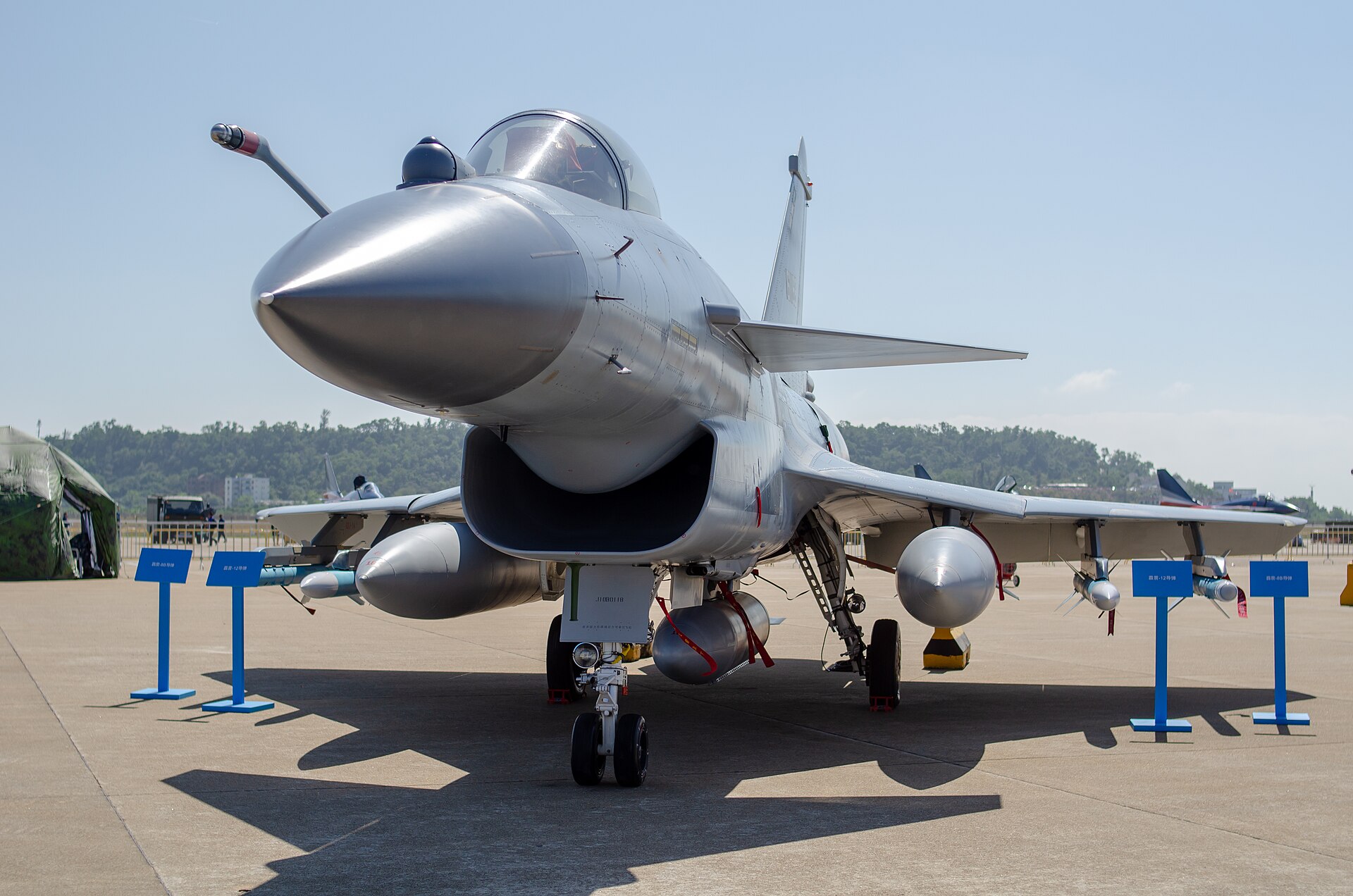
J-10B: An enhanced iteration of the J-10A, publicly unveiled in 2016. This model features a larger radome designed to accommodate the active electronically scanned array (AESA) radar system and infrared search/tracking suite (IRST) in the nose. It incorporates an electronic-optical targeting system (EOTS) and a redesigned air intake compared to the earlier version. Additionally, the aircraft boasts an upgraded avionics suite, which includes an indigenous passive electronic array (PESA) fire control radar capable of engaging four targets at once. Beyond standard armaments, the J-10B can deploy the new PL-10 infrared-guided and PL-15 active radar-guided missiles. Although the J-10B typically uses the AL31 engine, some variants are reportedly equipped with the WS-10.
J-10B
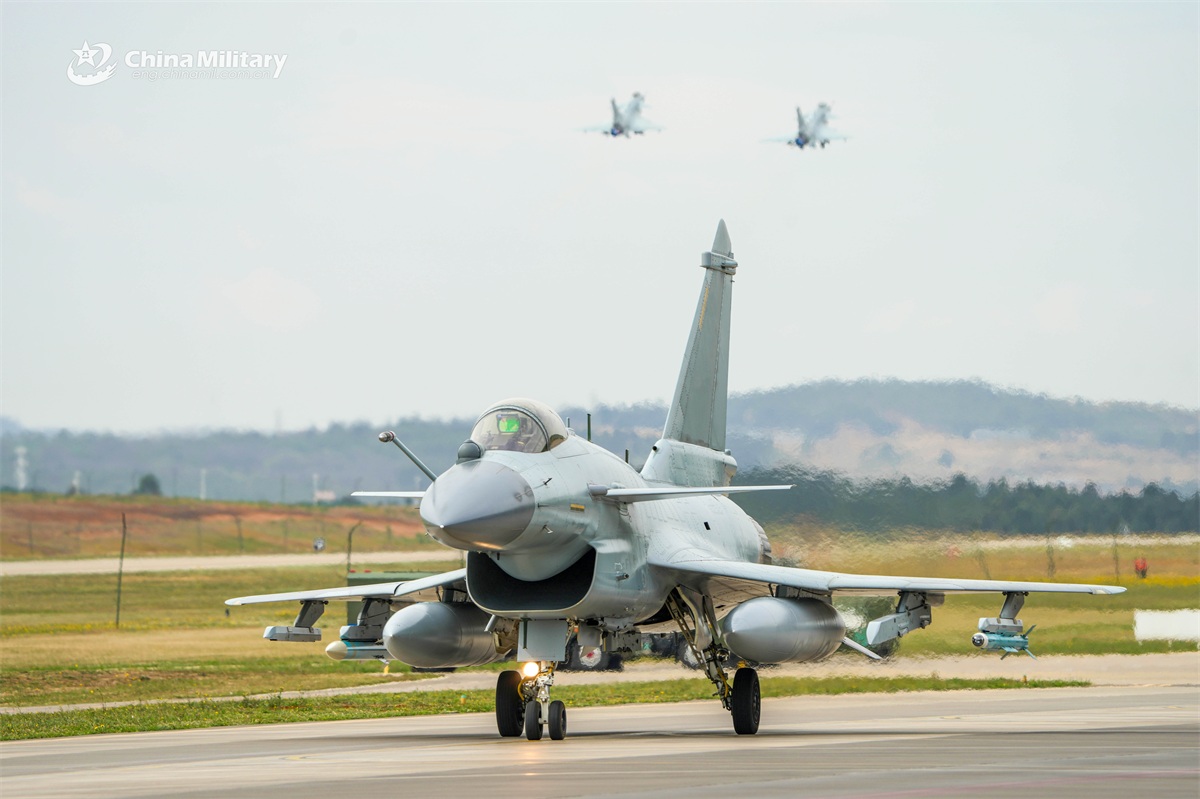
J-10C: This is the newest model in the J-10 series, which first flew in December 2013 and was introduced into service with the People’s Liberation Army Air Force (PLAAF) in 2018. Visually, it closely resembles the B model. Essentially, as an upgraded variant of the J-10B, this fighter incorporates all its predecessors’ capabilities in a more efficient and optimized manner. The J-10C features the Chinese Shenyang WS-10B engine and the domestically developed active electronically scanned array (AESA) fire control radar designated KLJ-10. This advanced radar can identify small targets with a radar cross-section (RCS) of 5 square meters from over 200 km away. Additionally, the J-10C is armed with short-range PL-10 air-to-air missiles featuring infrared guidance and long-range PL-15 air-to-air missiles with active radar guidance. The J-10C is characterized as a Chinese 4.5th generation fighter.
Chinese Air Force J-10C fighter jet
The article further discusses additional details and features of the J-10 fighter, which include:
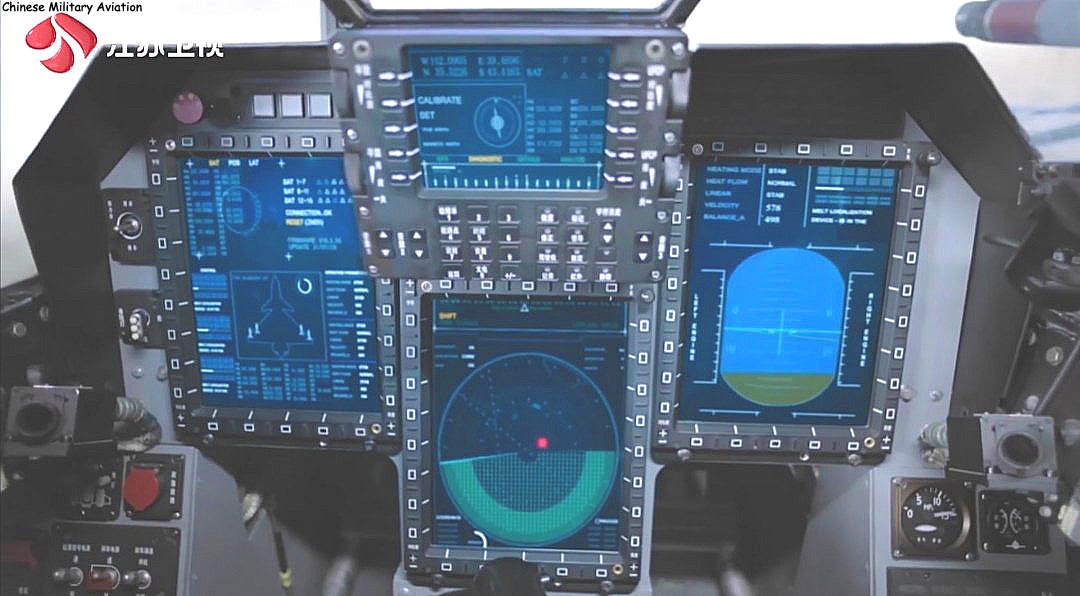
The J-10 cockpit incorporates “hands on throttle and stick” (HOTAS) controls, enabling operation of weapon systems without leaving the aircraft’s essential controls. It includes one color and two monochrome liquid crystal multifunction displays (MFDs), along with a holographic heads-up display (HUD) that provides a wide field of view. Additionally, the aircraft is equipped with the domestically developed Helmet Mounted Site (HMS).
Images of cockpit displays, head-up display, and cabin overview
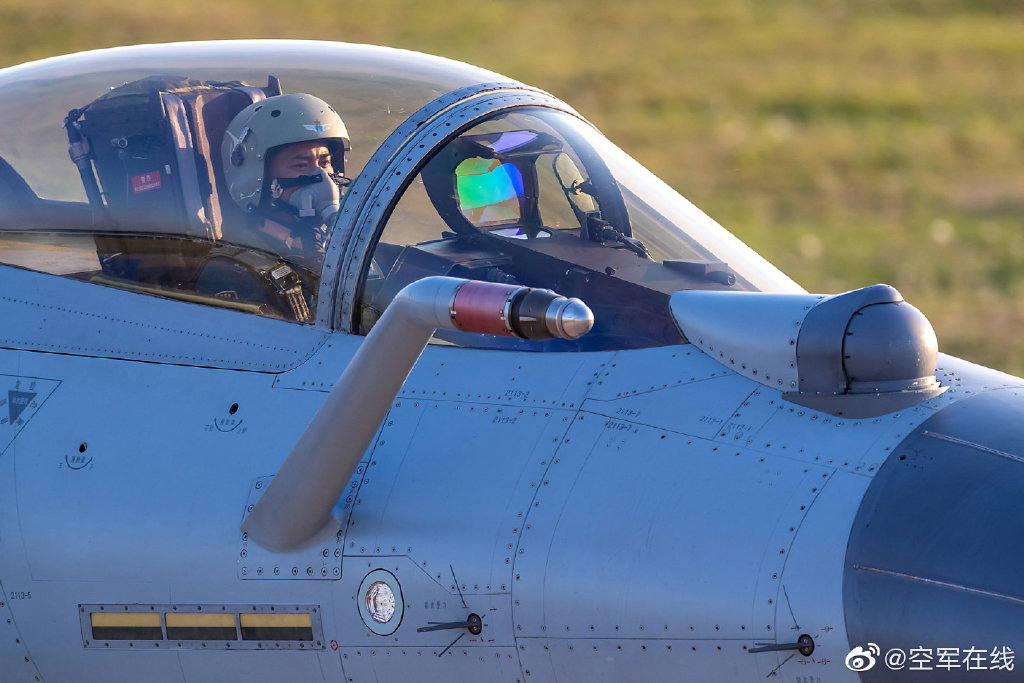
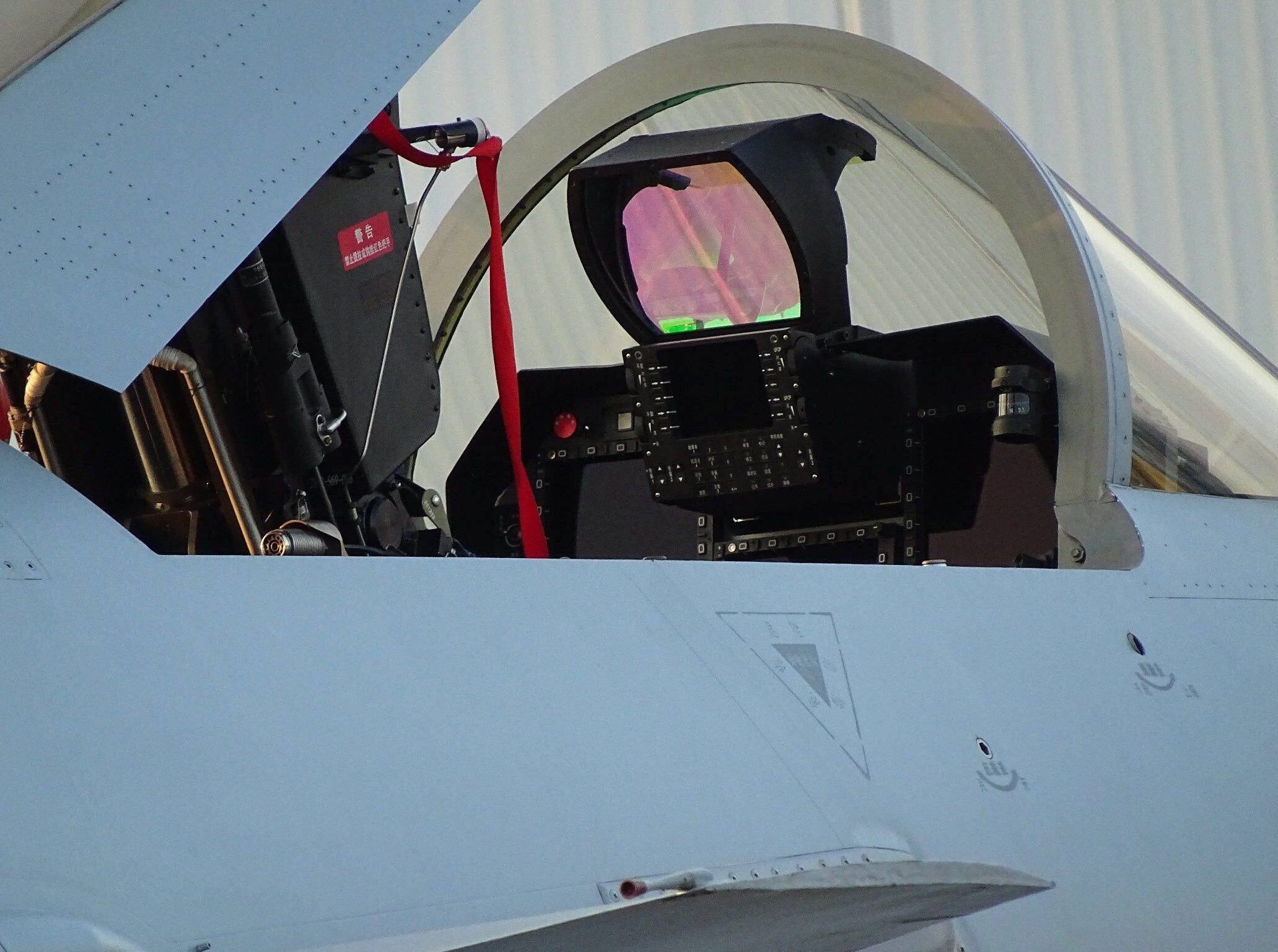
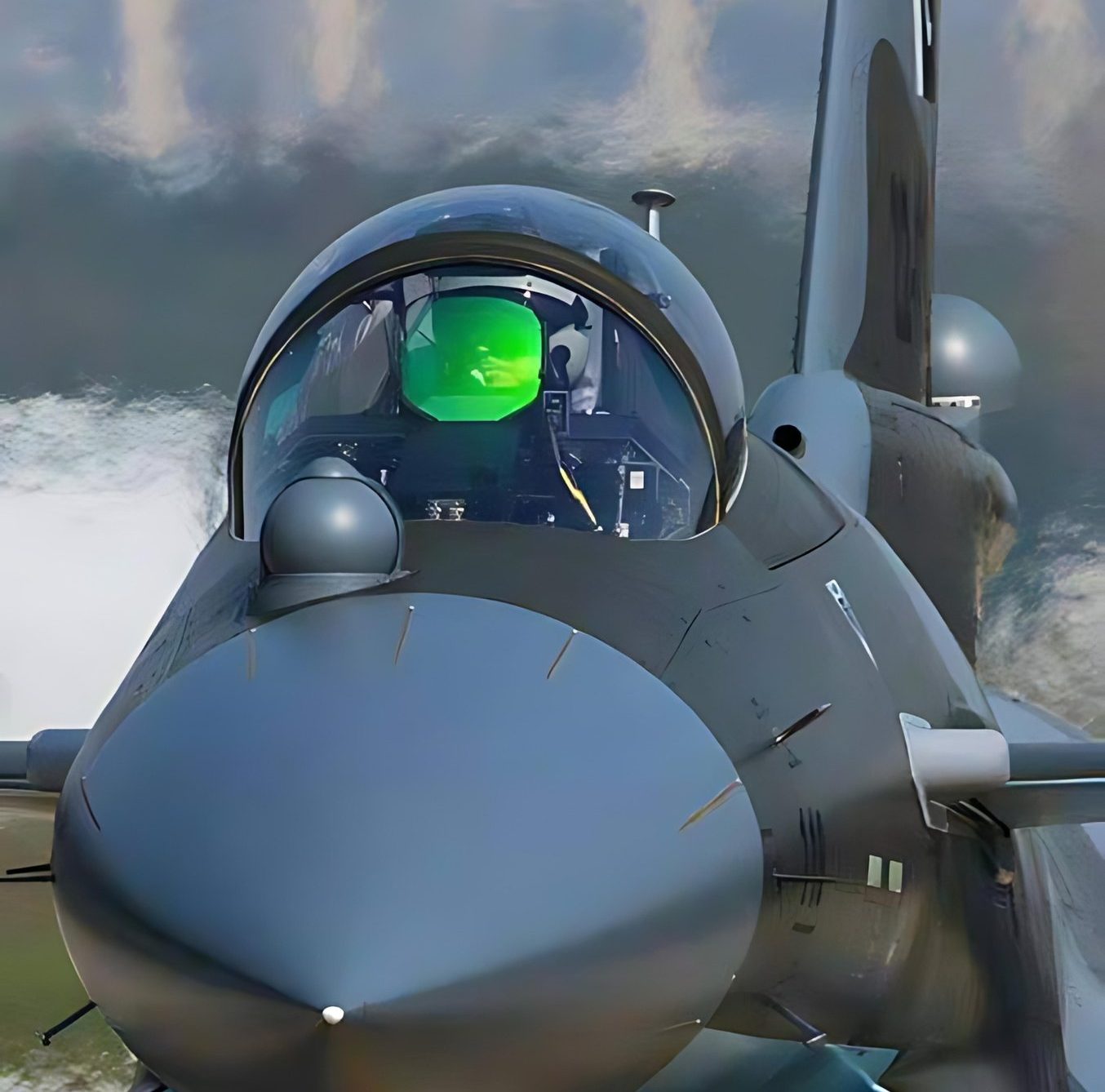
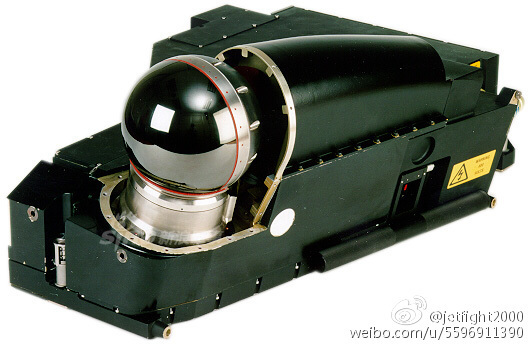
The J-10 B and C fighters feature an electronic-optical targeting system (EOTS) positioned on the right side in front of the cockpit. This system comprises an infrared search and track (IRST) sensor along with a laser rangefinder (LR), enabling passive target identification without activating the fire control radar, thus minimizing the chances of the aircraft being detected.
Electro-optical targeting system in front of the cockpit of a Pakistani J-10C fighter jetIRST/LRClick to view larger size
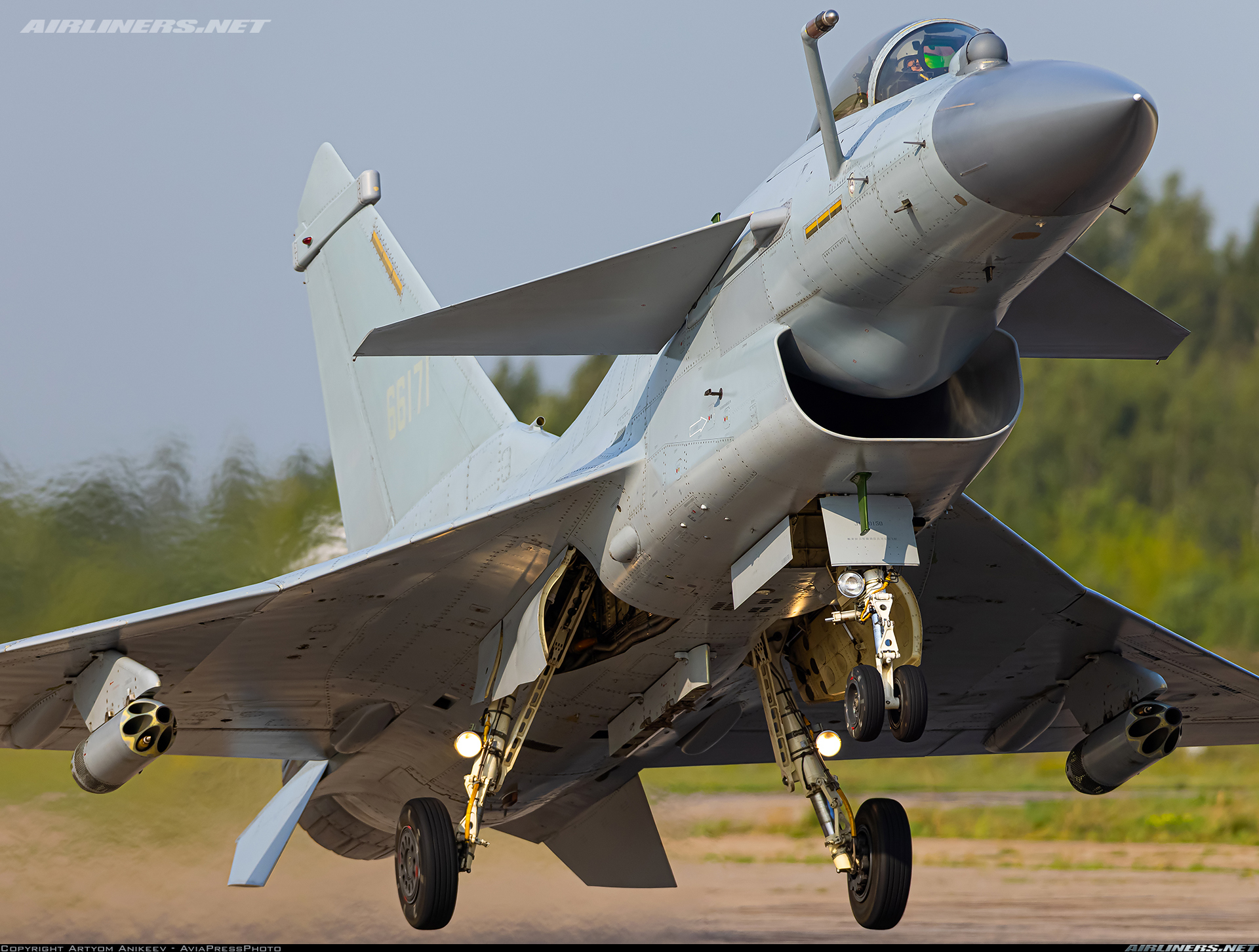
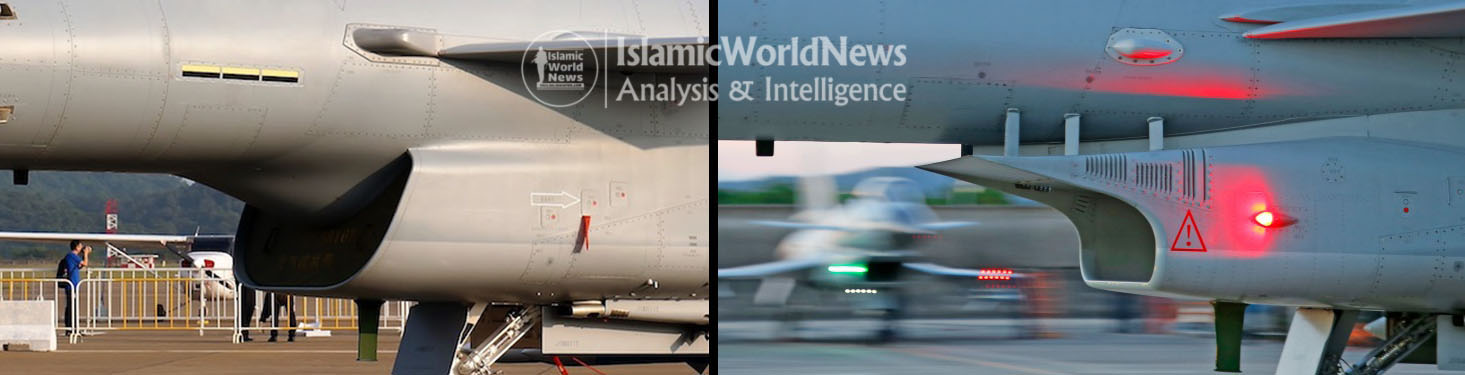
The J-10B and J-10C models feature a diverterless supersonic inlet (DSI). This design removes all moving components from the air inlet, thereby decreasing the overall weight and minimizing the aircraft’s radar signature.
The difference in air intake between the J-10A (right image) and the J-10B/C (left image) is visible.
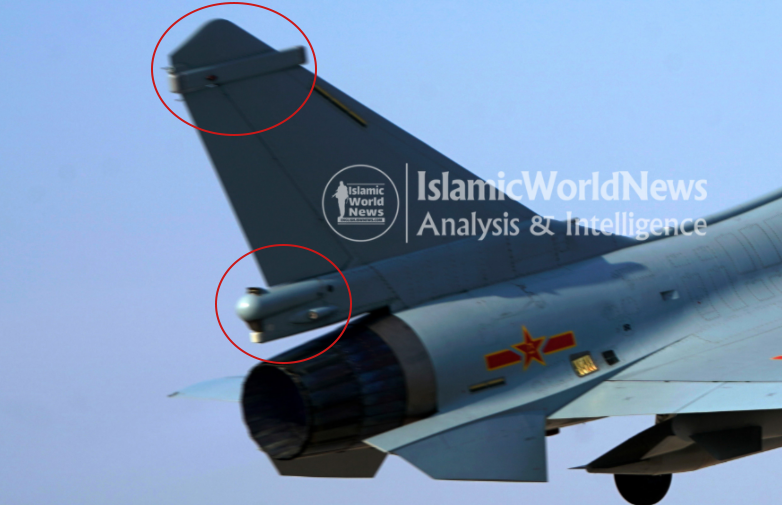
The J-10B and J-10C feature a curved upper edge on the tail, contrasting with the flat tail of the J-10A. Additionally, a significant lip has been introduced at the tail’s tip to house electronic warfare and electronic countermeasures (EW/ECM) systems. The fuselage is equipped with four black ECM antenna arrays: a larger one positioned on each side of the cockpit and a smaller one on each side of the rear fuselage close to the engine nozzle.
The EW/ECM equipment in the tail section of the J-10B fighter
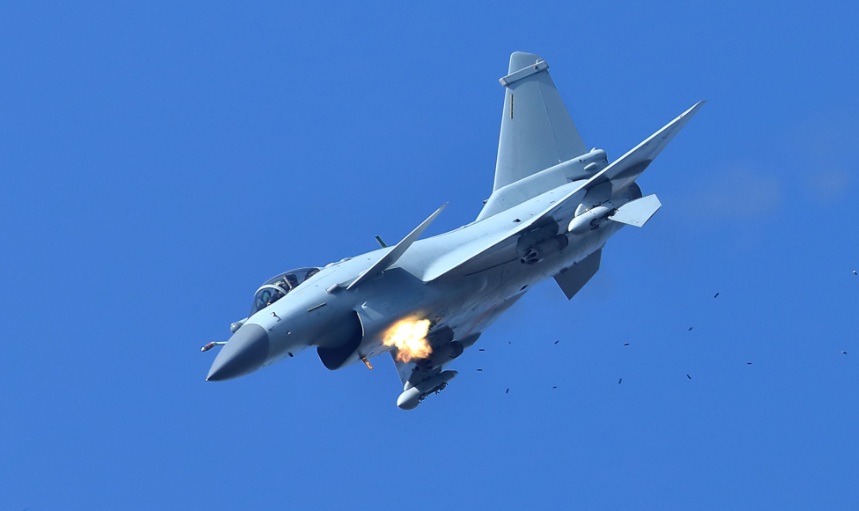
The fighter jet is equipped with a Type 23-3 twin-barreled 23mm cannon, which is a reverse-engineered Russian GSh-23L cannon, and is mounted on the left side of the front landing gear.
J-10B fighter jet firing with a 23mm cannon
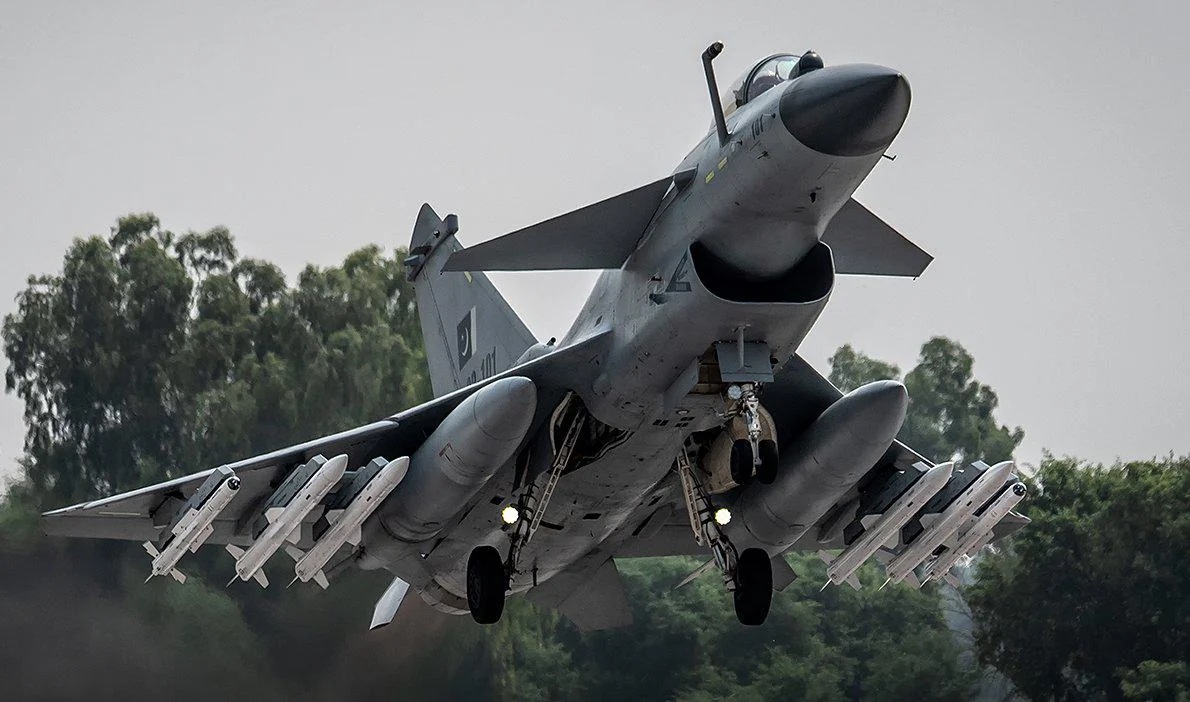
The fighter is equipped with 11 external weapons bays: six located under the wings, two beneath the air intakes, and three under the fuselage. Its primary air-to-air armaments consist of the PL-15 long-range missile, the PL-11 semi-active radar-guided medium-range missile, the PL-12 (SD-10) active radar-guided medium-range missile, and the PL-8 short-range infrared missile.
The J-10C can carry the Russian Vympel R-73 (AA-11 Archer) or R-77 (AA-12 Adder) missiles, as well as the KH-31P anti-radar missile.
For ground attack missions, the aircraft can carry conventional low-drag bombs weighing up to 250 kg or laser-guided bombs. A laser targeting pod can also be carried under the fuselage for target designation. More complete information on the weapons is provided at the end of the article in the fighter specifications section.
Pakistani J-10C fighter equipped with PL-15E and PL-10E missiles and additional fuel tank
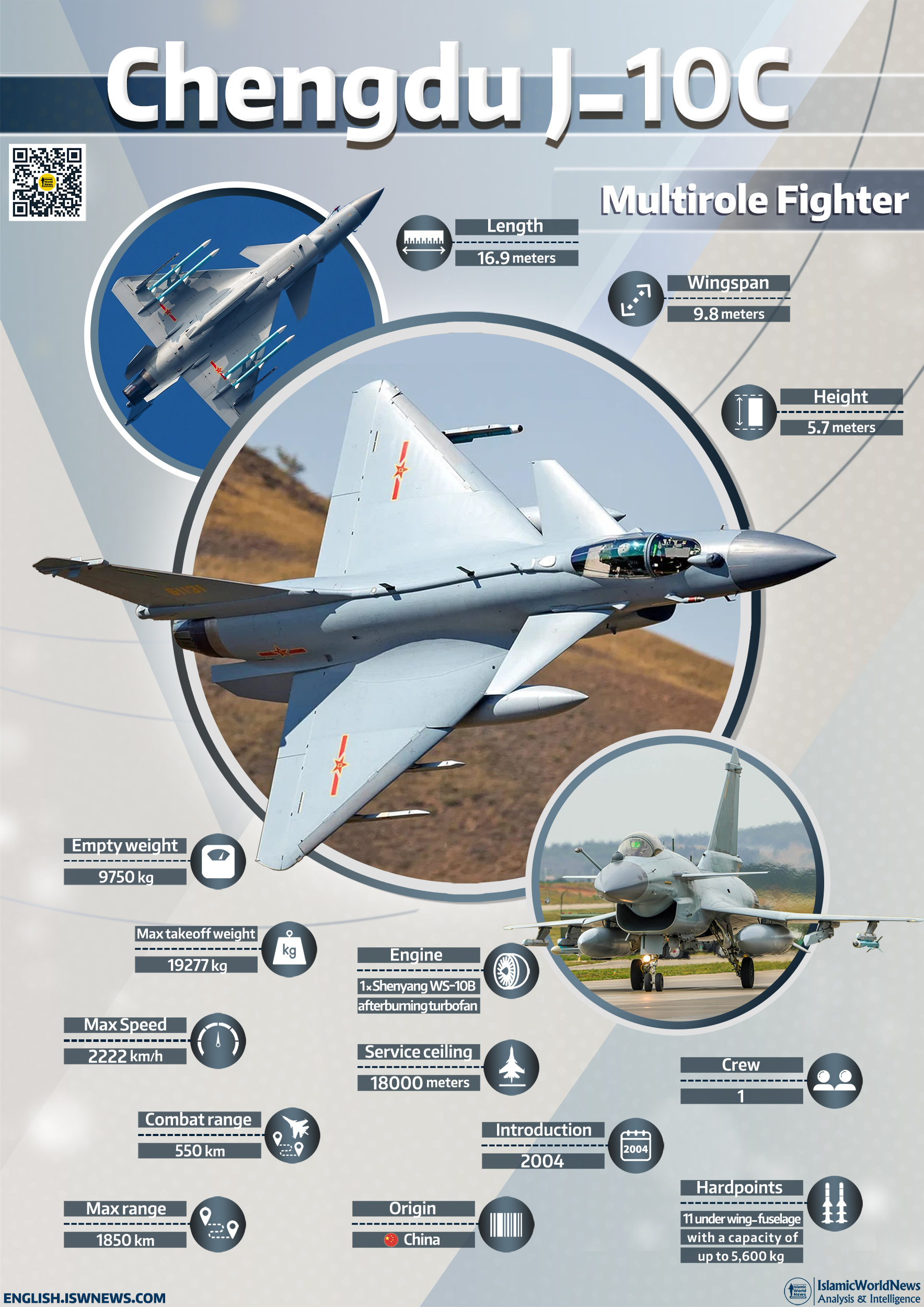
The J-10C has an empty weight of approximately 9,750 kg and weighs 14,000 kg in a normal air-to-air combat configuration. In its maximum takeoff configuration, it weighs 19,277 kg. The aircraft has an internal fuel capacity of 4,950 kg and can carry a maximum external weapons load of 5,600 kg. It is capable of reaching a maximum speed of Mach 1.8 at high altitude and Mach 1.2 at sea level.
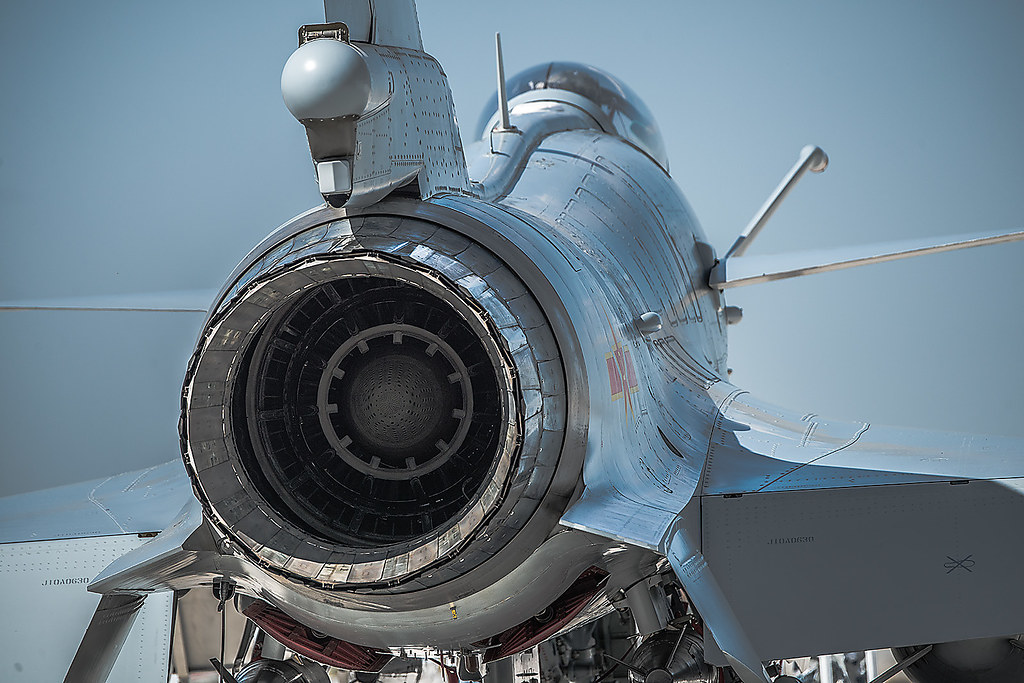
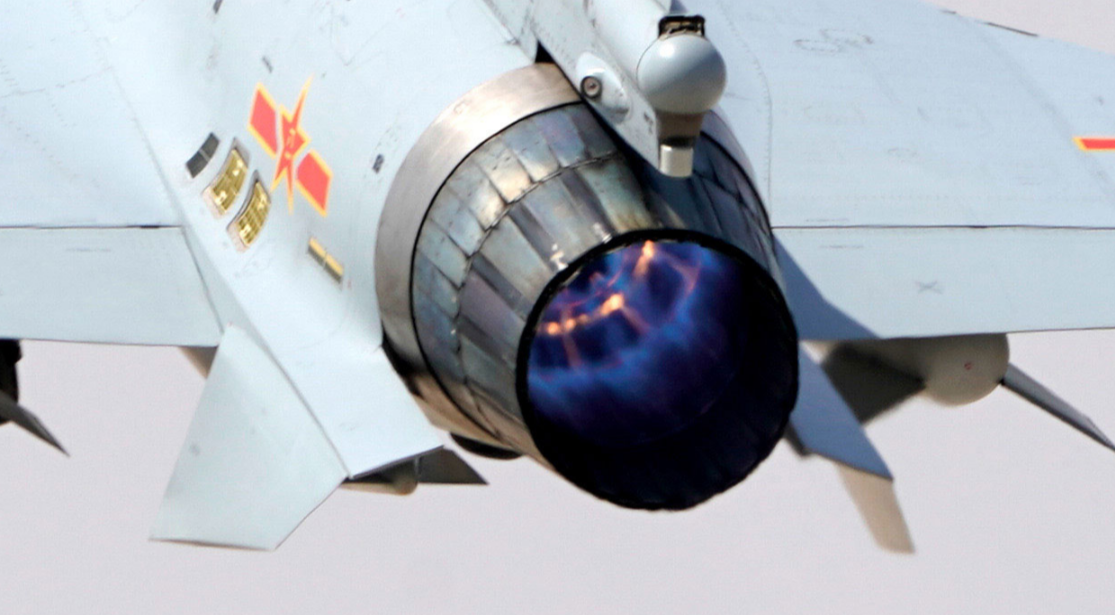
Regarding its engine, the J-10C is powered by the domestically produced Shenyang WS-10B engine, which provides a thrust of 144 kN (32,000 lbf). This engine has a service life of 1,500 hours. A newer variant, the WS-10B-3, features a thrust vectoring nozzle (TVC) and was showcased at the 2018 Zhuhai Air Show in China.
Overall, the WS-10 engine, developed from the Russian AL-31 engine, has multiple versions used to power various Chinese fighter jets, including the J-10, J-11, J-15, J-16, and the J-20.
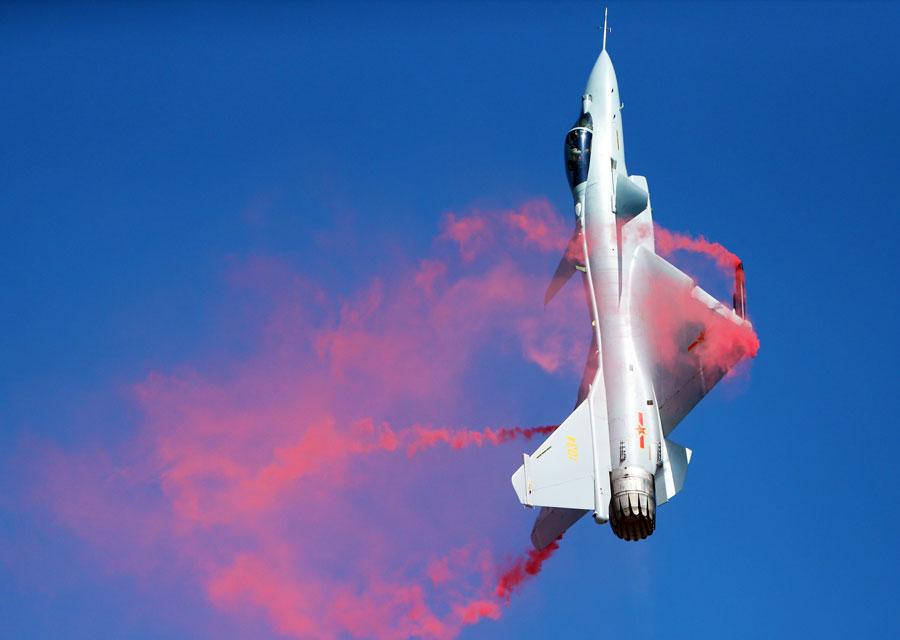
WS-10 engineA Chinese J-10B fighter jet equipped with a WS-10B-3 engine performs the “Pugachev Cobra” maneuver at the 2018 Zhuhai Air Show [Photo by ZHOU GUOQIANG/FOR CHINA DAILY]
Pakistan is the only country other than China to operate J-10 warplanes. The Pakistan Air Force operates 20 J-10CEs, with another 16 in the process of production and delivery.
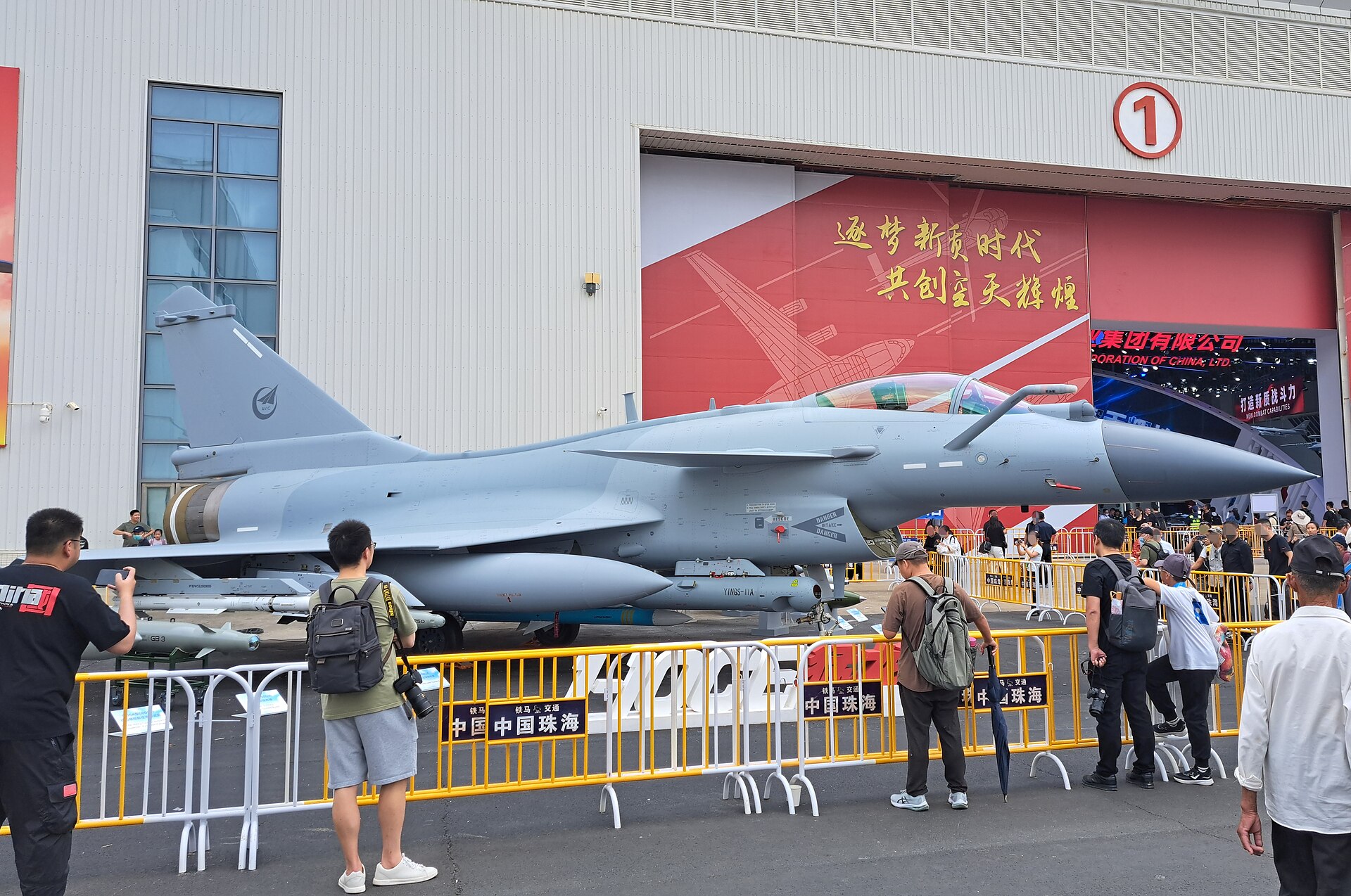
J-10CE fighter jet for export at the 2024 Zhuhai Air Show
In May 2025, during the Indo-Pakistan air-to-air combat, the Pakistan Air Force’s J-10Cs successfully shot down at least four aircraft from the Indian Air Force, which were of French and Russian origin, using PL-15E missiles. This operation marked a significant milestone for the J-10C fighter jets.
The PL-15 missile poses a considerable threat to American forces, as it can easily place fighter jets equipped with AIM-120 in a vulnerable position in the Pacific region. The Chinese version of the PL-15 has a range of 200–300 km, while its export variant, the PL-15E, utilized by the Pakistan Air Force, has an effective range of about 145 km. This missile is powered by a dual-pulse solid-fuel rocket motor, enabling it to reach speeds exceeding Mach 5. It is also equipped with an active electronically scanned array (AESA) radar seeker and a mid-flight datalink for enhanced targeting capabilities.
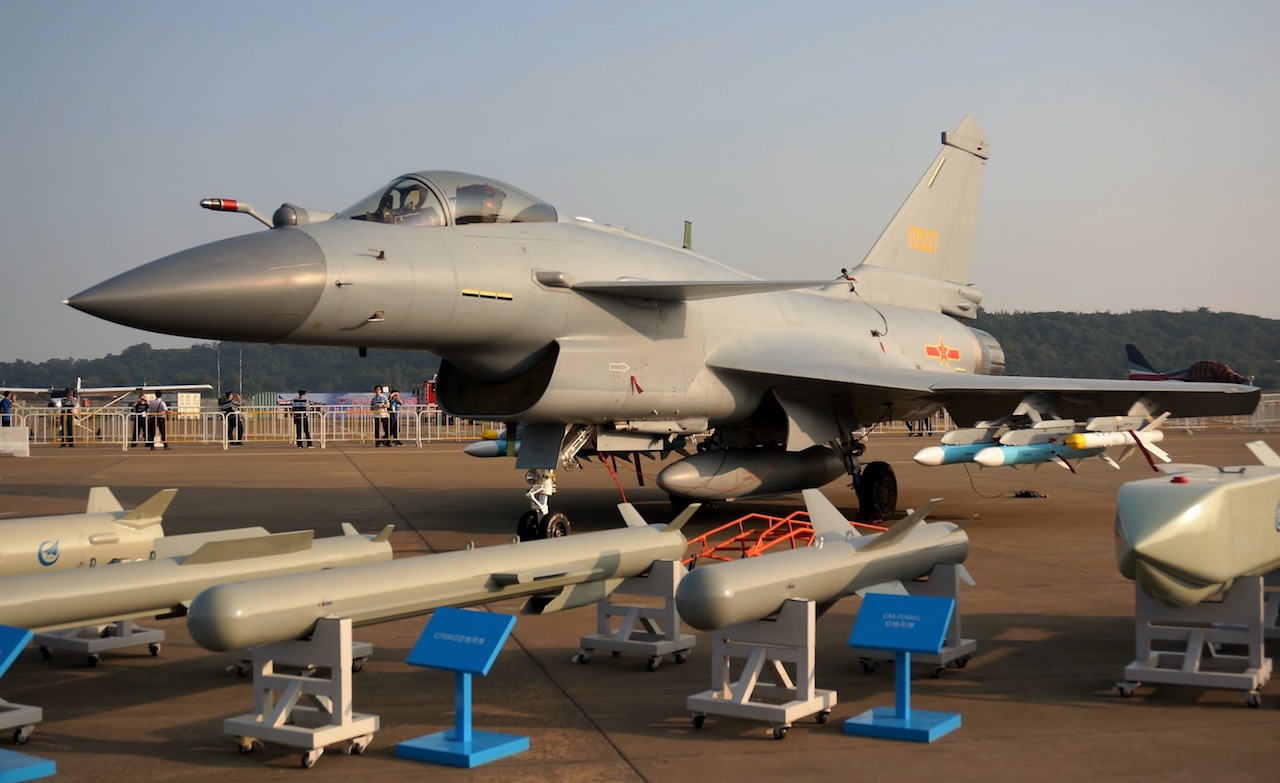
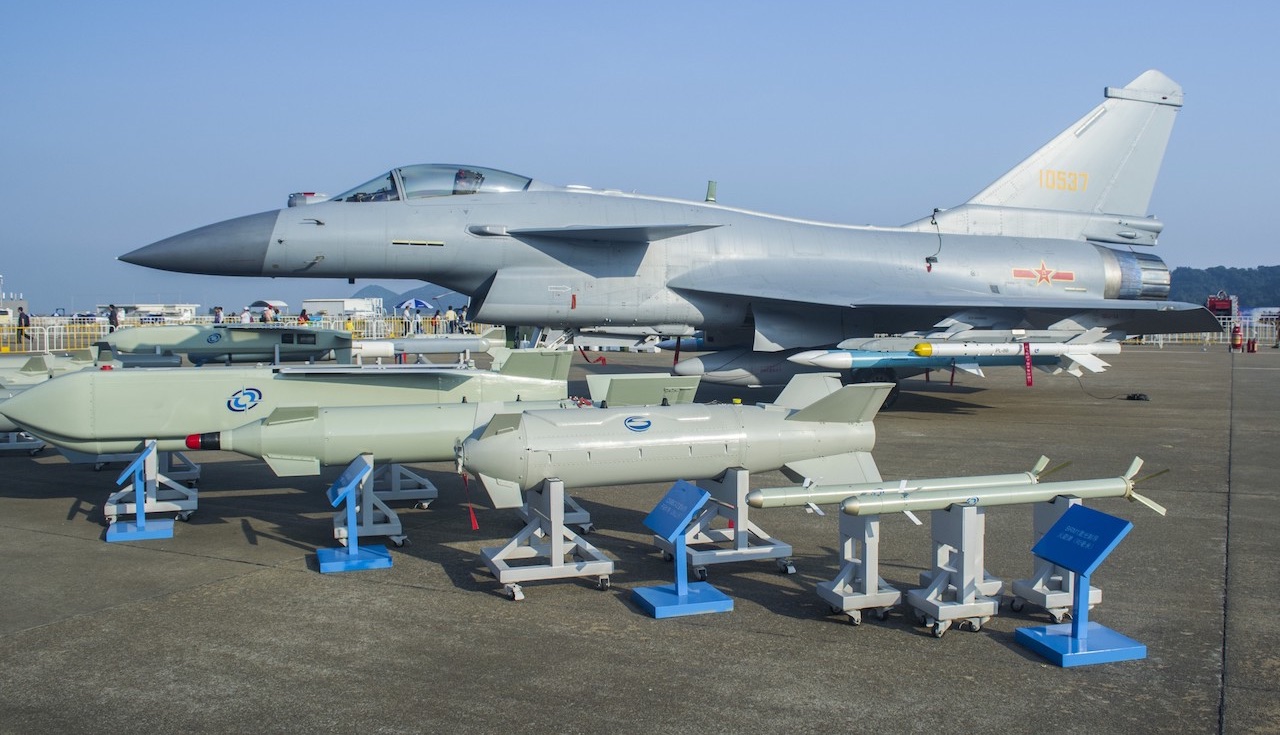
Images of the J-10’s weapons at the 2018 Zhuhai Air Show
The J-10C can be viewed as an alternative to the American F-16 and the Swedish Gripen. As a technologically updated and relatively affordable option, the J-10C is ideal for customers looking to enhance their fleet with advanced air defense systems, especially if they prefer to avoid political complications associated with Western fighter jets.
This lightweight fighter boasts high maneuverability, a powerful engine, and an advanced radar system with a range exceeding 200 km. It is also compatible with long-range missiles and features an updated cockpit. In terms of ammunition capacity, the J-10C is comparable to the Gripen but has a smaller overall capacity than the F-16. To mitigate this limitation, China has equipped the J-10C with a dual missile pylon that can hold either two additional short-range missiles or two beyond-visual-range (BVR) missiles, thereby enhancing the fighter’s payload and operational range.
J-10C with dual weapons pylon at the 2024 Zhuhai Air Show equipped with two PL-15 missiles
J-10C specifications:
Type: Multirole fighter jet Country of manufacture: China Manufacturer: Chengdu Aircraft Corporation (CAC) Crew: 1 (2 on J-10S) Length: 16.9 m Wingspan: 9.8 m Height: 5.7 m Wing area: 37 m2 Empty weight: 9,750 kg Gross weight: 14,000 kg Maximum takeoff weight: 19,277 kg Fuel capacity: 4950 L (3860 kg) internal. 4000 L (3120 kg) external with 3 drop tanks (2 × 1600L + 1 × 800L) Engine: 1× Shenyang WS-10 turbofan with afterburner (AL-31 on J10-A/B) Top speed: 2,222 km/h (Mach 1.8) Range: 1,850 km (without external fuel tanks) Combat range: 550 km Ferry range: 4,600 km Ceiling: 18,000 m (59,000 ft) Armament: – 11 hardpoints with a capacity of 5,600 kg of external fuel and ammunition – One 23 mm Gryazev-Shipunov GSh-23 cannon – 90 mm rocket pod – PL-8, PL-10 (J-10C), PL-11, PL-12, PL-15 (J-10C) air-to-air missiles – KD-88 and YJ-91 air-to-surface missiles – LT-2 and LS-500J laser-guided bombs – LS-6, GB3, GB2A, GB3A air-to-air bombs – FT-1 satellite-guided bombs – 250 and 500 kg free-fall bombs External pods: K/JDC01A targeting pod (on J-10A) Hongguang-I infrared search and tracking pod (on J-10A) CM-802AKG targeting pod for KD-88 and YJ-91 (on J-10C) KG600 electronic warfare pod Blue Sky navigation and attack pod
Introduction and Development History of the GBU-57 MOP:
As a heavy-duty penetrator bomb, the GBU-57 MOP (Massive Ordnance Penetrator) can target and destroy heavily fortified underground facilities like bunkers, command centers, and weapons depots. Designed for daytime or nighttime attacks on targets deep underground, as well as for deterring enemies with buried infrastructure, the bomb is built for planned strikes.
The GBU-57 MOP project started in the early 2000s, a joint effort by Northrop Grumman and Lockheed Martin. However, due to financial and technical hurdles, the initial attempt was halted. After the US invasion of Iraq in 2003, an analysis of bunker-busting bombs used showed they lacked the penetration power to take out fortified targets.
This sparked renewed interest in developing a larger bunker-busting bomb, and the MOP project was launched by the Defense Threat Reduction Agency (DTRA) to meet a long-standing Air Force need. The concept of “Big BLU” – large penetrating and explosive bombs like MOP and MOAB – was also proposed. In the end, Boeing won the contract to design and produce the bomb.
Boeing and US Army weapons specialists stand in front of a mock-up of the MOP bomb at Whiteman Air Force Base
The first static detonation test of the bomb was conducted in 2007 at the White Sands Missile Range. Flight tests of the weapon were conducted from 2008 to 2010, including launches from B-52 and B-2 bombers. In February 2010, the project was transferred to the Air Force, and the first deliveries of operational units of the bomb began in September 2011.
MOP test by B-2 bomberMOP test by B-52 bomberGBU-57 MOP bomb testB-2 bomber releases and tests GBU-57 MOP bomb
The estimated weight of the GBU-57 Massive Ordnance Penetrator (MOP) is between 12,300 and 13,600 kilograms, depending on various sources. The bomb measures approximately 6.2 meters in length and about 0.8 meters in diameter. To put this into perspective, its weight is comparable to that of two adult African elephants, highlighting its significant scale.
The warhead of this bomb is composed of a mixture of AFX-757 and PBXN-114 explosives. The total weight of the warhead ranges from 2,400 to 2,600 kilograms, which includes around 2,080 kilograms of AFX-757 and 341 kilograms of PBXN-114. The body of the warhead is made from a high-performance steel alloy, designed to maintain its integrity upon impact. This construction enables the bomb to deliver a substantial explosive payload while preserving the penetrator’s structure during impact. The bomb’s considerable weight and specialized alloy are crucial to its penetration capability, much like driving a steel nail into rock. Most of the bomb’s weight resides in its body.
The GBU-57 MOP is estimated to penetrate approximately 60 meters of reinforced concrete with a strength of 5,000 PSI. It can also penetrate about 40 meters of relatively hard rock and around 8 meters of reinforced concrete with a strength of 10,000 PSI. It is important to note that the reported penetration capabilities of 60 meters are based on preliminary information and prototypes of the bomb, and there is currently no precise information available regarding the ultimate penetration capacity of the latest model.
Comparison of penetration of the MOP bomb (possibly a prototype) with the BLU-109 and GBU-28 bombs
The GBU-57 Massive Ordnance Penetrator (MOP) is a precision-guided munition that utilizes a GPS/INS (Global Positioning System/Inertial Navigation System) for enhanced targeting accuracy, achieving precision within a few meters. The bomb features four fixed trapezoidal wings along its midsection and four lattice fins at its tail, which help adjust its trajectory during flight.
Equipped with a smart fuze (LPSF), the GBU-57 MOP can modify its detonation timing based on the depth and configuration of the underground target. It incorporates void-sensing fuzes that trigger detonation if a large cavity is detected within the bunker. Additionally, the weapon includes a delay fuse, allowing the warhead to survive the initial impact upon penetrating the target before it detonates.
In comparison to BLU-109, the MOP bomb possesses over ten times the explosive power and significantly greater penetration capabilities. The BLU-109 weighs only 910 kg and has a much shallower penetration depth.
Comparison of penetration of the MOP bomb (probably a prototype) with the BLU-109 and GBU-28 bombs
Variants of GBU-57:
The GBU-57 has undergone numerous upgrades and modifications over the years, resulting in a variety of variants. These upgrades have included improvements to the fuze system, advanced guidance systems, and increased penetration capabilities, currently spanning seven generations. Common variants of this bomb use the BLU-127A/B, BLU-127B/B, and BLU-127C/B warheads, respectively.
GBU-57/B: This version is equipped with the BLU-127/B warhead. The United States Air Force has addressed an integration issue that existed with the original version of the bomb on the B-2 Spirit stealth bomber. A new smart fuse has also been tested to enhance its effectiveness in situations where the depth or precise location of a buried target is uncertain.
GBU-57A/B: This version uses the BLU-127A/B warhead.
GBU-57B/B: This model is equipped with the BLU-127B/B warhead.
GBU-57C/B: The specific upgrades made by Boeing to this version are not detailed in the available sources.
GBU-57D/B: Information about the modifications made by Boeing to this version is also unclear, but it is believed that its fuse and primer have been upgraded.
GBU-57E/B: This version has been part of the operational inventory since at least 2016 and is equipped with the BLU-127C/B warhead. It has improved capabilities for penetrating concrete structures compared to earlier models. It can be reasonably assumed to have greater penetration power than the 2007 models, which could penetrate to a depth of 60 meters. The BLU-127C/B warhead features a booster in its front section, although its exact function remains unknown. Currently, the US Air Force does not have a newer version of the GBU-57E/B in operational use.
GBU-57F/B: This model is described as the latest version, but little is known about its exact capabilities.
GBU-57 MOP bomb
Overall, the US is working to boost the effectiveness of this bomb by continually upgrading it. As noted, the 60-meter penetration power is from the early models, and there’s no information available on the bomb’s penetration after receiving later upgrades. Additionally, the US is reportedly developing a version of this bomb with similar characteristics to the GBU-57, but lighter in weight, to enable its use in fighter jets.
Production numbers and costs of the GBU-57:
Developing the GBU-57 MOP weapon is expected to cost around $400 to $500 million. Each unit’s production cost is estimated to be roughly $3.5 million, with upgraded versions likely to be even more expensive. Although the exact number of MOP bombs produced is classified, estimates suggest a relatively small stockpile – about 20 by 2015, with potential for increased production.
GBU-57 MOP specifications:
Type: bunker buster bomb Origin: U.S. Manufacturer: Boeing Length: 6.2 m Diameter: 80 cm Total bomb weight: around 12.5 tons Warhead weight: around 2.5 tons Penetration: 61 m Guidance: GPS/INS
After Turkey was excluded from the F-35 production and delivery program by the United States, it commenced developing an advanced drone with a phased array radar and artificial intelligence capabilities in 2018 through Baykar.
The Turkish Air Force aimed to purchase between 110 and 120 F-35A CTOL aircraft. However, Turkey’s official order was for only 6 aircraft, of which one, identified as 0001-18, was delivered in Texas, and a Turkish pilot was trained in the United States. Following Turkey’s acquisition of the S-400 missile system, the US Senate passed legislation on June 18, 2018, prohibiting the export of the F-35 fighter to Turkey.
Prior to the US sanctions, the Turkish Ministry of Defense had shown interest in the vertical take-off variant of the F-35. Due to the delivery issues with this fighter, it announced that the Turkish Navy would instead utilize domestically produced unmanned aerial vehicles (UCAVs), such as the Bayraktar TB3, in the short term.
At that time, Turkey was planning to construct a helicopter carrier to support ground operations, which was intended to operate with the F-35B fighter. This vessel is now in service under the name Anadolu and has been adapted to operate the Kızılımla drone.
Kizilelma UAV on the TCG Anadolu
Despite Turkey being removed from the F-35 parts supply and the cancellation of the fighter jet sale, it had been producing key airframe and engine components for the F-35 program until 2022. Capitalizing on the partnership and the technology transferred, Turkey aimed to develop a stealth drone, leveraging most available components.
For the drone’s engine, two Ivchenko-produced turbofan engines, the AI-25TLT and AI-322F, were chosen, with the AI-25TLT powering the prototypes. Engine integration was completed successfully on September 29, 2022, and two months later, on November 20, 2022, the taxi test was also successful.
The Red Apple (Kızılımla) achieved its first successful flight 13 days after the taxi test, on November 3, 2022. Baykar shared a video on March 15, 2025, showcasing the flight test of its newest model, the Kızılımla. The video highlights minor modifications to the Kızılımla when compared to earlier versions.
Video published on March 15, 2025 of the Kızılımla flight test
In October 2024, Baykar President Selçuk Bayraktar announced that mass production of the Kızılımla had begun and that one drone had been produced. The company plans to produce more than 10 units by 2026. Efforts are ongoing to develop and optimize the drone, including its radar and sensors.
Kızılımla’s design:
The Kızılımla drone features a lightweight body made of carbon composite thermoplastic materials and incorporates a stealthy design. It is powered by a Ukrainian turbofan engine. The Kızılımla includes two air intakes positioned on the fuselage’s sides and a trapezoidal wing structure situated at the fuselage’s center.
To enhance maneuverability, two canards are positioned at the drone’s nose. Additionally, it has two vertical rudders arranged in a V-shape at the rear for improved control, while the horizontal rudder at the back has been eliminated.
This drone is equipped with an internal weapon compartment containing two weapon racks, along with three hardpoints under each wing, providing the Kızılımla a total of six hardpoints for ordnance.
An image of the Kizilelma drone showing the general shape of the wings.
The Kizilelma drone serves as both a combat drone (UCAV) and a wingman drone. A wingman drone operates alongside the main fighter jet, equipped with a radar to gather battlefield data before the fighter jet engages. In this role, the wingman drone can sacrifice itself to shield the manned fighter jet from unexpected attacks. Typically, wingman drones are engineered for air-to-air combat, benefiting from stealthy designs.
The Kizilelma drone is built for a variety of missions, including air-to-air combat, strategic strikes, close air support (CAS), suppression of enemy air defenses (SEAD), destruction of enemy air defenses (DEAD), and interception and communication disruption (SIGINT/ELINT).
Additionally, the Kizilelma drone can take off from short runways (LHD) or from drone carriers such as Anadolu and other aircraft carriers.
Video of the Kizilelma drone test next to the Turkish Air Force F-16 fighter jet
Kizilelma’s Engine:
Two types of engines have been introduced for the Kizilelma drone, which, according to the infographic published by Baykar, will be used to build three types of this drone.
Kizilelma Drone Version A: This version is equipped with an AI-25TLT turbofan engine that does not have an afterburner.
Kizilelma Drone Version B: This version features an AI-322F turbofan engine with an afterburner.
Kizilelma Drone Version C: This version is equipped with two AI-322F turbofan engines, both with afterburners.
These three versions will differ in terms of speed, range, and flight altitude. According to the available information, all three types will be developed over time, with Version A still under development.
Infographic published by Baykar Defence
The infographic indicates that the ongoing development project incorporates the AI-25TLT turbofan engine, which does not feature an afterburner. This military engine was initially created by the Ivchenko OKB in Soviet Ukraine and is now manufactured by the Sich company, based in Zaporizhzhia. Beyond the AI-25TLT, Sich also produces engines for aircraft and helicopters, in addition to turbines and industrial gas installations for marine use.
Pictures of the Kizilelma jet engine
The Kizilelma features a camera located beneath its nose and a phased array radar produced by ASELSAN. The specific details of the camera and radar have not been disclosed. Nonetheless, the images available suggest that the camera is seamlessly integrated into the body, helping to minimize the drone’s radar cross-section. Additionally, this drone is equipped with a sophisticated electronic warfare system.
A view of the camera used in the Kizilelma drone on a drone model at the exhibition
This drone appears to incorporate the Israeli-made ADA-O anti-jamming system, which ensures GPS functionality for ground platforms amidst electronic warfare targeting GPS signals. The system is compatible with various armored platforms, vehicles, artillery, and different aerial platforms. Generally, it aims to counter jamming of GNSS on a global scale. It has also been deployed on Israeli Hermes and Eitan drones. This evidence suggests that alongside American technologies utilized in the Ukrainian airframe and engine, an Israeli system was integral to the development of this drone.
Image of the Israeli-made ADA-O system on KizilelmaA picture of the introduction and use of the Israeli-made ADA-O system on a tankClick to see the full-size images
Armament:
The Kizilelma drone is capable of carrying 1.5 tons of ordnance, including laser-guided bombs, TEBER and Lacin precision-guided bombs, Gökdoğan and Bozdoğan air-to-air missiles, and SOM-J, HGK, LGK, and Minyatür Bomba air-to-surface cruise missiles.
Specifications of the Kızılelma multirole combat drone (Kızılelma-A model):
Type: Multi-role combat drone Manufacturer: Baykar Defense Manufacturer: Turkey First flight: 2022 Length: 14.7 m Wingspan: 10 m Height: 3.3 m Engine: One AI-25TLT turbofan engine in Kızılelma-A Two AI-322F turbofan engines in Kızılelma-B Combat Range: 926 km Maximum Speed: 1,100 km/h (Mach 0.9) Cruise speed: 735 km/h (Mach 0.6) Altitude: 45,000 ft (14,000 m) Endurance: 5 hours Maximum takeoff weight: 6,000 kg Weapon payload: 1,500 kg Radar: Active phased array (AESA) Armament: – Two hardpoints in the internal weapons bay and six hardpoints under the wings (three on each wing) Cruise missiles SOM, LAÇİN Kit Guided Freefall Bombs, Turkish Miniature Bombs, GÖKDOĞAN (Shahin) Air-to-Air Missile, and BOZDOĞAN or Merlin Infrared Air-to-Air Missile
22 out of these 26 drones were eliminated during the Yemeni operation named “Promised Conquest and Holy Jihad,” conducted to support the people and Palestinian resistance.
General Atomics MQ-9 Reaper is a versatile and heavy drone used by the US Army for reconnaissance, surveillance, and offensive operations, including assassinations in Iraq, Afghanistan, and Syria since 2001. As of 2023, each MQ-9 drone costs approximately $32 million to produce, resulting in $832 million in damage inflicted by Ansar Allah through the destruction of 26 drones.
The dates and locations of the destroyed MQ-9 drones in Yemen are as follows:
Sanaa, 01 October 2017
Hudaydah, 06 June 2019
Dhamar, 20 August 2019
Marib, 23 March 2021
Hudaydah, 08 November 2023
Hudaydah, 19 February 2024
Saada, 26 April 2024
Marib, 17 May 2024
Al-Bayda, 21 May 2024
Marib, 29 May 2024
Saada, 04 August 2024
Marib, 07 September 2024
Saada, 10 September 2024
Dhamar, 15 September 2024
Saada, 30 September 2024
Al-Jawf, 08 November 2024
Al-Bayda, 28 December 2024
Marib, 31 December 2024
Hudaydah, 03 March 2025
Marib, 31 March 2025
Hudaydah, 03 April 2025
Al-Jawf, 09 April 2025
Hajjah, 13 April 2025
Sanaa, 18 April 2025
Sanaa, 19 April 2025
Hajjah, 22 April 2025
The extensive destruction of reconnaissance-combat drones belonging to the Saudi-American coalition in Yemen stands out as one of the most significant accomplishments of the Yemeni armed forces over a decade-long conflict. Throughout this time, the Yemeni army has downed 118 military aircraft from Saudi Arabia, the UAE, the United States, Jordan, Morocco, and Bahrain, including 29 from the United States.
Since the onset of the Palestine war, the US Army has dispatched numerous MQ-9 drones to Yemen to monitor military installations and equipment, and to carry out assassination missions. However, the Yemeni Army’s air defense forces have successfully disrupted these drone operations in Yemen through their intelligence and persistent efforts.
The MQ-9 Reaper drone is the result of the evolution of one of the most successful UAV projects in the United States: the MQ-1 Predator. This project was initially initiated by the American company General Atomics Aeronautical Systems, Inc. (GA-ASI) as a private venture.
In 1998, as the U.S. military’s operational needs expanded to include unmanned systems with greater range, altitude, and payload capacity, GA-ASI engineers began designing a new platform based on the Predator. This new platform, later known as the Predator B, also received financial support from NASA.
The first flight of the Predator B prototype took place in February 2001. Although the drone appeared similar to the MQ-1 Predator, it was completely redesigned in terms of dimensions, engine power, and body layout. The most significant design change was the introduction of an upward-facing V-shaped tail, which improved flight stability compared to the classic downward-facing tail of the MQ-1 Predator.
During the testing phase, two types of engines were installed on the drone: a Honeywell TPE-331-10T turboprop engine, which provided acceptable performance, and a Williams FJ44-2A turbofan engine, which was eventually discarded due to its high cost and limited efficiency.
MQ-1 PredatorPredator B drone, also known as MQ-9A ReaperClick to view larger image
In February 2003, the United States Air Force officially joined the project by ordering a turboprop-powered variant, the MQ-9A. They received two prototypes, known as YMQ-9A, for evaluation in testing weapons, reconnaissance capabilities, and maneuverability.
YMQ-9 at the National Museum of the United States Air Force in January 2010
The MQ-9 Reaper was developed for the United States Air Force as a direct response to a Department of Defense (DoD) directive aimed at supporting overseas operations, known as “Overseas Contingency Operations.” In the early 2000s, the rise of asymmetric threats created the need for a drone capable of extensive reconnaissance and surveillance, as well as the ability to target and destroy moving targets in real time with high accuracy.
The Reaper far exceeded the operational performance of the MQ-1 Predator. It can fly at altitudes exceeding 15,200 meters (50,000 feet) and has a flight endurance of up to 27 hours. Equipped with advanced systems such as the AN/APY-8 Lynx combined aperture radar and the Raytheon AN/AAS-52(V) MTS multispectral electro-optical system, the Reaper significantly enhanced its reconnaissance and targeting capabilities. Furthermore, the MQ-9A evolved into a fully operational offensive platform, capable of deploying a diverse array of guided weapons.
Comparison of MQ-9 and MQ-1
In 2006, the United States Air Force formally designated the MQ-9A Reaper. The drone commenced operational service in 2007, completing its inaugural combat mission in Afghanistan.
As of 2018, the US Air Force had ordered 366 Reapers from General Atomics, with more than 300 delivered by 2021. The US Air Force plans to retire its MQ-9A fleet by 2035.
Appearance and performance characteristics of the MQ-9 drone:
The Reaper measures 11 meters in length, stands 3.8 meters tall, and features a wingspan of 20 meters, making it considerably larger than the MQ-1. It has a base weight of 2,223 kilograms without payload, while its maximum takeoff weight reaches 4,760 kilograms. For the Extended Range (ER) variant, this maximum weight rises to 5,307 kilograms. Additionally, the ER version boasts a fuel capacity of 903 gallons (approximately 6,000 pounds), allowing for extended flight ranges.
A view of an MQ-9 taxiing on a runway in Afghanistan, 2007
The Reaper uses a Honeywell TPE331-10GD turboprop engine that produces 900 horsepower. This engine allows the drone to reach a maximum speed of 480 km/h, but its typical flight speed is in the range of 280 to 310 km/h.
Honeywell TPE331-10GD turboprop engine
The manufacturer has officially announced that the MQ-9A has a flight endurance of 27 hours and a range of 1,850 km. In 2015, the US Air Force first tested the Extended Range (ER) version of the MQ-9A, which features external fuel tanks mounted under the wings and a more robust landing gear. The ER version boasts a flight endurance of 34 hours and a range of 2,592 km.
In terms of armament, the MQ-9A is equipped with seven hardpoints and can carry up to 1,361 kg of ordnance. It has a variety of weapons options, including Sidewinder and Stinger air-to-air missiles, Hellfire missiles with a range of 8 to 12 km, GBU-12 Paveway II laser-guided bombs weighing 227 kg, GBU-38 JDAM GPS-guided bombs, and more advanced versions of the GBU-49 and GBU-54 Laser JDAM, which have a range of approximately 15 km.
Bottom view of the MQ-9 droneMQ-9 drone equipped with four GBU-38 bombsMQ-9 drone equipped with AIM-9 SidewinderMQ-9 drone equipped with GBU-49B PavewayMQ-9 drone equipped with eight AGM-114 Hellfire bombsMQ-9 drone equipped with AGM-114 Hellfire bombs and an additional fuel tankClick to view larger image
The MQ-9 is equipped with Raytheon’s advanced Multispectral Targeting System-B (MTS-B) electro-optical system, which features an infrared sensor, color and monochrome day vision cameras, short-wave infrared cameras, laser designators, and laser rangefinders.
The system is capable of long-range surveillance, target acquisition, precise tracking of moving targets, range finding, and laser designator for a variety of air-to-surface munitions. In addition to the MQ-9 Reaper, the MTS-B is also used in the U.S. Navy’s MQ-4C unmanned aerial vehicle fleet.
Read more: Military Knowledge: Raytheon’s Multispectral Targeting System-B (MTS-B)
MTS-B electro-optical system
MQ-9 Block 5 drone:
The MQ-9 Block 5 is an enhanced version of the original MQ-9 prototype (Block 1), featuring improved endurance, range, and payload capacity. Key upgrades in the Block 5 model include wing fuel pods, reinforced landing gear, and a four-bladed propeller. It also has enhanced electrical power, more secure communications, and the capability for automatic landing. The MQ-9 Block 5 ER variant has an endurance of 34 hours and a range of 2,592 kilometers. In general, General Atomics is in the process of upgrading its MQ-9 fleet to ER versions.
MQ-9B drone – Introducing other MQ-9 drone models:
The MQ-9B drone builds on the MQ-9A model and is recognized as the SkyGuardian and SeaGuardian. It is larger and boasts enhanced capabilities compared to the MQ-9A. The MQ-9B’s length measures 11.6 meters, with a wingspan of 24 meters. Its maximum takeoff weight is 5670 kilograms, and it can reach a flight ceiling of 12200 meters. A significant factor in developing the MQ-9B was the need to meet NATO civil aviation regulations, allowing its operation in civilian airspace, whereas the MQ-9A is solely dedicated to military functions.
MQ-9B SkyGuardian: The SkyGuardian, a variant of the MQ-9B, meets European civil aviation regulations. Known as the Certifiable Predator B, it is the first drone certified for use in civilian airspace. Notable features include a 40-hour endurance, a maximum altitude of 12,190 meters, and a 24-meter wingspan. Additionally, the SkyGuardian comes with cutting-edge systems, such as an EO/IR imaging sensor, an anti-icing system, and a TCAS collision avoidance system.
MQ-9B SkyGuardian drone
MQ-9B SeaGuardian: The SeaGuardian, a specialized version of the MQ-9B, is tailored for maritime missions. It boasts an endurance of up to 18 hours (some reports indicate 30 hours) and can operate over a distance of 2,200 km, making it ideal for maritime surveillance and search-and-rescue tasks. A standout feature is the Leonardo Seaspray 7500E V2 AESA radar, capable of detecting maritime targets. Additionally, the drone is outfitted with sophisticated systems for deploying sonobuoys to monitor submarines.
MQ-9B SeaGuardian drone
MQ-9B STOL: STOL means “short takeoff and landing.” The MQ-9B STOL can take off and land in challenging environments, including aircraft carriers. General Atomics introduced this concept in 2022. This kit allows for the replacement of wings, tail, and propeller to enhance short takeoff and landing performance.
MQ-9B STOL drone
MQ-9 UAV operational history:
The Reaper drone has primarily conducted its operational activities in the Middle East. Its most significant operation to date was the assassination of Qassem Soleimani, commander of the Quds Force of the Islamic Revolutionary Guard Corps, in Baghdad on January 3, 2020. The United States regime used Hellfire missiles in this operation.
Afghanistan (2007 to 2021): The Reaper’s combat presence was first established in Afghanistan, quickly gaining a reputation as a “hunter” platform. A notable incident occurred on September 13, 2009, when a Reaper that had lost control was shot down by a US F-15E fighter jet to prevent it from entering Tajik airspace. By 2010, Reaper drones were flying more than 33,000 close air support missions annually. Their usage peaked during the withdrawal of US forces in 2021, where they played a key role in supporting evacuation operations.
Iraq and Syria (since 2007): Reaper drones have been extensively utilized in Operation Iraqi Freedom and the fight against ISIS in Operation Inherent Resolve. This includes the 2015 strike on Jihadi John in Raqqa, Syria, using a Hellfire missile. In 2023, as the conflict amongst various factions and the Israel-Hamas war intensified, Reapers carried out the majority of US airstrikes in Syria and were also employed to target Iranian-backed forces.
Yemen: Initially, Reapers were used for reconnaissance missions against Al-Qaeda in the Arabian Peninsula (AQAP). However, following the Ansar Allah operation in Yemen and the overthrow of the Mansour Hadi government, they began to conduct operations against Ansar Allah. The first recorded downing of an MQ-9 occurred in 2017. Reaper missions in Yemen intensified as Ansar Allah ramped up operations in the Red Sea in 2023. From September 2023 to April 2025, Yemeni Ansar Allah shot down at least 19 Reapers (with a total of 23 since 2017), incurring losses collectively estimated at over $595 million. These losses highlight the Reaper’s vulnerability in high-intensity conflict zones.
Gaza (since 2023): Following the onset of the Gaza War in October 2023, Reapers flew unarmed over the Gaza Strip to identify the locations of American hostages during Israeli operations. However, no detailed information is available regarding these operations.
MQ-9 drone users:
United States includes NASA, Air Force, Navy, Marine Corps, Coast Guard, and Department of Homeland Security (US Customs and Border Protection)
United Kingdom – Early versions of the MQ-9A Reaper for surveillance operations in Afghanistan and the Middle East. – Protector RG Mk 1, a more advanced version to replace the MQ-9A, capable of carrying Brimstone 3 missiles and Paveway IV bombs.
Italy – Early versions of the MQ-9A Reaper for surveillance missions in NATO and Libya operations. – MQ-9A Block 5, an upgraded version.
Netherlands – Upgraded version of the MQ-9A Reaper Block V for surveillance and reconnaissance missions
Japan – Maritime version of the MQ-9B SeaGuardian for maritime threat surveillance.
United Arab Emirates – MQ-9B SkyGuardian for border reconnaissance and surveillance missions.
France – MQ-9A Reaper for counterterrorism and reconnaissance operations in Africa and the Middle East.
Spain – MQ-9A Reaper for surveillance and border security operations.
Poland – MQ-9B SkyGuardian version for reconnaissance and surveillance missions.
Morocco – MQ-9B SeaGuardian maritime version for coastal surveillance and border operations.
Taiwan – MQ-9B SkyGuardian version for surveillance and reconnaissance in border areas.
MQ-9A Reaper specifications:
Type: Reconnaissance and Combat Manufacturer: General Atomics Aeronautical Systems Country of Manufacture: United States First Flight: 2001 Length: 11 m Wingspan: 20 m Height: 3.81 m Engine: Honeywell TPE331-10 900 hp Fuel Capacity: 1,800 kg – 2,721 kg in ER version Range: 1,850 km – 2,593 km in ER version Maximum Speed: 480 km/h Service ceiling: 15,420 m (50,000 ft) Endurance: 27 hours – 34 hours in ER version Maximum Takeoff Weight: 4,760 kg – 5,307 kg in ER version Empty Weight: 2,223 kg Payload: 1,747 kg Armament: 7 hardpoints with a capacity to carry 1,361 kg of ammunition
1- Saudi F15S fighter on March 27, 2015, Gulf of Aden 2- Saudi AH-64D helicopter on May 7, 2015, Al-Boqa, Saada area 3- Moroccan F16C fighter on May 10, 2015, Wadi Nashur 4- Saudi Seeker400 UAV, July 3, 2015, Al-Boqa 5- Saudi AH-64D helicopter, August 5, 2015, Jizan 6- Saudi AH-64D helicopter, August 21, 2015, Jizan 7- UAE Schiebel Camcopter S-100, August 25, 2015, Makiras, Abyan Province 8- UAE Schiebel Camcopter S-100, October 25, 2015, Al-Abdiyah, Marib Province 9- Bahrain F16C fighter, December 30, 2015, Jizan 10- UAE MQ-1 Predator UAV, January 19, 2016, Sanaa 11- Saudi Selex ES Falco UAV, February 3, 2016, Midi, Hajjah province 12- UAE Schiebel Camcopter S-100, February 27, 2016, Dhubab, Taiz province 13- UAE Mirage 2000 fighter, March 13, 2016, Al-Bariqa, Aden 14- UAE AH-64D UAE helicopter, June 12, 2016, Gulf of Aden 15- UAE NSA407 helicopter, June 13, 2016, Al-Bariqa, Aden 16- Saudi AH-64D helicopter, July 25, 2016, Beer Al-Maraziq, Al-Jawf 17- Saudi Seeker400 UAV, August 16, 2016, Kataf, Saada province 18- UAE Wing Loong UAV, September 26, 2016, Kholan, Sanaa province 19- Saudi AH-64D helicopter, December 30, 2016, Najran 20- US V-22 Osprey Helicopter, January 29, 2017, Al-Baydha province 21- Saudi SA 365F Helicopter, January 30, 2017, Al-Hudaydah coast (on the Al-Madinah frigate) 22- UAE MQ-1B Predator UAV, February 14, 2017, Al-Manin, Marib province 23- Jordanian F16A fighter, February 24, 2017, Najran 24- Saudi S-70A helicopter, April 18, 2017, Marib province 25- UAE Schiebel Camcopter S-100, June 21, 2017, Dhubab, Taiz province 26- UAE AH-60L helicopter, August 11, 2017, Wadi Amaqin, Shabwa province 27- Saudi Seeker 400 UAV, August 15, 2017, Al-Boqa, Saada province 28- US UH-60M helicopter, August 25, 2017, Gulf of Aden 29- UAE AT-802U aircraft, September 11, 2017, Gulf of Aden 30- Saudi Eurofighter Typhoon fighter, September 13, 2017, Abyan province 31- US MQ-9 UAV, October 1, 2017, Sanaa city 32- UAE AH-64D Helicopter, October 17, 2017, Khab and Shaaf, Jawf province 33- Saudi S-70A helicopter, November 5, 2017, Abha 34- Saudi Panavia Tornado fighter, January 7, 2018, Kataf, Saada province 35- Saudi F-15S fighter, March 21, 2018, Saada province 36- Saudi CH-4B UAV, July 12, 2018, Al-Rabu’ah 37- Saudi Panavia Tornado fighter, July 12, 2018, Asir 38- Saudi CH-4B UAV, August 30, 2018, Jizan 39- UAE Schiebel Camcopter S-100, September 2, 2018, Al-Jah, Hudaydah province 40- Saudi AH-64D helicopter, September 14, 2018, Al-Mahra province 41- Seeker 400 UAE UAV, November 26, 2018, Al-Jabaliya, Hudaydah province 42- Saudi CH-4V UAV, December 23, 2018, Saada province 43- US MQ-9 UAV, June 6, 2019, Hudaydah province 44- Saudi CH-4B UAV, April 11, 2019, Hadhramaut province 45- UAE Wing Loong, April 19, 2019, Saada province 46- UAE RQ-1E Predator UAV, May 15, 2019, Bani Matar, Sanaa 47- UAE Schiebel Camcopter S-100, June 2, 2019, Hays, Hudaydah area 48- US MQ-9 UAV, August 21, 2019, Dhamar province 49- US MQ-9 UAV, March 23, 2021, Marib province 50- UAE Shiebel Camcopter S-100, November 1, 2019, Raas Issa, Hudaydah province 51- Saudi AH-64D helicopter, November 29, 2019, Asir 52- Saudi Wing Loong UAV, November 30, 2019, Hayran, Hajjah province 53- Saudi Luna X2000 UAV, December 4, 2019, Saada province 54- Saudi Karayel UAV, December 30, 2019, Al-Salif, Hudaydah province 55- Saudi CH-4V UAV, January 7, 2020, Khab and Shaaf, Jawf province 56- Saudi Panavia Tornado fighter, February 14, 2020, Jawf province 57- Saudi RQ-20 UAV, August 2, 2021, Haradh, Al-Hajjah province 58- Saudi CH-4B UAV, December 21, 2020, Marib Province 59- Saudi Karayel UAV, January 6, 2021, Jawf province 60- Saudi CH-4B UAV, February 12, 2021, Marib province 61- Saudi Karayel UAV, March 7, 2021, Jawf province 62- Saudi CH-4B UAV, March 23, 2021, Sarwah, Marib province 63- Saudi Wing Loong UAV, May 21, 2021, Najran 64- US MQ-9 drone, May 23, 2021, Jawf province 65- Saudi Scan Eagle UAV, June 19, 2021, Marib province 66- Saudi Scan Eagle UAV, June 21, 2021, Marib province 67- Saudi Scan Eagle UAV, August 14, 2021, Madghal, Marib province 68- Saudi Wing Loong UAV, September 13, 2021, Kataf, Saada province 69- Saudi Scan Eagle UAV, September 27, 2021, Madghal, Marib province 70- Saudi CH-4 UAV, October 6, 2021, Jubah, Marib province 71- Saudi RQ-20 UAV, October 7, 2021, at the Jizan border 72- Saudi Scan Eagle UAV, November 9, 2021, Al-Juba, Marib province 73- Saudi Scan Eagle UAV, November 13, 2021, Al-Juba, Marib province 74- Saudi CH-4 UAV, December 1, 2021, in Al-Amshia area, Amran province 75- Saudi Scan Eagle UAV, December 4, 2021, Al-Juba, Marib province 76- Saudi Scan Eagle UAV, December 8, 2021, Al-Juba, Marib province 77- Saudi CH-4 UAV, December 8, 2021, Al-Wadi, Marib province 78- Saudi Scan Eagle UAV, December 10, 2021, Sarwah, Marib province 79- Saudi CH-4 UAV, December 14, 2021, Usaylan, Shabwa province 80- Saudi Scan Eagle UAV, December 16, 2021, Al-Wadi, Marib province 81- Saudi Scan Eagle UAV, December 25, 2021, Yatmah, Khab and Al-Shaaf, Al-Jawf province 82- UAE Wing Loong UAV, January 5, 2022, Usaylan, Shabwa province 83- UAE Wing Loong UAV, January 11, 2022, Ain Shabwah province 84- Saudi Scan Eagle UAV, January 29, 2022, Al Juba, Marib Province 85- Saudi CH-4 UAV, February 10, 2022, Harad, Hajjah province 86- UAE MQ-1 UAV, February 25, 2022, Al-Jawf province 87- Saudi Scan Eagle UAV, February 25, 2022, Al Juba, Marib Province 88- Saudi Scan Eagle UAV, February 28, 2022, Harad, Hajjah province 89- Saudi Scan Eagle UAV, March 8, 2022, Harad, Hajjah province 90- Saudi Scan Eagle UAV, March 29, 2022, Al-Wadi, Marib province 91- Saudi CH-4 UAV, May 4, 2022, Harad, Hajjah province 92- Saudi Karayel UAV, May 21, 2022, Hayran, Hajjah province 93- Saudi CH-4 UAV, May 23, 2022, Sana’a, Sana’a province 94- Saudi Wing Loong UAV, May 24, 2022, Kataf, Saada province 95- US MQ-9 drone, November 8, 2023, Hudaydah province 96- US MQ-9 drone, February 19, 2024, north of Hudaydah province 97- US MQ-9 drone, April 25, 2024, Saada province 98- UAE Wing Loong 1 drone, April 29, 2024, Al-Rawdha district, Shabwah province 99- US MQ-9 drone, May 16, 2024, Al-Wadi district, Marib province 100- US MQ-9 drone, May 21, 2024, Al Bayda province 101- US MQ-9 drone, May 29, 2024, Marib province 102- US MQ-9 drone, August 4, 2024, Saada 103- US MQ-9 drone, September 7, 2024, Marib 104- US MQ-9 drone, September 10, 2024, Saada 105- US MQ-9 drone, September 30, 2024, Saada 106- US MQ-9 drone, November 8, 2024, Al-Jawf 107- US MQ-9 drone, November 28, 2024, Al-Bayda 108- US MQ-9 drone, December 2, 2024, Marib 109- US F/A-18 fighter jet, December 21, 2024, Red Sea 110- US MQ-9 drone, March 3, 2025, Al-Hodeidah 111- US MQ-9 drone, March 31, 2025, Marib 112- US MQ-9 drone, April 3, 2025, Al-Hodeidah 113- Saudi Giant Shark F-360 Giant Shark drone, April 5, 2025, Saada 114- US MQ-9 drone, April 9, 2025, Al-Jawf 115- US MQ-9 drone, April 13, 2025, Hajjah
19 out of these 23 drones were eliminated during the Yemeni operation named “Promised Conquest and Holy Jihad,” conducted to support the people and Palestinian resistance.
General Atomics MQ-9 Reaper is a versatile and heavy drone used by the US Army for reconnaissance, surveillance, and offensive operations, including assassinations in Iraq, Afghanistan, and Syria since 2001. As of 2023, each MQ-9 drone costs approximately $32 million to produce, resulting in $576 million in damage inflicted by Ansar Allah through the destruction of 18 drones.
The dates and locations of the destroyed MQ-9 drones in Yemen are as follows:
Sanaa, 01 October 2017
Hudaydah, 06 June 2019
Dhamar, 20 August 2019
Marib, 23 March 2021
Hudaydah, 08 November 2023
Hudaydah, 19 February 2024
Saada, 26 April 2024
Marib, 17 May 2024
Al-Bayda, 21 May 2024
Marib, 29 May 2024
Saada, 04 August 2024
Marib, 07 September 2024
Saada, 10 September 2024
Dhamar, 15 September 2024
Saada, 30 September 2024
Al-Jawf, 08 November 2024
Al-Bayda, 28 December 2024
Marib, 31 December 2024
Hudaydah, 03 March 2025
Marib, 31 March 2025
Hudaydah, 03 April 2025
Al-Jawf, 09 April 2025
Hajjah, 13 April 2025
The extensive destruction of reconnaissance-combat drones belonging to the Saudi-American coalition in Yemen stands out as one of the most significant accomplishments of the Yemeni armed forces over a decade-long conflict. Throughout this time, the Yemeni army has downed approximately 115 military aircraft from Saudi Arabia, the UAE, the United States, Jordan, Morocco, and Bahrain, including 26 from the United States.
Since the onset of the Palestine war, the US Army has dispatched numerous MQ-9 drones to Yemen to monitor military installations and equipment, and to carry out assassination missions. However, the Yemeni Army’s air defense forces have successfully disrupted these drone operations in Yemen through their intelligence and persistent efforts.
Introduction: In the 1980s, global advancements in air defense systems significantly threatened the United States Air Force’s capability to hit crucial enemy targets. To counter this challenge, the Air Force adopted cutting-edge stealth technology for a long-range bomber designed to carry substantial payloads, both conventional and nuclear. The B-2 Spirit, developed by Northrop Grumman, achieved a level of invisibility to advanced radars that was unprecedented at the time, utilizing a flying wing configuration, innovative composite materials, specialized coatings, and secret stealth technologies.
B-2 bomber
The aircraft was first unveiled to the public in November 22, 1988, at Air Force Plant 42 in California and completed its first test flight in July 17, 1989. After undergoing development, the first operational B-2 was delivered to the United States Air Force in December 17, 1993. The bomber, whose primary base is Whiteman Air Force Base in Missouri, has participated in various operations, the most significant of which include Operation Allied Force in Serbia in 1999, Operation Enduring Freedom in Afghanistan in 2001, and Operation Iraqi Freedom in Iraq in 2003.
The B-2 bomber was unveiled on November 22, 1988 at Air Force Plant 42.
The B-2 Spirit can conduct combat missions for over 30 hours without a break, operated by a crew of two (a pilot and a mission commander). It has the capacity to carry precision-guided munitions weighing up to 40,000 pounds for each mission. Earlier B-2 models were subjected to extensive environmental tests, including 1,000 hours of temperature evaluations at the McKinley Climatic Laboratory, ranging from -65 to 120 degrees Fahrenheit. The results of these tests, later confirmed in Alaska, proved that the B-2 Spirit is not only capable of withstanding various climatic challenges but also effectively executes strategic missions with minimal radar detection by adversaries.
B-2 bombers parade and fly from Whiteman Air Force Base during the annual Spirit Vigilance exercise in 2024.
History and development of the B-2 bomber:
The concept of designing a stealth bomber dates back to the 1940s and 1950s when Northrop sought to introduce a new approach to military aircraft by developing advanced flying wing designs like the YB-35 and YB-49. This design, lacking a traditional tail, significantly reduced the radar cross-section and could have revolutionized air tactics if completed. However, at that time, the absence of advanced control systems and technological limitations led to these projects being shelved.
YB-35YB-49YB-35 and YB-49 projects
In the 1970s, advances in radar-absorbing technologies, advanced composite materials, and digital computing reignited the United States Air Force’s interest in developing a stealth bomber. The Vietnam War experience and the increasing threat of Soviet air defenses underscored the necessity for a strategic aircraft capable of penetrating deep into enemy territory undetected.
In 1979, the United States Air Force launched the Advanced Technology Bomber (ATB) program, which aimed to develop a stealthy strategic bomber capable of striking deep into enemy territory. The project was highly classified, with information only available to a select few senior officials.
Northrop and Lockheed competed for the program. Lockheed, known for its success with the F-117 Nighthawk stealth fighter, proposed a design aligned with those principles. However, Northrop ultimately proved its superiority by creating a flying-wing bomber, securing the contract for the program’s development in 1981.
Lockheed’s proposed design based on the F-117
However, Northrop’s design, which integrated a distinctive aerodynamic shape, radar-absorbing materials, and fully digital flight systems, set the stage for a new era of strategic bombers. The outcome of this initiative, the B-2 Spirit, surpassed all previous bombers in both design sophistication and operational capabilities at the time.
Visual comparison of Northrop (top image) and Lockheed and McDonnell-Douglas designs
The soaring costs and technical difficulties of the program attracted significant criticism in Congress. By the early 1980s, the estimated project cost was $22.1 billion, but as it advanced, the combination of technical hurdles and escalating research and development expenses caused this estimate to climb to $44.7 billion by 1988. Ultimately, taking into account research and development, production, maintenance, and upgrades, the entire B-2 program cost totaled $101 billion, making each aircraft approximately $2.1 billion. In 1992, the Bush administration opted to cut the aircraft production from 132 to a mere 21. The anticipated cost for producing the 20 aircraft was about $26.8 billion. This assessment bolstered the case against any additional B-2 production. Consequently, Congress decided to stop further production, maintaining 20 operational aircraft and 1 experimental one in service.
Its high maintenance costs and limited fleet prompted the US Air Force to announce in 2018 that the bomber would be retired by 2032, to be replaced by the B-21 Raider, a new generation of stealth bombers.
B-2 design and technical features:
A standout aspect of the B-2’s design is its distinctive flying wing structure, which lacks any vertical or horizontal tails. This feature is intended to minimize radar reflection. The tailless configuration, combined with its expansive wings, effectively lowers the radar cross-section (RCS), enhancing its stealth capabilities. Consequently, the B-2 can operate at high speeds and altitudes while remaining undetectable to enemy radars. Measuring 21 meters in length, 5.18 meters in height, and boasting a wingspan of 52.4 meters, this aircraft ranks among the largest stealth platforms globally.
The B-2’s flying wing design
Since the B-2 is a traditional airframeless aircraft, integrating strength into its structure required the use of advanced materials. For this purpose, special composites such as carbon fiber and metal compounds were used in the fuselage structure, as they are lightweight while also providing high strength and excellent radar absorption. Additionally, to withstand the stresses and pressures from flying at very high altitudes, the body was designed to endure extreme changes in temperature and air pressure.
Bottom view of B2 – click to view larger
B-2 Avionics and Guidance Systems:
Another notable feature of the B-2 is its advanced avionics. One of these systems is the AN/APQ-181 multi-purpose radar, designed to detect and track targets under various flight conditions. With its capability to operate in multiple bands, this radar enables the B-2 to identify its targets across a broad spectrum. The system employs radar stealth technology to conduct precise reconnaissance without being detected by enemy defense systems.
AN/APQ-181 radar antenna
The AN/APQ-181 radar is among the most advanced terrain mapping and tracking systems designed specifically for the B-2 Spirit stealth bomber. It operates in the G-band and features 21 operational modes, including terrain tracking, navigation, target acquisition, tracking, and weapons guidance.
The AN/APQ-181 features a modular design that enhances capabilities and reduces failure rates. This system employs two electronically scanned array antennas, providing a broad field of view that covers the front and sides of the aircraft. The radar consists of 10 modular replaceable units (LRUs), with a combined weight of 955 kg and a volume of 1.485 cubic meters. Each antenna has a weight of 260 kg. Designed to meet the MIL-STD-1553 standard, the AN/APQ-181 system is resistant to electromagnetic interference as well as the effects of electromagnetic pulses (EMP). Additionally, the radar is optimized for challenging operating conditions, including low-altitude and high-speed flights. In response to the growing demand for the frequency spectrum by commercial communications systems, the US Air Force initiated a program in 2004 to upgrade this radar to an active phased array (AESA) system.
Alongside radar, the B-2’s sophisticated navigation system incorporates GPS and astro-inertial technology, ensuring accurate guidance through lengthy and perilous routes. These systems are designed to function optimally, even in electronic warfare environments, with the ability to autonomously correct their course when necessary.
Stealth of the B-2 bomber:
Stealth is a key feature of the B-2, enabling the aircraft to stay concealed from modern detection systems such as multi-band radars and infrared sensors. To achieve this goal, the B-2’s airframe was designed to minimize radar reflection by reducing its radar cross-section (RCS). The delta-shaped flying wing configuration, along with the airframe’s sharply angled surfaces that reduce radar reflection, collectively enhance the B-2’s stealth capabilities. The B-2 reportedly has a radar cross-section of about 0.1 square meters.
Image of the B-2 radar’s initial reflection angles
Another stealth feature of the B-2 is the use of special radar-absorbing coatings called Radar Absorbent Material (RAM). These coatings are applied throughout the aircraft’s body to absorb radar waves, thereby minimizing its radar cross-section.
Special wave-absorbing coatings to reduce radar cross-section
To lower its thermal signature, the B-2’s engines are uniquely positioned within the body, and their exhaust is carefully shrouded to reduce heat visibility. Additionally, ventilation and cooling systems for the engine’s intake air, combined with efforts to decrease exhaust temperature, effectively minimize the B-2’s thermal signature.
B2 engines specially designed within the body to minimize thermal signature
Engine power and performance of the B-2 bomber:
The B-2 bomber features four General Electric GE-100 non-afterburning turbofan engines, generating 77 kilonewtons (17,300 pounds) of thrust. These uniquely designed engines enable the B-2 to achieve speeds exceeding 630 mph (1,010 km/h) at an altitude of 40,000 feet (12,000 m). Additionally, the aircraft can cruise at 560 mph (900 km/h) at the same elevation. With an operational range of approximately 6,800 miles (11,000 km), the B-2 is equipped for long-range missions.
General Electric F118-GE-100 engine
Armament and carrying capacity of the B-2 bomber:
The bomber can carry 40,000 pounds (18,000 kg) of ordnance, which may consist of both nuclear and conventional weapons. Since the Cold War concluded, modifications have enabled the aircraft to effectively deploy conventional armaments as well. It has the capacity to hold up to 80 500-pound bombs, 36 750-pound bombs, and 16 2,000-pound bombs in its two bays. Additionally, the bomber is outfitted with long-range weapons such as the AGM-154 Joint Standoff Weapon (JSOW) and the AGM-158 Joint Air-to-Surface Standoff Missile (JASSM).
B-2 weapons at a glanceTwo internal bomb bays in the B-2The release of 47 500-pound Mark 82 bombs during a military exercise near Point Mugu, California in 1994.Click to view larger images
To complement the aircraft’s military capabilities, the B-2 is also designed to carry two massive Massive Ordnance Penetrator (MOP) bombs. The 14-ton GBU-57 bunker-busting bomb is ideal for destroying bomb-resistant structures such as bunkers and fortified underground facilities. The B-2 is one of the few platforms capable of delivering these bombs.
GBU-57 Massive Ordnance Penetrator
The cockpit and flight crew of the B-2 bomber:
The B-2 bomber features an advanced, automated cockpit managed by two pilots. The primary pilot sits on the left, while the mission commander is located on the right. This arrangement enables the flight crew to continuously and seamlessly monitor systems and conduct intricate operations. Additionally, the aircraft is equipped with sophisticated systems that minimize flight crew fatigue, enabling one member to rest or utilize the aircraft’s amenities during extended flights.
B-2 bomber cockpit
B-2 Missions and Operations:
Since entering service in the 1990s, the B-2 Spirit has participated in numerous important military missions. Its first operational appearance occurred during the Kosovo War in 1999, where the B-2 played a significant role in destroying targeted sites, dropping 11 percent of the bombs used in the conflict. The aircraft also marked the first use of JDAM smart bombs.
In the 2000s, B-2 bombers played a crucial role in the Afghanistan and Iraq wars. They undertook one of their longest missions, flying from Whiteman Air Force Base in the United States to Afghanistan and back after refueling. The B-2 also took part in attacks on Iraq from Diego Garcia in the Pacific and other US bases, dropping over 1.5 million pounds of munitions. Additionally, in 2011, B-2 bombers entered Libya as the first American aircraft involved in Operation Odyssey Dawn. By 2025, the bombers were again stationed at Diego Garcia, conducting bombing operations in Yemen.
B-2 bomber specifications:
Type: Strategic heavy bomber Manufacturer: Northrop Grumman Country of manufacture: United States First flight: 1989 Entered service: 1993 Crew: 2 Length: 21 m Wingspan: 52.4 m Height: 5.18 m Engine: 4 × General Electric F118-GE-100 engines without afterburner Maximum range: 11,000 km Combat range: 9,600 km Cruise speed: 900 km/h Maximum speed: 1,010 km/h Rate of climb: 3,000 ft/min Service ceiling: 15,240 m Endurance: up to 40 hours (estimated) Empty weight: 71,700 kg Maximum takeoff weight: 170,500 kg Payload: 18,000 kg (official), 23,000 kg (estimated) Armament: Two internal bays with a capacity of 18,000 kg (46,000 lb) of ordnance 80 × 500 lb class bombs (Mk-82, GBU-38) 36 × 750 lb class cluster bombs (CBU) 16 × 2,000 lb class bombs (Mk-84, GBU-31) 16 × B61 or B83 nuclear bombs AGM-154 JSOW and AGM-158 JASSM missiles 2 × GBU-57 heavy bunker buster bombs
The Zhubin, also known as the Fateh, can be described as a mature and efficient product. It was first publicly showcased during a training exercise in 2022 and entered mass production for the Army Ground Forces in 2024.
This drone features a standard aerodynamic design characterized by an elongated dolphin-shaped body, flat trapezoidal wings, and a V-shaped tail. The body length is 120 cm, and each wing measures 70 cm, resulting in a total wingspan of 140 cm.
The wings have a trapezoidal shape, which means their width tapers from the root to the tip. This design is commonly employed to evenly distribute air pressure across the wings and optimize lift. However, the reduction in width on the Zhubin drone is minimal and not immediately noticeable. Additionally, the wings are designed to integrate smoothly with the fuselage at a gentle angle, emphasizing stability at medium speeds. The seamless connection of the wings to the fuselage, likely utilizing “Blended Wing Body” techniques, reduces aerodynamic drag and enhances lift.
Wings in Zhubin drone
The dolphin-shaped design of this drone is based on streamlined principles to minimize both shape resistance and surface friction. The body tapers in diameter toward the rear, contributing to its aerodynamic efficiency. Its soft curves and absence of sharp corners along the body, wings, and tail reflect a commitment to biomimicry.
While we cannot definitively identify the material used for the body, indications such as the type of molding and the smooth surface suggest that it is likely made from carbon fiber or fiberglass composites.
Overall, the Zhubin drone has a relatively low mass of 6.3 kg. This lightweight design enables it to be powered by a low-power electric motor, allowing for flight durations of up to 30 minutes and altitudes of up to 200 meters.
Zhoubin drone
The nose of this drone features a unique quasi-conical and modular design. This design allows for the accommodation of various types of warheads, including penetrating and fragmentation options, since the drone’s nose is where the warhead is located. The Fateh drone is equipped with a 500-gram warhead made up of small fragments, making it effective for targeting unprotected groups of personnel and equipment.
Modular warhead of the Zhubin drone
The Zhubin features a unique launch method. It is launched using a small pneumatic launcher with a metal base. The components of this launcher include a control module, a hollow metal rod, a pressure regulation system, and a gas cylinder. There is an empty space at the bottom of the drone’s body, just below the engine. During the launch, the launcher’s hollow metal rod is inserted into this space, and high-pressure gas is released to provide the necessary propulsion force for the drone’s initial acceleration. The gas is supplied by small, reusable capsules.
Zhubin drone launcher
A special variant of the Zhubin drone has been developed with the capability to be fitted with optical seekers, featuring television lenses in its nose. While specific information about this version’s performance is limited, some visible features include two linear radio antennas and a rotating satellite receiver mounted on top of the fuselage.
The drone operates using an inertial-satellite guidance system, which may result in target destruction accuracy of up to a few meters. In contrast, the television guidance version offers much greater precision by transmitting images directly to the operator. The stated operational range of this drone is approximately 20 kilometers. However, this range is primarily constrained by radio frequency limitations. With an enhanced guidance system, it could potentially achieve a range of over 30 kilometers.
Warhead equipped with optical seeker on a Zhoubin drone
One of the relatively interesting things about the Zhoubin drone was the flight of its prototype from a Fateh-class submarine of the Iranian Navy.
Launch of a Zhubin drone from a Fateh-class submarine
The Zhubin drone shares many similarities with the Warmate drone. In fact, the Zhubin can be regarded as a successful variant of the Polish Warmate, which has had a notable impact in Ukraine. The Warmate is a type of suicide drone featuring an electric motor and a modular warhead. It is designed and manufactured by WB Electronics, a subsidiary of the WB Group.
The drone entered the initial production phase in 2016 and was officially adopted by the Polish Armed Forces in the fall of 2017. The primary purpose of the Warmate is to serve as a lightweight, precise, and flexible weapon for close-quarters operations, emphasizing the identification and targeting of various objectives on the battlefield.
Polish Warmate drone
The Warmate drone has been in development since 2010, with the initial version unveiled in 2014. In 2017, the Polish army placed an order for 10,000 units valued at $20 million. The first batch was delivered in 2018 and was immediately deployed in the Ukrainian campaign starting in 2022. Other known customers for this drone include the United Arab Emirates, India, and South Korea.
Specifications for the Warmate drone include a flight endurance of one hour, an operational range of 30 kilometers, a length of 1.1 meters, and a wingspan of 1.6 meters.
Overall, the Warmate family serves as a strong model for the continued development of the army’s Zhubin family. The Warmate has various versions, including a launch pod with movable wings that can be kept ready for a long time. This version would be suitable for equipping armored and tactical vehicles.
Warmate UAV launch box with folding wings
Conclusion:
Suicide drones, such as the Zhoubin, serve a crucial role on modern battlefields as loitering munitions and offer several advantages for tactical operations. With their lightweight and portable design, these drones can easily be transported by ground forces—two people can carry them in a backpack and quickly prepare them for use on the battlefield. Their low mass and straightforward setup allow for rapid deployment in operational conditions, which is essential for responding to sudden threats.
One of the most significant advantages of the Zhubin drone is its ability to hover over target areas. It can remain airborne for an extended period, identify targets, and attack them with high precision. This feature, combined with the capability to fly in groups, makes the Zhubin particularly effective in destroying moving or concealed targets, such as artillery pieces, bunkers, or concentrations of troops. Additionally, the drone can carry a variety of warheads—including fragmentation, thermobaric, armor-piercing, and explosive warheads—providing great flexibility for different mission requirements.
The cameras mounted on the drone’s nose enable live image transmission to the operator, enhancing detection and targeting accuracy. Ground control systems, using encrypted communication, ensure operational security and allow for real-time mission adjustments or target changes. Moreover, these drones have a lower operational cost compared to guided missiles and can operate in groups, increasing their effectiveness for detection and attacks on the battlefield. Ultimately, these drones are a powerful tool for military forces in both tactical and combat operations, combining accuracy, versatility, and affordability.
Specifications of the Zhubin UAV (Fateh UAV): Origin: Iran Unveiled: 2022 Length: 120 cm Wingspan: 140 cm Engine: Electric Range: 20 km Flight altitude: 200 m Flight duration: 30 minutes Weight: 6.3 kg Warhead weight: 500 g Warhead type: Modular
Zhubin suicide drone (Fateh suicide drone)
A collection of Zhubin posters in Farsi, Russian, Arabic and Hebrew: