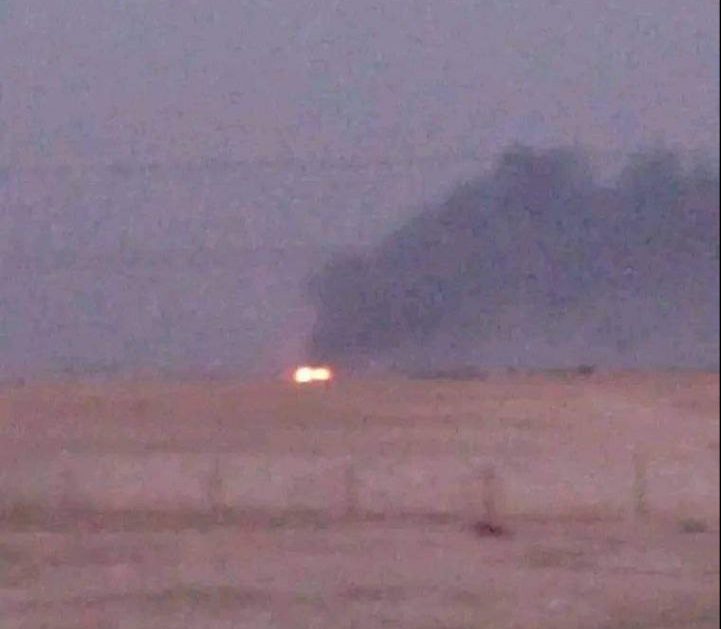
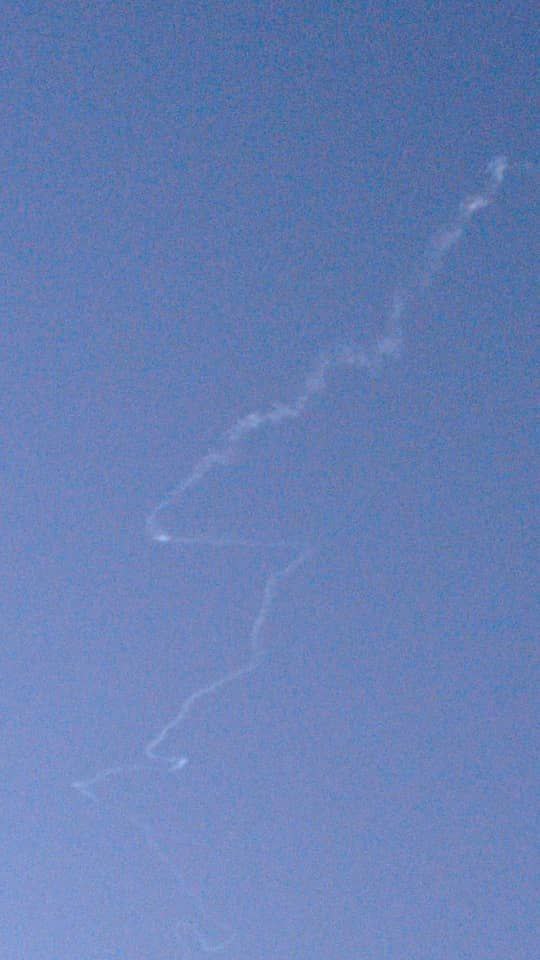
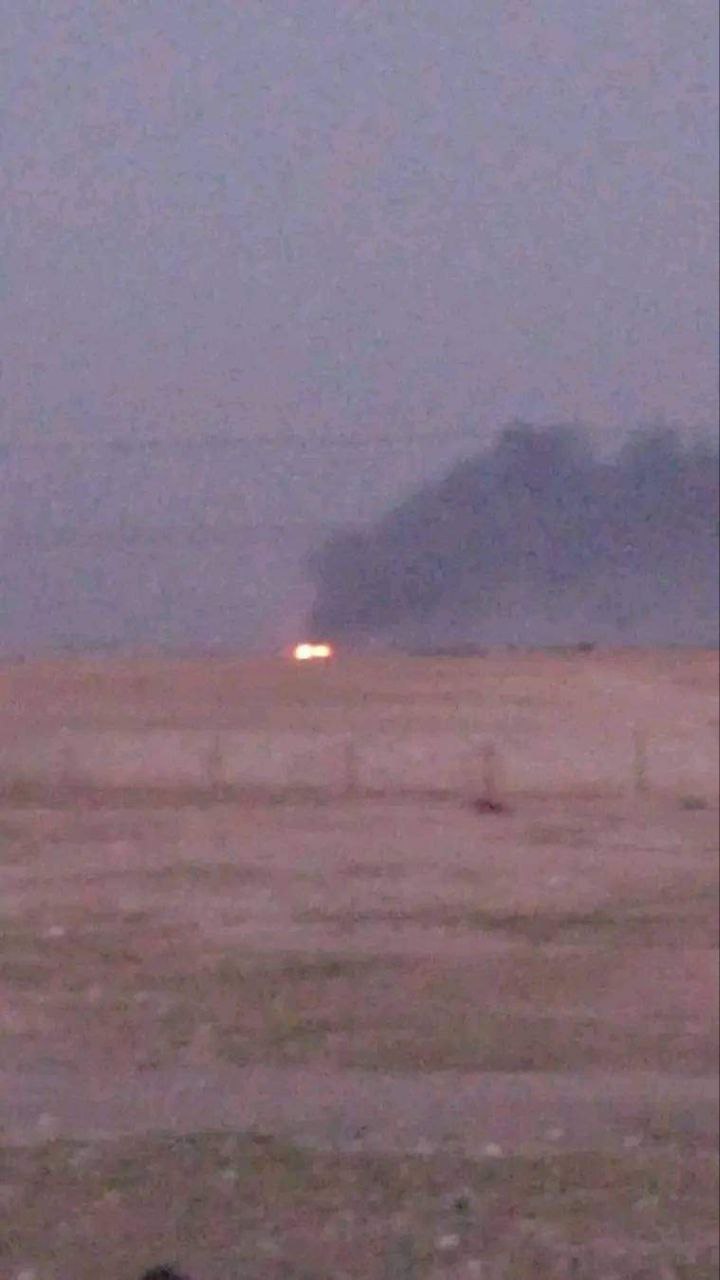
This latest incident marks the sixth time the Lebanese resistance movement has shot down an Israeli drone during the recent hostilities.
The Hermes 900 is a sophisticated, multipurpose unmanned aerial vehicle (UAV) that serves as an upgraded version of the Hermes 450. This new model boasts enhanced capabilities, including a higher flight altitude that makes it well-suited for reconnaissance operations. The Israeli military has deployed the Hermes 900 extensively in the Gaza Strip, southern Lebanon, and Syria, where it has carried out numerous aerial missions.
However, Hezbollah’s air defense systems have proven more than capable of countering this advanced Israeli drone. By successfully downing the Hermes 900, the Lebanese resistance group has once again demonstrated its ability to neutralize the enemy’s aerial dominance and assert its own supremacy in the skies.
An Israeli regime Hermes 900 drone that was shot down by Hezbollah
This latest incident is a significant blow to the Israeli military’s aerial surveillance and intelligence-gathering capabilities. The loss of the Hermes 900 not only represents a financial and technological setback for Israel, but it also serves as a morale-boosting victory for Hezbollah and its supporters.
The ongoing conflict between Hezbollah and Israel has been marked by a continued struggle for aerial superiority. As the Israeli military continues to invest in advanced drone technology, Hezbollah has responded by enhancing its air defense systems and honing its ability to detect and intercept these UAVs.
The resistance group’s unwavering determination to defend its homeland and confront Israeli aggression remains unshakable, and it is willing to employ its technological and military prowess to achieve this objective.
As the tensions in the region continue to simmer, the battle for aerial supremacy between Hezbollah and Israel is likely to intensify. The outcome of this ongoing struggle will have far-reaching implications for the balance of power in the Middle East and the ability of the Israeli military to conduct its operations without facing the constant threat of Hezbollah’s air defenses.
– The destruction of Israel through military action is not sweet for the world. The people of the world must be enlightened and aware, the Gaza war is the cost for the enlightenment of the world, and the events that are taking place in the world today are all a result of the Gaza war.
– The expansion of the war was costly for the Zionist regime, and they were looking for an action with low cost and high effectiveness. The entry of the usurping regime into this crime against Iran was a miscalculation, and they thought that Iran would not respond to their crime and that the resistance forces would act instead of Iran.
– Israel sent a message through the Egyptian foreign minister that it would back down in the Gaza war to prevent Iran’s response.
– Martyr Amirabdollahian, the Foreign Minister, played an active role in the diplomacy of the Operation True Promise. Israel and the United States equipped the countries of the region to defend Israel in order to prevent the damage of Iran’s response. About 221 fighter jets were put on alert to prevent Iran’s attacks.
– According to the admission of foreign countries, the Operation True Promise was the largest missile and drone operation in the world. To overcome Israel’s Iron Dome, a large number of missiles and drones were needed; the operation was punitive, limited, and extensive, and two intelligence and operational bases that played a role in the martyrdom of Iranian military commanders in Syria were destroyed.
– The defeat of Israel’s deterrent power is equivalent to its collapse. Now the resistance axis has gained morale, and the history of the region has been divided into before and after the operation. The result of this operation is good deterrent power and an exemplary one for the Islamic Republic, and as a result of this victory, the economy and morale of the people have improved, and national cohesion in support of this operation has increased.
It is worth mentioning that in response to the Israeli attack on April 1 against the Iranian consulate in Damascus, which led to the martyrdom of some Iranian military advisors, the IRGC launched an extensive missile and drone strike on the Israeli-occupied territories that was dubbed Operation True Promise at midnight on April 13 and in the early morning of April 14.
According to the Israeli army’s statement, two of its soldiers were killed last night in an anti-Zionist operation by a Palestinian in the Ourta checkpoint area, southeast of Nablus in the West Bank. The army claimed the soldiers were killed during anti-Zionist car-ramming operation by a Palestinian in that checkpoint.
Two Israeli soldiers were eliminated in a car-ramming operation at a checkpoint east of Nablus.
In a second incident, another Israeli trooper was killed during clashes with Palestinian resistance groups in the besieged Gaza Strip. The army provided few details about the circumstances of this soldier’s death.
The deaths of these three Israeli troopers mark a significant increase in the military casualties sustained by Israel since the start of its latest ground invasion of Gaza in mid-May.
The Israeli army now claims that 292 of its soldiers have been killed since the ground offensive began. This figure represents a dramatic rise from the previous toll of 264 Israeli military deaths acknowledged just days ago.
Furthermore, the total number of military casualties claimed by the Israeli regime has reached 642 since the beginning of the current round of confrontations with Palestinian groups. This statistic, provided by the Israeli military, has not been independently verified.
However, some Israeli experts believe that the real number of Israeli military casualties are much more than the announced figure. They mentioned that the number of casualties of Israeli officers, soldiers and reservists stands at over 3,000.
The admission of these latest deaths comes as Israel faces growing international criticism over the high civilian death toll resulting from its bombardment of the densely populated Gaza Strip.
The Israeli cabinet has defended the military’s actions, claiming they are necessary to combat Palestinian rocket fire and destroy the network of cross-border tunnels used by resistance fighters.
The Israeli genocidal war on the Gaza Strip has left at least 36,171 Palestinians killed and 81,420 others wounded since October 7.
In the Name of God, the Compassionate, the Merciful
I am writing this letter to the young people whose awakened conscience has moved them to defend the oppressed women and children of Gaza.
Dear university students in the United States of America, this message is an expression of our empathy and solidarity with you. As the page of history is turning, you are standing on the right side of it.
You have now formed a branch of the Resistance Front and have begun an honorable struggle in the face of your government’s ruthless pressure—a government which openly supports the usurper and brutal Zionist regime.
The greater Resistance Front which shares the same understandings and feelings that you have today, has been engaged in the same struggle for many years in a place far from you. The goal of this struggle is to put an end to the blatant oppression that the brutal Zionist terrorist network has inflicted on the Palestinian nation for many years. After seizing their country, the Zionist regime has subjected them to the harshest of pressures and tortures.
The apartheid Zionist regime’s genocide today is the continuation of extreme oppressive behavior which has been going on for decades. Palestine is an independent land with a long history. It is a nation comprised of Muslims, Christians, and Jews.
After the World War, the capitalist Zionist network gradually imported several thousand terrorists into this land with the help of the British government. These terrorists attacked cities and villages, murdered tens of thousands of people and pushed out multitudes into neighboring countries. They seized their homes, businesses and farmlands, formed a government in the usurped land of Palestine and called it Israel.
After England’s initial help, the United States became the greatest supporter of this usurper regime, ceaselessly providing it with political, economic and military support. In an act of unforgivable recklessness, the United States even opened the way and provided assistance for the regime’s production of nuclear weapons.
The Zionist regime used an iron-fist policy against the defenseless people of Palestine from the very beginning and has, day by day, intensified its brutality, terror and repression in complete disregard of all moral, human and religious values.
The United States government and its allies refused to even frown upon this state terrorism and ongoing oppression. And today, some remarks by the US government regarding the horrific crimes taking place in Gaza are more hypocritical than real.
The Resistance Front emerged from this dark environment of despair, and the establishment of the government of the Islamic Republic of Iran expanded and fortified it.
The global Zionist elite – who owns most US and European media corporations or influences them through funding and bribery – has labeled this courageous, humane resistance movement as “terrorism”.
Can one call a people a terrorist nation for defending themselves on their own land against the crimes of the occupying Zionists? And is helping such a nation and strengthening it, an act of terrorism?
The oppressive leaders of global hegemony mercilessly distort even the most basic human concepts. They portray the ruthless, terrorist Israeli regime as acting in self-defense – yet they portray the Palestinian Resistance which defends its freedom, security and the right to self-determination, as terrorists!
I would like to assure you that today the circumstances are changing. A different fate awaits the important region of West Asia. The people’s conscience has awakened on a global scale, and the truth is coming to light.
Moreover, the Resistance Front has grown in strength and will become even stronger.
And history is turning a page.
Besides you students from dozens of American universities, there have also been uprisings in other countries among academics and the general public.
The support and solidarity of your professors is a significant and consequential development. This can offer some measure of comfort in the face of your government’s police brutality and the pressures it is exerting on you. I too am among those who empathize with you young people, and value your perseverance.
The Quran’s lesson for us Muslims and all of humanity, is to stand up for that which is right: “So be steadfast as you have been commanded” (11:112).
The Quran’s lesson for human relations is: “Do not oppress and do not be oppressed” (2:279).
The Resistance Front advances by a comprehensive understanding and the practice of these and hundreds of other such commands – and will attain victory with the permission of God.
My advice to you is to become familiar with the Quran.
The UN’s World Food Programme (WFP) has issued an urgent call for an immediate ceasefire, warning that its ability to provide aid to the “starving and desperate” people of Gaza is rapidly deteriorating.
People displaced in Rafah and across Gaza are beyond exhausted. And our ability to help them is deteriorating with every passing hour, every passing day, the WFP said in a statement, adding: “Rafah is burning.”
As the humanitarian crisis worsens, more than 30 countries have called for greater scrutiny of Israel’s role in the destruction of Gaza’s healthcare system, further exacerbating the suffering of the Palestinian population.
Aftermath of Zionist regime’s strikes on refugee tents in RafahAftermath of Zionist regime’s strikes on refugee tents in Rafah
The United Nations Security Council has convened an emergency meeting to address Israel’s ground invasion of Rafah, as several European countries, including Spain, Ireland, and Norway, have formally recognized the state of Palestine in recent days.
However, the scale of the humanitarian crisis continues to outpace the international community’s response. The UN reports receiving only about 170 trucks of aid over the past three weeks – a mere “drop in the ocean” compared to the 500 trucks needed daily to address the dire needs of Gaza’s population.
Stephane Dujarric, spokesperson for the UN chief, announced that aid to Gaza has dropped 67 percent since May 7, when Israel’s Rafah attack kicked off.
Israel’s incursion, launched in early May, has forced over one million people to flee Rafah, many of whom had already been displaced multiple times by previous Israeli offensives in Gaza. The violence has taken a staggering toll, with at least 36,171 Palestinians killed and 81,420 wounded since October 7.
Meanwhile, the Israeli military has claimed “operational control” of the Philadelphi Corridor, the area separating Gaza from Egypt, sparking outrage from Egyptian officials who say Israel is violating the terms of the 1979 peace treaty between the two countries.
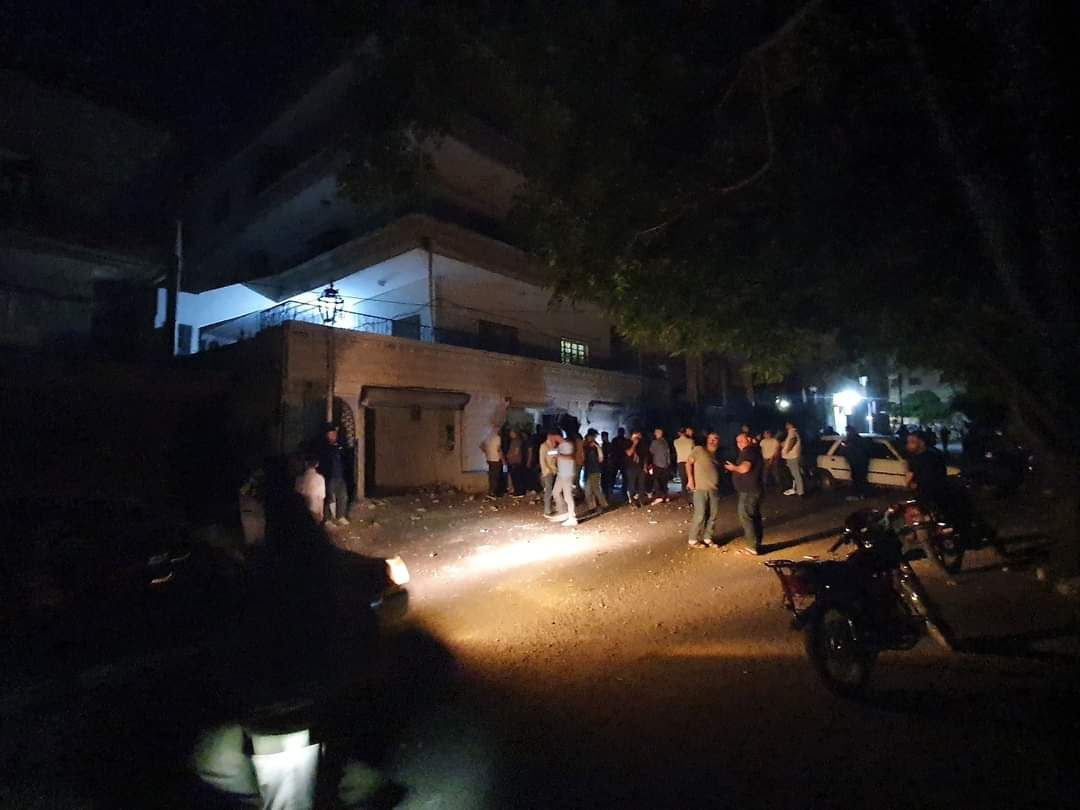
In the early hours of the attack, the state-run SANA news agency reported that Syrian air defenses were engaging the unidentified objects, a term typically used to refer to Israeli Air Force fighter jets and missiles conducting strikes inside Syrian airspace. But hours later it became clear that Israeli warplanes attacked two sites in Homs and Tartus provinces.
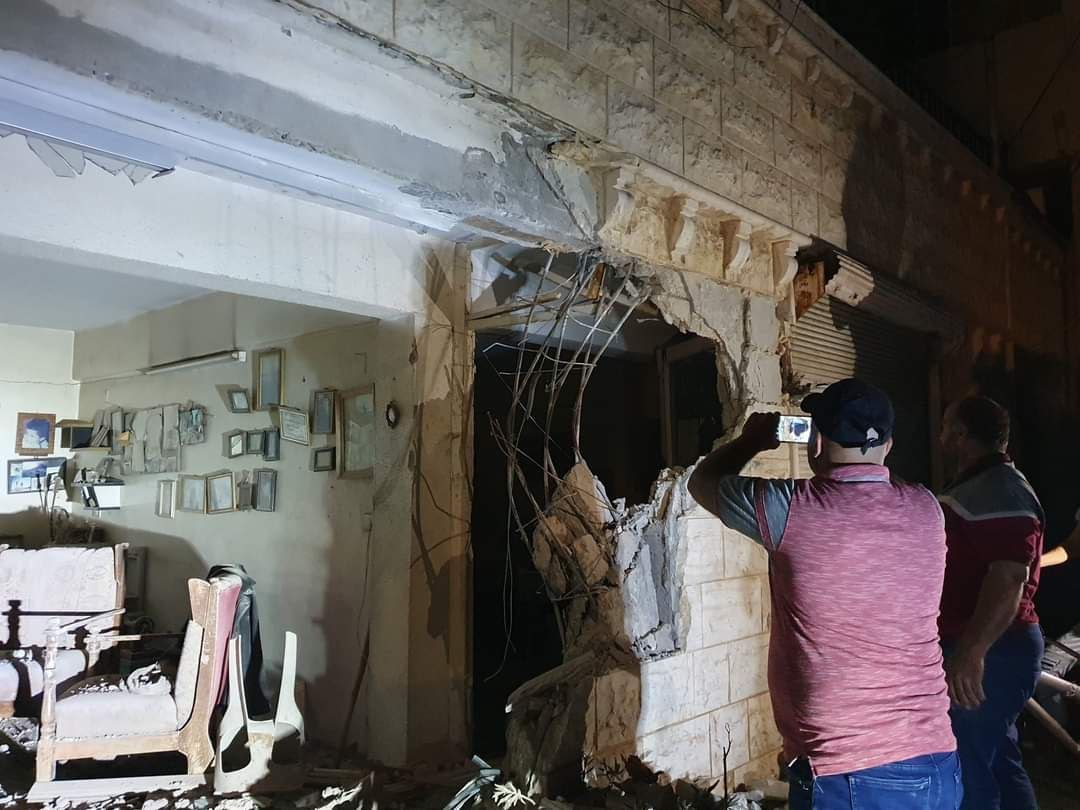
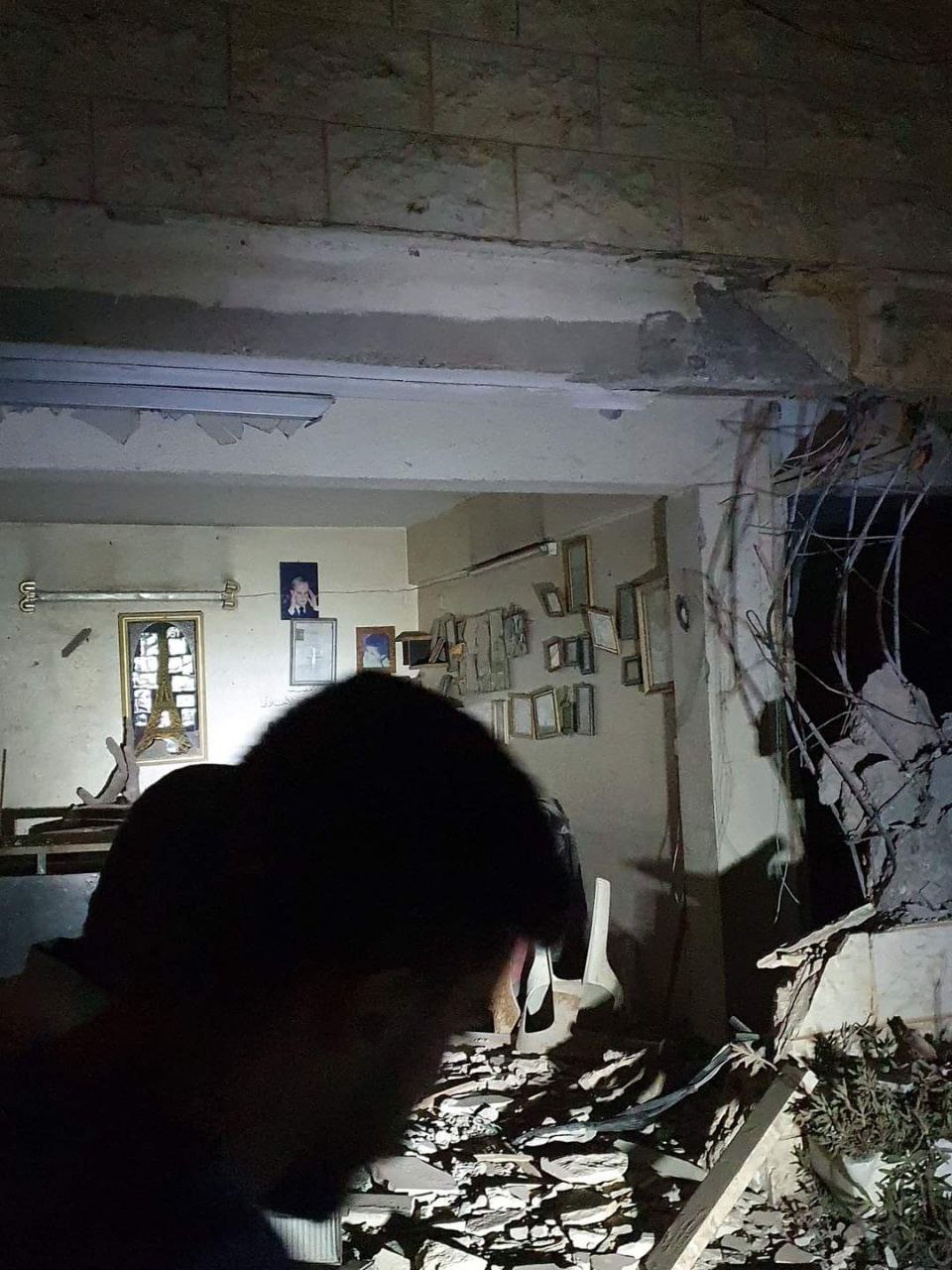
According to a Syrian military source, at around 19:30 (local time), the Israeli regime targeted a headquarters in the central region and a residential building in the city of Banias from the Lebanese territory. This attack resulted in the martyrdom of a child, the wounding of 10 civilians and the occurrence of material damages.
Images from the scene of the incident in Homs and Banias
According to the pro-opposition Syrian Observatory for Human Rights based in London, the latest Israeli airstrikes targeted at least one military site located in the eastern countryside of Homs Governorate. The strikes resulted in plumes of smoke rising from the targeted area.
In a separate incident on Saturday, the Observatory also reported that an Israeli drone strike in central Syria, near the border with Lebanon, had killed two fighters affiliated with the Lebanese resistance movement Hezbollah.
Syrian air defense batteries, which are equipped with a mix of Russian-made surface-to-air missile systems, have repeatedly engaged Israeli warplanes and missiles in the past.
Wednesday night’s confrontation underscores the unpredictable nature of the conflict and the potential for further escalation between the warring parties.
The Israeli regime has carried out numerous airstrikes in Syria in recent years, targeting what it claims are military sites and arms shipments destined for the Lebanese Hezbollah movement, a key ally of the Syrian government.
The Israeli regime rarely comments on specific operations, maintaining a policy of ambiguity regarding its activities in Syria.
According to the latest field reports, the Israeli forces have advanced in the southern part of the Jabalia refugee camp and re-entered the Al-Faloujah cemetery. Clashes are currently ongoing near Al-Faloujah Street and Abu Sharakh Square.
These areas had previously been under the control of the Israeli regime’s army, but the occupying forces were ultimately forced to withdraw from them in the past months. The purpose of the latest Israeli incursion into these regions remains unclear, as the regime has never demonstrated the ability to effectively cleanse, stabilize and maintain a long-term presence in these areas.
A kind of lack of planning and confusion is seen in the movements of the regime in the northern Gaza Strip, reports show, suggesting that the Israeli military’s actions in the region lack a coherent strategic vision.
Israeli forces advanced in the southern part of the Jabalia refugee camp
Elsewhere, the battles in the southern city of Rafah continue, with no significant changes in the frontlines. However, new images have emerged showing that the Israeli regime’s battle tanks and remote-controlled armored vehicles have entered Tel Zaarab, located in the western part of the Rafah city.
Israeli regime’s battle tanks and remote-controlled armored vehicles in Tel Zaarab
Tel Zaarab is considered the highest point in Rafah and overlooks the entire city. This development suggests that the Israeli military forces may be preparing to expand the scope of their operations from the western outskirts of Rafah towards the center of the city in the coming days.
Israeli regime’s battle tanks in Tal Zaarab
The ongoing conflict in the Gaza Strip has been a subject of international concern, with calls for a peaceful resolution to the longstanding Israeli-Palestinian tensions. However, the latest escalation in the fighting indicates that the region remains a powder keg, with the potential for further violence and instability.
The death toll from the Israeli ongoing onslaught on the Gaza Strip has surged to 36,096, the Health Ministry in the besieged enclave said on Tuesday. At least 81,136 people have also been wounded in the genocidal war since October 7, 2023.
Latest military situation in the Gaza Strip – click to view full size
Early on Tuesday morning, the Iraqi resistance group published footage, saying that it has once again attacked a vital Israeli target in Eilat port using drones.
In a statement, the Islamic Resistance in Iraq said: In an effort to support and assist the people of Gaza, and in response to the crimes committed by the usurping regime against Palestinian civilians, including women, children, and the elderly. The fighters of the Islamic Resistance in Iraq carried out attacks on targets in the occupied city of Eilat using several drones in two phases on May 27.
The IRI statements
In this regard, Hebrew-language sources reported that the Israeli army’s air defense systems intercepted several suicide drones in the vicinity of the occupied city of Eilat, causing the sirens to sound in the Eilat port and the Ilan and Asaf Ramon International Airport.
According to an analysis of the IWN, this was the 103rd attack by the Iraqi resistance against the Israeli regime’s positions since the outbreak of the war in Gaza.
Since the onset of Operation al-Aqsa Storm on October 7 2023, the occupied port of Eilat has been targeted in several occasions by the Yemeni forces and the Islamic Resistance in Iraq in a bid to show support for the oppressed people of Gaza.
The Israeli regime launched its brutal war on the besieged Gaza Strip on October 7th after the Palestinian resistance movement, Hamas, carried out an unprecedented operation against the occupying entity in retaliation for its intensified atrocities against the Palestinian people in al-Quds city, the West Bank and in the Gaza Strip.
Brigadier General Yahya Saree, spokesman for the Yemeni Armed Forces pointed to the recent attacks by the Yemeni army on illegal ships, noting that the naval and missile units of the Yemeni armed forces carried out three joint operations, the names of those strikes are as follows:
– Attack on the US ship Largo Desert in the Indian Ocean.
– Attack on the Israeli ship MSC Michela in the Indian Ocean.
– Attack on the ship Minerva Lisa in the Red Sea for violating the decision to ban entry into the ports of occupied Palestine.
In addition to these attacks, the Yemeni drone unit also, with the help of God Almighty, targeted two US military ships in the Red Sea in two operations.
At the end of his statement, Brigadier General Saree reiterated that the Yemeni armed forces will continue to support the oppressed people of Palestine until the end of the Israeli attacks and the lifting of the siege of the Gaza Strip.
The ship Largo Desert is a chemical/oil tanker that has been operating under the Marshall Islands flag since 2018. This ship was heading from South Africa to the port of Beira in Mozambique. The ship MSC Michela is also a container ship with the Madeira flag, and accurate information about its recent origin and destination has not been recorded. The ship Minerva Lisa is also an oil tanker that has been operating under the Liberian flag since 2004. This ship was also moving from an unknown origin towards the port of Al-Ain Al-Sokhna.
According to the statistics of the IWN, the attacks of the Yemeni army on the vessels mentioned in the statement of Brigadier General Yahya Saree are the 84th, 85th, 86th, 87th and 88th official attacks by the Yemeni armed forces against illegal ships (Israel, the United States, Britain, and vessels affiliated with them) in the Red Sea, the Arabian Sea, and also the Indian Ocean.
According to reports from Israeli media outlets, some Egyptian army soldiers at the Rafah border crossing opened fire at Israeli military personnel.
The Israeli military also responded by firing warning shots towards the Egyptians.
In the initial local media reports, it was mentioned that the confrontation came to an end following the intervention of border officials from both sides.
The Israeli newspaper Yedioth Ahronoth reported that during the confrontation between Israeli and Egyptian military personnel at this border crossing, two Egyptian soldiers were injured, one of them succumbed to the injuries.
Some Israeli media outlets have also reported that the regime’s soldiers were also wounded, but the exact details of their casualties are not yet available.
According to the independent English-language Egyptian newspaper, Daily News Egypt, unnamed sources stated that Egyptian soldiers were “affected” by the Rafah massacre that occurred on Sunday, when an Israeli bombing led to the killing of 45 Palestinians at a displacement camp.
The Rafah border crossing has been seized by Israeli military forces since May 7 as the regime’s forces expanded ground invasion of Gaza into the southern city.
The Palestinian Health Ministry in the Gaza Strip announced on Monday that 45 people, including 23 women, children and elderly, lost their lives and 249 others were injured in the air strike.
Eye witnesses said at least eight missiles pummeled the refugee camp, which was designated by the Israeli regime’s army to be a safe zone, at about 8.45 p.m. local time (17:45 GMT).
In the early morning, the Rafah camp had been reduced to a smoking ruin, with tents, twisted metal, and charred belongings scattered throughout. Women could be seen weeping, and men gathered to hold prayers beside the bodies wrapped in shrouds.
Palestinian families rushed to hospitals to prepare their dead for burial after the late-night strike on Sunday set tents and makeshift shelters ablaze.
Video footage captured the chaos as a fire raged in the darkness, with people screaming in panic.
The regime’s military said it was investigating reports that a strike it carried out against Gaza residents in Rafah caused the deadly fire.
Survivors described the panic as families were preparing to sleep when the strike hit the Tall as-Sultan neighborhood, where thousands were sheltering after Israeli forces began a ground offensive in eastern Rafah over two weeks ago.
This incident prompted outrage from global leaders, who urged the implementation of an order by the International Court of Justice (ICJ) to halt Israel’s assault on Rafah.
Despite the ruling by the top UN court ordering the Israeli regime to stop its offensive, Israel has continued its military operations, saying the court’s ruling grants it some scope for military action in Gaza.
Several leaders from around the world condemned the latest attacks, stating that the International Court of Justice ruling must be respected.
Clashes between the Palestinian resistance fighters and the Israeli troops continue in the southern areas of Rafah, especially north of the neighborhoods of Al-Janinah and Al-Salam, as well as inside the Brazil neighborhood and the outskirts of the Salah al-Din Gate.
According to reports from local sources, Israeli military forces have gathered in the municipal stadium (east of the Salah al-Din Gate) and also north of the Abu Yousef Al-Najjar Hospital.
Given the density and urban environment of the southern areas of Rafah, as well as the partisan attacks by the resistance fighters against the Israeli military forces, it is expected that the Israeli army will carry out intense artillery and air strikes to pave the way for the advancement of its own forces.
The advance of the Israeli army on the Rafah front and the extensive attacks on this area come at a time when the International Court of Justice (ICJ) in The Hague ordered the immediate cessation of the Israeli regime’s attack on Rafah on May 24.
In the north of the Gaza Strip, clashes continue between the Israeli troopers and the Palestinian resistance fighters in the east of the Jabalia camp. The Israeli army is slowly expanding the areas under its control in the Jabalia camp.