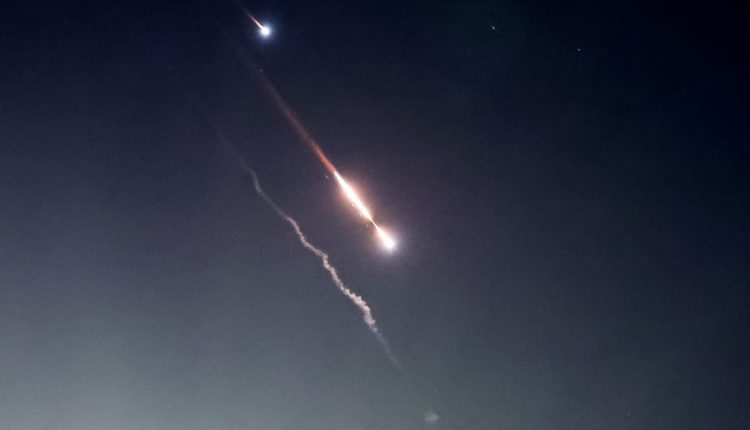
On the night of April 21, the air defense units of Hezbollah managed to destroy one of Hermes 450 drones belonging to the Israeli army in the skies over the Al-Aishiyah area in southern Lebanon.
Israeli army spokesman Daniel Hagari also confirmed the news story, adding that one of the regime’s drones was shot down by Hezbollah’s air defense due to a ground-to-air missile in southern Lebanon.
Video footage released by Hezobllah media wing on Hermes 450 shot down
According to the IWN, this is the fifth Israeli drone destroyed by Hezbollah during the recent war. Hezbollah previously shot down two Hermes-450 and IAI Heron-1 drones on November 5 and 18, 2023, as well as one Hermes-450 drone on February 26, 2024, and one Hermes-900 drone on April 6, 2024, in the skies over southern Lebanon.
The Hermes-450 drone is one of the medium-class reconnaissance-combat drones of the Israeli army, which plays an effective and crucial role in identifying the positions and movements of Hezbollah fighters in the southern border areas. Israeli drones have carried out more than 10 terrorist operations in southern Lebanon, resulting in the martyrdom of several senior officials and field commanders of Hezbollah and other resistance groups.
The examination of the published images of the remnants of two missiles in the Al-Aziziyah region in the Wasit province and the remnants of another missile in the Al-Latifiya district near the Iraqi capital Baghdad indicates that these missiles are either Israeli ballistic missiles such as ROCKS ALBM or a similar missile like the Black Sparrow ballistic missile, or based on some speculations and the absence of warheads in the images and the presence of missile boosters, it is reinforced the possibility that the Blue Sparrow missile has been used. In any case, the available images of the missile remnants are not sufficient for a definitive conclusion regarding the type of all missiles.
ROCKS is a new type of surface-to-surface Israeli missile that has a great similarity to the Israeli Black Sparrow missile in terms of body design and specifications, and it also utilizes the technology used in SPICE air-to-surface bombs. The Blue Sparrow missile is also one of the target missiles in the Sparrow series of ballistic missiles, which can be equipped with an explosive warhead if necessary.
According to available information, the range of the ROCKS missile is estimated to be between 600 to 800 kilometers. Israeli F15 or F16 fighter jets are capable of carrying this missile. There is no information about the range of the Blue Sparrow, but it can be estimated to have a range of approximately 1000 kilometers.
Sparrow missile series (middle) – Blue Sparrow missile test by Israeli F-15 fighter (left) – Rocks missile test by Israeli F-16 fighter (right)
– In the early hours of Friday around 2:55 AM, Israeli regime fighter jets targeted objectives at the al-Thala airport and a radar base in southern Al-Suwayda Governorate.
– An hour later, around 3:50 AM, reports of anti-aircraft system activities near the airspace of the 8th Shekari (hunting) Air Force base, near Isfahan airport, were reported. Similar reports with a short time gap from the west of Tabriz and anti-aircraft system activities were also reported. It is worth mentioning that the mentioned defensive system activities are related to anti-aircraft cannons, and none of the defense missiles were activated. It was later revealed that the anti-aircraft cannons were activated to target a limited number of suspicious objects, which are small quadcopters, and all of these drones were destroyed in the sky, and no damage was reported to any facilities.
– Several hours later, around 6:45 AM, reports of unidentified projectile launches by Iraqi radars and the sound of explosions in some areas of Iraq were reported. Iraqi authorities also confirmed the passage of unidentified projectiles through the Iraqi airspace. Following this, Iraqi forces were dispatched to the mentioned areas, and the remnants of three Israeli missiles, one in the Al-Latifiyah region near Baghdad, and the remnants of two other missiles in the Al-Aziziyah region in the Wasit province, were discovered.
Field assessments and information conclusions indicate that the aerial attack on yesterday morning against the al-Thala airport and targeting the Syrian army’s radars in the Al-Suwayda Governorate was carried out to blind surveillance stations in southern Syria and facilitate the activities of Israeli fighter jets. On the other hand, quadcopters that entered the sky over Isfahan by infiltrators from within Iran were intended to strike radar and defense systems, and if successful, disrupt the operation of defense systems in the mentioned area and facilitate a potential Israeli attack on a target or targets in Isfahan. However, this attempt failed, and all micro drones were destroyed in the sky. The final phase of this operation involved the firing of Israeli missiles and the destruction of targets.
Based on the information available in this operation, the Israeli regime has fired 3 ROCKS or Blue Sparrow missiles, or a combination of them, towards Iran. Our speculation is that Israeli fighter jets have launched the missiles from the northeasternmost point of the occupied Palestinian territories’ borders. Alternatively, in the second scenario, Israeli fighter jets may have fired the missiles from areas near the Al Tanf military base on the Syrian border towards Iran while passing through the border line between Jordan and Syria in the Al-Suwayda Governorate. Field investigations and the comparison of the missiles’ range reinforce the likelihood of the accuracy of this speculation.
The crash site of the rocketboosters and the possible paths of attack
Regarding the Israeli attack, it is crucial to mention that all three missiles fired or their boosters have crashed at a distance of approximately 100 kilometers from the Iranian border and have not reached Iranian territory in any way! Even considering the speculation that the missiles have detachable warheads (such as the Blue Sparrow) and the remnants of the missiles were actually rocket boosters, it must be noted that in this case, even in this type of missile and in this type of trajectory and path traversal, after separation from the body, the missiles are not capable of traveling a distance of around 100 kilometers, and in this case, the missiles have not reached Iran. Therefore, it is unlikely for them to penetrate 450 more kilometers into Iranian territory and reach Isfahan. The non-activation of any of Iran’s missile defense systems and the absence of any evidence of impact or damage in Iran once again demonstrate that hostile projectiles have not entered Iranian soil. (Speculations and low-quality satellite images regarding damage to the S300 systems in Isfahans’s Shikari Airbase are not accurate, and if there is any damage, it is related to the micro drones.)
The remains of two missiles in Al-Azizia area in Wasit province and the remains of another missile in Al-Latifiyah area around Baghdad.
In light of the existing interpretations, it must be said that the Israeli missile attack has been completely faced with a humiliating failure. Therefore, practically, the need for retaliatory operations by Iran is rejected, as the missiles never reached Iran in the first place. Furthermore, the flight of several micro air vehicles, which has been a precedent in the past, does not provide a necessary pretext for carrying out a large-scale missile operation against the Israeli regime.
There are ambiguities and speculations regarding the overall situation and the manner of Israel’s failure, which we will address further. These speculations have variables, all of which are not entirely verifiable.
– One possibility for the lack of success in this missile attack is that the mentioned missiles ultimately experienced errors in their range and lost communication with their center, or they may have crashed due to technical malfunctions, which is entirely plausible.
– Another possibility is that, due to the failure of the micro air vehicles and the destructive operations against radar and defense systems in Isfahan, Israel may have regretted the attack in the final stage and the projectiles may have been canceled. Because if the operation had been carried out and the missiles had been fully intercepted in Iranian territory, it would have resulted in another major embarrassment for Israel, compelling Iran to carry out another retaliatory response on a much larger scale.
– Another possibility is that Iran’s radar and defense systems, through a very strong electronic and cyber warfare, prevented the missiles from reaching Iran’s borders and neutralized the threats outside Iran’s borders. This requires a very high level of electronic warfare capability.
– Yet another possibility is that the United States itself may have taken action to engage in electronic warfare and intercept Israeli missiles to prevent the escalation of tensions. The United States is deeply concerned about the costs and consequences of a widespread conflict between Israel and Iran and lacks the ability to confront short-term or long-term retaliatory attacks by Iran against Israel.
– The last possibility could involve covert interventions, and Israeli missiles may have fallen prey to unseen forces! Since the Islamic Revolution, Iran has been abundantly witnessing such covert interventions, and matters like these are by no means a strange and unexpected issue for Iran! The famous Tabas incident is another example of such covert interventions that has been officially recorded.
Postscript: This writing is based on the available definitive information and will be corrected and updated in the event of new information and findings regarding the potential impact of hostile projectiles within Iranian territory.
The important parts of Sayyed Abdul-Malik Badreddin al-Houthi’s speech, the leader of the Ansar Allah movement, in his speech about the recent developments in Palestine and the region, are as follows:
– The official position of most Arab and Islamic countries is led by those who have no inclination to support Palestine. Some are indifferent, some are complicit in aggression, and some in a few regions aid the enemy.
– The Takfiri movement is a major seditious movement to which tens of thousands belong, but its actions under the banner of jihad are not on the right path.
– The Takfiri movement carried out more than four thousand suicide operations in Iraq under the banner of jihad. The Takfiri movement, under the guise of Islam, committed crimes such as knife slaughter, mutilation of bodies, etc. The movement of the Takfiris, with the huge financial support of Arab governments and their political and media support, killed hundreds of thousands of Muslims.
– Where is the Takfiri movement in the face of the Israeli enemy, which is considered the first enemy of Islam according to the Quran?! The Takfiris did not act militarily to support Palestine, nor did they do so on a media level.
– We offer our condolences on the martyrdom of the sons and descendants of our dear fighter brother, Ismail Haniyeh, and we commend their faith and jihad positions.
– The Americans still insist on preventing a ceasefire and insist on continuing their aggression and crimes in Gaza.
– Before Iran’s response, serious and intense efforts were made to create obstacles and restrain Iran’s reaction.
– The United States and those associated with them have presented many temptations and offers to our Iranian brothers to dissuade them from responding or to weaken their response.
– Extensive preparations were made to counter Iran’s response, and the leadership of this was in the hands of the US. Some Arab countries stood alongside the Europeans in addition to the US.
– The Americans built seven layers of defense to counter Iran’s response and to intercept missiles and drones for Israel.
– Iran’s response in terms of speed, quantity, and quality, and the firing from the Iranian soil, was strong. Iran targeted the enemy’s most important military centers.
– Iran’s attack, with the participation of the Axis of Resistance, is an important opportunity to target the Israeli enemy.
– The “Operation Honest Promise” established the equation of responding to the Israeli enemy in exchange for their efforts to impose the rule of war and siege. Based on this, if they attack, they will receive a reciprocal response.
– The Israeli enemy has been accustomed for decades to attacking Arab and Islamic countries and they do not respond.
– The enemy tried to portray Iran’s response as insignificant and worthless, and some Arab media outlets joined this position. But the people of Palestine were pleased with Iran’s response.
– The West’s problem with Iran comes from Iranians’ support for the people and resistance of Palestine. “Displaying the issue of Palestine as an Iranian issue” by the enemy and some Arab countries and “Iran’s support for Palestine” are two distinct issues.
– The Palestinian people’s happiness of Iran’s operations has made the Zionists fearful.
– If the Israeli enemy responds to Iran, Iran will respond even stronger, and this is to the benefit of the Palestinian people.
– In the past two weeks, Yemen’s support operations for Palestine have reached 14 operations using 36 ballistic, cruise, and suicide drones from the Red Sea to the Indian Ocean. Eight enemy-related ships were targeted, and the total number of ships attacked reached 98.
Some excerpts from Hossein Amirabdollahian’s speech at the UN Security Council are as follows:
– We will not tolerate any aggression against our national security, the country’s interests, and the collective security of the sensitive region of West Asia by any party.
– The UN Security Council has held numerous meetings to address the war crimes and genocide committed by the Israeli regime, which, despite the adoption of three resolutions and one statement, has had ‘no practical result.’
– No government will remain silent in the face of such brazen missile attacks on its embassy, which is considered a symbol of sovereignty, and the killing of its legal forces.
– Iran’s legitimate defense and proportionate action have come to an end. Therefore, the Israeli regime must be compelled to refrain from any further military adventurism against Iran’s interests.
Certainly, if the Israeli regime uses force and violates Iran’s interests, Iran will not hesitate for a moment to give an immediate, decisive, and strong response and make the regime regret its actions.
Amirabdollahian also stated at the United Nations Security Council session that it is expected that the council will take action on the following matters by adopting a comprehensive and decisive resolution under Chapter VII of the United Nations Charter:
1- Immediate, complete, unconditional, and permanent ceasefire in all Gaza areas, including Rafah, and even the western border.
2- Complete lifting of the humanitarian blockade of Gaza.
3- Humanitarian prisoners swap.
4- Compelling the regime to immediately, completely, and unconditionally withdraw all military forces, equipment, and weapons from Gaza and ensuring the safe return of people to their areas and places.
5- Imposition of comprehensive and immediate sanctions against the Israeli regime.
6- Supporting the binding temporal jurisdiction of the International Court of Justice (ICJ) and paving the ground for the trial and punishment of all perpetrators, agents, and supporters of Israel’s crimes for committing genocide, targeted killings of journalists, staff of public service institutions, repeated use of unconventional weapons such as phosphorus bombs, and repeated threats by Israeli regime officials to use nuclear bombs in the Gaza Strip.
Part of the remarks of Brigadier General Ahmad Haghtalab, commander of the IRGC unit responsible for safeguarding Iran’s nuclear sites, comes as follows:
– If the fake Zionist regime intends to use the threat of attacking our nuclear facilities to put pressure on Iran, reconsideration of the doctrine and nuclear policies of the Islamic Republic of Iran and distancing from past declarations is possible and conceivable.
– The nuclear facilities of the Zionist enemy are identified, and we have all the necessary information about their targets, and in response to their possible actions, we have fingers on the trigger to launch powerful missiles to destroy the specified targets.
– If the Zionist regime intends to take action against our nuclear facilities and installations, it will definitely face our reaction and will be confronted with advanced nuclear facilities for a like-for-like response, and will be targeted for invasion and operations.
A viral video which has spread widely across social media platforms, showcases Iranian “Khaybar Shekan” ballistic missile executing last-moment evasive maneuvers before striking its target in Israel, has drawn significant public attention.
This footage confirms the capabilities of Iran’s ballistic missile technology.
The “Khaybar Shekan”ballistic missile, introduced three years ago, is reported to have maneuvered evasively in the final moments to evade Israeli air defenses.
This evasive action at the end of its trajectory demonstrates the sophistication of Iran’s ballistic missile technology, particularly in avoiding interception by Israeli defense systems.
The moments Khaybar Shekan’s warhead conducts evasive maneuvers and hits the Nevatim Airbase
However, regional defense analysts state that, Iran did not extensively use the “Khaybar Shekan” in its “limited” assault on Israel. Instead, Iran is believed to have predominantly deployed older ballistic missiles in its strike.
To date, Iran confirmed to have used four types of medium-range ballistic missiles (MRBM) in its recent assault on Israel, including the 20-year-old “Ghadr,” the 10-year-old “Emad,” the five-year-old “Dezful,” and the three-year-old “Khaybar Shekan.”
Although the “Khaybar Shekan” was not widely used in last night’s attacks, it successfully evaded interception and struck targets including the Nevatim and Ramon Air Bases located in Israel’s Negev desert.
The Israeli military has confirmed that both crucial air bases sustained damage from the Iranian missile attack.
The moments Iranian missiles hit the Ramon Airbase in Negev desert
The “Khaybar Shekan” is a variant of the Fateh-110 ballistic missile, boasting a longer range and utilizing solid propellant.
According to the Islamic Revolutionary Guard Corps of Iran, this missile can strike targets up to 1,450km away, compared to the earlier “Dezful” variant which was publicly revealed in February 2019 with a range of 1,000 km.
The “Khaybar Shekan” is designed for high precision and speed, as demonstrated in attacks against northern Iraq and Syria.
The warhead of the “Khaybar Shekan” reportedly reaches speeds between Mach 7 and Mach 9 during its final flight phase before striking its targets.
In addition to high speed, the missile possesses significant agility, enabling it to overcome enemy air defense systems.
The last reported use of the “Khaybar Shekan” against its adversaries was in January, targeting what it referred to as an “Israeli intelligence center” and “locations of anti-Iran groups” near Erbil in northern Iraq and in Syria.
Iranian media report that the Islamic Revolutionary Guard Corps launched a total of 24 ballistic missiles at targets in northern Iraq and Syria as a “retaliatory” action for the assassination of a senior Iranian military officer and the commander of a pro-Iran armed group. The Iranian missile strike also responded to a deadly terrorist suicide attack in Kermanshah, Iran, which killed approximately 100 civilians.
The ballistic missile attack in Erbil reportedly destroyed one of Israel’s most significant intelligence centers in Erbil, the capital of the semi-autonomous Kurdistan region.
The Israeli army’s combat drones launched two separate strikes on two vehicle in the Ain Baal village located southeast of Tyre Tuesday afternoon, April 16, resulting in the martyrdom of three individuals.
The martyrs include Ismail Youssef Baz (Abu Jaafar) and Mohammad Hossein Mustafa Shahouri (Jaber) from the Lebanese resistance movement, Hezbollah, as well as Hossein Qasem Karsht from the Amal Movement, according to Lebanese media reports.
The Israeli regime claims that the main target of this assassination was the elimination of Ismail Youssef Baz, the frontline commander of Hezbollah. Ismail Youssef Baz was a senior and experienced member of Hezbollah responsible for rocket and anti-tank missile attacks against Israeli positions, with a rank equivalent to a brigadier general.
Despite the losses and heavy casualties that various units of Hezbollah have inflicted on the Israeli regime’s army in ground battles, the regime’s terrorist attacks on southern Lebanon have led to the elimination of important and valuable forces, creating a significant vacuum by the end of the war.
The Israeli army released a video of the terrorist attack in Ain BaalThe location of the Israeli terrorist attack in Ain Baal
Hebrew media claim that Yoav Gallant, the Minister of War and Benny Gantz, a member of the Zionist regime’s war cabinet, believe that a regional coalition should be formed before the attack, but Netanyahu insists on carrying out the attack as soon as possible.
On the other hand, the Cradle website claimed that Iran has rejected the US request to allow the Zionist regime to carry out “a symbolic strike to save face”. According to Cradle, “Iran has received messages from mediators to let the regime do a symbolic strike to save face and asked Iran not to retaliate.” But Iran reiterated warnings that any Israeli attack on Iranian soil would be met with a decisive and immediate response. The reply was delivered directly to the Swiss envoy in Tehran by officials from the Islamic Revolutionary Guard Corps (IRGC) and not the foreign ministry.
Western media quoted ABC as reporting that the meeting of the Zionist regime’s war cabinet ended without a final decision on how to respond to Iran.
This news has been published while earlier, some Hebrew media claimed that the Israeli regime had decided to attack inside Iran and declared that the attack should be carried out “as soon as possible”. These contradictions are aimed at two points; There is a possibility that the publication of contradictory news is intentionally and to mislead decision-making institutions in Iran, or in other cases, the existing contradictions originate from the confused nature of Israel’s leaders.
In any case, this issue is not important for Iran and it does not matter; And the Iranian armed forces are fully prepared to deal with any scenario. Americans know this very well. Yesterday again, a senior American official told Axios that the assessment of the United States is that Iran would respond to any significant, overt Israeli strike on Iranian soil with a new round of missile and drone attacks attacks
Chief Spokesman of the Iranian Armed Forces, Brigadier General Abolfazl Shekarchi:
— “We remind the leaders of the United States, UK, France and Germany to stop supporting the corrupt, lawless, terrorist and child-killing regime of Israel. — But if anyone, including you and that desperate and helpless regime, wants to do something stupid, we will respond stronger than the previous response to the aggressor and evil Israel. — We recommend that instead of condemning the legitimate and legal action of the Islamic Republic of Iran, be wise and do not support the terrorist Zionist regime and do not throw yourself into the burning fire.”
It is worth mentioning that on Monday, the war cabinet meeting of the Israeli regime was held for three hours to discuss how the regime should respond to Iran’s retaliatory action, and the second session for the final decision will be held today.
Yesterday morning meeting of the United Nations Security Council, which had been convened at the request of the Israeli regime to condemn or take political action against Iran at the international level, was unsuccessful due to the relatively positive atmosphere in favor of the Islamic Republic, and ended without issuing any statement or resolution against Iran.
On the other hand, American news website Axios citing an informed source has claimed that Minister of War of the Israeli regime Yoav Galant has told the US Secretary of Defense Lloyd Austin the ballistic missile strikes on Israel (occupied Palestine) cannot go unanswered. Benny Gantz, the former Minister of War and one of the current members of the Israeli war cabinet, also claimed on April 14 that the Israeli regime would respond to Iran with missile and drone attacks at the appropriate time.
The threats of the officials of the Israeli regime are raised against Iran at a time when the majority of the media outlets and public opinion in the world are in favor of Iran, and are of the opinion that the Islamic Republic’s right to respond to the crime of the Israeli regime following the attack on the Iranian embassy building in Damascus, which led to the martyrdom of several Iranian and Syrian citizens, is completely legitimate. Also, military assessments of the offensive capabilities of the Islamic Republic of Iran and the unstable security, military, and economic situation of the Israeli regime indicate that the regime does not have the ability to engage in a long-term or medium-term conflict with Iran, and in the event of an expanded war, it will face serious risks of economic and security collapse.
The artillery unit of the Israeli regime’s army targeted the northern area of the Al-Nuseirat camp, southeast of the Gaza city, west and southwest of Gaza, and east of Jabalia refugee camp from early morning up until now.
Israeli aircraft also targeted positions in the Al-Nusairat camp, east of Khan Yunis city, Al-Fukhkhari neighborhood, and western areas of the Gaza city.
The Palestinian Ministry of Health announced that the number of martyrs in the Gaza Strip has increased to more than 33,797 people at this moment, and the number of injured has reached more than 76,465.
Al-Quds Brigades, the military wing of the Islamic Jihad Movement in Palestine, reported a rocket attack on the headquarters of the Israeli regime’s army command in the northern area of the Al-Nuseirat camp.
The Al-Mujahideen Brigades announced that their fighters targeted Israeli occupation forces in the east of Jabalia refugee camp in the northern Gaza Strip.
It should be noted since ten days ago, most of the Israeli forces have withdrawn from the Gaza Strip, and only a few forces are present at the Erez crossing along the northern border of the Gaza Strip, and in the south of Gaza City in the Juhr al-Dik area to the Mediterranean Sea, on the border of the Gaza Strip in east of Khan Yunis.
Western media outlets detailed the participation of the US army in countering Iranian missiles and drones. According to a senior US defense official, during Iran’s recent attack on the Israeli regime, no American fighter jets stationed in the Iraqi and Syrian territories or the Red Sea were engaged with Iranian missiles and drones. However, the USS Carney destroyer was involved in the Eastern Mediterranean and shot down an Iranian ballistic missile. The USS Arleigh Burke destroyer also shot down three ballistic missiles before they could enter the airspace of occupied Palestine.
The US terrorist army’s Central Command (CENTCOM) also released a statement a few hours ago regarding the details of countering Iran and Yemen’s attacks, claiming that during the clashes on April 13 and 14, CENTCOM forces, with the support of European destroyers, shot down and destroyed over 80 suicide drones and at least six ballistic missiles. According to CENTCOM’s statement, out of this number, one ballistic missile and seven drones were fired from areas under the control of the Ansar Allah movement in Yemen.
Despite the various statistics published by the Israeli regime’s media outlets and the US army, the armed forces of Iran have not provided any details of this attack. Some Western media claim that the Islamic Revolution Guards Corps (IRGC) used approximately 150 ballistic missiles, 150 cruise missiles, and 100 suicide drones during the Saturday night attack. Some Iranian media outlets have speculated that during the Operation True Promise, Iran used dozens of Shahed-136 suicide drones, Emad ballistic missiles, and Paveh cruise missiles. There have also been claims about the launch of Fattah hypersonic missiles, which is not accurate.
Based on the published visual evidence, Iran used medium-range ballistic missiles dating back to the 2000s with cluster warheads in this attack, and more advanced weaponry such as the Fattah hypersonic missile was not used in this operation. The figure of 400 missiles and drones for Iran’s recent operation against the Israeli regime is a large and unreliable number in technical and analytical terms. Perhaps the use of cluster warheads is the reason for the mention of these statistics. Cluster warheads are the best solution for engaging the Israeli regime’s air defense and attacking the military equipment of the Zionists in military bases.
The importance and sensitivity of this place is such that the Israeli army imposed a complete media ban for this area and everything is censored and no damage assessment and public announcement is allowed.
According to ‘Islamic World News’ field information from Syria, during Iran’s retaliatory attacks against the Zionist regime, Syrian air defense systems were on full alert; And when the Iranian projectiles were passing through the Syrian sky, they were activated and countered with a number of Israeli interceptor missiles that were fired to shot down the Iranian projectiles. In fact, the Syrian government, unlike the traitorous government of Jordan, did not allow Israeli warplanes and interceptor missiles to operate in the sky of its country.
It is worth mentioning that on the night of the attack, Hezbollah’s artillery also targeted areas in the occupied Golan in a certain hour. All these evidences, along with Major General Bagheri’s remarks, strengthen the possibility that the Zionist regime’s intelligence base in the north of the occupied Golan Heights has been targeted.
It should be noted that this intelligence base played a role in the recent Israeli attack on the Iranian embassy in Damascus, and in general, in recent years, it has played a very important and prominent role in intelligence operations against Syria and Iran.
The location of the intelligence and espionage base of the Israeli regime in the occupied Golan Heights