Category: Lebanon

  • A Look Into New Clashes Between Israeli Regime, Resistance Movement; From South Lebanon To Gaza

    A Look Into New Clashes Between Israeli Regime, Resistance Movement; From South Lebanon To Gaza

    Some 34 rockets were fired from southern Lebanon to the Zionist settlements in northern occupied land of Palestine on April 6, 2023. 25 rockets out of that number were intercepted by air defense of the Israeli regime, and at least four rockets hit the usurped territories.

    A few hours later, Israeli fighter jets bombed certain positions of the Palestinian resistance groups in different areas of the Gaza Strip with the aim of creating deterrence. Not too much later, Palestinian resistance groups reacted to the Israeli strikes, firing 44 rockets to Sderot, Ivim and Nir Am settlements in several occasions on Thursday.

    Following the air strikes on the Gaza Strip, the Israeli army fired six missiles to al-Qlaileh town in Tyre district of southern Lebanon early Friday. Images released of the incident show that the Israeli missiles hit farmlands, two bridges and other points in al-Qlaileh plain areas, which did not leave remarkable damages.

    The issue of targeting abandoned headquarters of the resistance groups in the Gaza Strip has its roots in the Zionists’ open announcement that they want to attack the Palestinian enclave. 

    Furthermore, the recent air strikes by Israel on farms and plains in southern Lebanon indicate that the regime has not only carried out the attacks to pacify public opinion in the occupied territories, but also it does not have the capability and intention to prolong the confrontations.

    Taking into account the realities on the ground, Israeli Prime Minister Benjamin Netanyahu addressed his cabinet members, underlining that given the ongoing internal disagreements, Tel Aviv should not be turn into a scene of confrontation between Israel on one side and the Palestinian resistance group Hamas and the Lebanese resistance movement Hezbollah on the other side.

    Read more:
    Rocket Attack From Southern Lebanon To Northern Occupied Palestine; Four Zionists Wounded (Video)
    Israeli Missile Attack On Southern Lebanon

    Timeline of recent conflicts in occupied Palestine
  • Israeli Missile Attack On Southern Lebanon

    Israeli Missile Attack On Southern Lebanon

    Following the clashes between the Palestinian resistance and the Israeli regime, the Israeli army bombarded Al-Qlaileh area in the southern suburbs of the city of Tyre in southern Lebanon with six missiles.

    According to local sources in Lebanon, Israeli missiles hit agricultural lands, two bridges and other places in the Al-Qlaileh Plain and did not cause significant damage. Also, after these missiles hit, the windows of some houses near this area were broken. This attack has not caused any casualties so far.

    Daniel Hagari, the spokesperson of the Israeli army announced the strengthening of infantry and artillery units in the north and south of occupied Palestine, saying: “The Lebanese government is responsible for any incident inside its territory, including the firing of rockets. We will not allow Hamas to operate from Lebanon.”

    This aggression was carried out simultaneously with the heavy bombing of different areas of the Gaza Strip, and it is expected that Hezbollah and the Lebanese government will show different reactions to it.

    The Minister of Defense of Lebanon, Maurice Salim, described the escalation of tension in southern Lebanon as a threat to the country’s stability and spoke of the readiness of the Lebanese army to deal with any aggression. The Ministry of Foreign Affairs of Lebanon has also announced that it will complain to the United Nations Security Council in protest against Israel’s aggression in southern Lebanon.

    The Hamas movement strongly condemned Israel’s attack on Lebanese soil and emphasized its solidarity and standing with the Lebanese people. This movement also held Israel responsible for the recent tension and conflicts and asked the Arab League, the Organization of Islamic Cooperation and the United Nations to take immediate action to stop Israel’s crimes.

    Israeli missiles hit Al-Qlaileh area
    Aftermath of Israel’s attack on Al-Qlaileh region
  • Rocket Attack From Southern Lebanon To Northern Occupied Palestine; Four Zionists Wounded (Video)

    Rocket Attack From Southern Lebanon To Northern Occupied Palestine; Four Zionists Wounded (Video)

    Unknown groups fired more than 30 rockets from an area in the south of Lebanon towards the Israeli settlements in the north of occupied Palestine, wounding at least four Zionists.

    Images published by the Israelis on social media show that at least a few rockets have hit the Zionist settlements in the north of occupied Palestine.

    In this regard, the Israeli army claimed that the Iron Dome systems intercepted and destroyed 25 of the 34 rockets fired from Lebanon towards the north of occupied Palestine.

    According to Hebrew sources, the security and political cabinet of the Israeli regime will hold a meeting in a few hours at the request of Benjamin Netanyahu, the prime minister of this regime. These sources emphasized that the security cabinet will be responsible for deciding how to respond to the rocket attacks from Lebanon.

    More details in this regard have not been released, and no group has yet claimed responsibility for this attack; But some Israeli analysts, pointing to the increase in tensions between the Zionist regime and the Palestinians, especially after the attack of the Israeli military on Al-Aqsa Mosque in recent days, have claimed that the rocket attack was launched with the coordination of Hezbollah, Hamas and Islamic Jihad.

    A video of the moment the rockets were fired from southern Lebanon towards the northern areas of occupied Palestine.
  • Hezbollah’s First Warning To Netanyahu Government + Video

    Hezbollah’s First Warning To Netanyahu Government + Video

    The Hebrew media considered the release of this video by Hezbollah as a threatening message for the Israeli regime. These media emphasized that with this video, Hezbollah has depicted the capability of its forces to penetrate the barrier and attack the occupied Palestinian lands.

    It is worth mentioning that in February of last year, the media department of Lebanon’s Hezbollah released a video called “Some of our bravery” and showed parts of the exercises of the Rizwan unit (Hezbollah’s special unit) in the heights of this country.

  • Lebanon agrees to maritime border agreement with the Israeli regime

    Lebanon agrees to maritime border agreement with the Israeli regime

    After the Lebanese authorities received the final version of the case for determining the sea borders from “Amos Hochstein”, the special envoy of the United States in border negotiations between Lebanon and the Israeli regime, Michel Aoun, the president of Lebanon, after consulting with the prime minister and the speaker of the parliament announced the acceptance of the maritime agreement with the Israeli regime, saying that this agreement protects Lebanon’s rights and meets the demands of our country.

    Emphasizing the positive end of the negotiations, he said, “We hope that this agreement, with the completion of drilling in the Qana gas field, will be a cornerstone for Lebanon’s economic rise. Lebanon has not given even one meter of its land to the Israeli regime, but we also took all our rights.”

    Read more: Hezbollah drones warned Israel!

    According to this agreement, Lebanon and Israel will submit the coordinates of the maritime border to the United Nations after the final announcement by the American side regarding the agreement between Lebanon and the Zionist regime.

    It is worth noting that the signed documents of the agreement between Lebanon and Israel are in the possession of the US government and the text of this agreement has not been officially published yet, but the satisfaction of the Lebanese side with this agreement shows that after the warnings and clear threats of Lebanon’s Hezbollah, the Israeli side has withdrawn his exaggerations and requests and agreed to this agreement. On the other hand, the officials of the Israeli regime also evaluated this agreement positively and all the members of the cabinet of the Zionist regime, except the minister of internal affairs, announced their agreement with the approval of the agreement with Lebanon.

    Considering the violation of the agreement by the US side and the non-implementation of the obligations by the Israeli regime, until the publication of the provisions of the agreement and its implementation, it is not possible to speak seriously and confidently about the victory of one of the parties.

  • Hezbollah drones warned Israel!

    Hezbollah drones warned Israel!

    On July 2, the Israeli army claimed to have intercepted and destroyed three drones near the Karish gas field located in the north of occupied Palestinian waters in the Mediterranean Sea. One of these drones was destroyed by a warplane and the other two were destroyed by missiles fired by a warship.

    In response to this claim, the Lebanese Islamic Resistance only confirmed the sending of three reconnaissance drones to the disputed area with the Zionist regime in the Mediterranean Sea and did not mention any other details of this matter. Hezbollah considered this operation successful and announced that these drones carried out their mission in a good and appropriate way and the desired message was delivered to Israel.

    EEZs in the eastern Mediterranean – Maritime disputes in Mideterenean

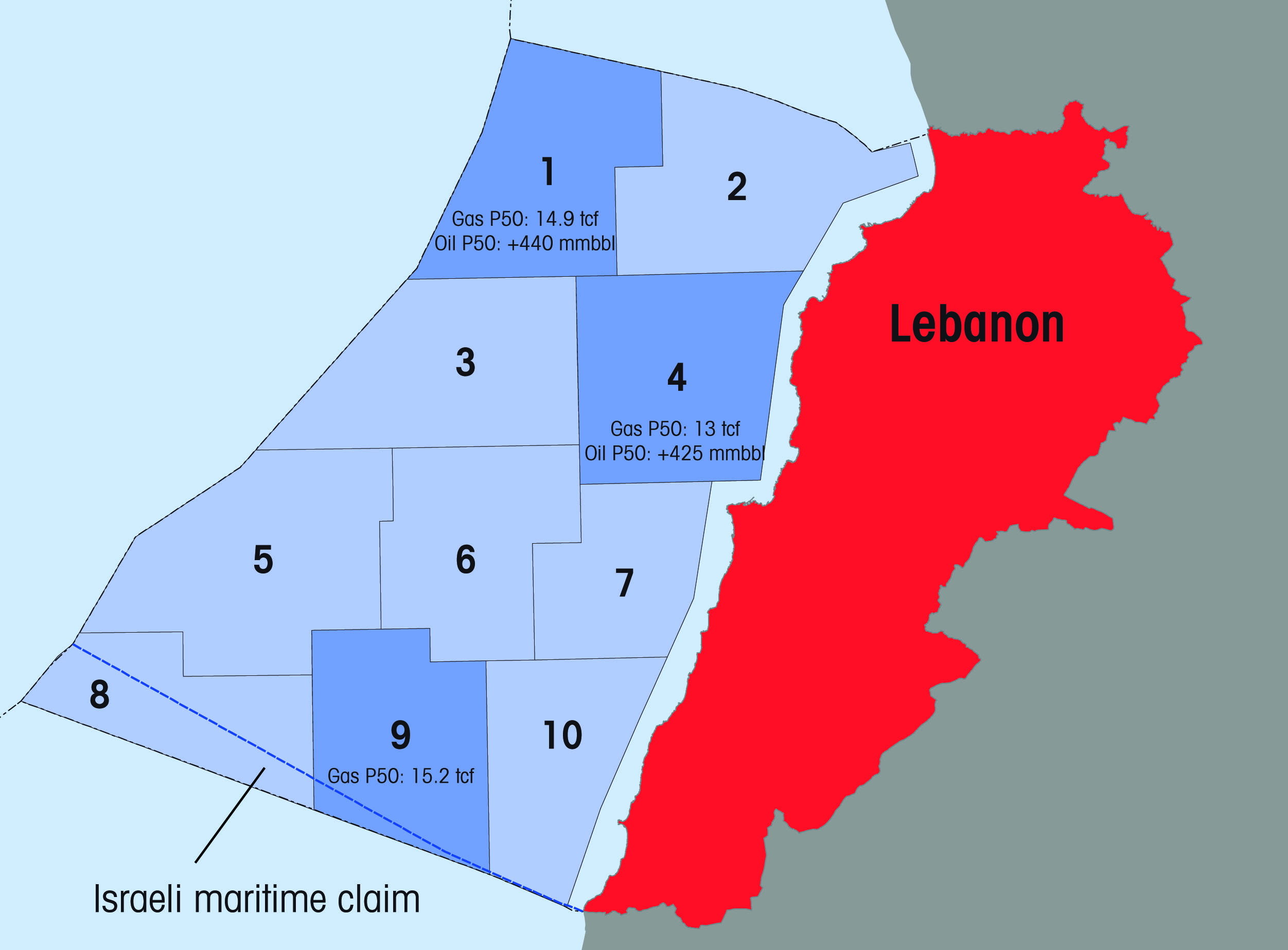
    The dispute between Lebanon and the Zionist regime is over the exclusive economic zone (EEZ), as well as the exploration of natural gas and oil energy in parts of these areas. Through the US mediation, Israel is trying to directly negotiate with the Lebanese government to send drilling ships and harvest these common resources, but Lebanon’s Hezbollah considers these actions as occupation and aggression against Lebanon and has announced that it will confront Israel’s activities in this area. Therefore, sending drones to Karish Field is a kind of Hezbollah’s warning to Israel for recent activities in the eastern Mediterranean Sea.

    Read more: Turkey and Israel, Europe’s New Energy Alternative

  • Turkey and Israel, Europe’s New Energy Alternative

    Turkey and Israel, Europe’s New Energy Alternative

    The outbreak of war in Ukraine has affected the world energy market. The most important event after the increase in oil and gas prices is the limitation and conditions of the new supply of energy to the EU market by Russia. This is why the European Union is thinking of reducing purchases from Russia to supply gas.

    Europe, meanwhile, is thinking of countries that can meet this need. Europe’s strategy is to meet its needs from several sources so that it does not become dependent on one source.

    In addition to increasing oil and gas purchases from old suppliers, Europeans are also turning to new suppliers. Over the past month, news of Turkish-Israeli cooperation has shifted the focus of the energy market. The Leviathan and Tamar gas fields in the waters of occupied Palestine, as well as the oil and gas fields in the disputed EEZ between Lebanon, Israel and Cyprus in the eastern Mediterranean, are a new source of gas for Europe.

    Lebanon’s oil and gas blocks and the disputed area

    Turkey has no territory in this area, but continues its illegal exploration due to the occupation of the northern Republic of Cyprus and the formation of the de facto Turkish government of Northern Cyprus. The news of cooperation with Israel in these fields and the pipeline connecting the Turkish port of Ceyhan is a turning point in European strategy.

    Gas pipeline from the Turkish port of Ceyhan to the occupied Palestinian gas fields

    These fields are the closest point to the export terminal of Ceyhan port and Europe. From here, Turkey sends Baku-Tbilisi-Ceyhan oil and gas shipments to Europe. The security of this field is much higher than other fields in the Caucasus and Libya due to the military power of Israel and Turkey and the NATO base in Cyprus. The Russian Federation’s naval and air base in the port of Banias and Latakia are not efficient enough to cut it off, but it is a potential danger.

    The current challenges for these pipes and fields are protests by the Lebanese and Cypriot governments, Iranian and Russian bases in Syrian ports, and pro-Iranian forces in Lebanon.

    Cyprus’s European nature and de facto Northern Cyprus government also do not have much opposition to Turkish influence in this area. They are relinquishing their share, and the main challenge is on the eastern shores of the Mediterranean.

    The Lebanese government’s opposition, due to the presence of Iranian supporters, including Shiite parties in the parliament and cabinet, is a serious and important issue that makes things difficult for Israel politically. They are a major obstacle to Israel, Turkey and the European Union, but the Lebanese government needs such a resource to get rid of its crisis-ridden economy. This reduces the share of other parties. In this case, the European Union is trying to attract the Lebanese cabinet with its own groups and negotiate with Iran.

    EEZs in the eastern Mediterranean – Maritime disputes in Mideterenean
  • Israeli Army fails to intercept Hezbollah drone!

    Israeli Army fails to intercept Hezbollah drone!

    This afternoom, alarm was sounded in some northern areas of the occupied territories. Minutes later, it was revealed that an unidentified drone had entered the skies of occupied Palestine in the wake of the failure of the “Iron Dome” defense system, putting the Israeli air force on alert in the north.

    Following the incident, Israeli Army radio confirmed the penetration of an unidentified drone into the occupied Palestine, saying that even an hour after the incident, the Israeli army still did not know the fate of the drone that violated Lebanese airspace. Also, Avikhai Adraei, the Arabic spokesman for the Israeli army, stated that the reason for activating the Iron Dome system was the arrival of a drone from Lebanese territory to occupied Palestine.

    Following the incident, Israeli Army radio confirmed the penetration of an unidentified drone into the occupied Palestine: “Even an hour after this incident, the Israeli army still does not know the fate of the drone that violated Israeli airspace from Lebanon.”

    On the other hand, some local sources reported the sound of several explosions in the “Safad” area in Jalil Alia near the Lebanese border and the occupied Golan Heights. Some sources speculated that the infiltration drone had been shot down by the Israeli army, but an hour later it became clear that the Israeli army had not been able to intercept the drone, despite the use of an iron dome system, warplanes and military helicopters.

    Hours later, Hezbollah issued a statement claiming responsibility for the operation: “Hassan” drone flew for 40 minutes to a depth of 70 km in the occupied territories. Despite the enemy’s attempt to shot down it, the drone returned to Lebanon after successfully completing the mission.

    This incident happened while two days ago (February 16) Sayyed Hassan Nasrallah, the secretary general of Hezbollah, said at a ceremony commemorating the commanders of the martyrs of the resistance: “We started building drones in Lebanon a long time ago.”

    It is worth mentioning that in October 6, 2012, the Lebanese Hezbollah managed to infiltrate the airspace of occupied Palestine using the “Ayub” drone. The drone filmed Israeli economic centers and oil and nuclear facilities, disproving all claims that the Israeli airspace is impenetrable!

    According to Sayed Hassan Nasrallah, the Ayub drone is made in Iran and assembled by Lebanese youth specialists.

    Lebanese Hezbollah statement regarding the 40-minute flight of Hassan UAV at a depth of 70 km in the occupied territories!
  • Sayyed Nasrallah: Hezbollah has 100,000 combat troops

    Sayyed Nasrallah: Hezbollah has 100,000 combat troops

    At the beginning of his speech, Sayyed Hassan Nasrallah congratulated the birthday of the Prophet Muhammad (PBUH) and said: “I am proud of the large gathering of the Yemeni people in Sanaa, which was held on the occasion of the birthday of the Prophet Muhammad (PBUH).”

    Nasrallah offered his condolences to the families of the martyrs of the recent bombing in Kandahar, Afghanistan, and to the families of the martyrs of the shooting incident in Beirut.

    The Secretary General of Hezbollah announced: “The Lebanese Forces Party, led by Samir Geagea, is trying to achieve the goals of foreign countries in Lebanon. This party seeks to show Hezbollah as the enemy of Christians. Introducing Hezbollah as an enemy is an illusion. Wherever the Lebanese Forces Party were present, it led to war or the evacuation of Christians, but Christians live in security in areas controlled by Hezbollah and the Amal movement. The Lebanese Forces Party ally with ISIS and Jabhat al-Nusra, indicating that they are Israeli mercenaries.”

    Sayyed Hassan said: “Hezbollah has 100,000 troops. For the first time, we announced the number of our combat forces. Not to threaten but to prevent civil war. Sit down and be wise!”

    “We want a serious investigation into the Beirut massacre,” Nasrallah said. He added “The security forces told us that several people were shot dead by the Lebanese Forces Party. After this incident, the youth went to take up arms to respond to the criminals, but we (prevented it and) left it to the army.”

  • Arrest of perpetrators of the shooting incident in Beirut

    Arrest of perpetrators of the shooting incident in Beirut

    Two days after the incident, Lebanese security forces arrested 19 perpetrators of the shooting of pro-Hezbollah and Amal protesters near the Lebanese Palace of Justice.

    Lebanese journalist Hussein Mortadha also claimed on his Twitter page that one of the perpetrators of the Beirut shooting was named “Shukri Abu Saab” and that he was an employee of the US Embassy in Lebanon!

    Yesterday, the funeral of the martyrs of the shooting incident was held in Beirut. “We cannot remain silent in the face of the bloodshed and we know how to reclaim our rights,” said Seyyed Hashem Safi al-Din, Hezbollah’s deputy chief executive.
    He said: “The responsibility for yesterday’s incident lies entirely with the “Lebanese Forces” party (Samir Geagea). The one who targets the unarmed is a coward. We are not looking for civil and religious war, but we will not spare the blood of our martyrs.”

    Funeral ceremony in Beirut
  • Armed attack on protesters in Beirut + Images

    Armed attack on protesters in Beirut + Images

    Pro-Hezbollah and Amal protesters were shot dead near the Lebanese courthouse by the Lebanese Forces under Samir Geagea. After the shooting began, security and rescue forces were dispatched to the scene and evacuated the demonstrators from al-Tayouna.
    Seven demonstrators were martyred and 60 were injured. One of the martyrs was Maryam Mohammed Farhat, a mother of five who was martyred by the Lebanese Forces.

    The Lebanese army also warned that it would shoot at any gunman seen on the streets. The Lebanese army called on civilians to leave the streets as soon as possible.
    After several hours of fighting, the situation in Beirut is now calm and the clashes are over. Lebanese security forces have identified 10 key perpetrators.

    Hours after the clashes, Hezbollah and Amal said in a statement: “Snipers from the rooftops targeted those present at the protest rally. The attack was carried out by armed and organized groups with the aim of creating sedition in Lebanon. The responsibility for this sedition lies with those who hid behind the blood of the martyrs of the Beirut port explosion to achieve political goals.”

    The rally was organized by supporters of the Hezbollah and Amal movement in front of the Palace of Justice to protest the actions of Tariq Bitar, the investigator in the Beirut port explosion case.

    Seyed Hassan Nasrallah, Secretary General of Hezbollah emphasized in his speech on the evening of October 11: “We want to investigate the explosion in the port and we emphasize that. The judge in the case should not repeat the mistakes of the former judge and should tell the families of the martyrs who brought the ship [carrying ammonium nitrate] into port? By whose order?

    It is worth mentioning that Samir Geagea, the leader of the Lebanese Forces Party (Lebanese Forces), the former leader of the Lebanese Phalange Party, is one of the leaders of the March 14 coalition, which strongly seeks to start a civil war in Lebanon and confront Hezbollah.