Category: West Asia

  • PMF in the Crosshairs of Western Diplomacy – A Report on Iraq’s Popular Mobilization Forces Law Crisis

    PMF in the Crosshairs of Western Diplomacy – A Report on Iraq’s Popular Mobilization Forces Law Crisis

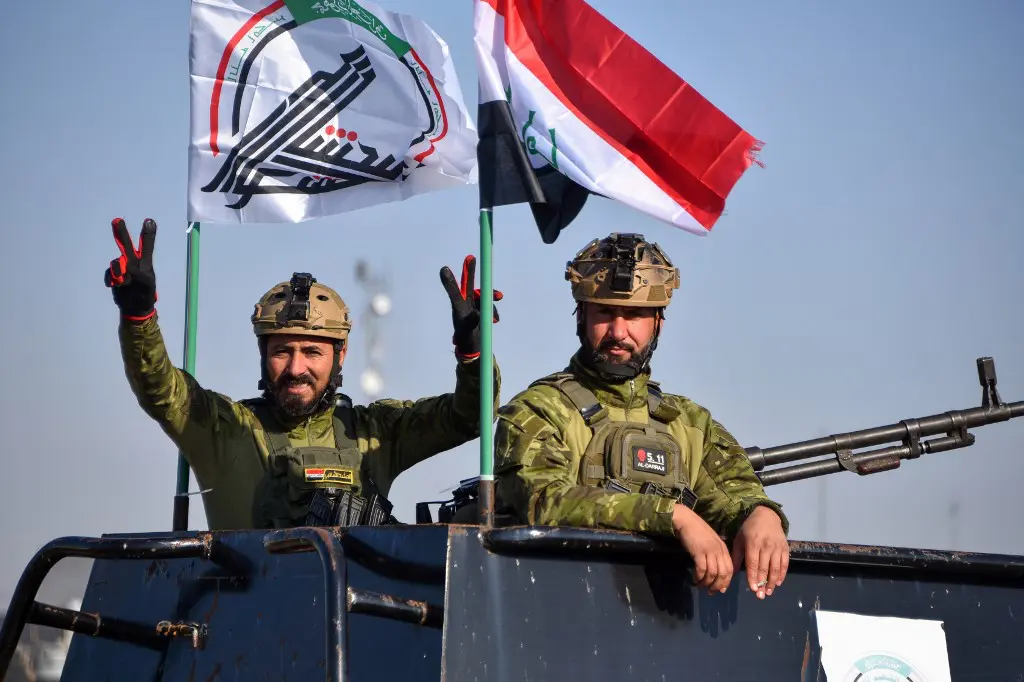
    The law effectively elevates PMF from a paramilitary group to an official state force, making its dissolution—long sought by pro-Western factions in Iraq—significantly more difficult.

    The legislation has faced strong opposition from the United States, which has exerted pressure on Iraqi officials to remove it from the parliamentary agenda. Washington argues that passing the law would solidify one of Iran’s regional arms and, given PMF’s history of resistance against U.S. occupation and involvement in American troop casualties, the U.S. government remains committed to its full disbandment.

    Internal Tensions in Iraq

    Domestically, the law has stirred political unrest. Sunni and Kurdish parties view PMF as a Shiite-dominated entity and interpret its formalization as a power shift favoring Shiite factions. Consequently, they have repeatedly declared their refusal to participate in the vote.

    Even within the Shiite coalition known as the “Coordination Framework,” deep divisions persist—primarily over the retirement age clause, which sets the PMF retirement threshold at 60. This would force many senior commanders, including PMF chief Faleh al-Fayyad, into retirement. Prominent Shiite figures such as Sheikh Qais al-Khazali (leader of Asa’ib Ahl al-Haq) and Nouri al-Maliki support al-Fayyad’s removal due to his backing of Prime Minister Mohammed Shia’ al-Sudani and their electoral alliance. On the other hand, leaders like Hadi al-Amiri oppose restructuring PMF leadership and advocate for amending the clause to exempt al-Fayyad and other top commanders from mandatory retirement.

    U.S. Response

    Reports indicate that the U.S. has responded with political pressure aimed at scaling back bilateral security agreements. Concurrently, American forces have begun withdrawing from the Ain al-Asad base in western Iraq as part of a broader military drawdown.

    Public sentiment in Iraq remains wary of U.S. withdrawal, recalling the post-2011 vacuum that enabled ISIS to wreak havoc across the country.

    According to Iraqi security sources, ISIS militants are regrouping and reorganizing by exploiting instability in Syria. While their current activity is not deemed critically dangerous, heightened vigilance is essential to prevent any surprise resurgence.

  • Meeting Between Al-Sharaa and Putin in Moscow

    Meeting Between Al-Sharaa and Putin in Moscow

    Ahmed Al-Sharaa, head of Syria’s interim government, stated:
    “Today, we are in a new Syria, and we are rebuilding our relations with all nations, especially the Russian Federation. We honor all past agreements and this great history, and we strive to redefine and present the nature of these ties in a renewed way. We respect our shared history, and our goal is to strengthen relations based on Syria’s sovereignty, unity, and stability.”

    The Kremlin meeting between Putin and Ahmed Al-Sharaa (Abu Mohammad Al-Jolani) marks a clear effort by Moscow to preserve and redefine its role in Syria’s political landscape following the fall of Bashar al-Assad’s government. Having supported Assad as a strategic ally for years, Russia now seeks to maintain its traditional influence within Syria’s new power structure through pragmatic diplomacy. The revival of the joint cooperation committee signals Russia’s intent to secure long-term economic and security presence in Syria.

    Putin also stressed joint economic projects, food supply support for Syria, and collaboration in energy and infrastructure. This shift indicates Russia’s strategy to transition from direct military involvement to sustainable economic engagement—leveraging its political influence for strategic gains without incurring the costs of past military operations.

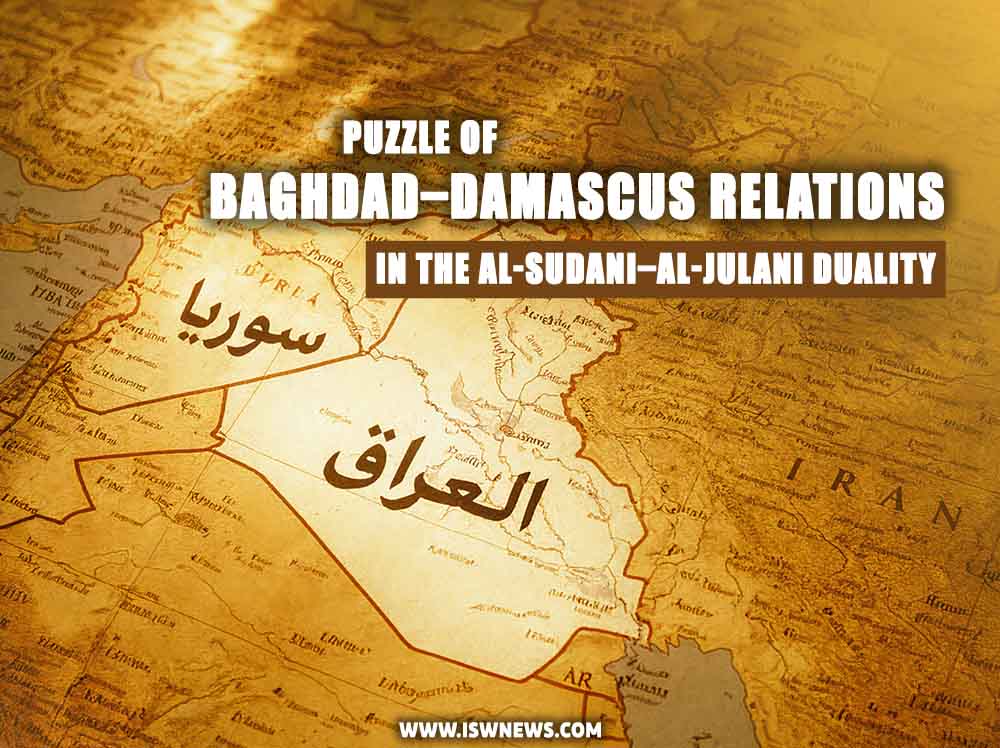
  • The Puzzle of Baghdad–Damascus Relations in the Al-Sudani–Al-Julani Duality

    The Puzzle of Baghdad–Damascus Relations in the Al-Sudani–Al-Julani Duality

    Security considerations

    1. Population Link Between Anbar and Deir ez-Zor

    The first point to consider is the deep demographic, familial, social, and cultural ties between residents of Iraq’s Anbar province and Syria’s Deir ez-Zor. Historically, the border towns of Al-Bukamal and Al-Qaim were one city until the Battle of Maysalun split them, forming the Iraq–Syria border. Over a century later, these ties remain strong. In Syria, the “Eastern dialect” differs significantly from the “Levantine dialect,” and Deir ez-Zor’s accent closely resembles Iraqi Arabic—so much so that it’s considered part of the Iraqi dialect family. Similarly, Iraq’s “Western dialect,” common in Anbar, is more similar to Deir ez-Zor’s speech than to Baghdad’s or northern Iraq’s.

    Moreover, there’s near consensus across Iraq that national security depends on stability in Anbar. The past 22 years (post-Saddam era) show that whenever Anbar is secure, Iraq enjoys relative calm; when unrest or terrorism hits Anbar, instability quickly spreads nationwide.

    These factors suggest that Deir ez-Zor can directly impact Iraq’s overall security, making it essential for Baghdad to pursue security cooperation with Damascus to prevent the province from becoming a source of threat.

    2. From the Syrian and Jazira Desert to Anbar and Lake Tharthar: A Terrorist Playground

    Another issue is the terrain and continued limited presence of ISIS militants in the region stretching from the Syrian desert to Lake Tharthar near Samarra. This area is characterized by desert landscapes, scattered villages, low population density, and cities built along main roads or the Euphrates River. These vast, empty deserts offer ideal conditions for terrorist activity. Managing such terrain requires unavoidable security coordination. Even during tensions, the Assad government and the SDF cooperated on this front, recognizing ISIS as a mutual threat.

    a) Shared Border Strip

    It’s worth noting that the Iraq–Syria border spans roughly 600 kilometers, yet the number of border towns is fewer than five. Except for a small section north of Rabia, the entire border is desert, with only the northern Sinjar area being mountainous. Near the Syrian border, these mountains flatten into plains and hills—meaning over 90% of the border is desert.

    3. Iraqi Residents in Syria and Vice Versa

    Another factor is the significant number of citizens from each country living in the other. Tens of thousands of Iraqis reside in Damascus’s Sayyidah Zaynab district, while hundreds of thousands of Syrians have entered Iraq over the past 15 years. This population holds undeniable strategic weight, compelling both governments to maintain a level of engagement.

    a) Intersection with Sectarianism and Civil War

    Notably, both Iraqi and Syrian communities abroad tend to follow the majority religion of their home country, making them religious minorities in their host nation. Most Iraqis in Syria are Twelver Shia living near the shrine of Sayyidah Zaynab, while most Syrians in Iraq are Sunni—heightening security sensitivities.

    This becomes more complex when considering that these communities are tied to each country’s civil war. Most Syrians in Iraq are war refugees who entered via Deir ez-Zor and settled in Anbar and beyond. Meanwhile, Iraqis in Sayyidah Zaynab are accused by neighboring districts like Babbila and Yalda of having fought alongside Assad’s forces during the war.

    4. Prisoners and the Three Issues of Judicial Cooperation, Prisoner Exchange, and Rehabilitation

    Another issue is the large number of Iraqi prisoners in Syria and Syrian prisoners in Iraq—mostly security offenders and ISIS members. Additionally, tens of thousands of their family members are undergoing rehabilitation in special camps, with the goal of reintegration into society. This situation calls for cooperation on three levels: judicial coordination, prisoner exchange, and rehabilitation of terrorist families.

    The Kurdish Issue

    The second factor prompting Baghdad to accelerate its outreach to Damascus is the “Kurdish issue” in both Iraq and Syria. On one hand, Damascus is dealing with the challenge of the Syrian Democratic Forces (SDF), and on the other, Baghdad faces ongoing competition with Erbil. This shared “single issue” encourages both Arab governments—Baghdad and Damascus—to engage with one another. Baghdad, due to security concerns, is compelled to cooperate with the SDF, but fears that strengthening the group could destabilize Syria and threaten Iraq’s territorial integrity. Therefore, Baghdad seeks to structure its relationship with the SDF through coordination with Damascus to minimize negative repercussions.

    At another level, Baghdad faces a complex triangle in its dealings with the SDF. This triangle consists of:

    • Local militias in Sinjar, which have deep ties to the SDF and maintain operational and organizational support within SDF-controlled territory. Additionally, the Patriotic Union of Kurdistan (PUK) and the security-military network in Sulaymaniyah province are closely linked to the SDF.
    • The second side of the triangle is the Kurdistan Democratic Party (KDP) and the Kurdistan Regional Government (KRG). Erbil maintains ideological and strategic rivalry with the SDF, viewing it as a PKK offshoot. Yet, in the Syrian context, it supports the SDF to present a united Kurdish front against Damascus.
    • The third side is Turkey. No country can shape its relationship with the SDF without considering Turkey’s position.

    This triangle forces Baghdad to accept engagement with the SDF as inevitable, while remaining cautious. In this context, cooperation with Damascus can help regulate Baghdad’s ties with the SDF and reduce its regional and international risks.

    Foreign Policy and Its Imperatives

    In analyzing Baghdad’s motivation to engage with Syria’s new government, foreign policy considerations—beyond security concerns—must be taken into account. Three overarching factors are relevant here:

    1. The United States

    The next factor is the role of the United States. Two specific issues push Baghdad and Damascus toward cooperation: the U.S. military presence and the repatriation of ISIS detainees and their families.

    a) U.S. Military Presence

    Regarding the U.S. military presence, CENTCOM forces have effectively linked eastern Syria and Iraq. Even in Baghdad–Washington negotiations over troop withdrawal from Iraq, the timeline for exiting Syria was part of the discussion. From Washington’s perspective, military presence in Iraq and eastern Syria is interdependent, and the two files cannot be separated.

    b) Repatriation of ISIS Detainees and Families

    On the issue of repatriating ISIS detainees and their families from camps like Al-Hol, Iraq—home to a large portion of these individuals—is compelled to cooperate. This makes coordination between Damascus and Baghdad essential for Iraq.

    2. Neutrality

    Since the tenure of Prime Minister Haider al-Abadi, Iraq’s foreign policy has been based on two principles:

    • Maintaining distance from all regional power blocs, ensuring Iraq is not categorized under any.
    • Maintaining good relations with all neighboring countries.

    This approach, known as “neutrality,” has guided Iraq’s foreign policy throughout the last decade of Bashar al-Assad’s rule and continues to do so.

    Currently, all regional countries except Iran recognize Al-Jolani’s government in Damascus. If Iraq refuses to do so, it risks being classified under Iran’s bloc and the Resistance Axis. Therefore, Baghdad is likely to recognize the new Syrian government de facto.

    3. Geopolitical Projects and Access to the Mediterranean

    Iraq’s geography offers a strategic opportunity to access the Mediterranean via Syria. Its most significant current project is the Development Road, connecting the port of Faw to the city of Fishkhabour and Turkey. Fishkhabour borders both Turkey and Iraq, allowing the Development Road to potentially open a direct route from Syria to the Persian Gulf.

    Historically, Iraq has pursued several geopolitically significant projects tied to Syria, such as the Tehran–Beirut/Lattakia corridor, which offered Iraq a valuable east–west transit route. Iraq also had an oil pipeline from Kirkuk to Baniyas. Additionally, the M4 highway could play a role in China’s Belt and Road Initiative.

    By leveraging these projects, Al-Sudani’s government can justify relations with Syria’s new leadership and even claim that future Syrian governments will become economically dependent on Iraq. This way, even if Al-Jolani’s administration doesn’t last, any future authority in Damascus would be less likely to act against Iraqi interests.

    Internal Political Dynamics of Iraq

    Previously, we outlined three foundational drivers behind Prime Minister Mohammed Shia’ Al-Sudani’s pursuit of cooperation with the Al-Jolani-led government in Damascus: security concerns, the Kurdish question, and foreign policy imperatives. In this section, we examine how Al-Sudani’s domestic political interests also motivate his push to establish or expand ties with Damascus.

    1. Building Leverage for Post-Election Politics and Distancing from the Coordination Framework

    Mohammed Shia’ Al-Sudani aims to distinguish himself from rivals within the Shia Coordination Framework ahead of Iraq’s elections. One key differentiator is his effort to cultivate strong relations with Arab Gulf states.

    This strategy also applies to Turkey. One reason the “Development Road” project tops Iraq’s geopolitical agenda is its potential to deepen partnerships with Turkey and attract investment from Doha and Abu Dhabi. Al-Sudani is focused on post-election dynamics, particularly the race among political factions to form the largest parliamentary bloc. He hopes that favorable ties with Gulf states and Turkey will prompt Sunni groups to support him over his Shia rivals.

    In essence, Al-Sudani seeks to build political and social capital outside the Shia Coordination Framework to leverage during both the popular vote and the parliamentary bloc formation stages. One of the political costs he may accept in return is the swift recognition of Abu Mohammad Al-Jolani’s government.

    2. Appealing to Iraq’s Shia Base Through Support for Syrian Shia

    Given the above, Al-Sudani must also address widespread concern and resentment among Iraqi Shia over Al-Jolani’s militant past. To win over this voter base, he needs compelling justifications.

    One attractive option is to frame the outreach as support for Syria’s Shia community. Damascus’s ruling faction welcomes this approach, as it helps neutralize potential Shia opposition, integrates this segment into the national fabric, and boosts religious tourism revenue. Meanwhile, Al-Sudani can present this as a success to Iraqi society—claiming he has reduced pressure on Syrian Shia and secured the safety of holy sites in Damascus and Aleppo.

    Conclusion

    In analyzing Baghdad–Damascus relations, four key factors must be considered: security concerns, the Kurdish issue, Iraq’s diplomatic posture, and the domestic political interests of the Iraqi Prime Minister. The intersection of these factors has pushed Al-Sudani toward formal engagement with the Al-Jolani government, despite strong internal opposition. However, his approach remains cautious—focused on minimal political interaction rather than full-scale bilateral expansion.
  • Al-Mashat’s Message on the 62nd Anniversary of the October 14 Revolution

    Al-Mashat’s Message on the 62nd Anniversary of the October 14 Revolution

    Al-Mashat also urged Saudi Arabia to move beyond de-escalation and toward ending the war, blockade, and occupation, while fulfilling its commitments. He warned against Riyadh’s alignment with U.S. interests that serve Israel’s agenda.

    This recurring stance reflects Yemen’s view that the recent conflict between the Resistance Axis and Israel is a key reason for stalled negotiations with Saudi Arabia following the 2022 ceasefire. From Yemen’s perspective, Saudi Arabia interprets Iran and the Resistance’s performance in the war as a sign of weakness, reinforcing its own position and making it unwilling to honor previous concessions or support the formation of a unified Yemeni government.

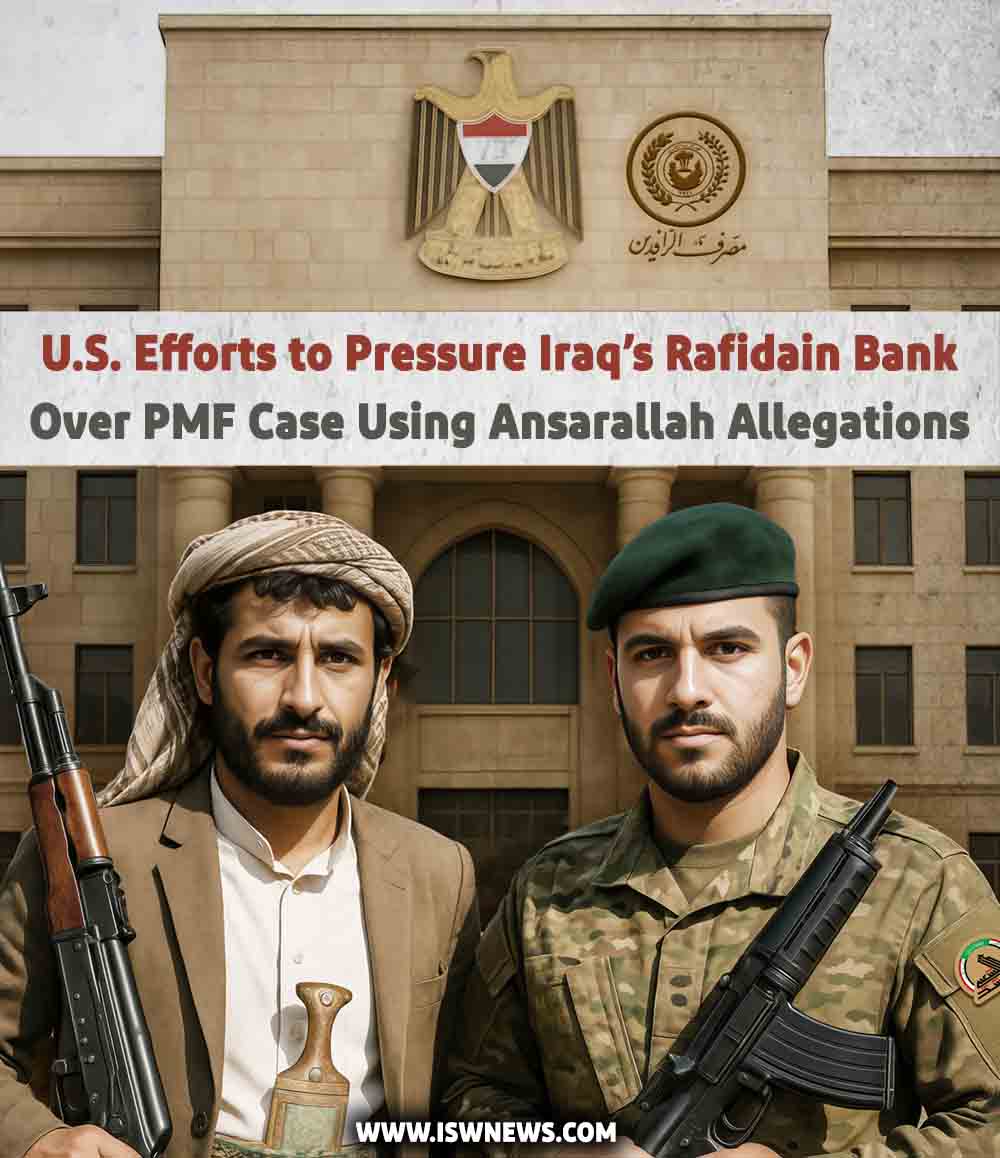
  • U.S. Efforts to Pressure Iraq’s Rafidain Bank Over PMF Case Using Ansar Allah Allegations

    U.S. Efforts to Pressure Iraq’s Rafidain Bank Over PMF Case Using Ansar Allah Allegations

    This issue was raised during the April 29 Iraqi-American summit in Washington, attended by Dr. Michael Faulkender, U.S. Deputy Treasury Secretary; Fuad Hussein, Iraq’s Foreign Minister and Deputy Prime Minister; and Nazar Al-Khairallah, Iraq’s Ambassador to the U.S.

    According to the meeting minutes, U.S. officials warned that Rafidain Bank must cease all financial ties with Ansarallah and relocate its Sana’a branch to Aden—the seat of Yemen’s UN-recognized government.

    On the other hand, Iraqi Foreign Minister Fuad Hussein emphasized during the meeting that Iraq only engages with Yemen’s official government and that Ansarallah has no access to Iraq’s financial system. He also pledged to personally follow up to ensure no transactions are conducted with the group.

    Dr. Sadeq Ali Hassan, spokesperson for Iraq’s embassy in Washington, stated in a letter to Fox Business that “claims about Rafidain Bank processing payments for Ansarallah are completely false.”

    He added: “There is no banking correspondent relationship with Yemeni financial institutions, and due to prevailing political, security, and logistical conditions, it is operationally impossible to conduct any cash or digital transactions within or outside Yemen’s financial sector.”

    According to the embassy’s statement, “Rafidain Bank’s Sana’a branch has been completely closed since 2017, and under the directive of the bank’s general management and coordination with Iraq’s central bank, all financial activities in Yemen have been permanently suspended. The branch holds no liquidity, lacks SWIFT access, and has no operational infrastructure.”

    When asked about accounts linked to PMF—designated by the U.S. as a terrorist group supported by Iran—the Iraqi embassy responded: “Rafidain Bank no longer holds any PMF-related accounts. All such accounts and payrolls have been officially transferred to Al-Nahrain Islamic Bank and are under Iraqi government oversight. The Sana’a branch has no involvement or activity in this matter.”

    U.S. Congressman Joe Wilson condemned the situation and stated he would push to reduce Iraq’s budget during upcoming discussions. He also urged the U.S. Treasury to sanction Rafidain Bank.

    Michael Knights, senior fellow at the Washington Institute and expert on Iraqi military and security affairs, told Fox Business: “Since February 2025, Congress has been calling for sanctions on Rafidain Bank due to its alleged role in facilitating large-scale money transfers to Iran and its allied groups. This has placed Rafidain at serious risk, as many members of Congress are familiar with its name. However, no sanctions have been imposed so far.”

    Fox Business, citing an Iraqi source familiar with the April meeting, claimed: “Rafidain is Iraq’s most opaque bank and has never undergone external auditing.”

    The source also alleged: “Rafidain funds PMF projects and provides unsecured loans to militias. If it refuses transparency and audit requirements, the U.S. should cut its access to dollars.”

    The Fox Business report suggests that the narrative linking Rafidain Bank to Ansarallah is primarily aimed at pressuring Iraq and the bank to accept U.S. conditions. Notably, according to The Wall Street Journal, the U.S. has already sanctioned 14 Iraqi banks for aiding Iran and other sanctioned entities in the Middle East.

    In conclusion, it appears that the U.S. and its allies are attempting to weaken PMF and other resistance groups by restricting their financial resources, ultimately pushing them toward dissolution and reduced influence.

    Source:
    https://www.foxbusiness.com/fox-news-world/iraqi-state-bank-accused-processing-payments-houthi-terrorists-who-disrupt-red-sea-commerce
    https://kurdistantv.net/fa/news/235333

  • Yemen’s Strategic Strikes Helped Force Gaza Truce

    Yemen’s Strategic Strikes Helped Force Gaza Truce

    Middle East Eye Report on Yemen’s Halted Support Operations for Palestine:

    “Yemen is demonstrating its strength by linking the suspension of its operations to Israel’s commitment to the ceasefire agreement. Militarily, Yemen has shown strong performance over the past two years. It has occasionally launched long-range strikes on Israel, some of which impacted aviation and penetrated Israeli air defenses. Yemen also succeeded in pressuring the U.S. to withdraw its support for Israel in Yemen—an achievement that is far from easy.”

    The primary goal of Yemen’s armed forces from the outset was to stop the war and crimes committed by the Israeli regime in Gaza. With the current ceasefire in place, that objective has been achieved, and Yemen sees no reason to continue its attacks. In fact, Yemen’s support for the Palestinian people and resistance has been effective, and it has fulfilled its mission. Therefore, claims by some media outlets about Yemen’s failure are inaccurate, as they are not involved in the details of the negotiations or the implementation of the ceasefire terms—matters that are solely the domain of Palestinian factions.

  • Hamas’ Shadow Unit Reemerges During Prisoner Exchange!

    Hamas’ Shadow Unit Reemerges During Prisoner Exchange!

    Known as one of Hamas’ most confidential divisions, the unit’s members are highly trained in military and intelligence operations and have long been responsible for guarding Israeli captives, remaining hidden despite extensive Israeli operations.

    The unit’s reappearance carries a strong message: Hamas’ command structure and internal discipline remain intact despite months of war and destruction. For Israel, it’s a reminder that even amid Gaza’s devastation, Hamas retains covert, organized forces operating beyond reach—symbolizing the group’s continued resilience and control.

  • Latest Updates on Israeli Movements in Southern Syria (Map)

    Latest Updates on Israeli Movements in Southern Syria (Map)

    Israeli troops established a temporary checkpoint between the villages of Al-Ma’laqa and Sayda, where they inspected vehicles and verified the identities of passengers.

    Simultaneously, a military convoy consisting of eight Israeli vehicles conducted patrols and area inspections along the route between the villages of Al-Asha and Al-Rafid.

    Another checkpoint was set up by Israeli forces using two Humvees and one Hilux vehicle between the villages of Al-Samadaniyah Al-Sharqiyah and Ajraf. Like the previous checkpoint, this one also involved vehicle inspections and identity checks.

    Click to view full size
  • Verbal Agreement Between SDF and Damascus: New Steps Toward National Reconciliation

    Verbal Agreement Between SDF and Damascus: New Steps Toward National Reconciliation

    According to Abdi, these talks led to a verbal agreement on several sensitive issues, including a full ceasefire and the continuation of dialogue. Abdi emphasized that he held separate meetings with Syria’s defense minister and intelligence chief, reaching mutual understanding on certain topics.

    He also announced preliminary coordination regarding the integration of SDF forces into the Syrian army’s structure, noting that Damascus is interested in utilizing the SDF’s experience in security and military affairs. Accordingly, a military committee composed of representatives from the “Internal Security Forces” is expected to be dispatched to Damascus soon to discuss the details of this process.

    On the military front, Abdi revealed that the United States proposed forming a joint force between the SDF and the Syrian army to combat ISIS—a proposal welcomed by Syrian parties. He described this initiative as a unified national step against terrorism.

    Politically, discussions are underway to incorporate the terms of the “March 10 Agreement” into the draft of Syria’s new constitution. Abdi stressed that Raqqa, Deir ez-Zor, and Hasakah will be part of the country’s future governance framework, and withdrawal from these areas is a red line for the SDF.

    On the humanitarian side, he called on residents of Afrin, Ras al-Ayn, and Tal Abyad to prepare for returning to their homes, and emphasized the importance of implementing the April 1 agreement concerning the Sheikh Maqsoud and Ashrafieh neighborhoods in Aleppo.

    These negotiations may represent an initial step toward resolving the crisis between Damascus and the autonomous administration. The emphasis on a “Syrian-Syrian” solution without direct foreign military intervention reflects both sides’ desire to avoid a prolonged conflict. Integrating the SDF into the Syrian army could be a chance for national unity, but also poses practical challenges due to ideological, structural, and political differences between the two sides.

    Overall, recent developments signal the beginning of a new round of talks and a redefinition of the role of non-state actors within Syria’s political-military framework. While much remains before a final agreement is reached, the current verbal understandings could lay the groundwork for lasting peace in northern Syria—provided there is sufficient political will and enforceable guarantees.

  • Senior U.S. Officials Visit Gaza to Oversee Implementation of Agreement with Hamas

    Senior U.S. Officials Visit Gaza to Oversee Implementation of Agreement with Hamas

    According to a statement from the Israeli military, American and Israeli officials also visited the Re’im military base following their field inspection in Gaza. This base has been designated for initial medical evaluations of released Israeli captives.

    Cooper and Halevi held a meeting with senior Israeli military officials to review operational conditions across various regions and discuss the implementation of ceasefire terms and prisoner release protocols.

  • Assassination of Former ISIS Commander in Northern Daraa Countryside

    Assassination of Former ISIS Commander in Northern Daraa Countryside

    Kanhosh who was known by the title “Emir al-Hisbah”, disappeared suddenly after ISIS’s defeat in southern Syria, and little information has been available about his whereabouts or activities since.

    It’s worth noting that Jaysh Khalid ibn al-Walid, during its control of the Yarmouk Basin in western Daraa, was considered one of ISIS’s branches in southern Syria.

    The group played a key role in enforcing strict religious rulings and internal regulations. As head of Hisbah (the body responsible for implementing ISIS’s religious laws), Kanhosh oversaw the group’s repressive policies in the region.

  • Latest Status of Yemen’s Frontlines (Map)

    Latest Status of Yemen’s Frontlines (Map)

    Support operations by Yemen’s armed forces (backed by Ansar Allah) in solidarity with Palestine have continued until the final day of negotiations between the resistance and the Zionist regime. The latest actions include a precision cruise missile strike on the Dutch vessel MINERVAGRACHT and the entry of several suicide drones into the port of Eilat in southern occupied Palestine. According to Sayyed Abdul-Malik Badr al-Din al-Houthi, Yemen has carried out 1,835 support operations over the past two years using ballistic missiles, cruise missiles, hypersonic weapons, drones, and suicide boats.

    In Hadhramaut province, tensions are rising between the UAE-backed Southern Transitional Council (STC) forces and the Saudi-backed Hadhramaut Protection Forces. Saudi Arabia is equipping three divisions under the Hadhramaut Protection Forces, aiming to seize oil resources and advance toward the Hadhramaut coast. Similar developments are unfolding in Al-Mahrah and Shabwah provinces, although in the city of Ataq, the capital of Shabwah, UAE-aligned forces currently hold control.

    In Abyan province, guerrilla attacks by Al-Qaeda militants—including roadside bombings, drone strikes, sniper fire, and other harassment tactics—continue to target STC forces, inflicting significant casualties.

    In Taiz province, tensions between the Islah Party and Tariq Saleh’s forces have escalated following the assassination of Afthan al-Mashhary, head of the sanitation and beautification office. Several failed assassination attempts have targeted local commanders from both sides. Islah militants have attempted to arrest and confront Tariq Saleh’s forces in the city of Al-Turba in southern Taiz, but these efforts have failed, and control of Al-Turba remains with Tariq Saleh’s forces.

    In Lahij province, the Al-Subayha tribes—aligned with Saudi Arabia—are trying to gain control of the southwestern coast of Lahij. However, UAE-backed Al-Amaliqa forces, under the command of Brigadier General Hamdi Shukri, are blocking their advance and currently hold the area. The Al-Subayha tribes are independent tribes from southwestern Yemen, some of whose leaders have been recruited by Saudi Arabia. In recent years, Al-Subayha militants have clashed multiple times with Tariq Saleh’s forces, preventing their entry into southwestern Yemen.

    Latest situation on Yemeni fronts – Click to view image in full size

    Overall, Yemen’s internal front is facing numerous challenges that make the path to peace increasingly elusive. Saudi Arabia and the UAE, as influential Arab powers, have exploited Yemen’s dire economic conditions over the years, supporting proxy factions such as the STC, Islah Party, Al-Amaliqa, remnants of Ali Abdullah Saleh’s regime, and others to serve their strategic interests.

    These dynamics have deepened divisions between Yemeni factions and the government in Sanaa, making national reconciliation or liberation from foreign-backed groups more difficult. Undoubtedly, once the Palestinian issue is resolved, Yemen’s government will have to confront this major challenge and adopt thoughtful and flexible strategies to overcome it.