Tag: Afghanistan War

  • The sedition of Bernard Levy, this time in Afghanistan!

    The sedition of Bernard Levy, this time in Afghanistan!

    The summary of his interview is as follows:
    “No one paid attention to the warnings of Ahmad Massoud (son of Ahmad Shah Massoud) during his meeting with Macron (President of France) in April. This scenario was announced by him a long time ago.
    His resistance in the Panjshir Valley must be helped to protect Europe.
    If the US withdrawal is completed, not a few months, not a few weeks, but a few days will be enough for al-Qaeda or ISIS to return.
    “Ahmed Massoud’s resistance can be strengthened with the help of France and protect our territory from barbarism and attacks on Europe, especially attacks on major French cities.”

    Bernard-Henri Levy is an influential Jew living in France who has been behind many different contemporary wars, including the wars in Afghanistan, Libya, Bosnia, the division of Kurdistan, etc. He is one of the theorists of the “Arab Spring” and calls Islamism, terrorism and new barbarism.

    In the past year, Levy has focused on Afghanistan and Ahmad Massoud, son of Ahmad Shah Massoud. He traveled to Afghanistan several times and on March 27, at a memorial service attended by his son, Abdullah Abdullah, and Hamid Karzai, Mayor Anne Hidalgo named a pathway in the Champs-Elysees gardens after Ahmad Shah Massoud on Champs-Elysees.

  • Afghanistan: Latest updates on Balkh front, 14 August 2021

    Afghanistan: Latest updates on Balkh front, 14 August 2021

    Heavy Taliban attacks to seize Mazar-e-Sharif have intensified since yesterday. The main direction of these attacks were from Chamtal and Dehdadi axes, and the northern road of Mazar-e-Sharif and the southern road near the Camp Mike Span have also witnessed scattered clashes.
    Ali Sarwar Turkmani, a senior commander of the National Islamic Movement of Afghanistan (a general of Dostum), was martyred during yesterday’s clashes. He is said to have been killed in a Taliban ambush, but some local sources attribute his death to a mistaken air strike by Army warplanes.

    In the meanwhile, General Dostum and Atta Mohammad Noor are behind the front lines in this area, and air support to government forces in Mazar-e-Sharif has been limited.
    Also, according to an ISWNEWS field source, the general situation in the city is not good and the markets have been closed. The people who have bad memories of the Taliban entering the city in the past are also frightened and often try to flee from Mazar-e-Sharif.

    If the Taliban attacks on the western axis intensify and the government forces and militants under General Dostum and Atta Noor do not move seriously to retake Chamtal and Charpolak, the chances of government forces withdrawing from Balkh are high. Mike Span base will be the next step of the Taliban after Balkh, and after that, capturing Mazar-e-Sharif will not be a difficult task for the Taliban.

    Afghanistan Interactive map

  • Review of the latest military situation in Afghanistan, 13 August 2021

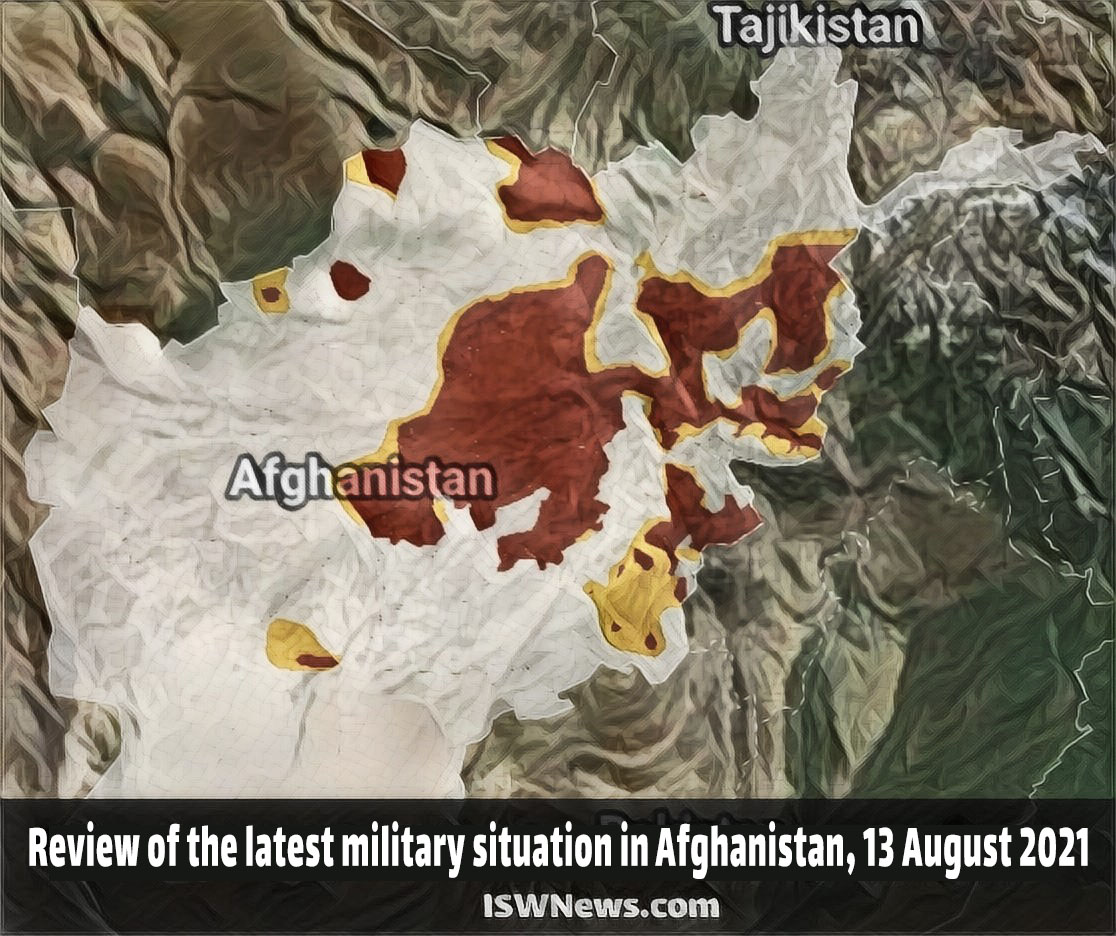
    Review of the latest military situation in Afghanistan, 13 August 2021

    The southern front:
    As expected, the Taliban goals in southern Afghanistan were achieved in a short time, and it can be said that southern Afghanistan is under the full control of the Taliban. These goals included: Chahar Burjak district in Nimruz province, Farah city, the capital of Farah province, Lashkar Gah city, the capital of Helmand province, and Kandahar city, the capital of Kandahar province, which were captured by the Taliban in recent days. The city of Qalat, the capital of Zabul province, also surrendered to the Taliban without fight, and currently only government areas of Gereshk city and the important Shorabak base (Camp Bastion) in northern Helmand province are under government control. The status of the deployment of foreign forces in Shorabak is unknown and there is a possibility of the presence of foreign forces in this base.

    Latest military situation in southern Afghanistan

    The northwest front:
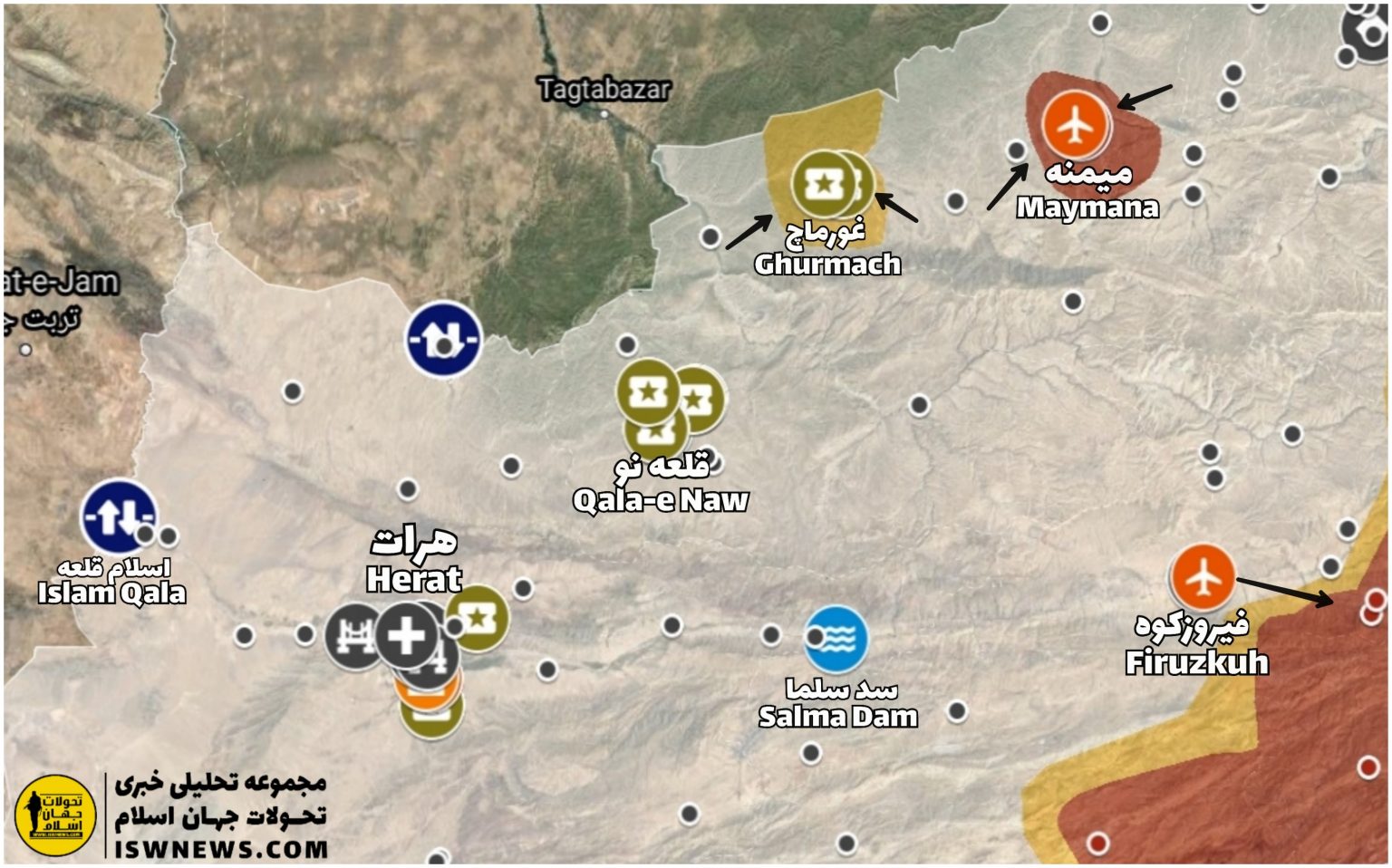
    In this area, the cities of Sar-e-Pul, Qala-e-Naw, the capital of Badghis province, Firozkoh, the capital of Ghor province, and Herat, which played a pivotal role in northwestern Afghanistan, have been completely captured by the Taliban. And the only points that are under the control of government forces are Ghormach city in the north of Badghis province, Maimana city in the center of Faryab province and Aqinah crossing in the north of this province.
    These cases, like other areas, may be surrendered to the Taliban by compromise or betrayal by the rulers of those areas.

    Latest military situation in northwestern Afghanistan

    The north and northeast fronts:
    In the northeast, after Kunduz, Aybak, the capital of Samangan province, Sheberghan, the capital of Jawzjan province, Pul-e-Khumri city in Baghlan province, Taloqan, the capital of Takhar province and Faizabad, the capital of Badakhshan province, Mazar-e-Sharif city and Samangan districts have also been targeted by the Taliban. Given the presence of Generals Abdul Rashid Dostum and Atta Mohammad Noor in Mazar-e-Sharif, as well as the announcement of their alliance to confront the Taliban, heavy fighting is likely to take place in Mazar-e-Sharif in the coming days.
    The situation in some parts of northern Afghanistan, such as Taloqan Airport, Farkhar and Warsaj districts in southern Takhar province, is unclear and is said to be under the control of government forces and Ahmad Massoud.

    “Ahmad Massoud”, the son of the martyr Ahmad Shah Massoud, with the help of some foreign factors such as “Bernard-Henri Levy” who were behind the wars in many regions such as the project for the division of Iraqi Kurdistan, the Libyan war, etc., has absorbed a lot of forces in recent months. He has stationed most of his forces in Panjshir and is said to be recruiting and training troops to enter the battles in Afghanistan.
    In the current situation where the Taliban opposition has lost its morale and leaders such as Ismail Khan, and General Dostum have been defeated by the Taliban, Ahmad Massoud can revive his father name and make a serious move to fight the Taliban and even take the northern regions out of Taliban control. Of course, if this happens, Afghanistan will become more chaotic and the ways to achieve peace will be more limited.

    Latest military situation in northeastern Afghanistan

    The central front:
    According to the latest news from the central Front, which has had calmer days than other areas, the city of Tirinkot, the capital of Uruzgan province, has been captured by the Taliban after 50 days of resistance against the Taliban.
    Hazaristan can be considered one of the last steps of the Taliban to take control of Afghanistan, because they know that their only serious opponent in this land is the “Hazaras”. Therefore, they do not intend to clash with them, and they have repeatedly emphasized that they respect the rights of different ethnic groups and religions, especially the Shiites, and that they will participate in the administration of the country and next government positions.
    Unlike other ethnic groups, there is no powerful figure in the body of the Hazaras who can create consensus and unity, and this factor can be considered the reason for their small role in various governments in the past.
    Disagreements and lack of strong unity and alliances between Mohammad Mohaqiq, Karim Khalili, Abdul Ghani Alipour and other local commanders are a major threat to the Hazaristan future.
    If, as in the Shiite areas of Sar-e-Pul, Herat and ‌provinces, they tolerate the Taliban, their role in the development of Afghanistan will be more prominent than in the past.
    The outcome of Iran’s consultations, one of which has been the avoidance of tension between the Taliban and Shiites in Afghanistan, certainly includes the interests of Afghan society, But the arbitrariness of some Taliban commanders in crimes against Hazaras and Shiites, as well as the exaggeration and lies of some ignorant media and analysts about these issues, could be an another major threat for peace in Afghanistan.


    The eastern front:
    Taliban activities in these areas are slow and the peak of these movements has been in Logar and Ghazni provinces.
    Gardez city, the capital of Paktia province, and Maidan Shahr, the capital of Maidan Wardak province, are among the Taliban’s primary targets, and given the Taliban’s activities in the past 48 hours, their attacks on these areas are likely to intensify soon.

    Latest military situation in eastern Afghanistan

    In general, the fall of Ashraf Ghani’s government and the entry to Kabul is the last step of the Taliban program. The realization of one of these two issues is the beginning of entering the political arena of Afghanistan, and the next steps can be analyzed in light of the future developments described in this article.

  • What is happening in Afghanistan? Afghanistan developments, Taliban relations with Shiites and Iran

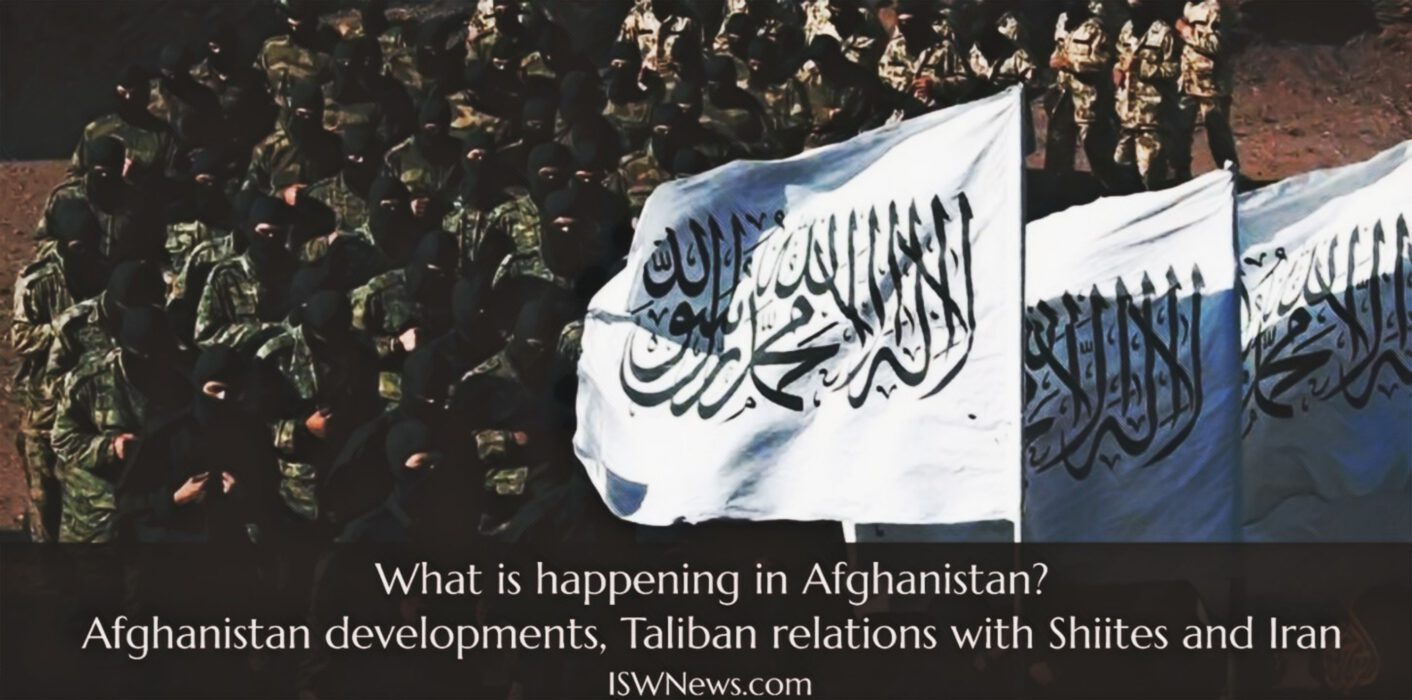
    What is happening in Afghanistan? Afghanistan developments, Taliban relations with Shiites and Iran

    As the various dimensions of the recent Taliban activities become clearer and the positions of foreign and neighboring countries regarding the conflicts in Afghanistan become clearer, it is possible to examine the latest developments in this country:

    1- The latest military situation in Afghanistan:
    According to the latest news from the Afghan conflict, more than 90 other districts have been added to the Taliban-held areas since the beginning of the 1400 Solar Hijri year (since March 21), and clashes with the Afghan army are ongoing in many provinces of the country.
    Taliban spokesman Zabihullah Mujahid said the group’s militants would not attack provincial capitals until September 11, the date of Joseph Biden’s administration withdrawal from Afghanistan, because of its adherence to the Doha agreement. Zabihullah Mujahid claim comes as most areas of Kunduz, Sar-e Pul, Takhar, Ghazni, Kandahar and Helmand provinces have been captured by the Taliban and Afghan Army bases have been besieged by the Taliban.
    Now, with the rising tensions and clashes, the intra-Afghan talks have stopped and the leaders of different currents such as General Abdul Rashid Dostum, Atta Muhammad Nour, Muhammad Mohaqiq etc., are wearing military uniforms and are seeking to control the areas under their influence. Ashraf Ghani and Abdullah Abdullah have also been overshadowed by Western disregard, and their recent trip to the United States to seek the help and assistance of Joseph Biden has been fruitless.

    Among the reasons for the rapid advance of the Taliban are the government’s financial weakness in solving economic problems, the tactical weakness of the army, the lack of unity of the opposition tribes, the dissatisfaction of the people and the withdrawal of foreign troops, etc. Based on this, it seems that the Taliban will continue their progress in different provinces until the Americans leave Afghanistan, and during this period, they will force the government and currents of Afghanistan to accept their terms.

    2- What is the solution to the problems and disputes in Afghanistan?
    The roots of the Afghan war are mostly in ethnic and then sometimes religious differences. The common ethnicity of Taliban-minded individuals with the Pashtuns has strengthened the group in Afghanistan in recent years, and their differences with the Hazara and Tajik tribes, some of whom were Shiites, have shifted to a Shiite-Wahhabi religious war at some point in Afghanistan’s recent history. While not the Taliban are subject to Wahhabism nor are all Hazaras, Tajiks, etc., Shiites.
    In the past, the main body of the Taliban group considered their religious ideas based on the Hanafi religion, and in the years of their rule, they followed the principles of this religion. But this group has different spectrums and extremist allies such as al-Qaeda, the Haqqani network, etc., And this has strengthened the image of a religious war in Afghanistan.

    Certainly the solution to such disputes is not military intervention nor the formation of a puppet government of a foreign power. Rather, it requires a series of solutions.
    The following solutions are significant for solving Afghanistan’s problems:
    A- The union of scholars of different religions and elites of Afghan society
    B- Preventing the misuse of using the name of religious war for the ethnic-political war of the Taliban and ethnic currents
    C- Stopping the war and calling it illegitimate throughout Afghanistan
    D- Forming a parliament of all currents, ethnicities and religions And forming a government with trans-ethnic and trans-sectarian tendencies

    Otherwise, Afghanistan will continue to fall prey to two factors, the difference between “ethnicity” and “religion”.
    These solutions require international cooperation, especially in neighboring countries such as Iran, Pakistan and China. This is due to the cultural, economic and political capabilities and commonalities of these countries and, most importantly, the influence of these countries on Afghanistan.

    Some domestic and foreign media cite the permanent deployment of US and NATO forces in Afghanistan, the replacement of Chinese troops in Afghan military bases, the entry of Iran and the sending of Fatemiyun fighters to the war in Afghanistan, etc. as a way to end the war in Afghanistan, but in the reality they are making mistakes, and this mistake is due to their misinterpretation and lack of comprehensive understanding of the issues of Afghanistan in the last 50 years.
    Some think tanks and media outlets have also talked about plans to divide Afghanistan into northern and southern parts, or the Afghan federal government. These issues cannot be properly addressed until the complete withdrawal of foreign troops from Afghanistan, the fall or survive of the central government in Kabul, the transparency of the role of neighboring countries in Afghanistan, etc., are finally determined.

    3- Relations between Afghanistan Shiites and Taliban:
    Media stories about the Taliban massacre of Shiites, as well as Taliban claims that they did not attack Shiite areas of Afghanistan, are largely media taboo.
    The Taliban’s views and confrontations with the Afghanistan Shiites are far more moderate than those of extremist groups in the region, such as ISIS, Sipah-e-Sahaba, the Al-Nusra Front, and others, but their differences with the Afghan Shiites are primarily “racial” and secondarily “political” and finally, it is “religious.”
    The main discord between the Taliban and the Shiites of Afghanistan in recent years has been with two currents called the Unity Party (Hezbe Wahdat) led by Abdul Ali Mazari and its affiliates and the Islamic Movement of Afghanistan. The main cause of this discord was mostly the political positions of these currents in opposition to the Taliban and later the alliance with the Afghan Northern Alliance and ethnic differences with them.
    These discords were exacerbated by the Taliban’s non-compliance with the peace agreement with the Hezbe Wahdat and the clashes in Kabul in 1994 and the subsequent assassination of the party’s leader, Abdul Ali Mazari. The extremist actions of some Taliban commanders in dealing with Shiites in different areas in the following years also led to deepening differences.

    However, although the Taliban’s clashes with Afghan Shiites are mainly based on racial and political differences, the Taliban have not left a brilliant record in dealing with Afghan Shiites, as evidenced by recent clashes in Balkh, Maidan Wardak, Ghazni and Bamyan, Kajran district in Daykundi province, the massacre of Mirza Olang village in Sar-e Pol province, etc. And this is a matter of great concern to the Shiites of Afghanistan.

    Also, some erroneous analyzes have blamed the Hazara and Tajik Shiites for these differences and say that the resistance of the Shiites in Afghanistan has worsened the situation and caused some more acute problems, which is also wrong. The role of the Taliban extremist currents in shaping the religious process in Afghanistan has been more prominent than any other group; Because the Taliban, by allying with the terrorist group al-Qaeda, infiltrated the Wahhabi ideology in their commanders and forces, and the result was the rapid collapse of their government after the US invasion.

    Nevertheless, in spite of all the existing problems, now in the face of this important issue, we must be more comprehensive than ever and find the causes and try to solve them. By examining the trend and behavior of the Taliban in recent years, the Taliban organization has somehow tried to change the Taliban’s bad view of the Shiites, and we generally see more balanced and controlled behavior than in the past of this group. During the recent large-scale Taliban operation, most parts of Afghanistan have been captured by the Taliban through compromise and agreement with the elders of the districts.

    4- Iran-Taliban relations and Iran’s position on resolving Afghanistan disputes:
    Iran considers the solution of the problems of Afghanistan in the consensus and unity of all races and religions of this country; Because, based on his experiences since the beginning of the Islamic Revolution, he knows the West’s tactic for waging war, and that is nothing but inciting “racial” and “religious” differences.

    In general, the reasons for the establishment of relations between Iran and the Taliban in recent years can be summarized as follows:
    A- The Taliban, as the representative of a part of the people of Afghanistan, with whom it is necessary to communicate and talk in order to achieve peace and establish a comprehensive government in Afghanistan.
    B. Countering terrorist groups such as ISIS, al-Qaeda, etc., which have become more active with the US presence in Afghanistan. (Although the Taliban themselves have carried out many terrorist acts in the past and present, they have shown that they are resilient and that they can be effective in countering major terrorist groups such as ISIS and repelling regional threats.)
    C. Afghanistan is Iran’s eastern neighbor and communication with the Taliban is essential in order to establish security and control the eastern borders in parts that Taliban control.
    D. Communication with the Taliban is important to prevent war between the two countries, and this issue became necessary during the attack on the Iranian consulate in Mazar-e-Sharif and the events that followed in 1998.
    E) The issue of refugees and common economic interests, etc., including water resources, some of which are located in areas of Afghanistan controlled by the Taliban, and Iran must engage in dialogue and interaction with them to protect its interests.

    Despite the important reasons cited for the need for Iran’s relations with the Taliban, just as Iran had no role in creating the Taliban; and unlike Saudi Arabia and the UAE and Pakistan, Iran have never recognized the Taliban Islamic Emirate in Afghanistan and have not supported them militarily. Thus, the slander of Iran’s support for the recent movements of the Taliban and the overthrow of the central government is a baseless accusation by Westerners and Western figures, including Ashraf Ghani.
    In addition, Iran has always informed the official government of Afghanistan of the details of relations with the Taliban and has made extensive and comprehensive efforts to establish peace and security in the country with all currents.
    Thus, Iran’s relations with the Taliban are shaped by the sensitive situation in the region, and the pro-Western media tries to cover up the illegal actions of the United States and its allies, from invading and occupying Afghanistan to a unilateral agreement with one side (the Taliban) and ignoring other Afghan currents. And surely, they are trying to deceive the public opinion of the Afghan people and the people of the region to show Iran’s policy towards Afghanistan and the Taliban upside down.

  • Consequences of US withdrawal from Afghanistan

    Consequences of US withdrawal from Afghanistan

    As we know, the United States has signed a unilateral agreement with the Taliban to find a dignified way out of the 19-year war in Afghanistan, which, if fully implemented, will still have different dimensions for the country’s future. From this perspective, we examine the issues facing Afghanistan:

    1- The current situation of the government and army of Afghanistan and its future:
    Having a strong military force is one of the essential components of achieving stability, peace, and ultimately establishing a capable government. Consequently, a capable and effective government and meeting the requirements and solving political and social problems can prevent the emergence of terrorist groups.

    Unfortunately, Afghanistan’s current government and army have a high financial and political dependence on foreign countries (US and NATO). Without their help, they will not be able to deal with the Taliban and ISIS groups.
    In the US peace agreement with the Taliban, the future of this government and military forces remains unclear, and only a political agreement is mentioned, and this is enough to worry other Afghan factions about the future of Afghanistan; Because Afghans have experienced such a vacuum in the years since the presidency of Mohammad Najibullah. At that time, the army collapsed due to chronic ethnic and factional differences, lack of strong leadership, reduced financial support, etc.

    The Taliban have not taken a formal and transparent position on the government so far and the military, referring only to their conversion to Islam by using a vague term.

    2- The position of the West Asian region countries and Iran about the consequences of the withdrawal of the United States from Afghanistan:
    Among the countries and powers in West Asian, Iran, Russia, India, China, Turkey and even Pakistan have the desire and the opportunity to partner with the Afghan army to avoid a power vacuum after the United States’ withdrawal.
    In the meantime, Iran has more suitable conditions to help Afghanistan’s stability for several reasons, including common culture and race, balanced relations with all Afghanistan groups, the Liwa Fatemiyoun army’s existence, etc.

    Iranian officials have also recently taken a positive view of further assistance in resolving the Afghan crisis, calling the Liwa Fatemiyoun an efficient force for Afghanistan’s stability.

    3- Intra-Afghan talks:
    In the first round of talks, the parties have agreed on the agenda and framework of their talks, and in the second round, which will be held in the coming days, they intend to discuss the issue of the “Islamic Transitional State”. The Taliban are also said to have demanded a 60 per cent share in the transitional government and a 40 per cent share of the opposition delegation and tried to legalize the Hanafi religion in the negotiations.

    There is no single voice on the Taliban front. On the one hand, Ashraf Ghani’s government emphasizes the establishment of a comprehensive ceasefire. It rejects regime change, and on the other hand, the factions present in the negotiating team are pursuing other positions.

    On the other hand, the clashes between the Taliban and the army continue, and the central government is facing the death of more than 10,000 people in these clashes. Furthermore, controlling some cities and regions such as Atghar city in Zabul province, the Helmand province’s western and southern regions have fallen into the Taliban’s hands. Despite such circumstances, it can be said that the Afghan peace talks are moving in an uncertain and unreliable direction.

    4- Change of government in the United States and the promise to leave Afghanistan:
    State of America of Obama, Trump and Biden on their election campaign promises so much about ending the war in Afghanistan and Iraq have provided. For a dignified exit, they have always sought to maintain the country as one of their bases by establishing a democratic government in Afghanistan, withdrawing their forces from Afghanistan, and ending their billion-dollar spending on security in the country. However, this goal has not been realized in the latest government effort to a deal with the Taliban Trump was unstable.

    US macro-policies in essential regions of the world, such as West Asia and Central Asia, are not something that can be changed by changing governments and political figures. With a proper railroad, the Americans will determine their government’s framework in each region and each issue. The peace agreement with the Taliban, the inter-Afghan talks, and any other program will be based explicitly on US pre-determined policy. Of course, this does not mean that Joseph Biden’s government is committed to a peace agreement with the Taliban and that any of them may call the Biden a violator of the agreement and leave it.

    In general, US goals in Afghanistan are:
    1- Overcoming the Taliban
    2- Establishing an effective Afghan government
    3- Maintaining military and security influence in Afghanistan

    These goals have been abandoned by a hasty and unilateral agreement with the Taliban and the handover of the government’s formation to the inter-Afghan talks. More importantly, the United States’ goals are in complete contradiction with the Taliban’s goals. In other words, the Taliban is 100% opposed to the US presence in Afghanistan, and it remains to be seen what decision Joseph Biden will take to confront the Taliban after taking over the US presidency.

  • Latest Updates on Afghanistan, 3 January 2021

    Latest Updates on Afghanistan, 3 January 2021

    1- Kandahar:
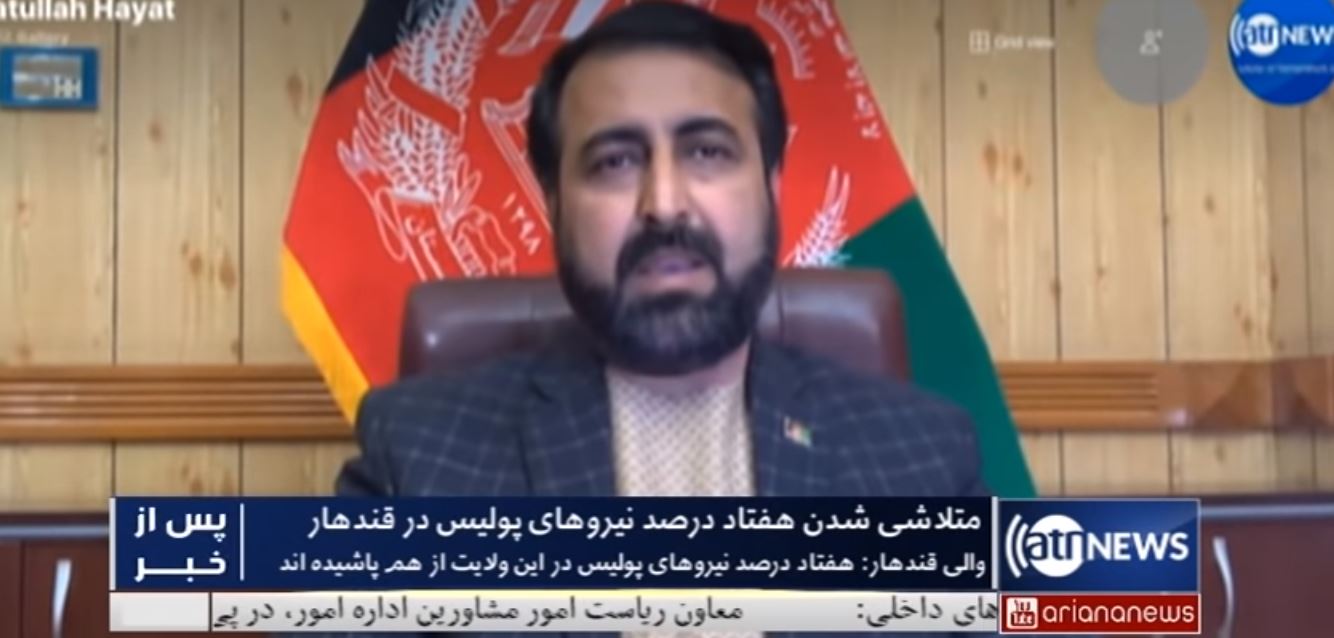
    – Kandahar Governor Hayatullah Hayat: 70% of the security forces have been disbanded following recent Taliban attacks. After these remarks, he was fired by Ashraf Ghani and was replaced by a “Ruhollah Khanzadeh”.
    According to local officials in Kandahar, government forces in the cities of Zhairi, Maiwand, Arghandab and Panjwai have withdrawn from 193 checkpoints and security points, and some of their commanders have been reported to military court for negligence and failure to perform their duties.
    – Three security forces were injured when a mine exploded in the path of security forces in Ain Mino town.

    2- Afghan Ministry of Defense regarding the Helmand conflict:
    During the clashes in Surgdar and Basharan districts near Lashkar Gah and Nawa, Garmsir and Nade Ali areas, with the support of the air force, a Taliban commander named “Abdul Salam”, 3 miners and 50 Taliban members were killed.

    3- Uruzgan:
    Security forces discovered and defused 28 mines planted by the Taliban in Gizab district.

    4- Nangarhar:
    – According to local officials, 18 internal and external Taliban members were killed during an Afghan army airstrike on Taliban positions in Pachiragam district.
    – Afghan Army airstrikes on Taliban positions in Bati Kot.

    5- Pakistan:
    Zakiur Rehman Lakhvi, one of the commanders of Lashkar-e-Taiba, was arrested by the Pakistani military.

  • Latest Updates on Afghanistan, 27 December 2020

    Latest Updates on Afghanistan, 27 December 2020

    1- Helmand
    Afghanistan Defense Minister reported that four Al Qaeda terrorists killed in air raid to Momen Khan area, Nawah district.

    2- According to Afghanistan media, in the last week, 74 persons killed and more than 100 wounded in explosions in the provinces of Kabul, Ghazni, Herat, Kapisa, Balkh, Badghis, Nangarhar, Parwan, Faryab, Qandahar, Kunduz, Khost and Helmand.

    3- Hamdullah Mohib, Afghanistan security counselor: In the last week 195 terrorists were arrested by security forces in Afghanistan.

    4- Uruzgan
    According to local sources, Taliban exhumed Shah Mohammad Shah, Police chief of Dehrawud district and beheaded him, after occupying the district. It is said he resisted against 27 Taliban attacks and won.

    5- Paktia
    Unknown individuals attack in Baghaki area, Gardiz district killed two popular committee troops and wounded four.

    6- Takhar
    Due to mine explosion in Takhar-Qunduz a Taliban terrorist killed and two wounded.

    7- Nangarhar
    ISIS financial chief in Jalalabad district was arrested by security forces.

  • Latest Updates on Afghanistan, 6 December 2020

    Latest Updates on Afghanistan, 6 December 2020

    1- Uruzgan:
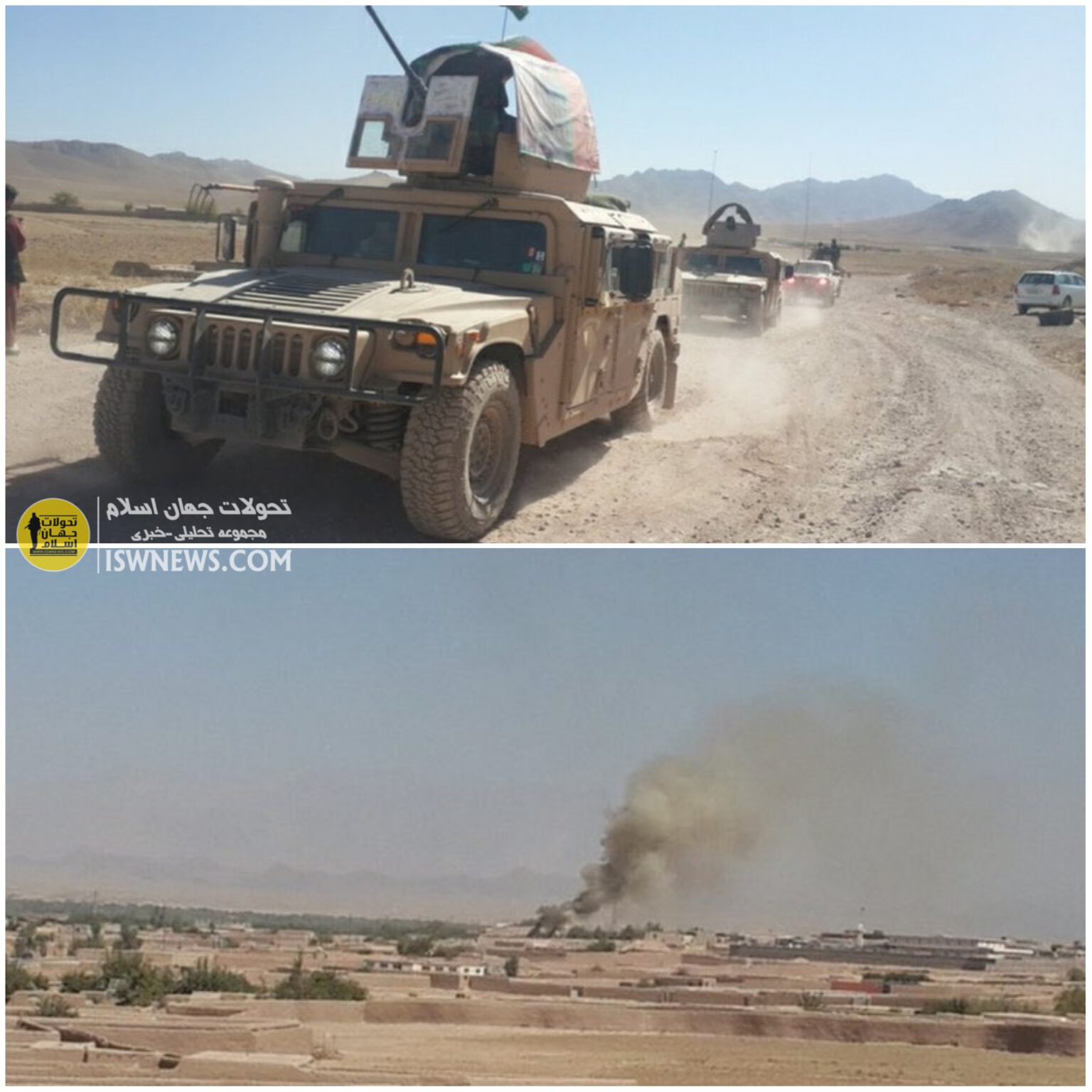
    The Afghan army has repulsed Taliban attack on Dehrawud district and cleared Taliban-occupied positions. The Afghan Air Force has also bombed Taliban positions on the outskirts of Dehrawud. 10 Taliban members were reportedly killed and 11 wounded.(Image above)

    2- Kandahar:
    – According to the Afghan Ministry of Defense, 28 Taliban fighters were killed and eight others were wounded during clashes between the Afghan army and the Taliban in Panjwai area.
    – A car bomb blast near a military base in the district of Arghistan has killed at least three people and injured seven others.

    3- Helmand:
    US warplanes bombed Taliban positions on Lashkar Gah front. The Taliban called the attacks a violation of the peace agreement.

    4- Belgium announced the withdrawal of all its troops from Afghanistan by next year. The number of Belgian troops in Afghanistan is currently around 70.

    5- Nangarhar:
    – ISIS’s appointed governor for Nangarhar, Hedayatullah, was killed during an operation by Afghan security forces in the district of Chaparhar, and two of his entourage were arrested.
    – A car bomb exploded in the city of Jalalabad injuring several people

    6- Taliban Deputy Leader and his negotiators met US Envoy Zalmay Khalilzad in Doha, discussing the release of prisoners and the removal of Taliban names from black list.

    7- Pakistan:
    One person was killed and seven others were injured when a roadside bomb exploded near the Rawalpindi terminal.

  • Latest Updates on Afghanistan, 25 October 2020

    Latest Updates on Afghanistan, 25 October 2020

    1- Peace talks:
    Mullah Abdul Ghani Baradar, the head of the Taliban’s political bureau, spoke with Qatari Foreign Minister Mohammad bin Abdul Rahman about the implementation of the Doha agreement and intra-Afghan talks.

    2- Kabul:
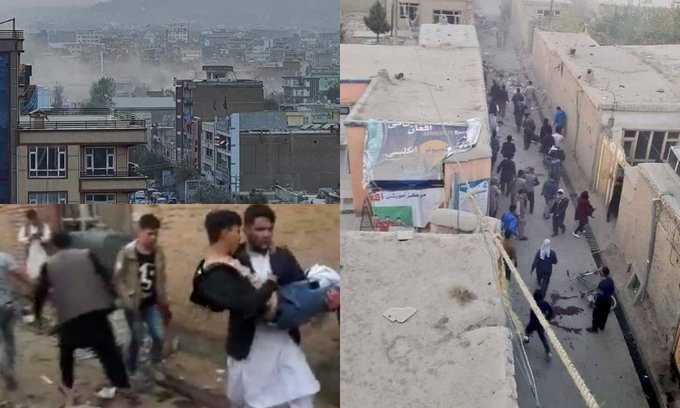
    A terrorist blast near a training center in western Kabul has killed at least 30 people and injured 72 others. The ISIS terrorist group has claimed responsibility for the attack.

    3- Kunduz:
    According to local sources, seven members of the security forces were killed and wounded during a Taliban attack on the village of Ismail Gheshlagh in Imam Sahib.

    4- Nimruz:
    20 security personnel were killed in a Taliban attack on a security checkpoint in the district of Khashroud.

    5- Meydan Wardak:
    12 people were killed and four others were injured when the Taliban attacked a bus and a civilian car on Bamyan road.

    6- Takhar:
    12 people have been killed in a mistaken airstrike by an Afghan Air Force on a religious school in the Hazara Qarluq area.

    7- Badghis:
    According to the Afghan Ministry of Defense, 21 Taliban members were killed and five others were wounded in an airstrike by army forces on Taliban positions in Qadis city.

    8- The Ministry of Foreign Affairs of Afghanistan denied sending military forces and weapons to the Republic of Azerbaijan.

    9- According to a US commander, Australian forces killed an Afghan prisoner due to lack of space in a helicopter during an operation in Afghanistan.

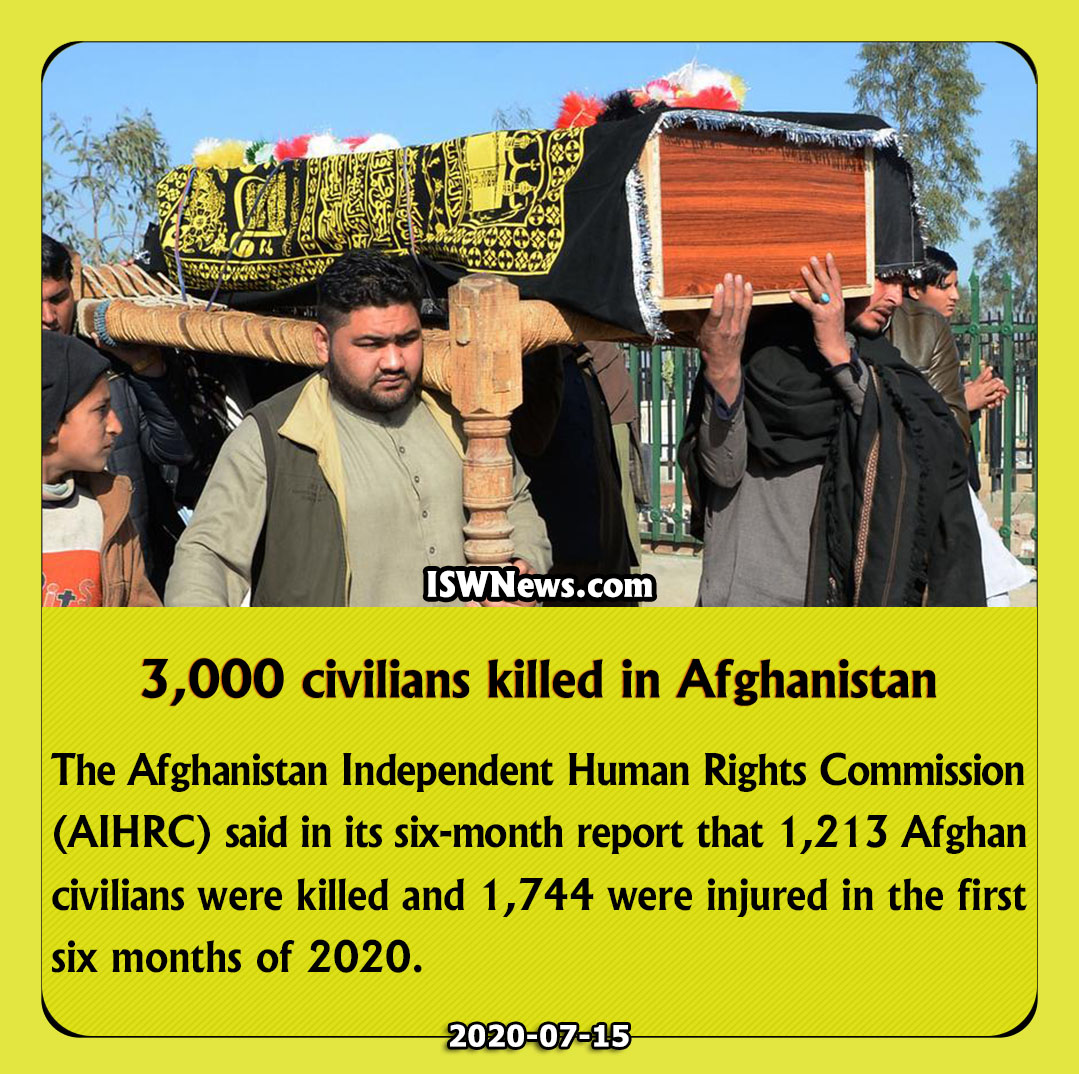
  • 3,000 civilians killed in Afghanistan

    3,000 civilians killed in Afghanistan

    The Independent Human Rights Commission (IHRC) said that the death toll was up 19 percent from last year. In the first six months of this year, an average of 16 civilians killed every day, according to the report.

  • Latest Updates on Afghanistan, 30 May 2020

    Latest Updates on Afghanistan, 30 May 2020

    1. Peace talk:
    – Taliban assigned five person committee to talk with Afghanistan government regarding releasing prisoners.
    – According to Hezbi Islami on Friday Afghanistan government released 164 prisoners of the party from Bagram and Pole Charkhi prisons.

    2. Paktia:
    Due to Taliban attack to border troops station in Dandepatan district, 14 security forces killed and three injured.

    3. Sarepol:
    31 Taliban militants surrendered after a conflict with security forces in Alerkachan village, Kuhistanat district. Four Taliban militants killed in the conflict.

    4. Parwan:
    Due to Taliban attack to security forces station in Siagard district seven died and one injured.

    5. Badghis:
    Mine blast killed three children, Maqar district.

    6. Qandahar:
    Explosion in Piro Kalacha area killed two and injured five.