Tag: Israel

  • Yemen Army Demolishes Two Vessels Belonging To Israel

    Yemen Army Demolishes Two Vessels Belonging To Israel

    In a Thursday statement (August 22), Yemeni Armed Forces spokesman Brigadier General Yahya Saree stated that Yemeni naval, drone and missile units assaulted two vessels belonging to the Israeli regime with a number of gunboats, ballistic and cruise missiles, and suicide UAVs.

    This move was carried out in a bid to assist the oppressed people of Palestine and its fighters and in return for the US and UK aggressions on Yemen, including two military operations in the Red Sea and the Gulf of Aden.

    According to the statement by the spokesman, the oil tanker Sounion, which is owned by a foreign company that deals with the Israeli regime and violates Yemen’s decision to ban entry to the ports of occupied Palestine, was targeted and is at risk of sinking in the first operation of the two aforementioned attacks by the Yemeni army.

    In the second military operation, the ship Sw North Wind I, owned by a company affiliated with the Israeli regime that also defies the Yemenis’ ban on the entry to the ports of occupied Palestine, was targeted in the Gulf of Aden and the Red Sea.

    In its statement, the Yemeni Armed Forces further underlined that they continue to besiege the Israeli enemy and pound all vessels linked with the regime or vessels belonging to companies that deal with Tel Aviv, in the area of the declared military operation in accordance with previous statements. The Yemenis also made it clear that the military attacks would not stop until the end of the anti-Palestinian aggression as well as the lifting of the siege of the Gaza Strip.

    Archival image of Sounion oil tanker

    The Sounion is a crude oil tanker, which has been sailing under the Greek flag since 2006. According to vessel tracking websites, the tanker was heading from the Iraqi port of Basra to South Africa! However, 77 nautical miles west of the Yemeni port of al-Hydaydah, the ship was targeted by the Yemeni Armed Forces.

    According to private security firm Vanguard, at the start of the strike, two small boats with a total of around 15 gunmen came close to the Greek tanker. The two boats exchanged small arms fire with Sounion security forces, and then, they retreated nearly two miles. Two unidentified projectiles (possibly a suicide drone) hit the tanker following the clash, but the vessel was able to keep sailing, according to the captain of Sounion oil tanker. A third projectile (possibly a cruise missile) also pounded the ship at around 5 a.m. local time, and the crew reported smoke in the engine room of the tanker following the strike. According to Athens-based Delta Tankers, the crew of the ship managed to put out the fire on the vessel, but the ship’s engine failed and investigations showed that they were unable to restart the tanker.

    At this time, the Sounion tanker with a cargo of 150,000 tons of crude oil is dead in the middle of the Red sea, and according to a report by Reuters, citing a security source, the ship has stopped and docked somewhere between Yemen and Eritrea.

    Sounion has 25 crew members, including two Russians and 23 Filipinos, who are not harmed and reported to be safe and sound. The oil tanker is the third vessel from Athens-based Delta Tankers to be struck in the Red Sea in August. The owner company is now working on a plan to move the attacked tanker to a safer location and repair its engines.

    The European Union’s Red Sea Fleet Command or officially Western Fleet (WF) declared in a statement that it had received a request of help from the captain of Sounion and dispatched a warship to rescue the crew. The European Union’s warship, while transporting the tanker’s crew to the nearest port in Djibouti, claimed to have spotted and destroyed an unmanned surface vessel (USV) as it approached the region. According to the Sea Fleet Command, the Sounion tanker did not request protection from the EU fleet stationed in the Red Sea under the guise of Operation Aspides, and therefore no vessels were present in that area to counter the Ansar Allah movement’s attacks.

    The SW North Wind I is a Panama-flagged bulk carrier, which has been operational since 2009. The vessel is also sailing from the port of Singapore to Egypt, 57 nautical miles south of Aden, when ship was attacked by five ballistic missiles in a two-stage operation.

    Archival image of the ship SW NORTH WIND I

    The Yemeni army’s strikes on the Sounion tanker and the SW North Wind I in the Red Sea and Gulf of Aden are the 153rd and 154th official attacks by the Yemen Armed Forces on illegal ships (Israel, the United States, the United Kingdom, and their affiliated vessels). Ansar Allah Leader Abdul-Malik Badr al-Din al-Houthi announced that the Yemeni Armed Forces attacked 182 illegal ships.

    In line with intensifying military operations in Yemeni waters, the country’s army resorted to conducting crushing attacks on the Sounion tanker in a serious warning to firms that actively cooperate with the Israeli regime. The Ansar Allah leader tries to convince the owners of these companies that the repercussions of relations with the Tel Aviv regime are worse than their benefits, and that the firms should cancel their ties with the Zionists as soon as possible, or never cross the Red Sea or even the Indian Ocean, because the Yemeni army’s missiles and drones are waiting for them.

  • Islamic Resistance In Iraq Launch Drone Attack On Eilat

    Islamic Resistance In Iraq Launch Drone Attack On Eilat

    The IRI statement said: “To help and support the people of Gaza and in response to the crimes committed by the usurping regime against Palestinian civilians, including women, children, and the elderly, the fighters of the Iraqi Islamic Resistance attacked a vital target in Um al-Rashrash (Eilat) with a suicide drone. The Islamic Resistance emphasizes that the operation to destroy the enemy’s bastions will continue at an increasing pace.”

    This is the 139th attack of the Iraqi resistance against the positions of the Israeli regime after the onset of the genocidal war on Gaza.

    The Islamic Resistance in Iraq carried out tens of attacks on the Israeli-occupied territories as of April 25, 2024.

    The Iraqi resistance group along with other resistance movements in Lebanon and Yemen have called for the end of Israeli aggression against the Gaza Strip and the delivery of aid into the besieged area.

  • Hezbollah Target Northern Occupied Territories With Suicide Drones And Barrage Of Rockets

    Hezbollah Target Northern Occupied Territories With Suicide Drones And Barrage Of Rockets

    On August 20, Hezbollah fired at least 80 rockets at the Israeli army positions in the north of the occupied territories. According to Israel TV Channel 12, 20 rockets were fired towards Western Galilee.

    The Hezbollah-affiliated media reported that in response to attacks by Israeli fighter jets on the Bekaa province in eastern Lebanon last night (19 August), Hezbollah fired dozens of rockets at the command headquarters of the 210th Golan Division at Nafah base, as well as at the headquarters of the artillery regiment and the 210th armored brigade at the Yarden barracks in the occupied Golan.

    These attacks did not result in casualties, but caused destruction and fires in some areas of the occupied Golan.

    On August 19, Lebanon’s Hezbollah targeted the headquarters of the Israeli military in the Ya’ara area and the Sanat Chin base north of Acre with several suicide drones. In this attack, one Israeli soldier was killed, and six others were wounded.

    Hezbollah forces attacked the Hadab Yarun base in two separate attacks this morning with artillery shells and suicide quadcopters (FPV). The attack is Hezbollah’s 16th operation using FPVs.

    Hadab Yarun base

    Also this morning, five buildings were destroyed and one Israeli was wounded in a Hezbollah rocket attack on the logistics base of Qatsrin (according to Hezbollah: Tasnobar) in the occupied Golan.

    Hezbollah’s rocket attack on Katsrin logistics base and its surrounding areas in the occupied Golan

    On the other hand, Israeli fighter jets are targeting the eastern and southern towns of Lebanon using heavy bombs.

    During the last three days, Israeli fighter jets attacked dozens of southern and eastern areas of Lebanon, such as Ayta al-Shaab, Tayirharfa, Tayyaba, Khiam, Al-Naqourah, Houla, Ramieh and Bayut al-Siyad, Al-Mansouri, Nabi Sheith, Sahl Serain, Sardeh and Deir Serian.

    A Syrian citizen was martyred during the Zionist artillery attack on Sardeh area.

    Three Lebanese rescuers were injured in an Israeli drone strike on an ambulance near the al-Naqoura area. The ambulance was carrying a wounded man from the Hamul area when it was attacked.

    As a result of the Israeli airstrikes in Dhahira area, two Lebanese were martyred.

    Also, Israel’s targeted assassinations against Hezbollah forces and commanders continue. On August 19, Israeli drones attacked a passenger car on the Deir Qunon-Ras Al Ain road. During this assassination, a Lebanese was killed.

    Israeli drones attacked a passenger car on the Deir Qunon-Ras al-Ain road

    Clashes continue in southern Lebanon while Hezbollah casualties are slowly increasing. During the last two days, Hezbollah published the names of seven of its members who were killed in southern Lebanon. Most of these individuals were killed due to heavy bombardment by Israeli warplanes in southern Lebanon.

    According to available information, the casualties of Hezbollah have reached 400. While Hezbollah officially announces its military casualties, the Israeli regime seems to avoid providing real statistics of its casualties in the northern fronts.

    Israeli Defense Minister Yoav Galant said last night during a visit to the 36th Division in northern Israel that Israel’s center of gravity is gradually shifting away from the Gaza Strip to the northern front, as Israel prepares for a major escalation with Lebanon’s Hezbollah. Gallant’s words refer to the current ceasefire negotiations in the Gaza Strip and the prisoner exchange agreement.

    Yoav Gallant meets with 36th Division commander Brig. Gen. Dado Bar Kalifa at a base in northern Israel (Ariel Hermoni)

    The ceasefire talks were held on Thursday and Friday last week in Doha, Qatar, without any particular achievement. Another round of negotiations will be held this week in Cairo, the capital of Egypt, between mediators and Israeli military and intelligence officials.

    Read more: Hamas Reject Israeli Deceitful Ceasefire Negotiation Terms

    The results of these negotiations are very important for Israel. Israel is currently fighting on two fronts, north and south. On the one hand, the Israeli army has concentrated almost half of its forces in the north and the other half is occupied in the southern front. Therefore, currently, the Israeli army is not capable of carrying out a major operation on the northern front.

    By reaching a suitable agreement in the south of the Gaza Strip, the Israeli army will have the opportunity to bolster its forces and equipment on the northern front, allowing them to better combat Hezbollah and pave the way for the return of refugees to the northern lands.

    Military operations along the northern borders have led to widespread evacuations of settlements. According to the latest reports, more than 250,000 Israeli citizens have been displaced by the war, with some 164,000 ordered or recommended to evacuate with government compensation and nearly 150,000 evacuated without being asked. The number of Israeli refugees increases daily.

  • Palestinian Resistance Killed Two Zionists In Ambush On Netzarim Axis (Video)

    Palestinian Resistance Killed Two Zionists In Ambush On Netzarim Axis (Video)

    As a result of the killing of the two Israeli troopers, the number of assumed Israeli military fatalities following the initiation of the ground aggression on the Gaza Strip has increased to 332. Furthermore, the total number of “military” casualties, according to the Tel Aviv regime’s alleged statements, since the onset of the war has reached 692, while there are unofficial reports that emphasize the real number of Israeli military fatalities stands at around 4,000.

    The exact location of the ambush in the Netzarim axis: view on the online map

    Video of the ambush of the resistance forces against the Zionist army convoy
    Two killed Zionist soldiers

    The Netzarim Corridor is situated in southern of Gaza City. The title Netzarim has its roots in the name of the Israeli village of Netzarim, which was entirely evacuated by the regime in 2005 and handed over to the Gazans and then destroyed by the residents of the besieged strip. The Israeli regime shortly usurped this region during the three-week battle from December 27, 2008 until January 17, 2009, and again withdrew from the area following the termination of the military operation.

    Over the course of the recent onslaught on the Gaza Strip, the Israeli regime’s army reentered this region with the aim of cutting off the land connection between Gaza City in the north of the Gaza Strip and the southern districts of the besieged enclave.

    However, during the current confrontation, the Israeli military forces have expanded their presence with long-term objectives. In the ongoing aggression, the Israeli regime’s army erected four military posts on this axis. These four installations include a military post in the Juhur al-Dik area, a small military post on the Salah al-Din Road, a base in the Turkish-Palestinian Friendship Hospital, and a large military base in the al-Rashid Street near the coastal areas.

    According to previous statements made by Israeli officials, the Israeli regime’s army is seeking to create a permanent security buffer zone along the Netzarim Corridor in the south of Gaza City, as well as across the borders of the Gaza Strip along with the occupied territories of Palestine. Thus, given the course of the clashes of the past few months and the objectives that the Tel Aviv regime has set for its military presence in this area, the possibility of Israel’s unilateral pull-out from the claimed buffer zones seems to be improbable.

    Click to view full size
  • Hamas Reject Israeli Deceitful Ceasefire Negotiation Terms

    Hamas Reject Israeli Deceitful Ceasefire Negotiation Terms

    On August 18, after days of negotiations, the Palestinian Islamic Resistance “Hamas” released a sharp statement, rejecting the terms of the ceasefire negotiations in Doha, the capital of Qatar.

    After the assassination of Hamas leader Ismail Haniyeh in Tehran and Iran’s promise to respond to this assassination, all mediating parties, including the United States, have attempted to end tensions by implementing a ceasefire in the Gaza Strip as soon as possible to reduce and prevent the possibility of an all-out war. According to CNN, Washington has asked Tehran, through mediators, not to attack Israel, as there is a path to a Gaza deal.

    This issue is of great importance for America, especially for President Biden, who is on the eve of the election. According to Axios, citing informed officials, President Joe Biden plans to finalize the Gaza ceasefire and the prisoner release agreement by the end of next week. However, there is still no clear prospect for peace.

    The talks have been ongoing for days, but there is no sign of progress. Today, US Secretary of State Anthony Blinken arrived in Tel Aviv to meet with Israeli officials. Some believe he went to Tel Aviv to put pressure on Netanyahu and soften him in the ceasefire talks.

    In his final statement, Blinken emphasized the urgency of reaching an agreement on Gaza and returning the Israeli prisoners. He stated that this may be the last chance to secure their return, and stressed that it is a critical moment for the ceasefire negotiations in Gaza.

    Although there was no detailed information about the contents of the negotiations until yesterday, the different angles of the story are gradually becoming clear.

    Based on the leaked information, these are some of the details proposed in the Doha ceasefire talks meeting:

    ⁃ The Israeli army will reduce its military presence in the Philadelphia axis (south of Rafah city and the Egyptian border), but will not withdraw from it.
    ⁃ The Palestinian National Authority must take over the management of the Rafah crossing under the supervision of Israel.
    ⁃ The Israeli army will fully monitor and control the refugees who return to the north of the Gaza Strip through the Netzarim Corridor.
    ⁃ A large number of Palestinian prisoners will be deported from the country after their release from prison
    ⁃ Israel’s veto right to refuse the release of at least 100 security prisoners.

    According to the leaked information, it is evident that the Israeli government not only failed to abide by the terms of the previous agreement but also introduced new conditions, making it harder to reach a lasting ceasefire. Under the new terms, Israel intends to maintain control over the Netzarim corridor and other areas in the Gaza Strip, showing no willingness to withdraw from Gaza and offering no significant concessions to the other party.

    On the other hand, the Palestinian resistance movement, Hamas, finally reacted to the non-constructive process of negotiations in Doha by issuing a statement on August 18 and rejecting the negotiations. Hamas believes that Netanyahu and his government are the main obstacles to a ceasefire agreement.

    Hamas’ statement comes as follows:

    “We cooperated with all the efforts made by the mediators in Qatar and Egypt, and showed flexibility concerning all the proposed suggestions to pave the way for reaching an agreement to halt the aggression against our nation as well as to finalize a prisoner swap deal.

    After listening to the mediators’ proposals in the ceasefire talks, it became obvious to us that Israeli Prime Minister Benjamin Netanyahu continues to get in the way of reaching a truce agreement.

    The new suggestions are in line with Netanyahu’s conditions and in the favor of the Zionist regime, especially because these proposals reject a permanent ceasefire and an all-out withdrawal of the Israeli regime’s military forces from the Gaza Strip.

    Netanyahu set new conditions regarding the prisoner swap deal and withdrew from other clauses of the existing proposal in a bid to prevent the finalization of the prisoner swap deal.

    We hold the Israeli prime minister fully responsible for hindering the endeavors made by the mediators as well as creating trouble in the way of achieving the ceasefire agreement and in respect of the lives of Israeli prisoners, who are exposed to the same risk to which the Palestinian people are exposed.

    We reaffirm our commitment to whatever we agreed to on June 2 and call on the mediators to show that they are assuming their responsibility and to force the Israeli foe to implement what has been agreed upon regarding the ceasefire deal.”

    The senior government officials of Egypt, the United States and Qatar will meet again, this time in the Egyptian capital Cairo before the end of this week to reach an agreement according to the terms proposed on Friday. Due to the failure of the Doha negotiations, the fate of the discussions in Cairo is likely doomed.

    It was predictable that the ceasefire talks in Doha would fail. Due to Netanyahu’s challenging political and legal position inside and outside Israel, it’s unlikely that he will accept peace talks. Netanyahu’s political survival is closely linked to achieving a decisive victory in the Gaza Strip. The ongoing war on the northern front, the grave security situation in the West Bank, and the unstable political situation in the government in Tel Aviv have all significantly damaged Israel’s reputation. Tel Aviv is attempting to restore its lost status through any means.

    The mediation efforts by the US, Egypt and Qatar to establish a ceasefire in the Gaza Strip in return for the release of the remaining 110 Israeli captives kicked off several months ago. Following different rounds of indirect talks held in Egypt and Qatar, the warrying sides have yet to reach a deal. The endeavors have not yielded any tangible result because of Netanyahu’s refusal to cease the genocidal war on Gaza.

    The devastating war has left more than 40,000 martyrs and over 92,600 wounded in Gaza. The onslaught has created a dire humanitarian situation which is being deteriorated because of restrictions imposed by the Israeli regime on entry of food and medicine.

  • Israel Keeps On Military Operation In Gaza Strip Amid Ceasefire Talks (Map)

    Israel Keeps On Military Operation In Gaza Strip Amid Ceasefire Talks (Map)

    The Israeli regime’s armed forces have kicked off new military operations in some regions since Saturday, and announced the compulsory evacuation of the areas of Al-Maghazi, Salah al-Din, Al-Farouq and Al-Amal neighborhoods, as well as blocks 973, 974, 978, 979, 1738 to 1745.

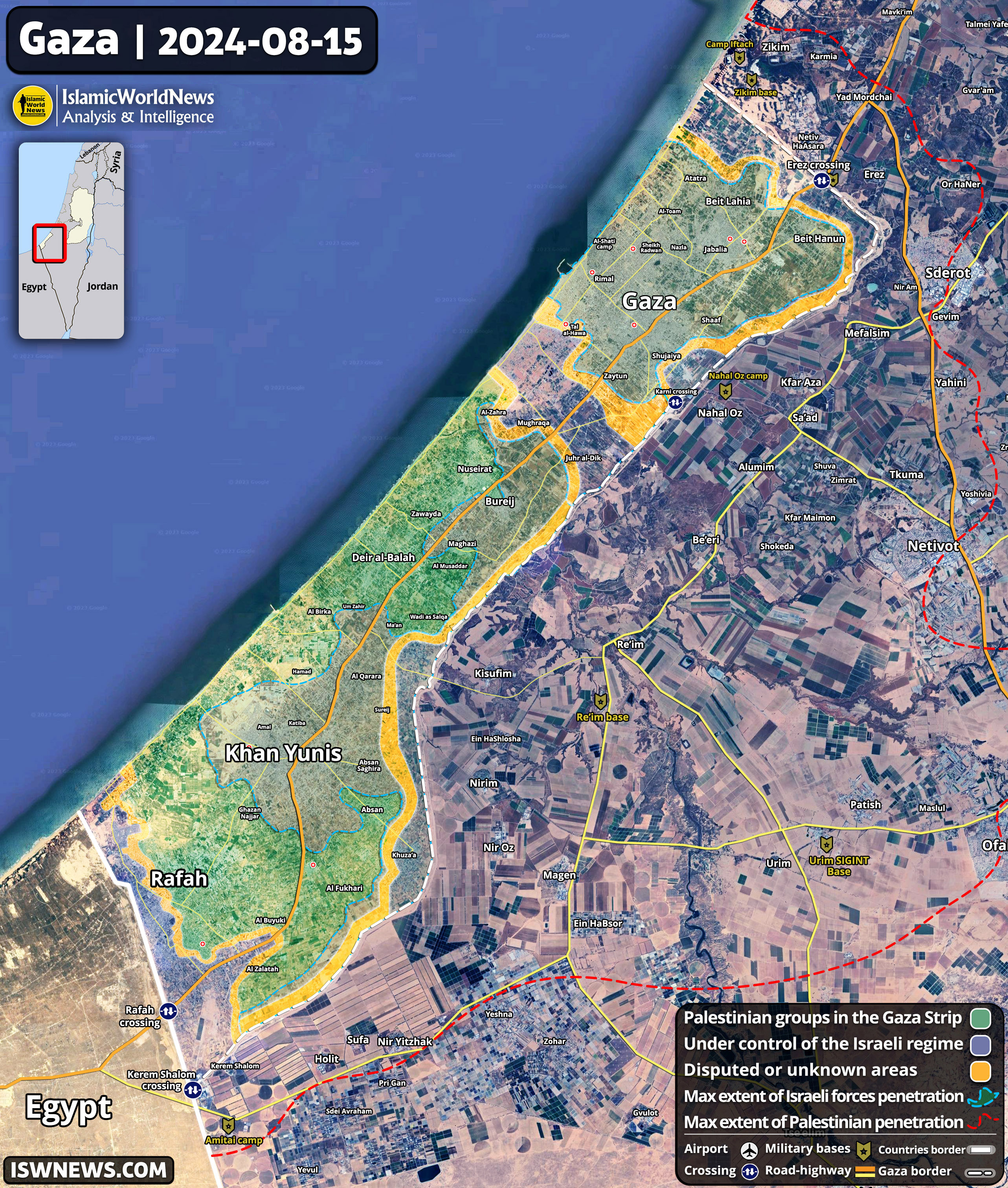
    Fierce clashes continued in the areas of Wadi Salqa and al-Qararah, and Israeli military forces advanced from the al-Matahin intersection towards the town of Hamad, north of Khan Younis in southern Gaza over the past 24 hours, and some Israeli tanks are now deployed north of Hamad town.

    Israeli tanks north of Hamad town

    The Israeli regime claimed that its military forces launched the incursion because the Palestinian resistance movement Hamas and other resistance groups fired rockets from that area into the occupied territories of Palestine. However, it seems that the ground operations and the advances on the southern axes of the Gaza Strip, which are coincided with the ceasefire talks and international endeavors to reach a new truce agreement, are aimed at putting more pressure on the Palestinian resistance groups and squeezing more concessions in any possible ceasefire.

    In this respect, some Hebrew-language media outlets claimed that the Israeli cabinet under warmongering Prime Minister Benjamin Netanyahu has ordered the regime’s army to exacerbate the intensity of the fighting in the Gaza Strip in order to enhance the regime’s upper-hand in the negotiations.

    It is worth mentioning that the Israeli regime’s genocidal aggression on the Gaza Strip has left at least 40,099 people martyred and 92,609 wounded.

    Interactive map

    Gaza map
  • Hezbollah, Israel’s Worst Nightmare In Southern Lebanon

    Hezbollah, Israel’s Worst Nightmare In Southern Lebanon

    On July 30, Fuad Shukr, a prominent commander of Hezbollah was assassinated in Beirut by the Israeli regime. The following day, on July 31 in Tehran, Israel assassinated Ismail Haniyeh, the head of the Hamas political office.

    The Israeli newspaper Ma’ariv recently stated in an article that Israel is extremely worried about the infiltration of Hezbollah’s Redwan forces into the Galilee region. Israeli army officers believe that Hezbollah forces, especially Redwan’s elite forces, can infiltrate Israeli settlements or capture Israeli bases.

    Lebanon’s Hezbollah has tens of thousands of trained military personnel. Many believe that Hezbollah forces are stronger than the Lebanese army. In fact, the military wing of Hezbollah is known as the most powerful non-state military force in the world.

    Various military units of Hezbollah are stationed in the southern fronts and other parts of Lebanon. Some of these units include Wahdat Brigade, Aziz Unit, Badr Unit, Khayyam Unit, etc. In general, detailed information about Hezbollah’s military units and charts is not available as the organization never publishes such information.

    However, the Rezwan unit is one of Hezbollah’s most famous and well-known military units. It is considered one of the main elite units of Hezbollah and plays a key role in advancing the goals of the operations. Although the exact number of Rezwan forces has not been announced, estimates indicate that at least 2,500 special forces are active in this unit. Rezwan’s forces have significant combat experience and have participated in past battles in Syria and Qalamoun. The main mission of this group is to infiltrate the territory of Israel, with specific attention to Galilee and northern Israel.

    Redwan forces

    The Rezwan forces are highly skilled and have undergone rigorous training. They are proficient in using anti-tank weapons and explosives. They possess the ability to travel long distances and perform difficult missions in mountainous areas. Additionally, they excel in carrying out secret and sensitive military operations in a thoroughly professional manner.

    Redwan forces are said to be divided into seven- to 10-man squads, each operating independently without constant orders or logistical support from a central command. Their main feature is actually the operational independence given to its commanders, and these commanders are allowed to make quick tactical decisions on the battlefield. They have the speed, flexibility and noteable striking capability that characterizes any military force.

    Yediot Aharonot quoted Israeli security sources as saying, “As long as the Rezwan unit is on the Lebanese border, the residents of the northern settlements who have been evacuated have no hope of returning to their homes.”

    Military operations along the northern borders have led to widespread evacuations of settlements. The Israeli Ministry of Housing and Immigration reports that hundreds of thousands of settlers have left the occupied territories since the start of the war.

    According to the latest reports, more than 250,000 Israeli citizens have been displaced by the war, with some 164,000 ordered or recommended to evacuate with government compensation and nearly 150,000 evacuated without being asked. The number of Israeli refugees increases daily.

    Avichai Stern, mayor of Kiryat Shemona, said that the Israeli settlers’ fear of returning to their homes stems from the images they saw on October 7.

    Lebanon’s Hezbollah has a formidable rocket and missile arsenal in addition to its strong ground forces. According to recent estimates, Hezbollah has 150,000 mortars, rockets, and missiles of varying ranges. Experts consider Hezbollah to be one of the world’s top five missile powers based on this significant arsenal.

    Hezbollah says it has missiles that can target all areas of Israel. Hezbollah is also equipped with drones and anti-tank and anti-ship missiles, many of which were built in Lebanon with Iran’s help or delivered directly from Iran to Lebanon’s Hezbollah.

    Unguided rockets form a major part of Hezbollah’s missile arsenal. Among these rockets, we can mention Burkan, “Fajr” and “Zelzal” rockets.

    For example, Katyusha and Burkan short-range rockets have an explosive payload between 300 and 500 kilograms. The solid fueled Zelzal rockets have a range of about 250-300 km and carry about 400-600 kg of explosives.

    Zelzal rocket
    Burkan rocket

    Due to the mountainous nature of southern Lebanon and the experience of the 2006 war, Hezbollah is widely equipped with anti-tank guided missiles (ATGM). Hezbollah has a wide range of anti-tank missiles in its arsenal. Russian Kornet missiles and various types of Iranian anti-armor missiles such as Toofan and Almas are among Hezbollah’s anti-armor missiles.

    Read more: Lebanon’s Hezbollah Unveils Tharallah Anti-Tank System (Video)

    During the recent war in northern occupied Palestine, Hezbollah has repeatedly targeted the positions of the Israeli army with Almas missiles. Hezbollah has released video clips of ATGM attacks on Israeli military installations and tanks and military vehicles since October 7.

    The release of the video showing these operations has attracted a lot of attention. The Almas missiles are actually the reverse-engineered version of the Israeli Spike anti-armor missiles, which were produced by Iran. Hezbollah has inflicted significant casualties on the Israeli army with these missiles.

    Hezbollah attacks Israel with Almas ATGMs
    Hezbollah attacks Israel with Almas ATGMs
    Almas anti-armor missile

    Read more: Military Knowledge: Almas Missile

    Hezbollah is equipped with a significant number of man-portable air-defense system (MANPADS) missiles. Based on available information, Hezbollah is reported to have air defense missiles, but specific details about these missiles are not readily available. In recent conflicts, Hezbollah successfully used these missiles to shoot down several Israeli drones, including the Hermes 450 and Hermes 900, over southern Lebanon.This was the first time that Hezbollah used these missiles to shoot down drones.

    Another important component of Hezbollah’s missile power is anti-ship missiles. Hezbollah first demonstrated its anti-ship missiles in 2006 when it attacked an Israeli warship 10 miles off the coast of Lebanon, killing four Israelis and damaging the ship.

    According to the available information, Hezbollah has been equipped with a significant number of anti-ship missiles in recent years. The Noor missile, which is the Iranian version of the Chinese C-802 anti-ship missile, is one of these missiles. The Noor missile has a range of up to 170 km. There are also speculations that Hezbollah has acquired the Russian “Yakhont” anti-ship missile, which has a range of up to 300 kilometers.
    Noor missile or Chinese C-802 anti-ship missile

    Hezbollah’s missile capabilities, including anti-ship missiles, have significantly increased due to Iran’s support. This poses a serious threat to Israeli and US warships. Consequently, Israel’s naval power is affected, prompting the country to take different factors into consideration in potential naval confrontations with Hezbollah.

    During the recent war, Hezbollah has repeatedly launched suicide drones towards the bases and positions of the Israeli army. Hezbollah mainly uses Mersad and Ababil suicide drones to target Israeli army positions. These drones are assembled locally. However, due to Iran’s support for the Lebanese resistance, there is a possibility that more advanced Iranian drones such as Shahid-136 are also available to Hezbollah.

    Hezbollah’s Ababil suicide drone
    Iranian Ababil-2 suicide drone

    Read more: Military Knowledge: Ababil-2 Reconnaissance and Suicide Drone

    Since the start of Israel’s military aggression on the Gaza Strip, the Lebanese Islamic Resistance has initiated operations against the Israeli regime in northern Palestine, aiming to divert a portion of Israel’s military might and help the Palestinian resistance in the Gaza Strip. It is estimated that Lebanon’s Hezbollah alone has engaged around half of the Israeli regime’s army in the northern front and has hindered the Israeli army’s complete deployment in the southern front of the Gaza Strip.

    Recently, several drones of Lebanon’s Hezbollah penetrated into the north of occupied Palestine and successfully filmed critical bases in the port of Haifa. This is a major challenge for Israel, which considers itself the high-tech superpower in the region and insists on using drones and other surveillance tools against its enemies near and far.

    The Hezbollah drone operations in Israel are a clear warning to its enemy, indicating that Hezbollah has extensive intelligence on sensitive and vital locations in Israel. Hezbollah is not interested in prolonging the conflict and explicitly seeks an end to the military aggression in the Gaza Strip.

    Nevertheless, Israel continues to ignore Hezbollah’s warnings and insists on continuing military aggression in the Gaza Strip. Therefore, the war between Hezbollah and Israel is about to enter a new phase. All of Hezbollah’s intelligence and technical combat capabilities indicate that in the event of an all-out war on the northern front, Israel will suffer significant and staggering losses.

    Posted on SouthFront

  • The Fruitless War In Gaza; Israel Embraces Iran’s Retaliatory Attacks!

    The Fruitless War In Gaza; Israel Embraces Iran’s Retaliatory Attacks!

    The previous operation lasted for eight days and the Israeli forces penetrated into the city of Khan Yunis again. During that operation, many residential buildings, cemeteries and service facilities were demolished by Israeli bulldozers and explosives. The Israeli army withdrew from the city of Khan Yunis once the operation concluded.

    According to Hebrew sources, the recent operation is carried out with the aim of destroying Hamas forces in Al-Qararah and Wadi al-Salqa. The Israeli military launched the operation after receiving information about the presence of Hamas forces in the area. The operation involves air and artillery support.

    It is highly unlikely that the new Israeli operation in the area will achieve anything significant.

    The nature of guerrilla warfare by resistance groups in the Gaza Strip makes it difficult for the Israeli army to completely stabilize and secure the area. Due to this, the Israeli army has to leave the area after each operation in order to avoid casualties.

    Despite the Israeli army’s efforts to secure areas of Gaza Strip, the extensive network of underground facilities makes this task seem impossible.

    Gaza map

    Fighting continues in the southern Gaza Strip in Rafah city without any significant progress. The military situation in Rafah has not changed much. Israeli forces have not been able to completely clear Rafah after weeks of fighting. Around 65% of the town is currently under Israeli control.

    Fighting still continues in the central areas of Rafah, in Tal al-Sultan, around the Saudi project and in the southern areas of the city.

    The situation in other parts of the Gaza Strip remains unchanged.

    While Israel’s fruitless war in the Gaza Strip continues, the Israeli regime prepares itself to embrace Iran and its allies’ retaliatory attacks!

    On July 30, a prominent commander of Hezbollah was assassinated in Beirut by the Israeli regime. The following day, on July 31 in Tehran, another terrorist act took place when Israel assassinated Ismail Haniyeh, the head of the Hamas political office. Ismail Haniyeh was killed in Iran while he was on an official trip to Tehran for the swearing-in ceremony of the new president of Iran, Massoud Pezeshkian.

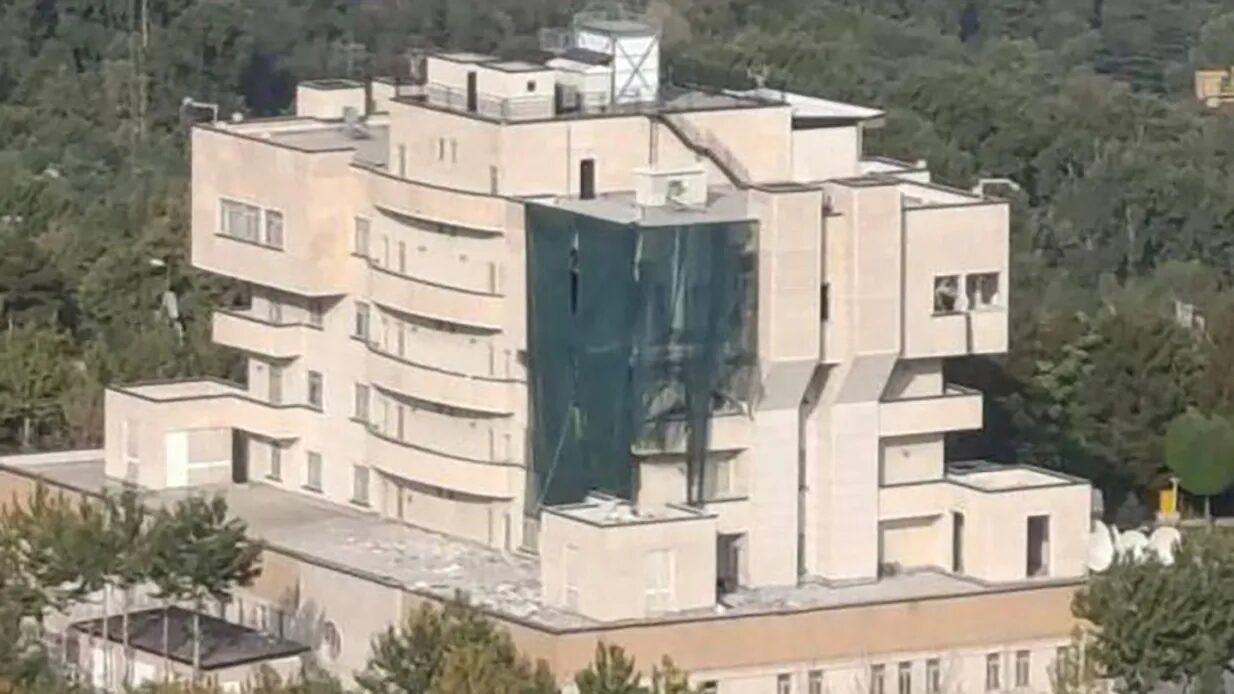
    The building that was targeted in Tehran

    The supreme leader of Iran, Ali Khamenei has promised that a severe revenge will be taken from the Israeli regime in seeking blood from this terrorist operation.

    Hezbollah’s leader Hassan Nasrallah said that the war against Israel had entered a “new phase” and Israel should expect “rage and revenge.” In addition, the leader of Yemen’s Houthis, Abdul-Malik al-Houthi, vowed that the Israeli escalation will be met with a “military response.”

    It is said that the Iran’s Supreme Leader has ordered a direct strike against Israel and the attack may be carried out jointly with other allies of Tehran, including Hezbollah and the Houthis.

    Since then, the security and military situation in Israel has become very complicated.

    The Israel Defense Forces stated that it is on “high alert” as the country braces for a response to the assassinations of Hezbollah’s military chief Fuad Shukr in the Lebanese capital, Beirut, and Hamas’s leader Ismail Haniyeh in the Iranian capital, Tehran.

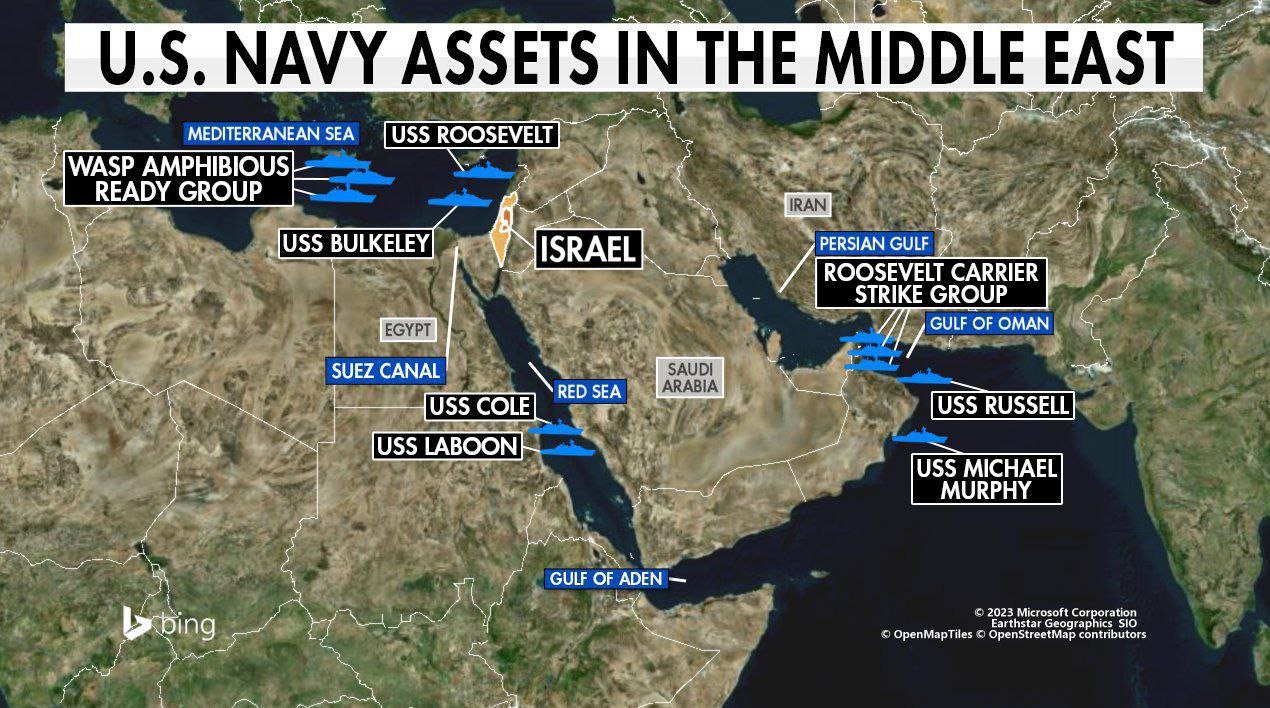
    The US government has deployed additional ships and fighter jets to West Asia in support of Israel. Equipment from US and Israeli allies is also on high alert to defend Israel.

    US Navy assets in the region

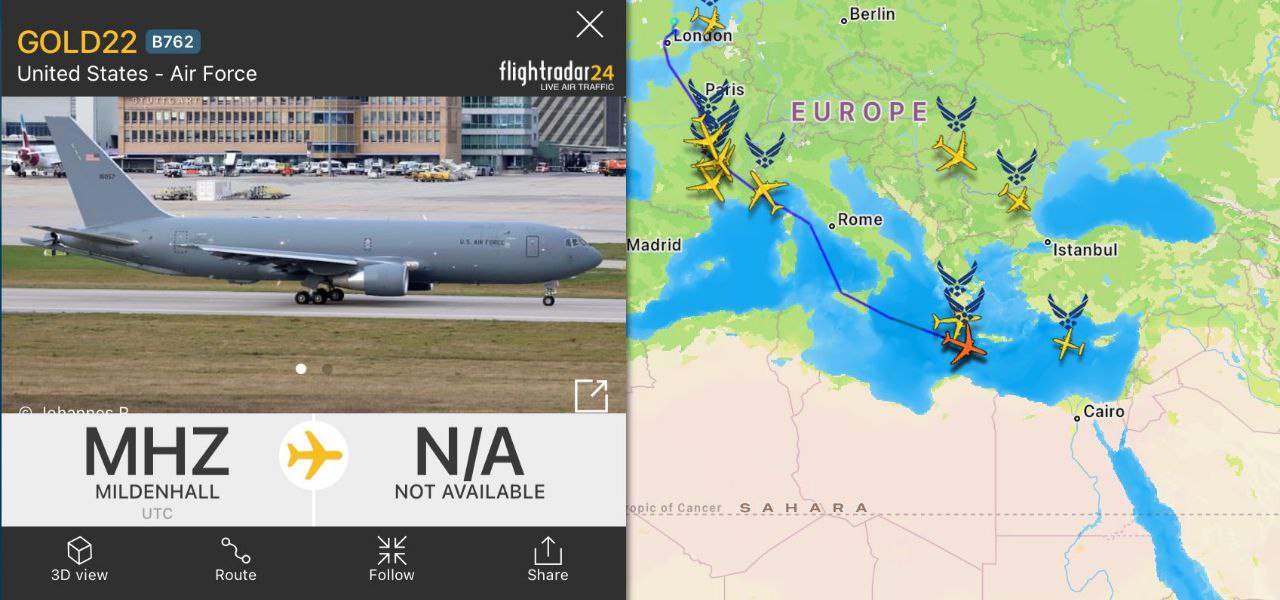
    Last week, the US military sent 12 F-22 fighter jets from Lakenheath Airport in England to one of its bases in West Asia.

    US military sending F-22s and tanker aircraft to the region

    Yesterday, the spokesman of the US Ministry of Defense announced that Lloyd Austin, the US Secretary of Defense had a discussion with Israel’s Defense Minister Yoav Gallant about the country’s defense plans to protect Israel against possible attacks by Iran and its allies.

    Austin emphasized that he has ordered the USS Abraham Lincoln Carrier Strike Group, equipped with F-35C fighters, as well as the USS Georgia (SSGN 729) to be deployed in the Middle East as soon as possible.

    Yoav Gallant reportedly speaks with US Defense Minister Lloyd Austin daily to coordinate and update him on the latest developments.

    On the other hand, Britain and France have asked Iran to refrain from attacking Israel.

    Israel’s allies have used all diplomatic tools and economic pressures and even military threats to dissuade Iran from carrying out a retaliatory attack. Nevertheless, it seems very unlikely that Iran will withdraw from its retaliatory attack.

    Last April, the Israeli regime attacked the Iranian embassy in Syria’s Damascus. The attack led to the death of several Iranian military advisers and high-ranking IRGC commanders. In response to this attack, Iran fired dozens of ballistic and cruise missiles and suicide drones at Israeli military targets in the occupied territories.

    The history of Iran’s retaliatory operations shows that this country will attack Israel again. But it seems that this time the attacks will be stronger than before, comprehensive and with the participation of Iran’s regional allies.

    Overall, the Middle East appears to be on the brink of an all-out war as a result of Israel’s recent acts and its ruthless offensive in the Palestinian enclave of the Gaza Strip. Israel’s crime in Gaza may lead to the downfall of this regime or even the destruction of the entire region!

    Posted on SouthFront

  • Palestinian Resistance Movement Urges Mediators To Pursue Ceasefire Talks

    Palestinian Resistance Movement Urges Mediators To Pursue Ceasefire Talks

    As a result of the irreconcilability of the Israeli occupiers in the ceasefire negotiations and the continuation of the massacres that the regime’s military forces commit in the Gaza Strip, the Palestinian Islamic Resistance Movement, Hamas, urged the international mediators to pursue the implementation of the terms agreed upon in the previous talks instead of starting new ones.

    According to the Hamas statement, the Palestinian resistance calls on the mediators in Egypt and Qatar to put forward the terms agreed upon in the July 2 negotiations, and that the onset of new rounds of talks or the proposition of new proposals is only a cover to provide the Zionist regime with the opportunity to continue their aggression in Gaza.

    Hamas took part in several rounds of talks and showed the essential flexibility and positive approach to pursue the interests of the Palestinian people in the prisoner swap deal.

    In this regard, representative of the Hamas movement in Lebanon Osama Hamdan said that it was agreed upon the withdrawal of the Zionist regime’s military forces from the Philadelphia axis in the July 2 negotiations, and we welcomed the suggestion of US President Joe Biden and the resolutions of the United Nations Security Council, but the Israeli regime refuses to accept the proposal and tries to procrastinate.

    It is worth noting that the three mediating countries, including the United States, Qatar, and Egypt, issued a joint statement in the past to call for the return of the Israeli regime and the Hamas movement to the negotiating table.

    So far, the negotiations between Hamas and the Tel Aviv regime, which has been mediated by Egypt and Qatar and with the participation of the United States to pave the way for establishing a ceasefire in the Gaza Strip and the prisoner swap between the two warring sides, have not yielded any tangible result.

    Some Israeli media outlets and analysts blame the Israeli regime’s Prime Minister Benjamin Netanyahu for the failure to implement the potential deal due to the fact that he tries procrastinate the negotiations and add new preconditions in the ceasefire talks.

  • Israel Conducts New Military Operation In Khan Younis

    Israel Conducts New Military Operation In Khan Younis

    This move follows a recent trend of intensified operations in this populated area, as the Israeli military forces received information on the presence of fighters affiliated with the Palestinian resistance movement, Hamas, in this region.

    The 98th Division of the Israeli regime’s army is actively engaged in this operation in Khan Younis city, focusing on the eastern areas of Al-Qarara and Wadi al-Salqa towns.

    The Israeli army has mobilized air support and artillery strikes to enhance the operational maneuver of the ground troops, reflecting the seriousness of the situation.

    This latest assault comes following a previous eight-day campaign that kicked off on July 22, which also targeted Khan Younis city. During the previous operation, the Israeli armed forces caused extensive damage, demolishing residential buildings, a cemetery, and various service facilities using bulldozers and explosives.

    As tensions flare up, the humanitarian implications of the Israeli regime’s military atrocities remain a pressing concern for the Palestinian civilians and international observers alike. The circumstances in Khan Younis are evolving quickly, and the continuation of the Israeli regime’s cruel actions cause catastrophe in this area.

    The Palestinian Health Ministry in Gaza announced on Saturday that Gaza death toll reached 39,790 as the Israeli military forces killed 40 more Palestinians over the past 24 hours. At least 91,702 Palestinians have been wounded in the onslaught on the besieged area since Oct. 7, 2023.

    Click to view full size
  • US Dispatches F-22 Warplanes to Assist Israeli Regime Amid Escalation Of Regional Tensions

    US Dispatches F-22 Warplanes to Assist Israeli Regime Amid Escalation Of Regional Tensions

    This high-profile deployment coincides with heightened tensions in this part of the world in connection with the Islamic Republic of Iran, the Lebanese resistance movement Hezbollah, and Yemen’s Ansar Allah movement.

    Six tanker aircraft will fly with the backing of the F-22 warplanes in case of need as the aircraft head off in the direction of a planned US air base in either Jordan or Qatar in order to ensure the fighters combat readiness, according to the Pentagon. US commitment to shielding the Israeli regime from any possible strike by the Axis of Resistance is unequivocal and complete.

    Meanwhile, just last week, the Pentagon announced that it had approved further military assets – warships and a fighter squadron – to be sent to this part of the world by US Defense Secretary Lloyd Austin.

    This is why many blame the Israeli regime for assassinating Hamas Chief Ismail Haniyeh in Tehran shortly after midnight July 31. He was in Iran to attend the inauguration of Iran’s new president, Masoud Pezeshkian.

    After the deaths of Haniyeh and the Hezbollah commander Fuad Shukr, Resistance Front officials of the Islamic Republic of Iran vowed to get revenge for the savage terrorist crimes.

  • US Military Tries To Defend Israeli Regime

    US Military Tries To Defend Israeli Regime

    According to the Washington Post, the US Navy has dispatched two destroyers, the USS Labon and the USS Cole, from the Gulf of Oman to the Red Sea and then to occupied Palestine. These destroyers have Arleigh Burke class of guided-missile destroyers (DDGs) and are capable of carrying out a variety of offensive and defensive missions.

    Meanwhile, on Wednesday morning, the terrorist United States Central Command in the West Asia region (CENTCOM) announced the attack of a suicide drone and two anti-ship ballistic missiles of the Yemeni army in the Red Sea, which may have targeted the two destroyers. CENTCOM claimed that US forces destroyed the drone and missiles.

    The move comes as the aircraft carrier USS Theodore Roosevelt remained stationed at its mission site in the Gulf of Oman until August 5. The Wall Street Journal also reported on the deployment of F/A-18 fighter jets as part of preparations to intercept a possible Iranian attack on a base in the West Asian region.