Tag: Strait of Hormuz

  • From Classical Confrontation to Geoeconomic Deadlock; Dissecting the Second Phase of the Iran-U.S. War

    From Classical Confrontation to Geoeconomic Deadlock; Dissecting the Second Phase of the Iran-U.S. War

    Iran’s Naval Blockade in the Strait of Hormuz: From Economic Pressure to Global Crisis Contagion

    The naval blockade against Iran—which has effectively already begun—can, at the tactical level, swiftly target the main flow of Tehran’s foreign currency revenues, given that over 90% of its foreign trade and the bulk of its oil exports pass through the Persian Gulf. Disruption along this route could generate daily losses of up to roughly $435 million and, in the short term, even lead to a halt in oil production due to limited storage capacity. However, at the strategic level, the core issue is not the “initial effectiveness” but rather the “sustainability and management of consequences”—since this blockade is being imposed at a global chokepoint through which about 20% of the world’s energy flow transits. Any disruption there would directly translate into higher energy prices, global inflation, and pressure on energy-importing economies, particularly in Asia.

    This interdependence transforms the blockade from a unilateral leverage tool into a “crisis contagion mechanism,” whose costs are transferred to third parties and gradually generate reverse political pressure on Washington. On the other hand, effective implementation of the blockade demands a continuous and extensive naval presence, preparedness to intercept non-Iranian vessels, and acceptance of the risk of confrontation with major powers such as China—a fact which, as analyses explicitly state, turns this operation into an open-ended military commitment that is, in the medium term, “unsustainable.” Furthermore, legal constraints arising from the transit passage regime in the Strait of Hormuz effectively rule out the possibility of complete closure, and any effort to extend the blockade to third-party ships would raise the threshold of conflict from a bilateral to a multilateral level. Consequently, in the current situation, the naval blockade should be analyzed not as a definitive solution, but rather as a pressure instrument with short-term functionality and long-term uncontrollable repercussions—one that, while capable of severely pressuring Iran’s economy in its initial phase, will in all likelihood, over a longer horizon, lead to the erosion of America’s strategic capacity and credibility due to the networked nature of the energy economy and operational limitations. In any case, the issue of the naval blockade of Iran and its feasibility in strategic terms is analyzed as follows:

    Attrition in the “Endless” Mission: Pentagon experts warn that a full blockade of Iran’s ports and coastlines would constitute a massive military operation with no time ceiling. America’s geographic distance and the need for a permanent naval presence render this mission “unsustainable” logistically in the medium and long term, to the point that the U.S. military would effectively lack the capability to fully cover all trade exchanges across such a vast geographical area.

    The Industrial Self-Sanction Trap: Contrary to initial assumptions, this blockade targets the U.S. defense industry even more than Iran. The obstruction of sea lanes halts the trade of critical mineral commodities such as sulfur, which is essential for copper and cobalt extraction. This crisis severely diminishes America’s ability to “repair battle-damaged equipment” and “produce jet engines and drones,” while driving up input prices by as much as 165%.

    Economic Deadlock and Shifting Objectives: A daily cost of $2 billion, with a projected total expenditure of up to $1 trillion, coupled with the inability to eliminate Iran’s underground military capabilities, is pushing Washington toward a strategy of “graceful exit.” In practice, America’s geographic distance and the vulnerability of allied supply chains have minimized Washington’s resilience in the face of a war of attrition.

    Return to Direct Clash between Iran and the United States: From Tactical Pause to the Likelihood of a War of Attrition

    A return to direct confrontation between Iran and the United States depends less on sheer political will than on the disruption of the fragile balance now established between the costs of continuing the war and the costs of retreating. From the American perspective, the main precondition for resuming hostilities is that the naval blockade, economic pressure, and limited airstrike threats fail to compel Tehran to accept Washington’s preferred arrangements—particularly given that, according to available sources, Iran, despite enduring heavy military blows, has not collapsed; rather, it has emerged from the first phase with more uncompromising leadership, buried reserves of enriched uranium, and greater political cohesion. Conversely, from Iran’s standpoint, the condition for re-entering direct war is that Washington or Israel crosses the line from deterrence and pressure into infrastructure warfare, high-level assassinations, intensified blockade, or attempts to impose “unconditional surrender”—because, based on field data in Tehran, the prevailing assessment is that any ceasefire without credible guarantees would merely be a pause for a renewed attack within a shorter interval. For this reason, Iran’s planning horizon is not focused on a quick end to the war, but on readiness for a months-long, attritional conflict. Under such circumstances, the second phase of the war will most likely manifest not as a large-scale ground invasion, but as a hybrid, escalating form of combat.

    The characteristics of this conflict can be outlined as follows: expansion of strikes on Iran’s economic and energy infrastructure by the U.S. and Israel, and in response, reciprocal Iranian attacks on energy facilities, refineries, ports, shipping routes, and American and allied interests in the region—a pattern whose early signs have already been observed in strikes on Assaluyeh, disruptions to Qatar’s LNG capacity, and threats to navigation in the Strait of Hormuz. The decisive point, however, is that the U.S. also faces serious deterrent obstacles to re-entering an unlimited war. In other words, according to some estimates, the cost of war has reached approximately $2 billion per day and could exceed $1 trillion, while the blockade of Hormuz itself places pressure on America’s own defense supply chain, with West Point assessments even describing it as a “pre-logistics crisis” for replenishing equipment and munitions. Hence, the most probable scenario is that, if negotiations fail again, the second phase of the war will not be a lightning offensive, but a multi-level war of attrition, in which the U.S. seeks, without engaging in ground occupation, to incrementally raise the economic and infrastructural costs for Iran, while Iran, relying on the survival of its missile capacity, the Hormuz leverage, and its ability to generate regional insecurity, raises the costs of continued conflict for the U.S., its allies, and the global economy. Thus, the central issue in returning to direct hostilities is not the mere feasibility of initiating war, but each side’s capacity to endure the consequences of its second phase.

    Validating NATO’s Confrontation with the U.S.: Genuine Rupture or Structural Dependency?

    The claim of “NATO confronting the U.S.” reflects, more than an operational scenario, a transition from a value-based alliance to an asymmetric and “transactional” security order. The 2026 U.S. National Defense Strategy, with its absolute prioritization of homeland defense and deterrence of China in the Indo-Pacific region, has reduced NATO to a secondary instrument, placing the main burden of conventional defense against Russia on European allies. This paradigm shift, combined with Washington’s pressure to increase defense spending to 5% of GDP, has deepened the rifts inherited from the first Trump era to the level of a “crisis of strategic trust,” where analysts at think tanks such as Brookings and the IISS regard unilateral U.S. actions as undermining the foundations of Western deterrence.

    The February 2026 war in Iran and the crisis over the proposal to annex Greenland have acted as key accelerators of this operational divergence. The joint U.S.-Israeli strikes on Iran, conducted without sufficient consultation with Brussels, triggered a bipolar reaction across Europe. While countries such as Spain, deeming the war illegal, refused to provide their bases (Rota and Morón) or airspace to U.S. forces, Washington threatened to suspend their membership or sever trade relations entirely, thereby challenging NATO’s cohesion. Simultaneously, the U.S. insistence on acquiring Greenland and the threat of imposing 25% tariffs on European goods have been legally interpreted as violations of Article 1 of the Washington Treaty, and for the first time, intelligence services of long-standing allies such as Denmark were compelled to factor the United States in as a “potential security risk” in their calculations. Despite these unprecedented tensions, structural limitations preclude an outright institutional confrontation, since the 1949 treaty lacks a mechanism for expelling or counteracting members, and Article 13 only provides for voluntary withdrawal. As a result, Europe’s reaction is proceeding not through direct confrontation within NATO, but through the “gradual Europeanization of security” and the activation of parallel structures now taking shape. The “Readiness 2030” plan—with its €800 billion budget and the SAFE financial instrument for joint arms procurement prioritizing European industries—alongside the drafting of the EU’s “Article 42.7 Handbook” as a substitute for NATO’s Article 5, signals a serious effort to manage dependency on America and prepare for the scenario of a potential U.S. exit from the alliance. This process, rather than collapse, has given rise to a “realist NATO,” in which raw power and European defense autonomy replace earlier idealism.

    With the breakdown of negotiations, the likelihood of NATO’s formal entry into war remains near zero, owing to the firm opposition of countries such as Spain and Italy and the lack of consensus over the legal legitimacy of operations. The economic costs arising from $106 oil and a monthly financial burden of €3 billion for Europe, coupled with the closure of the Strait of Hormuz, severely constrain the allies’ financial capacity for a protracted conflict. Militarily, the rapid depletion of U.S. interceptor missile stockpiles (e.g., THAAD and SM-3)—which would take up to six years to replenish—has confronted Washington with a “munitions gap” and weakened NATO’s readiness to defend other fronts. Under these conditions, the most plausible scenario is the continuation of unilateral U.S. intervention with limited support from certain specific allies, alongside the acceleration of European defense independence plans (such as Readiness 2030) to decouple from Washington’s security orbit.

    The Bab al-Mandab Strait and Its Impact in the Second Phase of the Conflict

    In the second phase of the war, the Bab al-Mandab Strait could function as a “complementary chokepoint” and Iran’s most significant strategic leverage mechanism, since Tehran is capable of transforming a regional crisis into an international geoeconomic blockade by affecting 12% of global trade and 22% of container traffic.

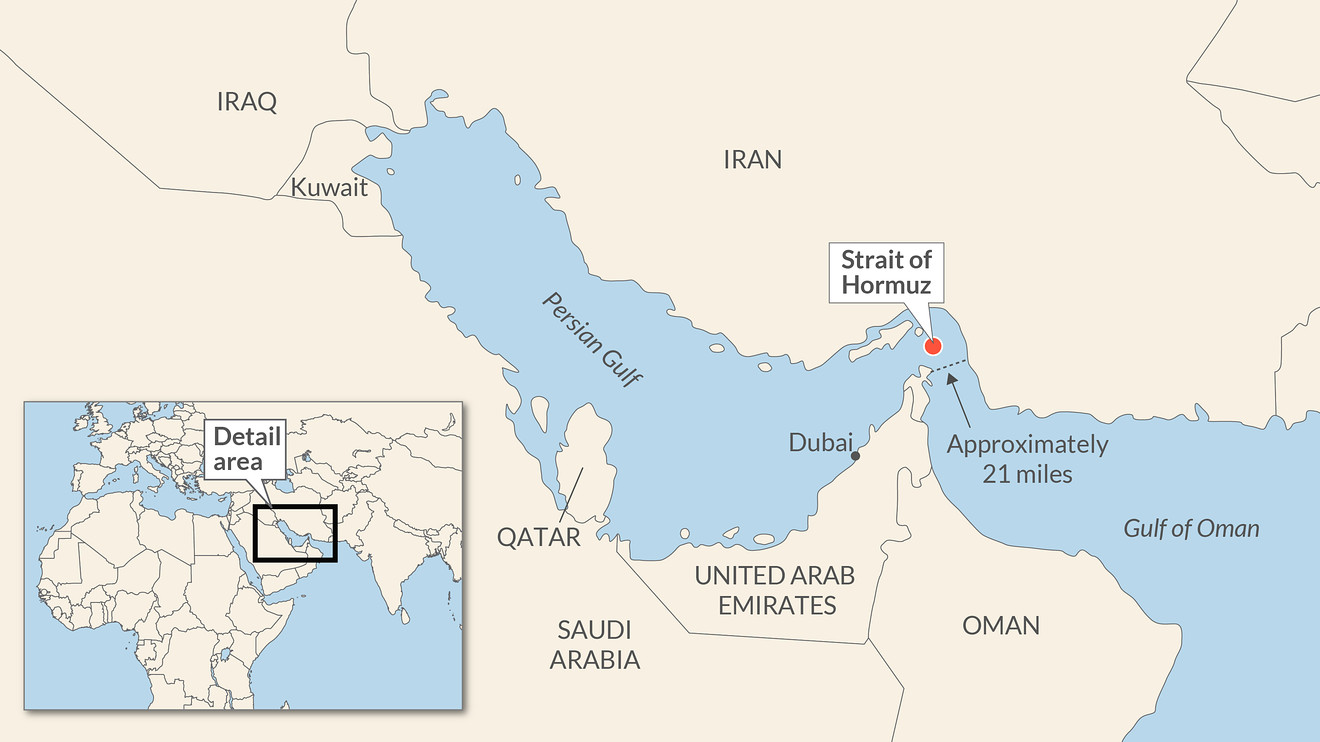
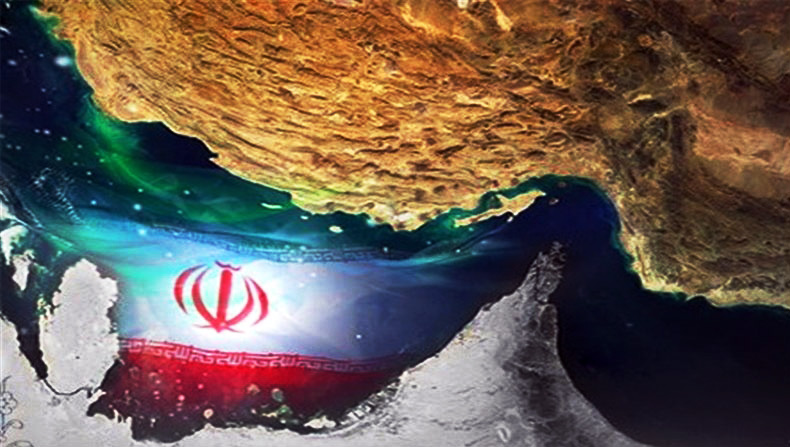
    This map shows how two vital energy bottlenecks in the world, the Strait of Hormuz and Bab al-Mandeb, can become tools of geopolitical pressure and disrupt the flow of global trade due to regional tensions.

    Based on analyses from think tanks such as the Israeli regime’s National Security Studies Institute and Al Jazeera, Iran—through its allied proxy Ansarallah—possesses not only the capability to block alternative energy export routes—such as the East-West pipeline in Saudi Arabia that delivers oil to Yanbu port, which still requires passage through this strait to reach Asia—but also, by forcing vessels to reroute around the Cape of Good Hope, it has increased shipping companies’ operational costs by up to $50 million per week and created the risk of oil prices spiking to $150–200 per barrel.

  • GCC in Turmoil Over the Strait of Hormuz

    GCC in Turmoil Over the Strait of Hormuz

    During the war imposed by the U.S. and the Zionist regime against Iran, the GCC countries as a unified bloc demonstrated a common official stance on certain issues, such as condemning Iranian attacks on their countries, expressing concern over economic damage to oil, trade, and tourism, fearing becoming secondary targets, and welcoming ceasefires. In an emergency meeting of foreign ministers on March 1, 2026, and in subsequent statements, Council members described Iran’s attacks as a “clear violation of sovereignty, territorial integrity, and the principles of good neighborliness.” They reserved their right to self-defense under Article 51 of the UN Charter and declared they would take “all necessary measures” to protect their security, citizens, and territory. However, the forty-day war gradually deepened the internal organizational and structural divisions among the six GCC states — divisions that had been shaped in recent years, particularly after the 2017 Qatar crisis and the emergence of geopolitical rivalry (2025) between Riyadh and Abu Dhabi, especially in Yemen. The main axes of the recent GCC rift can be divided into three spectra based on the type and level of each country’s relationship with the Islamic Republic of Iran, the United States, and the Zionist regime. Within this framework, the six Arab states of the Gulf have adopted three different approaches and strategies. This raises the key question: how can the three strategies adopted by the six GCC member states toward the Ramadan War lead to the deepening or even the breakup of this regional organization?

    Theoretical Framework: Balance of Threat

    In classical realist theory, states are assumed to seek maximum security and to balance against threatening powers. However, the Balance of Threat theory revises this model. According to Stephen Walt’s Balance of Threat theory, states react not merely to “power” but to “perceived threat.” This theoretical framework explains why GCC members, in response to the forty-day war, moved toward divergences and differences in reactions and strategies. The core point of Walt’s theory is that, contrary to popular belief, states do not balance solely in response to increases in others’ power; rather, it is the level of perceived threat that drives states toward balancing. By distinguishing between power and threat, Walt introduces four components as threat factors: 1) aggregate capabilities (population, economic and military power, etc.); 2) geographic proximity (a direct relationship exists between threat perception and proximity); 3) offensive capabilities (the greater a country’s offensive capabilities, the greater the security concerns it raises); and 4) aggressive intentions (states with aggressive intentions pose greater threats than status quo powers). According to Balance of Threat theory, what encourages states to engage in balancing is their perception of one another as threats, not merely the degree of their power. For example, the increase in Iran’s military power is tangible for Oman, but unlike the UAE or Saudi Arabia, Oman has not taken balancing measures because it does not perceive Iran as a threat. In fact, each actor within the GCC has a specific perception of the Iranian threat. Some see Iran as an existential, long-term, and broad threat and call for balancing or strengthening defensive capacities, while others view Iran as a more limited threat and lean toward diplomacy and mediation. The result of these differences is a duality of threat perception and the intensification of internal rifts within the Council.

    Key Findings and Analysis

    Part One: The Ramadan War and the Three Strategies of GCC States

    A. War Containment Strategy: Oman and Qatar

    Qatar and Oman, while condemning attacks against Iran as well as Iranian attacks on Arab countries, consider war escalation dangerous and place primary blame on the war’s instigators — the Zionist regime and the United States. Qatari and Omani officials have argued that Tel Aviv’s strategy is to draw Arab countries into direct confrontation with Iran to wear down both sides and ultimately shift the balance of power in its favor. In essence, Qatar and Oman fall into the category of mediating actors who criticize the continuation of war and escalation of tensions. Among them, Oman holds a more critical view of U.S. and Israeli policies toward Iran. Omani media and officials blamed Washington and Tel Aviv for starting the war without consulting regional countries and criticized the influence of the Zionist regime and regional parties unwilling to censure the United States. Throughout the war and afterward, Muscat has emphasized a policy of diplomacy and maintaining good relations with Tehran. Until Iran’s naval blockade, Oman was even introduced as Tehran’s potential partner in monitoring the Strait of Hormuz. However, while Qatar falls within this spectrum, it has adopted a more contradictory and paradoxical policy compared to Oman. On one hand, it allowed the U.S. to conduct operations from its soil; on the other, it maintained historical ties with Iran, avoided directly condemning the U.S. and Israel, and pursued mediation between Iran and the U.S. In this context, it described the ceasefire as an initial step toward de-escalation and called for immediate dialogue between the two sides.

    B. War Escalation Strategy: United Arab Emirates and Bahrain

    Among the six GCC states, the UAE adopted the harshest stance during the forty-day war and also suffered the most attacks. The UAE closed its embassy in Tehran and emphasized strengthening ties with the U.S. and Israel. Abu Dhabi concluded during the war that past efforts to re-engage with Tehran were insignificant and that there was no value in moving away from the Abraham Accords. The UAE also called for war escalation and declared its readiness to join military efforts to confront Tehran and end Iran’s ability to control and manage the Strait of Hormuz. Yousef Al-Otaiba, UAE ambassador to Washington, wrote an op-ed in the Wall Street Journal in the midst of the Ramadan War titled “The UAE Stands Up to Iran,” calling for a more decisive approach. He claimed, “Iran’s nuclear capabilities have been damaged and its allies weakened, but more must be done to completely eliminate its missile and drone threat,” arguing that the current war requires an end that eliminates Iran’s long-term threat. He also announced his country’s readiness to join an international initiative to reopen and secure the Strait of Hormuz. Anwar Gargash, diplomatic advisor to the UAE president, also stated, “We did not want the war, but we won it,” and called for long-term guarantees against Iran’s nuclear, missile, and regional allies. In recent years, the UAE has had its eyes on the three islands — Greater Tunb, Lesser Tunb, and Abu Musa — and views weakening or defeating Iran in war as the best option to gain control of these strategic islands. Therefore, it sought to draw the U.S. into a war in the southern Persian Gulf to occupy the three islands. The UAE had previously conducted extensive military exercises to seize similar points. A ceasefire and the end of the war would thus thwart its ambitions to control these islands. In this regard, the UAE’s Mirage fighter jet attack on Lavan Island, carried out hours after the ceasefire announcement, can be seen as an attempt to sabotage the de-escalation and ceasefire process.

    Alignment of Bahrain

    On the other hand, Bahrain, which joined the Abraham Accords alongside the UAE in 2020, pursued a policy fully aligned with the UAE during the war. Bahrain, which hosts the U.S. Fifth Fleet, called Iran’s attacks on its territory “treason” and pursued a Chapter VII Security Council resolution authorizing the use of force, which was vetoed by Russia and China. In effect, Bahrain and the UAE pursued a strategy of crisis escalation and weakening Iran during the forty-day war.

    C. War Insulation Strategy: Saudi Arabia and Kuwait

    Saudi Arabia and Kuwait adopted a risk coverage and insulation strategy during the forty-day war. They avoided open alignment but facilitated U.S. military operations behind the scenes. Saudi Arabia, which had improved its ties with Tehran after the Beijing agreement, followed a dual approach but one leaning closer to the UAE. Nevertheless, Riyadh adopted a more balanced approach compared to Abu Dhabi. Although Saudi Arabia allowed U.S. forces to use its bases, it refrained from directly responding to Iran. Saudi officials condemned Iranian attacks on Riyadh and eastern Saudi Arabia, expelled some Iranian diplomats, and issued limited diplomatic warnings, but unlike the UAE, did not call for continuing or escalating the war, nor did they promise to join the U.S. and Israeli campaign. In fact, Riyadh pursued a regional diplomacy approach, maintaining dialogue with Iran to prevent escalation, and implicitly supported Pakistan’s mediation efforts to reduce tensions.

    Kuwait Following Saudi Arabia

    Kuwait also followed a policy aligned with Saudi Arabia, adopting a strategy of compliance and accompaniment with the U.S. Although Kuwait, like the other five GCC members, denies that the U.S. launched military operations from its soil or airspace on February 28, according to France 24, after Iran’s attacks, Kuwait allowed the U.S. to use its facilities for missile strikes. As a result, after the UAE, Kuwait suffered the heaviest blows from Iranian attacks during the conflict among Gulf states. Hence, to insulate itself and manage risk, Kuwait sought to reduce the intensity of the war. In this regard, Kuwait’s crown prince, in a phone call with Pakistan’s prime minister, supported Islamabad’s mediation efforts between Iran and the U.S. to stop the war.

    Part Two: Impact of the Three Strategies on the GCC’s Internal Rift

    Disagreements among the six states over relations with the Zionist regime, level of cooperation with the U.S., and how to deal with Iran have made solidarity and unity nearly impossible. On one hand, Oman and Qatar insist on engagement and mediation, viewing Iran as a neighbor manageable through diplomacy. On the other hand, the UAE, Saudi Arabia, Bahrain, and to some extent Kuwait, regard Iran as a threat to their national security and interests. Therefore, it appears that in the medium term, further rifts may emerge among GCC countries as a single bloc, including between the UAE and Oman.

    Divergent Stances of Kuwaiti and Omani Celebrities

    The worldviews of GCC states regarding the war have also differed. Mishari Al-Afasi, a Kuwaiti reciter, produced an anti-Iranian work titled “Tabbat Yada Iran wa Man Ma’aha” (Perish the hands of Iran and those with them), attempting to shape public opinion in GCC states against Iran. However, the video’s release was met with widespread backlash from Arab social media users, who responded with similar language, writing, “Perish the hands of Israel, America, and those with them.” On the other hand, Sheikh Ahmed Al-Khalili, the Grand Mufti of Oman, expressed support for the Resistance Axis led by Iran in its all-out battle against American-Zionist aggressors. Meanwhile, on Eid al-Fitr, the people of Sur in southeastern Oman gathered in a public rally, reciting poetry to express their support and solidarity with the Iranian nation and fighters in their battle against the U.S. and the Zionist regime.

    Emirati and Saudi Criticism of U.S. Policy

    While some GCC states have asked the U.S. to find an exit from the war, others have advised intensifying strikes to overthrow the Iranian government. These contradictory preferences among Council members indicate a process of fragmentation. There is also sharp disagreement among Gulf Arab elites regarding the future of U.S. bases in the region and hosting them. Some argue that these bases, rather than guaranteeing GCC security and stability, have become a source of instability. Abdulkhaleq Abdullah, a UAE university professor and former advisor to the UAE president, said, “The UAE no longer needs America to defend itself… What the UAE needs is merely to obtain the best and newest weapons that America has. So, it is time to think about closing U.S. bases, because they are a liability, not a strategic asset.” In contrast, Mamdouh Al-Muhaini, director of Saudi Arabia’s Al-Arabiya and Al-Hadath networks, wrote in an article in Asharq Al-Awsat titled “Destroying Relations Between Gulf Countries and America”: “Relations with America are important and strategic, and this relationship must extend not only to military and political dimensions but also to all economic and cultural aspects.”

    Joining External Alliances

    After the start of the Ramadan War, some GCC states have taken steps to join alliances outside the GCC framework. Saudi Arabia and Qatar seek to join an Islamic bloc comprising Pakistan, Turkey, and Egypt. Although the Saudi kingdom will continue to seek U.S. support, it is also trying to complement this dependence by deepening regional ties with Egypt, Pakistan, and Turkey, as well as increasing reliance on China. Shortly after the war began, Egypt, Pakistan, Saudi Arabia, and Turkey held an emergency meeting of foreign ministers of Islamic countries. If this axis’s cooperation deepens, it could create strategic weight beyond the GCC and the U.S. security umbrella for Saudi Arabia and Qatar.

    The Zionist Tinge of Abu Dhabi and Manama

    The UAE and possibly Bahrain may officially join Netanyahu’s envisioned “Hexagon” axis or the “Abraham Bloc” in the future. In any case, the Zionist regime and the level of ties with it have been a source of division within the GCC. Although the UAE and Bahrain have maintained their relations, other GCC members view the Zionist regime’s hegemonic ambitions with serious concern. This conflict of interests and clash of perspectives makes strategic convergence and unity among the six countries nearly impossible.

    Strategic Conclusions and Recommendations

    While GCC states quickly aligned at the start of the Ramadan War under a common crisis, the sustained pressure and cost of war have driven them toward divergent paths. The UAE, Saudi Arabia, Bahrain, and Kuwait have moved toward a policy of “hard containment,” while Qatar and Oman continue to insist on “engagement and mediation.” This rift directly serves Iran’s interest in creating division. Another major consequence of the war for GCC states is the absolute discrediting of the U.S. security umbrella. U.S. bases, long seen as sources of deterrence and protection, have now become a liability, turning Arab countries into direct targets. Donald Trump’s erratic and unpredictable behavior reinforces the feeling that Washington is no longer reliable. Therefore, it is plausible that the leaders of these countries, after witnessing America’s inability to prevent the destruction of critical infrastructure, may seek new partners such as Russia and China. They may also turn to countries like Ukraine, Turkey, Canada, and South Korea to bolster their defense capabilities, including in the drone sector. It is worth noting that this search for new allies to reduce absolute dependence on the U.S. aligns with Iran’s national interests and security. Finally, it must be noted that GCC unity has always been reactive and has rarely translated into long-term strategy. Although the GCC is not currently disintegrating or collapsing, it is revealing the limits of the organization’s cohesion and solidarity as a strategic concept.

    Regarding strategic recommendations for deepening the rift and preventing GCC cohesion, Iran can take the following steps: expanding political, economic, and military ties with Oman and improving relations with Qatar; preventing convergence and attempting to sow discord between the UAE and Saudi Arabia through social media; and threatening GCC countries over granting military bases to the U.S. or the Zionist regime.

  • Naval Operation to Control the Strait of Hormuz – Vessels Targeted by Iran from the Start of the War until May 15, 2026

    Naval Operation to Control the Strait of Hormuz – Vessels Targeted by Iran from the Start of the War until May 15, 2026

    Accordingly, since the beginning of the war, 50 military and commercial vessels linked to the US and the Zionist regime, as well as violating vessels, have been attacked and struck in the Persian Gulf, the Gulf of Oman, and the Strait of Hormuz. In addition, four violating vessels have been seized by Iran’s naval special forces and transferred to Iranian shores.

    The information on the vessels attacked and seized is as follows:

    Vessels that have been attacked:
    1- Cargo ship AYE H on February 28, 2026, near Zirku Island, Abu Dhabi
    2- Oil tanker OCEAN ELECTRA on March 1, 2026, 35nm off Sharjah
    3- Oil tanker SKYLIGHT on March 1, 2026, 5nm north of Khasab
    4- Oil tanker HERCULES STAR on March 1, 2026, 17nm off Port Saqr
    5- Oil tanker MKD VYOM on March 1, 2026, 17nm northwest of Port Saqr
    6- Oil tanker SEA LA DONNA on March 1, 2026, 35nm west of Sharjah
    7- Oil tanker STENA IMPERATIVE on March 2, 2026, off the coast of Bahrain
    8- Bitumen/Asphalt tanker ATHE NOVA on March 2, 2026, 50nm off Muscat
    9- Bulk carrier GOLD OAK on March 4, 2026, 7nm east of Fujairah
    10- Tanker LIBRA TRADER on March 4, 2026, 10nm east of Fujairah
    11- Container ship SAFEEN PRESTIGE on March 4, 2026, Strait of Hormuz
    12- Bulk carrier PELAGIA on March 4, 2026, 137nm east of Muscat
    13- Container ship MSC GRACE on March 4, 2026, 20nm west of Dubai
    14- Oil tanker SONANGOL NAMIBE on March 4, 30nm off Mubarak Al-Kabeer
    15- Tugboat MUSSAFAH 2 on March 6, 2026, in the Strait of Hormuz
    16- Oil tanker LOUIS P on March 7, 2026, near Al Jubail, Saudi Arabia
    17- Oil tanker PRIMA on March 7, 2026, in the Strait of Hormuz
    18- An unidentified vessel on March 7, 2026, in the Strait of Hormuz
    19- Drilling Jack Up ARABIA III on March 7, 2026, near Al Jubail
    20- Bulk carrier GH KAHLO on March 10, 2026, 36nm north of Abu Dhabi
    21- Bulk carrier MAYUREE NAREE on March 11, 25nm off Ras Al Khaimah
    22- Bulk carrier STAR GWYNETH on March 11, 2026, near the UAE
    23- Container ship ONE MAJESTY on March 11, 2026, 50nm north of Dubai
    24- Oil tanker ZEFYROS on March 11, 2026, off the coast of Kuwait
    25- Oil tanker SAFE SEA VISHNU on March 11, 5nm off the coast of Basra
    26- Container ship SOURCE BLESSING on March 12, 2026, near Jebel Ali
    27- Oil tanker GAS AL AHMADIAH on March 17, 2026, 23nm east of Fujairah
    28- Coastal vessel HALUL 69 on March 19, 2026, 4nm off Ras Laffan
    29- Oil tanker Parimal on March 18, 2026, 11nm east of Khor Fakkan
    30- Bulk carrier PHOENIX on March 21, 2026, 15nm off Sharjah
    31- Oil tanker AL SALMI on March 30, 2026, at Dubai Port
    32- Container ship EXPRESS ROME on March 30, 2026, near Ras Tanura
    33- Container ship HAIPHONG EXPRESS on March 30, 2026, at Dubai Port
    34- Oil tanker AQUA 1 on April 1, 2026, 17nm north of Doha
    35- Container ship MSC Ishyka on April 4, 2026, off the coast of Bahrain
    36- Container ship GFS PERFECT on April 5, 2026, near Khor Fakkan
    37- Container ship QINGDAO STAR on April 5, 2026, near Jebel Ali Port
    38- Container ship SDN7 on April 6, 2026, location unknown
    39- Unknown vessel on April 7, 2026, 25nm south of Kish Island
    40- Oil tanker SANMAR HERALD on April 18, 2026, in the Strait of Hormuz
    41- Bulk carrier AGJ ARNAV on April 18, 2026, in the Strait of Hormuz
    42- Cruise ship MEIN SCHIFF 4 on April 18, 2026, near the Strait of Hormuz
    43- Container ship CMA CGM Everglade on April 18, 2026, Strait of Hormuz
    44- Container ship Euphoria on April 22, 2026, in the Strait of Hormuz
    45- Cargo ship HMM Namu on May 3, 2026, north of Umm Al Quwain
    46- Unidentified bulk carrier on May 3, 2026, near Sirik
    47- Oil tanker BARAKAH on May 3, 2026, off the coast of Khasab
    48- Oil tanker JV INNOVATION on May 4, 2026, near Ras Al Khaimah
    49- Container ship CMA CGM San Antonio on May 5, 2026, Strait of Hormuz
    50- Container ship Safesea Neha on May 10, 2026, near Qatar

    Vessels that have been seized:
    1- Container ship Epaminondas on April 22, 2026, near Sirik
    2- Container ship MSC Francesca on April 22, 2026, near Sirik
    3- Oil tanker Ocean Koi (Jin Li) on May 8, 2026, in the Gulf of Oman
    4- Support vessel Hui Chuan on May 14, 2026, 38nm off Fujairah

    Iran’s operations have been carried out using USVs, suicide drones, naval cruise missiles, anti‑ship ballistic missiles, assaults by armed boats, and other means. It is also worth noting that Iran’s attacks have so far resulted in the sinking of one tugboat, the complete destruction and disabling of 17 ships, and damage of various levels to another 32 ships.

    It is essential to note that Iran’s naval operations in southern waters have yielded very important political, economic, military, and other results, challenging countries around the world. The Strait of Hormuz is one of the world’s most vital waterways, through which at least one third of the world’s total commercial energy – including oil and gas products – passes. By managing this strategic chokepoint, Iran has gained a very strong strategic lever to counter the oppressive sanctions of the US regime.

  • U.S. Navy Says Iran Attempted To Seize Two Oil Tankers Near Strait of Hormuz

    U.S. Navy Says Iran Attempted To Seize Two Oil Tankers Near Strait of Hormuz

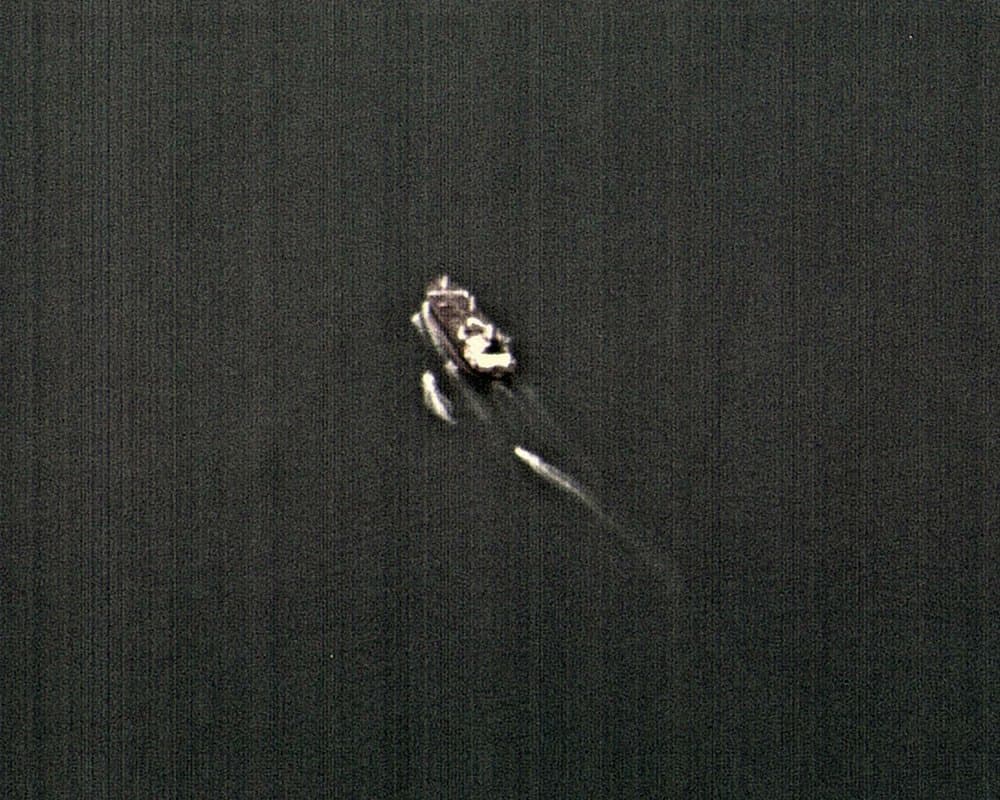
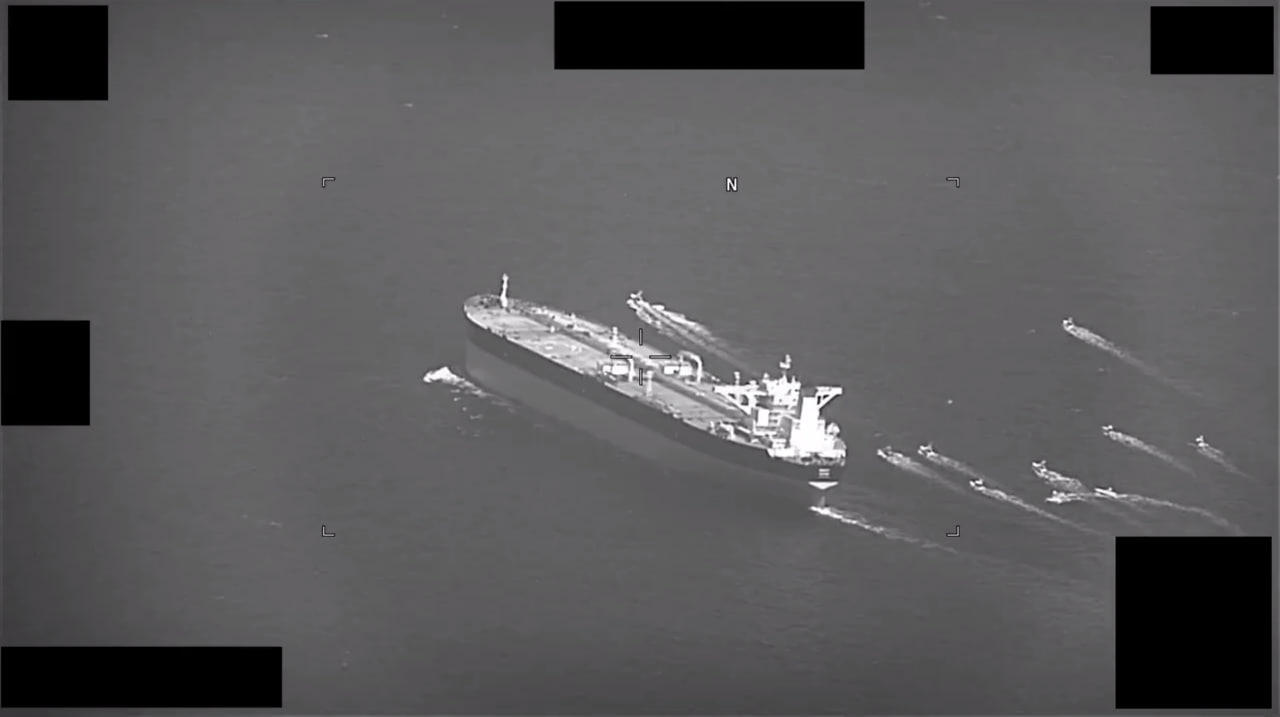
    A spokesman for the Bahrain-based 5th Fleet said that Iranian naval vessels backed off after the U.S. Navy responded, and both tankers continued their voyages.

    “The Iranian navy did make attempts to seize commercial tankers lawfully transiting international waters,” said the spokesman, Tim Hawkins. “The U.S. Navy responded immediately and prevented those seizures.”

    The spokesman added that the Iranian vessels opened fire at the second tanker, but did not cause casualties or major damage.

    Ambrey, a maritime intelligence service, said the tanker that was fired upon was a Bahamas-flagged, Greek-owned, U.S. managed crude oil tanker transiting from the United Arab Emirates to Singapore. It said the incident happened 28 nautical miles northeast of Muscat, the capital of Oman.

    The U.S. announced on May 12 that it will increase the rotation of ships and aircraft patrolling in and around the Strait of Hormuz.

    The decision was a response to the seizure of two oil tankers by Iran on April 27 and May 3. The tankers were captured in response to the seizure of a China-bound Iranian oil shipment by the U.S. near southern Africa on April 22, according to a report by Reuters.

    Iran is yet to comment on the new alleged incidents. Overall, tensions in the Strait of Hormuz will likely rise even more after the U.S. claims.

    Source: SouthFront.org

  • United States: IRGC Boats Harass British Ships!

    United States: IRGC Boats Harass British Ships!

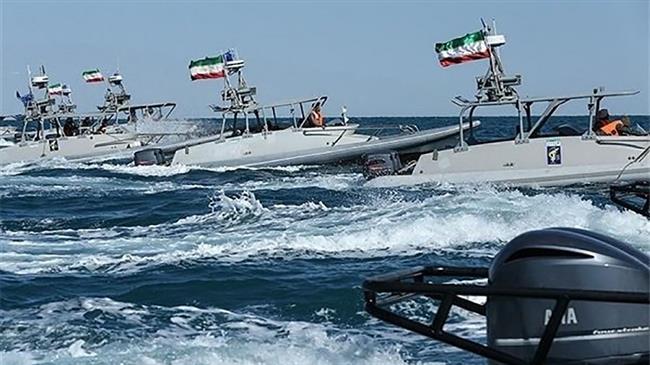
    The Fifth Fleet of the terrorist US Navy, which is based in Bahrain, alleged in a statement that three Iranian IRGC boats harassed a commercial vessel in the Strait of Hormuz in the Persian Gulf.

    The US Fifth Fleet went on to say that the IRGC boats moved back after the British Royal Navy had an emergency contact with the US Navy.

    The news story has been released in a situation that on June 4, the United States’ military officials expressed dissatisfaction on Iran’s plan to form a maritime coalition with regional states.

    Read more: Arab Littoral States Of Persian Gulf, Iran To Form Joint Naval Force

    US 5th Fleet spokesperson Commander Tim Hawkins claimed in an interview with Western media outlets on Sunday that the number one country, which is behind of instability in the region (Iran) alleges that it wants to form a maritime alliance to protect waters that they themselves threaten!

    He further claimed that this argue is not coherent, because Iran attacked 15 international-flagged commercial vessels over the past two years and it seized some of them; therefore, these actions are important and that is why we are strengthening our defense around the Strait of Hormuz along with our partners.

  • Iran Seizes Oil Tanker In Strait Of Hormuz (Video)

    Iran Seizes Oil Tanker In Strait Of Hormuz (Video)

    According to the report, the oil tanker was passing through the Strait of Hormuz with the flag of Panama, when it was seized by the IRGC forces at 6:20 a.m. local time on Thursday.

    The commander of the US Navy’s Central Command reported that the oil tanker named “Niovi” had left the port of Dubai and was sailing towards Fujairah, another port in the United Arab Emirates (UAE).

    The IRGC naval forces approached the oil tanker by the use of speed boats in the middle of the Strait of Hormuz and forced the tanker to change course and move towards Iranian territorial waters off the coast of Bandar Abbas.

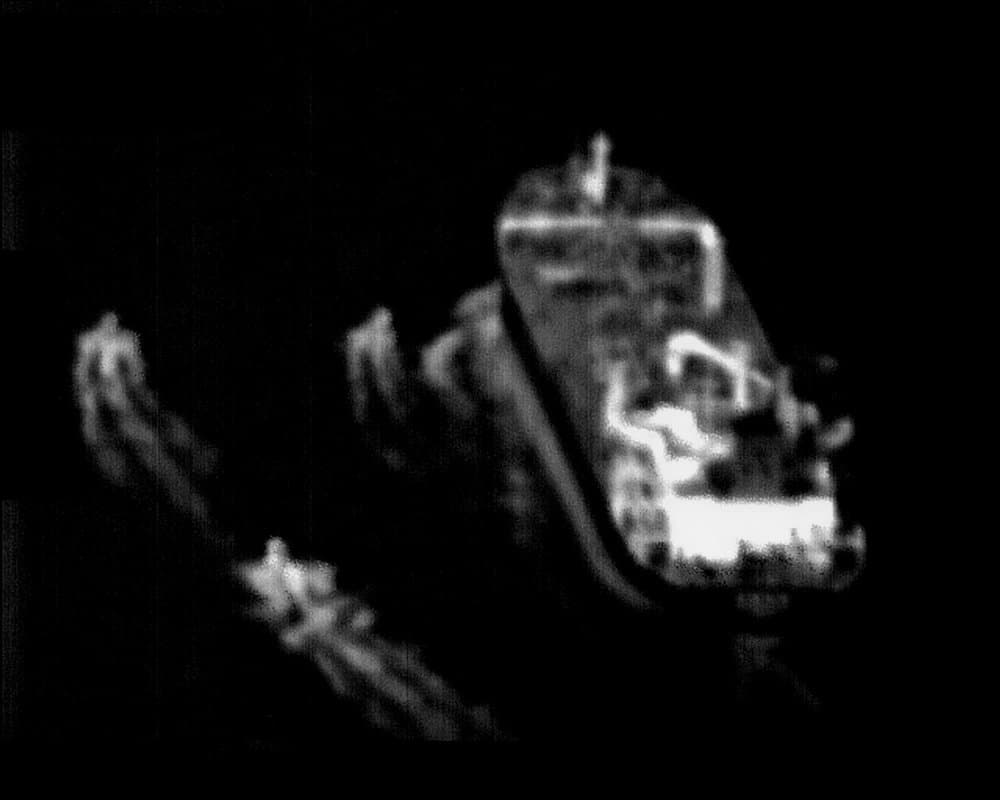
    The seizure of an oil tanker by the IRGC in the Strait of Hormuz

    Following the seizure of the oil tanker, the Tehran prosecutor confirmed that the ship had been seized by the IRGC naval forces after a plaintiff filed a lawsuit and the judicial official ordered a prosecution.

    It is worth mentioning that the Islamic Republic of Iran Army forces seized another vessel called “Advantage Sweet” after colliding with an Iranian boat that caused several Iranian crew members to go missing or get injured in the Sea of Oman on April 27.

    Read more: Iran Seized A US-Bound Oil Tanker In Gulf Of Oman (Video)

  • IRGC unveiled new details of downed US BAMS-D RQ-4A drone + Video

    IRGC unveiled new details of downed US BAMS-D RQ-4A drone + Video

    Based on available evidences and what Gen. Hajizadeh said, the major parts of this advanced UAV have been pull out of the depth of sea by the Iranian navy, and very valuable information of the remained pieces were gained by Iranian armed forces.
    Gen. Hajizadeh said that the Americans should draw a red line on this drone, because Iran has accessed to all of its dimensions and this drone is actually inefficient against Iran, and Iran can make this drone useless from thousands of kilometers.
    He said in the attack on Ain al-Asad and the cyber war that was done against American drones, a little part of Iran’s achievements in this regard was been showed.
    He said also that there are so much other information about Iran’s missile attack on Ain al-Asad, that has not been publicly announced yet, and will be announced by the IRGC in the future.

  • How Did Iran Warn Israel?

    How Did Iran Warn Israel?

    One is to neutralize the relations with Emirs of the region in despite of their public opinion. Second is that the Israel is showing power and sending the message that Tel Aviv is an important player in the security of the region! And finally by presenting in waters near Iran, to show grimace to Iran.
     
    Iran’s stance was described in several forms. One was the statement by Foreign Ministry full of warning using a diplomatic speech, the second was through intelligence and security means that a European country is always involved and in public, a commander gave strict and detailed explanation in case of such presence. The person is the commander of IRGC Navy who counted all the points in an interview with Al Mayadeen network and emphasized that Strait of Hormuz is Iran’s main security loop.
     
    Gen. Tangsiri counted different scenarios of UK and USA and mentioned: UK and USA to legalize their presence in Persian Gulf design different scenarios; by forming an illegal coalition try to pursue their plans; USA and UK should take the responsibility of presence of Zionist Regime in Persian Gulf; we, IRGC Navy, are responsible for the security of the Persian Gulf and Strait of Hormuz and don’t need presence of foreigners; slightest presence of Zionist Regime in Persian Gulf is illegal and can lead to a war in the region.
     
    He was talking as the commander of IRGC Navy and relayed the clear message to everyone via Al Mayadeen network. If Zionist Regime put steps in Persian Gulf, there will be war. The message not only has enough explicitness, considers USA and UK responsible for any tension. He then explains the possible scenarios in case Zionist Regime dares to step inside.
     
    Pay attention to these sentences: “Anytime Iran want to seize any ship, it can, even if it is American or British; we arrested some British and American soldiers before, if Americans and British could protect their ships, they would protect themselves; Iran is the leader of security in Persian Gulf but it depends on our oil export and using the region. We keep Persian Gulf secured until our security is not violated.”
     
    In addition to possibility of a war in case of Zionist Regime presence in the region, USA and UK naval presence could also have severe consequences for them. Detaining tankers and other ships is a possibility any moment, even arresting American and British troops. If before, they were set free, this time it is less likely. Commander of IRGC Navy emphasized that anytime Iran’s oil export is interrupted, the security of Persian Gulf is not provided by us. This is an important sentence needs more analyzing.
     
    Different messages relayed using diplomatic and security means, does not contain more. Warning of a war in case of Zionist Regime presence is a big warning to the countries of the region as well. Saudis and Emiratis, whose securities are weak, will take the biggest blows in case of Zionist Regime presence in Persian Gulf, since any war wipe them completely. We should wait and see if Zionist Regime is still willing to participate in USA and UK coalition and after these warnings, do other sides change their minds?

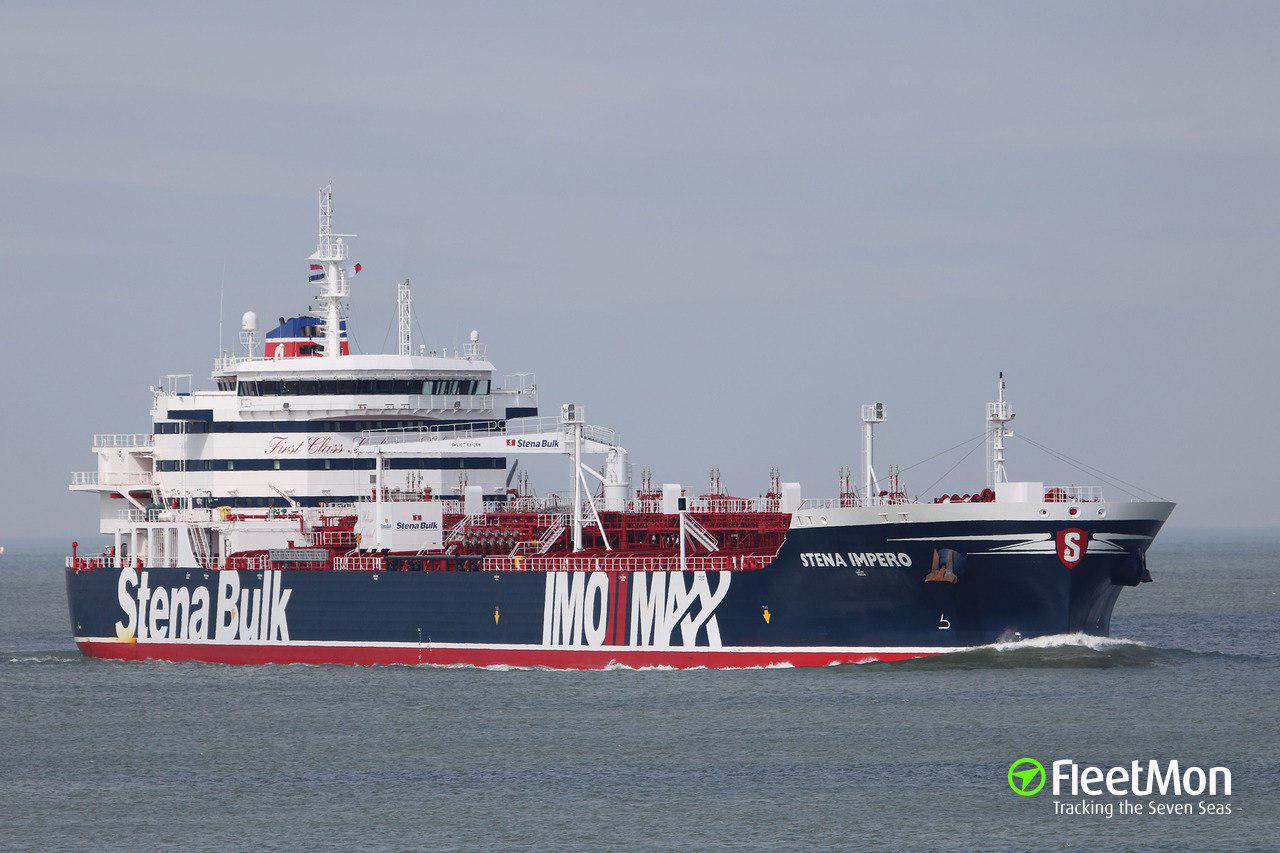
  • First British Ship Sailed the Strait of Hormuz After Detention of Stena Impero; Iran Is the Security Provider in Persian Gulf Not Western Warships!

    First British Ship Sailed the Strait of Hormuz After Detention of Stena Impero; Iran Is the Security Provider in Persian Gulf Not Western Warships!

    The ship sailed through the Strait of Hormuz while UK asked all the British ships to halt sailing through the Strait of Hormuz for now.
    It is said that the ship was escorted indirectly by British HMS Montrose.
     
    Some points regarding the news:
    – Considering that the Department for Transport in London has raised the security level for British-flagged shipping to Level 3 in Iran’s waters, British ships still take the risk to sail through these waters. Since the world needs the energy of the biggest energy provider of the world, i.e., Persian Gulf. Thus, ships need to sail through the Strait of Hormuz and accept Iran’s requirements, even if USA or UK warn about it.
     
    – Regarding the warships which provide so called escort for trading shops in Persian Gulf. The number of ships sailing through the Strait of Hormuz and Persian Gulf are very high, how many ships can these warships escort? Indeed the capability of these warships to cover the whole area and all ships is very limited and insufficient.
    Therefore, if Iran wants to perform an operation against any ship in the Persian Gulf and the Strait of Hormuz, Western and Eastern vessels cannot do much about it.

    A ready example is detention of Stena Impero. According to UK’s proclaim, a few days before the incident, IRGC naval force wanted to detain British Heritage which was unsuccessful due to HMS Montrose’s interference.
    Even if we accept the proclaim, what happened next? Another British tanker was detained by Iran shortly after. In the same day that Stena Impero was detained two more ships were halted but then released by Iran.
    It is true for all the ships in Persian Gulf and Iran is the provider of security of maritime in Persian Gulf and not British or other Western countries’ military vessels.
    If no more ships have been detained or won’t, it is only since Iran does not have the intention not that it cannot. Detention of Stena Impero was a clear message to western countries specially UK and US and Iran is basically not adventurous like USA and UK.
     
    As Iran sent a message on channel 16 that “If you need help call Iran’s vessels.”, the security of Persian Gulf is to be provided by Iran and no need for Western warships.
     

    Image of British Heritage which shows HMS Montrose is preventing its detention.

  • New Details on British Tanker Detention + Video

    New Details on British Tanker Detention + Video


    IRGC spokesperson stated today:
    – British Tanker “Stena Impero” under escort by British warship ignoring international laws of maritime was entering the Strait of Hormuz. Hormuzgan’s Ports and Maritime Administration requested IRGC first zone command to detain the ship.
     
    – British tanker against maritime rules switched off its navigation system and instead of taking the entrance route, took exit route of the Strait of Hormuz from south.
     
    – After ignoring IRGC numerous warnings and even interference of the British warship by flying 2 helicopters attempting to arrest IRGC marine troops, which were confronted by our troops and the ship was escorted to the harbor for inspection and lawful acts.
     
    – We act seriously in enforcing our sovereignty and law in Persian Gulf and the Strait of Hormuz.

  • British Oil Tanker “Stena Impero” Seized By Iran

    British Oil Tanker “Stena Impero” Seized By Iran

    This tanker departed from Al Fujairah in UAE to Saudi Arabia which was halted by IRGC special forces in Strait of Hormuz and escorted to Iran’s water.
     
    Important point is that the operation was done while British warship HMS Montrose is deployed to the region after Iranian tanker was detained in Gibraltar, to protect British ships. Today’s IRGC operation in complete silence of HMS Montrose means a complete defeat for British Navy.
     
    Unofficial news claim that the operation was done using a helicopter and several fast boats and there are 23 sailors off the deck of the tanker.