Tag: Unit 8200

  • Endless Cyber Conflicts: From Tehran to Tel Aviv

    Endless Cyber Conflicts: From Tehran to Tel Aviv

    The Twelve‑Day Cyber War
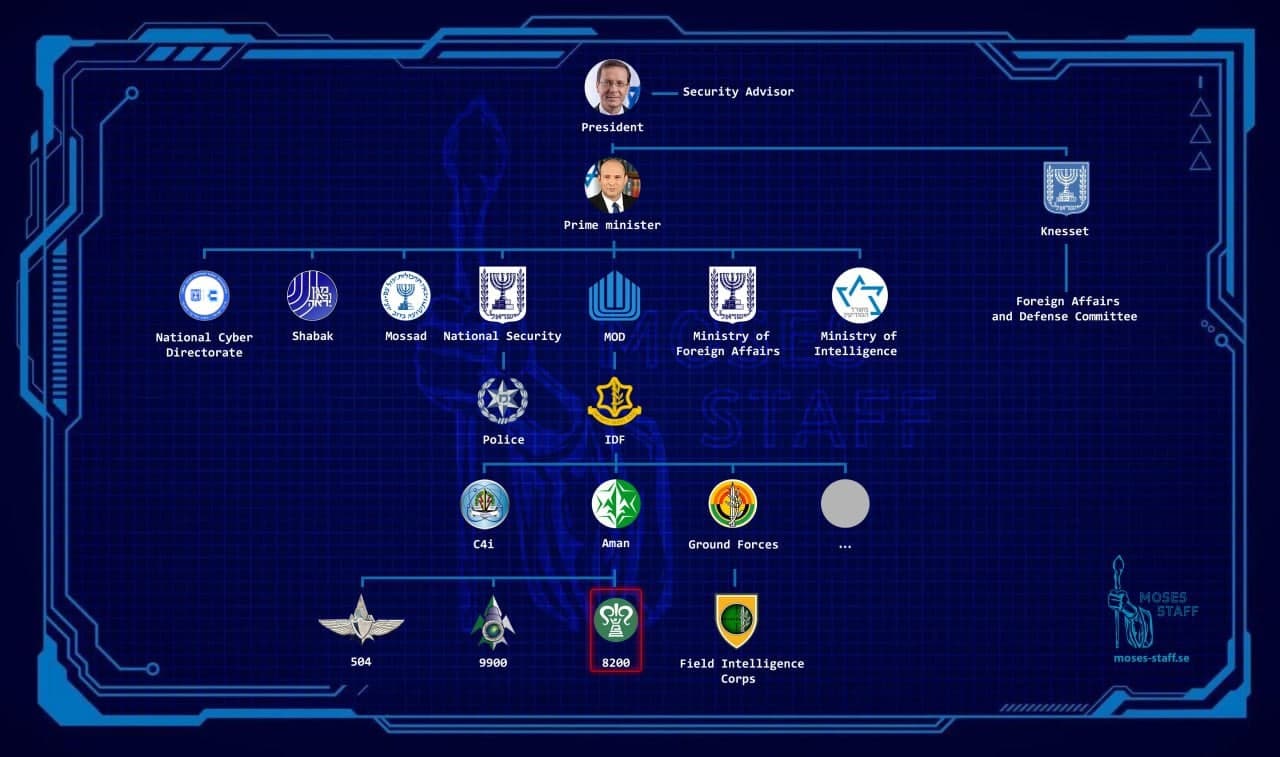
    The twelve‑day conflict between Iran and Israel, which took place from June 11 to 17, marked a turning point in the history of Middle Eastern cyber warfare. Initiated by Israel’s Operation “Rising Lion”, the confrontation saw a 700 percent increase in cyberattacks against Israeli infrastructure. Unit 8200, the largest military unit within Israel’s Defense Forces and often compared to the U.S. NSA or the UK’s GCHQ, played a pivotal role. Responsible for clandestine operations, SIGINT collection, codebreaking, counter‑espionage, cyber warfare, and surveillance, Unit 8200 has become one of the most sophisticated cyber units globally. Its importance is underscored by the fact that its veterans founded companies such as Check Point, CyberArk, Claroty, CyCognito, and Palo Alto Networks, which both support national security and serve as instruments of Israel’s cyber soft power abroad.

    Unit 8200’s Role in the Twelve‑Day War
    During the June 2025 conflict, Unit 8200 carried out a wide range of cyber operations against Iran. According to CloudSEK, between June 11 and 17, more than 35 pro‑Iranian hacker groups launched coordinated cyberattacks on Israeli military, governmental, and infrastructure targets. In response, Israel activated only four to five groups, but the sophistication of Unit 8200 and affiliated groups such as Predatory Sparrow far outweighed sheer numbers. This group, regarded as the successor to INDRA, employed unique cyberattack methods against Iran’s critical infrastructure, having previously inflicted significant damage on rail systems, steel plants, and fuel stations. Israel’s National Cyber Directorate (INCD) reported that in 2024, the number of alerts doubled, with cyberattack damages estimated at over $3 billion. These figures highlight the unprecedented intensity of the conflict, which went far beyond simple DDoS attacks or website defacements, encompassing complex intrusions into critical infrastructure, theft of sensitive data, and disruption of industrial systems.

    Technological Transformation and AI Tools
    One of Unit 8200’s most significant advancements has been the development and deployment of advanced artificial intelligence systems. According to The Guardian and +972 Magazine, Unit 8200 is building a large language model (LLM) similar to ChatGPT, trained on millions of intercepted Arabic conversations from Palestinians. Still in its training phase, this AI tool is designed to analyze, translate, predict, and summarize text, dramatically enhancing the unit’s surveillance and intelligence capabilities. INCD’s new strategy for 2025–2028 includes the creation of a “Cyber Dome”, an AI‑based national cyber defense system aimed at countering growing threats from Iran and Hamas. At a conference in Tel Aviv, Unit 8200’s commander revealed that AI technology had already been used to select Hamas targets. Reports also indicate that Microsoft and other major U.S. tech firms have supported Unit 8200 by providing Azure cloud services, enabling the migration of 70 percent of sensitive data to the cloud. This reflects the deep integration of Western technologies into Israel’s cyber warfare structure.

    Analysis of Tactics and Operational Methods
    In the twelve‑day war, Unit 8200 employed a wide array of advanced tactics, showcasing significant evolution in cyber warfare methods. According to Dark Reading, the attacks against Iran unfolded in three distinct phases: the first marked by massive DDoS waves and initial intrusion attempts; the second focused on targeting managed service providers (MSPs); and the third, ongoing phase, characterized by slower but far more sophisticated operations.

    Iranian attackers, who previously relied on outdated malware and easily blocked scripts, have shifted to using remote management tools (RMMs) and legitimate Windows software, making detection and blocking far more difficult. Exploitation of zero‑day vulnerabilities, which once took days or weeks, now occurs within 30–40 minutes.

    This dramatic increase in speed and efficiency reflects growing cooperation among Iran‑aligned groups, with shared intelligence, infrastructure, and R&D capabilities. In response, Unit 8200 has deployed advanced tools to target high‑value and unconventional assets.

    Strategic Consequences and Regional Impact
    The twelve‑day cyber war had profound strategic implications for the Middle East. According to the Lieber Institute, in the six months following the Gaza war’s outbreak in October 2023, about 60 percent of Iran’s cyber operations were directed against Israel, intensifying across all fronts from espionage to infrastructure attacks. This escalation was reinforced by Tehran’s allies in Lebanon, Iraq, and Syria. Israel’s National Cyber Directorate, which issued 367 alerts in 2023, raised the figure to 736 in 2024, including 518 high‑priority “red alerts.”

    With much of Iran’s defensive infrastructure destroyed and several senior military officials killed by Tel Aviv’s air campaign, Tehran’s strategic options have been significantly constrained. This operational damage reduces the feasibility of a major conventional response in the short term, making asymmetric tools—especially cyber warfare—far more attractive. Meanwhile, Saudi Arabia and the UAE, scarred by the Shamoon attack that wiped 30,000 computers and temporarily crippled Saudi Aramco, are increasingly turning to cyber capabilities as instruments of national security. Western states, on the other hand, continue to portray Iran as a disruptive actor in this domain, though experience shows Israel does not wait passively—conducting periodic attacks reminiscent of the Stuxnet virus.

    Below, three possible scenarios for the evolution of this new type of warfare are outlined:

    Scenario One: AI‑Driven Cyber War
    In the first scenario, Unit 8200 leverages its advances in artificial intelligence to enter a new phase of cyber warfare. Once its developing LLM is completed and operational, the unit will be able to process vast amounts of surveillance data in real time. This capability will enable faster target identification, more accurate enemy movement predictions, and automated cyber operations. The planned AI‑based Cyber Dome (2025–2028) could evolve into a multilayered defense system that not only repels attacks but also acts preemptively against potential threats. In this scenario, Unit 8200 is expected to use deep learning algorithms to detect complex patterns in network traffic and anticipate zero‑day attacks before they occur. Deeper collaboration with U.S. tech giants such as Microsoft, Google, and Meta would provide massive computing resources and training data, potentially leading to the development of autonomous cyber weapons capable of independently deciding on targets and attack methods. In response, Iran is likely to invest heavily in AI‑based defensive capabilities and may seek cooperation with countries such as Russia and China to access advanced technologies.

    Scenario Two: Expansion of Cyber Warfare to Regional Critical Infrastructure
    In this scenario, cyber conflict extends beyond Iran and Israel to encompass the entire Middle East. Unit 8200 may adopt a strategy of “maximum cyber pressure,” targeting not only Iran’s military and nuclear infrastructure but also vital civilian systems such as electricity grids, water networks, transportation, and banking. Reports indicate that the CyberAvengers group, affiliated with Iran’s Revolutionary Guard, targeted Unitronics PLC devices across multiple U.S. critical infrastructure sectors—including water and wastewater systems—for a year beginning October 7. Such attacks highlight the growing tendency to strike critical infrastructure, with potentially catastrophic consequences for civilian populations. In this scenario, Unit 8200 would likely exploit its capabilities to penetrate industrial control systems (ICS) and SCADA networks in Iran, aiming to cause widespread disruptions that could trigger social unrest. Conversely, Iranian cyber groups may attempt to strike Israel’s critical infrastructure, including water treatment facilities, power plants, and transportation networks. This escalation could evolve into a “cyber cold war”, where both sides continuously probe each other’s defenses and search for vulnerabilities without necessarily launching full-scale destructive attacks.

    Scenario Three: Convergence of Cyber Warfare with Physical Operations
    The third scenario is the most complex and dangerous, involving the integration of cyber operations with physical attacks and psychological warfare. Here, cyberattacks are not used as standalone tools but as part of a multi-layered strategy. For example, Unit 8200 might first disable Iran’s air defense systems through cyber intrusions, then conduct airstrikes, followed by information operations to amplify psychological impact. Reports suggest that during recent operations, false messages attributed to the Israeli military—warning of bomb shelter attacks—were disseminated by pro-Iranian groups to spread panic among civilians. Such hybrid operations are highly destructive, as defending against them requires coordination across military, security, and civilian sectors. Leveraging its AI capabilities, Unit 8200 could design sophisticated disinformation campaigns, using deepfakes and AI-generated content to manipulate public opinion. In this scenario, the boundaries between cyber warfare, information warfare, and conventional conflict blur entirely. Iran, in turn, may coordinate cyber-physical attacks through its regional allies against Israeli and allied interests. Israel itself has long engaged in such operations, often playing a role in initiating or facilitating unrest inside Iran.

    Conclusion: An Uncertain Future in Cyberspace
    The twelve-day conflict in June demonstrated that a new era of cyber warfare has begun—an era in which Israel’s Unit 8200, armed with advanced AI technologies, extensive international cooperation, and innovative tactics, seeks to maintain cyber superiority in the region. Yet, as reports indicate, this advantage is fragile, with Iran rapidly expanding its own capabilities. The three scenarios analyzed—AI-driven escalation, expansion to critical infrastructure, and convergence with physical operations—all point to the potential for dangerous intensification in the future. What is clear is that the cyber war between Iran and Israel has entered a new phase, one in which international laws and norms are repeatedly violated and civilian populations bear the greatest burden. The development of Israel’s Cyber Dome and Iran’s likely countermeasures could push the region into a cyber arms race with no foreseeable end. Ultimately, the international community must remain alert to the growing risks of this cyber conflict and work to establish legal and diplomatic frameworks to contain it before its consequences spiral out of control.


  • Digital Assassination: AI-Enabled Targeting of Hamas Commanders

    Digital Assassination: AI-Enabled Targeting of Hamas Commanders

    According to four Israeli officials, following the October 7 attack on the occupied territories—which resulted in the death of over 1,200 Israelis and the taking of 250 hostages—artificial intelligence technologies were rapidly approved for field use. According to them, this led to cooperation between Unit 8200 and reserve forces in the “Studio” to swiftly develop new AI capabilities.

    Over the past 18 months, the occupying regime has combined artificial intelligence with facial recognition software to match partially covered or injured faces with real identities. It has also used AI to compile lists of potential airstrike targets and developed an Arabic-language AI model to power a chatbot capable of scanning and analyzing text messages, social media posts, and other Arabic-language data.

    In late 2023, the Zionist regime was attempting to assassinate Ibrahim Biari, the commander of Hamas’s Jabalia Central Battalion, who was allegedly involved in planning the October 7 attack. The regime’s military intelligence intercepted Biari’s communications with other Hamas members but was unable to pinpoint his exact location. Therefore, they turned to an AI-powered audio tool—one that analyzed various sounds such as sonic booms and airstrikes.
    After the approximate location of Ibrahim Biari’s communications was identified, Zionist military officials were warned that the area—which included several apartment complexes—was highly populated. They stated that to ensure Biari’s death, multiple buildings needed to be targeted in the airstrike. The operation was approved and carried out.

    Since then, the regime’s military intelligence has also used this audio tool—alongside maps and images of Gaza’s complex underground tunnels—to search for hostages. According to two Israeli officers, the tool has improved over time to identify individuals with greater accuracy.

    Tracking the location of individuals
    According to three informed Israeli and American officials (whose names were not disclosed in the report), Israeli officers turned to a new military technology integrated with artificial intelligence to track their targets. This technology had been developed about a decade ago but had not yet been used on the battlefield. The effort to locate Martyr Ibrahim Biari provided fresh motivation to enhance the tool. Engineers from Unit 8200—the occupying regime’s equivalent of the U.S. National Security Agency—rapidly integrated AI into the system.

    Shortly afterward, the regime’s security personnel intercepted Mr. Biari’s phone calls and tested the AI-based audio tool, which identified the approximate location of his communications. Using this information, the Zionist regime ordered an airstrike on the area on October 31, 2023, resulting in the martyrdom of Ibrahim Biari.

    According to a report by Airwars, a London-based conflict monitoring organization, due to the approximate nature of the AI-generated location, more than 125 civilians were also killed in the strike! Based on interviews with nine American and Israeli defense officials, the audio tool is just one example that demonstrates how the regime has used the Gaza war to test and rapidly deploy AI-supported military technologies on an unprecedented scale.

    Behind-the-Scenes Companies and Reactions to the Committed Atrocities
    Many of these efforts resulted from collaboration between active-duty soldiers in Unit 8200 and reservists working at tech companies such as Google, Microsoft, and Meta. According to these individuals, Unit 8200 has established a central hub called the “Studio,” which serves as an innovation center and a place to connect experts with AI projects. Reservists from the aforementioned major companies are involved in this unit. The Studio’s primary mission is to rapidly adapt artificial intelligence technologies to meet military needs.

    While the regime rapidly continued to develop its artificial intelligence arsenal, the deployment of these technologies has led to mistaken identifications, wrongful arrests, and civilian deaths. According to European and American defense officials, no other power has been as active as the occupying regime in testing AI tools in real battles. This situation provides an initial glimpse into how such technologies might be used in future wars, as well as a warning of how these technologies could malfunction or be misused, resulting in the killing of civilians.

    Meta and Microsoft declined to comment on the killings carried out in the Gaza war using artificial intelligence, but Google, in an effort to clear itself of accusations, stated: “We have employees who serve as reservists for the regime in various countries around the world. The work these employees do as reservists is not related to Google.”

    Avi Hasson, CEO of the nonprofit organization Startup Nation Central, which connects investors to companies in the occupied territories, said, “Reservists from Meta, Google, and Microsoft have played a vital role in advancing innovation in drones and data integration.” He added, “Reservists brought specialized knowledge and access to key technologies that were not available in the military.”

    Avi Hasson

    Artificial Intelligence in the Drone Manufacturing Industry
    The Israeli regime’s military soon began using artificial intelligence to upgrade its drone fleet. Aviv Shapira, founder and CEO of XTEND—a software and drone company collaborating with the regime’s military—said that AI-based algorithms have been used to develop drones capable of locking onto and tracking targets from a distance. “In the past, targeting relied on focusing on the image of the target. But now, AI can identify and track the object itself—whether it’s a moving vehicle or a person—with very high accuracy,” he said. Shapira added that his main clients—the occupying regime’s military and the U.S. Department of Defense—are aware of the ethical implications of using AI in warfare and are engaging in discussions about the responsible use of this technology.

    Aviv Shapira

    The Arabic Language: A Battleground for the Enemy to Influence Public Opinion
    According to three Israeli officers, one of the tools developed by the “Studio” was an Arabic-language artificial intelligence model, classified as a large language model. (This LLM was previously reported by the news site +972.) Developers had previously faced difficulties in creating such a model due to the lack of sufficient Arabic-language data to train the technology. Even when such data was available, it was mostly in standard written Arabic, which is far more formal than the dozens of different dialects used in spoken Arabic.

    According to Israeli officers, the occupying regime’s military did not face this problem. The illegitimate government had access to decades’ worth of intercepted text messages, recorded phone conversations, and social media posts collected in colloquial Arabic. As a result, in the first few months of the Gaza war, Zionist elements developed the large language model and designed a chatbot capable of handling queries in Arabic. They integrated this tool with multimedia databases, enabling Zionist analysts to conduct complex searches across images and videos.

    When the Zionist regime assassinated Sayyed Hassan Nasrallah in September, the developed chatbot analyzed reactions to his martyrdom across the Arabic-speaking world. The technology distinguished between different dialects within Lebanon to assess public sentiment and helped the regime determine whether there was pressure from public opinion to carry out a retaliatory strike.

    It is also reported that, at times, the chatbot was unable to recognize certain modern slang terms and words that had been phonetically transliterated from English into Arabic. One of the officers stated that this required Zionist intelligence officers specialized in various dialects to review and correct the results.

    The chatbot also occasionally produced incorrect results. For example, instead of returning an image of a weapon, it would display a picture of a pipe. Nevertheless, they stated that the AI tool significantly accelerated the process of research and analysis.

    Facial Recognition and Identification of Individuals
    At temporary checkpoints set up between northern and southern Gaza following the October 7 attacks, the regime also deployed cameras capable of capturing high-resolution images of Palestinians and sending them to an AI-based facial recognition program. According to two intelligence officers from the regime, the system sometimes struggled to identify individuals whose faces were covered. This led to the detention and interrogation of Palestinians who had been mistakenly identified by the facial recognition system.

    The regime also used artificial intelligence to process and refine data collected by intelligence officials about Hamas members. Prior to the war, the regime had developed a machine learning algorithm called “Lavender,” designed to rapidly sort through data and assist in identifying low-level militants. This algorithm was trained on a database of confirmed Hamas members and aimed to predict who else might be affiliated with the group.

    According to reports, “Lavender” helped the occupying army compile a list of 37,000 human targets based on their association with Hamas. Although the system’s predictions were not flawless, the regime used it at the beginning of the Gaza war to assist in selecting targets for attack!

  • Exploring Israel’s Advanced Detection Technologies: Sense Through The Wall

    Exploring Israel’s Advanced Detection Technologies: Sense Through The Wall

    Life-detection equipment (such as seismic sensors or specialized radars) is typically defined as tools used to locate living victims under rubble following earthquakes or other disasters. These devices can detect:
    • Vibrations (like tapping or scratching)
    • Sounds (such as shouting or breathing)
    • Extremely subtle movements (like heartbeat or respiration)
    However, the focus of this article is on the military application of these technologies in the Israel Defense Forces (IDF), developed by the Israeli company Camero-Tech and sold to military and rescue units around the world.

    About Camero

    Camero Tech LTD logo

    Camero Tech LTD was founded in 2004 in the city of Netanya and is a pioneer in the development and production of imaging systems based on 3D radar technology. The products of this company are widely used by the military and police forces of the Israeli regime, as well as by other military and law enforcement bodies worldwide. All of their systems require approval from the Israeli Ministry of Defense.

    Camero specializes in the development and design of radio-frequency (RF) imaging systems and signal/image processing circuits for “Sense-Through-The-Wall” (STTW) applications. This includes all products in their “Xaver” series.
    The company’s CEO, Amir Beeri, is an experienced electrical engineer who graduated with a master’s degree in electronics from Tel Aviv University in 1986. In 2020, the Zionist regime’s defense giant Elbit Systems acquired Camero. Beeri, a seasoned technologist with military background, has known connections to Unit 8200.

    Camero’s CEO Amir Beeri


    Camero’s systems are widely used by Israeli security forces and their military allies. The deployment of this technology in conflict zones such as Gaza and the West Bank has raised significant ethical concerns.

    Xaver Series Products
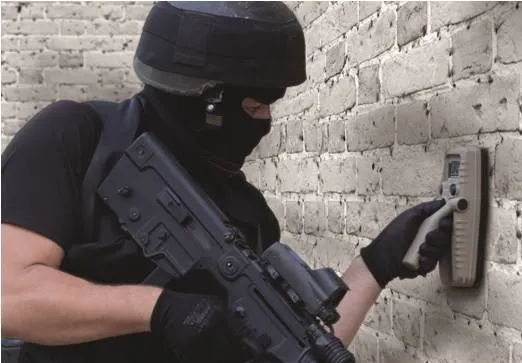
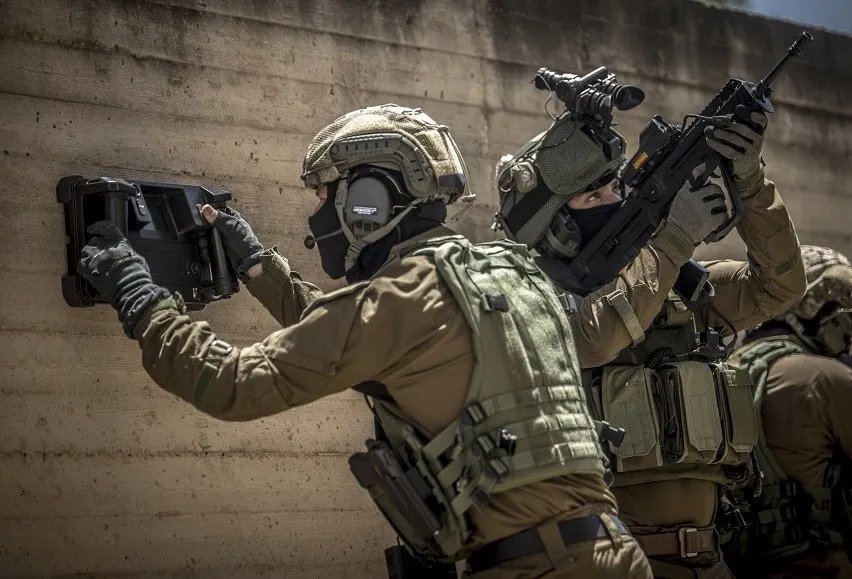
    The Xaver series is a diverse collection of advanced through-wall imaging systems that, using portable radar technology, allow military, law enforcement, and rescue forces to detect and track individuals in real-time through walls, doors, and other obstacles. Below is a breakdown of each model.

    1. Xaver 100


    This portable and rugged device enables military, law enforcement, and rescue teams to detect the presence and distance of individuals behind obstacles (like walls) in real-time. This capability enhances tactical decision-making during various operations. By providing accurate and reliable information about the presence of individuals in enclosed spaces, the device significantly improves tactical decisions across different operational scenarios.
    The device uses the same advanced technology found in other systems within this product family. A unique “micropower Ultra-Wideband” (UWB) sensor, which operates on an extremely wide frequency band with minimal energy consumption, ensures reliable detection and unmatched imaging clarity in the industry.

    2. Xaver 400


    This advanced system enables rapid identification of individuals behind walls and obstacles, allowing operational teams to act with full awareness of their surroundings and gain critical mission intelligence.
    The device features a sophisticated system architecture that integrates several cutting-edge technologies:

    • Multi-channel, low-power UWB sensor
    • Algebraic image reconstruction algorithms
    • User-friendly design


    3. Xaver 1000


    This device is the successor to Camero’s Xaver 800 model, which was the world’s first full 3D imaging system. Key features of this model include:

    Ability to differentiate between adults, children, and animals, making it suitable for tactical missions requiring accurate and vital information gathering

    • The first full 3D imaging system in the world
    • Equipped with AI-based smart tracking for live target patterns
    • Real-time 3D imaging through walls, capable of detecting both stationary and moving living objects behind structural barriers
    • Unprecedented resolution of body parts and postures, including sitting, standing, lying down, and height of living targets


    4. Xaver LR40 / LR80

    Xaver LR40


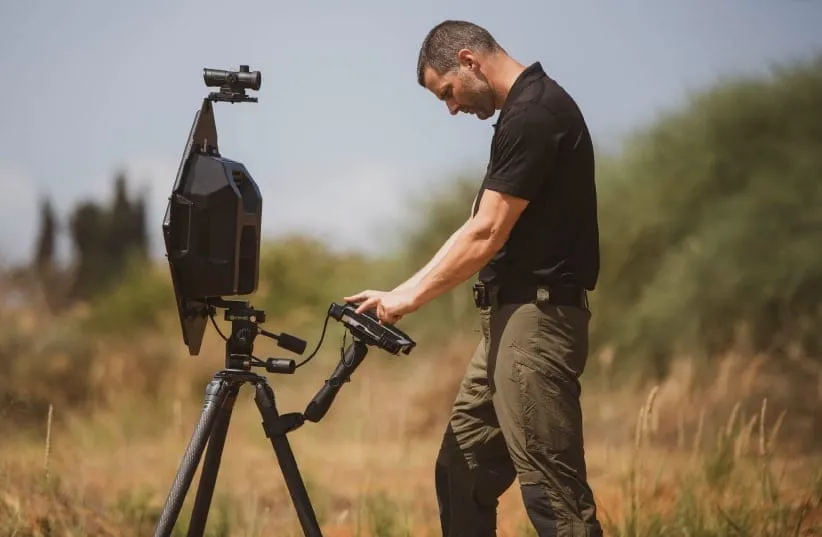
    The radar in this powerful gadget can detect living beings behind walls at distances up to 50 meters—and for the LR80 version, over 100 meters. Optimized for both urban and rural operations, the system collects real-time and critical data on living entities hidden behind obstacles, all while keeping the operator at a safe distance. Additional notable features include:

    • Accurate detection of living beings behind common wall materials
    • Simultaneous detection of both moving and stationary targets
    • Control via a 10-inch touchscreen with an intuitive interface
    • Integrated data recording with playback capability for post-mission review, analysis, and training
    • Proprietary and patented algorithms and signal processing
    • Lightweight and portable for enhanced mobility and operator effectiveness
    • Weight: between 10 and 12 kilograms


    5. XaverNet


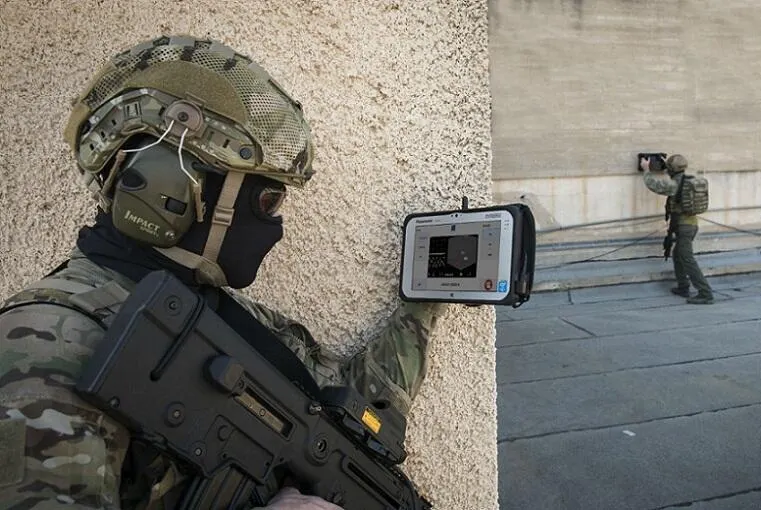
    The “XaverNet” system is a rugged wireless tablet that works with Xaver 100 and Xaver 400 systems. It allows users to receive imaging data in real time and remotely control up to four Xaver systems simultaneously. The system includes a Panasonic “ToughPad” tablet, a USB dongle for wireless connectivity, and proprietary software. The software can also run on Windows-based platforms. Using this technology, users can control Xaver systems from a distance of up to 200 meters in line of sight and switch between systems without exposing themselves to the target zone—making operations safer for field teams.
    This network-based system is built on a rugged wireless command and control platform based on the Panasonic FZ-M1 commercial model.

    Key Features

    • Compatible with various Windows-based platforms
    • Supports both Xaver 400 and Xaver 100 systems
    • Data recording capability
    • Wireless communication based on Zigbee protocol (a low-power wireless communication standard for sensor networks and smart devices)
    • Optional tactical housing
    • Capability to mount Xaver systems on unmanned vehicles
    • Weight: between 1 and 1.2 kg
  • The Graphite Controversy: Inside Israel’s Global Spyware Empire

    The Graphite Controversy: Inside Israel’s Global Spyware Empire

    Introduction
    In March 2024 WhatsApp, which is owned by Meta, announced that 90 journalists and members of the public who use the popular messaging app had been targeted by spyware developed by Paragon Solutions, an Israeli company specializing in hacking tools. These journalists and civil society members were notified about the possible compromise of their devices’ security. It remains unclear who was behind the attack. Like other spyware vendors, Paragon’s hacking software is used by government clients, and WhatsApp stated it had been unable to identify which clients ordered the alleged attacks.

    Experts have reported that the attack was of the zero-click type, meaning the targets did not need to click any malicious link for their devices to be infected. WhatsApp has declined to disclose the locations of the affected journalists and civil society members, including whether any of them were based in the United States. Three of the hacking victims were Italian journalists.

    According to reports in The Guardian and Haaretz, Paragon has since severed ties with its clients in Italy, which reportedly included an intelligence agency and a law enforcement organization. Paragon exclusively works with governmental entities. The company’s flagship product, called Graphite, allows users full access to a target’s phone. Paragon claims that the software is intended for criminal investigations. The company is seen as a competitor to the NSO Group, maker of the Pegasus spyware.

    Additionally, Israeli media have reported rumors of Paragon being sold to a U.S. company, which were recently denied by Israel’s Defense Minister following Donald Trump’s return to the White House.

    Paragon Solutions
    Paragon Solutions, founded in 2019 and currently employing 450 personnel, is a cyber company focused on offensive operations and security, utilizing digital intelligence to provide surveillance solutions for smartphones and the internet. The company claims to impose “strict ethical limitations” on itself, restricting data extraction from target devices solely to conversations within messaging apps. Paragon exclusively collaborates with law enforcement and intelligence agencies in what it defines as liberal democracies—a list that includes 39 countries.

    As one of the two leading Israeli offensive cybersecurity firms alongside NSO, Paragon specializes in technologies classified as weapons and requires export approval from Israel’s Ministry of Defense. Unlike NSO, which faced international backlash and was blacklisted by the U.S. government for selling spyware to authoritarian regimes, Paragon was founded with a commitment to operate exclusively within democratic nations. This ethical positioning helped pave the way for future deals.

    Founders and Key Figures
    Among the founders of this cyber company is Ehud Barak, the former Prime Minister of Israel, underscoring Paragon’s prominence and distinct position among other firms in the industry. Some media outlets have even referred to the company as “Ehud Barak’s startup”, highlighting his influence in its establishment. According to the image below, the founders of this Israeli company are identified from right to left in the following order:

    – Ehud Schneorson


    After decades of service in the fields of signals intelligence (SIGINT), cyber operations, and special operations in the occupied territories, he was appointed as the head of Unit 8200, Israel’s elite military intelligence unit. According to Richard Silverstein, commanders in Israel’s Unit 8200are appointed in a highly specific and deliberate manner, alternating between a “khnun” (a Hebrew slang term for a “computer geek” or “tech nerd”) and an individual who rose through the ranks via combat roles. Ehud Schneorson is considered a khnun, whereas his predecessor, Nadav Zafrir, was a combat officer who served in Sayeret Matkal, Israel’s elite special forces unit. This alternating approach, blending technical expertise with combat experience, reflects the military’s effort to strike a balance between technological proficiency and operational capability.

    – Ehud Barak

    Ehud Barak, the former Prime Minister of Israel, has been a prominent figure in the country’s cybersecurity landscape. He played a significant role in the founding of Paragon Solutions, co-establishing the company alongside retired Brigadier General Ehud Schneorson. Barak’s involvement in Paragon has been substantial, and he also holds a stake in the company, underscoring his direct interest and influence in its operations.

    – Idan Nurick

    Idan Nurick is the CEO and co-founder of Paragon Solutions, with a background in medicine and an MBA. He has led several successful companies in the fields of cybersecurity and artificial intelligence, with a proven track record in team leadership, algorithm development, software engineering, and data analysis.
    Nurick founded Cyber Hunters in 2018 and Paragon in 2019, serving as CEO of both. In 2020, he stepped away from Cyber Hunters to focus on Nash and Paragon. He currently serves as a director at Alameda Ventures and a senior executive at Bloomberg Capital. Prior to his current role, he also held a senior leadership position within Paragon. Nurick completed his studies at Tel Aviv University, earning both a master’s degree and an MBA.

    – Liad Avraham
    Liad Avraham, a resident of the occupied territories, is currently the co-founder and Chief Research Officer (CRO) at Paragon Solutions. He brings valuable experience from his previous roles at Paragon and in the Israel Defense Forces (IDF). Avraham holds a Bachelor’s degree in Computer Science from the Open University and possesses advanced skills in hacking iOS and Android operating systems. During his service in the IDF, he served as a team leader and cybersecurity researcher.

    – Igor Bogdalov
    Igor Bogdalov, a lesser-known figure among the founders pictured, is one of the co-founders and serves as Co-Chief Technology Officer (CTO) at Paragon. He earned his Master’s degree from Tel Aviv University.

    Graphite
    As previously mentioned, this spyware infiltrates devices electronically using a zero-click method, the operation of which is explained in detail below. Zero-click attacks are carried out secretly and do not require any direct user interaction or action. These attacks may seem simple because the attacker does not need to trick the user through phishing emails or clicking on malicious links. However, successfully executing these attacks is not easy. A critical aspect of performing a successful zero-click attack is sending a specially crafted piece of data to the target device via wireless communications such as Wi-Fi, NFC, Bluetooth, GSM, or LTE.
    This data is designed to trigger a previously unknown or lesser-known vulnerability in the target device. The vulnerability may exist at the software or hardware level of the device. This data might exploit the vulnerability when processed by the device’s system on chip (SoC), but in most cases, the attacker designs the data to be interpreted by specific applications such as WhatsApp, Telegram, Skype, calling services, or even SMS. Therefore, the attacker carefully crafts this data to be interpretable by such applications. This data can take the following forms:
    • MMS
    • Voicemail
    • Video conferencing sessions
    • Text messages
    • Authentication requests
    • Network packets
    • Phone calls

    Conclusion
    In light of the foregoing detailed discussion, it seems imperative to strengthen the cybersecurity outlook of intelligence agencies with respect to the newest infiltration techniques and the methods for preventing and countering cyberattacks; for failing to recognize the infection of a messaging‑service server application under normal conditions can constitute part of the persistent risk and harm posed by such attacks. Gaining familiarity with and access to the know‑how for producing this type of spyware may, in the future, foster scientific self‑sufficiency—both software‑ and network‑wise, and in certain cases hardware‑wise—within the country’s sensitive institutions as well as among technology firms operating in the realm of social networks. Another matter that acquires significant importance in the wake of these international disclosures is the investigation of the assassination cases of prominent Iranian figures and members of the resistance front in recent years; since the use of messaging apps and social networks—especially domestic platforms such as Eitaa and Baleh—has become commonplace, the hacking of individuals’ accounts grants access to every component of their smartphones, including microphones and geolocation; consequently, the relevant authorities must exercise heightened vigilance.

  • Israel Censors Damages Of Iranian Strikes On Its Intelligence Base In Northern Golan?!

    Israel Censors Damages Of Iranian Strikes On Its Intelligence Base In Northern Golan?!

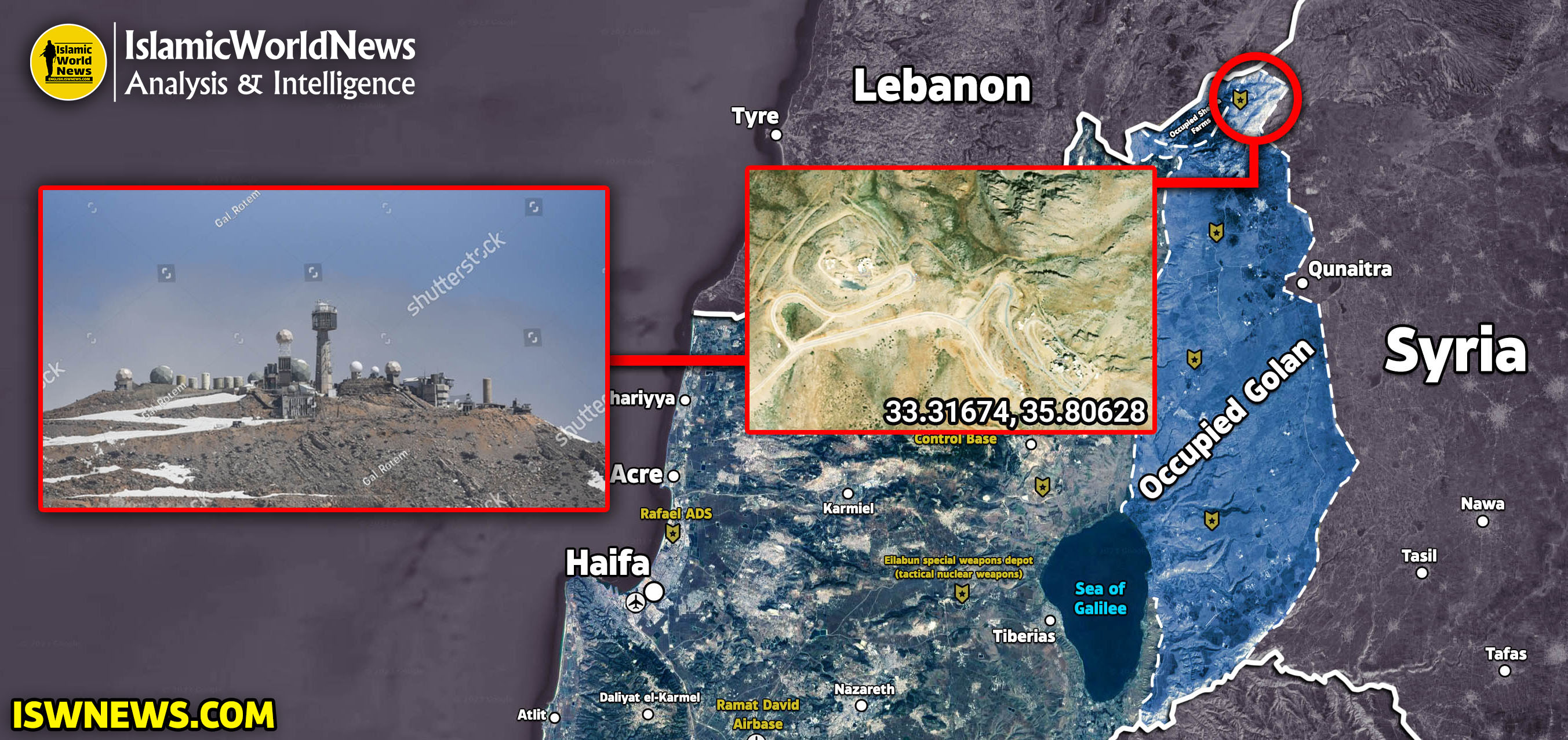
    The importance and sensitivity of this place is such that the Israeli army imposed a complete media ban for this area and everything is censored and no damage assessment and public announcement is allowed.

    According to ‘Islamic World News’ field information from Syria, during Iran’s retaliatory attacks against the Zionist regime, Syrian air defense systems were on full alert; And when the Iranian projectiles were passing through the Syrian sky, they were activated and countered with a number of Israeli interceptor missiles that were fired to shot down the Iranian projectiles. In fact, the Syrian government, unlike the traitorous government of Jordan, did not allow Israeli warplanes and interceptor missiles to operate in the sky of its country.

    It is worth mentioning that on the night of the attack, Hezbollah’s artillery also targeted areas in the occupied Golan in a certain hour. All these evidences, along with Major General Bagheri’s remarks, strengthen the possibility that the Zionist regime’s intelligence base in the north of the occupied Golan Heights has been targeted.

    It should be noted that this intelligence base played a role in the recent Israeli attack on the Iranian embassy in Damascus, and in general, in recent years, it has played a very important and prominent role in intelligence operations against Syria and Iran.

    The location of the intelligence and espionage base of the Israeli regime in the occupied Golan Heights
  • Disclosure of Israeli military secret information! + File

    Disclosure of Israeli military secret information! + File

    In the latest disclosure by the hacker group “Moses Staff”, the details of 16 members of unit 8200 were published along with part of the information of an important project as well as minutes of the 3D map of the occupied territories with an accuracy of 5 cm.

    The group has accessed critical information and databases of many servers during cyberattacks on the Israeli regime’s sensitive cyber infrastructure And continuously publishes them; For this reason, the Zionists are working hard to eliminate or restrict the channels and media of the “Moses Staff”.

    The Moses Staff hacker group announced that it has access to a complete 3D map of the occupied territories with a volume of 22 terabytes and an accuracy of 5 cm. The importance of this issue becomes clear when we know that satellite companies always refrain from providing up-to-date and high-quality satellite images of the occupied territories to ensure the security of Israel, or that some areas are always on their censorship list. Therefore, achieving a complete and 3d map of all areas in the occupied territories is very important and is a Heavy security blow to the Israeli regime and has many bad consequences for Israel. The video below is a small part of this 3D map.

    The Moses Staff hacker group also released information about an important Israeli Army project called the Ofek project and showed its intelligence dominance and the quality of the stolen documents.

    Download the leaked information file of Unit 8200


    Read more:
    Israel Hacked Again! Disclosure of Information of Israeli Companies + File
    Israeli regime soldiers information leaked! + File