
Yankees in Caucasus: Assessing the Security and Geopolitical Implications of U.S. Involvement in the Zangezur Corridor Project
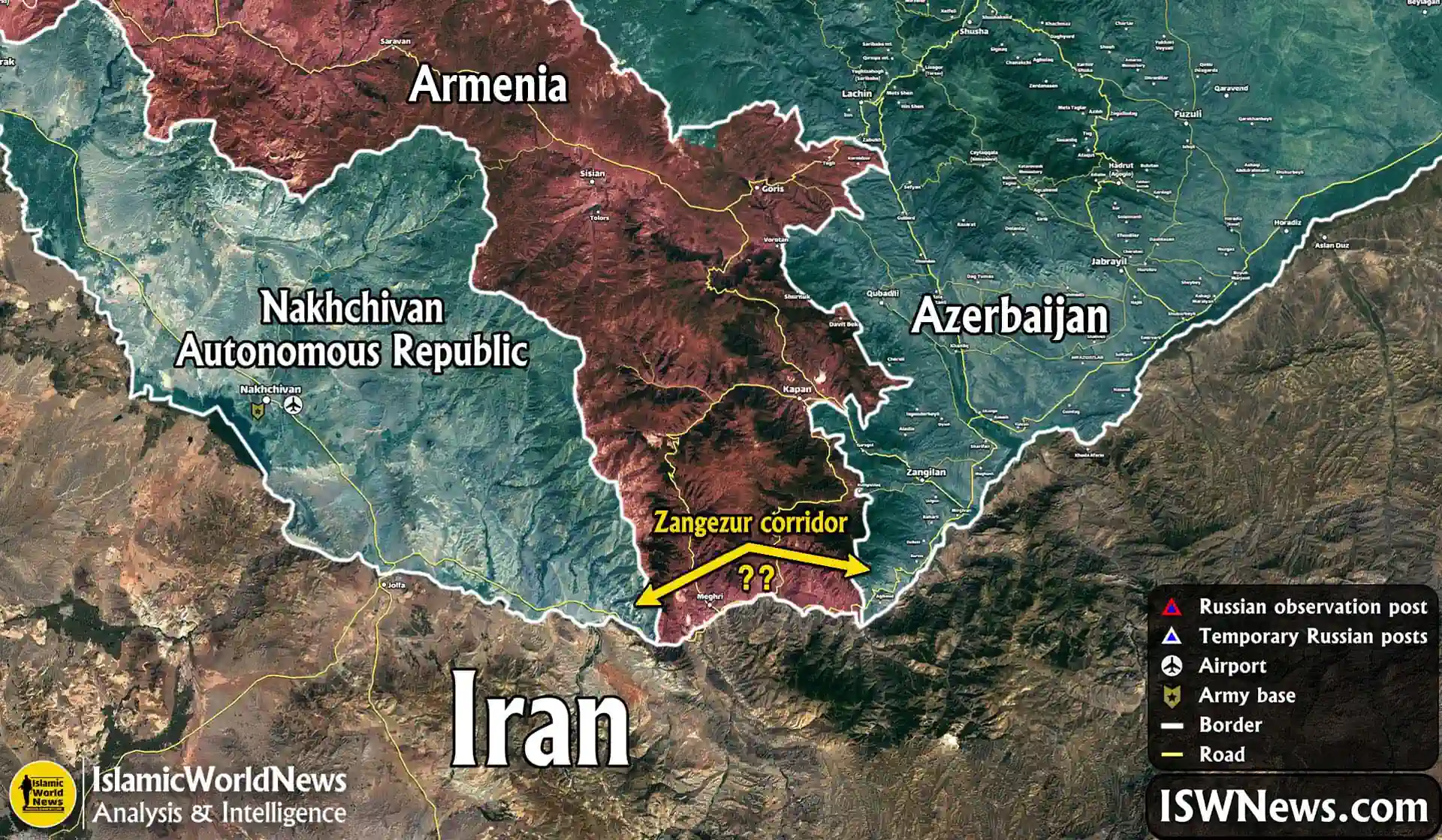
This article examines the Zangezur Corridor initiative and the entry of the United States into the project through a private company—an involvement that could carry significant security and geopolitical consequences for the Caucasus region and beyond. Designed to connect Baku to Nakhchivan, the corridor leverages its strategic geography and has become a tool in broader geo-economic and geopolitical rivalries. By backing this project, the U.S. seeks to control transit routes, curb Russian and Chinese influence, and exert pressure on Iran. This presence, especially alongside military cooperation with Turkey and Israel, poses potential threats to both Iran and Russia. This article focuses on the corridor’s security, economic, and strategic dimensions, and the evolving role of the United States.
In recent years—particularly following the Second Karabakh War, which ended with Azerbaijan’s victory over Armenia—the creation of the Zangezur Corridor through Armenia’s Syunik Province has sparked a new geopolitical contest in this vital region. Azerbaijan, capitalizing on its military strength and support from Turkey and Israel, is pursuing ambitious geo-economic goals that have met with strong opposition from Iran and Russia. The signing of a peace agreement in Washington, brokered by Donald Trump, which facilitated U.S. involvement in the project, has added another layer of complexity to the issue.
According to the Washington agreement, the corridor has been renamed the “Trump Road for Peace and Prosperity” (TRIPP) and leased to an American company for a 99-year term.
A closer look at the project’s objectives and the recent alignment between Baku and Ankara with the West reveals that the Zangezur/Trump Corridor is part of the broader contest over a new multipolar world order. While Azerbaijani officials emphasize its economic and transit benefits—claiming it could even benefit Iran or Armenia—the underlying Western strategy aims to forge a “Turkic-NATO” alliance to contain the China-Russia-Iran axis.
The opaque nature of the American company
Although much has been written about the corridor’s economic and logistical implications, its security and political dimensions remain underexplored. As noted, the U.S. involvement goes beyond commercial interests and could influence both the construction and strategic outcomes of the corridor. Given the hegemonic and capitalist nature of Washington’s political system, its economic and security agendas are deeply intertwined. Separating these motives in the Zangezur project would be an oversimplification.
Why the Middle Corridor matters to Washington
The strategic importance of the Caucasus and the Middle Corridor has grown significantly for the U.S., especially after the war in Ukraine. The conflict has rendered the northern route of China’s Belt and Road Initiative unstable, and Washington opposes the development of the Iranian branch of the Middle Corridor. As a result, the preferred route connecting China to Europe now runs through Turkic-speaking countries—Kazakhstan, Azerbaijan, and Turkey.
Expanding the Middle Corridor also supports other Western economic-security projects, such as the Trans-Caspian gas pipeline and the transfer of rare earth materials from Central Asia for defense industries. The overarching goal, led by the U.S., is to develop the “Turanic” corridor to exclude Russia and China from Eurasian trade while maintaining Western access to Central Asia.
Washington is not content with merely supporting the corridor—it seeks to control it. The Zangezur segment has become a key component of this strategy. Trump’s involvement in the corridor serves three core security-economic objectives:
- Establishing a presence at Iran’s border to monitor its military and security movements
- Undermining Russia’s influence in its traditional sphere and leveraging the Caucasus in the Ukraine conflict
- Controlling the Middle Corridor to exert pressure on China.
As observed, the security dimensions of the Zangezur Corridor project—particularly for Iran and Russia—are highly significant, which helps explain the strategic alignment between Moscow and Tehran on this issue. Without a doubt, the United States is likely to deploy its military and intelligence capabilities alongside engineering teams to support such a complex and multifaceted initiative, potentially reshaping the regional landscape.
It’s important to recognize that the interplay between military dominance and financial control is not merely academic—it’s a matter of survival for the current global financial system centered around the United States. In this context, the deployment of U.S. forces near Iran and Armenia under the guise of the Zangezur Corridor can be interpreted as a de facto military outpost, reinforcing Washington’s strategic footprint in the region.
Objectives and Motivations Behind U.S. Involvement in the Zangezur Corridor
• Recent studies suggest that foreign military bases established through regional alliances can enhance U.S. economic development. In contrast, bases acquired through military occupation tend to harm the U.S. economy. For example, in models where bases are set up via occupation, hostility between the host government and the foreign military tenant is more likely. Therefore, the U.S. has opted for alliance-based deployment in the Zangezur Corridor project.
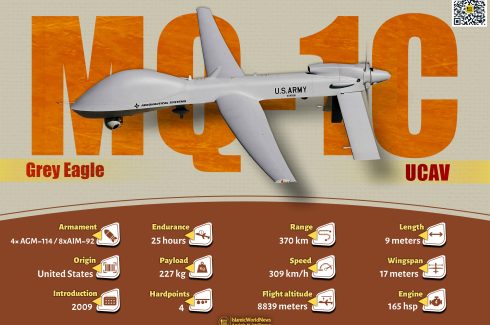
• Another strategic motivation for U.S. presence in the corridor is the potential training of extremist forces near Iran’s northwestern borders. Russian officials have claimed that the U.S. military base in al-Tanf, Syria, has been converted into a “terrorist training center.” Sergey Naryshkin, head of Russia’s Foreign Intelligence Service, stated that American forces trained 500 ISIS members and other extremists—primarily migrants from the Caucasus and Central Asia—for operations against Russian troops in Syria. If the U.S. applies a similar model near Iran or in the Caucasus, it could pose serious security risks for both Iran and Russia, especially given the increasing use of drones by extremist groups.
• Central Asia’s strategic value is rising due to its energy reserves and rare minerals. To secure access to these resources and ensure energy and military security, the West needs a foothold in the region. Russia, China, and Iran currently hold significant influence there, and expanding Western presence would weaken this axis. In the event of regional tensions, the U.S. could use the Zangezur Corridor and its associated military infrastructure as a logistical base.
Former Iranian ambassador to Baku, Seyed Abbas Mousavi, commented on the nature of the American company involved in the corridor: “A transregional country is entering our region through a private company. We don’t know the true nature of these companies. It’s possible that later, under the pretext of supporting them, the U.S. will deploy military forces to the region, which could be dangerous and certainly requires close cooperation among Iran, Russia, Armenia, Azerbaijan, and Turkey.” Recent developments suggest that the company involved is likely of a military-security nature, as evidenced by the lifting of U.S. sanctions on Azerbaijan’s military equipment sector. Supplying arms to Azerbaijan effectively amounts to indirect U.S. military presence near Iran’s borders.
In summary, U.S. military involvement in the South Caucasus via the Zangezur Corridor offers strategic advantages for both Washington and NATO. It enables pressure on China, Russia, and Iran while boosting U.S. geopolitical and geo-economic influence in Central Asia and the South Caucasus. However, this approach contributes to the militarization of the region, contradicting stated goals of stability and potentially harming smaller regional states—especially Armenia and Azerbaijan.

Comments