
Latest Battlefield Situation After the UAE’s Withdrawal Announcement (Map)

The UAE’s exit from Yemen as the second key member of the Saudi-led coalition signals the failure of the coalition’s military strategy and a further shift in the balance of power toward Ansar Allah. This move weakens the exiled government and intensifies internal clashes between the Southern Transitional Council (STC) and Saudi-backed factions in southern and eastern Yemen — and could push southern groups toward declaring secession and courting new foreign sponsors.
According to the latest reports on Yemen’s fronts — broken down by military zones and provinces — the situation is as follows:
Hadhramaut & Al-Mahra Fronts:
In Hadhramaut, the front lines in the north remain unchanged, with Al-Khasha‘a serving as the main contact line. The cities of Al-Qatn, Tarim, and Seiyun in Wadi Hadhramaut are still under southern control. Al-Dara‘ Al-Watani (National Shield) forces have redeployed to Ramah and Thamud in the northeastern desert and taken positions along the Yemen–Saudi border, likely preparing to move toward Al-Sawm on the eastern side of Wadi Hadhramaut.
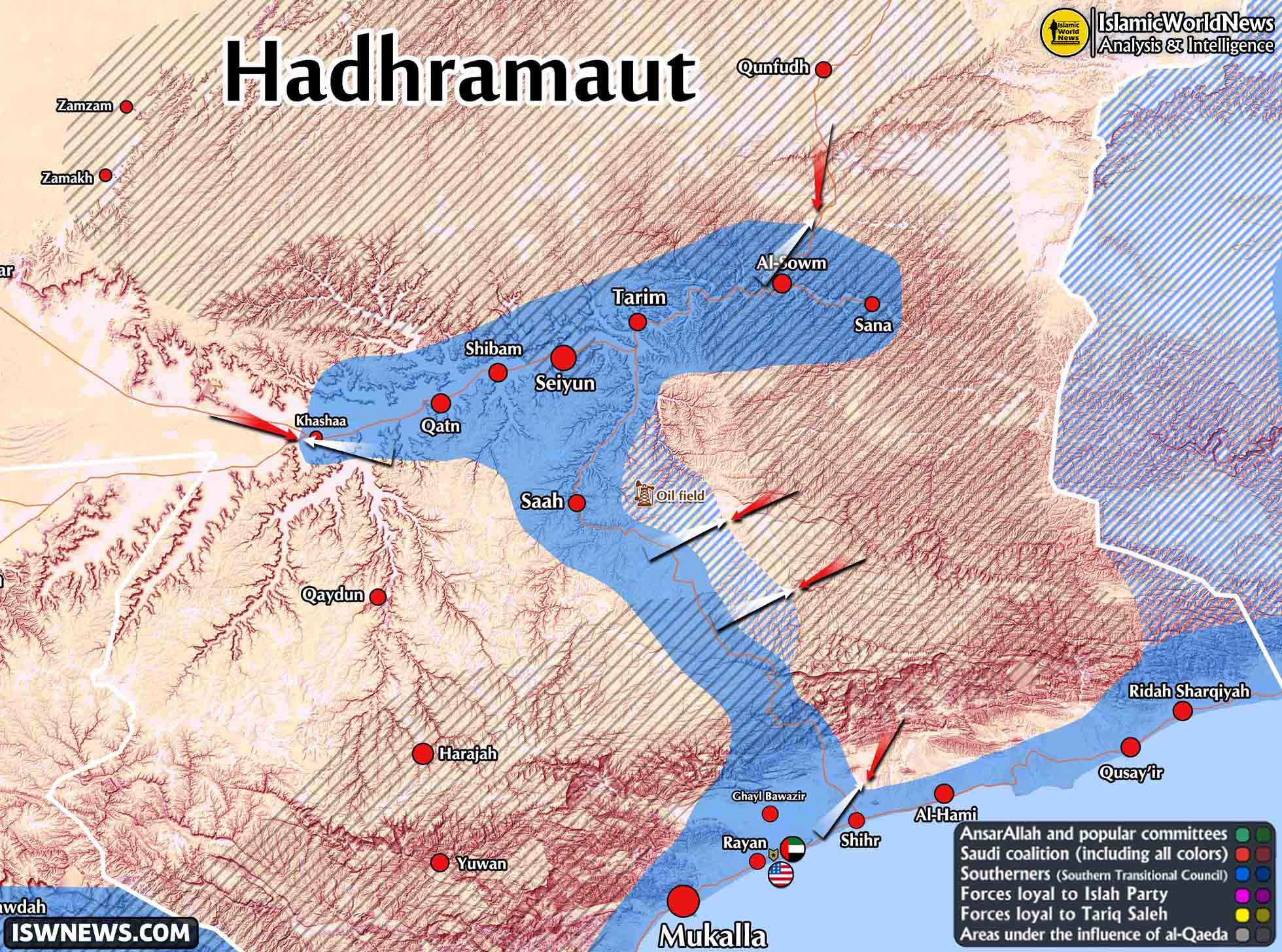
Fighting continues between the UAE-backed Hadhrami Elite forces and tribal fighters from the Hadhramaut Tribal Council around Ghayl Bin Yamin, as well as in Wadi Khard and Al-Ays on the Hadhramaut coast. Recently, tribal fighters retook the Nohub base and pushed STC forces back from the outskirts of Wadi Khard and Al-Ays.
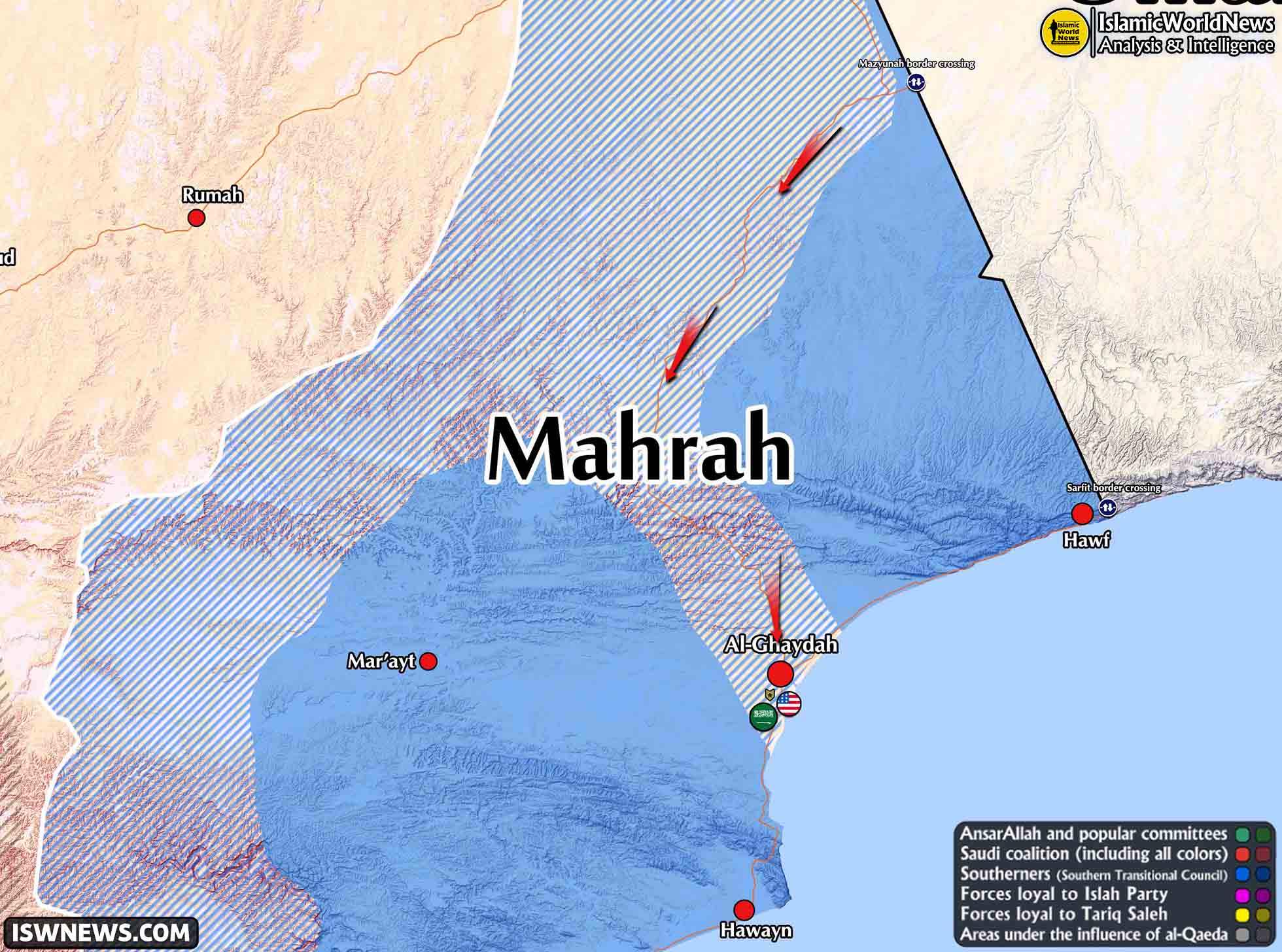
In Al-Mahra, Major General Barjash — commander of the 2nd Military Region — reaffirmed his support for the STC and declared he will not hand over his positions to National Shield forces backed by Saudi Arabia. He also urged civilians to stay away from military sites and installations.
Abyan Front:
On northern Abyan axes, STC operations against Al-Qaeda elements are progressing slowly and have produced few tangible results. Al-Qaeda cells continue operating covertly. Beyond the integration of rapid-reaction forces from Jishan district, no major shifts have occurred.
Marib & Al-Jawf Fronts:
Giants Brigade units have pulled out of Harib and Al-Abdiyah (south of Marib), as well as from the Kitaf and Al-Baqa fronts in northern Saada, redeploying to Hadhramaut and Shabwah. This redeployment has weakened the lines facing Ansar Allah, giving Yemeni resistance fighters an opportunity to resume advances from Harib toward western Shabwah in future clashes.
No significant changes have been recorded on other fronts, and the Yemeni Armed Forces (aligned with Ansar Allah) continue to observe the ceasefire that has been in place since 2023.
The UAE’s departure from Yemen marks a major setback and a turning point in the country’s civil war. Key consequences include fractures within the Saudi-Emirati coalition, a severe weakening of the exiled government, the strengthening of Ansar Allah, a growing power vacuum in the south, and the risk of deeper involvement by another outside actor — potentially the United States. The UAE’s separation from the Yemen file amounts to a failure of the “Arab coalition” project; in recent years, Saudi Arabia has lost two principal partners — Qatar and the UAE — in joint operations. Still, it is too early to draw final conclusions, and much remains unclear.
The UAE’s footprint on strategic Yemeni islands such as Socotra, Abd al-Kuri, Mayun, and others is part of a broader project to control maritime routes through the Gulf of Aden and the Red Sea — reinforced by formal agreements with the exiled government and backed by Western states and Israel.

Comments