Author: Mirza

  • Kataib Hezbollah’s Strong Warning on U.S. Envoy: Contact with Trump’s Representative is Treason

    Kataib Hezbollah’s Strong Warning on U.S. Envoy: Contact with Trump’s Representative is Treason

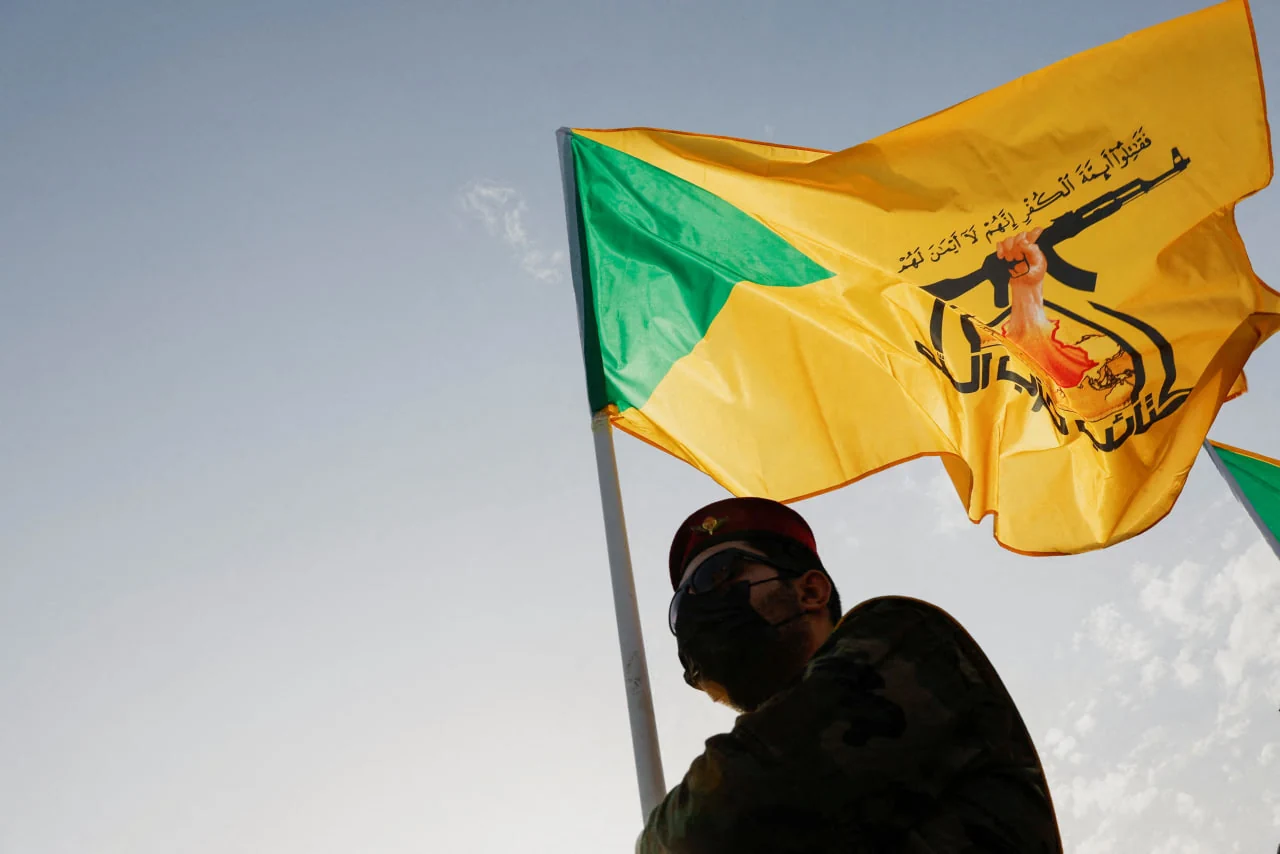
    Al‑Askari described Savaya as an “unknown figure” dispatched by Trump to pursue America’s narrow interests amid complex regional circumstances, stressing that the mission serves Washington’s hostile agenda against Iraq.

    Addressing the U.S. envoy directly, al‑Askari said: “Iraq is a land where great powers have been defeated, and the U.S. army has been dismantled here. The Iraqi people defeated ISIS, a product of American policy, and will not allow Washington to achieve its goals in this country.”

    He added that Kataib Hezbollah sees no need to confront the envoy directly, claiming Iraq’s youth are sufficient to thwart his mission. Al‑Askari again warned Iraqi politicians—especially clerics—against any contact with Savaya, insisting that those who do so will be branded by the people as traitors and tools of the U.S. government.

    This statement reflects growing sensitivity and concern among Iraqi resistance groups over new U.S. moves in Baghdad. From their perspective, Washington’s appointment of a special envoy is an attempt to rebuild political and security influence in Iraq. By labeling any engagement with the envoy as treason, the Iraqi resistance is signaling its intent to raise the political cost of cooperation with Washington.

  • Deployment of U.S. Airborne Divisions in Iraqi Kurdistan: A Serious Warning for Iran

    Deployment of U.S. Airborne Divisions in Iraqi Kurdistan: A Serious Warning for Iran

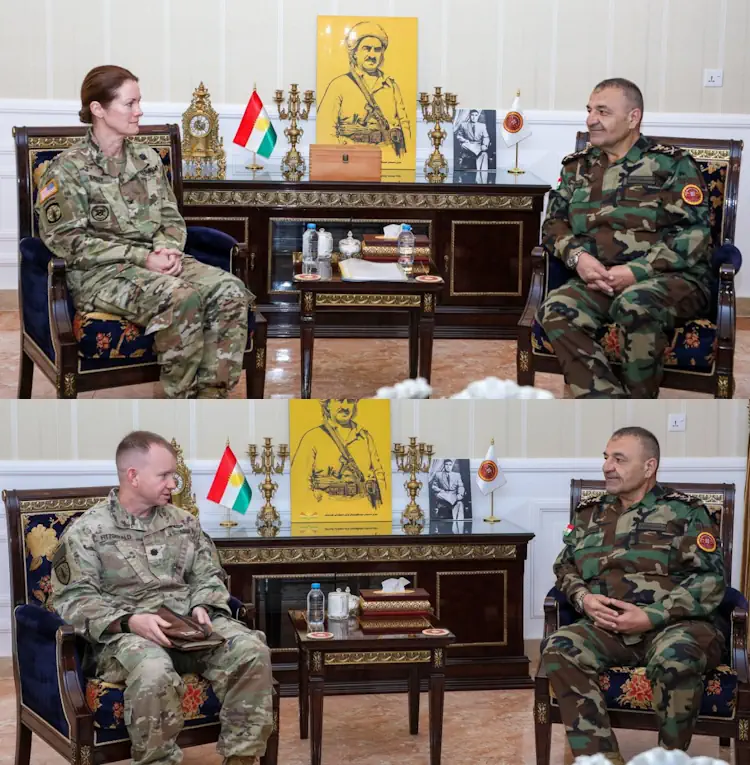
    The significance of this meeting lies in the context of the recent 12‑day war, after which speculation has grown about potential heliborne operations by the U.S. and Israel inside Iran—given the failure to achieve objectives through airstrikes alone.

    American activity in Iraqi Kurdistan has visibly increased, including visits to border areas with Iran and patrols in mountainous regions alongside Peshmerga commanders. Meanwhile, Iran’s armed forces have conducted military exercises in recent weeks to counter infiltration and heliborne operations, testing air defense systems to strengthen rapid response capabilities against threats to vital facilities, strategic infrastructure, and sensitive sites.

    Regional analysts suggest that if long‑range strikes prove insufficient, Washington may consider hybrid options such as limited airborne operations. Although not officially announced, the rise in U.S. heliborne drills and simultaneous Iranian defensive exercises reinforce this speculation. Iran’s anti‑heliborne maneuvers signal preemptive readiness to confront possible threats. Iran’s armed forces have recently conducted military exercises to counter infiltration and heliborne operations, testing air defense systems during these drills.

    The 12‑day war demonstrated that long‑range bombardments, despite their intensity, did not fully destroy Iran’s underground infrastructure. Western analysts argue this limited strategic effect could drive complementary scenarios. In this framework, rapid, surprise airborne operations are examined as theoretical alternatives—not aimed at occupation, but at creating strategic disruption.

    In such scenarios, potential targets could include missile infrastructure, command centers, and even key specialists in sensitive fields—highlighting the strategic weight of airborne units in U.S. military planning.

  • Israel Admits Failure of Strikes Against Iran’s Missile Program

    Israel Admits Failure of Strikes Against Iran’s Missile Program

    The Times of Israel wrote that strikes on Iran’s ballistic missile infrastructure had no decisive impact, and the damage was more limited than first announced. The report claimed Iran currently possesses around 2,000 heavy ballistic missiles, nearly the same number as before the conflict, showing its missile strength remains intact.

    According to Al‑Monitor, Shlomi Binder, head of Israeli military intelligence (AMAN), conveyed this assessment in a meeting with U.S. Ambassador to the UN Mike Waltz. The outlet suggested Tel Aviv is once again urging Washington toward military action against Iran.

    Presenting the limited damage as a narrative of “deterrence failure” appears to be a calculated media strategy by Israel. By emphasizing that Iran’s missile arsenal remains untouched, Tel Aviv seeks to replace earlier claims of military success with a storyline that justifies renewed military action.

    The coordinated role of Hebrew media and the disclosure of intelligence meetings with U.S. officials highlight Israel’s effort to align Washington with its position. By portraying past strikes as ineffective and Iran’s missile threat as ongoing, Israel aims to push the U.S. toward viewing military options as unavoidable.

    Overall, these media, security, and diplomatic maneuvers suggest Israel is preparing the ground for another military scenario—one that depends heavily on U.S. support, regional political dynamics, and Iran’s military‑social resilience.

  • British Combat Drones And U.S. Spy Planes: Syrian Airspace Now Fully Open For Coalition

    British Combat Drones And U.S. Spy Planes: Syrian Airspace Now Fully Open For Coalition

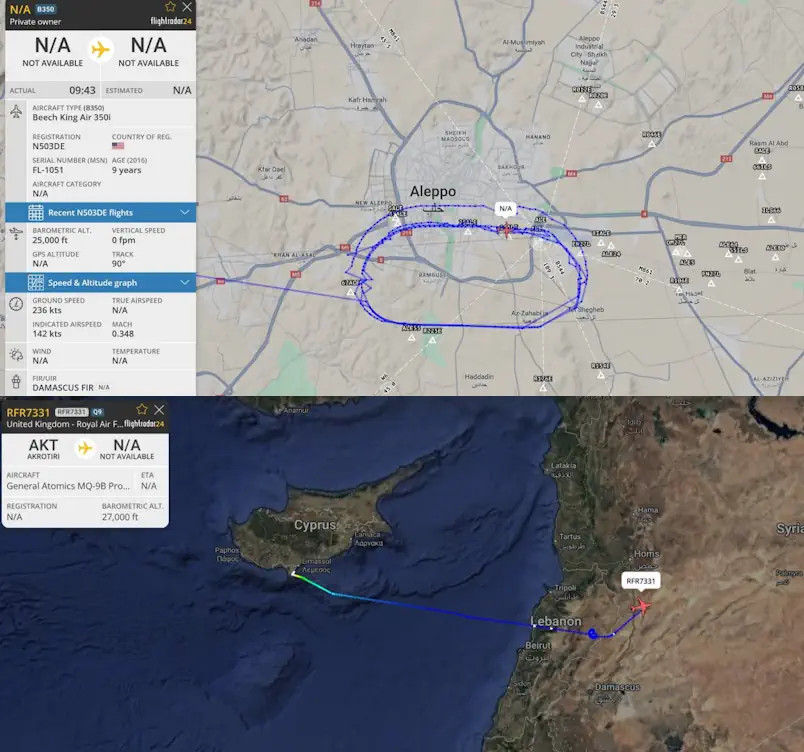
    According to air traffic data from Flightradar24 and other sources, an MQ-9B Protector combat drone of the Royal Air Force (RAF) entered the Syrian airspace in the area between the capital, and the central governorate of Homs from Lebanon. The drone took off from RAF Akrotiri in Cyprus.

    British drones have been flying over Syria for years as a part of the anti-ISIS coalition led by the U.S. However, their operations were previously limited to the country’s northern and eastern regions.

    Soon after the drone was spotted, a Beech King Air 350i with the registration N503DE was detected flying over the city of Aleppo in northern Syria.

    This specific aircraft is known to be modified for intelligence gathering. It is owned by Straight Flight, Inc., a subsidiary of Sierra Nevada Corporation, a major U.S. Department of Defense contractor specializing in intelligence, surveillance, and reconnaissance systems and aircraft modifications.

    The aircraft has been linked in the past directly to the U.S. Special Operations Command, more known by its acronym USSOCOM.

    It reportedly took off from Erbil International Airport in the northern Iraqi semi-autonomous region of Kurdistan, which is known to be a key hub for USSOCOM operations.

    These flights, although significant, were not surprising. Last month, Syria joined the U.S.-led coalition. The country’s accession to the coalition came after a landmark meeting on November 10 between the U.S. President Donald Trump and Syrian President Ahmed al-Sharaa at the White House.

    In the first joint operation between the two sides, the U.S. Central Command, also known by its acronym CENTCOM, announced on November 30 that its forces located and destroyed more than 15 sites containing ISIS weapons caches in southern Syria in cooperation with government forces.

    The U.S. is already planning to further take advantage of this emerging partnership by establishing a military presence at the Mezzeh Air Base, which is located just under four kilometers away from the People’s Palace to the southwest of Damascus.

    Since plans for the deployment became known last month, the air base was targeted with rockets twice. The last of the attacks was on October 8. The attacks were likely orchestrated by ISIS, or by radical Islamist elements from the government who are not happy with the decision to join the U.S.-led coalition.

    The latest flights could also provoke a reaction, especially if they were followed by any joint operations with the coalition on the ground.

    Originally posted on SouthFront
  • Three Americans Killed in Syria!

    Three Americans Killed in Syria!

    Speculation continues regarding how the attack was carried out and who was behind it. Some believe it was conducted by someone within Syria’s security forces, while others attribute it to ISIS.

    U.S. President Donald Trump identified ISIS as the prime suspect and vowed to take “serious revenge” against the group.

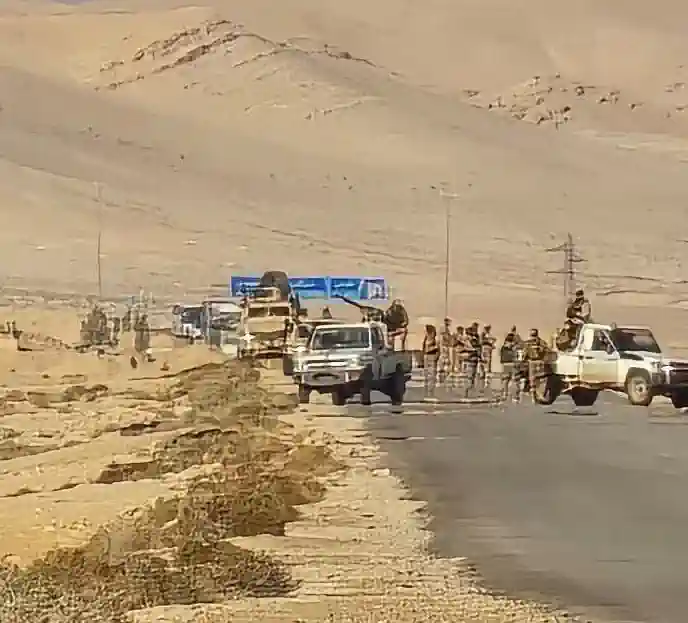
    Following the incident, American warplanes flew over Homs province and Palmyra last night. Reports indicate that targets in Deir ez‑Zor and Homs (near Palmyra) were struck by U.S. aircraft.

    If ISIS is indeed responsible, this would mark the group’s first direct attack on U.S. forces in the Palmyra region since the rise of the al‑Joulani government.

  • Baghdad–Ankara Water Agreement; Turkey’s Security and Political Leverage over Iraq?!

    Baghdad–Ankara Water Agreement; Turkey’s Security and Political Leverage over Iraq?!

    Field Context of the Agreement

    The water deal between Turkey and Iraq evolved from two decades of intermittent talks but took on a new, complex structure after 2024. Two key developments set the stage: the sharp decline of Tigris–Euphrates inflows to below 30 billion cubic meters annually, and the completion of Turkey’s Ilisu Dam. Facing simultaneous water shortages and public discontent, Baghdad was compelled to accept Ankara’s new cooperation model.

    In early 2024, both sides signed the Water Project Financing Mechanism, turning water cooperation into a financial and technological package. Turkey pledged technical support and investment via Turkish banks and NATO‑linked institutions, but in return gained control over contractor selection, monitoring technologies, and hydrological data exchange.

    About a year later, the oil–water linkage agreement, first reported by Al‑Monitor (2025), revealed the geopolitical logic: water in exchange for oil. Turkey secured new concessions in Kurdish oil exports and pipeline routes in return for increasing water flows. This elevated the deal from an environmental partnership to a security‑economic bargain with deep political consequences.

    Analytical Feedback

    Turkish think tanks such as ORSAM described the cooperation as Ankara’s “soft power tool,” while analysts from Shafaqna and Etemad warned that the projects expose Iraq’s economic and informational infrastructure to NATO influence. Western research centers like CKH (2025) and Al‑Monitor stressed that the agreement has widened Iraq’s internal divides: Shiite and nationalist parties see it as a threat to sovereignty, whereas Baghdad’s government frames it as a “survival necessity against drought.”

    Thus, the water accord has transformed from an environmental project into a multi‑layered arena of power, economic, and security competition—where Turkey, under the guise of development cooperation, extends its geopolitical influence over Iraq and, by extension, the Resistance Axis.

    Future Threats

    1. Consolidation of Geopolitical Control
      Turkey’s completion of major dams (Ilisu, GAP project) gives it effective control over storage and release of Tigris–Euphrates waters. Recent agreements lack unconditional commitments to increase Iraq’s water supply; instead, they tie flows to joint financial and technical projects. Coordination committees and technical mechanisms risk becoming unilateral decision‑making tools for Ankara, especially since monitoring equipment and data exchange are managed by Turkish entities. This enables immediate pressure on Baghdad, potentially triggering agricultural and energy crises in southern and central Iraq, forcing political concessions.
    2. Economic Dependence on Foreign Actors
      The financing mechanism (April 2024) and oil–water contracts (November 2025) opened Iraq’s water, electricity, and agricultural infrastructure to Turkish capital and companies. This “finance for access” model entrenches dependency. Long‑term contracts and technical conditions reduce Baghdad’s economic autonomy, while Western‑linked banking networks impose obligations that constrain independent policy. Domestic opposition risks being countered by threats of reduced services or halted funding.
    3. Weakening of Independent Regional Players
      The water deal, framed as technical cooperation, indirectly reshapes the role of traditional regional actors. Analysts note that the Ankara–Baghdad energy‑water chain diminishes Tehran’s influence in transboundary resource management and creates openings for NATO, especially U.S. involvement, in Iraq’s critical infrastructure. This dynamic could spark strategic competition among regional blocs, placing Baghdad between national interests and international pressure.
    4. Information Warfare and Data Security Risks
      A core element of the agreements is the transfer of “smart water management” technologies and monitoring systems. Academic sources warn that foreign‑managed systems could expose sensitive databases on resources and infrastructure to external actors. Such data can be exploited economically or militarily, enabling predictive crisis modeling or infiltration operations. Without independent governance safeguards, Baghdad risks losing informational sovereignty.
    5. Environmental and Social Consequences
      Declining river inflows already reduce agricultural output, worsen soil erosion, and intensify dust storms. Regional reports explicitly link dust crises to water shortages. Altered seasonal flows threaten staple crop production and undermine Iraq’s food security, heavily reliant on direct irrigation. Social impacts include rural‑urban migration, strain on urban services, ethnic tensions, and increased recruitment potential for insurgent groups exploiting grievances. Absent compensatory social policies and alternative economic programs, these pressures could destabilize Iraq internally and turn discontent into protest or violence.
  • National Resistance Front of Afghanistan Claimed Attacks on Taliban

    National Resistance Front of Afghanistan Claimed Attacks on Taliban

    In response, Saifuddin Laton, spokesperson for the Panjshir governor, denied the report, making the unusual claim that no anti‑security incidents have been recorded in Panjshir over the past three years, and that the province has instead become a tourism destination.

    The conflicting narratives—opposition forces claiming heavy Taliban losses and local Taliban officials issuing sweeping denials—suggest both sides are attempting to amplify or downplay the incident. Panjshir, a mountainous and hard‑to‑access region under full Taliban control, remains a place where obtaining accurate information about events is virtually impossible.

  • Update on the Latest Battlefield Developments in Ukraine – December 10, 2025 (Map)

    Update on the Latest Battlefield Developments in Ukraine – December 10, 2025 (Map)

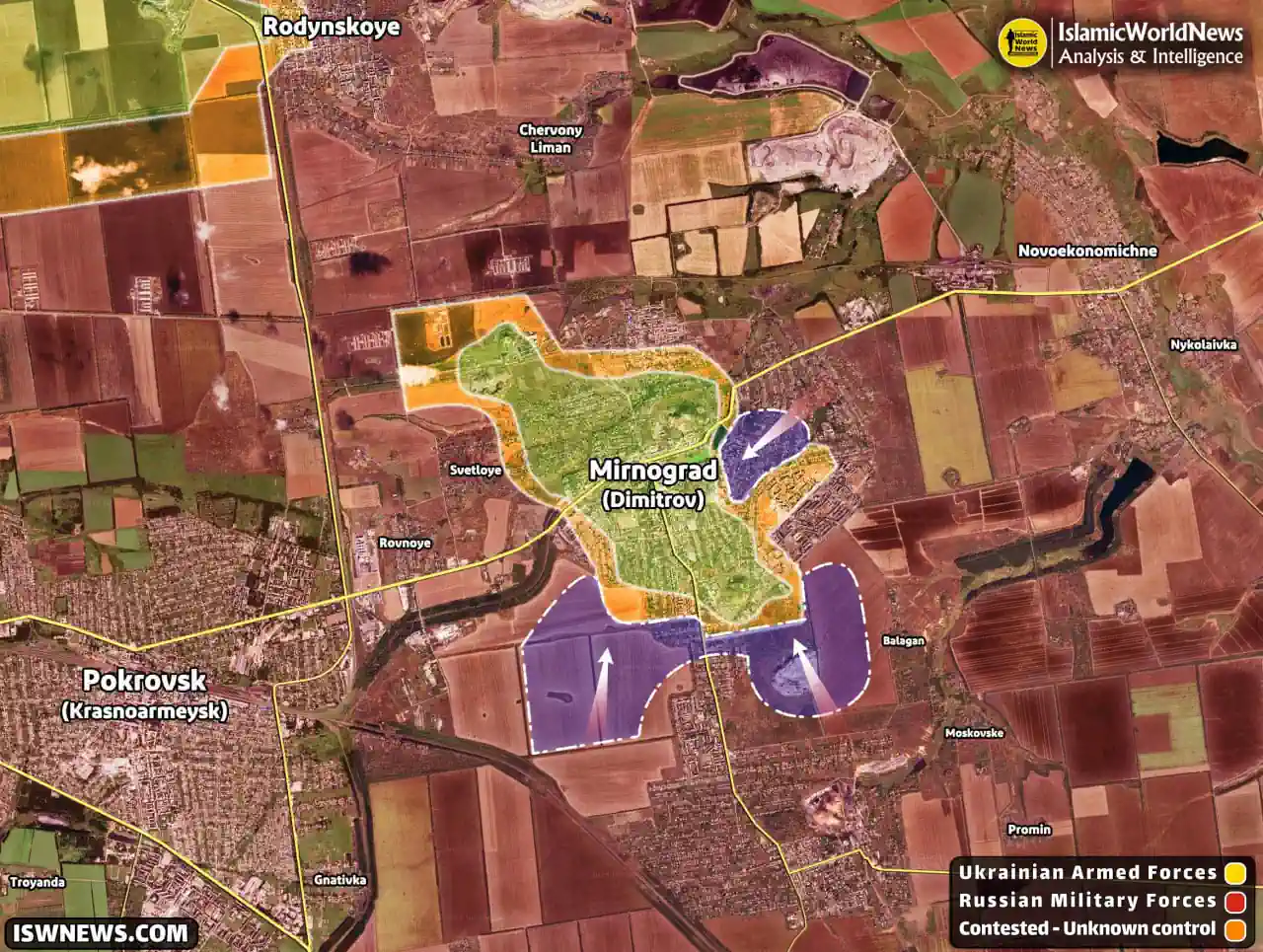
    On the northern Pokrovsk front, Russian troops captured the villages of Dorozhnoye, Ivanivka, and Novo Shakhove. They also seized Sukhetske and Sofiivka.

    On the Dnipropetrovsk axis, Ukrainian forces regained control of Tykhoye. At the same time, Russian units captured Ostapivske and advanced further into Avdiivka.

    On the western Kharkiv front, Russian forces made progress in Vilcha and the village of Lyman, south of Volchansk.

    On the Liman axis, Russian troops entered the village of Zakotnoye.

    Russian airstrikes against Ukraine’s critical infrastructure remain ongoing. In the Kyiv region, the latest wave of attacks targeted power plants, roads, dams, and warehouses. Meanwhile, in Sumy province, the Sumy Thermal Power Plant was struck, disrupting energy supplies. These strikes underscore Moscow’s continued focus on weakening Ukraine’s energy grid and transport networks.

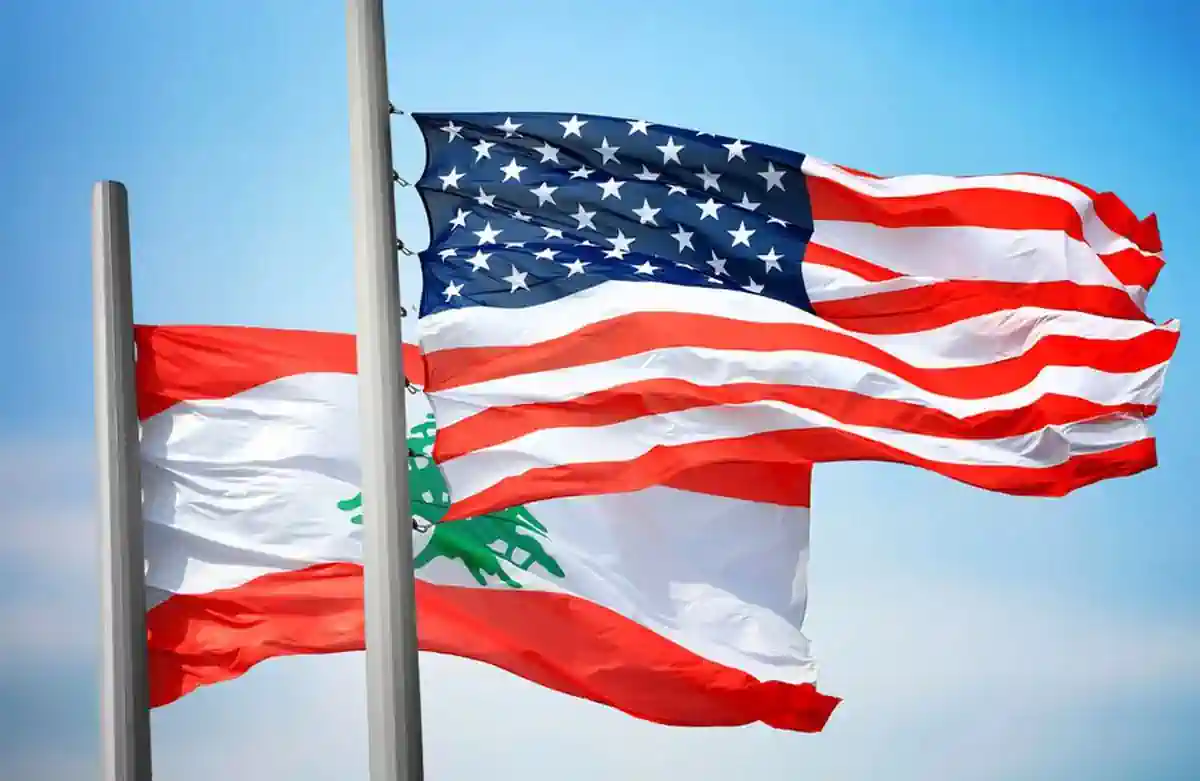
  • Washington Pressures Lebanese Army Amid Intensified Israeli Strikes; New U.S. Conditions for Military Aid to Beirut

    Washington Pressures Lebanese Army Amid Intensified Israeli Strikes; New U.S. Conditions for Military Aid to Beirut

    At the same time, Washington is increasing pressure on the Lebanese army, with Congress reviewing a proposal to reconsider military assistance to the country. The U.S. has also suspended the Lebanese army commander’s visit to Washington, linking any meeting with Joseph Aoun to specific conditions.

    These pressures are described as part of Washington’s strategy to reshape the security equation in Lebanon and strengthen the army’s role as an alternative to Hezbollah. However, structural and political obstacles hinder this goal, as Hezbollah’s entrenched position in Lebanon reduces the likelihood of altering the army’s trajectory.

    In this context, America’s conditional approach to military aid is not merely a security measure but part of a broader effort to contain Hezbollah and redesign Lebanon’s security order—a strategy whose implementation path remains uncertain.

  • Southern Transitional Council Withdraws from Areas in Northern Hadhramaut

    Southern Transitional Council Withdraws from Areas in Northern Hadhramaut

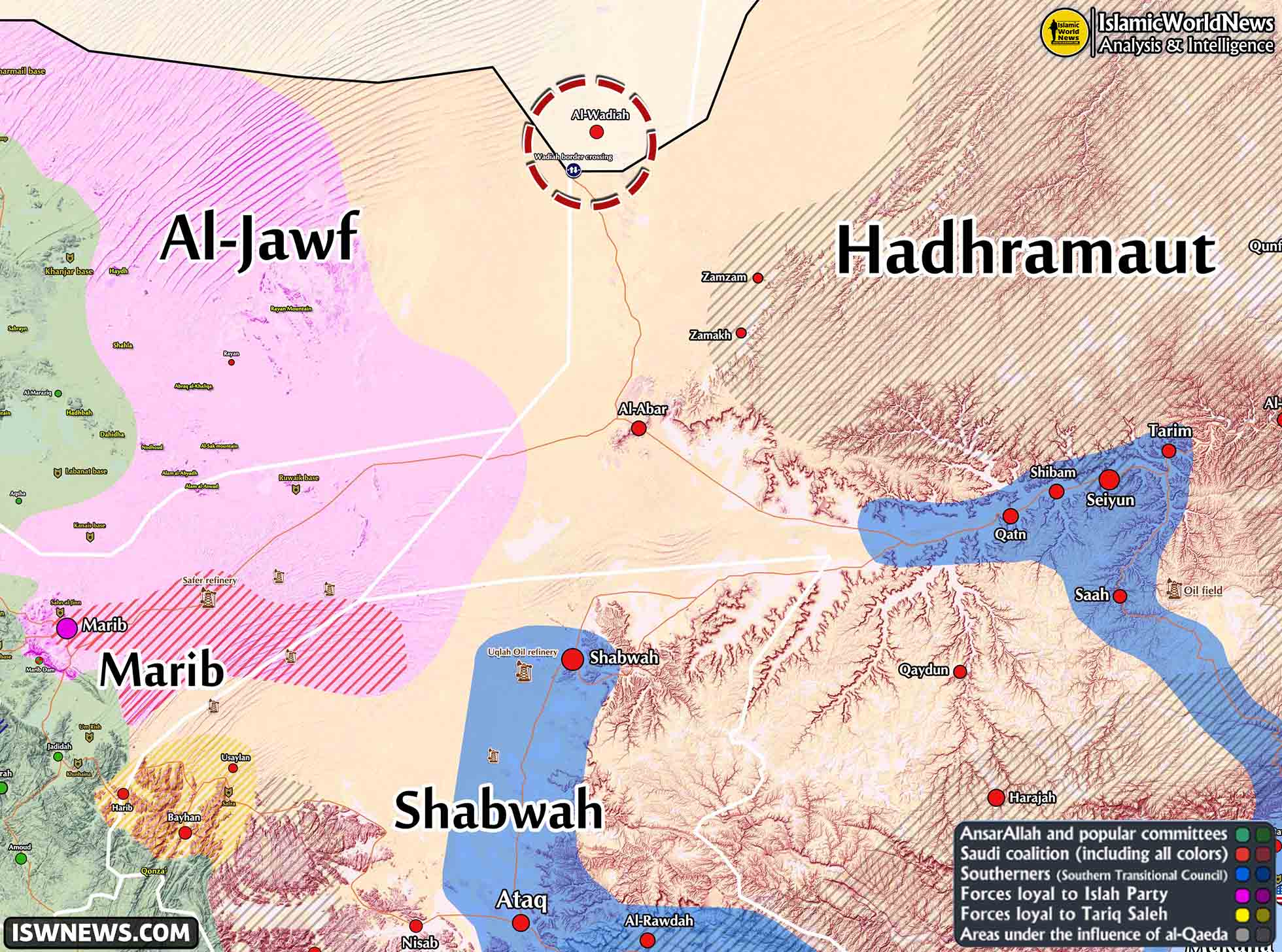
    In addition to this withdrawal, the Southern Transitional Council has issued directives to prepare for an exit from the Hadhramaut Valley and to transfer control of the area to the Saudi-backed al‑Dara‘ al‑Watan forces.

    As expected, Saudi warnings prompted the southern forces to retreat from their recent advances in Hadhramaut and to hand over the valley to Saudi‑aligned factions. However, the withdrawal process is still in its early stages, and it remains unclear how far the retreat—or the tensions between Emirati‑backed and Saudi‑backed groups—will go.

    It appears the southern forces, through cautious and calculated maneuvers, are seeking to secure a larger share of Hadhramaut’s oil wealth and intend to continue these moves as long as possible.

  • Joint Meeting of Iran, Saudi Arabia, and China Held in Tehran

    Joint Meeting of Iran, Saudi Arabia, and China Held in Tehran

    Following a preliminary meeting of experts and diplomats from the three countries, a trilateral session was held to review progress on implementing the Beijing Agreement signed in March 2023. The meeting was attended by Saudi Deputy Foreign Minister Waleed Al-Khereiji, Chinese Deputy Foreign Minister Miao Diao, and Iran’s Deputy Foreign Minister Majid Takht-Ravanchi.

    In their final statement, the three countries welcomed the continued improvement in Iran–Saudi relations, called for an end to Israeli attacks on Palestine, Lebanon, and Syria, condemned violations of Iran’s sovereignty and territorial integrity, highlighted advances in consular cooperation—especially regarding the Hajj—and reaffirmed support for an inclusive political solution in Yemen based on recognized international principles and under UN supervision.

  • Al‑Wadi‘ah Border Crossing Closed

    Al‑Wadi‘ah Border Crossing Closed

    At the same time, Saudi Arabia’s closure of the crossing coincided with the deployment of Al‑Dara‘ al‑Watan forces and armed groups loyal to Hashem al‑Ahmar (a parliament member and former Yemeni army officer under Ali Abdullah Saleh) along the road in the al‑Abr area, blocking vehicles from heading toward the border.

    Currently, the al‑Abr region and the 23rd Mika Brigade base are under the control of Al‑Dara‘ al‑Watan forces. Saudi Arabia is reportedly fortifying this position to support unspecified security measures. It appears Riyadh is preparing to counter the recent advances of the Southern Transitional Council in Hadhramaut and Shabwa provinces and to reclaim oil‑rich areas.