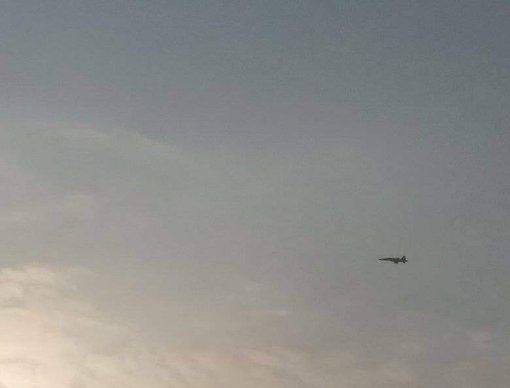
This shows that the claim of complete destruction of the Yemeni army’s air and missile weapons in the early years of the war was a bluff and Yemen has been successful in preserving some of its valuable arms.
It should be noted that during the reign of former president Ali Abdullah Saleh, the Yemeni army had about eleven F-5 fighter jets, including the training and assault type, some of which were destroyed or damaged after the Saudi-led coalition’s attack on Yemen.
Others were transferred to unknown locations by the Ansar Allah movement and were hidden so that the Saudi-led coalition could not identify their locations and destroy them, and today’s operational fighter jets in Yemen are related to those ones, which have remained untouched.
Flight of the Yemeni army fighter jet over the sky of Sana’aFlight of the Yemeni army fighter jet over the sky of Sana’a
At noon today, the Azerbaijani Ministry of Defense, by publishing a statement, officially announced the beginning of a “local anti-terrorist operation” against the Nagorno-Karabakh government. The government of Baku stated that the purpose of this operation is to disarm and drive out the Armenian armed forces present in Nagorno-Karabakh and restore security to the region. In this statement, it is stated that the operation was carried out with the coordination and information of Russia and Turkey.
The operation follows weeks of clashes and after three years of tension between Azerbaijan and Armenia over the Nagorno-Karabakh, also known as Artsakh. Azerbaijan has announced a new offensive in the breakaway region of Nagorno-Karabakh, a major escalation which could turn the simmering dispute into all-out war.
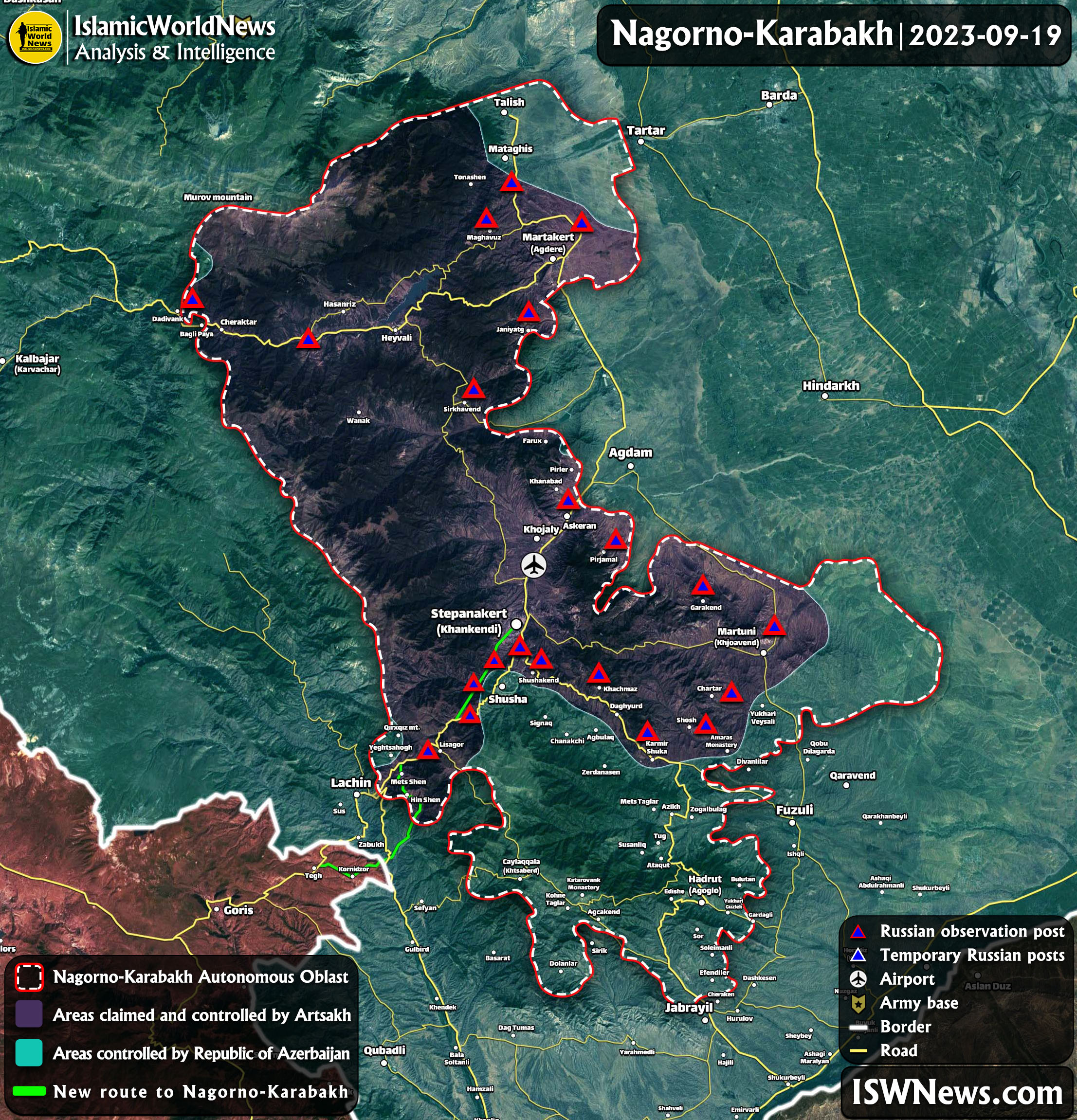
In the field and based on the available visual information, the artillery of the Republic of Azerbaijan Army targeted the Nagorno-Karabakh (Artsakh) air defense systems in Stepanakert (Khankendi) the center of Nagorno-Karabakh with several Israeli LORA missiles.
The targeting of Artsakh air defense systems in Stepanakert with the Lora missileThe launch of the Lora missile by the Republic of Azerbaijan towards Karabakh
At the same time as this attack, the drones of the Republic of Azerbaijan were also seen over the region; According to the sound of drones, it seems that the Azerbaijani army has carried out another attack against the Armenian positions using Israeli Harop suicide drones.
Suicide drones over Nagorno-Karabakh
Also, scattered clashes continue on the contact lines between the parties. There are also reports that some civilians were wounded in the exchange of fire near the contact lines.
Actually, a new war and the battles in the Karabakh region were a clear and expected event. After the Second Nagorno-Karabakh War, which was left with a chaotic situation and a vague ceasefire agreement and somehow became a bone within a wound, it was clear that the situation in the region would move towards a new war. During the past three years, Armenia has been involved in various internal chaos and wrong decisions, and on the other hand, the government of Baku was preparing for another war by strengthening its military and political ties with others and planning coherently.
Considering the current situation of Russia and the war in Ukraine and the differences that exist on the Armenian front, undoubtedly the Armenians of Nagorno-Karabakh will have nothing to say against the Azerbaijan threats, And its is clear that after the occupation of Nagorno-Karabakh by Azerbaijan, the so-called Zangezur corridor and the ambitious plans for the occupation of the southern regions of Armenia will be more on the agenda of the Baku government.
Military situation in Karabakh – click to view full size
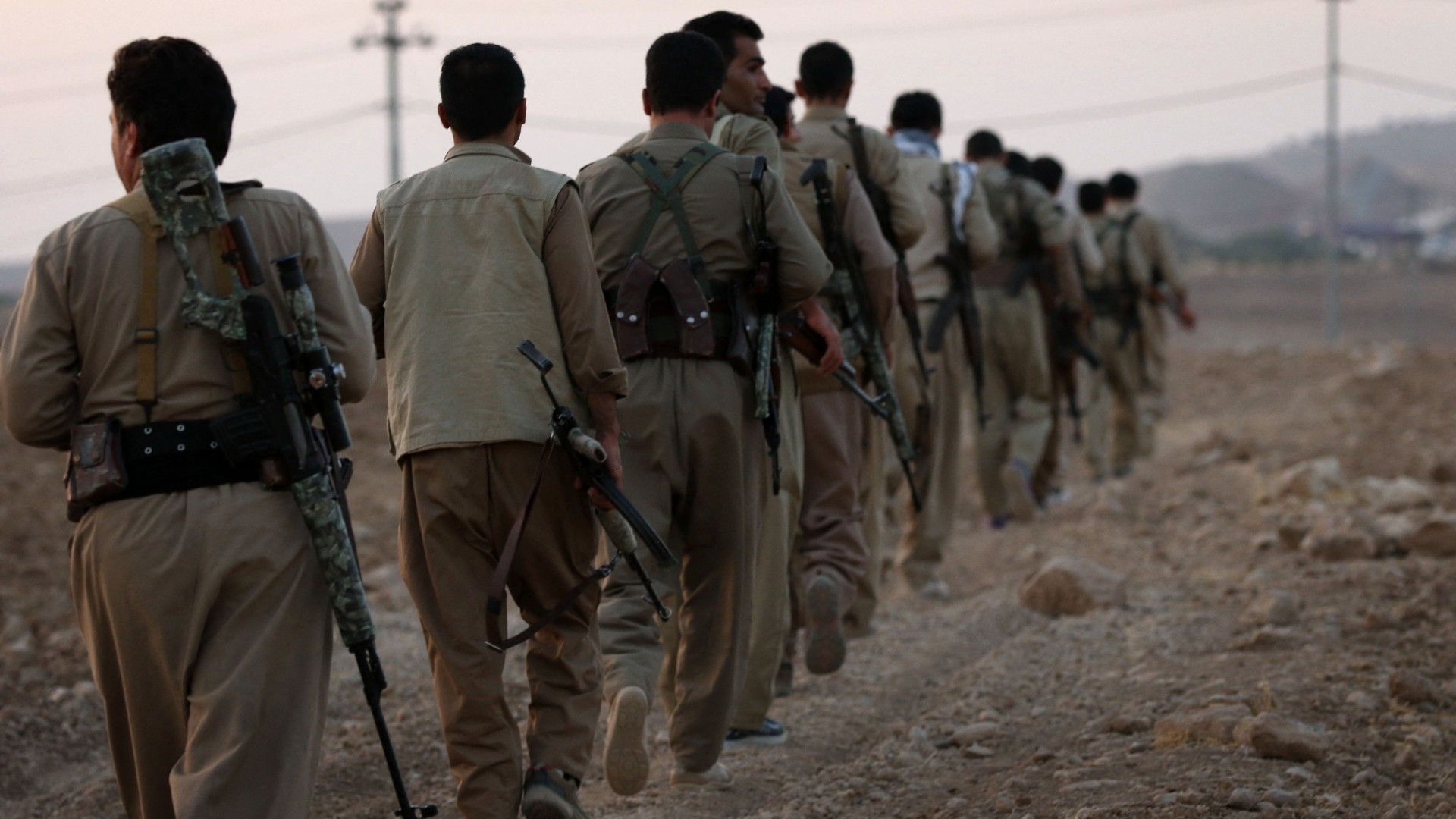
The informed source also claimed in an interview with Deutsche Welle that the KDPI left behind its main headquarters in the Koysinjaq town dubbed “Democratic Castle” after three decades of being stationed there.
It is said that Komala Kurdistan Party and the Komala of the Toilers of Kurdistan have also retreated from their positions in Iran-Iraq border areas.
Following the withdrawal of anti-Iran armed groups, Iraqi National Security Advisor Qasim al-Araji, heading a high-level security delegation traveled to Erbil on September 18 in a bid to follow up on the implementation of a security agreement between Tehran and Baghdad.
This visit was carried out on the orders of Prime Minister and Commander-in-Chief of the Iraqi Armed Forces Mohammed Shia’ al-Sudani.
Simultaneously, Iranian armed forces deployed armored, artillery, missile, drone, and helicopter units to the country’s northwestern borders.
Less than 24 hours remain until the end of the deadline determined by Iran, in particular the Ground Forces of the Islamic Revolution Guards Corps’ (IRGC) ultimatum to disarm all terrorists in the Kurdistan Region of Iraq; if the Iraqi government fails to act according to the terms of the security agreement with Iran, the Iranian armed forces will initiate operations against anti-Iran armed groups stationed in the Kurdistan Region of Iraq.
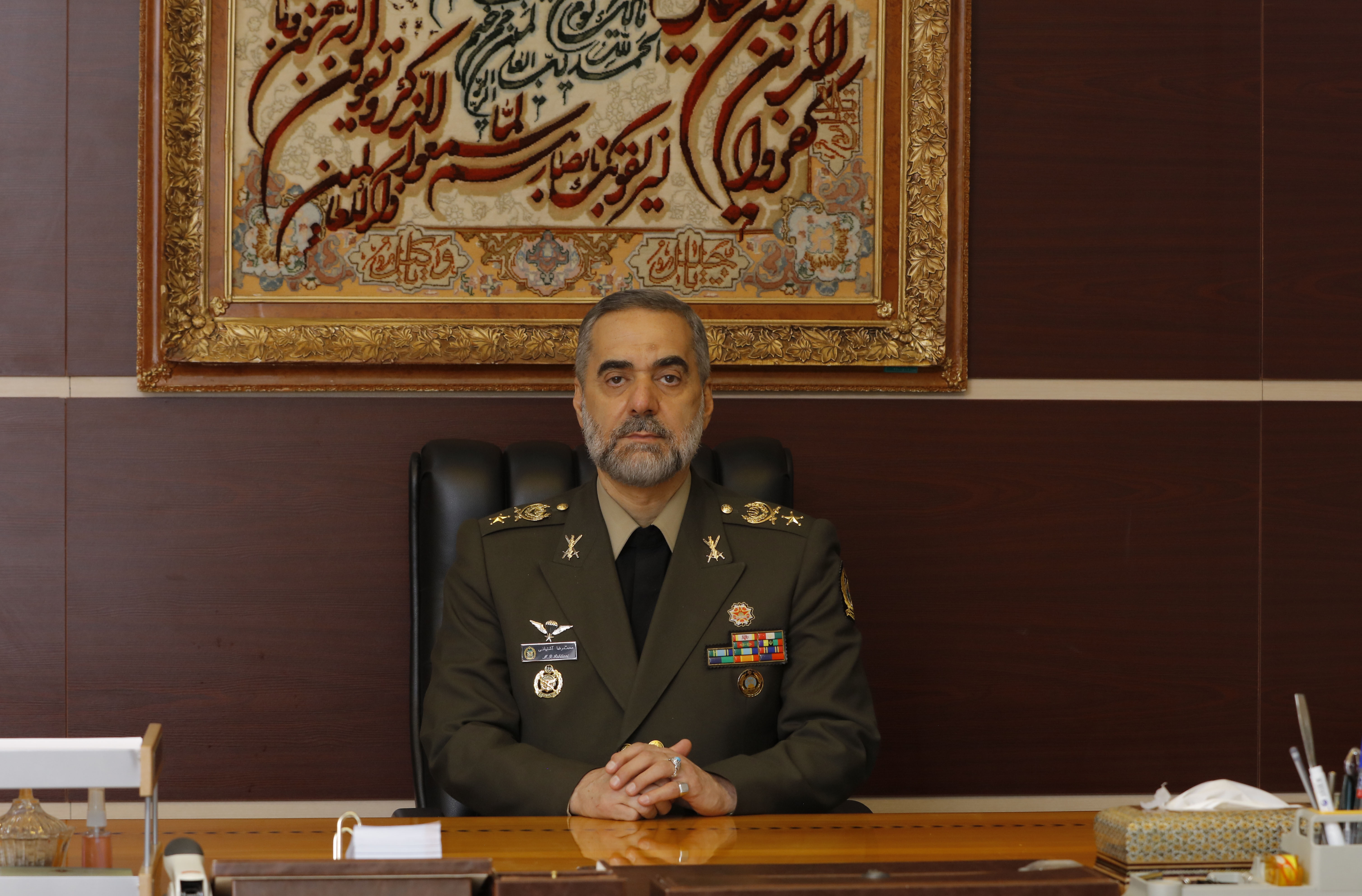
On September 17, Brigadier General Mohammad-Reza Gharaei Ashtiani, Iran’s Minister of Defense and Armed Forces Logistics, referred to the agreement between Iran and Iraq to disarm and expel terrorists from the Kurdistan region, noting that the Islamic Republic will not extend the deadline, and that Tehran will act according to the agreement we made at due time.
In an interview with Iran newspaper, Ashtiani pointed to the actions taken by Iraq in this respect, stating that some actions have been taken; we will evaluate in the last minute and make a decision based on the evaluation.
The statements come as in recent days, armored units, artillery, missiles, drones, and helicopters of the Ground Forces of the Islamic Revolution Guards Corps (IRGC) have been deployed to the northwestern borders of the country.
Earlier, Brigadier deputy commander for operations of the Islamic Revolution Guards Corps (IRGC) General Abbas Nilforoushan, emphasized that September 19 is the deadline for the Iraqi government to disarm terrorist groups in the Kurdistan region of Iraq.
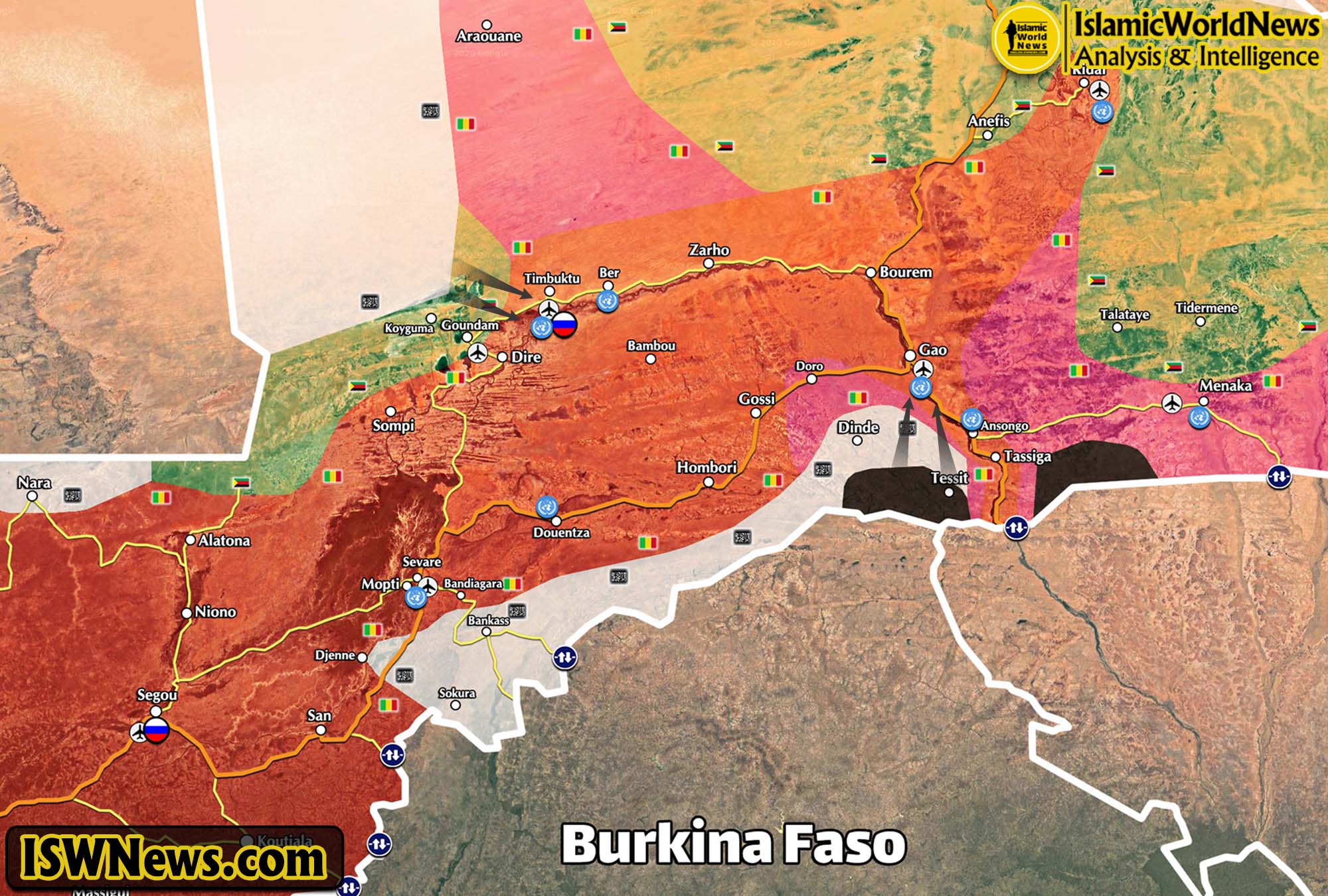
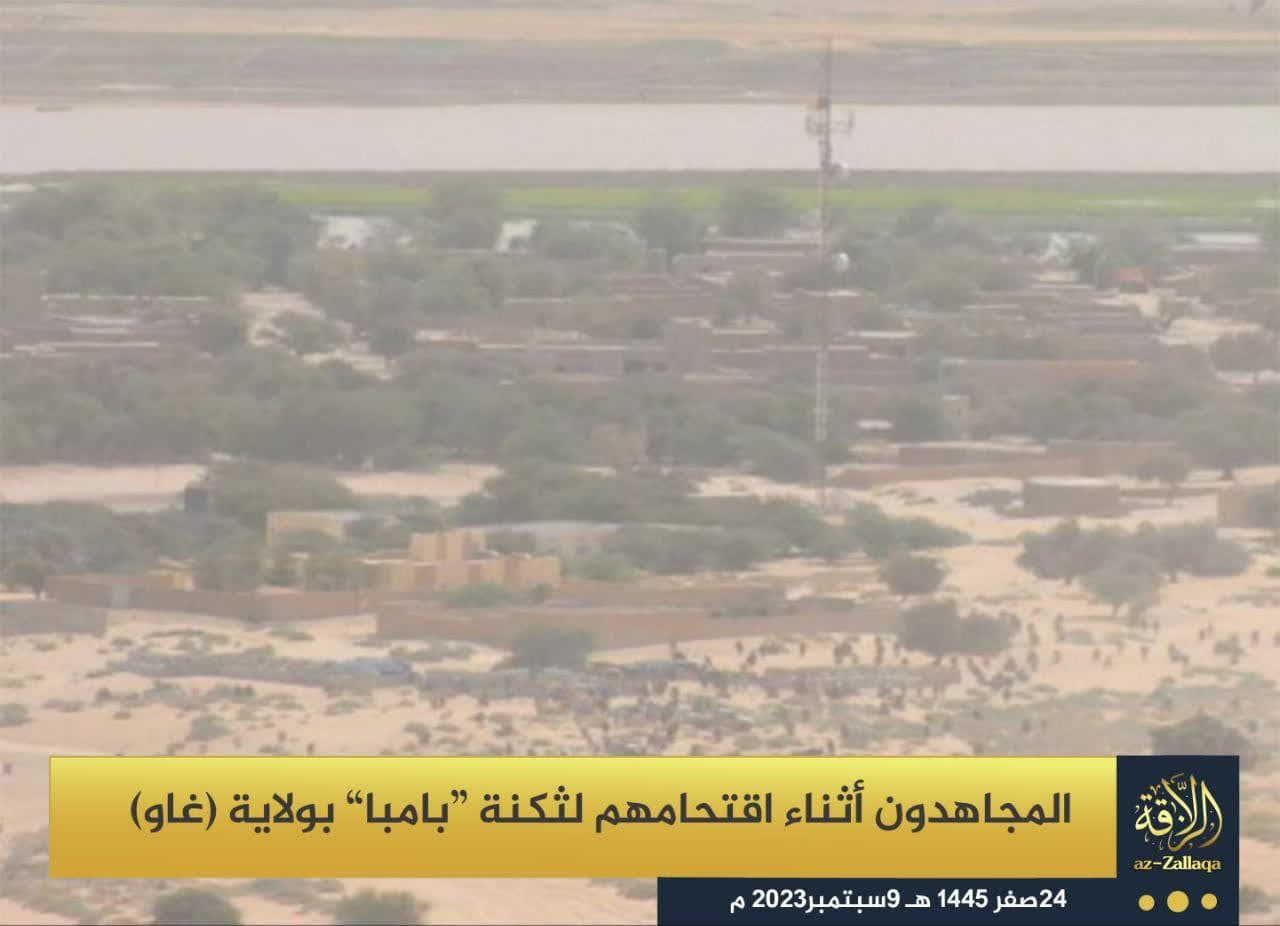
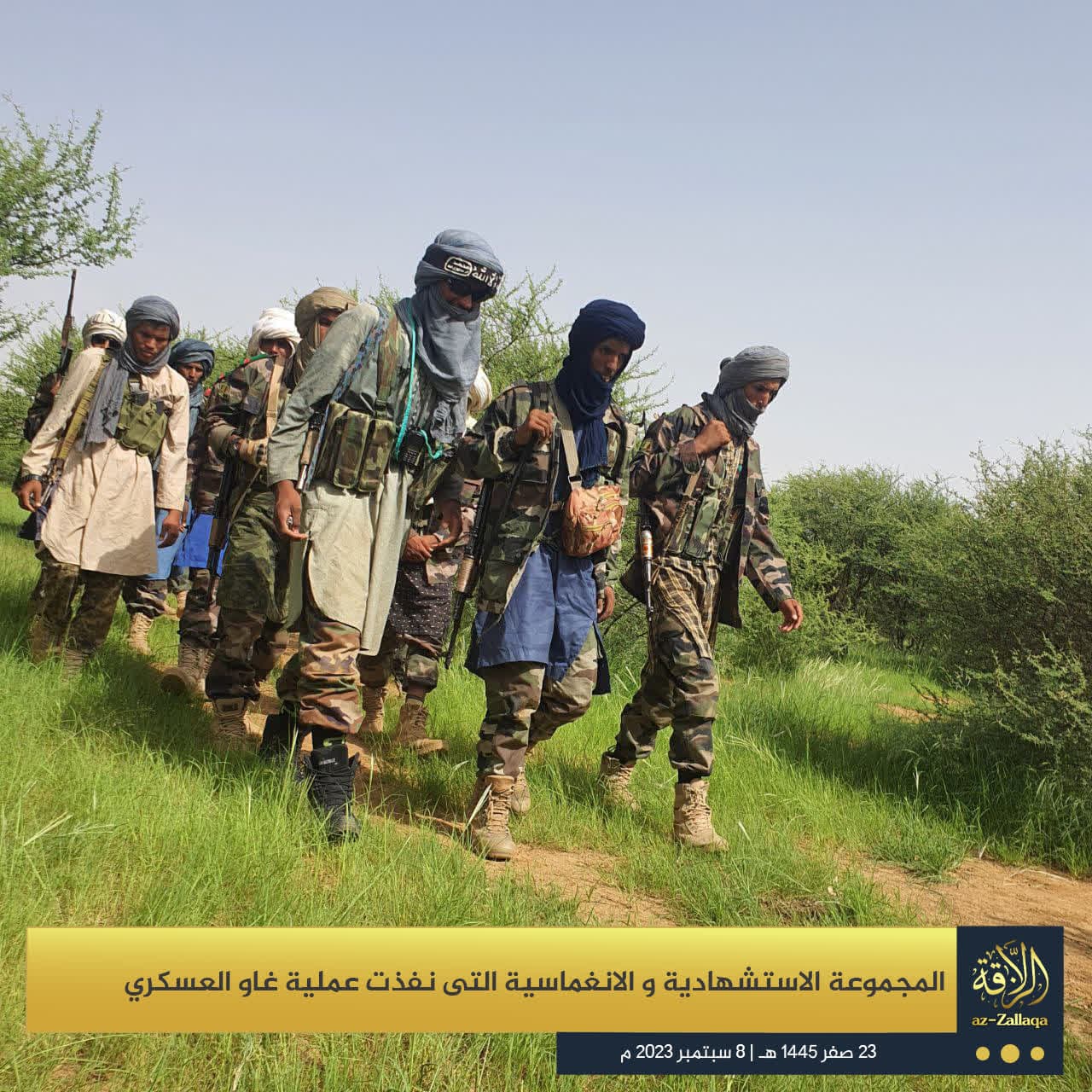
According to this report, elements of the Jama’at Nasr al-Islam wal Muslimin (JNIM) detonated one of the suicide vehicles near the airport gate, another one near the Runway, and the third vehicle among the military gathering, while the fourth vehicle exploded among the Wagner Group’s forces on Friday (September 8, 2023).
Following these explosions, the JNIM militants engaged in clashes with both forces of the Malian army and Wagner Group for a day, resulting in the deaths of tens of Malian and Wagner forces, as well as the destruction of a significant part of the airport, an unknown number of airplanes, and dozens of vehicles.
The Malian government also issued a statement, confirming the explosion of two suicide vehicles in Gao city on Friday. According to the official government statement, in these attacks, 64 people, including 49 civilians and 15 military personnel, lost their lives.
In response to the heavy casualties from this crime, the government declared three days of national mourning. The Malian government also announced that in retaliation for the terrorists’ attack, government forces have killed 50 militants in a ground and air operation.
Images of Jama’at Nasr al-Islam wal Muslimin attacks on Gao
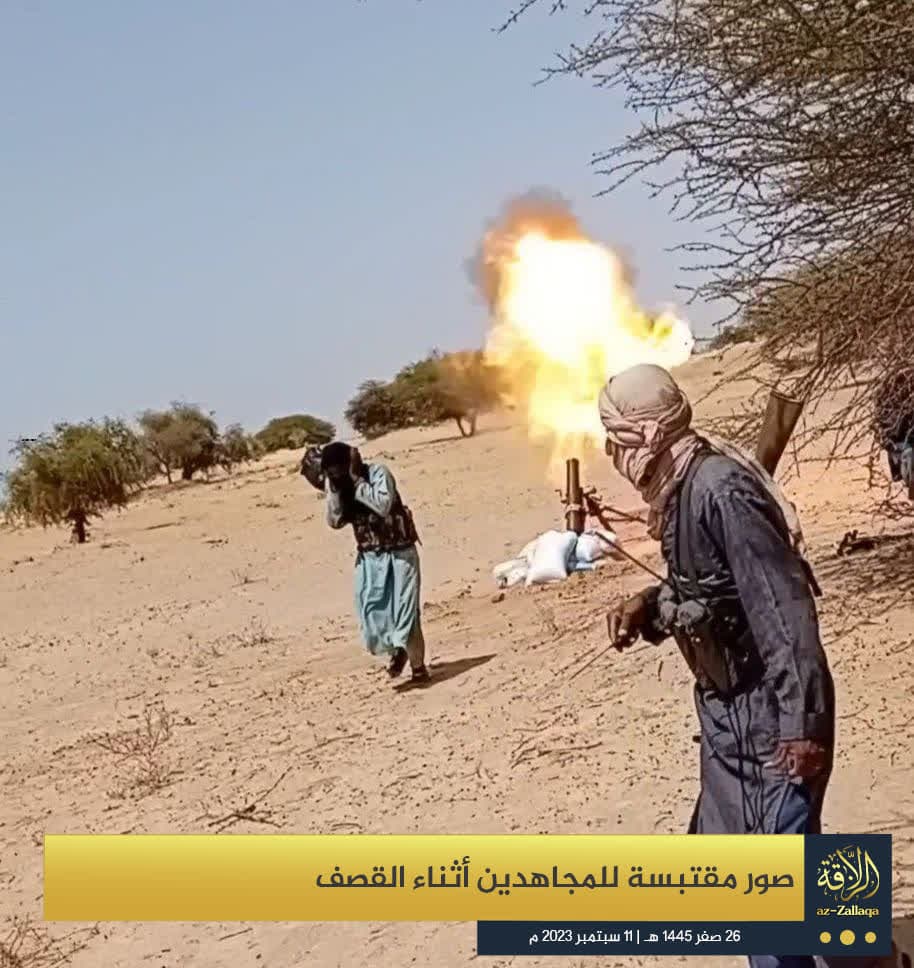
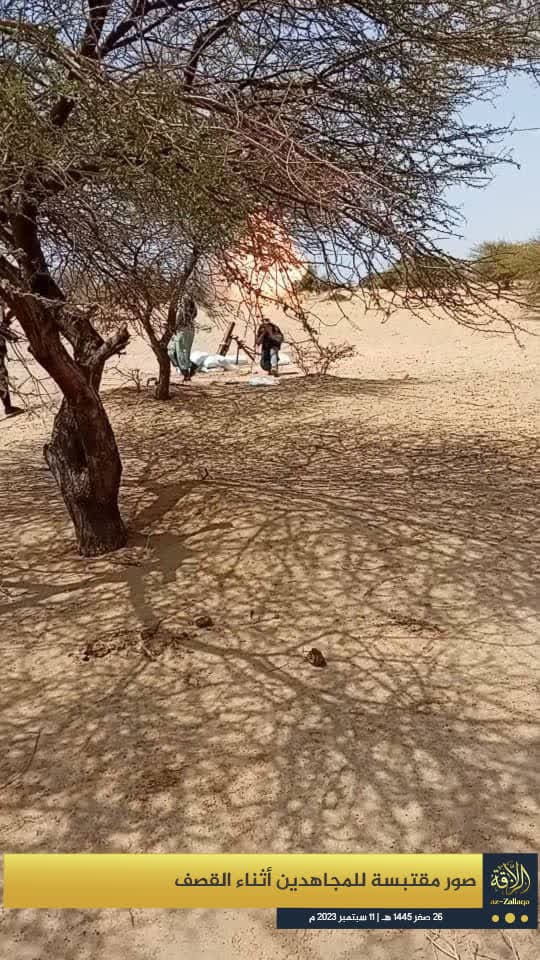
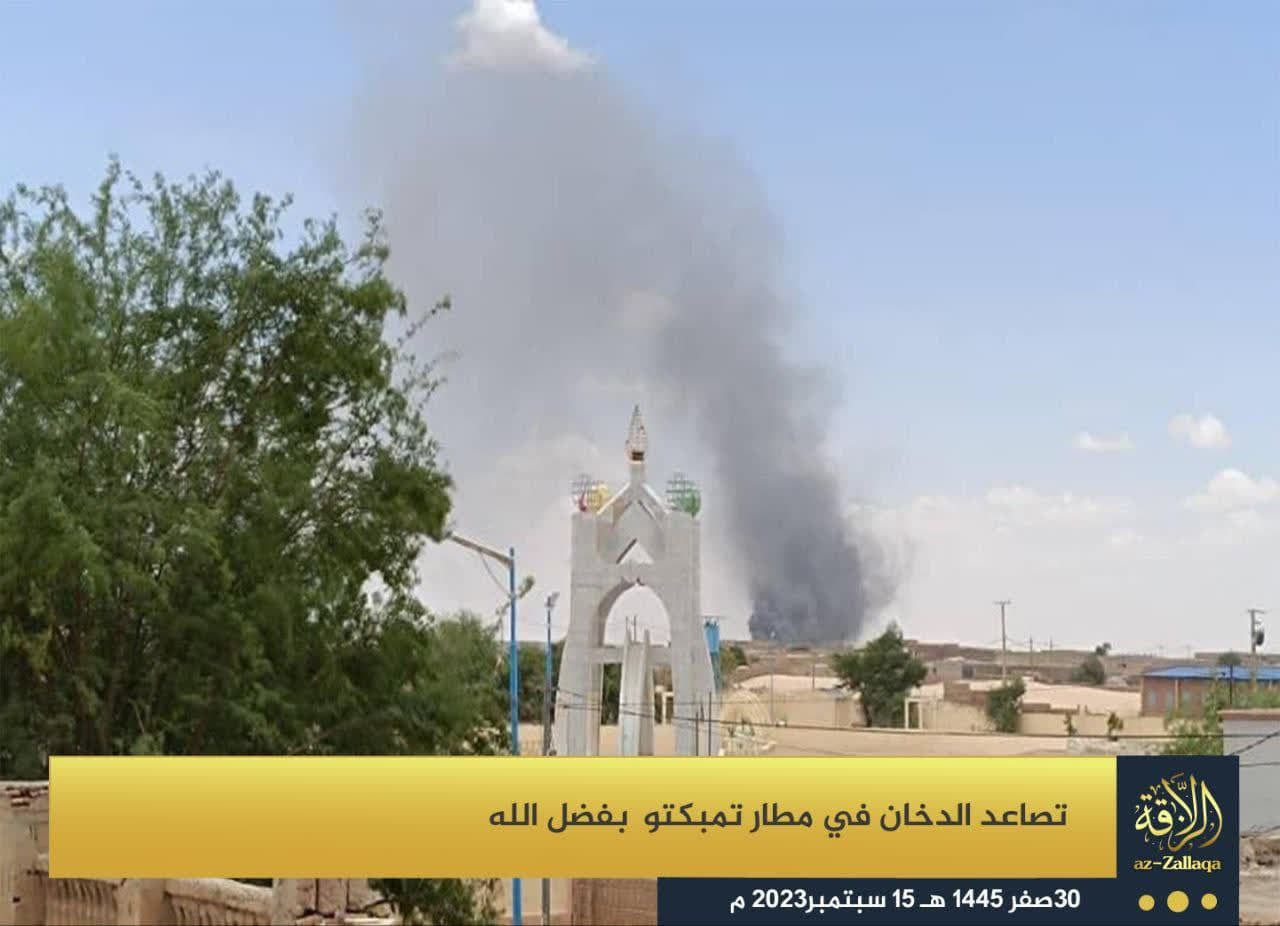
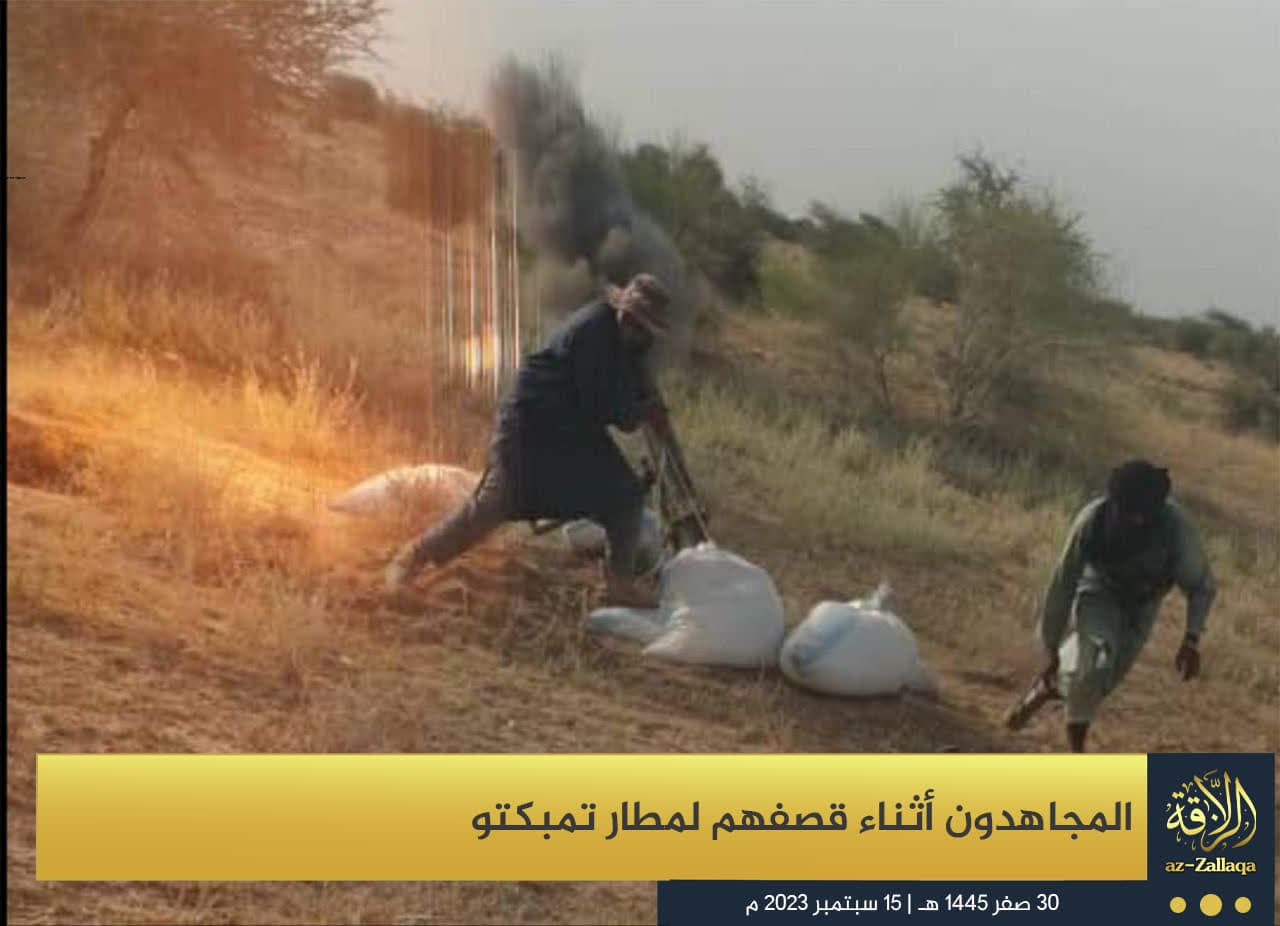
Also, on September 14 also the Az-Zallaqa Institution announced a mortar attack on Timbuktu airport.
This media also reported on Monday, September 11, a mortar attack on Timbuktu Airport in the center of Mali. This attack caused damages to the airport and suspended the flights.
Images of Jama’at Nasr al-Islam wal Muslimin attacks on Timbuktu airport
Az-Zallaqa also published a video of the wreckage of a Mi-8 helicopter allegedly belonging to the Wagner PMC or Malian Army, which was shot down by JNIM elements on September 8 in Segou district. According to Az-Zallaqa, several Wagner PMC forces were killed and wounded.
Wreckage of Mil-8 helicopter shot down by JNIM
According to Az-Zallaqa, elements of this group clashed with Wagner PMC forces the next day at the same spot and disabled another helicopter.
It should be noted that recently, local sources reported the siege of Timbuktu city by the JNIM terrorists. The attacks of Jama’at Nasr al-Islam wal Muslimin are increasing while the international forces present in Mali, known as MINUSMA, are withdrawing their forces from this country at the request of the Mali government.
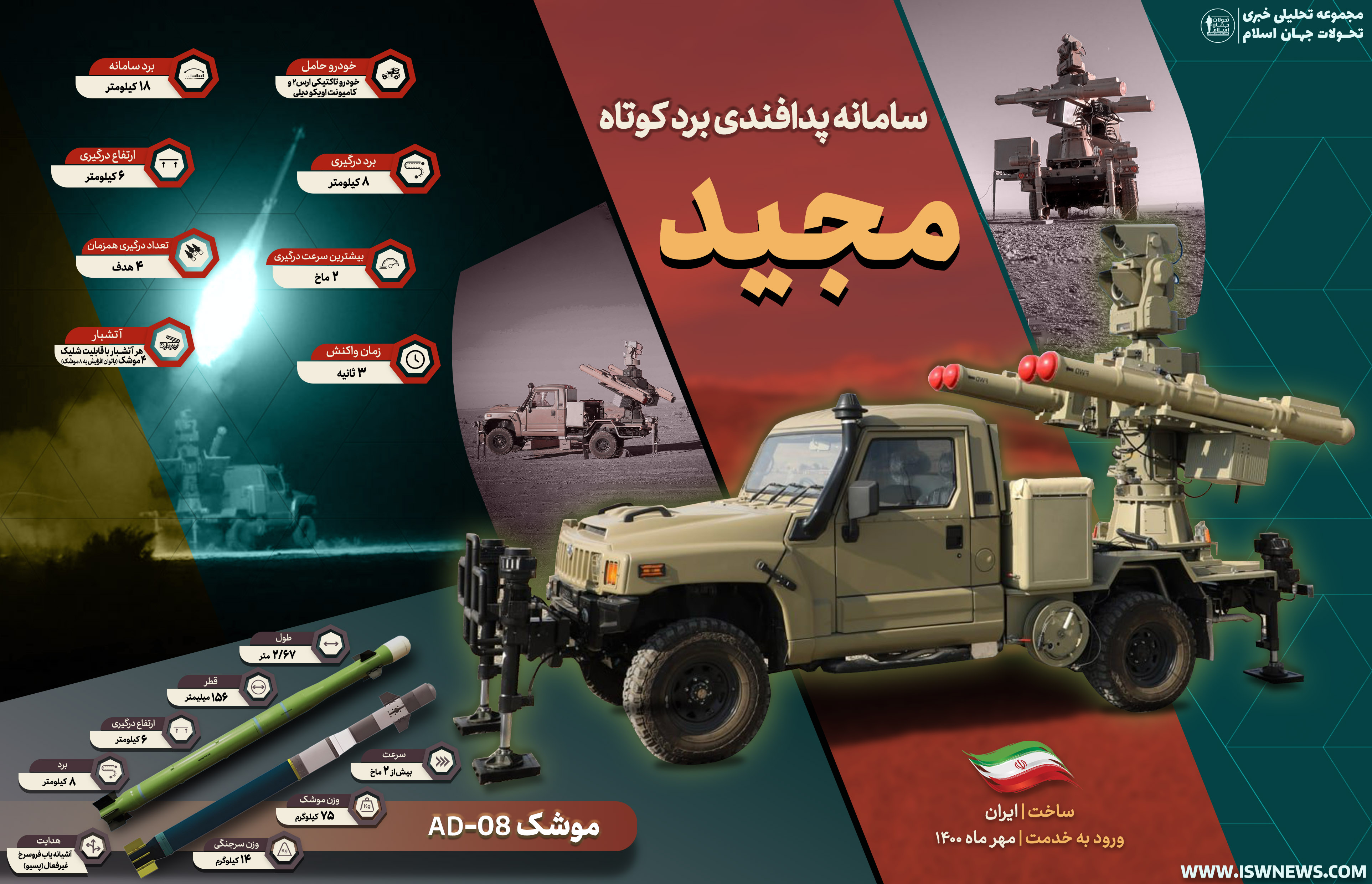
The Majid Air Defense System is named in memory of the Iranian martyr Majid Ghorban-Khani. This air defense system has been produced by the Defense Industries Organization (DIO) of the Ministry of Defense and Armed Forces Logistics of the Islamic Republic of Iran in a bid to upgrade short-range and low-altitude defense capabilities and it has high mobility and passive guidance for better survival in the battlefields of the today’s world.
History: After the end of the 8-year war imposed by the Iraqi Baath regime on Iran as well as the studies conducted in the Islamic Republic, there was a strong feeling of need for more coherent defense potential against flying targets that were flying at low altitudes. The presence of close air support fighter jets that flew at low altitudes and bombed the front lines during the Sacred Defense (Iraq-Iran war) showed that the quality of systems like Rapier surface-to-air missile system and their small number is not enough to confront enemy fighter jets and create a safe sky. For this reason, in the 1990s, the Islamic country started buying and developing air systems like Ya Zahra air defense system.
After the first [Persian] Gulf War and the United States’ extensive use of various types of cruise missiles, the Islamic Republic of Iran decided to buy systems such as Tor Soviet-era air defense missile system from Russia to confront the threat of cruise missiles. The process of development and study in the field of dealing with cruise targets continued until the 2010s and nowadays a wide range of missile systems and anti-aircraft canons have been produced and utilized to deal with various targets such as drones, cruise missiles, helicopters, and close air support fighter jets.
In 2020, the then deputy Minister of Defense and Armed Forces Logistics of the Islamic Republic of Iran announced the completion stages of a system called Majid, but no other details were published. The Majid Air Defense System was unveiled and introduced for the first time in the parade on April 18, 2021. The air defense system included two missiles and an airborne radiation detection system installed on an Aras 2 vehicle.
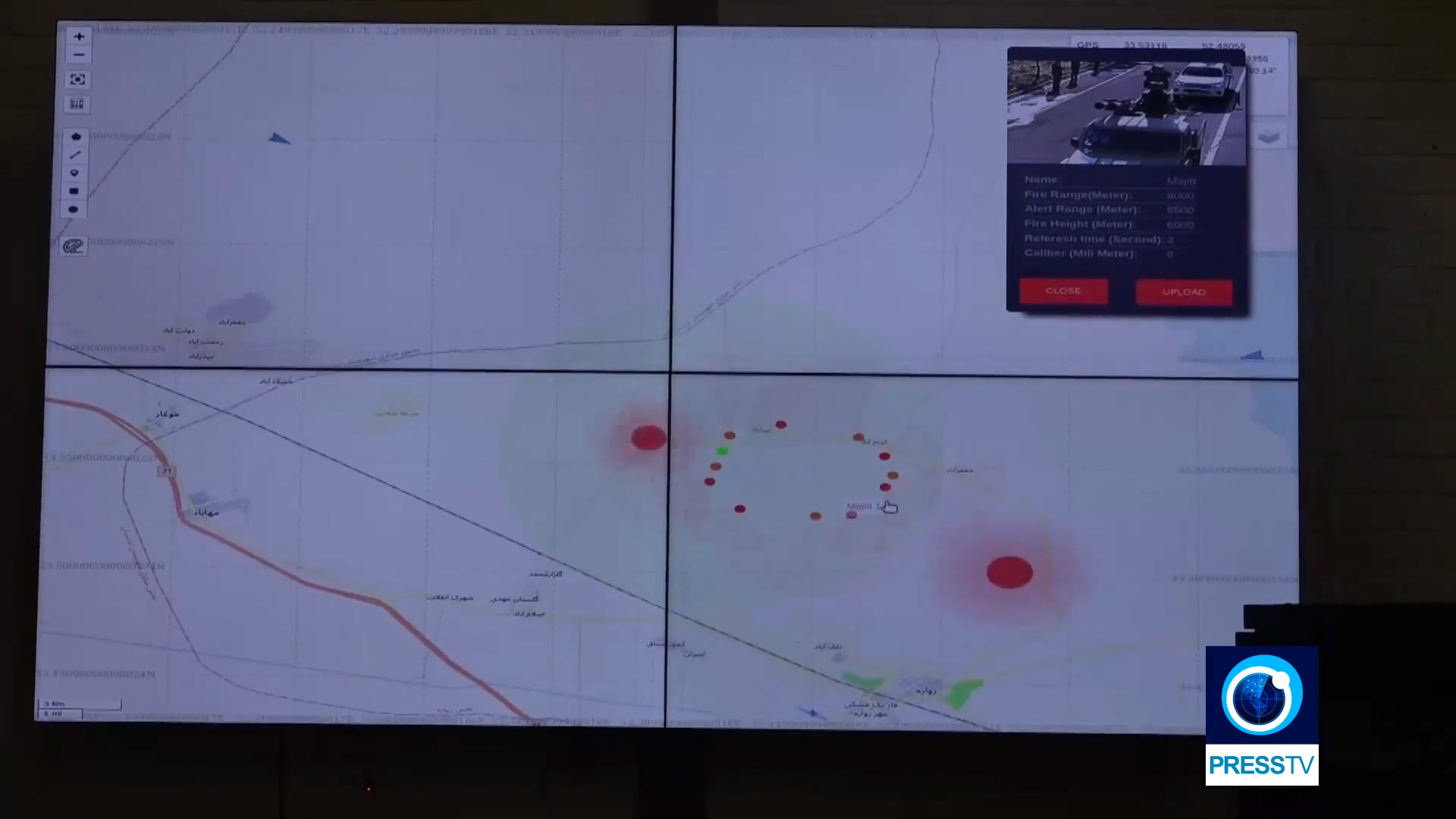
Some specifications of the Majid Air Defense System were released in a video introducing the Alborz three dimensional phased-array radar and the Borhan weapons control and command system on September 1, 2021. In this video, an image of the Borhan control screen was seen, indicating the specifications of the Majid Air Defense System as well as the ability of this system to be linked to the Borhan control and command system.
The video of the unveiling of Alborz radar and Borhan system, here is a picture of the linking of Majid system to Borhan system.
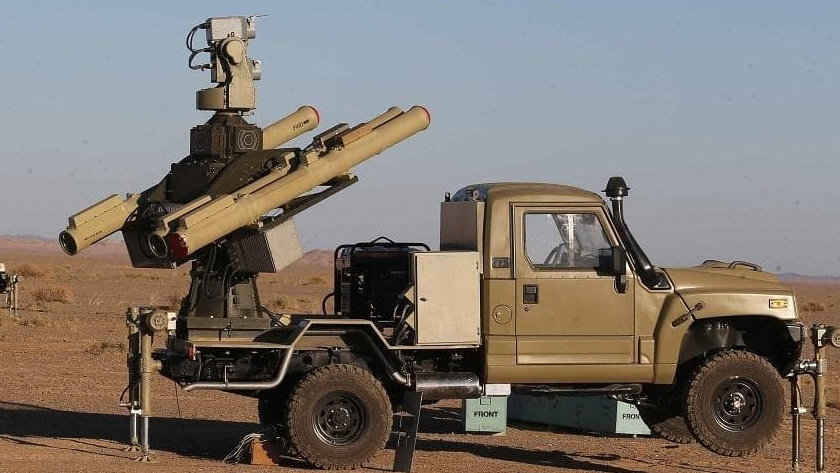
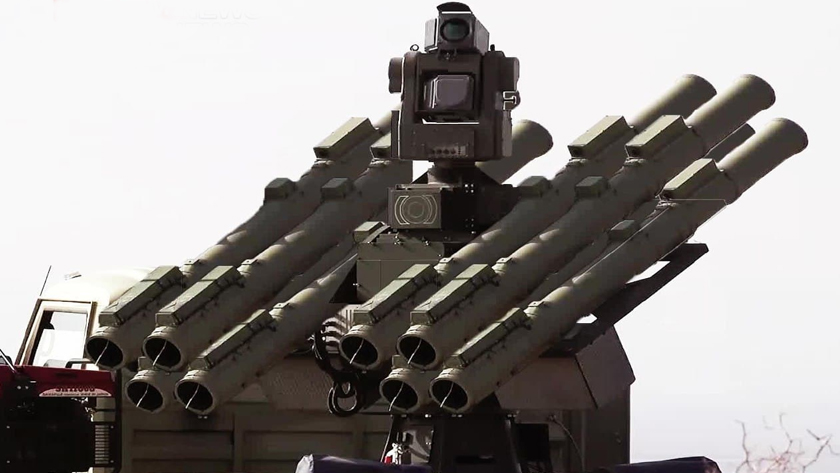
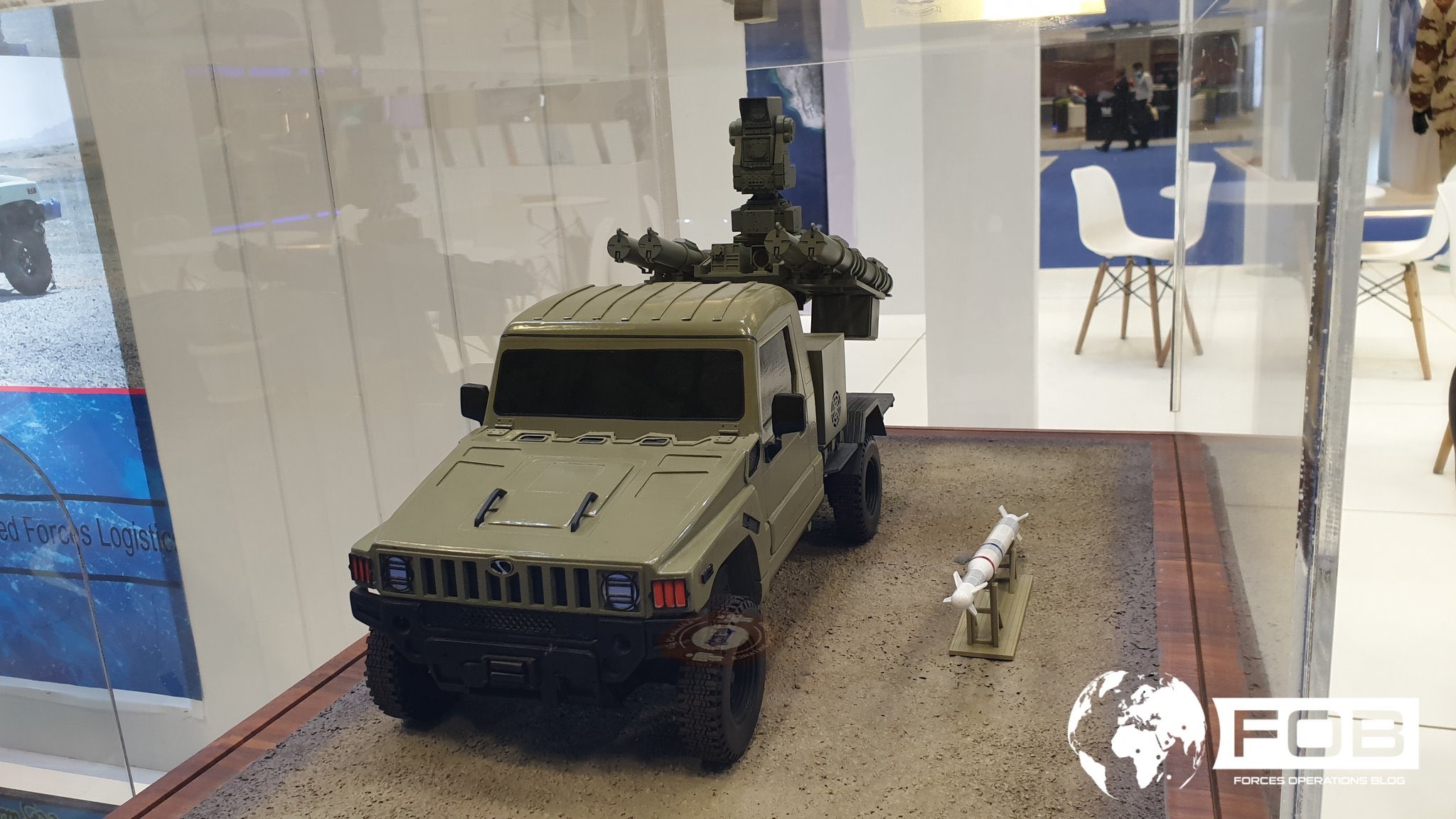
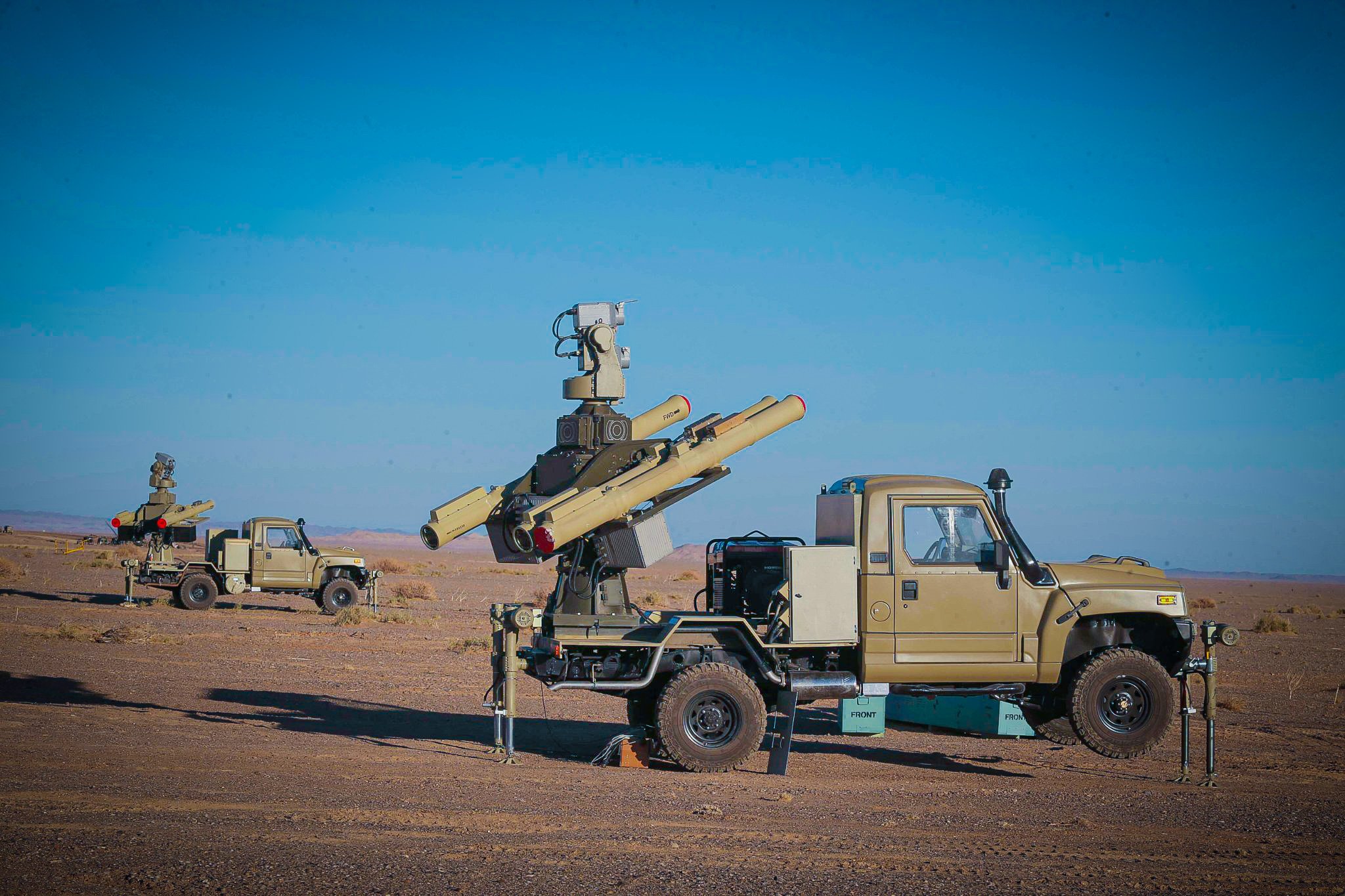
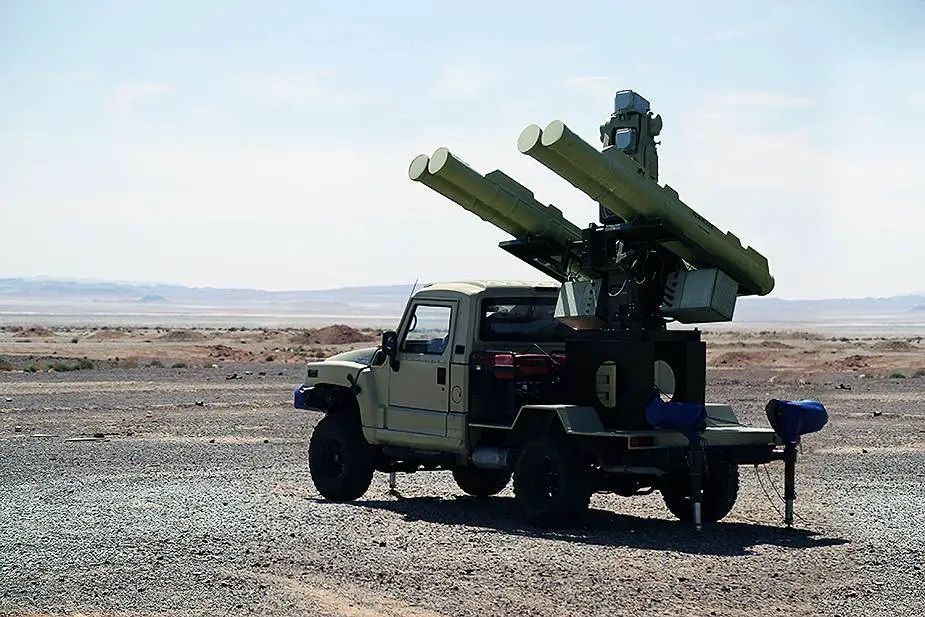
Design: The fully mobile short-range Majid Air Defense System consists of two main parts. One part is its missiles and the other part is an electro-optical detection and tracking system, both parts are installed and used on an Aras 2 tactical vehicle. All parts of the system are located in the vehicle’s cargo section.
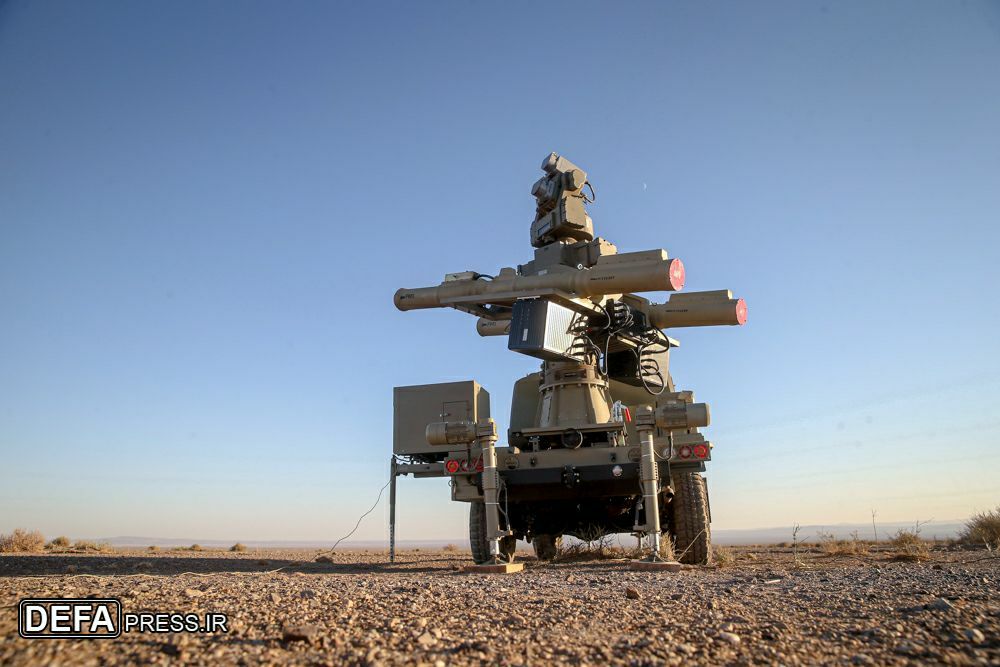
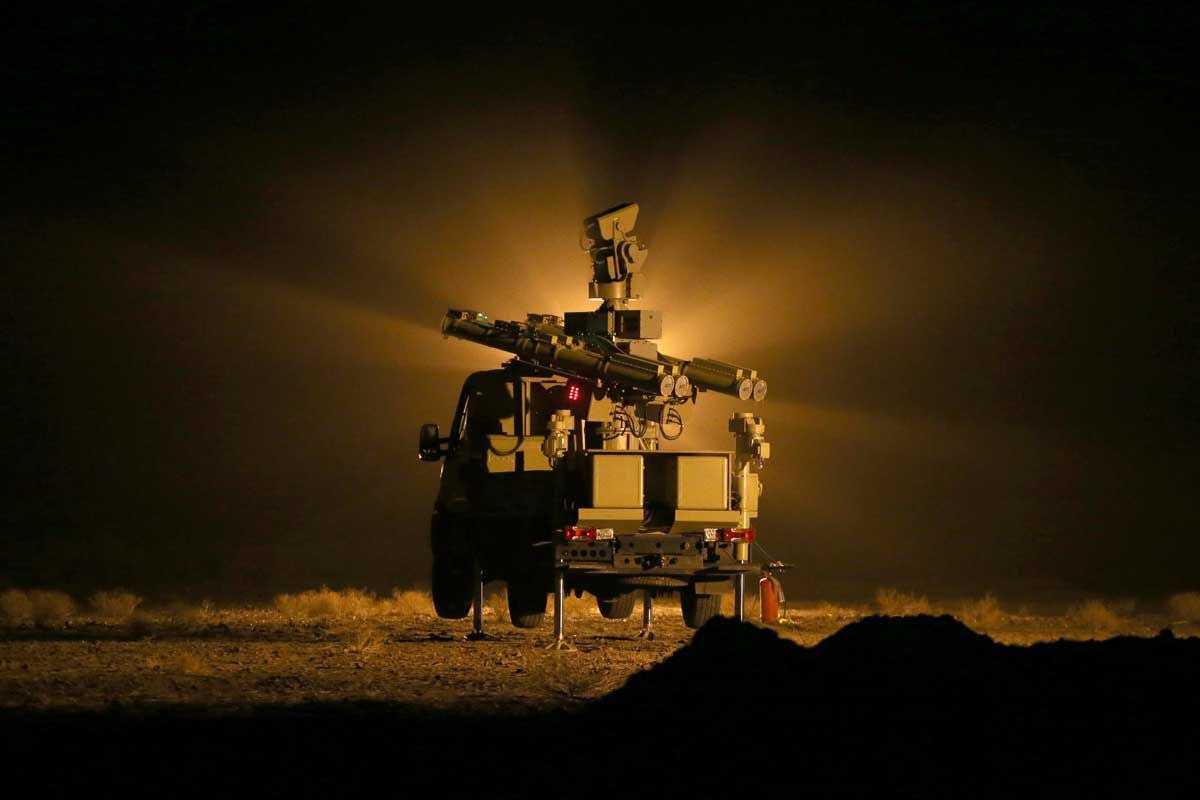
The weapon station includes four AD-08 missiles (capable of being increased to eight) on both sides and an electro-optical system in the center. The weapon station has a 360-degree rotation capability, and the electro-optical system also has a 360-degree rotation capability independent of the weapons station. This system is also installed on a 4×4 Iveco Daily truck in addition to the Aras 2 tactical vehicle.
The reason for such a change in a truck could be to create better camouflage during movement and a lower chance of detecting this system.
Majid system on Iveco Daily truckMajid system on Aras tactical vehicleClick to view full size image
Carrier Vehicle: The Aras 2 tactical vehicle is a 4×4 tactical vehicle manufactured by Iran’s Ministry of Defense. This vehicle offers high mobility, high speed, and off-road capability. The Aras 2 tactical vehicle is a 4×4 tactical vehicle manufactured by Iran’s Ministry of Defense. This vehicle offers high mobility, high speed, and off-road capability.
This provides the Majid system with the ability to ambush or quickly relocate after tracking a target. The Iveco daily truck is a light 4×4 commercial truck made by the Italian company IVECO. This truck has a greater transport capacity than Aras 2 tactical vehicle and has probably been used to carry more missiles. Another possibility is better camouflage by the Iveco daily truck due to more space on the truck so that it can easily move on roads.
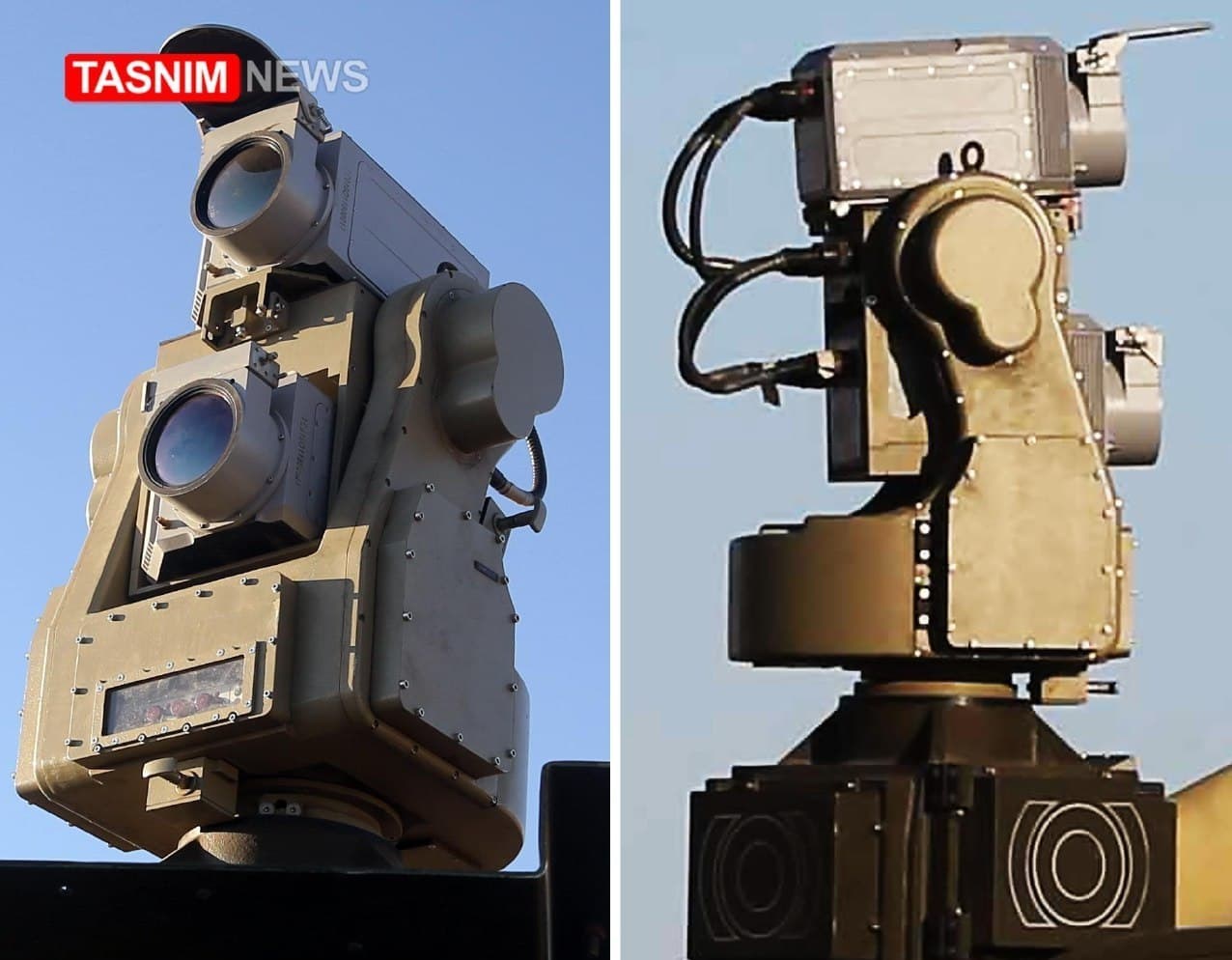
Electro-optical tracking and targeting system: The electro-optical tracking and targeting system used in the Majid Air Defense System includes two cameras that are placed on top of each other and in the center of the weapon station.
The electro-optical tracking and targeting system has a continuous 360-degree rotation capability independent of the weapon station. This system includes a daytime camera and a thermal camera, capable of operating at all times of day and night and in all types of weather.
The electro-optical tracking and targeting system used in the Majid Air Defense System can detect targets at a maximum range of 15 kilometers and guide four missiles simultaneously towards targets, allowing it to simultaneously protect itself from four different directions.
Electro-optic system cameras belonging to Majid air defense system
In normal mode, electro-optical systems rotate towards the target and guide a missile that has been fired until it hits.
In this state-of-the-art mode, the electro-optical system only tracks one target and merely guides one missile. But with continuous rotation of the electro-optic system, it is possible to find different targets in all directions and then give a firing order.
In this mode, the camera can continuously monitor its surroundings, and to a great extent it can reduce the possibility of being surprised as well as the destruction of the system. In this guidance method, the electro-optic system becomes a search and targeting system capable of finding several targets that can guide several missiles.
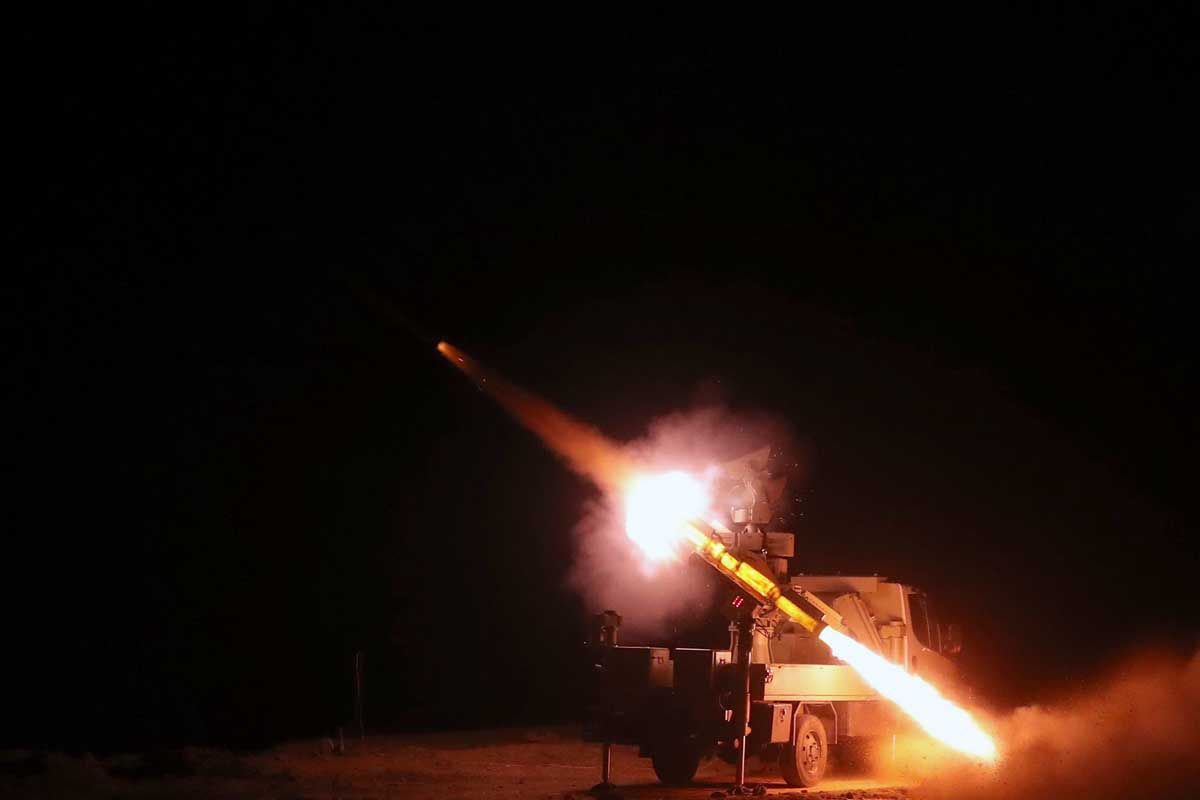
In this video, the missile is fired at the same time as the electro-optical system rotates. This means that the system does not need a lock on the target.
The AD-08 missile: The missile used in the Majid Air Defense System is a short-range missile with a thermal imager. This missile is sealed inside a tubular launcher and four of them are installed on the weapon station.
Given the presence of electrical connectors on each launcher, another launcher can be placed on top of the previous one. As a result, the Majid Air Defense System will be able to use eight missiles.
A graphic image of the Majid air defense system with 8 missiles (credit @marshallmo26 on X)
The missile has four stabilizing fins at the end and four control fins near the nose cone. The fins on the missile are foldable, allowing the missile to be placed inside a canister.
The Majid Air Defense System missile uses smokeless solid fuel. This type of fuel reduces the chance of detecting the launch site and increases the surprise of the enemy. Also, the AD-08 missile uses a thermal imaging camera at its nose cone, which guides and hits the target using this camera.
The electro-optical system issues a firing command after detecting the target. The missile moves towards the point announced by the system and then searches for the target by the use of its camera, locks onto it, and moves towards the target to destroy it. This method is the same as the fire-and-forget method, and as a result, the system can move immediately after firing. The use of a passive or non-active detector and the main system’s capacity to avoid locking onto the aim misleads the target.
The target will not be aware of thermal locking until the missile locks onto it. Also, being smokeless makes it impossible for the enemy to determine the path of movement of the missile and calculate information such as collision direction, speed, and so on to detect the launch location of the missile, which will take a long time.
In addition to this fact, due to using fire-and-forget capability, it has quick relocation capability. Therefore, if an enemy uses a decoy to detect the location of the system, given the mentioned conditions, the Majid Air Defense System does not leave much trace for detection and greatly increases its survival.
Types of Majid Air Defense System Missiles:
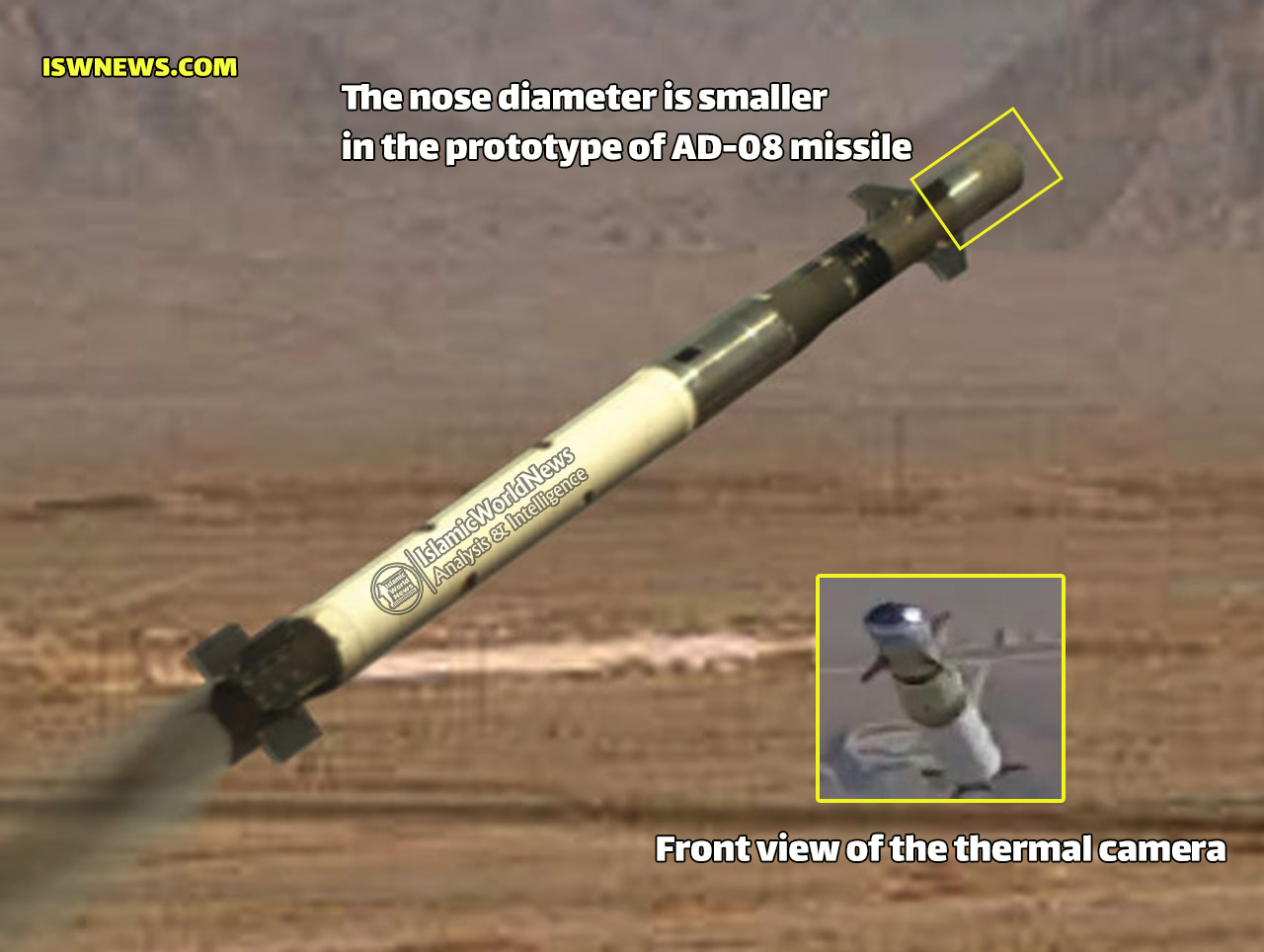
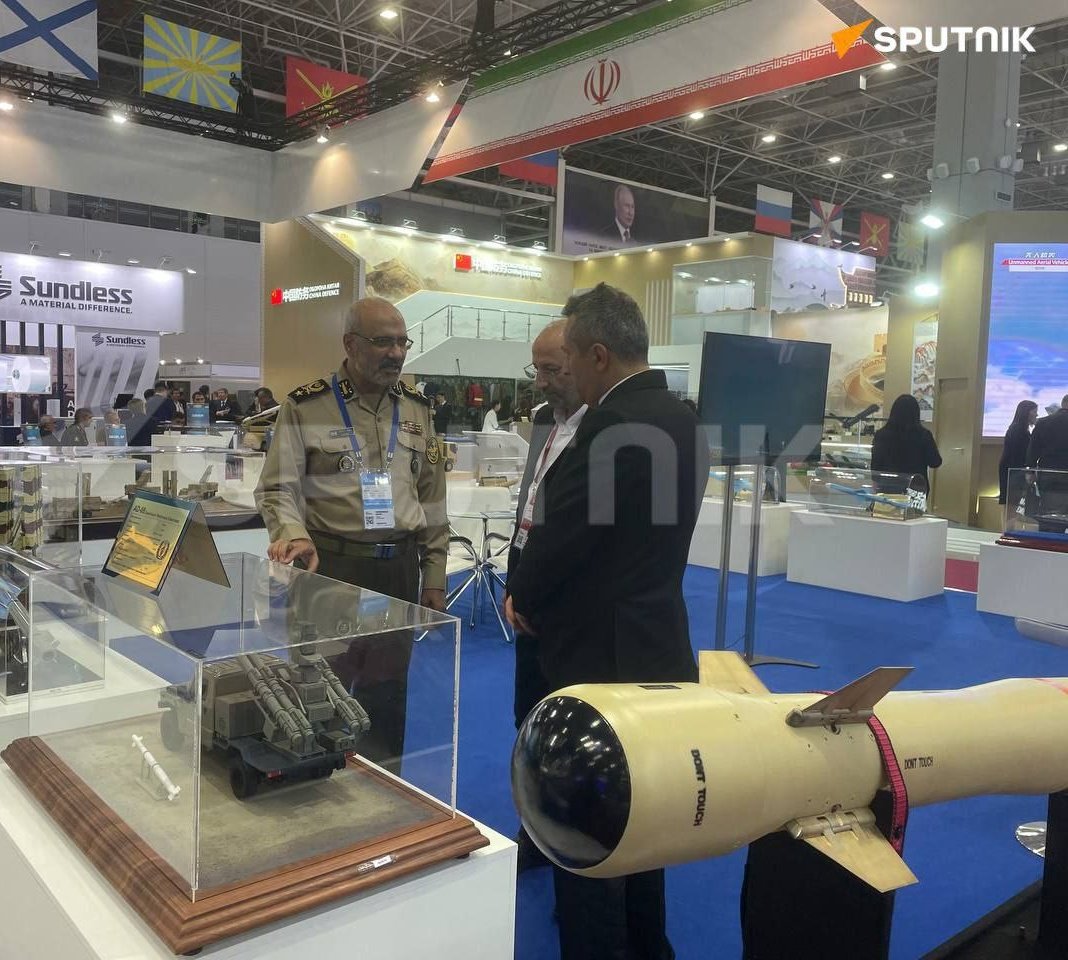
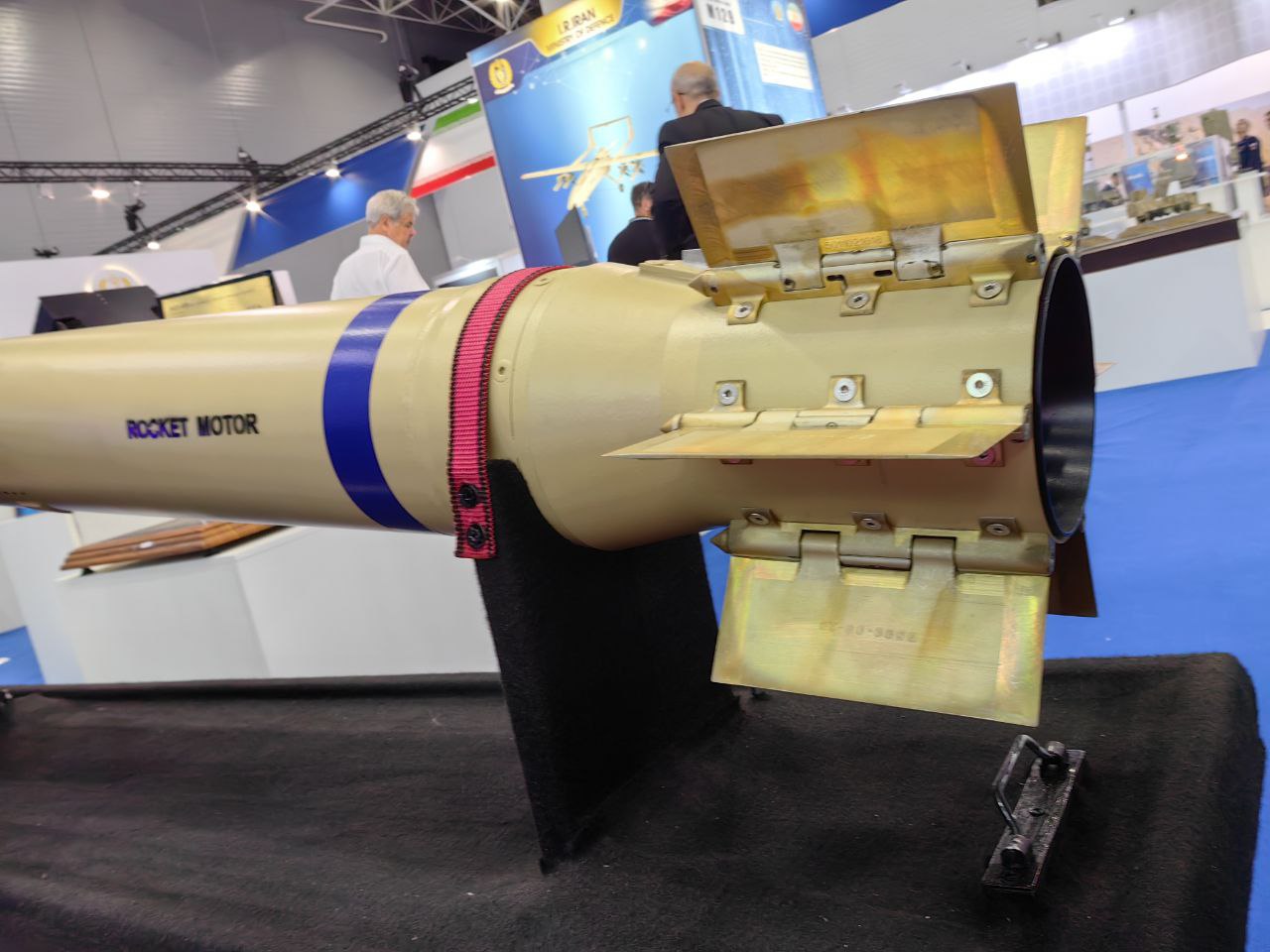
After examining published images of missiles and Majid Air Defense System, it seems that there may have been two versions of this missile: The initial version of the Majid Air Defense System was seen in the test footage, and the second version was showcased at ARMY-2023 exhibition and Doha Qatar exhibition.
Initial Version: The missile in the initial version has two sections in terms of diameter. The nose section has a smaller diameter, as well as the middle and end section, which have a larger diameter. A thermal camera is located in the nose cone, then there are control fins, warhead, and fuel compartment and in the end, there are stabilizing fins and engine are located at end.
The prototype of the missile has a nose with a smaller diameter than the new model
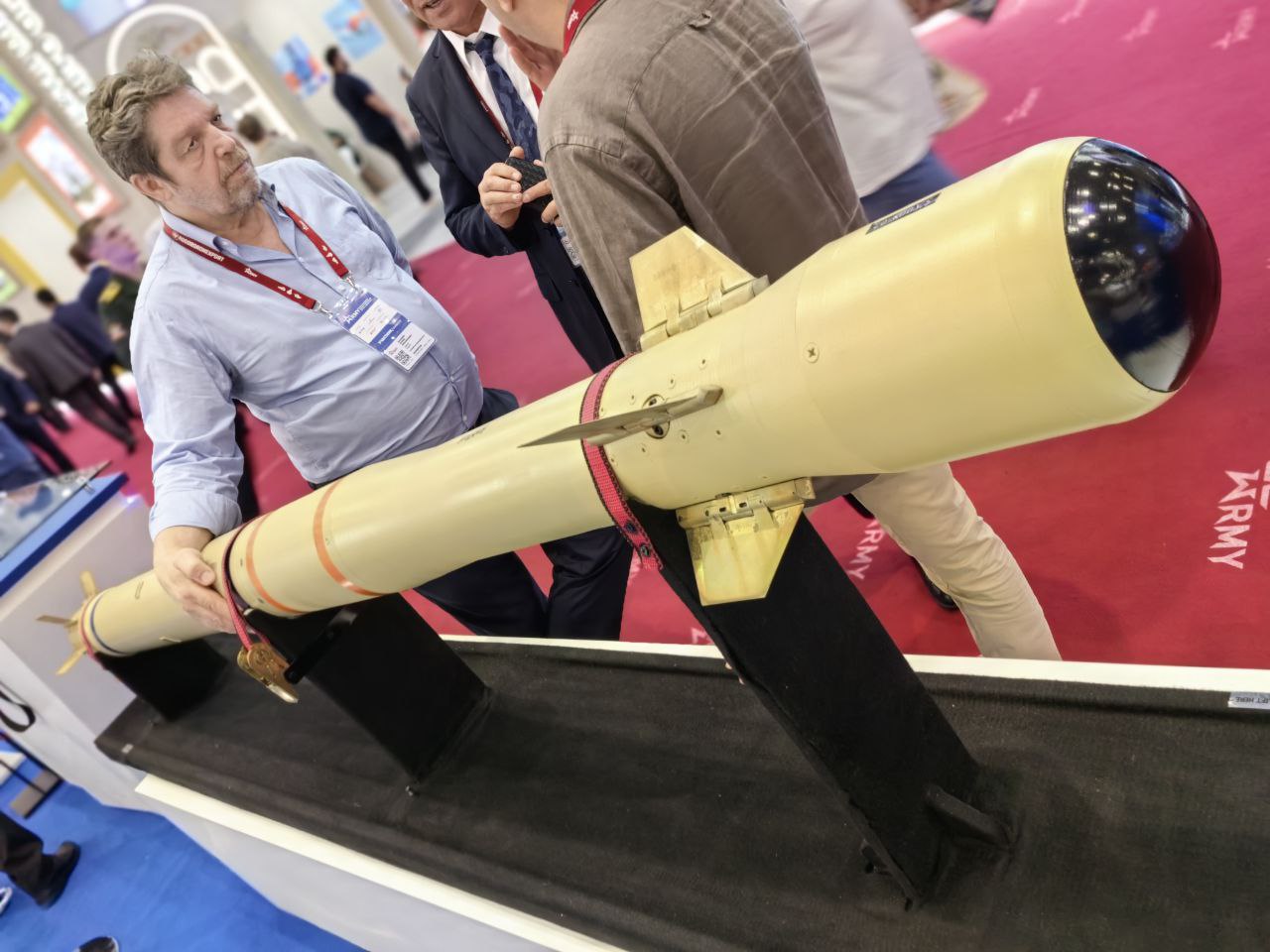
New Version: In the new or perhaps original version, the missile has three sections in terms of diameter. The location of the thermal camera is in the missile nose cone, which has the maximum diameter for placement in the canister. After that, there are control fins and a warhead, where the missile has a reduced diameter and appears to be the same as the original missile nose.
After the warhead, the missile diameter increases from the middle to the end and it appears to be the same as the missile tip. This section contains missile fuel, stabilizing fins, and a missile engine, which seems to be the same as the initial version.
Also, the final or original version of the missile has a uniform and integrated appearance generally in terms of body section and exterior. This missile has a different camera from the initial version in the camera section as well.
The new version of the AD-08 missile, which missile diameter increases from the middle to the end
The pictures below show the new model of the AD-08 missile, which was showcased for marketing at the Russian ARMY2023 exhibition. In the pictures, it is clear that a different camera is used than the prototype.
Pictures of the new model of the AD-08 missile at the ARMY2023 exhibition
Systems linked to Majid air defense system:
Borhan weapons control and command system: As mentioned earlier, the Majid system has the capability of linking to the Borhan system. The Borhan system is a command and control center for low-range and low-altitude weapons, which acts as the last level of command to create integration between systems in the last layer of defense.
This system can receive information from electro-optical and radar systems. After receiving and analyzing the information from all the sources, Burhan transfers them to the command and gives orders according to the type and nature of the target to all types of low-altitude systems available in the scene.
An image of the linking of the Borhan and Majid systems
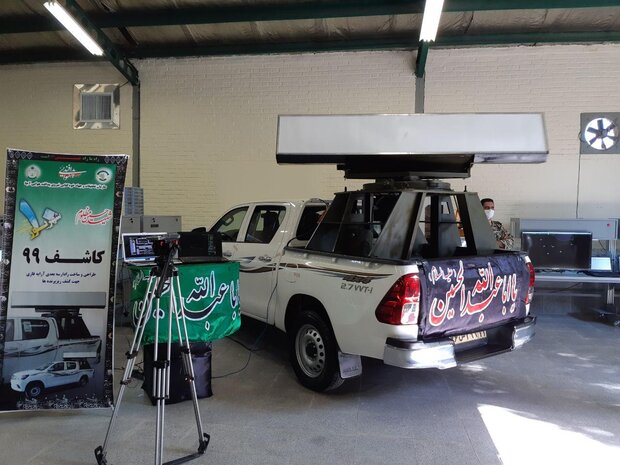
Kashef 99 Radar: Kashef 99 radar is a 3D phased array radar capable of detecting small flying targets. This radar is designed to detect targets with low radar cross section, low altitude and short range such as quadcopters. Kashef 99 can simultaneously detect 300 targets within a range of 12 km. Kashef 99 is installed on a Toyota vehicle, which increases its mobility. It seems that there is a possibility of installing this radar on other vehicle as well. Due to the high power in detecting small birds, the Kashef radar is probably a part of the Battlefield Management System for the last layer of defense.
Kashef 99 radar with the ability to detect 300 small drones at a distance of 12 km
Prominent Features: – The speed and agility of the Majid Air Defense System – The ability to use various carriers – The Fire-and-forget capability – The Fire-and-forget capability – The use of smokeless missiles resulting in better camouflage – The ability to link with Borhan radar and system – The independent operation in ambush mode – The ability to operate within an integrated defense network – The ability to develop and enhance system capabilities
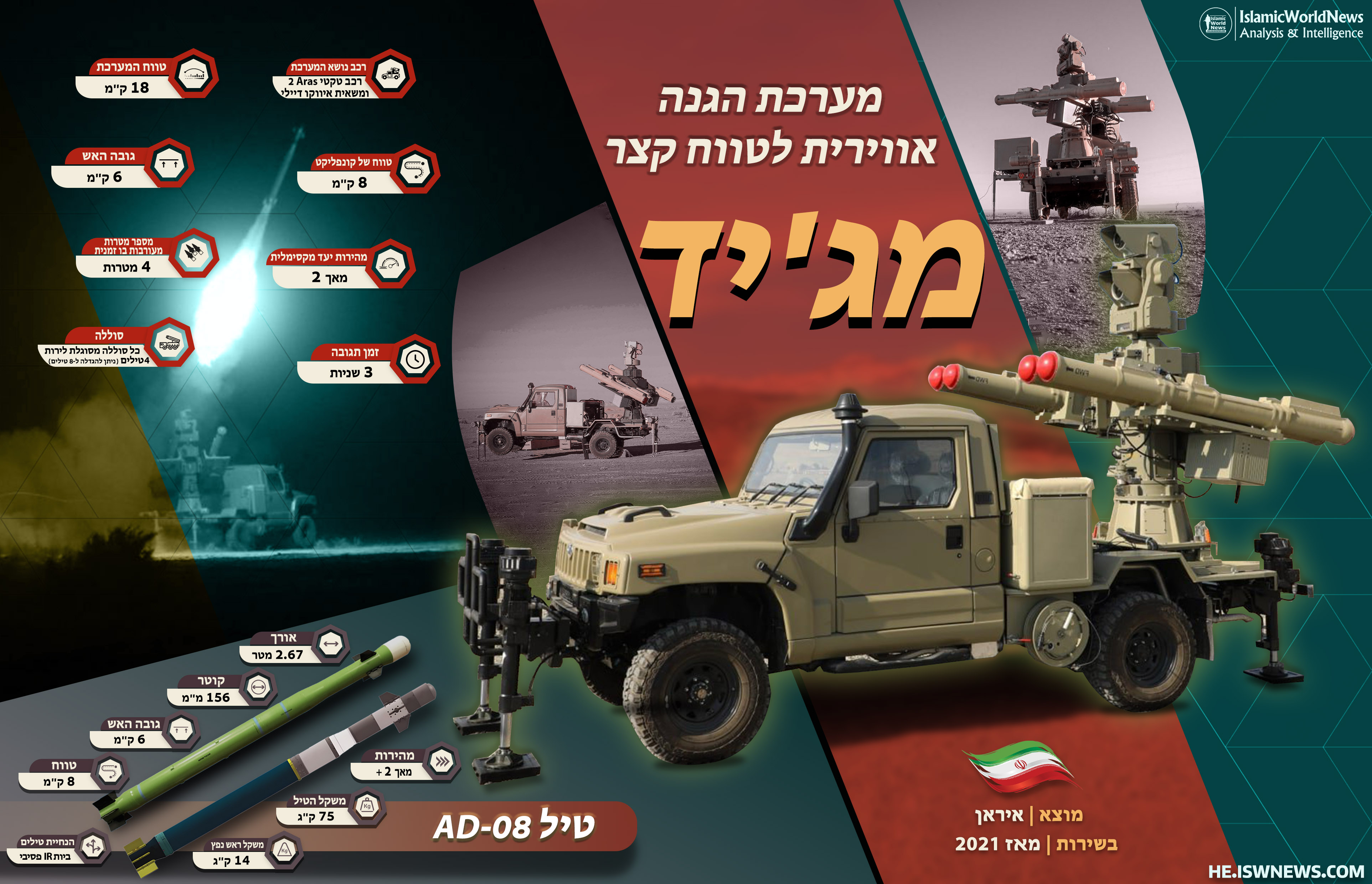
Specifications of Majid short-range air defense system: Type: Short-range air defense system Producer: Ministry of Defense of the Islamic Republic of Iran Origin: Iran Unveiled: April 18, 2021 In service: since 2021 Crew: Unknown Carrier vehicle: Aras 2 tactical vehicle and Iveco Daily truck Weight: unknown System range: 18 km Range of engagement: 8 km Altitude of fire: 6 km Maximum target speed: Mach 2 (2450 km/h) Number of simultaneously engaged targets: 4 targets Response time: 3 seconds Battery: each battery capable of firing 4 missiles (can be increased to 8 missiles)
AD-08 missile: Length: 2.67 meters Diameter: 156 mm Warhead weight: 14 kg Missile weight: 75 kg Range: 8 km altitude of fire: 6 km Guidance: Passive IR homing Speed: more than Mach 2
Majid Short-Range Air Defense System – click to view full size
More images of Majid short-range defense system:
Click to view full size
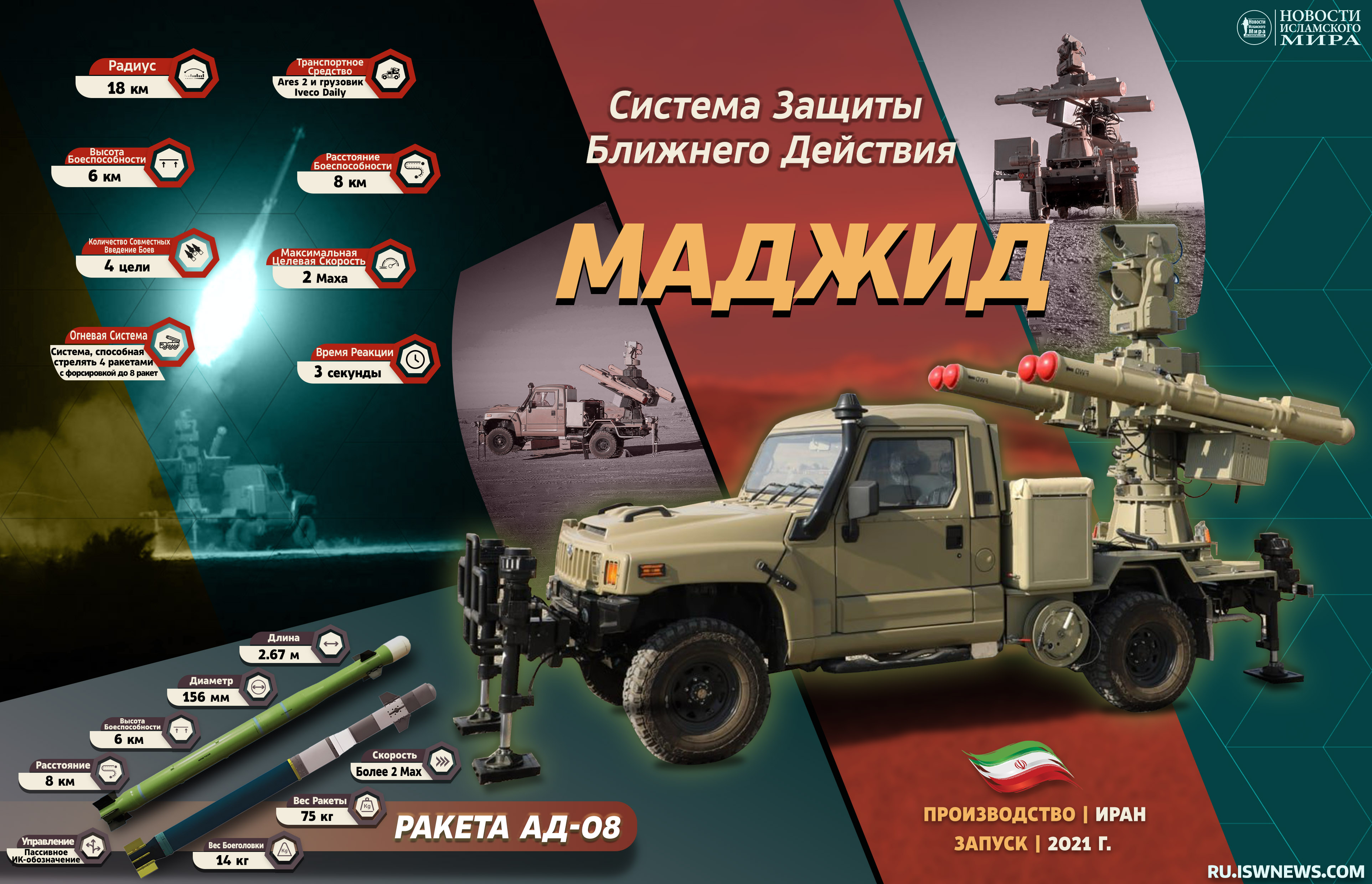
Infographics of Majid air defense system Russian(Маджид Система Защиты Ближнего Действия), Hebrew(מג’יד מערכת הגנה אווירית), Persian(سامانه مجید) and Azeri(Məcid Qısa Məsafəli Müdafiə Sistemi):
Speaking to the Iranian Arabic-language newspaper, the minister revealed that Tahran “proposed that Turkey commit, first, to withdrawing its military forces from Syrian territory, and second, that Syria commit to deploying its forces on the border so that Turkish territory is not threatened.”
Iran and Russia will both act as guarantors, according to Amir-Abdollahian, who didn’t provide any further details on the plan.
Ankara is still the main backer of Syrian rebels. The Turkish military controls vast parts of Syria’s northern and eastern region. It also maintains a large presence in the northwestern region of Greater Idlib, which is ruled by an al-Qaeda offshoot.
Iran and Russia have been leading efforts to restore relations between Turkey and Syria. The foreign ministers of the two countries met in Moscow last May. Since then, the normalization process has seen very little progress.
In July, Turkish President Recep Tayyip Erdogan told reporters that he is open to talks with his Syrian counterpart, Bashar al-Assad, but would not meet him if a withdrawal of Turkish troops from Syria were set as a condition. Later in August, al-Assad blamed Turkey for terrorism in his war-torn country and insisted on the withdrawal of the Turkish military from Syria in an interview with Sky News Arabia.
Amir-Abdollahian’s remarks indicate that Iran and Russia are making much efforts to bring Turkey and Syria together away from the media. Still, the serious disagreements between Erdogan and al-Assad means that a normalization agreement may still be far.
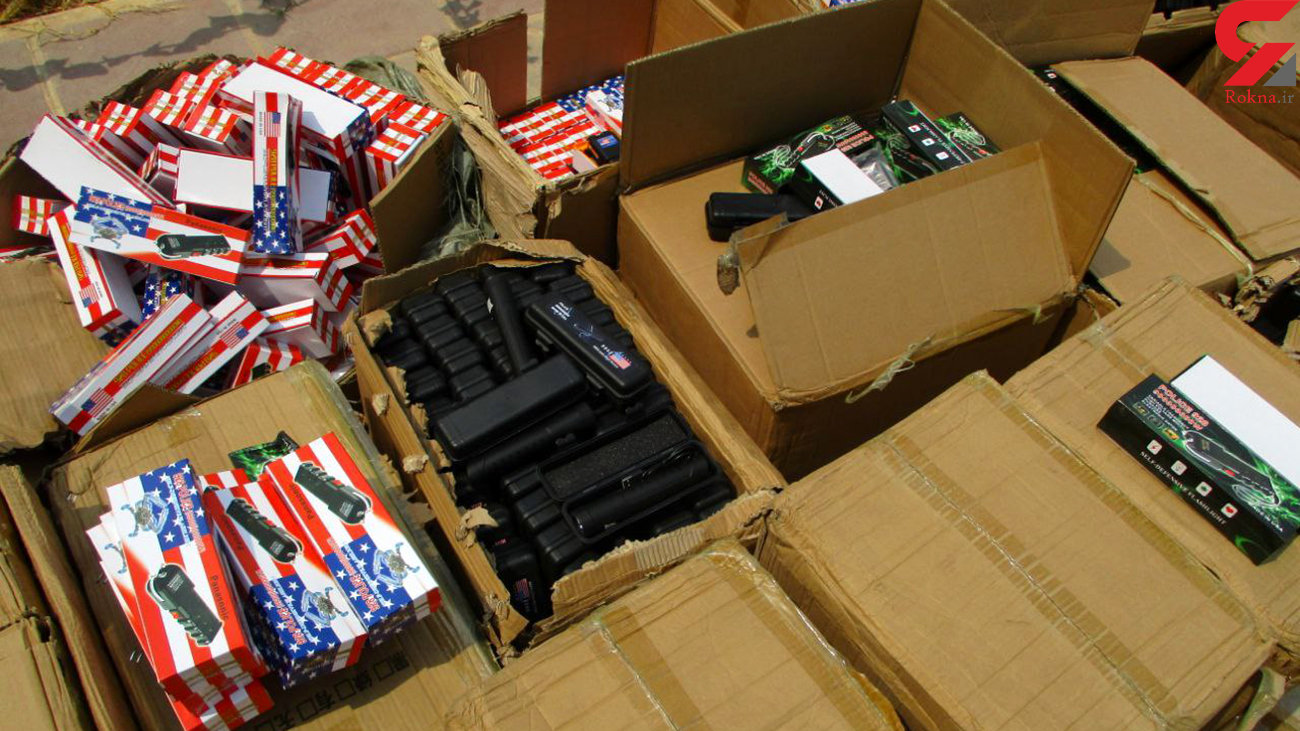
Head of the Justice Ministry’s office in the southern Iranian province of Hormozgan, Mojtaba Qahremani, said that the large shipment includes over 6,000 stun guns. Intelligence agents seized the shipment from a ship close to the port city of Khamir, according to the official.
The preliminary inquiry indicates that the stun guns were shipped to Iran for the purpose of inciting riots and chaos, Qahremaniadded, noting that two people have been arrested during the intelligence operation.
Earlier this month, the Iranian Intelligence Ministry and the Intelligence Department of the Islamic Revolutionary Guard Corps announced that they had dismantled a network backed by the United States that was plotting to start riots in the country.
A wave of protests hit Iran last year following the death of Kurdish Iranian woman Mahsa Amini who was arrested for allegedly breaking Iran’s strict rules on wearing the hijab, the Islamic head covering for women. The violence claimed the lives of at least 200 people.
Tehran believes that foreign powers, including the U.S. and Israel, are fueling unrest on its territory in order to overthrow the Islamic government that came to power following the 1979 revolution.
The BLA issued a statement took responsibility for the assassination.
It is worth mentioning that the Balochistan Liberation Army terrorist group has carried out 188 operations during the year 2022, which has resulted in the death of 369 Pakistani servicemen and the injury of 155 others.
The BLA last attack date back to August 13, the terrorist group attacked a convoy of Chinese engineers in Faqir area near Gwadar commercial port in Balochistan province. In that attack, two Balochistan Liberation Army militants and four Chinese nationals were killed and 13 Pakistani security forces were killed and wounded.
The National Intelligence Service of Iraq announced the destruction of a dangerous terrorist gang in Baghdad and the arrest of its members.
The members of this team, who were elements of the ISIS terrorist group, intended to carry out suicide operations in Arbaeen processions, police centers, checkpoints and markets in Baghdad.