Author: Mirza

  • A Look Into Challenges Of Peace Talks In Yemen

    A Look Into Challenges Of Peace Talks In Yemen

    Let’s scrutinize why the nature of the resigned government of Yemen is illegal and the Saudi-led coalition’s operations in Yemen are considered an invasion.

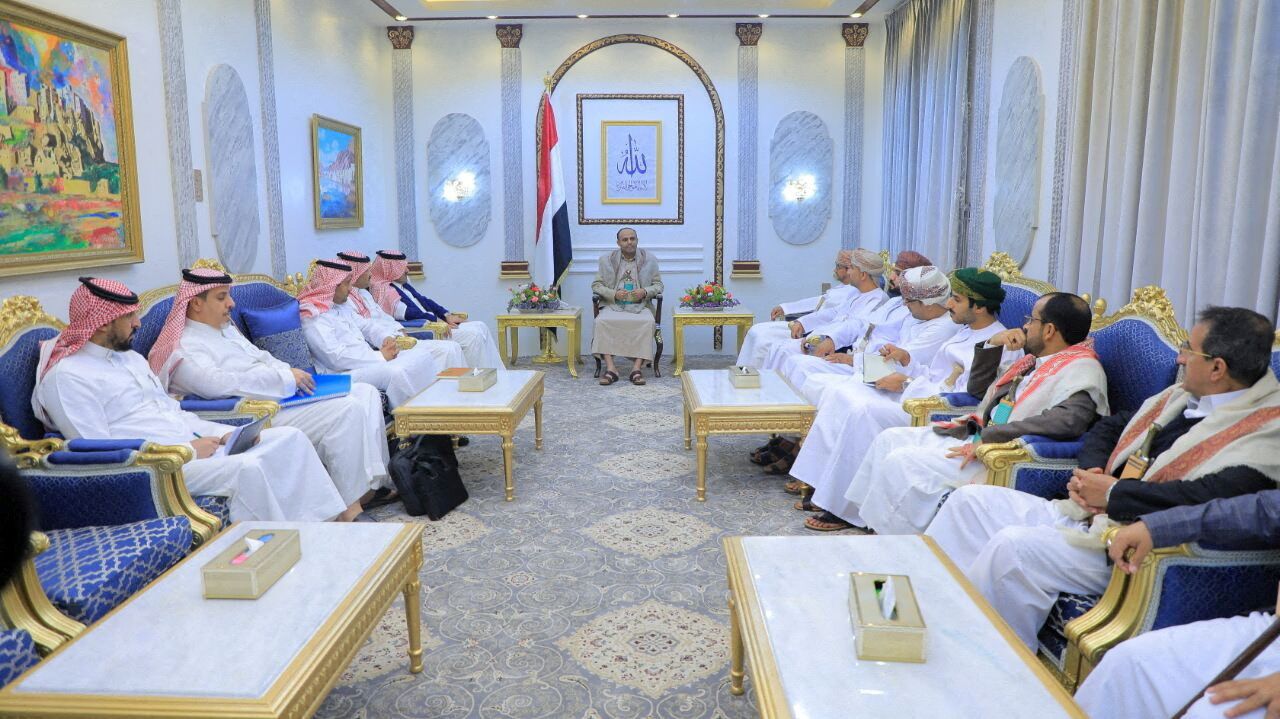
    A few days ago, the [Persian] Gulf Cooperation Council, led by Jassim Mohammed Al-Budaiwi, the Secretary-General of the council, traveled to the city of Aden in Yemen. This trip was the first visit by officials of this council to Yemen after 2014. In this meeting, Al-Budaiwi emphasized an issue that is the root cause of the crisis and lack of progress in Yemen’s negotiations, and that issue is nothing but the three references.

    The three references include the 2011 [Persian] Gulf Cooperation Council initiative, United Nations Security Council Resolution 2216, and national dialogues recognized by Arab countries as a reference for resolving the Yemeni crisis. However, these references are not solution to the Yemeni crisis but have become a major obstacle to advancing peace negotiations. To clarify the aspects of these three references, we explain them in general:

    1- The 2011 [Persian] Gulf Cooperation Council initiative: 

    This [Persian] Gulf Cooperation Council initiative was presented on April 3, 2011, by the United States and Saudi Arabia to resolve the Yemeni crisis. This initiative is also known as the “Gulf Initiative,” according to which Ali Abdullah Saleh, the then-president of Yemen, was given a 30-day deadline to step down and transfer power to his deputy, Abd Rabbuh Mansur Hadi. Mansur Hadi also had 60 days to form an interim government and prepare the ground for power transfer through elections. This initiative did not end with the resignation of Ali Abdullah Saleh, and Abd Rabbuh Mansur Hadi became the president of Yemen with the support of Arab countries in a one-person election. The seizure of power by the Yemeni revolution and the intervention of Arab countries in the affairs of this country provoked the anger of the Yemenis and led the Ansar Allah movement fighters towards capital Sanaa. Eventually, the Ansar Allah forces entered Sanaa by breaking the defensive lines of Abd Rabbuh Mansur Hadi’s supporters and took control of the government. After the unsuccessful political negotiations between the two sides, Mansur Hadi went to parliament on January 22, 2015 and resigned from his position. A month after his resignation, he was interrogated by intelligence and judicial authorities and finally fled from the presidential palace in Sanaa to Aden on February 21, 2015. This move was followed shortly with an invasion by the Saudi-led coalition, which complicated the political crisis in Yemen with the foreign invasion.

    2- United Nations Security Council Resolution 2216:

    On April 14, 2015, the United Nations Security Council, without mentioning the Saudi-led coalition’s invasion of Yemen, declared the prohibition of sending any weapons to the Ansar Allah fighters and Ali Abdullah Saleh’s forces in a resolution. This resolution also called on the Ansar Allah movement to hand over power and retreat from Sanaa as well as other cities in Yemen. The UN Security Council also approved the inspection of all ships heading to the war-stricken Arab country. It also banned travel for Abdul-Malik Badruldeen al-Houthi as well as Ahmed, the senior son of Ali Abdullah Saleh.

    3- National dialogues:

    Following the Saudi-led coalition’s invasion of Yemen, Yemeni national dialogues in Sanaa were halted, and prominent factions such as the al-Islah Party (Yemeni Congregation for Reform), and southern parties and so on, could raise the banner of opposition to the central government in Sanaa due to the support they received from Saudi Arabia, the United Arab Emirates (UAE), and other Arab countries. Following negotiations by the Ansar Allah movement in Sanaa, various political parties that were led by the General People’s Congress under the leadership of Ali Abdullah Saleh united with the Yemeni National Salvation Government. This move weakened the opposition; so, the Ansar Allah movement, after months of heavy defense, was able to repel the Saudi-led coalition’s attacks on Sanaa and Al Hudaydah Governorate in a short period as well as cleanse a large part of the areas under the control of the Yemeni government in Marib, Al Jawf, Saada, and Al Hudaydah governorates.

    Over the recent years, many events, such as Ali Abdullah Saleh’s betrayal of the Ansar Allah movement, the Stockholm Agreement, the assassination of Saleh Ali al-Samad, the head of the Supreme Political Council of the National Salvation Government, etc., have changed the course of developments in the Arab country. However, none of these events, like the Ansar Allah’s missile-drone operations against deep areas in both Saudi Arabia and the UAE, had a significant impact on peace negotiations, and ultimately a UN-mediated ceasefire between the Ansar Allah movement and the Saudi-led coalition was established in April 2022.

    Despite the establishment of a ceasefire and the Ansar Allah’s efforts to engage in talks with the Islah Party and southern factions in various incidents, intra-Yemeni political dialogue have not been held at any time or place. The main reason for this is the opposition groups’ dependence on Saudi Arabia and the UAE, as well as recent US interventions in Yemen’s developments.

    Therefore, the three references are chiefly a hindrance to peace negotiations and the unity of different groups in Yemen rather than a solution to the Yemeni crisis. The [Persian] Gulf Cooperation Council’s initiative can be seen as direct interference in the affairs of an independent country, and UN Security Council Resolution 2216 is interpreted as supporting Arab and Western countries’ goals in Yemen. When a political figure speaks against the three references, it can be inferred that there is no intention to resolve the Yemeni crisis, and some are trying to escalate the war in the country.

    In addition to these issues, there are numerous obstacles to Yemeni negotiations that prevent them from reaching a conclusion. These obstacles include US pressure on Saudi Arabia, the United Nations’ involvement in Yemen’s internal affairs, the dependence of Yemeni factions on Saudi Arabia and the UAE, the separatist tendencies of some southern parties with British support, the presence of terrorist groups particularly Al-Qaeda in occupied areas, the disregard of global powers such as Russia and China for Yemen’s developments, internal issues such as the lack of payment of salaries to Yemeni employees from oil revenues, and the ongoing blockade of Yemen.

    As a result of preventing the Ansar Allah movement from exporting Yemen’s oil and gas, the resigned government’s budget has reportedly faced a 50% deficit, which will put significant financial pressure on their Saudi and Emirati supporters. International organizations under the auspices of the United Nations, especially the World Food Program, have also significantly reduced their aid to Yemen, forcing UN representatives to hold a special session in New York to collect humanitarian assistance.

    Overall, Yemeni peace negotiations, in addition to internal differences and challenges, have become entangled in a more significant regional issue. The success of the Shia Muslims in gaining control of the Yemeni government and the Saudi-led coalition’s invasion of the Arab country with Western support led to Yemen becoming a proxy war between Iran and the United States. Nowadays, this war has entered a new phase with the agreement between Iran and Saudi Arabia, which has led to the resolution of some issues such as the maritime and aerial blockade of Yemen. However, fundamental differences remain, and there is still a long way to go in starting discussions on the formation of a united government and the path to achieving lasting peace.

  • Palestinians Hold Al-Rukan Al-Shadid 4 Drills In Gaza (Video)

    Palestinians Hold Al-Rukan Al-Shadid 4 Drills In Gaza (Video)

    On September 12, Palestinian resistance groups kicked off their nationwide and joint military exercises codenamed Al-Rukn Al-Shadid 4 (Mighty Pillar 4 or Pillar of Power 4) with rocket launches from different areas in the besieged Gaza Strip.

    The military exercises are being held to mark the 18th anniversary of the expulsion of Israeli occupiers from the Gaza Strip.

    The Al-Rukn Al-Shadid 4 military exercises aim to assess the speed of the resistance’s response in any emergency situation and test the readiness of Palestinian fighters when it comes to operations and the fight against any sort of aggression by the Israeli enemy.

    Hazem Qasem, a spokesperson for the Hamas resistance movement, emphasized that the Al-Rukn Al-Shadid 4 military exercises are being carried out to emphasize that the Israeli regime’s threats of attack and aggression against the Palestinian people will never halt the resistance fighters, and that the resistance movement supports the struggles of the Palestinian people, especially on the southwestern border with the occupying regime.

    The moment of the beginning of Al-Rukn al-Shadid 4 exercise
  • Israeli Minister: Iran Building Airport In Southern Lebanon!

    Israeli Minister: Iran Building Airport In Southern Lebanon!

    Yoav Galant, the Israeli regime’s defense minister, claimed at a counter-terrorism policy conference at Reichman University that Iran is building an airport in southern Lebanon, 20 kilometers away from the border of occupied Palestinian territories.

    He went on to say that Iran has created an airport in southern Lebanon for attacking Israel.

    If we reach the stage of conflict, there is no doubt that we will use our destructive power, and Hezbollah and Lebanon will pay a painful and heavy price, the minister added.

    The Israeli minister claimed that Iran is now the biggest threat to the Israeli regime, regional stability, and global order, and that the Islamic Republic is strongly seeking to achieve military nuclear power and it is closer than ever to this goal.

    In the midst of the developments in the Middle East, Iran is gaining geographical and ideological dominance over the region, he acknowledged.

    Iran’s goal is to create a destructive war against Israel while simultaneously striving to acquire nuclear weapons, he alleged, saying that these efforts are detrimental to all neighboring countries.

    These remarks come on September 10 as David Barnea, the head of the Mossad intelligence agency, threatened Iranian officials at a conference at Reichman University with assassination.

  • Tehrik-i-Taliban Pakistan Ambush Pakistani Army Vehicle In Peshawar

    Tehrik-i-Taliban Pakistan Ambush Pakistani Army Vehicle In Peshawar

    Muhammad Khurasani, spokesperson for the Tehrik-i-Taliban Pakistan (TTP), claimed responsibility for the attack, and stated that 9 Pakistani soldiers were killed and injured as a result of the ambush.

    Given the recent border clashes between the Afghan Taliban and the Pakistani army at the Torkham border crossing located on the western outskirts of Peshawar, as well as the recent attacks by the Tehrik-i-Taliban Pakistan on Pakistani government forces, it is highly probable that the new attack was carried out as a retaliation for Taliban’s losses.

  • Yemen: Tareq Saleh Attacks Al-Waziyah District

    Yemen: Tareq Saleh Attacks Al-Waziyah District

    According to local sources, Tareq Saleh forces have surrounded the western villages of Al-Waziyah and demanded the surrender of armed men loyal to Abu Dhiab Al-Alaqami and the sheikhs who support him.

    Al-Wazaiyah tribes have asked for help from their allies in the al-Shamaitin district and from al-Sabiha tribes on the coast of Lahij province.

    It is worth mentioning that following Al-Alaqami’s conflict with Tareq Saleh, Al-Waz’iya and Al-Sabiha tribes had declared their support for Al-Alaqami.

    Read more: Al-Sabiha Tribes Declares Support For Al-Waziyah Tribes

  • Deadline For Disarming Iraqi Terrorists Ends On September 19!

    Deadline For Disarming Iraqi Terrorists Ends On September 19!

    The deputy commander of the IRGC said in an interview with an Iranian media outlet that we expect from our brothers in the Kurdistan region to show brotherliness, because providing terrorists with safe haven in that region, which has become a source of operations against our country, is not consistent with brotherliness or good neighborliness.

    After uninterrupted negotiations, we finally signed an agreement with the central government in Baghdad as well as the Kurdistan region, and the deadline of the accord to become operational is on September 19 in terms of scheduling and agreed-upon provisions, he argued.

    Read more: Iraqi, Iranian Top Security Advisors Meet In Tehran

    The brigadier general went on to say that we are committed to all the provisions of the agreement, not one word less or one word more; thus, we expect the other party to also abide by the agreement in the same way as the Islamic Republic of Iran has fulfilled its obligations. Otherwise, the situation will come back to its previous state, and we will be forced to protect the interests of the Iranian people, he warned.

    It should be noted that some time ago, Chief of Staff of the Iranian Armed Forces Major General Mohammad Hossein Bagheri stated at a meeting with commanders of the Ground Forces of the Islamic Revolution Guards Corps that the Iraqi government has time up to September in order to eradicate separatist groups in the Kurdistan region of the Arab country.

    Prime Minister of Iraq Mohammed Shia’ al-Sudani also emphasized the seriousness of his government to implement the provisions of the Tehran-Baghdad security agreement completely. He made the remark in a meeting with a delegation of senior managers from Iranian media outlets yesterday.

    The Iraqi premier said that for various reasons, we as the Iraqi government feel obligated to address Tehran’s security concerns regarding terrorist activities, which are being committed from the Kurdistan region in Iraq. To this end, we have spent over $200 million on this issue and deployed more than 3,000 National Army forces along Iran’s borders and throughout the region, he noted.

    Read more: Are Iran’s armed forces on the brink of a new round of attacks on terrorist groups in Iraqi Kurdistan region?

    In recent months, senior commanders of the Iranian armed forces have warned the Iraqi government and officials in the Kurdistan region of Iraq about the illegal and terrorist movements of certain outlawed groups.

    Given the continued presence of anti-Iran armed groups in the Kurdistan region of Iraq as well as the Iraqi sides’ failure to make proper decisions and implement practical plans to expel or disarm terrorist groups from Iraq’s border areas, the Islamic Republic of reserves its rights to resort to all available capacities to establish security along its western borders after the end of the September 19 deadline.

    Map of the distribution of terrorist groups in the western borders of Iran – click to view in full size

    Read more:
    Iranian missiles pounds terrorist positions in Kurdistan region!
    Iran missile and drone attacks on terrorist groups in Iraq’s Kurdistan + Video

  • Tehrik-i-Taliban Pakistan Led by Mufti Noor Wali Mehsud Attacks Chitral

    Tehrik-i-Taliban Pakistan Led by Mufti Noor Wali Mehsud Attacks Chitral

    During the attack, the militants affiliated to Tehrik-i-Taliban Pakistan managed to take control of a border post and several villages from Pakistani forces.

    Another point of this attack is that Noor Wali Mehsud, the leader of the Tehrik-i-Taliban Pakistan, was present on the Chitral front.

    A video has also been released showing him guiding his militants in the Chitral area.

    This video is the first media presence of the leader of the Tehrik-i-Taliban Pakistan in 2023.

    The importance of this attack by the Tehrik-i-Taliban Pakistan on Chitral area is that its origin is undoubtedly from Afghanistan’s territory.

    Pakistan’s response to this attack will affect the Afghan Taliban, and therefore, it will put them under more pressure from Islamabad.

    There is also a possibility that the sphere of aerial strikes and bombings by Pakistani army helicopters will reach Nuristan province in eastern Afghanistan.

  • SDF Take Control Of Conflict Zones In Syria’s Deir ez-Zor

    SDF Take Control Of Conflict Zones In Syria’s Deir ez-Zor

    Farhad Shami, head of the media center of the Syrian Democratic Forces (SDF), announced that SDF militias have regained control of some areas in Deir ez-Zor Governorate following recent clashes with Syrian tribes.

    The media center chief of the SDF also stated that during the security reinforcement operation over the last 13 days, some villages in Deir ez-Zor Governorate were cleared.

    During this operation, nine civilians as well as 25 SDF militias, and 23 armed individuals were killed.

    Furthermore, 15 people were arrested and some weapons and ammunition were discovered and seized.

    Local sources reported that SDF militias entered Abu Hamam, Al-Kashkiyah, Gharanij, Al-Jardhi, and Abu Hardub without any clashes with Syrian tribes over the past 24 hours and that they have started an operation to clear these areas.  

    It is worth noting that the conflict between the Syrian Democratic Forces and Syrian tribes kicked off after SDF militias detained Ahmad Al Khubail, head of the Deir ez-Zor military council, on charges of corruption as part of a security operation called Operation Security Reinforcement aimed at clearing ISIS cells and drug traffickers in Deir ez-Zor Governorate.

    Read more: Clashes In East Syria Between Tribes, US-Backed SDF Intensify (Video)

    Al Khubail’s dismissal and detention led to the mobilization of his Arab supporters in the Deir ez-Zor military council, which led to clashes with SDF militias in some areas of Deir ez-Zor Governorate.

    These clashes subsequently spilled over to several towns and villages in this governorate and came to an end after several days.

  • Ansar Al-Mahdi Group’s 2nd Attack On Pakistani Forces

    Ansar Al-Mahdi Group’s 2nd Attack On Pakistani Forces

    The second attack of Jabhat Ansar al-Mahdi Khorasan group against Pakistani forces resulted in an explosion of a suicide bomber on the route of a vehicle carrying Pakistani army forces in Baka Khel Wazir town on the outskirts of Bannu city in Khyber Pakhtunkhwa province.

    As a result of the second attack on Pakistani forces, several soldiers were injured.

    Zubair Waziristani, spokesman for the Hafiz Gul Bahadur group affiliated to the Tehrik-i-Taliban Pakistan, confirmed the second attack by Jabhat Ansar al-Mahdi Khorasan group and introduced Abu Bakr Waziristani as the perpetrator of this raid in a statement.

    Read more: Jabhat Ansar Al-Mahdi Khorasan Group Formed In Bannu, Pakistan

  • Syria Dispatches Army Forces To Near US Al-Tanf Base

    Syria Dispatches Army Forces To Near US Al-Tanf Base

    Sources present at the Al-Rukban refugee camp announced on September 7 that the Syrian army had dispatched units near the Al-Tanf area in Homs Governorate.

    According to the sources, Syrian army vehicles carried a number of troops, light equipment, and weapons and were stationed in the Al-Zaqaf area, 70 kilometers northeast of the Al-Tanf base and 130 kilometers west of Al-Bukamal city in Deir ez-Zor Governorate.

    After setting up a temporary headquarters, some Syrian soldiers returned to their headquarters in Tadmur city in Homs Governorate. So far, no further details have been released on this issue, and Syrian commanders have not commented.

  • Latest Updates On Yemen, 8 September 2023

    Latest Updates On Yemen, 8 September 2023

    1- Shabwah Governorate:
    On September 5, unidentified armed individuals attacked the positions of Shabwa Defense Forces in the Al-Masina district in Al-Saeed area during an armed attack. During this raid, two of the Shabwa Defense Forces were injured.

    2-Abyan Governorate:
    Following an armed clash in the Joula Tariq neighborhood of Zinjibar coastal town, two civilians were killed and several others were injured.

    3-Taiz Governorate:
    The Eritrean government released 73 Yemeni fishermen, who were detained at Eritrean prisons in Al-Khokha city. According to local sources, 44 other Yemeni fishermen are still imprisoned on Terma Island off the coast of Eritrea.

    4-Aden Governorate:
    On September 6, the supreme council of the “Revolutionary Movement for Freedom and Independence of the South” canceled its contribution to the Southern Transitional Council (STC) led by Major General Aidarous Qassem Abdulaziz Al-Zubaidi after issuing a statement. The party emphasized in its statement that the Southern Transitional Council has no role in advancing the national project in southern of Yemen and is merely a tool for implementing foreign governments’ plans that come at the expense of our people’s dignity and aspirations. The leader of this party is Faysal Baoum, who joined the Southern Transitional Council a few months ago.

    5-Al Hudaydah Governorate:
    Saudi-led coalition forces violated ceasefire 171 times in the Al Hudaydah Governorate over the past 48 hours.

    6-Sana’a Governorate:
    The Sana’a Criminal Court sentenced four convicts of being engaged in Hassan Zaid’s assassination, former Minister of Sports and Youth of the National Salvation Government, to death and other convicts to five to six years in prison. It should be noted that a key member involved in Hassan Zaid’s assassination team was killed by Ansar Allah intelligence forces in Dhamar Governorate.

    7-Sa’dah Governorate:
    The Saudi-led coalition forces targeted border areas in Razih and Shada districts with missile attacks. According to reports that have been released so far, these attacks have not caused any particular casualties or damages.

    Saudi coalition artillery attacks on the western areas of Saada province

    9- The International Organization for Migration (IOM) reported that more than 90,000 African migrants entered Yemen during the first eight months of the current year.

  • The Kurdish Barrier To The Silk Road

    The Kurdish Barrier To The Silk Road

    Two years ago, Iraq and Turkey were on the verge of war, but now the parties are uniting against the Barzani regime in self-proclaimed Kurdistan.

    Against the background of the visit of the Turkish delegation to Baghdad led by Hakan Fidan, an article about Iraqi-Turkish relations was published on the American Foreign Policy website, where the author pointed out that the Barzani dictatorship would suffer the most from the dispute over illegal oil supplies from Iraq to Turkey.

    The finale of the dispute was the ruling of the Paris Arbitration Court, which sided with Iraq and called on the Turks to pay $ 1.5 billion in compensation for allowing the transshipment of oil from Kurdistan to ships in Ceyhan without the permission of Baghdad. In response, Turkey blocked oil supplies from the “Kurdistan Regional Government” (KRG) to the port of Ceyhan, which caused a shock in the oil sector. The American edition notes that – “The immediate cessation of exports by Turkey led to an increase in world oil prices above $ 70 per barrel. Moreover, oil export revenues account for about 80% of the KRG’s annual budget, putting the entire administration at risk.” The key point in the article is “The financial consequences – a large budget deficit in both the KRG and Baghdad – can lead to catastrophic instability in the region,” this fragment can be taken as a conclusion.

    The sudden activity of Turkish diplomacy in relation to Iraq, Syria and Egypt should be considered in the context of the formation of the Chinese Silk Road project, where Ankara plays a key role. It is no coincidence that it was in the year of the start of construction (2010) that China and Turkey announced strategic cooperation. After the wild turbulence in the face of political chaos in almost every country of the Ummah and which has become a kind of “normality” for the Middle East has relatively subsided, China’s “agents” launched counter-offensives to implement the long-standing plans of the Celestial Empire and its allies.

    The war unleashed by the Kremlin against Ukraine could not interfere with China’s plans, on the contrary, despite the problems of the European “strategic partner” Of course, these events only accelerated the process of establishing the Silk Road within the borders of the Middle East (the Iran-Saudi thaw, the rapprochement of Iraq and Turkey, the restoration of diplomatic relations between Egypt and Iran). The next stage begins the elimination of those elements that are hostile to the “One Belt, One Road” project.

    Therefore, the visit of Hakan Fidan and his meetings with almost all the leading “pro-Iranian” Shiite politicians and two key figures from the Sunni camp, Halbousi and Khanjar, should be considered in the context of cooperation on a number of issues, where the Kurdish issue is an important detail. It is extremely important for the current authorities of Iraq and Turkey to isolate the Barzani regime by making it as obedient as possible, which implies complete subordination to official Baghdad.

    At the same time, it is important for the parties to eliminate threats from the PKK, since any manifestation of terrorist activity directed against key elements of the Silk Road is considered a threat. Here you can also add cooperation in relation to the remnants of takfiri and drug threats.

    It will not be difficult for Baghdad to rein in the Barzani regime, but a consensus is needed within the resistance factions regarding the PKK, because if, for example, Kataib Hezbollah allied with the “Workers’ Party” in Sinjar about a year ago, then Sheikh Khazali at a meeting with Hakan Fidan said that “Iraq refuses to use its territory as a launching pad for aggression against neighboring countries.” Of course, the Iraqi resistance factions will find a common position on cooperation with the PKK, especially since Iran came to the rescue in this matter, which again put forward claims to the official Baghdad on Iraq about the presence of terrorists in Kurdistan, which could trigger Kataib Hezbollah to reconsider the alliance with the PKK in Sinjar or suggest that the latter direct its alliance against it is the anti-Iranian elements, leaving aside the presence of the Turkish military.

    The process of building the Silk Road is in full swing and has already passed 50 percent abroad. Now the stage of eliminating the main enemies of the “belt one and one way” has begun. The first in line are small threats of a local nature, but eventually the final stage will occur with the death of the Zionist occupation.

    P.S. The results of cooperation between Iraq and Turkey were not long in coming.