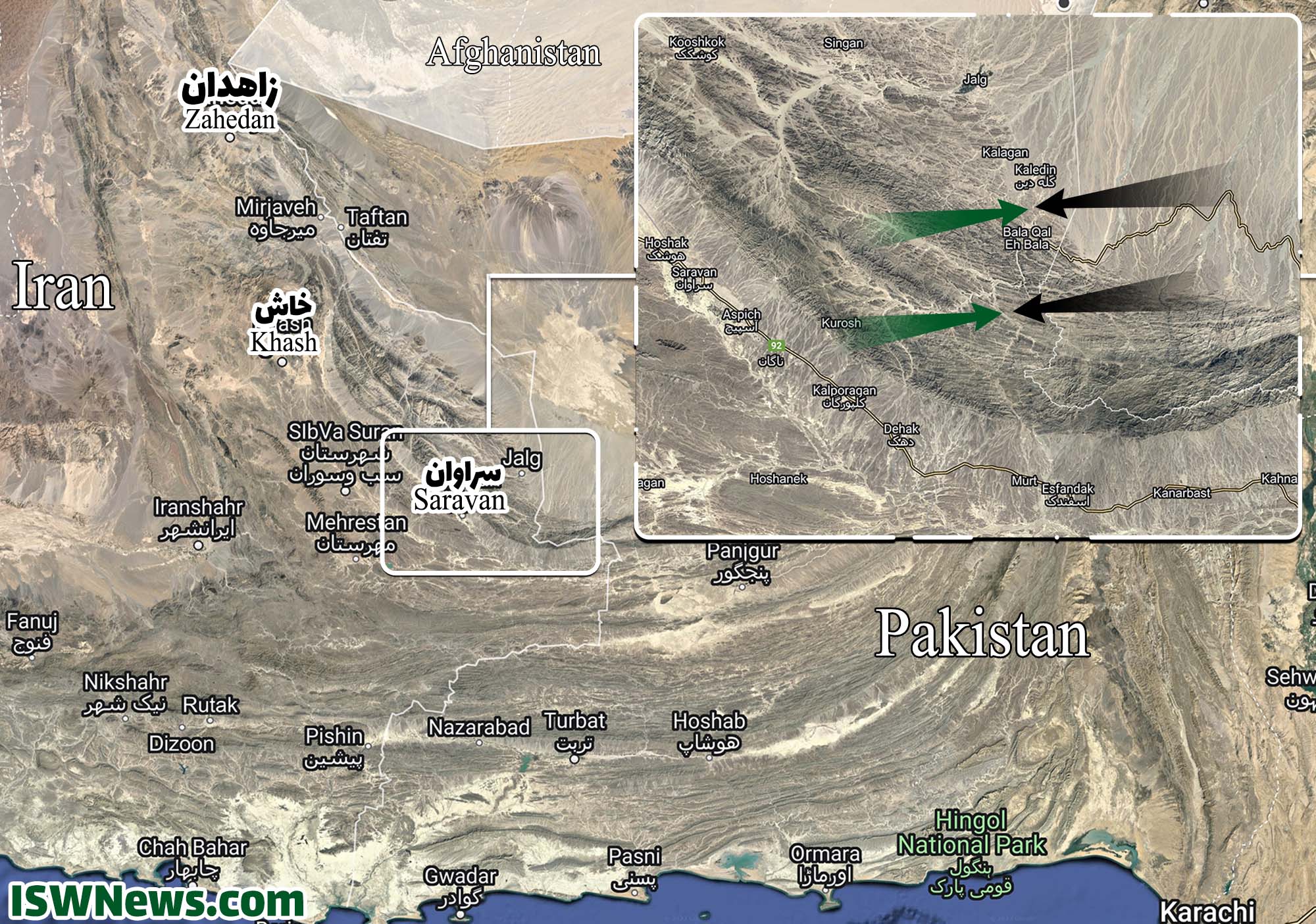
According to local authorities, this attack was carried out by the Jaish ul-Adl terrorist group, and terrorists fled into Pakistan after the attack. The media affiliated to this group have not published any announcement about this.
The Deputy Commander of the Iranian Police Force and the Commander of the Border Guard Forces visited the area to investigate the incident.
According to a statement by Mehdi Shamsabadi, the prosecutor of Sistan and Baluchistan province, judicial orders have been issued to arrest the perpetrators of this terrorist attack.
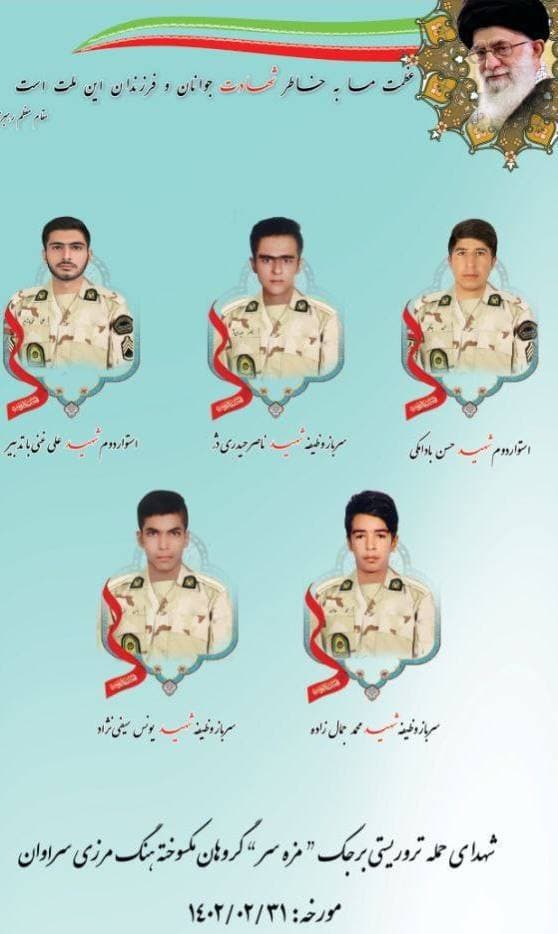
The names of the martyrs are “1st Sergeant Hossein Badamaki, 1st Sergeant Ali Ghani Ba Tadbir, conscript Mohammad Jamalzadeh, conscript Younes Seifinejad and conscript Nasser Heydari.” Also, one of the wounded in this attack, named 1st Sergeant Reza Borji, came back to life with the efforts of medical staff and CPR operations.
Martyrs of the terrorist attack on Mak Sokhte checkpoint in Saravan district
In recent years, Sistan and Baluchistan has experienced several rounds of clashes between Iran’s security forces and terrorist groups and drug traffickers.
This attack took place while not long ago, on April 30, Alireza Shahraki, the head of the intelligence police of Saravan district, and also on May 14, Gurban Ali Piri, the commander of the Susoli garrison of Zabul border regiment, were also martyred by terrorist groups and drug trafficking gangs.
The recent developments clearly show the increase of activities of terrorist groups and drug trafficking gangs in Sistan and Baluchistan province.
It should be noted that this deadly attack occurred in the midst of improving relations between Iran and Pakistan. Last week, Iranian President Ebrahim Raisi and Pakistani Prime Minister Shehbaz Sharif inaugurated a border bazaar and a power transmission line that supplies electricity to some remote areas of Pakistan from Iran.
Obviously, the terrorist operations against the security forces and border guard forces of Iran in Sistan and Baluchistan province is carried out with the aim of making the southeastern regions insecure. In recent years, the insecurity of the mentioned areas has been at the top of the plans of Western and Israeli intelligence organizations.
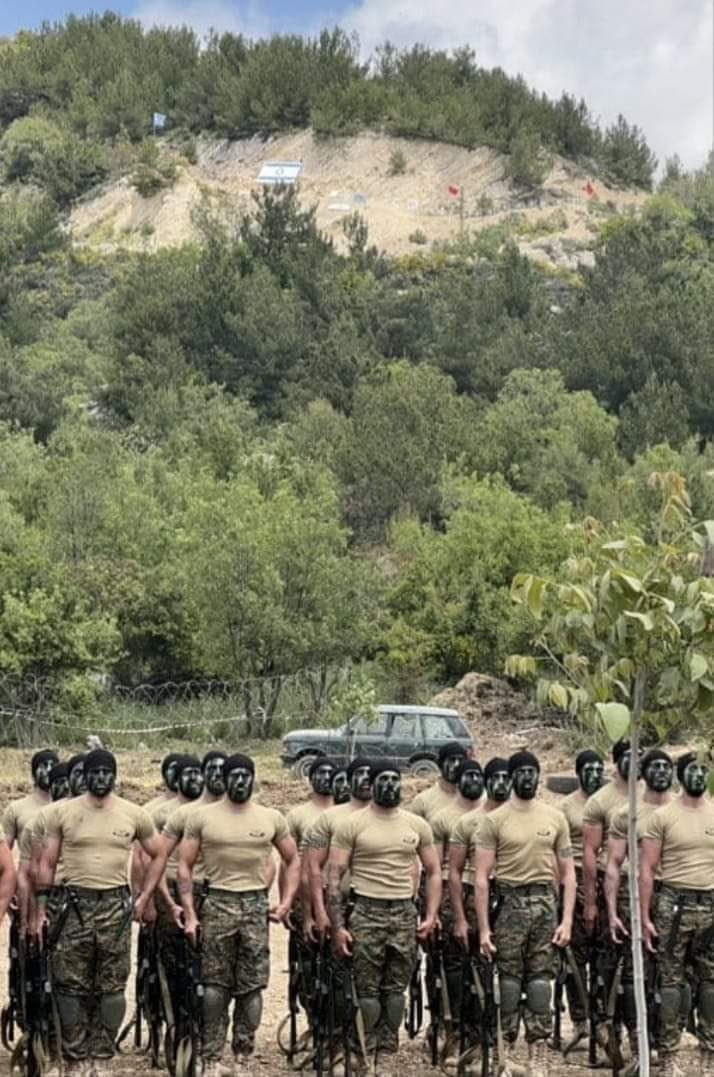
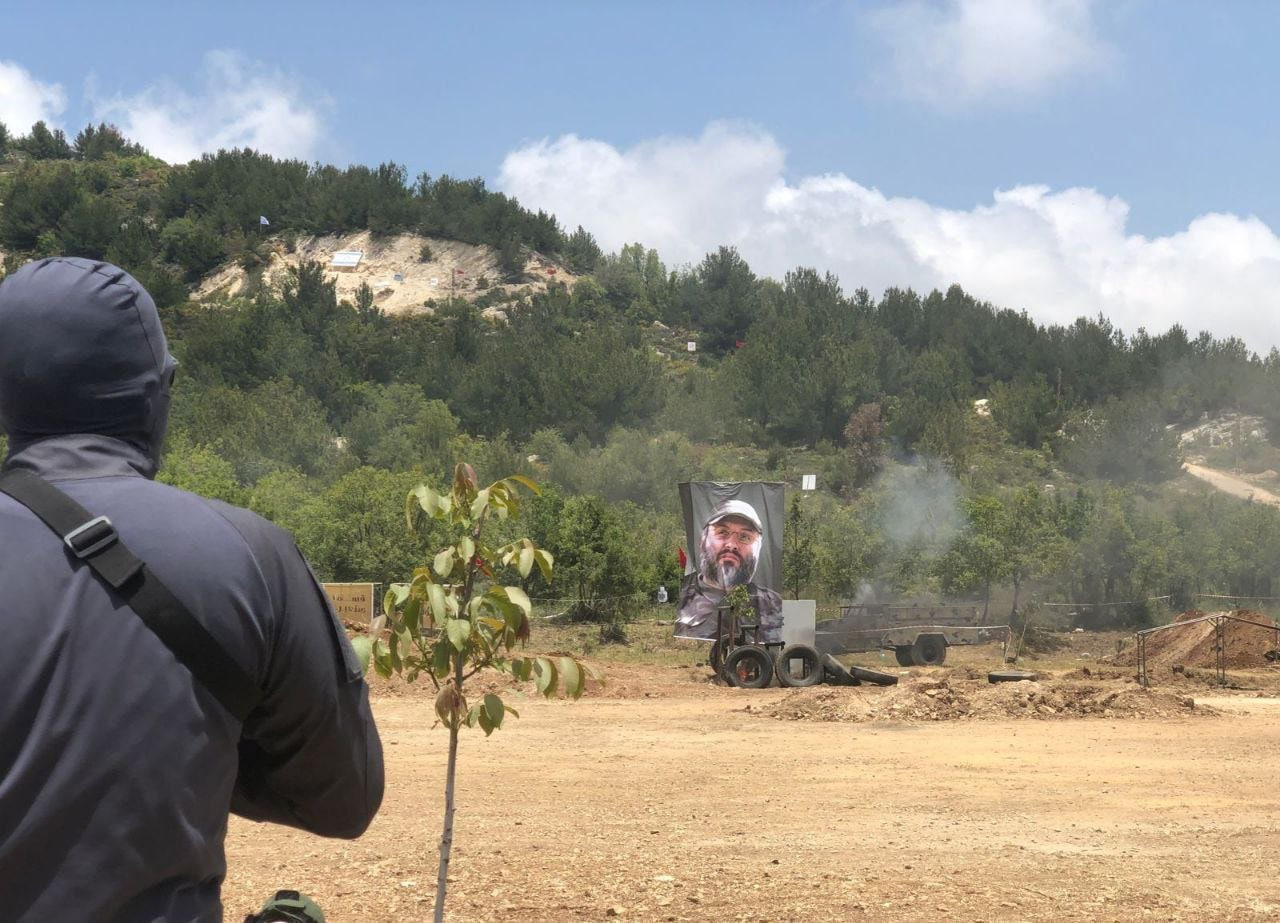
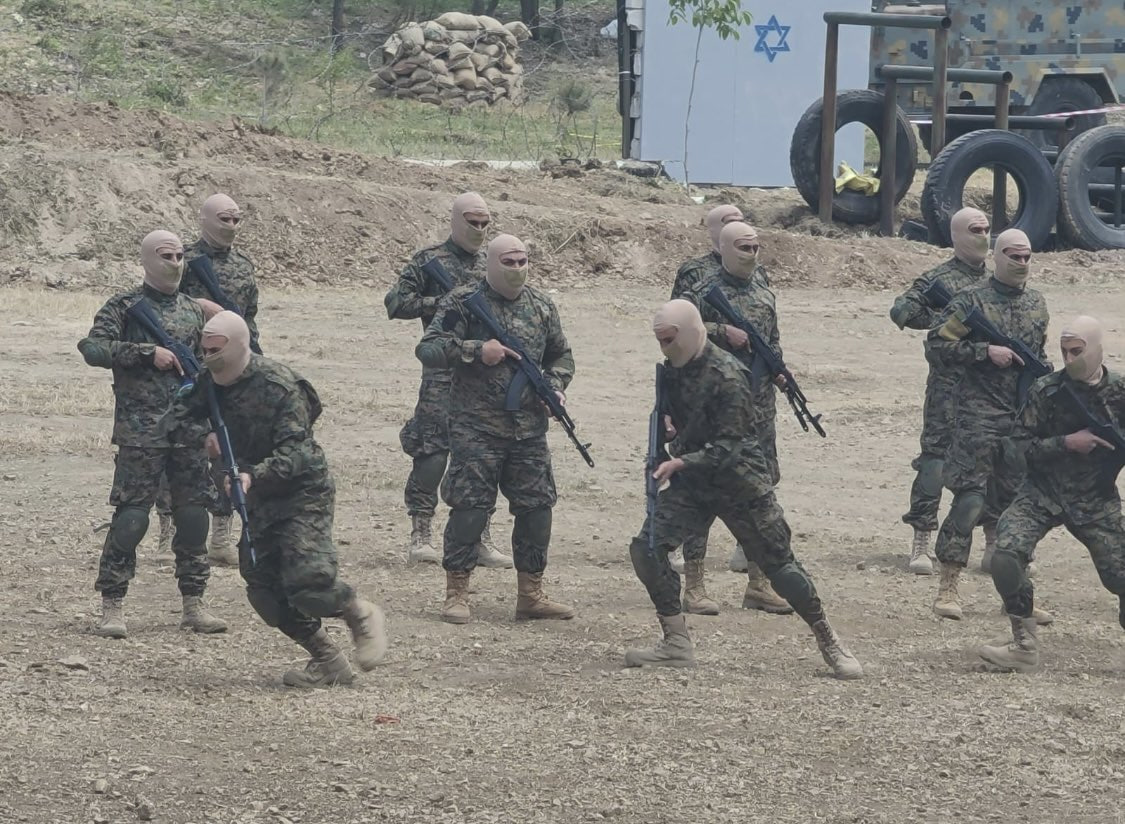
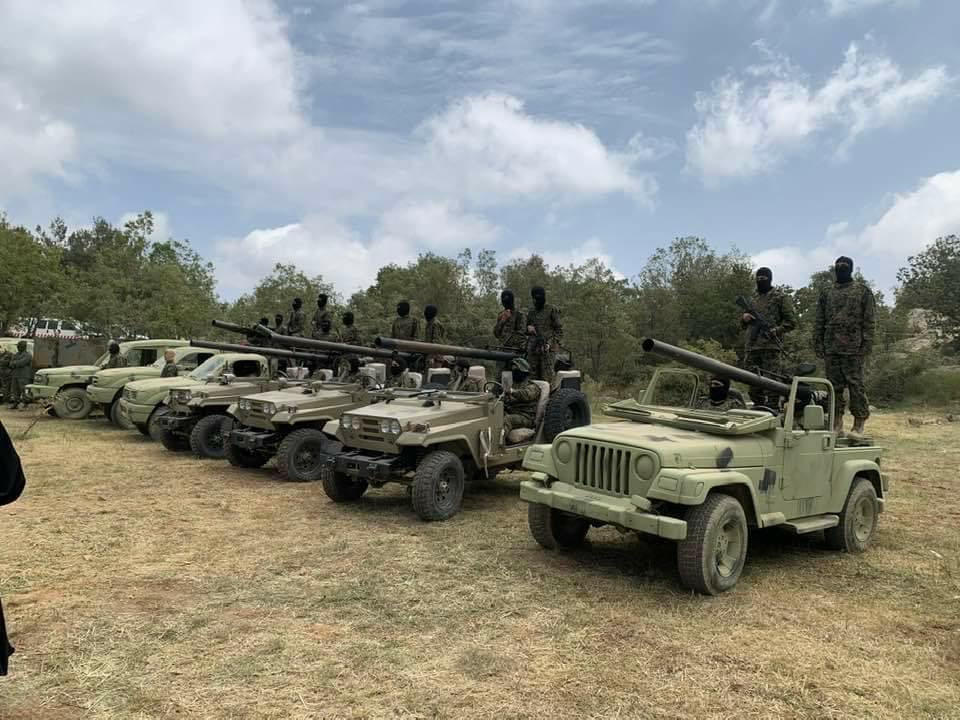
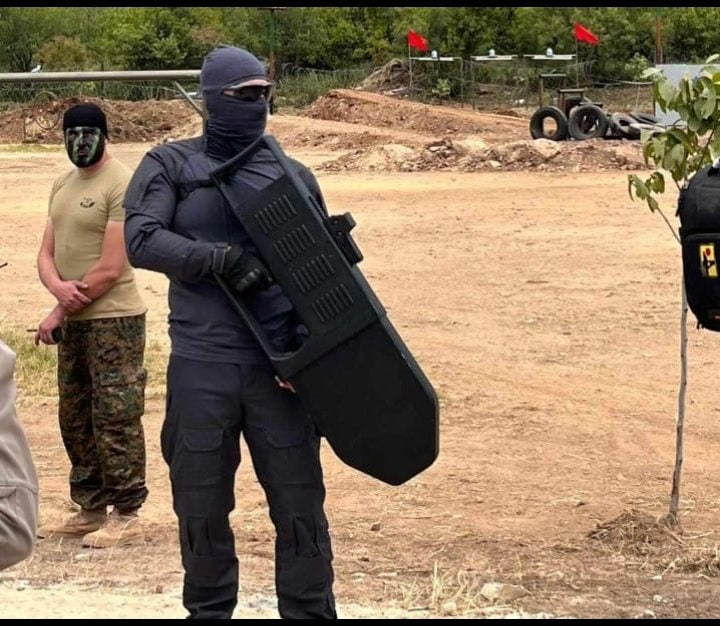
The Hezbollah fighters held the military drills in the Mleeta area in the south of the Arab country on the eve of the Resistance Day. According to sources close to the Hezbollah movement, more than 500 media operators from Lebanon, Arab nations and other countries were present to cover the military exercise.
In one part of the maneuvers, a strike on an Israeli settlement was simulated with the aim of capturing Israeli soldiers and they also replicated a drone attack on settlements in the occupied territories of Palestine.
Hezbollah exercise in Melita area in the south of Lebanon
Head of Hezbollah’s executive council in Lebanon Hashim Safi Al Din, who is also a prominent cleric, said during the Hezbollah’s military exercise that we witnessed the defeat and inability of the Zionist enemy to establish a new equation in the battle of Thar al-Ahrar in the Gaza Strip.
If the enemy thinks about the expansion of the circle of aggression, the resistance movement is ready to respond in such a way that the foe does not have the power to react and respond, the cleric warned, adding that the Zionist enemy will see how precise missiles work within its usurped territories if the enemy takes foolish action to circumvent the rules of the game.
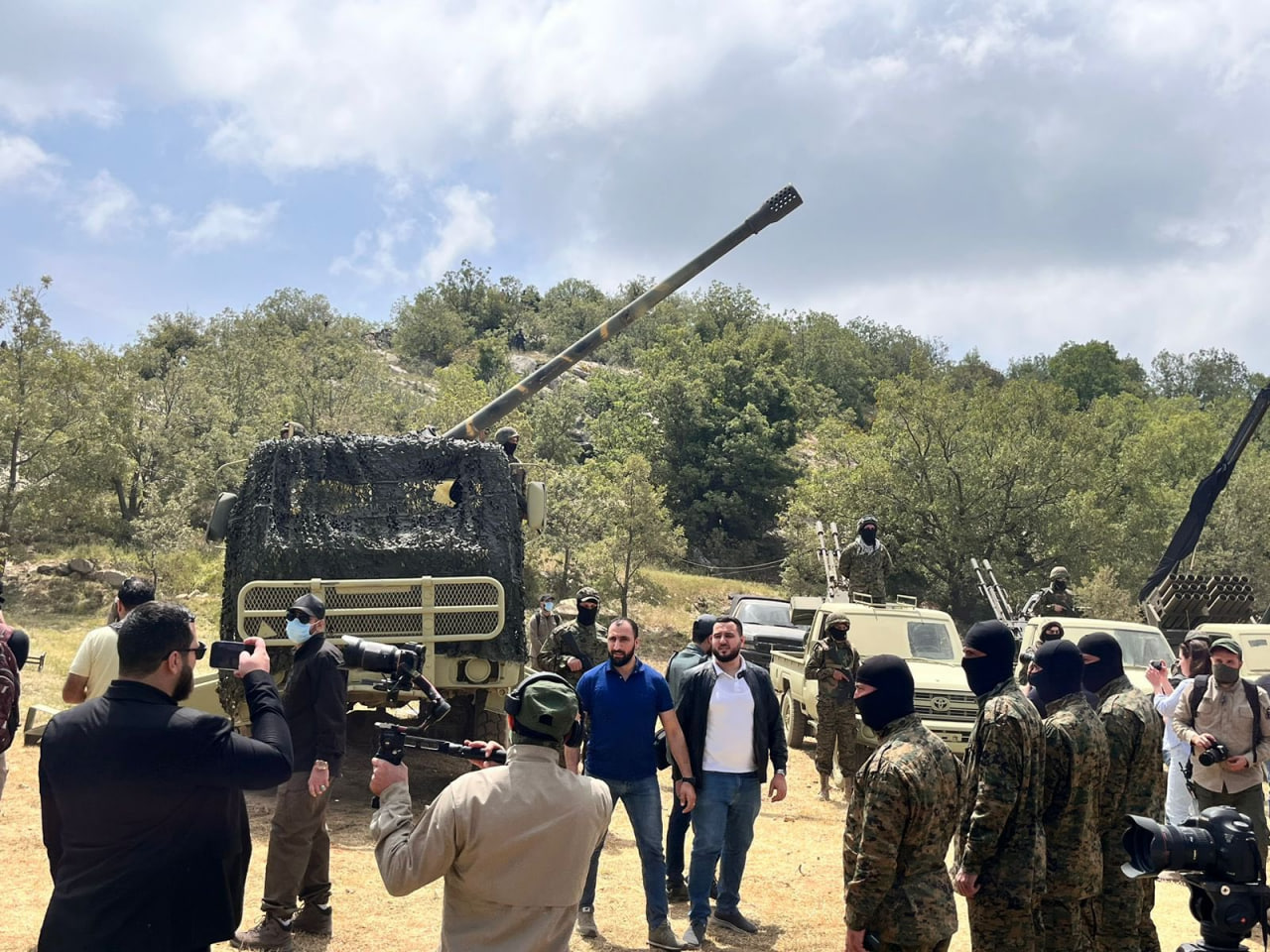
Images of the Hezbollah exercise in Melita area in the south of Lebanon
Safi Al Din went on to say that the purpose of the military exercise is to show the preparedness and deterrence of the resistance forces in supporting Lebanon, because the resistance front, whether it resides in Iran or Lebanon and Palestine, is expanding; and that the enemy should be aware that late commander of the Islamic Revolution Guards Corps (IRGC)’s Quds Force Martyr Lieutenant Qassem Soleimani is the founder of the axis of resistance; so, the resistance fighters will remain their weapons in their hands until complete victory.
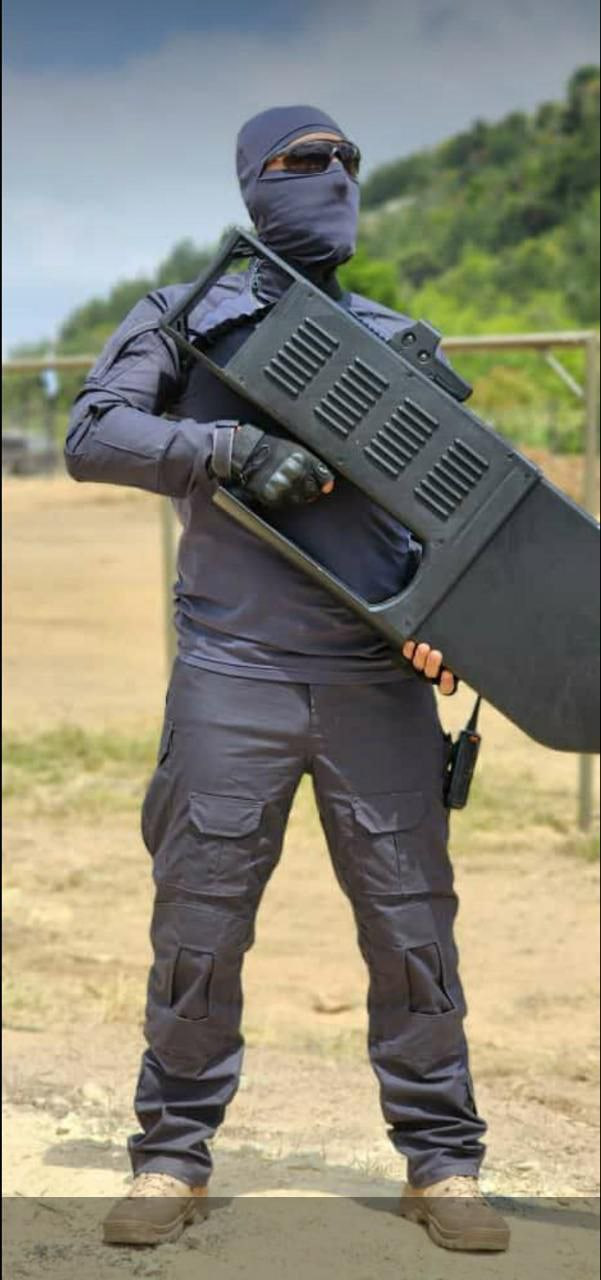
Anti-drone weapon in the hands of a Hezbollah fighter
When the images of the military exercise of the Hezbollah movement are seen, an MLRS rocket launcher is visible, which has the capability to fire 84 rockets. Moreover, the fighters of the Hezbollah movement have openly used anti-drone weapons for the first time in this military exercise to counter the infiltrations of drones and micro air vehicles (MAVs) in a bid to maintain the security of the military event.
It is worth mentioning that the Hezbollah resistance movement had inflicted heavy blow on the Israeli regime on May 25, 2000, when the Israelis were forced to pull out their armed forces from southern Lebanon. The day of Israelis’ withdrawal from Lebanon has been known as the Resistance Day in the Arab country and the Lebanese people celebrate the departure of the regime’s army from their soil, which had been occupied by the Zionist enemy since 1978.
Hezbollah exercise in Melita area in the south of LebanonHezbollah exercise in Melita area in the south of Lebanon
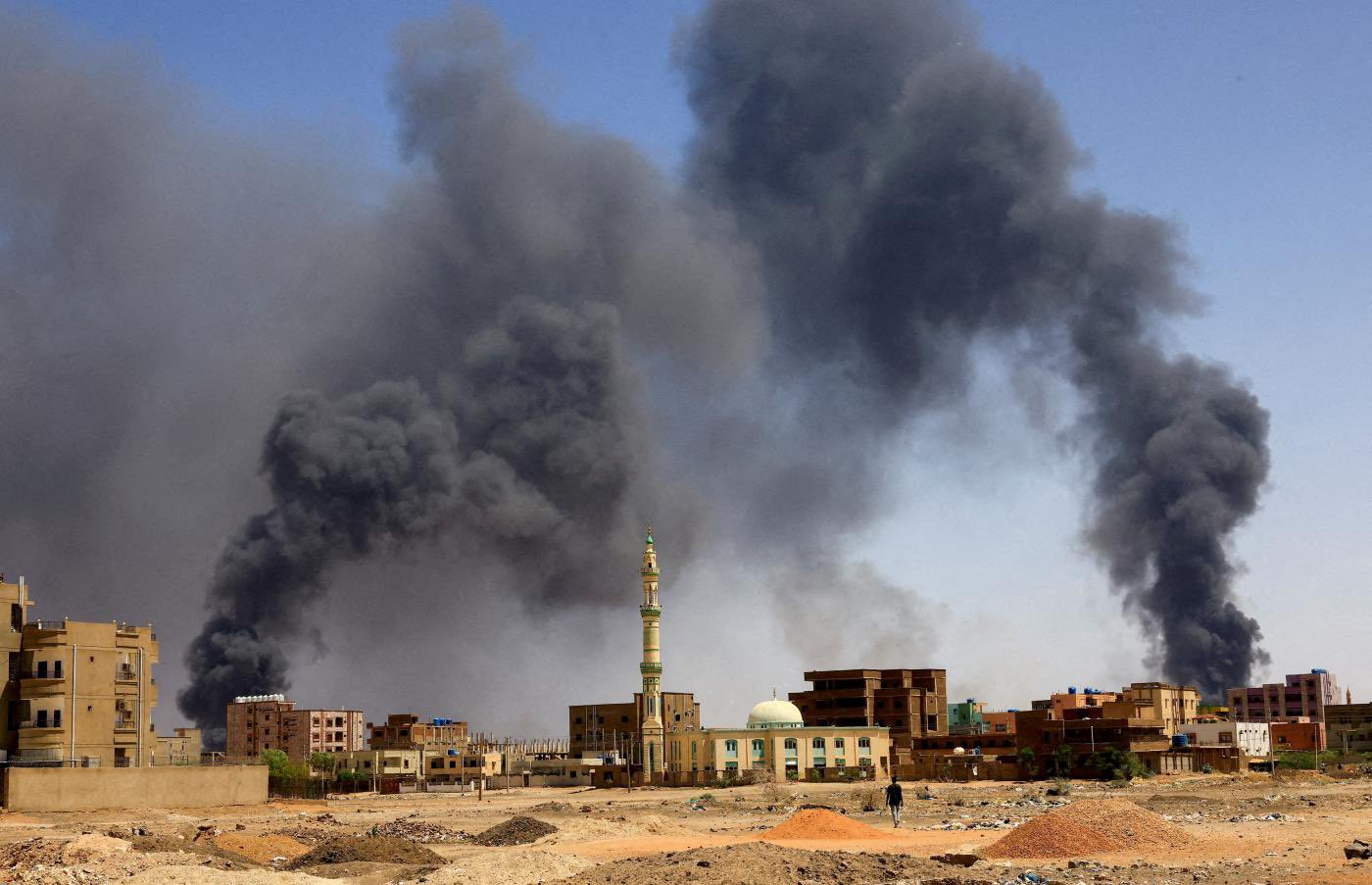
In accordance with a new statement from the United States and Saudi Arabia, following the ongoing talks in the Saudi Arabian city of Jeddah, Sudan’s new agreement concerning a ceasefire monitoring mechanism will be implemented within the next 48 hours from the time when the announcement was publicized.
Conforming to the US-Saudi brokered agreement, the Sudanese Armed Forces as well as the Rapid Support Forces paramilitary group will declare a ceasefire, which would be in place for seven days.
The Sudanese warring sides have also accepted to be committed to reopening humanitarian aid routes, respecting required distance from hospitals, stopping fighter jet bombings, artillery strikes and so on.
The truce has been announced while all previous efforts by the United States and Saudi Arabia to establish a ceasefire between the warring factions in Sudan had failed hours after their start.
Reports on the ground show that the clashes are still ongoing in Khartoum (the capital city of Sudan), Al-Junaynah (a city in West Darfur) and Nyala (the capital city of the state of South Darfur in the south-west of Sudan).
Sudan’s peace talks kicked off with the support of the United States and Saudi Arabia in the Saudi city of Jeddah on April 5.
Despite the joint statement by the US and the Saudi kingdom, the negotiations have not been successful in establishing a comprehensive ceasefire so far and the efforts have resulted in increased casualties and displacement of more civilians in Sudan.
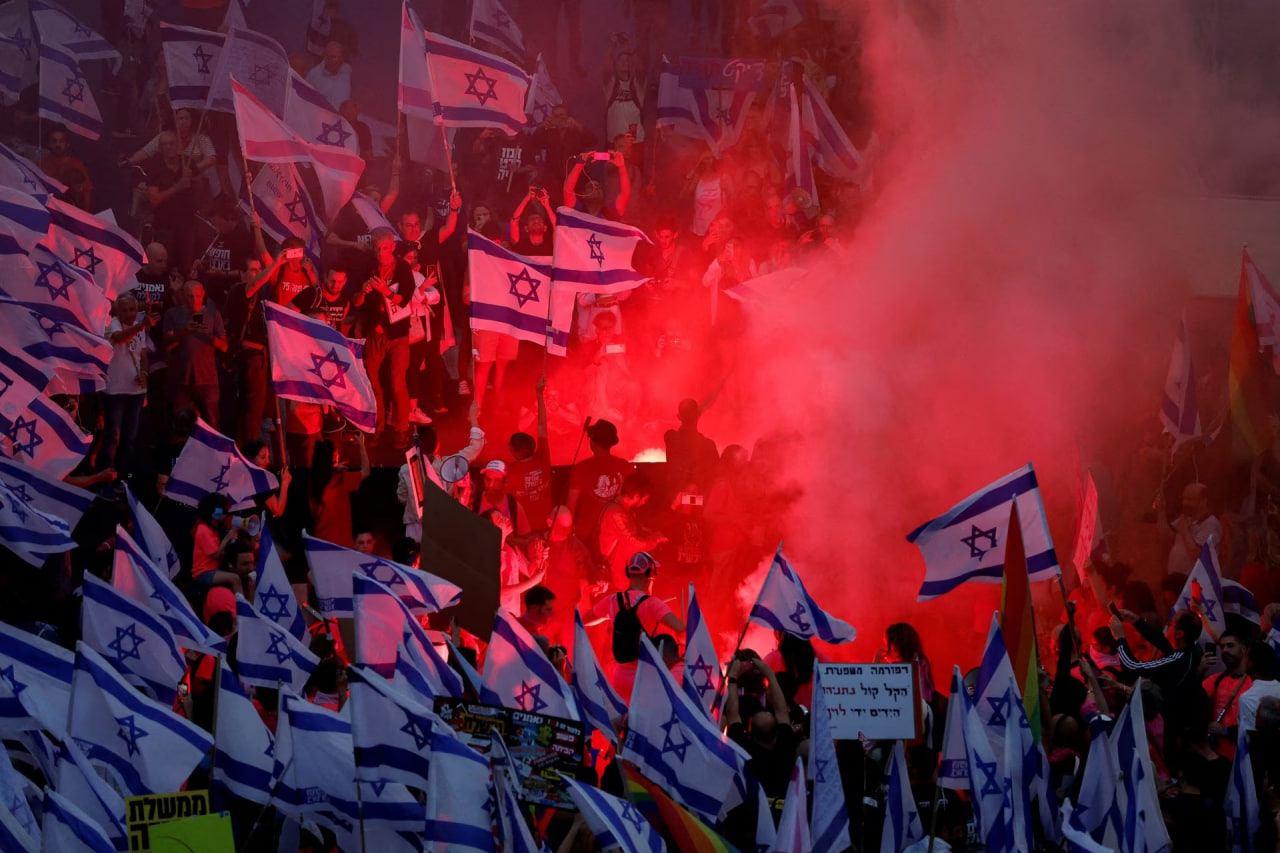
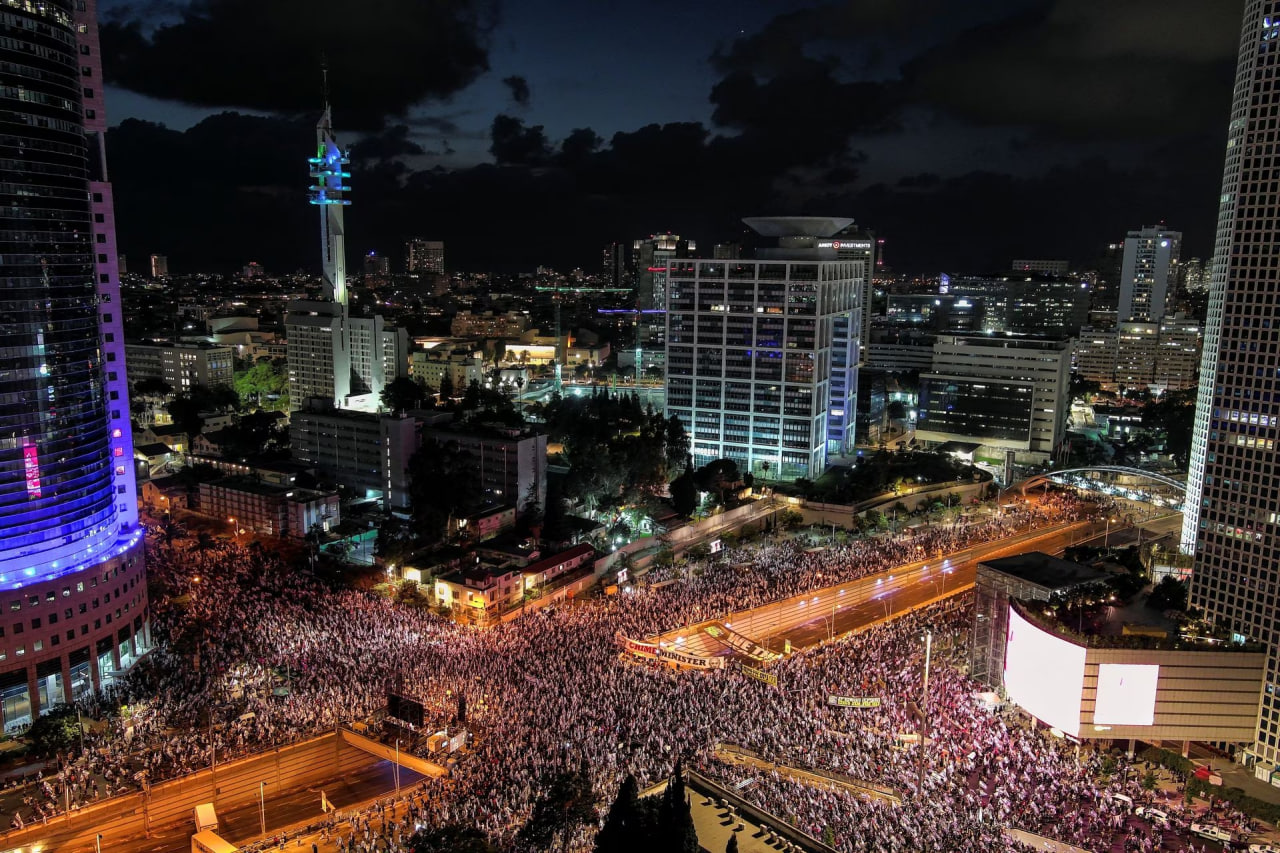
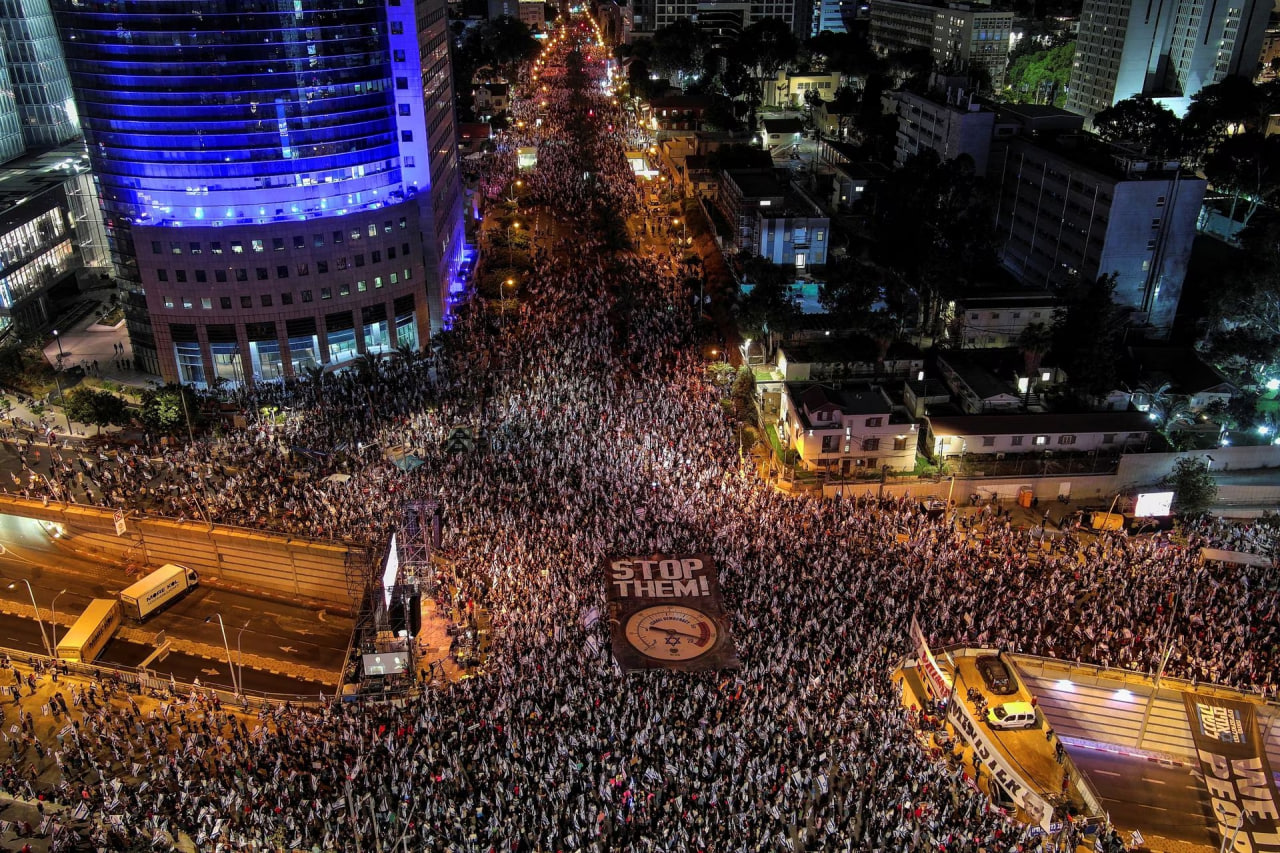
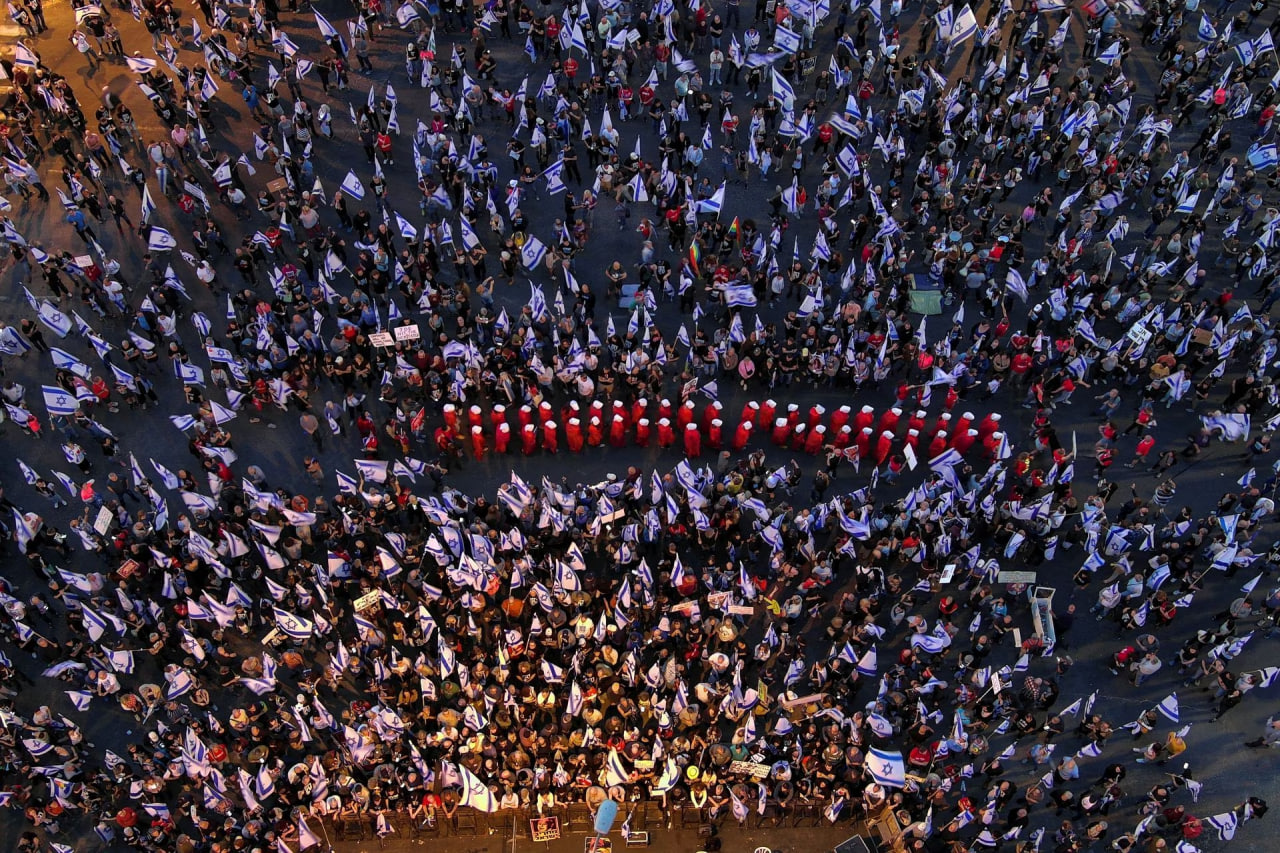
On May 20, over 150,000 settlers protested against Benjamin Netanyahu’s judicial reform programs in Tel Aviv and several other cities in the occupied Palestinian territories.
Protesters taking part in the rally emphasized that Netanyahu’s judicial reform plan would bring Israel closer to a dictatorial political system.
It is worth mentioning that the protest rallies continue on Saturdays every week in different cities of the occupied Palestine land.
The demonstrations, which have been set up in protest of Netanyahu’s judicial reform program, have now entered their 20th consecutive week.
The Israeli prime minister announced on March 28th that he had postponed his controversial plan for the judiciary of this regime, but the protests continue.
Netanyahu’s cabinet was pushing for changes that would limit the Supreme Court’s powers to rule against the legislature and the executive, while giving coalition lawmakers more power in appointing judges.
Some critics believe that the Israeli premier, who faced corruption charges earlier, suggested the so-called judicial reform plan in a bid to get rid of being prosecuted in the future.
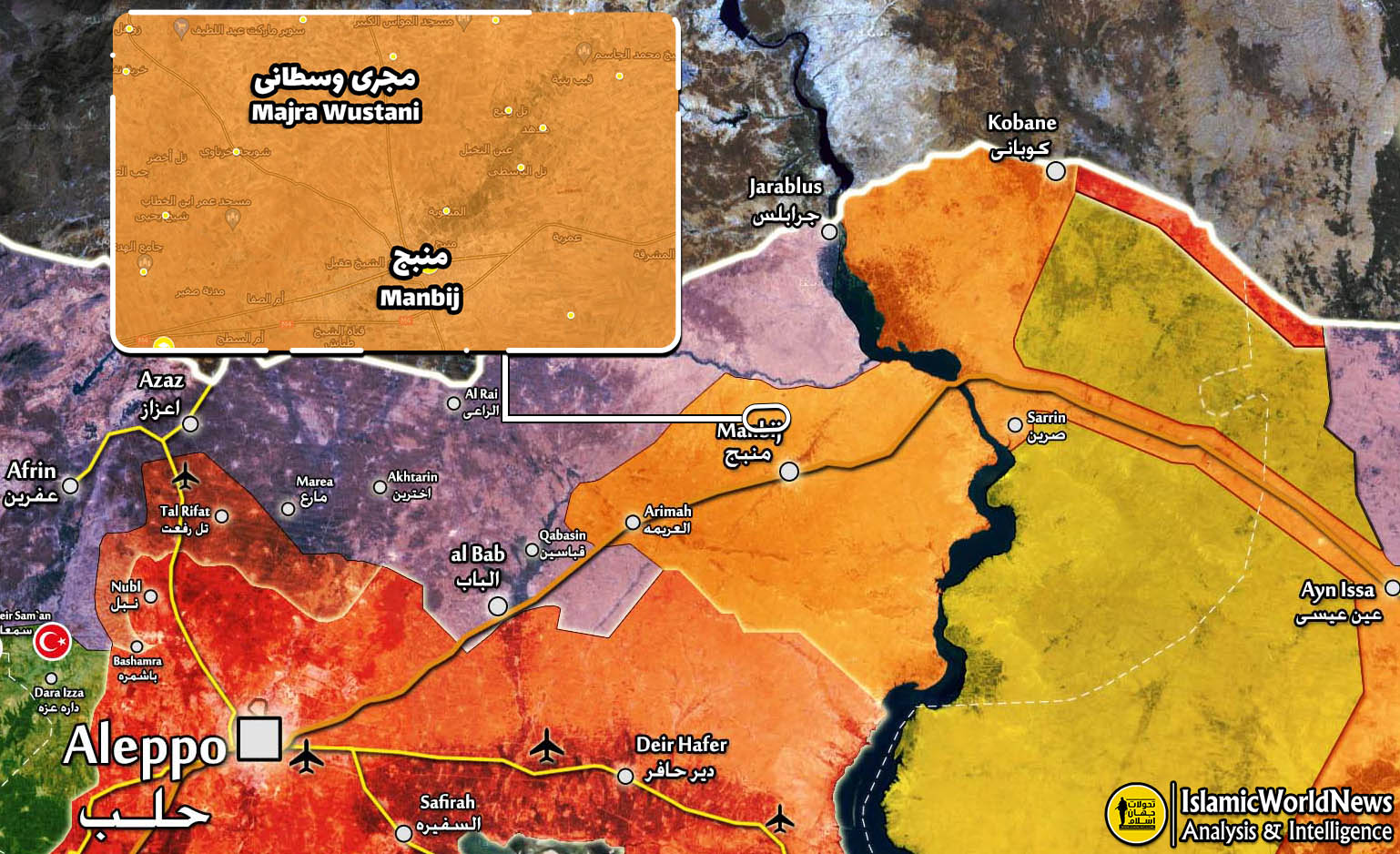
On May 19, the Turkish drones attacked a joint headquarters of the Syrian army and the Syrian Democratic Forces (SDF) in the village of Majra Wustani in north of Manbij city. Four Syrian Army servicemen lost their lives and several others were wounded.
According to local sources, Turkish drones targeted two vehicles parked in front of this headquarters.
Targeted Turkish drone attacks on the northern regions of Syria have increased since 2022. The highest number of this type of attacks was recorded in November 2022. According to a research group based in Syria, the Turkish armed forces carried out at least 130 drone attacks in northeastern Syria in 2022, which is a 46% increase compared to 2021.
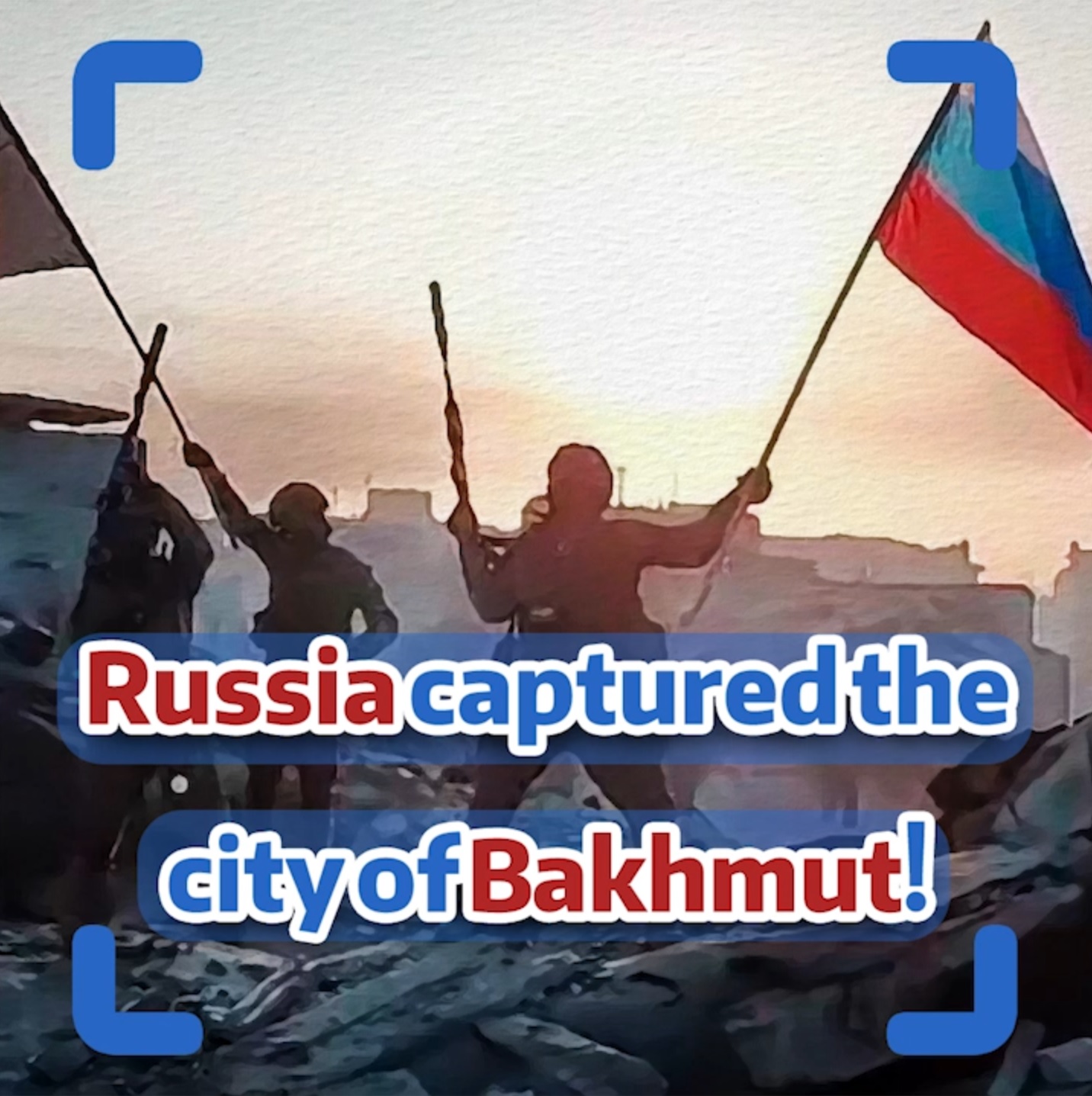
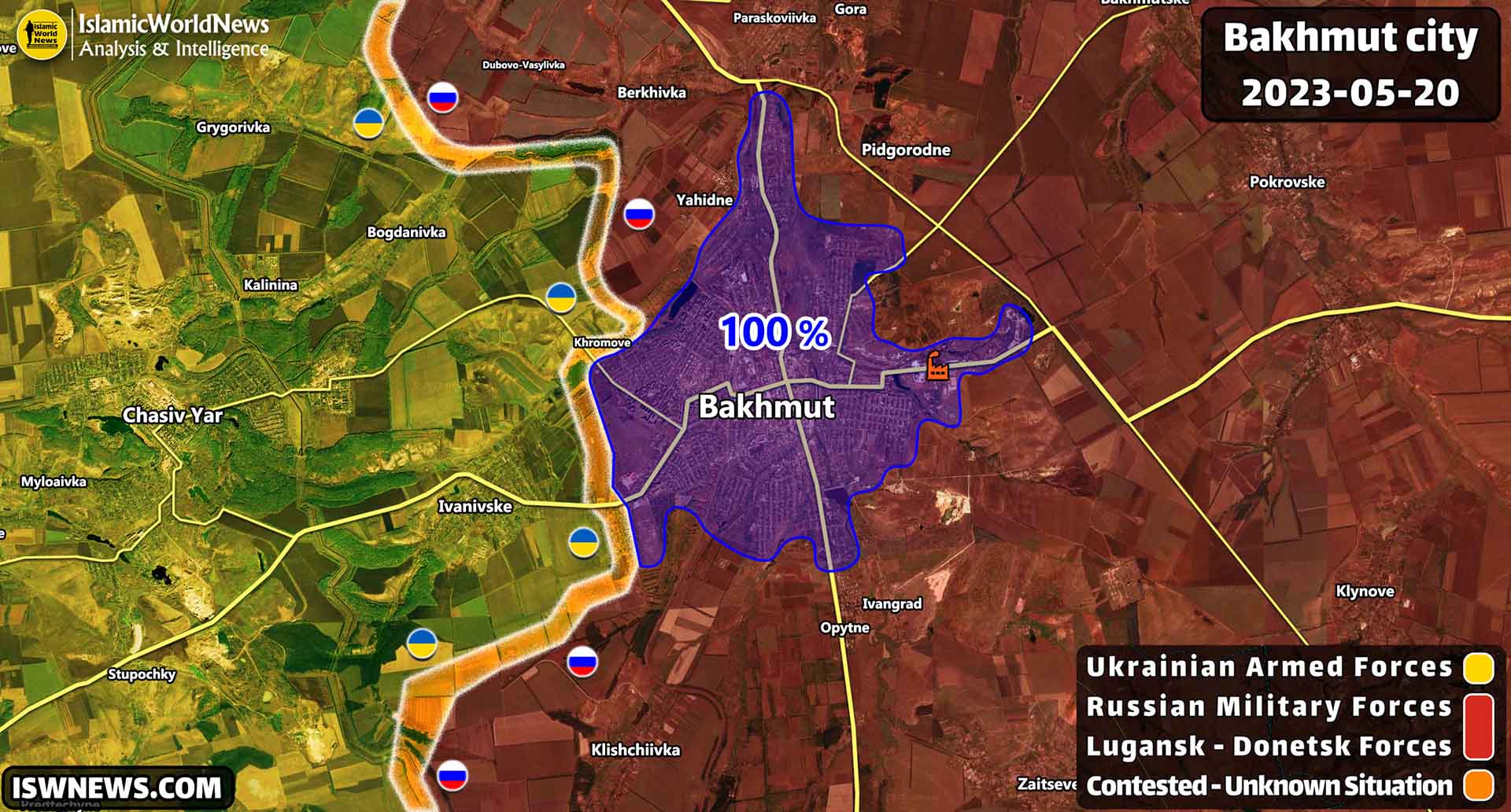
Following the battles of the Russian army and Wagner PMC forces with the Ukrainian army and its allies, the remaining areas in the northwest and west of this city were also controlled by the Russian army, and the battles in Bakhmut officially ended. It should be noted that since 10 days ago, Russian army forces had dominated more than 90% of Bakhmut city and the fighting continued in the few remaining areas.
At noon today, the head of the Wagner PMC, Yevgeny Prigozhin, announced the full capture of this city in a video message. He said: “Bakhmut Fortress”. Today this “fortress has fallen” despite all the efforts of more than 80,000 Ukrainian troops that were operating in this direction, not counting the reserves from Kharkiv, Svatovsk, Krasnoliman, and Zaporizhzhya. The remnants of the AFU forces retreated behind Chasov Yar, shielded from Russian forces by undermined bridges. Slavyansk and Kramatorsk have been turned into new fortresses, where new Ukrainian reserves are concentrated. For Russia, the Bakhmutsk battle was also one of the bloodiest and longest since the Great Patriotic War (World War II).”
Prigozhin stated that by May 25, Wagner forces will leave the city of Bakhmut and the positions will be handed over to the units of the Russian Armed Forces.
The main assault to capture the city of Bakhmut was started since 1 August 2022, and by mid-February, the clashes have gradually spread to inside the city of Bakhmut. During the capture of Bakhmut city, thousands of soldiers died on both sides and Bakhmut city was turned into ruins.
The intensity of the battles and losses were so great that this city became known as “Bakhmut Meat Grinder”. During the past few months, the Kiev government and its allies sent everything they could from manpower to military equipment to the city of Bakhmut to prevent the fall of this city, but in the end it was of no use and the city of Bakhmut was out of the control of the Kiev.
The city of Bakhmut is considered as one of the key points in the Donbass region and the control of this city will determine the future of the battles in the region. The next target of the Russian army in this region will be Slavyansk and Kramatorsk.
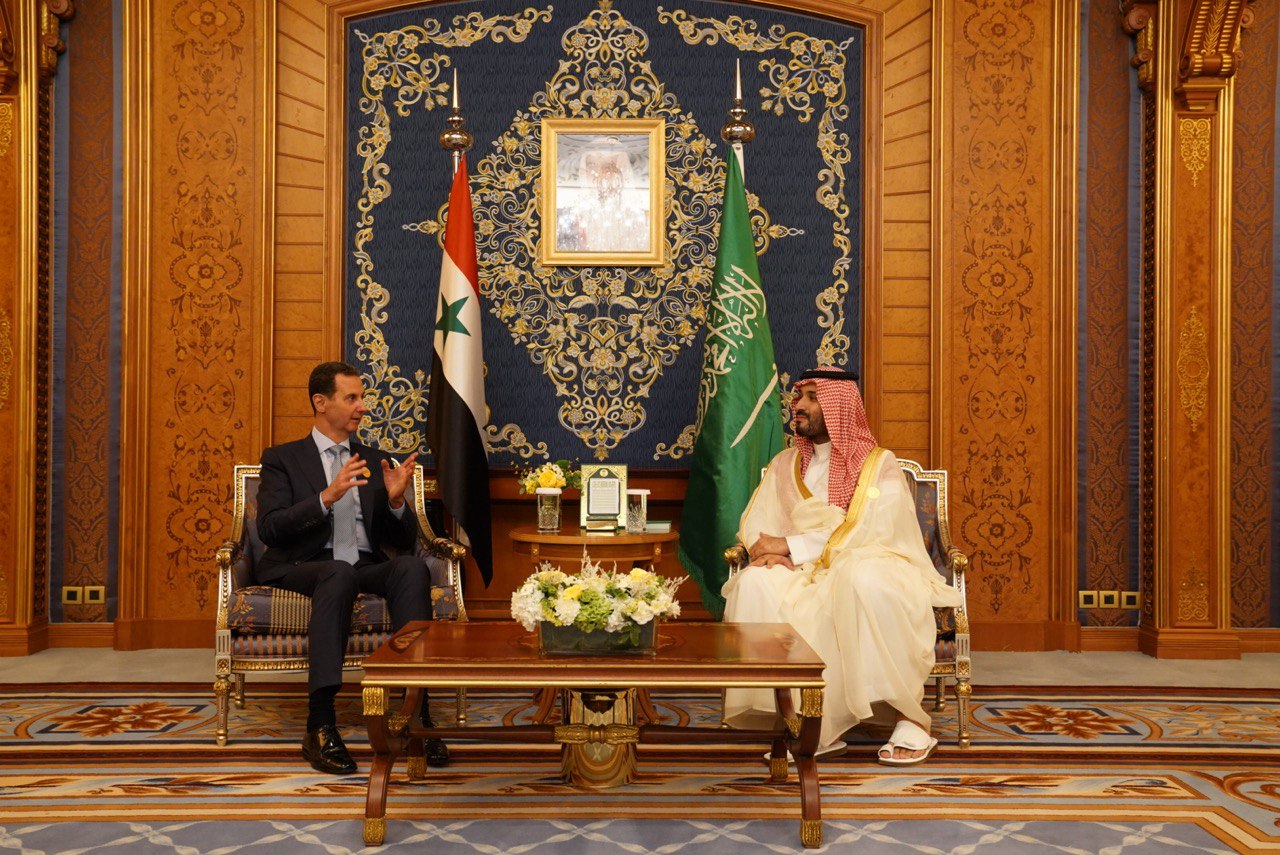
In this meeting, Assad and bin Salman discussed the developments in the Arab countries and the positive reflection of the relations between these countries and emphasized that this atmosphere indicates a collective movement towards common views.
The President of Syria appreciated the efforts of Saudi Arabia for convergence among Arab countries and said that joint actions between the Arab countries will help to realize the interests of their nations.
He congratulated bin Salman on the successful holding of the Jeddah summit and emphasized that this summit will increase cohesion among Arab countries.
The parties also expressed their satisfaction with the re-establishment of Riyadh-Damascus relations and said that this will stabilize the region.
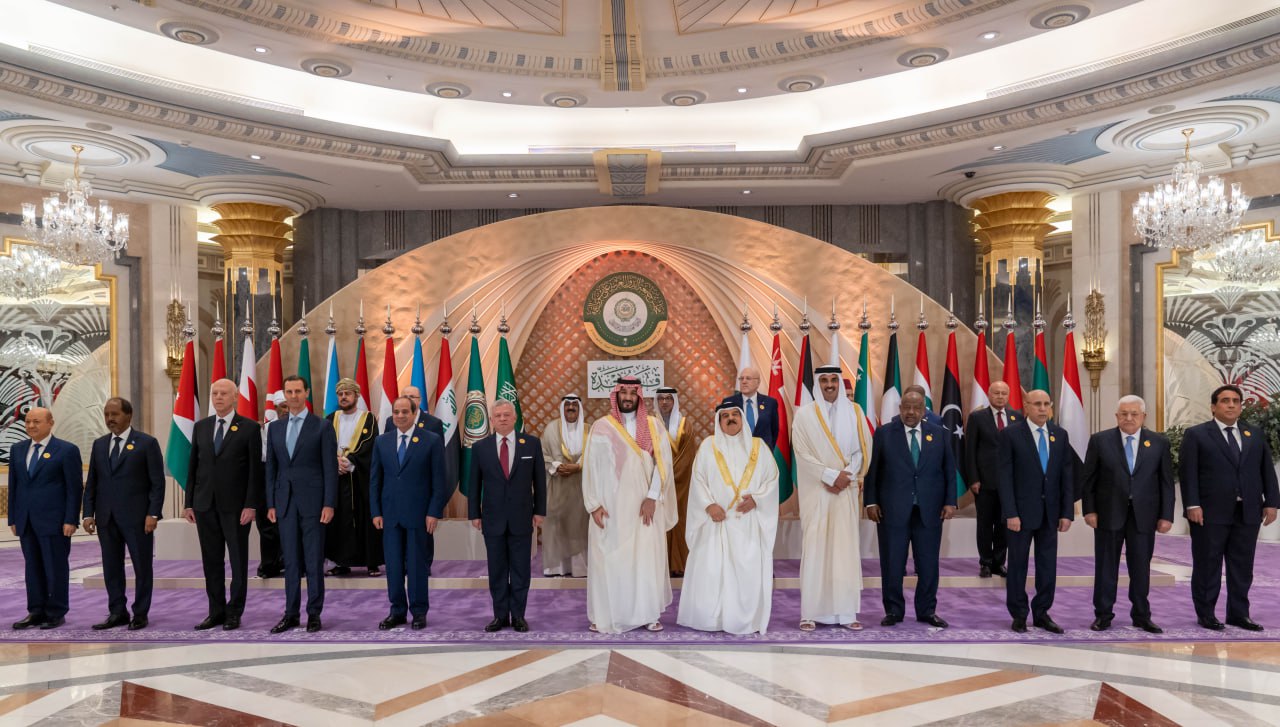
It is worth mentioning that the President of Syria, who attended the 32nd meeting of Arab League in Saudi Arabia, met and talked with a number of senior officials of the Arab countries. The meeting between the President of Syria and the Crown Prince of Saudi Arabia was held after the end of the summit of the heads of the Arab League.
The president of Syria arrived at King Abdulaziz International Airport in the Red Sea port city of Jeddah on Thursday (May 18), when he was welcomed by Saudi authorities.
A day after Bashar al-Assad’s arrival in Saudi Arabia, the thirty-second summit of the leaders of Arab countries was held on Friday in Jeddah. According to Saudi media outlets, Mohammad bin Salman officially welcomed the President of Syria prior the onset of the 32nd summit of the Arab League.
The crown prince of Saudi Arabia welcomed the president of Syria
The summit kicked off with a speech by Mohammad bin Salman and he said at the beginning of the session that we are pleased with the presence of Bashar al-Assad, President of Syria, at the meeting of the leaders of Arab countries.
We hope that Syria’s return to the Arab League will help Syria’s security and the support for the country, he said.
Also, the subject of Palestine is the key issue of Arab and Muslim countries; an issue that is at the top of Saudi Arabia’s priorities, he noted, adding that the issue of Palestine is a focal point in the Arab world and we are working together to find a solution for it.
Bin Salman went on to say that we will not allow our region to become a battlefield; we have had years of conflict, which hurt people, and that we will devote our efforts to support for Yemeni parties to find a solution to the current crisis in their country.
Secretary-General of the Arab League Ahmad Aboul Gheit, for his part, stated at the summit that we welcome the agreement between Iran and Saudi Arabia, and that the Jeddah meeting is an opportunity to revive Arab issues, which had been left to others for a long time.
During the meeting, Bashar al-Assad described Syria as the heart of the Arab community, saying that I thank the heads of delegations who expressed their deep friendliness for Syria. A joint Arab cooperation to promote our role in resolving crises and issues requires common goals and strategies, the Syrian president argued.
Assad further emphasized that we are facing a historic opportunity to reorganize the mechanisms of the Arab League with the least amount of foreign intervention. The reconciliations that have taken place are a historic opportunity to re-examine our own affairs without foreign interference, he mentioned, adding that the world must leave internal affairs to our own people; so, we reject any foreign interference.
The president also concluded that I hope the conference will mark the commencement of a new phase of joint Arab action for solidarity among us so that instead of war and destruction, we can achieve peace, development and prosperity in the region.
Syrian President Bashar al-Assad’s arrival in Saudi Arabia
It is worth mentioning that the Arab League suspended Syria’s membership in this bloc in 2011 under the pretext of some political and security issues. Finally, after 12 years and following the failure of plots hatched to overthrow President Bashar al-Assad from power as well as the victories of the resistance axis in different fields, foreign ministers of Arab countries of the region agreed to return Syria to the Arab League during a meeting in Egypt on May 7.
The Syrian return to the Arab League and President Assad’s visit to Saudi Arabia created concern among the foes of the resistance axis so much that some Hebrew-language media outlets reacted to the promising developments, as they said that “This is the Arab League that has returned to Syria and not vice versa!”
The Zionists are of the opinion that with Syria’s return to the Arab League, the Arab Spring plot has officially come to an end and the issue of Palestine will once again become the main focus and concern of the Arab countries in the West Asia region and North Africa.
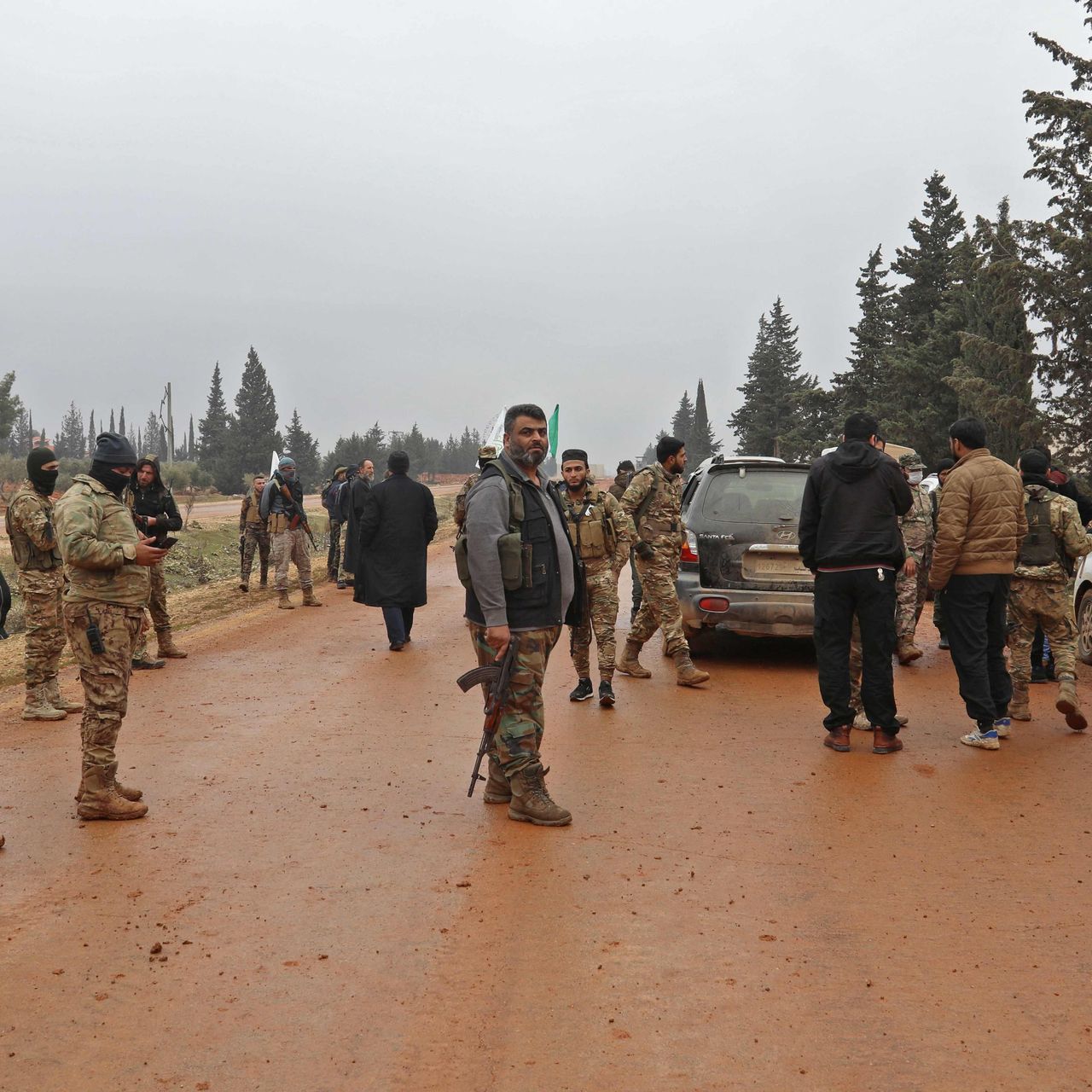
During the four-hour-long meeting, the two sides discussed the presence of foreign military agents of Hay’at Tahrir al-Sham in the Idlib Governorate as well as the presence of foreign women and children.
In the meeting, a number of reports presented by Hay’at Tahrir al-Sham elements to the National Intelligence Organization, which included accurate statistics on the presence of foreign elements in Idlib, were discussed.
They also held talks on the ways to deal with the issue of foreign prisoners in Hay’at Tahrir al-Sham’s prisons as well. It is also said that Hay’at Tahrir al-Sham has agreed to hand over some prisoners, who are European and Asian nationals, to the Turkish authorities.
It seems that The Turkish government, which is aware of the importance of such an issue for Russia and Western countries, is seeking to maintain the presence of foreign elements in Idlib in order to exploit them in possible negotiations about the future of the regions, where the foreign-backed militants are still there.
It is worth mentioning that, earlier this month, the head of the Syrian General Intelligence Directorate, Hussam Louqa met with the commanders of Turkish-backed factions in Aleppo city in northern Syria. In the meeting, the normalization of relations between Damascus-Ankara was discussed. This meeting took place after Hussam Louqa met and talked with the head of the Turkish Intelligence Service on May 5, on the sidelines of the quadrilateral meeting of Iran, Syria, Turkey and Russia in Moscow.
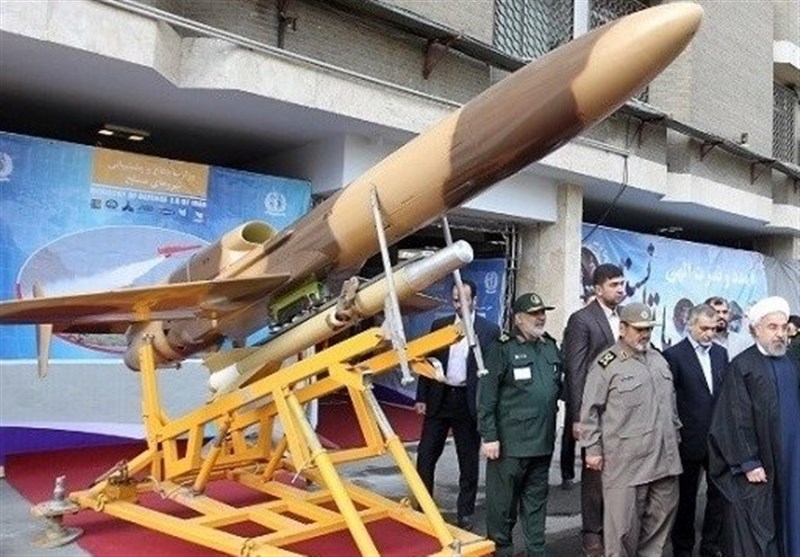
The first type of Shafagh missile was unveiled and introduced in 2014 during a ceremony in the presence of the then Defense Minister, General Dehghan. This missile (first type) has a range of 8 to 12 km with a penetration rate of 1500 mm in armor. This amount of armor penetration is considered a very good number for an air-to-ground missile. For example, Kornet ME anti-armor missile has a penetration rate of 1300 mm in rolled steel.
The Shafagh air-to-ground and anti-tank missile in its two prototypes is very similar to the Shahab Sagheb defense missile that was used in the Ya Zahra (S) and Herz-9 air defense systems. Ya Zahra (S) air defense system, which was unveiled in 2013, is modeled after the French Cortal air defense system, which was captured by the Islamic Republic of Iran Army during the Iraq-Iran war. This French air defense system is also produced in China under the name FM90 or HQ7.
Cortal air defense systemFM90 air defense systemYa Zahra air defense systemClick to view full size
The Shahab Sagheb missile is also made from the R440 missile belonging to the Cortal defense system and is very similar to it.
R440 missile belonging to the French Cortal systemShahab Sagheb missile belonging to the Ya Zahra (S) air defense systemClick to view full size
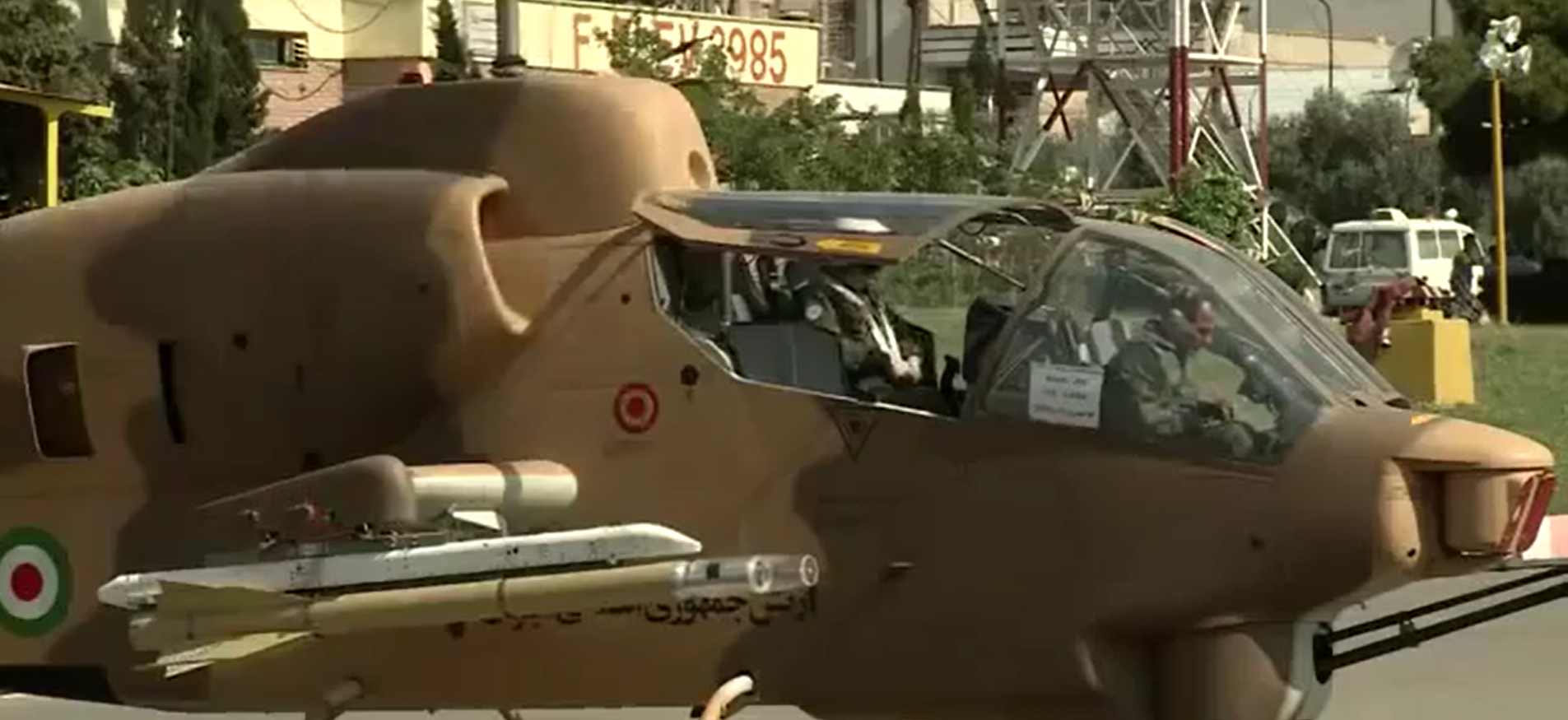
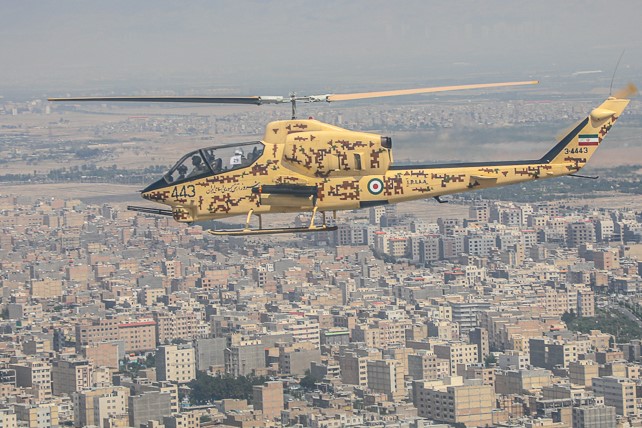
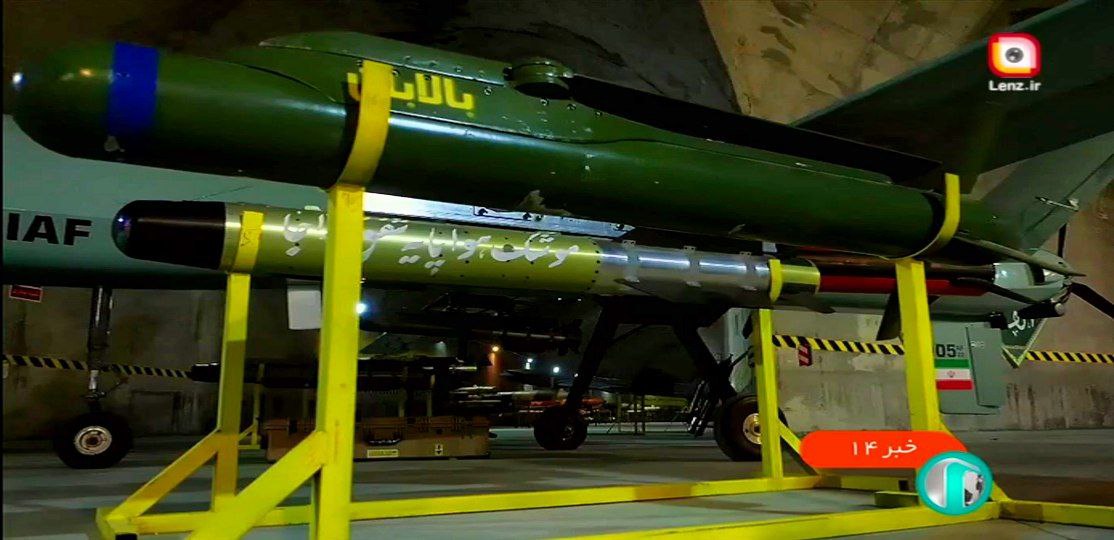
Prototypes of Shafagh missile: As mentioned, the first Shafagh missile was installed on the Army’s Air Force helicopters in 2014, but before that in 2013, this missile was seen on the Karrar drone. In those years, it was stated that the Shafagh missile has a range of 8 to 10 km and uses an infrared seeker (IIR) in the last stage to attack targets independently; So Shafagh is a fire-and-forget missile capable of penetrating 1 to 1.5 meters of armor. The prototypes of the Shafagh missile have an accuracy of more than 30 cm at a distance of 10 km and have a speed equal to Mach 2 to 2.7 depending on the release height and the distance to the target. The high speed and fire-and-forget ability turned Shafagh missile into a very dangerous one, because the tanks’ defense system has very little reaction time to deal with this missile and the helicopter can quickly move away from the danger zone after firing.
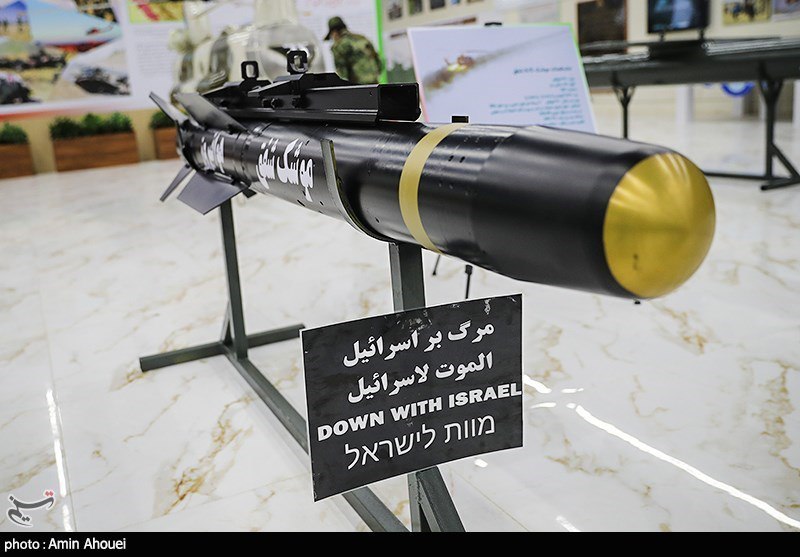
Another variant of Shafagh missile was unveiled again in 2019 with the same name as Shafagh. The main difference between the two missiles unveiled at a different time interval was the appearance of the front fins. In the first prototype, Shafagh lacked the front fins, but in the secondary prototype, keeping the front fins, the Shafagh missile was completely similar to the Shahab Sagheb missile. Structurally, the maximum range of the second Shafagh missile was increased to 12 km. The Shafagh missile has a maximum speed of Mach 2 to 2.7 in both variants.
The first Shafagh missile unveiled in 2014The second Shafagh missile unveiled in 2019Shafagh missile seen in 2013Click to view full size
The main difference between the Shafagh missile in the first variant and the Shahab Sagheb missile was the removal of the front fins in the Shafagh missile, but in the secondary variant, the Shafagh missile can be distinguished from its IIR seekers compared to the Shahab Sagheb.
Safagh 1 and 2 specifications: Length: 2.9 meters Weight: 60 kg in first variant – 84 kg in second variant Maximum speed: Mach 2 to 2.7 Range: 8 to 12 km in second variant
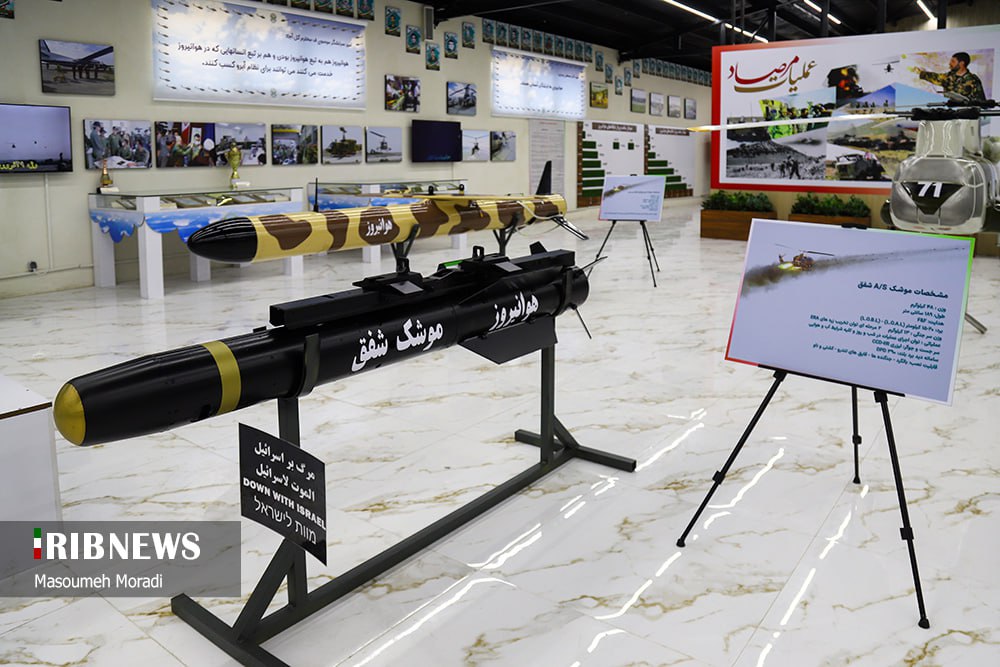
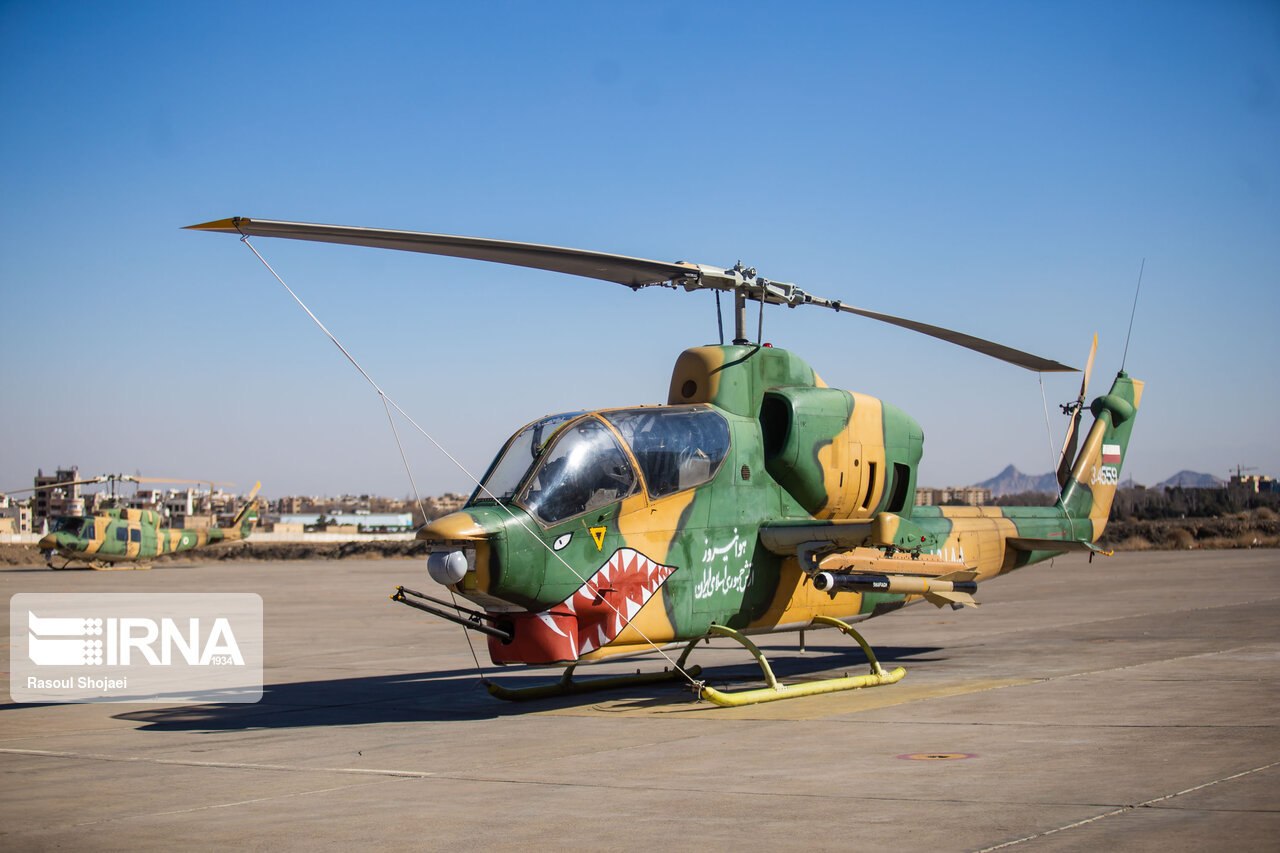
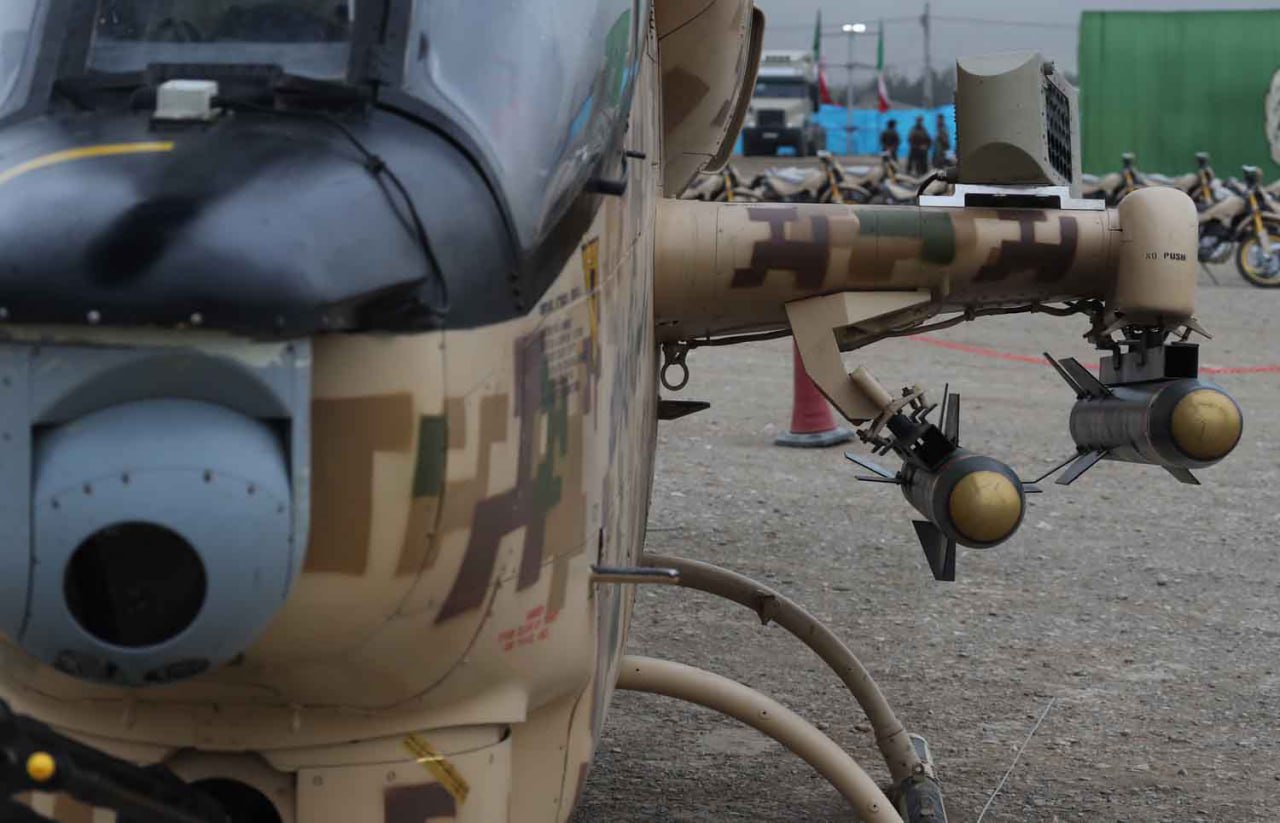
The enhanced Shafagh missile: The enhanced Shafagh (شفق بهینه) missile was unveiled as a new generation of Shafagh missile in 2022. The new Shafagh missile has been described as a two-stage missile with a 13 kg warhead. This missile with a length of 1.89 meters and a weight of 50 kg is capable of destroying all types of tanks, personnel carriers, concrete trenches, floats and defense infrastructures in all weather conditions, day and night.
Due to the aerodynamic redesign and probably the solid fuel engine propulsion of the Shafagh missile, its range has increased to 20 km. There is only one other anti-armor missile in this range, and that is the Nimrod 2 missile manufactured by the Israeli Aerospace Industries. Also, in terms of appearance, Shafagh missile can be compared with Nimrod missile. The main difference in appearance between Shafagh and Nimrod is in the middle fin of these two missiles, which in Shafagh is a trapezoid with two slanted sides, and in Nimrod this trapezoid is with one slanted side and one straight side. In terms of length, the Nimrod is one meter longer and its range is up to 36 km.
Shafagh air-to-surface missile on Cobra helicopterNimrod air-to-surface missileClick to view full size
The maximum speed of Shafagh (enhanced) missile is 750 meters per second. The probable circular error (CEP) rate of this missile is 20 cm. The Shafagh (enhanced) missile which is a fire-and-forget missile, uses an infrared seeker and laser guidance to accurately target and hit targets.
Shafagh (enhanced) missile specifications: Type: Fire-and-forget Introduction: 2022 Length: 1.89 meters Diameter: 20 cm Weight: 50 kg Warhead weight: 13 kg Speed: 750 meters per second Range: 20 km Guidance: Infrared homing, semi-active laser Origin: Iran
Shafagh air-to-surface missile – Click to view full size
More images of Shafagh 1 and 2 missiles and the enhanced Shafagh:
Click to view full size
Shafagh air-to-ground missile posters in English, Russian, Arabic, Azeri and Hebrew: