On May 31, the Israeli regime fighter jets targeted a headquarters belonging to the Popular Front for the Liberation of Palestine (PFLP) in the Beqaa Governorate on the border of Lebanon and Syria; According to preliminary information, at least five people were killed.
The PFLP confirmed the martyrdom of five of its members and the wounding of 10 others in the Beqaa region, but the Hebrew media, citing Israeli officials, denied any airstrikes on Lebanese soil.
Earlier, Seyed Hassan Nasrallah, the Secretary General of Hezbollah in Lebanon, stated in a speech that the resistance in Lebanon will respond decisively and quickly to any attack on any human being in Lebanon, be it Lebanese, Palestinian or any other nationality.
An Israeli army radio declared that a number of Palestinians fired from inside a car at one of the security forces around the Haramish settlement in the north of Tulkarm and fled the shooting scene.
According to local sources, the Israeli security force was transferred to a medical center after being shot in the chest and shoulder areas, but he succumbed to death due to the severity of the injuries. Israeli Army forces cooperate with Shabak (an Israeli security agency) in a bid to search for the Palestinians behind the shooting operation.
Spokesperson of the Palestinian resistance movement Hamas Abdul Latif al-Qanoua said in a statement that the heroic operation is a reason, which proves the steadfast determination of the Palestinian nation to defend its land and sanctities against repeated strikes by the Israeli occupiers on Al-Aqsa Mosque.
It is worth mentioning that a young Palestinian man shot at a car belonging to Israeli settlers in the Sheikh Jarrah neighborhood located in East Jerusalem on April 18, and two Israelis were severely injured during the operation.
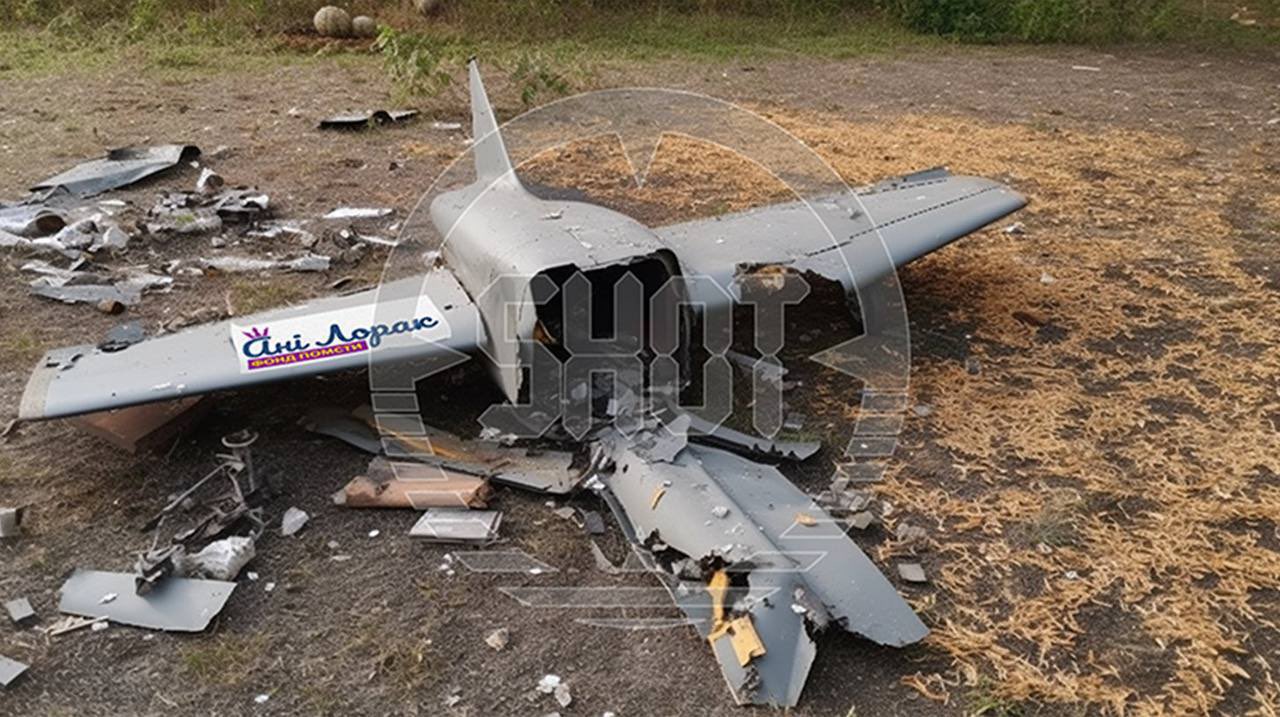
According to Russian news sources, the capital city of Moscow was attacked by several Ukrainian UJ-22 suicide drones at dawn today. The Russian army air defense systems reportedly managed to destroy some of these drones and some others hit residential buildings.
The Russian Ministry of Defense stated the number of attacking drones as eight, five of which were shot down by the Pantsir short-range air defense systems and the other three with electronic warfare.
The Ukrainian army drone attack did not result in any casualties; However, the drones hit several buildings and caused minor damage in the residential areas of Moscow.
The city of Moscow is located 470 kilometers from the northern borders of Ukraine and has rarely been attacked since the onset of war. During the past days, the Russian army has continuously attacked the city of Kiev with drones and missiles; Hence, the Ukraine attack on Moscow can be considered as Ukraine’s retaliationary response to Russia’s attacks.
During the meeting, Ahmadian pointed out to the common religious and long civilizational commonalities between Iraq and Iran, describing it as a guarantee for profound and extensive ties between the two nations.
The Iranian official said that the Islamic Republic of Iran’s policy has always been based on supporting a government in Iraq, which has its roots in the will of the Iraqi people.
He also stipulated that the martyrs of the two neighboring countries together have made great sacrifices in fighting terrorism and insecurity, and that the most prominent instance of the joint efforts occurred when the great resistance commanders such as Iranian Lieutenant General Qassem Soleimani and former Member of the Council of Representatives of Iraq Abu Mahdi al-Muhandis were martyred in a US attack in Baghdad on January 3, 2020.
Ahmadian described a recent security agreement between Iraq and Iran, which is the result of months of dialogue and joint efforts of the relevant institutions of the two nations, as a very appropriate and strategic measure and called for the precise implementation of the security accord.
The secretary of Iran’s Supreme National Security Council went on to say that the Islamic Republic expects the Iraqi government to end the presence of anti-Iran elements in the Arab country as soon as possible within the framework of the agreement and guarantee the security of the neighboring country’s borderlines with Iran.
The Islamic Republic of Iran is determined to develop and deepen comprehensive relationship with neighboring states in particular the friendly and brotherly country of Iraq, he said, noting that Tehran is ready for cooperation and interaction in all aspects at bilateral and multilateral levels.
Al-Araji, for his part, congratulated Ahmadian on his appointment as the secretary of the Supreme National Security Council of the Islamic Republic of Iran and wished him success, saying that the Iraqi government and its national security body are determined and prepared to continue close and persistent communication in all arenas of collaborations with the Islamic Republic of Iran as before.
The Arab official pointed to the brilliant relationship between the two neighboring states that have always been lasting, saying that we consider Iraq’s security as Iran’s one and vice versa.
Continuous consultations between senior authorities of the two nations will help speed up the implementation of bilateral agreements especially in economic and security dimensions, and are prerequisite for stability and progress of the two states, al-Araji argued.
Along with a high-ranking delegation, I have come to meet you and I emphasize Iraq’s commitment to the agreement, which was recently signed between the two nations, he added.
Iraq’s national security adviser also mentioned that the security accord has its roots in our faith and belief, because we consider the stability and development of Iran and Iraq to be an assurance for enhancing the national security of both countries and creating a platform for peace and progress in the West Asia region.
It is worth mentioning that the former secretary of Iran’s Supreme National Security Council Ali Shamkhani met with his Iraqi counterpart Qasim al-Araji in Iraq’s capital city Baghdad and the two sides held talks on March 19, 2023.
Following the meeting, a ceremony was held in the presence of Iraq’s Prime Minister Mohammed Shia’ Al Sudani; then, a joint security cooperation agreement between Iraq and Iran was inked by the then secretary of Iran’s Supreme National Security Council and the national security adviser of Iraq’s prime minister.
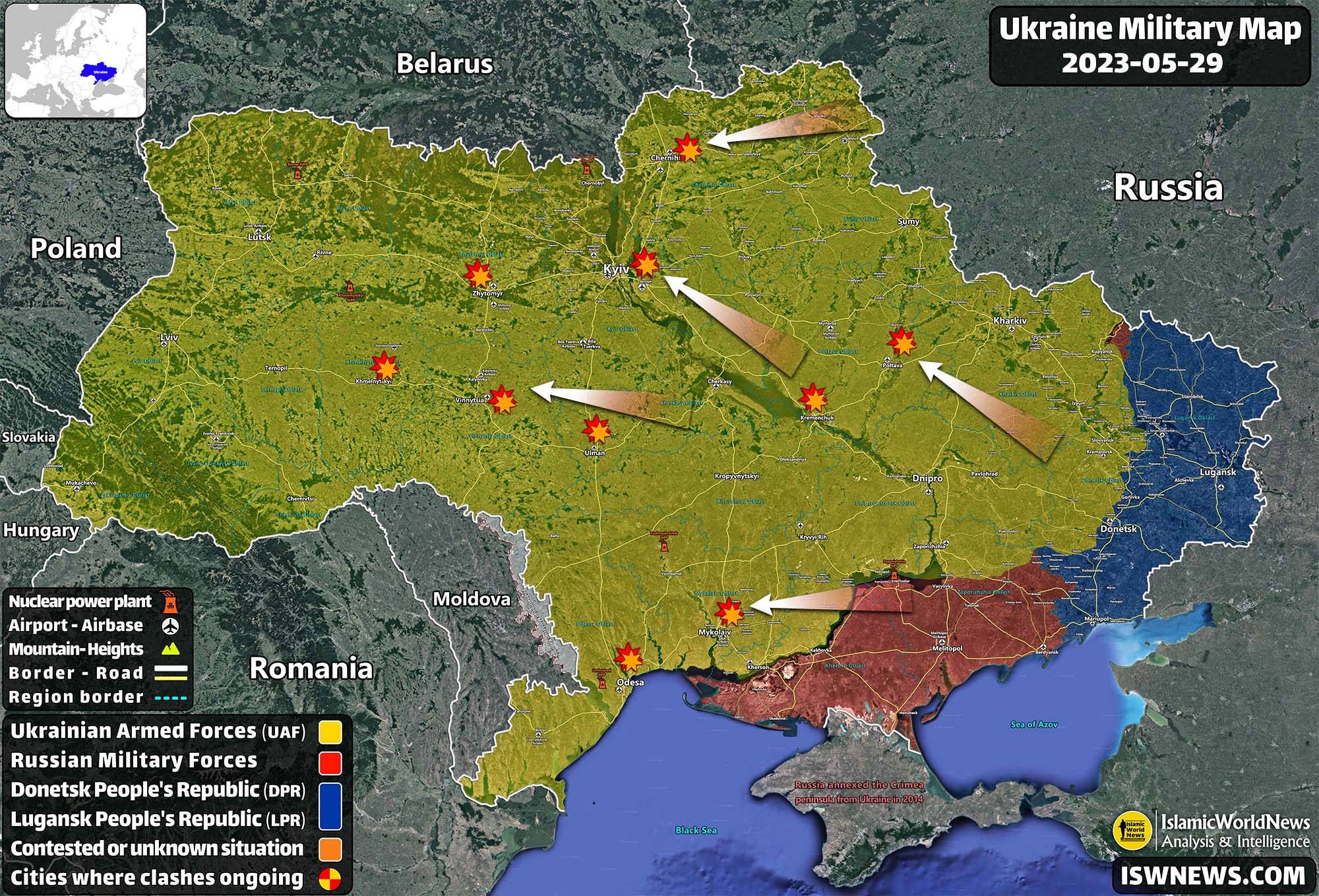
According to information from Russian sources, the Russian army simultaneously utilized several Shahed-136 suicide drones and flew its strategic Tu-95 bombers in the sky of the Caspian Sea and fired a large number of Kh-101 and Kh-55 cruise missiles at targets in the north, south and west of Ukraine.
There have not been released any documentary evidence or accurate data concerning today’s strikes, but a review of the available information indicates that the Russian army launched a massive airstrike on different areas in Ukraine.
Consistent with Ukrainian media reports, the red alert siren sounded in most Ukrainian cities and several explosions took place in the Obolon district of Kiev, Odessa, Uman city in Cherkasy Oblast, Poltava as well as an air base in Khmelnytskyi Oblast.
There have not been published any precise information on the details of the explosions and it is only being said that the ammunition and fuel depot of the air base has been demolished and the extent of the blasts damaged five Ukrainian aircraft in the air base.
In accordance with a statement released by the Ukrainian Air Force Command in this morning, some 9 Russian strategic Tu-95 bombers fired 40 Kh-101 and Kh-55 cruise missiles from the Caspian Sea towards targets in Ukraine, and 37 missiles out of the number were destroyed by the Ukrainian air defense.
Moreover, some 35 Shahed 136 or 131 suicide drones were fired from the north and south of Ukraine, and 29 UAVs out of the number were shot down by the Ukrainian armed forces. The Ukrainian army also intercepted and shot down a Russian reconnaissance drone during the vast military operation.
The analysis made by ISWnews on the basis of documentary evidence shows that this is the ninth large-scale strike by the Russian armed forces on Ukraine since the onset of 2023.
The Ukrainian army claims on a daily basis that Russia carried out wide-ranging missile or drone strikes; however, most of allegations lack documentary evidence and are media-oriented claims. For instance, the Ukrainian armed forces recently alleged that the Russian army had attacked Ukraine from two axes with 54 Shahed-136 suicide drones as part of its largest drone attack on May 28, and that the Ukrainian air defense succeeded in destroying 52 of the alleged drones!
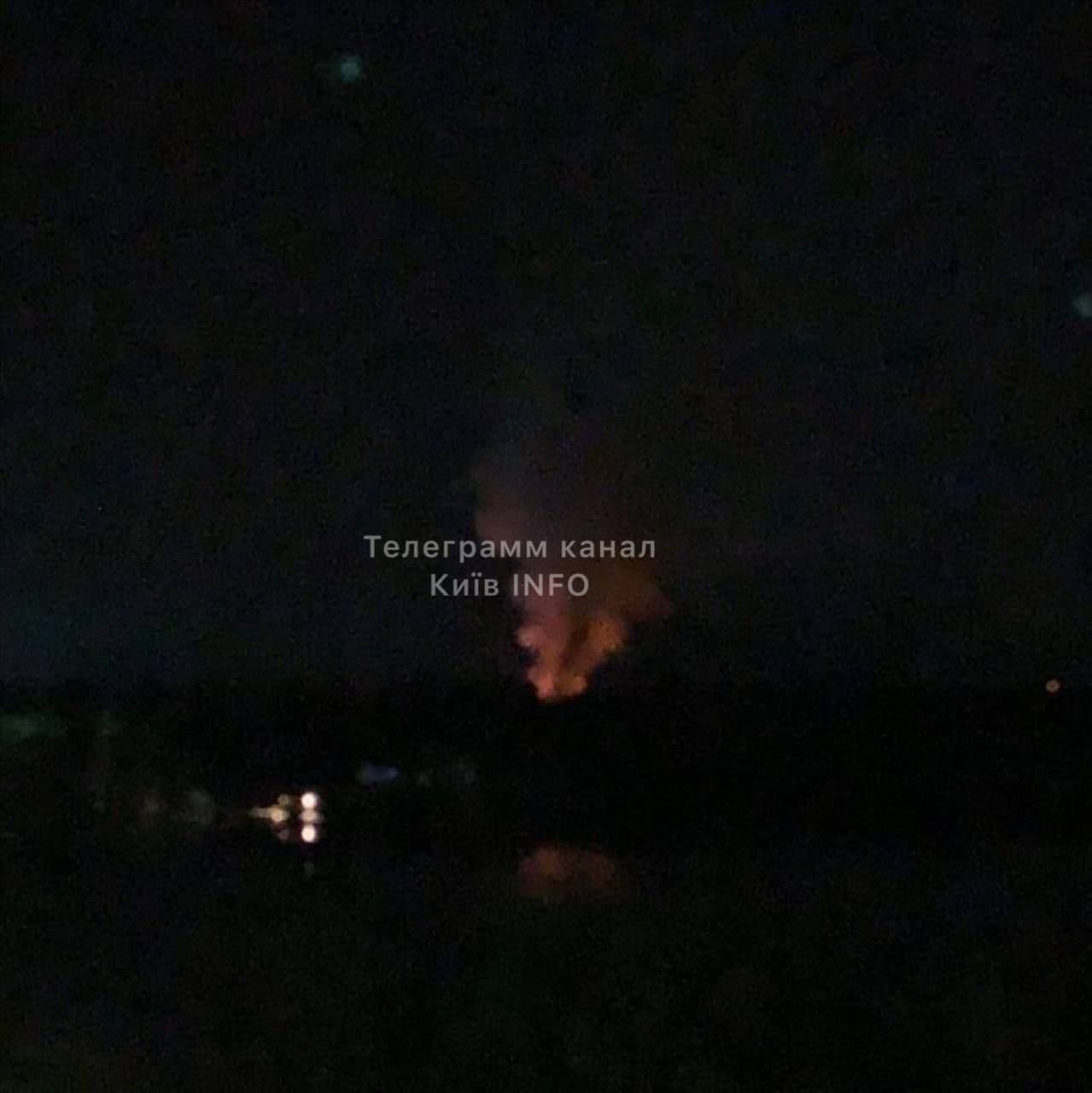
Click to view full size mapSiren in the city of KievUkrainian air defense countered with targets in the sky of Odessa cityA picture of the moment of the explosion in the city of Kiev
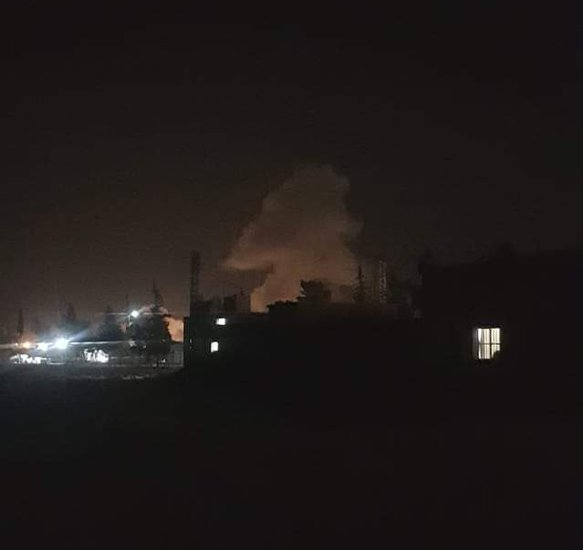
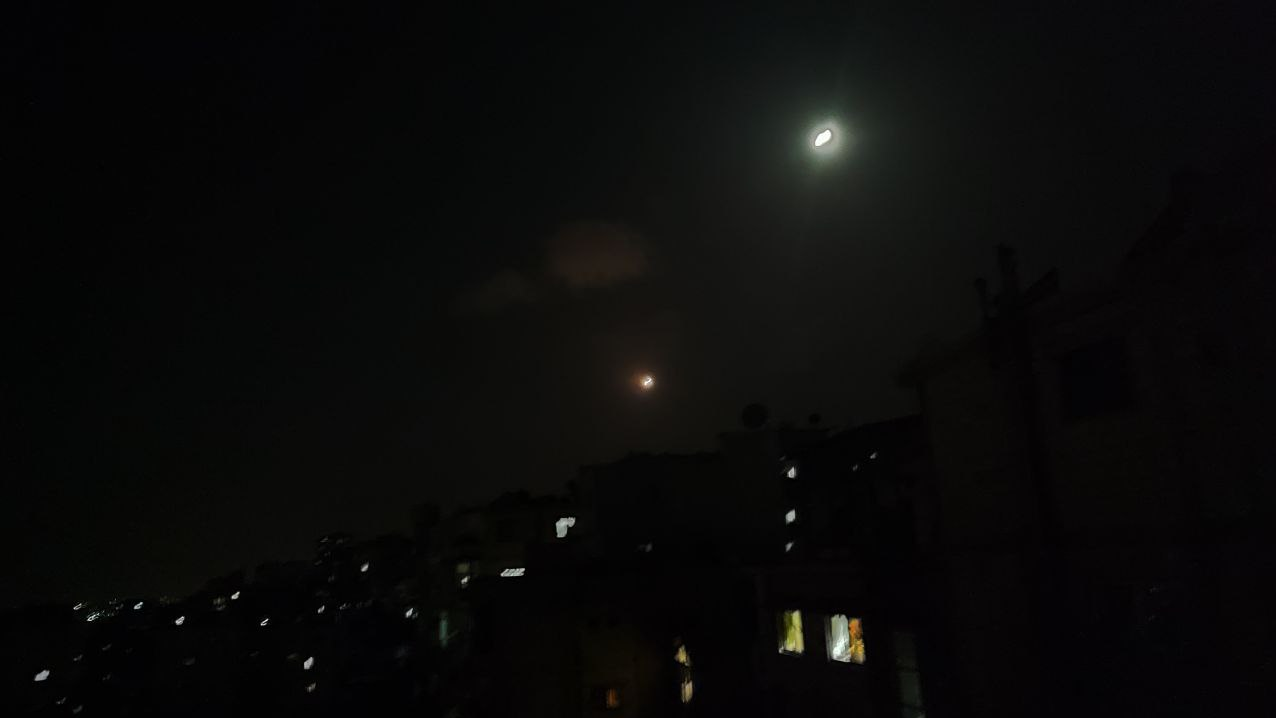
According to information released by a Syrian military source, the Israeli enemy struck some targets in the outskirts of Damascus with a number of missiles from the occupied Golan Heights around 23:24 p.m. Sunday local time and the Syrian army’s air defense shot down most of the missiles. The attack ended up in some material damages.
Further information has not been released yet, but it is said that the Syrian army’s positions in Hafeir al-Fouqa village in the Al-Tall District of the Rif Dimashq Governorate, which is located in northern Damascus, were targeted in the airstrike by Israeli fighter jets.
This is the first strike by the Israeli regime on the Syrian soil following a five-day war against Palestinian resistance groups during the Thar al-Ahrar operation. It seems that the Israeli regime’s army was reassured that there would be no new confrontation with the Palestinian resistance groups; the Tel Aviv regime focused its attention on Syria.
Thus, it is likely that in the coming days there will be strikes by the Israeli army against targets in Syrian soil due to different reasons, including attacks on centers active in designing and manufacturing missiles as well as drone arsenals and so on.
It should be noted that fighter jets of the Israeli regime’s army also fired some missiles at targets in Aleppo Governorate on May 2, which led to martyrdom of a Syrian soldier and injury of seven others.
Images of Israel’s airstrikes on the outskirts of Damascus
Harakat al-Shabaab al-Mujahideen, more commonly known as al-Shabaab, is a Salafi-jihadist military and political organization based in Somalia.
Abu Ubaidah, the emir of the so-called al-Mujahideen group, took part in the second consultative meeting on issues related to jihad in East Africa and addressed the participants about an hour.
Ahmed Umar Abu Ubaidah claimed that the military raids by the Somali government forces and its allies against what he called as the Islamic provinces would be defeated and made a speech about the recent plan of the Somali government to use tribes to confront the so-called Mujahideen group.
He went on to say that these forces do not have the potential to confront Al-Shabaab elements without air support with all their capabilities. He also spoke of the defeat of Danab Brigade, a highly trained Somali National Army commando force, in various confrontations.
It is worth mentioning that a while ago, the Al-Kata’ib Foundation published a trilingual footage of the al-Shabaab elements attacking Danab Brigade in the Gal’ad region.
The emir of al-Shabaab continued to point out to the damage inflicted upon the Somali armed forces and their allies as well as the spoils obtained from the forces, adding that the military operations by the government forces against the al-Shabaab elements are carried out with air support by the United States, Turkish, Kenyan and Ethiopian warplanes. Abu Ubaidah further referred to Ethiopia’s role in the war against the al-Shabaab elements and considered the Ethiopian forces’ attack on Somalia to be imminent.
Following the fall of the government of former President of Somalia Siad Barre in 1991, Umar Diriye also known as Ahmed Umar Abu Ubaidah, who was born in 1970, joined the Al-Ittihad Al-Islami (AIAI, or Unity of Islam), which is a militant Salafi group. In 2009, he was appointed by the group as the governor of Bay and Bakool districts. Umar Diriye turned into the leader of the group in September 2014 after the killing of Ahmed Abdi Godane, aka Mukhtar Abu al-Zubayr, the former emir of Harakat al-Shabaab al-Mujahideen.
It should be noted that al-Shabaab had not released any image of Umar Diriye until the killing of Mukhtar Abu al-Zubayr and after the incident they published pictures and videos of the new commander. Of course, the Harakat al-Shabaab al-Mujahideen has not yet released any clear image of its current leader.
The presence of Ahmed Umar Abu Ubaidah , the leader of al-Shabaab al-Mujahideen, in the gathering of Al-Shabaab
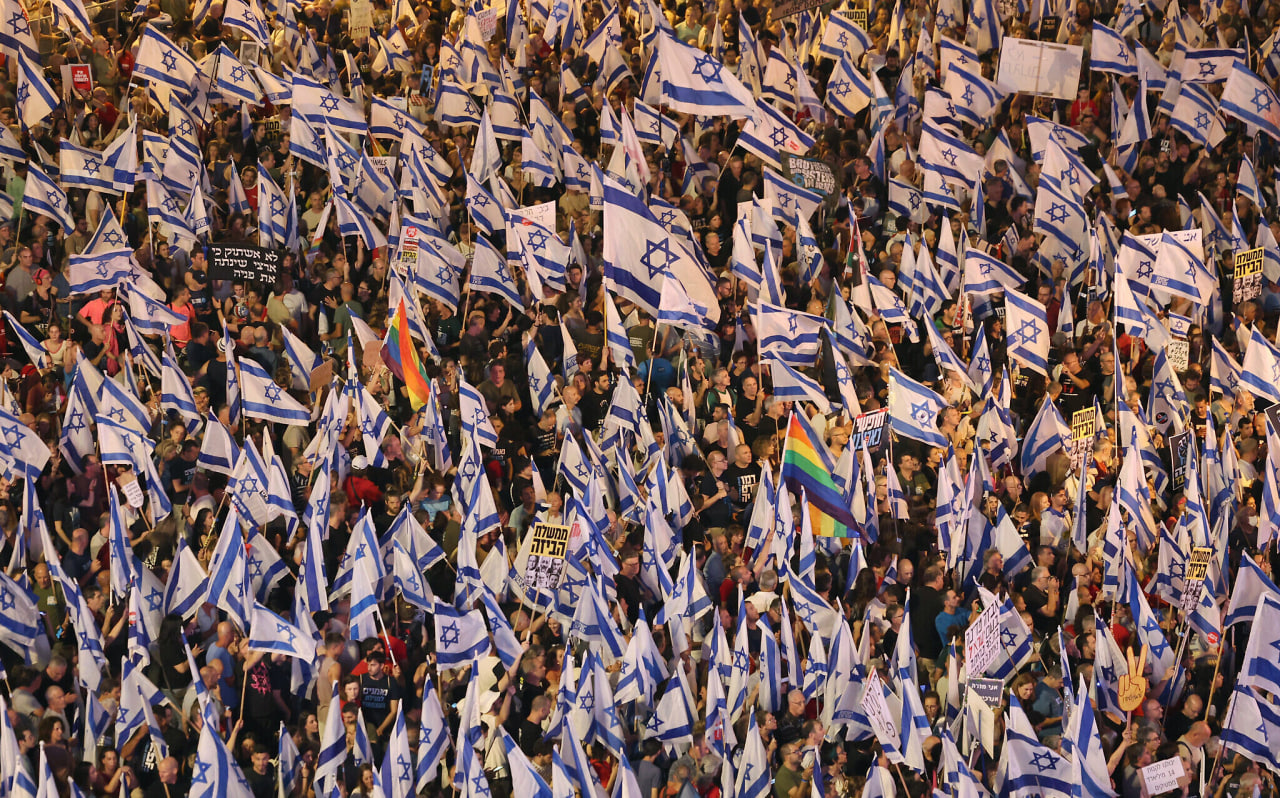
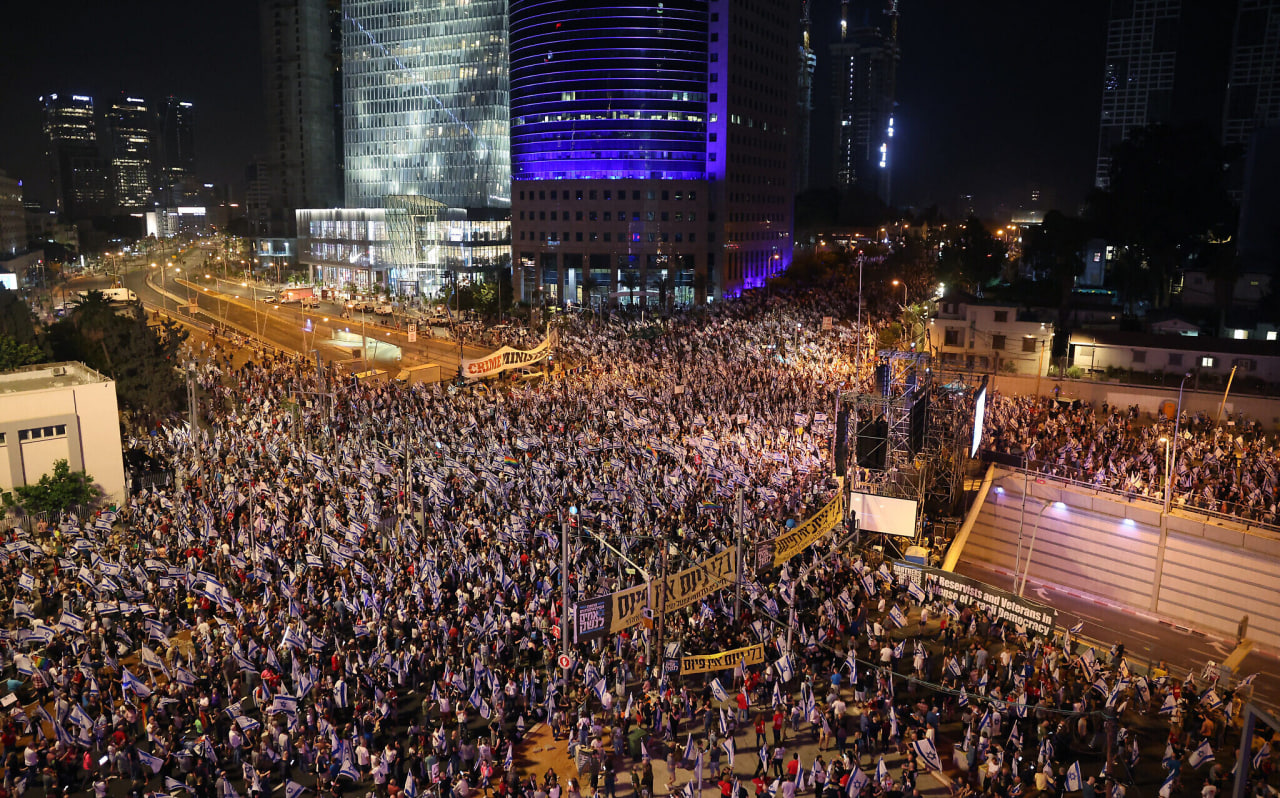
Thousands of the Israeli settlers protested against Netanyahu’s judicial reform program on May 27 in Kapalan Street in Tel Aviv and several other cities in the occupied Palestinian territories.
The recent decline in the value of the shekel (the currency of the Israeli regime) also caused the increase of protest rallies against Premier Netanyahu. The Israeli protesters blocked several streets by holding rallies on Saturday night.
It is worth mentioning that the Israeli prime minister declared the suspension of his controversial plan for the judiciary of the regime on March 27, but the Israeli settlers continue protest rallies in various cities of the occupied territories of Palestine in a bid to oppose the so-called judicial reform and some other decisions and actions made by the Israeli premier.
The Israeli protesters are of the opinion that the so-called judicial reforms proposed by new Israeli government will deal a devastating blow to the independence of the Israeli regime’s judicial system.
– On May 22, following an attack by the Israeli armed forces on the Balata Camp located in north of the West Bank, three Palestinians were martyred and six others were wounded.
– On May 23, Secretary-General of the Islamic Jihad Movement in Palestine Ziyad al-Nakhalah reacted to Israeli Prime Minister Benjamin Netanyahu’s threats on assassination of Palestinian resistance commanders, and revealed how the position of the martyred commanders of Al-Quds Brigades was identified during the recent five-day conflict in the Gaza Strip.
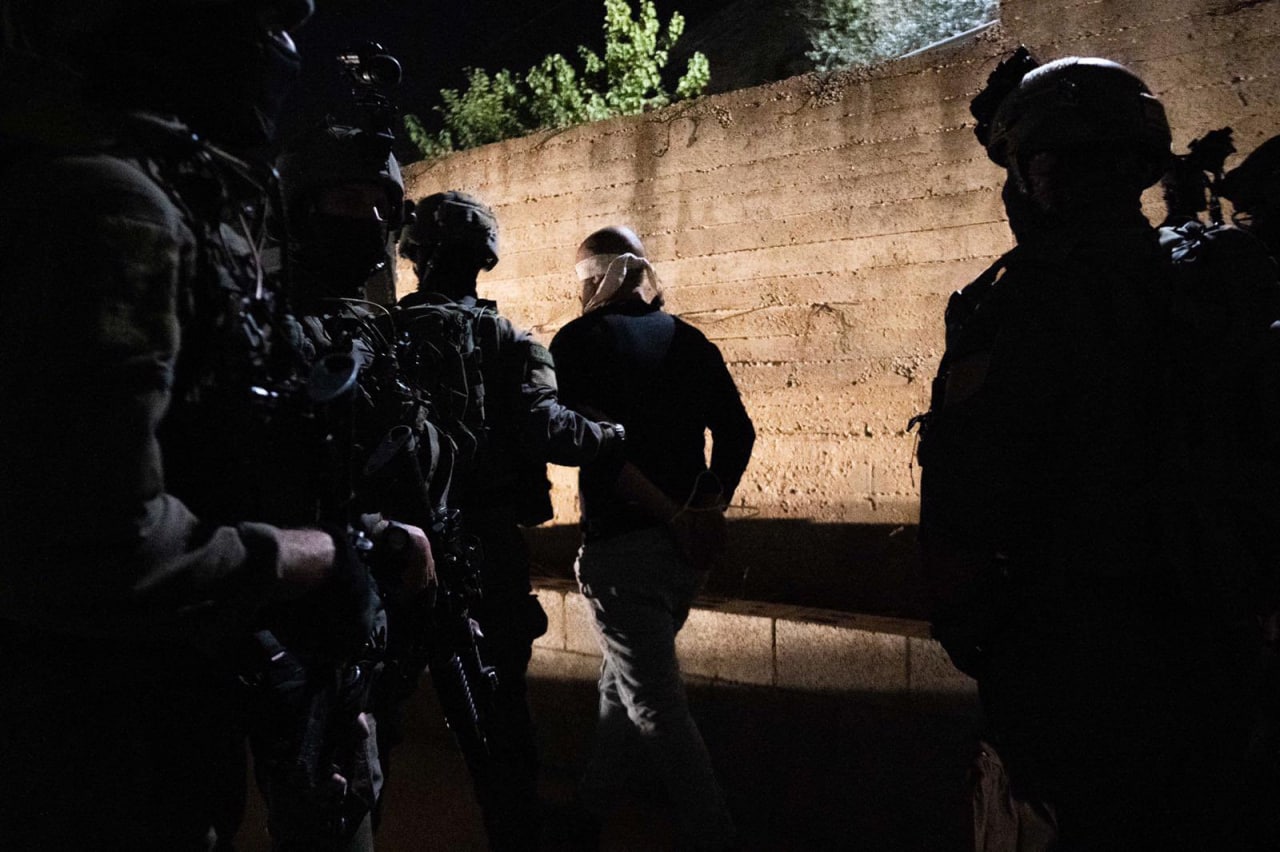
– On May 25, the Palestinian Red Crescent declared that 10 Palestinians were injured as a result of an Israeli army strike on the Aqabat Jabr Camp in the Jericho Governorate of the eastern West Bank. Furthermore, during the raid on the mentioned area, at least 14 Palestinians were arrested by Israeli troopers.
– On May 27, thousands of Israeli settlers held protest rallies in Kabalan Street in Tel Aviv and several other cities in the occupied Palestinian territories to stand against Premier Netanyahu’s controversial judicial reform plans.
– On May 28, local sources said that Israeli regime troops arrested one of the leaders of the Palestinian Islamic Jihad Movement named Lui Al-Ashqar in Sidon town near Tulkarm city in the West Bank.
– The Israeli regime’s army has initiated the construction of concrete walls, because it is afraid that its soldiers may be targeted by Palestinian resistance anti-tank missiles along the Gaza Strip borderline.
– The Hebrew-language newspaper Yedioth Ahronoth reported that the Israeli armed forces are preparing themselves for a “Doomsday” confrontation scenario that is a war during it various fronts, especially Lebanon, Syria, Iraq and Iran would take part.
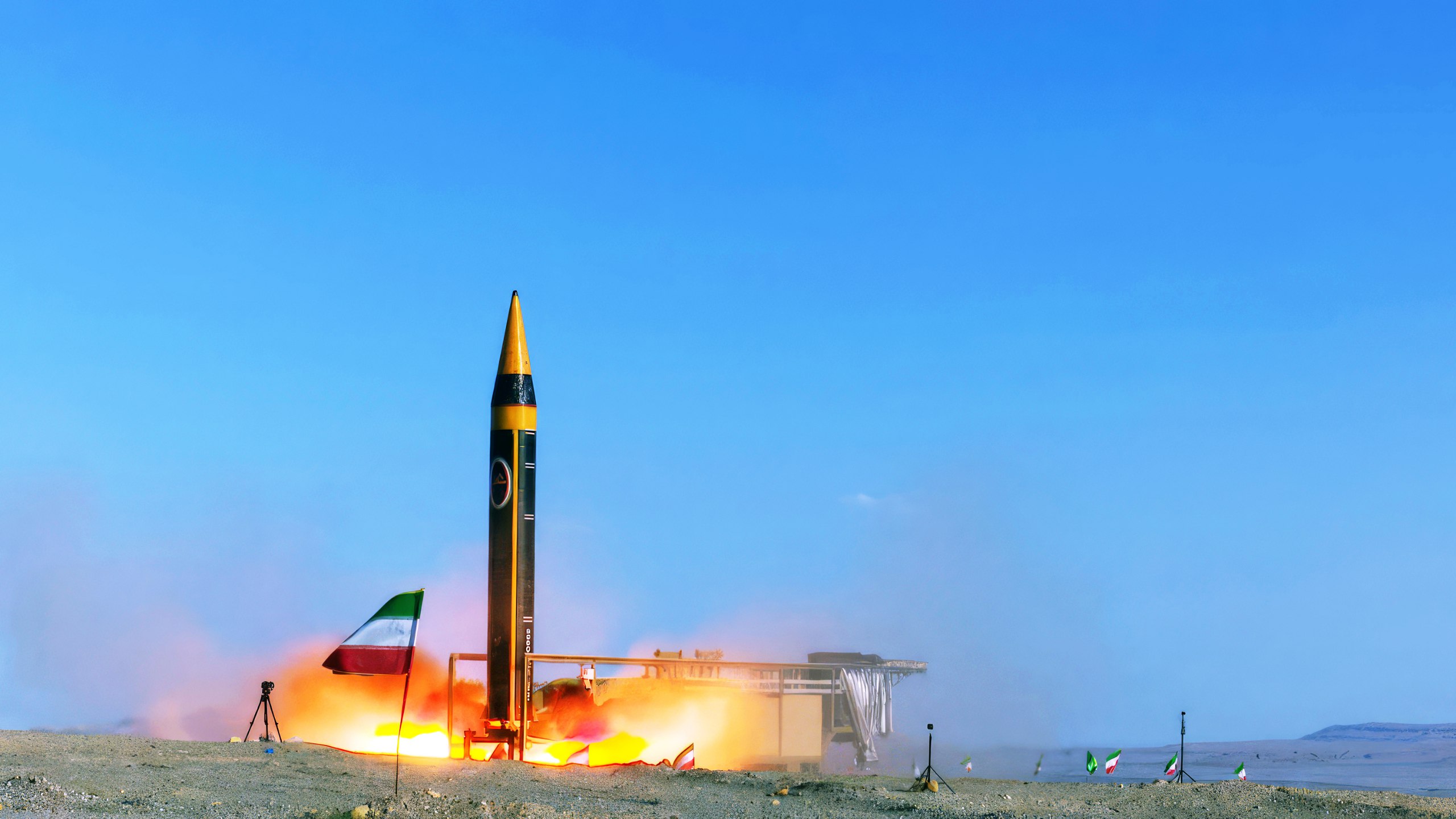
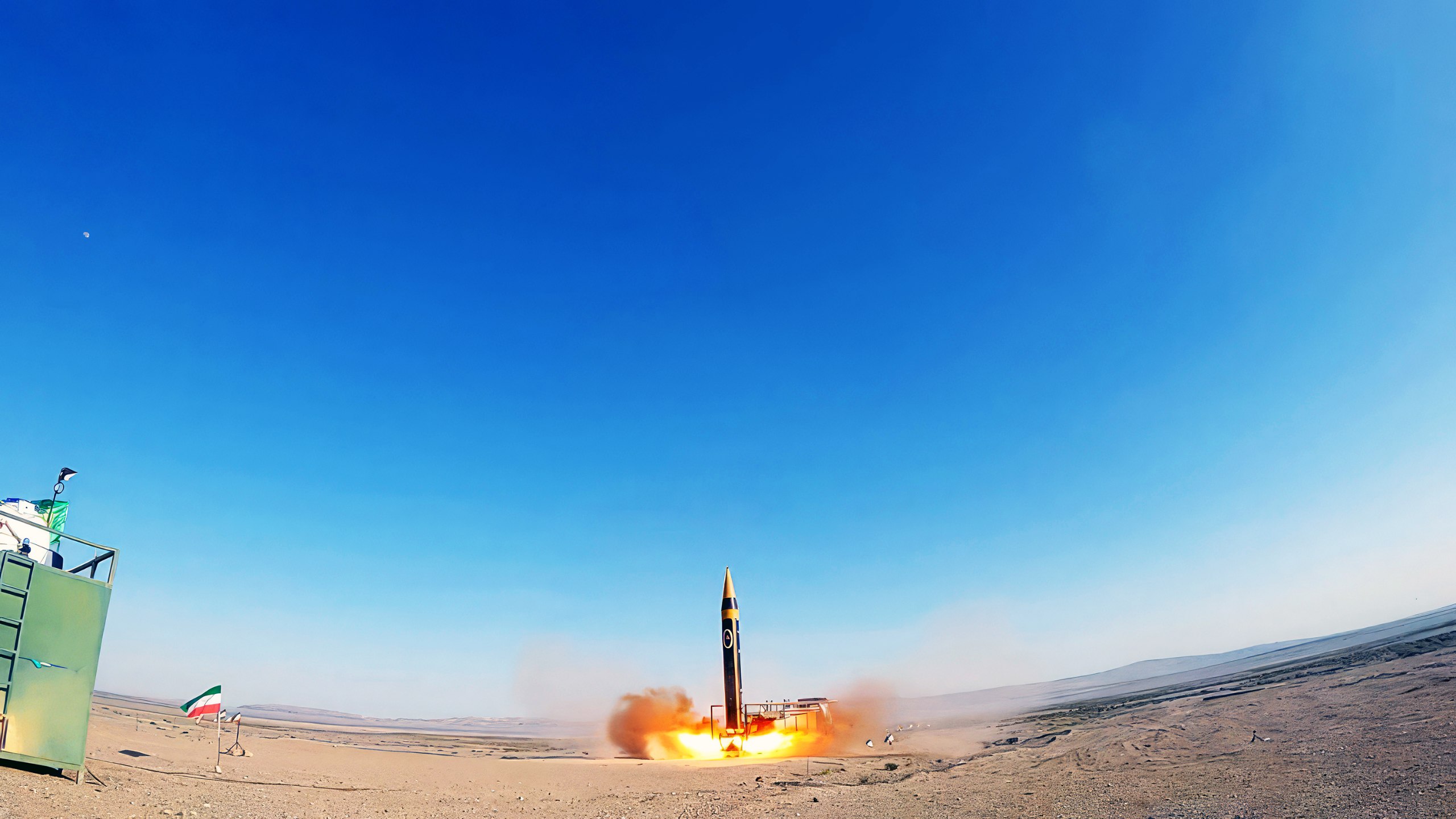
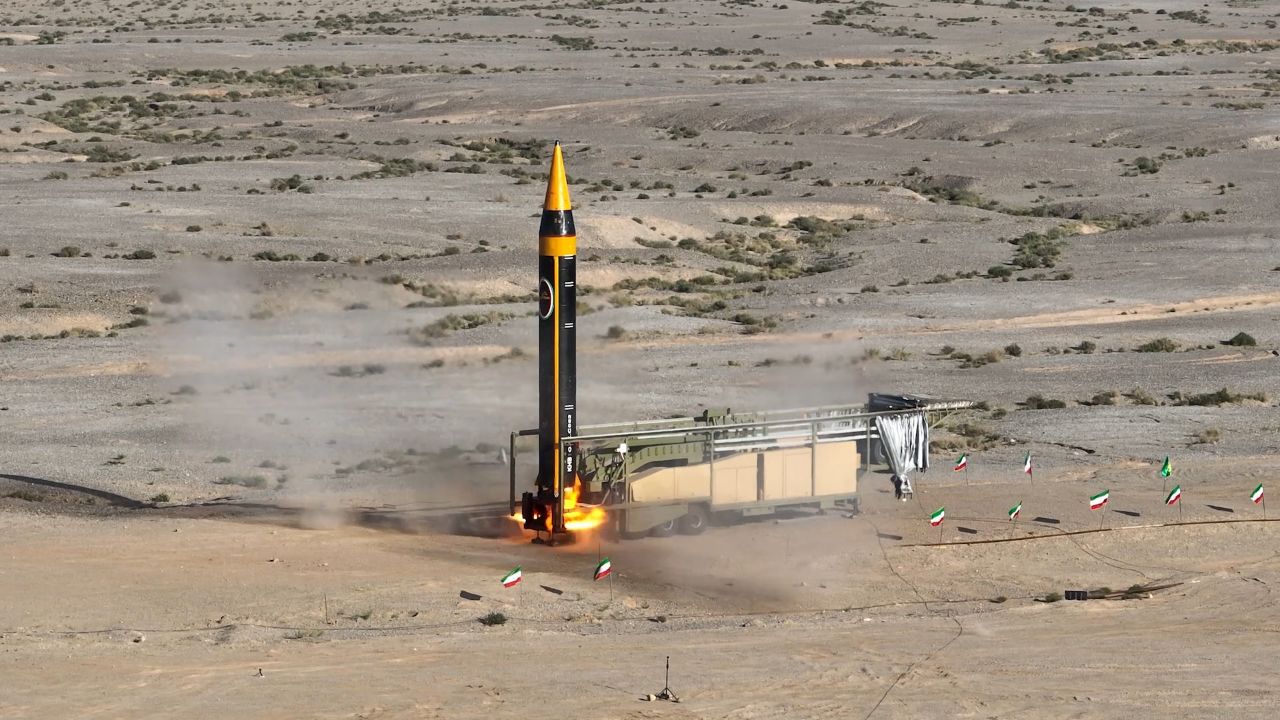
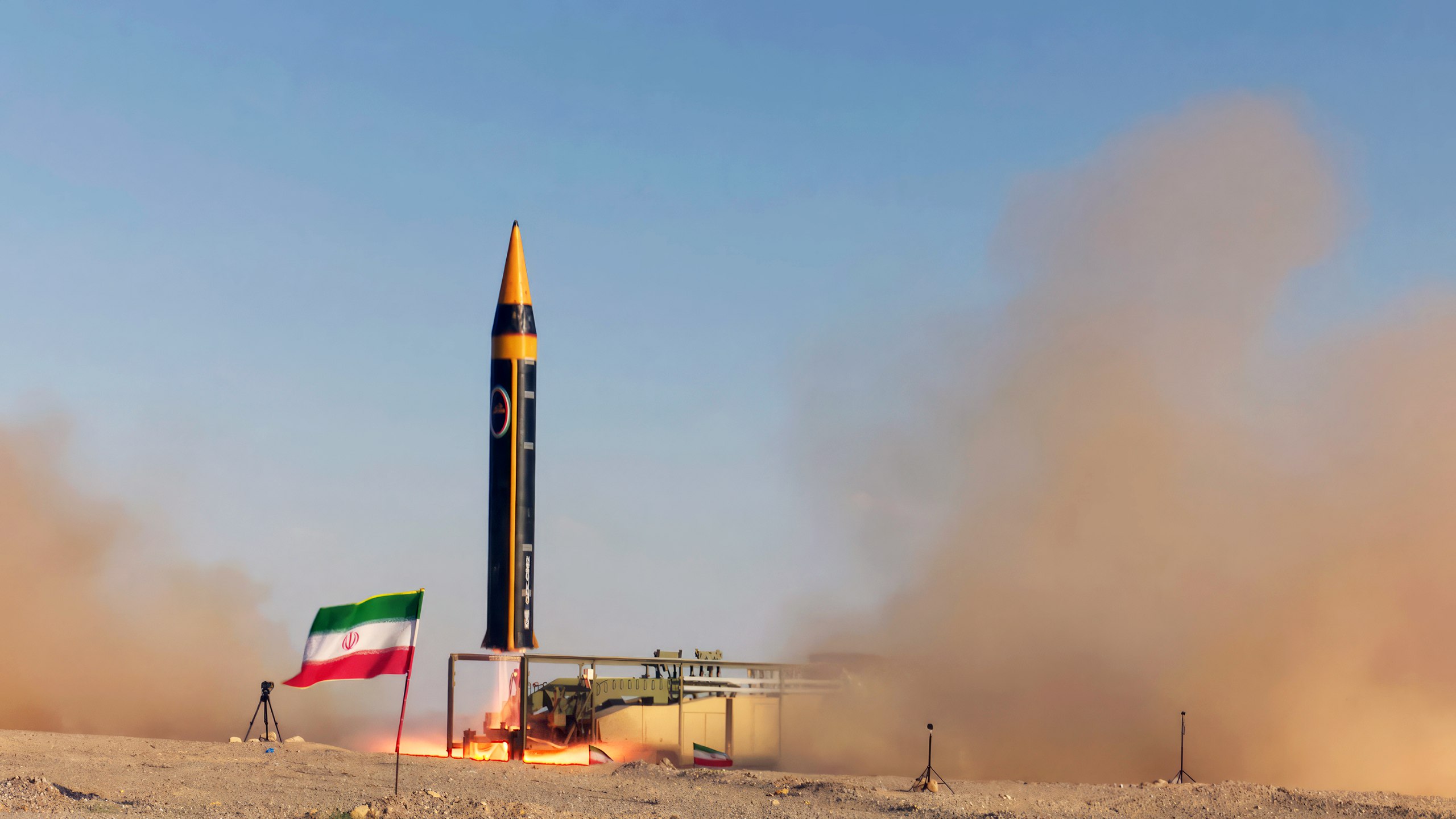
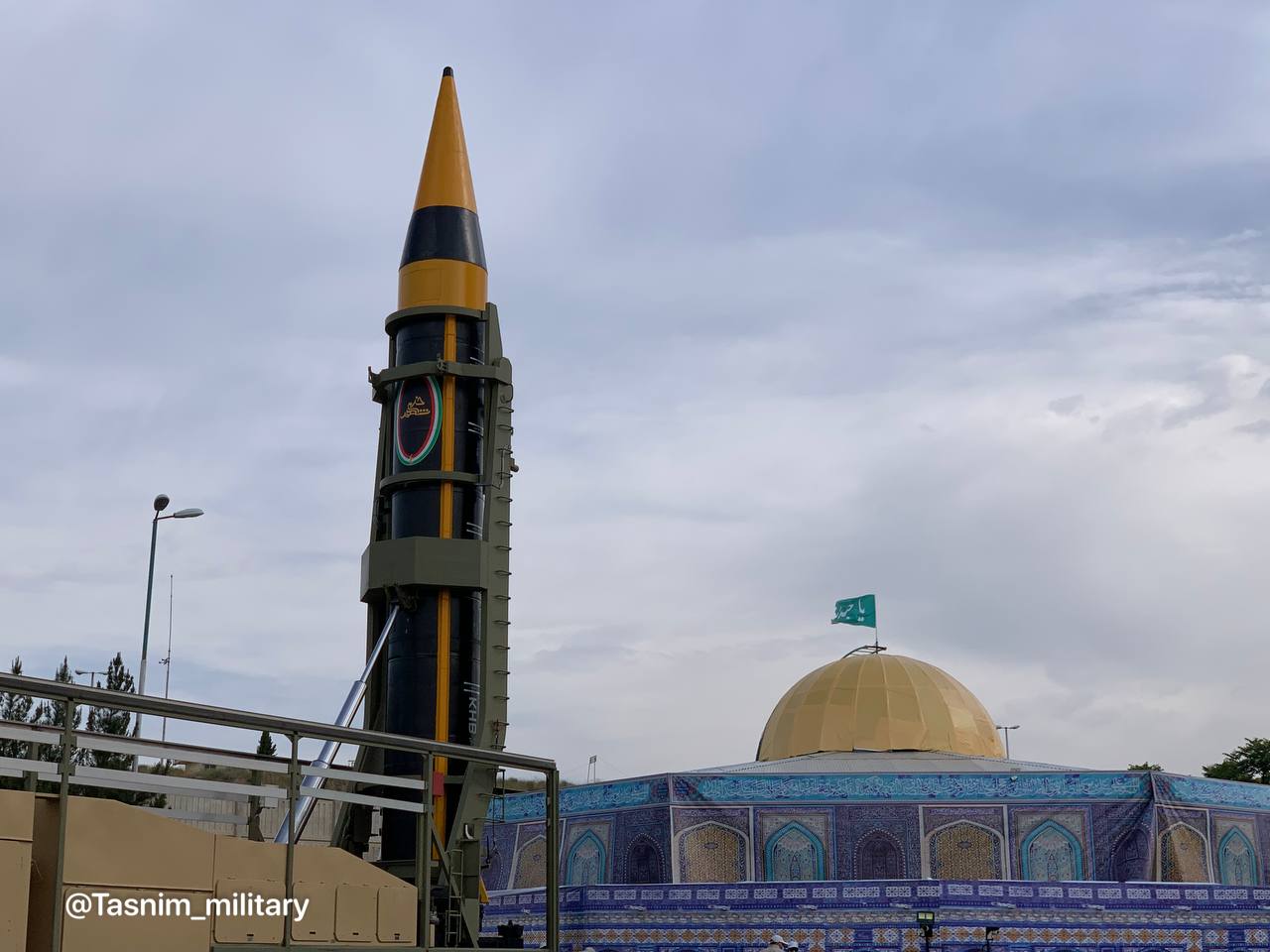
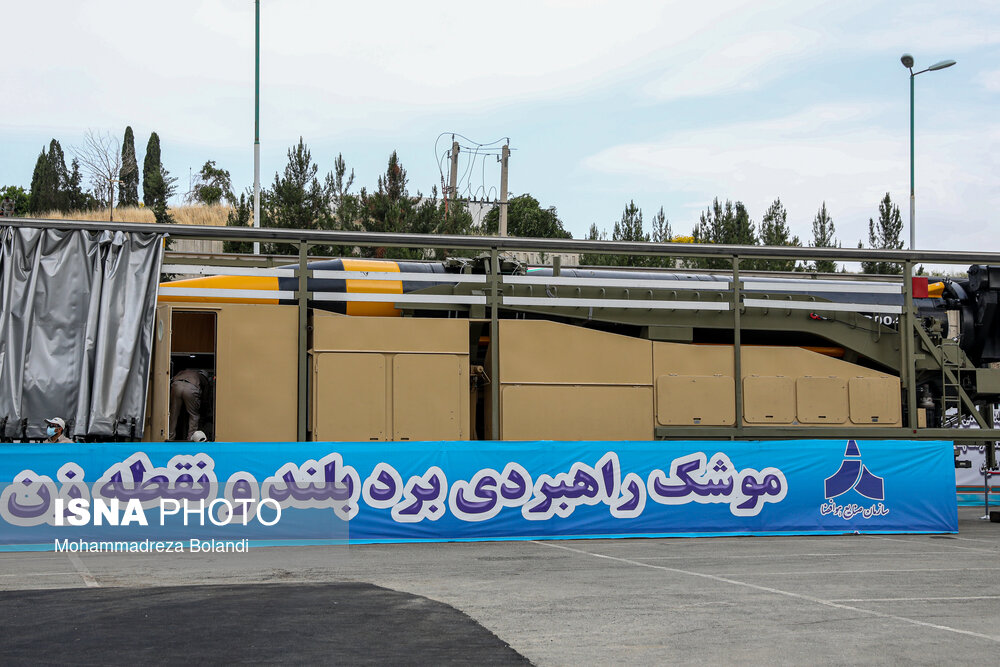
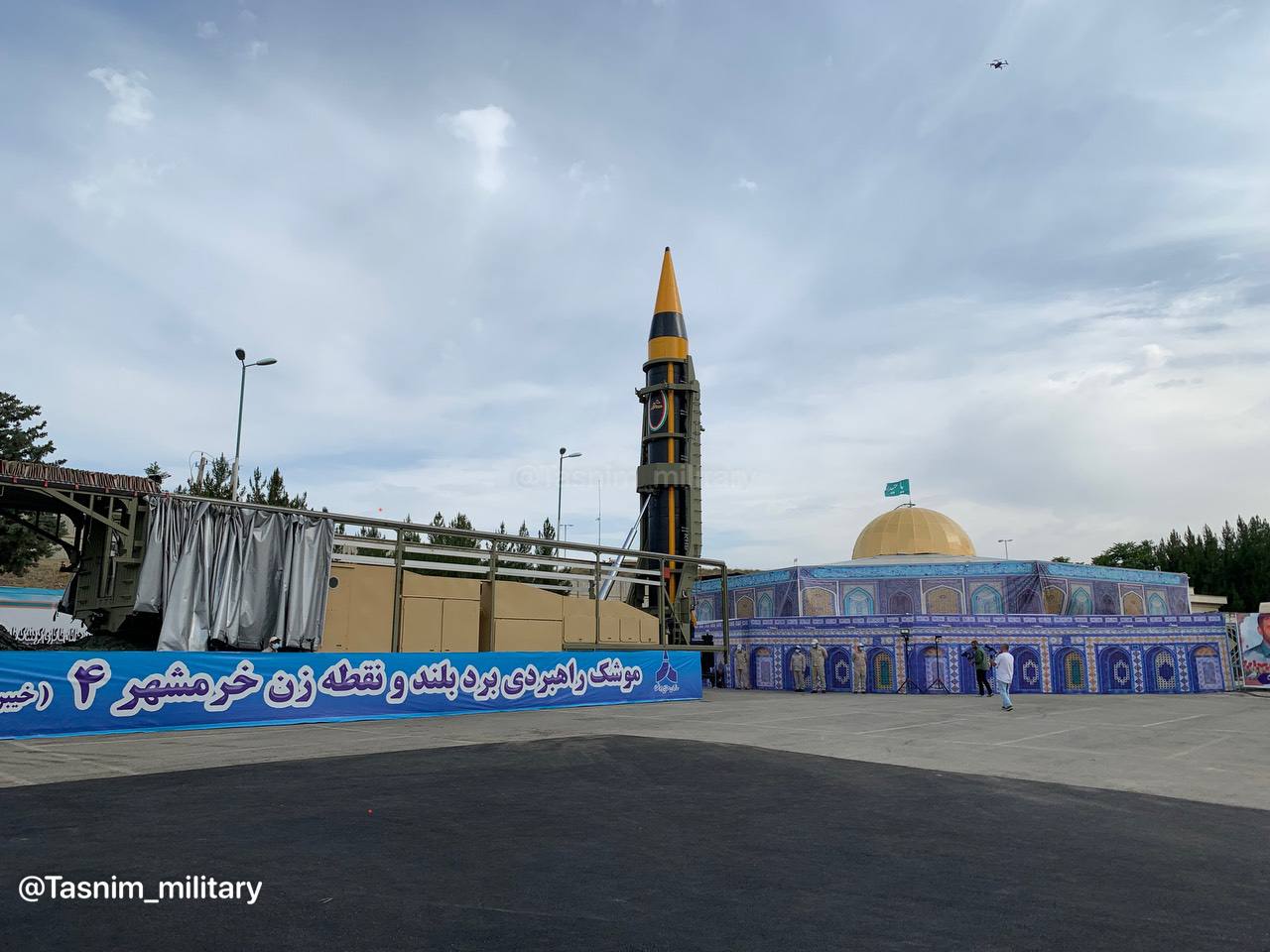
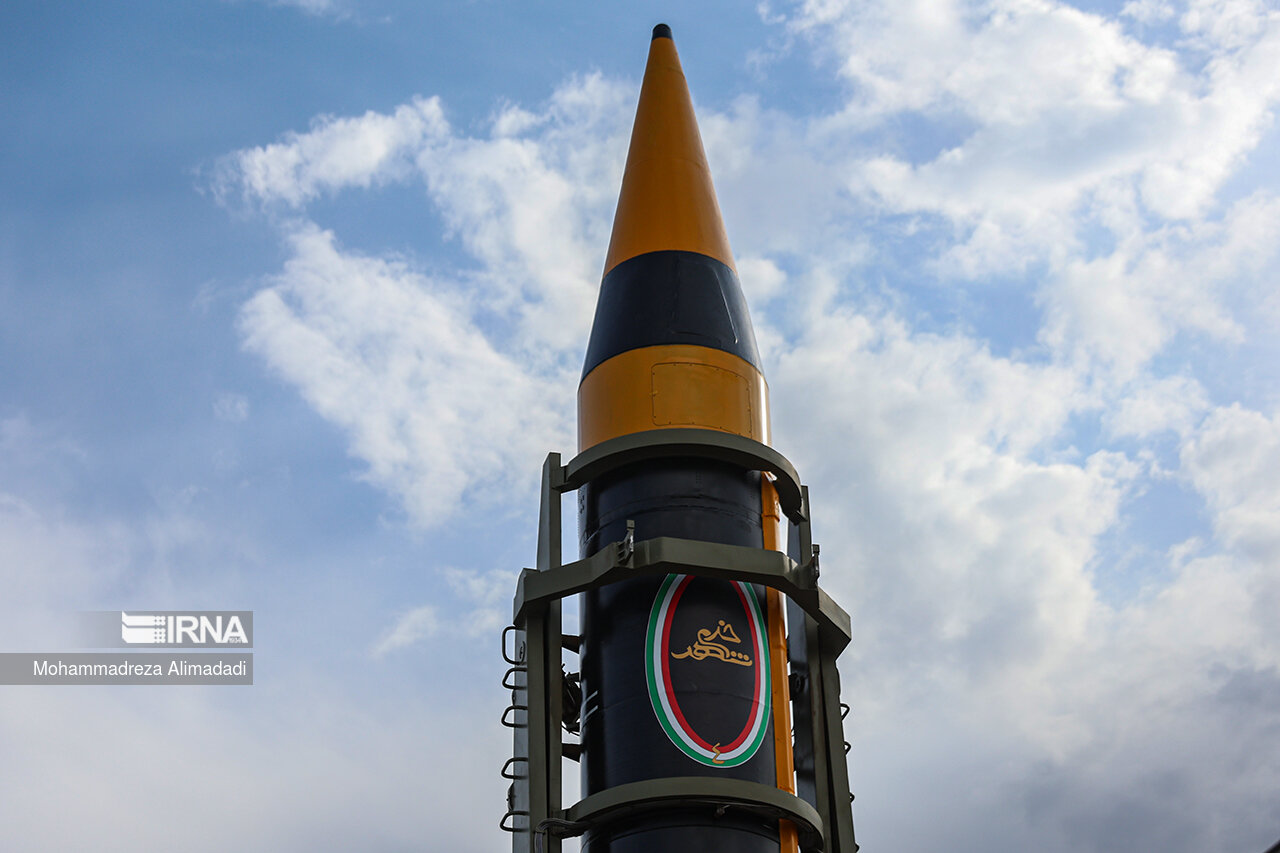
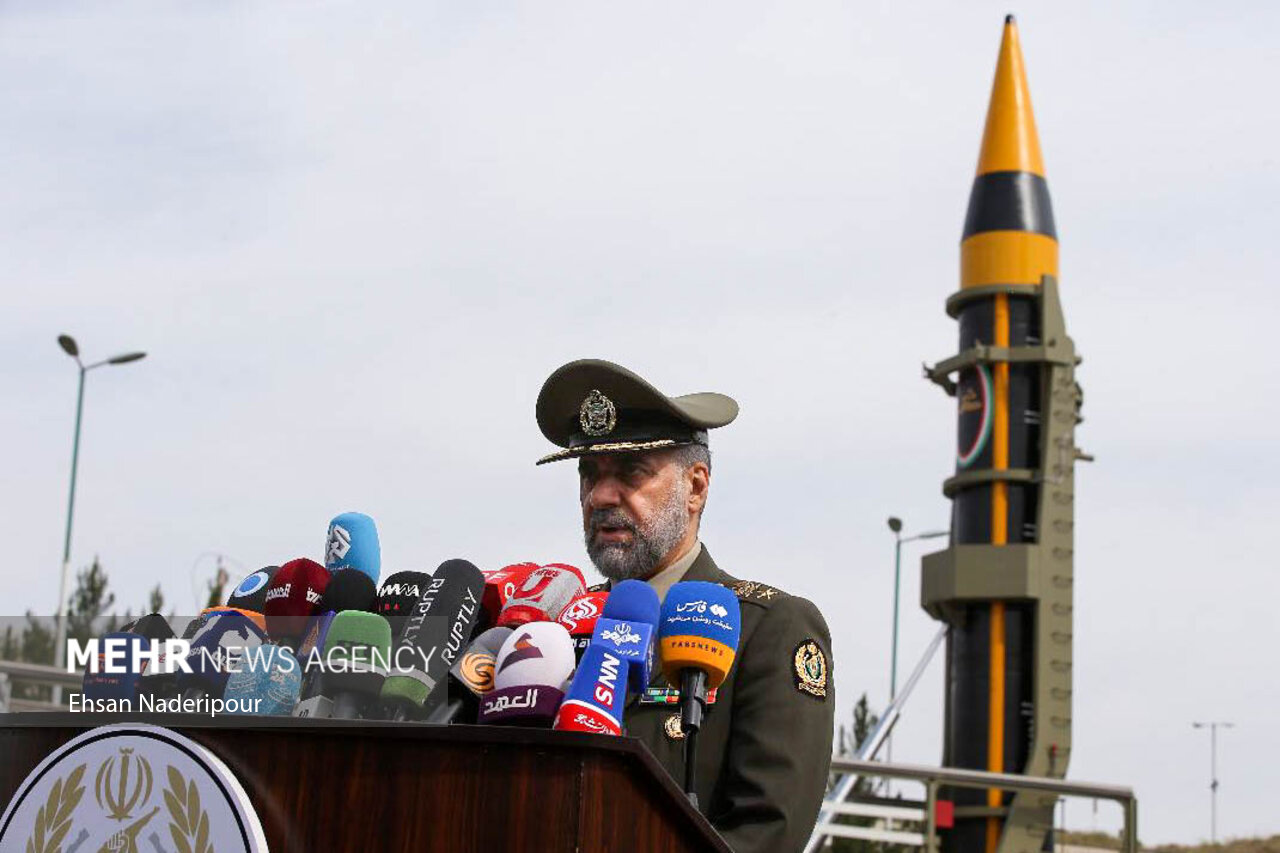
On May 25 and on the occasion of the anniversary of the liberation of Khorramshahr city in the Iraq-Iran war, the Khorramshahr 4 surface-to-surface ballistic missile with the operational name of “Khaybar” was unveiled in the presence of Mohammad Reza Ashtiani, Minister of Defense and Armed Forces Logistics of Iran.
Brigadier General Mohammad Reza Ashtiani, called the Khorramshahr-4 missile a strategic pinpoint ballistic missile with radar evasion capability. In some parts of his speech, he said the message of the unveiling of the Khorramshahr-4 missile to Iran’s friends is helping peace and stability in the region and providing comprehensive support to countries that are on the path of fighting against the arrogance system.
Khorramshahr-4 missile is considered to be the newest variant of the Khorramshahr missile series, which has undergone major changes in various parts. Among the most important of these changes, we can point out the use of hypergolic fuel and a new engine. Khorramshahr-4 is equipped with Arvand engine, one of the most advanced Iranian liquid fuel engines, in order to use hypergallic fuel.
A hypergolic propellant is a rocket propellant combination used in a rocket engine, whose components spontaneously ignite when they come into contact with each other. The main advantages of hypergolic propellants are that they can be stored as liquids at room temperature and that engines which are powered by them are easy to ignite reliably and repeatedly. Hypergolically-fueled rocket engines are usually simple and reliable because they need no ignition system. As hypergolic rockets do not need an ignition system, they can fire any number of times by simply opening and closing the propellant valves until the propellants are exhausted and are therefore uniquely suited for spacecraft maneuvering.[source]
The launch moment of Khorramshahr-4 ballistic missile
Another feature of this missile is the ability to store fuel inside the Khorramshahr-4 missile for several years. Using this ability, it is possible to inject fuel into the rocket and keep it in storage for several years. For this reason, the rocket is always ready to fire and there is no need to spend long time for refueling again. Therefore, the preparation time and entering the launch position has reached less than 12 minutes.
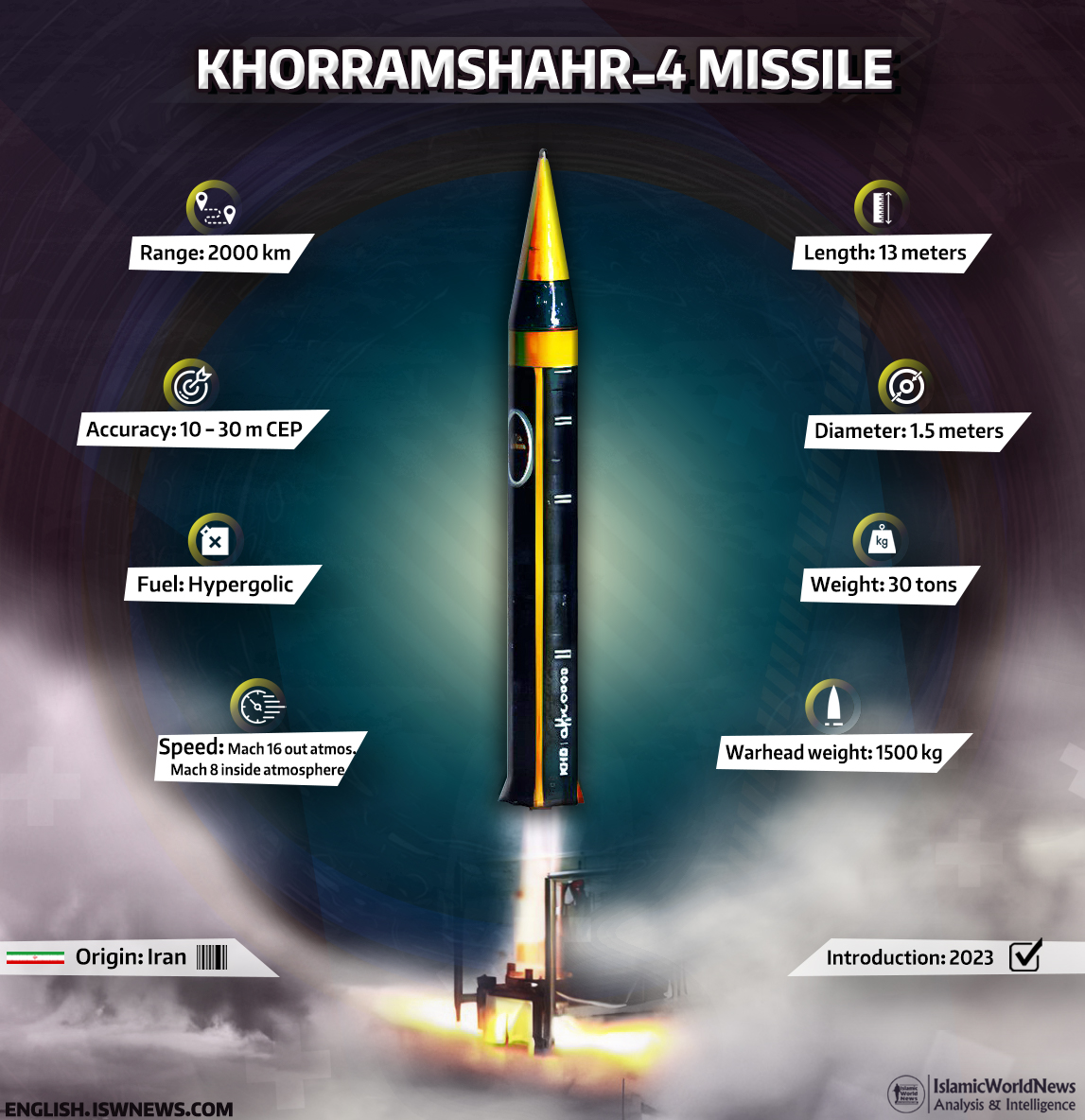
According to statements and information provided by military sources, the range of Khorramshahr-4 missile is up to 2000 km and its warhead is 1500 kg. But based on some facts, it seems that the range of the missile is intentionally announced lower than its actual range. Experts believe that the real range of this missile is up to 4000 km.
In general, the warhead of this missile with a length of 4 meters and a weight of 1,500 kg is one of the largest and heaviest warheads produced by Iran, which is also resistant to electronic warfare. It should be noted that out of this 1,500 kg, about 1,000 kg are explosives and 500 kg are related to engine, guidance, equipment, etc. The warhead of this missile can be single and heavy or in the form of several lighter warheads, and it also uses various warheads such as thermobaric warheads. The point here is that in this warhead, guiding micromotors are used to control and adjust its trajectory outside the Earth’s atmosphere. For example, by reducing the weight of the warhead by half and increasing the amount of fuel, and with the use of guiding micromotors in the mid-phase in exoatmosphere, the range of this missile can easily be increased up to twice the declared range!
Review of the performance of launch, guidance and control in the mid-phase outside the atmosphere in Khorramshahr-4 missile
The speed of Khorramshahr-4 is Mach 16 outside the atmosphere and Mach 8 inside the atmosphere before hitting the target, and the circular probable error (CEP) of 10 to 30 meters is also expected for this missile. The speed of Mach 16 outside the earth’s atmosphere and the use of guidance engines to control and adjust the trajectory of the warhead makes it very hard for the outer space missile systems to intercept and destroy this missile. Also, the speed of Mach 8 in the final phase in the atmosphere is a very good speed, making it very difficult to detect, track and intercept by existing anti-missile systems.
One day after the unveiling of the Khorramshahr 4 missile, Deputy Defense Minister General Farahi provided more information about this missile in a television interview. According to him, unlike previously built missiles whose guidance and control system was in the atmosphere and there was a possibility of jamming and electronic interference by the enemy, guidance and control of Khorramshahr 4 is done outside the atmosphere, and its guidance and control systems are not active inside the atmosphere, and therefore, electronic warfare systems have no effect on the Khorramshahr 4 missile.
Also, in addition to this feature, this missile uses a cyber defense system and using artificial intelligence with the necessary maneuverability, it can deceive the enemy’s defense systems and escape from the enemy’s missiles. He stated the circle of error (CEP) of Khorramshahr 4 missile up to 30 meters at a distance of 2000 km, and the durability of the fuel inside the missile was also stated to be a maximum of 3 years.
Among the other capabilities of Khorramshahr 4 is the ability to use radar and optical seeker individually or simultaneously with the use of artificial intelligence to target moving sea and land targets, which is installed on the missile depending on the type of mission and target.
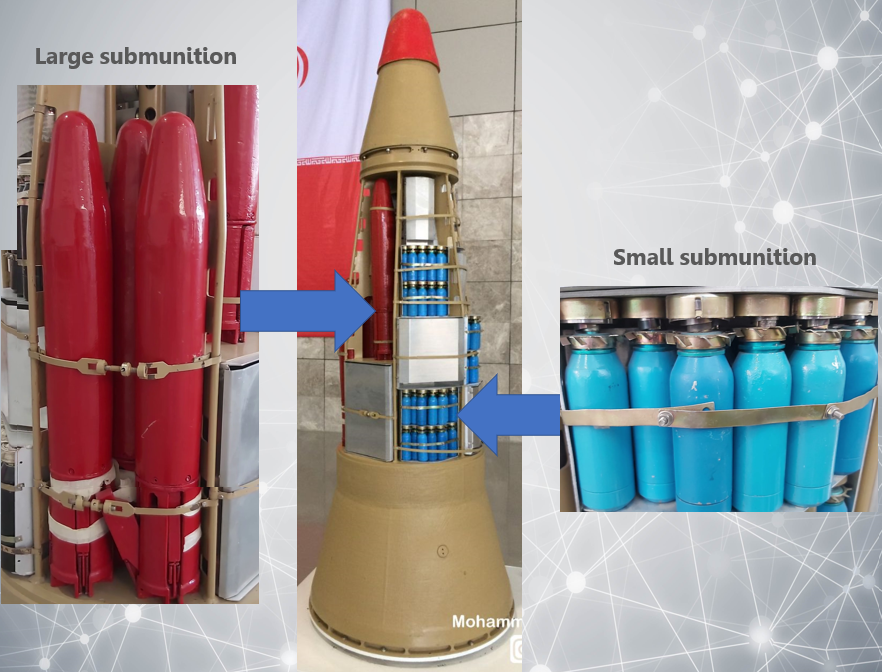
MIRV and MRV capabilities on Khorramshahr-4 warhead
Khorramshahr-4 missile can carry multiple warheads inside its main warhead and each warhead can hit an independent target.
Multiple independently targetable reentry vehicle (MIRV) capability refers to a warhead that carries several other warheads inside, and each of these warheads can target an independent and different target. There is another type of warheads called multiple reentry vehicle (MRV), which is also capable of carrying several warheads, but the warheads do not have the ability to target independently, and all of them hit the target in a certain range and are unguided.
Currently, the US, UK, France, Russia, China and India have claimed to have MIRV missile systems. Pakistan and the Israeli regime are also suspected of developing and possessing MIRV missile systems.
In 1970, the United States presented this capability to the world for the first time with the LGM-30G Minuteman III missile. Today, Iran has also achieved this ability and has used it in the new generation of Khorramshahr missiles.
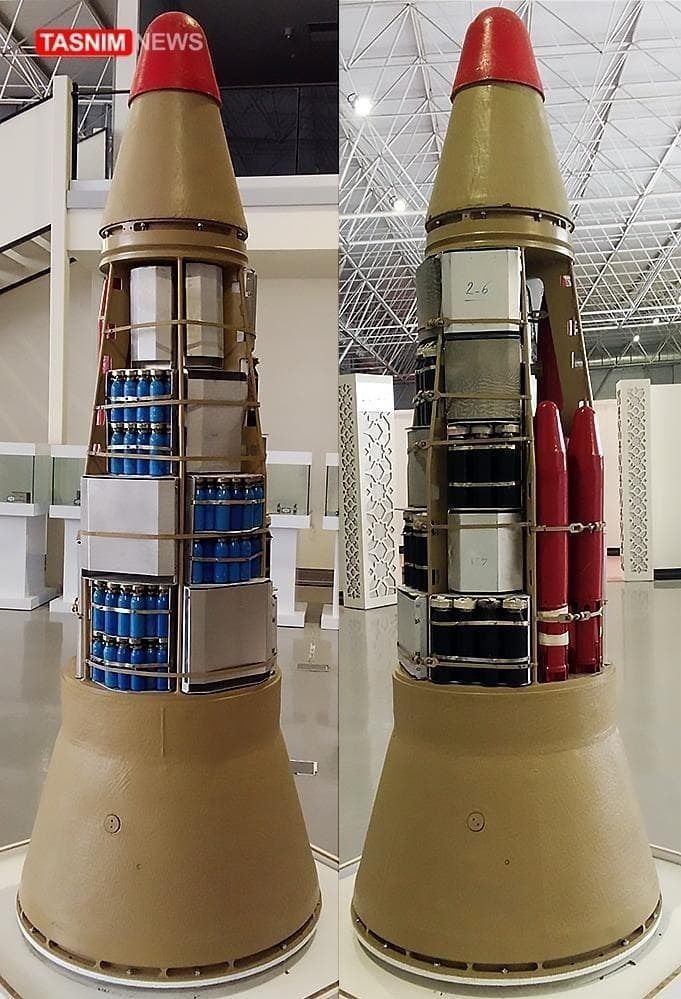
Khorramshahr-2 missile uses a warhead with MRV capability. This type of warhead, carrying a large number of rockets and bombs, is very suitable for targeting various targets such as runaways, barracks and enemy gatherings. But Khorramshahr-4 missile has gone one step further and has achieved MIRV capability. This feature is very suitable for attacking fixed and predetermined targets.
Unguided munitions in the warhead of Khorramshahr missile (MRV variant)
The main difference between the Khorramshahr-4 missile and the Minuteman III missile is the accuracy and type of munition. The American missile is designed to carry several nuclear warheads with a power of 170 kilotons of TNT and does not need pinpointing accuracy, because nuclear warheads have large explosions, and even several kilometers of error is not important for these type of missiles. However, the Khorramshahr-4 missile has been developed to carry a conventional warhead, and for this reason, each warhead must have high accuracy.
Khorramshahr 4 (Khaybar) missile will further boost the offensive and defensive capabilities of Islamic Republic of Iran. The country has been working nonstop to develop its missile capabilities in order to deal with increasing threats from the United States and the Israel regime. Tehran’s large missile program achieved a number of breakthroughs in the last few years, despite facing strict sanctions and even sabotage.
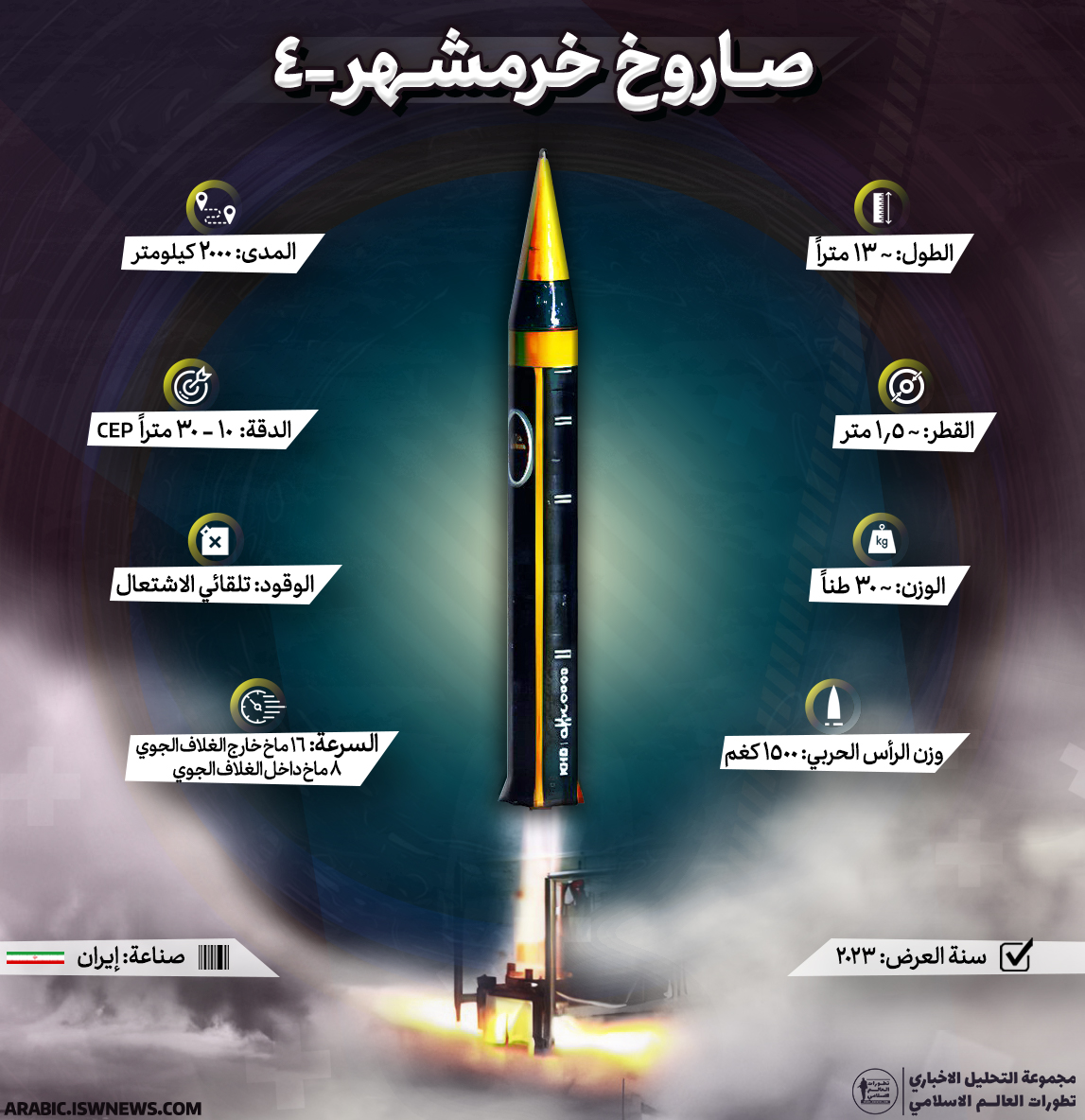
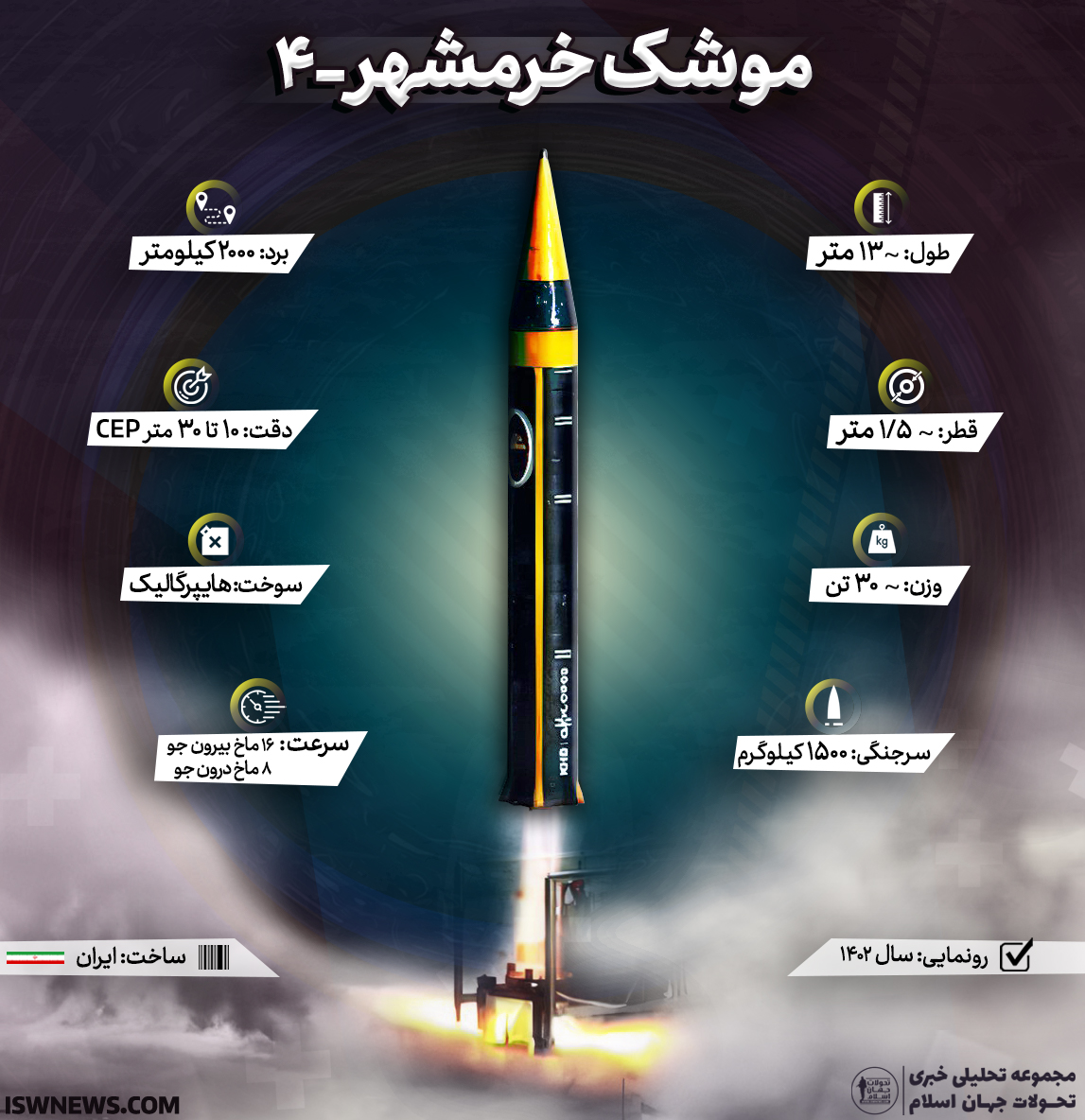
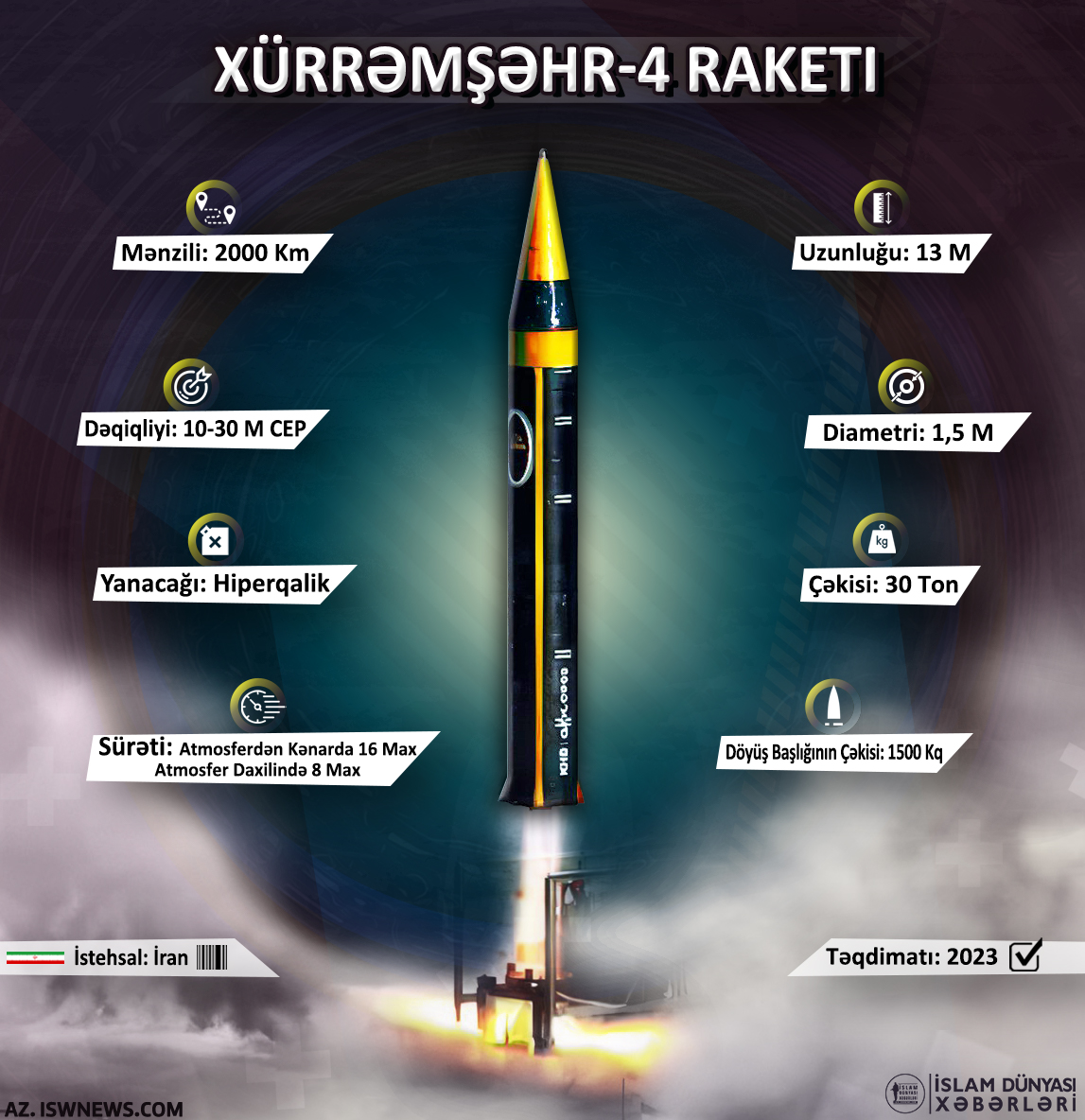
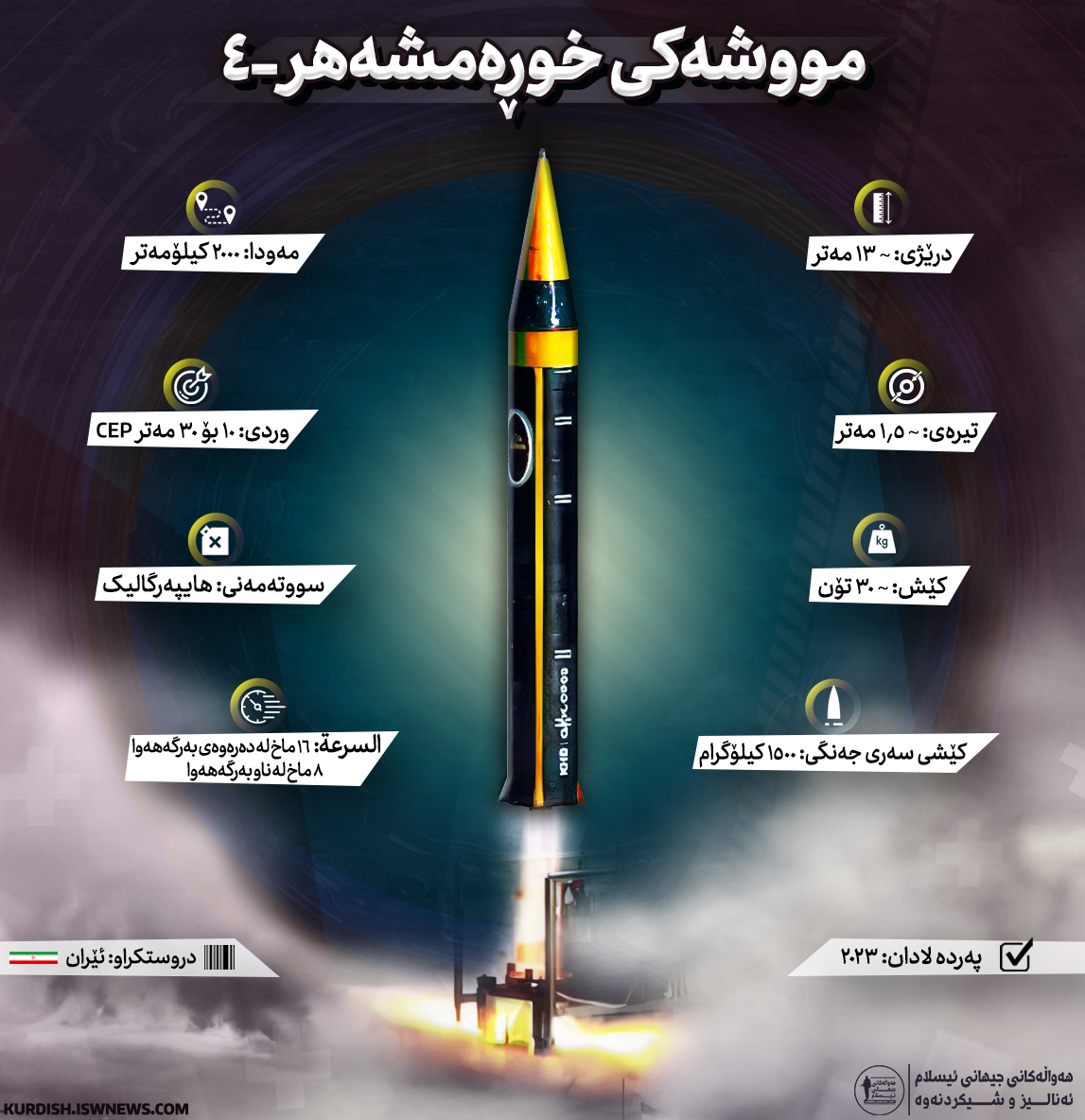
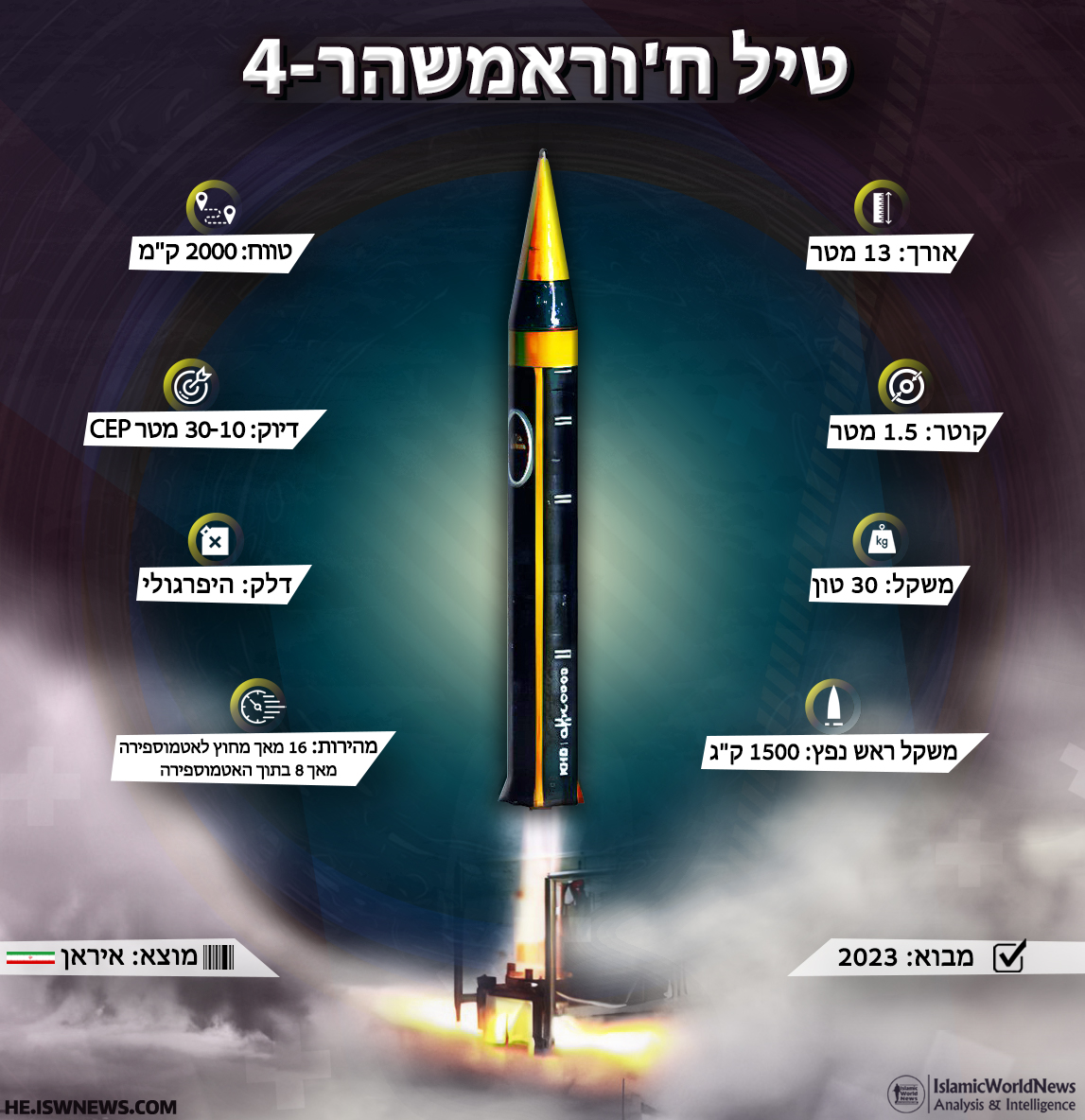
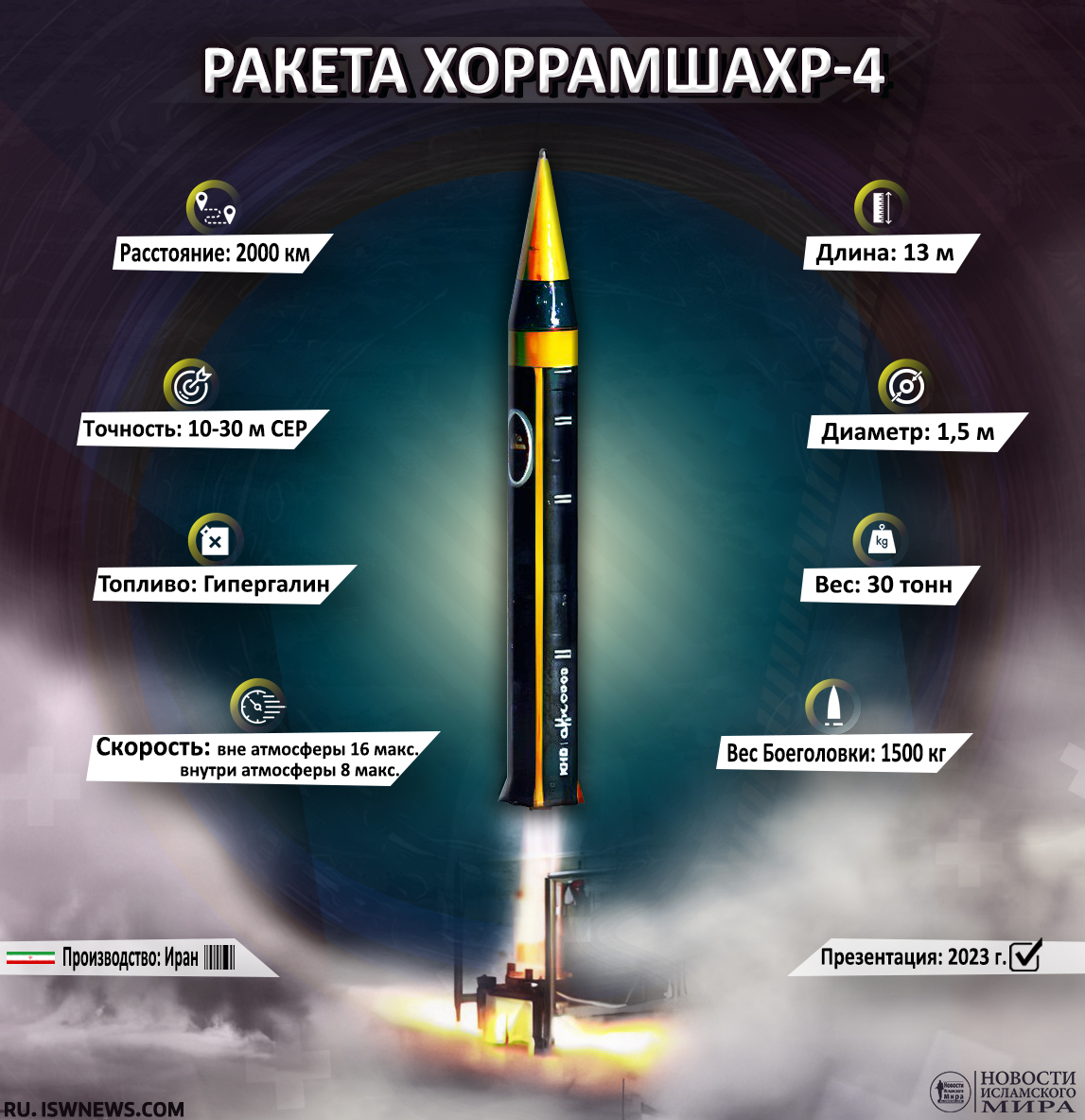
Khorramshahr 4 missile specifications: Length: ~ 13 meters Diameter: ~ 1.5 meters Weight: ~ 30 tons Warhead weight: 1500 kg Range: 2000 km (unofficial range: up to 4000 km) Accuracy: 10 to 30 meters CEP Fuel: Hypergolic – single stage Speed: Mach 16 outside the atmosphere – Mach 8 inside the atmosphere Introduction: May 25, 2023 Origin: Iran
Khorramshahr 4 medium-range ballistic missile – click to view in full size
More iamges of Khorramshahr 4 missile:
Click to view full size
“Khorramshahr 4 (Khaybar) missile” posters collection in Farsi, Russian, Arabic, Azeri, Kurdish and Hebrew:
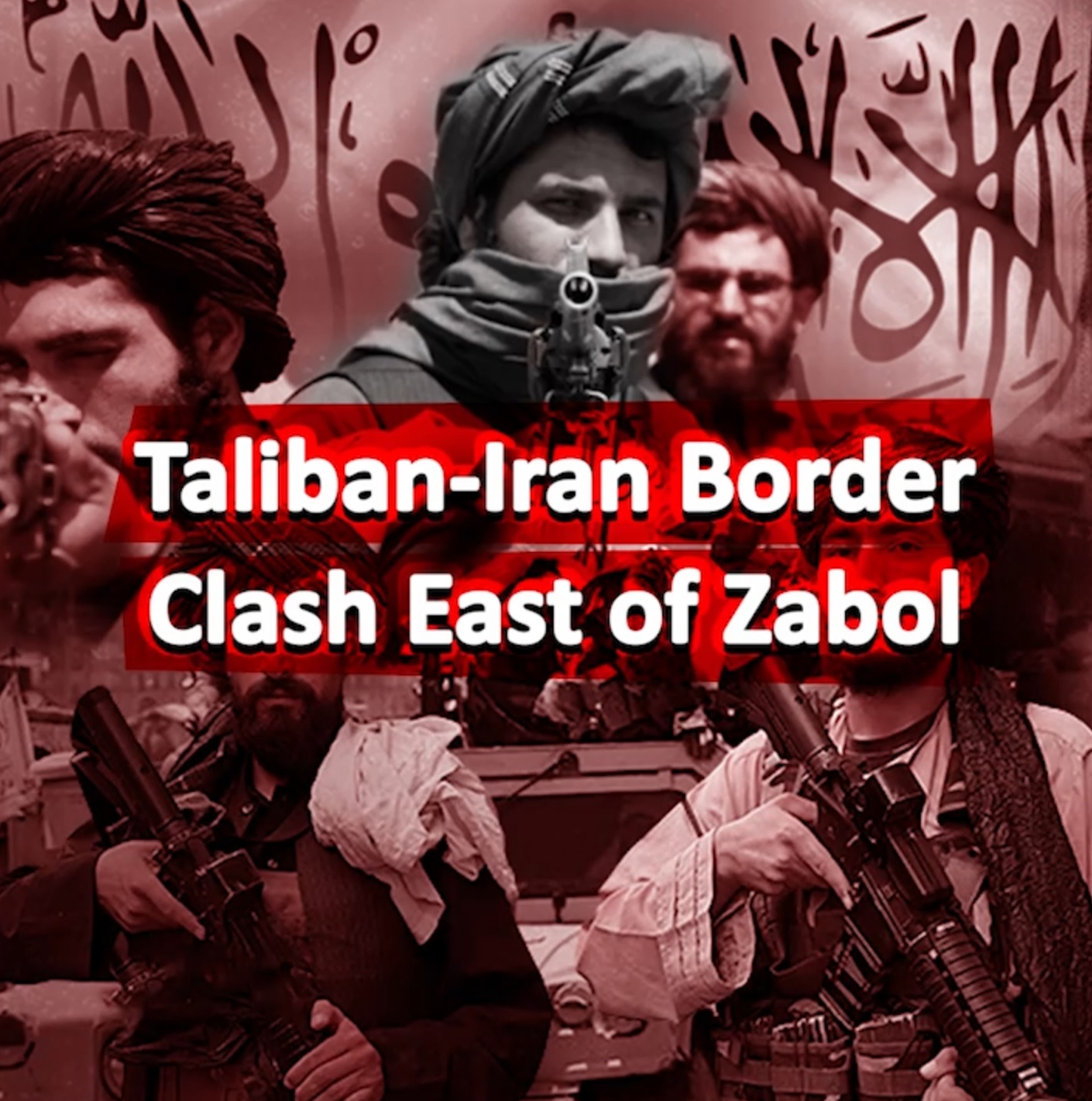
According to a Twitter statement by the Taliban interior ministry spokesman, Abdul Nafee Takkur, during the clashes between the Taliban militants and the Iranian Border Guards in the north of Sistan and Baluchistan Province, an Iranian border guard and a Taliban militant was killed, and a number of other forces were wounded.
This is while the local sources in Afghanistan have published images of two persons, claiming that two Afghans were killed in these clashes. Also, based on the statements of a number of employees of the Zaranj hospital, the casualties of the Taliban are 11 killed and wounded. In addition, another image related to an unknown person known as Khaled Panjshiri has been published, according to the IWN field source, this person was probably one of the soldiers of the previous government and was killed in a conflict with the Taliban around the city of Kabul And it has nothing to do with recent border conflicts.
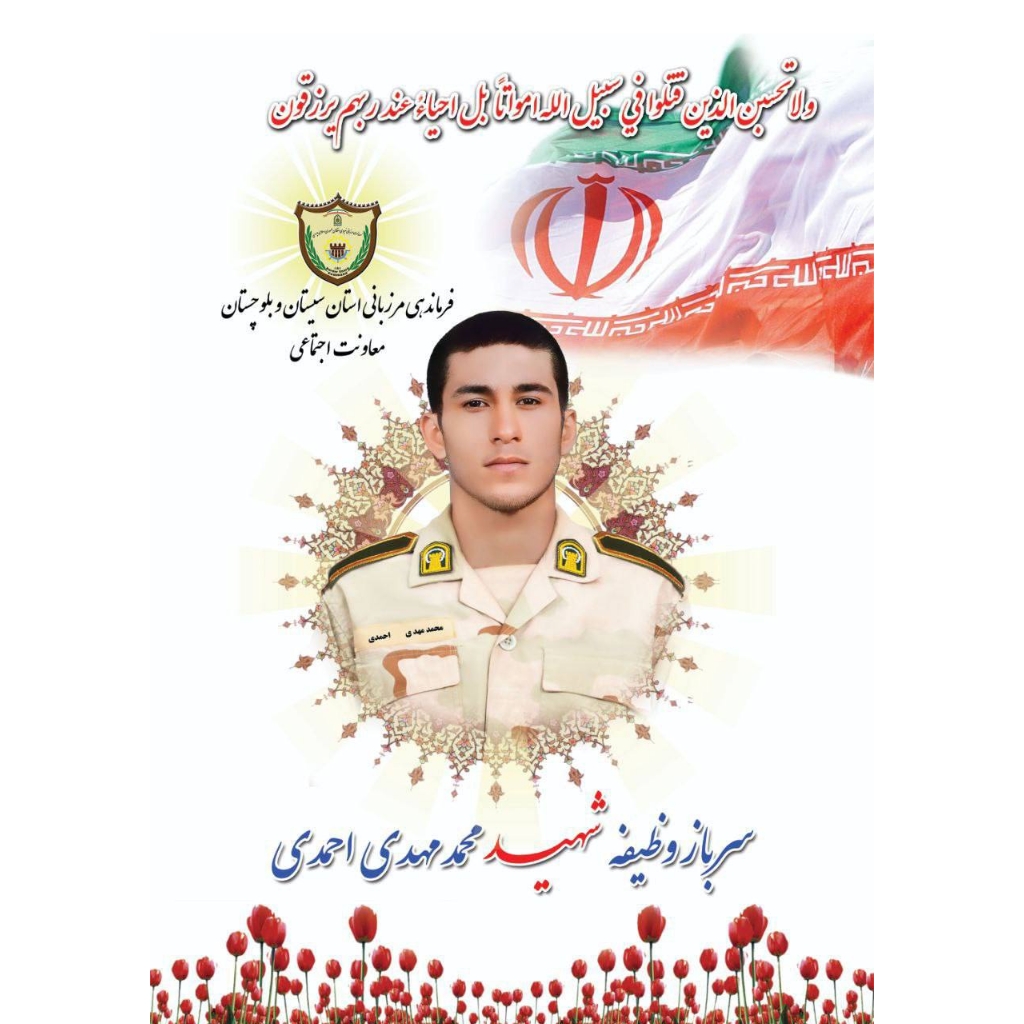
Iran’s Border Guard Command of Sistan and Baluchistan province also released the image of Mohammad Mehdi Ahmadi, the Iranian soldier that was martyred in recent clashes, and declared the casualties of the Iranian Border Guard in the Taliban attack as one martyr and several wounded.