During the last three days, the Russian forces managed to advance a few hundred meters in the remaining areas in the northwest of the city of Bakhmut, but this city has not yet been completely captured by Russia and the Ukrainian forces are resisting.
On the other hand, during the past two days, Ukrainian forces have managed to push back Russian Army from a number of areas by carrying out counterattacks in the northern and western outskirts of Bakhmut.
In the northern outskirts of the city of Bakhmut, the Ukrainian forces pushed back the Russian forces from the Chasov Yar-Bakhmut road and around Bogdanivka and Khromove by carrying out several counterattacks. On the western outskirts, Ukrainian forces succeeded in making a partial advance in the south of Ivanivske.
The main purpose of carrying out such attacks around the city of Bakhmut is to open the siege ring of the city and try to take the initiative. As long as the logistics routes of the Ukrainian forces from the west to the city of Bakhmut are open, the conflicts inside the city will continue and the prolongation of the complete capture of the city of Bakhmut will leave more costs on the hands of Russia. Read more: Russia Controls 90% Of Bakhmut City (Map)
According to the Ukrainian Air Force Command, in this attack, the Russians used Shahed-136 or 131 suicide drones launched from the eastern front, cruise missiles fired by the submarines in the Black Sea and Kha-101 missiles fired by the Tu-95 strategic bombers from the north and attacked Ukrainian infrustructures in the country. The AFU claim that the Ukrainian air defense systems succeeded in destroying 18 Shahed suicide drones, four other unidentified drones, two Orlan reconnaissance drones, three Kha-101 and Kha-55 cruise missiles.
According to the information provided by the Russian sources and the published images, the railway repair and mechanical factory and an ammunition or fuel warehouse in Ternopil city were hit by cruise missiles. The Novabavarsky district of Kharkiv city and Zolochiv town were attacked by Russian Iskander ballistic missiles.
Also, several explosions were reported in the cities of Kiev, Sumy and Khmelnytskyi.
The moment a Russian missile hit the repair and mechanical plant of the Ukrainian railway in TernopilImages of the moment of explosion and fire at the repair and mechanical plant of the Ukrainian Railways in the city of TernopilExtinguishing the fire at the repair and mechanical plant of the Ukrainian Railways in the city of TernopilPublished images of the explosions in Kharkiv and ZolochivClick to view full size map
Ziyad Al-Nakhalah, the Secretary General of the Palestinian Islamic Jihad Movement, gave a speech on the morning of May 14 on the occasion of the end of five days of fighting between the Israeli regime and the Palestinian resistance groups.
While pointing to the end of another round of confrontation with the Zionist regime under the name of “Thar al-Ahrar”, Al-Nakhalah said: “In this round, we lost our dearest children and martyred leaders, whose presence was of great value to the Jihad movement and its brave battalions, and their martyrdom will be the light of our struggle. We lost many of our loved ones who were martyred by the Zionist regime. We said goodbye to all of them with pride.”
He added: “The Palestinian people, including the great leaders and commanders of al-Quds Brigades, who were martyred or sacrificed their dearest possessions, including their lives and children, will never fail and will continue to raise the flag of Quds and strive for its liberation. The Zionists wanted us to tread on the blood of our brothers and our families and keep silent and buy our lives with humiliation and cruelty. They wanted us to continue our lives in their way and under the boots of their soldiers. But the brave and courageous mujahids of Palestine rose up from the victorious Quds battalions and refused our blood to be trampled.”
Al-Nakhalah pointed out that the Palestinian people offered many martyrs and material losses and emphasized: “The message of our people should be like the past five days, when all their cities were under the range of Saraya al-Quds rockets and the Palestinian resistance, and all of you were watching them (Israelis) who were hiding in shelters or hiding under bus stops in terror.”
The Secretary General of the Islamic Jihad stated that these days are days of honor and honor for the Palestinian people and clarified: “Yes, Saraya al-Quds and its brave warriors were the vanguard of the resistance and its arrowhead in this battle, but the resistance was strong with all its factions. The wall on which the resistance of our brave warriors in Saraya al-Quds was based. We took this opportunity from the enemy to separate us and we endured what happened so that the position of resistance remained united and firm. Here we come out of this battle with our weapons and our fighters are still in the field and always ready to fight any aggression.”
In the end, he added: “I thank all those who were with the resistance and Saraya al-Quds, especially the Islamic Republic of Iran, Hezbollah, and our brothers in Egypt and Qatar, who made a lot of efforts so that we could curb the aggression.”
The Israeli regime attacks on the Gaza Strip began in the morning of May 9 with the assassination of three senior commanders of Al-Quds Brigades under an operation codenamed “Shield and Arrow” and continued until the evening of May 13. During the five days of fighting, 33 Palestinians were killed and 190 others were wounded as a result of the Israeli regime aggression on the Gaza Strip. On the other side, an Israeli was killed and 77 others were wounded.
Finally, on May 13, after the pressure of various parties and reaching a truce agreement between the Palestinian and the Israeli regime, the fighting was stopped at around 23:00 (Palestinian time), and the ceasefire agreement was implemented.
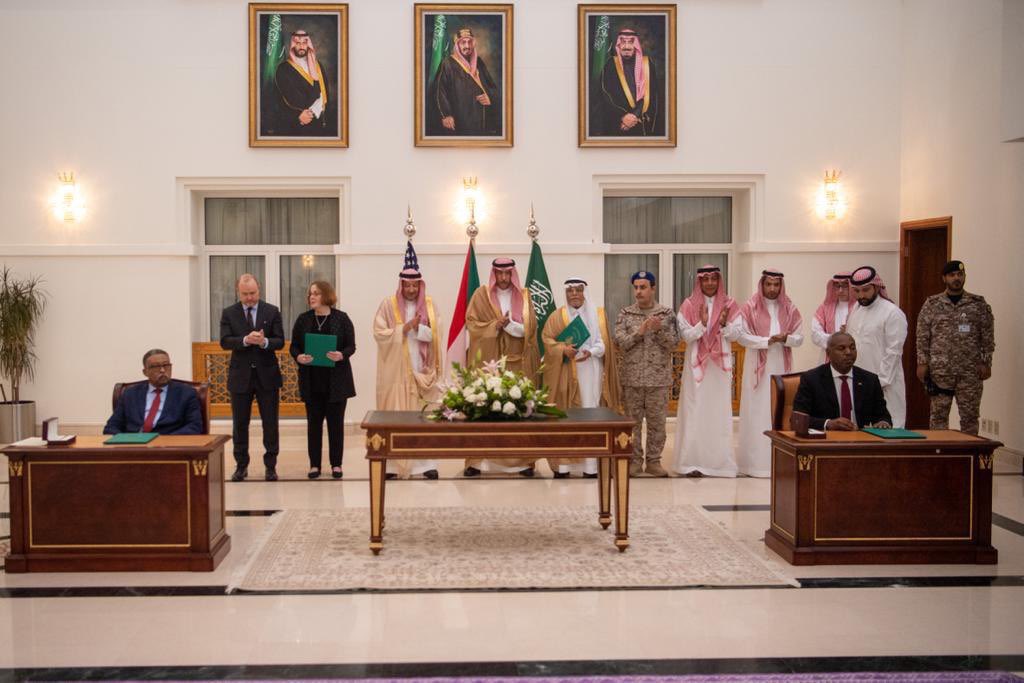
Despite the fact that negotiations between delegations of the Sudanese army and the RSF paramilitary group have been ongoing in the Saudi Arabian city of Jeddah since May 6, some Western media have been citing certain American diplomats as saying for several days that the Sudanese warring parties will soon ink a ceasefire agreement. Conversely, the text of the Jeddah statement does not mention a comprehensive truce.
Given the history of such talks and internal agreements in Sudan, the appearance of this agreement seems to be also similar to their last year agreement, which led to the current dispute in the African nation. The fresh agreement is also expected to pave the way for the second phase of the negotiations, which will again be possible with the mediation by Saudi Arabia and the United States. In addition to the issue, the news stories on an accord in Jeddah indicate other important points:
1- No reconciliation has been made over the disputed issues; so, the new agreement is just a move to create optimism concerning the decline of the internal and external process of the crisis in Sudan.
2- The warring parties in the negotiations put forward their own conditions for the cessation of hostilities based on the viewpoint that each of the sides has the upper hand in the Sudanese developments; however, the US and Saudi mediators halted the discussions and called on the parties to conclude a ceasefire agreement and open safe corridors to allow the dispatch of humanitarian aid. That means the settlement of the dispute in Sudan is also subject to wishes of Saudi Arabia and the United States, while other foreign rivals such as the United Arab Emirates (UAE), Egypt and so on, who have a say in the Sudanese developments, have been sidelined.
What are the conditions of the Sudanese warring parties?
According to statements issued by the Sudanese army officials, the army’s conditions for the cessation of hostilities with the Rapid Support Forces and the opening of safe corridors to dispatch humanitarian aid are as follows:
1- The withdrawal of the Rapid Support Forces from central districts and government buildings of the capital city of Khartoum, including the Khartoum Electricity Distribution Department, the Aljaili Petroleum Refinery as well as residential areas
2- The clearing of trenches and the removal of fronts created during the recent clashes
3- The gathering of the Rapid Support Forces at an agreed military base on the outskirts of Khartoum, which is agreed upon by the Sudanese Armed Forces. The RSF paramilitary group must remain at the military base until a decision is made on their integration into the official armed forces.
The commanders of the RSF paramilitary group also proposed their own conditions:
1- The payment of salaries of the personnel of the Rapid Support Forces by the Sudanese Ministry of Finance
2- The suspension of military flights by the Sudanese Armed Forces as well as the deployment of foreign observers to monitor the cessation of hostilities
3- The assurances for a safe exit route for the commanders and personnel of the Rapid Support Forces from Khartoum to a predetermined destination
4- The authorization to assemble all paramilitary forces, military equipment from the positions of the Rapid Support Forces even in areas where they were stationed before the onset of the recent confrontations
5- The permission for the deployment of the Rapid Support Forces in all positions that they control at present and the provision of medical services to the RSF injured personnel at hospitals
What is the framework of the Jeddah statement?
The delegates of the Sudanese Armed Forces as well as the Rapid Support Forces issued a joint statement dubbed “Jeddah Statement” on May 12 after six days of negotiations in the presence of representatives from the United States and Saudi Arabia.
In the Jeddah Statement, the Sudanese warring parties agreed upon guaranteeing safety of lives and properties of civilians, protecting civilian facilities, creating safe humanitarian routes as well as preserving sovereignty and integrity of Sudan. International organizations are also expected to monitor the implementation of the warring sides’ commitments by the use of satellites, field reports and news stories come from social media networks.
The Jeddah Statement does not mention a comprehensive end of hostilities; however, the American authorities called it a first step toward reaching a ceasefire agreement.
In general, the statement or agreement is not sufficient and effective to pave the ground for resolving the current crisis in Sudan because of the lack of an all-inclusive truce and assessing the implementation of the parties’ conditions as well as the precise monitoring of the warring side’s commitments.
In 28 days of civil war in Sudan, more than 500 people lost their lives and 3,000 others were injured, while tens of thousands were also displaced and foreign countries evacuated their nationals and diplomats from the African country.
The mentioned issues along with Sudan’s economic and political woes indicate a looming crisis that will not be simply resolved even with the complete cessation of hostilities and the formation of an all-inclusive government.
On May 12, Palestinian resistance groups targeted Israeli settlements in vicinity of the Gaza Strip by means of rocket strikes, which triggered warning sirens in the settler areas. As a result of the rocket attacks of resistance groups, several houses in different parts of the occupied territories of Palestine, including Nir Am, were smashed.
Minutes after the first wave of rocket attacks by the resistance forces, different areas around the occupied Al-Quds were also targeted by resistance group rocket attacks. Hebrew-language media outlets reported that following the rocket attacks, Prime Minister of the Israeli regime Benjamin Netanyahu ordered the army to intensify strikes on the resistance groups’ positions in the Gaza Strip.
Following the conflicts, an Israeli political official told the Hebrew-language news website Richt Kahane that Israel has told Egypt that the negotiations to stop the confrontations and pursue tranquility should be suspended under ongoing conditions.
The Channel 13 of the Israeli regime’s TV broadcasting reported that Egypt told the Israelis that Hamas will directly get involved in the clashes if Israel does not stop hitting Gaza today or tomorrow.
Concurrent with the rocket attacks by the Palestinian resistance on the occupied territories, the Israeli army helicopters also targeted different areas in the Gaza Strip, during which several Palestinians, including Iyad Al-Hasani who was a prominent Leader of Al-Quds Brigades (Saraya al-Quds), the military wing of the Islamic Jihad Movement in Palestine, was martyred.
Iyad Al-Hasani
Thus, the Al-Quds Brigades expressed condolences for the martyrdom of Iyad al-Abd al-Hassani, known as Abu Anas, who was a member of the military council and head of the operations unit of the military wing as a result of the criminal attack by the Israeli regime on a residential building in the Gaza Strip.
Following the assassination of al-Hassani, some Israeli media outlets quoted certain security officials as claiming that the desired achievements had been achieved in Gaza and if the rocket attacks from the Gaza Strip keep on, they would not halt the assassination of resistance commanders.
The Israeli regime’s army announced the assassination of Iyad al-Hasani alias Abu Anas, one of the senior commanders of Al-Quds Brigades, by releasing a video of the attack on Al-Nasr neighborhood in Gaza.
It is worth mentioning that the attacks by the Israeli regime’s army on the Gaza Strip kicked off on May 9 within the framework of an operation dubbed “Shield and Arrow”, when the Israelis embarked on assassinating three senior commanders of Al-Quds Brigades and the regime continued the military aggression up to now.
According to the Palestinian Ministry of Health, some 33 Palestinians have been martyred and 147 others have been injured as a result of the Israeli strikes.
Kataib Shahid Abu Ali Mustafa, the military branch of the People’s Front for the Liberation of Palestine, published a video of its forces’ rocket and mortar attacks on Zionist settlements around the Gaza Strip.Aftermath of Palestinian rocket attacks on Gaza StripAftermath of Israeli airstrikes on the Gaza Strip.
According to Turkish media, this soldier was killed as a result of rocket attacks by PKK militants in northern Iraq. With the death of this Turkish soldier, the number of casualties of the Turkish army in the Operation Claw-Lock increased to 72 Servicemen.
The Ministry of National Defense declared that two PKK militants who participated in the operation to kill this Turkish soldier were killed by Turkish strikes in northern Iraq.
It should be noted that the last Turkish casualties in Operation Claw-Lock dates back to December 26, 2022. On December 26, 2022, Turkiye’s Ministry of National Defense announced the a Turkish soldier was killed during a conflict with Kurdish militias in northern Iraq.
At the end of the month of Ramadan, the leader of the Palestinian Islamic Jihad, Ziyad Nakhalah, paid a visit to Iraq, where he met with various leaders of the country’s political establishment, with the exception of Muqtada Sadr, who “froze” his activities for a year due to problems within his movement.
The meeting was held with Prime Minister Muhammad Al-Sudani, President Latif Rashid, Speaker of Parliament – Muhammad al-Halbousi, politicians – Hadi al-Ameri, Sheikh Hamoudi, Ammar Hakim, Sheikh Hazali, Mahmoud al-Mashhadani, former premiers – Abdul-Mahdi and Maliki, Ammar Hakim, Sheikh Hazali, head of Hashad al-Shaabi – Abu Fadak, the meeting was also held with Sunni religious authorities – Sheikh Khaled al-Mullah, Mahdi al-Sumadai, the Iranian ambassador to Iraq – Muhammad al-Sadiq and a number of commanders, leaders of Islamic Resistance factions. In addition to the meetings, the head of the PIJ spoke on the occasion of al-Quds Day, where he greeted the Iraqis, pointed to the active role of Iraq in the anti-Zionist resistance, calling this country “the heart of the Arabs” and ”carriers of the message of Imam Hussein.”
So, Ziyad Nakhalah continues to expand the anti-Zionist front, repeatedly making successful diplomatic steps. A Hamas delegation is also expected to visit Baghdad, but in the meantime, the Al-Qassam Brigade has released an interesting video with a threat against Zionist terrorists. It is important that fighters with the chevrons of the Iraqi resistance factions (Kataeb Hezbollah, Harakat Hezbollah al-Nujaba, Asaib al-Haq) were present in the clip. Thus, we can say that Hamas has officially recognized the presence of Iraqi friends in the anti-Zionist struggle*.
Against the background of Ziyad Nakhalah’s visit to Baghdad, Hassan Nasrallah pointed out that “we have high hopes for Iraq.” Such words of the Hezbollah leader were to be expected, because Iraq, although it does not border on the Zionist colony, nevertheless plays an important role in the Arab countries located next to the occupation. For example, in Syria, the Iraqi resistance factions have established themselves as an important component in the victories of the Syrian army over the insurgency. It is obvious that in the near future these same Iraqis will join the Palestinians and Syrians for strikes against the Zionists. Another Arab country through which the Iraqis are preparing for the liberation of the holy al-Quds is Jordan. Official Baghdad has already launched the process of economic cooperation, several meetings were held between the parties, where the parties discussed the expansion of trade and the exchange of goods, plus the operation of the oil pipeline from Iraq. During the last meeting, Ammar Hakim hinted that Iraq would be the first to come to Jordan’s aid in case of Zionist aggression.
With regard to Jordan, there is one interesting point. Last year, the Iraqi group, “the Companions of the Cave”, in its statement indicated that Jordan falls under the legitimate goal of resistance due to the pro–American orientation of the autocracy. And at the same time, today one of the leading moderate Shiite politicians in Iraq openly offers cooperation to the official Amman in the fight against Zionism. Thus, Iraq shows Jordan two ways – war or cooperation. Now it’s the turn of the Hashemite Kingdom’s parliament.
With the arrival of Ziyad Nakhalah in Baghdad, it can be stated that Iraq is now officially participating in the struggle for Palestine. Active diplomacy with neighboring countries in order to eliminate all disputes and conflicts also has the goal of focusing on the Palestinian direction. From now on, it absolutely does not matter who will be at the helm of Iraq, which party or politician, because the pro-Palestinian vector is set and the intensity of the inclusion of Iraqis in the Palestinian struggle will only grow.
In 1948, at the height of the war with the occupiers, the Iraqi army reached Jenin. In honor of the Iraqi heroes, the Palestinians founded a cemetery of martyrs. Now it’s time to finish what we started and this time the Iraqis and other Muslims will definitely finish what they started.
* In the last conflict in 2021, representatives of the Hezbollah Brigade were seen in Gaza, and Harakat al-Nujaba openly said that its supporters have branches in the Gaza Strip and the West Bank.
On May 12, Imran Khan, Pakistan’s former prime minister has been granted bail by Islamabad’s highest court, days after his dramatic arrest. A judge in the capital city’s High Court ordered Khan’s temporary release for two weeks.
This morning, Imran Khan was transferred from the guest house of the Ministry of Interior to the High Court of Islamabad this morning to explain the charges related to the financial and administrative corruption case and then he was released. Of course, the corruption charges against him are still open.
Officials of the Pakistani government called this sentence a sign of double standards of the Supreme Court of Pakistan and criticized this institution.
The arrest of Imran Khan over corruption charges set off a deadly outpouring of anger against the country’s military. These tensions led to bloody clashes between the supporters of Imran Khan and the military and security forces, which left at least 9 dead and nearly 2,000 wounded. Also, more than 3000 people were arrested by the police, whose fate and punishment have not been determined yet.
The moment Imran Khan was transferred to Islamabad High Court
As a result of Palestinian resistance rocket attacks on the occupied territories, at least one Zionist was killed and more than seven others were wounded. Several houses belonging to the Zionists were also severely damaged.
Aftermath of Palestinian rocket attack on Zionist settlements
Israel TV channel 7 stated that some of the rockets that were fired at Ashkelon town were advanced and carried explosive warheads weighing 500 kg.
Aftermath of rocket attacks by Palestinian resistance groups on Ashkelon located in the south of the occupied territories
These attacks took place after Saraya al-Quds, the military branch of the Palestinian Islamic Jihad movement, published images of its fighters being equipped with Boraq 85 rockets to target the Zionist occupation in response to the assassination of the commander of its missile unit.
A video of Islamic Jihad’s “Boraq 85” rockets entering the battle with IsraelSaraya al-Quds, the military wing of the Palestinian Islamic Jihad movement, released images of its fighters being equipped with new rockets.
On the other hand, the Israeli aircraft also targeted different areas of the Gaza Strip in the continuation of their aggression. After these attacks, Kataib Al-Mujahidin, the military branch of the Palestinian Mujahidin Movement, announced the martyrdom of two of its members. Saraya al-Quds, also announced the martyrdom of one of its field commanders, Ahmad Abu Daqe, nicknamed Abu Hamzah, in an Israeli airstrike on the south of the Gaza Strip.
Images of the martyrs of Kataib al-Mujahideen and Saraya al-Quds
It should be noted that the conflict between the Zionist regime and the Palestinian resistance has entered the fourth day, and so far the efforts of different parties to establish a ceasefire have failed.
Israel TV Channel 14 stated that Israel informed Egypt that it will no longer participate in the ceasefire negotiations after the recent resistance rocket attacks on the occupied territories. Nevertheless, considering the rejection of the conditions of resistance by the Zionist regime, it seems that the new round of conflicts between the parties will continue for a few more days.
Images of resistance firing rockets towards the occupied lands and the activity of the Iron Dome systemAftermath of Palestinian rocket attack on Zionist settlementsA video of resistance firing rockets towards the occupied territories.
Pakistan’s Supreme Court has ruled the arrest of former Pakistani Prime Minister, Imran Khan to be illegal and ordered that he be immediately released, two days after his detention.
This issue took place after Umar Ata Bandial, the Chief Justice of the Supreme Court of Pakistan, this evening called Imran Khan’s arrest in the court premises a clear example of insulting the judicial system and set a one-hour deadline for his release.
Umar Ata Bandial said: “Imran Khan was summoned to the court to appear in another case and the inspection organization has no right to arrest him.”
Imran Khan is supposed to be kept in one of the guest houses of the Ministry of Interior of Pakistan until tomorrow (May 12) and then he will be released.
It should be noted that Imran Khan was arrested by Pakistani security forces on Wednesday, May 10, on charges of numerous corruption cases, including the illegal acquisition of land, the establishment of Al-Qadir Trust and the illegal profit of 190 million pounds from it.