According to the spokesman of the Yemeni Armed Forces, Brigadier General Yahya al-Sari’, Ansar Allah air defenses managed to destroy a Chinese-made Wing Loong 2 drone over the al-Jawf province on March 21st. This drone reportedly was destroyed by a surface-to-air missile.
It should be noted that this is the sixth drone to be shot down by Ansar Allah after the implementation of the ceasefire agreement in Yemen.
Also, according to data obtained by ISWNEWS, this is the ninth Chinese Wing Loong 1 or 2 drone to be shot down by Ansar Allah since the start of the war in Yemen.
Details of the shot down of these nine drones are as follows: 1- UAE-owned Wing Loong in the Kholan region of Sanaa province, on September 26, 2016. 2- UAE-owned Wing Loong in Saada province, and on April 19, 2019. 3- Saudi-owned Wing Loong in the district of Hayran in Hajjah province, on November 30, 2019. 4- Saudi-owned Wing Loong in the north of Saada province, on May 21, 2021. 5- Saudi-owned Wing Loong in the district of Kataf in the north of Saada province, on September 13, 2021. 6- UAE-owned Wing Loong in the Usaylan district in Shabwa province, on January 5, 2022. 7- UAE-owned Wing Loong in the Ain district in Shabwa province, on January 11, 2022. 8- Saudi-owned Wing Loong in the Kitaf district in the north of Saada province, on May 24, 2022. 8- Saudi-owned Wing Loong 2 in the al-Jawf province, on March 21, 2023.
This morning around 09:30 local time, several people from Khojavand (Martuni) region who were working in one of the vineyards of Klazin-Dzor were attacked by Azerbaijani forces.
This is not the first time that the Azerbaijani forces shoot at the Armenians of Nagorno-Karabakh. According to local reports, Nagorno-Karabakh Armenians near the lines of contact with Baku forces are always attacked and shot by Azerbaijani forces.
The incident happened this morning in the Khojavend region while the tension in the border areas of Armenia and the Republic of Azerbaijan is at its highest level during the past few days with the bellicose statements of Ilham Aliev, the head of the government of Baku, And the occurrence of any armed conflict and casualties can sparkle a massive war in the Caucasus region.
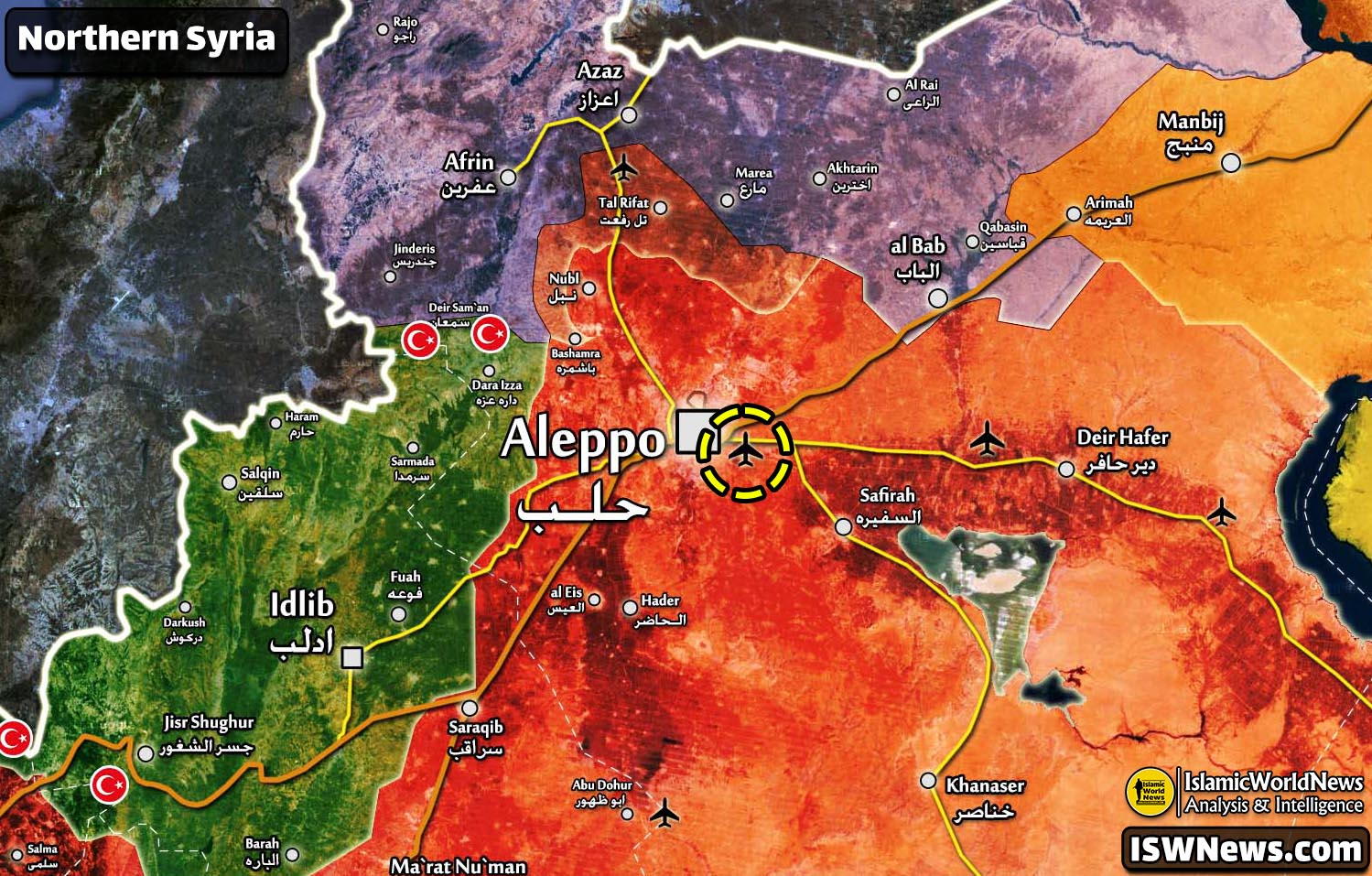
An Israeli regime airstrike in the first hours of Wednesday targeted the international airport in the northern Syrian city of Aleppo, causing material damages and putting it out of service.
According to the statement by the Syrian Ministry of Defense, “at 03:55 (local time) this morning, Israeli warplanes targeted Aleppo International Airport from the Mediterranean Sea in the west of Latakia. This attack caused material damage to the airport.”
Aleppo International Airport is one of the points of receiving humanitarian aid from other countries to the victims of the earthquake in northern Syria. Undoubtedly, stopping the operation of this airport will disrupt the process of providing assistance to the earthquake victims and Syrian refugees and will cause them to suffer more.
This is the third attack of the Israeli regime on Syria after the recent devastating earthquake in this country. These cowardly attacks are taking place while the country of Syria is facing difficult humanitarian conditions following the consequences of the devastating earthquake.
It is worth mentioning that earlier this month on March 7, the Zionist regime airstrikes targeted Aleppo International Airport and put the airport out of service for several days and flights were rerouted to two other airports in war-torn Syria until the damage was fixed.
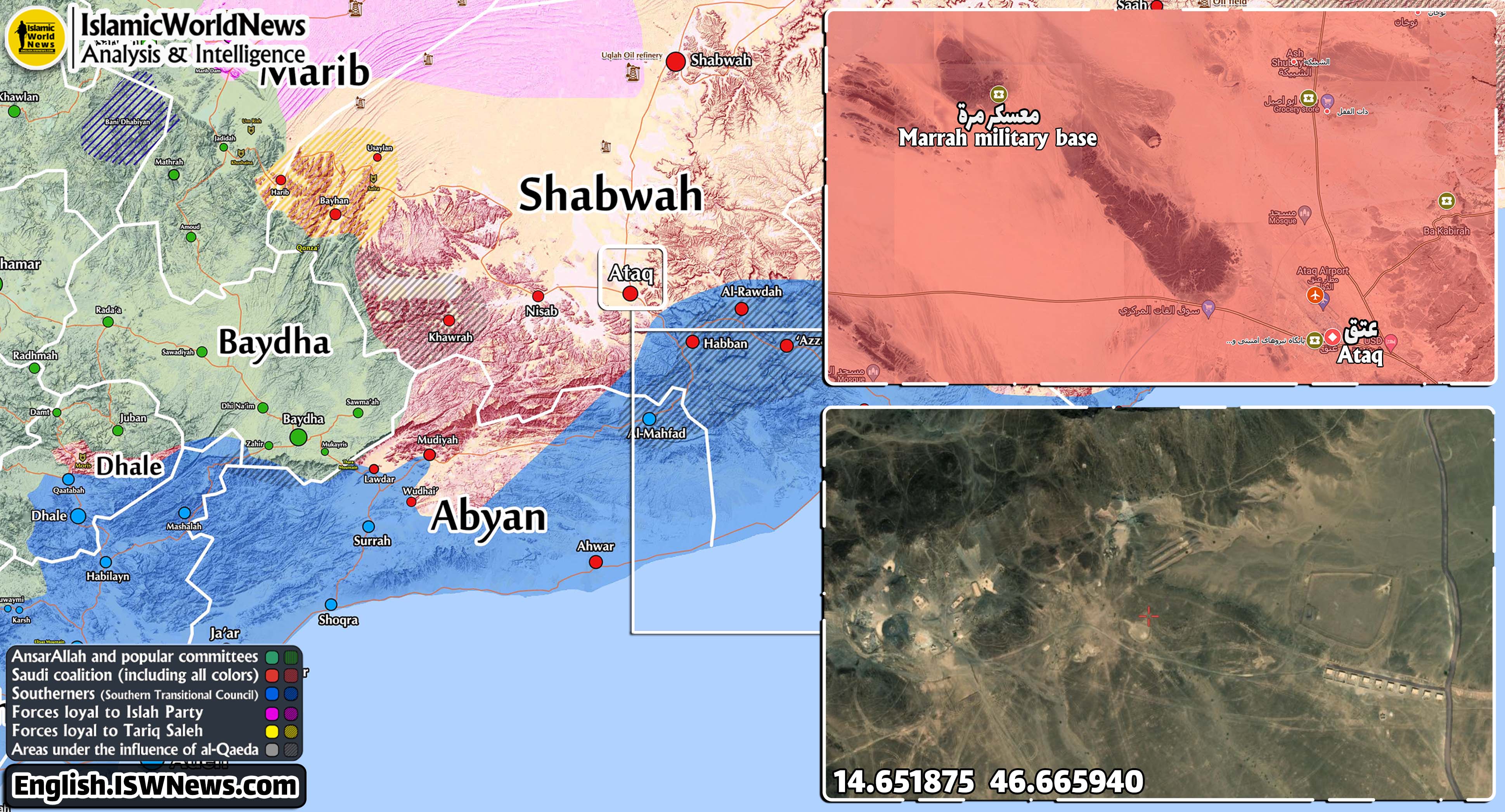
According to local sources in Shabwah province, an American serviceman was killed in the clashes after the verbal tension between the American and the Amaliqah forces at al-Marrah base located in the suburbs of Ataq city, the capital of Shabwah province. The conflict occurred after the Americans had a dispute with Salafi members of Amaliqah over the control of the audio system of the al-Marrah base prayer hall.
After this incident, the Saudi-backed government of Yemen has issued an order to arrest eight members of Amaliqa forces. Also, a helicopter has transferred the body of this American serviceman to a military ship in the Arabian Sea. However, the local authorities of Shabwah province have denied the occurrence of a conflict and the death of an American at the Marrah base.
Al-Marrah base is one of the military bases of the Yemeni army in Shabwah province, which is located in the northwest of Ataq city. This base is one of the places that was occupied by the American advisers after the expulsion of Islah Party militants from the city of Ataq, and it plays an important role in ensuring the security of this area.
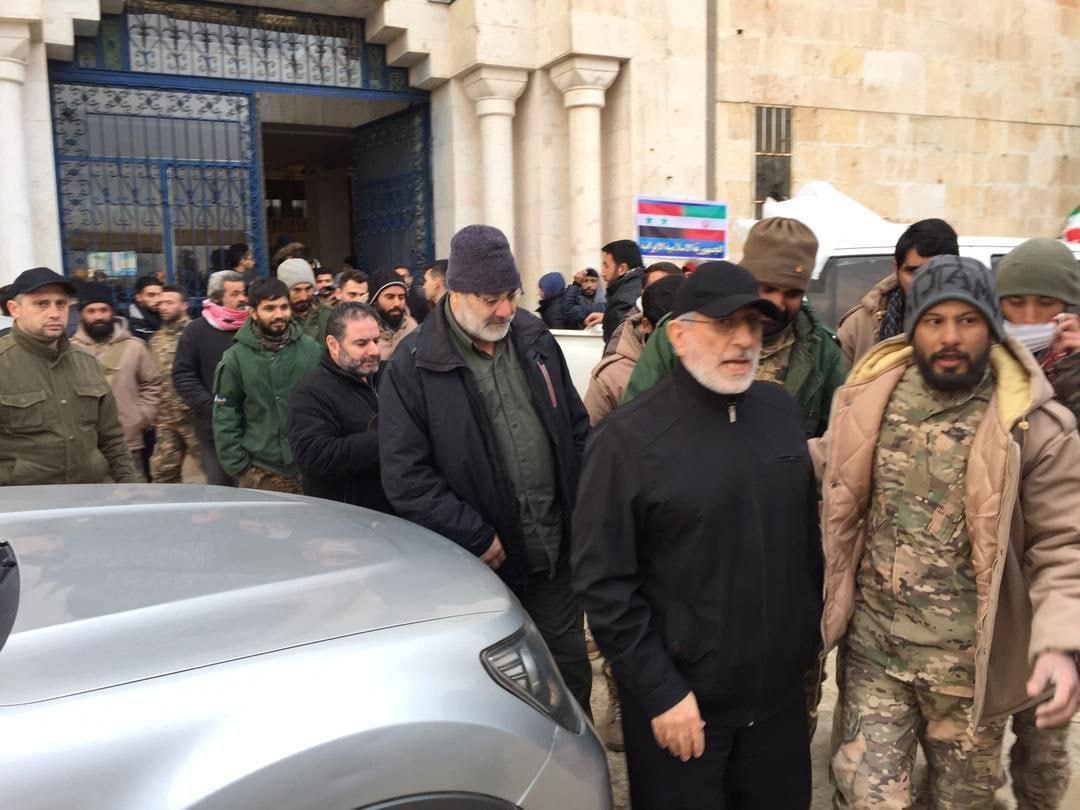
Brigadier General Qaani arrived in the Arab country on March 17 and started visiting some cities in Aleppo and Latakia to supervise the way the Iranian relief forces are serving the Syrian earthquake-stricken people.
The Islamic Republic of Iran has dispatched 447 tons of humanitarian aid to Syria in 16 phases. The aids shipments were sent to Syrian airports in Aleppo, Damascus and Latakia.
It is worth mentioning that this the second trip by the commander of the IRGC’s Qods Force to Syria after the recent devastating earthquake in the Arab country. He visited Syria just a few days after the quake.
The destructive earthquake in Syria, which happened on February 6, more than 1400 Syrians lost their lives and at least 2349 citizens were injured.
On 6 February, a Magnitude 7.8 earthquake hit southern and central Turkey as well as northern and western Syria, which left more than 50,000 dead in both countries.
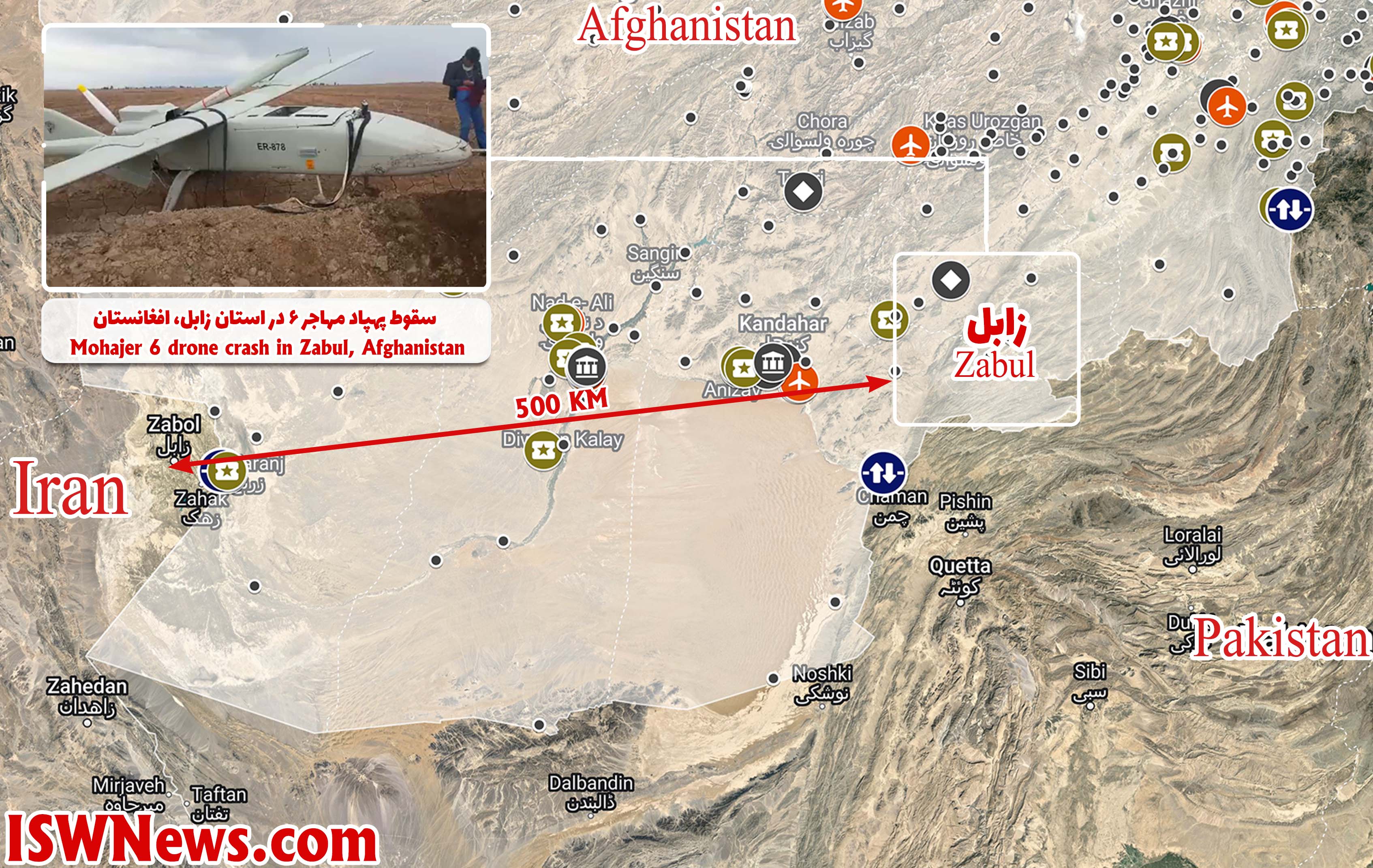
There have not been released more details on the downfall of the drone and the Taliban officials have not yet commented on the issue; however, there is a video that shows the Mohajer-6 crash occurred due to lack of fuel, controlling mishap or technical defect; so, the drone was not hit.
It has not been cleared that the drone was applied by which of the regional countries, but given the fact that the crash happened in Afghanistan, it might belong to Iran or Pakistan. If it is right that Pakistan applied the drone, speculations on selling the Iranian UAV to the Pakistani Army would be supported.
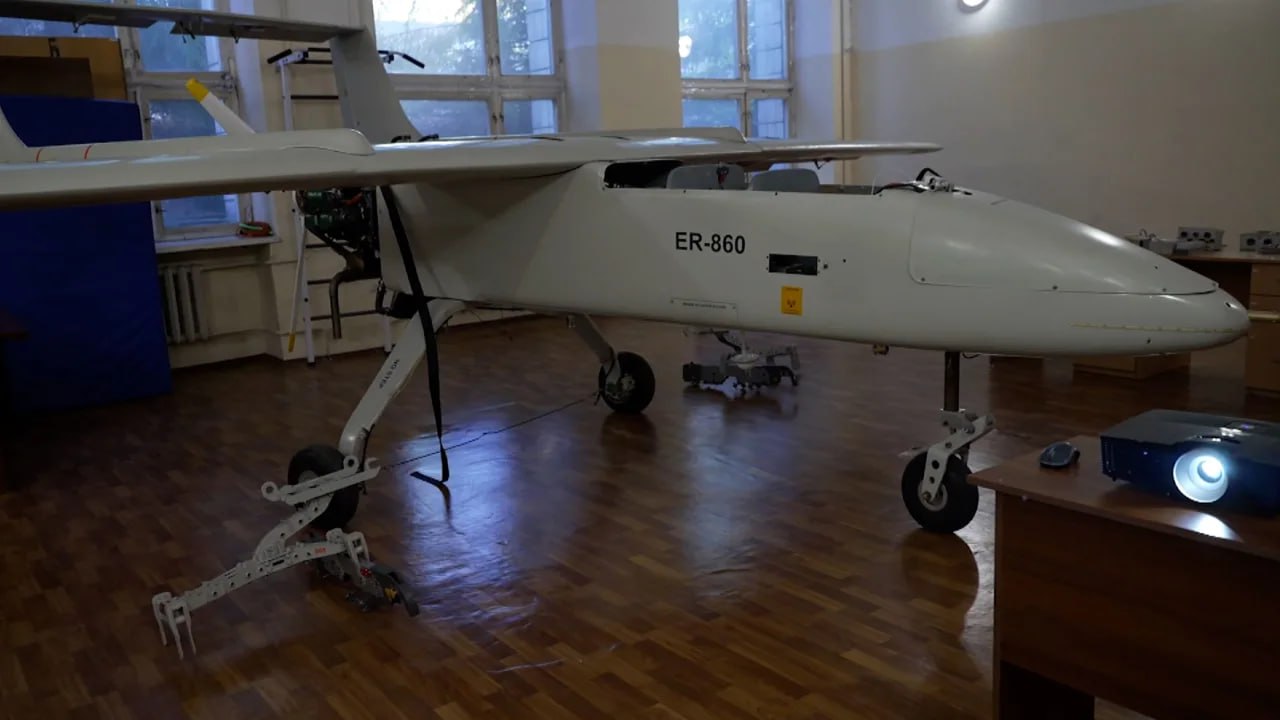
The interesting point here is that the registry number of the drone is ER-878, which is visible on the fuselage of the drone, while the Iranians use P071A in the beginning of their drone numbers; so, it reminds us of Mohajer-6 under Russian usage with the registry number of ER-860, which was displayed by the Ukrainian armed forces during the Russia-Ukraine war. Therefore, there is a possibility that the crashed drone is an exported UAV.
The Russian-operated Mohajer-6 UAV (registered ER-860), which was fell into hands of Ukrainian forces and later displayed to public
Furthermore, the nearest distance from Zabul Province to Iranian borderlines is more than 500 kilometers, while the range of land connection of Mohajer-6 is not more than 300 kilometers and the drone is not equipped with satellite navigation set. Considering the hypothesis, there is a possibility that another drone was stationed in the middle of the distance to be used as a data-link between the crashed drone and a land station in Iran.
Overall, the likelihood that the drone was not utilized by Iran and it started its flight from the sky of other countries near Afghanistan such as Pakistan seems to be more acceptable. Such incidents happened several times over the past year, but the main origin and the party, who is behind the flight, has never been identified. The recent incident as well as 11 airstrikes on different regions in Afghanistan by unknown aircraft following the Taliban came to power strengthen speculations that Pakistan is culprit in creating unrest in Afghanistan.
According to the local sources in southern Yemen, elements working for France embassy have initiated a suspicious plot under the guise of an entrepreneurship plan in the three governorates in the southern governorates.
The embassy formed a unit to gather information in Aden city under the name of the Youth Entrepreneurs Workshop and trained some Yemeni youths, who are suffering from unemployment.
The French embassy claims that the project is being financed by a non-governmental organization, and it aims to provide Paris with precise information reports in line with protecting France’s interests in Yemen.
To this end, Ambassador of the French Republic to Yemen Jane Mary Safa has visited southern regions in the Arab country, while accompanied by the special forces of the France Army deployed in Yemen. His latest inspection occurred in Lahij governorate.
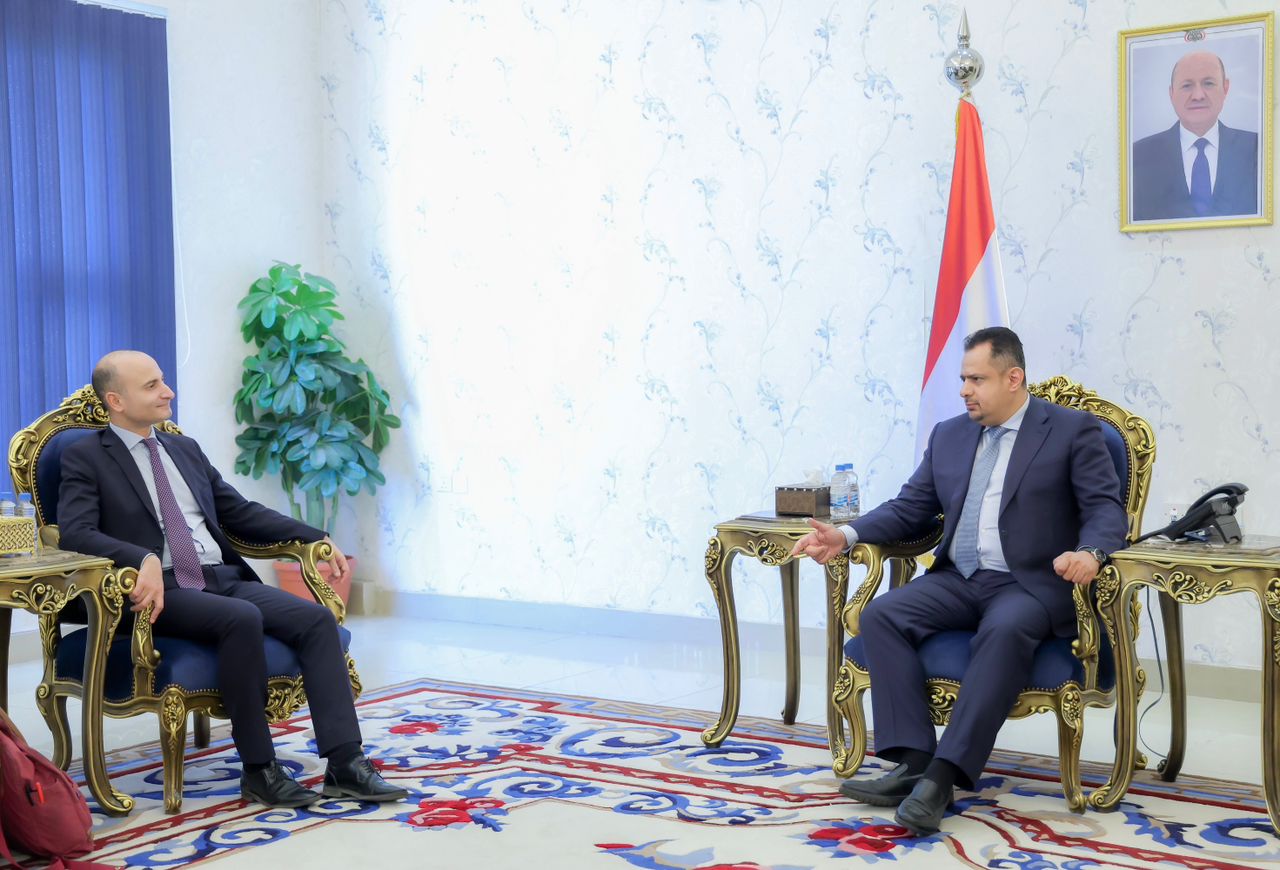
He also held talks with Prime Minister of the resigned government of Yemen Maeen Abdulmalik Saeed at the Al-Maashiq Palace in Aden, when both sides discussed the latest developments in the region, economic issues of the southern governorates of Yemen as well as the outlook of political process under the supervision of the United Nation.
The moves by the French diplomats have happened simultaneous with recent meetings of the US advisors in Al-Ghaiza and Ataq cities as well as Britain’s measures in Aden and Al-Mahra governorates.
It is worth mentioning that the French diplomats deployed their forces and workers at the Balhaf gas facility in Shabwah Governorate following their agreement with sheikhs from the United Arab Emirates (UAE) in September 2022; so, the French forces have been illegally involved in gas extraction from the gas field.
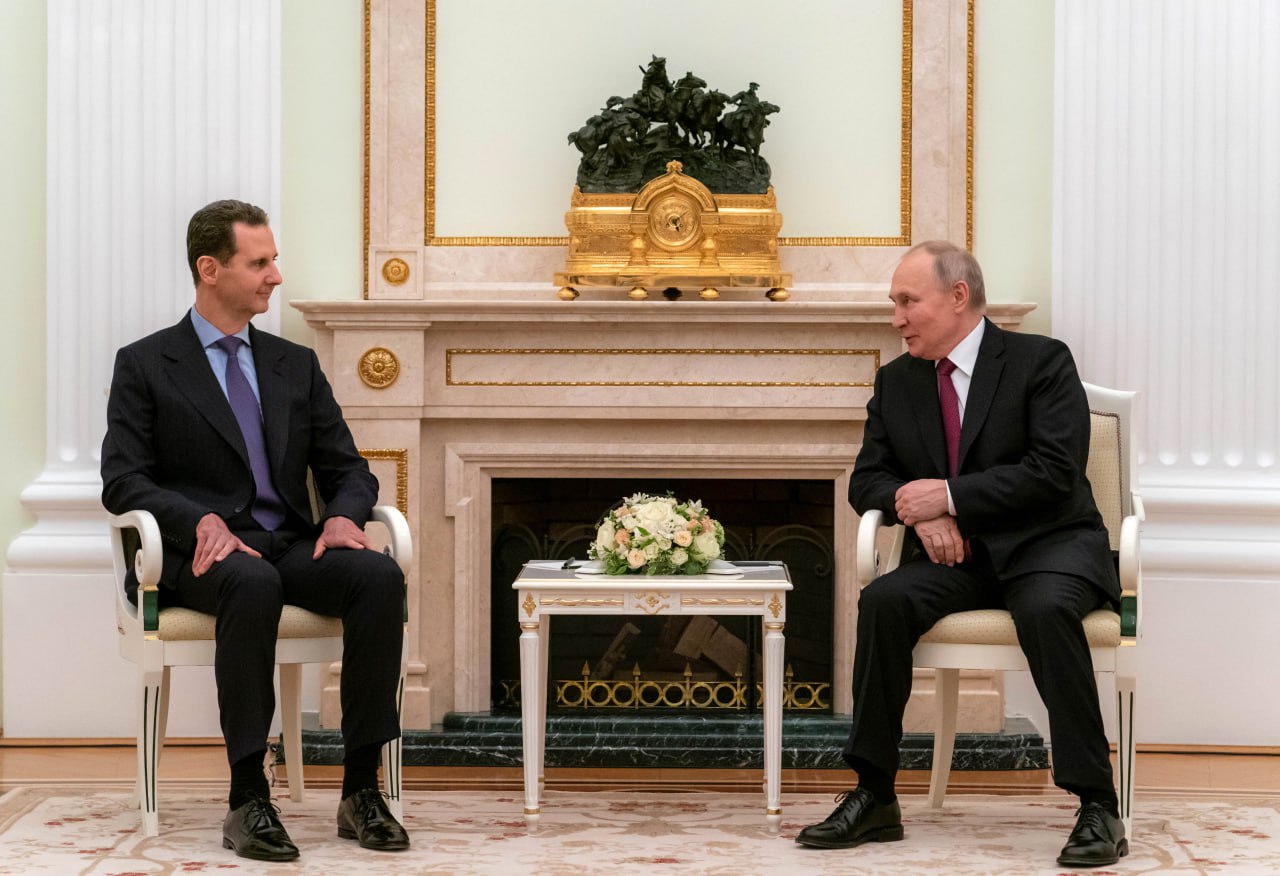
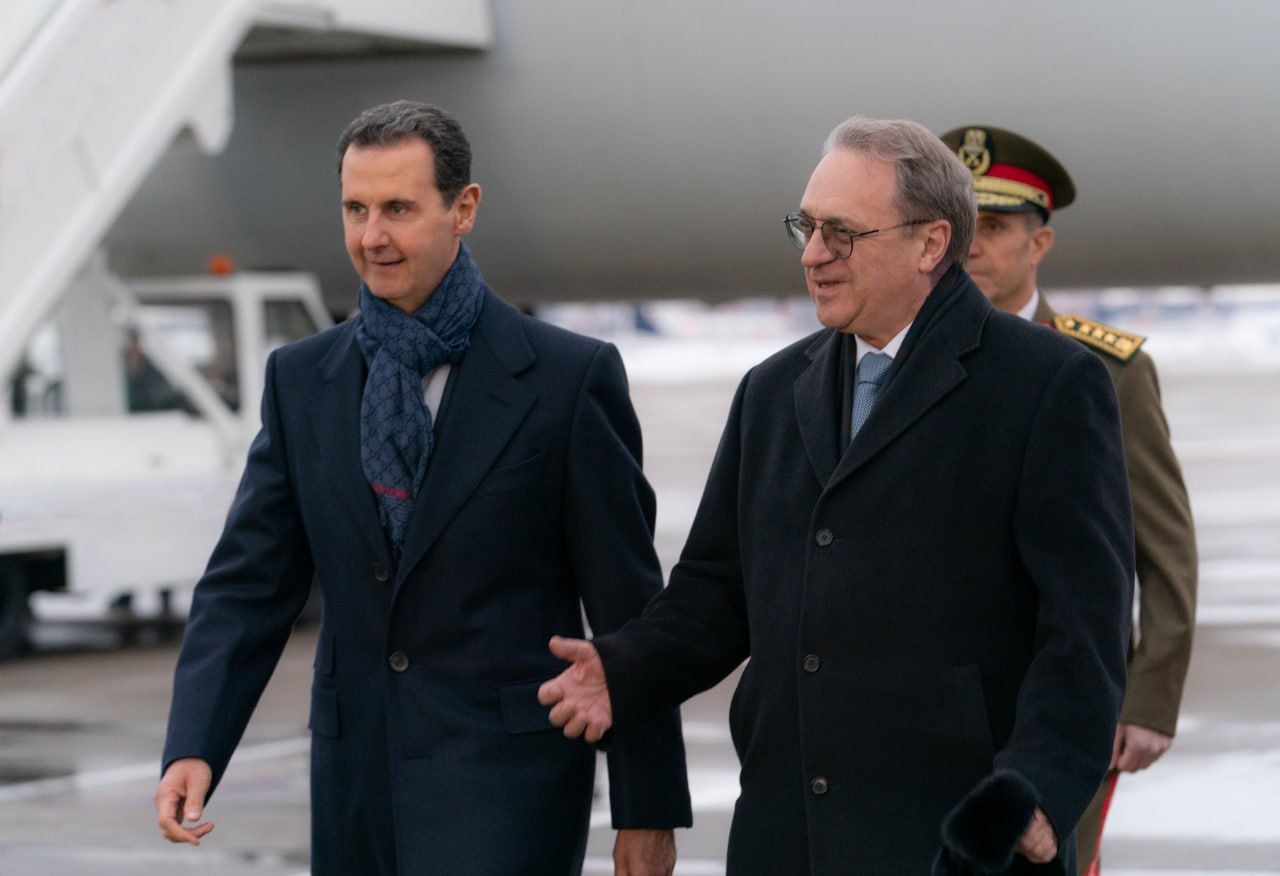
Al-Assad, who is visiting Russia in an official trip, emphasized that Damascus supports Moscow in the Ukraine war, adding that this is his first visit to Russia after the onset of the conflict.
He underlined that he reiterates Damascus’ support for Moscow in the war against Nazism, which is backed by the West.
According to the Syrian president, the Syrian nation appreciates the Russian government and people for their commitment in respecting sovereignty and territorial integrity of Syria.
Al-Assad went on to say that he is grateful for Russia’s aides in the recent earthquake in Syria in particular the Russian Defense Ministry and Army who played a key role in assisting the quake-hit Syrians.
Today the return of balance in the world is necessary, he said, warning that otherwise, the world would lead to explosion, bloodshed and destruction.
We are happy with the results of the joint committee of Russia and Syria, the Syrian president said, noting that his visit to Moscow will be the onset of a new phase of relationship between Moscow and Damascus.
Putin, for his part, expressed satisfaction with al-Assad’s visit to Russia, saying that we are constantly in touch and we witness a great progress in the ties of the two states.
Unfortunately, the people of Syria were subjected to the earthquake calamity, which deteriorated their pains, the Russian president said, adding that we as the loyal friends of the Syrians will do our best to decrease their woes.
According to the Russian chief executive, thanks to joint efforts made by the two countries and the firm contributions by armed forces of Russia in Syria, remarkable results have been achieved in the fight against terrorism, and these efforts pave the way for stabilizing social, economic and political circumstances in the Arab country; so, the bilateral ties is continuously developing and the trade exchanges are growing.
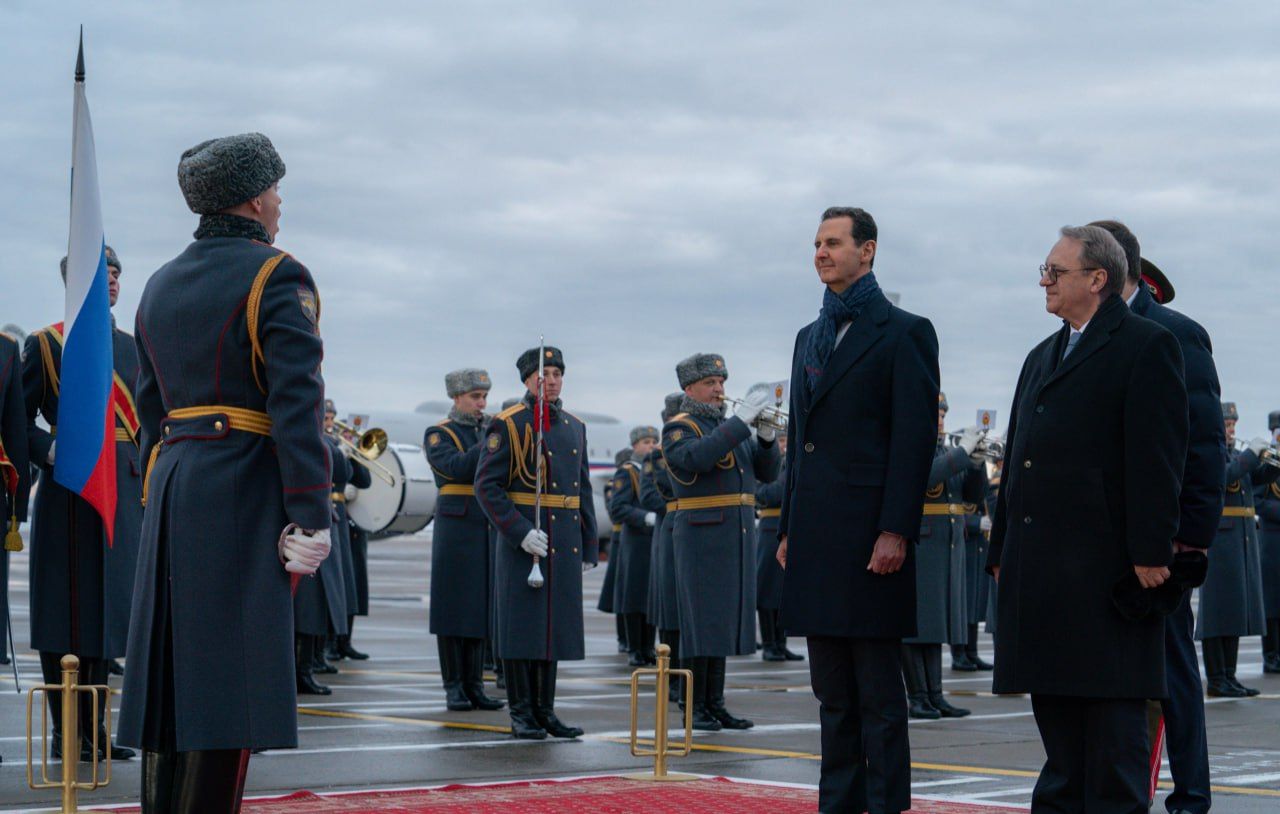
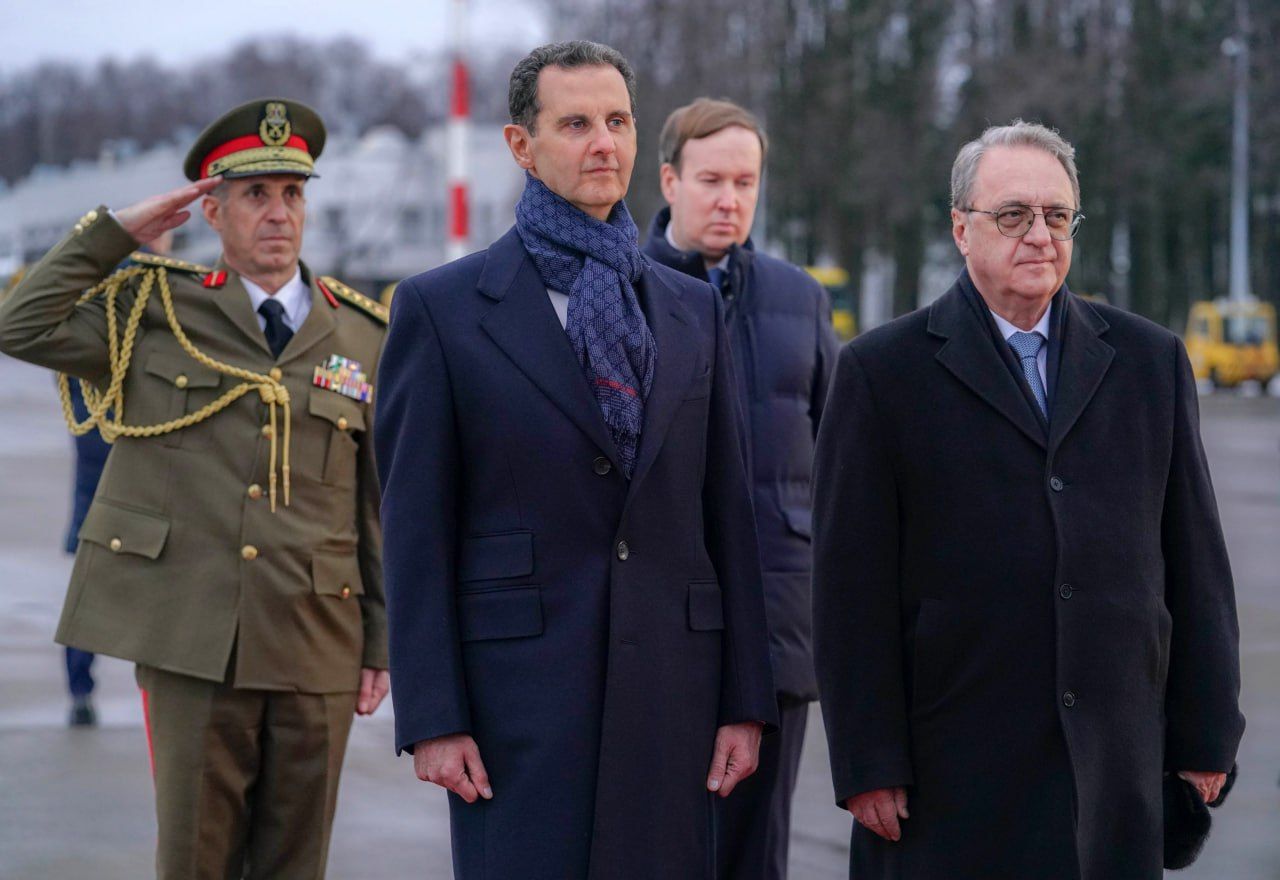
It is noteworthy that Bashar al-Assad arrived in Moscow, heading a high-ranking delegation, on March 14. The Syrian president was welcomed by Deputy Minister of Foreign Affairs of the Russian Federation and Special Presidential Representative for the Middle East and Africa Mikhail Bogdanov, Russian Ambassador to Syria is currently held by Aleksandr Yefimov and Syrian Ambassador to Moscow Bashar Jaafari upon his arrival at an airport in the Russian capital.
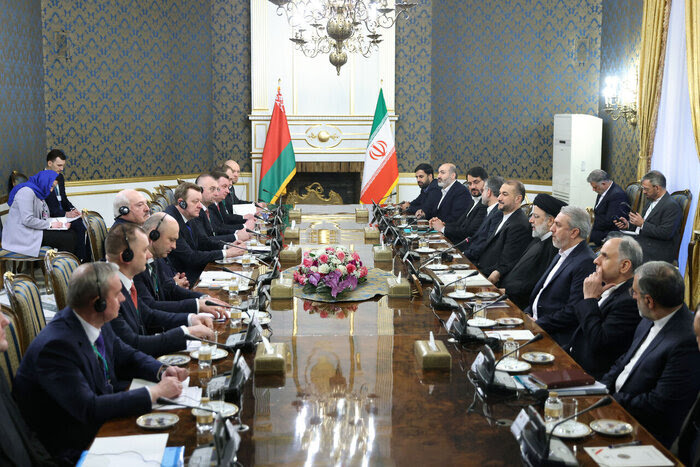
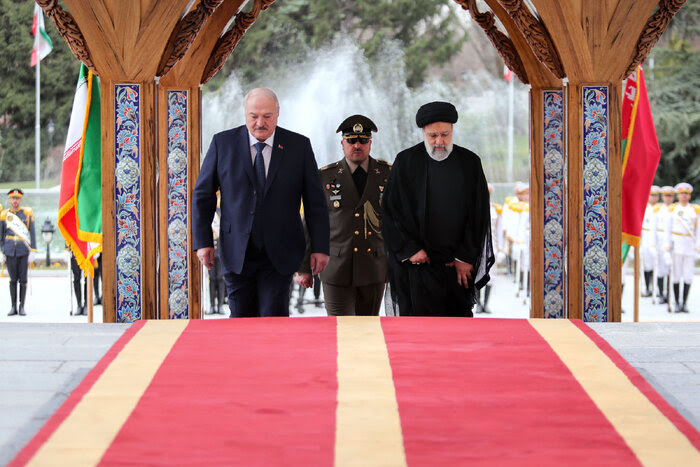
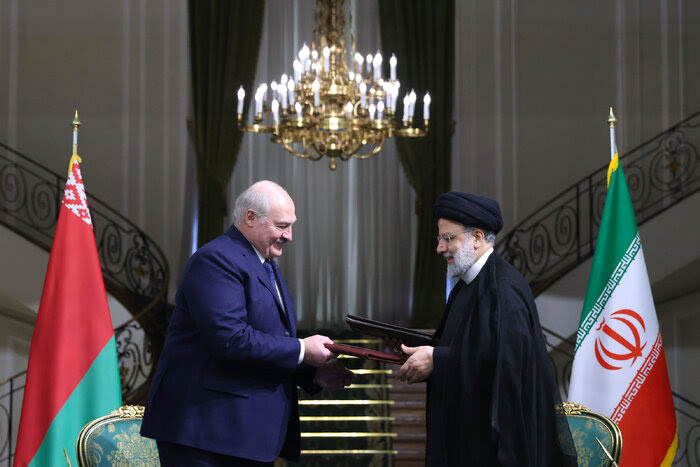
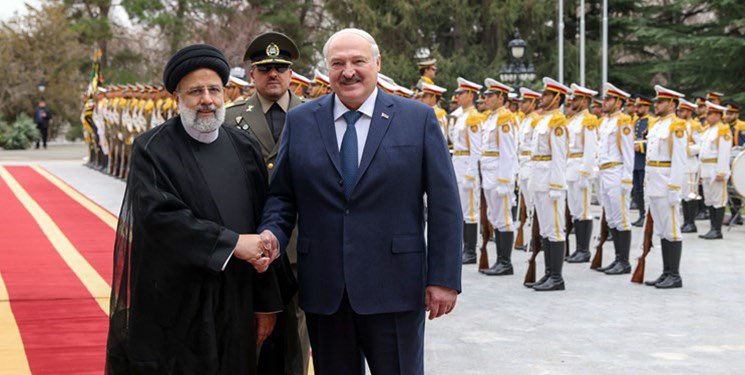
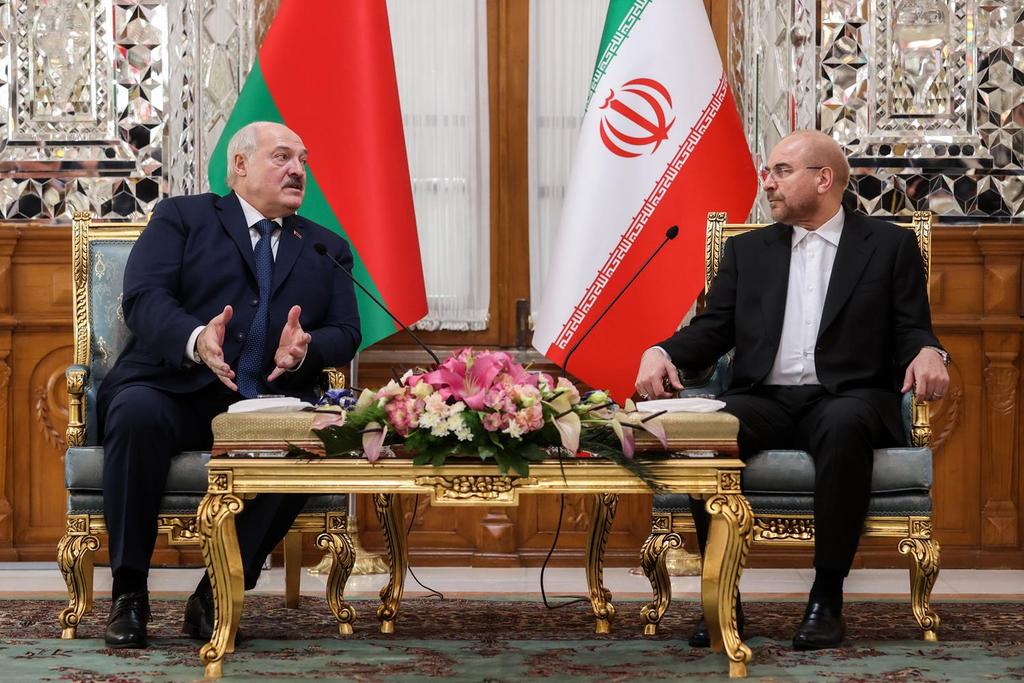
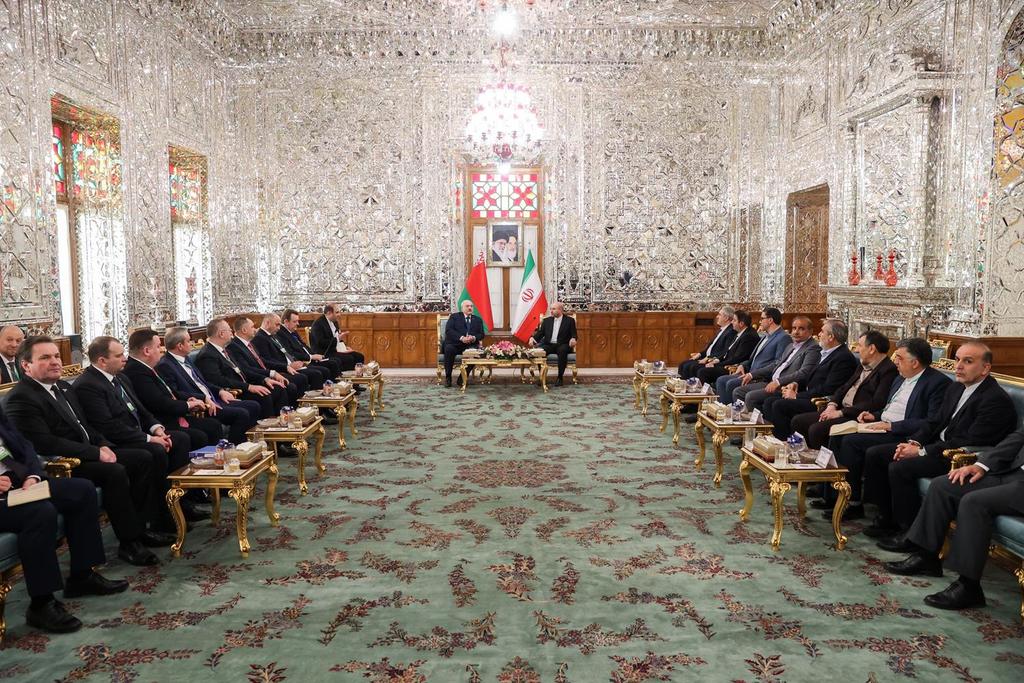
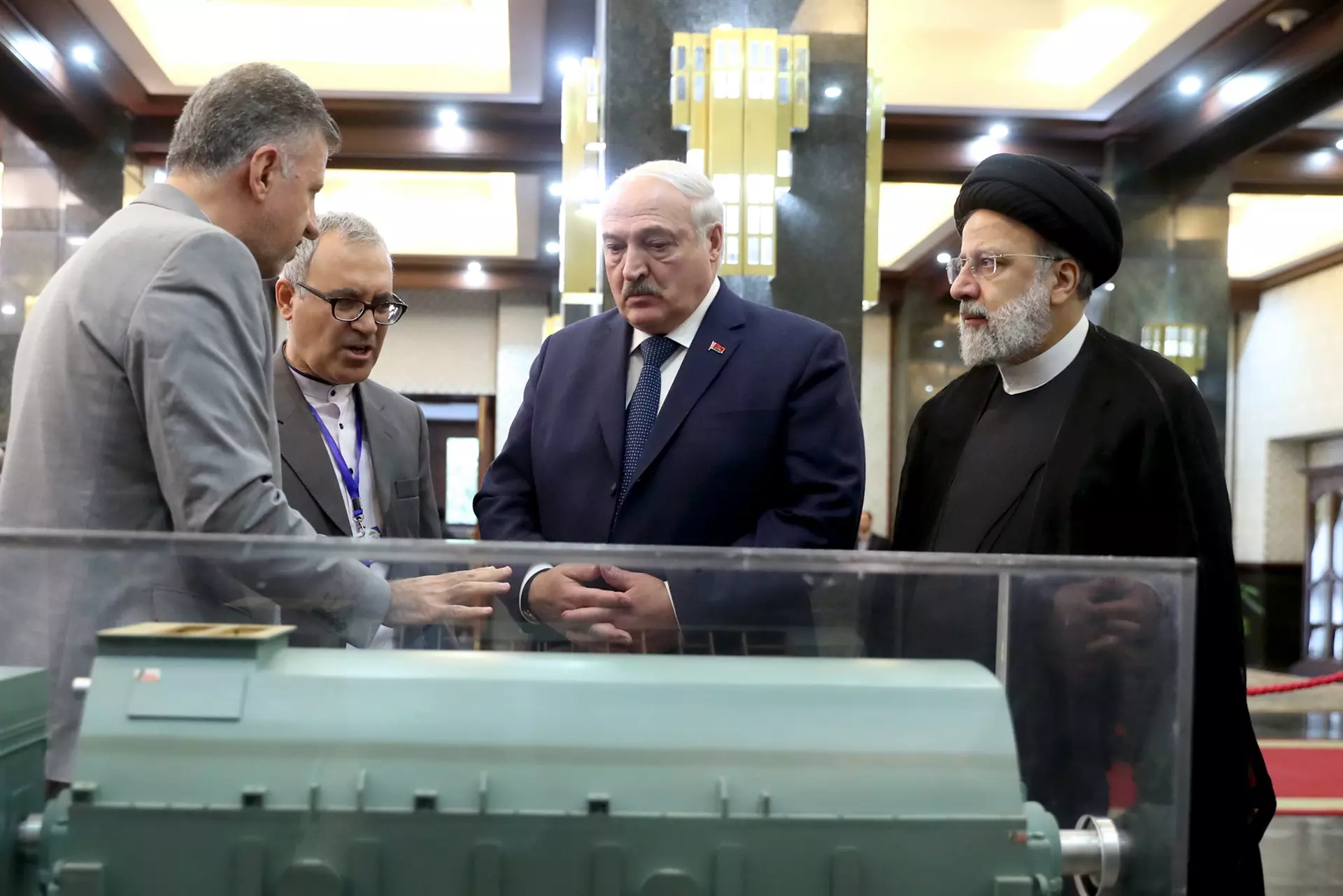
Kukashenko arrived in Tehran on Monday (March 13, 2023) ahead of the 30th anniversary of initiating bilateral ties between Belarus and Iran. His two-day visit was made at an official invitation by his Iranian counterpart.
Both presidents held talks on the sidelines of the 16th summit of the Shanghai Cooperation Organization in Samarkand, Uzbekistan, in September 2022. They underlined on the need for preparing a roadmap to develop bilateral collaborations. The cooperation is in line with both nations’ determination to strengthen economic, trade, transportation, agriculture, culture and art exchanges as prisoners swap and an executive document on the 30th anniversary of establishing diplomatic ties.
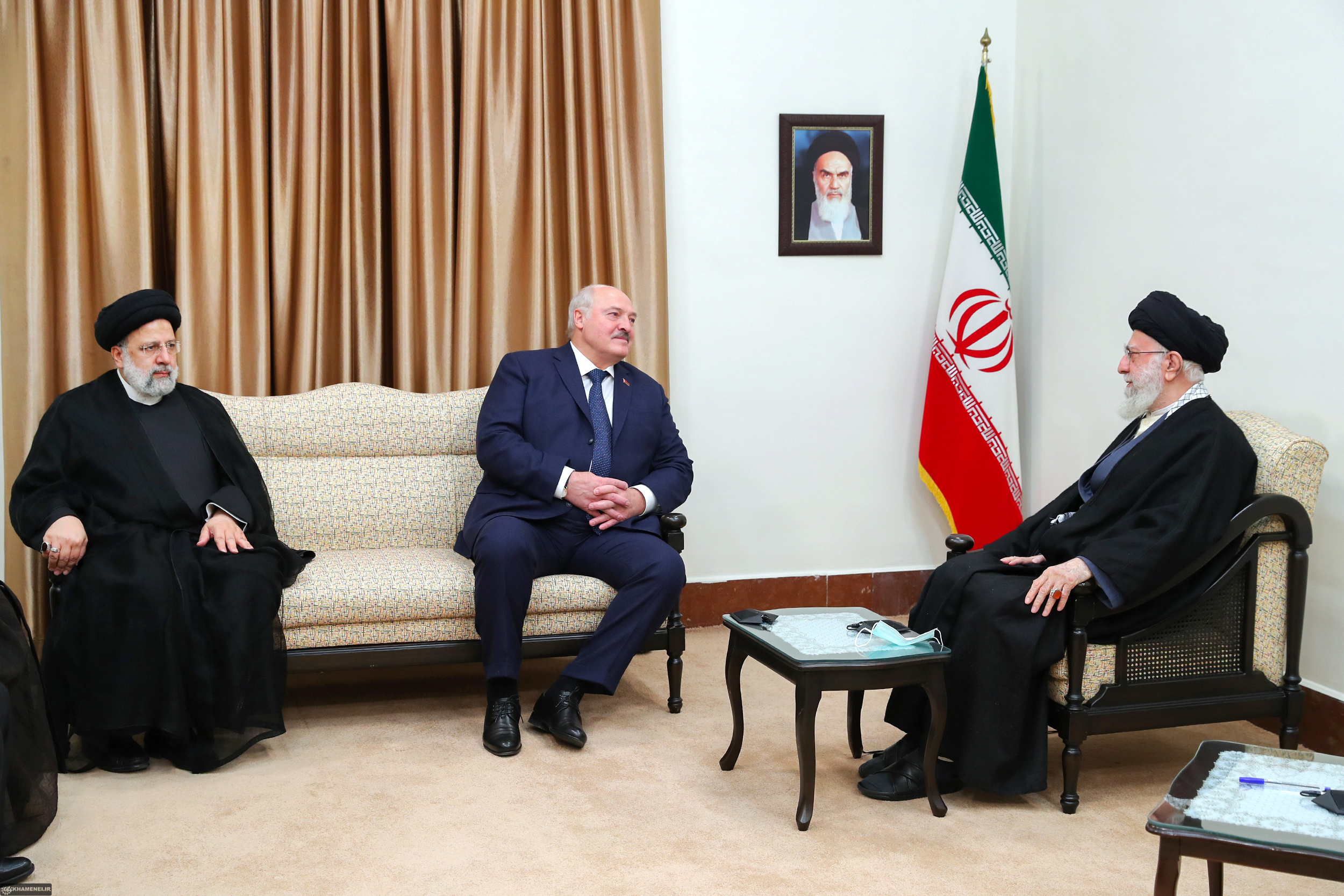
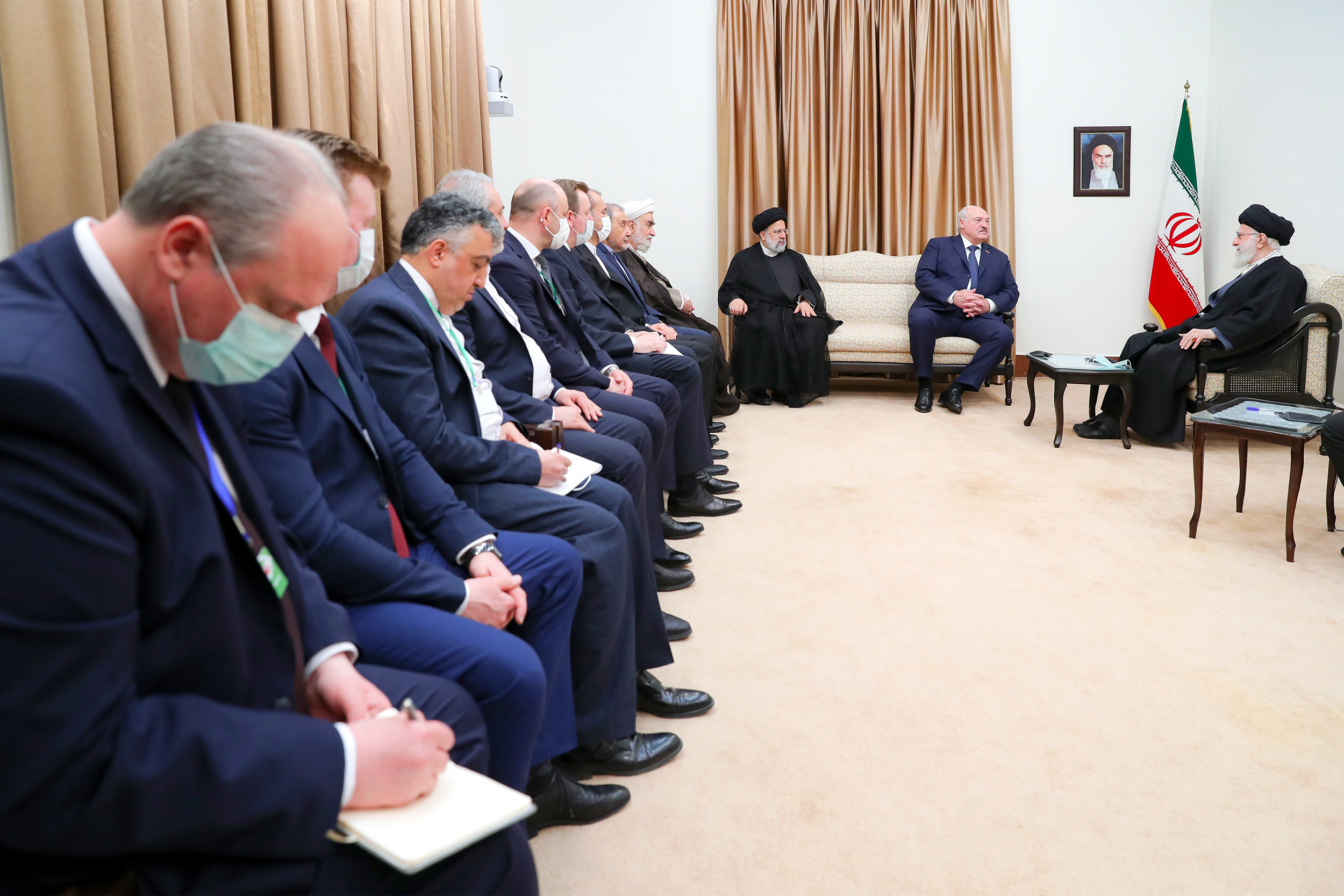
Following the signing ceremony of the MoUs, President Kukashenko along with President Raisi met with Imam Khamenei, when the Supreme Leader stated that the cooperation capacities between the two countries are higher than the current level.
The Supreme Leader underlined that given the determination of both sides to implement agreements, the level of relationship should improve significantly, and that Belarus and Iran enjoy numerous commonalities, including the fact that both nations are facing the bullying sanctions by the US and certain Western states. The countries, which have been targeted by the US-imposed sanctions, should cooperate with each other and create a joint front in order to defuse the sanction policy and we believe that the job can be done, Imam Khamenei noted, adding if those countries that the US imposed sanctions on them use each other’s capacity, the benefit of the cooperation will be abundant for all sides.
The United States started imposing sanctions on Iran from the onset of the victory of the Islamic Revolution, and Washington imposed the ruthless sanctions on the country over past 12 years, the Leader said, noting that the harsh sanctions made Iran understand its own capabilities and internal might; so, during the time when Iran was suffering from the sanctions, the ground was paved for many progresses in the country and Iran could achieve wonderful advances in different arenas, including in science and technology, in medicine and biology, in aerospace, in nuclear technology and nanotech.
According to the Leader, the grounds for cooperation between Belarus and Iran in scientific and technological development as well as in trade and political activities are available at international communities, and in the implementation of the International North–South Transport Corridor along with Russia; thus, both Minsk and Tehran should try to implement it.
The agreements and talks should not be left behind in meetings, but they should be implemented through special follow-up and identified timing, Ayatollah Khamenei said, arguing that spirituality can play the role of a motivator for nations.
Lukashenko, for his part, expressed satisfaction with his meeting with the Supreme Leader, saying that he came to Iran to assure he is determined to open a new page to expand bilateral ties, and that with the support and cooperation by the Iranian president, all agreements will be implemented in due timing and special follow-ups.
Iran achieved wonderful experiences and progresses during the sanction period, and we believe if the embargo circumstance is being used properly, it can be an opportunity for advancement, the Belarusian president said, adding that his goal of the visit to Iran is close acquaintance with Iran’s achievements.
The current hard situation at international arena has uncovered real and unreal friends for us, and we are determined to pursue particular cooperation with real friends, he argued.
Considering the remarks made by the Belarusian and Iranian officials as well as released data by Eastern media outlets, the probable axis of collaborations between Belarus and Iran can include the following points:
-The adoption of joint stances by both countries in the Shanghai Cooperation Organization (SCO) and the Eurasian Economic Union (EAEU), which will be effective to increase economic exchanges between the two nations and other independent states. Imam Khamenei underlined the need for forming an economic-military alliance between anti-Western countries, when he received the Belarusian president. The idea can be proposed at next sessions of the SCO and EAEU, and the member states can pursue a roadmap to form such an alliance.
-The emphasis on Belarus’ usage of the capacity of the International North–South Transport Corridor especially inside Iran’s territory. The corridor can be very helpful for the economy of the East European states, including Belarus, that do not have access to international waters.
-The export of industrial, medical and other equipment from Iran to Belarus. Given the fact that Minsk is still grappling with the negative healthcare aftermaths of 1986 explosion at the Chernobyl Nuclear Power Plant in Ukraine, the Iran-made medical equipment can find appropriate market in Belarus.
-The sale of arms and ammunition such as Iran-made drones and missiles to Belarus. The experience of Russia-Ukraine war has shown the leaders in Belarus and other states, which are suffering from the sanctions imposed by the US and Europe, that the tension between the East and the West fronts can drag them into a battle field. Thus, the Iranian weaponries, which have been tested in different conflicts, can play a key role in guaranteeing their security.
-The import of livestock, grains and chemical fertilizers from Belarus.
Pictures of the meeting of Belarusian President Lukashenko with Iranian officials
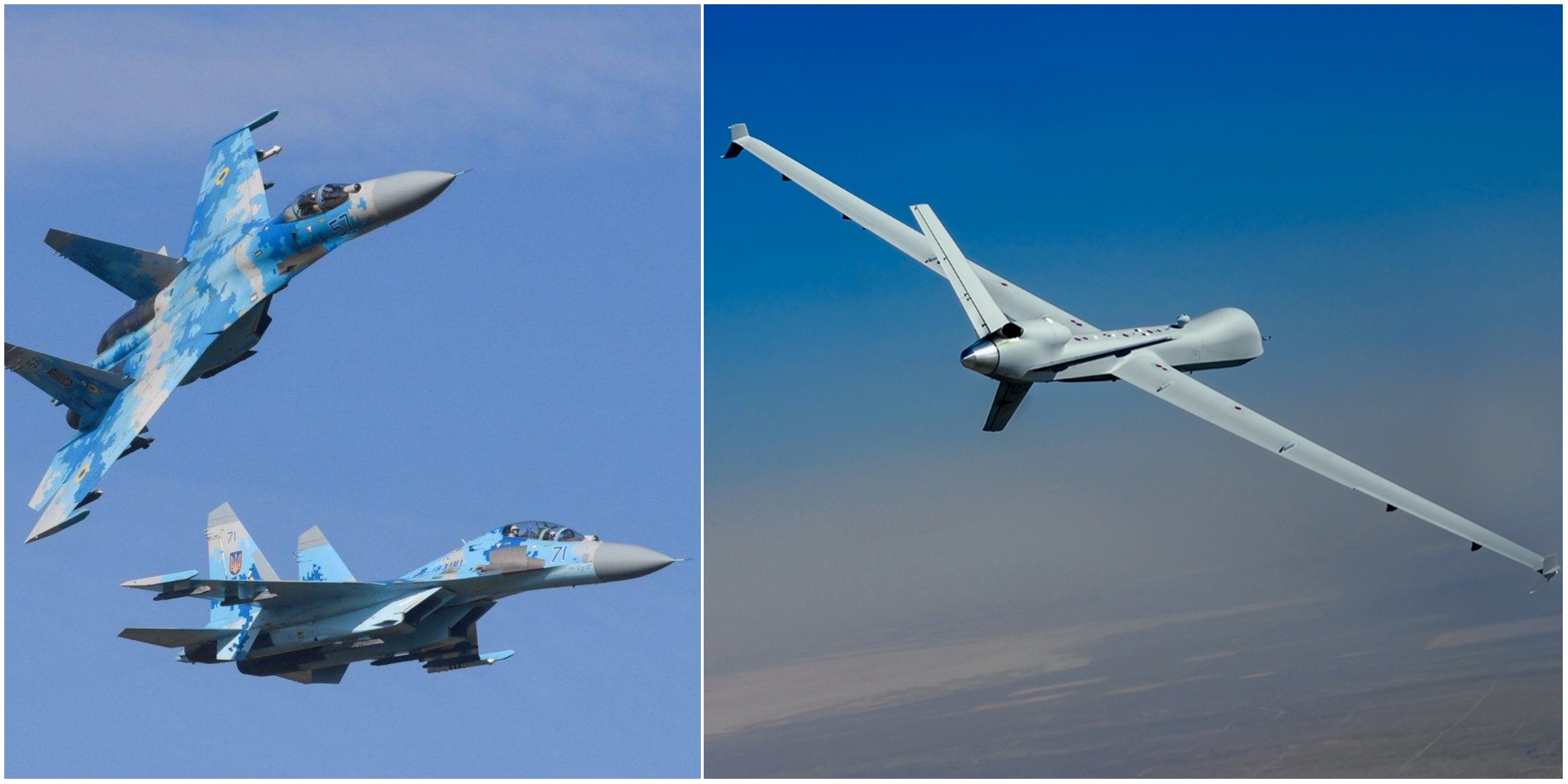
The EUCOM declared in a statement that two Russian Su-27 fighter jets tracked and intercepted the American MQ-9 drone over the Black Sea and then downed it. According to the statement, one of the Russian jets collided with the propeller of the US drone around 7:30 local time; then, the US forces were forced to dump the MQ-9 into the Black Sea. Prior to the collision, another Su-27 jet sprayed fuel over the drone, which hurt the environment.
The US Army described the incident as part of perilous acts committed by Russian pilots, noting that such behaviors can end up in a miscalculation.
Lieutenant General James B Hecker, Commander of the United States’ Air Force in Europe and Africa, claimed that the drone was conducting ordinary operation, adding that the aircraft of the American forces and their allies will continue their operation in international air space. He also urged Russia to carry out its operation in a professional and safe manner.
John Kirby, Coordinator for Strategic Communications at the National Security Council in the White House, depicted the move as dangerous, unprofessional and reckless. He added that the US will keep on flights and operations in international air space over international waters, because the Black Sea does not belong to any nation, and that whatever is needed to support the US’s national security in this part of the world will be carried out.
The escalation comes out in a situation, when the US has provided Ukraine with the most financial, military and arms support from the onset of the war between Moscow and Kiev. One of these supports is the United States’ intelligence backing of the Ukrainian forces through monitoring the Russian army’s moves in the eastern areas of Europe, which created tensions between the US and Russian air forces.
After a few day, the US Department of Defense released a video of the moment, when a Russian Su-27 fighter jet collided with the US MQ-9 drone. According to the video, after the collision the propeller of the drone hurt remarkably and it can be said that it was one of the causes of the downing of the US drone.
The interesting point of the video released by Pentagon is that the Russian fighter jets did not use any air-to-air missile to destroy the US drone despite the fact that they were equipped with the missiles.
The video of the moment when the Sukhoi 27 of the Russian army collided with the US MQ-9 drone
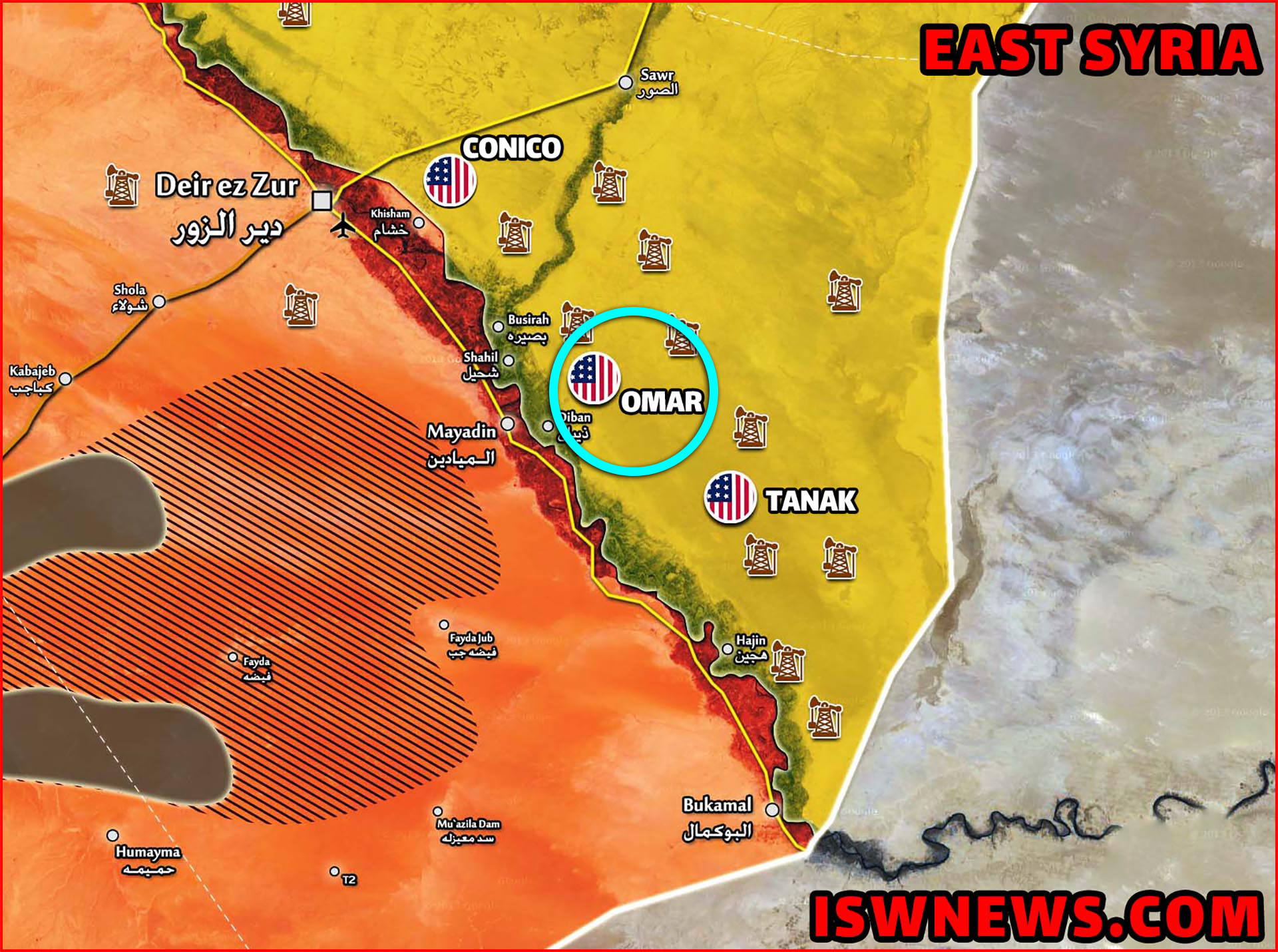
The positions of the US coalition located in the Omar oil field were targeted by a rocket attack on March 13. After this attack, the US fighter jets and drones conducted a reconnaissance flight in the area.
This attack took place two days after the trip of the US terrorist CENTCOM commander to Syria. So far, no group has claimed responsibility for this attack, but considering previous attacks, it is likely that this attack was carried out by resistance groups.
In this regard, the US released a statement confirming the rocket attack and announced that “at 20:23 local time, two rockets hit the outskirts of Al-Omar oil field. This attack did not result in any casualties and American forces are investigating this attack.”
It is worth mentioning that on February 18 also the US positions in the Al-Omar oil field located in Deir Ezzor province in eastern Syria were attacked by rockets.
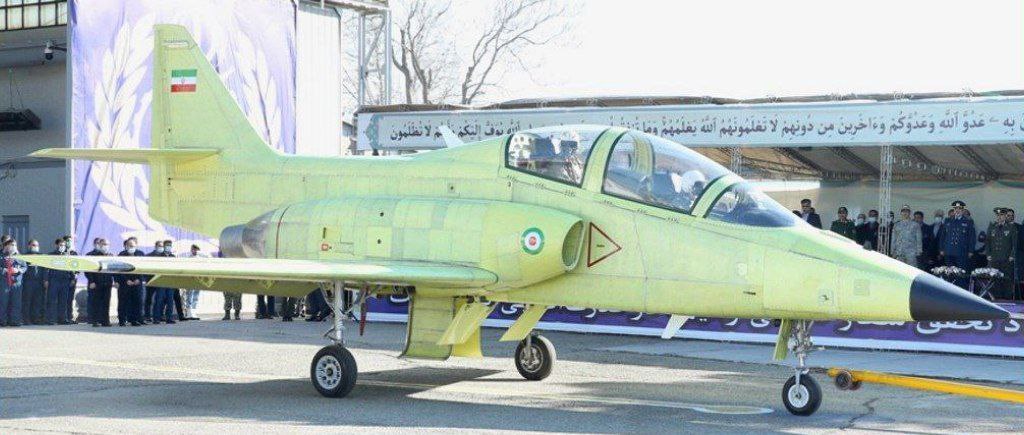
The prototype production of a fighter jet is the last step before mass production of the same jet. Hence, we examine the prototype of Yasin fighter jet production.
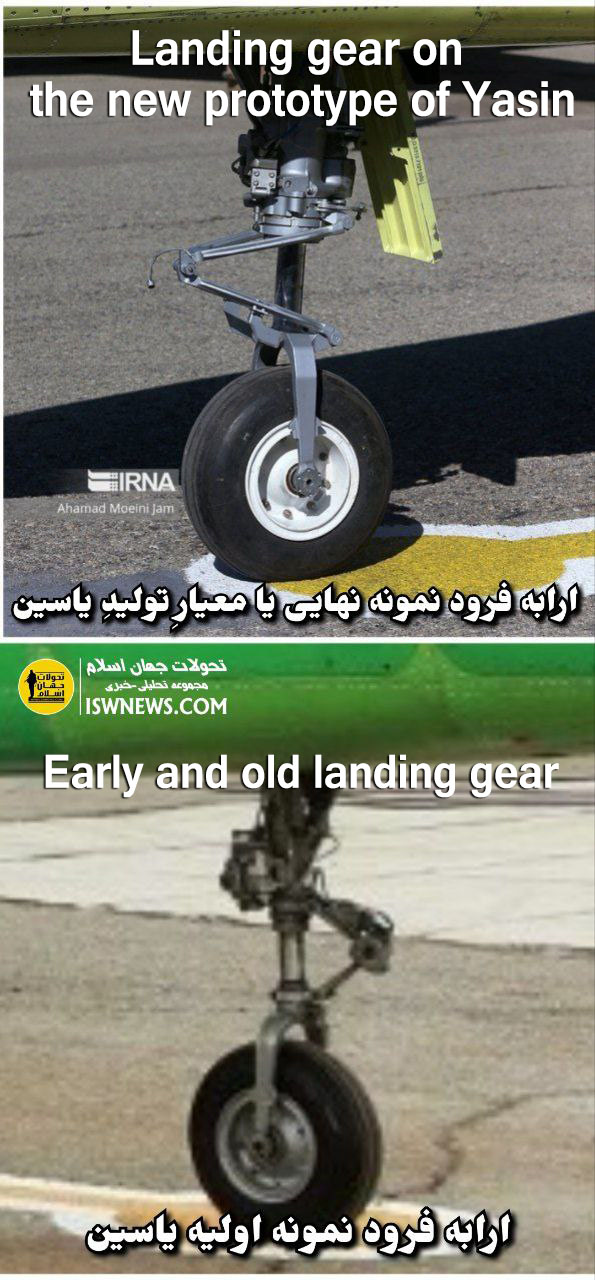
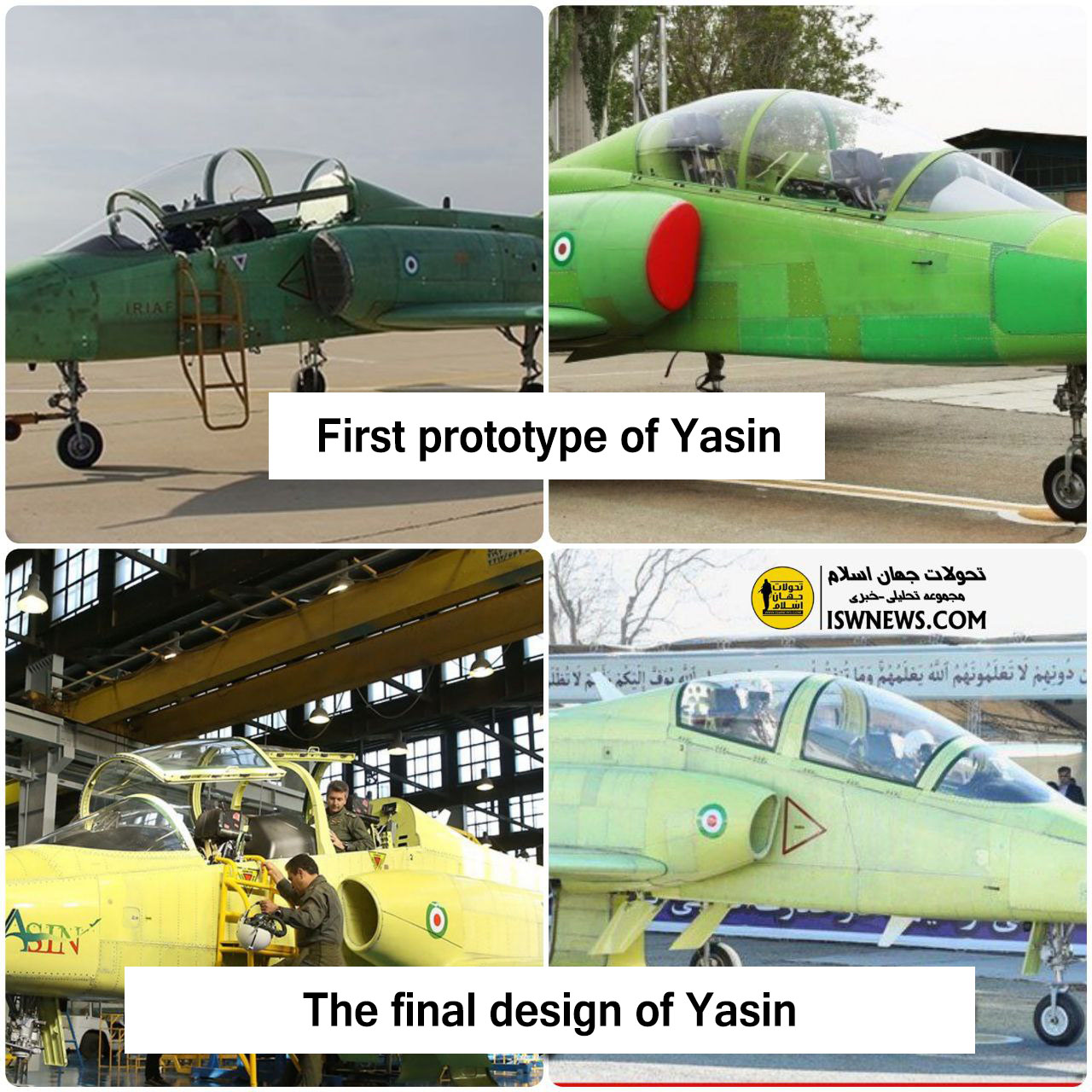
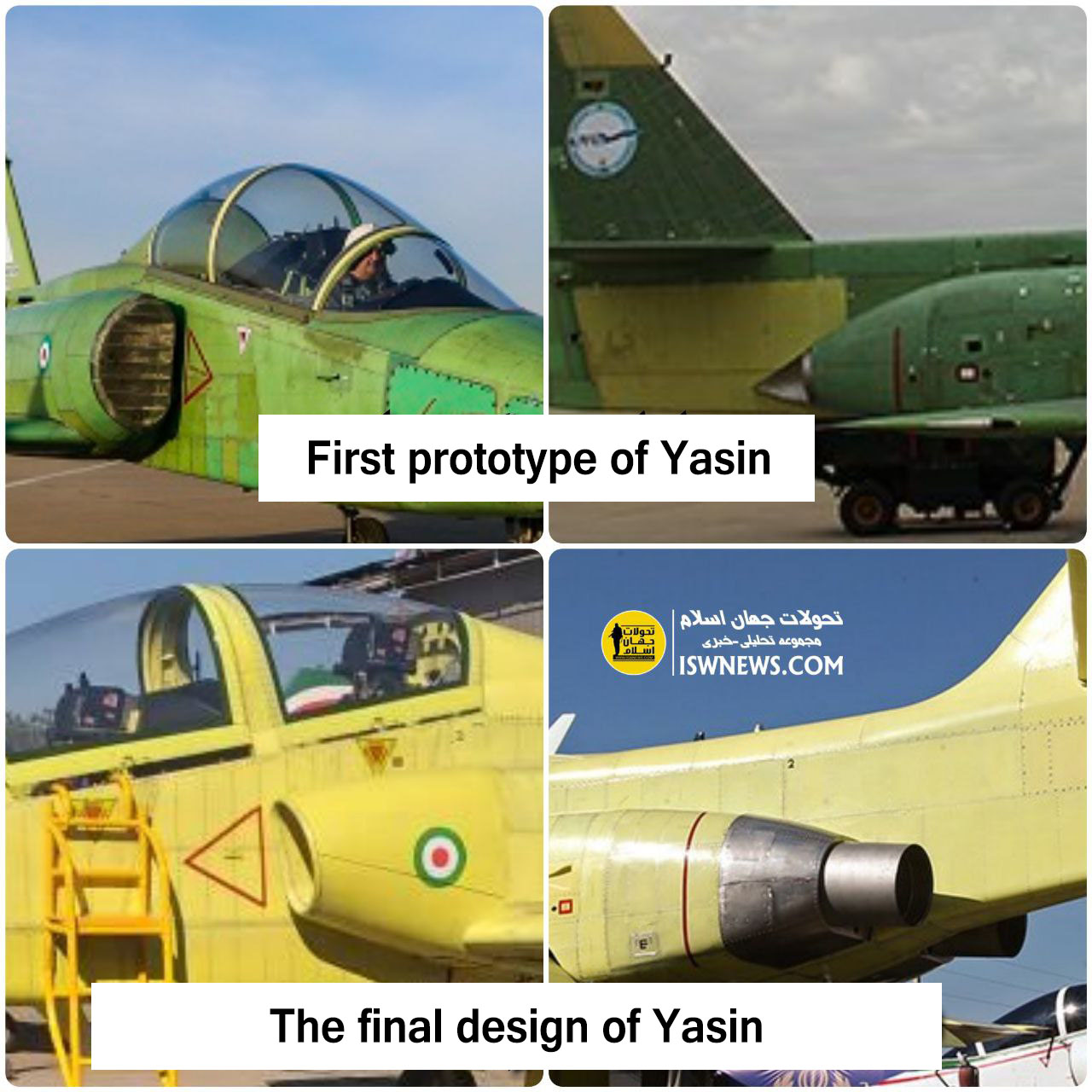
The examination of the different pictures of the fighter jet that have been published thus far, several transformations in the final prototype of the Yassin fighter jet are obvious. The first change is visible in the training fighter jet’s landing gear.
Change in landing gear The above photo is the landing gear Yasin jet in its final design and the below picture shows Yasin fighter in its first type; so, the images indicate appropriately that the front landing gear of the final design has been reinforced and the way it folds is similar to the way that the landing gear of Kowsar fighter jet folds. The position of the landing gear has been transferred from the left side to the middle of the jet.
Change in canopy of fighter jet As it can be seen in the photos, the prototype possesses a cabin with a greater arc in comparison to the fuselage of the jet, but in the final design it has an angle, which is such that two pilots are being placed in the cockpit in a stepped way and they enjoy the maximum angle of view. Furthermore, the cockpit doors, which could be opened totally in the prototype, can be opened in two pieces in the final design.
Changing air intake, exhaust of hot gases in engine As it can be seen clearly in the photos, the air intake of the engine has become smaller, which is perhaps linked to shifts in the engine of the fighter jet. Moreover, some changes have been made in the exhaust component of the hot gases of the engine, because its exhaust section is located outside a cover.
The Iranian engineers also added VHF and UHF antennas, which are being used for secure communications. They also added an air brake under the fuselage and in front of the rear landing gear of the jet that helps reduce the speed of the jet in the landing process.
Change in tail of the fighter The manufacturers of the fighter jet also changed its vertical rudder in order to reduce aircraft dragging, and it seems that they have changed the location of the horizontal rudder as well, and the horizontal rudder is slightly smaller than the prototype.
We can mention to the following aspects of the training aircraft among other important points:
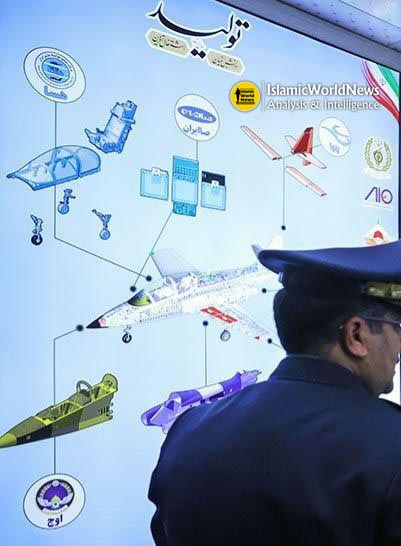
In accordance to the photos released of the banner available in the production line of the Yasin combat training fighter jet, its various parts will be manufactured by different organizations in Iran. The cockpit displays are going to be produced by Sairan (Iran Electronics Industries), which was producing cockpit displays for the Kawsar fighter jets in the past.
The canopy glass and its door, the ejection seat and the landing gears are going to be produced by the Iran Aircraft Manufacturing Industries Corporation. The wings as well as horizontal and vertical rudders will be made by Iran Helicopter Support and Renewal Industries (PANHA). And the radome and the cockpit will be manufactured by the Owj Aviation Industries. The manufacturers of the fuselage and the engine of the jet are not visible because of the angle that the picture is located.
Various parts of Yasin manufactured by different organizations
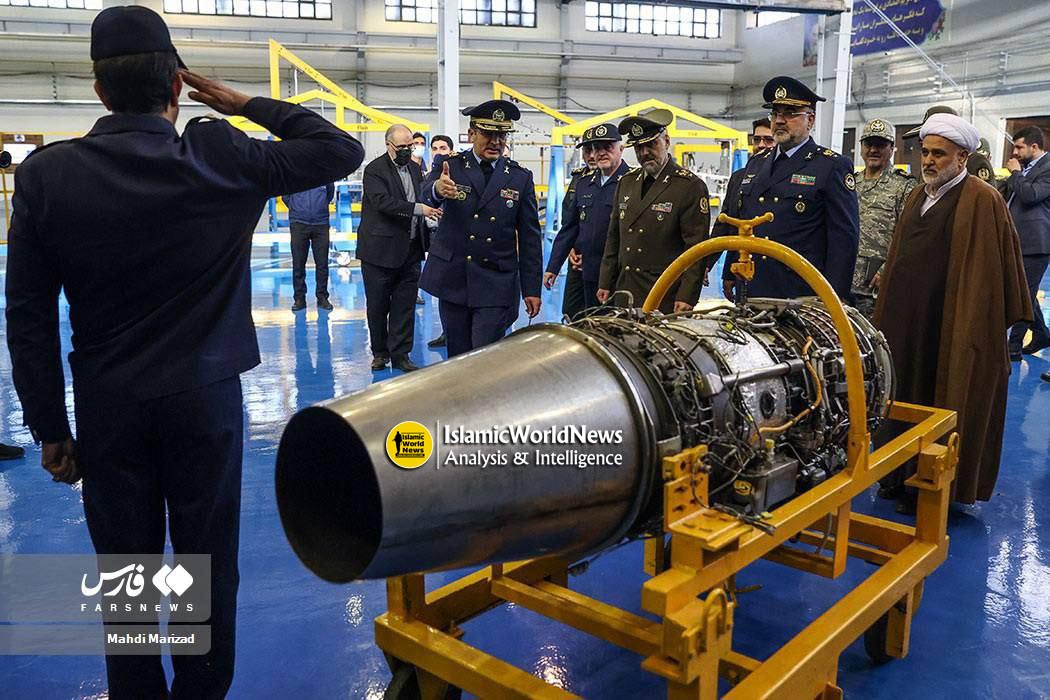
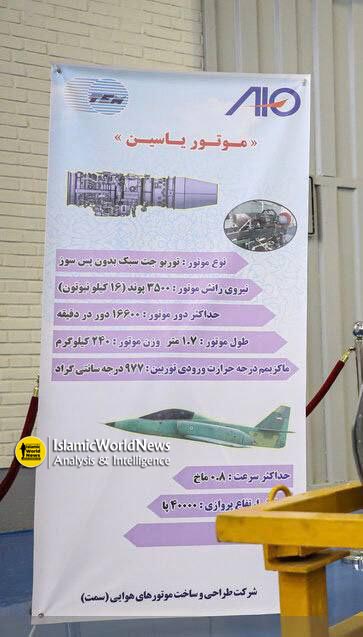
Given the available pictures of the engine, the Owj Aviation Industries will utilize engines without afterburner for the fighter jet, which is being produced by the Iran Aviation Industries Organization (IAIO). It is known as the Owj-Y engine, which is a light turbojet engine without afterburner, possessing a thrust of 3500 lb-ft equivalent to 16 kilonewtons. The engine possesses a maximum speed of 16,600 rpm and it can provide the Yasin fighter jet with a maximum speed of Mach 0.8 and a maximum altitude of 40k feet.
Owj-Y engine
Furthermore, a single-seater model of the jet is going to be manufactured for close air support (CAS). The Yasin jet has three spaces, including the central space, which can be applied to carry an external fuel tank and the other two spaces can be utilized to carry arms. In the training prototype of Yasin jet, the two spaces are used for all sorts of training armaments.
For instance, the Yassin fighter jet can carry and apply arms, including the Yassin advanced precision-guided smart bomb, the Maverick missile, various types of Iranian SDB bombs, and the Shafaq missile for the close air support operations.
The Yassin fighter jet does not need any radar in order to utilize the weaponries and it can conduct close air support operations to defend ground forces.
The production of the Yassin fighter jet is considered a step forward concerning the training for Iranian pilots, because they have been using a propeller plane such as Bonanza, and after that they fly a PC7 plane, and it would be better for them to get trained by an advanced fighter jet, when they are accepted in the fighter squadron.
The fighter jet can meet all requirements of the Iranian air force, including all sorts of training drills and firings. The Yasin fighter can be categorized in the Yak-130 class and it seems to be very essential and functional for the training pilots to fly by using the new generation of fighter jets.