Author: Mirza

  • Latest Updates on Afghanistan, 5 March 2021

    Latest Updates on Afghanistan, 5 March 2021

    1- Maydan Wardak:
    Taliban entered the Sarcheshmeh area in the west of Jalriz district and are taking allegiance from the people of the area. The majority of the people in this area are Shiites.

    2- Herat:
    – Two security forces were killed and four others were injured by a motorcycle bomb blast on the Herat-Islam Qala road.
    – 34 people released from Taliban prison in the district of Adraskan, According to the Afghan Ministry of Defense.

    3- Nangarhar:
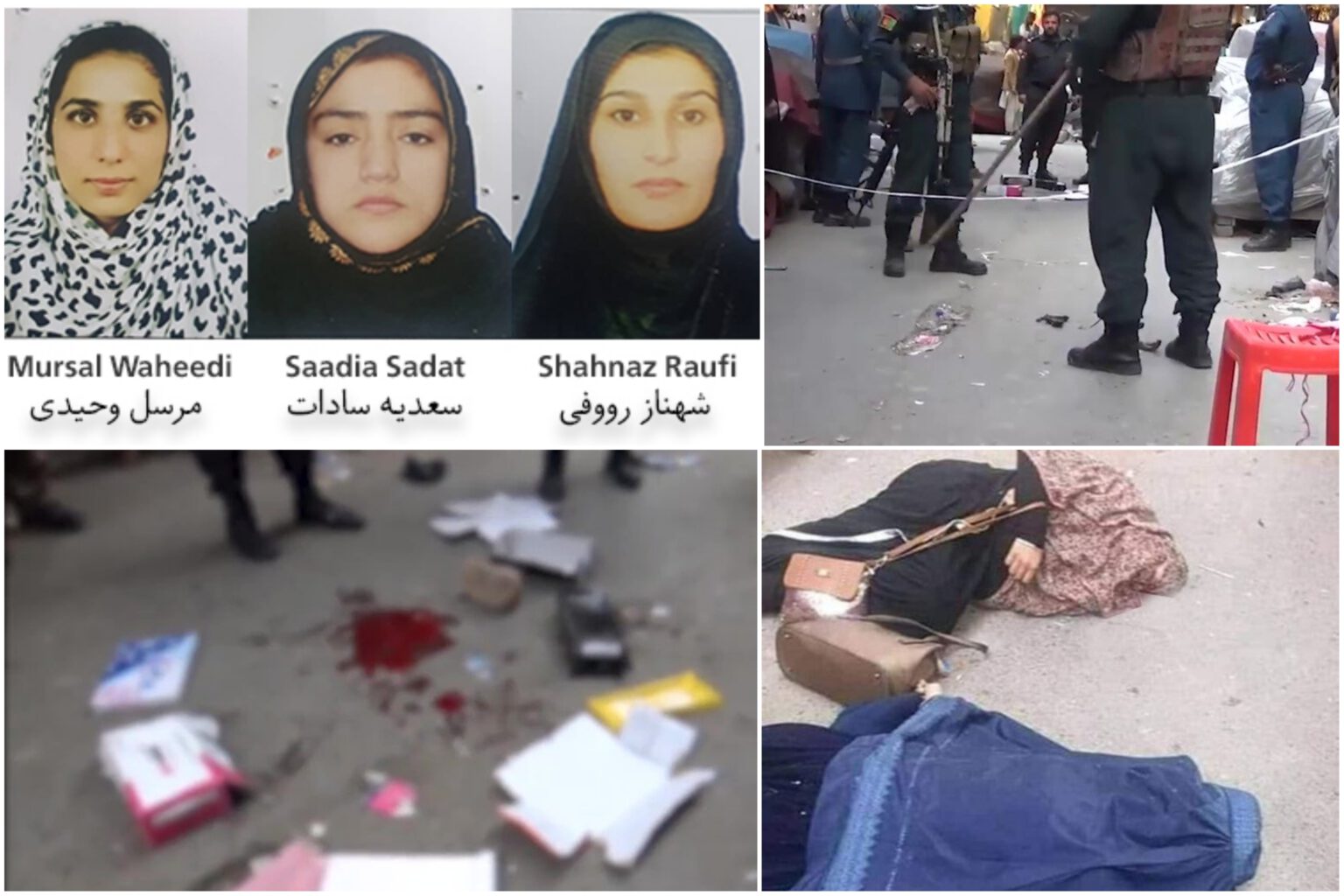
    – ISIS terrorists assassinated three Afghan TV reporters in Jalalabad city. (image)
    – The Army captured Taliban headquarters in Hesarak district.

    4- Kapisa:
    13 people including four Pakistani members of al-Qaeda, were killed in an army attack on Taliban positions in Najrab district, According to the Afghan Ministry of Defense,

    5- Zabul:
    Army airstrikes on Taliban strongholds in Shah Joy district.

    6- Jozjan:
    One person was killed and two others were injured by a magnetic bomb.

  • Behind the Curtain: The Transfer of American Troops From Iraq to Syria

    Behind the Curtain: The Transfer of American Troops From Iraq to Syria

    Most of US military convoys pass through the illegal Al-Waleed crossing in northwestern Iraq near the Syrian border. The American forces mainly establish their bases in Deir Ezzor and Hasakah which we will mention the reasons in the following. The Al-Omar oil fields, Ain Diwar area and the Qamishli oil fields in al-Hasakah province are also among the most important areas where US troops have entered and established bases in recent weeks.

    Leaving Iraq is the only way to stay safe

    After Iraqi parliament passed a resolution to expel US troops from Iraq, some Iraqi factions considered diplomatic talks with the United States to be the key to the US withdrawal from Iraq. This delayed the withdrawal of the US troops and this solution was not effective.
    But on the other hand, Iraqi Islamic resistance groups, which did not see the diplomatic talks and political solution as a fruitful way, said that if the American troops did not gather their bases on time and leave Iraq, they would face the military option of resistance. So, a few months after the US military did not withdraw, small and large groups announced their intention to attack US military convoys and bases in Iraq, posting videos of the attacks on social media and showed their seriousness.

    IED attacks on US military logistical convoys in Babil, Diwaniyah, Hillah, al-Lahis in Basra, Baghdad’s Yusufiyah district, Samawah, mortar attack on US Victory base in Baghdad, attack on the US base in al-Harir and rocket attacks on US military base in Erbil Airport and Ain al-Asad Airbase, etc. are some of the surprise attacks by newly formed resistance groups such as Saraya Oliya al-Dam, Qasim al-Jabbarin group, Ashab al-Khaf, etc. against the United States in Iraq.

    Regarding the attack on Erbil Airport by the Saraya Oliya al-Dam group, the BBC reported that “Iraq is no longer safe for the Americans.” Evidence also shows that the US military is very vulnerable to this type of surprise attack, and that is why they have been warned about relocation on Iraqi roads by CENTCOM.
    Therefore, the decision taken by the US military is the gradual withdrawal of its troops from Iraq and the transfer to Syria in order to avoid these attacks. This means that the resistance approach to targeting American interests in Iraq and the military option has been effective and responsive, and the political solution and consultation with the Americans will go nowhere. Because one of the most important reasons is the lack of determination of the Iraqi central government to end the presence of the American occupiers in this country.

    Entering Syria is the only way to survive in the region

    After CENTCOM put the gradual withdrawal of troops from Iraq on the agenda, entering Syria to maintain US bases in the region, countering Turkish influence in northern Syria and reviving ISIS in the south are major reasons why the US is so eager to increase its presence in Syria.

    The US military is importing logistics and military equipment through the illegal al-Waleed crossing in northwestern Iraq, as well as another crossing of the same name in southeastern Syria near the Jordanian border. The oil-rich areas of eastern Syria in Hasakah and Deir Ezzor are among the areas the United States is keen to visit because of the smuggling of Syrian oil, as well as its support for the Syrian Democratic Forces (SDF), which opposes Bashar al-Assad government.

    In recent months, numerous convoys of oil tankers looting Syrian oil have been facilitated with the support of US forces.
    Clashes between SDF and the Syrian Army, as well as clashes with ISIS continue in east of Syria, while the US support for SDF in eastern Syria and Turkish support for groups such as Hayat Tahrir al-Sham and Ahrar al-Sham in northern Syria, turning Syria into a battlefield and it has become clear that the prolongation of the war will cause more serious damage to the Syrian government and it has already displaced hundreds of Syrian citizens.
    Therefore, it is in America’s interest to continue the conflicts in these areas, and there is no real plan to end the disputes in this region.

    Another reason for the US presence and strengthening of bases in the south is that with the problems of Bashar al-Assad’s government, such as the civil war and economic sanctions, and several years after the destruction of ISIS in Syria, this Takfiri group has found a good opportunity to regroup, rebuild their organization and revitalize. The Al-Tanf border area, a few kilometers from the al-Waleed crossing, is the location and gathering place of these terrorists, which is still supported by American forces, and some American equipment has been placed in this area. In addition, the transfer of Takfiri forces from the northeast to the south also raises the possibility of ISIS new activity in southern Syria, and it is necessary for the resistance to take a preemptive approach in this regard.

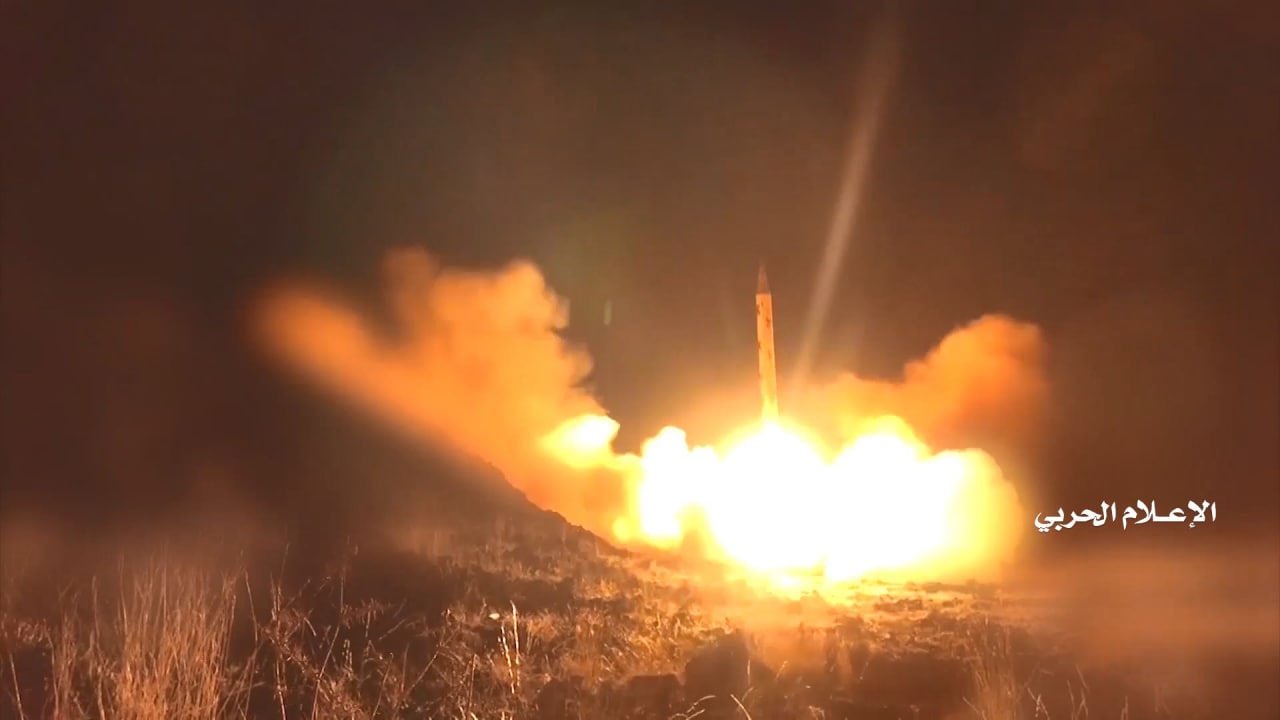
  • AnsarAllah’s Zulfaqar missile + video and images

    AnsarAllah’s Zulfaqar missile + video and images

    The missile was not unveiled before and Ansar Allah media have not disclosed any details about it, however, it was used in many operations last year.

    Considering the targets Zulfaqar missile was used for, the missile should have a range of 1,100 to 1,300 km and seems to be developed from Burkan missile family of Ansar Allah.

    Ansar Allah has launched seven Zulfaqar missiles against Saudi coalition in six operations, details are as follows,
    – Third Deterrence operation against Aramco oil infrastructure on Yanbu harbor on February 21, 2020, one missile.
    – Nasr Min Allah operation, unknown date, two missiles.
    – Missile operation against Saudi coalition in Riyadh on March 29, 2020, one missile.
    – Fourth Deterrence operation against Saudi coalition in Riyadh, Jizan and Najran on June 23, 2020, one missile.
    – Missile and drone operation against Saudi coalition in Riyadh on September 10, 2020, one missile.
    – Fifth Deterrence operation against Saudi coalition on February 27, 2021, one missile.

  • Breaking: IED attack on US convoy in Iraq

    The Qasim al-Jabbarin resistance group claimed responsibility for the attack.

  • Rocket attack on Ain al-Asad Airbase

    Rocket attack on Ain al-Asad Airbase

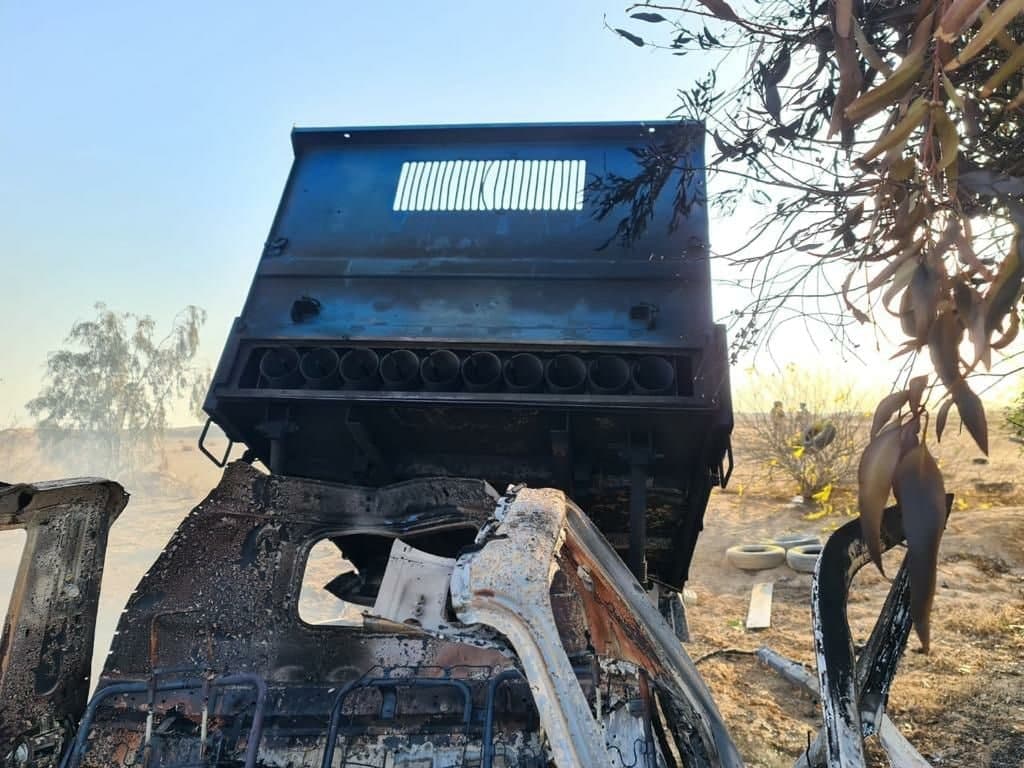
    According to local sources, one individual died of cardiac arrest following the rocket attack on Ain Al-Asad airbase.

    Col. Wayne Marotto, the US coalition spokesman said in a tweet: “10 Indirect Fire rockets targeted an Iraqi military base, Al Asad Airbase, hosting Coalition troops, on March 03, 2021 at approx 7:20 a.m. (Iraqi time). Iraqi SF are leading the response & investigation. Further information will be released as it becomes available.”

    Iraqi news sources released images claiming that the attack was carried out using a KIA vehicle and Arash 4 rockets against the Ain al-Asad base, And US defense systems have failed to intercept and destroy these rockets.

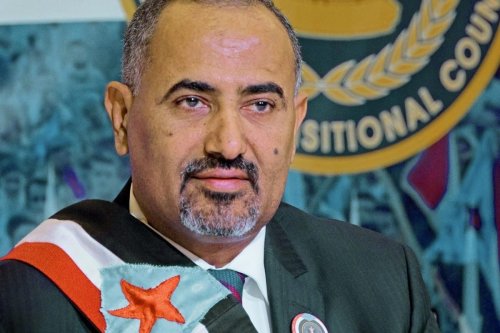
  • What is the connection between the developments in Marib and Yemen secession? Aidarus al-Zoubaidi answers you!

    What is the connection between the developments in Marib and Yemen secession? Aidarus al-Zoubaidi answers you!

    In his latest remarks with media, Aidarus al-Zoubaidi asked Joe Biden, US president, to support the independence referendum under supervision of UN in south of Yemen to help end Yemen war.
    He said: Fall of Marib changes the political scene in Yemen since Mansour Hadi (resigned) government loses their last important area in north of Yemen. This can help accelerate the talks between north and south of Yemen.
    Fall of Marib might bring up the situation in which the transition government controls south of Yemen and Sanaa government controls north of Yemen and it is rational that the negotiations start between sides with biggest lands.

    Yemen secession plan, that was prepared by the West before, is now being implemented by Southerners under support of UAE. Following Riyadh agreement, Southerners earned more credit and have an open hand to act in the direction of dividing Yemen. Liberation of Marib, which reduces the economic and political power of the resigned government, will affect their relation with Southerners.

    In his remarks in Moscow, Aidarus al-Zoubaidi talked about normalizing relations with Zionist Regime which shows the importance of Marib. Since liberation of Marib by Ansar Allah is key to keep Yemen united.

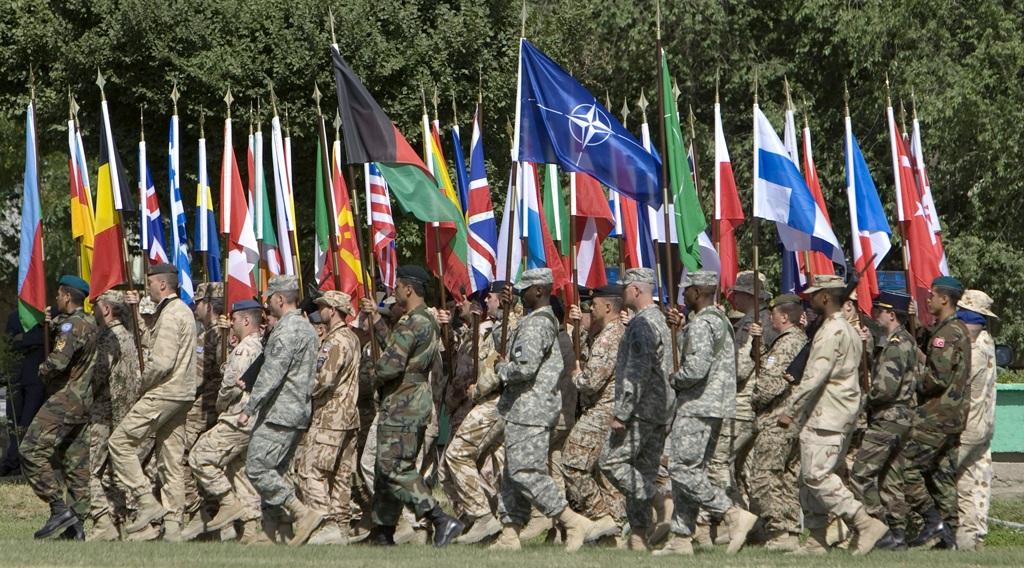
  • German and NATO forces number increasing in Afghanistan

    German and NATO forces number increasing in Afghanistan

    Annegret Kramp-Karrenbauer said in her recent remarks to increase number of German troops in Afghanistan up to 1,300 soldiers and if the security situation of the region worsens, we should talk about a new task.

    It is noteworthy that Germany extended its troops mission time in Afghanistan for 10 more months until 31 January 2022 and sent the bill to the parliament for voting.
    German officials believe that the reducing number of NATO forces or withdrawing from Afghanistan should be according to the advance of peace talk between Afghanistan government and Taliban and stepping back in this issue can endanger the peace talks.

    NATO coalition has more than 10 thousand troops in Afghanistan, from which almost 1,100 are German that were dispatched to north under NATO operation “resolute support in Afghanistan”. After USA, Germany has the highest number of troops in Afghanistan.

    There are troops from countries England, Turkey, Republic of Azerbaijan, Italy, Albania, Armenia, Australia, Austria, Belgium, Bosnia, Bulgaria, Czech Republic, Denmark, Estonia, Finland, Georgia, Greece, Hungary, Latvia, Lithuania, Luxembourg, Mongolia, Netherlands, Norway , Portugal, Romania, Slovakia, Slovenia, Spain, Sweden and Ukraine in which Slovenia has the lowest number by only 6 soldiers. Five of these countries have 300 soldiers in Afghanistan.
    New Zealand, France, Jordan, Croatia, Northern Macedonia and Ireland withdrew their troops from Afghanistan entirely.

  • Weekly report on Marib fronts, Feb 23 to March 2 (Map Update)

    Weekly report on Marib fronts, Feb 23 to March 2 (Map Update)

    In the third week of Ansar Allah operations in Marib province, Ansar Allah advances on the western front on the outskirts of Marib Dam have stalled and clashes intensified in the province’s southern districts.

    Important news of the Yemeni war in recent weeks include the implementation of the “Fifth Deterrence Balance” operation against the positions of Saudi coalition in Saudi Arabia, Ansar Allah officials meeting with leaders of al-Jawf tribes and other provinces, calling of al-Qaeda commanders to confront Ansar Allah in Marib and the killing of several prominent field commanders of the Hadi forces in the battles of eastern Sarwah.

    Eastern front of Sarwah:
    Despite heavy clashes between Ansar Allah and the Saudi-led forces on the eastern front of Sarwah, the lines of conflict have not changed much and only the liberation of al-Zour and al-Hamajira has been stabilized by Ansar Allah. Clashes are currently ongoing in the suburbs of the dam up to Tala’at al-Hamra.
    Al-Balaq mountain is under control of the Saudi-led forces, and Ansar Allah tried to capture it on February 26, which was unsuccessful with heavy airstrikes by the Saudi coalition and the invasion of coalition forces with help of al-Qaeda and ISIS militants on the Tala’at al-Hamra front. Therefore, the news of Ansar Allah heavy casualties in order to maintain al-Balaq mountain or control these heights until March 1, is not true.

    Click to see the full size map

    Raghwan and Madghal front:
    Most of clashes on this front is sporadic and Ansar Allah has not launched a serious attack to liberate the town of Asdas and the western front of the district.
    Heavy attacks by the Saudi-led forces in the al-Jadafar area in al-Jawf province has led to the delay of Ansar Allah’s advance on the outskirts of Asdas.

    Click to see the full size map

    The interval created after the liberation of the Madghal district (August 31, 2020) and the Mass base (November 20, 2020) until the recent Ansar Allah operation (February 7, 2021) provided the opportunity for the Saudi coalition to establish a defense line west of Marib. And prevented the domino fall of the regions, as Ansar Allah’s previous operations in Sanaa, al-Jawf, al-Dhale, etc.
    Of course, these time intervals should not be considered the weakness of Ansar Allah’s command, but Ansar Allah’s difficult conditions for providing weapons for new military operations and convincing the local tribes to peace are among the reasons for this issue.

    As we mentioned in the previous articles, Ansar Allah can break the Saudi-led forces defense line by activating the southern fronts, Raghwan as well as moving in the eastern direction of the Marib Dam and even cutting off the southern Marib road.

    Southern front:
    Ansar Allah intensified its activities in the Jabal Murad and al-Juba districts since February 28, and according to coalition sources, Ansar Allah operations in this area will be imminent.

    Click to see the full size map

    During the third week of operations in Marib, Ansar Allah carried out 16 drone and missile operations against the positions of Saudi coalition, the details of which are as follows:
    UAV attacks: 3 times Khamis Mushait, 1 time Abha airport.
    Missile attacks: 9 times in Marib, 2 times in the south of Saudi Arabia.
    Also, during the “Fifth Deterrence Balance” operation, according to the Saudi coalition, 4 missiles attacked Riyadh, 4 UAVs attacked Khamis Mushait, and 2 UAVs attacked Najran and Jizan. However, Brigadier General Yahya al-Sari’, a spokesman for the Yemeni Armed Forces, said that one Zulfaqar missile and 15 UAVs used during the operation.

    Saudi coalition warplanes have also bombed Sarwah 56 times, Majzar 5 times, Madghal 7 times, Jabal Murad and al-Jubah 5 times and Maheliyah 2 times in Marib province and 2 times Khab al-Shaaf district in al-Jawf province this week.

    Click to see the full size map
  • Breaking: IED attack on US convoy in Iraq

    The Qasim al-Jabbarin resistance group claimed responsibility for the attack.

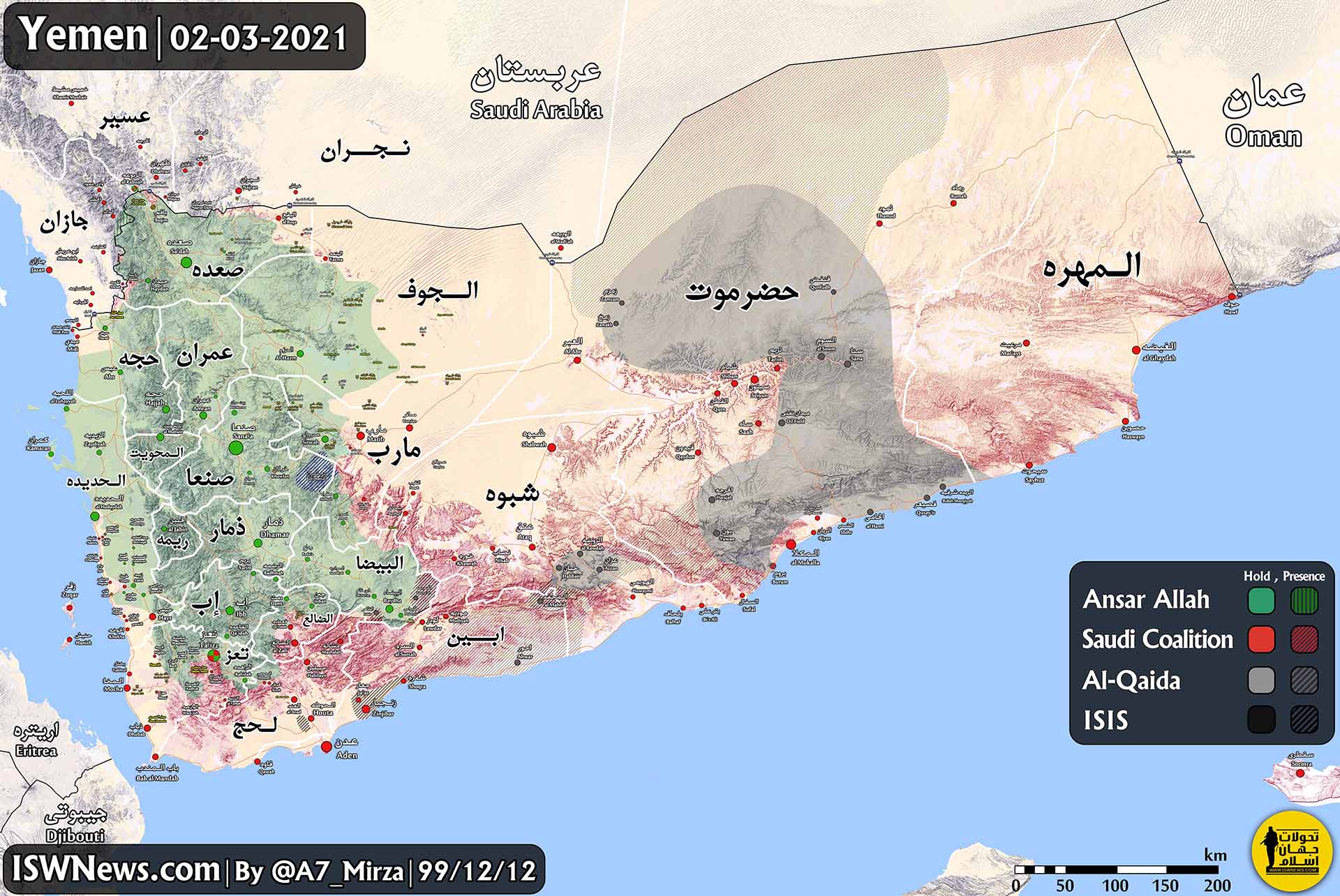
  • Latest Updates on Yemen, 2 March 2021

    Latest Updates on Yemen, 2 March 2021

    1- Marib:
    – Clashes between Ansar Allah and Saudi-led forces continued on the Nakhla and al-Kasarat areas in east of Madghal.
    – Clashes between Ansar Allah and Saudi-led forces were reported on the Abdiyah and Jabal Murad districts.

    2- Saudi coalition airstrikes:
    In the past 24 hours, Saudi coalition warplanes bombed Sarwah 14 times, Madghal 4 times, Jabal Murad and al-Juba 5 times.

    3- Al-Hudaydah:
    – Saudi-led forces violated the ceasefire 158 times in the past 24 hours.
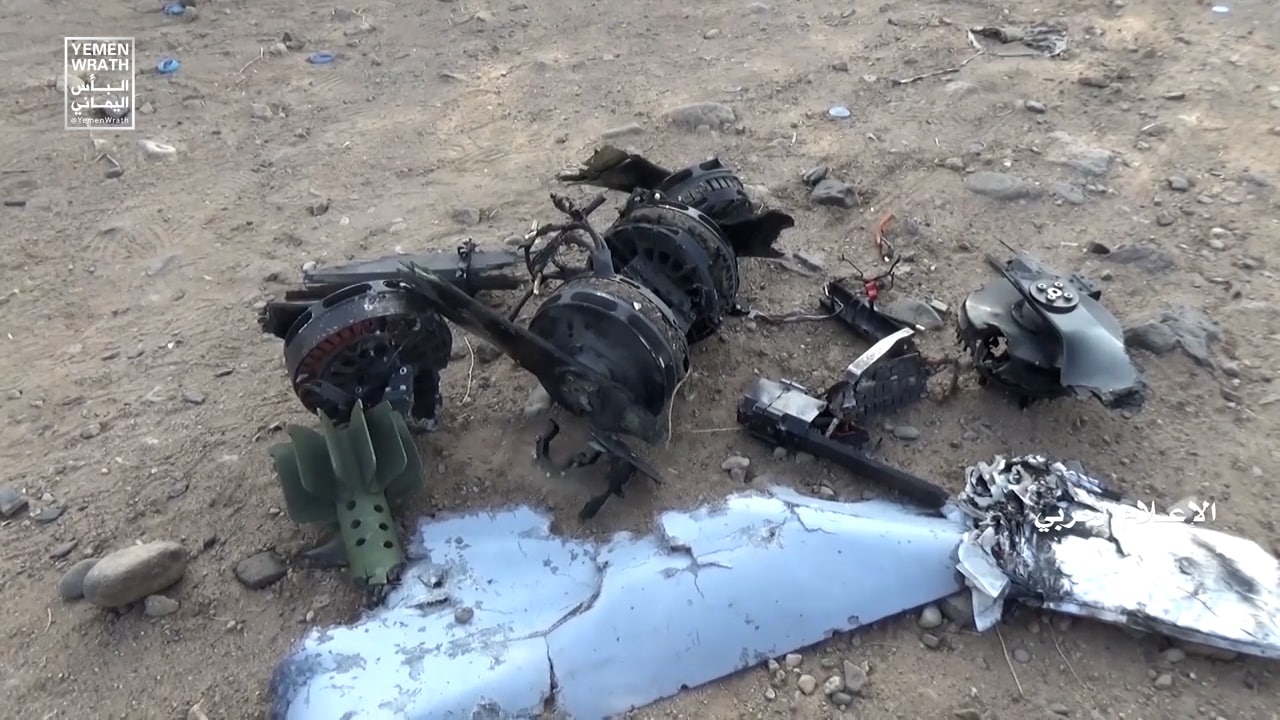
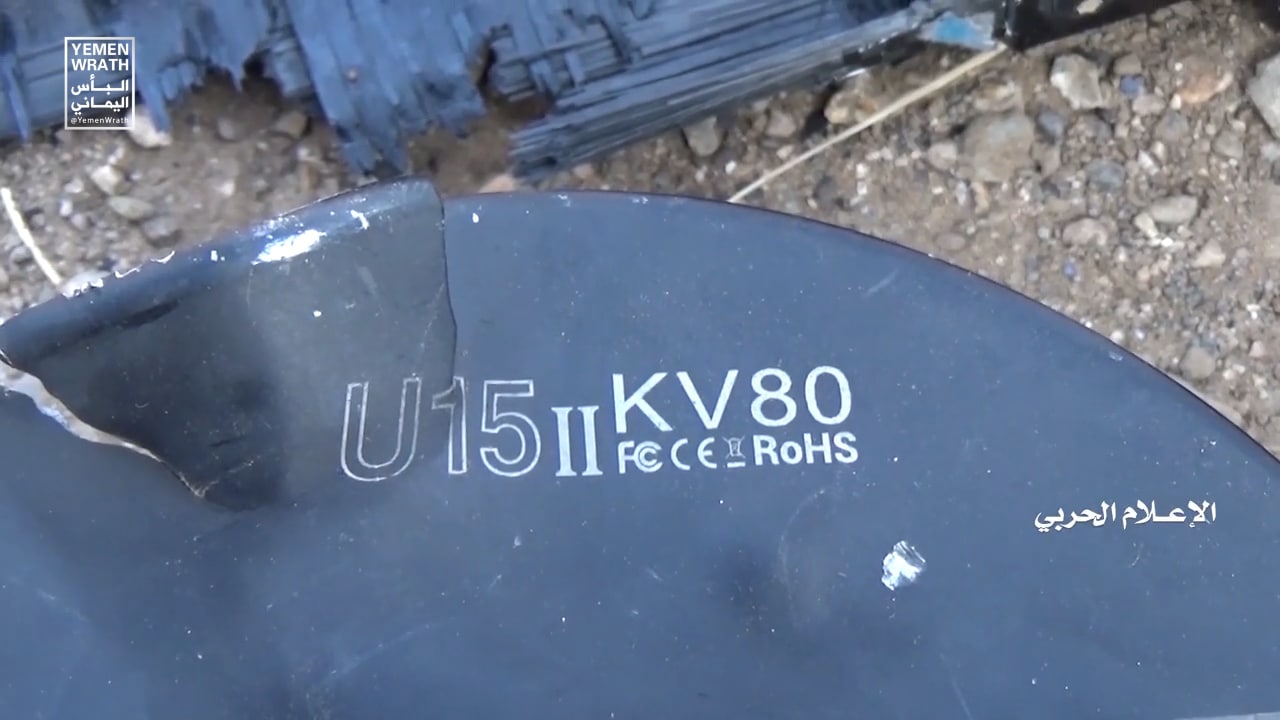
    – Ansar Allah shot down a Saudi coalition spy drone in the suburbs of Hays. (images)

    4- The Saudi coalition claimed to have confronted the with 526 UAVs and 346 missiles.