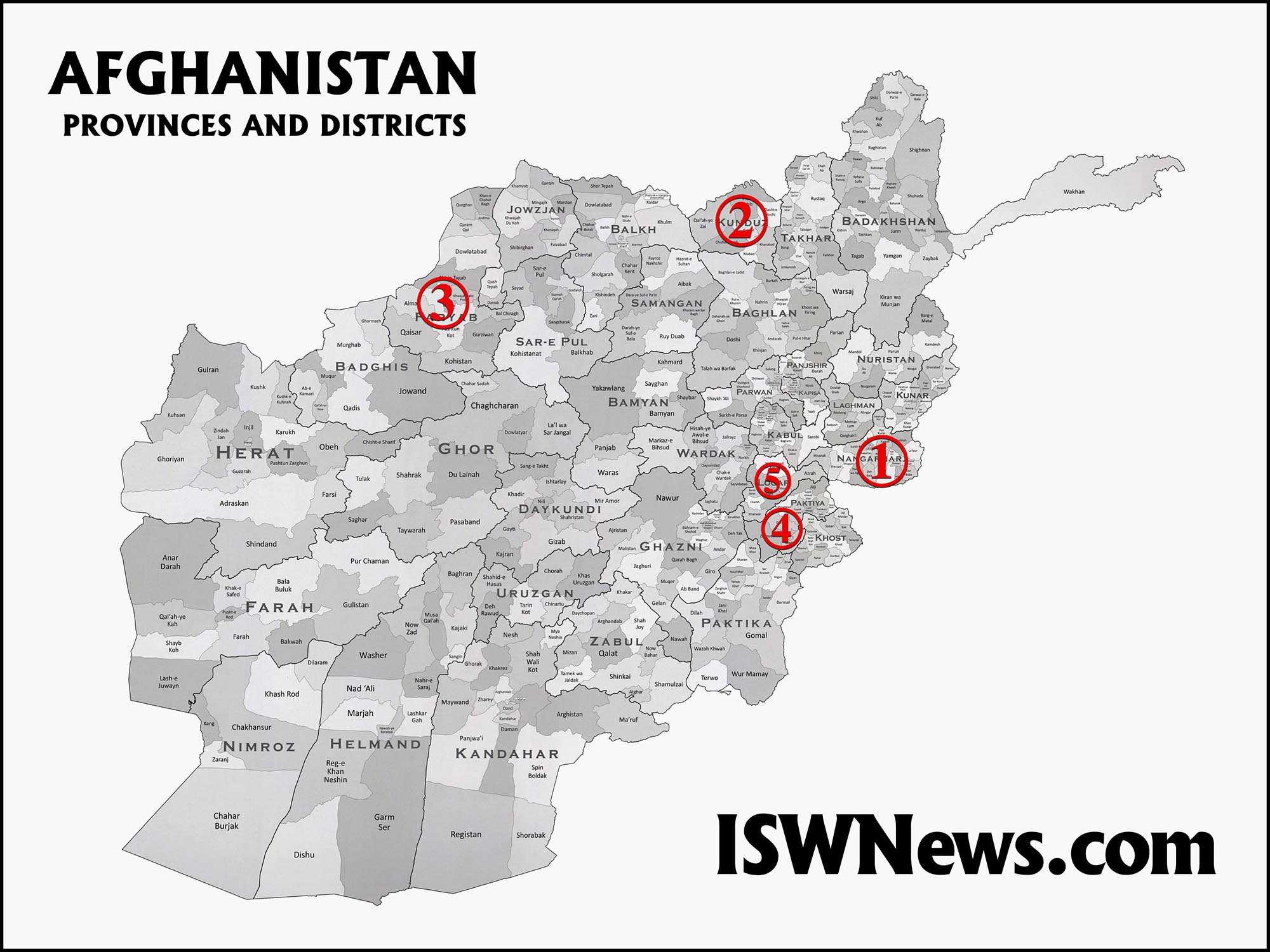
1. Nangarhar:
Four of Taliban local commanders with 50 of their troops joined peace process in Nangarhar province. They were active in cities Bati Kut, Achin, Rudat, Momand Darah and Khugiyani against the Government.
2. Qunduz:
From last three days, an operation started in Dasht Archi region of Qunduz province to clear it from Taliban. According to military sources so far two strategic regions Pole Sief al Din and Qarqalaq are freed from Taliban.
3. Faryab:
Heavy engagements between Afghan security forces and Taliban in Faryab province north of Afghanistan.
4. Paktika:
Kabul-Logar highway which was blocked due to protesters gathering, reopened today.
5. Logar:
According to Defense Ministry statement due to a airstrike in Azrah in Logar province, 19 members of Taliban, from which eight were Pakistani, killed.
6. UN:
290 thousand people in Afghanistan war are homeless in one year according to UN report. It is mentioned that due to war 60-70% of people of Jaghuri and Malestan in Ghazni province were forced to leave their homes.
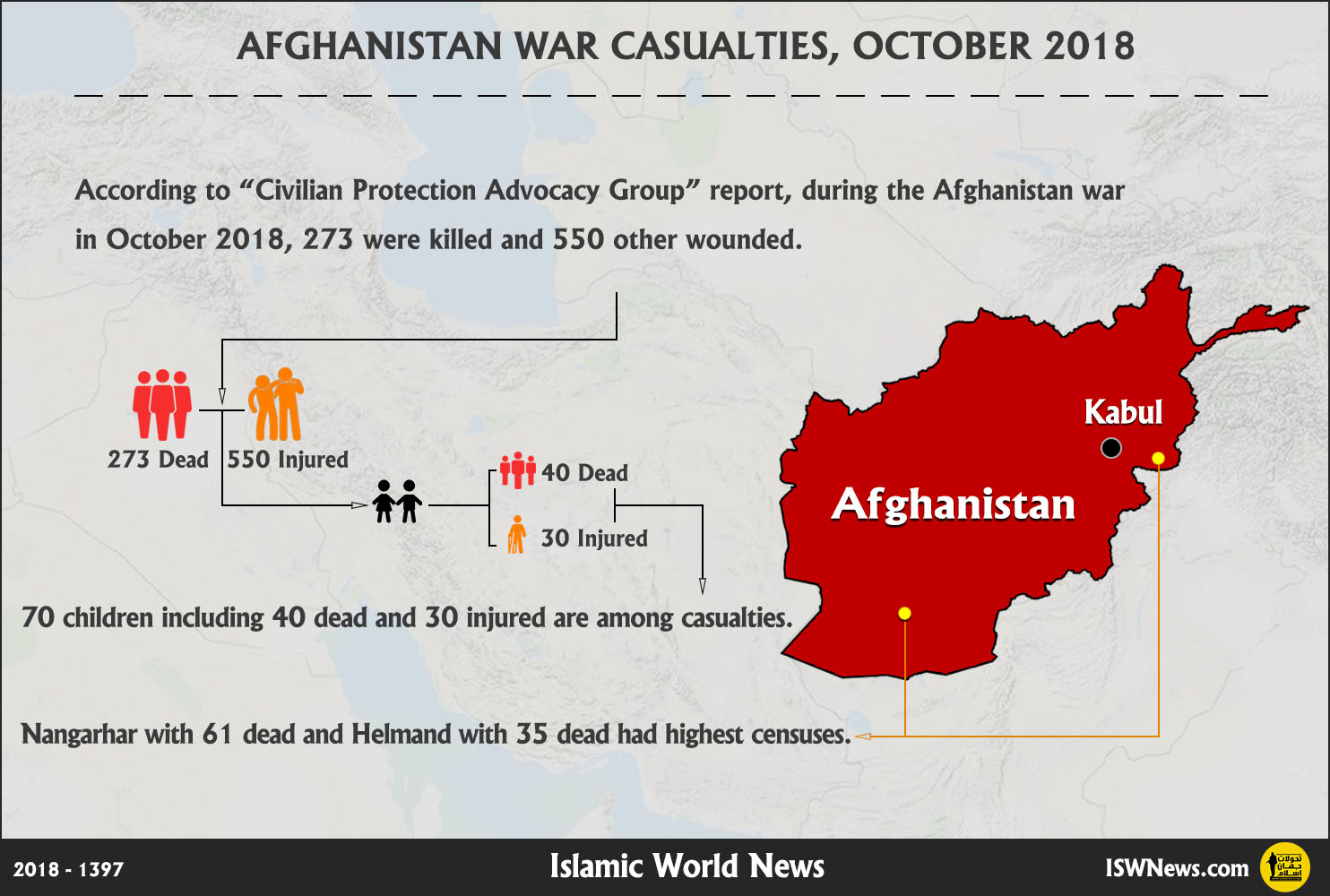
70 children including 40 dead and 30 injured are among casualties.
Nangarhar with 61 dead and 67 injured and Helmand with 35 dead and 45 injured had highest censuses.
It’s noteworthy that due to attacks to election campaign sites and attacks on the day of voting, 88 civilian killed and 279 injured.
Also during the operations of Afghan security forces 83 civilians killed and 45 injured and other casualties are due to suicide attacks, road mines and rockets for which anti-government groups are responsible.
1. Al Hudaydah:
– AnsarAllah operation against Saudi Coalition in Hindi village suburb of Tuhayta.
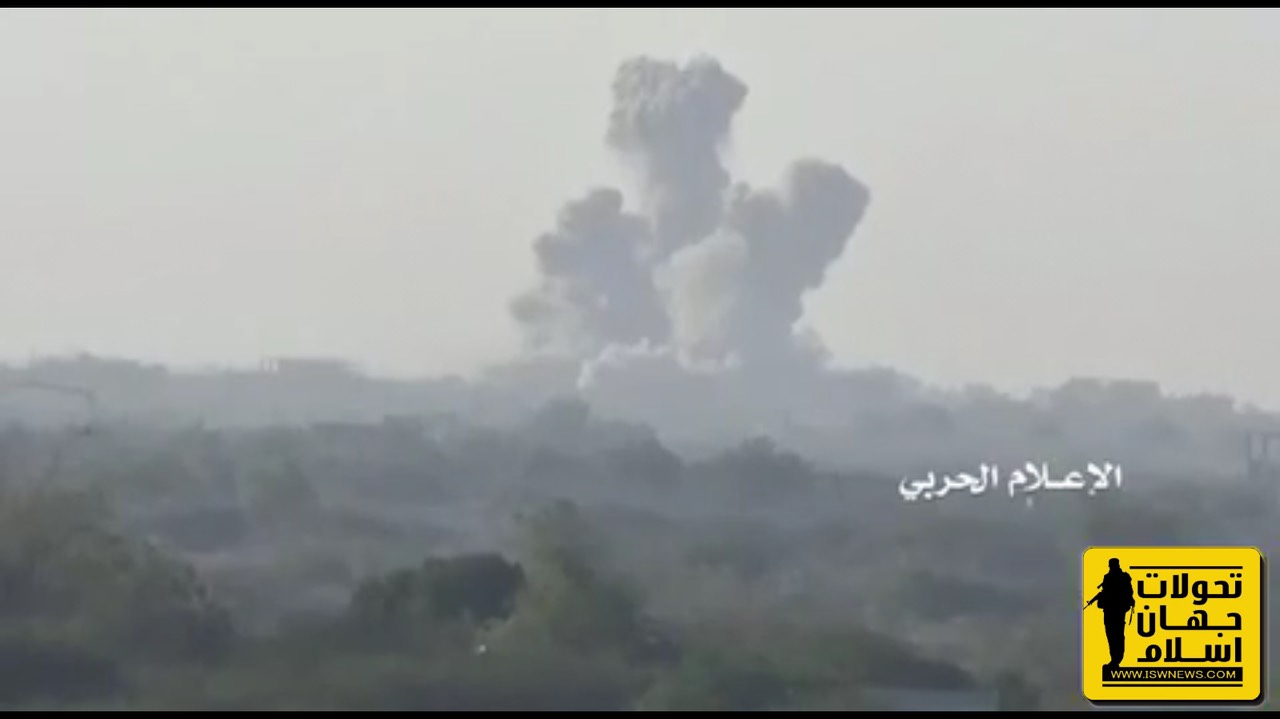
– Airstrikes against AnsarAllah positions in al Hudaydah and other western coast areas.
2. Hajjah:
– Firing a Badr-1 missile and hitting Midi desert; AnsarAllah claimed that 27 killed and 64 wounded of Mansoor Hadi’s forces.
– Engagements near Ahem triangle, AnsarAllah attack to prevent Haradh from falling resulted in reclaiming some northeastern points of Ahem triangle yesterday. Engagements in Al Dardihah(north of Ahem triangle) and near Hayjah mount (under control by AnsarAllah) and Shabakah(under control by Coalition).
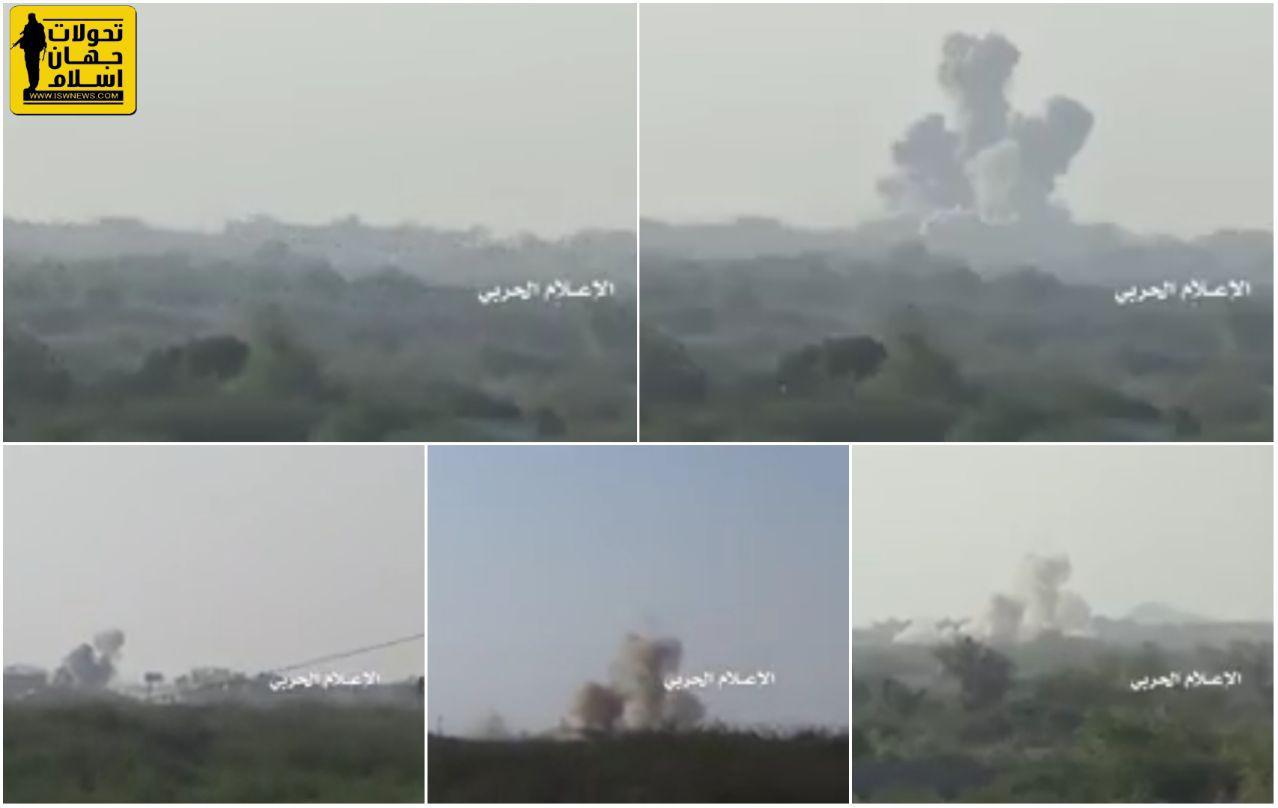
– Photos showing engagements of north of Hajjah and destroying Coalition forces by AnsarAllah.
3. Firing a Badr-1 missile and hitting Fardhah Nihm.
4. Sa’adah:
AnsarAllah in Baqem resisting under Coalition heavy airstrike. AnsarAllah operated in north suburb of Baqem which was considered fruitless by Coalition media. No confirmed news from possible advances in this axis.
5. Tweets of English Secretary of State after meeting with Mr. Zarif, Iranian counterpart and Saudi officials:
“After Saudi last week I was in Tehran today with FM JZarif to discuss how Iran can use their influence to get the Houthis to engage constructively. It’s now or never …”
UK and USA putting military pressure, putting political pressure on Iran and AnsarAllah to start Yemeni negotiations but never forget their interests.
It seems in future negotiations, as USA and UK like, AnsarAllah should not have access to western Coast, and should be limited in north of Yemen and giving privileges such as sharing power with AnsarAllah in future government, submitting autonomy, etc. To achieve this, they demand Iran to use its influence on AnsarAllah, which will not be free for them.
Nonetheless, future negotiations will direct Yemen evolutions: negotiations which result in forming a temporary government and election or fail and war continues until another opportunity for another negotiations.
4. How do Lebanese Hezbollah and Iran support AnsarAllah? Are they present in Yemen?
Presence of Iranian or Hezbollah counselors has been declined by all parties (AnsarAllah, Hezbollah and Iran) but Sayyed Hassan Nasrallah in a recent speech claimed that if we have a martyr from our forces in Yemen, won’t conceal it.
The foreign support of AnsarAllah which usually is referred to Iran and Hezbollah, is only political than military.
Indeed some political mediators are between AnsarAllah and supporters but unlike Syria and Iraq that Quds Force present in battlefield, it seems very unlikely in the case of Yemen.
AnsarAllah military capabilities due to 14 years of fighting against Ali Abdullah Saleh government and Saudi Arabia have increased substantially and specially on the ground they are not weaker than other western Asian countries even their supporters, if not stronger.
To have a better feeling, please refer to our movie archive of AnsarAllah battles in al Hudaydah, Jizan and Bayda. (spectacular fight between two AnsarAllah then martyred troops Abu Sayf Al Razahi and Issa Ali Al Akdah in Nate’ Baydah and other fronts is recommended.)
5. What is Dammaj story? What is the story of AnsarAllah fighting Wahhabism?
Dammaj is a Wahhabi village in southeast of Sa’adah which has a population of 15 thousand. In the last century, Muqbil ibn Hadi Al Wade’i had an organized plan to advertise Wahhabism in Yemen which started from Dammaj.
Muqbil ibn Hadi Al Wade’i, is a Wahhabi scholar who has many books and articles against Islamic revolution in Iran and was head of Dammaj Dar al Hadith(place for teaching,etc). In an article, he considers Imam Khomeini a pagan.
Muqbil ibn Hadi Al Wade’i died in May 2001 and Yahya Ali al Hajuri succeeded him.
Al Wade’i activities coincided AnsarAllah gaining strength and the belief war of Shia-Wahhabism and also Wahhabis activities against Shias by supporting Ali Abdullah Saleh government, helped sparking the war against AnsarAllah.
AnsarAllah engaged against Dammaj Wahhabis in two steps:
1. From 15 to 22 October 2011:
AnsarAllah surrounded Dammaj due to advertising against Shia and dividing between religions.
Yahya Ali Al Hajuri(successor of Al Wade’i) with help of Tariq Saleh equiped his troops and engaged against AnsarAllah.
With interfrence of Saleh army and Saudi Arabia, AnsarAllah leader after a short engagement ended siege and demanded the Wahhabism activities and their evacuation from Dammaj.
2. October 30, 2013 to February 2014:
AnsarAllah surrounded Dammaj to prevent import of weapons and foreigners (Saudi) and Wahhabi scholars including Al Hajuri issued Jihad rule (fight) against AnsarAllah.
AnsarAllah determined to clearing Dammaj under commandment of Abdullah Yahya al Hakem, a brave commander of AnsarAllah who is now their intelligence commander, attacked Dammaj.
Heavy engagement ended by 250 killed and 500 wounded for Wahhabis and 130 killed for AnsarAllah with unknown number of wounded.
Therefore Wahhabis who could not resist against AnsarAllah, after heavy casualties evacuated Dammaj, in which 12,000 people moved out.
Dammaj issue was not a reason to start Yemen war as the confrontation between AnsarAllah, Wahhabism and Government was older; six war between AnsarAllah and Ali Abdullah Saleh Government and Saudi is a testimony.
6. Among AnsarAllah officials, who are famous and powerful?
AnsarAllah started in 1986 as “the Believing Youth” by Shiite scholar Salah Ahmad Falitah and some other youth including Muhammad Badr Al Din Houthi(brother of Sayyid Hussain) and later in 1990, Muhammad Yahay Asan and then Martyr Sayyid Hussain Badr Al Din Houthi were claimed as General Secretary.
Upon flourishing the movement with name of Sayyid Hussain Badr Al Din Houthi, it was named Houthis and after his martyrdom and under leadership of Sayyid Abdul Malik Badr Al Din Houthi and stronger Shiite organization activities, it became AnsarAllah.
Sayyid Abdul Malik Badr Al Din Houthi is the current leader and Sayyid Muhammad Ali Al Houthi(head of Presidency Council), Martyr Saleh Ali Al Sammad(late head of Political High Council), Mahdi Al Mashat(current head of Political High Council), Sayyid Yahya Badr Al Din Houthi(Minister of Education), Abdullah Yahya Hakem(head of Intelligence and a battle commander), Muhammad AbdulSalam(AnsarAllah spokesman) and Muhammad Al Bukhayti(a battle commander and a member of political office) are his fellows in AnsarAllah who will be introduced in more details in future articles.
Kabul:
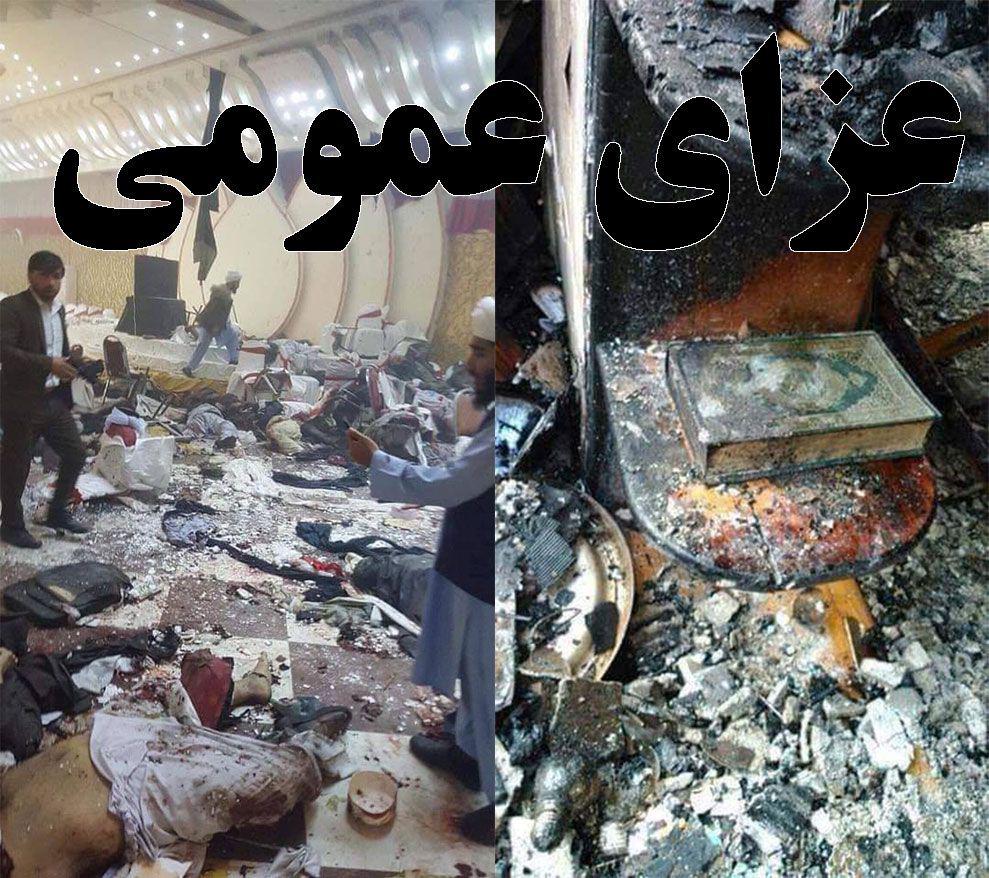
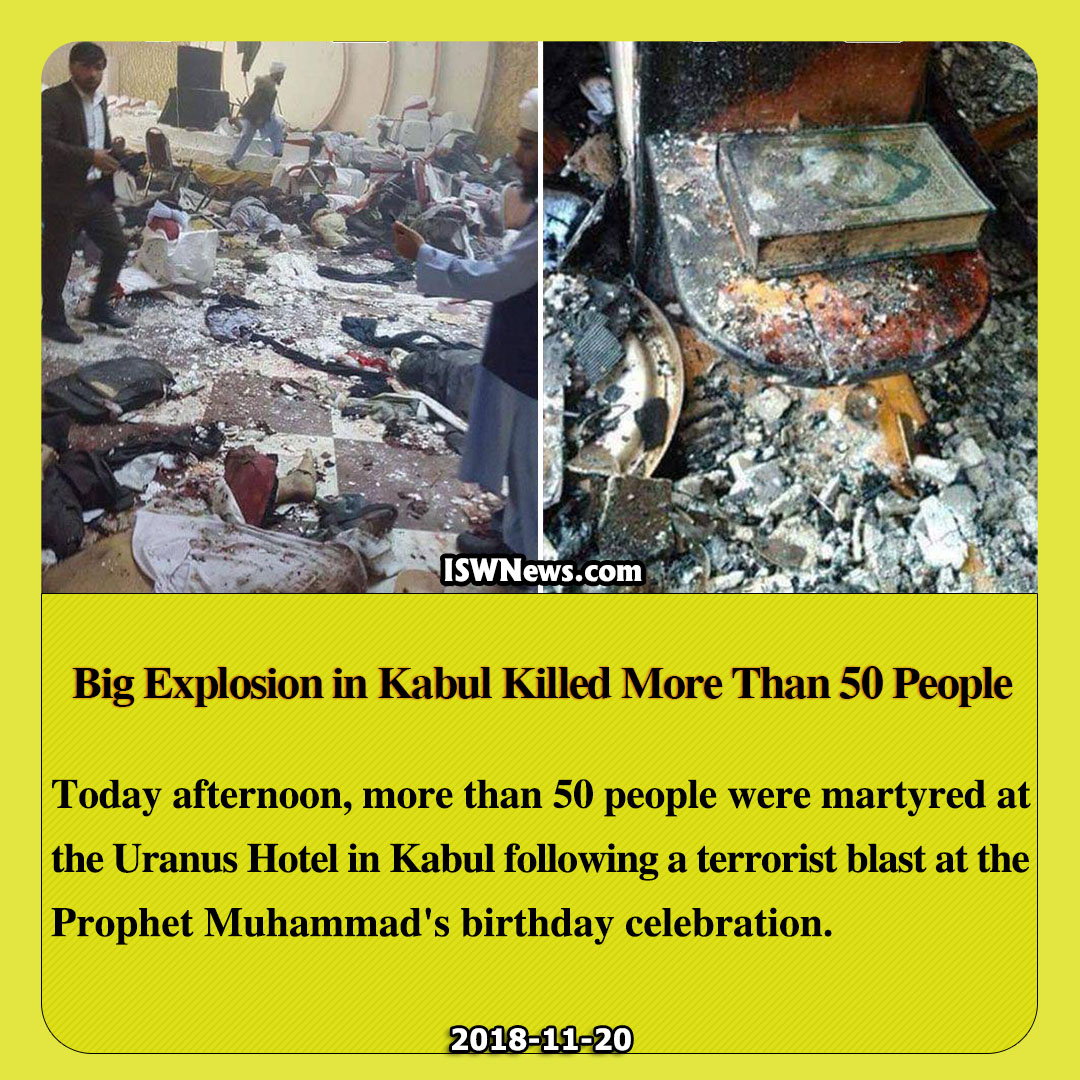
Explosion in Uranus hotel in Kabul located on Aerial Square street during the Holy Prophet birthday celebration resulted in 50 kills and 88 wounded.
According to local sources, Mulla Abdul Salam Dhae’if, a high rank official of Taliban was killed in Uranus hotel bomb explosion.
Mulla Abdul Salam Dhae’if an official of Taliban and ambassador of Islamic Emirates of Afghanistan in Pakistan.
It was rumored he departed from Taliban and joined Afghanistan government but always supported Taliban stands.
Ghazni:
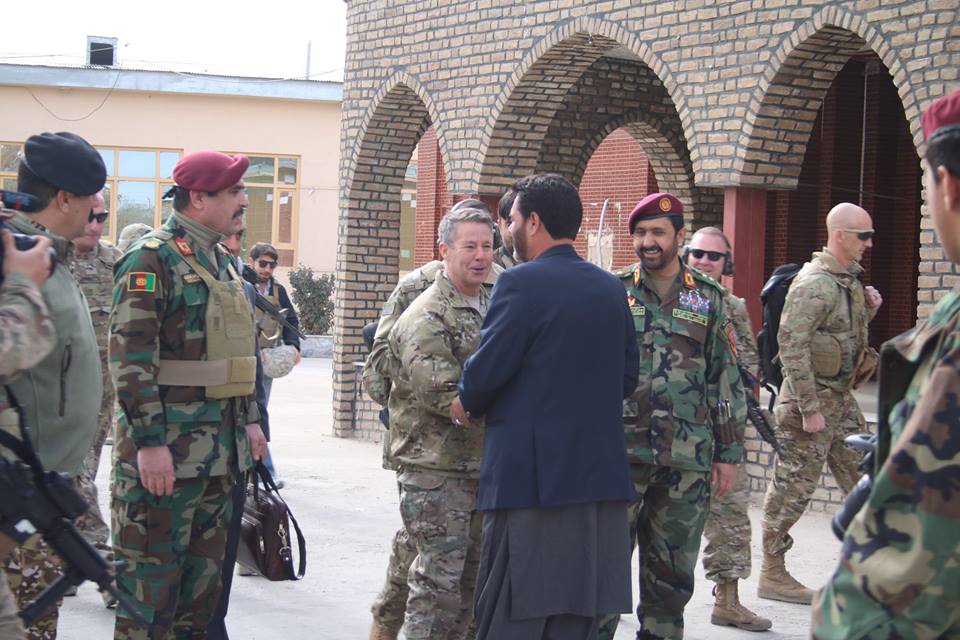
Two rockets were fired on Ghazni city on Wednesday during a visit by the top U.S. commander in Afghanistan.
Ghazni local sources reported that U.S. Army Gen. Scott Miller visited Ghazni province.
He visited Ghazni to inspect the security situation and met governor Vahid Allah Klimzi as well.
No more information was released.
During this visit Taliban fired two rockets to Ghazni.
Paktia:
Kabul-Gardez highway was blocked by protestors; they claim that Airforce killed eight civilians in a airstrike.