Category: America – Europe

  • US. Efforts to Form a Coalition Against Iran

    US. Efforts to Form a Coalition Against Iran

    A summary of this assertion at the end of this fourfold summit:

    1- The attacks of Houthis (Ansar Allah) against Saudi Arabia is a concerning and the attacks are arranged by Iran made missiles and drones.

    2- The four countries expressed full support for Saudi Arabia and called for an immediate end to such attacks by the Iranian-backed Houthis (Ansar Allah)

    3- FAO has postponed sending food to Sana’a because of the interventions of Houthis (Ansar Allah) which is demanded to cancel all the constraints to help Yemeni people immediately.

    4- The four countries emphasized their commitment to spread peace in this country and wanted all engaged sides to attend peace dialogues in the way of fulfilling the contents which are adhered in Sweden agreement.

    5- this committee urged Houthis (Ansar Allah) to fully pull out it’s forces from parts of Hudaydah, Raas Issa and Salif port immediately. The committee also emphasized they would be waiting for the 17th June summit of UN security council to check this process.
     
    Also before this summit Mike Pompeo the US Secretary of State considering Iran the world biggest supporter of terrorism, announced to build a global coalition against Iran that includes not only Persian Gulf countries but also Asian and European countries.
     
    PS: Regarding the review of the items mentioned in the article “Will Middle East Region’s Incidents Spark The Third World War? Part Three“; the US after being disable to react to Iran’s military power, as in the past is building a global coalition to initiate joint military operations, but the difference is that Iran is not like Iraq, Afghanistan, Syria,… and moat countries which the US expects them to accompany, would not assist the US in a war against Iran.

  • Video: What Iran Leader Ayatollah Khamenei told Japan PM Shinzo Abe

    Video: What Iran Leader Ayatollah Khamenei told Japan PM Shinzo Abe

    Iran’s Leader:
    “Trump does not even deserved and exchange of message…”
    “Honesty is very rare among US officials”

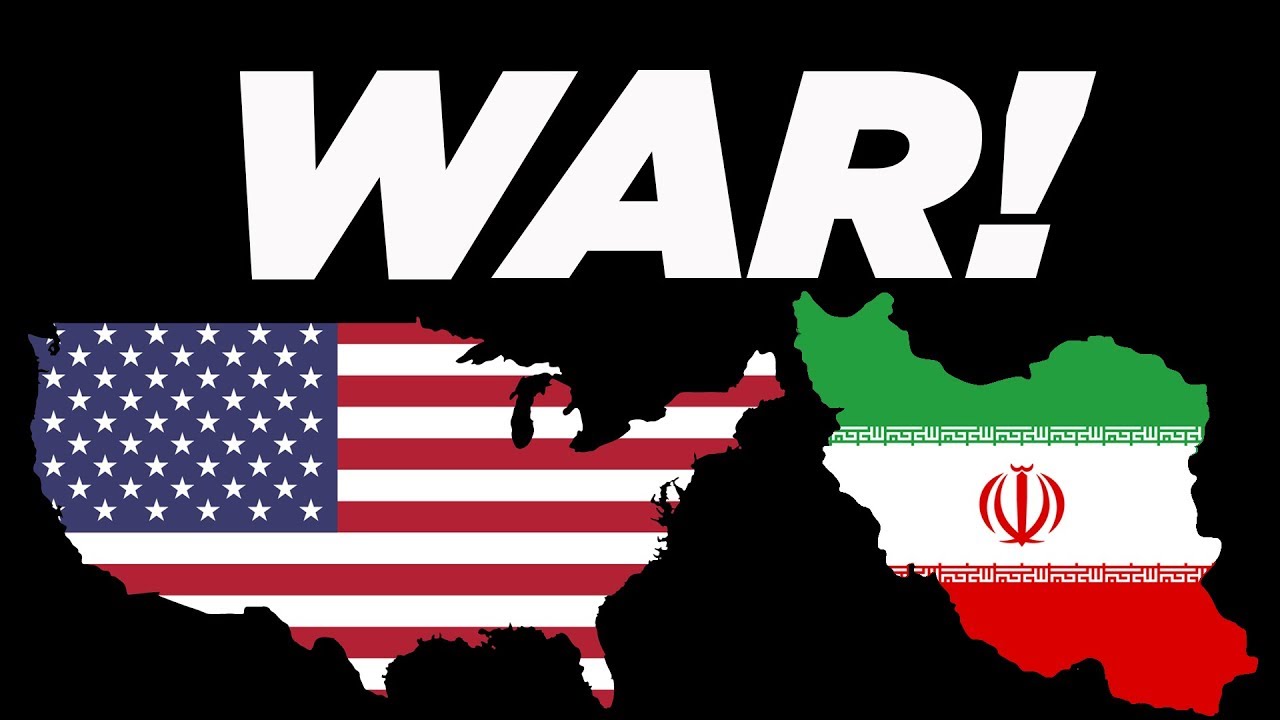
  • War with Iran?!

    War with Iran?!

  • The Most Anti-Terrorism Organization in the World!

    The Most Anti-Terrorism Organization in the World!

    Pompeo says Iran’s Suleimani will be viewed same as ISIS leader! What a nonsense.

    He & IRGC are the most effective anti-terrorism organization in the world.

    We respect US citizens but sadly the real terrorist is the US Army which its crimes recorded in the history relentlessly!


  • Iran Officially Labels US ‘State Sponsor of Terrorism’

    Iran Officially Labels US ‘State Sponsor of Terrorism’

    What follows is the full text of the statement released on Monday in reaction to the US move to designate Iran’s IRGC as a terror group:


    In the Name of God

    The Supreme National Security Council of the Islamic Republic of Iran strongly condemns the illegal and dangerous move by the US regime to put the Islamic Revolution Guards Corps (IRGC) in the list of “Foreign Terrorist Organizations”, and considers the groundless measure as a major threat to the regional and international peace and security, and a clear violation of jus cogens (peremptory norms) and the UN Charter.

    Unlike the US and its regional allies which have always supported extremist groups and terrorists in the West Asia region, the IRGC has constantly been at the forefront of fight against terrorism and extremism in the region. The role of this selfless and revolutionary force in fight against Al-Qaeda, ISIS, al-Nusra Front, and other terror groups in the region has always been praised by the affected people and governments.

    In a reciprocal response to the illegal and unwise move made by the US today, the Islamic Republic of Iran announces that it designates the US regime a “State Sponsor of Terrorism” and “the US Central Command or CENTCOM” and all its affiliated forces a “terrorist group”.

    The CENTCOM is responsible for implementing the terrorist policies of the US administration against the West Asia region, and has endangered the national security of the Islamic Republic of Iran and the lives of innocent Iranians and non-Iranians in order to impose the hostile policies of the US, including the brutal and intentional attack on the Iranian passenger plane in 1988, its complicity in the slaughter of Yemeni people and other civilians in the West Asia.

    Clearly, the US regime will bear all the responsibilities for the dangerous consequences of the adventurist move.


    Source

  • Syria to Trump: US Can Give Israel Two of Its Own States!

    Syria to Trump: US Can Give Israel Two of Its Own States!

    Jaafari made the remarks at a Security Council session organized Thursday at his country’s request in the wake of President Donald Trump’s decision to recognize “Israeli sovereignty” over the Syrian territories of Golan Heights.


    He called the decision “null and void” and warned of “a serious and unprecedented delinquency in the current US administration toward undermining international law and insulting the United Nations.”


    “The Syrian Arab Golan is ours and will return to us,” Jaafari said, arguing the occupied land would not “be part of some damned and wicked deal, or a pawn to be exchanged for support in your electoral games,” which should instead concern “the territory of the American administration.”


    “America is a wide and vast country, so why doesn’t it give up a state or two of the United States to the Israelis, for example, North Carolina or South Carolina?” Jaafari asked, as his Israeli counterpart, Danny Danon, laughed and shook his head.


    “South Carolina is nice, because it’s the land of Senator Lindsey Graham, who supported President Trump in his actions.”


    Trump’s decision came two weeks after Graham visited the Golan Heights and called on the US to recognize it as part of Israel.

    The president first hinted at the landmark policy decision in a tweet last Thursday as Secretary of State Mike Pompeo was in Israel to shore up ties with the White House’s closest ally.


    On Monday, Trump made it official during a visit from Israeli Prime Minister Benjamin Netanyahu.

    The move was widely condemned by world powers, many of whom cited UN resolutions that still consider the Golan Heights part of Syria after it was seized by Israel during the 1967 Six-Day War and annexed without international recognition in 1981.


    Source

  • What Does ‘Death to America’ Mean?

    What Does ‘Death to America’ Mean?

    In Iran, ‘death to America’ doesn’t mean what you think; “Death to America” expresses the anger many Iranians feel about U.S. policy toward Iran, said Foad Izadi, an assistant professor of world studies at the University of Tehran. Iranians remember that the U.S. overthrew the legitimate government of Mohammad Mossadegh in 1953 and supported the dictatorial Shah who followed.

    The slogan “means death to American foreign policy,” said Izadi. Iranians “have problems with the American government, not the American people.” In fact, he said, Iranians are friendly to Americans. “When you walk around town, and people see you’re an American, everyone wants to take care of you.”


    Ayatollah Khamenei Iran’s supreme leader said: “First of all, I should tell the American officials: ‘Death to America’ means death to Trump, [US national security adviser] John Bolton, and [US Secretary of State Mike] Pompeo. It means death to American rulers who are currently these individuals.”

    “Death to America means ‘death’ to you, the few people ruling the country; we don’t mean the American nation,” the Leader said.

    “Secondly, the Iranian nation will continue to chant the ‘Death to America’ slogan as long as the US remains evil and wicked,” he added.

  • History of U.S. Interventions in Latin America; Review

    History of U.S. Interventions in Latin America; Review

    Key:
     Military incursions
     Covert or indirect operations
    ! Other events of note


     1846:
    The U.S., fulfilling the doctrine of Manifest Destiny, goes to war with Mexico and ends up with a third of Mexico’s territory.
     1850, 1853, 1854, 1857:
    U.S. interventions in Nicaragua.
     1855:
    Tennessee adventurer William Walker and his mercenaries take over Nicaragua, institute forced labor, and legalize slavery.

    “Los yankis… have burst their way like a fertilizing torrent through the barriers of barbarism.” –N.Y. Daily News

    He’s ousted two years later by a Central American coalition largely inspired by Cornelius Vanderbilt, whose trade Walker was infringing.

    “The enemies of American civilization– for such are the enemies of slavery– seem to be more on the alert than its friends.” –William Walker


     1856:
    First of five U.S. interventions in Panama to protect the Atlantic-Pacific railroad from Panamanian nationalists.
     1898:
    U.S. declares war on Spain, blaming it for destruction of the Maine. (In 1976, a U.S. Navy commission will conclude that the explosion was probably an accident.) The war enables the U.S. to occupy Cuba, Puerto Rico, Guam, and the Philippines.
     1903:
    The Platt Amendment inserted into the Cuban constitution grants the U.S. the right to intervene when it sees fit.
     1903:
    When negotiations with Colombia break down, the U.S. sends ten warships to back a rebellion in Panama in order to acquire the land for the Panama Canal. The Frenchman Philippe Bunau-Varilla negotiates the Canal Treaty and writes Panama’s constitution.
     1904:
    U.S. sends customs agents to take over finances of the Dominican Republic to assure payment of its external debt.
     1905:
    U.S. Marines help Mexican dictator Porfirio Díaz crush a strike in Sonora.
     1905:
    U.S. troops land in Honduras for the first of 5 times in next 20 years.
     1906:
    Marines occupy Cuba for two years in order to prevent a civil war.
     1907:
    Marines intervene in Honduras to settle a war with Nicaragua.
     1908:
    U.S. troops intervene in Panama for first of 4 times in next decade.
     1909:
    Liberal President José Santos Zelaya of Nicaragua proposes that American mining and banana companies pay taxes; he has also appropriated church lands and legalized divorce, done business with European firms, and executed two Americans for participating in a rebellion. Forced to resign through U.S. pressure. The new president, Adolfo Díaz, is the former treasurer of an American mining company.
     1910:
    U.S. Marines occupy Nicaragua to help support the Díaz regime.
     1911:
    The Liberal regime of Miguel Dávila in Honduras has irked the State Department by being too friendly with Zelaya and by getting into debt with Britain. He is overthrown by former president Manuel Bonilla, aided by American banana tycoon Sam Zemurray and American mercenary Lee Christmas, who becomes commander-in-chief of the Honduran army.
     1912:
    U.S. Marines intervene in Cuba to put down a rebellion of sugar workers.
     1912:
    Nicaragua occupied again by the U.S., to shore up the inept Díaz government. An election is called to resolve the crisis: there are 4000 eligible voters, and one candidate, Díaz. The U.S. maintains troops and advisors in the country until 1925.
     1914:
    U.S. bombs and then occupies Vera Cruz, in a conflict arising out of a dispute with Mexico‘s new government. President Victoriano Huerta resigns.
     1915:
    U.S. Marines occupy Haiti to restore order, and establish a protectorate which lasts till 1934. The president of Haiti is barred from the U.S. Officers’ Club in Port-au-Prince, because he is black.

    “Think of it– niggers speaking French!” –secretary of State William Jennings Bryan, briefed on the Haitian situation

     1916:
    Marines occupy the Dominican Republic, staying till 1924.
    ! 1916:
    Pancho Villa, in the sole act of Latin American aggression against the U.S, raids the city of Columbus, New Mexico, killing 17 Americans.

    “Am sure Villa’s attacks are made in Germany.” –James Gerard, U.S. ambassador to Berlin

     1917:
    U.S. troops enter Mexico to pursue Pancho Villa. They can’t catch him.
     1917:
    Marines intervene again in Cuba, to guarantee sugar exports during WWI.
     1918:
    U.S. Marines occupy Panamanian province of Chiriqui for two years to maintain public order.
     1921:
    President Coolidge strongly suggests the overthrow of Guatemalan President Carlos Herrera, in the interests of United Fruit. The Guatemalans comply.
     1925:
    U.S. Army troops occupy Panama City to break a rent strike and keep order.
     1926:
    Marines, out of Nicaragua for less than a year, occupy the country again, to settle a volatile political situation. Secretary of State Kellogg describes a “Nicaraguan-Mexican-Soviet” conspiracy to inspire a “Mexican-Bolshevist hegemony” within striking distance of the Canal.

    “That intervention is not now, never was, and never will be a set policy of the United States is one of the most important facts President-elect Hoover has made clear.” —NYT, 1928

     1929:
    U.S. establishes a military academy in Nicaragua to train a National Guard as the country’s army. Similar forces are trained in Haiti and the Dominican Republic.

    “There is no room for any outside influence other than ours in this region. We could not tolerate such a thing without incurring grave risks… Until now Central America has always understood that governments which we recognize and support stay in power, while those which we do not recognize and support fall. Nicaragua has become a test case. It is difficult to see how we can afford to be defeated.” –Undersecretary of State Robert Olds

     1930:
    Rafael Leonidas Trujillo emerges from the U.S.-trained National Guard to become dictator of the Dominican Republic.
     1932:
    The U.S. rushes warships to El Salvador in response to a communist-led uprising. President Martínez, however, prefers to put down the rebellion with his own forces, killing over 8000 people (the rebels had killed about 100).
    ! 1933:
    President Roosevelt announces the Good Neighbor policy.
     1933:
    Marines finally leave Nicaragua, unable to suppress the guerrilla warfare of General Augusto César Sandino. Anastasio Somoza García becomes the first Nicaraguan commander of the National Guard.

    “The Nicaraguans are better fighters than the Haitians, being of Indian blood, and as warriors similar to the aborigines who resisted the advance of civilization in this country.” –NYT correspondent Harold Denny

     1933:
    Roosevelt sends warships to Cuba to intimidate Gerardo Machado y Morales, who is massacring the people to put down nationwide strikes and riots. Machado resigns. The first provisional government lasts only 17 days; the second Roosevelt finds too left-wing and refuses to recognize. A pro-Machado counter-coup is put down by Fulgencio Batista, who with Roosevelt’s blessing becomes Cuba’s new strongman.
    ! 1934:
    Platt Amendment repealed.
     1934:
    Sandino assassinated by agents of Somoza, with U.S. approval. Somoza assumes the presidency of Nicaragua two years later. To block his ascent, Secretary of State Cordell Hull explains, would be to intervene in the internal affairs of Nicaragua.
    ! 1936:
    U.S. relinquishes rights to unilateral intervention in Panama.
     1941:
    Ricardo Adolfo de la Guardia deposes Panamanian president Arias in a military coup– first clearing it with the U.S. Ambassador.

    It was “a great relief to us, because Arias had been very troublesome and very pro-Nazi.” –Secretary of War Henry Stimson

     1943:
    The editor of the Honduran opposition paper El Cronista is summoned to the U.S. embassy and told that criticism of the dictator Tiburcio Carías Andino is damaging to the war effort. Shortly afterward, the paper is shut down by the government.
     1944:
    The dictator Maximiliano Hernández Martínez of El Salvador is ousted by a revolution; the interim government is overthrown five months later by the dictator’s former chief of police. The U.S.’s immediate recognition of the new dictator does much to tarnish Roosevelt’s Good Neighbor policy in the eyes of Latin Americans.
     1946:
    U.S. Army School of the Americas opens in Panama as a hemisphere-wide military academy. Its linchpin is the doctrine of National Security, by which the chief threat to a nation is internal subversion; this will be the guiding principle behind dictatorships in Brazil, Argentina, Uruguay, Chile, Central America, and elsewhere.
     1948:
    José Figueres Ferrer wins a short civil war to become President of Costa Rica. Figueres is supported by the U.S., which has informed San José that its forces in the Panama Canal are ready to come to the capital to end “communist control” of Costa Rica.
     1954:
    Jacobo Arbenz Guzmán, elected president of Guatemala, introduces land reform and seizes some idle lands of United Fruit– proposing to pay for them the value United Fruit claimed on its tax returns. The CIA organizes a small force to overthrow him and begins training it in Honduras. When Arbenz naively asks for U.S. military help to meet this threat, he is refused; when he buys arms from Czechoslovakia it only proves he’s a Red.

    Guatemala is “openly and diligently toiling to create a Communist state in Central America… only two hours’ bombing time from the Panama Canal.” –Life

    The CIA broadcasts reports detailing the imaginary advance of the “rebel army,” and provides planes to strafe the capital. The army refuses to defend Arbenz, who resigns. The U.S.’s hand-picked dictator, Carlos Castillo Armas, outlaws political parties, reduces the franchise, and establishes the death penalty for strikers, as well as undoing Arbenz’s land reform. Over 100,000 citizens are killed in the next 30 years of military rule.

    “This is the first instance in history where a Communist government has been replaced by a free one.” –Richard Nixon

     1957:
    Eisenhower establishes Office of Public Safety to train Latin American police forces.
    ! 1959:
    Fidel Castro takes power in Cuba. Several months earlier he had undertaken a triumphal tour through the U.S., which included a CIA briefing on the Red menace.

    “Castro’s continued tawdry little melodrama of invasion.” –Time, of Castro’s warnings of an imminent U.S. invasion

     1960:
    Eisenhower authorizes covert actions to get rid of Castro. Among other things, the CIA tries assassinating him with exploding cigars and poisoned milkshakes. Other covert actions against Cubainclude burning sugar fields, blowing up boats in Cuban harbors, and sabotaging industrial equipment.
     1960:
    The Canal Zone becomes the focus of U.S. counterinsurgency training.
     1960:
    A new junta in El Salvador promises free elections; Eisenhower, fearing leftist tendencies, withholds recognition. A more attractive right-wing counter-coup comes along in three months.

    “Governments of the civil-military type of El Salvador are the most effective in containing communist penetration in Latin America.” –John F. Kennedy, after the coup

     1960:
    Guatemalan officers attempt to overthrow the regime of Presidente Fuentes; Eisenhower stations warships and 2000 Marines offshore while Fuentes puts down the revolt. [Another source says that the U.S. provided air support for Fuentes.]
     1960:
    U.S. Green Berets train Guatemalan army in counterinsurgency techniques. Guatemalan efforts against its insurgents include aerial bombing, scorched-earth assaults on towns suspected of aiding the rebels, and death squads, which killed 20,000 people between 1966 and 1976. U.S. Army Col. John Webber claims that it was at his instigation that “the technique of counter-terror had been implemented by the army.”

    “If it is necessary to turn the country into a cemetary in order to pacify it, I will not hesitate to do so.” –President Carlos Arana Osorio

     1961:
    U.S. organizes force of 1400 anti-Castro Cubans, ships it to the Bahía de los Cochinos. Castro’s army routs it.
     1961:
    CIA-backed coup overthrows elected Pres. J. M. Velasco Ibarra of Ecuador, who has been too friendly with Cuba.
     1962:
    CIA engages in campaign in Brazil to keep João Goulart from achieving control of Congress.
     1963:
    CIA-backed coup overthrows elected social democrat Juan Bosch in the Dominican Republic.
     1963:
    A far-right-wing coup in Guatemala, apparently U.S.-supported, forestalls elections in which “extreme leftist” Juan José Arévalo was favored to win.

    “It is difficult to develop stable and democratic government [in Guatemala], because so many of the nation’s Indians are illiterate and superstitious.” –School textbook, 1964

     1964:
    João Goulart of Brazil proposes agrarian reform, nationalization of oil. Ousted by U.S.-supported military coup.
    ! 1964:
    The free market in Nicaragua:

    The Somoza family controls “about one-tenth of the cultivable land in Nicaragua, and just about everything else worth owning, the country’s only airline, one television station, a newspaper, a cement plant, textile mill, several sugar refineries, half-a-dozen breweries and distilleries, and a Mercedes-Benz agency.” –Life World Library

     1965:
    A coup in the Dominican Republic attempts to restore Bosch’s government. The U.S. invades and occupies the country to stop this “Communist rebellion,” with the help of the dictators of Brazil, Paraguay, Honduras, and Nicaragua.

    “Representative democracy cannot work in a country such as the Dominican Republic,” Bosch declares later. Now why would he say that?

     1966:
    U.S. sends arms, advisors, and Green Berets to Guatemala to implement a counterinsurgency campaign.

    “To eliminate a few hundred guerrillas, the government killed perhaps 10,000 Guatemalan peasants.” –State Dept. report on the program

     1967:
    A team of Green Berets is sent to Bolivia to help find and assassinate Che Guevara.
     1968:
    Gen. José Alberto Medrano, who is on the payroll of the CIA, organizes the ORDEN paramilitary force, considered the precursor of El Salvador‘s death squads.
    ! 1970:
    In this year (just as an example), U.S. investments in Latin America earn $1.3 billion; while new investments total $302 million.
     1970:
    Salvador Allende Gossens elected in Chile. Suspends foreign loans, nationalizes foreign companies. For the phone system, pays ITT the company’s minimized valuation for tax purposes. The CIA provides covert financial support for Allende’s opponents, both during and after his election.
     1972:
    U.S. stands by as military suspends an election in El Salvador in which centrist José Napoleón Duarte was favored to win. (Compare with the emphasis placed on the 1982 elections.)
     1973:
    U.S.-supported military coup kills Allende and brings Augusto Pinochet Ugarte to power. Pinochet imprisons well over a hundred thousand Chileans (torture and rape are the usual methods of interrogation), terminates civil liberties, abolishes unions, extends the work week to 48 hours, and reverses Allende’s land reforms.
     1973:
    Military takes power in Uruguay, supported by U.S. The subsequent repression reportedly features the world’s highest percentage of the population imprisoned for political reasons.
     1974:
    Office of Public Safety is abolished when it is revealed that police are being taught torture techniques.
    ! 1976:
    Election of Jimmy Carter leads to a new emphasis on human rights in Central America. Carter cuts off aid to the Guatemalan military (or tries to; some slips through) and reduces aid to El Salvador.
    ! 1979:
    Ratification of the Panama Canal treaty which is to return the Canal to Panama by 1999.

    “Once again, Uncle Sam put his tail between his legs and crept away rather than face trouble.” –Ronald Reagan

     1980:
    A right-wing junta takes over in El Salvador. U.S. begins massively supporting El Salvador, assisting the military in its fight against FMLN guerrillas. Death squads proliferate; Archbishop Romero is assassinated by right-wing terrorists; 35,000 civilians are killed in 1978-81. The rape and murder of four U.S. churchwomen results in the suspension of U.S. military aid for one month.
    The U.S. demands that the junta undertake land reform. Within 3 years, however, the reform program is halted by the oligarchy.

    “The Soviet Union underlies all the unrest that is going on.” –Ronald Reagan

     1980:
    U.S., seeking a stable base for its actions in El Salvador and Nicaragua, tells the Honduran military to clean up its act and hold elections. The U.S. starts pouring in $100 million of aid a year and basing the contras on Honduran territory.
    Death squads are also active in Honduras, and the contras tend to act as a state within a state.
     1981:
    The CIA steps in to organize the contras in Nicaragua, who started the previous year as a group of 60 ex-National Guardsmen; by 1985 there are about 12,000 of them. 46 of the 48 top military leaders are ex-Guardsmen. The U.S. also sets up an economic embargo of Nicaragua and pressures the IMF and the World Bank to limit or halt loans to Nicaragua.
     1981:
    Gen. Torrijos of Panama is killed in a plane crash. There is a suspicion of CIA involvement, due to Torrijos’ nationalism and friendly relations with Cuba.
     1982:
    A coup brings Gen. Efraín Ríos Montt to power in Guatemala, and gives the Reagan administration the opportunity to increase military aid. Ríos Montt’s evangelical beliefs do not prevent him from accelerating the counterinsurgency campaign.
     1983:
    Another coup in Guatemala replaces Ríos Montt. The new President, Oscar Mejía Víctores, was trained by the U.S. and seems to have cleared his coup beforehand with U.S. authorities.
     1983:
    U.S. troops take over tiny Granada. Rather oddly, it intervenes shortly after a coup has overthrown the previous, socialist leader. One of the justifications for the action is the building of a new airport with Cuban help, which Granada claimed was for tourism and Reagan argued was for Soviet use. Later the U.S. announces plans to finish the airport… to develop tourism.
     1983:
    Boland Amendment prohibits CIA and Defense Dept. from spending money to overthrow the government of Nicaragua— a law the Reagan administration cheerfully violates.
     1984:
    CIA mines three Nicaraguan harbors. Nicaragua takes this action to the World Court, which brings an $18 billion judgment against the U.S. The U.S. refuses to recognize the Court’s jurisdiction in the case.
     1984:
    U.S. spends $10 million to orchestrate elections in El Salvador— something of a farce, since left-wing parties are under heavy repression, and the military has already declared that it will not answer to the elected president.
     1989:
    U.S. invades Panama to dislodge CIA boy gone wrong Manuel Noriega, an event which marks the evolution of the U.S.’s favorite excuse from Communism to drugs.
     1996:
    The U.S. battles global Communism by extending most-favored-nation trading status for China, and tightening the trade embargo on Castro’s Cuba.

    More info:

    • Black, George. The Good Neighbor. Pantheon Books, New York: 1988. Highly recommended. An often amusing history of U.S. attitudes toward its southern neighbors.
    • Burns, E. Bradford. Latin America: A concise interpretive history. 4th ed. Prentice-Hall, Englewood Cliffs: 1986. Not only what the U.S. does to Latin America, but what Europe and the Latin Americans do to Latin America.
    • Chomsky, Noam. Year 501: The Conquest Continues. South End Press, Boston: 1993. Packed with documentation.
    • Galeano, Eduardo. Century of the Wind and Faces & Masks. Pantheon Books, New York: 1988. (Originally published as Memoria del fuego II, III: El siglo del viento, Las caras y las mascaras.) Vignettes from history, from a master Latin American novelist. As history, take it with a grain of salt.
    • Gleijeses, Piero. Shattered Hope: The Guatemalan Revolution and the United States, 1944-1954. Princeton, Princeton NJ: 1991. The definitive study of the Arévalo/Arbenz administrations and the U.S. coup.
    • Kwitny, Jonathan. Endless Enemies: The Making of an Unfriendly World. Congdon & Weed, New York: 1984. By a former Wall Street Journal reporter.

    Also

    • Blum, William. Killing Hope: U.S. Military and CIA Interventionism Since World War II. Monroe, Maine: Common Courage Press, 1995.
    • Ege & Makhijani. “180 Landings by the U.S. Marine Corps” (History Division), Counterspy (July-Aug. 1982). Foreign Affairs Division, Congressional Research Service, Library of Congress.
    • Richard Grimmet, Instances of Use of Armed Forces Abroad, 1798-2001. CRS Report for Congress, 2002.
    • Grossman, Zoltan. Over a Century of U.S. Military Interventions. Self-published, revised Jan. 1, 1995.
    • Sklar, Holly. “Who’s Who: Invading ‘Our’ Hemisphere 1831-,” Z Magazine (Feb. 1990).
    • U.S. Congress, Committee on Foreign Affairs’ Report. Background Information on the Use of United States Armed Forces in Foreign Countries. Washington, D.C.: 91st Congress, 2nd Session, 1970.
    • Zinn, Howard. A People’s History of the United States. New York: Perennial Library, Harper & Row, 1980.

    Source


    Click to see the full size image

  • Press TV Anchor Arrested After Flying Into the US!

    Press TV Anchor Arrested After Flying Into the US!

    The Federal Bureau of Investigation declined to comment on Hashemi’s detention.


    Press TV has released a statement with regard to the detention and imprisonment of its anchorwoman Marzieh Hashemi in the United States. Read the statement here:

    Press TV issues statement on anchor’s detention in US


    Also Javad Zarif Iran’s foreign minister criticised the arrest:

    “The arrest of Marzieh Hashemi by America is an unacceptable political act that tramples on freedom of speech, The Americans must immediately end this political game,” Zarif told Al-Alam TV.


    Hashemi’s family members and media activists have launched a social media campaign with the hashtags #FreeMarziehHashemi and #Pray4MarziehHashemi in support of the detained journalist.

  • US Senate Voted to Stop Supporting Saudi Coalition’s Military Assaulting Yemen

    US Senate Voted to Stop Supporting Saudi Coalition’s Military Assaulting Yemen

    Bernie Sanders US senator stated that today US senators in a historical event claimed that they do not allow US Army to help a killer regime such as Saudi Arabia, a regime that does not respect democracy and human rights. A regime whose leader is undoubtedly involved in murder of the Saudi reporter in Saudi consulate in Turkey.


    He also emphasized that this is not the end but a beginning and Congress just woke up and there are other issues in US foreign and military affairs that need to be decided by Congress.


    He is persistent that according to the new resolution, US president cannot enter a war without Congress permission and from now on, he needs Congress permission for any military activity around the world.


    Congress voting on terminating US military support of Saudi Coalition against Yemen at the same time with Sweden negotiations and initial agreement between sides is something needs to be analyzed with more depth…