Early on Wednesday, May 3, the Russian armed forces launched heavy strikes on the positions of the Ukrainian military forces in the provinces of Kiev, Sumy, Donetsk, Zaporizhzhia, Dnipropetrovsk, Cherkasy, Kirovohrad, Mykolaiv and Kherson with the use of several kamikaze drones.
According to the information released by the Ukrainian Air Force Command headquarters, the Russian army used 26 kamikaze drones codenamed Shahed 136 or Shahed 131 in the attacks, and the Ukrainian air defense succeeded in destroying 21 of the drones. This round of air strikes was carried out from Bryansk province in the west of Russia and the coastal areas of the Sea of Azov, which is located in the south of Ukraine.
Russian sources also are of the opinion that in this round of air strikes, the Russia’s army pounded the positions of Ukrainian armed forces in Sumy province, the position of Ukrainian army’s defense systems in Kiev, the communication centers and accommodation facilities of the Ukrainian armed forces in Kherson and Mykolaiv provinces, as well as several other spots in the cities of Cherkasy, Dnipro, Kostyantynivka and Kropyvnytskyi in Ukraine.
In response to this round of air strikes, the Ukrainian armed forces attacked the military airport in Bryansk province with the use of five kamikaze drones. The Russians said that they could shoot down two Ukrainian drones, while two others pounded their targets and damaged an Antonov An-124 Ruslan aircraft at the military airport. Moreover, the search for the fifth kamikaze drone is still ongoing and the fate of the drone is not clear.
Concurrent with the attack, the fuel depots of Taman town in west of Krasnodar city in the Southern Federal District of the Russian Federation were raided by drones or missiles and caught fire. The warehouses are situated 270 km away from the front line in Ukraine.
Images of the Ukrainian drone attack on Taman fuel depots in the Southern Federal District
This round of air strikes is the seventh immense raid by the Russian army on Ukraine from the start of 2023. After conducting the sixth large-scale air strike on April 4, the Russian military attacked the positions of Ukrainian forces with a limited usage of drones and missiles in nine separate operations, which occurred on April 18, 19, 20, 21, 24, 28 and 29 as well as on May 1.
But there have not been released accurate video documentation and correct details of the operations so far, and even some of the air strikes have been merely alleged by the Ukrainian side, while official and unofficial Russian sources have not published any details on the attacks.
Russian drone hit in KrupionitskyRussian drone hit in DniproRussian drone hit in DniproRussian drone hit in Kyiv
According to the statement by the Grand Kremlin Palace, the attack of two suicide drones was foiled by the timely action of the Russian electronic warfare systems and the plan to assassinate Vladimir Putin was foiled.
This attack was carried out on the evening of Tuesday, May 2, and there were no casualties or damages. Also, the remains of these drones have fallen in the grounds of the Kremlin Palace.
The Kremlin also announced: “Russia considers this attack to be a planned terrorist act. The Russian side has the right to take retaliatory measures where and when it sees necessary.”
It should be noted that Volodymyr Zelensky, the president of Ukraine, stated that Kiev did not attack Putin’s residence or the city of Moscow. But the Russian authorities and media have pointed the finger at Ukraine. Some analysts also claim that such attacks are carried out by the United States or NATO in order to ignite the conflict between Russia and Ukraine.
Attacking the most important diplomatic places of a country is unprecedented in the history of wars in the last decade. Due to the seriousness of the senior Russian officials in responding to the Ukrainian attacks, the Russians are expected to carry out widespread attacks on the territory of Ukraine, especially the city of Kiev.
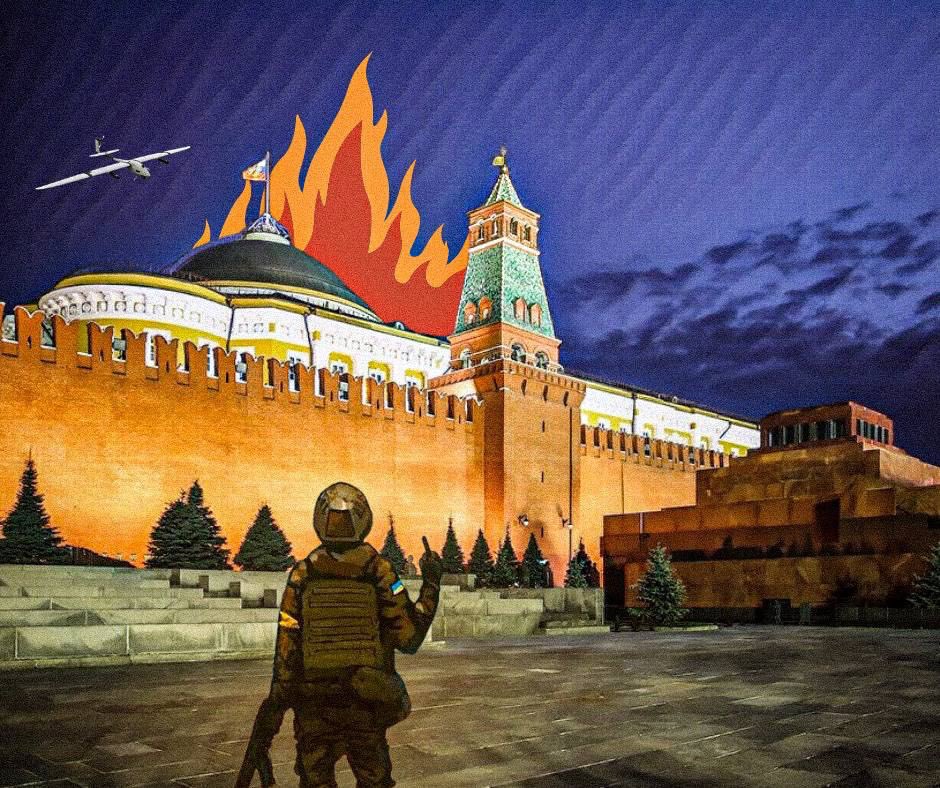
The explosion of drone over Kremlin residence of the President of Russia
On April 30, head of the Russian military contractor Wagner Yevgeny Viktorovich Prigozhin announced that his militant forces have control over a significant area of the city of Bakhmut, and only a few square kilometers remain under the control of the Ukrainian forces. The Ministry of Defence of the Russian Federation also declared that Wagner’s forces, with the support of the airborne troops and the Southern Military District, are advancing in the Ukrainian city.
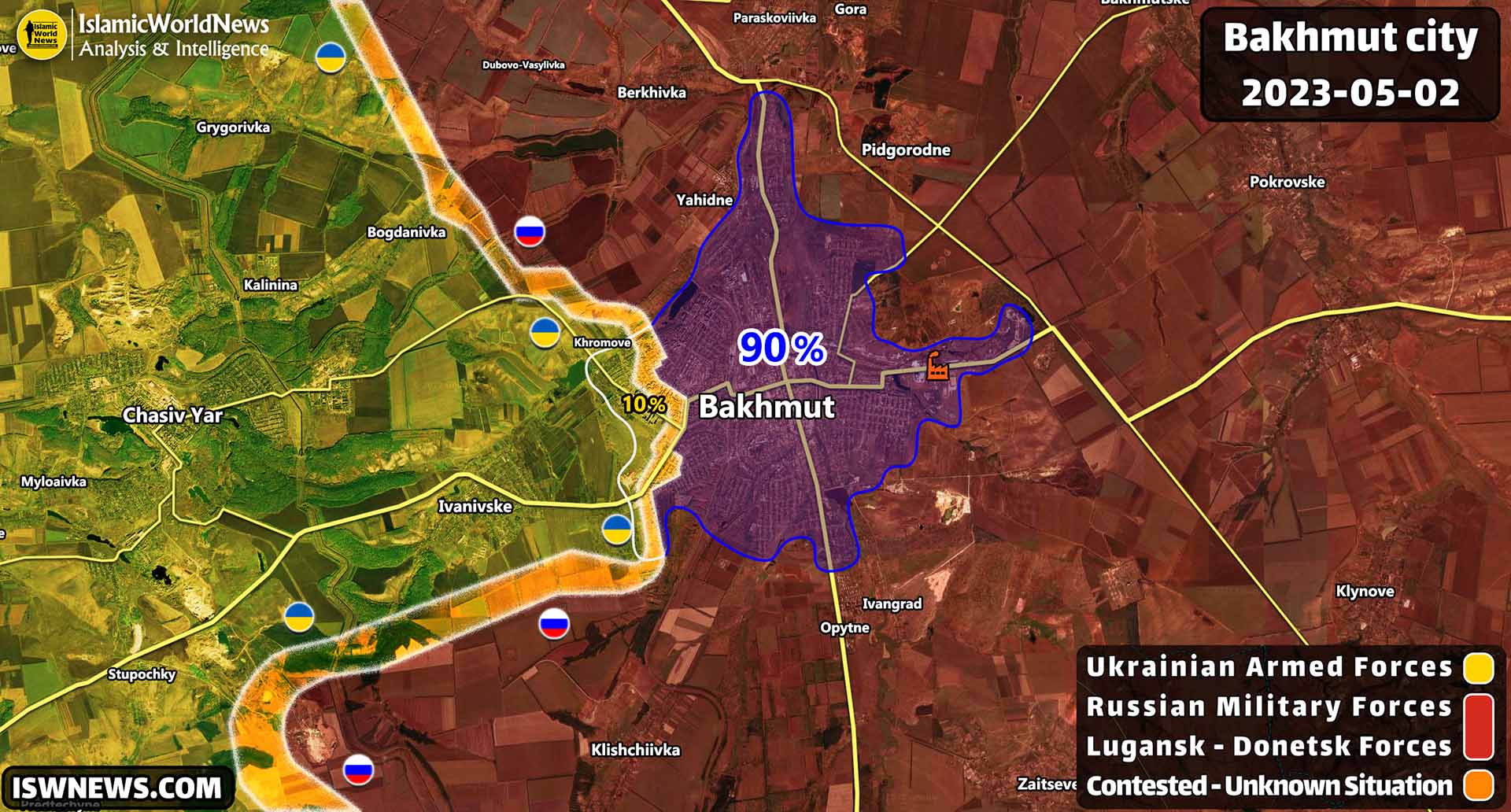
Based on the available information and field map review, it can be said that now about 37 square kilometers, which is about 90% of the city of Bakhmut is under the control of Russia, and only 4 square kilometers and about 10% of the remaining in the west of the city are under the control of Ukrainian forces.
In recent days, Wagner’s militants took control of a military unit and a medical school in the north and south of Chaikovskogo Street in the downtown of Bakhmut city. The clashes on this axis point continue in the apartment building complexes in the west of the medical school.
In the northwestern areas of Bakhmut, the Russian forces are advancing along Tolbukhin, Pobedy and Levanevsky streets. The Russian troops also took control of several other buildings in the southwest at the intersection of Dekabrists and Alexander Matrosov streets.
In the suburbs of the city, clashes continue in the north, near Khromove and Bogdanivka. In the western suburbs of Bakhmut, confrontations continue near Ivanivske between the Russian and Ukrainian military forces.
Ukrainian positions in other areas around Bakhmut are also under heavy artillery fire and the Russian air force attacks. According to the Ministry of Defence of the Russian Federation, more than 200 Ukrainian soldiers were killed as a result of a recent missile strike on the deployment spots of the 24th Mechanized Brigade and the Ukrainian special operation in Kostyantynivka.
Of course, the casualties are not exclusive to Ukrainian forces, and the Russian forces have also suffered high fatalities in recent confrontations, particularly in the battles for the capture of Bakhmut city, which have intensified since early February 2023.
The battles have continued with greater intensity and seriousness, and by mid-February, the clashes have gradually spread to inside the city of Bakhmut; since then, the advances have been slow, the city has turned into ruins, and both warring sides have suffered high casualties, to the point that this city is now known as the “Bakhmut Meat Grinder.”
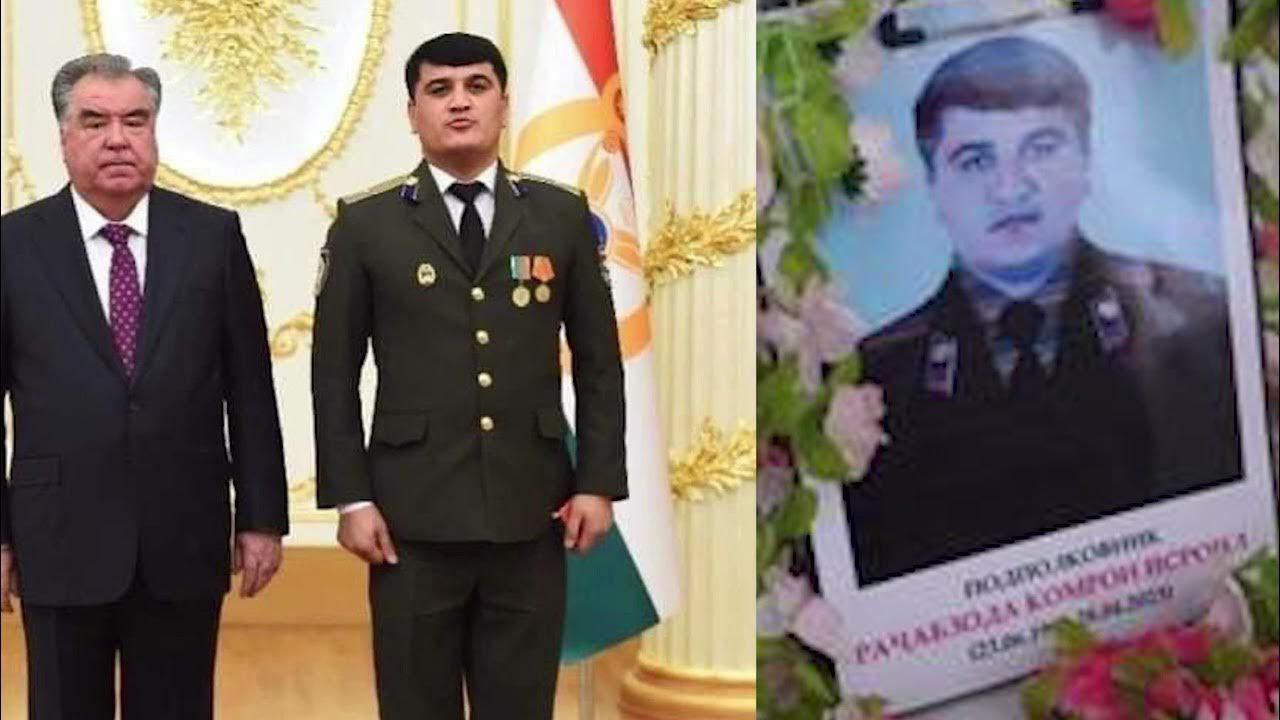
According to a report by sources affiliated to the government of Tajikistan, Kamran Rajabzade was killed in the security district 184 under supervision of the Tishar checkpoint in the Gorno-Badakhshan province, an autonomous region in eastern Tajikistan, as a result of an armed conflict between the security forces and unidentified militants in Kharog town on May 8.
The sources mentioned that the exact number of the unidentified militants was eight, who illegally entered the territory of Tajikistan early on May 8th. They entered from the border areas of Afghanistan, but the Tajik security forces realized them and after hiding in an unspecified area started an attack on the infiltrators. The government sources also claim that three members of the militant group were detained and five others could flee to Afghanistan.
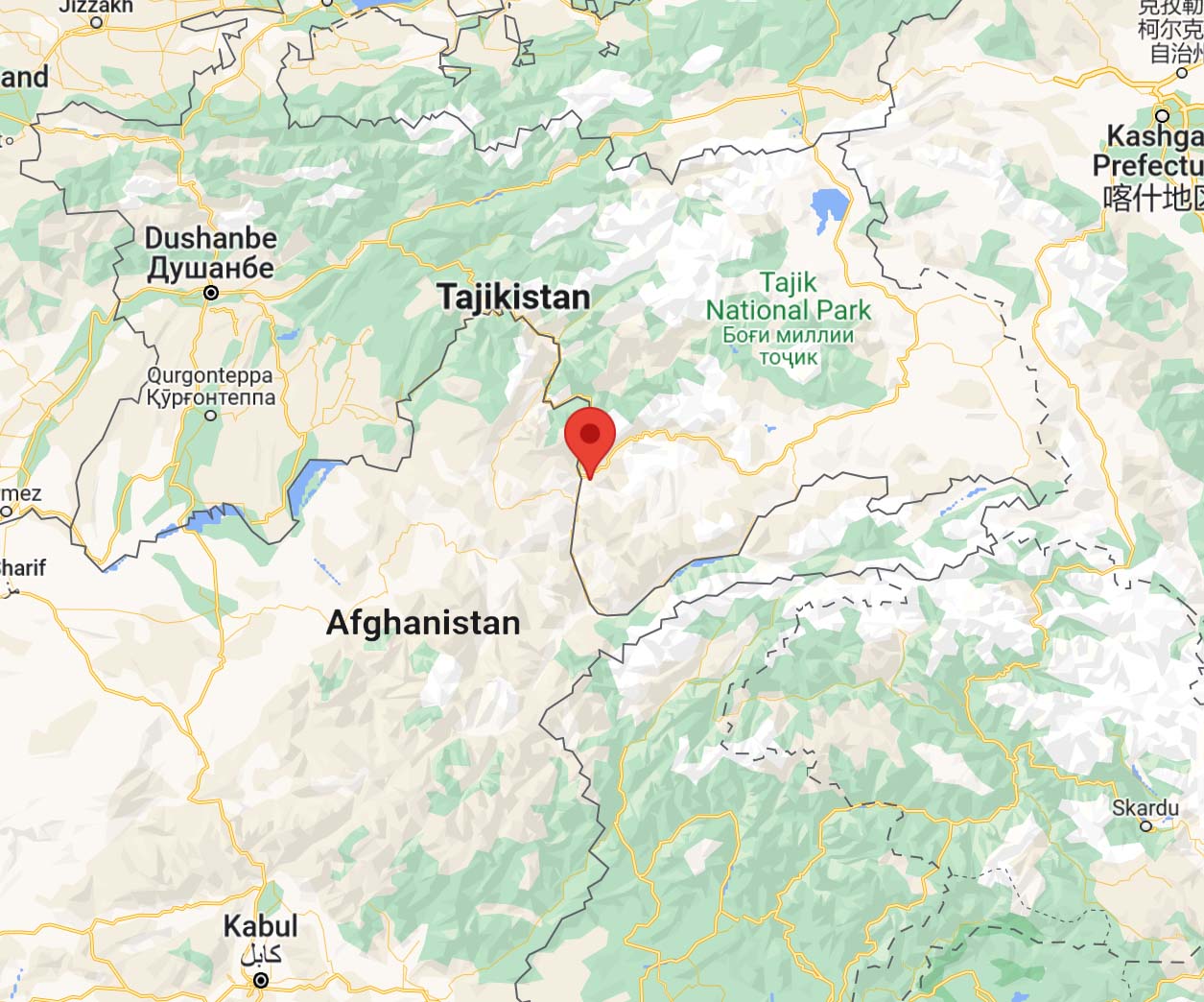
Khorog town, near the Afghanistan border
In accordance with the on the ground investigations of a field source of the ISWnews, there are three narratives on the incident:
1- The first version is the narrative of the government sources, saying that Kamran Rajabzade was killed in a patrol mission in the joint border areas with Afghanistan. Regarding the issue, it should be said that Rajabzade is the highest security official in Kharoug city; moreover, the head of border guard is under Rajabzade’s command; so, why should a senior security official patrol the borderline?
2- The second narrative mentions that Rajabzade had connection with drug and weapon traffickers and he was killed by those traffickers in a face-to-face meeting because of an armed conflict or after a dispute; therefore, the government of Tajikistan held Rajabzade’s burial ceremony incredibly in a speedy and compact way.
3- The third version of narration comes from local sources in Khorogh city. The top security officer was one of the main elements in suppressing the last year protests in Gorno-Badakhshan as well as the killing of opponents of President Emomali Rahmon’s government, including Mohammed Baker Mohammed Bakerov; therefore, Rajabzade was assassinated by opponents of the Tajik government. Seemingly the third narrative is somehow closer to the reality.
Furthermore, the border guards of Tajikistan shot at two unidentified armed persons on the border of Gorno-Badakhshan province with Afghanistan on April 26, when the people were trying to infiltrate into the soil of Tajikistan, and the incident left both armed individuals dead. A number of local sources in Afghanistan said that the armed people were elements of the Jamaat Ansarullah group in Tajikistan.
It should be mentioned that in the negotiations between the Taliban and representatives of the National Security Committee of Tajikistan in Khorog on March 24, the government of Tajikistan called for the extradition of Mohammad Sharif (also known as Mahdi Arsalan), the commander of Jamaat Ansarullah in Tajikistan, in return for handing over Afghanistan’s embassy in Dushanbe.
The Taliban rejected the request, and announced that it is committed to the transfer of the militants of the Jamaat Ansarullah of Tajikistan from the border towns of Gorno-Badakhshan province.
Armenia’s Hraparak daily, the media outlet affiliated to the opposition of the government in Yerevan, has reported a shocking news story for the Azerbaijan Republic. According to the newspaper, the Russian government has made a decision to replace Major General Andrey Volkov, who was the Commander of the Russian peacekeeping contingent in Nagorno-Karabakh, and recall him to capital Moscow.
The new commander of the peacekeeping forces is a skillful lieutenant general, who took part in Russia’s wars. He is considered as a competent military commander among the staff of the Ministry of Defense of the Russian Federation. He is trusted by Minister of Defense of the Russian Federation Sergei Shoigu, and is cooperating with the minister for a long period. The new commander comes to organize the circumstances and Volkov is getting ready to leave Nagorno-Karabakh in the coming days.
The news story of the Armenian daily has been published on the prominent website of Sputnik, which is the media outlet of the Ministry of Defense of the Russian Federation.
Andrey Volkov, the former commander of the Russian peacekeeping forces in Karabakh
New commander of Karabakh peacekeeping forces
The skillful military commander is named Colonel General Alexander Ivanovich Lentsov, who is also an advisor to the current minister of defense in Russia. Lentsov played the roles of being a member of military service as well as commanding Russian wars in Afghanistan, Chechnya, Bosnia and Syria.
The colonel general was deputy commander of the Russian air forces from 2009 to 2013 and he served from 2013 to 2020 as deputy commander of the Russian Ground Forces. He was promoted to Lieutenant General in 2011 and Colonel General in 2014. Since 2020, he has served as an advisor to the Minister of Defense. On April 25, Lentsov was appointed commander of the Russian peacekeeping forces in Nagorno-Karabakh region.
Alexander Lentsov, the new commander of the Russian peacekeeping forces in Karabakh
The speculations on the 4th commander
Colonel General Alexander Ivanovich Lentsov is the fourth commander of the Russian peacekeeping contingent, which has been deployed in Nagorno-Karabakh region since 2020 up to now. Prior to the commander, three lieutenant generals named Rustam Muradov, Gennady Anashkin and Andrey Volkov have not been so much successful in carrying out their mission to implement truce in Nagorno-Karabakh region.
The Russian government is determined to use the powerful commander with the aim of force all sides to implement the provisions of the tripartite Nagorno-Karabakh ceasefire agreement, which was signed in Moscow on November 9, 2020, and regain the Russians’ lost influence in the region following the blockage of Lachin Corridor, a mountain road that links Armenia and Nagorno-Karabakh.
The challenges of Volkov’s tenure
Major General Andrey Volkov’s tenure as commander has been full of tension. He could not get in the way of the violation of ceasefire as well as military advances by Azerbaijan’s armed forces in eastern, western and southwestern lines of contact, where he was tasked to observe the peacekeeping mission.
The major challenge during his tenure was the gatherings by environmental activists, who are supporters of Azerbaijan Republic’s President Ilham Aliyev, as well as the closure of Lachin Corridor in Shusha, the advances by Azerbaijan’s armed forces, the blockage of roads to alternative routes under the pretext of fighting arms smuggling, and the construction of a checkpoint in borderline with Armenia, which is located in the start of the path to the Lachin Corridor.
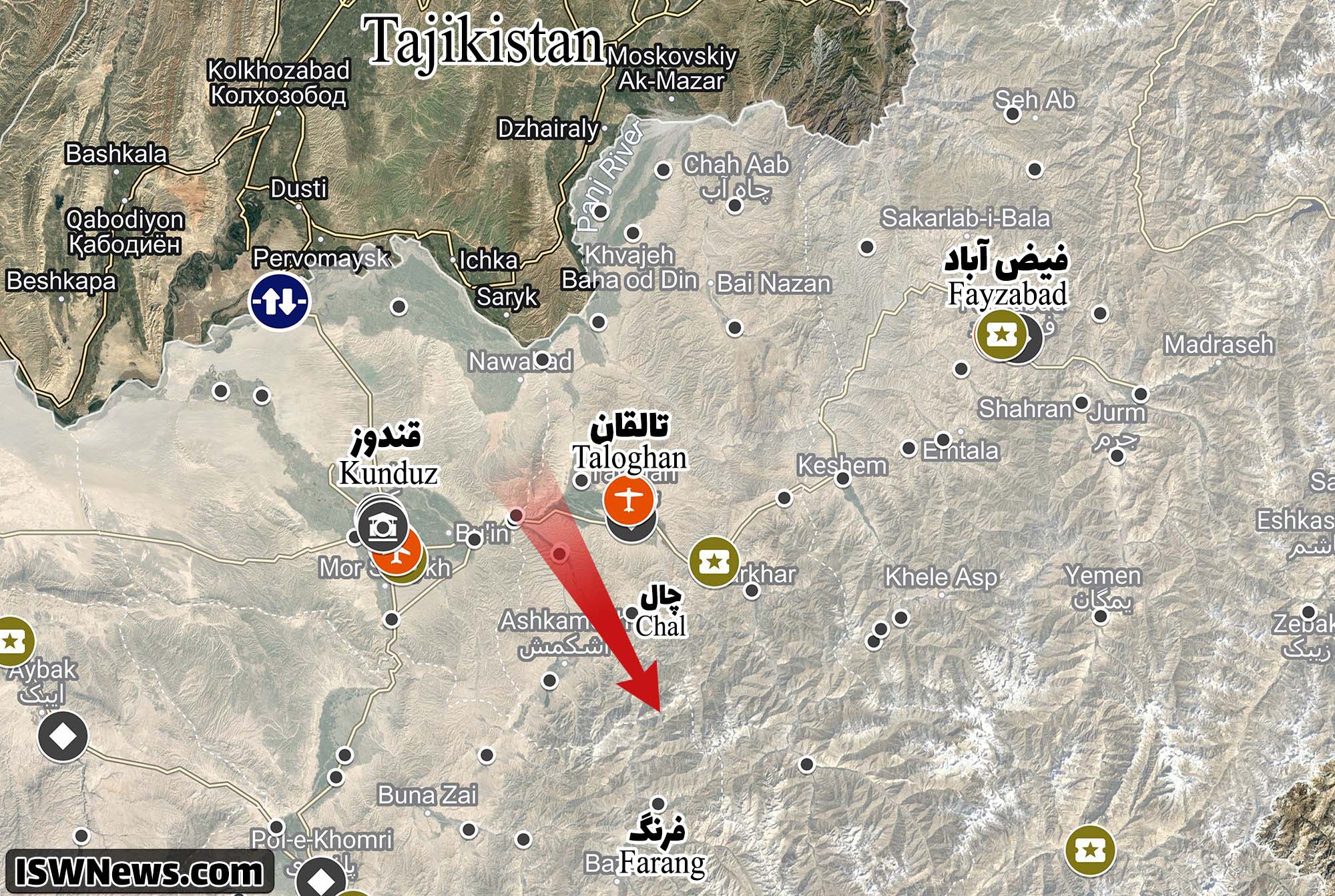
The drone flied over Tajikistan’s airspace to carry out the Monday attack.
The Shire wa Mandre village is located in a mountainous region between Chal district in Takhar province and Khost wa Firing city in Baghlan province, northern Afghanistan.
The mountainous region is under the control of the armed forces of Taliban caretaker government, but militants supervised by Haji Fateh Khan Mubarez, one of the commanders of the popular mobilization forces in the previous government, as well as militants commanded by Ahmad Massoud, leader of the National Resistance Front, are stationed in that area and the militants confront with the Taliban forces in some occasions.
Despite the fact that Taliban have not released any information and the exact number of human losses as a result of the strike so far, but media outlets affiliated to the National Resistance Front reported that the attack left at least more than 10 dead and injured.
Due to the effective role of the Taliban military base in preventing commutations and activities of the forces affiliated to the National Resistance Front in the mountainous region of Shire wa Mandre village, the drone strike on the military base has been most likely carried out by Tajikistan or the United States in order to support forces loyal to the National Resistance Front commander Ahmad Massoud.
It is worth mentioning that unidentified drones targeted the positions of Taliban-affiliated forces in Darqad and Khajeh Bahauddin cities in Takhar province on September 2, 2022, which left several dead and wounded among the Taliban forces. That attack of the previous year was probably carried out by the United States or Tajikistan.
The Russian-language service of the BBC paid heed to the issue in a report titled prisoners of war in Azerbaijan; terrorists or negotiation tools.
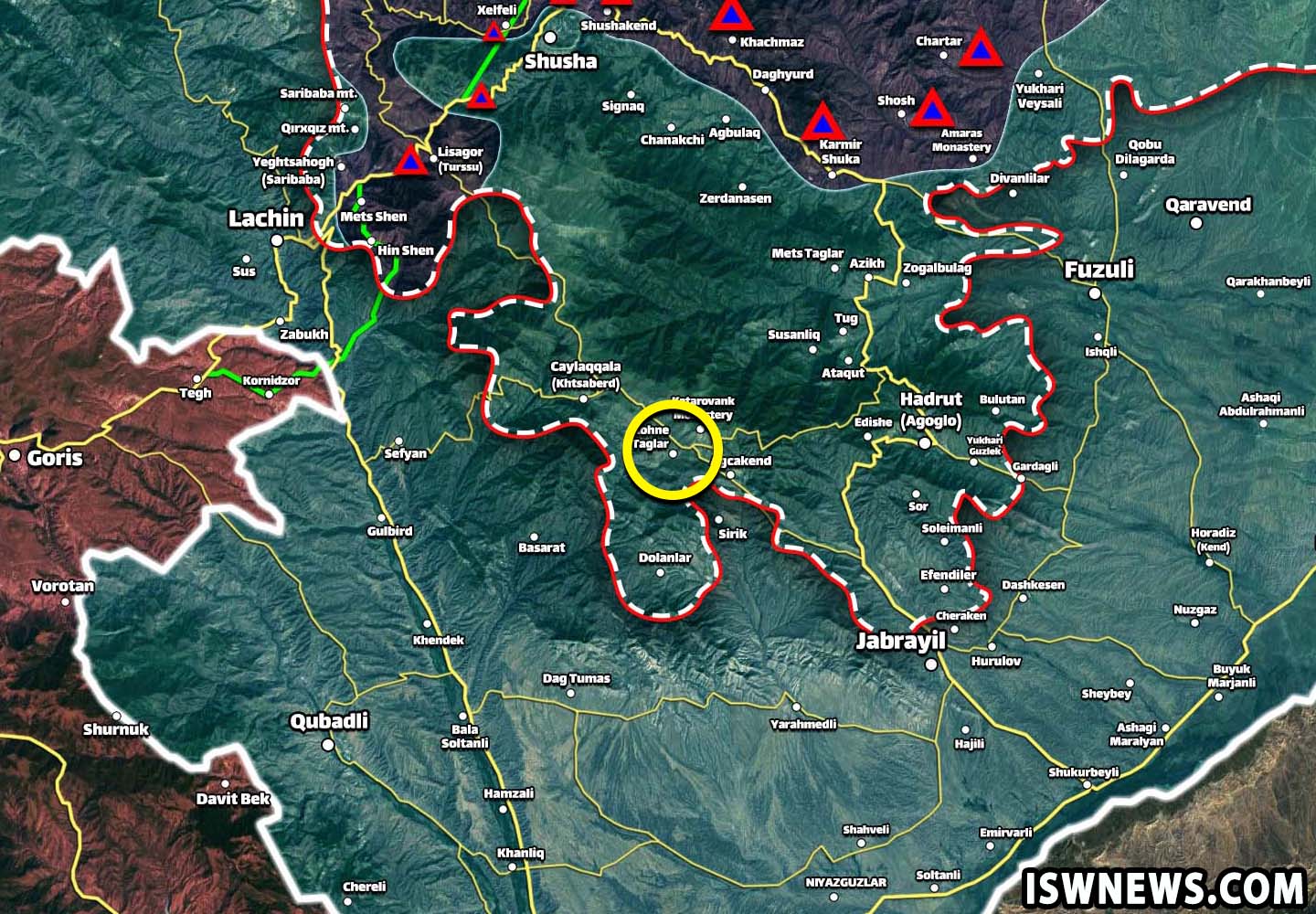
Following the signing ceremony of a tripartite statement among Russia, Republic of Azerbaijan and Armenia on November 9, 2020 and the official conclusion the Second Nagorno-Karabakh War, Azerbaijan’s army besieged and arrested Armenian soldiers, who were stationed in Hin Tagher village in the disputed region of Nagorno-Karabakh. The village is called Kohne Taghlar in Azerbaijani language and in accordance with Azerbaijan’s administrative division is part of the Khojavend County. At the time, when the Armenian soldiers were arrested, the areas controlled by any warring side were not clearly identified; so, the Armenian forces were besieged and then arrested.
In summer 2011, the Azerbaijan Republic sentenced 13 Armenian prisoners of war to six years behind bar on charges of terrorism, keeping and transporting of illegal arms as well as forming unlawful armed organization.
The government in Baku announced that only 33 prisoners of war are in custody. Siranush Sahakian, lawyer representing Armenian POWs in the European Court of Human Rights, believes that in addition to the mentioned number, there are also 90 other Armenian prisoners of war in Azerbaijan.
Arman Tatoyan, human rights defender in Armenia, said that the trial of the Armenian prisoners of war in Azerbaijan was held in contradiction to the international regulations.
Arif Yunusov, human rights activist in Azerbaijan, is of the opinion that the trial was held hastily and without paying heed to the prisoners’ cases. All knew that the people will turn into a case for exchanging and bargaining with Armenia, the United States, Syria and Lebanon. There are two Armenian nationals of Syria among the 13 trialed prisoners of war. Azerbaijan needs the prisoners of war in order to take advantage for different political postures. Earlier, Azerbaijan released 15 Armenian prisoners of war, when an American official visited Baku.
The BBC went on to say that the signing of peace deal between Azerbaijan and Armenia has been tied to the issue of supporting the rights of Armenians in the mountainous region of Nagorno-Karabakh. The Armenian nationals of the Nagorno-Karabakh region are worried about their security, because the Azerbaijani authorities foment hate speeches against the Armenians of the country.
According to the ISWnews, some Armenian sources said that Head of Communication and Prevention Programs at the Armenian Office of the International Committee of the Red Cross Zara Amatuni has released other news stories on the conditions of the Armenian prisoners of war with the of military and paramilitary background, who were active in the Hin Tagher village. The Azerbaijani government allowed Amatuni to meet Vigen Oljakchian, a Lebanese Armenian national, who was imprisoned in Baku. Oljakchian could have a phone conversation with his family members for the first time since the time when he was arrested by Azerbaijan. The Armenian national paramilitary force refused to give any information to the representative of the Red Cross.
The volunteer Armenian national paramilitary forces that came from different countries cooperated with the Armenian armed forces as well as other paramilitary forces during the Second Nagorno-Karabakh War against Azerbaijan’s army. The foreign Armenian national paramilitary forces are those, whose ancestors were massacred or displaced by the Ottoman Empire during the World War I.
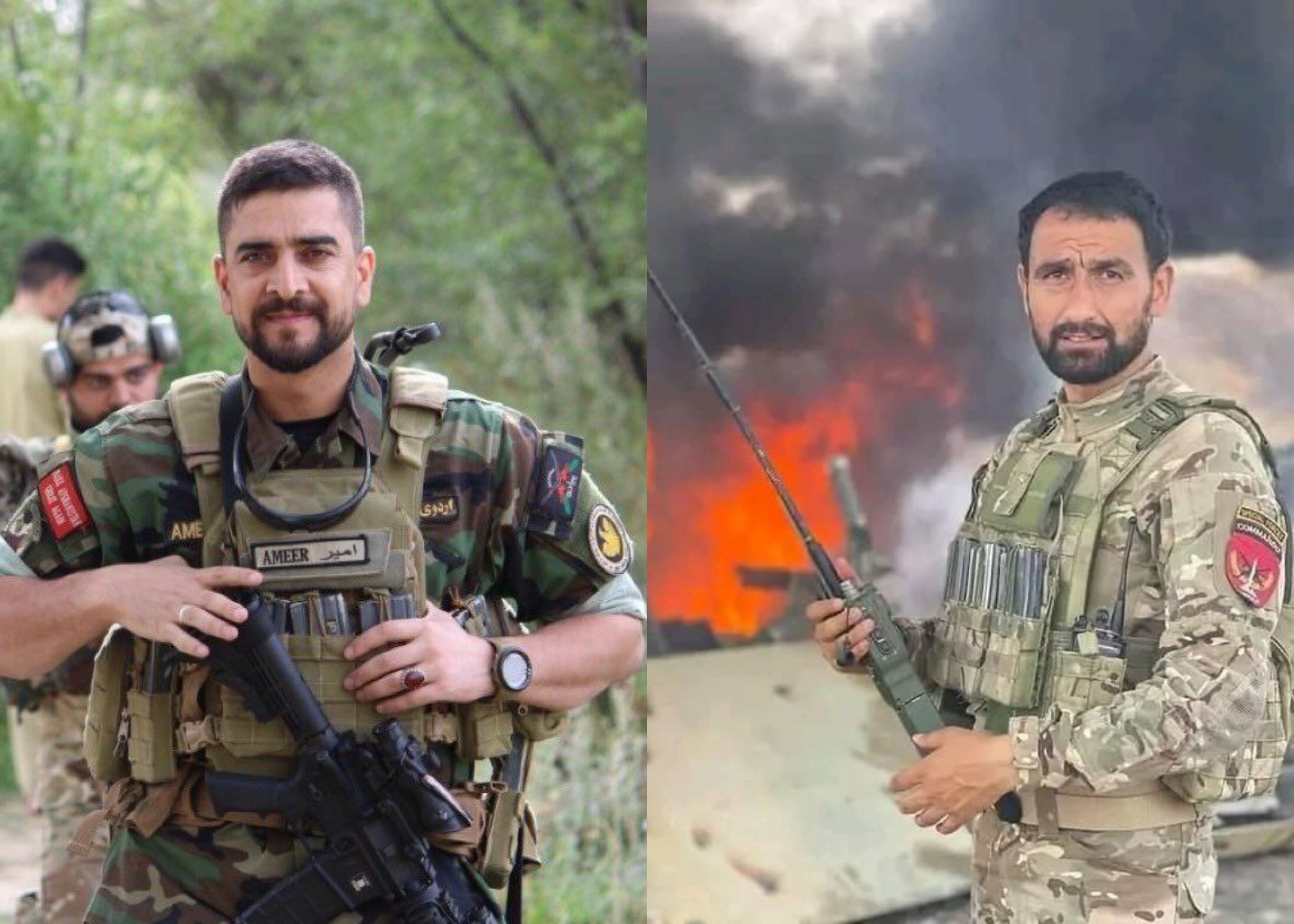
The Afghanistan Liberation Front issued the statement on April 16, confirming the death of the former commander of the Afghan Special Forces after seven days.
According to local sources, Taliban refuses to hand over the corpse of the former commander to his family, and Taliban even threatened that they will severely punish those who hold Islamic funeral rituals, including Islamic funeral prayer, for Akmal Ameer.
In a bid to prevent potential protest gatherings, Taliban arrested more than hundred of civilians, including Akmal Ameer’s relatives, friends and advocates.
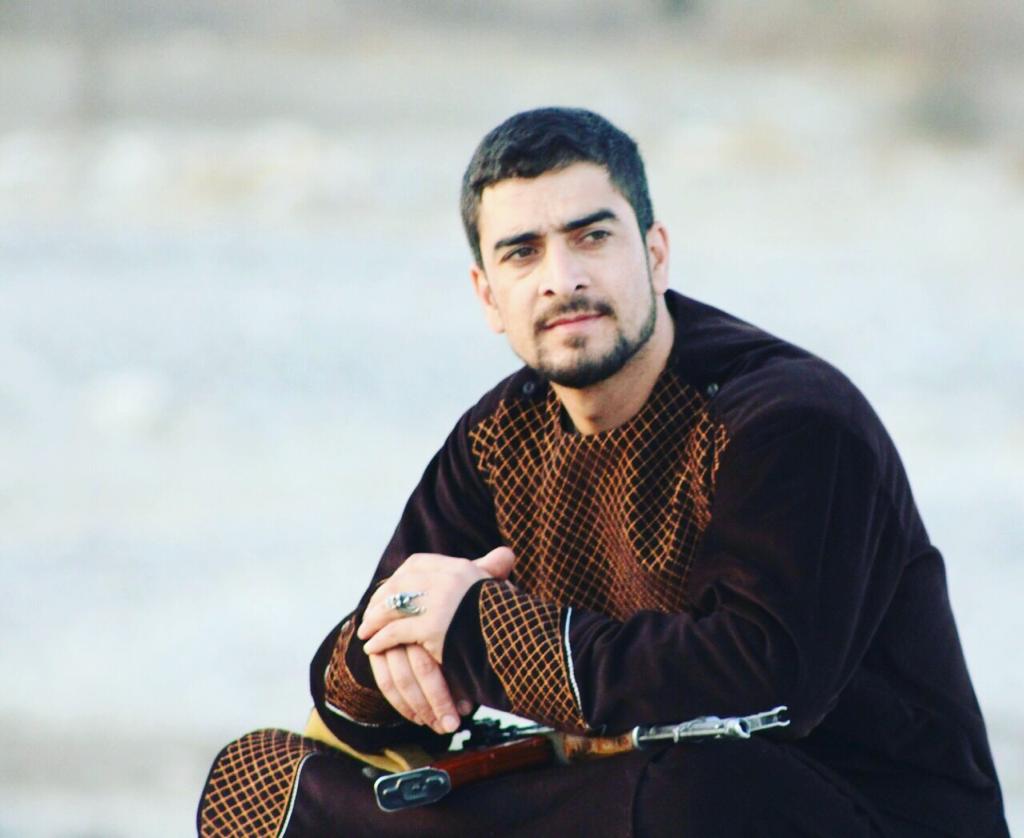
Akmal Ameer was a member of the special forces of Afghanistan Army in the former government, who fought Taliban following the downfall of former President of Afghanistan Ashraf Ghani’s administration under the name of Afghanistan Liberation Front. Ameer was killed along with seven other members of the Afghanistan Liberation Front in a confrontation against Taliban forces in Salang district of Parwan province on April 11, 2023.
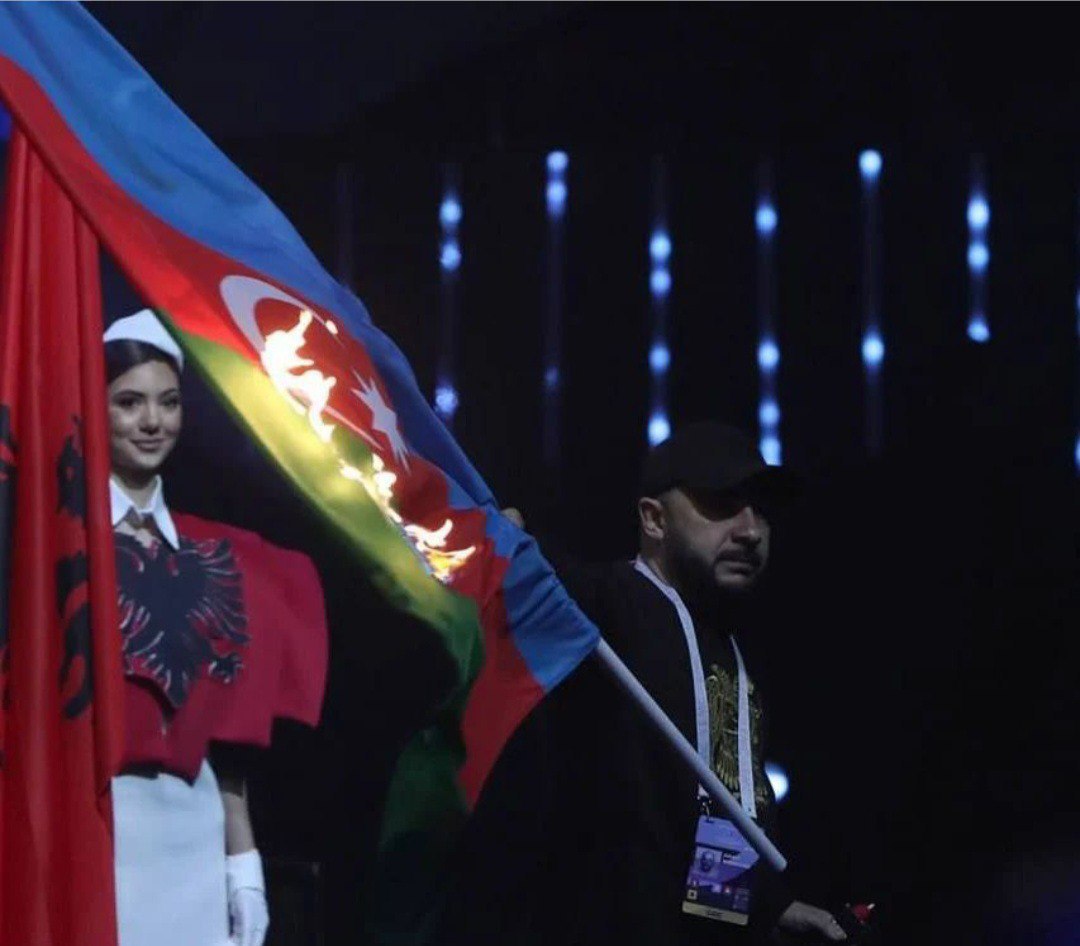
On April 14, the opening ceremony of the 2023 European Weightlifting Championship was held in Armenian capital city. In a part of the ceremony, famous Armenian designer Aram Nikolyan set fire to Azerbaijan’s flag on stage! The move was lauded by a group of the Armenian people… Following the incident, security forces arrested the designer, and Prime Minister of Armenia Nikol Pashinyan, who was present in the event, ordered Nikolyan’s dismissal.
The flag of the Republic of Azerbaijan was set on fire at the opening ceremony of the European Weightlifting Championship in Yerevan
Azerbaijani team’s return and prosecution
Azerbaijan Republic took part in the 2023 European Weightlifting Championship with 12 weightlifters, but after the incident, Azerbaijani authorities called on the athletes to leave Yerevan to Baku. The interesting point is that the weightlifting team of Azerbaijan did not participate in the opening ceremony due to security issues. The Ministry of Foreign Affairs of Azerbaijan condemned the flag burning incident in Armenia, and the attorney general of Azerbaijan ordered filing a lawsuit at the international court. Some nationalist citizens gathered in capital Baku, hoisted their flag and chanted anti-Armenia slogans.
Turkiye’s implicit support
Among other events related to the issue, the support by a Turkish athlete from Azerbaijan Republic was interesting. Cansu Bektash dedicated his medal of this round of competitions to Azerbaijan’s team.
Tension in borderline of Kalbajar-Gegharkunik
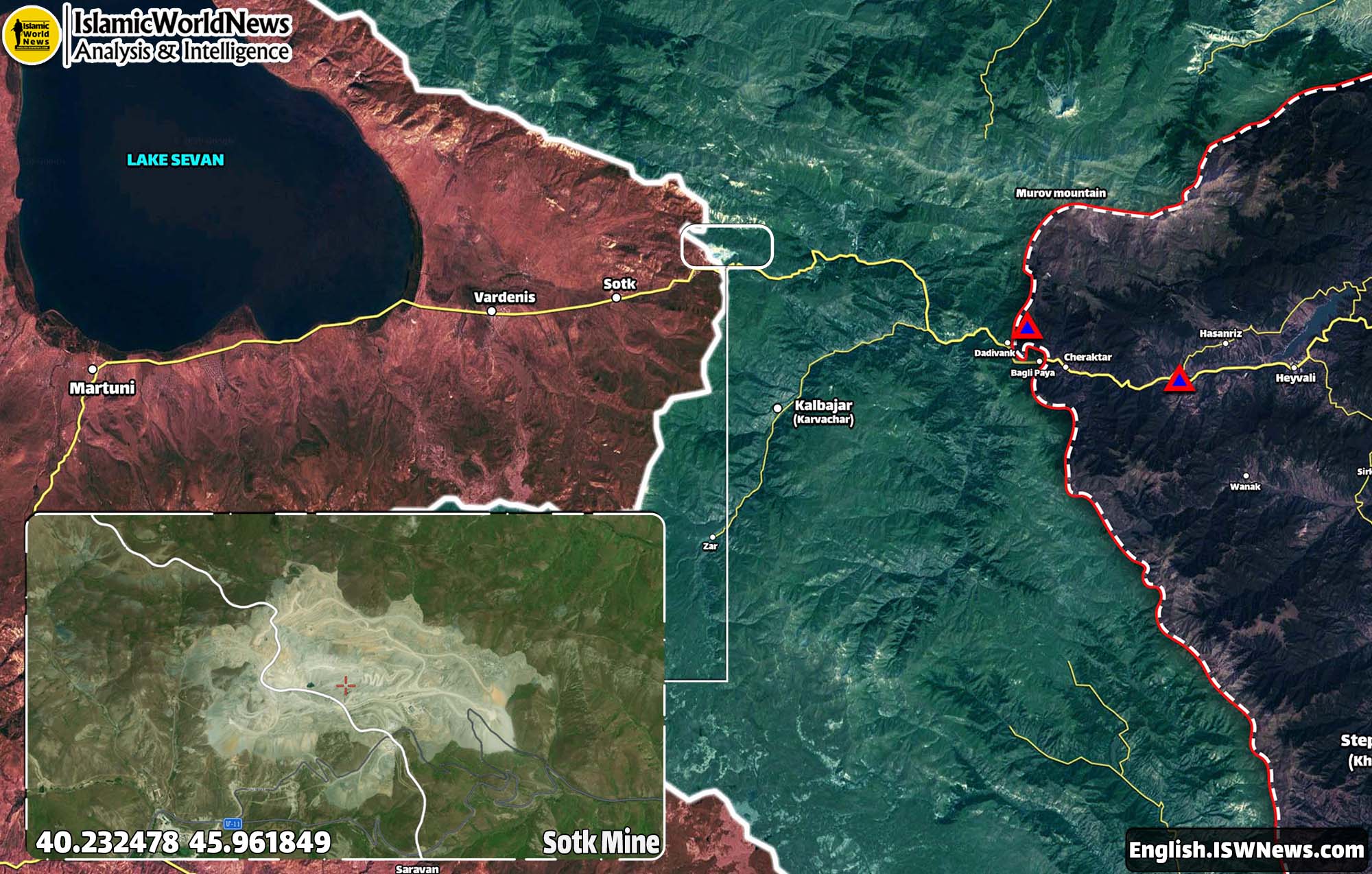
Concurrent with tension in Yerevan, tension escalated in border areas between Armenia and Azerbaijan, and Azerbaijani forces fired at the Sotk gold mine in Gegharkunik, Armenia. The Sotk gold mine is located in the borderline between the two countries. Rosanna Grigoryan, representative of the GeoProMining Gold, said that the armed forces of Azerbaijan fired at the mine from 19 to 23 local time on Friday to Saturday morning. The mining company stopped its activity and staff were pulled out from the mine.
Sotk gold mine in the borderline between the two countries
The incidents happen in circumstances that the tension over arrest of Azerbaijan’s military forces in Armenian soil has not subsided; so, it seems that we should wait for more escalations. It can be said that the public opinion is being prepared for a war between the two nations.
According to local sources, Taliban could have access to information on the exact location of the headquarters of the NLFA forces in Salang district, when they arrested a member of the liberation front and tortured him; then, the Aftab Unit of the 313th Central Army under the supervision of the Taliban’s caretaker government raided the position of the group.
It is worth mentioning that the militants of the National Liberation Front of Afghanistan under the command of Akmal Amir succeeded in resisting in the face of heavy attacks by the Taliban forces until 2 a.m. on April 11, when the militants were killed after suffering from heavy damages and losses; then, they lost their ammunition.
Taliban-affiliated media sources released images of Akmal Amir and Basir Ahmad Andarabi, confirming the death of the two commanders of the National Liberation Front of Afghanistan in Parwan province. However, the NLFA issued a statement denouncing the death of the military commander of the group, underlining that Akmal Amir was injured in the fight against Taliban’s militias, and that the commander has been moved to a safe place.
Akmal Amir and Basir Ahmad Andarabi were known as two members of the special forces of the Afghanistan army during the tenure of the former government of the war-torn country, who had fought along with military forces of the United States and NATO against Taliban militants in Helmand, Kandahar, Uruzgan, Zabul and Kunduz for around 10 years.
Following the collapse of the previous Afghanistan government on June 14, 2021, the commanders moved to Panjshir province and continued their fight against the Taliban under the name of the National Liberation Front of Afghanistan.
The National Liberation Front of Afghanistan consists of anti-Taliban groups, which was formed on February 4, 2022 under the supervision of the former Chief of staff of the Afghan National Army in the previous Afghanistan government Yasin Zia. The groups have active presence in Kunduz, Takhar, Badakhshan, Parwan and Baghlan provinces, pursuing armed confrontation against Taliban.
In the afternoon of April 11, local sources in the Tegh Municipality of the Syunik Province in southern Armenia reported a clash between the Azerbaijani and Armenian military forces.
According to the Ministry of Defence of the Republic of Azerbaijan, the struggle left three Azerbaijani soldiers dead and a few others injured. The Ministry of Defence of Armenia also declared that the confrontation left four Armenian soldiers dead and six others wounded.
Azerbaijan claims that the clash erupted following a shooting by Armenian forces towards positions of the Azerbaijani soldiers on the way to Lachin Corridor. Then, the Azerbaijani army responded to the attack, which led to some casualties among the Armenian ranks.
Now, the two sides have reached a consensus to halt the confrontation; so, there is not any more details of the battle ground in Tegh-Zabukh borderline. Zabukh is a village located in the Lachin District of Azerbaijan Republic.
A weird and unrelated issue regarding to the incident is that some media outlets in Azerbaijan’s capital Baku claimed that Armenia utilized Iran-made drones in the mentioned confrontation, but Yerevan ruled out the fake news story, attributing the propaganda to media outlets affiliated to Azerbaijan’s President Ilham Aliyev. The unfounded accusation has been leveled in line with Baku’s Iranophobic policy and its strategy to pave the ground for potential clashes with Iran.
It should be mentioned that Azerbaijan’s army held joint military drills along with the allies of the country in its border areas with Armenia.
Baku resorted to anti-Tehran accusations in recent months, while the Islamic Republic has called on Azerbaijan and Armenia to abide by international borders and stop escalating tensions.
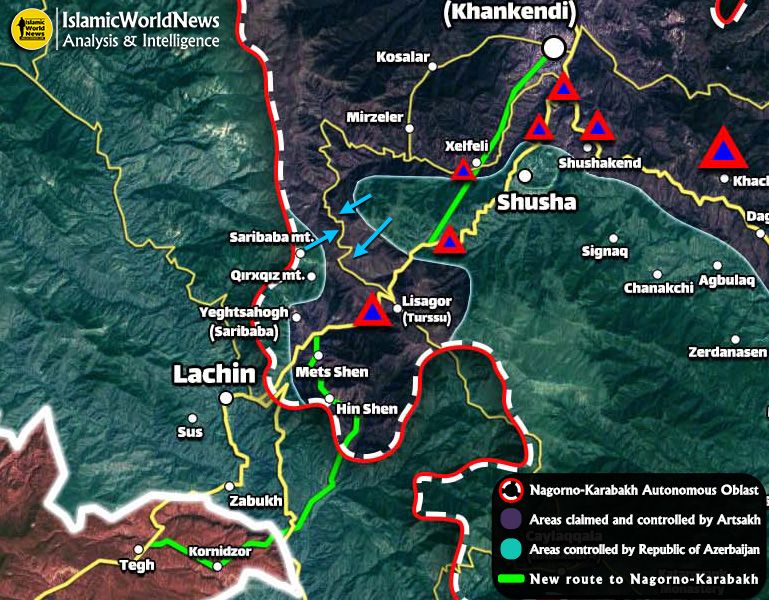
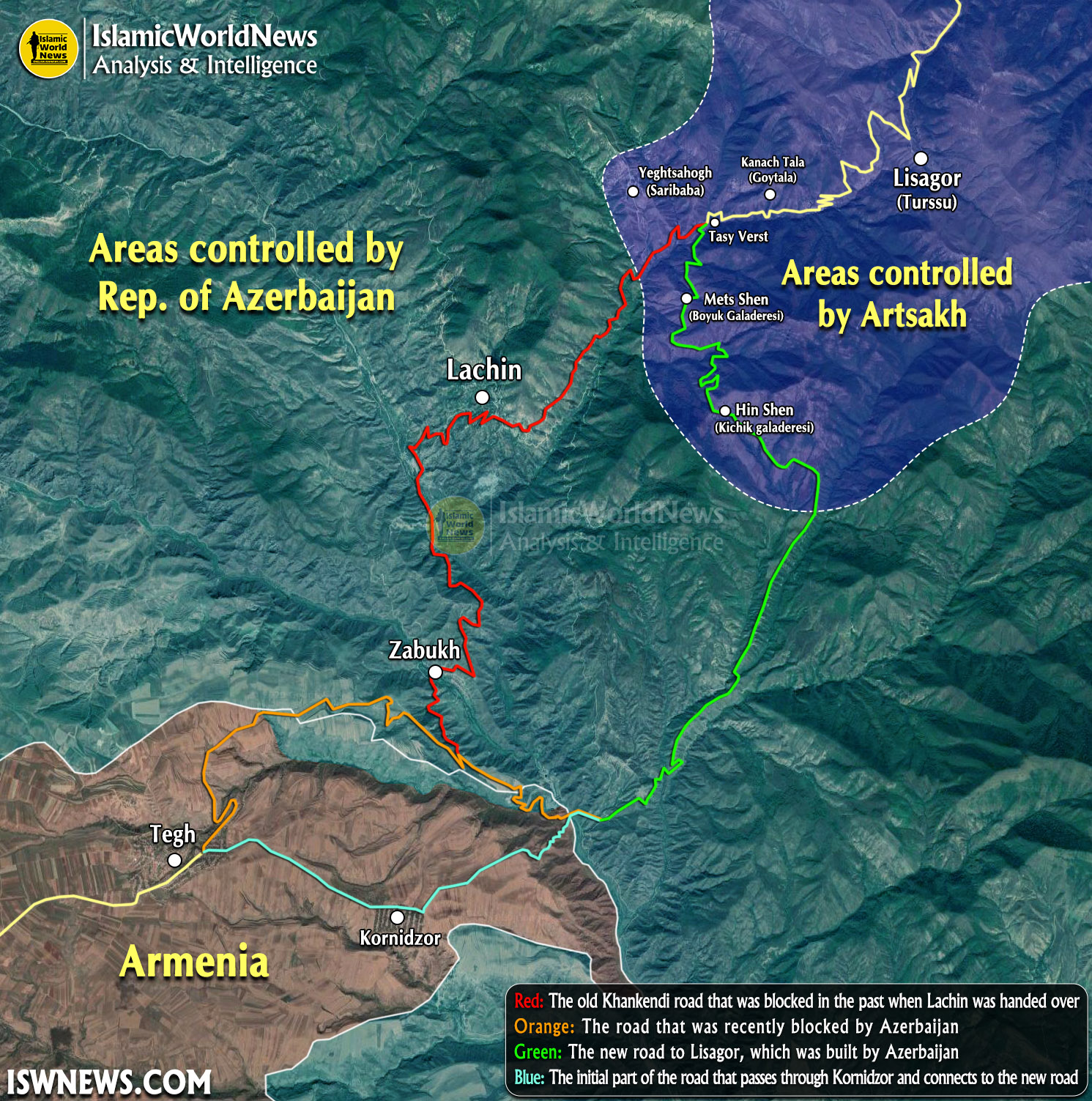
A number of so-called environmental activists, who support Azerbaijan’s President Ilham Aliyev, stopped transit of Armenians in Shusha city towards the center of Nagorno-Karabakh (Artsakh) region. Azerbaijan’s armed forces, from March 25, have started advancing in some parts of northern corridor of Lachin and seized control of heights overlooking side roads from Lisagor (Turssu) village to Stepanakert (Khankendi) city, the center of Nagorno-Karabakh region. Therefore, residents of six villages of Lisagor (Turssu), Yeghtsahogh (Saribaba), Mets Shen (Buyuk Galadarasi), Hen Shen (Kichik Galadarasi), Kanach Tala (Goytala) and Tasy Verst that are Armenian settlements have been besieged, and the side roads, which are their last chance to maintain their connection with the center of the Nagorno-Karabakh have been blocked.
Challenge of living in Line of Contact
Radio Liberty of Armenia has prepared a report on regions that are near the Line of Contact and witnessing a hard situation following the closure of transportation ways. Lisagor in this region is the only residential area, where the Armenians have been resided in following the end of First Nagorno-Karabakh War from February 1988 to May 1994.
Qajik Nasibyan, head of Lisagor council, told a reporter of the radio that the village with 73 Armenian people has been situated in vicinity of the Line of Contact after the end of the Second Nagorno-Karabakh War (September 27, 2020 – November 10, 2020). Their presence zone on the road is 8 to 10 kilometers near Shusha. Now, the village comes under the fire of the observation post of the Azerbaijan Republic’s army. The Azerbaijan armed forces plan to control the only remained road for their connection to Stepanakert; so, they took it.
Artak Hakobyan, head of Saribaba council, explained the hardships of living under this condition, saying that aside from healthcare issues, other problems have happened. Students cannot commute to Stepanakert. The Azerbaijan army personnel have been deployed 500 meters away from the Saribaba village. The residents of the village can farm only near their houses. In August 2022, Azerbaijan Republic retook Lachin District, and the Azeri Army controlled heights around the village. Azerbaijanis have stolen 17 cows so far; so, if we neglect for only five minutes, our cattle would be stolen.
Azerbaijan does not intend to retreat
Siran Ayraptian, representative of the Armenian separatists of Artsakh, in an interview with Radio Liberty pointed to the inconclusive negotiations by Russian peacekeepers to urge Azerbaijan Republic to retreat from the heights overlooking Lisagor village, saying that Azerbaijan resorted to blocking the only transportation road in a bid to force the Armenian community there to stop their demand for independence. On one hand, the Azeri authorities speak of peace, and on the other hand, they resort to enforcing pressure in order to force us to do something else, but the performance would not bring positive result.
Pro-Aliyev environmental activists present in Shusha sit-in accuse Armenian people of illegal excavation of mines in Karabakh and pollution in that mountainous region; therefore, they resort to the excuse to block the road even for routine traffic. The authorities in Azerbaijan Republic say that the side roads are being applied for delivery of arms and military equipment. Thus, all roads should be closed for residents of central parts of the mountainous Karabakh region!
From checkpoint to border police station
Azerbaijan Republic is saying that they should build a border police station in Lachin Corridor. The Azeri officials first announced that an checkpoint should be erected in Shusha city, but now they say the post should be constructed in the borderline between Azerbaijan and Armenia.
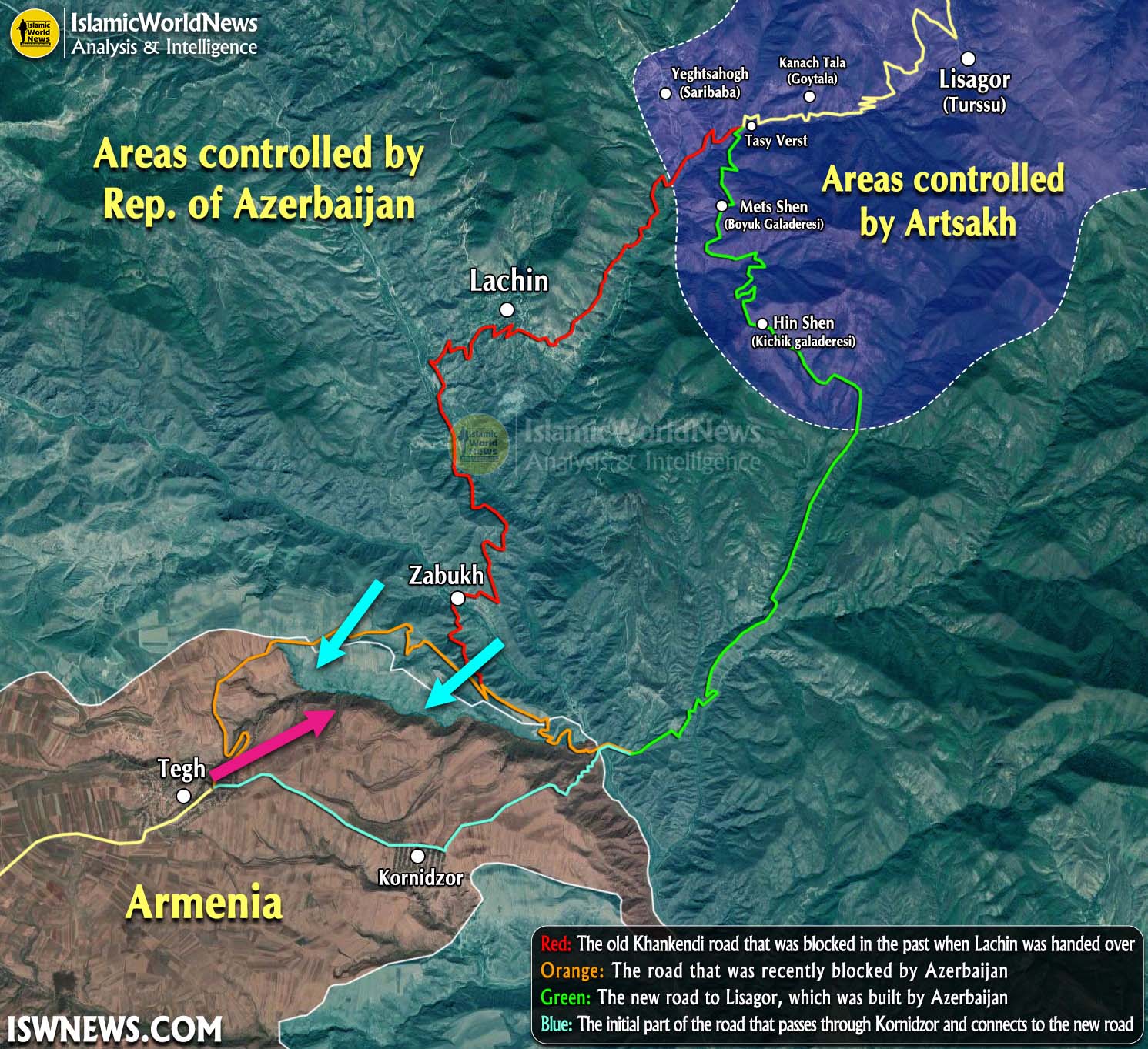
It is worth mentioning that the Azerbaijan Army trespassed on Armenian soil, when they attempted to cut the old route of Tegh to Lachin Corridor, and they occupied hundreds of hectares of Armenian territories in east and northeast of Tegh. (Map below)
Checkpoint is contrary to Moscow statement
Russian foreign ministry spokesperson Maria Zakharova underlined the need for implementing provisions of the Nagorno-Karabakh ceasefire agreement, which is a tripartite statement signed by Russia, Azerbaijan and Armenia on November 9, 2020, saying that the establishment of a checkpoint is not among the provisions of the statement, but Moscow will observe the option.
Challenges of new path of Lachin Corridor
The Lachin Corridor links Armenians living in the Nagorno-Karabakh region to Armenia; so, the residents of the region can only meet their needs through this path.
The developments of the Lachin Corridor are also of importance. According to the Nagorno-Karabakh ceasefire agreement, the old route from Tegh village should be closed from April 1, 2023 and a new path towards the south should be used, which has a boundary of five kilometers. Azerbaijan constructed parts of the road, which is under its control prior to the end of last year (2022), and it has blocked the old route totally.
The substitute route, which passes across Kornidzor village in southern Tegh village, has not been completed yet by Armenia. 200 meters of the road near Kornidzor village is under construction; so, transport through the piece of road is hard. Armenia’s hesitance to construct the route seems to be a weird gesture!
Detailed map of the new and old routes of the southern part of Lachine Corridor