On February 8, hours after the start of Pakistani parliamentary election, the opposition militant groups, especially the Tehreek-e-Taliban Pakistan (TTP) and Baloch separatists (BLA, BLF), attacked the polling centers and agents of the national parliamentary elections of Pakistan and killed a number of Pakistani soldiers and government forces.
Two Pakistani soldiers were killed and five others were injured following an explosion in Kharan district of Balochistan province. Also, following another explosion in the city of Leja located in this state, two Pakistani soldiers were killed and nine others were injured. According to local media reports, at least 14 explosions occurred in Gwadar region today and some polling centers have been closed.
In Khyber Pakhtunkhwa, five Pakistani soldiers were killed and two others were injured as a result of an attack by unknown armed men (probably Tehreek-e-Taliban) on Kolachi area in Dera Ismail Khan. In the second attack, unknown gunmen (probably Tehreek-e-Taliban) attacked Pakistani soldiers in Sheikh Attar area of Khyber Pakhtunkhwa province and two people were injured.
In addition to these attacks, Tehreek-e-Taliban militants have captured one of the polling centers in the Tepi region of North Waziristan and shot at three female employees of the Pakistani government.
More than 500,000 security forces were deployed across Pakistan to ensure security in sensitive areas and polling centers. Despite strong criticism from political parties, internet access in Pakistan was temporarily suspended due to security concerns and finally returned to normal this evening as the election voting deadline ended.
It is worth mentioning that the voting process for the 12th parliamentary elections started at 8 AM on Thursday, and approximately 128 million eligible Pakistani voters took part in these nationwide elections.
The main competition is between the Muslim League led by former prime minister of Pakistan Nawaz Sharif and the Pakistan Tehreek-e-Insaf (PTI) led by former prime minister of Pakistan Imran Khan, along with parties supporting these two factions.
The Pakistan People’s Party, led by former minister of foreign affairs of Pakistan Bilawal Bhutto Zardari, also holds significant power among Pakistani parties; although, it is unlikely for the party to capture enough votes for the prime ministerial position and may end up being part of a coalition government.
Imran Khan is currently in prison and prohibited from participating in elections and holding government positions, but members of his party have found the opportunity to participate in the parliamentary elections in Pakistan, and he has also supported candidates from his party.
Opposition groups in Pakistan, especially separatist Baloch groups, have threatened to attack polling stations. In this regard, several explosions have been reported in various areas of the Balochistan province, but due to partial internet outages, details have not been fully published so far.
Jihand Baloch, the spokesperson for the Baloch Liberation Army, announced the end of the group’s operation in the town of Mach, located in Kachhi District of the Balochistan province.
Despite the death of 12 militants affiliated to the Baloch Liberation Army in the clashes with Pakistani government forces, the group claims that the attack on Mach town was successful and that they achieved all their objectives.
The group has asked its remaining forces to return to their hideouts and leave the operational area. According to state media reports, the Baloch Liberation Army terrorists have caused significant damage to homes, shops, and livelihoods of Mach residents and have killed several civilians in the area.
The clash between the Baloch Liberation Army and Pakistani armed forces in the town of Mach began on Monday (January 29), and continued until the Wednesday evening (January 31).
Although both sides have released different details and statistics about the conflict, final and accurate information about the extent of casualties and damage has not been published so far, and official sources have postponed the details of the clashes and their casualties until further notice.
The armed terrorists of the Baloch Liberation Army attacked the Mach town from three different directions on Monday night (January 29). Pakistani security forces and state media reported the repulsion of the attack and denied the Baloch separatists’ claim of gaining control over the town of Mach.
The attack began with the firing of at least 15 rockets at a base belonging to Pakistani security forces in Mach town and the primary objective of the Baloch Liberation Army attack was the seizure of the Mach prison.
Mach jail in Mach town – click to view in full size
The Baloch Liberation Army terrorist group claimed the killing of 45 government military personnel in this fierce confrontation, while Pakistani authorities dismissed this claim, stating only two injuries among their personnel.
This incident occurs amidst the backdrop of the upcoming general elections in Pakistan on Thursday (February 8), which will be held amidst terrorist attacks and numerous insecurities in the provinces of Balochistan and Khyber Pakhtunkhwa.
According to a report by the Pakistan Institute of Peace Studies (PIPS), some 84% of terrorist attacks in the year 2023 took place in the provinces of Balochistan and Khyber Pakhtunkhwa, resulting in the death and injury of nearly 2,700 people.
Pictures from inside Mach town in Baluchistan provinceClashes in Mach area of Baluchistan provinceDestruction of several cars in Mach area of Baluchistan province
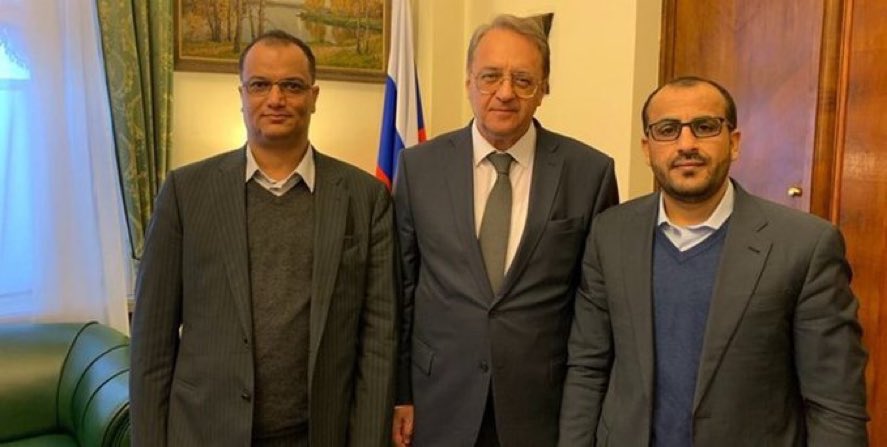
In this meeting, in addition to discussing regional tensions and the current situation in Palestine and the Red Sea, the two sides exchanged views on ways to resolve the military and political crisis in Yemen, and emphasized the efforts of influential countries and international organizations to hold negotiations between the various political factions of Yemen.
Russian and Yemeni officials also condemned the US-UK airstrikes against Yemen, considering their measures as the root cause of insecurity and instability in the West Asia region
The visit and meeting of the Ansar Allah movement’s officials in Russia is not a new development, as there have been multiple meetings and discussions between Abdul-Salam and Bogdanov in recent years. However, the significant aspect of this visit is the formation of this meeting in this volatile period of time.
The common ground between the Ansar Allah movement of Yemen and the Russian Federation lies in their opposition to US projects in the West Asia region, and Moscow considers direct military engagement by the Ansar Allah movement with the US-led coalition in the Arabian Sea and the Red Sea as highly important.
It can be considered that the Russian Federation’s main goal is to keep the US and the European Union occupied in this region, while the Ansar Allah movement’s main objective in this relation is to gain legitimacy and attract support from the Russian government regarding internal issues of Yemen and the future decisions to be made by the United Nations Security Council.
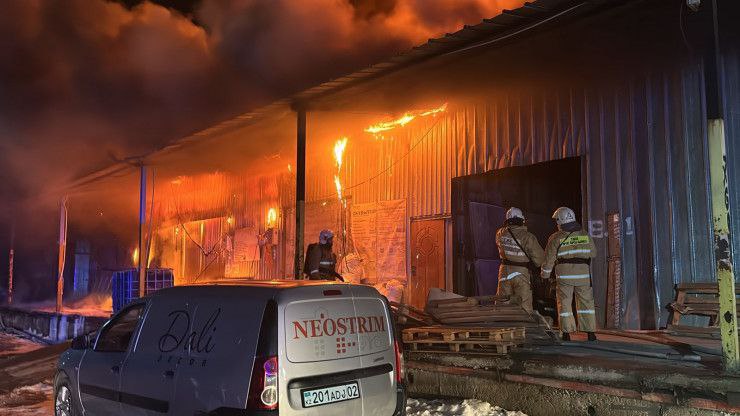
Neostrim is affiliated to the international company BASF Central Asia, which is supported by Israeli investors. Morover, a number of the company’s shareholders are also Israeli Zionists.
According to the report, the attack on this warehouse was carried out by an unidentified person who first placed an oxygen capsule in the warehouse and then set it on fire using gasoline before fleeing the scene. The Kazakh security forces continue their efforts to identify and arrest this assailant.
This fire is related to suspicious events and actions in recent months in Middle Eastern countries and is estimated to be due to the spontaneous anti-Israeli actions of the people in this region.
In this regard, several Tajik, Kazakh and Uzbek citizens have been arrested on charges of underground activities against the Israeli regime, and the warehouses of Israeli companies Technopark and Saxovat Broyler in Tashkent, the capital of Uzbekistan, have also experienced unusual fires.
By examining the satellite images, the exact geographical location of the Jaish-ul-Adl terrorist group base was identified in Pakistan. This base is located in Panjabuni mountain in the northwest of Panjgur town with coordinates 27.2133, 63.7078. The distance between this terrorist headquarters and the Iranian border is about 40 kilometers.
After Iran’s preemptive attack on the positions of the Jaish ul-Adl terrorist group on January 16, it was said that the headquarters of this group is located in the Green mountain (Koh-i-Sabz) in the northeast of Panjgur; But further investigations showed that the main and correct location of the headquarters is located in another place.
It should be noted that this terrorist base is only one of the headquarters of the Jaish-ul-Adl terrorist group in Baluchistan province of Pakistan, and the militants of this group have a large presence in the southwestern regions of Pakistan.
It is said that in response to Pakistan’s attacks last night and this morning, the Taliban shelled the Ganjgol and Navapas checkpoints of Pakistan’s Border Guard Forces.
This is the 15th border conflict between the Taliban and Pakistan since the beginning of Taliban reign in Afghanistan. The previous conflict occurred on October 5, at the Spin Boldak-Chaman border crossing located in Kandahar province.
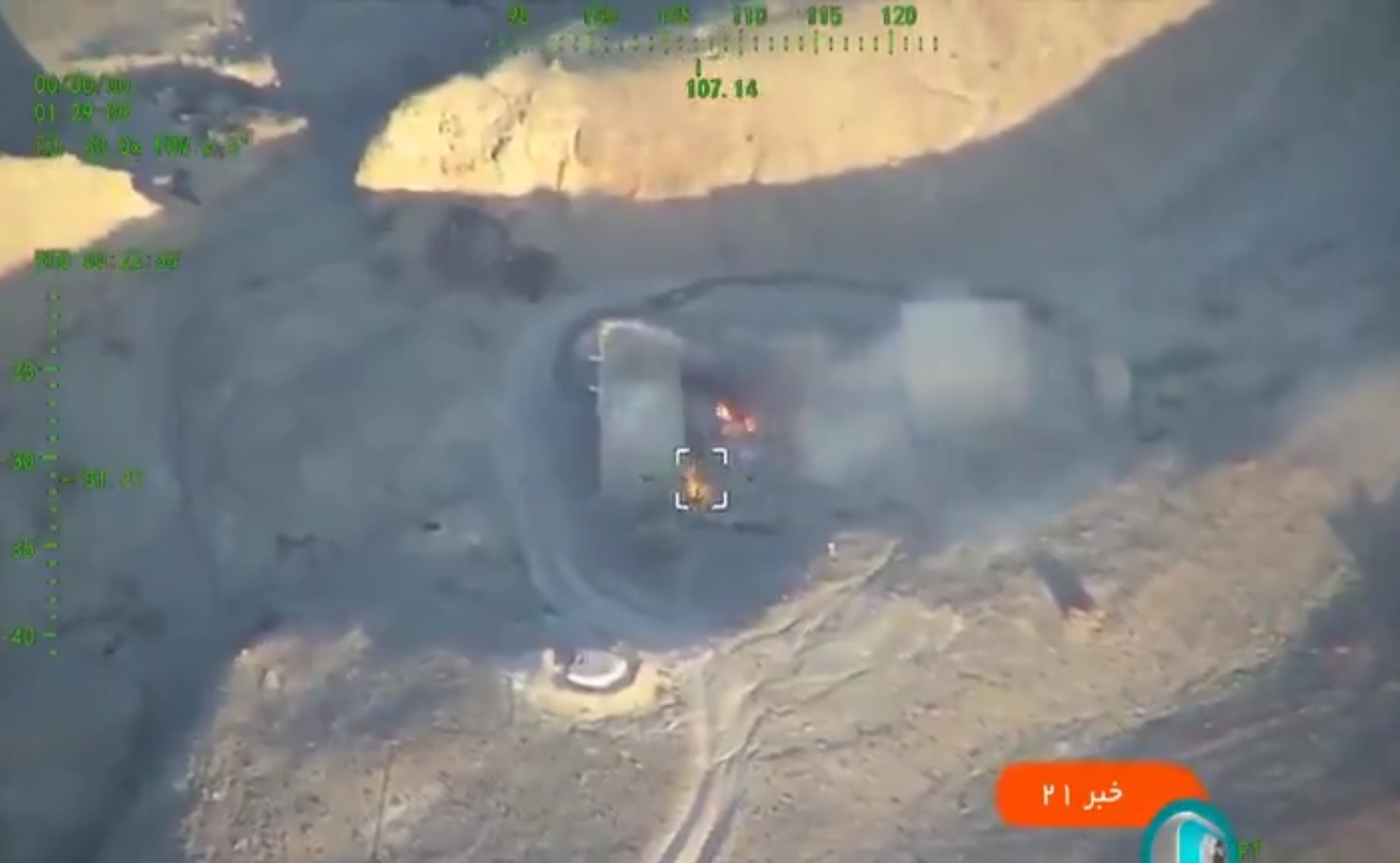
This video was broadcast as a TV report by the official media of Iran and made available to the public.
In this report, the IRGC drone is shown monitoring the headquarters of Jaish ul-Adl terrorists in the mountainous region near the Iran-Pakistan border. The base is one of the main headquarters of the Jaish ul-Adl terrorist group in Pakistani territory. As it is clear in the images, they show different parts of the base, observation hills, armed individuals stationed there, and a training ground for terrorist training and shooting exercise. The terrorist base is located deep in the mountains and valleys of the Kouh-Sabz (Green Mountain), making ground access difficult.
According to IRGC data, terrorists have been using this headquarters for training and planning terrorist operations inside Iranian territory for two decades. Recently, about 50 terrorists entered this headquarters for planning, coordination, and preparation for a large terrorist operation inside Iran. Three days ago (on January 16), they were targeted by Iranian drone and missile attacks, thwarting their evil intentions and resulting in the killing and injury of some terrorists.
Monitoring of Jaish-ul-Adl terrorist headquarters in Pakistan’s Sabz Mountain
The release of this video once again proves the accuracy of Iran’s claim regarding the existence of Jaish ul-Adl terrorist bases in border areas in western Pakistan. Iran had repeatedly informed the friendly and brotherly country, Pakistan, about these bases and had urged them to take action against these terrorist bases by providing information about them to the Pakistani government and army. Unfortunately, due to various reasons, the Pakistani government and army refrained from destroying these bases or taking effective action against Jaish ul-Adl terrorists. Therefore, to prevent new terrorist disasters in Iranian territory, Iran was forced to intensify its targeting of the terrorists’ base in the Kouh-Sabz, which was not welcomed by the Pakistani government.
On the other hand, however, the Pakistani government, in order to escape intense public pressure and scorn by its Indian rivals, was forced to carry out a retaliatory operation; but against whom? Against some Pakistani migrants who had turned into a tragic disaster, resulting in the loss of lives of women and children. However, Pakistan claimed that it has targeted the headquarters and hideouts of the Balochistan Liberation Army-Balochistan Liberation Front (BLA – BLF) in Iranian territory. Some Pakistani media outlets have gone so far as to make a strange claim that Iran is harboring terrorists from BLA-BLF! This claim is being made while the government and army of Pakistan can never find a terrorist base in Iran like the one in the Kouh-Sabz of Pakistan and publish its videos, or release images to prove their claim!
Once again, we refer you to the statements of the Ministry of Foreign Affairs regarding the recent events of the past few days, as well as Friday’s phone conversation between the Iranian foreign minister and his Pakistani counterpart. Iran, before and after the attack, even after Pakistan’s attack on Iranian soil, addressed Pakistan in a friendly and brotherly tone, but strongly reminded them of their previous security commitments and urged them to act in line with them.
As we have said before, Pakistani brothers should not interpret the friendly and brotherly tone in Iranian officials’ statements as a sign of weakness. Iran still emphasizes brotherliness and friendship with the Pakistani people and the preservation of the territorial integrity of this country, but it will not hesitate in facing terrorists and protecting Iranians’ lives. If the security shortcomings of the friendly and brotherly Pakistani government do not turn into active and effective cooperation, Iran will not hesitate to carry out such preemptive operations again in the future.
On Friday, Iran FM Hossein Amirabdollahian also emphasized the serious pursuit of security and military cooperation between the two countries in a phone conversation with Jalil Abbas Jilani. For his part, Jilani emphasized the common approach of the two nations in combating terrorism and stressed the necessity of maintaining constructive and fraternal relations with Tehran, inviting Amirabdollahian to visit Islamabad.
Therefore, it is now possible to hope for a joint security plan between the two countries in border areas of Pakistan and Iran, and perhaps now is the time for Pakistan to seriously consider its fight against terrorist groups in the west of the neighboring country.
The video of the TV report that was broadcasted by the official media of Iran. With English subtitles.
In the early hours of this morning, the Pakistani army carried out several airstrikes against some points inside Iran on two occasions around 04:30 and 06:00. This attack was carried out by ground-to-ground missiles, fighter jets and drones of the Pakistani Air Force against seven points in Iranian soil.
According to the Pakistani army, in these attacks, Pakistani Baloch terrorists and members of the Balochistan Liberation Front (BLF) and Balochistan Liberation Army (BLA) were targeted, and no Iranian citizen was harmed in these attacks.
The moment of firing a number of rockets towards the border areas of Saravan districtThe moment of firing a number of rockets towards the border areas of Saravan district
According to the Deputy Governor of Sistan and Baluchestan for Security and Law Enforcement Affairs, in Pakistan’s attacks on the border areas of Saravan County, nine people, including two men, three women, and four children all Pakistani migrant have been killed so far. No Iranian citizens were harmed in this attack.
Also, all of the attacks were carried out from outside the territory of Iran and no Pakistani fighter jets or drones entered the Iran’s airspace
The Pakistani Foreign Ministry, in a statement, called the purpose of this action an attack on the hideouts of the terrorist group Balochistan Liberation Front (BLF) and an attempt to defend Pakistan’s national security, stating that this country fully respects Iran’s sovereignty and territorial integrity.
Aftermath of Pakistani airstrikes in Saravan district
The Pakistani Foreign Ministry also added that it will continue its efforts to find joint solutions with Iran against terrorism. The Iranian Foreign Ministry has announced the summoning of the Pakistani embassy’s chargé d’affaires and has demanded an immediate explanation from the Pakistani government about this action. China and Turkiye have also called for restraint by both sides and have declared their readiness to reduce tensions between the two countries.
The Balochistan Liberation Front (BLF) terrorist group has also denied the Pakistani army’s claim about the presence of this group’s elements in Iranian soil and announced that none of the members of this group have been killed in Pakistan’s attacks.
Balochistan Liberation Front (BLF) terrorist group’s statement rejecting the claim of the Pakistani army about the attack on members of this group in Iran. This group also announced that it has no base in Iran.
Pakistan’s unjustified action in bombing Pakistani migrants in Saravan was carried out in response to the anti-terrorist attack of the Islamic Revolution Guards Corps (IRGC) on the positions of the terrorist group known as Jaish ul-Adl. Pakistan sees this act as a reciprocation of Iran’s action, but this escalation of tension can lead to further political and social turmoil in this country.
Aftermath of Pakistani airstrikes in Saravan district
The neighboring country in eastern Iran has been plagued by political and economic instability, as well as extremist ideologies, during its 77 years since its formation in 1947. Despite having a well-equipped military and intelligence agency, the internal turmoil has led to the nurturing of terrorists and the exploitation of various ethnic groups such as Pashtuns and Balochs by intelligence agencies from the UK and the US and more importantly Israeli Mossad.
The consequences of these issues have affected all neighboring countries, from Afghanistan to Iran and India. Therefore, the solution to this problem lies in the actions and reforms of the Pakistani government to rectify the internal structure of the country.
Iran’s preventive attack on Jaish ul-Adl terrorists in Pakistan may have been a wake-up call for the Pakistani government to find a swift solution to this matter. The reminder of this message in the statement of the Ministry of Foreign Affairs of Iran is quite clear. Before the attack, after its attack and even after Pakistan’s attack on Iranian soil, Iran addressed Pakistan with a consistent and friendly and brotherly process and asked it to fulfill its previous security obligations. This fraternal tone of Iran should not be interpreted by Pakistanis as a message of weakness.
The power of terrorist groups like the Taliban, the Baloch Liberation Army, Lashkar-e-Taiba, etc., has increased due to the negligence of the Pakistani government and military, or the conflicting policies of security systems, and this insecurity is now manifesting itself in border conflicts with neighboring countries such as the Islamic Republic of Iran.
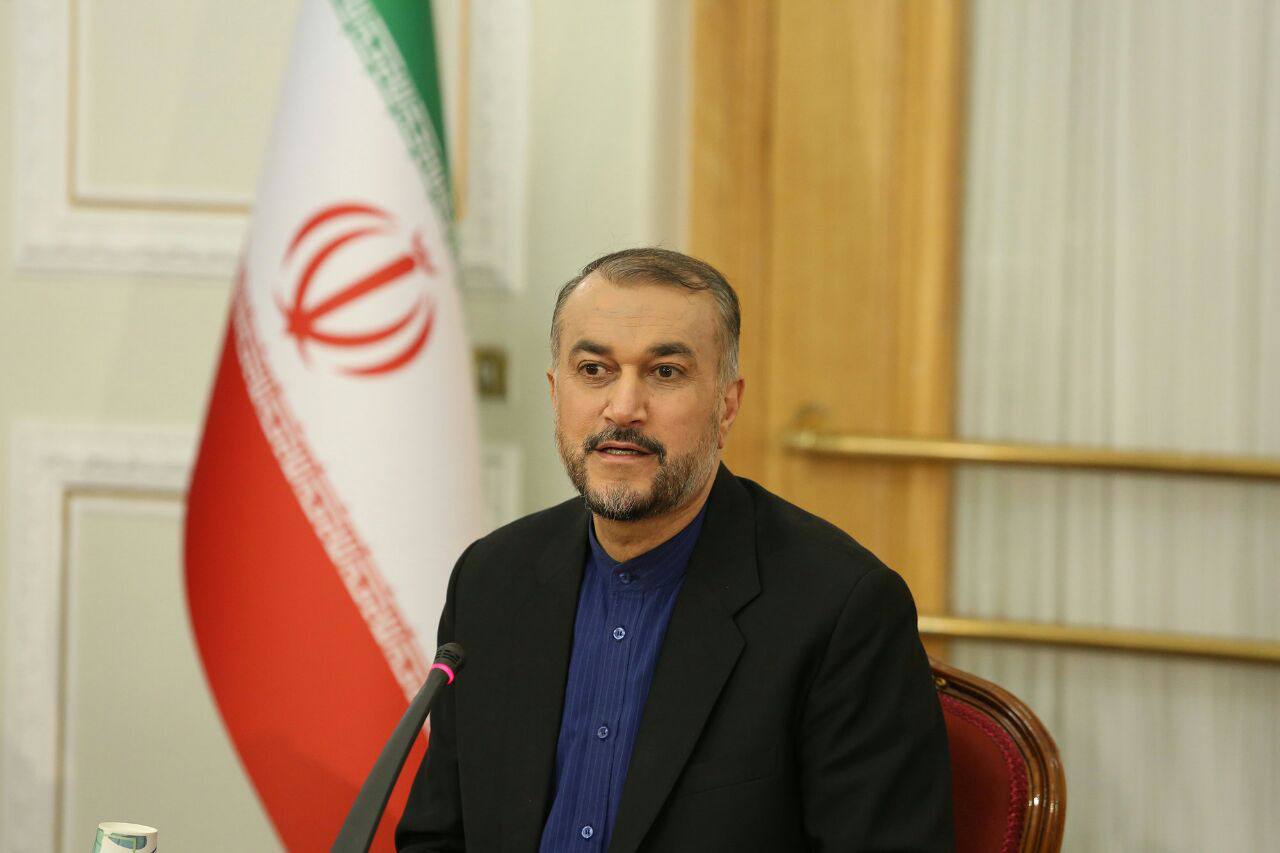
We have a security agreement with Iraq that obligates Baghdad and Erbil to protect the borders. In Erbil, we bombed Mossad members as part of Iran’s response.
We targeted an Iranian terrorist group in Pakistan called Jaish ul-Adl. None of Pakistani citizens have been attacked by Iranian missiles and drones. We respect the sovereignty and territorial integrity of Pakistan and Iraq, but we do not allow our national security to be threatened.
What we have done is consistent with the security of Iraq, Pakistan and the entire region
What we did against the Mossad base in Kurdistan and the Jaish ul-Adl terrorist group in Pakistan has nothing to do with the situation in Gaza.
Due to the fact that the targeted areas are in the territory of the Jaish-ul-Adl terrorist group and the Pakistani government does not have much control over this area, there are no accurate information images about the amount of casualties and the effects of the attacks.
However, Jaish-ul-Adl released a statement an hour ago and admitted that six suicide drones and a number of missiles hit the homes of Jaish-ul-Adl members in the mountains of Baluchistan, Pakistan. Jaish-ul-Adl claims that two members of this group and their family members were killed and wounded. According to Jaish-ul-Adl, two children were killed and three women were wounded in this attack.
It should be noted that Jaish-ul-Adl is behind many terrorist attacks in the southeast of Iran and Iran has always warned Pakistan about the terrorist activities of this group. Recently, 11 Iranian police officers were killed by this terrorist group in the Rask police station in the southeast of Iran. Therefore, Iran’s attacks were predictable.
Although the Ministry of Foreign Affairs of Pakistan condemned this attack by publishing a statement, nevertheless, the recent attack on Jaish-ul-Adl was probably carried out in coordination with Pakistan. It seems that if Pakistan does not have the ability to contain this terrorist group, in the future, Iran will carry out more attacks in coordination with the Pakistani army and government to clean up and destroy this terrorist group from the border areas.
The first alleged video of the result of the missile and drone attack on bastions of the Jaish ul-Adl terrorist group in the border areas of Pakistan’s Baluchistan.