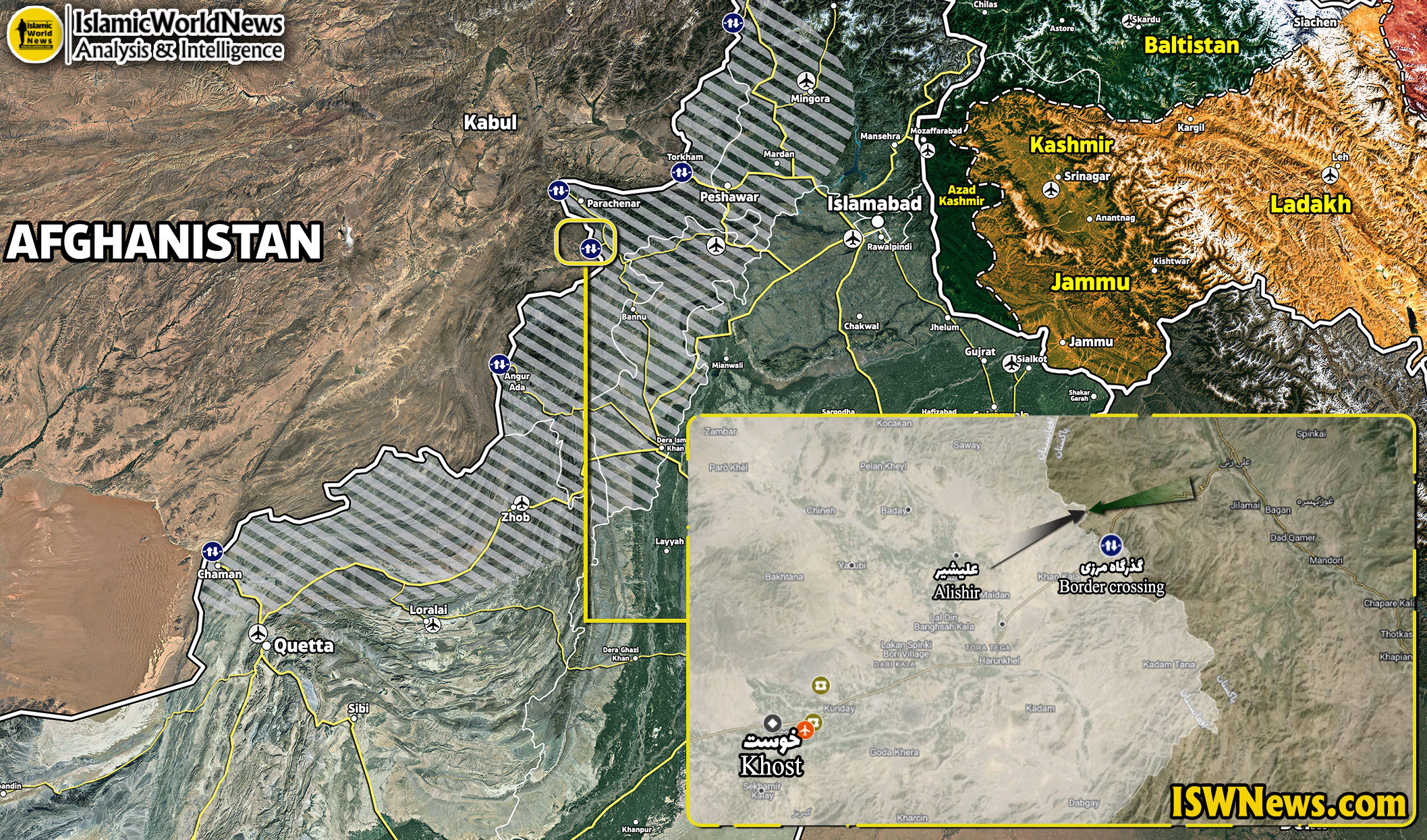
Taliban militants on Saturday afternoon (March 9), after establishing military installations by Pakistani border forces in the border area of Babrak Khan Tanai in Khost province, fired shots and launched mortars towards Pakistani soil. In response to this attack, Pakistani forces targeted Taliban positions and engaged in exchange of fire with the militants.
As a result of this clash, two Pakistani servicemen and several Taliban militants were wounded. Authorities from both sides have not made any comments on this border clash so far.
The location of the Taliban-Pakistan border conflict on the border of Khost province – click to view in full size
This is the sixteenth border clash between the Taliban and Pakistan since the inauguration of the group’s government in Afghanistan in August 2021. The previous clash occurred on January 20, 2024 at the border crossing of Afghanistan’s Kunar and Pakistan’s Bajaur.
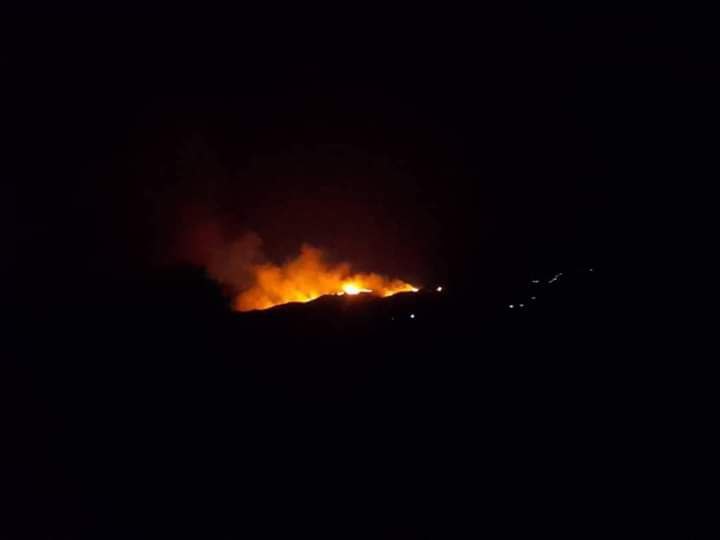
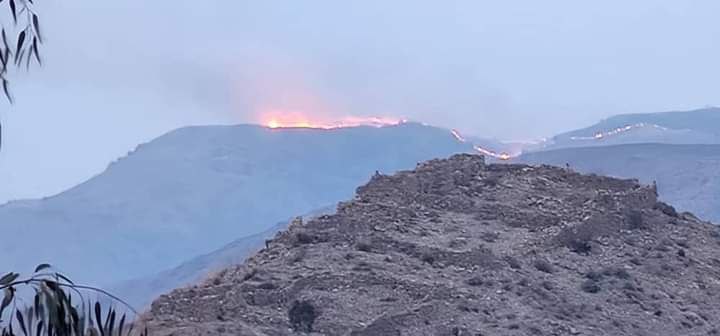
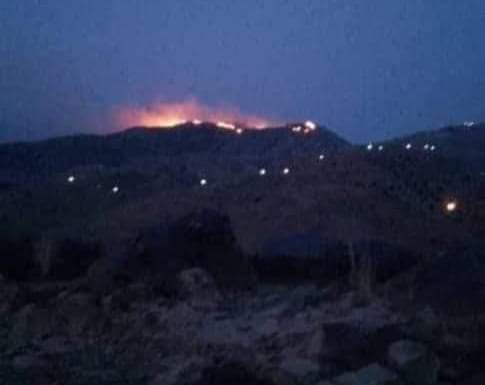
Fire in Pakistan’s border areas on the border of Khost province
The main cause of most border clashes between the Taliban militants and the Pakistani border guards is related to the construction of military and security installations by Pakistani border forces along the border lines.
The Taliban authorities do not recognize the Afghanistan-Pakistan border known as the “Durand Line” and believe that this border was established in 1893 and 1919 by the leaders of the British-controlled Indian government (Taj) and Abdur Rahman Khan, the then Amir of Afghanistan, at a time when Pakistan did not exist to assert its views on border demarcation.
Therefore, the establishment of security and military installations is also a point of contention and Pakistan’s actions usually lead to armed confrontations and exchange of fire.
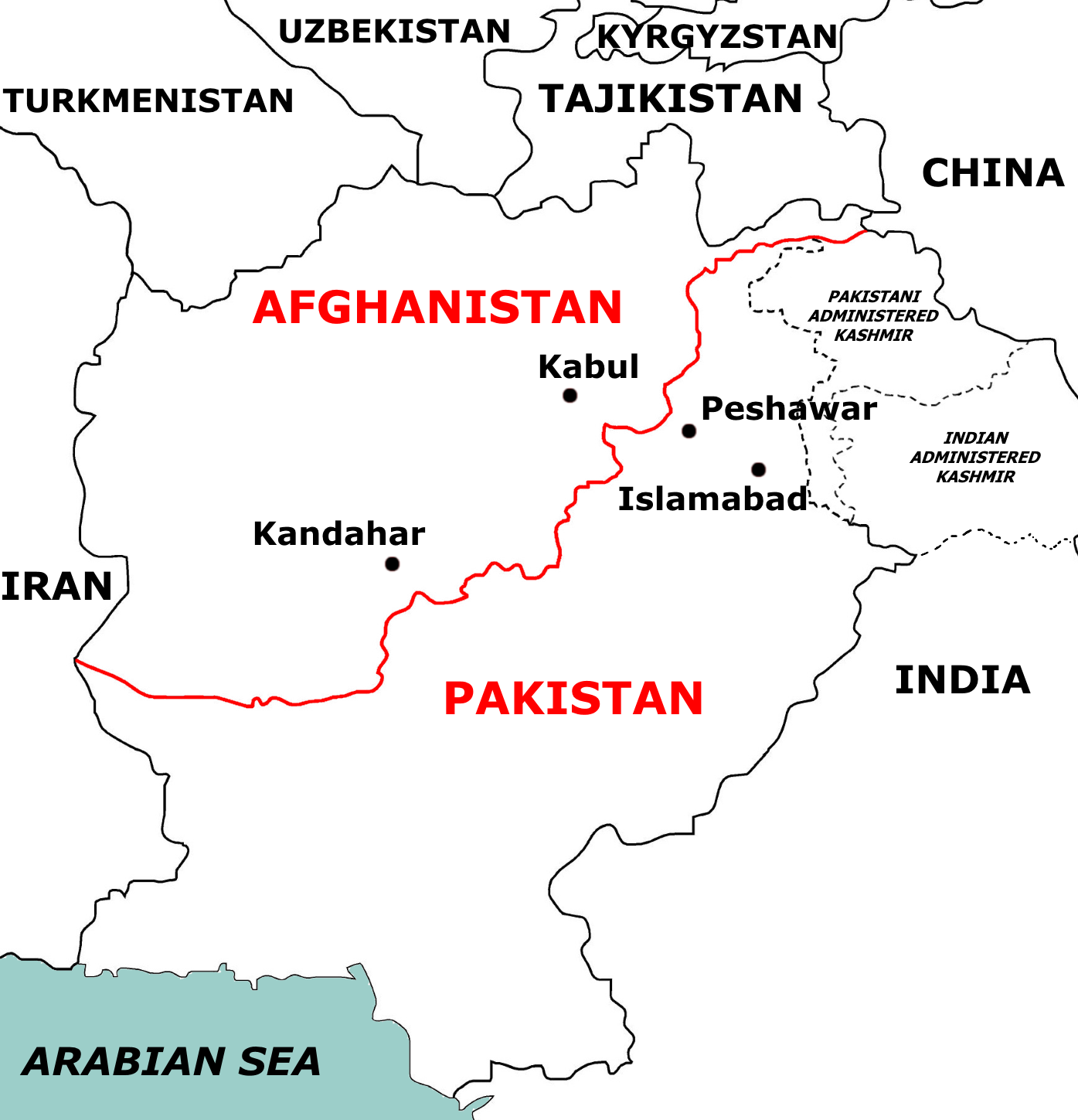
The Durand Line is a 2,430-kilometer border line that delineates the current border between Pakistan and Afghanistan. The name of this border line is derived from the British diplomat Henry Mortimer Durand who was the senior negotiator between the UK-controlled Indian government and the Afghan emir, Abdur Rahman Khan. The Durand Line divides Pashtun territories into two separate parts and has led to a significant amount of conflict and tension in the region.
Durand line, the border between Pakistan and Afghanistan
The exact cause of this tension is unclear, but local sources in Afghanistan claim that it started after a collision between an Iranian border guard and an Afghan worker, which led to the Taliban militants arriving at the scene and getting into a verbal quarrel with the Iranian border guards.
Some sources have also reported that the Taliban seized weapons from Iranian border guards.
Reports of armed conflict at this border crossing are not confirmed, and Iranian border guards have closed the entry point, with only the exit side being operational until late afternoon Saturday.
This border tension at the Islam Qala-Dogharoun crossing comes as the border guards in the Nehbandan county of South Khorasan province prevented members of a terrorist group from entering Iranian territory on Friday.
It should be noted that some members of a terrorist group intended to enter Iran to carry out destructive activities but were stopped by Iranian border guards on Friday.
During the confrontation between the terrorists and Iranian border guards, some of the terrorists were wounded and fled towards Afghan territory. The terrorists were found to have significant amounts of explosive equipment, including landmines, metal mines, various remote control transmitters and receivers, ammunition, night vision cameras, and other items.
Islam Qala-Dogharoun crossing – click to view in full size
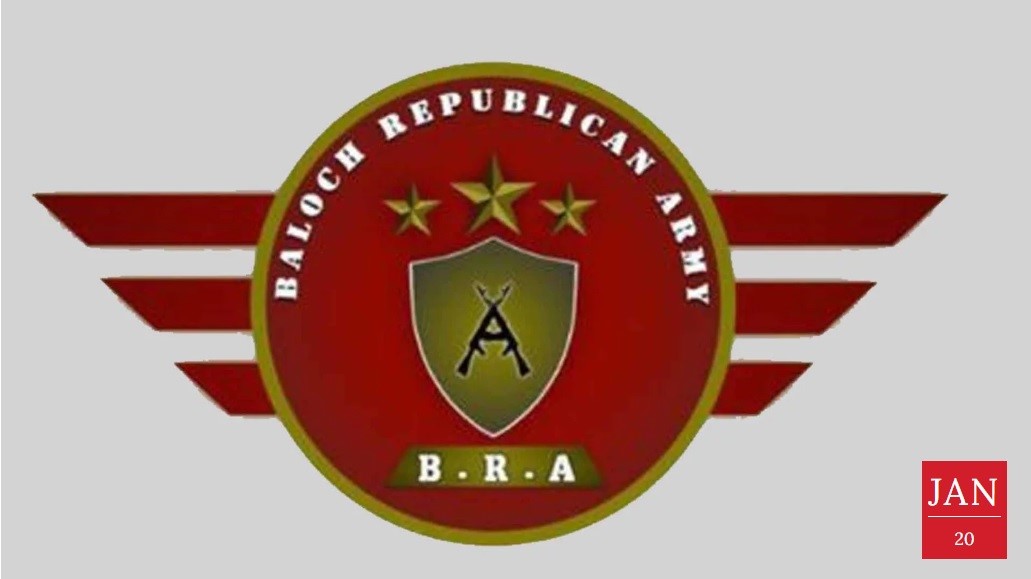
Baloch Republican Army (BRA): The Baloch Republican Army, as the military branch of the Baloch Republican Party (BRP), was founded in 2006. The BRP was established in Quetta city of Balochistan province, but the Pakistani government declared this party along with a group of other parties and organizations as illegal on October 24, 2012. Some sources also claim that the Baloch Republican Army (BRA) separated from the Jamhoori Watan Party (JWP), linked to Nawab Brahumdagh Bugti in 2008, which is related to his uncle, Talal Akbar Bugti.
Baloch Republican Army (BRA)
The Baloch Republican Army (BRA) is a quasi-military organization seeking ethnic-nationalist separation, fighting against the Pakistani government to create an independent Balochistan. Most BRA members belong to the Bugti tribe living in the eastern part of Balochistan, Pakistan. This organization opposes any foreign investment and foreign interference in Balochistan. BRA targets Pakistani security forces and manufacturing infrastructure, claiming to allocate Balochistan’s resources to the people of Balochistan. The Baloch Republican Army (BRA) also targets public transport of the Pakistani government and had previously threatened to continue its attacks against non-combatants if the Pakistani government did not withdraw its forces from the region.
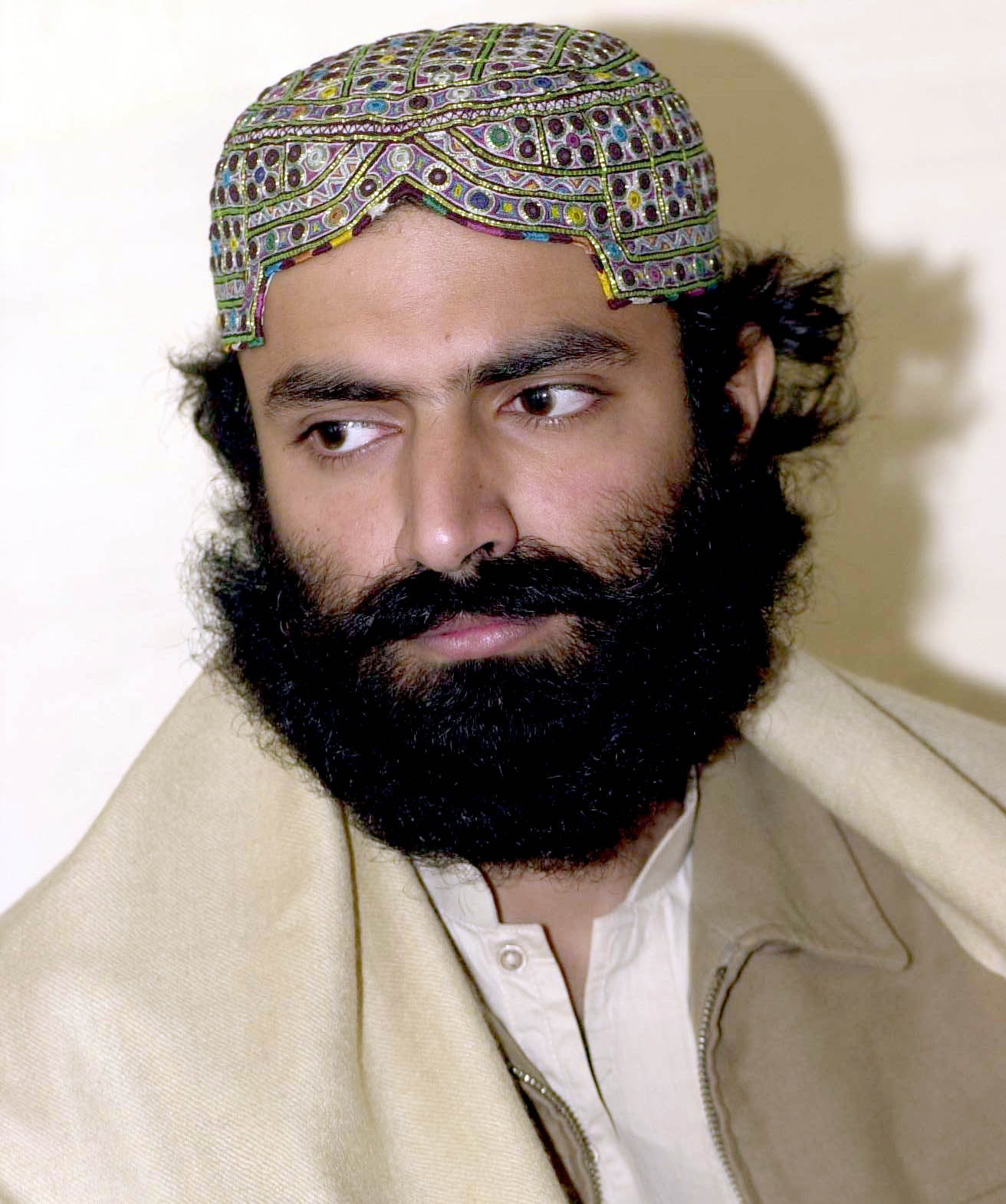
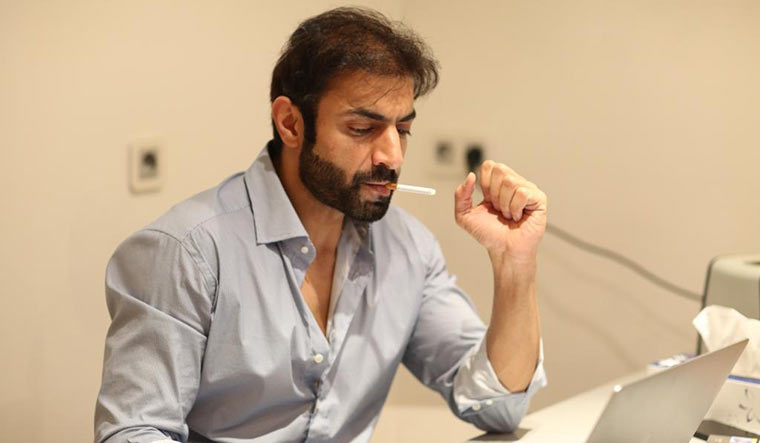
Brahumdagh Bugti
This group carried out its first operation on October 20, 2007, claiming responsibility for detonating a bomb against a bus in Dera Bugti district in eastern Balochistan province. As a result of this operation, 8 people were killed and 28 were injured. The Baloch Republican Army (BRA) does not disclose its leaders; however, the Pakistani government has claimed that Brahumdagh Bugti has been leading this group since its establishment. Bugti is also the leader of the Baloch Republican Party. Pakistani politicians have claimed that US and British intelligence agencies have supported Baloch insurgencies, especially most of BRA’s attacks in Balochistan province, while BRA has also carried out attacks in Punjab and Sindh provinces.
The Baloch Republican Army (BRA) uses mortar attacks, car bombings, handmade bombs, landmines, grenades, small arms attacks, conventional warfare, unconventional warfare, social media, and nationalist propaganda to achieve its goal of establishing an independent Baloch state. This group targets Pakistani security forces, police, public buses, railways, communication systems, gas pipelines, power pylons, checkpoints, and non-governmental offices.
Under the leadership of Gulzar Imam, a branch within this group, which has supporters in the Makran region, it joined the Baloch Raji Aajoi Sangar (BRAS) in 2019. This branch merged with the United Baloch Army (UBA) in January 2022 to form the Baloch National Army (BNA). (BRA) and (UBA) declared their dissolution after the formation of the Baloch National Army.
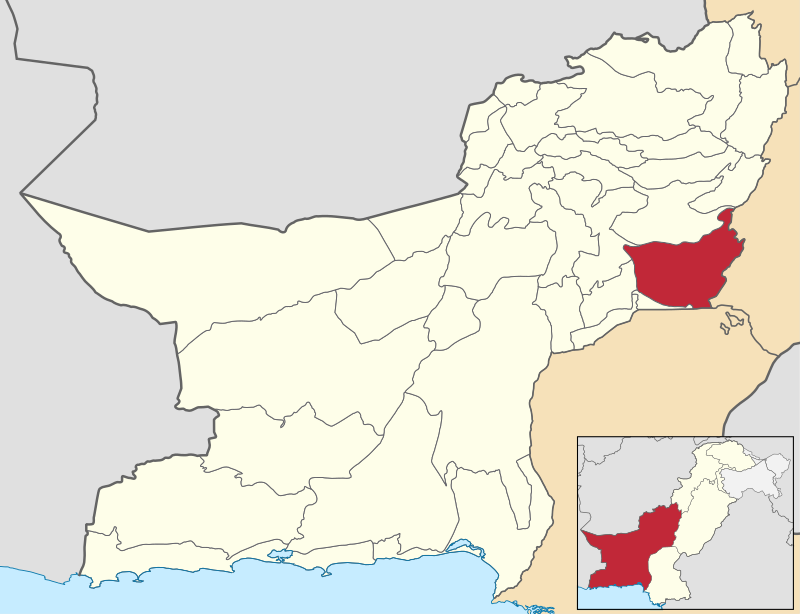
Bugti area in Balochistan province
Balochistan Liberation Army (BLA): The Balochistan Liberation Army is an ethnic-nationalist separatist organization consisting mostly of members of the Marri-Bugti Country tribes located in Afghanistan. The BLA is the oldest and most dangerous group among all active Baloch groups in Balochistan. Formed in summer 2000 in response to increasing dissatisfaction in Balochistan due to the government’s monopolization of natural resources and unequal allocation of jobs to Punjabis compared to native Baloch people, BLA elements targeted Pakistani soldiers and police by resorting to bombings in markets and railroads. Military facilities and Pakistani security forces were targeted with mortar shells during these raids. BLA’s first recorded activity in summer 2000 involved taking responsibility for a bomb blast in a market in Quetta city, Balochistan, resulting in 7 deaths and 25 injuries.
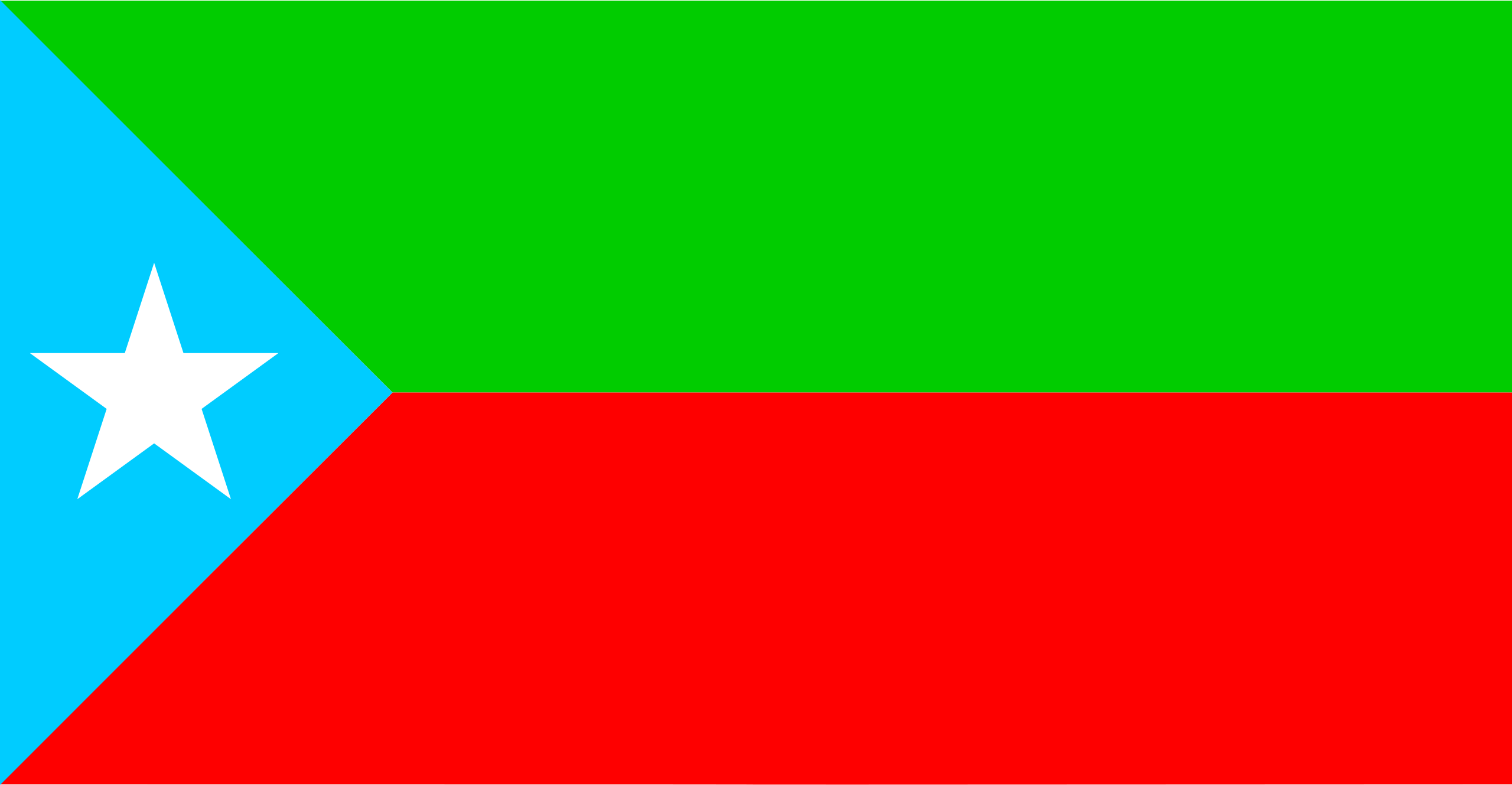
Balochistan Liberation Army flag
The Balochistan Liberation Army (BLA) is considered a terrorist organization by Pakistan, Britain, and the United States.
It is said that the BLA was founded in the year 2000, but some media outlets and analysts speculate that the group is a revival of the Baloch insurgency, particularly the Balochistan separatist movement from 1973 to 1977. In the year 2004, the BLA initiated violent struggles against Pakistan for determining the fate of the Baloch people and the separatism of Balochistan from Pakistan, beginning terrorist attacks against non-Baloch minorities in Balochistan province.
Pakistan designated the BLA as a terrorist organization on April 7, 2006, following repeated attacks by the group on security forces. On July 17, 2006, the British government labeled the BLA as an illegal group. Despite Pakistan’s objections, Britain granted asylum to the suspected BLA leader, Hyrbyair Marri, in the European country. The group’s actions were also described as terrorist activities by the United States Department of State, and the European Union also classified the BLA as a terrorist organization.
Hyrbyair Marri
Some Western analysts claim that India provides the BLA with funding. The group was led by Balach Marri from 2000 until he was killed in Afghanistan in 2007.
Balach Marri
The BLA most important operations history:
– After operations in 2000, the BLA launched a series of attacks in May 2003, targeting police and non-indigenous Baloch residents. The following year, the BLA attacked Chinese workers involved in large government-sponsored development projects. These attacks attracted the attention of the media.
– Despite the government’s military presence, BLA attacks continued throughout 2003 and into the summer of 2004 with car bombs and multiple attacks.
– In 2005, the group attacked the Kohlu camp, which at the time was hosting the then president of Pakistan, Pervez Musharraf. The Pakistani government considered the actions of the BLA as an attempt on the life of the president.
– On November 21, 2007, government forces killed Mir Balach Marri, the leader of the BLA. Around the same time, the Pakistani government leased Gwadar port in southern Baluchistan to China for 40 years. The BLA and many Baloch interpreted this issue as another attempt by the Pakistani government to colonize Baluchistan, and these groups, especially the BLA, began their military and propaganda operations against China.
– On April 15, 2009, during an interview, Brahumdagh Bugti, a Baloch dissident, asked the Baloch people to kill any non-indigenous resident of Balochistan, whether military or civilian. After these words, about 500 Punjabis were killed in Balochistan, and in the meantime, the finger of accusation was pointed towards BLA.
– In 2013, the BLA claimed responsibility for the attack on the National Heritage Site and historic summer home of Pakistan’s founder Muhammad Ali Jinnah.
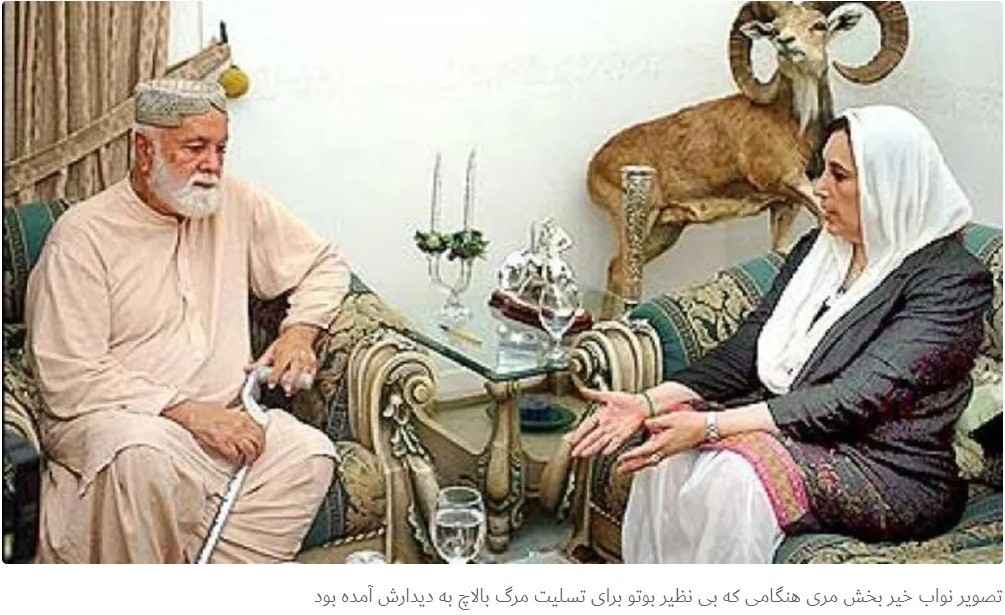
Benazir Bhutto’s meeting with Nawab Khair Bakhsh Marri to condole the death of his son Balach
In 2014, BLA leader Nawab Khair Bakhsh Marri died of natural causes. After his death, Marri’s six sons clashed over control of the BLA. Three of the boys are believed to have left the BLA to help form a splinter group called the United Baloch Army (UBA). In addition to its conflict with the UBA, the BLA has remained active in conducting attacks against the Pakistani government. In April 2017, 500 militants affiliated with various Baloch militant organizations, including the BLA, surrendered to Pakistani authorities.
In its 2022 report, the Balochistan Liberation Army terrorist group has considered two operations as the most prominent operations of 2022. These two operations include the Ganjal operation, which the Baloch Liberation Army claims killed 195 Pakistani soldiers in Nushki and Panjgur, and the suicide attack of Shari Baloch, a female suicide bomber affiliated with the Baloch Liberation Army, in which three Chinese nationals and a Pakistani driver were killed in Karachi.
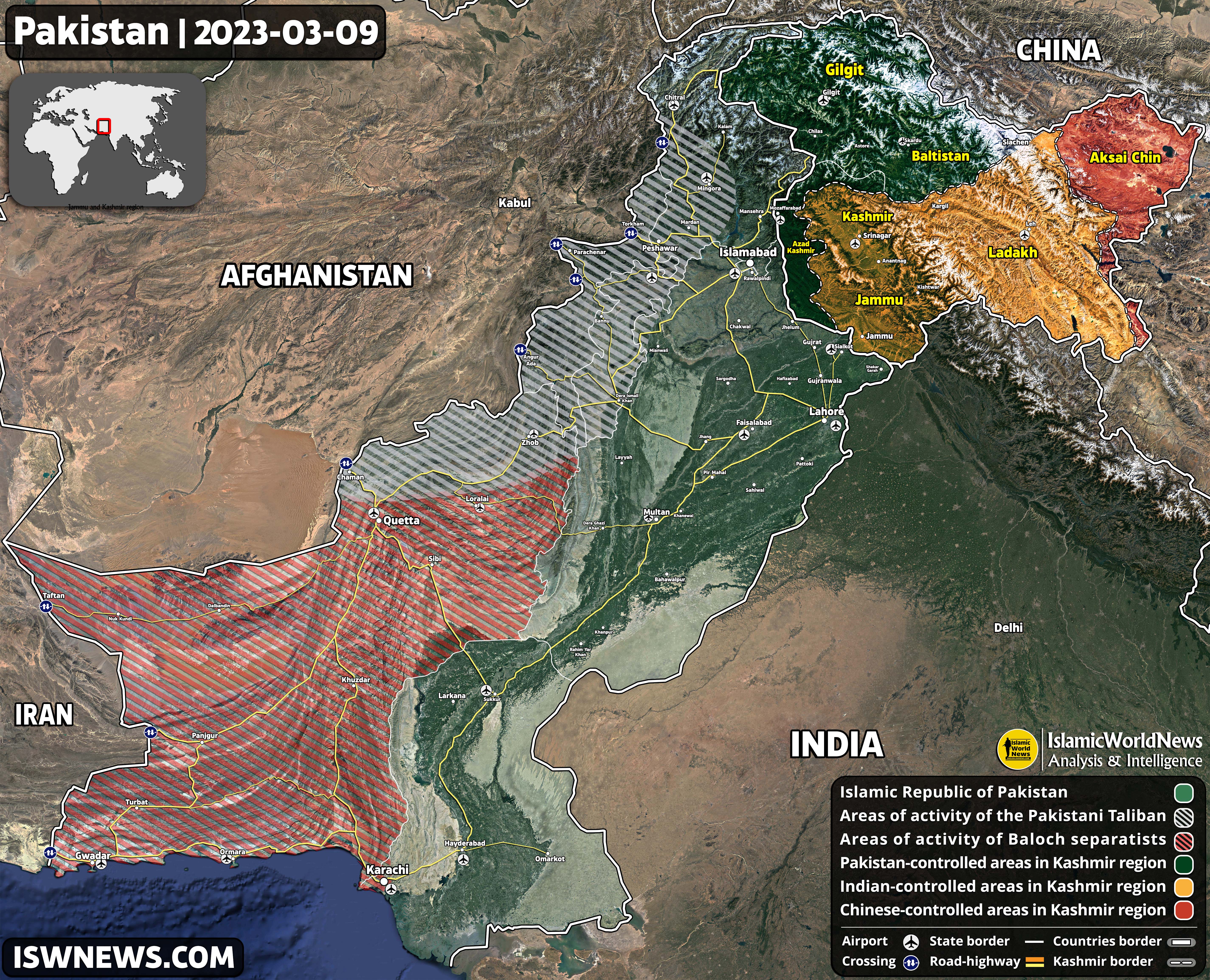
This group has a strength of between 500 and 700 militants who operate in Quetta, Bolan, Kohlu, Nushki, Kalat, Khuzdar and Karachi. According to an anonymous Baloch human rights activist living in exile, the BLA is strongest in Marri tribal areas such as Mach, Harnai, Nasirabad, Jafarabad, Loralai, Quetta and Awaran in southern and eastern Balochistan.
The BLA Leaders:
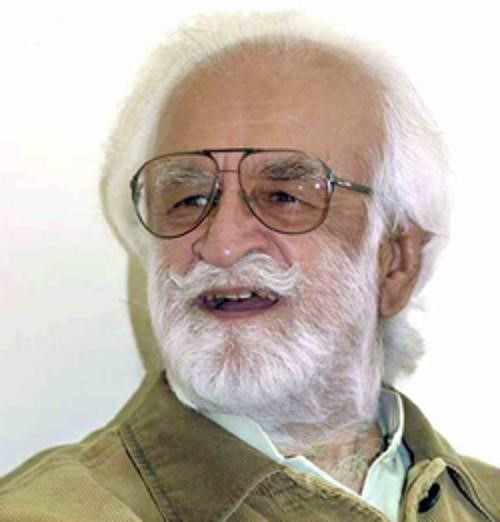
Akbar Bugti, former chief minister of Balochistan and considered one of the founding fathers of the BLA. He was killed in a Pakistani security forces operation on August 26, 2006.
Akbar Bugti
Mir Balach Marri was a former member of the provincial parliament who apparently used his political influence to garner local community support for the BLA. He, who commanded the BLA, was ultimately killed in a Pakistani security forces operation on November 21, 2007.
Mir Balach Marri
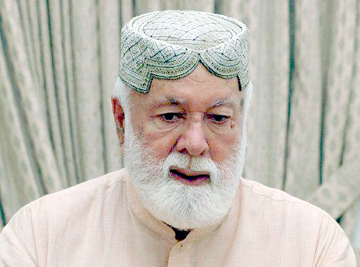
Khair Bakhsh Marri participated in the 1970s Balochistan uprisings. He was known as the “godfather” of the armed Baloch movement. He, the father of Balach Marri, was a key figure in the BLA until his natural death in June 2014.
Khair Bakhsh Marri
The Pakistani government claims that Brahmdagh Bugti is also among the leaders of the BLA. He gained fame for calling for the killing of all non-Baloch residents in Balochistan during a well-known live television interview. The Pakistani government alleges that Brahmdagh Bugti helped revive the Balochistan Liberation Front (BLF) after leaving the BLA.
Brahumdagh Bugti
Bijar Khan, another BLA leader, was killed in a government attack in July 2015.
Aslam Baloch, known as “Achu,” was a commander of one of the BLA’s sub-groups. It is said that after a dispute with BLA officials abroad, he branched off and declared himself the commander of the BLA. He founded the Majeed Brigade and was in charge of the attack on the Chinese consulate in 2018. The BLA stated that Aslam Baloch was killed in a suicide attack in Quetta in December 2018. Bashir Zeb Baloch assumed command of the BLA after the death of Aslam Baloch. He was actually the commander of the Majeed Brigade, which conducted most of the BLA’s operations.
Aslam Baloch and Bashir Zeb Baloch
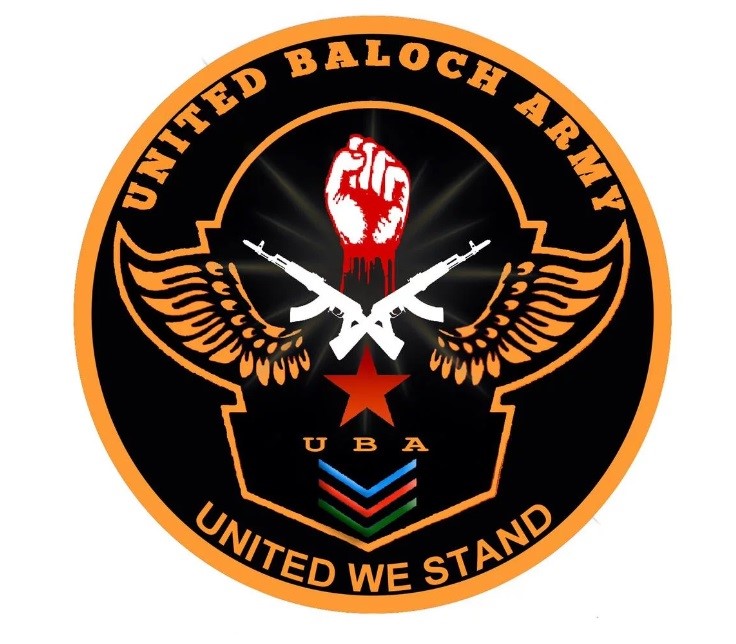
United Baloch Army (UBA): The United Baloch Army (UBA) was a semi-military group fighting for the separation of Balochistan from Pakistan, with headquarters in Kohlu, Kaghan, Bolan, Las Bela, and elsewhere. This group has been designated as a terrorist organization by the Pakistani government. Pakistan declared this group illegal on March 15, 2013. The Swiss government also classified this group as a terrorist organization.
United Baloch Army (UBA) emblem
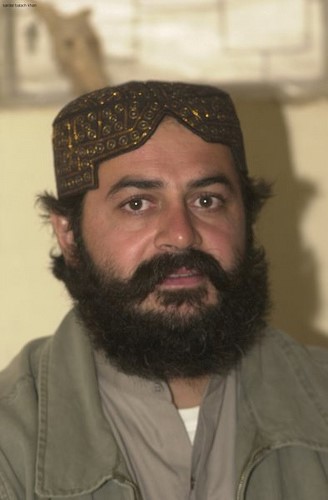
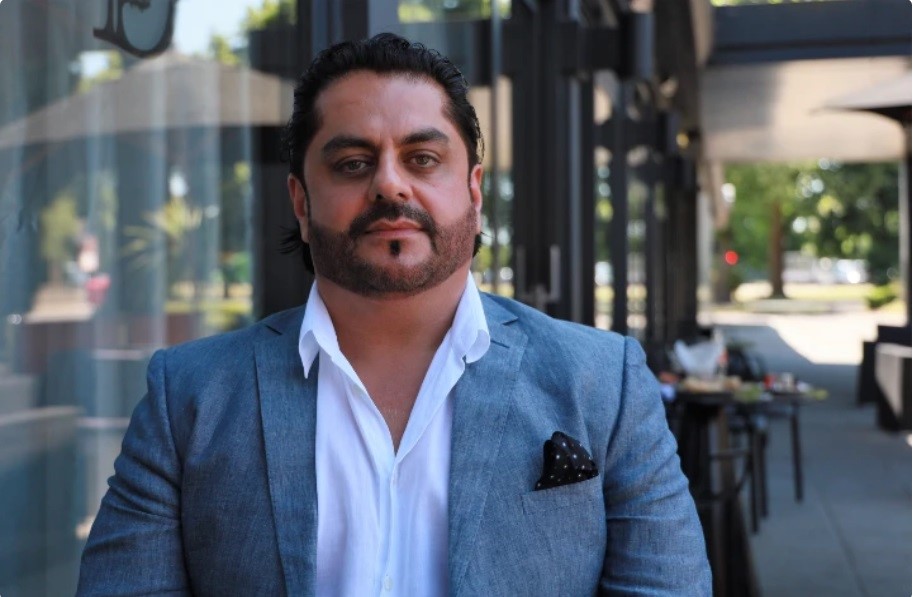
Mehran Marri led the United Baloch Army (UBA). Following internal disputes with his brother, Hyrbyair Marri, whom the Pakistani government considers the leader of the Balochistan Liberation Army (BLA), Mehran Marri left this group and founded the United Baloch Army (UBA).
Mehran Marri
The Balochistan Liberation Army (BLA) and the United Baloch Army (UBA) engaged in conflict with each other, with the deadliest confrontation between the two groups occurring in the Dera Bugti area, resulting in the deaths of 20 fighters from both sides.
United Baloch Army (UBA) militants attacked two buses in Mastung area on May 29, 2015. The militants emptied the buses and shot dead 22 Pashtuns. The United Baloch Army (UBA) also claimed responsibility for the April 8, 2014 attack on the Jafar Express train in Sebi. This attack killed 16 people and injured 44 people.
Mehran Marri was arrested on November 16, 2017, at Zurich Airport by Swiss immigration authorities. Mehran Marri was permanently banned from entering Switzerland. Swiss authorities issued an indictment stating that Mehran Marri is the leader of the United Baloch Army (UBA).
According to various reports, Sarfaraz Bangulzai, one of the commanders of UBA, created his own group with the same name in 2020 after a dispute with UBA leadership. He wanted to separate UBA from the BRAS umbrella organization. The Bangulzai faction of the United Baloch Army (UBA) merged with the Baloch Republican Army (BRA) in January 2022 to form the Baloch National Army (BNA), and after the establishment of the Baloch National Army, they announced their dissolution.
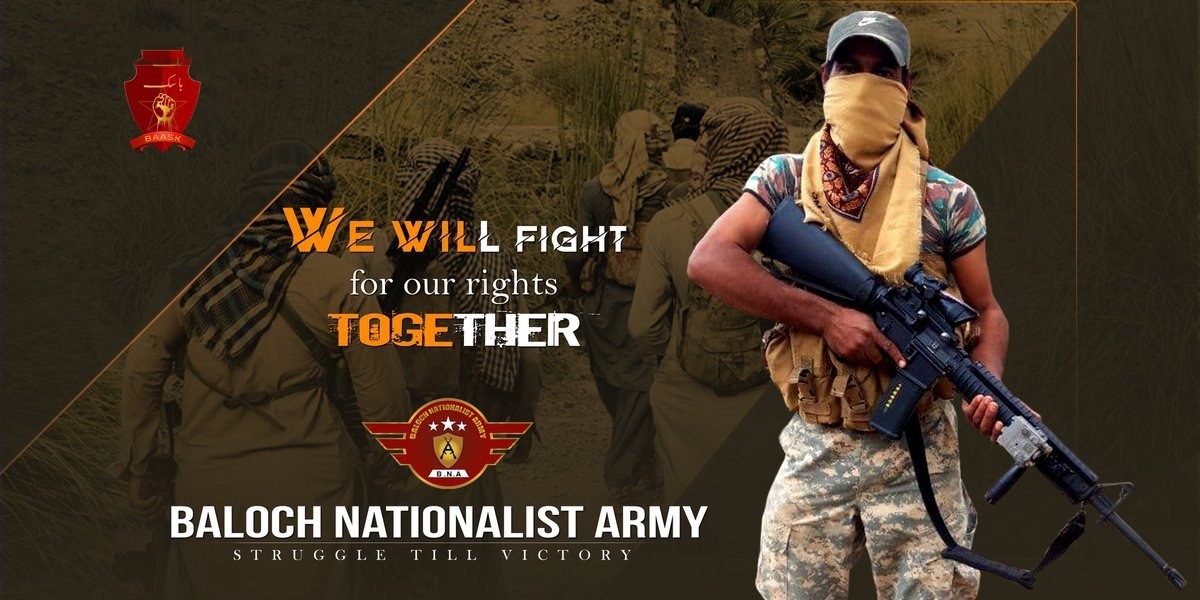
Baloch Nationalist Army (BNA): The Baloch Nationalist Army is a semi-military group fighting for the separation of Balochistan. The group was formed on January 11, 2022, through the merger of the Baloch Republican Army (BRA) and the United Baloch Army (UBA). The Baloch Republican Army and the United Baloch Army also announced their dissolution after the establishment of the Baloch Nationalist Army.
Baloch Nationalist Army (BNA) poster
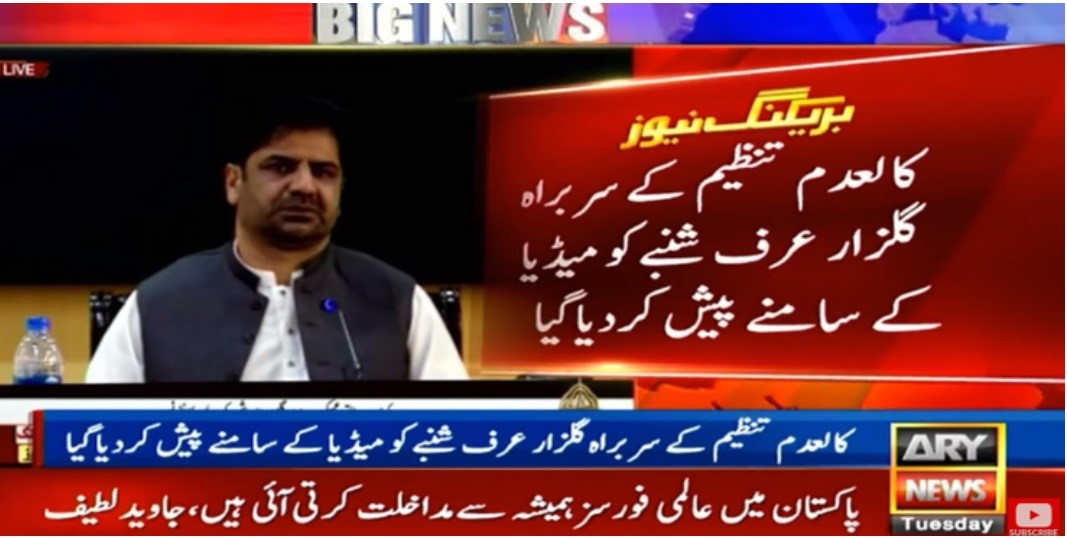
Gulzar Imam alias Shambay was the deputy of Brahmdagh Bugti, who in January 2022, through the merger of his group BNA and the United Baloch Army, formed the new group BRA. After sidelining Brahmdagh Bugti, he became a resident of Europe and was active with over 300 fighters in the regions of Khuzdar, Kech, and Nushki. It is said that in April 2023, Imam Shambay was arrested in an intelligence operation by Pakistan’s Inter-Services Intelligence (ISI) in Turkiye.
In May 2023, Imam Shambay, through Pakistani media, called on all active insurgents in the province to surrender and lead a peaceful life, stating that he had come to the conclusion while in captivity that only peaceful political struggle will resolve the issues of Balochistan. However, after the arrest of Imam Shambay, Sarfaraz Bangulzai, the leader of the UBA faction, introduced himself as the new head of the Baloch Nationalist Army (BNA) under the pseudonym Mureed Baloch.
Imam Shambay in Pakistani media
The BNA operations:
– On January 20, 2022, the Baloch Nationalist Army (BNA) killed at least three people and injured more than 20 people by exploding a bomb in Lahore, Punjab. This was while the Lahore explosion was strongly condemned by leaders of Baloch nationalist groups such as Mehran Marri and Brahumdagh Bugti.
– The Baloch Nationalist Army (BNA) is also said to have collaborated with the BLA in the 2022 Panjgur and Nushki attacks, an operation that attributed to the BRAS umbrella group.
Baloch Liberation Front (BLF): The Baloch Liberation Front is a paramilitary group that operates in the Balochistan province of Pakistan. The group was founded by Juma Khan in 1964 in Damascus and played a significant role in the 1968-1973 insurgencies in Sistan and Baluchestan province in Iran and the 1973-1977 insurgencies in Balochistan province of Pakistan with the support of Iraq. However, the insurgency of this group in Pakistan and Iran was defeated, and its members were driven to Afghanistan where they were supported by Kabul government and the Soviet Union.
Baloch Liberation Front (BLF)
The status of this group was unknown until 2004. The group resurfaced in 2004 after Allah Nazar Baloch took over the leadership of the group in 2003. Since then, this group has been responsible for various attacks on non-combatants, journalists, government officials, and Pakistani military personnel. The Indian newspaper Hindustan Times reported in 2015 that the Baloch Liberation Front (BLF) has expanded its ties with India.
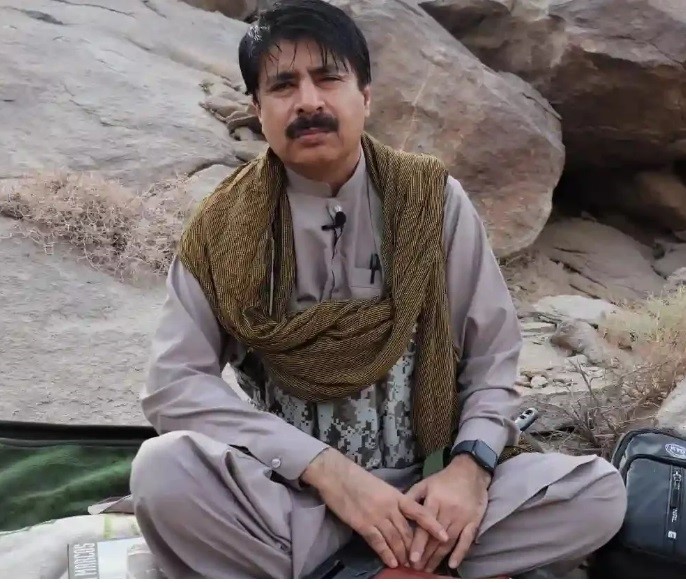
Allah Nazar Baloch
The BLF most important operations:
– Gunmen attacked a Pakistan Coast Guard checkpoint in Gwadar district early on July 27, 2013. This attack was carried out by 24 armed men, which resulted in the death of seven coast guards and the wounding of seven others. Two injured coast guard personnel were also kidnapped by the militants. The Baloch Liberation Front took responsibility for the attack on the Coast Guard post.
– On April 12, 2015, 20 construction workers from Punjab and Sindh were killed in Torbat by gunmen, which the BLF later claimed responsibility for the attack. After the attack, Balochistan Home Minister Sarfraz Bugti claimed that Indian intelligence agencies were involved in supporting the BLF in carrying out such attacks. The BLF claimed that the workers were members of the Pakistan Border Patrol.
– The bodies of 15 migrants were discovered on November 16, 2017, in the city of Torbet. Security officials say migrants have been abducted and then killed by gunmen while trying to cross the border. The BLF later claimed responsibility for the killing of 15 migrants. The mastermind of the attack, Younis Tawakoli, was killed by Pakistani security forces in November 2017. Younis Tawakoli was one of the eight senior commanders of the Baloch Liberation Front.
– On January 25, 2022, BLF elements captured a security forces outpost in the Ketch Plain area and claimed to have killed 17 Pakistani army personnel.
Lashkar-e-Balochistan (LeB): Lashkar-e-Balochistan was established in 2008 with the aim of preserving the position of the tribal chiefs of the Mengal tribe. The Lashkar-e-Balochistan operates from the Jhalawan region.
Lashkar-e-Balochistan (LeB)
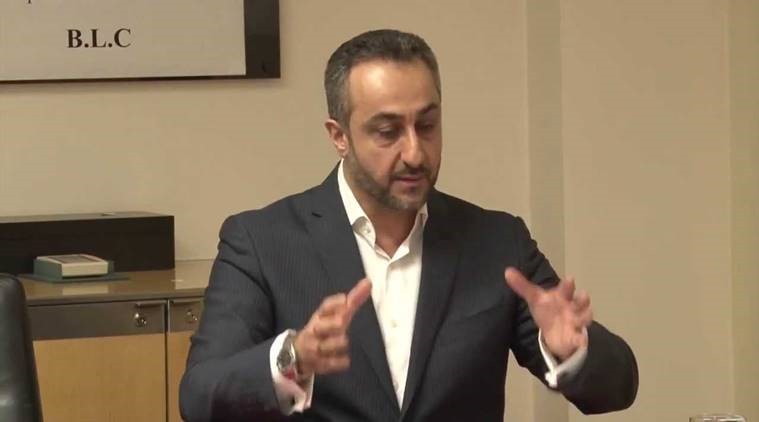
Javed Mengal, apparently the leader of the Lashkar-e-Balochistan, is the son of Nawab Akbar Khan Mengal, the first chief minister of Balochistan in 1972. After the dismissal of Akbar Khan Mengal’s government, he was imprisoned and later went into exile. He returned to Balochistan in 1996 and established a political party called the Balochistan National Party. His other son, Akhtar Mengal, heads this political party who left the coalition government of Pakistan Tehreek-e-Insaf (PTI) in June 2020, over the issue of missing Baloch persons and other Baloch issues.
Like all armed Baloch organizations, LeB has not declared its leader, although Pakistan claims that Javed Mengal is the leader of this group and Lawang Khan is its spokesperson.
One of the group’s largest operations took place on September 25, 2020. Members of the Lashkar-e-Balochistan attacked a group of frontier corps in Khuzdar and killed several Pakistani security forces.
Baloch Republican Guards (BRG): The Baloch Republican Guards were formed in 2012 following the assassination of the wife and daughter of Bakhthiar Domki by unknown assailants. Bakhthiar Domki’s wife was the sister of Brahumdagh Bugti and several news reports suggest that this targeted assassination was a message to Brahumdagh Bugti as well.
Baloch Republican Guards (BRG)
The Baloch Republican Guards (BRG) also does not disclose the name of its leader, although Dostain Baloch has been introduced as its spokesperson.
According to Mehrab Baloch, a human rights activist, the Baloch Republican Guards is active in areas like Nasirabad, Bolan, Kech, and somewhere else.
This organization is also part of the Baloch Raji Aajoi Sangar (BRAS).
The Baloch Republican Guards’ elements, on February 10, 2022, fired a grenade at the city of Dera Murad Jamali, which resulted in one death and injuries to several people.
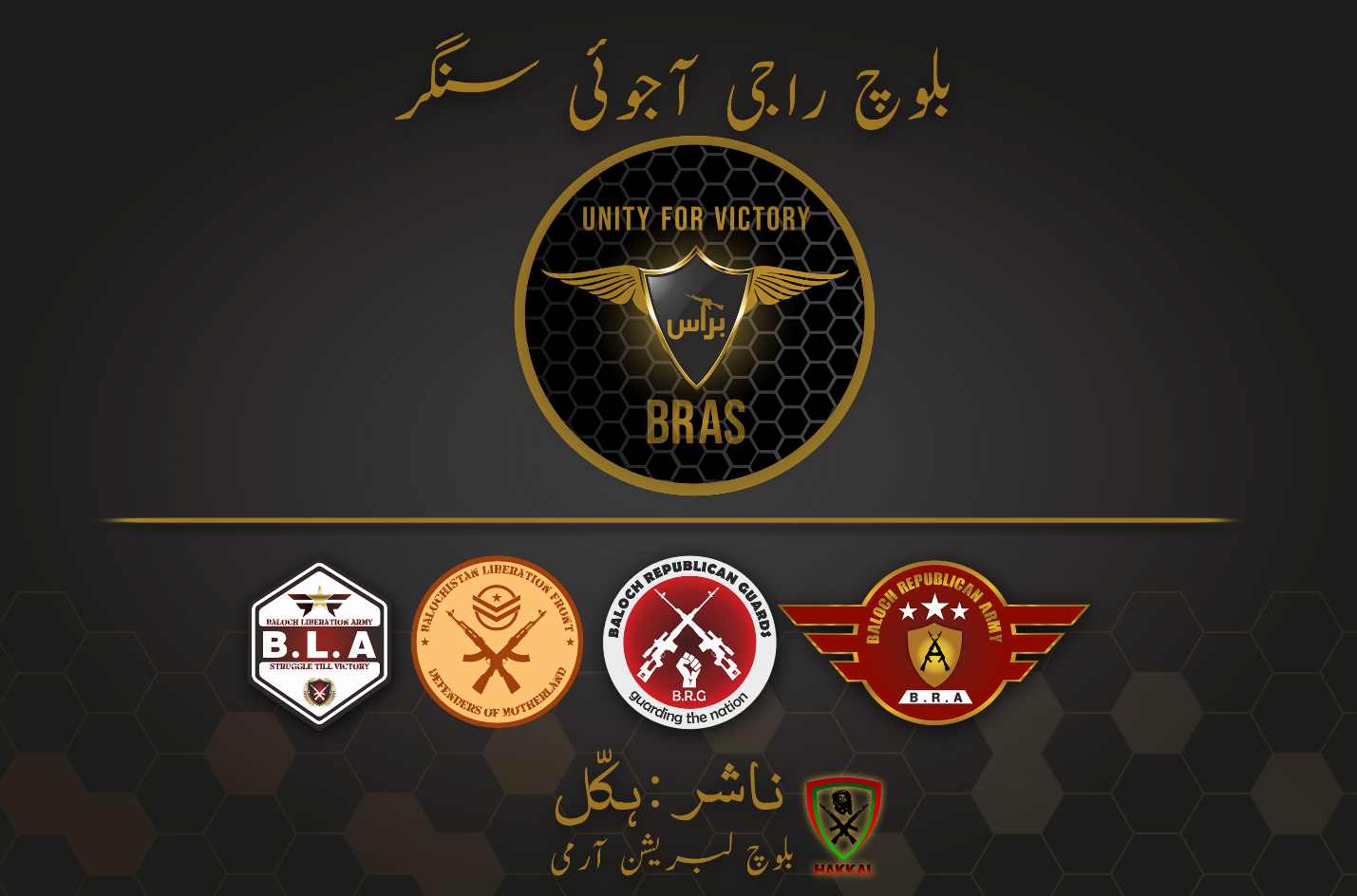
Baloch Raji Aajoi Sangar (BRAS): The Baloch Raji Aajoi Sangar (Baloch National Freedom Front) is an umbrella organization for the main nationalist insurgent groups in Balochistan province, with Baloch Khan as their chosen official spokesperson.
In a joint statement released by media outlets in November 2018, the armed organizations Baloch Liberation Front (BLF), Baloch Liberation Army (BLA), and Baloch Republican Guards (BRG) declared that they form an umbrella organization. Later, the Baloch Republican Army (BRA) also joined this umbrella. The name of this organization, Baloch Raji Aajoi Sangar, in the Balochi language means the Baloch National Freedom Front.
Joint statement released by BRAS
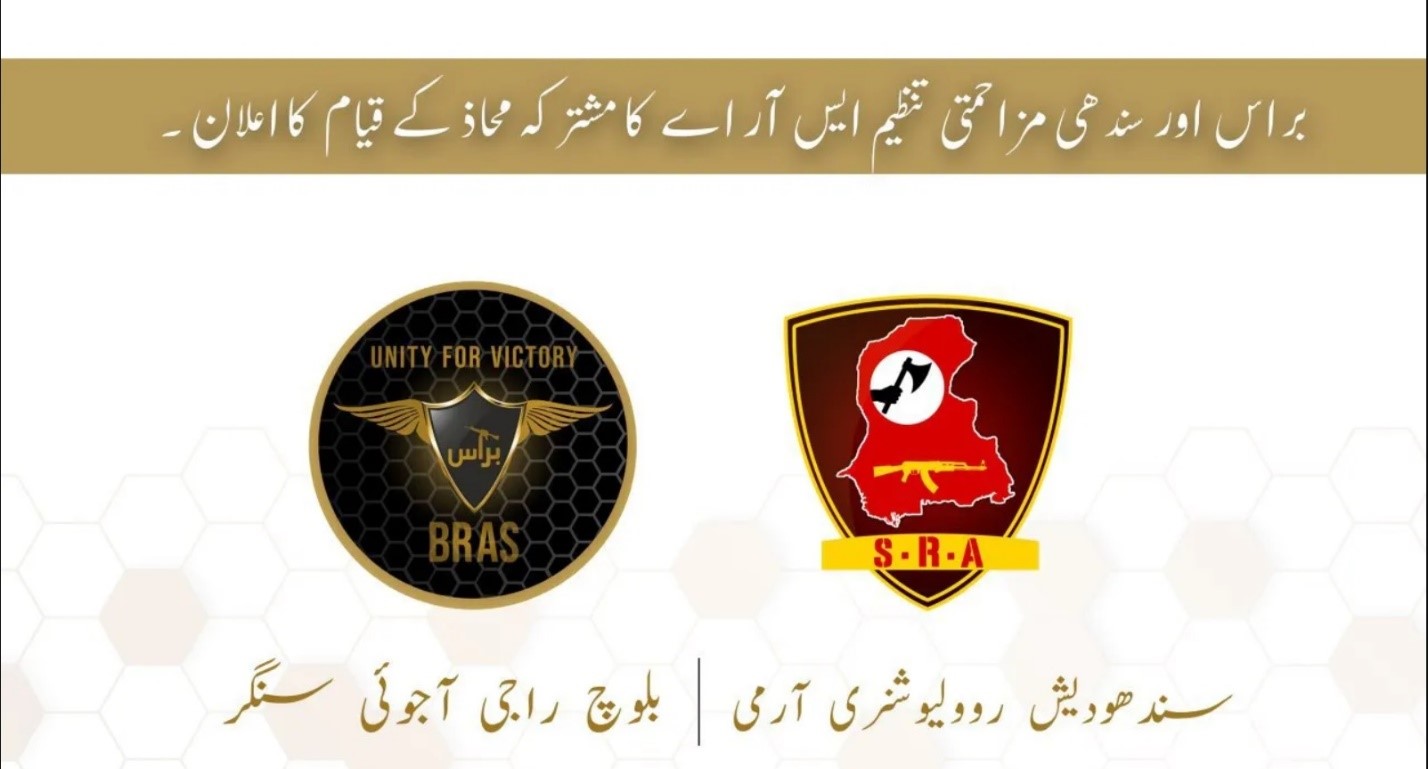
Shortly after, the Sindh Revolutionary Army (SRA) also joined this umbrella group to unite the separatist groups of Sindh province and Baloch separatist groups under one organization. The joining statement of the Sindh Revolutionary Army highlighted countering the China-Pakistan Economic Corridor (CPEC) as a top priority for this umbrella group.
The poster of joining Sindh Revolutionary Army to BRAS
Baloch Liberation Tigers (BLT): The Baloch Liberation Tigers (BLT), a covert organization that appears to have started their operations in 2011, mostly operates in the Dera Bugti area. Moreover, some operations have been reported in Quetta, Nasirabad, Turbat, Lahore, and Jafarabad as well. The news of the operations by this group, which usually engaged in attacks on railways, gas pipelines, assassinations, raids on security forces’ headquarters, and ambushing Pakistani forces, is announced by Miran Baloch, the spokesperson of the Baloch Liberation Tigers.
Baloch Liberation Tigers (BLT)
The Islamic State in Pakistan (Wilayat Pakistan): Under the name Wilayat Pakistan, ISIS has carried out various operations in Balochistan, Pakistan, including assassinations, suicide attacks, abductions and executions of individuals, using hand grenades, and attacking security forces’ headquarters.
One of the significant operations of ISIS in 2023 was a suicide attack by an ISIS member against a group of Pakistani police near Sibi city, killing over 10 of them in March 2023. Similar operations by ISIS in the same region a year prior to the 2023 attack resulted in the killing and injuring of 30 Pakistani security forces.
The kidnapping operation of several Hazara Shia workers in Mach near Quetta and the execution of all of them by ISIS elements in January 2021 also received a lot of coverage in the media.
Tehrik-i-Taliban Pakistan (TTP): Although the Tehrik-i-Taliban Pakistan is composed of a collection of primarily Pashto-speaking Islamist groups from the Pashtun-majority areas of northwestern Pakistan, it should not be overlooked that this group has influence in Balochistan province and is making efforts to increase its influence in this province of Pakistan.
It seems that Aslam Baloch Noshki, the leader of the Tehrik-i-Taliban in Balochistan, is an important figure. Additionally, the Mazar Baloch group is also an important Baloch group within the Tehrik-i-Taliban Pakistan. The new divisions within the Tehrik-i-Taliban Pakistan in Balochistan indicate an expansion of this group’s activities in Balochistan province.
Recently, in June 2023, the council of Tehrik-i-Taliban Pakistan decided, due to the expansion of activities in Balochistan, to elevate Makran and Kalat to provinces, and appoint Shahin Baloch as the leader of these provinces.
It is worth mentioning that in 2022, the Tehrik-i-Taliban Pakistan carried out 12 operations in the province of Balochistan. And in the first six months of 2023, they carried out 19 operations in Balochistan, indicating an increase in the movements of the Tehrik-i-Taliban Pakistan in that province.
Conclusion: Despite efforts to suppress armed movements in Balochistan province, in the ending years of the 20th century, these movements have intensified in the beginning of the 21st century. It seems that the situation in Afghanistan and the instability in northwestern Pakistan have also had an impact on the Balochistan region, which is a region that struggles to find its identity within Pakistan. In the meantime, Pakistan’s closer ties with China and the signing of the China-Pakistan Economic Corridor agreement between the two countries, where Balochistan will play a crucial role, have influenced the rise of armed movements by ethnic and non-ethnic terrorist groups in Balochistan, Pakistan.
It can be said that the Balochistan Liberation Army (BLA) and Baloch Liberation Front (BLF) are the most active armed groups in Balochistan, Pakistan, with other groups either branching out from these two, especially the Balochistan Liberation Army, or being associated with them. Among these, the Balochistan Liberation Army is the most active group in trying to unite other groups.
With the recent developments in Pakistan’s relations with China, rival countries of China, especially India, which have always had a close watch on Baloch groups, have now also paid attention to these groups. In the past decades, countries aligned with socialism like Iraq and Syria also supported separatist Baloch groups. Afghanistan, as a sanctuary for many of Pakistan’s Baloch opposition, is another country involved in Balochistan’s issues. Some analysts also see the footprint of Western powers in supporting separatist Baloch groups in Pakistan.
Due to the tribal structure of the Balochistan region in Pakistan, separatist armed groups are also considered to be linked to tribal groups, with Bugti and Marri tribes holding a special position. Since the origin of these groups is mainly in eastern Balochistan region, it seems that they have little connection with Baloch groups in Iran, and instead have established relationships with Sindhi ethnic groups in their east. Some separatist Baloch leaders, such as Hyrbyair Marri, consider their activities to span across all of Balochistan region, including regions in Iran and even Afghanistan, and some Iranian separatist media outlets also cover Hyrbyair’s activities.
Another issue is that the financial resources available to these separatist groups have led to financial corruption within the groups, with some external separatist leaders exploiting these financial resources for their own benefit. This has caused field commanders to increase their role in opposition to external leaders, a situation that seems to have manifested in the armed movements of these groups, with the military and security objectives of Pakistan coming more into focus for these groups than ever before.
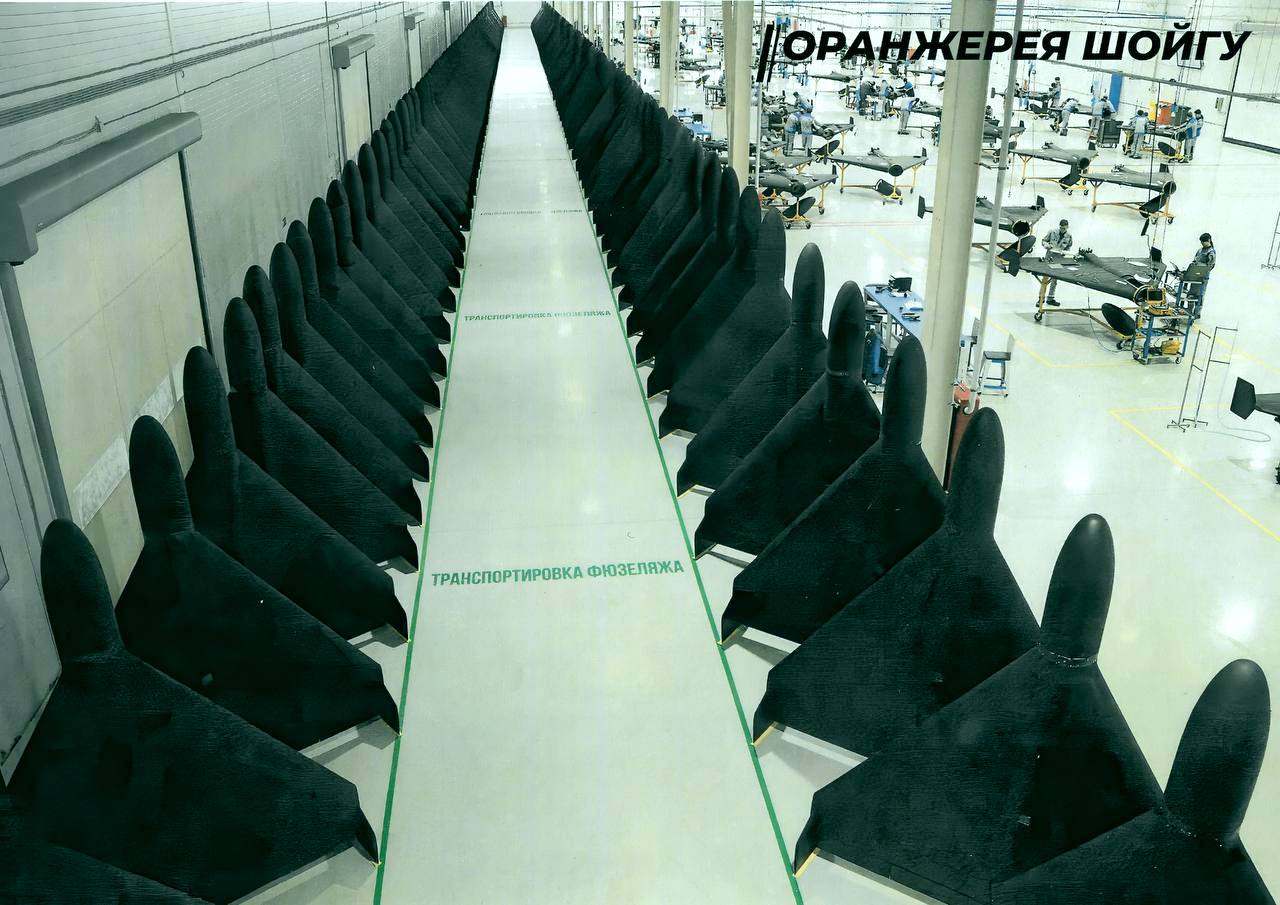
According to the video, hundreds of Geran drones have been assembled and they will be utilized against military targets in Ukraine in the near future. The factory’s capacity is reported to be production of dozens of drones per week.
Geran drones are one of the key emblems of Russia’s military operations in Ukraine, causing significant damage to enemy positions wherever they are deployed.
The Armed Forces of the Russian Federation uses these suicide drones to target Ukrainian defenses, logistics, and infrastructure. The entry of these drones into the Ukrainian conflict significantly shifted the balance in favor of Russia.
It is worth mentioning that, according to information provided by Iranian military officials, the production license for these drones was sold to the Russian army before the Russia-Ukraine war. Currently, Russia mass-produces the drones by launching the Geran production line on its soil.
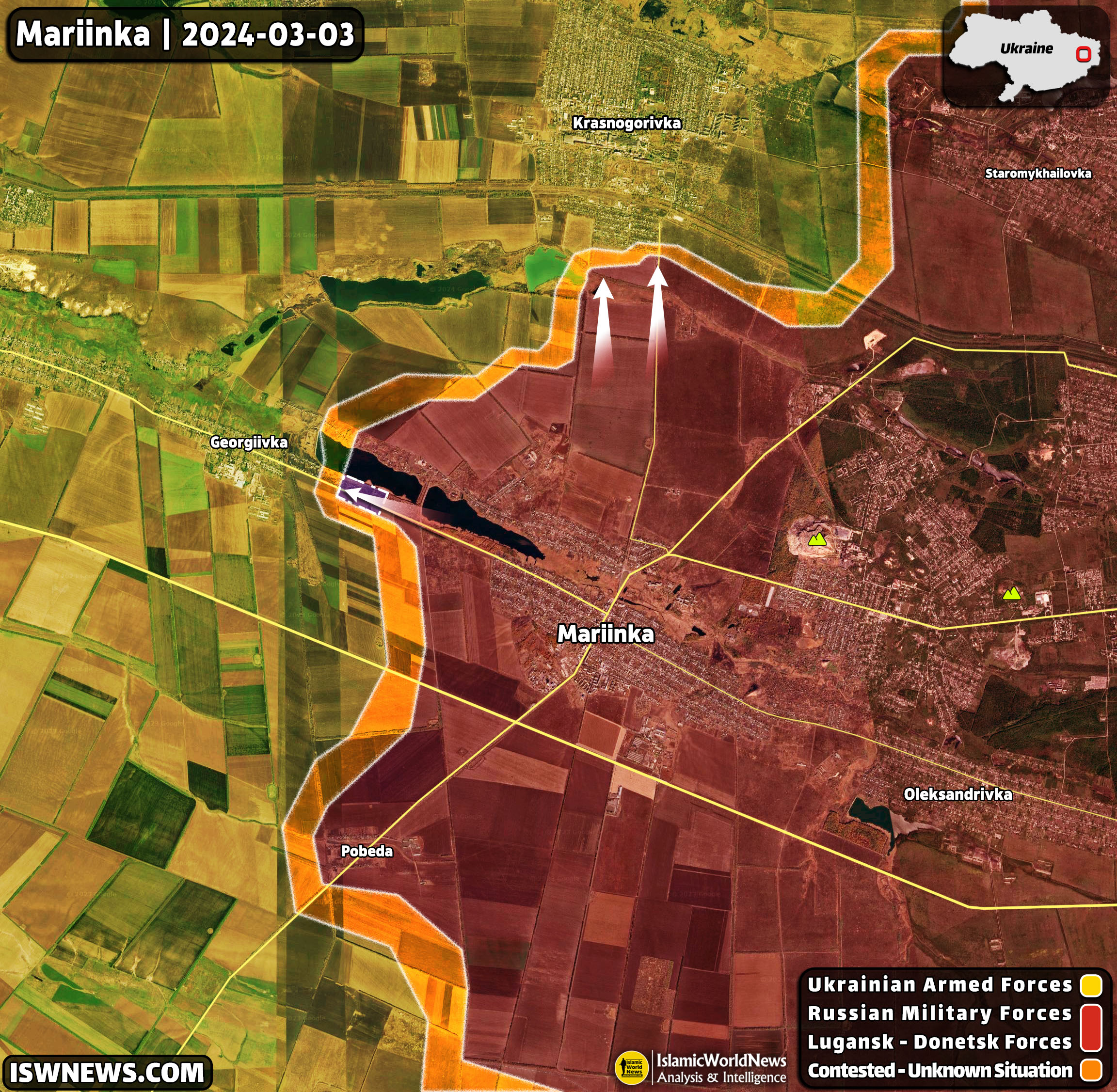
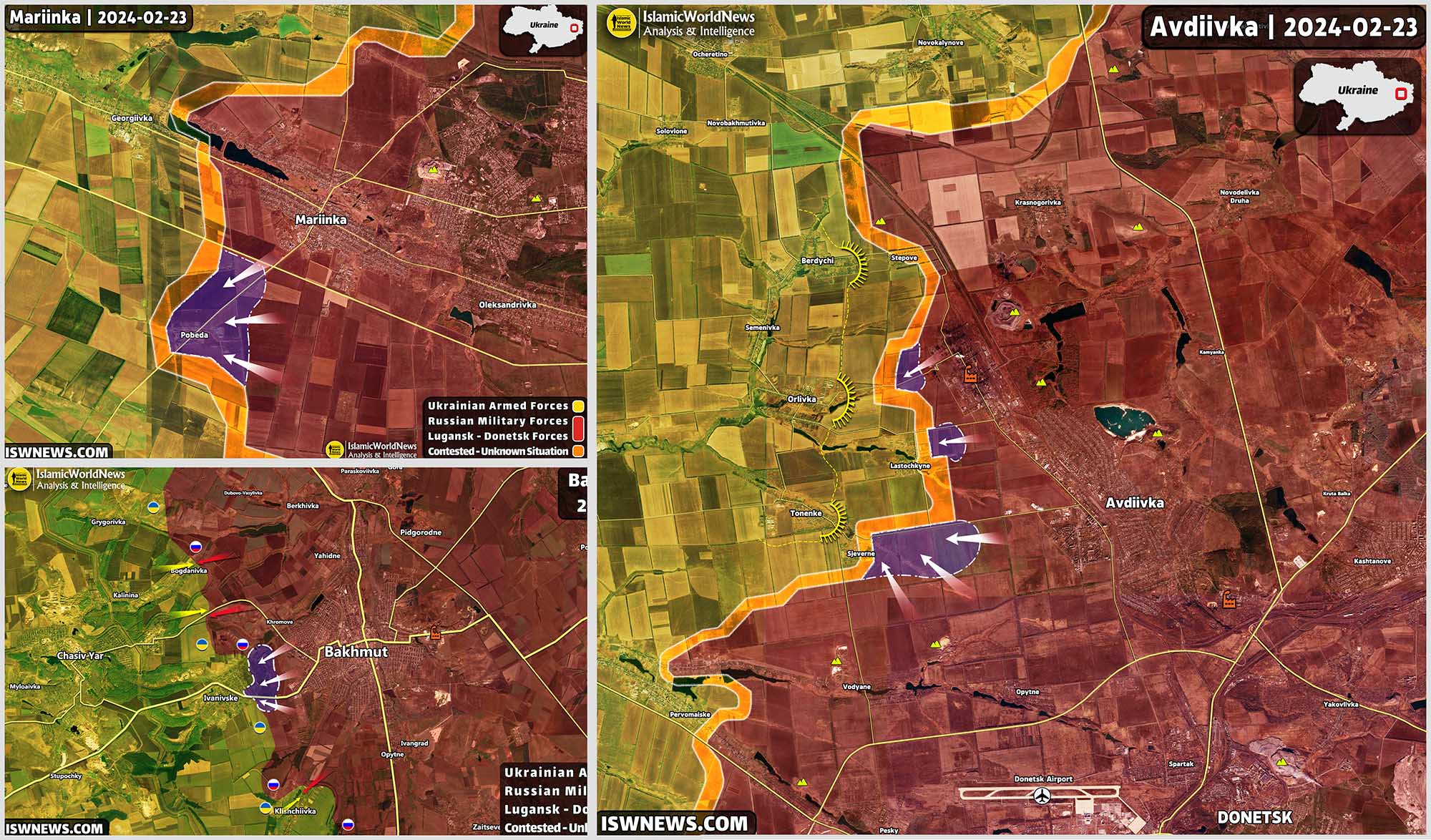
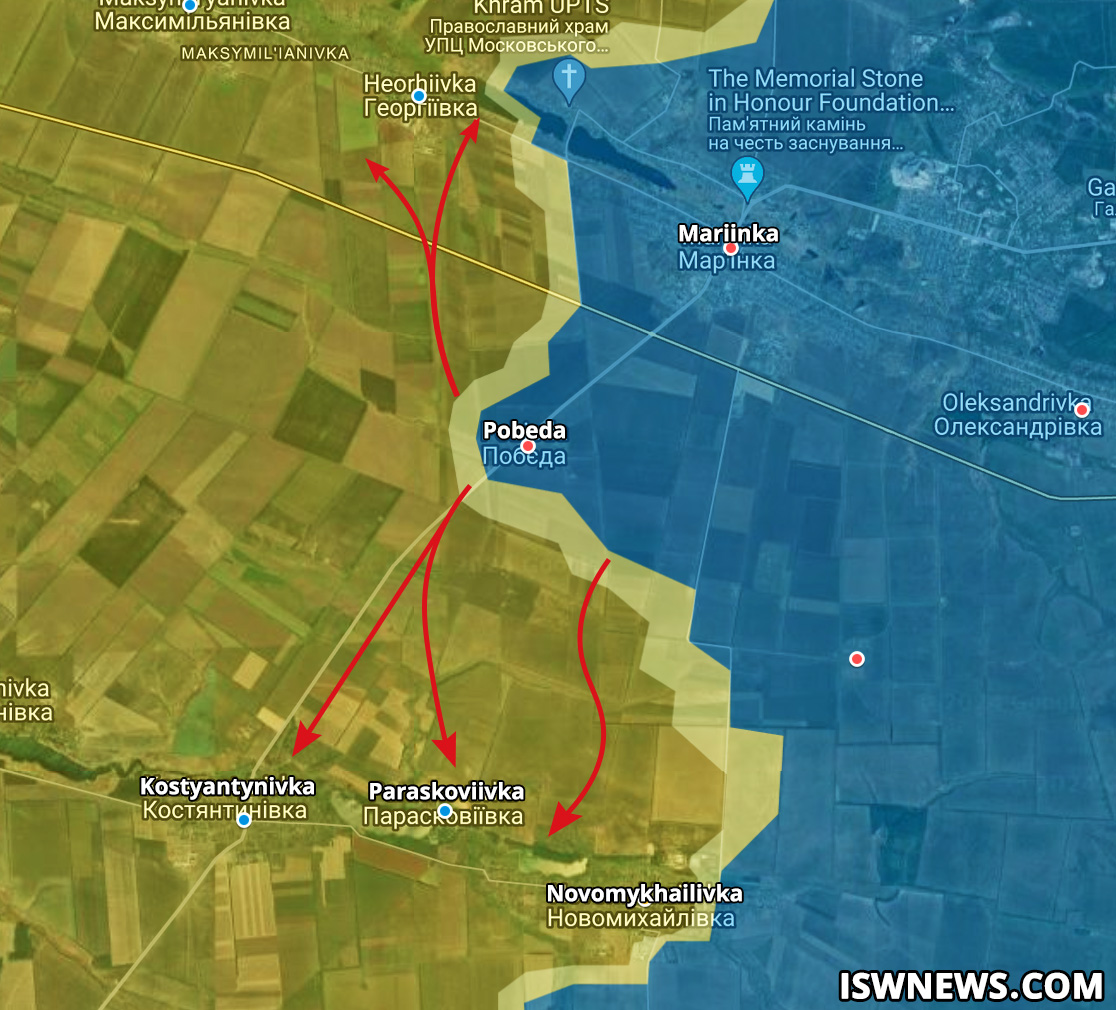
After about 10 days of fighting on the Mariinka-Georgiivka axis, the Russian army forces managed to advance a few hundred meters south of the Georgiivka reservoir. In this axis, the main parts of Georgiivka village are still under the control of the Ukrainian army.
Also, in the last week, Russian forces advanced in the northern fields of Mariinka, reached the south of Krasnogorivka and entered Shevchenka street. Krasnogorivka is considered as one of the most important defense fortifications of the Ukrainian army in the western axis of Donetsk city, and in recent years it has played an important role in feeding the Ukrainian lines in this axis.
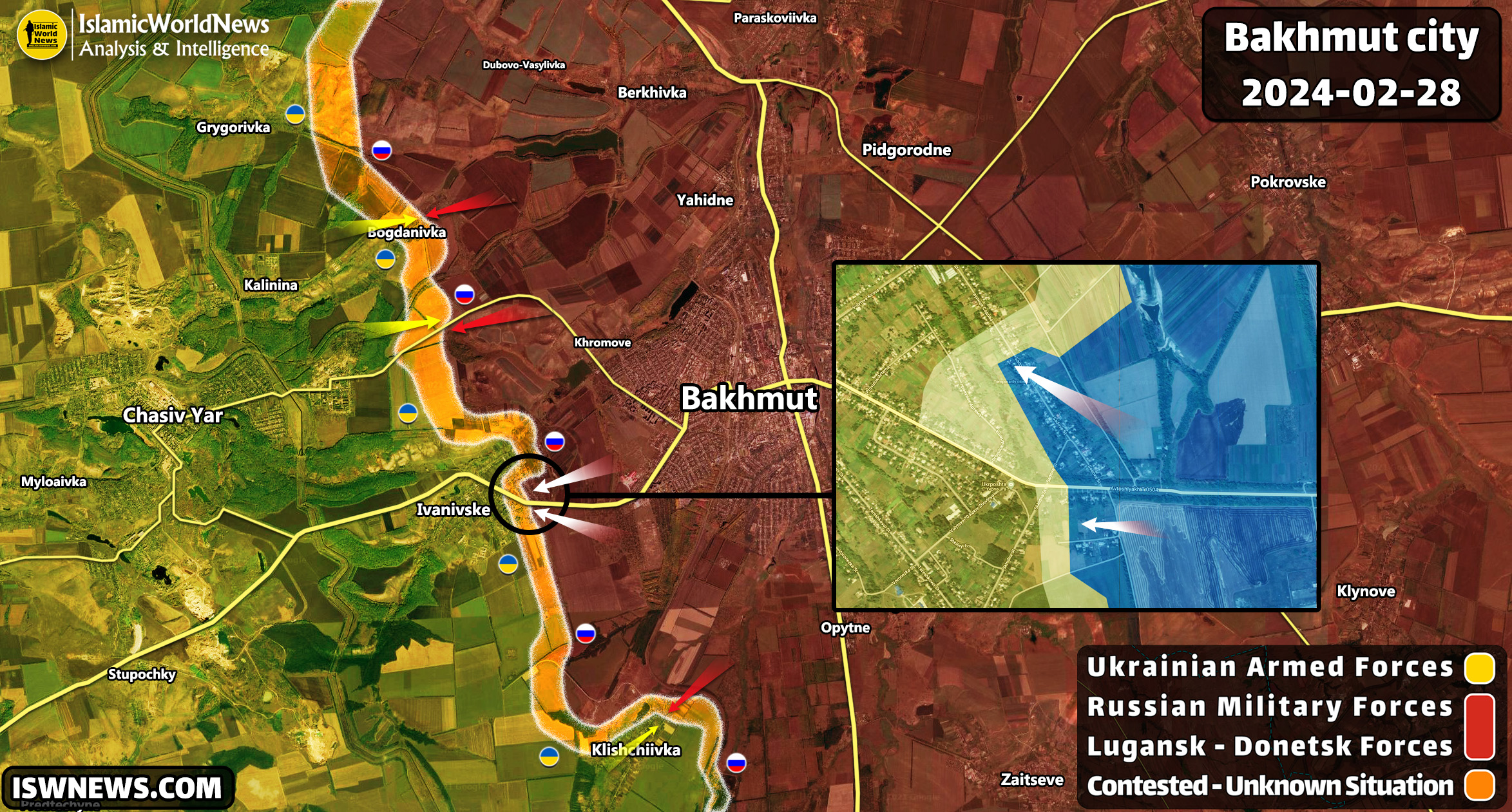
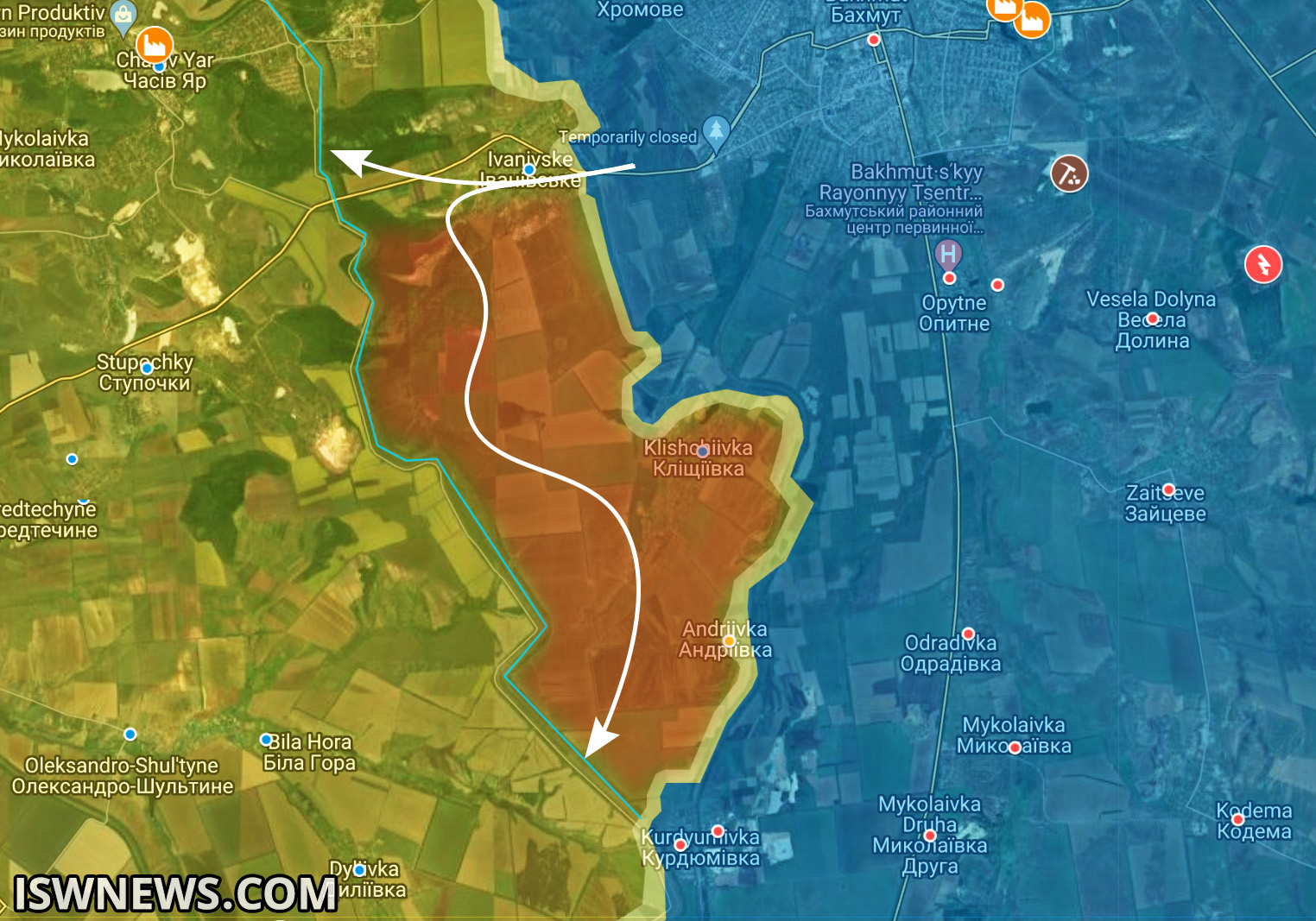
In the last week, Russian forces managed to reach the entrance of this village by advancing in the northern and eastern areas of Ivanivske; And gained a foothold in the Sadova Street. Now, clashes continue in the eastern parts of Ivanivske village.
Ivanivske plays a very important role in the stability of Ukrainian frontlines in the west of Bakhmut. Last year, by bypassing Ivanivske from the south, the Russian army even advanced to the vicinity of Chasov Yar from the south, but due to the Ukrainian army control over Ivanivske and the attacks they made against Russia from this axis, Russian forces were finally forced to retreat from the mentioned areas. But this year, the Russian army chose another plan to advance on this axis and has reached Ivanivske from the east and north. If the Russian army succeeds and captures Ivanivske, the Ukrainian forces will have to retreat to behind the “Siverskyi Donets canal” and the Russian forces, in addition to transfer the battle lines to near Chasov Yar, will be able to regain control over the southern areas of Ivanivske to Klishchiivka and Andriivka.
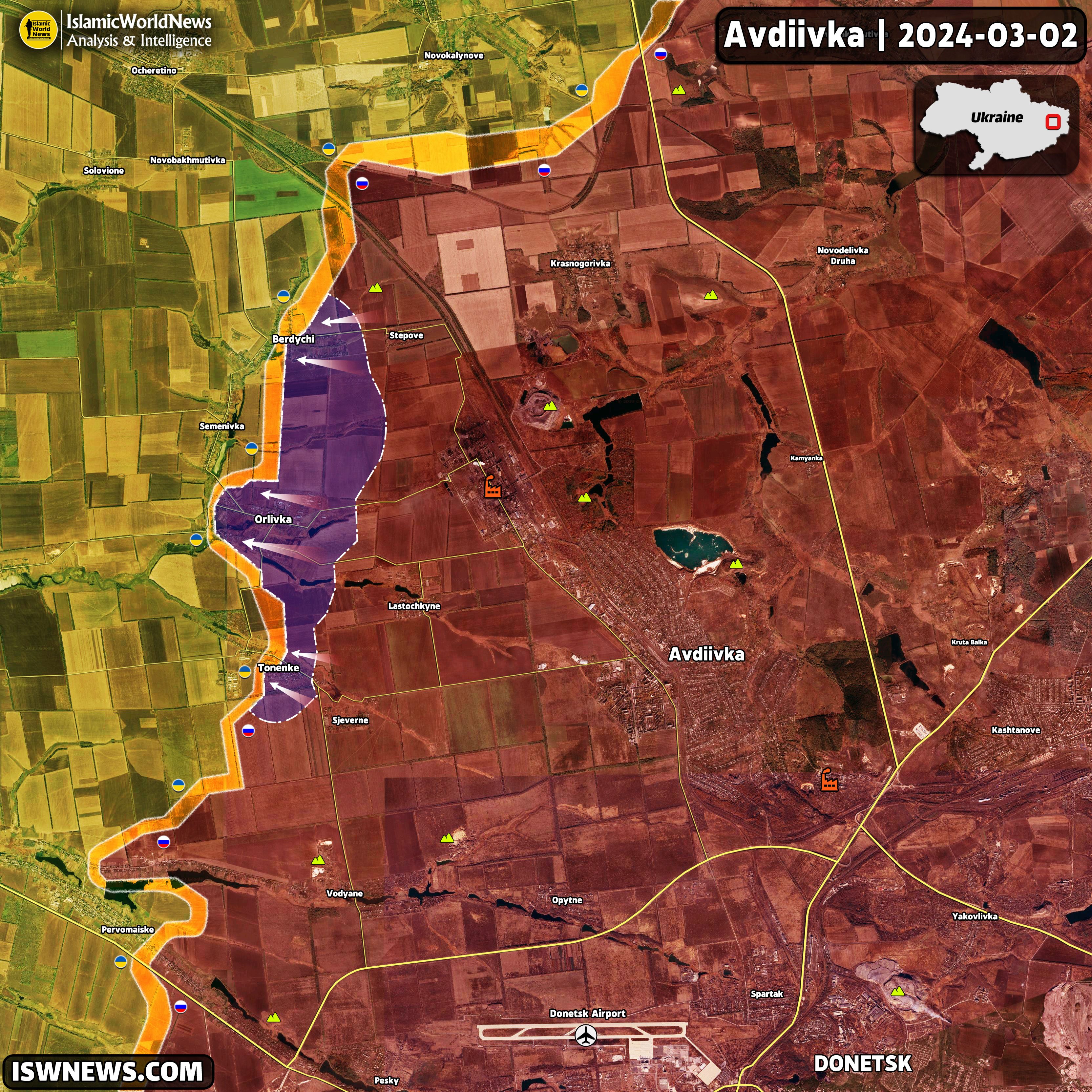
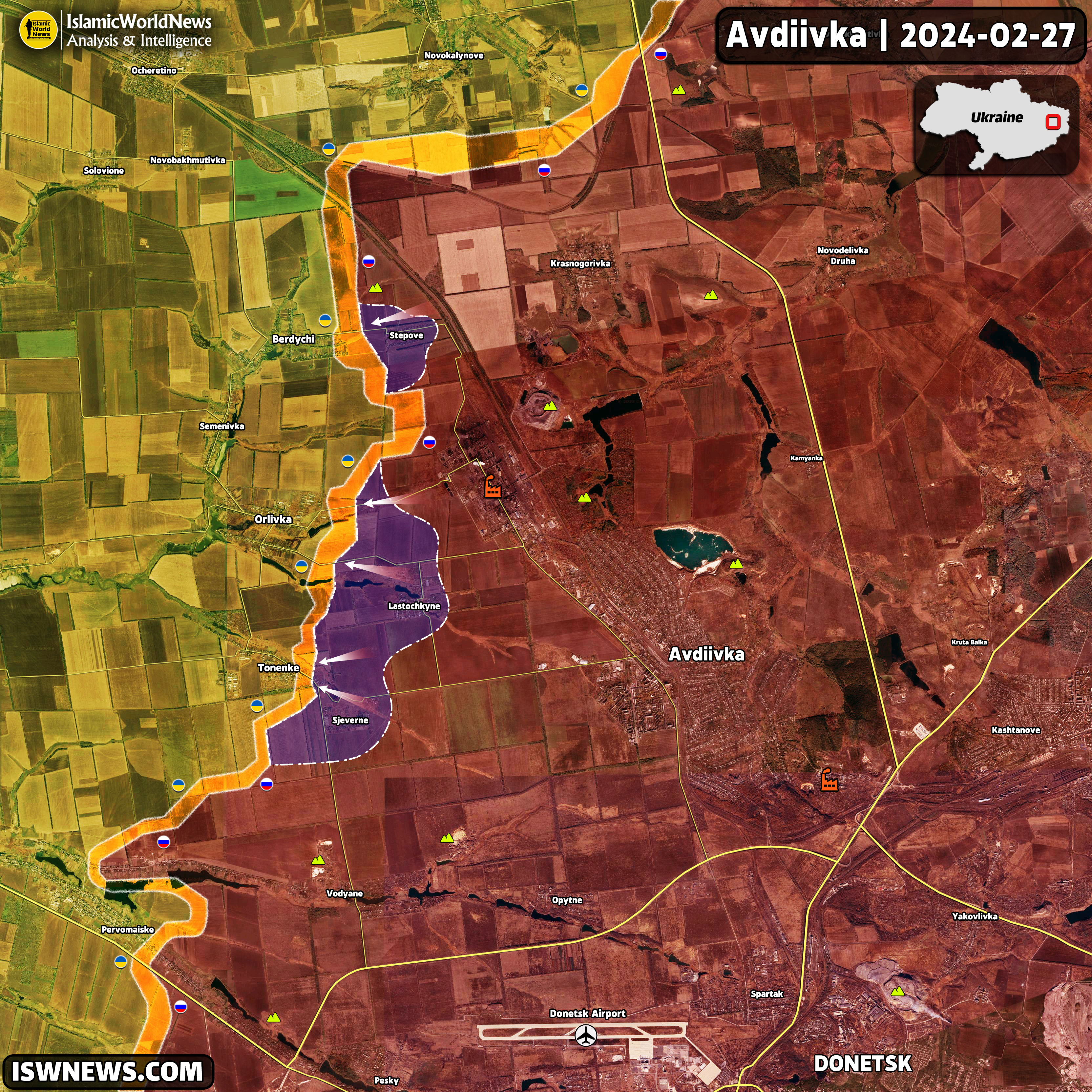
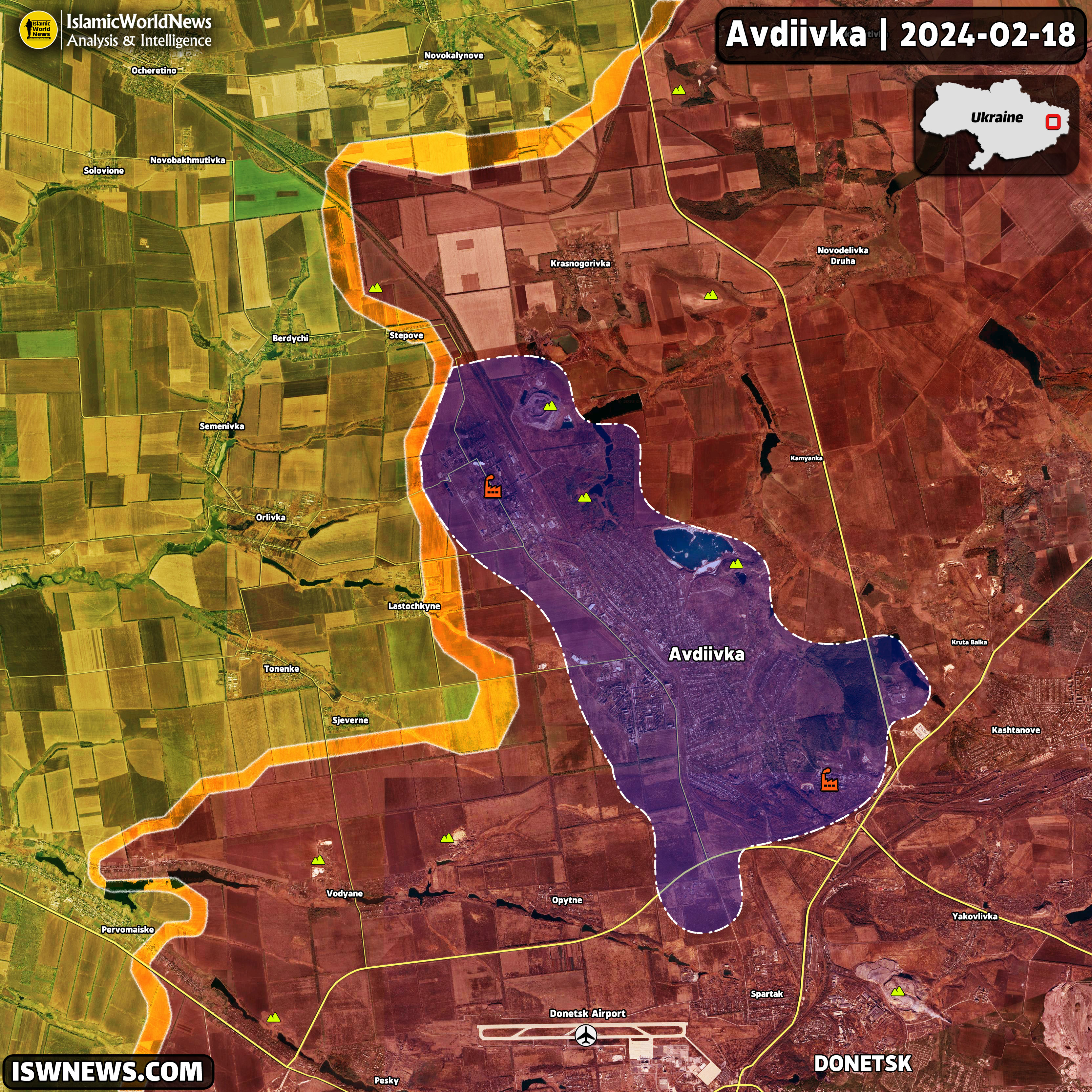
After the complete capture of Avdiivka town on 17th of February, the Russian army has continued its offensive process and continues to attack the villages and western areas of Avdiivka. During the last few days, Russian forces consolidated their control over the settlements of Sjeverne, Lastochkyne and Stepove in this axis.
Currently, the Russian army operation in this area is being pursued with the aim of capturing three other villages: after the capture of Stepove, the Russian forces have reached the outskirts of Berdychi; The capture of Lastochkyne and the advance from the west of Coke Plant have brought the Russian forces to the outskirts of Orlivka in two axes; And the capture of Sjeverne has paved the way for advancing towards Tonenke.
It should be noted that according to the latest information, Russian forces have entered the village of Tonenke.
Generally, after retreating from Avdiivka, Ukrainian forces have placed their main line of defense in Berdychi-Orlivka-Tonenke line. If this defense line is broken, the Ukrainian forces will have to retreat further to a depth of 5 to 10 kilometers to create a new defense line.
These days, the news and developments of the Avdiivka front in the north of Donetsk city are at the top of all fronts, and Russian forces still have the upper hand in this front and other fronts of the war.
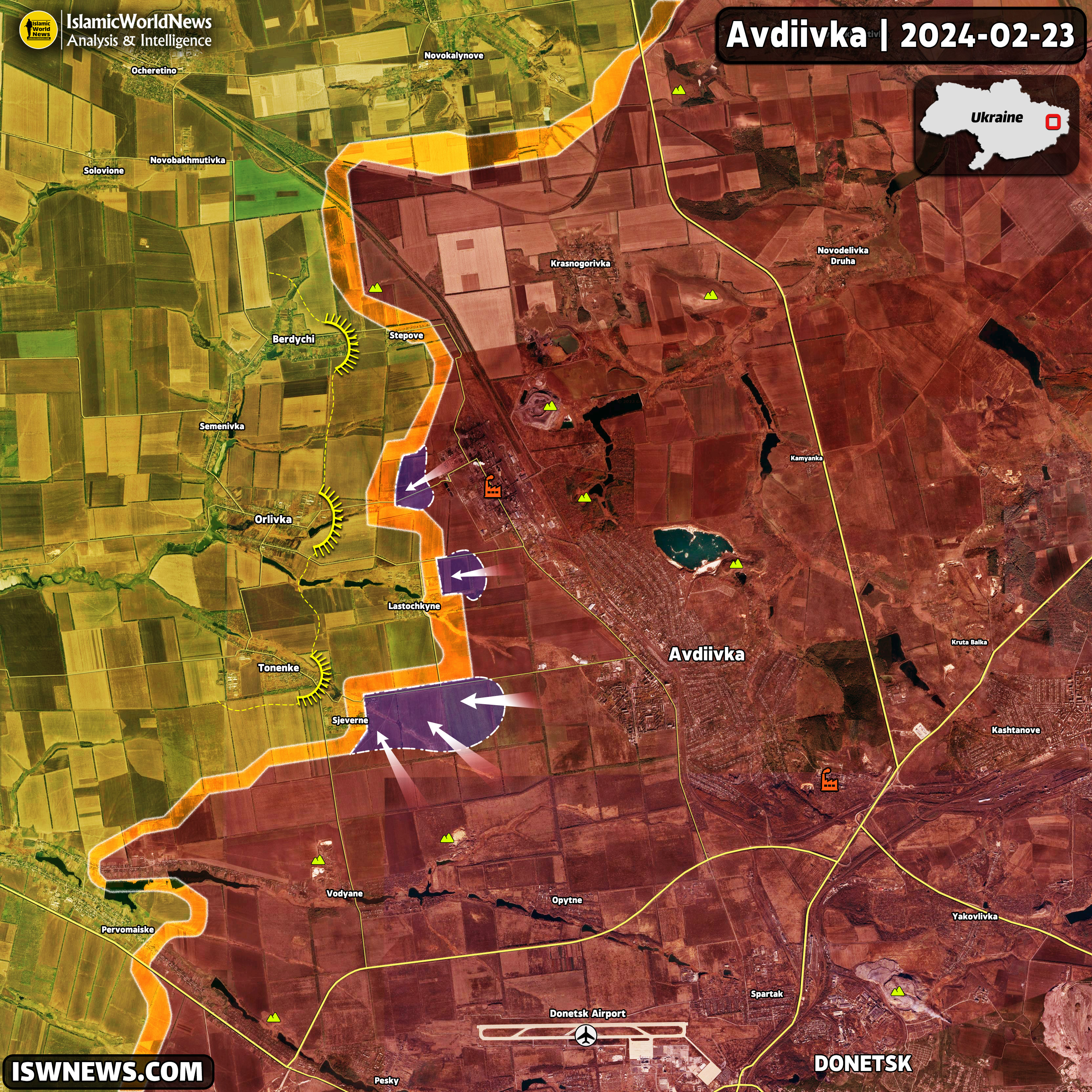
After the complete capture of Avdiivka town on February 17, the Russian offensive operations have been extended to the western areas of Avdiivka. Logically, the Russian army needs to increase the buffer zone on this front in order to protect Avdiivka from Ukrainian counterattacks. Therefore, Sjeverne, Lastochkyne, Tonenke, Orlivka, Semenivka, Berdychi settlements in the west of Avdiivka will be the next target of the Russian army. Knowing about this, the Ukrainian army is building new and more defensive barriers on the Berdychi-Orlivka-Tonenke line.
According to the latest information, during the last 48 hours, Russian forces advanced from the north of Vodyane and Khimik district and reached the Sjeverne settlement. Clashes continue inside the Sjeverne settlement. Also, Russian forces are present around the settlement of Lastochkyne, and the battles for the control of this village continue. In the west of Coke Plant, Russian forces slightly advanced towards Orlivka.
Military situation on the Avdiivka front – click to view full size
Another important front is the Bakhmut front. During the last week, Russian army forces, continuing their advance in the west of Bakhmut city, managed to take the forest areas and the eastern and northeastern farmlands of Ivanivske village and clashes reached to the eastern suburbs of this village. According to the latest information, Russian forces have entered Sadova Street in the east of Ivanivske.
Sporadic fighting between the Russian army and the Ukrainian army continues on other lines of this front near Klishchiivka, Andriivka, Kurdyumivka and inside Bogdanivka.
Military situation on the Bakhmut front – click to view in full size
On the Mariinka front, after several weeks of fighting, the Russian army finally managed to take control of Pobeda village in the south of Mariinka. The village of Pobeda and its surrounding areas were considered as an important stronghold for the Ukrainian forces in this area. With the capture of Pobeda, the resistance of the Ukrainian forces in the south of Mariinka and the north of Novomykhailivka has been broken. Now, the the Russian forces practically do not face a heavy obstacle in the open plains of this region up to Novomykhailivka, Paraskoviivka and Kostyantynivka.
In this axis, clashes continue in Georgiivka. By advancing in Georgiivka, the Russian army is trying to eliminate the danger of Ukrainian counterattacks against Mariinka.
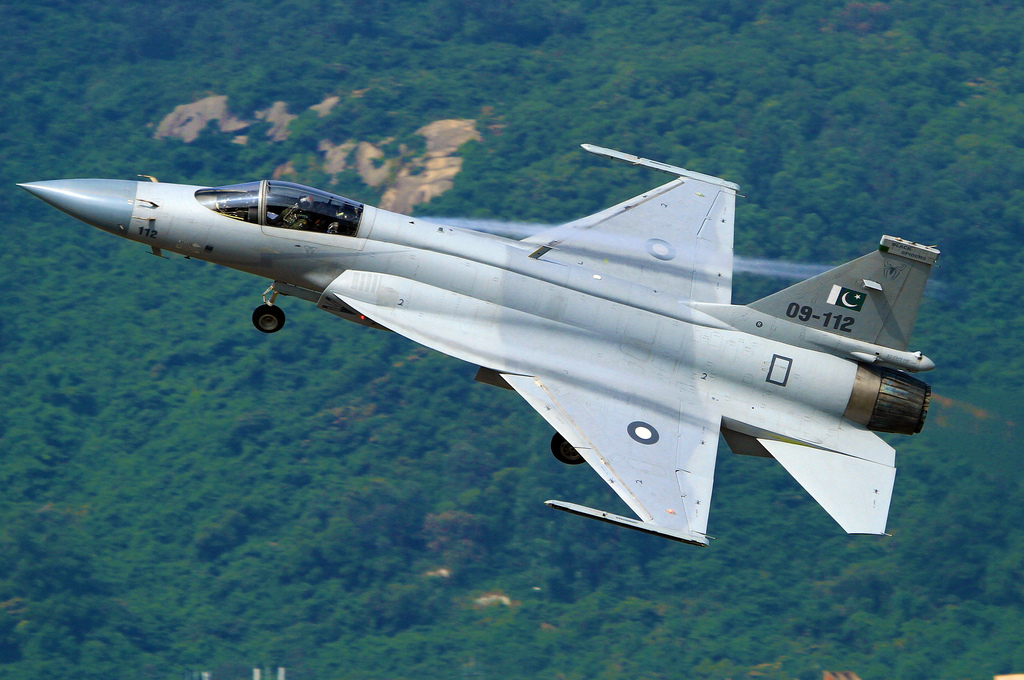
According to Pakistani media outlets, the Azerbaijani military has purchased JF-17 Thunder fighter jets (JF-17C Block-III) from Pakistan, along with training services and procuring armaments, in a contract worth $1.6 billion.
The Pakistan-Azerbaijan contract includes 18 JF-17 fighter jets, with an initial delivery of eight jets.
This deal, considered the largest military industry export of Pakistan, also involves the provision of spare parts, training courses, and arms packages to the government of Baku.
It’s worth noting that in previous years, the Pakistani military has also sold this type of fighter jets (Block 1 and 2) to the armies of Nigeria and Myanmar; so, Azerbaijan is the third customer of the JF-17 Thunder (Block 3) fighter jet.
The JF-17 Thunder is a single-engine multirole fighter jet produced by the Pakistan Aeronautical Complex (PAC) and the Chengdu Aircraft Industry Group (CAIG) of China. While it is considered inferior to its American and Russian counterparts, it has gained popularity in some African and Asian countries due to its lower cost and easier accessibility.
Following the failure of Ukrainian army’s offensive operations in various fronts in the past year and the weakening of the Ukrainian army due to various reasons such as the high number of human casualties, lack of necessary logistics to overcome Russian military power, and the beginning of the war in Gaza which diverted most attention to Palestine, Russian forces intensified operations on the Avdiivka front once again.
Over the past four months, Russian and Donetsk (DPR) forces gradually besieged the town of Avdiivka through a series of continuous and coordinated operations from the north and south.
On January 20th, Russian forces managed to break through Avdiivka’s defensive lines from the south and entered urban areas. In further battles, on February 3, Russian army forces also broke Ukrainian defense lines from the north and entered the northern areas of Avdiivka, practically cutting off all main supply and support lines for Ukrainian forces in Avdiivka, leaving only the western areas of the city for retreat. Therefore, Ukrainian armed forces began gradually retreating from Avdiivka from February 4, and finally on February 17, they announced a complete withdrawal from the town of Avdiivka in a statement.
According to the Russian Ministry of Defense, the area that came under Russian army’s control during the Avdiivka operation is over 31.75 square kilometers.
It can boldly be stated that the Russian army’s control over the town of Avdiivka is Russia’s most significant victory in the Ukraine war after the occupation of the city of Bakhmut in 2023.
The important town of Avdiivka was considered one of the strongest defense and military lines of the Ukrainian army in the north of Donetsk city. Previously, Ukrainian army’s control over this town was the main obstacle to the expansion of Russian military operations in the Donbass region. Now, with the occupation of Avdiivka by Russia and its allies, the security of Donetsk city from the north has been significantly ensured, and the Russian army finds the opportunity to expand battle lines around Donetsk city with more concentration and power.
According to diplomatic sources from Azerbaijan, the two sides discussed bilateral cooperation in various areas and emphasized the activities of their joint commissions. They also viewed the opening of the embassy of the Republic of Azerbaijan in Israeli-occupied territories as a motivation for the development of bilateral economic relations.
This meeting occurred simultaneously with increased tensions on the border between Azerbaijan and Armenia, resulting in the killing of one Azerbaijani soldier and four Armenian troops.
Armenian Prime Minister Nikol Pashinyan alleged that Azerbaijan is seeking to create full-scale military tension and war against Armenia through military actions in certain border areas.
It’s worth mentioning that the opening of the embassy of the Republic of Azerbaijan in Israeli-occupied territories was carried out following parliamentary approval and Ilham Aliyev’s endorsement on November 18, 2022.
Mehriban Mammadova, deputy foreign minister of Azerbaijan, was appointed as the Ambassador of the Republic of Azerbaijan to the Israeli regime.
The relations between the government of Aliyev and the Israeli regime have expanded in recent years in various fields, including economic, security, and military sectors, to the extent that 17% of Israeli military exports go to Azerbaijan, and 40% of Azerbaijan’s oil exports go to the Israeli-occupied land.