Category: Graphics

  • Military Knowledge: Zulfiqar Main Battle Tank

    Military Knowledge: Zulfiqar Main Battle Tank

    History:
    The first prototype of the Zulfiqar tank is known as Zulfiqar-1. This tank was first introduced in 1994. According to studies, the design and construction of the tank were carried out by Brigadier General Mir-Younes Masoumzadeh, the first head of the Research and Self-Sufficient Jihad organizations of the Ground Forces of the Islamic Republic of Iran Army. It is likely that the design and construction of this tank took place from 1988 to 1994. Brigadier General Masoumzadeh maintained the position of presiding the Research and Self-Sufficient Jihad organizations until his retirement in 1999.

    The Shahid Kolahdooz Industrial Complex was inaugurated in 1988. This military industrial unit was affiliated with the Ministry of Defence and Armed Forces Logistics and its main goal was to produce armored equipment, especially the Zulfiqar tank. Despite its main goal, this complex also produces various types of railway wagons and heavy equipment due to its high industrial capacity. However, despite the main goal of creating this industrial center for the production of the Zulfiqar tank, the number of Zulfiqar tanks seen in service is not high at all. Some sources claim that 100 units of Zulfiqar-1 tanks have been produced; however, because the military industry is not being publicized, it is not easy to verify this number outright. 

    The information about the timing of the introduction of the Zulfiqar-2 tank is not complete and the available data is unclear. However, based on the existing research, it is likely that the Zulfiqar-2 tank was introduced between 1999 and 2004. High-quality images of the Zulfiqar-2 tank are not available. The turret of the Zulfiqar-2 has undergone significant changes and is longer in comparison to the initial version. At least one wheel has been added to the chassis of the Zulfiqar-2 compared to the initial version. It is likely that significant changes were made to the turret and crew size during the purchase, production, and deployment of T-72 tanks in the mid-1970s. The Zulfiqar-2 tank likely uses a similar automatic loader to the T-72 tank and the crew size has been reduced to 3 personnel.

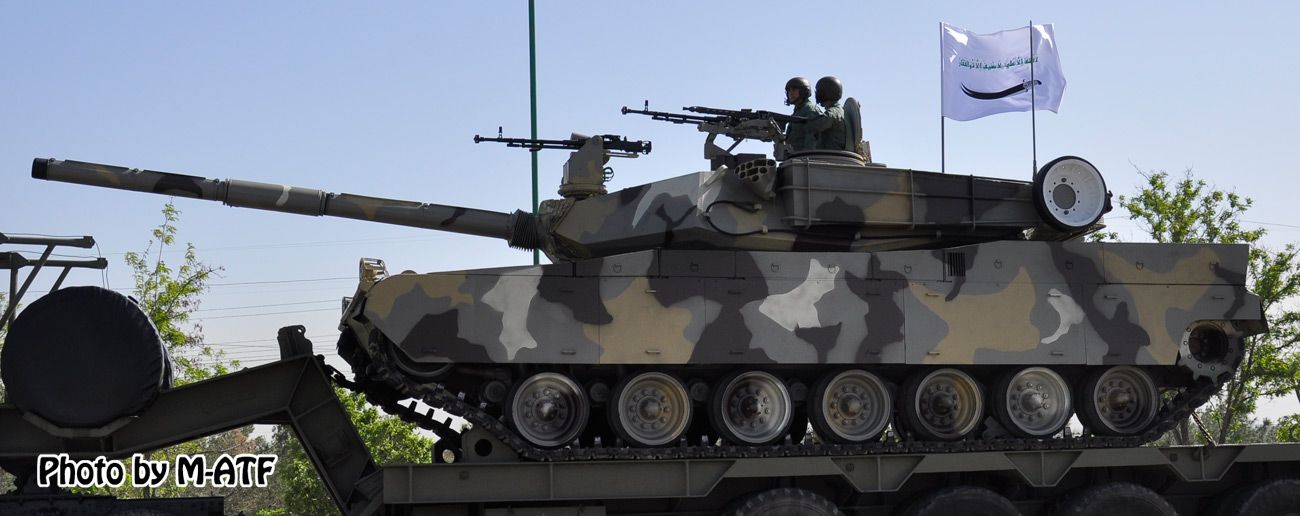
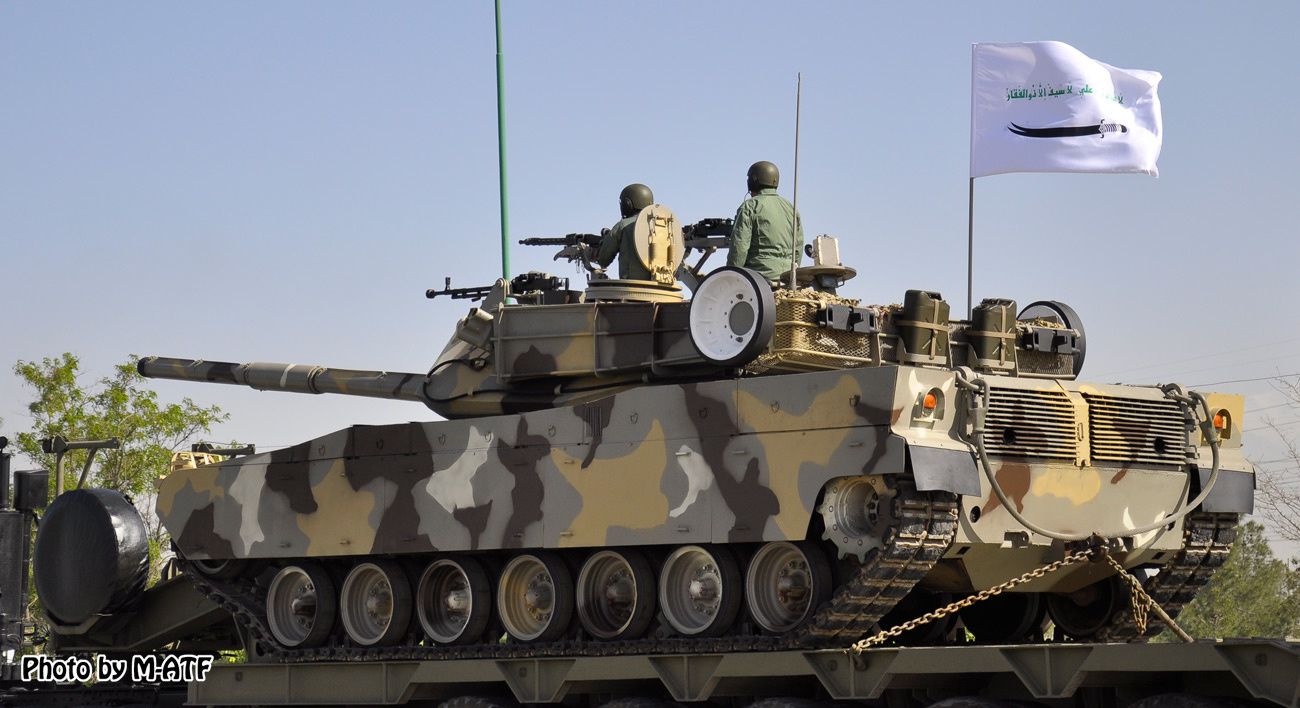
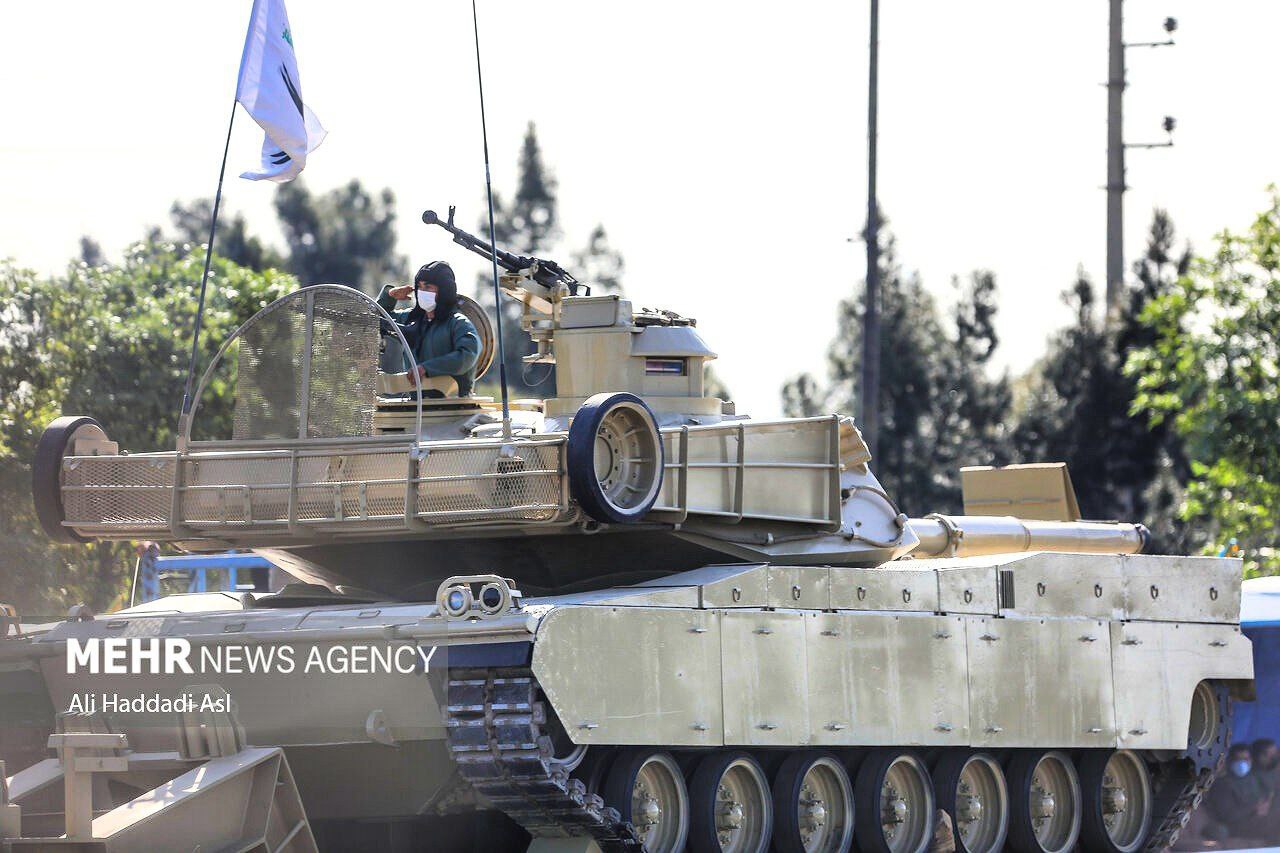
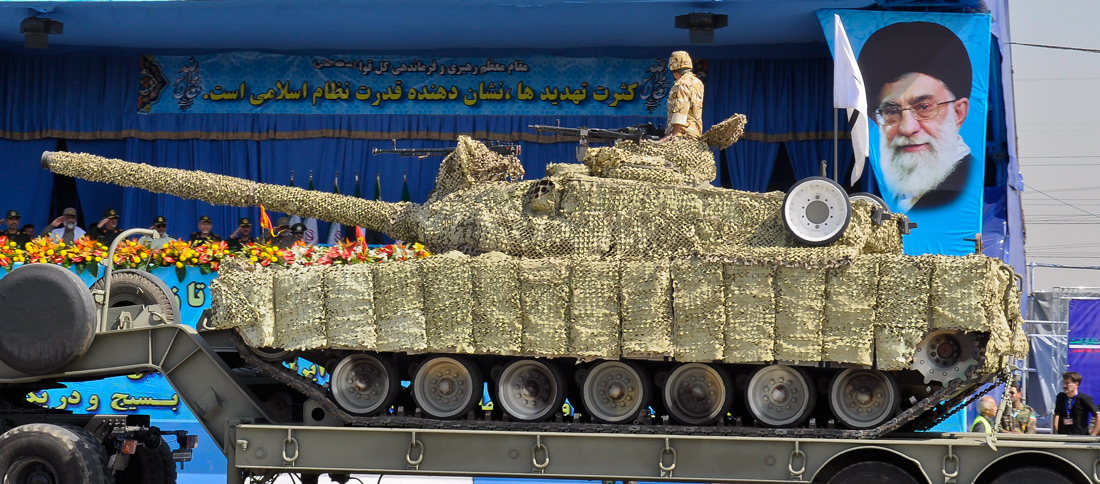
    The Zulfiqar-3 tank was first seen during the military parade in April 2011. This tank also uses the chassis of the Zulfiqar-2 and its turret has a strong resemblance to that of the Zulfiqar-2. In 2016, changes were made to the Zulfiqar-3, mainly related to the design of the front part of the turret. The version unveiled in 2016 is also referred to as Zulfiqar-3E.

    Design:
    As mentioned in the history section, the Zulfiqar-1 has fewer wheels in comparison to later versions. Despite claims that the chassis of the Zulfiqar-1 is similar to the M60 or M48, a closer examination of the chassis reveals that it enjoys an independent designation.
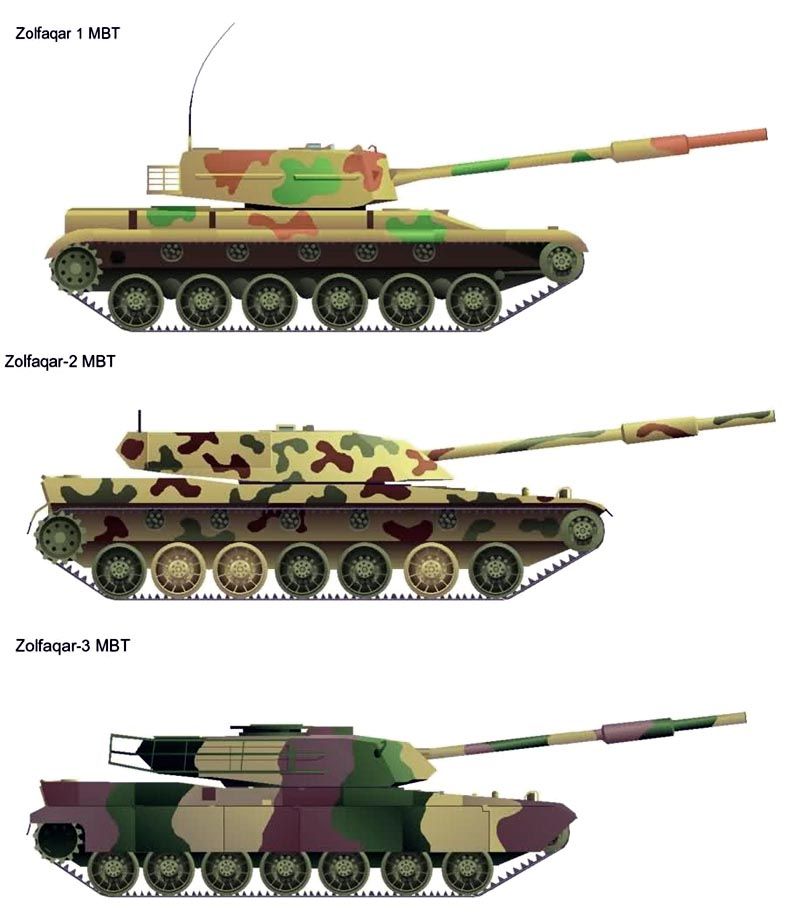
    A graphic image of three Zulfiqar tank models, in the new models, the chassis is longer and a wheel has been added to it.

    The Zulfiqar-1 chassis uses a more modern design than the M48, and the only similarity between the Zulfiqar chassis and the M48 is the number of wheels, which is 7. The chassis of M48 is made by casting method and at a glance, the difference between Zulfiqar and M48 chassis is obvious.
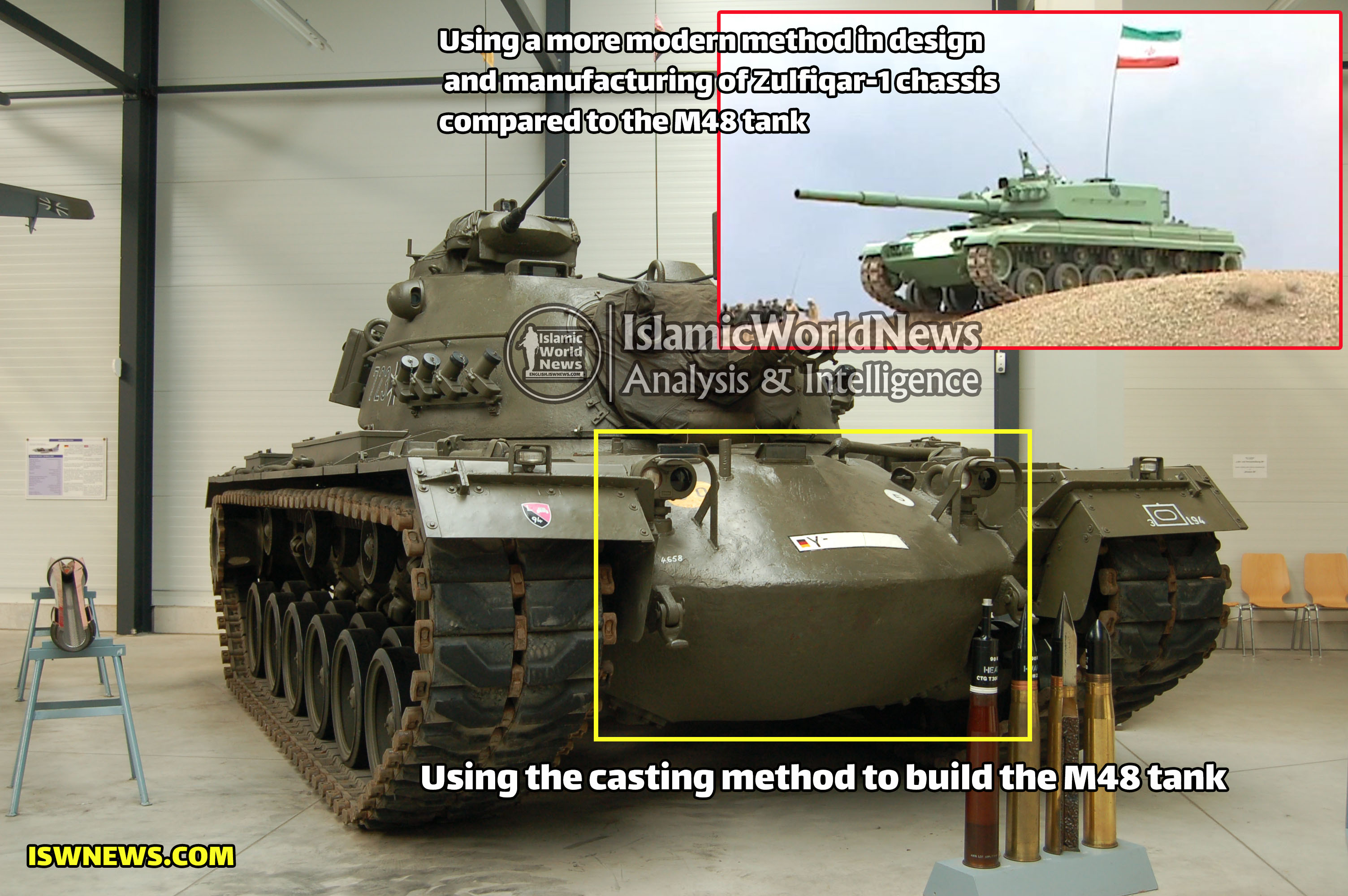
    The difference between the two chassis is quite evident

    Regarding the similarity of the Zulfiqar-1 tank with the M60 tank, it can be said that the most similarity can be seen in the chassis of these two tanks. Both have the same number of wheels and the same shape in front of the chassis. However, the chassis height of the Zulfiqar tank is less. For this reason, five wheels have been used instead of three supporting wheels above, so that the reduction of the chassis height does not interfere with the performance of the wheels and chains on rough roads. The reduction in height and the applied changes can also indicate a change in the suspension system. According to the mentioned points, the Zulfiqar-1 chassis, despite its similarity with the M60, has used an independent design.

    Due to the similarities between Zulfiqar-1 and M60 designs, many experts believe that the AVDS-1790 engine with 1000 horsepower belonging to the M60 tank was used in Zulfiqar.
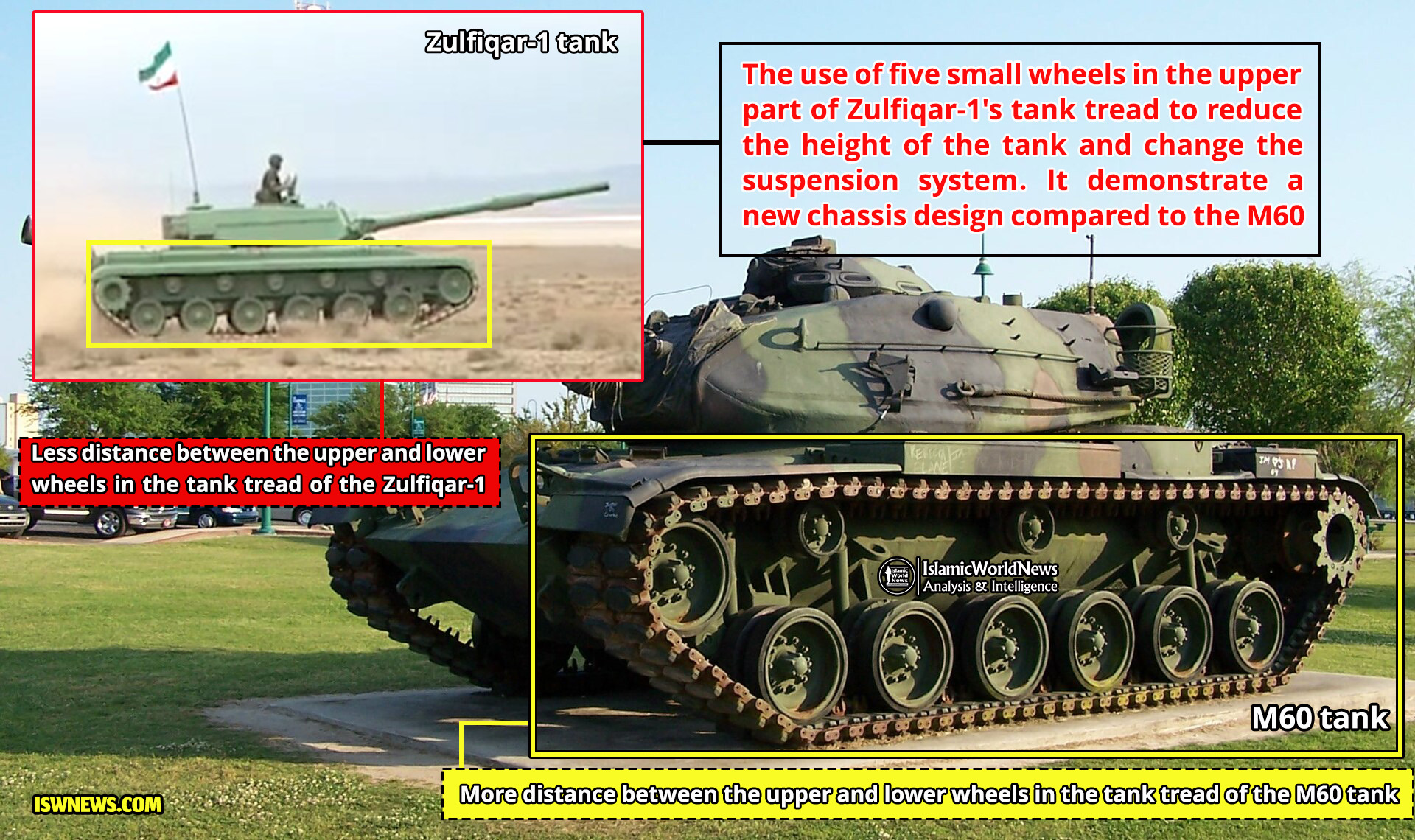
    The difference in the height of the tank chassis and the number of tank tread wheels in the M60 and Zulfiqar-1 tanks

    The designers of the Zulfiqar-1 tank have paid attention to reducing the height of the chassis to achieve greater stealth. For this purpose, small wheels are used more in the top of the tank tread. The reason for this is to prevent the interference of the wheels and chains on the roads with high unevenness and also reduce the damage of the wheels or chains during the movement.

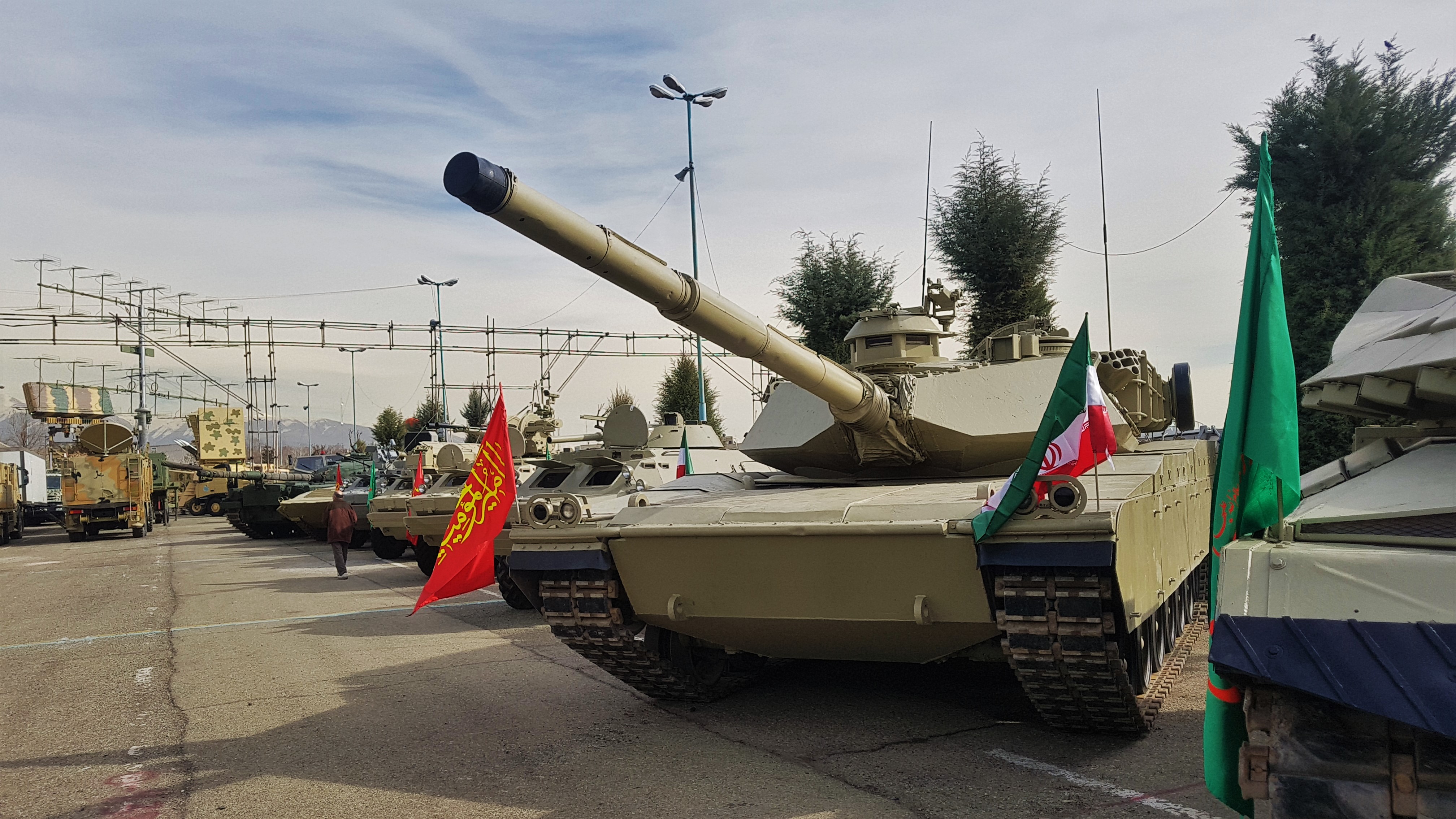
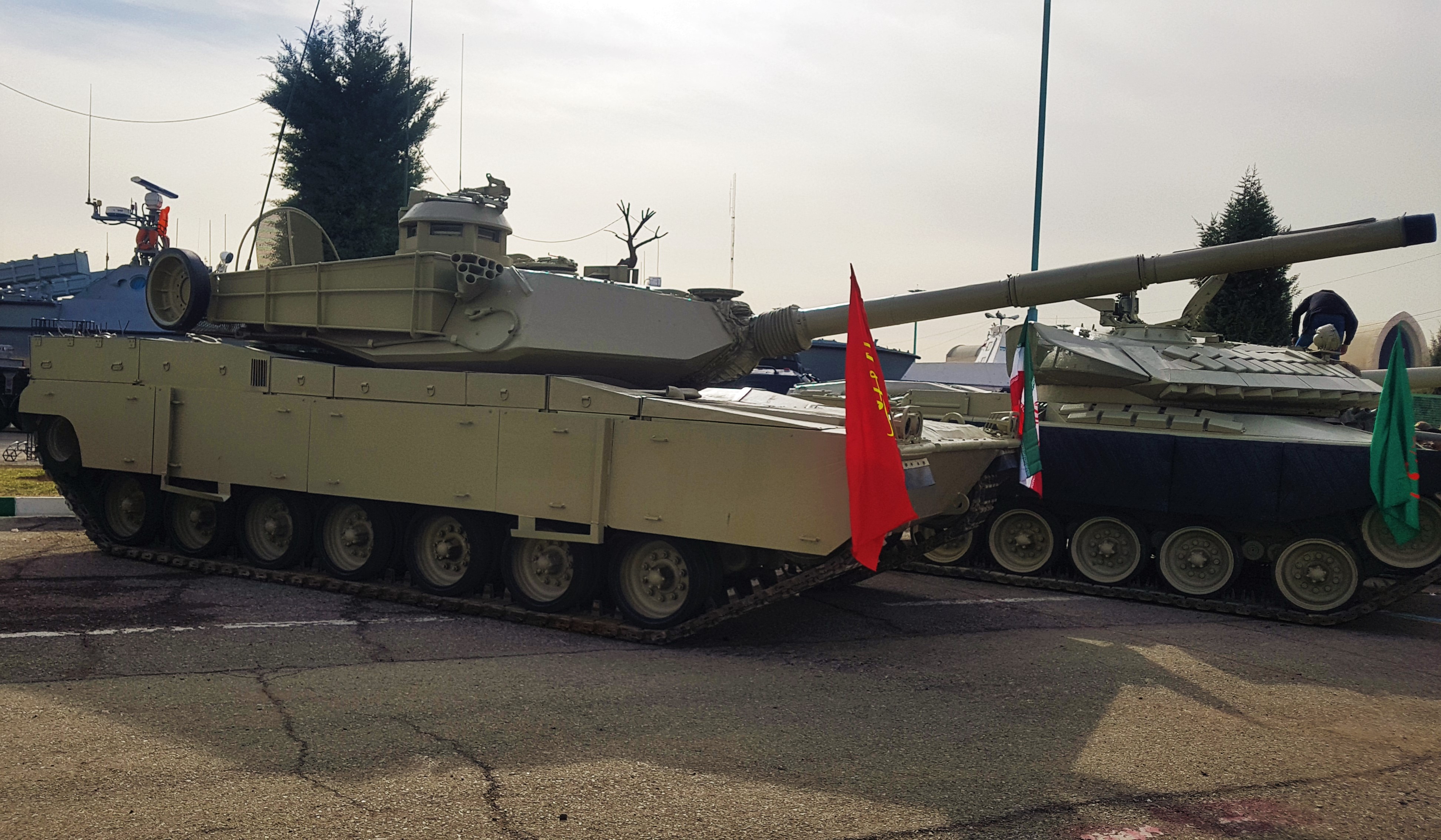
    The design of the Zulfiqar 2 and 3 chassis is very similar to the American Abrams chassis at first glance. It seems that in the process of designing the Zulfiqar 2 and 3 chassis, an attempt has been made to present a modern design based on the Abrams chassis.
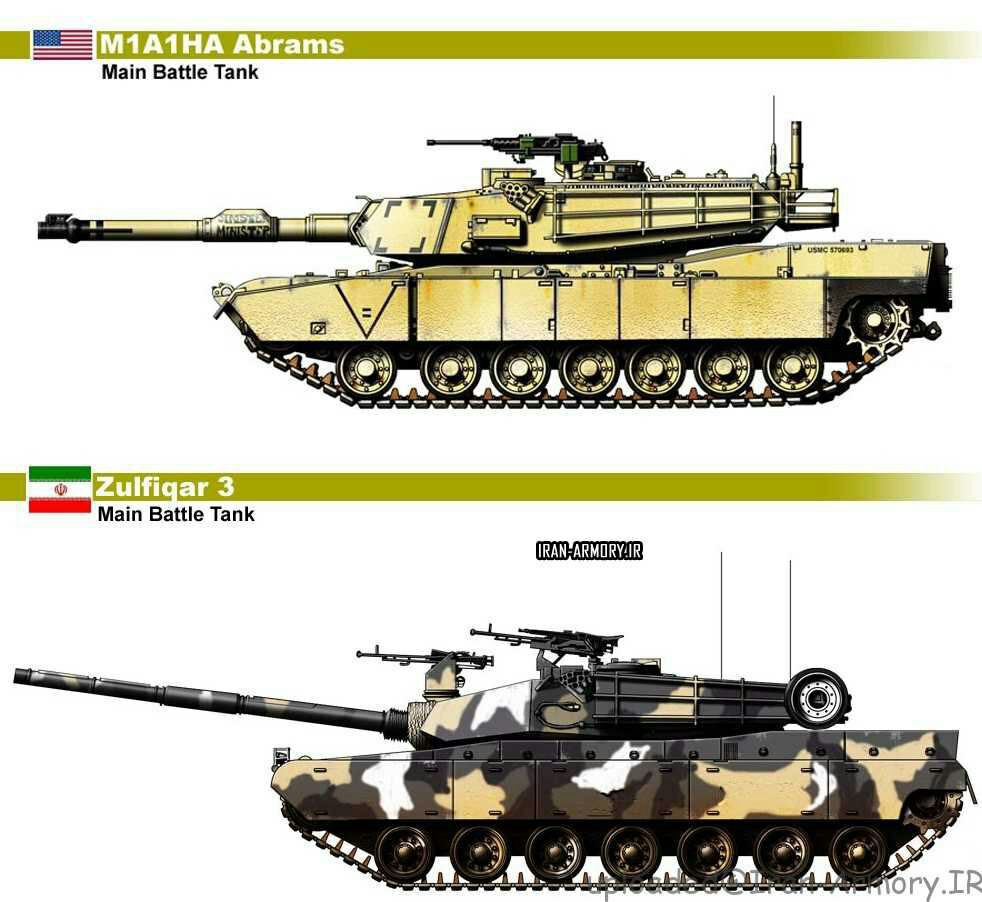
    Comparison of Zulfiqar-3 and Abrams tanks, which are similar in appearance.

    Review of Zulfiqar-3 tank:
    Zulfiqar-3 tank is an Iranian main battle tank. This tank is the result of eight years of holy defense experience and the construction of Zulfiqar-1 tank in 1993.

    Zulfiqar-3 tank uses 125mm 2A46 gun. According to the image documents, this gun was also present on Zulfiqar-1 from the very beginning. Most likely, at first, Iran tried to buy western types of guns, because the combat organization of the Iranian army is based on western tools, But due to Western sanctions against Iran, the Russian 2A46 125 mm gun was used. This gun was available on the captured tanks of the Iraq war, and considering the economic conditions of Russia after the collapse of the Soviet Union, it was possible to buy it from Russia.

    In the mid-1990s, Iran succeeded in buying and producing the T-72 tank from Russia. This tank was imported into the country as a kit and assembly operations were carried out in Iran. This caused Iran to use the automatic loading system of the T-72 tank in addition to the 125 mm gun in the next samples of Zulfiqar. Today, Iran itself is the producer of 125mm 2A46 gun under Russian license.
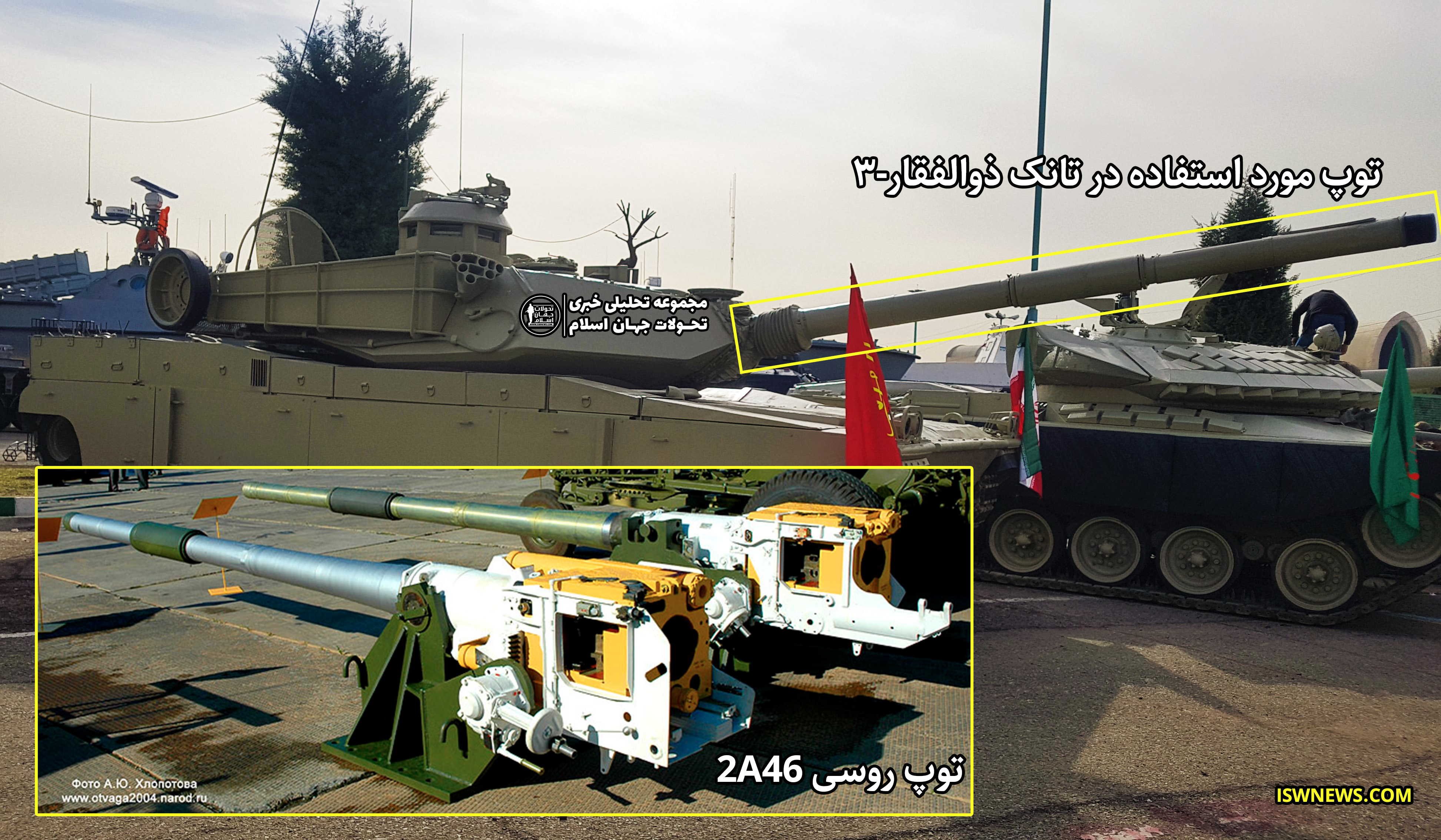
    The effective range of the gun used in the Zulfiqar-3 tank is about 3000 km. To increase the accuracy of this gun, the KAT-72 fire control system made in Iran has been used. This fire control system is the result of technology transfer and production of Slovenian EFCS-3-55 system. This system enables the Zulfiqar tank to shoot at a moving target at a distance of 2000 km while the Zulfiqar tank itself is moving. Also, the KAT-72 fire control system allows the Zulfiqar-3 tank to hit the first shot at a distance of 2,200 meters in a stationary state.

    This tank uses a laser range finder produced by SAIRAN company, which can measure the distance up to 10,000 meters with high accuracy. The fire control system also uses wind sensor, temperature sensor and gun deviation sensor.

    The Zulfiqar-3 tank uses a 360-degree periscope for the commander, a day and night vision site for the gunner, and a periscope for the gunner. Also, the tank includes 12 smoke grenade launchers (6 on each side).
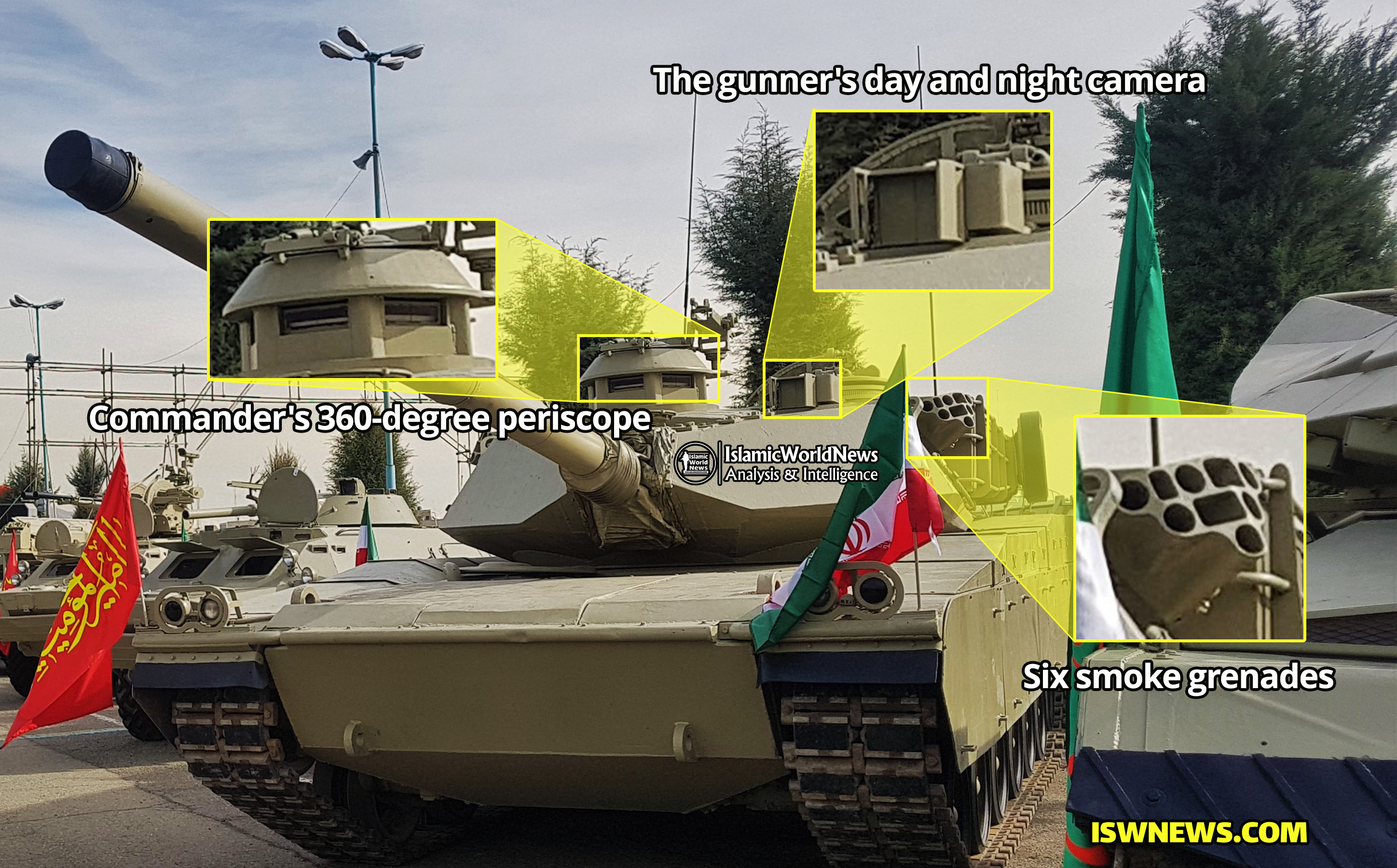
    Different parts of Zulfiqar-3 tank

    In the prototypes, in addition to the main 125 mm gun, a 12.7 mm Dshk machine gun for the commander and a 7.62 MG3 machine gun for the gunner are installed as secondary weapons on the tank. The machine guns have no remote control and the tank crew must get out of the tank to use them. But in more advanced models of Zulfiqar 3, a Dshk machine gun with remote control capability has also been added to this section.

    The point that attracts attention in this section is the use of three machine guns on the tank. In general, using this number of machine guns on today’s modern tanks is not customary and is considered excessive. Also, remote controlled machine guns are used in modern tanks today. Having a remote controlled machine gun for the gunner and commander in urban warfare can be much more practical than the current arrangement. Because it keeps the crew away from the enemy’s direct fire and provides a large volume of fire without rotating the turret in several directions.

    The machine guns used on the Zulfiqar-3 tank

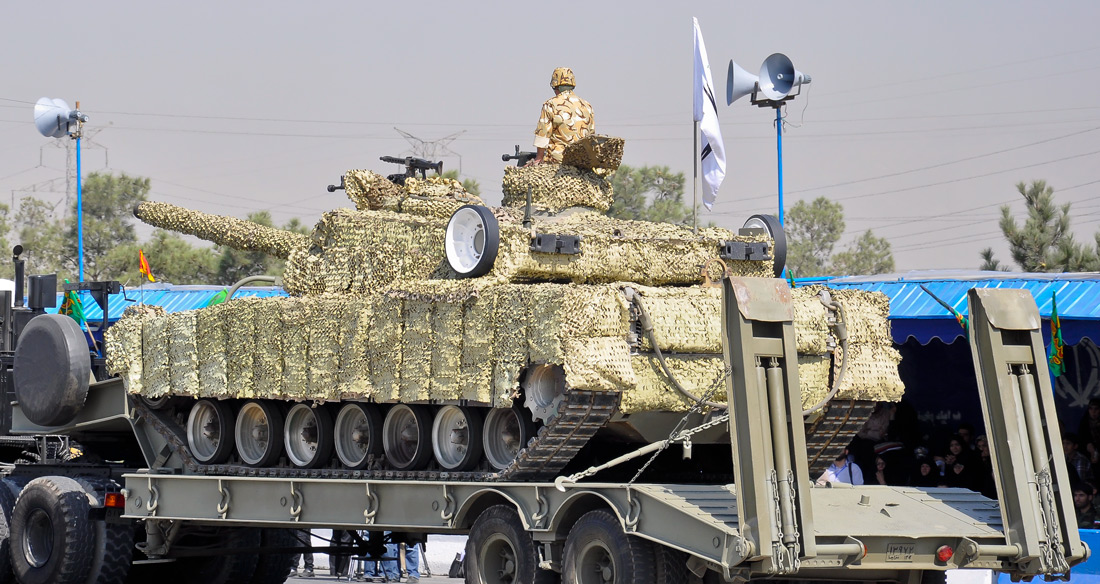
    In some published images of the Zulfiqar-3 tank, thermal camouflage nets have been used for greater concealment and to increase the degree of protection.

    The driver in the Zulfiqar-3 tank is located in the middle and almost below the junction of the gun and the turret. This location is similar to the location of eastern tanks. Regarding the periscope or surveillance camera for the driver, there is no item on the tank, but it is possible to install and use these items, similar to the Karrar tank.

    Read more: Military Knowledge: Karrar Main Battle Tank
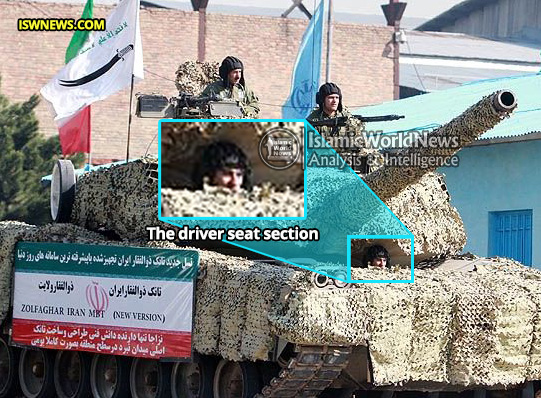
    Thermal camouflage nets and the location of the Zulfiqar-3 tank driver

    The exact specifications of the engine used on the Zulfiqar-3 tank are not available. But speculation predicts the existence of an engine with a minimum power of 1000 horsepower. Based on the power of 1000 hp, the M60 tank engine named AVDS-1790 and the Ukrainian 6TD engine with a maximum power of 1200 hp and the Russian V92 engine with a power of 1000 hp (used in the T-90A) are available for the Zulfiqar-3 tank.

    Zulfiqar-3 engine with 1000 horsepower and 52 tons of weight gives this tank a thrust to weight ratio of 20 horsepower per ton, which is a desirable number.

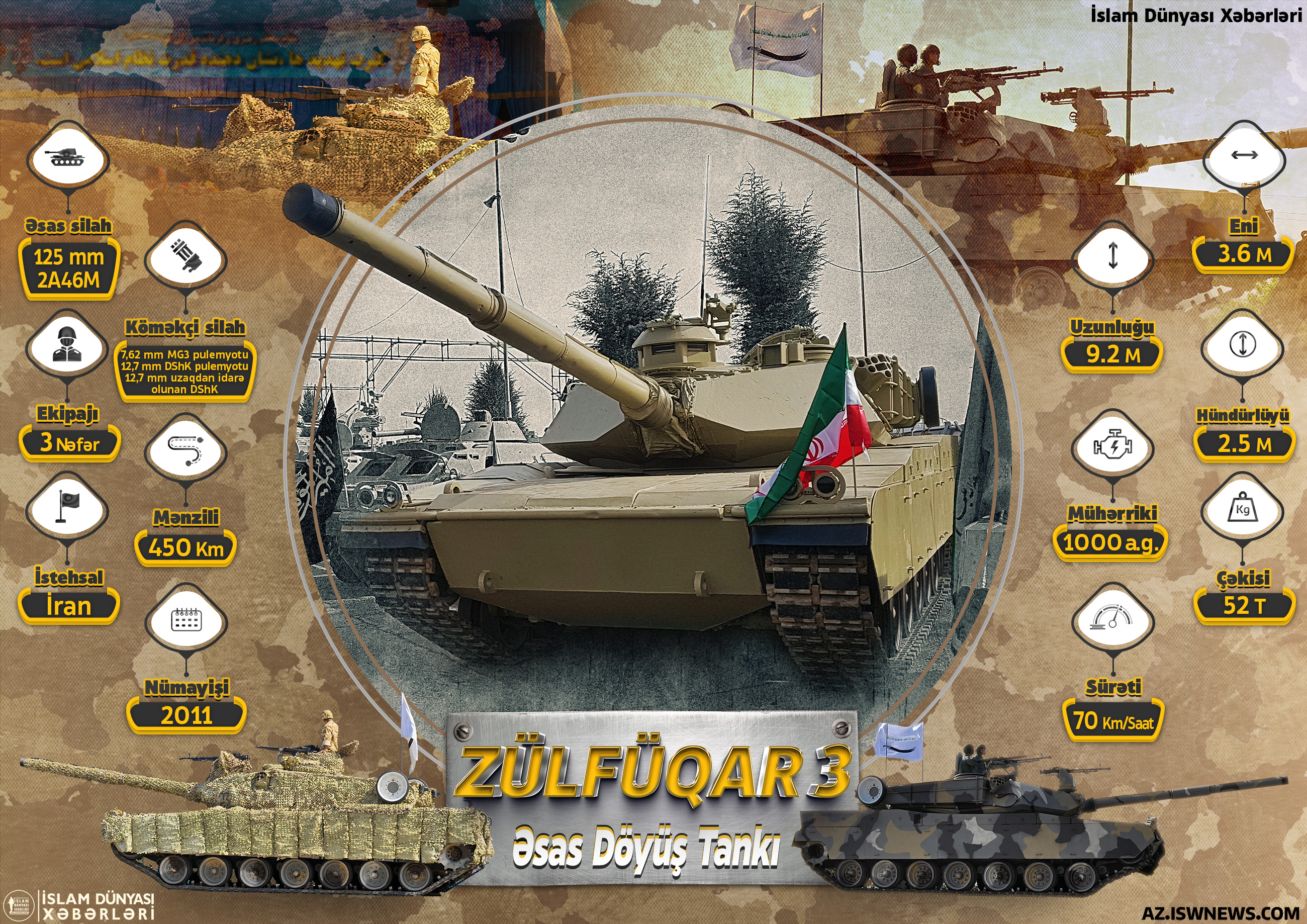
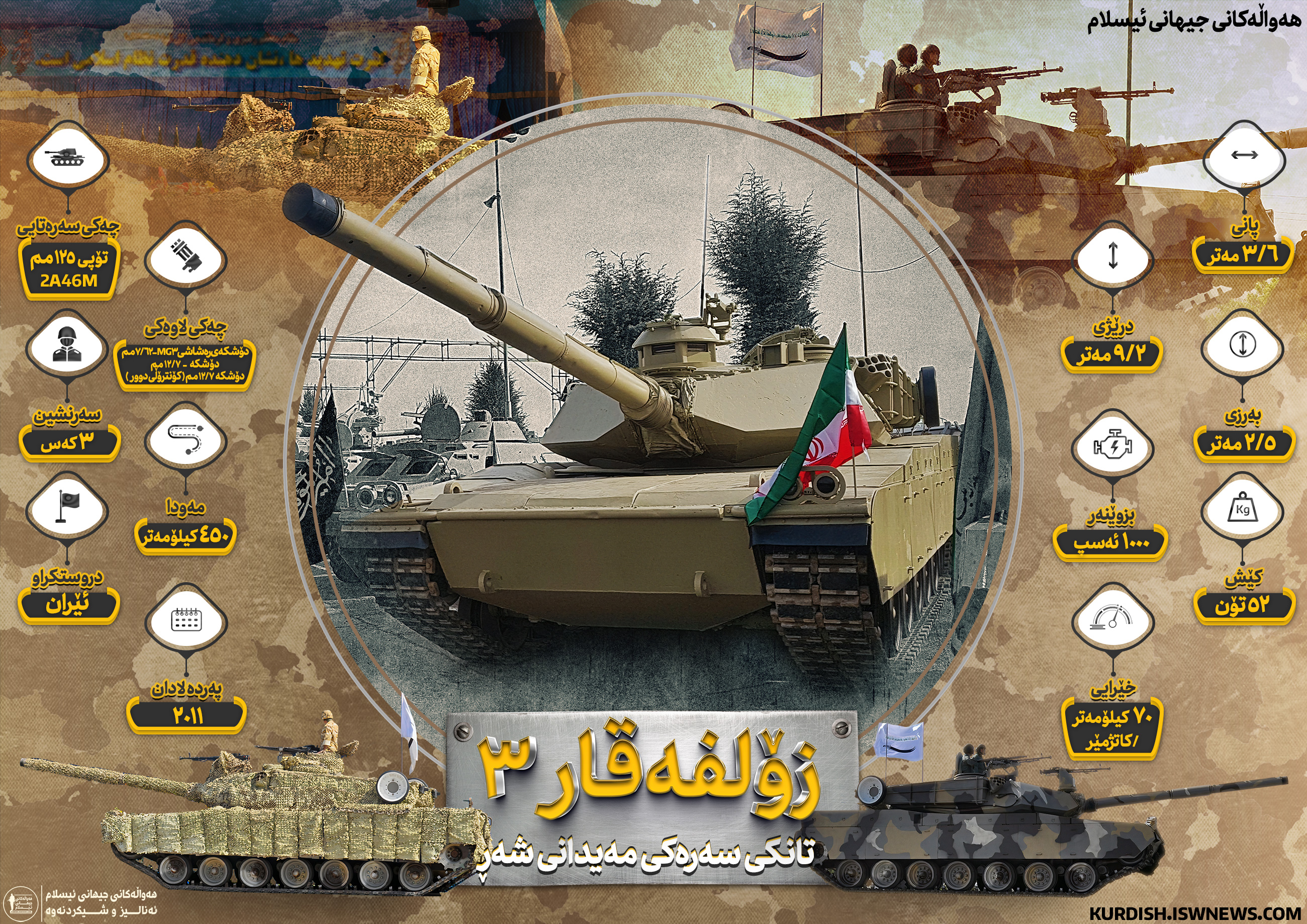
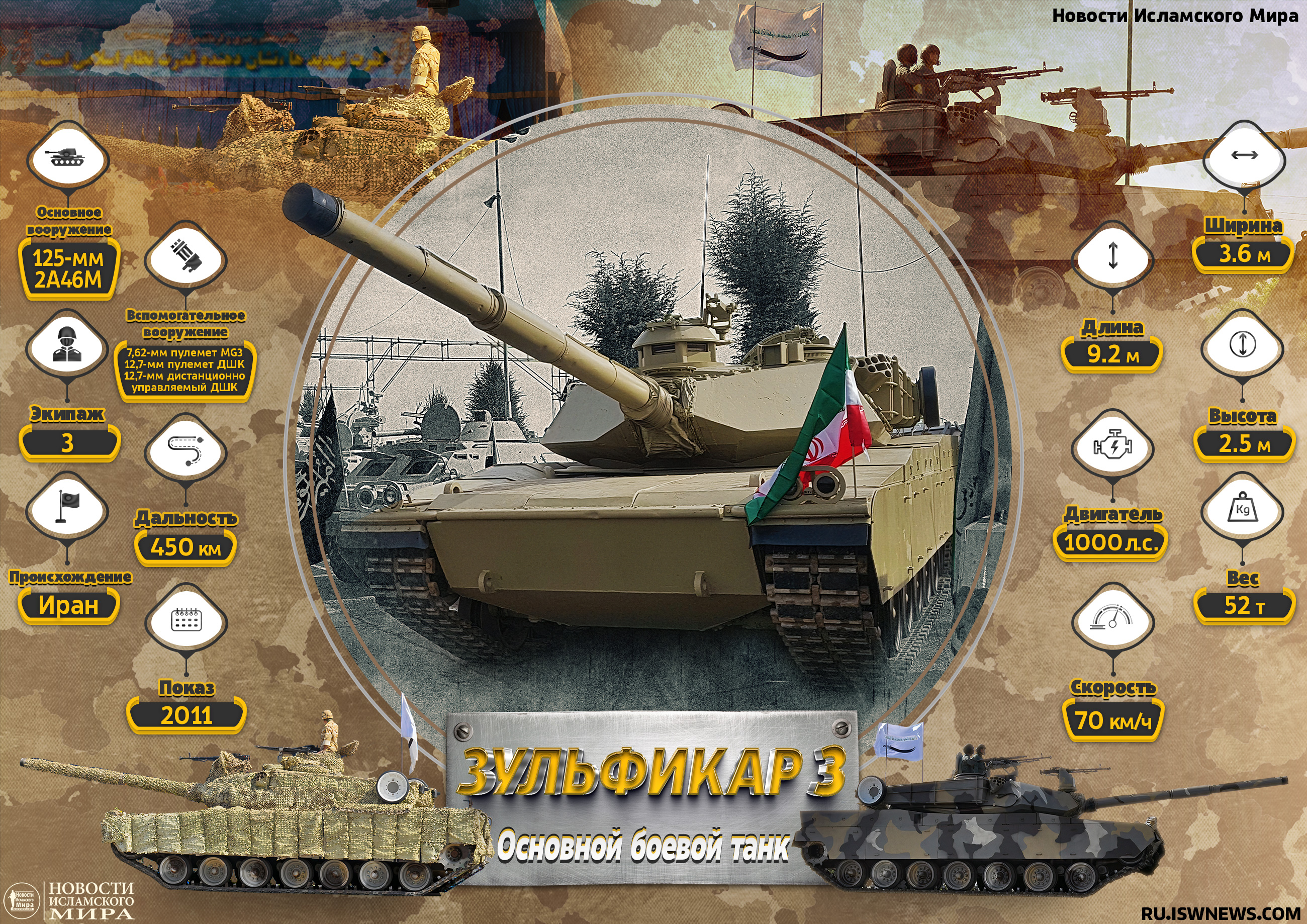
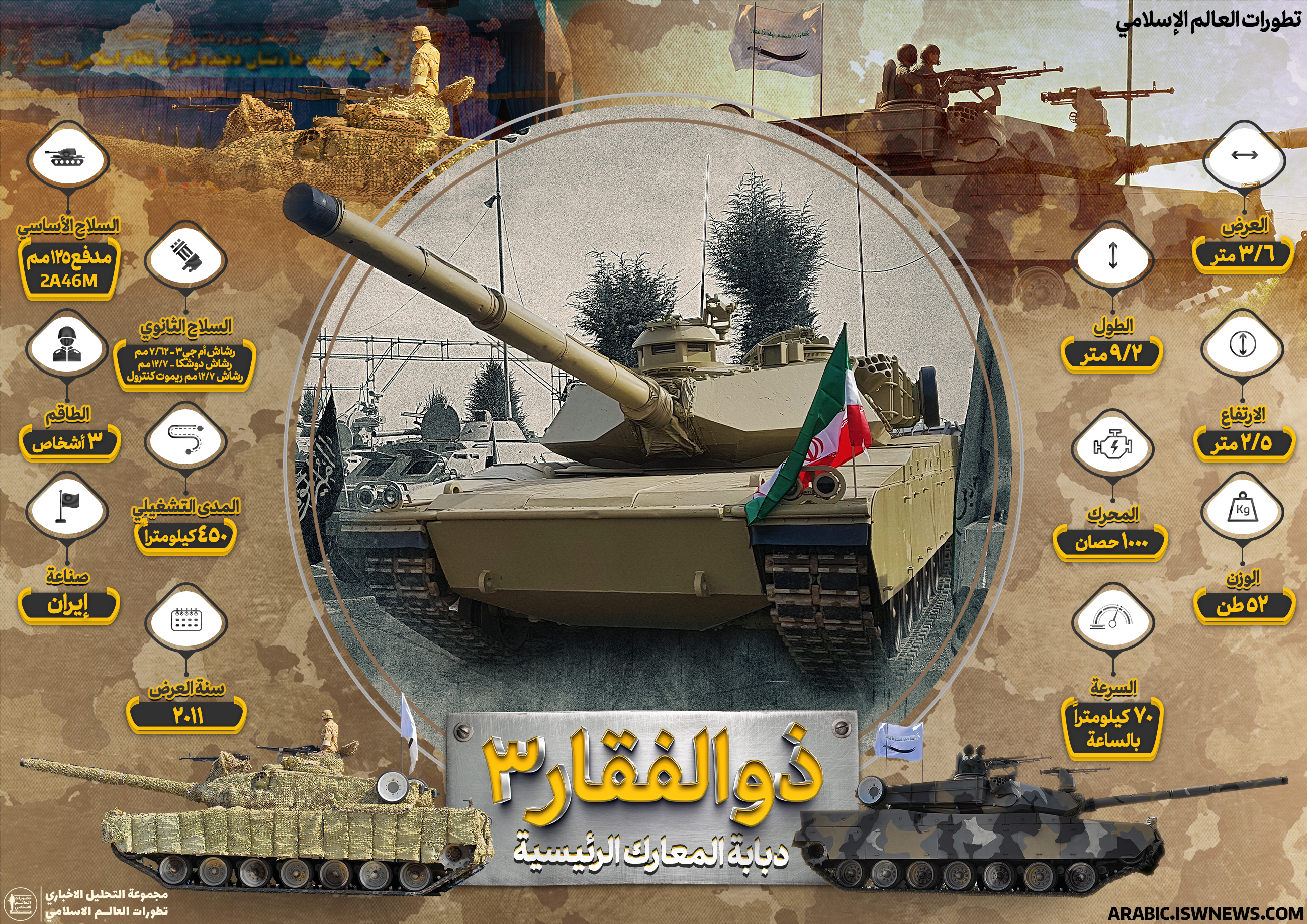
    Specifications of the Zulfiqar 3 tank:
    Type: Main Battle Tank
    Country of Origin: Iran
    Producer: Jihad self-sufficiency of the ground forces of the Islamic Republic of Iran Army
    Unveiled: 2012
    Crew: 3 (driver, commander and gunner)
    Length: 9.2 to 9.7 meters (including the gun barrel)
    Width: 3.6 meters
    Height: 2.5 meters
    Engine: 1000 horsepower
    Operational range: 450 km
    Speed: maximum 60 to 70 km/h on the road
    Mass: 52 tons
    Main weapon: 125mm 2A46M gun with stabilizer
    Secondary weapon: one 7.62 mm MG3 machine gun – one 12.7 mm Dshk machine gun – one 12.7 mm Dshk machine gun with remote control capability
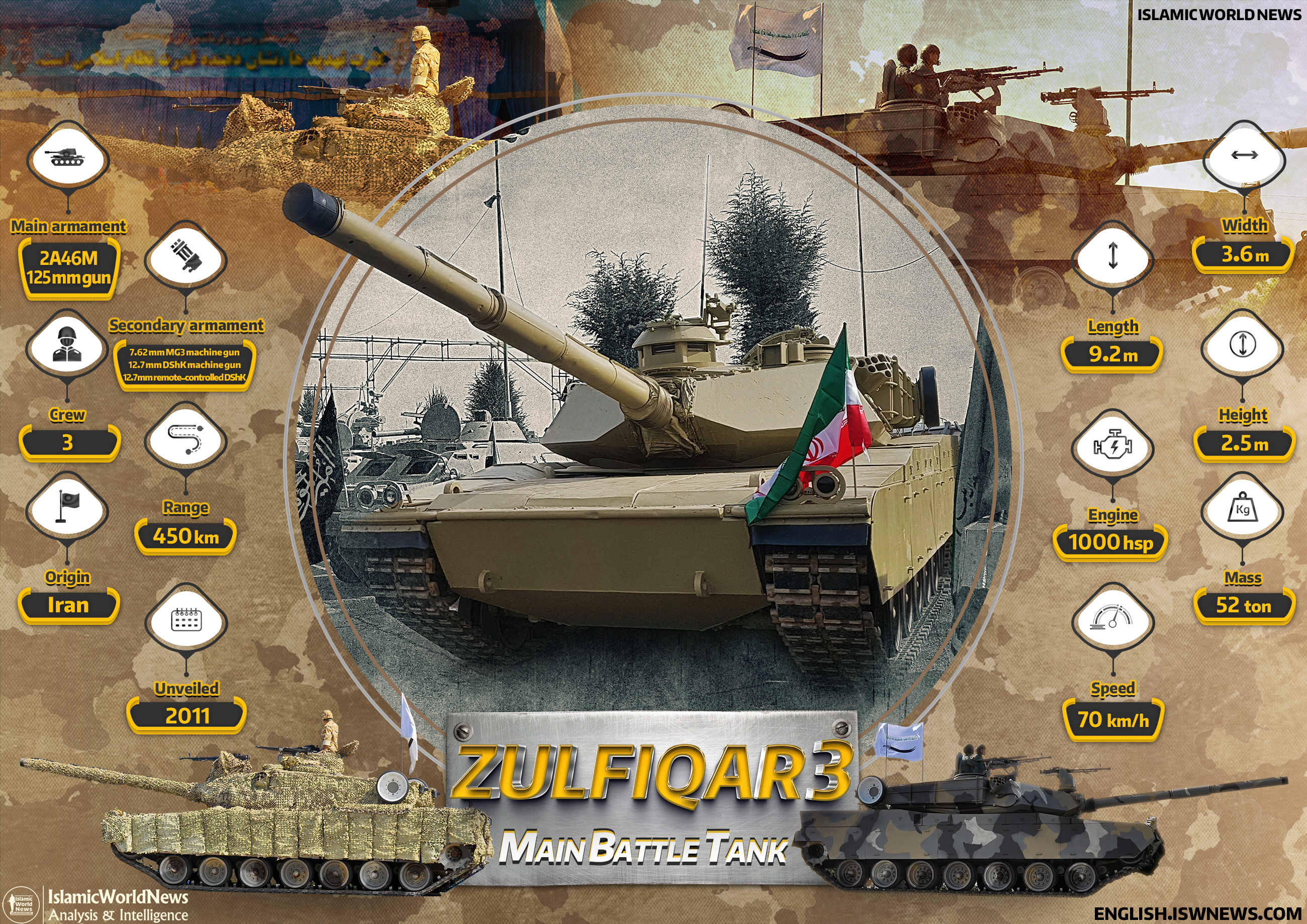
    Zulfiqar-3 Tank – click to view full size

    More images of Zulfiqar-3 tank:
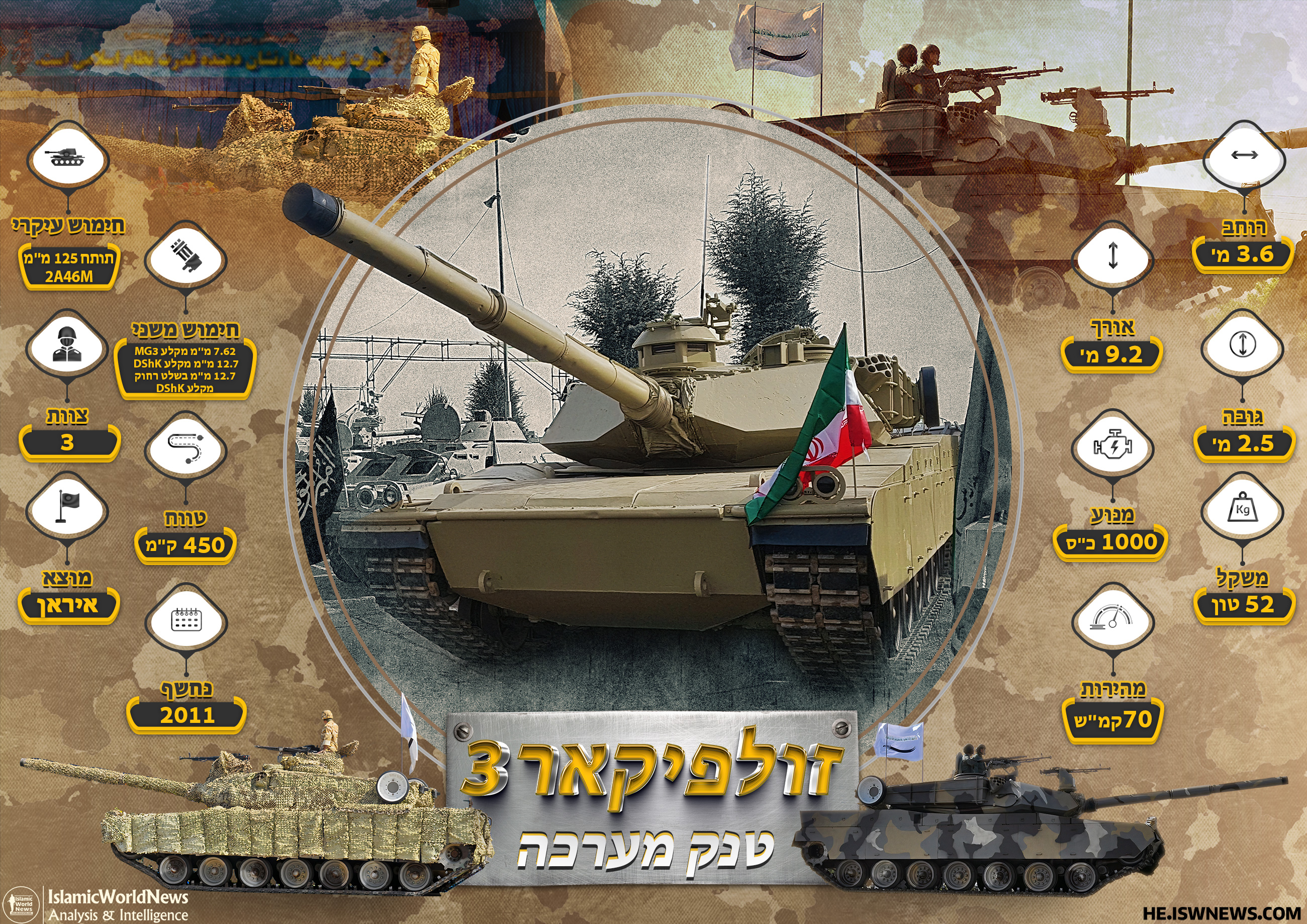
    Infographics of Zulfiqar-3 tank in Russian, Arabic, Hebrew, Kurdish, Azeri and Farsi:
    Sources:
    ویژگی های نسل جدید تانک ذوالفقار+عکس
    Zulfiqar (1993)
    بدانیم که … (سایت دستاوردهای ارتش)
    تانک ذوالفقار
  • Temporary Cessation Of Resistance Attacks Against US Occupying Forces In West Asia

    Temporary Cessation Of Resistance Attacks Against US Occupying Forces In West Asia

    A few days ago, the Secretary-General of the Iraqi Kataib Hezbollah group Abu Hussein al-Hamidawi declared in a statement that resistance forces’ attacks against American bases during the ceasefire in the Gaza Strip had decreased.

    It seems that one of the reasons that the Israeli regime accepted the ceasefire in the Gaza Strip was the increase in pressures and attacks by resistance groups against the United States’ military bases in the West Asia region.

    The cessation of strike and the joining of resistance groups in Iraq and Syria to the ceasefire shows that the increase or decrease in attacks against the United States’ military forces in the region is directly related to the actions of the Israeli regime against the Palestinian people in the Gaza Strip.

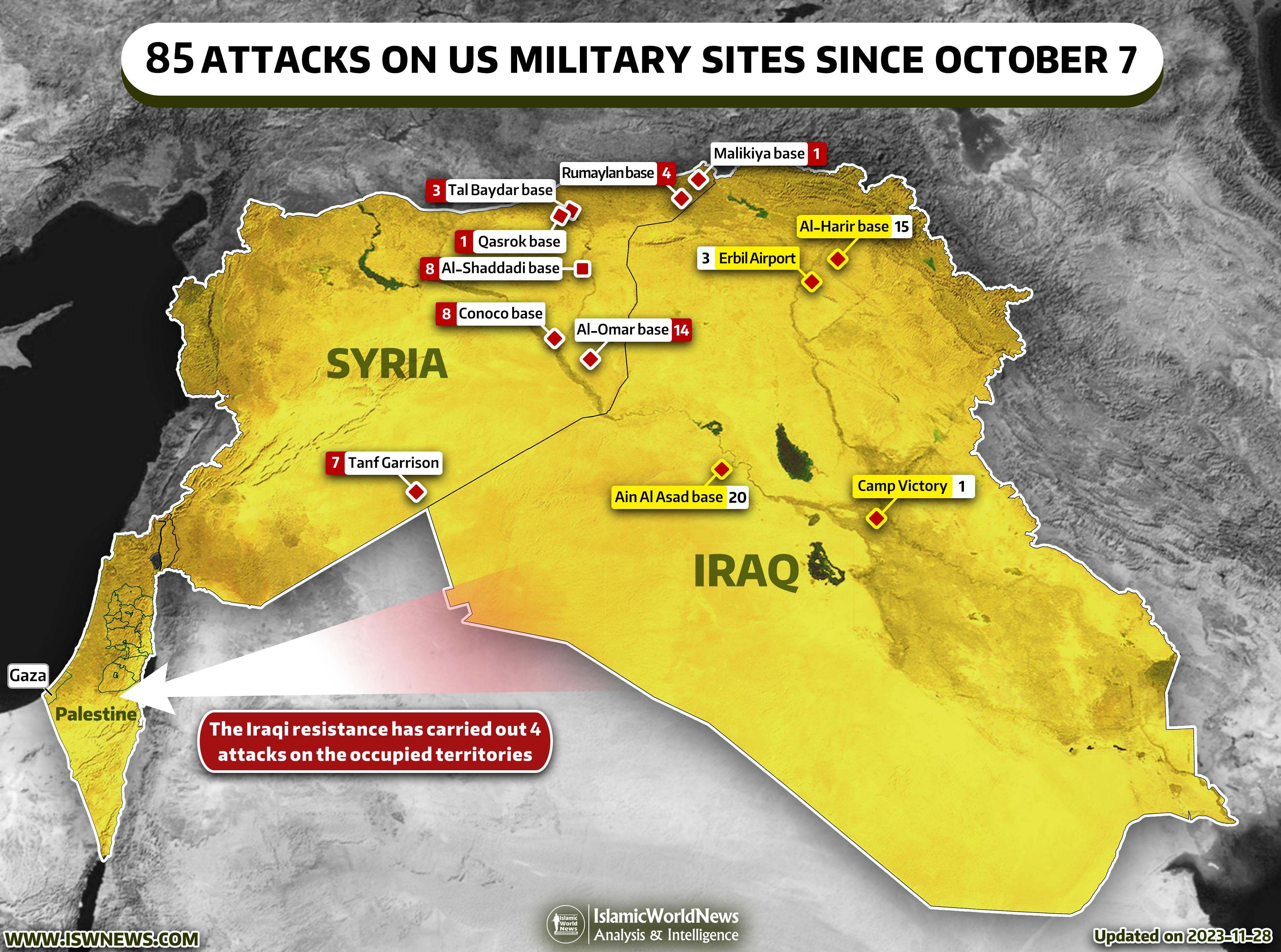
    According to investigations made by the IWN, the Islamic resistance groups have targeted American occupying forces’ positions at least 46 times in Syria and 39 times in Iraq since the onset of the current conflict until two days ago (temporary cessation), as well as four direct attacks on Israeli-occupied territories.

    Read more: An Overview Of Recent Actions Taken By Islamic Resistance Against US In West Asia Region

    Click to view full size
  • Military Knowledge: Fattah-2 Hypersonic Missile

    Military Knowledge: Fattah-2 Hypersonic Missile

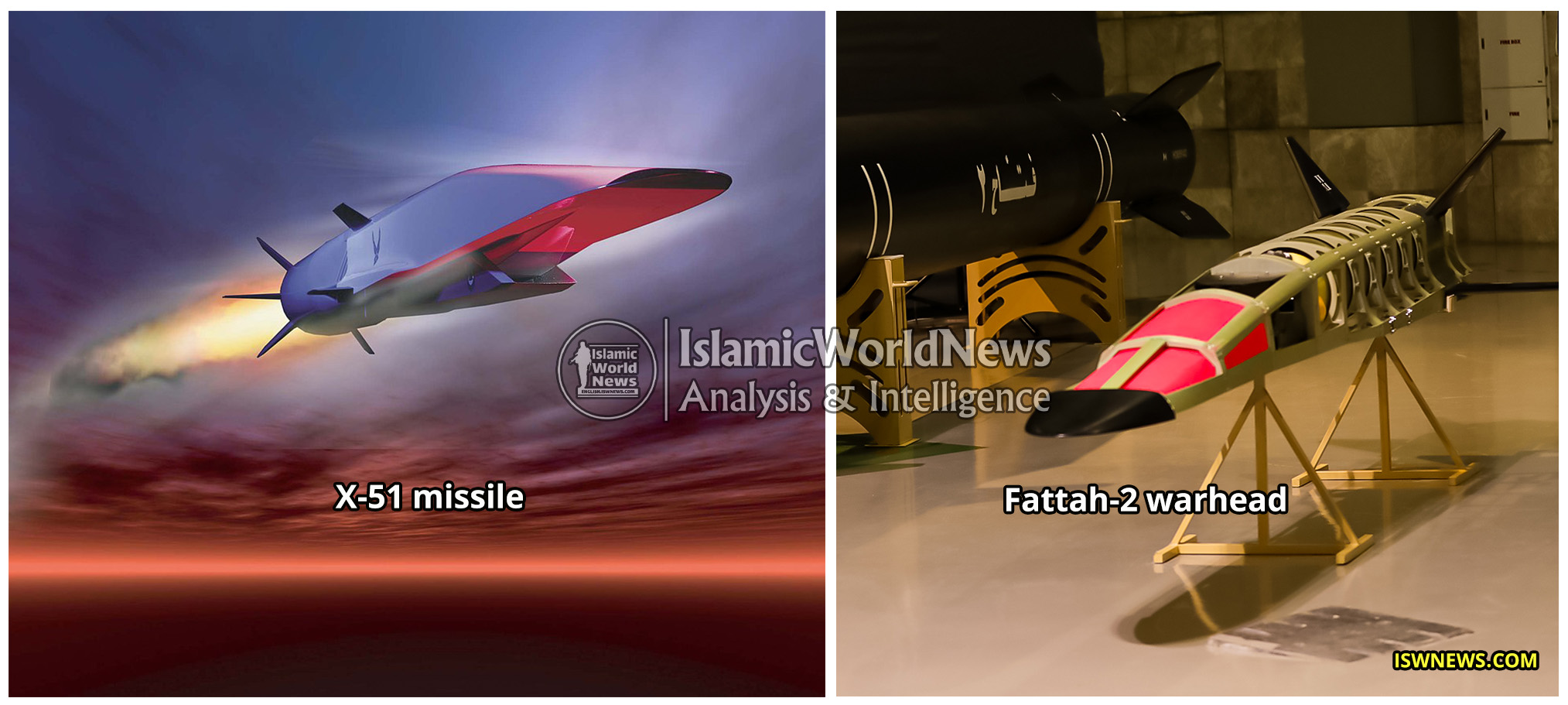
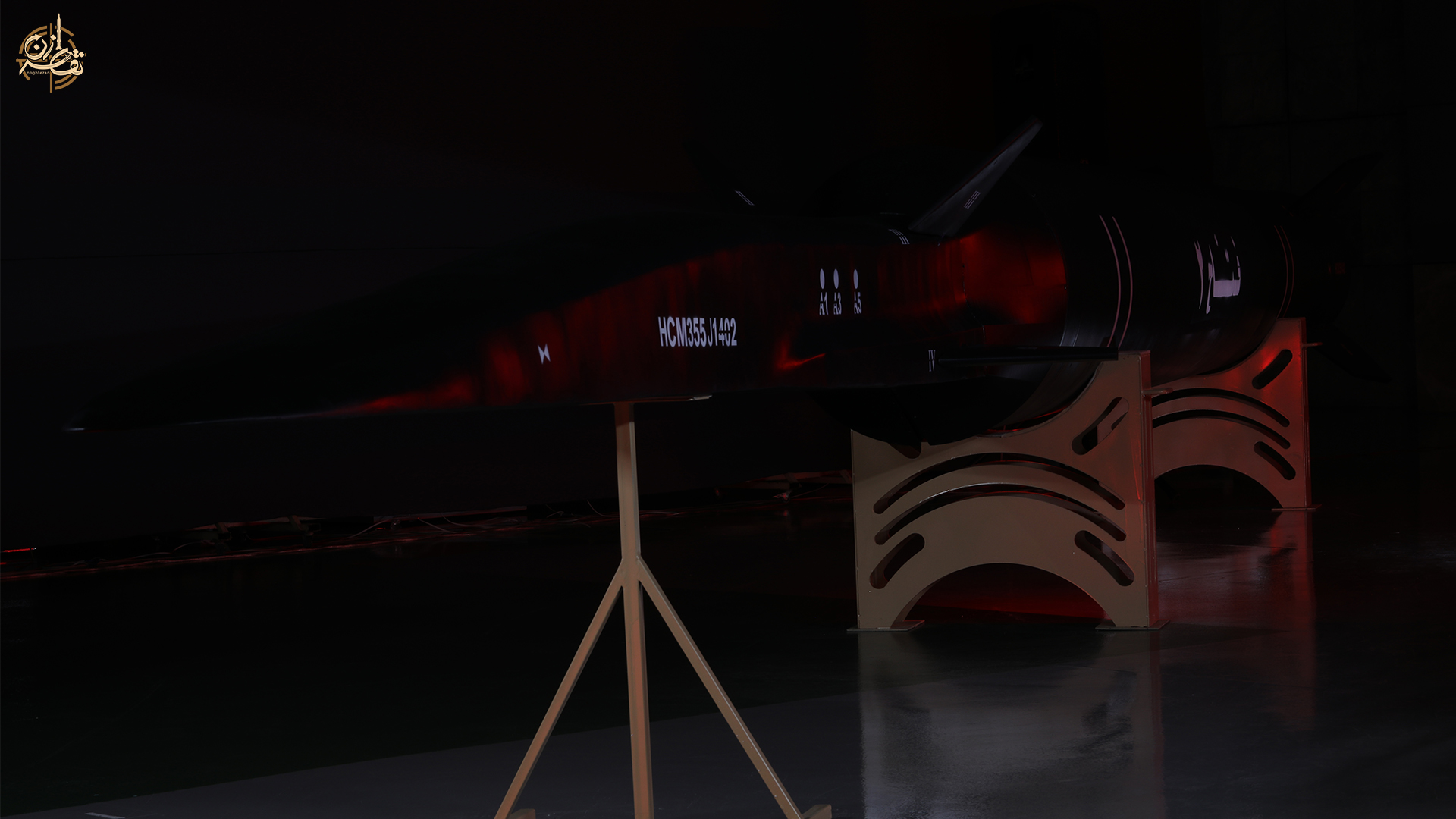
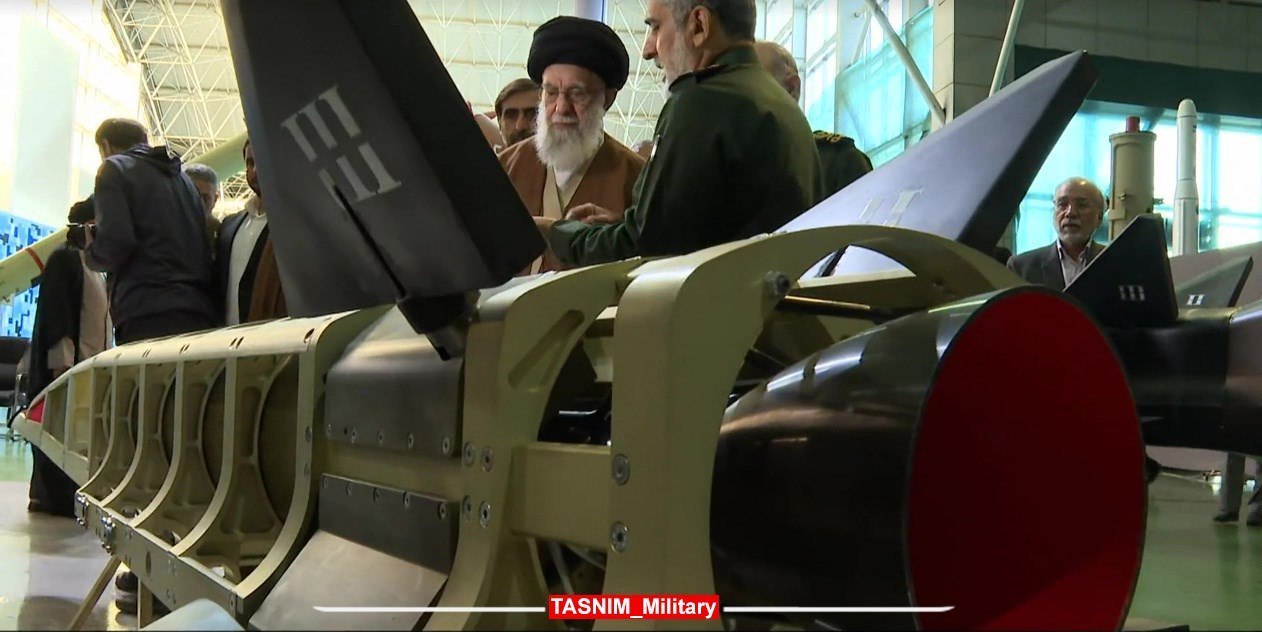
    The Fattah-2 missile utilizes the configuration of hypersonic cruise missiles. The acronym HCM, which stands for Hypersonic Cruise Missile, is written on its nose cone. The shape and combination of the nose cone is similar to the X-51 hypersonic cruise missile. However, the X-51 missile uses a ramjet engine that requires air intake, whereas in the Fattah-2 missile, air intake and ramjet engines are removed, and instead, a liquid fuel rocket engine is used. This will not affect the missile’s performance.

    Phrase “HCM” meaning hypersonic cruise missile on Fattah-2 body

    Design:
    The Fattah-2 missile consists of two parts. The first part is the Fattah solid fuel booster, which has not changed from the initial version. The second part is the gliding warhead, which separates from the booster and has a liquid fuel rocket engine.

    The overall shape of the Fattah-2 gliding warhead is very similar to the Boeing X-51 missile, but with the difference that its air intake has been eliminated and a rocket engine is used instead of a ramjet engine.

    Similarity of Fattah-2 and X-51 warheads

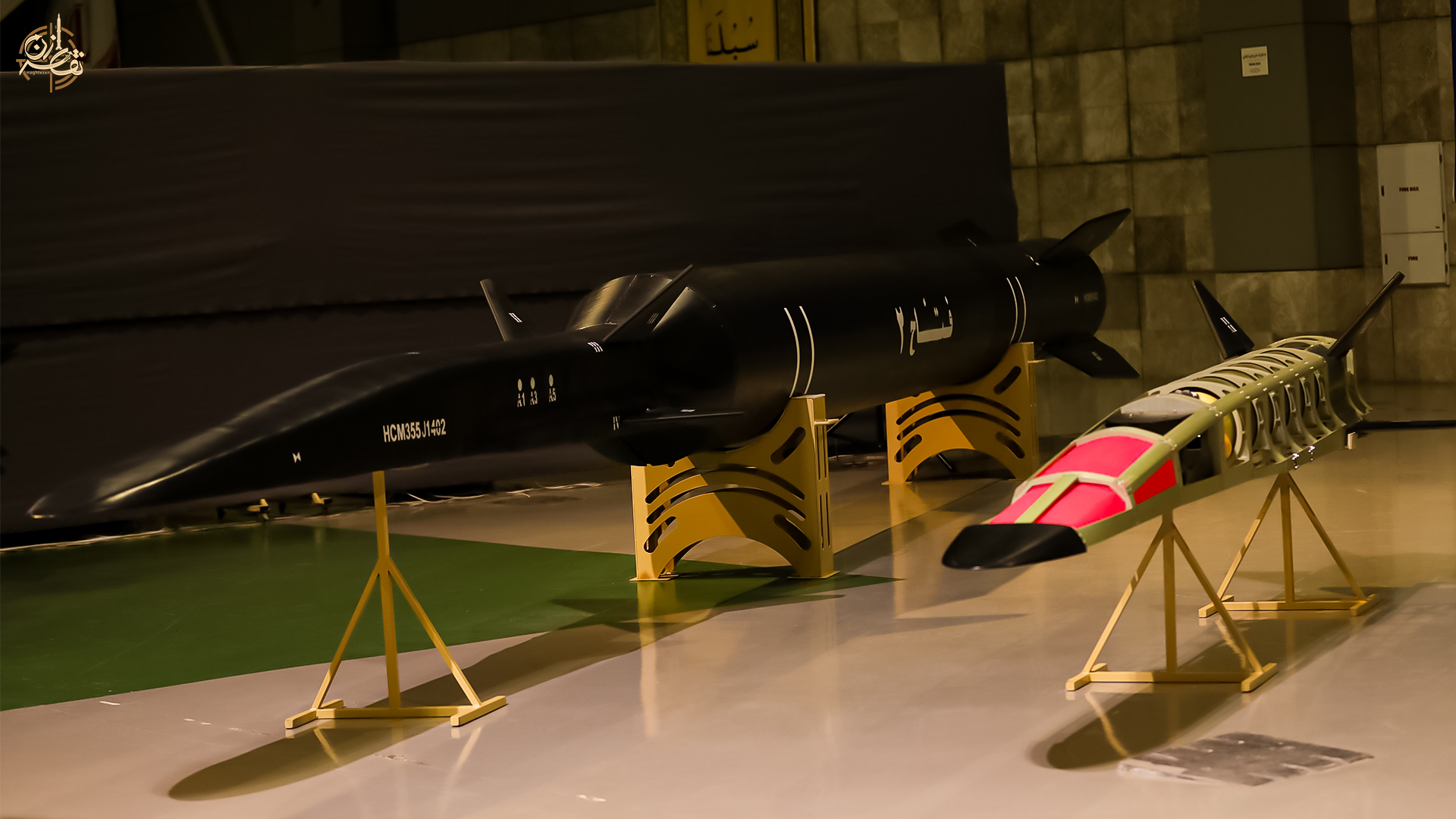
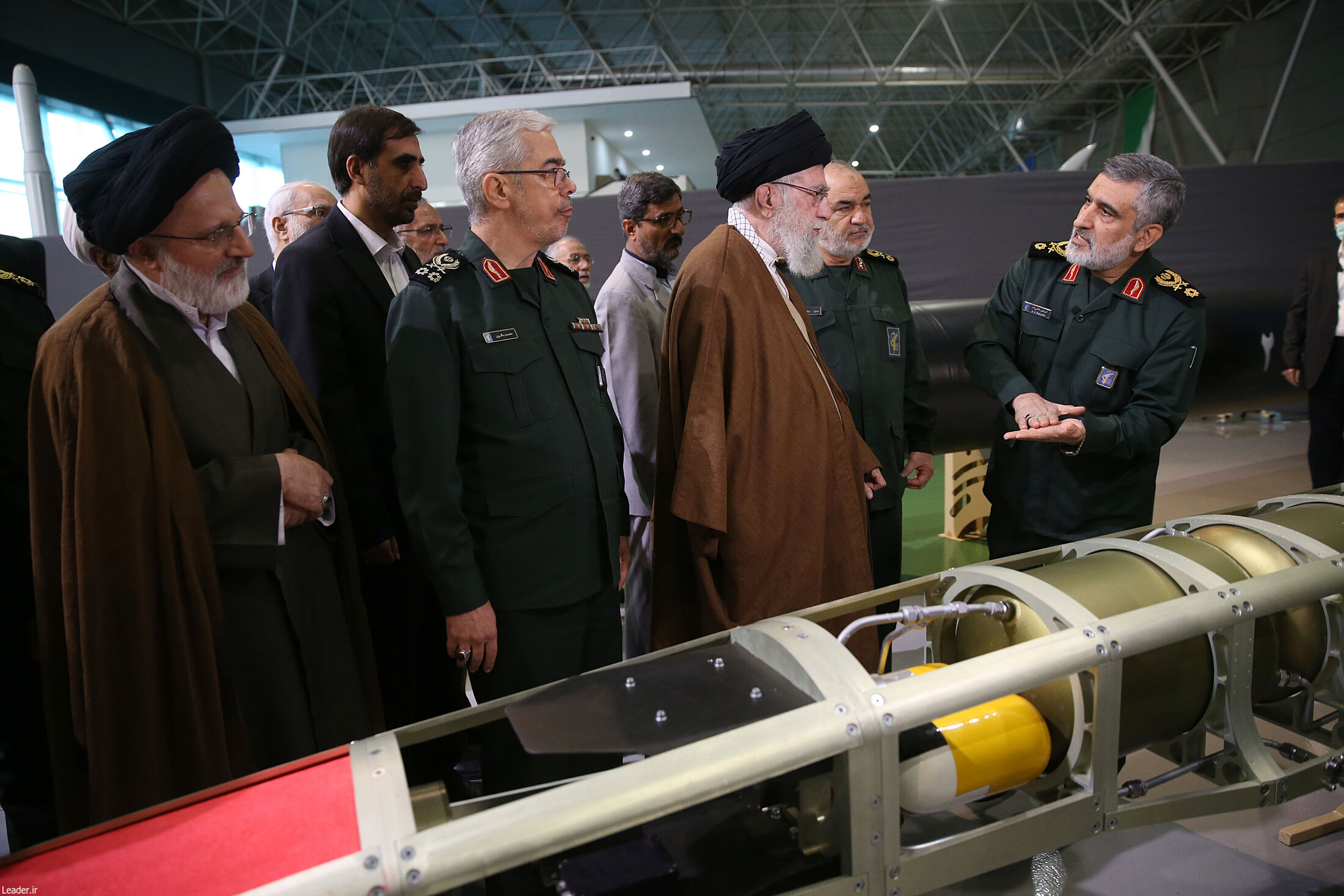
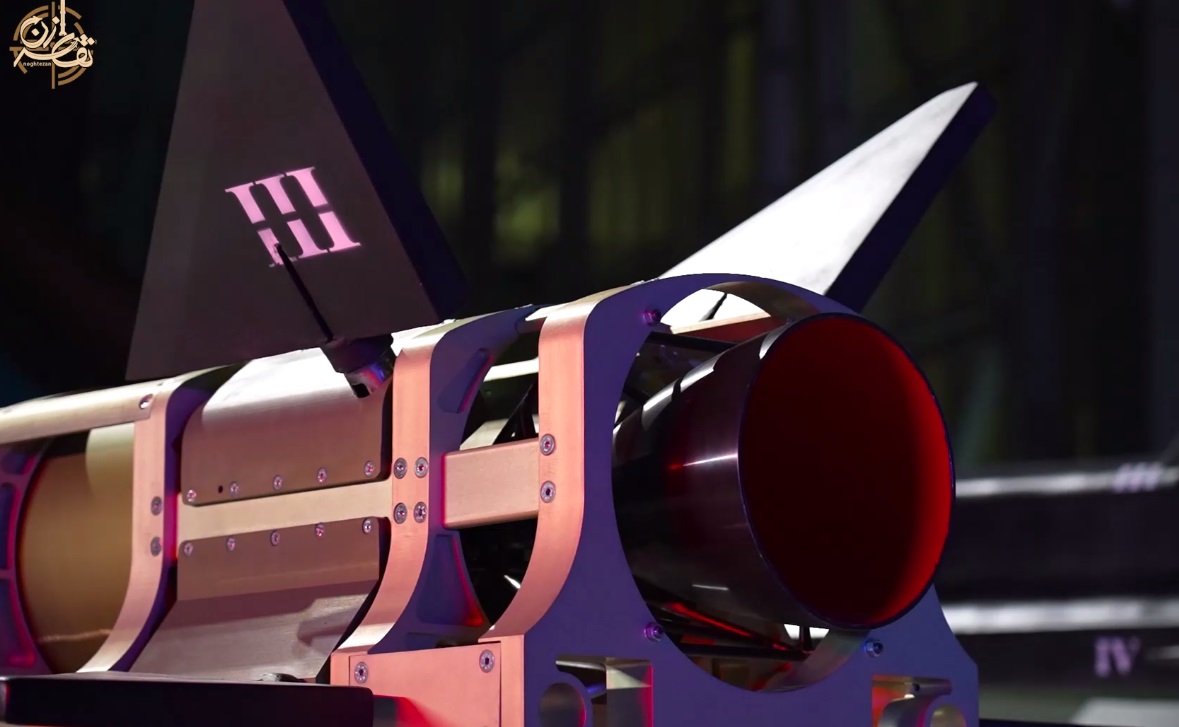
    The explosive material is located at the beginning of the warhead, followed by an inertial guidance and GPS system along with a computer that is responsible for guiding the warhead to the final stage of impact. After the guidance system, there is a detonator container (yellow piece), followed by a liquid fuel tank and an oxidizer tank, and finally a rocket engine that appears to have the ability to change the missile’s trajectory.

    Various components of Fattah-2 warhead

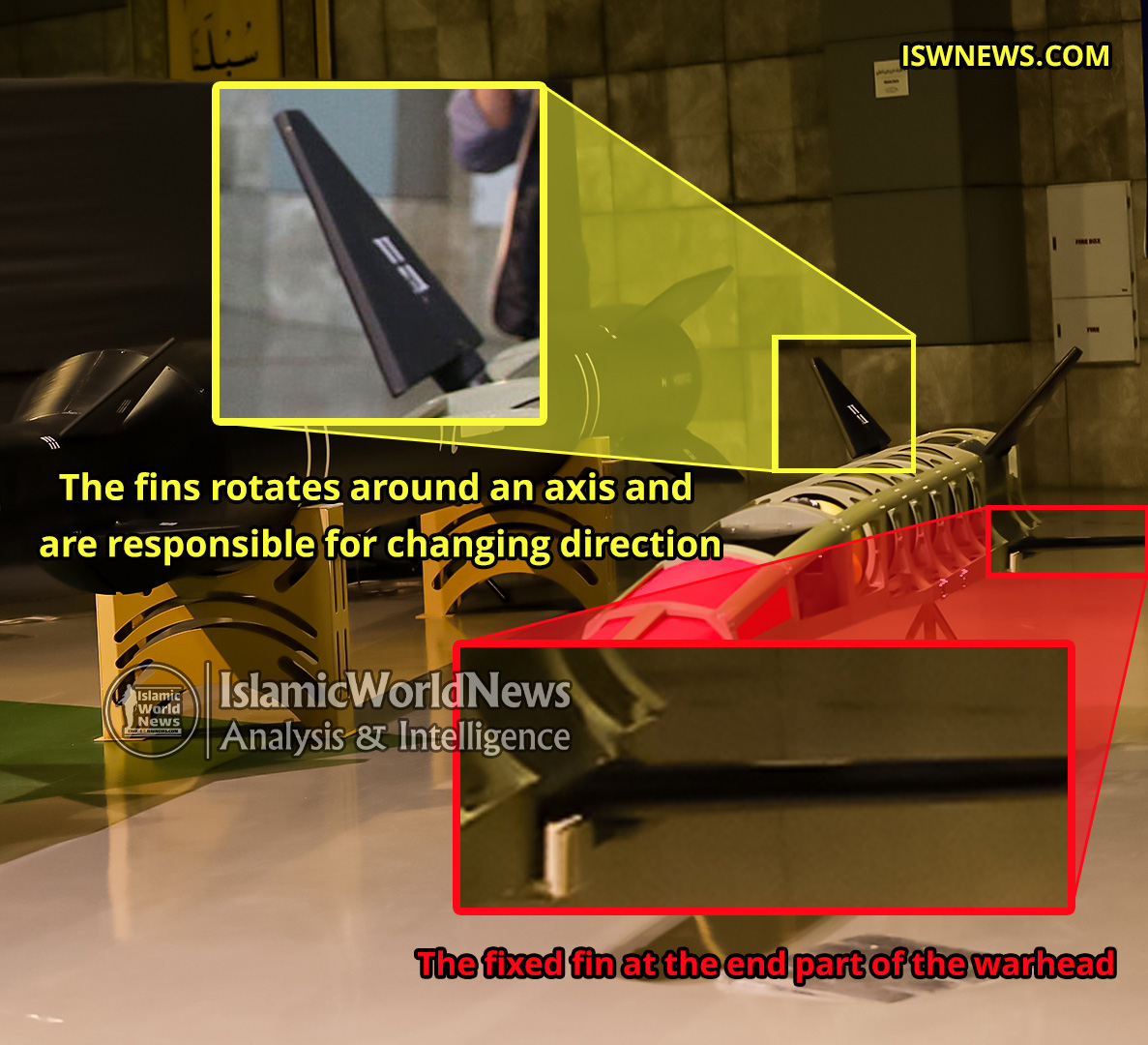
    At the end of the warhead, there are four fins, two of which form a line with the bottom of the warhead and are fixed, responsible for producing lift force. The other two fins are designed to change direction and have the ability to rotate around an axis connected to the body.

    Four fins, two of which are fixed and two other fins with the ability to change the direction

    The speed of this missile is stated as Mach 10 in some sources, but it is unclear for how long this speed can be sustained. However, it can be assumed that the speed exceeds Mach 5 at the moment of impact.
    The range of the missile has been reported as 1500 to 1800 kilometers by some news agencies, but it is unlikely that the range will be significantly different from that of the Fattah-1 missile, and a range of less than 1400 kilometers does not seem reasonable for Iran’s operational needs.

    Read more: Military Knowledge: Fattah Hypersonic Ballistic Missile

    The operation of the Fattah-2 missile:
    The solid fuel booster of the Fattah-2 missile carries it to a certain altitude from space, and then the warhead separates from it and moves towards the atmosphere. In this state, the missile will travel at a fast falling rate until it reaches the atmosphere, and then, like an HGV (Hypersonic Glide Vehicle), it will glide to the ground in the atmosphere at an altitude of less than 100 kilometers. Considering the high speed announced for the Fattah booster in Fattah-1, it must be more than Mach 15 at the time of entering the atmosphere. Therefore, due to the high lift force of the Fattah-2 warhead, it must spend a considerable amount of time gliding in the atmosphere and continuously reduce its altitude.

    In a part of the middle stage and at the end of the warhead, it drastically reduces its altitude and its speed also decreases. In this stage, the rocket engine embedded in the warhead turns on and stabilizes the warhead’s speed at Mach 5 or higher. The Fattah-2 warhead spends a lot of time at low altitudes and will cruise through the final stage of its path like cruise missiles thanks to its engine. A significant point is the amount of drag force and tolerance for high-speed entry into the atmosphere because aerodynamically, the warhead is not designed for such speeds.

    Conventional designs of hypersonic cruise missiles use a booster for initial speed and a ramjet engine for further movement along their path, and they are often launched from aircraft. These engines have a risk of reducing their speed to less than Mach 5 at their maximum range due to fuel shortages. However, Fattah-2 uses a solid fuel ballistic missile booster for movement in a part of its path and reaching an initial speed of more than Mach 15, which provides the missile with a considerable speed for a long time. Then, at the end of its path or near the point of impact, it uses an engine to compensate for the speed reduction and stabilize its speed at Mach 5. This is an interesting and very creative idea that has been implemented by Iranian experts. This initiative eliminates the limitations of HGVs for the Aerospace Force of the Islamic Revolution Guards Corps (IRGC).

    Unlike conventional HGV versions, the Fattah-2 warhead is more suitable for flying at low altitudes. Most HGVs travel much of their path at an altitude of less than 100 kilometers and more than 30 kilometers, where air density is lower. However, the Fattah missile can fly in an altitude of less than 12 kilometers due to its aerodynamic shape, but it seems to try to maintain itself at an altitude between 12 and 30 kilometers to experience less speed reduction. Overall, the Fattah-2 missile is more of a hypersonic glide vehicle than a hypersonic cruise missile. However, its performance includes both types of hypersonic missiles.

    It can be said that the operation of the Fattah-2 missile is a completely unconventional definition compared to other conventional hypersonic missiles, and the Fattah-2 missile has created a new classification and standard in this field: Hypersonic Cruise Glide Vehicle (HCGV).

    It should be mentioned that the feature of not using a ramjet engine does not exclude this warhead from the hypersonic category. Also, using a rocket to start flight and fly into space cannot prevent the cruise flight of intermediate and final stages. Iran’s technology in making ramjet engines for use in long-range hypersonic weapons has not yet reached its final evolution. Therefore, having all the components available and the ability to mass-produce Fattah-2 is a suitable and creative solution to overcome the current technological gap. Clearly, this technological bottleneck will also be resolved in the near future.

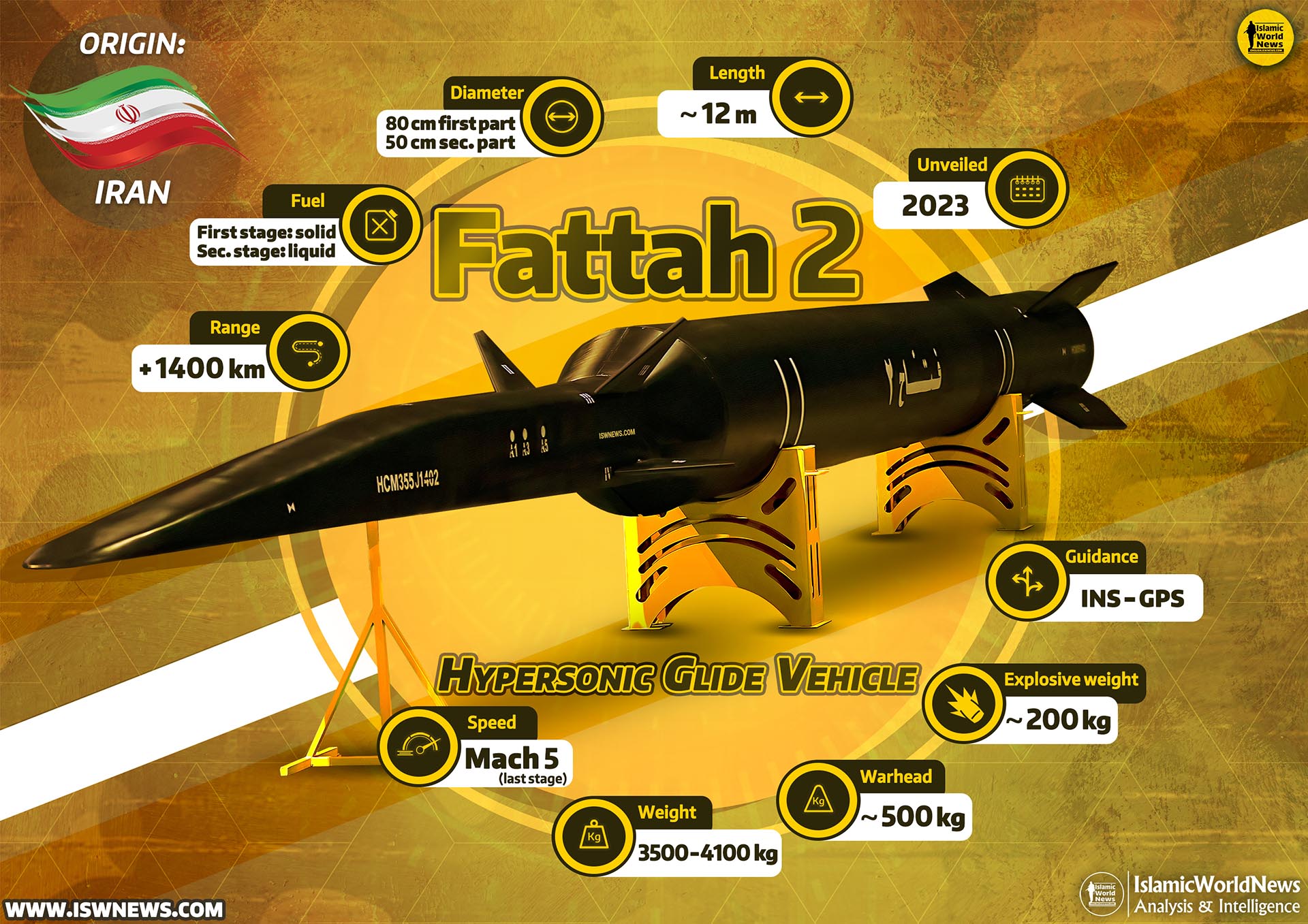
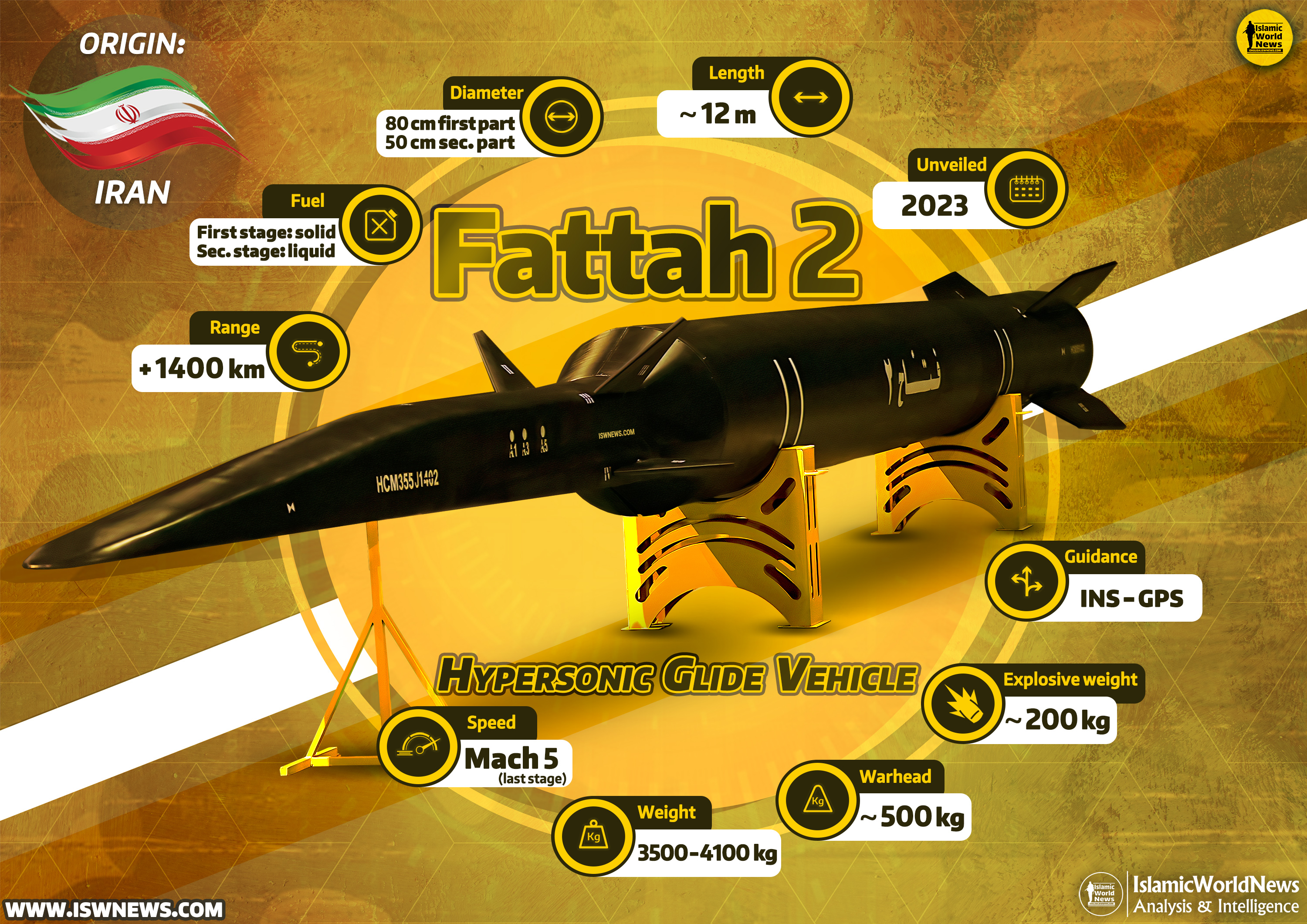
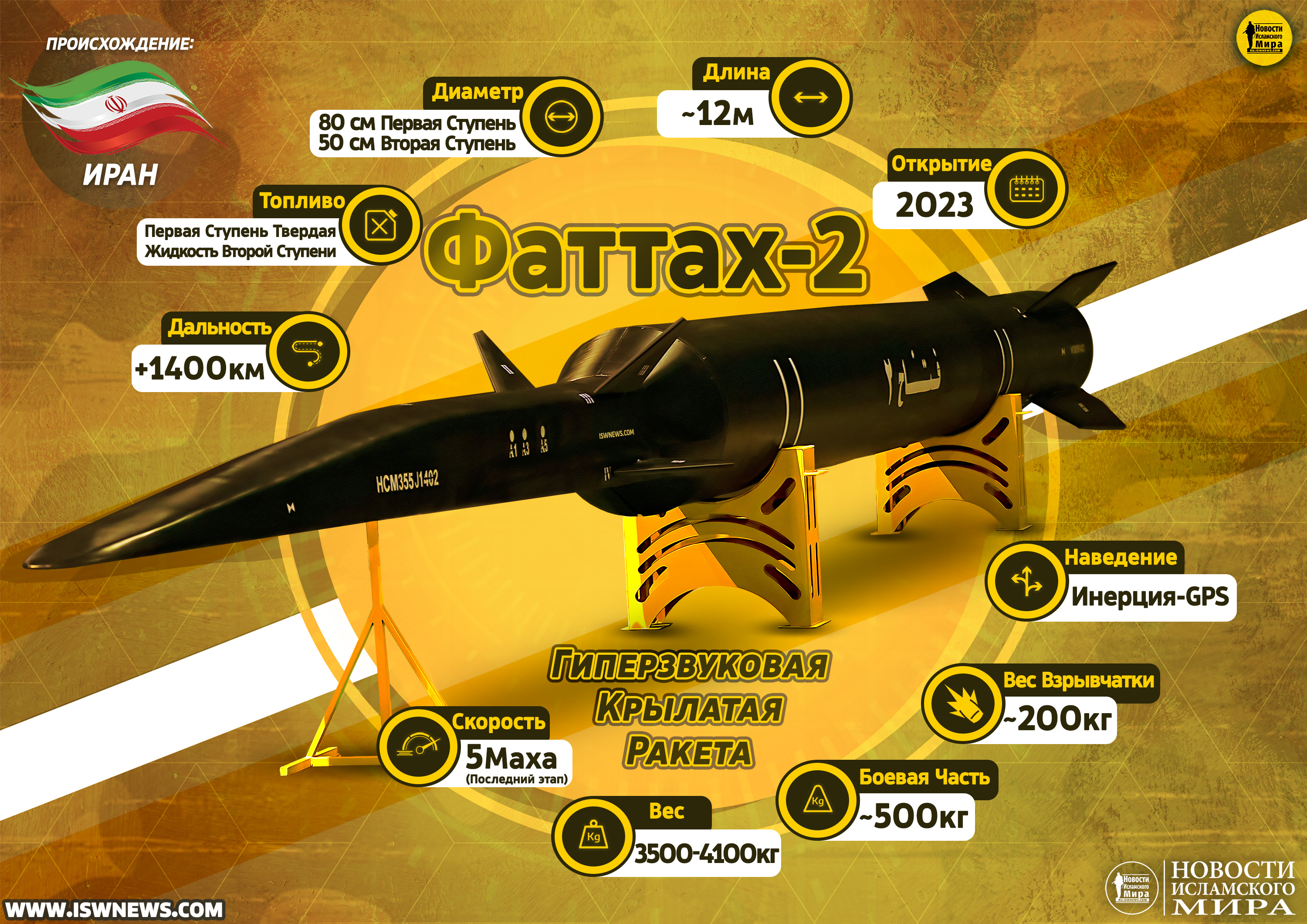
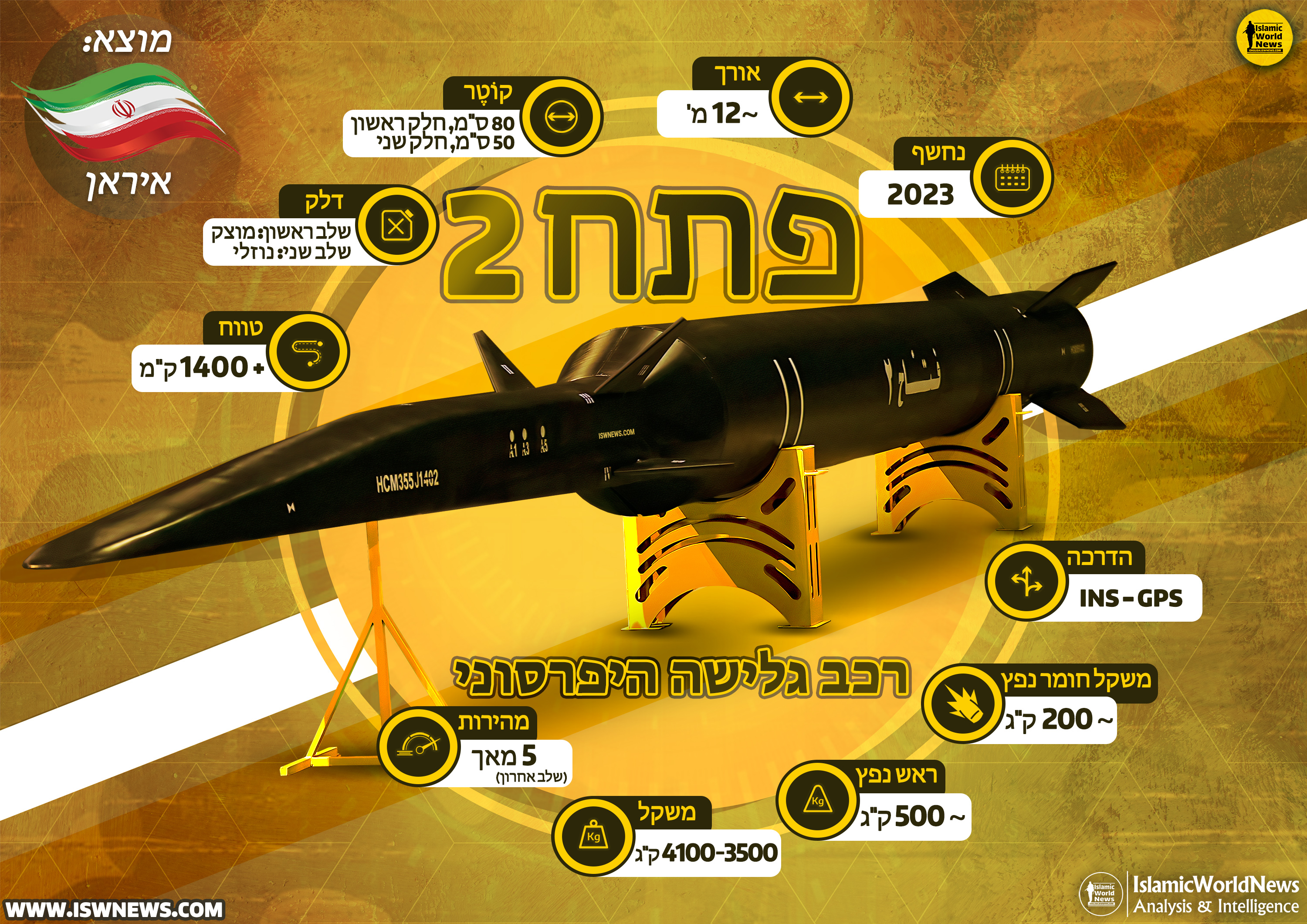
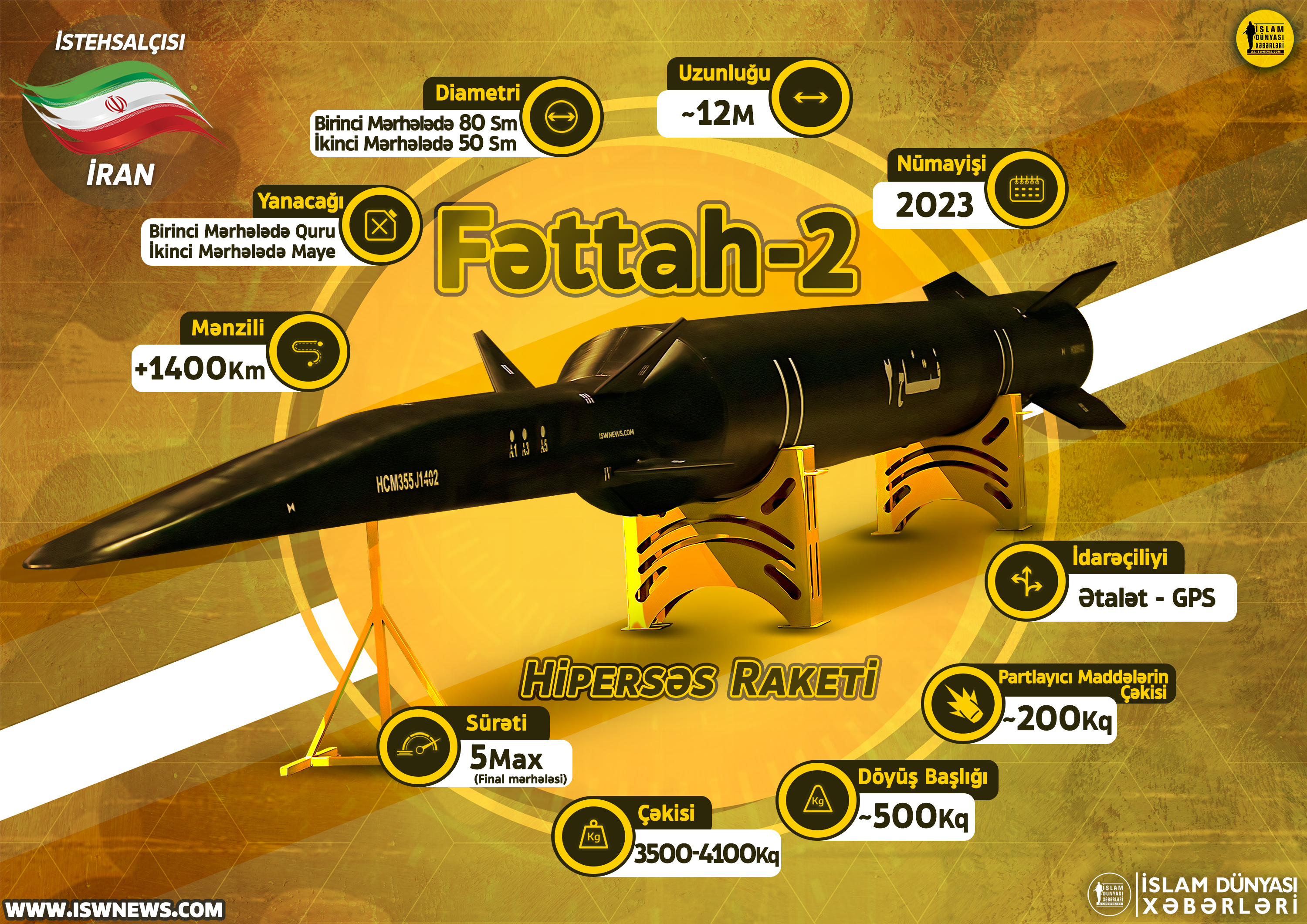
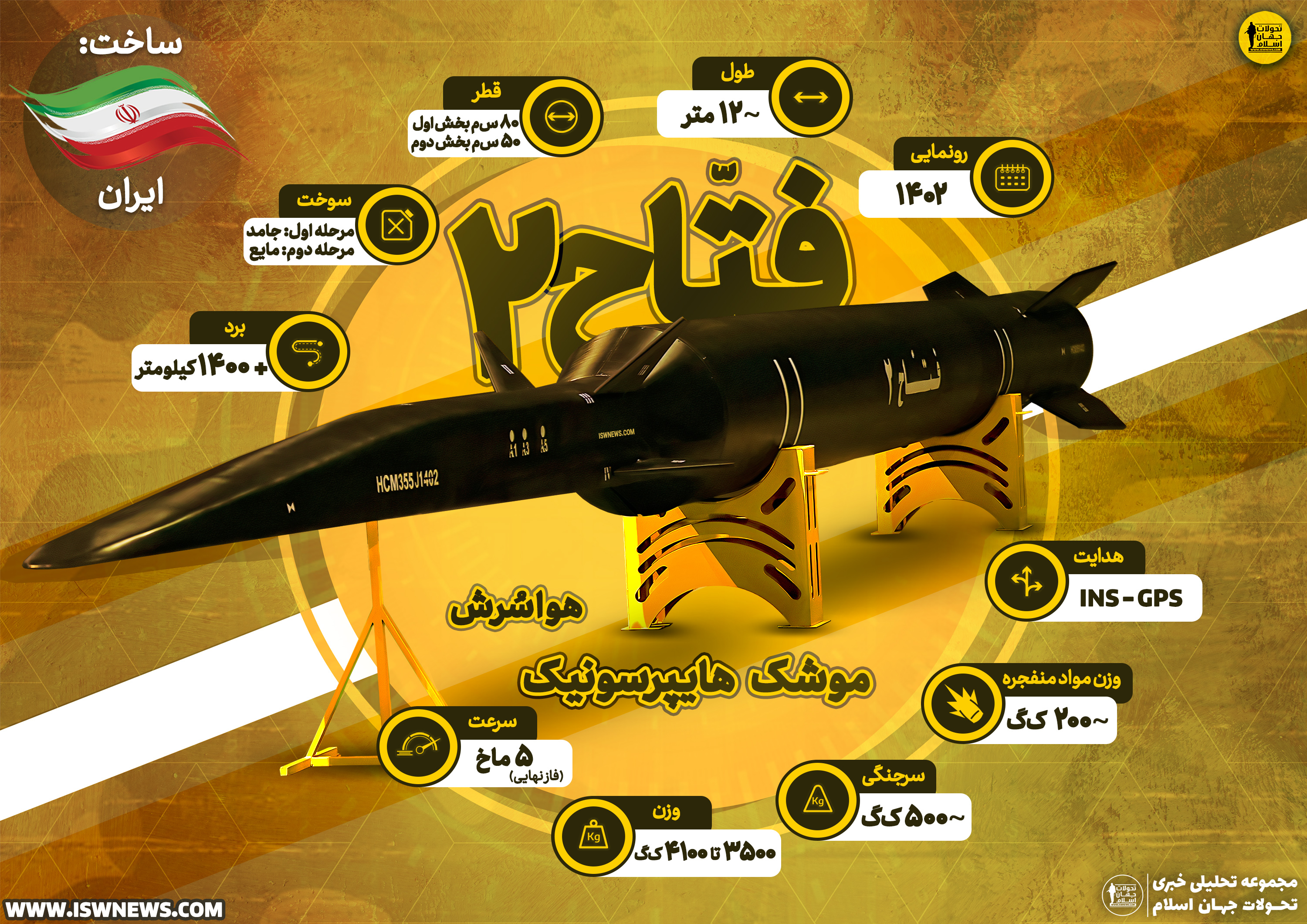
    Specifications of Fattah-2 hypersonic missile:
    Type: Hypersonic Glide Vehicle (HGV)
    Country of Origin: Iran
    Producer: IRGC Aerospace Force
    Unveiled: 2023
    Length: ~ 12 meters
    Diameter: 80 cm first part, 50 cm second part
    Fuel:
    First stage: solid
    Second stage: liquid
    Range: more than 1400 km
    Speed: ~ Mach 5 (in the last phase), ~ Mach 15 (in the first phase)
    Weight: 3500 to 4100 kg
    Warhead: ~ 500 kg
    Explosives weight: ~ 200 kg
    Guidance: combination of INS and GPS

    Fattah 2 hypersonic missile – click to view in full size

    More images of Fattah-2 missile:

    Infographics of Fattah-2 hypersonic glide vehicle in Russian, Hebrew, Farsi and Azeri:

  • Military Knowledge: Merkava Main Battle Tank

    Military Knowledge: Merkava Main Battle Tank

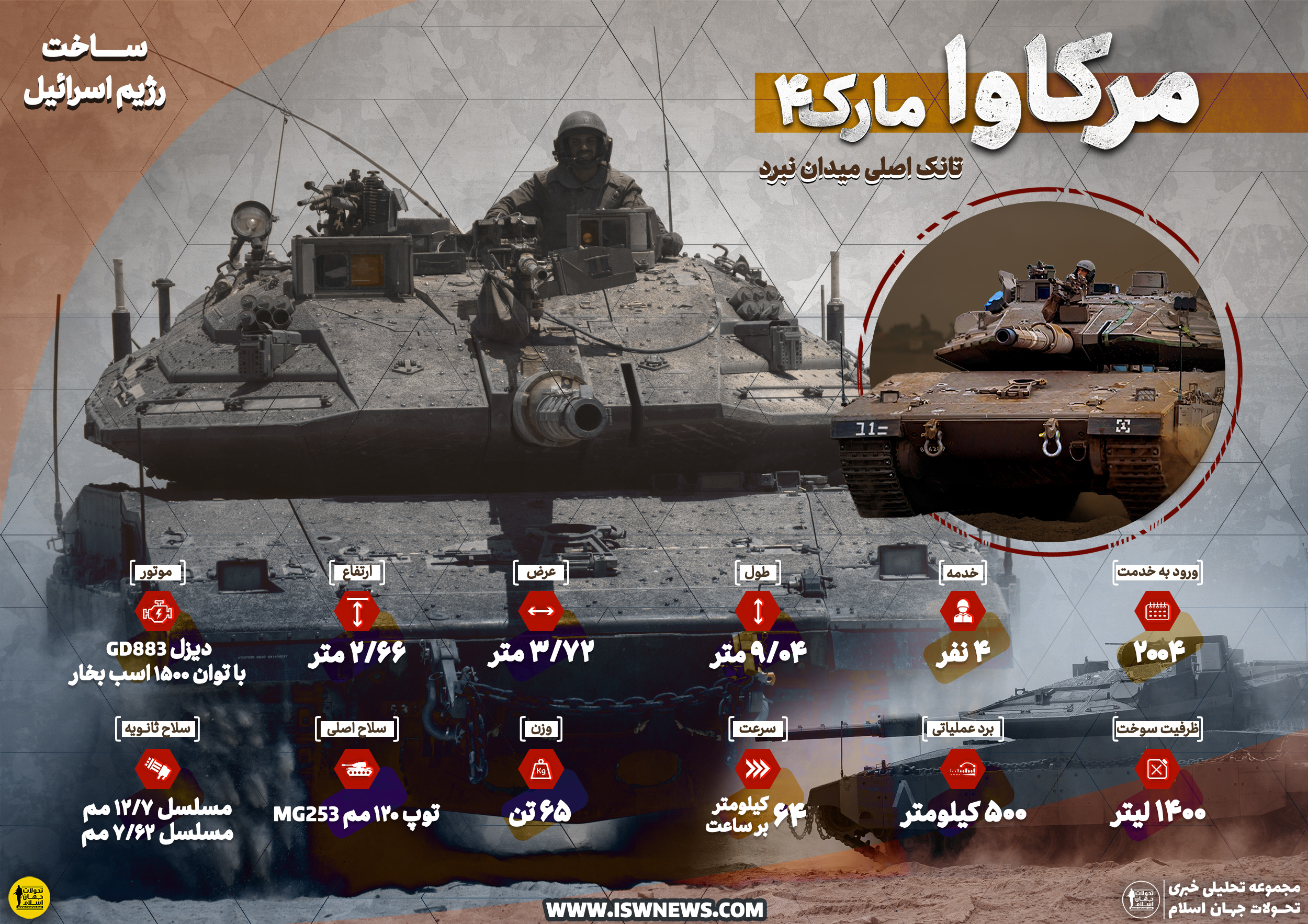
    The Merkava tank is a series of main battle tanks (MBT) made by Israel, which forms the backbone of the armored corps of this regime. The word Merkava means “chariot” and is derived from the “holy chariot” in the Torah. This tank is developed in the “Merkava and Armored Combat Vehicles Division” of the Israeli Ministry of Defense, and most of its parts are manufactured in Israel.

    The development of Merkava set began in 1970, and it has been produced and put into service in four original versions and several updates. Merkava Mark 4 Barak is the latest version of this tank that entered service from 2023.

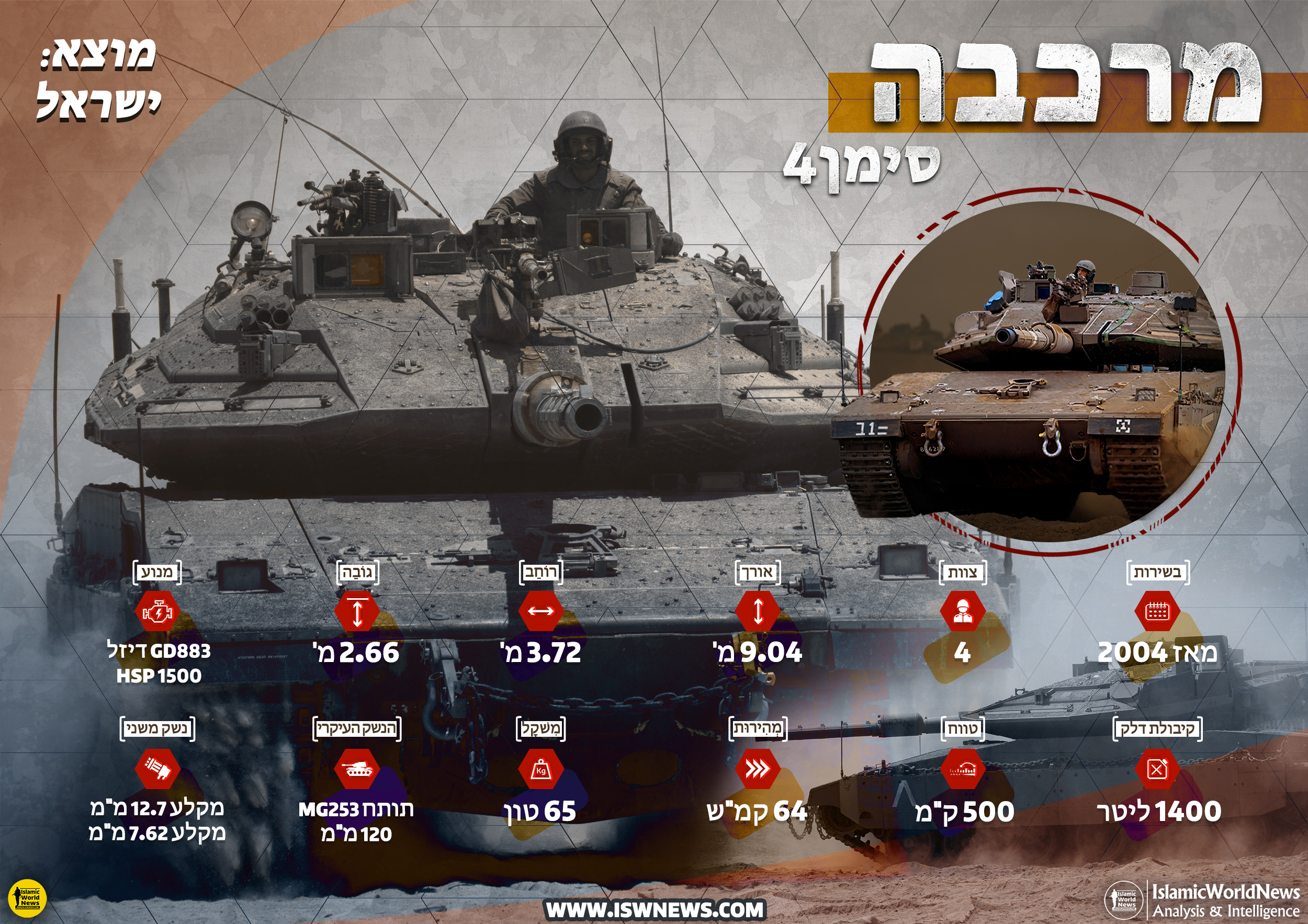
    Specifications of Merkava Mark 4:
    Type: Main Battle Tank
    Origin: Israel
    Manufacturer: MANTAK
    Unveiled: 1999
    In service: since 2004
    Crew: 4 (tank commander, driver, gunner, loader)
    Length: 9.04 meters (including gun barrel), and 7.60 meters (excluding gun barrel)
    Width: 3.72 meters
    Height: 2.66 meters
    Engine: GD883 diesel engine with 1500 horsepower
    Fuel capacity: 1400 liters
    Operational range: 500 km
    Speed: 64 km/h on road, and 55 km/h off road
    Mass: 65 tons
    Main weapon: MG253 120 mm smoothbore gun
    Secondary weapon: 12.7 mm machine gun and 7.62 mm machine gun

  • An Overview Of Recent Actions Taken By Islamic Resistance Against US In West Asia Region

    An Overview Of Recent Actions Taken By Islamic Resistance Against US In West Asia Region

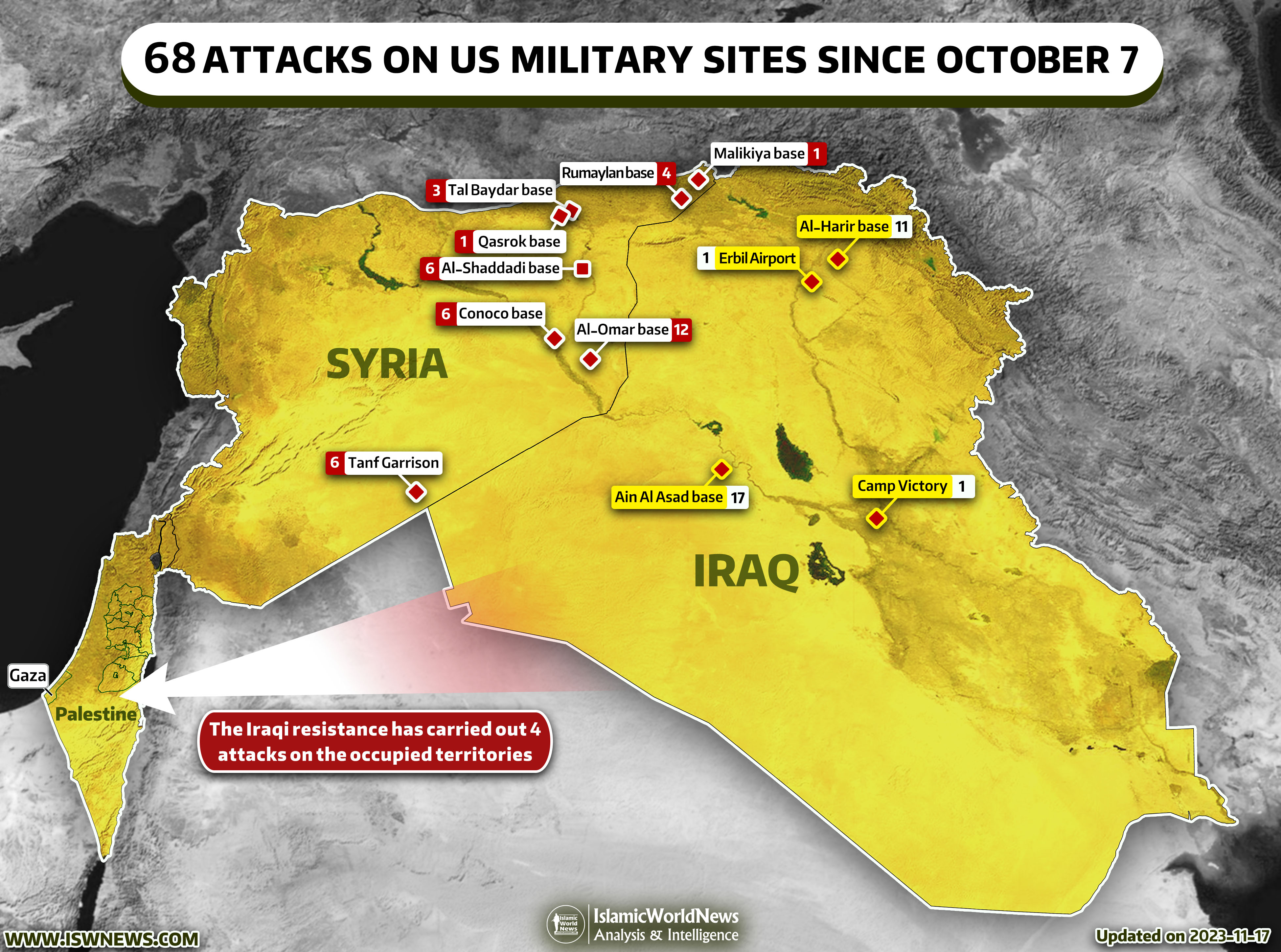
    During this period, the resistance factions have targeted the US bases in Iraq and Syria at least 68 times. In addition, the Islamic Resistance Groups in Iraq have targeted Israeli regime’s positions in the occupied territories of Palestine four times.

    The Islamic resistance groups in Iraq and Syria have launched a series of attacks against the forces supporting the Israeli army in the region (such as the United States Central Command or CENTCOM) and in the Zionist-occupied territories in response to the regime’s brutal attacks on the Gaza Strip.

    In the course of these attacks, the resistance groups have targeted US occupiers’ military bases in the West Asia region, as well as the positions of the Israeli army in occupied Palestine, by the use of rockets, drones, and various types of missiles.

    Based on analyses of ISWNEWS, the Islamic resistance groups have targeted the following military bases in Syria: three attacks against the Tell Beydar base in Al-Hasakah Governorate, six attacks against the Al-Shaddadi base in southern Al-Hasakah Governorate, six attacks against the CONOCO base in the northeastern Deir Ezzor Governorate, 12 attacks against the Al-Omar base in east of Deir ez-Zor Governorate, six attacks against the Al-Tanf base in Homs Governorate, four attacks against the Al-Rumaylan base (Kharab Al-Jir) in northern Al-Hasakah Governorate, one attack against the Al-Qosrak base in Homs Governorate, and one attack against the Al-Malikiyah base in Al-Hasakah Governorate.

    In Iraq, the Camp Victory at the Baghdad International Airport as well as US positions at the Erbil International Airport (EIA) were targeted each on one occasion, while the Al-Harir Air Base in Erbil Governorate was attacked 11 times, and the US army positions at the Ain al-Assad base in al-Anbar Governorate were targeted 17 times with rocket and drone attacks by the Islamic resistance groups.

    Furthermore, the Iraqi resistance groups have targeted Israeli-occupied territories, particularly the city of Um al-Rashrash “Eilat”, four times with their missile and drone attacks.

    The point that is noteworthy in recent strikes by the resistance groups, is the unveiling of new weapons by these groups during their raids on the conflict zones and the utilization of their updated arms in attacks against the US occupiers’ positions in the region.

    The Islamic Front for the Iraqi Resistance, an umbrella group of anti-terror fighters, has recently unveiled two new missiles named Al-Quds 1 and Sarem. The simultaneous unveiling of these missiles along with the recent amplified actions taken by the resistance axis against the United States indicates the beginning of a new phase in their confrontation with the enemies.

    Attacks on US bases in the region since October 7 – click to view fulls size
  • Military Knowledge: Al-Yassin 105 Anti-Tank Rocket, The Zionists’ Nightmare in Gaza!

    Military Knowledge: Al-Yassin 105 Anti-Tank Rocket, The Zionists’ Nightmare in Gaza!

    On October 14, the Izz ad-Din Al-Qassam Brigades, the military wing of the Palestinian resistance movement, Hamas, unveiled the two-stage anti-tank rocket Al-Yasin 105.

    The Al-Yasin 105 is a type of two-stage anti-tank rocket for the use on RPG7 weapons and is made based on the pattern of the two-stage RPG-7VR portable, reusable, unguided, shoulder-launched, anti-tank, rocket-propelled grenade launcher.

    In a video released by the Izz ad-Din Al-Qassam Brigades, the construction and specifications of this rocket were displayed. Based on the released video, it seems that the knowledge of making this two-stage rocket has been transferred to the Gaza Strip and Palestinian fighters have become self-sufficient in this area.

    The video published by Al-Qassam Brigades about the unveiling of Al-Yasin105

    The two-stage Al-Yasin 105 rocket is designed to overcome explosive reactive armor (ERA) and composite armor installed on the Merkava. In the first stage, the rocket penetrates the reactive armor and neutralizes its effect, and in the second stage, the rocket’s second part hits the main body of the tank.

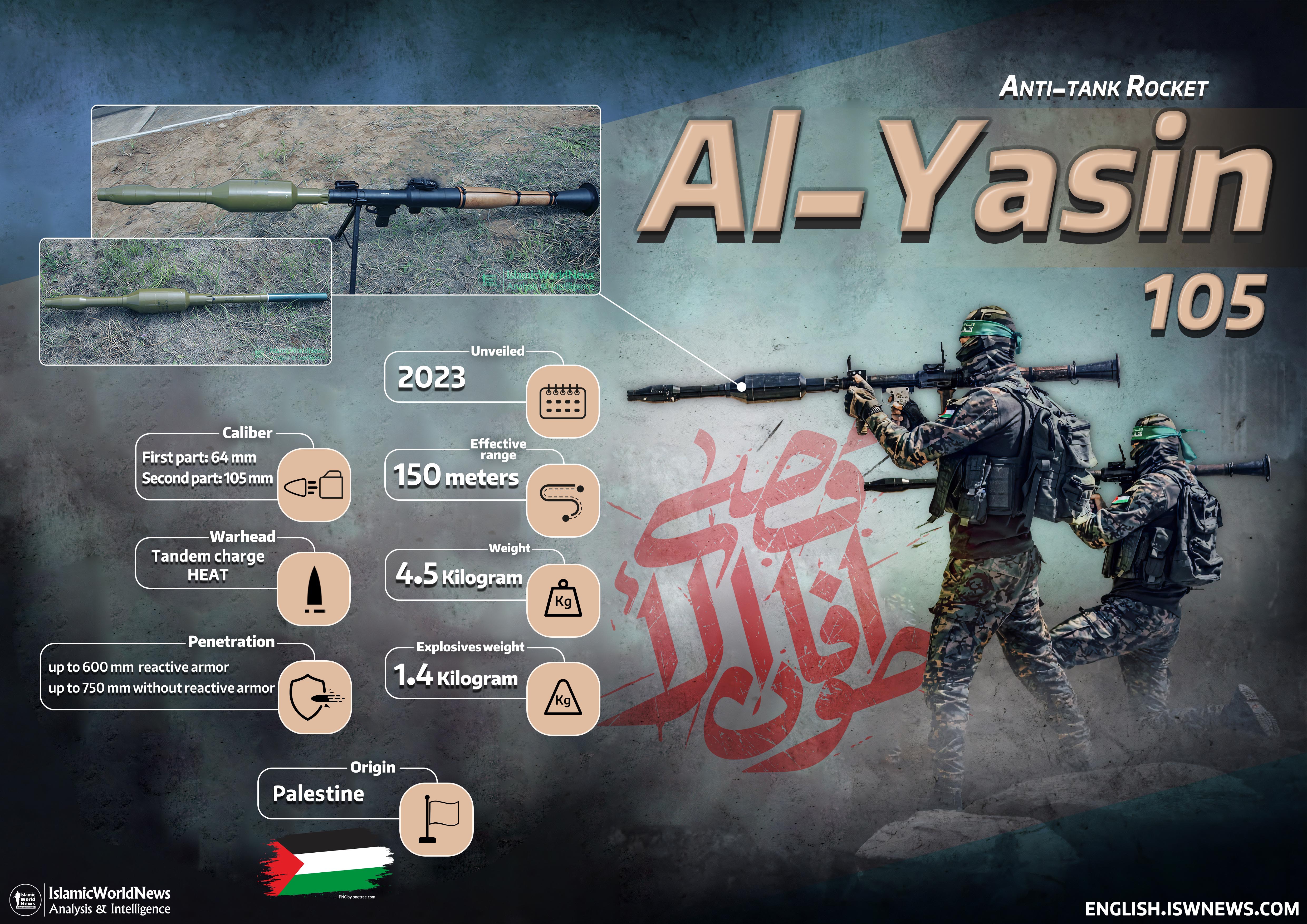
    The Al-Yasin 105 rocket is a two-stage HEAT (High Explosive Anti-Tank) warhead designed for use on RPG7 weapons. It is made up of a 64mm precursor warhead for penetrating reactive armor and composite armor, followed by a 105mm main warhead for penetrating the tank’s main armor. The secondary warhead has a penetration capability of 600mm of rolled homogeneous steel, or 750mm without reactive armor. If there is no reactive armor, this warhead can penetrate 750 mm rolled steel.

    Different components of Al-Yasin 105 rocket

    The effective range of the rocket is up to 500 meters, with a lethal range of 150 meters, and a speed of approximately 300 meters per second.

    The Al-Yasin 105 rocket was used by Hamas in the early battles to reclaim Palestinian territories and has successfully penetrated the composite armor of the Israeli Merkava Mark 4 tank. This demonstrated that the Trophy active protection system installed on the tank is ineffective against the Al-Yasin 105 rocket, which can successfully penetrate the tank’s armor. According to the images released so far, after the impact of the Al-Yasin 105 rocket on a Merkava tank, one crew member was killed and the other crew members were injured. This incident showed that the Trophy system is unable to deal with this rocket, and the Al-Yasin 105 rocket can successfully penetrate the armor of the Merkava tank. In fact, the Al-Yasin 105 rocket has once again shattered the myth of the invincibility of the Merkava tanks!

    Merkava tank after a hit by Al-Yasin 105 rocket

    The above image clearly shows that the composite armor of the tank has been penetrated and the second stage charge has reached the main armor of the tank. Therefore, this rocket has sufficient power to deal with the armor of the Israeli regime. According to the evidence, a direct hit will disable the tank. However, hitting from the sides will have the potential to destroy the tank turret, which can either completely take the tank out of service or significantly increase its repair time.

    A picture of the destruction of a Namer heavy armored personnel carrier based on the Merkava Mark 4 chassis by Al-Yasin 105 rockets

    Al-Yasin 105 Thermobaric and Anti-Bunker version:

    The Al-Yasin 105 rocket also has another version called TBG. The TBG stands for Thermobaric Anti-Bunker. In this type of rocket, thermobaric is used instead of the precursor warhead in the second stage.

    The important point about this version of the rocket is that due to the use of a precursor warhead in the first stage, this rocket can penetrate concrete and earth bunkers, and then the thermobaric warhead in the second stage can have a very significant impact on inflicting casualties on the enemy.

    Al-Yasin 105 thermobaric and anti trench version

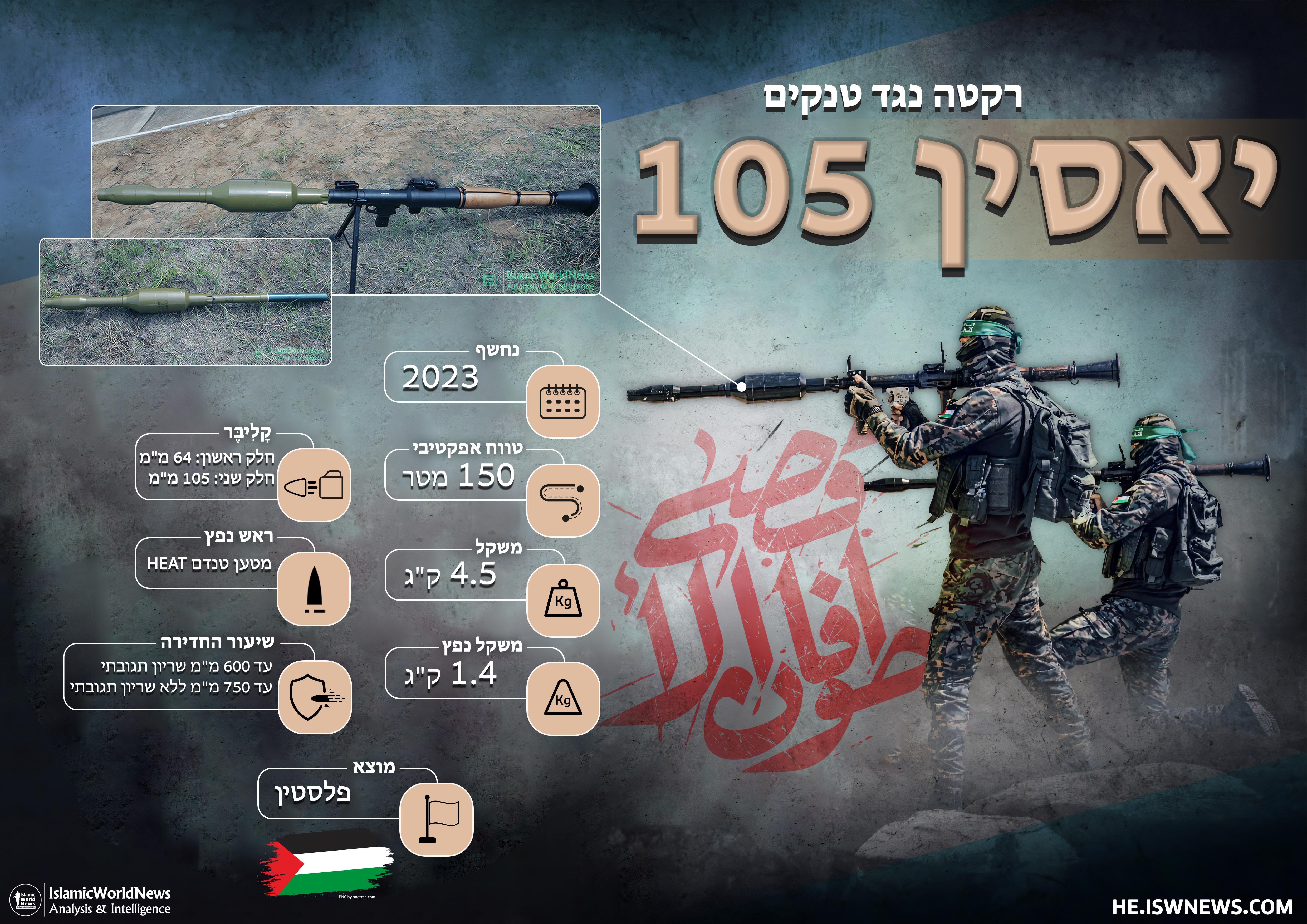
    Al-Yasin 105 anti-tank rocket specifications:
    Type: Two-stage anti-tank munition
    Origin: Palestine
    Unveiled: 2023
    Effective range: 150 meters
    Warhead: Tandem charge HEAT
    Weight: 4.5 kg
    Explosive weight: 1.4 kg
    Caliber:
    The first part: 64 mm
    The second part: 105 mm
    Penetration rate:
    Up to 600 mm reactive armor
    Up to 750 mm without reactive armor
    Speed: ~ 300 m/s

    Al-Yasin 105 anti-tank rocket – click to view full size

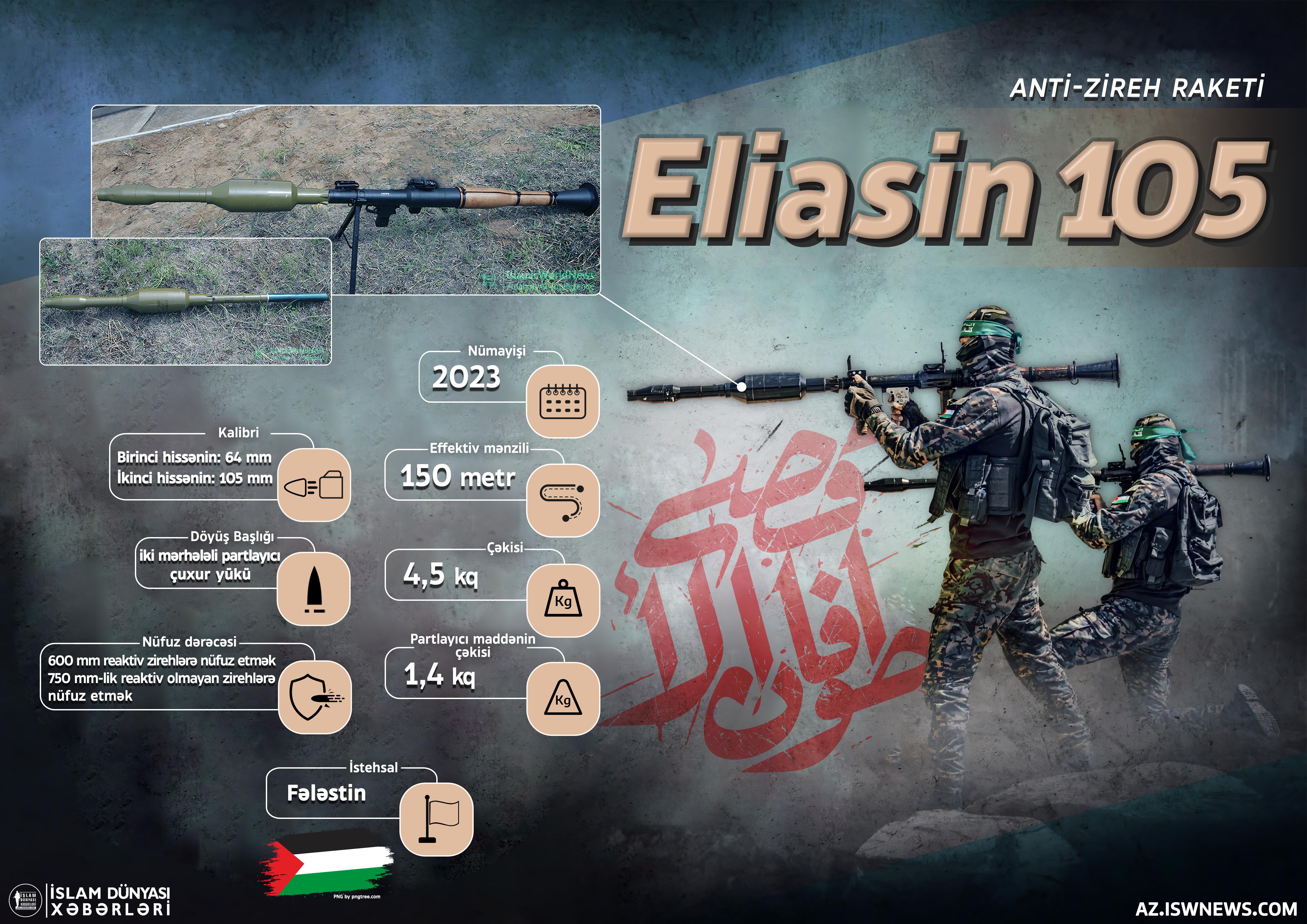
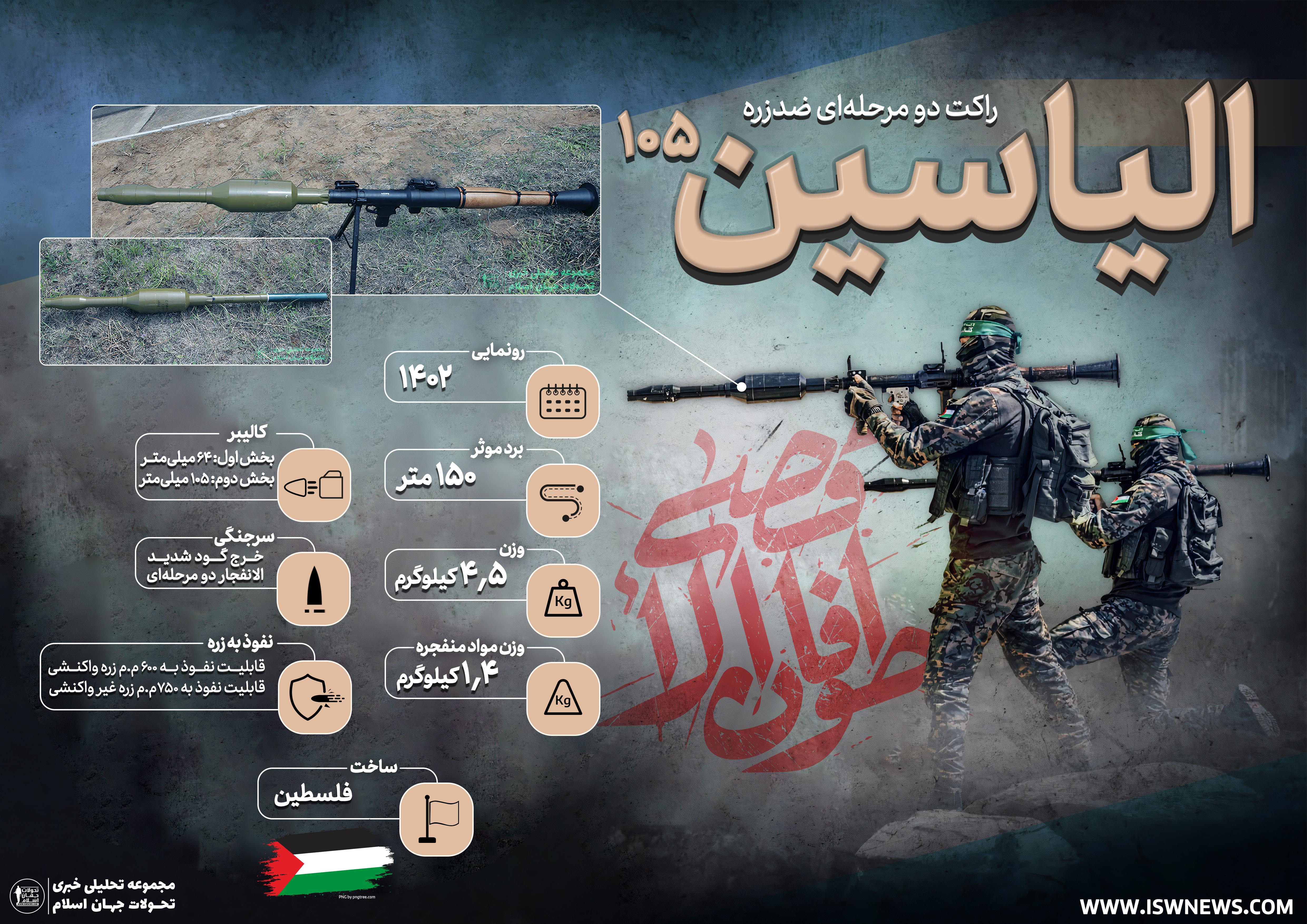
    Infographics of Al-Yasin 105 anti-tank rocket in Russian, Hebrew, Farsi and Azeri:

  • Infographic: The Israeli Army Losses In Northern Front

    Infographic: The Israeli Army Losses In Northern Front

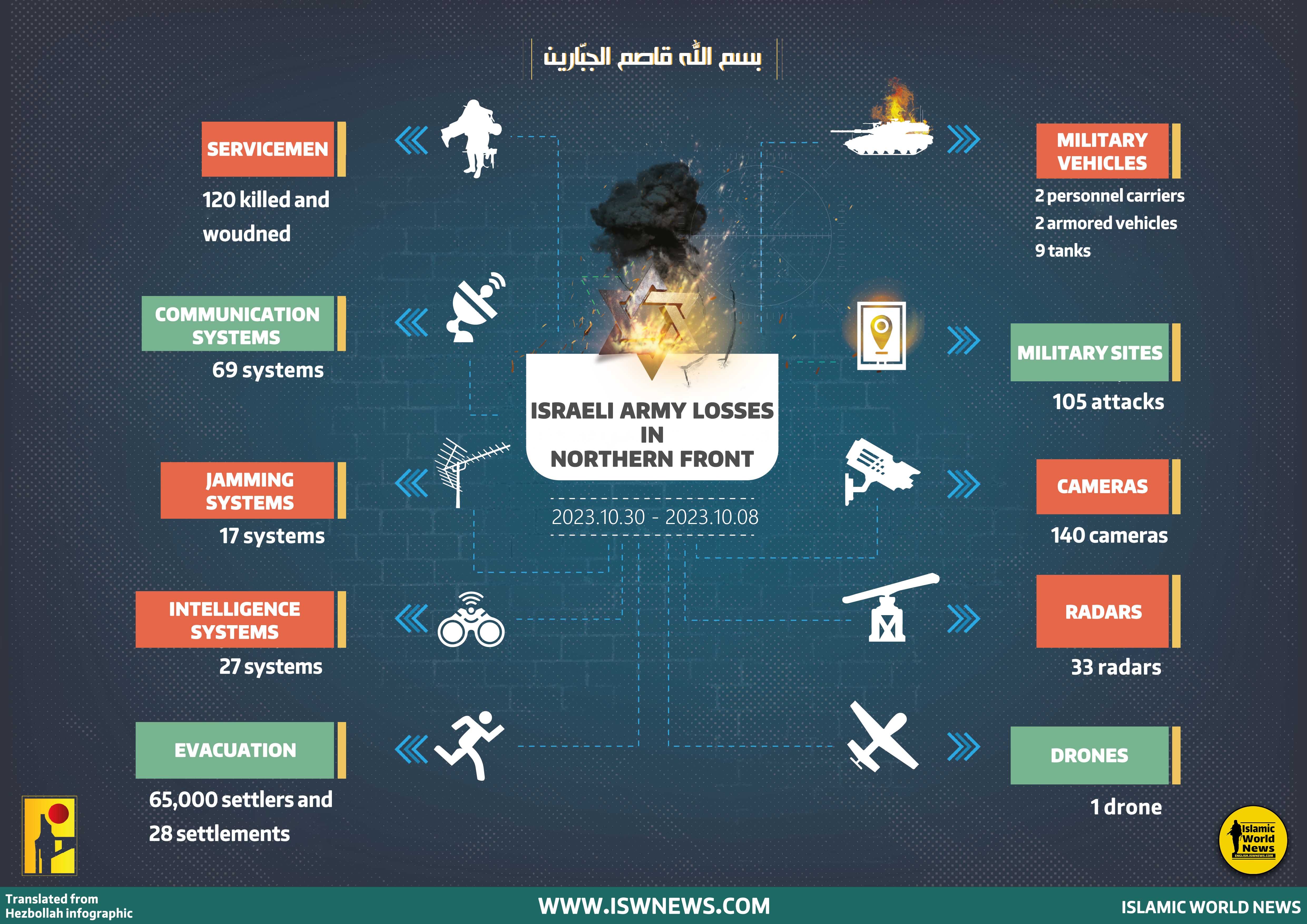
    According to data provided by Hezbollah, the movement has managed to target 105 Israeli military sites and 140 cameras, 33 radars, 69 communication systems, 27 intelligence-espionage systems, 17 jamming systems and one drone. Also, two armored vehicles, two Humvees and nine Merkava tanks of different versions were destroyed or damaged.

    Also, 120 Israeli servicemen were killed or wounded. Hezbollah’s attacks have caused the evacuation of 28 settlements and the evacuation of 65,000 settlers from the area.

    The analysis of these actions shows that the focus of the attacks is on the radar sites, communication and listening towers, tanks and armored vehicles of Israel in order to paralyze the Israeli espionage systems and also target the enemy’s strengths.

    Click to view full size
  • Infographic: Operation Al-Aqsa Storm, Day 15

    Infographic: Operation Al-Aqsa Storm, Day 15

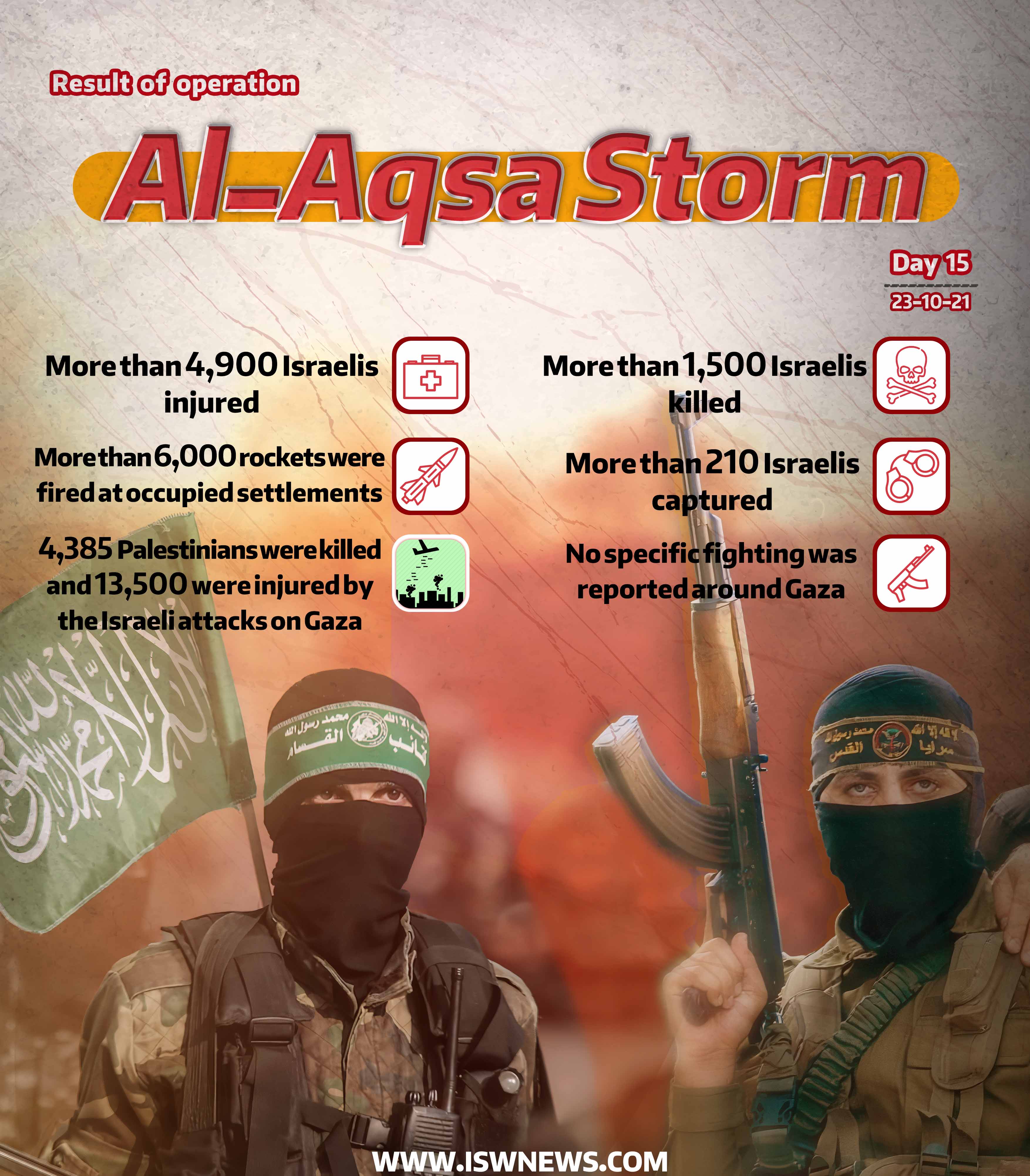
    During the battles between the Palestinian resistance groups and the Israeli regime, so far, more than 1,500 Israelis were killed, more than 4,900 Israelis were wounded and at least 210 Israelis were captured by the Palestinian forces.

    No specific ground fighting was reported around the Gaza Strip.

    Palestinian resistance groups fired more than 6,000 rockets at the occupied territories.

    The Palestinian Ministry of Health in the Gaza Strip announced that more than 4,385 Palestinians were killed and more than 13,500 others were wounded since the start of the conflict.

    Click to view full size
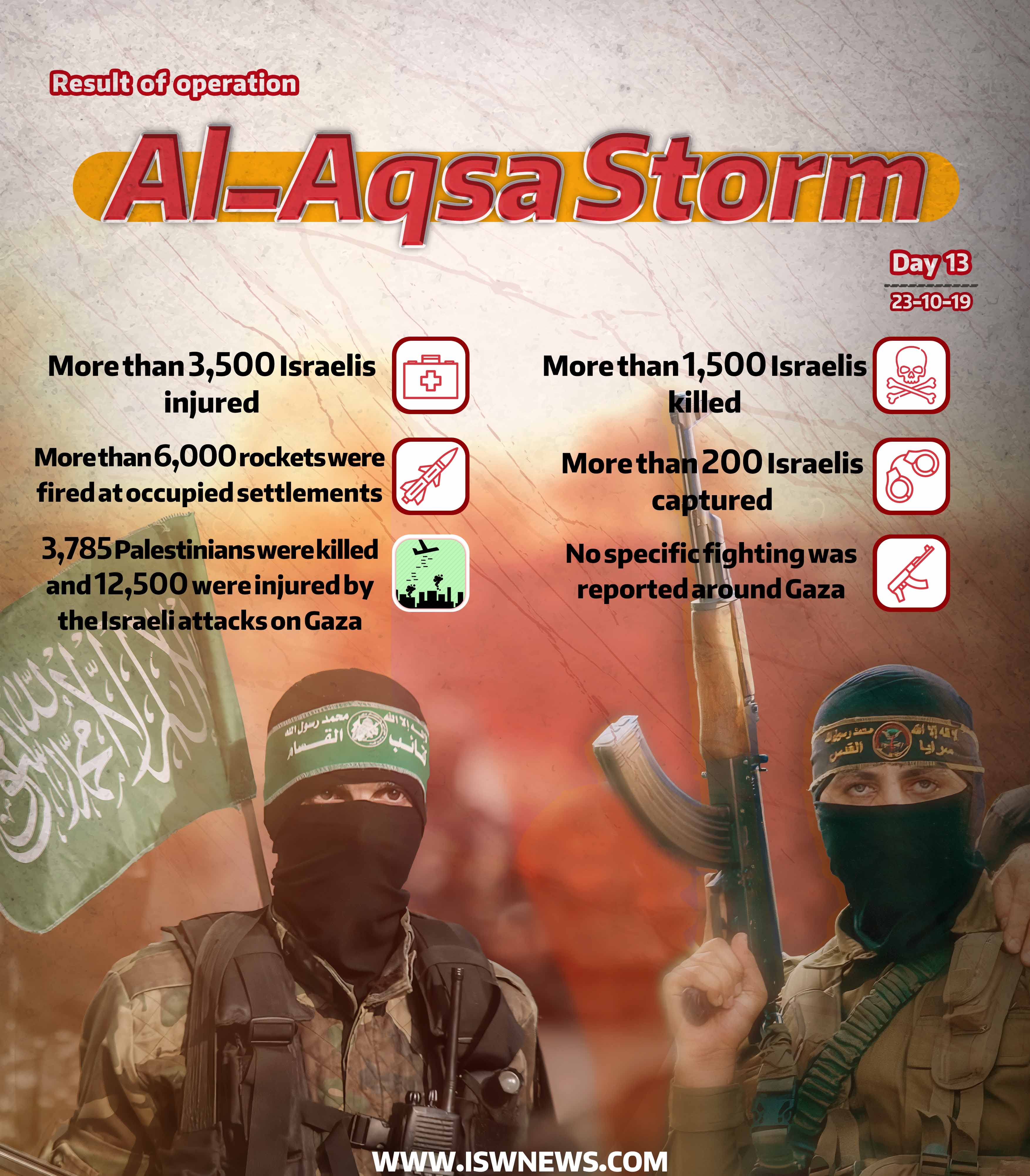
  • Infographic: Operation Al-Aqsa Storm, Day 13

    Infographic: Operation Al-Aqsa Storm, Day 13

    During the battles between the Palestinian resistance groups and the Israeli regime, so far, more than 1,500 Israelis were killed, more than 3,500 Israelis were wounded and at least 200 Israelis were captured by the Palestinian forces.

    No specific ground fighting was reported around the Gaza Strip.

    Palestinian resistance groups fired more than 6,000 rockets at the occupied territories.

    The Palestinian Ministry of Health in the Gaza Strip announced that more than 3,785 Palestinians were killed and more than 12,500 others were wounded since the start of the conflict.

    Read more: Infographic: Operation Al-Aqsa Storm, Day 12

    Click to view full size
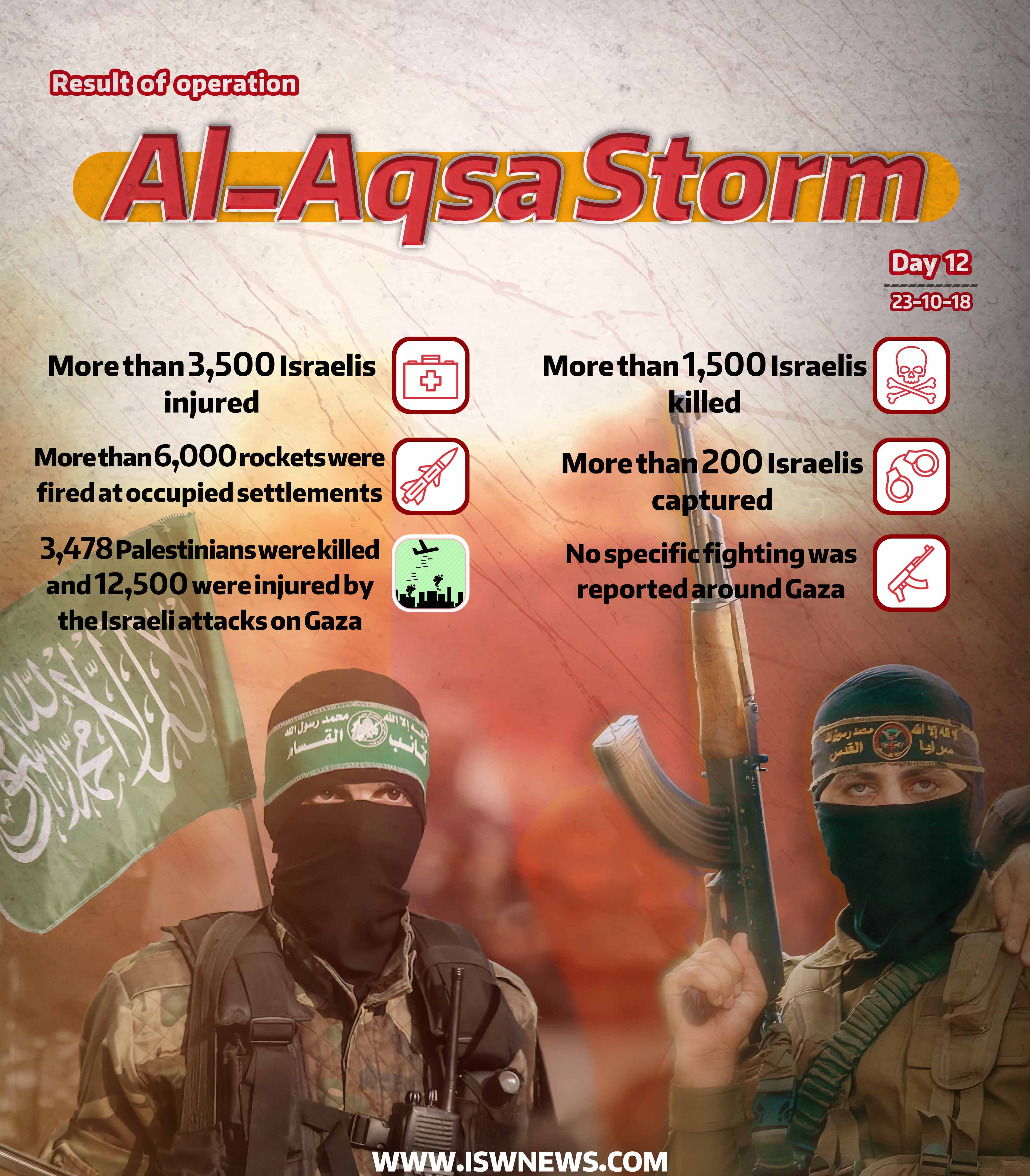
  • Infographic: Operation Al-Aqsa Storm, Day 12

    Infographic: Operation Al-Aqsa Storm, Day 12

    During the battles between the Palestinian resistance groups and the Israeli regime, so far, more than 1,500 Israelis were killed, more than 3,500 Israelis were wounded and at least 200 Israelis were captured by the Palestinian forces.

    No specific ground fighting was reported around the Gaza Strip.

    Palestinian resistance groups fired more than 6,000 rockets at the occupied territories.

    The Palestinian Ministry of Health in the Gaza Strip announced that more than 3,478 Palestinians were killed and more than 12,500 others were wounded since the start of the conflict.

    Click to view full size
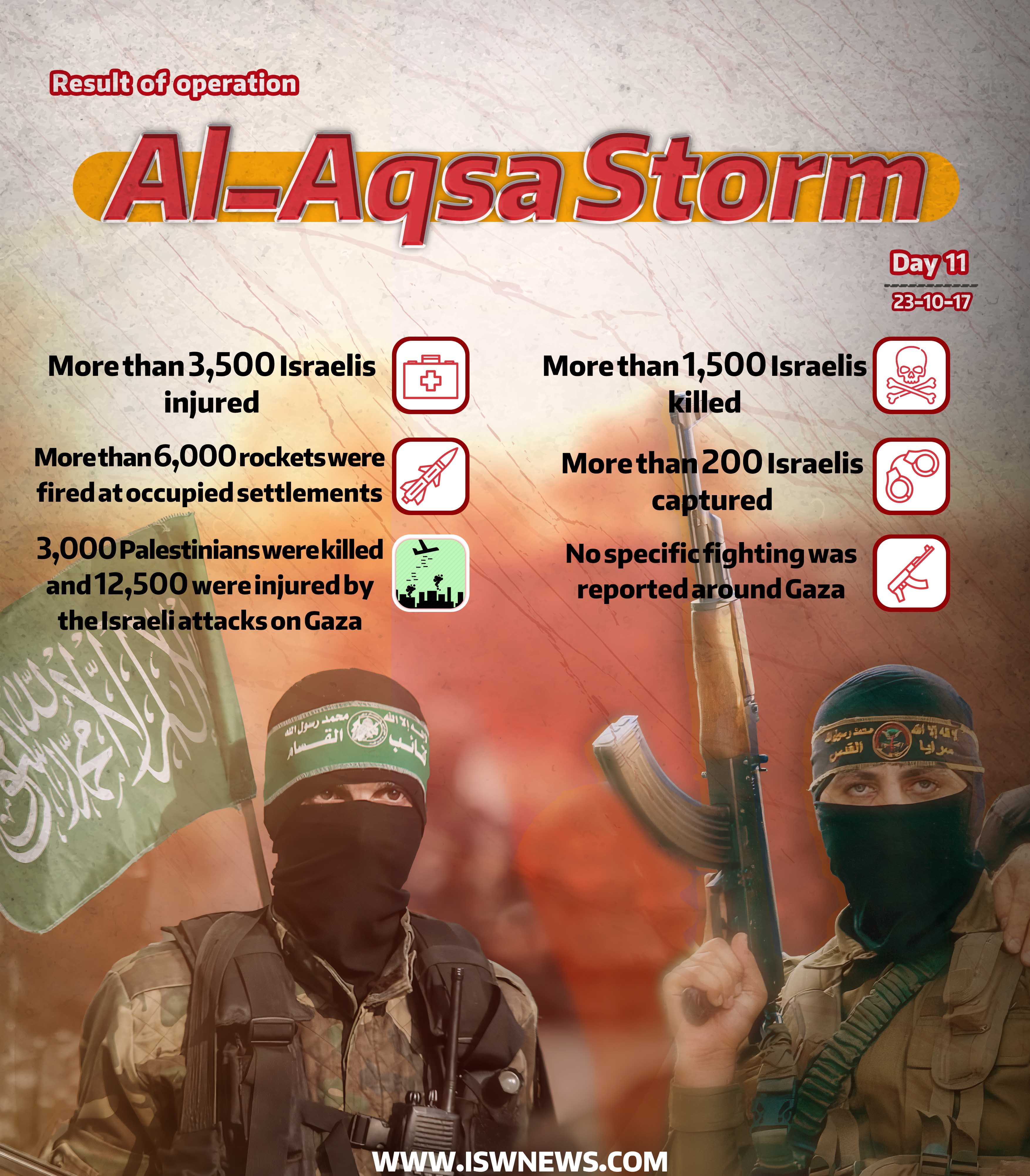
  • Infographic: Operation Al-Aqsa Storm, Day 11

    Infographic: Operation Al-Aqsa Storm, Day 11

    During the battles between the Palestinian resistance groups and the Israeli regime, so far, more than 1,500 Israelis were killed, more than 3,500 Israelis were wounded and at least 200 Israelis were captured by the Palestinian forces.

    No specific ground fighting was reported around the Gaza Strip.

    Palestinian resistance groups fired more than 6,000 rockets at the occupied territories.

    The Palestinian Ministry of Health in the Gaza Strip announced that more than 3,000 Palestinians were killed and more than 12,500 others were wounded since the start of the conflict.

    Read more: Infographic: Operation Al-Aqsa Storm, Day 10

    Click to view full size
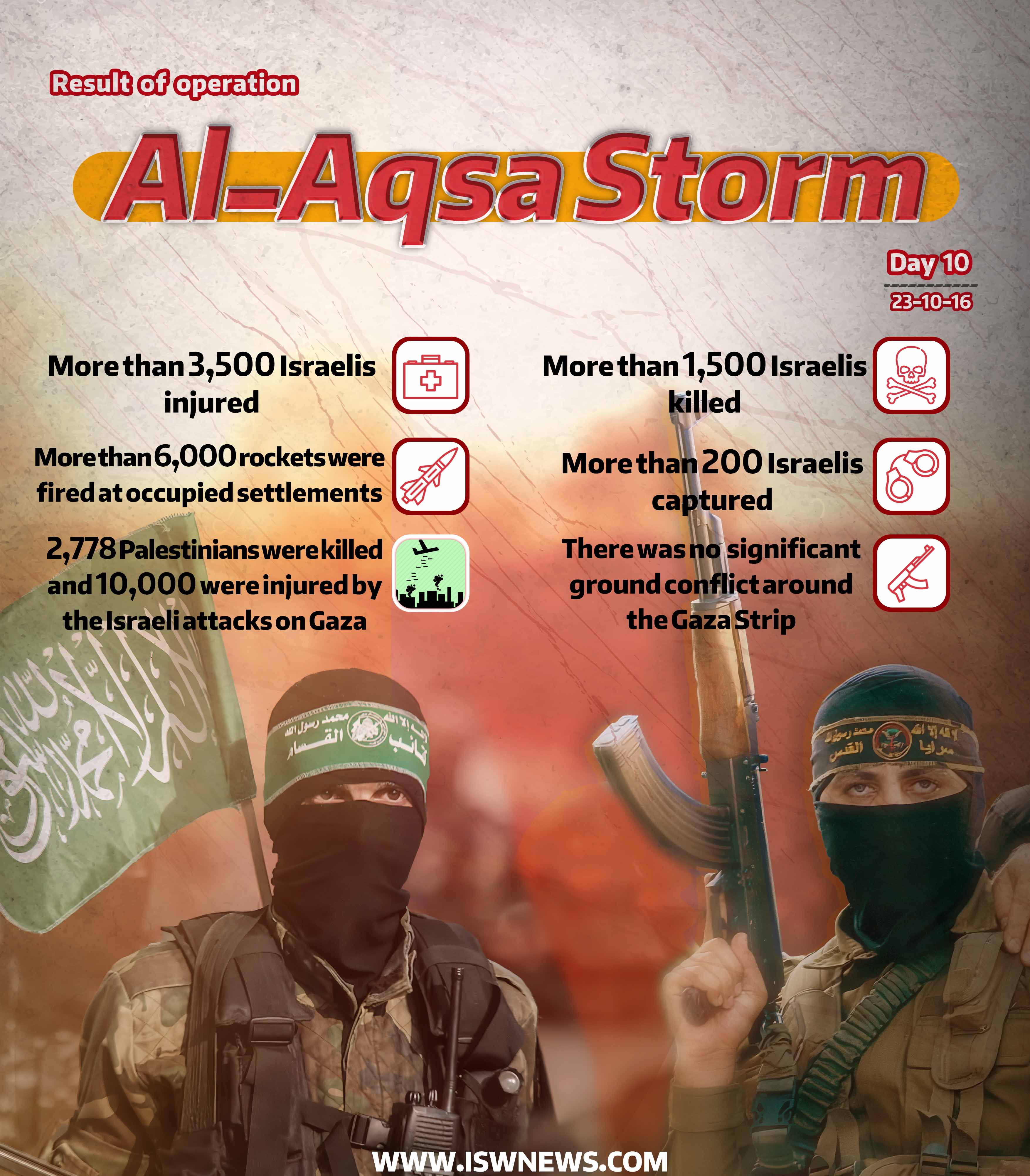
  • Infographic: Operation Al-Aqsa Storm, Day 10

    Infographic: Operation Al-Aqsa Storm, Day 10

    During the battles between the Palestinian resistance groups and the Israeli regime, so far, more than 1,500 Israelis were killed, more than 3,480 Israelis were wounded and at least 200 Israelis were captured by the Palestinian forces.

    According to Abu Obaidah, the spokesperson of al-Qassam Brigades, about 200 Israeli prisoners are in the possession of al-Qassam, and the rest of the prisoners are in the possession of other Palestinian groups. Also, 22 Israeli prisoners have been killed in the Israeli airstrikes, so far.

    Palestinian resistance groups fired more than 6,000 rockets at the occupied territories.

    The Palestinian Ministry of Health in the Gaza Strip announced that more than 2,778 Palestinians were killed and more than 10,000 others were wounded since the start of the conflict.

    Read more: Infographic: Operation Al-Aqsa Storm, Day 9

    Click to view full size