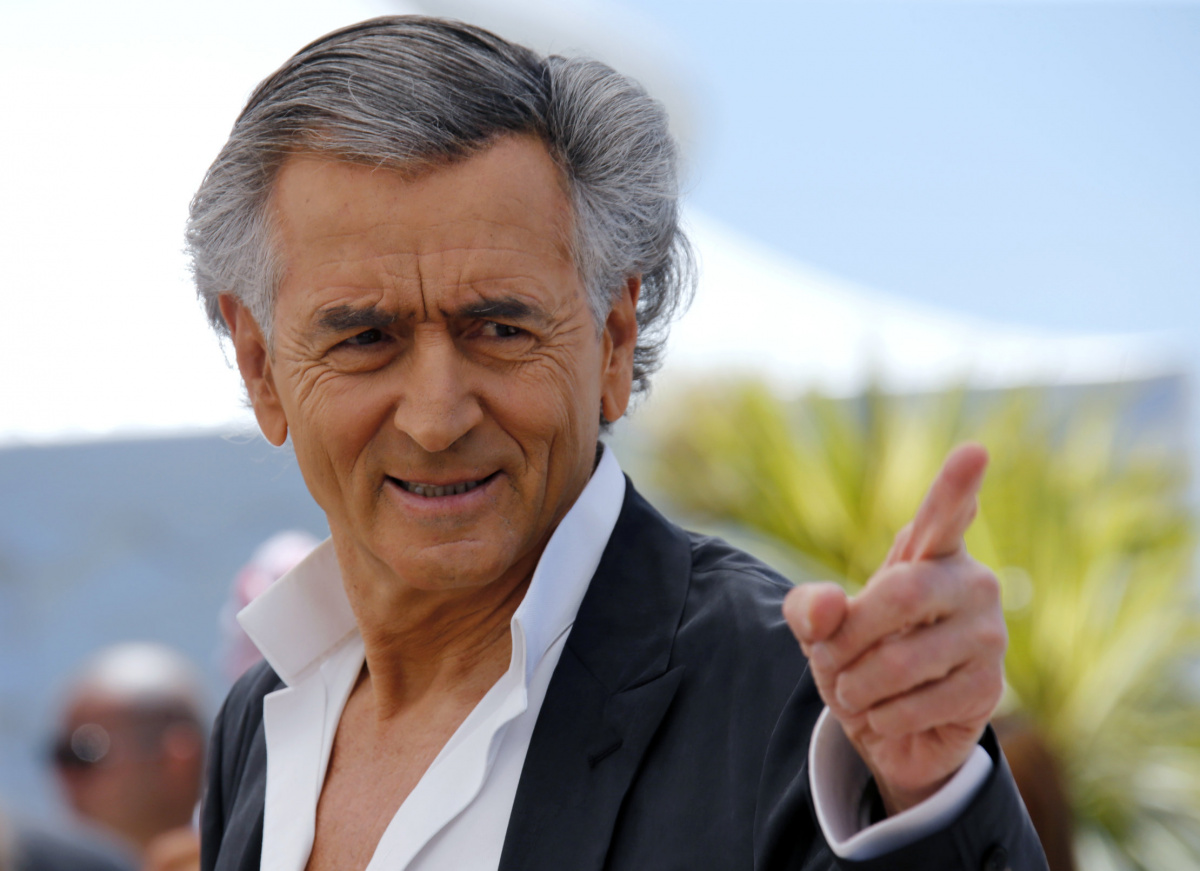
Many analysts call him one of the main theoreticians of the “Arab Spring” in the region, and now his presence in Iraq and under such circumstances can not be for no reason!
Looking at the depths of the sensitive events of the region, you can clearly see the presence of Bernard, from Afghanistan to Sudan, from Egypt to Tunisia and Libya, from Bosnia to Ukraine, and … He is everywhere! in the anti-Muammar Gaddafi rebel room, along with Ahmad Shah Massoud, along with the leader of the South Sudan rebels, … And in his last major presence in the region in the Kurdish region of Iraq on the day of the referendum and meeting with the Barzani family.
Bernard-Henri Lévy with Massoud Barzani, the Day After the Kurdistan Referendum
Bernard-Henry Levy introduces himself as a proud Jew. Apart from more than forty years of intellectual and practical work in numerous books and numerous articles in the press with a variety of topics, his work record can be divided into three categories:
1- Complete opposition to the political and legal manifestations of Islam
Levy, who was named the forty-fifth most influential Jewish figure in the 2010 Israeli Jerusalem Post, and his followers believed he is the greatest current think-thanker of France
In one of his latest books, “Left in Dark Times: A Stand Against the New Barbarism” has shown how he thinks of Islamism.
Critics of the book believe that in this book, he has equated terrorism, Islamism, and Arab mentality to justifying the persistence of colonialist violence in the Middle East.
In other words, Levy has tried to summarize the resistance of people in the colonized countries as a violence, and make it irrational and justify its suppression
Levi, who introduce the veil of Muslim women as a means of desegregation them, introduced their ideal Islam the kind of Islam that is in Kurdish region of Iraq.
2- Unconditional support for the Israeli regime
In 1967, when Bernard Henry Levy was 19, when he informed of the war between the Arabs and Israel, quickly went to the embassy in Paris to declare readiness to go to war, but the six-day war lasted less than that Levy couldn’t take the opportunity to go to the occupied territories.
43 years later, Levy said that he “does not recognize any army more democratic than the Israeli army,” which showed that he still has an indefinite commitment to this regime, which is also apparent from the many images of his meeting with the senior officials of the regime.
Meeting with Shimon Peres
3- Constant presence in the bloody chaos of the Islamic world
Levy wrote his first known book in 1973 two years after the break-up of Pakistan into two parts of Pakistan and Bangladesh about nationalism in Bangladesh and from that day on, not only commented and acted on the riots of the Islamic world but also he has been present in them.
In the middle of the last decade of the twentieth century, Levy was present in Bosnia, then headed for Afghanistan, and met with Abdul Rashid Dostum and Ahmad Shah Massoud.
He was present in southern Sudan in the era of separatism;
In 2008, in Russian-Georgian conflict he supported the west-backed side in Georgia;
in 2011 with rising conflicts in arab countries he participated in libyan war and convinced his old friend nicola sarkozy to military interfere in Libya; in the same years, he tried many times to justify military intervention in Syria and to overthrow the government of Syria;
In 2014 and 2015 he pursued the goals of the Russian opposition in Ukraine;
and his year he started filming to justify her favorite map, “breakdown of countries in region into smaller countries”
Along with the South Sudanese rebels
Meeting with South Sudanese rebel leader John Garang
Levy in Libyan War
Meeting with Ahmad Shah Massoud
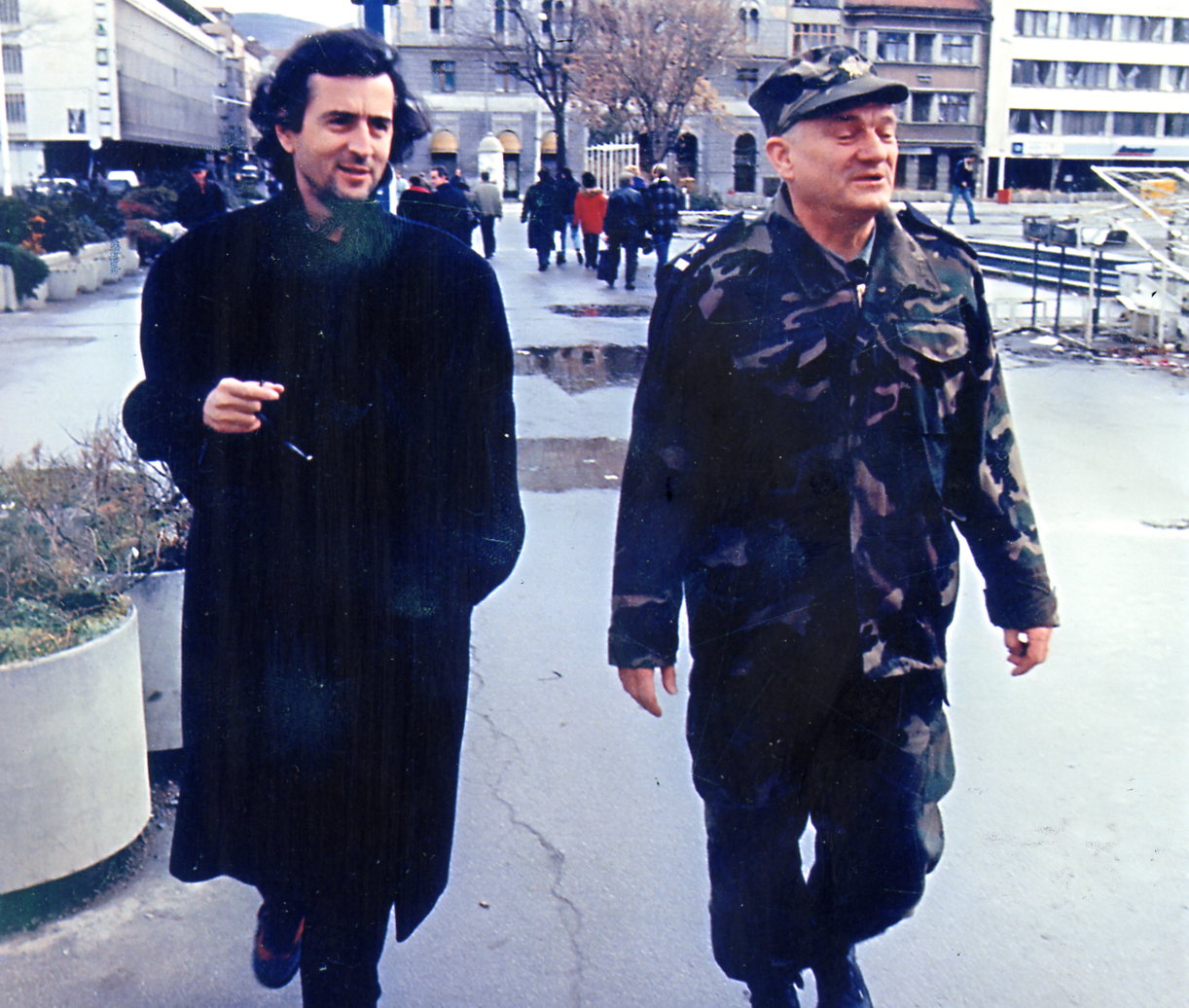
In Bosnia
Bernard Levy in Iraqi Kurdistan Bernard Levy In Bamyan, Afghanistan
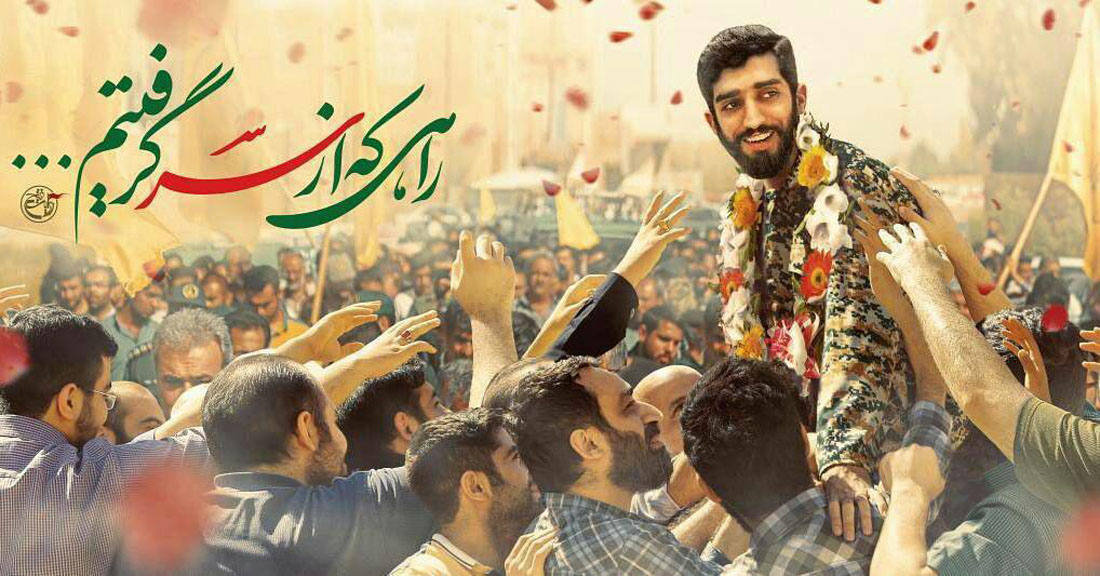
A huge crowd of mourners from different walks of life attended the funeral of Martyr Mohsen Hojaji. He was buried in his hometown of Najaf Abad in Isfahan Province in central Iran, following a funeral procession there on Thursday.
Hojaji was a member of the Iranian military advisory team, which assists the Syria army in its counter-terrorism operations against Takfiri terrorists. He was taken hostage by Daesh terrorists near the Iraqi border on August 7 and beheaded two days later.
Another mass funeral procession was held for the iconic Martyr Hojaji in the Iranian capital, Tehran, on Wednesday.
Leader of the Islamic Revolution Ayatollah Seyed Ali Khamenei attended the funeral in Tehran and prayed near Hojaji’s Iranian-flag-wrapped casket.
Imam Khamenei also met the family of the revered young martyr and praised their fortitude.
Since the martyrdom of 25-year-old Mohsen Hojaji, many Iranian artists have memorialized his death in videos and paintings.
The Lebanese Hezbollah Resistance Movement on August 31 received the body of Hojaji from Daesh based on a ceasefire deal between the two sides.
The transfer of Lebanon’s captured soldiers and two martyrs, as well as the body of Martyr Hojaji, took place after the buses carrying Daesh militants and their families arrived in the ancient city of Palmyra in Homs Province, according to media reports.
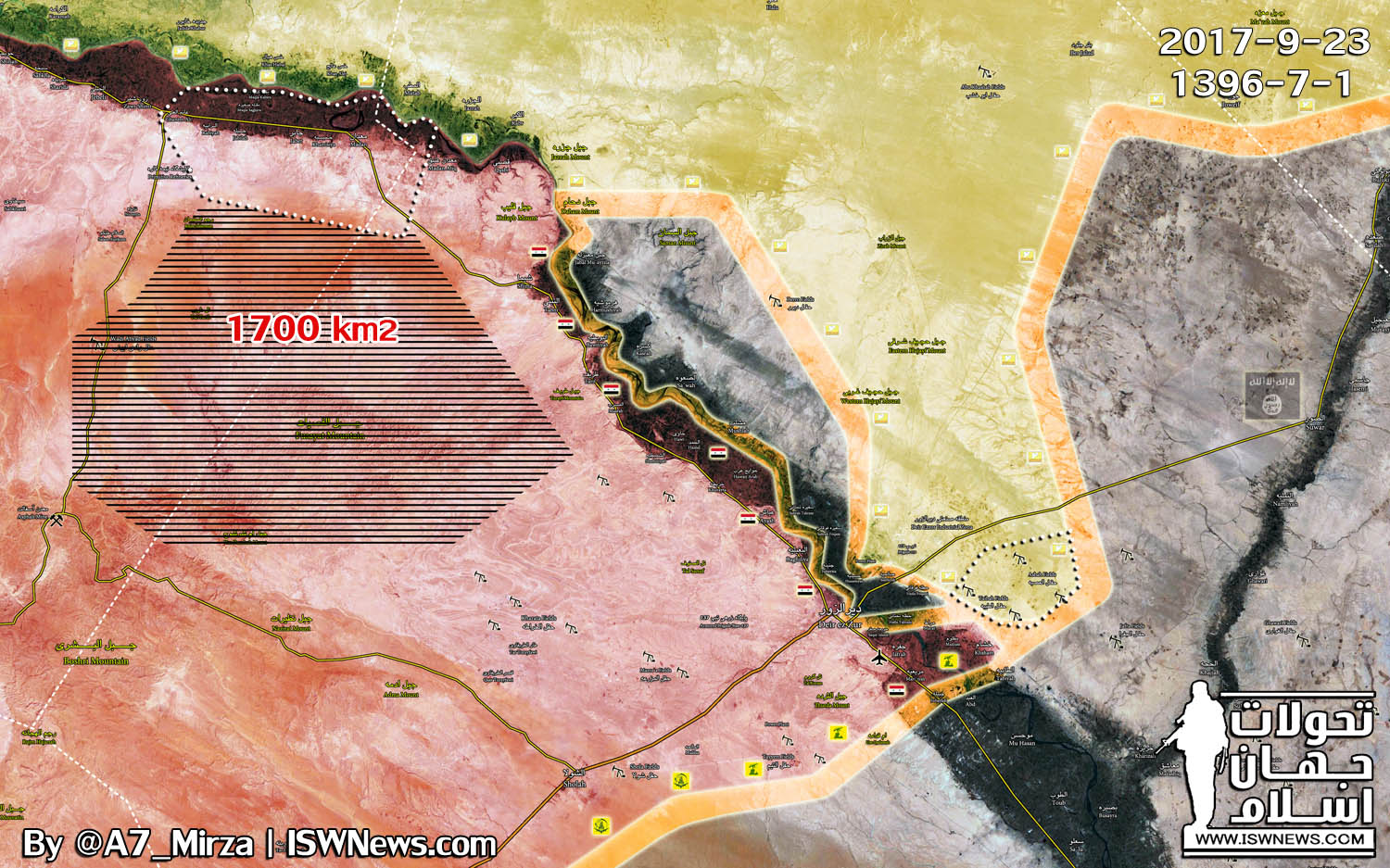
In the past days, the Syrian army succeeded in liberating more than 40 small and large villages rapidly, mountains and strategic heights along the south-eastern coast of the Euphrates River. Moving in the south of the Euphrates led to the liberation of many desert and mountainous areas in the western province of Deir Ezzor, with the withdrawal of ISIL.
Thus, an area of about 1,700 square kilometers was liberated in the west of Deir Ezzor.
But on the northern and northeastern part of Deir Ezzor, the SDF, with US air support, managed to seize the oil and gas fields north of Khisham, the fields of Aasba and Tayaba (Conico). It should be mentioned that heliborne has been used in these advances
Anyway, the images published by field sources do not show any significant damage to the seized gas and oil installations, and the withdrawal of ISIS interesting in its kind, because in most cases before the retreat they demolish and burn the facilities
Anyway, the Kurds managed to dominate the northern fields sooner than Syrian army and resistance axis. Now, with the liberation of the Deir Ezzor and providing the security of the city from the left, it is to be seen what the Syrian army and the Resistance axis will take and the direction of the attacks will focus on.
Moving along the eastern of the Euphrates to al-Qaim or clearing deserted areas between Hamimah to Deir Ezzor or combination of these two ..
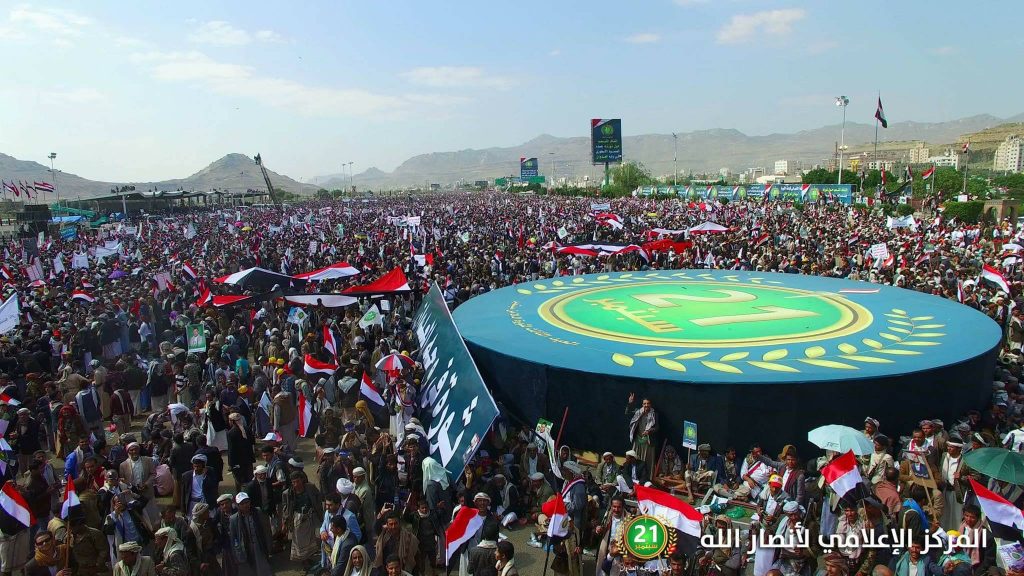
On the third anniversary of the entrance of Ansarallah movement in Sana’a, the capital of Yemen, known among the Yemeni people as the 21 September Revolution, insisted on its readiness to confront the Saudi’s military aggression.
The ceremony was held in Sab’in Square, with a massive participation and slogan of Unity and Independence.
It should be mentioned that three years ago, with the invitation of Abdulmalek al-Houthi, the leader of the Ansarallah movement in Yemen, to confront the puppet government of Abdo Rabeh Mansour Hadi and with positive Yemeni people’s answer, the Ansarullah movement dominated over the Sana’a, the capital of Yemen by the support of people.
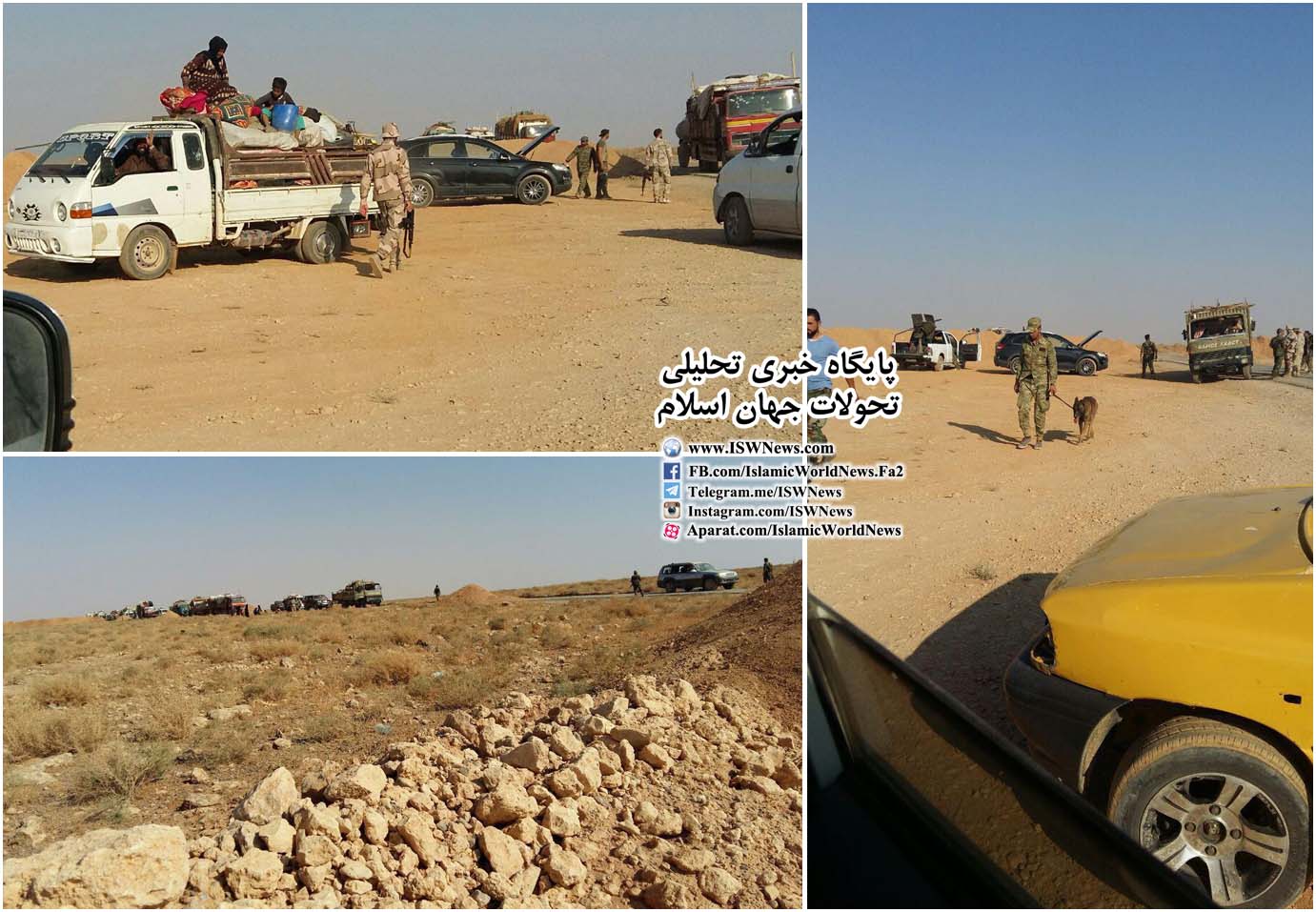
Since last night, more than 200 vehicles and trucks, including gunmen and their families from the Uqayrabat, intended to cross the Syrian and Fatemiyun forces checkpoints, which were stopped for hours in the area, and after surrendering their weapons and full inspections they had the permission to leave. These militants were mostly from the forces of the Dawood Brigade (formerly active in the southern Aleppo) and Jund al-Aqsa, who swore alliance to ISIS.
Last night, the caravan planned to cross without surrendering weapons and equipment that stopped by the military’s warning and threat.
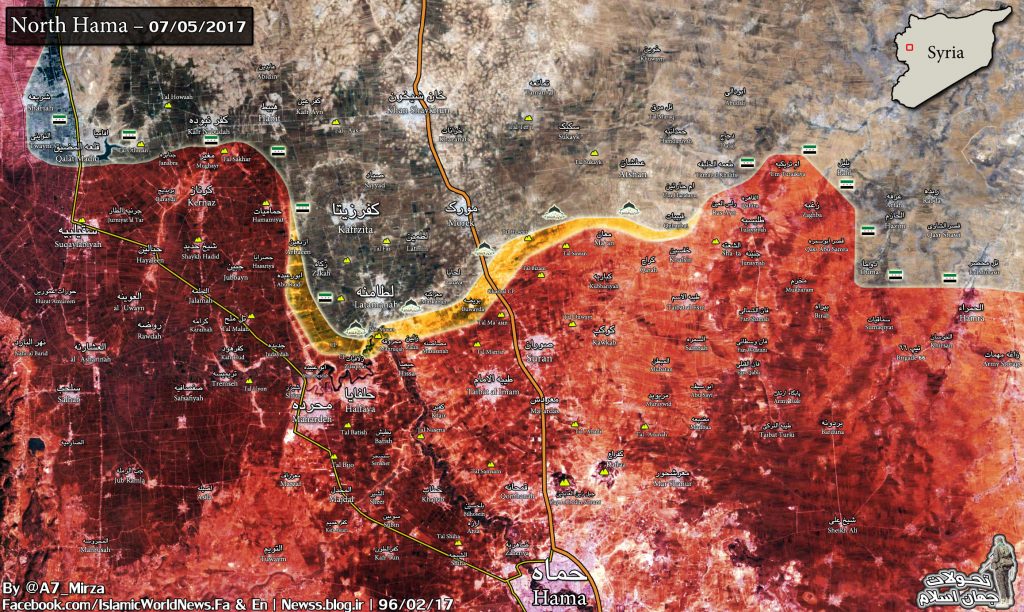
In less than 48 hours after the start of the operation, “ya ebadollah othbeto,” it seems that at least Tahrir al-sham in the first phase of the operation faced a major defeat, and unlike the early stages of operations in northern Hama without the slightest achievement.
The villages of Qaherh, Sha`tha and Taliysia, which were evacuated by the army during the early hours of the invasion, and they were repossessed in less than 24 hours by army, and according to the information at least 104 militants were killed in the operation.
While about 38 Syrian troops were martyred at this attack
Five tanks, four BMP and 11 vehicles having machine gun of Tahrir al-sham were also destroyed. Meanwhile, the forces of Soheil Hassan and many of the sub-groups who were present in the previous operations of the armed forces in Hama, who are currently fighting in the Deir Ezzor Front, were not called to confront the Tahrir-al-Sham operations on the northern front of the Hama.
The presence of the largest free army coalitions such as Jaish al-Nasr and Jish al-ezzah under the command of Tahrir al-Sham in this operation, the statement by the Russian defense ministry that the 35 armed groups in Idlib are ready to join the Syrian army is not very reliable, and even if they are correct, They can not be among the great Free Army alliances in northern Hama and Idlib, such as Jaish al-Nasr, Jish al-ezzah and Jaish Idlib, and they won’t be effective in these areas.
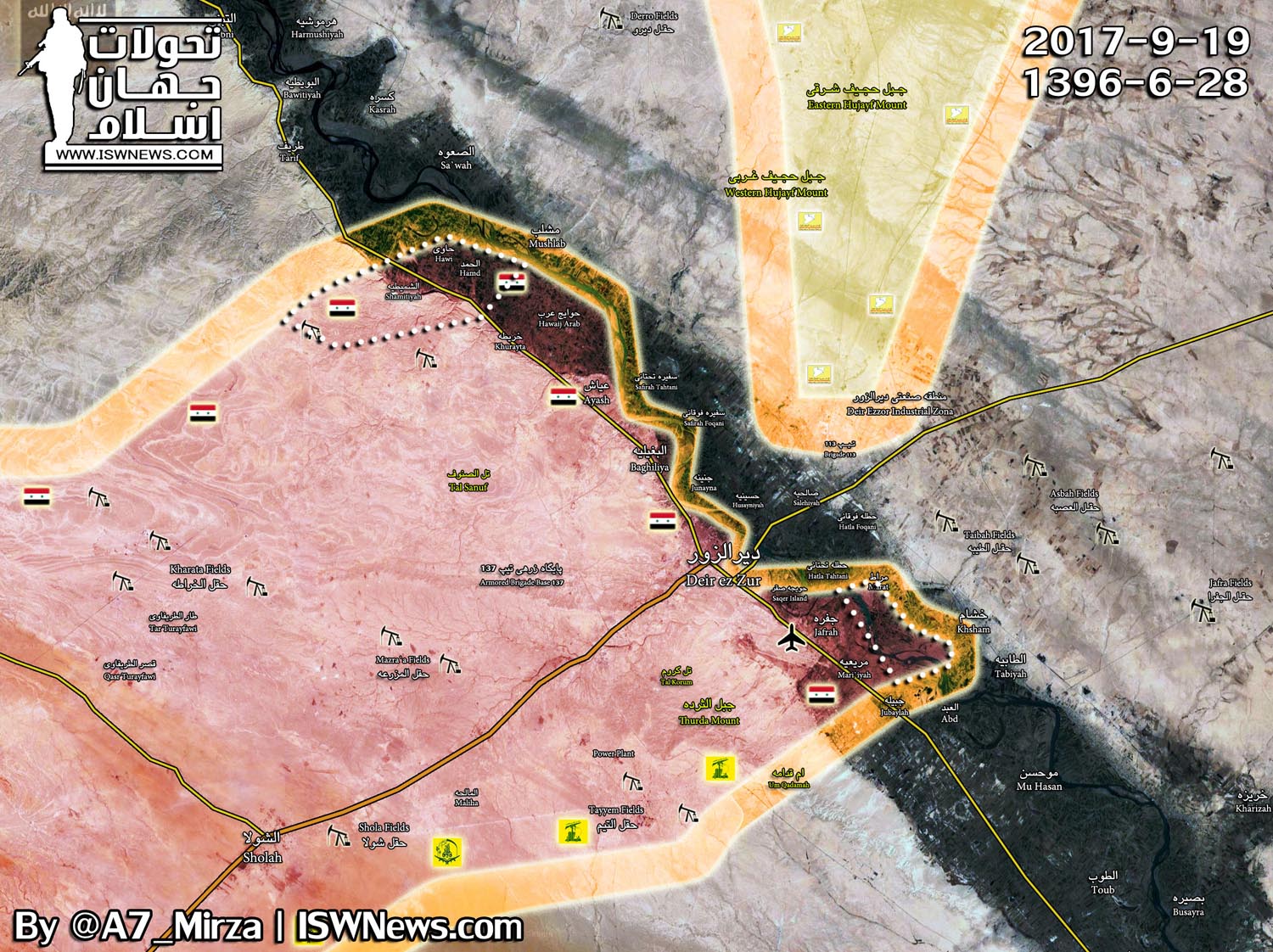
Eventually, after many speculations, the Syrian army and the Resistance forces crossed the Euphrates from al-Mari`iyah and liberated parts of the Marat and southern of Khisham. The move had been done while the SDF and the US coalition had warned the Syrian army of crossing the Euphrates River and made it probable that the Syrian army could be targeted by the coalition if they come to SDF positions.
Crossing of the Euphrates can set new equations in future Syrian battles..
In the north-west axis of Deir-Ezzor, the forces of Soheil Hassan succeeded in liberating areas such as al-Hamd, al-Hawi and al-Shami’tiyah. Paying attention to the progress of the Kurds from the north towards the city of Deir-Ezzor and the advance of army in the northwest of Deir-Ezzor along the Euphrates River, the way of ISIL will be closed in the west and northwest of the city of Deir-Ezzor, and in the near future we can see the rapid liberation of these areas by Syrian army.
However, the heavy attacks by the Tahrir al-sham and its allies in north of Hamah can reduce the concentration of the army in the west of Deir-Ezzor and reduce the pace of progress.
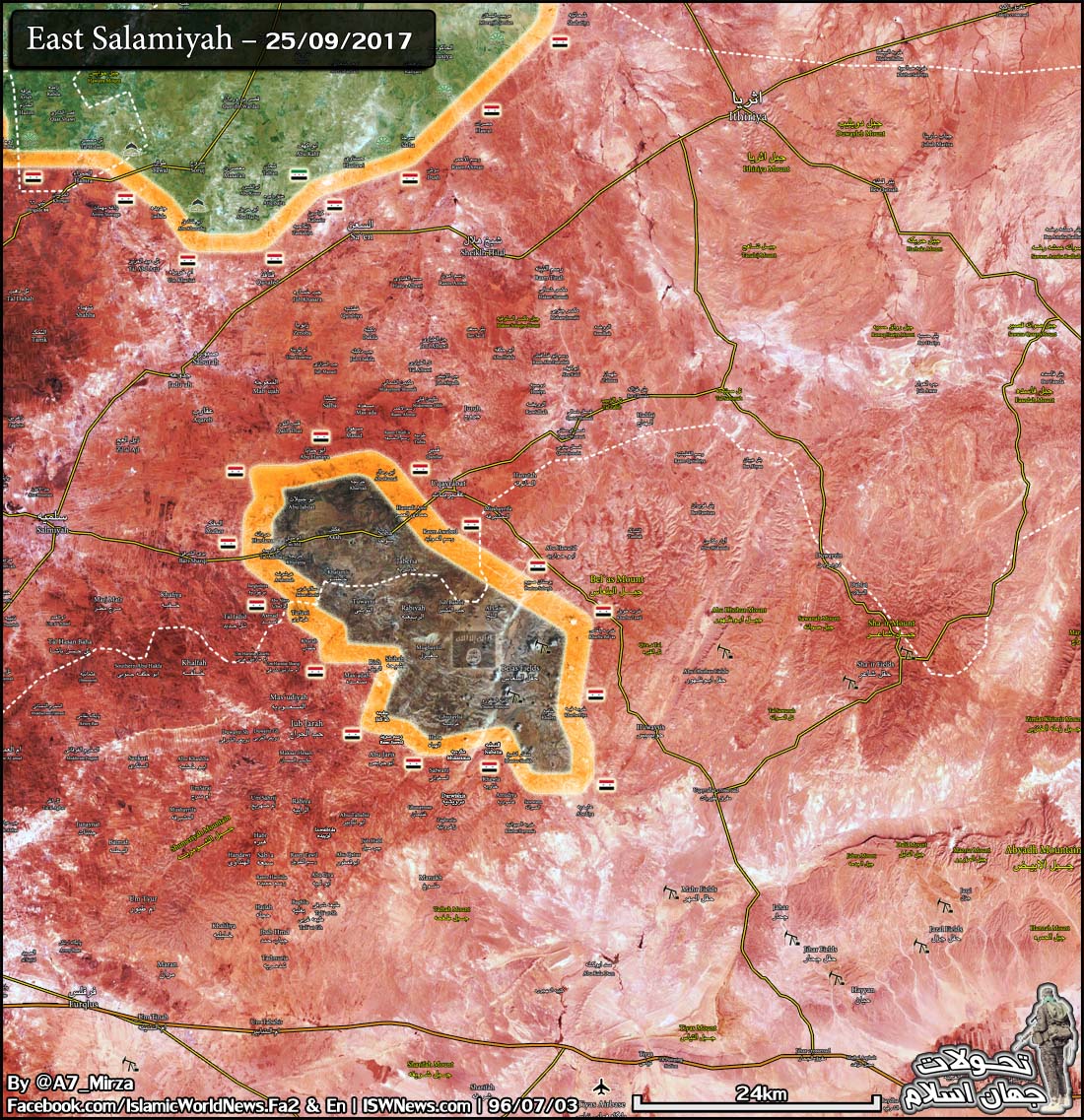
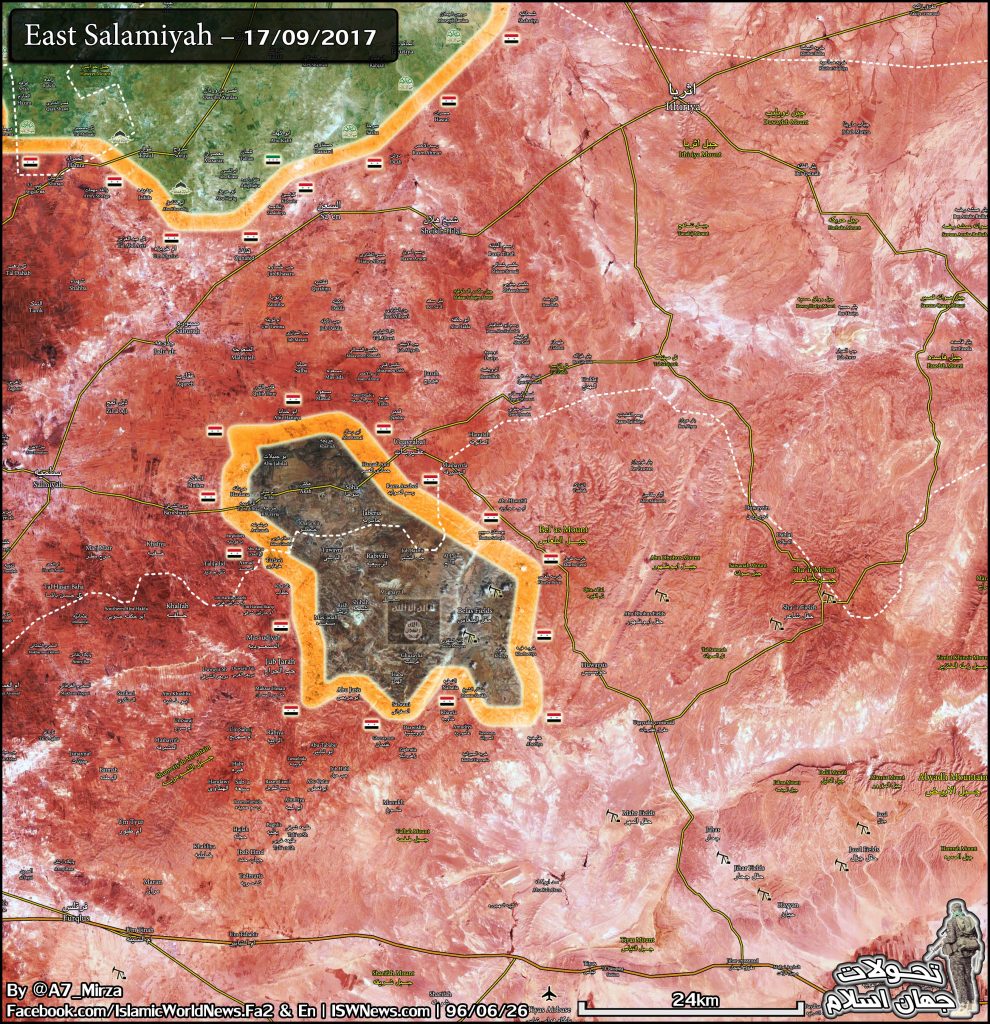
Government forces liberated Qulayb ath-Thawr, Abu Hanaya, Abu Jurays, Al-Shandakhiya Shamaliya, Janubiya, Al’Amudiya, Nabatiya, Umm Tin Al-Mu’allaq, Abu Tababir, Khalid Hilal, Umm Rajm and Rasm Sawwan.
On Monday, government troops continued their operation against ISIS aiming to clear the entire ISIS-held pocket.
According to the decision, any EU member state that signs a military and weapon sale agreement with the Saudi government will be sanctioned by other members of the EU.
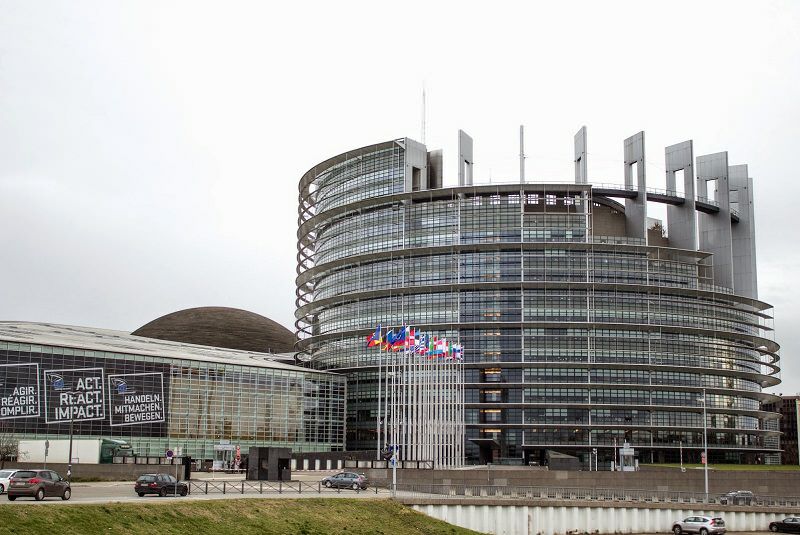
The European Parliament at their meeting in Strasbourg, France has approved an arms embargo on Saudi Arabia to protest against the country’s actions in Yemen.
The decision came amid the Human Rights Watch report about a death of 39 civilians, including 26 children, as a result of the Saudi-led coalition air strikes during last two months.
The Human Rights Watch has also requested the UN human Rights Council to include the Saudi-led coalition into the annual list of child rights violators.
The EU is the second-largest weapon exporter after the US in the world.