Tag: Afghanistan

  • Afghanistan: Latest updates on Kandahar, 15 July 2021

    Afghanistan: Latest updates on Kandahar, 15 July 2021

    After days of heavy fighting on the fronts of Arghandab, Pasab, Dand and Chineh, the Taliban militants managed to take control of Arghandab city center on the outskirts of Kandahar city.

    The government has relocated 240 prisoners to Kabul following an increase in the possibility of the fall of Kandahar and targeted Taliban attacks on the Kandahar prison.

    In the south of the province, the Taliban have recently seized the town of Spin Boldak and its border crossing with Pakistan, and clashes have now shifted to the road leading to Kandahar. The Afghan army has also announced its readiness to retake Spin Boldak, but given the army’s past claims and excuses and the ineffectiveness of their attacks, it can be said that the Afghan army is currently unable to retake the lost areas.
    In this regard, “Amrullah Saleh”, the first vice president of Afghanistan, said that the Pakistani army has officially informed Afghanistan that any Afghan military attempt to regain control of the Spin Boldak crossing will be met by a reaction from the Pakistan Air Force.

    Given the situation of the ground siege of Kandahar and the unpreparedness of the army to face the urban warfare and suicide attacks, it can be said that in the case of a serious Taliban attack on Kandahar city, the army will be the definitive loser of this battle. Despite this military superiority, the Taliban are at a disadvantage in terms of manpower and weapons, And this is evidenced by repeated attacks on prisons (Badghis and Kandahar) to free old fighters and attacks on weapons bases to collect weapons.

    Kandahar online map

    Map color: Gray = Taliban, Red = Afghan Army, Yellow = Disputed/Unknown

  • Afghanistan: Latest updates on Farah district, 13 July 2021

    Afghanistan: Latest updates on Farah district, 13 July 2021

    After the fall of Saghar, Taywara, Bala Buluk and Shindand in recent days, government forces in Pur Chaman were besieged by the Taliban. It is said that these forces repeatedly asked the central government for help after the siege, but their request was not heeded and they finally surrendered to the Taliban without any clashes.

    300 government forces reportedly surrendered to the Taliban.

    Map details:
    Gray = Taliban
    Red = Afghan Army
    Yellow = Disputed/Unknown

  • What is the story of the deployment of Turkish troops at Kabul Airport?

    What is the story of the deployment of Turkish troops at Kabul Airport?

    According to Turkish Defense Minister Hulusi Akar, the airport has been under Turkish military control for the past six years, and the main topic of recent US-Turkish talks on Afghanistan is their continued presence at Kabul Airport.

    The United States recognizes the importance of Kabul Airport in maintaining the activities of foreign embassies, including its own. Turkish troops will also be deployed to secure the routes between these areas and the area around the airport.
    Details and the number of Turkish troops have not been released, but some US officials stated that Defense Ministry officials have requested that 600 to 1,000 Turkish troops be stationed at Kabul Airport. It is also said that the provisions of this issue have been discussed and finalized with Turkey and the Government of Afghanistan and will be implemented in the coming weeks.

    The Afghan government has also welcomed the deployment of Turkish troops at Kabul Airport, but the Taliban have called the presence of foreign troops, including Turkey, unacceptable.

    Kabul Airport is a well-equipped air base that, in addition to being able to accommodate more than 100 aircraft, has a large set of US and NATO military and intelligence bases. The airport was built by the Soviets in 1960 and has been developed by the United States over the last twenty years with funding from Japan and NATO.
    Kabul Airport is the last stronghold of foreign troops in Afghanistan, and the increase in Turkish troops there is a cover to protect US intelligence and security interests in Afghanistan.

  • Afghanistan: Latest updates on Kandahar, 12 July 2021

    Afghanistan: Latest updates on Kandahar, 12 July 2021

    With the escalation of calshes in Kandahar province, the Indian Ministry of Foreign Affairs has ordered the evacuation of the Indian consulate in Kandahar city.

    Also, as a result of a terrorist explosion in Ghara Kly village located in Daman district, two civilians were martyred and three others were injured. The Afghan Ministry of Defense also reported 69 Taliban casualties in clashes in the Dand area, which the Taliban called the report “unrealistic”.

    According to the Afghan Ministry of Defense, 271 Taliban militants were killed and 162 were wounded as a result of Afghan Army operations in Nangarhar, Maidan Wardak, Khost, Kandahar, Farah, Herat, Badghis, Sar-e Pol, Jowzjan, Nimruz, Helmand, Badakhshan, Kunduz, Takhar and Kapisa provinces during the last 24 hour.

    Map details:
    Gray = Taliban
    Red = Afghan Army
    Yellow = Disputed/Unknown

  • Taliban infiltration operation at Kunduz airport

    Taliban infiltration operation at Kunduz airport

    A Taliban spokesman claimed that members of the group had destroyed two US-made Black Hawk helicopters at Kunduz airport during an infiltration operation. He did not provide further details about the operation.

    It is worth mentioning that during the recent Taliban operation in northern Afghanistan, all districts of Kunduz province except the center of this province have been captured by the Taliban. The Afghan army has so far made no attempt to lift the ground siege of Kunduz province, and if the situation continues, it will be easy for the Taliban to capture the city.

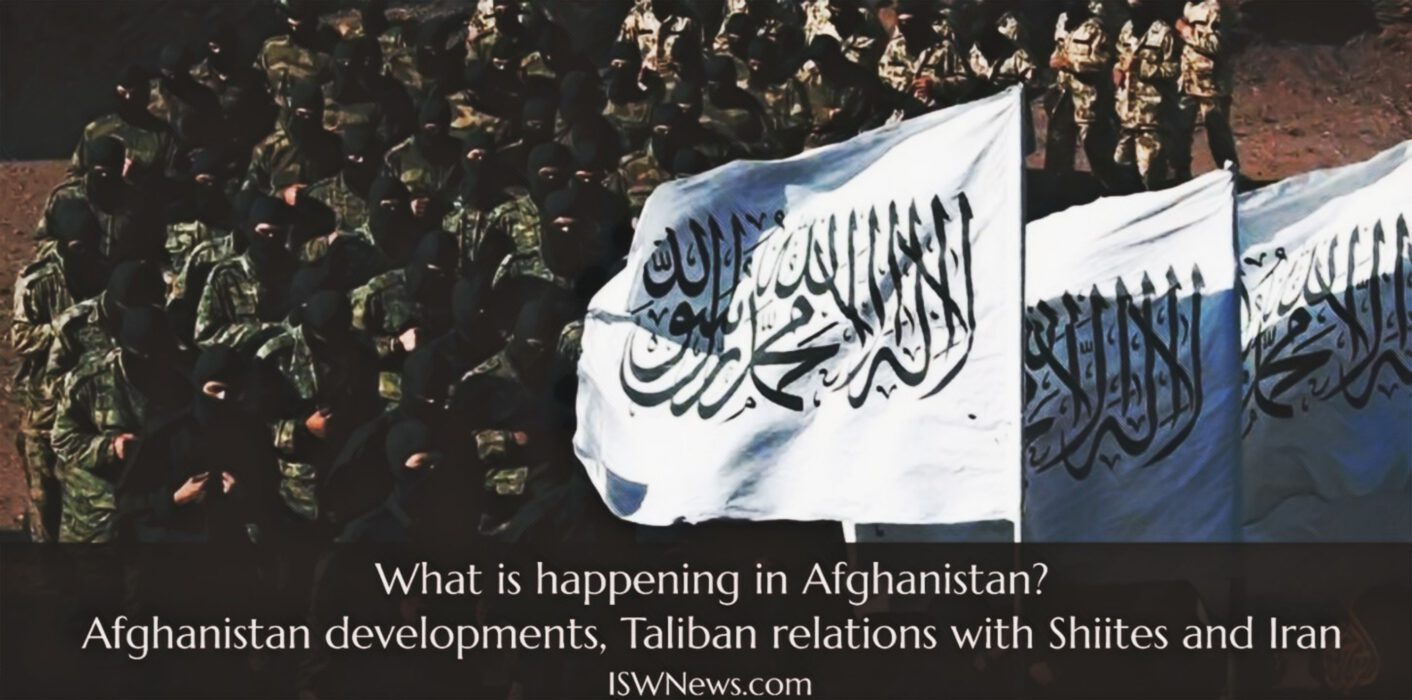
  • What is happening in Afghanistan? Afghanistan developments, Taliban relations with Shiites and Iran

    What is happening in Afghanistan? Afghanistan developments, Taliban relations with Shiites and Iran

    As the various dimensions of the recent Taliban activities become clearer and the positions of foreign and neighboring countries regarding the conflicts in Afghanistan become clearer, it is possible to examine the latest developments in this country:

    1- The latest military situation in Afghanistan:
    According to the latest news from the Afghan conflict, more than 90 other districts have been added to the Taliban-held areas since the beginning of the 1400 Solar Hijri year (since March 21), and clashes with the Afghan army are ongoing in many provinces of the country.
    Taliban spokesman Zabihullah Mujahid said the group’s militants would not attack provincial capitals until September 11, the date of Joseph Biden’s administration withdrawal from Afghanistan, because of its adherence to the Doha agreement. Zabihullah Mujahid claim comes as most areas of Kunduz, Sar-e Pul, Takhar, Ghazni, Kandahar and Helmand provinces have been captured by the Taliban and Afghan Army bases have been besieged by the Taliban.
    Now, with the rising tensions and clashes, the intra-Afghan talks have stopped and the leaders of different currents such as General Abdul Rashid Dostum, Atta Muhammad Nour, Muhammad Mohaqiq etc., are wearing military uniforms and are seeking to control the areas under their influence. Ashraf Ghani and Abdullah Abdullah have also been overshadowed by Western disregard, and their recent trip to the United States to seek the help and assistance of Joseph Biden has been fruitless.

    Among the reasons for the rapid advance of the Taliban are the government’s financial weakness in solving economic problems, the tactical weakness of the army, the lack of unity of the opposition tribes, the dissatisfaction of the people and the withdrawal of foreign troops, etc. Based on this, it seems that the Taliban will continue their progress in different provinces until the Americans leave Afghanistan, and during this period, they will force the government and currents of Afghanistan to accept their terms.

    2- What is the solution to the problems and disputes in Afghanistan?
    The roots of the Afghan war are mostly in ethnic and then sometimes religious differences. The common ethnicity of Taliban-minded individuals with the Pashtuns has strengthened the group in Afghanistan in recent years, and their differences with the Hazara and Tajik tribes, some of whom were Shiites, have shifted to a Shiite-Wahhabi religious war at some point in Afghanistan’s recent history. While not the Taliban are subject to Wahhabism nor are all Hazaras, Tajiks, etc., Shiites.
    In the past, the main body of the Taliban group considered their religious ideas based on the Hanafi religion, and in the years of their rule, they followed the principles of this religion. But this group has different spectrums and extremist allies such as al-Qaeda, the Haqqani network, etc., And this has strengthened the image of a religious war in Afghanistan.

    Certainly the solution to such disputes is not military intervention nor the formation of a puppet government of a foreign power. Rather, it requires a series of solutions.
    The following solutions are significant for solving Afghanistan’s problems:
    A- The union of scholars of different religions and elites of Afghan society
    B- Preventing the misuse of using the name of religious war for the ethnic-political war of the Taliban and ethnic currents
    C- Stopping the war and calling it illegitimate throughout Afghanistan
    D- Forming a parliament of all currents, ethnicities and religions And forming a government with trans-ethnic and trans-sectarian tendencies

    Otherwise, Afghanistan will continue to fall prey to two factors, the difference between “ethnicity” and “religion”.
    These solutions require international cooperation, especially in neighboring countries such as Iran, Pakistan and China. This is due to the cultural, economic and political capabilities and commonalities of these countries and, most importantly, the influence of these countries on Afghanistan.

    Some domestic and foreign media cite the permanent deployment of US and NATO forces in Afghanistan, the replacement of Chinese troops in Afghan military bases, the entry of Iran and the sending of Fatemiyun fighters to the war in Afghanistan, etc. as a way to end the war in Afghanistan, but in the reality they are making mistakes, and this mistake is due to their misinterpretation and lack of comprehensive understanding of the issues of Afghanistan in the last 50 years.
    Some think tanks and media outlets have also talked about plans to divide Afghanistan into northern and southern parts, or the Afghan federal government. These issues cannot be properly addressed until the complete withdrawal of foreign troops from Afghanistan, the fall or survive of the central government in Kabul, the transparency of the role of neighboring countries in Afghanistan, etc., are finally determined.

    3- Relations between Afghanistan Shiites and Taliban:
    Media stories about the Taliban massacre of Shiites, as well as Taliban claims that they did not attack Shiite areas of Afghanistan, are largely media taboo.
    The Taliban’s views and confrontations with the Afghanistan Shiites are far more moderate than those of extremist groups in the region, such as ISIS, Sipah-e-Sahaba, the Al-Nusra Front, and others, but their differences with the Afghan Shiites are primarily “racial” and secondarily “political” and finally, it is “religious.”
    The main discord between the Taliban and the Shiites of Afghanistan in recent years has been with two currents called the Unity Party (Hezbe Wahdat) led by Abdul Ali Mazari and its affiliates and the Islamic Movement of Afghanistan. The main cause of this discord was mostly the political positions of these currents in opposition to the Taliban and later the alliance with the Afghan Northern Alliance and ethnic differences with them.
    These discords were exacerbated by the Taliban’s non-compliance with the peace agreement with the Hezbe Wahdat and the clashes in Kabul in 1994 and the subsequent assassination of the party’s leader, Abdul Ali Mazari. The extremist actions of some Taliban commanders in dealing with Shiites in different areas in the following years also led to deepening differences.

    However, although the Taliban’s clashes with Afghan Shiites are mainly based on racial and political differences, the Taliban have not left a brilliant record in dealing with Afghan Shiites, as evidenced by recent clashes in Balkh, Maidan Wardak, Ghazni and Bamyan, Kajran district in Daykundi province, the massacre of Mirza Olang village in Sar-e Pol province, etc. And this is a matter of great concern to the Shiites of Afghanistan.

    Also, some erroneous analyzes have blamed the Hazara and Tajik Shiites for these differences and say that the resistance of the Shiites in Afghanistan has worsened the situation and caused some more acute problems, which is also wrong. The role of the Taliban extremist currents in shaping the religious process in Afghanistan has been more prominent than any other group; Because the Taliban, by allying with the terrorist group al-Qaeda, infiltrated the Wahhabi ideology in their commanders and forces, and the result was the rapid collapse of their government after the US invasion.

    Nevertheless, in spite of all the existing problems, now in the face of this important issue, we must be more comprehensive than ever and find the causes and try to solve them. By examining the trend and behavior of the Taliban in recent years, the Taliban organization has somehow tried to change the Taliban’s bad view of the Shiites, and we generally see more balanced and controlled behavior than in the past of this group. During the recent large-scale Taliban operation, most parts of Afghanistan have been captured by the Taliban through compromise and agreement with the elders of the districts.

    4- Iran-Taliban relations and Iran’s position on resolving Afghanistan disputes:
    Iran considers the solution of the problems of Afghanistan in the consensus and unity of all races and religions of this country; Because, based on his experiences since the beginning of the Islamic Revolution, he knows the West’s tactic for waging war, and that is nothing but inciting “racial” and “religious” differences.

    In general, the reasons for the establishment of relations between Iran and the Taliban in recent years can be summarized as follows:
    A- The Taliban, as the representative of a part of the people of Afghanistan, with whom it is necessary to communicate and talk in order to achieve peace and establish a comprehensive government in Afghanistan.
    B. Countering terrorist groups such as ISIS, al-Qaeda, etc., which have become more active with the US presence in Afghanistan. (Although the Taliban themselves have carried out many terrorist acts in the past and present, they have shown that they are resilient and that they can be effective in countering major terrorist groups such as ISIS and repelling regional threats.)
    C. Afghanistan is Iran’s eastern neighbor and communication with the Taliban is essential in order to establish security and control the eastern borders in parts that Taliban control.
    D. Communication with the Taliban is important to prevent war between the two countries, and this issue became necessary during the attack on the Iranian consulate in Mazar-e-Sharif and the events that followed in 1998.
    E) The issue of refugees and common economic interests, etc., including water resources, some of which are located in areas of Afghanistan controlled by the Taliban, and Iran must engage in dialogue and interaction with them to protect its interests.

    Despite the important reasons cited for the need for Iran’s relations with the Taliban, just as Iran had no role in creating the Taliban; and unlike Saudi Arabia and the UAE and Pakistan, Iran have never recognized the Taliban Islamic Emirate in Afghanistan and have not supported them militarily. Thus, the slander of Iran’s support for the recent movements of the Taliban and the overthrow of the central government is a baseless accusation by Westerners and Western figures, including Ashraf Ghani.
    In addition, Iran has always informed the official government of Afghanistan of the details of relations with the Taliban and has made extensive and comprehensive efforts to establish peace and security in the country with all currents.
    Thus, Iran’s relations with the Taliban are shaped by the sensitive situation in the region, and the pro-Western media tries to cover up the illegal actions of the United States and its allies, from invading and occupying Afghanistan to a unilateral agreement with one side (the Taliban) and ignoring other Afghan currents. And surely, they are trying to deceive the public opinion of the Afghan people and the people of the region to show Iran’s policy towards Afghanistan and the Taliban upside down.

  • Afghanistan: Latest Updates on Herat, 9 July 2021

    Afghanistan: Latest Updates on Herat, 9 July 2021

    Taliban attacks in Herat province intensified on May 31 with the attack on Ghourian district. Gradually, these clashes escalated in other districts, and to this day, the districts of Gulran, Kushk, Kushke Kohneh, Ghourian, Zende Jan, Kuhsan, Adraskan, Shindand, Farsi, Chesht Sharif, Karokh, Pashtun Zarghun and Obeh have been captured by the Taliban. The districts of Injil, Gozara and Herat are also under government control and are under siege by the Taliban.

    Recently, Mohammad Ismail Khan, one of the old jihadi commanders and the former ruler of Herat, entered the developments in the province and took a stand against the Taliban. He has fought the Taliban twice before, the first time being defeated and captured by the Taliban, and the second time on 2001, with the help of the Iran’s IRGC Quds Force, he liberated Herat from Taliban control.

    Herat province has a population of about 600,000 and is inhabited by different ethnic groups in Afghanistan, from Pashtuns to Tajiks, Hazaras, etc.

    Herat province is one of the most vital regions of Afghanistan, which has a high role in economic relations between Afghanistan and the region due to its common border with Iran and Turkmenistan. Therefore, the Taliban and the central government will make great efforts to control this province.

    Map color: Gray = Taliban, Red = Afghan Army, Yellow = Areas of Conflict

  • Afghanistan: Latest situation of Farah and Nimruz

    Afghanistan: Latest situation of Farah and Nimruz

    Clashes between Afghan Army and the Taliban were reported near the cities of Bakwa and Qala-e-Kah.

    Chakhansur town the district center of Chakhansur district was captured by the Taliban. With the fall of Chakhansur in Nimruz province, the districts of Zaranj, Kang and Chahar Burjak are the next targets of the Taliban.

  • Afghanistan: Latest updates on Kandahar and Zabul provinces

    Afghanistan: Latest updates on Kandahar and Zabul provinces

    The army has also sent reinforcements to checkpoints along the Kandahar-Spin Boldak route. On other fronts of Kandahar province, the conflict is sporadic and no serious movement has been seen from either side.

    The Taliban have cut off the important Qalat-Kandahar road by capturing Safa area in Tarang and Jaldak district. Therefore, the city of Qalat, the capital of Zabul province, is under siege by the Taliban.

    Map details:
    Gray = Taliban
    Red = Afghan Army
    Yellow = Disputed/Unknown

  • The meeting of representatives of the Afghan government and the Taliban hosted by Iran

    The meeting of representatives of the Afghan government and the Taliban hosted by Iran

    At the meeting, which began with a speech by Iranian Foreign Minister Mohammad Javad Zarif, representatives of the Afghan government and the Taliban movement discussed refugee issues and recent developments in Afghanistan.
    The meeting is attended by four Afghan delegations, including the Cultural Commission of the Afghan Parliament, the Taliban High Political Council, the Republican Political High Council, and the High Council for the Identification of Citizens.

    This meeting is important in two ways:
    1- The composition of the political delegation of the government consists of different ethnic groups in Afghanistan, which shows the attention and desire of the Afghan currents to achieve peace.
    2- The presence of the Taliban delegation in the talks with the government and various currents in Afghanistan, which after the stalemate in the talks in Qatar, also responded negatively to the Turkish meeting and Erdogan’s invitation.

    Footnote: The start of this meeting is a good step for Iran to mediate in the Afghan civil war, and active Iranian diplomacy can solve the country’s complex problems. Undoubtedly, the continuation of the war in Afghanistan has many negative consequences for Iran, and peace in this country has far wider benefits than those mentioned in our previous articles.

  • Afghanistan: IWN field report on Balkhab situation

    Afghanistan: IWN field report on Balkhab situation

    ISWNEWS field source report on Balkhab situation:
    “Last night, hundreds of Taliban militants attacked various areas of Balkhab district in Sar-e Pol province. The attacks, which were planned on the route from Sancharak and Abkalan to Balkhab, were repulsed by the Popular Mobilization Forces with little Taliban advance in the early hours.
    At the beginning of the attack, the enemy’s propaganda war created fear among the people of Balkhab, and a large number of Balkhab residents and immigrants who had taken refuge in the districts of Gosfandi, Sancharak and Zare (in Balkh province) were displaced. But with the efforts of the people led by Sayyed Hassan Safaei and the commander of the Balkhab security forces, not only was the enemy prevented from advancing, but the enemy was defeated and the people who were displaced at night are returning to Balkhab.
    Three members of the Balkhab Resistance Front, including commander Habibollah Mojahedzadeh, the commander of the Balkhab Police, were wounded in the battle.

    With the fighting reaching the district of Balkhab in the south of Sar-e Pol province, some people in the area are migrating to safer provinces. (Video by ISWNews source in the area)


    In 1998, the whole of northern Afghanistan, ie the five northern provinces, fell, and only the district of Balkhab resisted under the command of Sayyed Hassan Safaei.
    Until after a while, Mohammad Mohaghegh, Dostum, Khalili, Ismail Khan after his release and… they took refuge in Balkhab from all over the north.
    Balkhab became the center of resistance under the command of Mr. Safaei. The people resisted in the most difficult conditions of economic and military siege, which were attacked from the air and ground every day, but they did not give up. This time too, for several days now, the commander of the Balkhab resistance has been present among the people and has been met with an enthusiastic welcome.
    In his speeches, he declared resistance to the last breath of his life. I do not think Balkhab will simply fall. The only problem is the lack of ammunition in Balkhab, if that does not cause Balkhab to fall.”

    Balkhab in Sar-e Pol province
  • Afghanistan: Latest news from Badghis front, 7 July 2021

    Afghanistan: Latest news from Badghis front, 7 July 2021

    As a result of the Taliban attack on Qalaa-e Naw town, the center of Badghis province, the prison of this city was captured by the Taliban and a large number of prisoners managed to escape. Clashes continue in other parts of the city.

    According to a Taliban spokesman who announced that Taliban would not order the capture of provincial capitals until September 11 this year, it seems that the Taliban do not intend to capture the town of Qalaa-e Naw at the moment. However, the presence of rebellious and rogue commanders in the Taliban increases the possibility of violating this order.

    Ab Kamari, Khawjah Murad and Khodayadad Tayeb police commanders are said to have surrendered to the Taliban. The center of Qadis district was captured by the Taliban this morning after weeks of siege by the Taliban, with the remaining forces surrendering in the town.

    Due to today’s clashes, the situation in Badghis is dire, and if the army and the government do not pay serious attention to helping the government forces in this province, there is a possibility of its complete collapse.