The latest death toll from the terrorist attack is 97, with 220 injured. 13 of those killed were US troops and 18 US troops were also injured. 28 Taliban members also reportedly killed in the attack.
Several explosions were reported after the attack. However, no other terrorist attacks took place at Kabul Airport and the reported explosions were US army operation to destroy the ammunition and weapons depots at Kabul Airport.
Soon after the attack, ISIS released a statement claimed responsibility for the attack.
ISIS claimed responsibility for the attack by publishing a picture of the suicide bomber
In the meantime, clashes were reported in the Shahr-e-Naw area of Kabul, where a Taliban military vehicle was reportedly targeted by an ISIS roadside bomb.
Taliban spokesman Zabihullah Mujahid also commented on the terrorist attack: “The terrorists took advantage of the space created by the United States at the airport. We had previously warned the Americans to end this situation as soon as possible, but they did not listen.”
In a speech last night, US President Joseph Biden also announced plans to attack ISIS. Biden has promised to hunt down the terrorists responsible for suicide bombing at Kabul Airport that left 13 American service members dead and 18 wounded.
The meeting of the Council of Shiite Scholars of Afghanistan was held today during a gathering at the Khatam al-Nabiin seminary in Kabul.
The summary of the statement of the Shiite scholars of Afghanistan in this meeting, which was read by Sayyed Hossein Alami Balkhi, is as follows:
“In order to get out of the current crisis, a new government must be formed as soon as possible. The formation of a comprehensive government in agreement with the various factions, on the one hand, solves the problems in the country, and on the other hand, the presence of elites of all ethnicities in the formation of the government, provides the ground for better development and service to the people. The Council of Shiite Ulema of Afghanistan is ready to cooperate with the Taliban movement in forming a new government if the legal requirements are met. According to the order of the Prophet (PBUH), the Taliban movement must make every effort to protect the lives, property and human dignity of its citizens. In the current situation where the people are suffering from poverty, the new government must work on creating jobs and reducing the current calamities. We welcome the announcement of a general amnesty by the Taliban, but some wrongdoing has been carried out by irresponsible individuals, and the Taliban movement must prosecute them seriously in order to gain the trust of the people. After the formation of the government, efforts should be made to hold elections so that all citizens have the right to be elected and to vote without discrimination. Reconstruction of war-torn areas, economic growth and the implementation of development projects, the fight against corruption and the prevention of narcotics cultivation should be among the government’s priorities. There should be no law against the beliefs of the people. Also, human and international human rights treaties should be observed to the extent that they do not contradict religious values. Freedom of religions and sects, considering religions in the formation of the Supreme Judicial Council, creating special courts for Jafari jurisprudence, protecting the rights of women and children according to Sharia law, providing education for the country’s children are other demands of the Council of Shiite Scholars of Afghanistan. Citizens are urged to refrain from illegal immigration as well as gather around Kabul airport and stay in the country to build a better future.”
Mohammad Akbari; The second deputy of the Council of Shiite Scholars also emphasized the formation of a comprehensive Islamic system, with the full participation of all ethnic groups of Sunni and Shiite religions.
The Council of Shiite Scholars of Afghanistan is a council that was established in 2003 at the initiative and effort of the late Ayatollah “Mohammad Asif Mohseni” and several other Afghan scholars in Kabul and currently has more than 65 delegations and more than 2,000 members. Religious scholars are all over Afghanistan. This council is active in various cultural and other sectors, seminaries, scientific research, approximation of Islamic religions, seminary women, deprived areas, and the Peace and Dispute Resolution Council.
Since invading Afghanistan in 2001, the United States has spent $2.26 trillion on the war, which includes operations in both Afghanistan and Pakistan. Note that this total does not include funds that the United States government is obligated to spend on lifetime care for American veterans of this war, nor does it include future interest payments on money borrowed to fund the war.
The popular mobilization forces have taken up positions against the Taliban militants in the heights of Andarab and Deh Salah. In recent days, the control over these areas have been changed between the two sides, but now the control of these two district is in the hands of Taliban militants.
The southern front of Panjshir province is calm, and Taliban militants have been sent to Jabal Seraj and nearby areas and are stationed at the beginning of the entrance route to Panjshir province.
Taliban demand that Ahmad Massoud relinquish control of Panjshir and recognize Taliban rule in Afghanistan.
Ashura ceremony in Mazar-e-Sharif was held with the participation of tens of thousands of citizens of Balkh province in a very safe and glorious atmosphere more than in previous years.
In this ceremony, Hujjat al-Islam Sayyed Hashem Hosseini Nejad, Head of Ashura Ceremony, Hujjat al-Islam Moghaddasi, Representative of Molawi Mehdi Mojahed, Hujjat al-Islam Bayani, Chairman of the Council of Shiite Scholars of Balkh Province, Head of the Islamic Emirate in the North, and Sayyed Haidar Hashemi, Friday Imam of the city of Mazar-e-Sharif gave a speech.
Explaining the aims of Imam Hussein’s uprising, the speakers spoke of brotherhood and empathy and called on the people to empathize.
The Taliban representative said at the ceremony: “Shiites are our brothers, our war and jihad has been for brotherhood and patriotism. Prejudice, ethnicity and religiosity must be avoided and we must all unite and build the homeland.”
“People of Afghanistan, Mujahideen brothers, friends of freedom all over the world! Tyranny has won in Afghanistan. Tyranny is being done with noise and anger. Revenge is flowing in our wounded land. Kabul cries. Our land is iron. Is everything lost? No!
My father, Commander Massoud, our national hero, bequeathed to me a legacy, and this legacy is the struggle for the freedom of Afghans.
That struggle is inevitable now. My companions and I with our weapons are ready to give our blood. We call on all free Afghans, all those who reject slavery, to join our stronghold in Panjshir, the last free zone in our suffering land. I say to Afghans from all regions and tribes: Fight with us! I say to the Afghans who live outside our borders but keep Afghanistan close to them: Know that you have compatriots who have not yet surrendered here in Panjshir.
I ask many others in France, Europe, the United States, the Arab world, and elsewhere who helped us fight for freedom, first against the Soviet Union and then against the Taliban twenty years ago: Are you, dear friends, once again as before, Are you helping us on the path to freedom? Despite the betrayal of some, we still trust you. Our situation as Afghans is the same as in Europe in 1940. With the exception of Panjshir, the fall is almost complete, and the spirit of compromise with the Taliban is spreading among the survivors. Compromise with those who have defeated this war with their defeats.
Only we stand. We will never give up.
On the eve of the fall of Kabul, I quoted a phrase from Winston Churchill to a friend of the French writer which gave the message of blood, suffering, tears and sweat of shame. Today I think of what General de Gaulle said after the defeat of the French army: France has lost a battle but not a war. We Afghans have not even lost a battle because Kabul has not yet fought.
Here in Panjshir, small and large Mojahedin have taken up arms. Join us with your spirit or through direct support. Friends of freedom, come to us with as many people as possible. Together we will write a new page in the story of Afghanistan. This will be a new chapter in the eternal resistance of the oppressed against tyranny. With God’s help, we will win.”
Ahmad Massoud is based in the northeastern Afghan province of Panjshir and has taken control of the province. His resistance comes as the Taliban have taken control of the country following the withdrawal of US and NATO allies from Afghanistan, and President Ashraf Ghani has fled Afghanistan.
The summary of his interview is as follows: “No one paid attention to the warnings of Ahmad Massoud (son of Ahmad Shah Massoud) during his meeting with Macron (President of France) in April. This scenario was announced by him a long time ago. His resistance in the Panjshir Valley must be helped to protect Europe. If the US withdrawal is completed, not a few months, not a few weeks, but a few days will be enough for al-Qaeda or ISIS to return. “Ahmed Massoud’s resistance can be strengthened with the help of France and protect our territory from barbarism and attacks on Europe, especially attacks on major French cities.”
Bernard-Henri Levy is an influential Jew living in France who has been behind many different contemporary wars, including the wars in Afghanistan, Libya, Bosnia, the division of Kurdistan, etc. He is one of the theorists of the “Arab Spring” and calls Islamism, terrorism and new barbarism.
In the past year, Levy has focused on Afghanistan and Ahmad Massoud, son of Ahmad Shah Massoud. He traveled to Afghanistan several times and on March 27, at a memorial service attended by his son, Abdullah Abdullah, and Hamid Karzai, Mayor Anne Hidalgo named a pathway in the Champs-Elysees gardens after Ahmad Shah Massoud on Champs-Elysees.
Heavy Taliban attacks to seize Mazar-e-Sharif have intensified since yesterday. The main direction of these attacks were from Chamtal and Dehdadi axes, and the northern road of Mazar-e-Sharif and the southern road near the Camp Mike Span have also witnessed scattered clashes. Ali Sarwar Turkmani, a senior commander of the National Islamic Movement of Afghanistan (a general of Dostum), was martyred during yesterday’s clashes. He is said to have been killed in a Taliban ambush, but some local sources attribute his death to a mistaken air strike by Army warplanes.
In the meanwhile, General Dostum and Atta Mohammad Noor are behind the front lines in this area, and air support to government forces in Mazar-e-Sharif has been limited. Also, according to an ISWNEWS field source, the general situation in the city is not good and the markets have been closed. The people who have bad memories of the Taliban entering the city in the past are also frightened and often try to flee from Mazar-e-Sharif.
If the Taliban attacks on the western axis intensify and the government forces and militants under General Dostum and Atta Noor do not move seriously to retake Chamtal and Charpolak, the chances of government forces withdrawing from Balkh are high. Mike Span base will be the next step of the Taliban after Balkh, and after that, capturing Mazar-e-Sharif will not be a difficult task for the Taliban.
The southern front: As expected, the Taliban goals in southern Afghanistan were achieved in a short time, and it can be said that southern Afghanistan is under the full control of the Taliban. These goals included: Chahar Burjak district in Nimruz province, Farah city, the capital of Farah province, Lashkar Gah city, the capital of Helmand province, and Kandahar city, the capital of Kandahar province, which were captured by the Taliban in recent days. The city of Qalat, the capital of Zabul province, also surrendered to the Taliban without fight, and currently only government areas of Gereshk city and the important Shorabak base (Camp Bastion) in northern Helmand province are under government control. The status of the deployment of foreign forces in Shorabak is unknown and there is a possibility of the presence of foreign forces in this base.
Latest military situation in southern Afghanistan
The northwest front: In this area, the cities of Sar-e-Pul, Qala-e-Naw, the capital of Badghis province, Firozkoh, the capital of Ghor province, and Herat, which played a pivotal role in northwestern Afghanistan, have been completely captured by the Taliban. And the only points that are under the control of government forces are Ghormach city in the north of Badghis province, Maimana city in the center of Faryab province and Aqinah crossing in the north of this province. These cases, like other areas, may be surrendered to the Taliban by compromise or betrayal by the rulers of those areas.
Latest military situation in northwestern Afghanistan
The north and northeast fronts: In the northeast, after Kunduz, Aybak, the capital of Samangan province, Sheberghan, the capital of Jawzjan province, Pul-e-Khumri city in Baghlan province, Taloqan, the capital of Takhar province and Faizabad, the capital of Badakhshan province, Mazar-e-Sharif city and Samangan districts have also been targeted by the Taliban. Given the presence of Generals Abdul Rashid Dostum and Atta Mohammad Noor in Mazar-e-Sharif, as well as the announcement of their alliance to confront the Taliban, heavy fighting is likely to take place in Mazar-e-Sharif in the coming days. The situation in some parts of northern Afghanistan, such as Taloqan Airport, Farkhar and Warsaj districts in southern Takhar province, is unclear and is said to be under the control of government forces and Ahmad Massoud.
“Ahmad Massoud”, the son of the martyr Ahmad Shah Massoud, with the help of some foreign factors such as “Bernard-Henri Levy” who were behind the wars in many regions such as the project for the division of Iraqi Kurdistan, the Libyan war, etc., has absorbed a lot of forces in recent months. He has stationed most of his forces in Panjshir and is said to be recruiting and training troops to enter the battles in Afghanistan. In the current situation where the Taliban opposition has lost its morale and leaders such as Ismail Khan, and General Dostum have been defeated by the Taliban, Ahmad Massoud can revive his father name and make a serious move to fight the Taliban and even take the northern regions out of Taliban control. Of course, if this happens, Afghanistan will become more chaotic and the ways to achieve peace will be more limited.
Latest military situation in northeastern Afghanistan
The central front: According to the latest news from the central Front, which has had calmer days than other areas, the city of Tirinkot, the capital of Uruzgan province, has been captured by the Taliban after 50 days of resistance against the Taliban. Hazaristan can be considered one of the last steps of the Taliban to take control of Afghanistan, because they know that their only serious opponent in this land is the “Hazaras”. Therefore, they do not intend to clash with them, and they have repeatedly emphasized that they respect the rights of different ethnic groups and religions, especially the Shiites, and that they will participate in the administration of the country and next government positions. Unlike other ethnic groups, there is no powerful figure in the body of the Hazaras who can create consensus and unity, and this factor can be considered the reason for their small role in various governments in the past. Disagreements and lack of strong unity and alliances between Mohammad Mohaqiq, Karim Khalili, Abdul Ghani Alipour and other local commanders are a major threat to the Hazaristan future. If, as in the Shiite areas of Sar-e-Pul, Herat and provinces, they tolerate the Taliban, their role in the development of Afghanistan will be more prominent than in the past. The outcome of Iran’s consultations, one of which has been the avoidance of tension between the Taliban and Shiites in Afghanistan, certainly includes the interests of Afghan society, But the arbitrariness of some Taliban commanders in crimes against Hazaras and Shiites, as well as the exaggeration and lies of some ignorant media and analysts about these issues, could be an another major threat for peace in Afghanistan.
The eastern front: Taliban activities in these areas are slow and the peak of these movements has been in Logar and Ghazni provinces. Gardez city, the capital of Paktia province, and Maidan Shahr, the capital of Maidan Wardak province, are among the Taliban’s primary targets, and given the Taliban’s activities in the past 48 hours, their attacks on these areas are likely to intensify soon.
Latest military situation in eastern Afghanistan
In general, the fall of Ashraf Ghani’s government and the entry to Kabul is the last step of the Taliban program. The realization of one of these two issues is the beginning of entering the political arena of Afghanistan, and the next steps can be analyzed in light of the future developments described in this article.
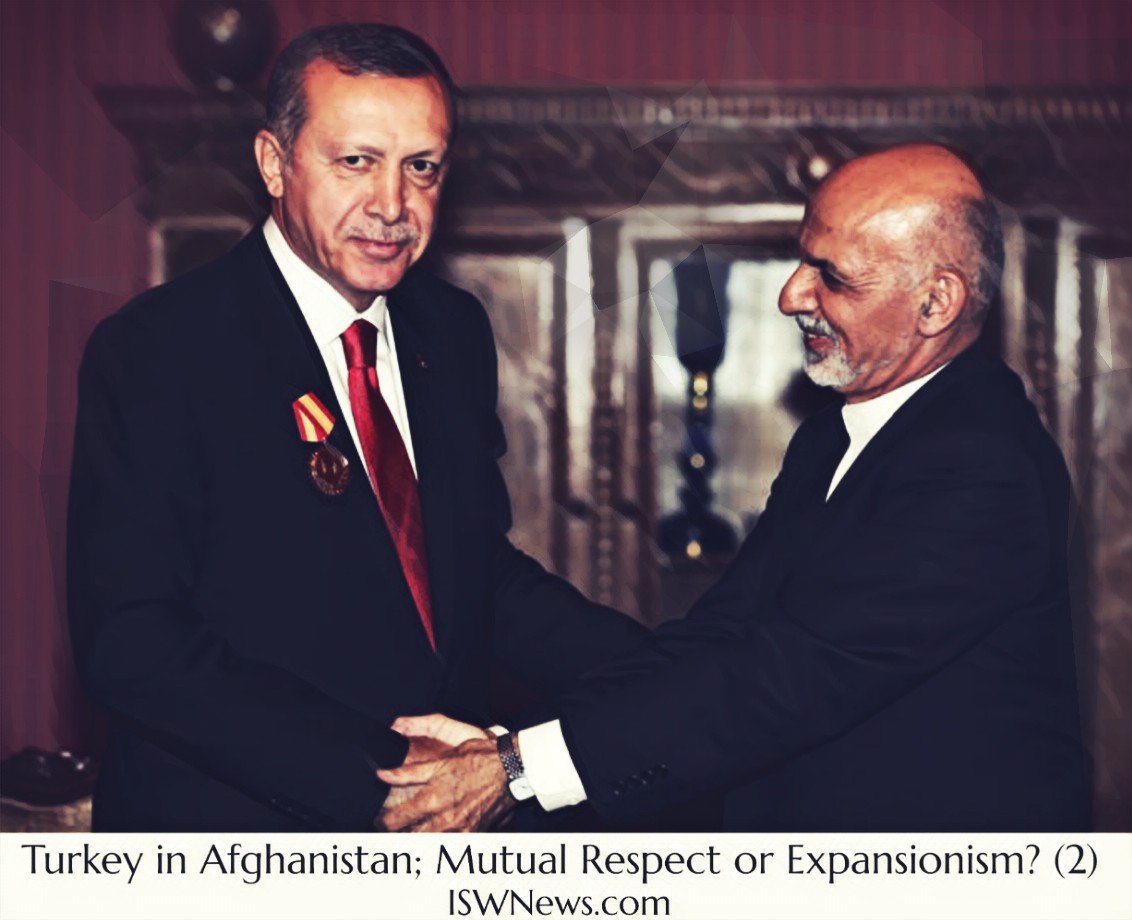
It was in July this year that Turkish Defense Minister Hulusi Akar confirmed the continued presence of Turkish troops at Kabul Airport, stressing that control of Kabul Airport had been in Turkey’s hands for the past six years. According to unofficial reports from the US-Turkey agreement, after the completion of the withdrawal of US troops from Afghanistan, control of Kabul Airport will be handed over to the Turkish military, which includes 600 to 1,000 troops, and this issue has been coordinated with Ashraf Ghani’s government.
As mentioned in the previous article, the commonalities of Turkey and Afghanistan can be seen in the following three components: a- Religion (Sunni) b- Race (Turkmen, Uyghur and…) c- Thought (Islamic Party led by Gulbuddin Hekmatyar and The Jamiat-e-Islami party, whose religious thought is close to the Muslim Brotherhood.)
But these components can only answer the background and why Turkey is present in Afghanistan, and the reasons for the military presence can be found in other cases. In summary, these are:
1- Warming relations with the United States: In recent years, US support for the Kurds in Syria, the dispute over Turkey’s purchase of the Russian S-400 defense system, and the subsequent imposition of US sanctions on Turkey have led to strained relations between the two countries. Now, accepting Joseph Biden’s offer, Erdogan is seeking to open a new page in relations with the United States, which he says will attract US financial, logistical and other support to Turkey.
2- Turkey’s political relations with the leaders of the Northern Afghanistan coalition, including General Dostum, Gulbuddin Hekmatyar and others: In fact, in this way, Turkey can strengthen its military influence and even establish itself in the northern bases of Afghanistan and export its goods to Afghanistan. This model has already been implemented in Libya, and Turkey, by influencing a number of Libyan politicians and on their behalf, sent invitations to itself and legalized its presence.
3- Turkey’s relations with Pakistan and India: Following Pakistan-India tensions over Kashmir in 2019, Turkey strengthened its ties with Imran Khan’s government, making it more dependent on Pakistan by investing $ 1 billion and increasing arms exports to Pakistan. Pakistan supports the Taliban, and Turkey’s deployment in Afghanistan will certainly be supported by Pakistan, as it pursues their interests. On the other hand, Turkey’s presence in Afghanistan is confirmed by one of the regional powers, India. India opposes the Taliban and sees their return to power as an increase in Pakistan’s power in the region. India therefore welcomes Turkey’s decision to have a military presence at Kabul Airport and to play a role in facilitating negotiations between the Taliban and other factions.
4- Uyghurs living in Afghanistan: One of the reasons for the confrontation between Turkey and China in Afghanistan is the presence of Uyghurs in this country. The Uyghurs are the main source of mercenary groups in Central Asian countries, including Tajikistan and Turkmenistan, which are mainly formed to counter the Taliban threat. Now, given Turkey’s racial affinity with the Uyghurs, the Uyghurs are the best option for building armed groups in Afghanistan. From this perspective, China sees the issue of Afghanistan as a margin of its security and, in addition to other Afghan political currents, seeks to strengthen ties with the Taliban. Of course, Turkey’s reliance on the Uyghurs is formed when their goals are shaped by military confrontation with the Taliban, or when Turkey feels the need for a regional consensus against China and other countries in the region. The transfer of the Uyghur threat from Afghanistan to China is also not possible due to the specific geographical conditions of the region, but their arming could be a problem for China.
In general, the appearance of Turkish policy in Afghanistan is a policy of “mediation”. They have been successful in starting their work and are waiting for the reaction of their opponent, the Taliban and the countries influencing Afghanistan, to take the next steps. Turkey is facing two serious rivals in Afghanistan, China and Iran, and the Taliban’s close relations with the two countries are intensifying the competition. Turkey’s military presence and expansionist presence in Afghanistan may not seem like a big deal at the moment, but their freedom of action in Afghanistan could lead to a regional confrontation.
Southern Afghanistan has been the source of Taliban activities in Afghanistan in recent years due to its desert climate; In the years after the Soviet withdrawal, it became a hotbed of the Taliban and the city of Kandahar was the gathering place and headquarters of the group until 2001; And in general, the southern regions of Afghanistan after the US and NATO invasion have remained as a safe haven for the Taliban.
Following the Taliban extensive advance in recent months, as well as the capture of the capital of Nimruz province, the following seems to be one of the group’s next targets in southern Afghanistan:
1- Chahar Burjak city in the south of Nimruz province: This city is located near the Iranian border and Kamal Khan Dam is located in this district. The importance of occupying this region is to completely cut off the Afghan government from the border with Iran and also to take control of the water resources of this region. The Ashraf Ghani government and the Taliban see Afghanistan’s water resources as an important tool in negotiations with Iran.
2- Lashkar Gah city, the capital of Helmand province: The background is the domination of Lashkar Gah, the conquest of Gereshk city and the important base of Shurabak or Camp Bastion. This base used to be the headquarters of NATO and US forces and is one of the largest military bases in Afghanistan and even in the region. Shurabak base has an area of about 30 km and is located at a distance of 240 km from the border of Zabol city in Iran. Therefore, the existence of such a base in Helmand province has a significant role in controlling the southern regions of Afghanistan.
3- Kandahar city, the capital of Kandahar province: As mentioned above, Kandahar is the headquarters and gathering place of the Taliban, and control of this city is one of the most important points in southern Afghanistan. Kandahar has historically been an important point in Iran-India relations, and several wars have been fought over it over the last four hundred years.
4- Farah city, the capital of Farah province: Farah is the junction of southern and western Afghanistan. Farah has a thriving agriculture due to the crossing of Khashrood and Farah rivers. In addition to water and agricultural resources, the Abu Nasr Farahi border crossing is located in the province, which along with the Islam Qala crossings in Herat and Milak in Nimruz province have a high share in Afghanistan’s economic exchanges, which could be a good source of income for the Taliban.
As a result, it can be said that in the Taliban target bank, “capturing provincial centers” is a priority. This is because border crossings are activated if the provincial capitals are under the control of the Taliban and government forces are not present at military bases.
According to Halimeh Sadaf, Jawzjan’s representative in the Afghan parliament, all government districts and places, including the governor’s office, the headquarters of the security forces, army checkpoints and General Dostum’s house in Sheberghan, have fallen to Taliban militants.
The Taliban attack started in the southern part of Sheberghan city on August 2, and in the last two days, the clashes reached the urban areas, and finally the governor’s headquarters and government areas were captured by the Taliban.
General Dostum and government forces have retreated to the Lawa base north of Sheberghan and are moving to Mazar-e-Sharif. In this regard, General Dostum, who recently returned to Afghanistan from Turkey, met with Ashraf Ghani and called for a declaration of martial law in Afghanistan and an immediate meeting of political leaders.
According to a spokesman for the National Islamic Movement Party (under the command of General Abdul Rashid Dostum), he explained the security plan in northern Afghanistan to Ashraf Ghani and asked him to trust him. No information has been released about the nature and details of General Dostum’s plan so far, but there is a possibility that foreign countries will participate in the implementation of his security plan.