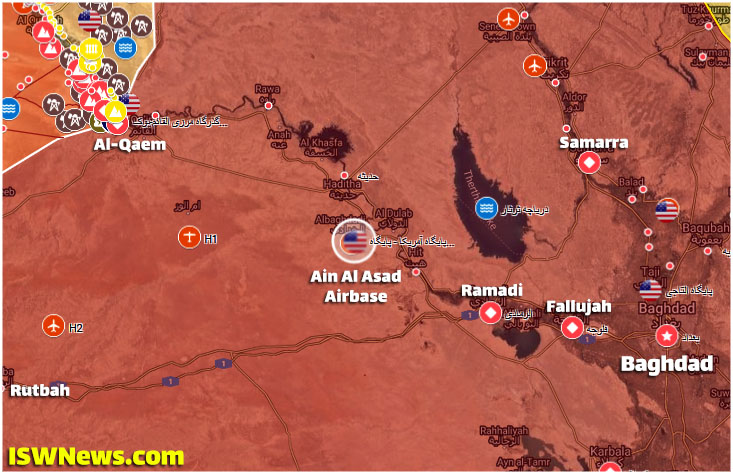
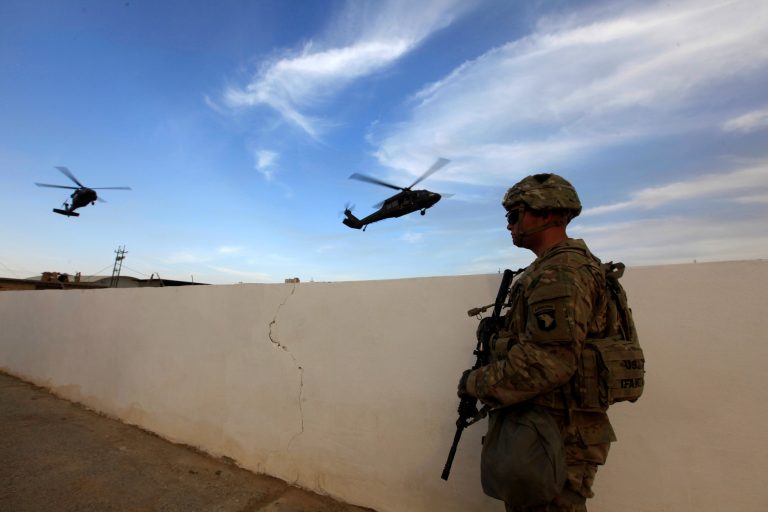
Referring to Baghdad’s shifting approach toward foreign partners, he added that Iraq is moving away from direct foreign troop presence and instead toward memorandums of understanding and security/training agreements with the United States, Britain, and France. He said security across Iraq’s desert regions has reached an advanced level, and revealed a special intelligence operation carried out beyond Iraq’s borders — particularly in Syria — coordinated with Syrian authorities and the U.S.-led coalition, which resulted in the arrest of several wanted militants.
Implementation of the agreement to withdraw U.S. forces and fully transfer Ain al-Asad to Iraqi control marks the beginning of a new phase in Baghdad–Washington security relations. In this phase, Iraq seeks to reduce reliance on foreign troop presence while redefining cooperation around training, intelligence sharing, and technical agreements. The government also hopes to ease domestic sensitivities toward foreign military footprints — while still keeping channels with Western partners open. Yet despite Iraqi forces’ readiness, fully executing the withdrawal presents challenges, as parts of the Iraqi army and counter-terrorism apparatus still depend on U.S. technical, aerial, and intelligence support.
Official Iraqi government sources have announced the beginning of the withdrawal of the U.S.-led international coalition forces from Baghdad and the Ain al-Asad base in Anbar province. The first phase of withdrawal is scheduled for September this year, during which U.S. forces stationed at Baghdad Airport and the Joint Operations Command will be relocated to Erbil.
An Iraqi official told Al Jazeera that this retreat is part of an agreement between Baghdad and Washington, and that foreign military trainers will remain in Iraq. Meanwhile, Hussein Alawi, advisor to Iraqi Prime Minister Mohammed Shia’ Al-Sudani, stated that the coalition’s mission in Baghdad and Ain al-Asad will end in September 2025, with the second phase—complete withdrawal—set to be finalized by September 2026.
According to Alawi, the Iraqi government is committed to strengthening its armed forces and transforming its security relations with coalition countries into stable bilateral partnerships. These relationships will extend beyond military cooperation to include political, economic, and cultural dimensions. He also announced the formation of a high-level military committee to oversee the implementation of the agreement.
Currently, around 2,500 U.S. troops are present in Iraq as part of the international coalition, primarily stationed at three bases: Ain al-Asad in Anbar, Al-Harir in Erbil, and Victory Base at Baghdad Airport.
The phased withdrawal from Iraq marks a turning point in Baghdad’s efforts to reclaim full security and military sovereignty. This process not only responds to internal pressures but also reflects the Al-Sudani government’s intention to gradually transfer security responsibilities to Iraqi forces and restore the traditional role of the army in maintaining national stability.
However, the continued presence of military trainers and ongoing bilateral defense cooperation with the U.S. and other coalition members indicates that Iraq is not seeking a complete severance of security ties. Instead, it aims to shift these relations from the temporary and emergency framework established after the rise of ISIS to a more balanced and enduring strategic partnership.
The withdrawal from Baghdad and Ain al-Asad can also be seen as a direct result of pressure from resistance groups and their repeated warnings against the continued presence of foreign troops in Iraq. This outcome was achieved through serious negotiations led by the Al-Sudani government. However, it remains unclear whether the plan will be fully implemented or merely symbolic. Past experiences show that the U.S. has previously promised to withdraw its forces from Iraq but failed to follow through, extending its presence instead—raising ongoing doubts about Washington’s commitment to the latest agreement.
The Islamic Resistance in Iraq pounded positions of the American occupiers at the Ain al-Asad base in al-Anbar Governorate by rocket attacks on August 6.
The attack is said to have been carried out using two Iranian-made Arash rockets. Minutes after the strike, the Reuters news agency claimed that several US soldiers were wounded in a rocket attack by resistance groups on the Ain al-Asad air base on Monday night.
This is the 41st attack on US military positions at the Ain al-Asad base since the start of the war in the Gaza Strip.
The resistance groups have emphasized that their attacks are aimed at pushing the US to force the Israeli regime to stop the genocidal war on Gaza.
In the first attack, the position of the US terrorist forces in the Ain al-Asad Airbase was targeted in rocket attacks by the Islamic resistance groups on July 25.
The attack is said to have been carried out using six Arash-4 rockets. No further details have been released, and no group has claimed responsibility for the attack so far.
This is the 40th attack on the US military positions at the Ain al-Asad base since the start of the war in Gaza.
Ain al-Asad Airbase
The second attack took place on Saturday (July 27), when fighters of the Islamic Resistance in Iraq conducted a rocket attack on the Conoco gas plant in the past 24 hours.
In response to the rocket attack on the Conoco gas facility, the US terrorist army targeted the positions of the resistance groups in Marat, Khasham, Ayyash and Al-Jawza in Deir ez-Zur Governorate.
This is the 27th attack on American positions at the Conoco gas plant since the start of the war in Gaza.
Conoco gas facility
In the third strike, the positions of the US coalition in the Conoco gas facilities were targeted by rocket attacks of Islamic resistance groups on July 26.
Local sources claimed that the rocket attack was carried out on the positions of the American occupiers in the Conoco gas facility in Deir Ezzor province using five rockets. Three of the rockets hit the United States’ Patriot defense system and caused an explosion.
This is the 26th attack by the Islamic Resistance in Iraq on US positions at the Conoco gas plant.
The Iraqi resistance forces have carried out military operations against the United States and the Israeli regime in response to the genocidal war and siege on Gaza. The Islamic Resistance in Iraq, an umbrella group of various resistance factions, emphasized that they will continue these attacks to force the Israeli regime and its staunch ally (the US), which supplies the regime with arms and ammunition, to stop killing innocent people in the besieged strip.
According to this report, two US officials in a conversation with Reuters stated that the US military foiled a drone attack against US forces at the Ain al-Asad airbase. The attacking drones reportedly were intercepted and destroyed before hitting the targets.
Hours after this attack, the Iraqi resistance took responsibility for the attack.
The Iraqi resistance released the video of the launch of drones on Ain al-Asad Air Base.
This attack took place hours after last night’s Israeli attack on al-Ma’amadani (al-Ahli) hospital in Gaza, which resulted in the death of at least 500 civilians. After this incident, widespread protests were sparked worldwide against Israel’s crimes against the Gaza Strip, and people of different countries took to the streets and expressed their protest and anger towards the Zionist regime of Israel and its supporter, the United States.
The attack of Iraqi resistance groups on the Ain al-Asad Air Base was also an attempt to retaliate for Israel’s crime last night.
Considering the tense situation in the region and people’s anger at Israel’s crimes, it seems that in the coming days we will see an increase in these attacks against America and even Israel at the regional level.
Late on May 30, Ain Al Asad Airbase was targeted by six 122mm rockets. So far, no information has been released about the possible damages and casualties of this attack.
The Iraqi International Resistance Group took responsibility for the attack by releasing a statement and claimed that attacked location of the American occupying forces at Ain Al Asad Airbase with six 122-mm rockets.
The last time that the Ain Al Asad Airbase was attacked was at April 30 which the base was attacked with two 122 mm rockets by the same group.
According to data obtained by ISWNews, this is the 86th attack by Iraqi resistance groups on US assets in Iraq in 2022.
The Iraqi resistance groups attacked two US logistical convoys in the provinces of Baghdad and Muthanna with two roadside bombs. The Ulu al-Azm group claimed responsibility for the both attacks in Muthanna and Baghdad provinces.
Also in a separate attack, the positions of US occupation forces at Ain Al Asad Airbase were subjected to suicide drones. Published images show the success of US defense systems thwarting of the drone attacks. According to these images, two suicide drones from the Samad family (KAS-04) were used in the attack.
It should be noted that both IED and drone attacks were carried out in the early hours of the morning on January 4.
According to data obtained by ISWNews, today’s attacks were the fourth attack by Iraqi resistance groups on US troops in Iraq on 2022.
Pentagon spokesman John Kirby stressed that the United States is not interested in escalating tensions with Iran, but in protecting its forces and continuing its mission in Iraq. And Iraqi officials continue to investigate the attacks, and the Pentagon will not name the culprit until the investigation is completed.
On Wednesday, more than 10 rockets were fired at the Ain al-Asad airbase. According to available information, a contractor at the Ain al-Asad airbase suffered a heart attack and lost his life.
This footage used for ’60 Minutes’ documentary that aired on February 28.
The documentary produced by the ’60 Minutes’ program is about the Iranian missile attack on Ain al-Asad Airbase, and for the first time shows footage of Iranian missile attacks on this base from the American drone camera.
While this documentary trys to distort the facts about General Soleimani and his cowardly assassination, as well as the number of American casualties; However, interviews with US commanders and personnel at the Ain al-Asad base at the time of the attack, the US Operations Room, footage of a number of missile strikes, and some other important points and information are parts of this short documentary that can be interesting for viewers.
Based on available evidences and what Gen. Hajizadeh said, the major parts of this advanced UAV have been pull out of the depth of sea by the Iranian navy, and very valuable information of the remained pieces were gained by Iranian armed forces. Gen. Hajizadeh said that the Americans should draw a red line on this drone, because Iran has accessed to all of its dimensions and this drone is actually inefficient against Iran, and Iran can make this drone useless from thousands of kilometers. He said in the attack on Ain al-Asad and the cyber war that was done against American drones, a little part of Iran’s achievements in this regard was been showed. He said also that there are so much other information about Iran’s missile attack on Ain al-Asad, that has not been publicly announced yet, and will be announced by the IRGC in the future.
The report shows the location of the living corridors that was targeted by one of the Iranian missiles. The explosion has created a large hole in the ground, as shown in this report.
The reporter said it was unlikely to survive the attacks and the fate of troops in this location is unknown…
– The assassination of Haj Qasem Soleimani was one of the greatest historical and strategic mistakes of the US and this issue will cause for beginning of a very vast developments in the region and in the world.
– The real revenge of the martyrs, is the complete expulsion of US from the region, as Supreme Leader emphasized.
– Operation “Martyr Soleimani” was the beginning of a great operation that will continue in the entire region.
– We identified the bases that were participated in this terrorist operation, in early hours.
– Al-Taji and Ain al Assad bases in Iraq, Shahid Mo’affar base in Jordan and Ali al-Salem base in Kuwait have played role in Gen. Soleimani’s assassination plot.
– Al Taji base was initially selected for the attack, but hours before the operation, the target was changed and Ain al Assad was selected. Al Taji is the common base of Iraqi and American forces near of Baghdad. For the sake of Iraqi forces and preventing civilians from disturbing the sound of explosions, we chose the Ain al Assad base, the largest US base in Iraq, 170 kilometers from Baghdad.
– In Operation Martyr Soleimani, there was US against us that had not been fired toward it after World War II, but there was an expectation for confrontation.
– We had prepared ourselves for a battle, and of course our next blows would be heavier and certainly more extensive, but this confrontation was not continued because of their restraint.
– We could target the location of troops and gatherings, and all of these sites were known for us. But we didn’t want only to kill and our major aim was disabling their war machine and military power.
– Their command center completely destroyed, and Americans had heavy casualties in this command center.
– All of our missiles hit the targets, but the US failed to defend itself although having equipments and defense systems and was not been fired even a shot at our missiles.
– After the operation, at least 9 C-130 aircraft transported American dead and wounded to Israel and Jordan, and the evidences are available.
– Many Chinook helicopters transported the wounded to the American hospital in Baghdad, near the US embassy.
– Although dozens were killed and wounded, we did not seek to kill anyone in the operation.
– The Americans were in full alert and 12 reconnaissance aircraft were monitoring anxiously.
– Fifteen minutes after the missile strikes, we started an important electronic warfare operation and cut the US control over all their UAVs above the Ain Al Assad for a while. And we destroyed the communication link and the image link.
– The images of the incident were transmitting live and online to the US by eight MQ9 UAVs.
– Based on what we saw in the command room, it was clear that the psychological impact of this issue for the US military and those behind the guidance systems were more than missile strikes.
– We fired 13 missiles to Iraqi bases, but we had prepared several hundred missiles for firing.
– If the US responded, this conflict would probably lasted for three days to a week, and we had prepared several thousand missiles for this situation.
– Honestly, we just weren’t looking for casualties, and if we were looking for casualties, we could have designed the operation to have at least 500 killed in the first step, and if they retaliated, we would no longer have a duty to save the lives of the US military personnel, and in the second and third steps of first 48 hours, would be killed 5000 of Americans.
– However, a number of them were killed in the recent operation, and the statistics will eventually be revealed.
– To the American people: The Zionists use the American people’s money for achieve Israel’s goals. The American people should learn from this attack and put their rulers in pressure to withdraw US forces from this region, with low cost and without casualties.
– They should leave the region before it’s too late. The new resistance cores are emerging in the region, and if they do not leave the region, they will have to leave the region in the future, with great disgrace and damage.
– To the rulers of the Arab countries of the region: You saw that this was US; they had said that if anyone attacks against US bases in these countries, US will enter and defend them and will involve in war. The Americans not only didn’t enter in war because of you, and they will not enter in future too, but also didn’t enter in war for themselves! This is US.
– To the people of the region: As the Iraqi people and parliament decided to expel the Americans, they should decide too. The Kuwaitis should decide. The Emirates should decide. The Qataris should decide. The Bahrainis should decide. The Omanis should decide. The Jordanians should decide. The Afghans should decide. Decide! otherwise the groups and cores of Resistance will decide and impose it on you!
– The decision has been made by the Resistance groups; the blood of martyr Soleimani will trigger a tsunami that will drown all of them.
– The operation that we did, was not a small operation in military aspect. But YES in comparison to martyrs blood and martyr Soleimani’s blood is small. Based on Supreme Leader’s speech, the real revenge of martyrs is US expulsion from the region and this attack was only the beginning of it.