Tag: Asayish

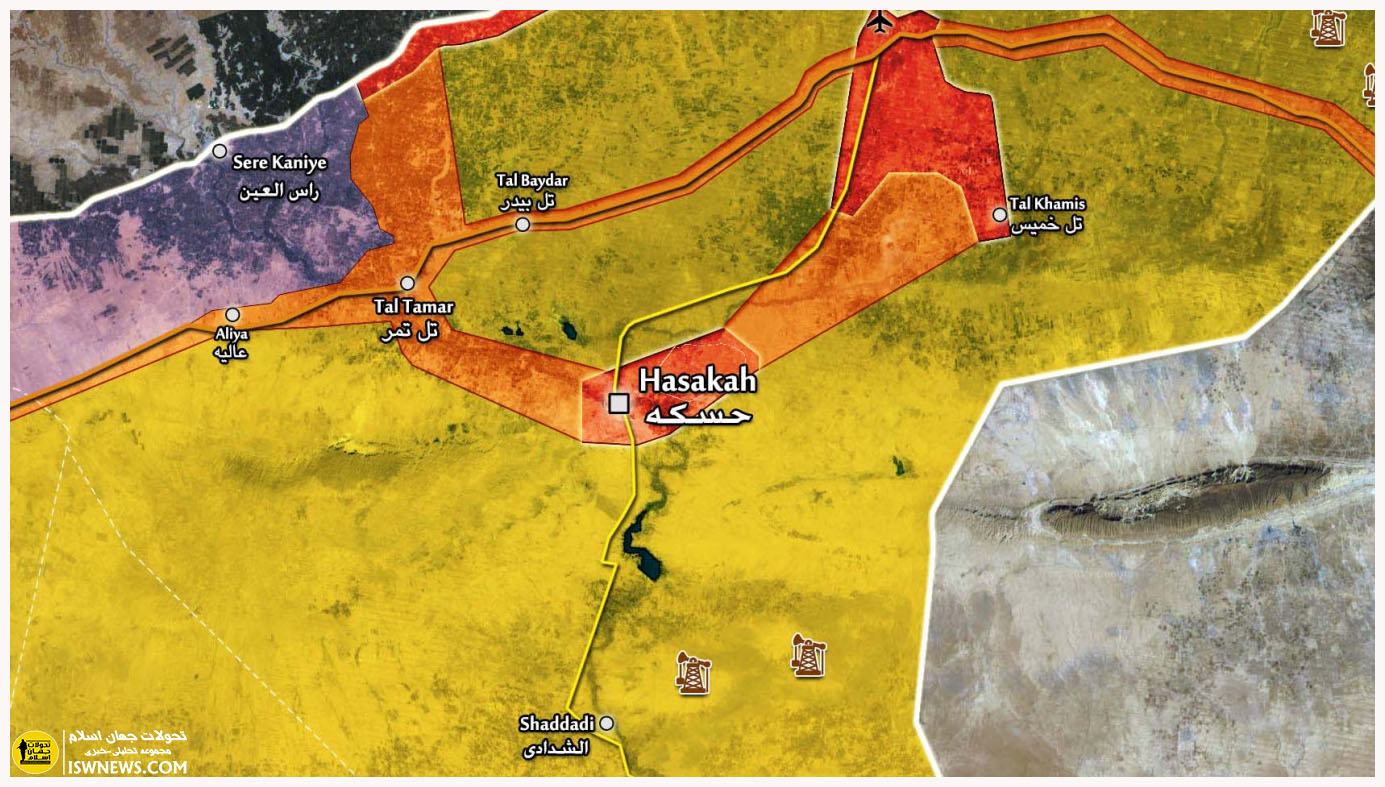
  • Rising tensions between Asayish and NDF; This time in the city of Hasakah

    Rising tensions between Asayish and NDF; This time in the city of Hasakah

    Syrian security forces arrested several Kurdish residents of Hasakah in retaliation after Asayish security forces in Hasakah arrested a commander of the Syrian National Defense Forces (NDF).

    After the incident, the Asayish forces announced a one-hour deadline for the release of these people. However, one day after the deadline, the NDF did not release them and the Asayish forces did not respond. Currently, mediations are underway to reduce tensions and end disputes in the city of Hasakah.

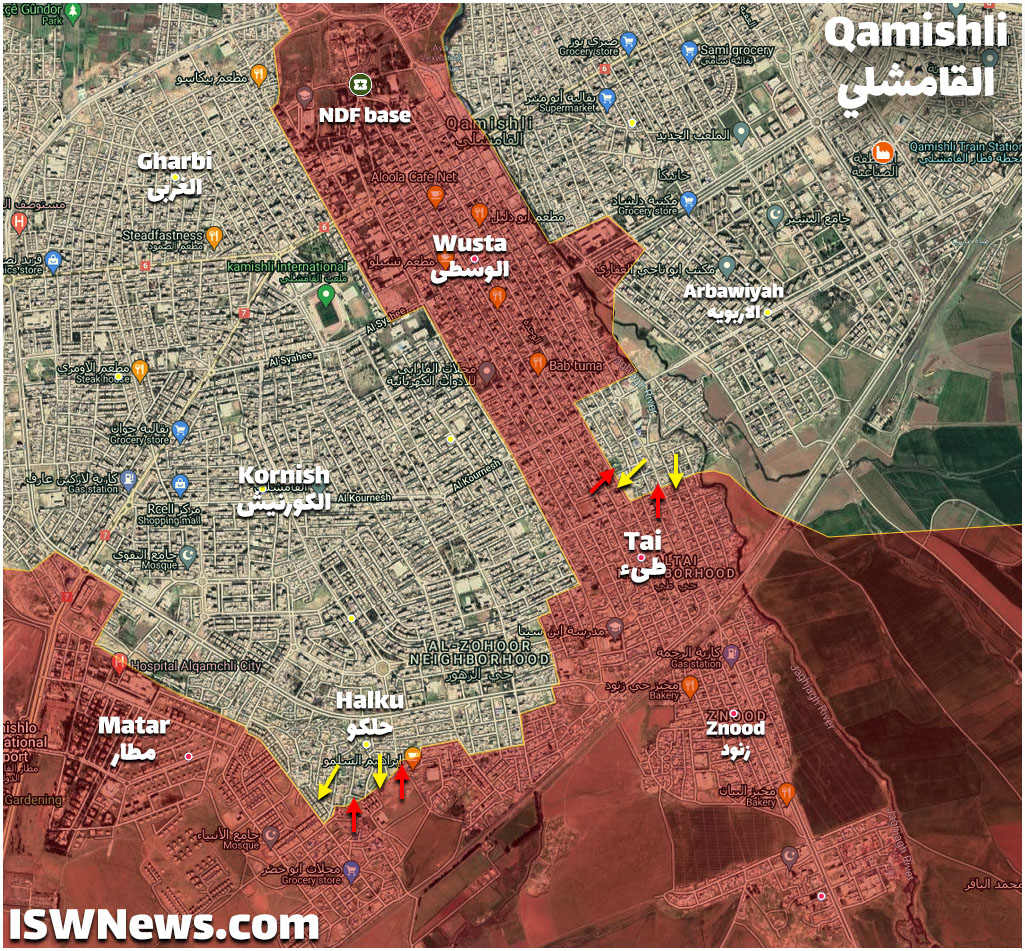
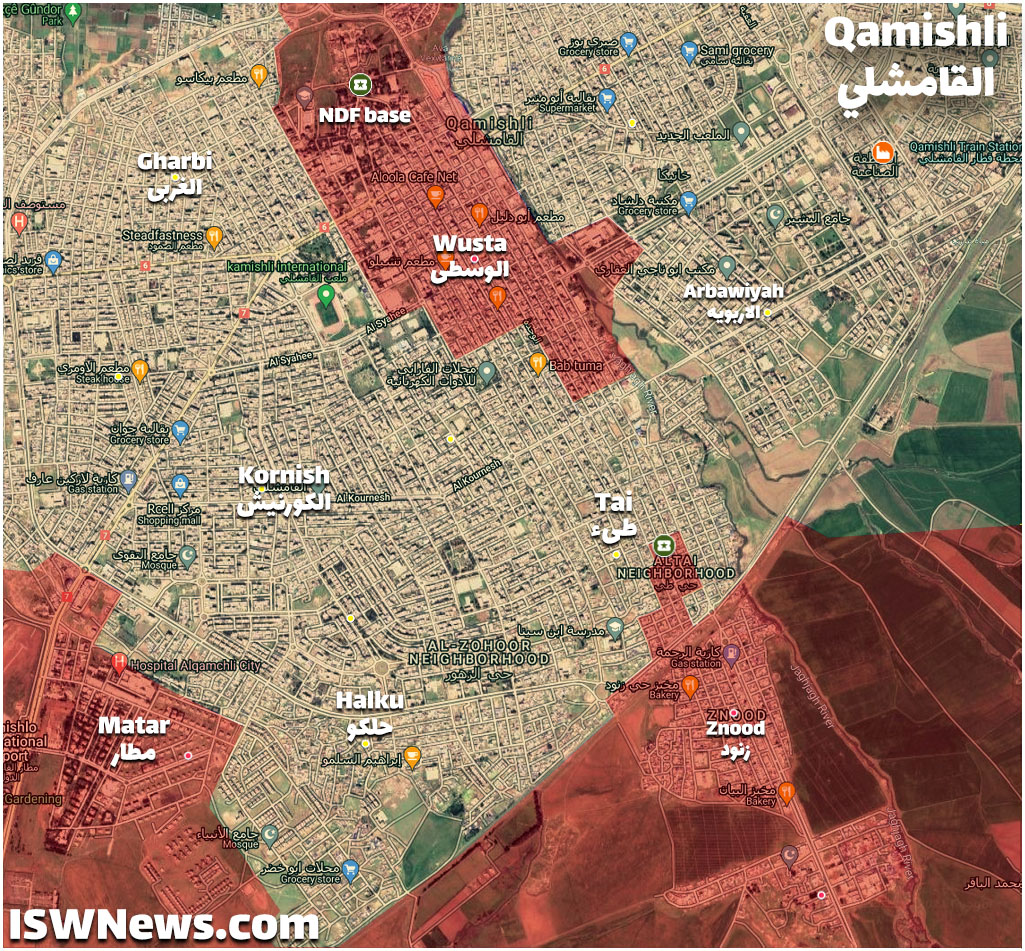
    In a similar incident, on April 20, an Asayish commander, Khalid Haji was killed in an exchange of fire between Asayish and NDF at checkpoint in the city of Qamishli. After this incident, the Asayish forces attacked al-Tai neighborhood and took control of parts of this neighborhood.

    Russia and the United States fear that the current incident in the city of Hasakah could lead to a repeat of the Qamishli scenario or more intense clashes between the Syrian army and SDF forces in the city which that may escalate and have more serious consequences.

    Hasakah Interactive map

  • Syria: Latest military situation of Qamishli city

    Syria: Latest military situation of Qamishli city

    On April 26, a final agreement was reached between the National Defense Forces (NDF) and Asayish (YPG internal security forces) in Qamishli. According to the agreement, mediated by the Russian military police and the Syrian Democratic Forces, the NDF withdrew from al-Tai neighborhood, except the Abbas Alawi school which is remained as the security center of the Syrian army in the al-Tai neighborhood and few blocks in the south of the neighborhood.
    The NDF also withdrew from the southern part of the Halko neighborhood, where it had advanced in recent battles.

    Following the agreement, residents of al-Tai neighborhood, who had fled the area due to the clashes returned to their homes.

    According to available information, the Russian military police will conduct patrols in the city of Qamishli to observe the ceasefire agreement.

    One of the sources of developments in the Islamic world in Syria also stated that Syrian security police forces (affiliated with the Syrian government) will be deployed in al-Tai neighborhood to monitor the implementation of the ceasefire.

    A source in Syria told ISWNews that Syrian security police forces (affiliated with the Syrian government) would be stationed in the al-Tai neighborhood to monitor the implementation of the ceasefire.

    Clashes began on April 20, when one of the Asayish commanders, Khalid Haji was killed in an exchange of fire between Asayish and NDF at checkpoint in the city of Qamishli. After this incident, the Asayish forces attacked al-Tai neighborhood and took control of parts of this neighborhood.

    Qamishli interactive map

  • Details of clashes between YPG and Syrian National Defense Forces in Qamishli

    Details of clashes between YPG and Syrian National Defense Forces in Qamishli

    According to field sources, the result of the meeting mediated by the Russians was the announcement of a ceasefire until 10 am tomorrow (Saturday), but sources close to Asayish claimed that after the agreement, an RPG was fired at YPG forces by the NDF Forces.

    Consecutive meetings will be held in the presence of Asayish commanders (YPG internal security) and the NDF commanders under the supervision of Russian forces until a permanent ceasefire is reached in Qamishli.

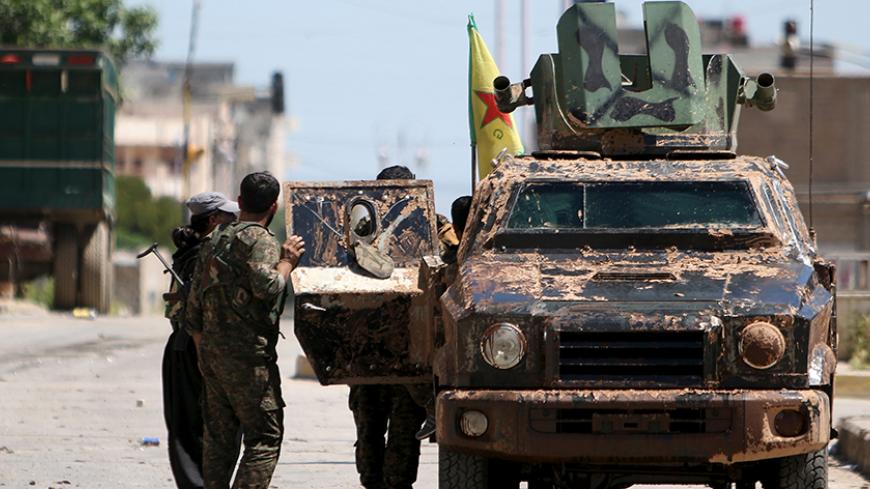
    Clashes in Qamishli erupted after Asayish forces stormed an NDF checkpoint and shootings at them. After the incident, YPG forces attacked areas in the city of Qamishli in order to gain control of some areas, which were met with resistance from NDF forces.

  • Tensions in Qamishli; Russian mediation to resolve the dispute between the YPG and the NDF

    Tensions in Qamishli; Russian mediation to resolve the dispute between the YPG and the NDF

    On 20 April at 22:00 local time, YPG forces stationed at a checkpoint attacked a vehicle belonging to the Syrian National Defense Forces, which led to tensions between the two sides.

    Some sources claimed that five YPG forces were killed and five NDF members were wounded in the clashes.

    Following the escalation of the conflict, Russian forces have intervened in the city of Qamishli to resolve the dispute between the YPG and the NDF, and talks are currently under way between the two sides, mediated by Russia. The security forces called for the withdrawal of the NDF from al-Tai neighborhood in order to reduce the conflict in the city. So far, the outcome of this negotiation has remained unclear. Also, the Asayish security forces took control of parts of Qamishli neighborhoods.

  • SDF security operation at Al-Hawl camp in northeastern Syria

    SDF security operation at Al-Hawl camp in northeastern Syria

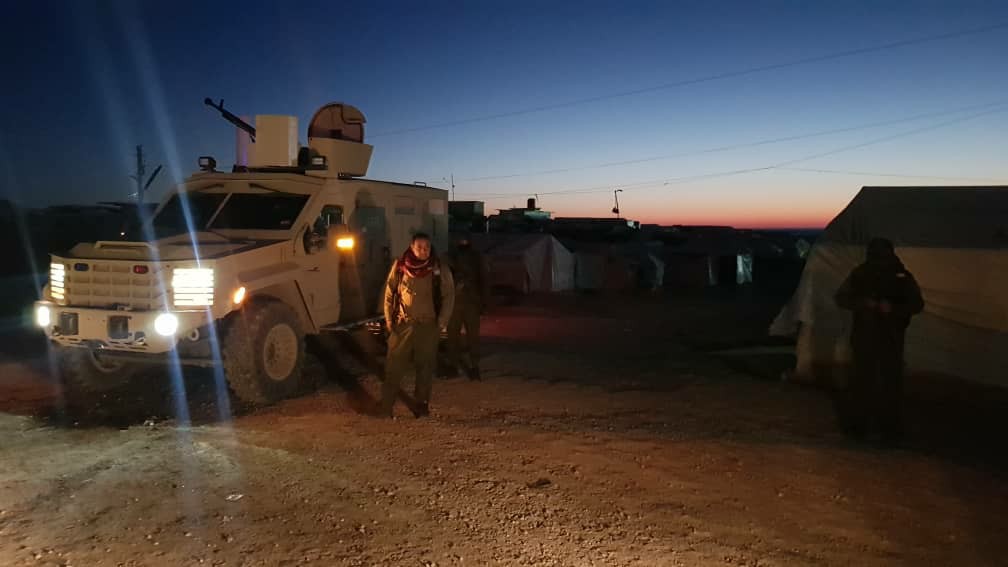
    Asayish forces, along with forces of the Syrian Democratic Forces (SDF), began their deployment on the outskirts of Al-Hawl camp at 4 am today.

    An informed source said that about 6,000 members of the Asayish forces and SDF are participating in security operations inside the camp with the aim of ending ISIS influence in the area.

    The SDF operation in the al-Hawl refugee camp began after a series of assassinations, chaos and severe insecurity in the camp. In the past month, ISIS operatives killed at least 15 residents of the camp.

  • Article: Damascus policy towards Syrian Democratic Forces and Arab tribes

    Article: Damascus policy towards Syrian Democratic Forces and Arab tribes

    From the beginning of crisis in Syria, to prevent the protests to expand and reach the biggest minority of the country, the government tried to collaborate and give space to Kurds of the area and Democratic Union Party (PYD) to prepare the situation for presence of military forces of the party in Kurdish inhabited areas. In the following sense, two months after the protests started in Syria in the middle of 2012, the government signed an agreement with the party and let them to come back to Syria. Near the end of 2012, Syrian government supported People’s Protection Units (YPG) after attack of opposition militias to Raas al-Ain town and left the service, security, military and economic affairs of Hasakah province, except the security square, to PYD.

    Although Syrian Kurds, after expanding their reign over Kurdish and even Arabic areas located in East of Euphrates river called “Jazirah”, started the system of self-government under support of USA, but their relation with Syrian government was in the state not peace nor war. There were limited engagements between them for time to time but never became a full enmity.

    In this situation, PYD (close to PKK in Turkey) as the main player of Kurds in Syria started the project of expansion and establishing Kurds in 2012 and from the beginning removed Kurdish National Council (ENKS), as the party close to opposition of Syria and Kurdistan Democratic Party (KDP) in Iraq (led by Barzani), from the battle.
    In fact, in the battle between two idealogies of Barzani and Öcalan, PYD led by Öcalan won.

    They established YPG as the military branch of PYD in March 2012 under command of officers from Qandil area as the first step and also formed the security and police forces of Asayish in the same year. In November 2013, formed self-government office in north of Syria, which divides the area ruled by Kurds to three cantons of Island, Kobani and Afrin and in 2014 three councils of lawmakers and executive to govern the three cantons.
    In October 2015, they formed Syrian Democratic Forces (SDF) from Arabs, of east of Euphrates, Kurds and Assyrians, with proposal of then US special envoy in coalition entitled fighting ISIS and under support of the coalition.

    However, the main player was still YPG and SDF was a distraction to avoid Turkey’s bad relationship with PKK forces. After establishment of SDF, Syrian Democratic Council (SDC) was formed as the political branch of it. Then in March 2016 SDF reported of a federal Kurdish government surprisingly which caused Syrian government and regional and international sides engaged in Syria to react negatively. However due to Turkey’s assault to Afrin area and occupying it, the issue of federal Kurdish government was suspended.

    In 2018, Kurds stepped down from federal government and just formed self-government system in north and east of Syria by establishing local councils under the names of different regions. (Jazirah, Kobani, Manbij, Raqqah, Deir Ezzor, Tabqah, Afrin)

    After the areas under control were expanded in east of Euphrates under support of USA, to manage the Arab-Kurd confrontation, SDF followed both attract and surpass policies using USA and Arabic capacities in Arabic tribes of the area.

    On the other hand, to revive the sovereignty on east of Euphrates area, having an upper hand to manage their relationship with SDF and confront USA occupation of the area, Syrian government started to approach tribes of the area by holding numerous sessions in Hasakah town to attract nomads to themselves and confront USA plans in the area. Therefore, the title and agenda of these sessions were more about confronting USA occupation and plans of dividing Syria rather than sovereignty of Damascus on north and east of Euphrates. Currently and after Turkey occupied some parts and after the Sochi agreement between Turkey and Russia, the situation is ready for return of Syrian army and Russian police to some of the area. Even though the sovereignty of Syrian government has increased in some areas ruled by SDF, they still reject to join central government and relying on USA, they try to have more in their hands in future negotiation with Syrian government.

    Therefore, Syrian government tries to use its pressure levers to manage Kurds and lower their bargaining ability in negotiations by approaching the chiefs of tribes there and giving privileges such as dropping charges against them, fixing some issues of local tribes, to make the younger generation to rebel against their chiefs and leave SDF and join the army.
    In the same sense, after Ali Mamluk visit to Qamishli and meeting chiefs and seniors of tribes, a high committee representing Damascus met with Salih Muslim, the former co-chairman of PYD, in Qamishli.
    In this meeting, the Damascus negotiating team offered the local administration which was contained in the reformed constitution in 2012, for the areas controlled by SDF but Kurdish team did not approve nor reject it. According to Faisal Azuz, presented in the negotiations, both sides tried to reach a plan between self-government and local administration plan that was mentioned in article 107 of the constitution.

    In conclusion, Syrian government plan regarding Kurds and Arabic tribes of east of Euphrates is to have full sovereignty in the area and their tactic is to approach and attract Arabic tribes of the area, who are the majority, prepare the situation of division between Kurds and Arabs and eventually having upper hand in negotiations with Kurds. In another word, they want to use the tribes to bring Kurds close to the central government and reduce their demands in the negotiations. However, the primary issue of Syrian government at the moment is Idlib and east of Euphrates comes after it.
  • Video: Russian Military Police Patrol East of Ras al-Ayn

    Video: Russian Military Police Patrol East of Ras al-Ayn


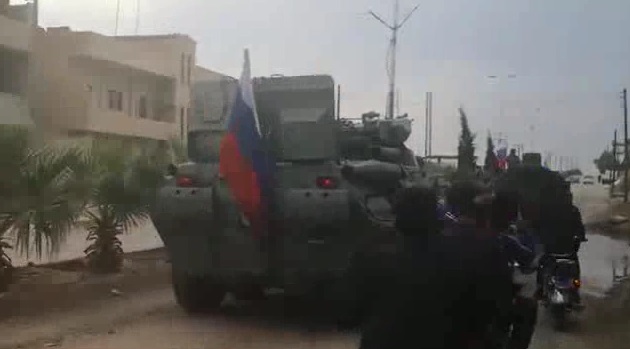
    ISWNews Analysis Group: Following Russian Military Police patrols in the eastern Euphrates, Russian troops entered Amudiyah and Darbasiyah today and continued their way to the city of Ras al-Ain.

    According to local sources, Russian Military Police in some areas were escorted by the Asayish (Kurdish Internal Security Forces).