Tag: Deir Ezzor

  • SDF Operation Against ISIS in Eastern Syria

    SDF Operation Against ISIS in Eastern Syria

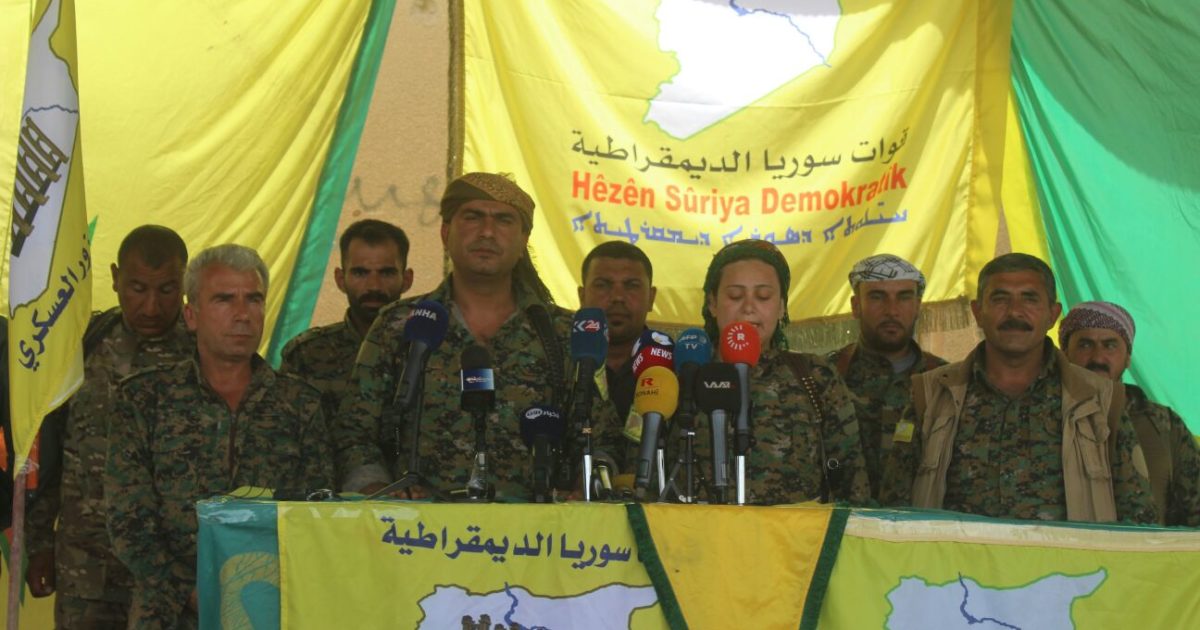
    It is said that the Turkish attack on the Afrin area and the Turkish Army clashes with the Kurdish forces, which lasted two months, was one of the main reasons for the delay in the operation of the SDF and the US-led coalition against ISIS in eastern Syria.


    However, the operation was officially launched from yesterday, and from the very beginning, with the heavy air support of the US-led coalition, the Syrian Democratic Forces SDF succeeded in rapid progress.


    In general, operations are carried out on two main axes;

    – The first axis is from al-Shadḍadi and al-Houl area to Dashisha and Abu Hamazah along the border line between Iraq and Syria.

    –  The second axis is from al-Omar oil fields to the Hajin area and the surrounding villages.


    According to local sources, the Hajin area is currently the main place of gathering and the ISIS command in the Deir Ezzor governorate.

  • The Situation in North of Deir ez-Zor Has Not Changed; Map

    The Situation in North of Deir ez-Zor Has Not Changed; Map

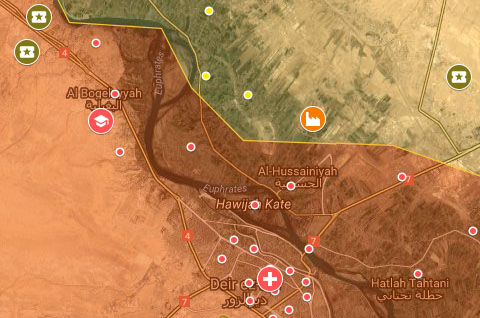
    Yesterday, pro-government media reported that the Syrian army had liberated al- Janinah, Ji`ah, Shaqra, Hesan, Hawiqat Maiyshiya in north of Deir Ezzor from SDF.

    But hours later, SDF media claimed that the villages were recaptured by the Kurds.


    The facts about the areas mentioned are that these areas are part of the contact lines between the two sides because of their particular geographic situation and the position of the front lines of the Syrian army and SDF and this lines  may change again in the future.


    See the latest situation of Deir Ezzor city here: Interactive Map


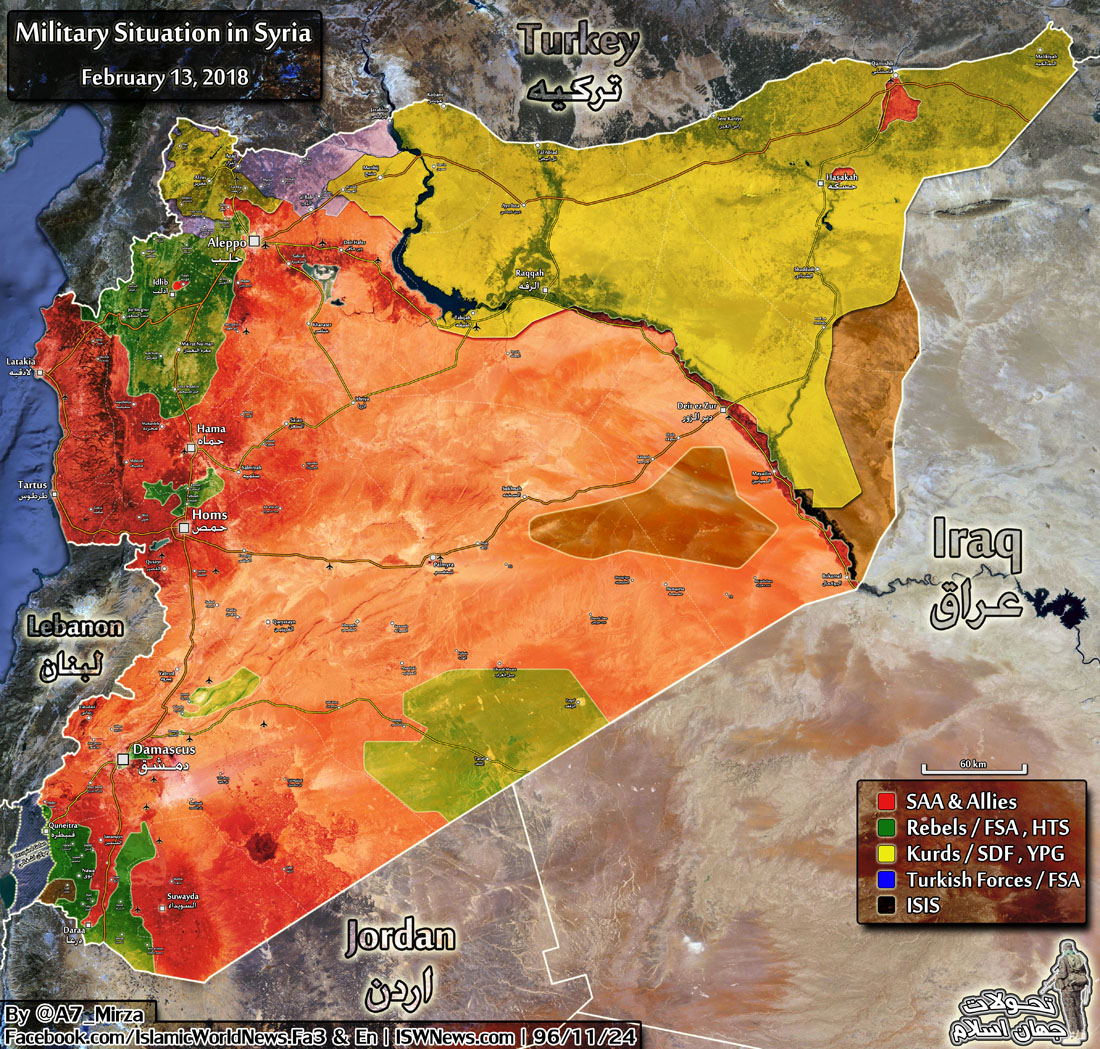
  • Latest map of fronts in Syria until 13 February 2018

    Latest map of fronts in Syria until 13 February 2018

    Latest HD map of fronts in Syria: download

    Map of 105 days ago for comparison: Here


    ?The most important changes during the last 105 days as follows:


    East of Syria:

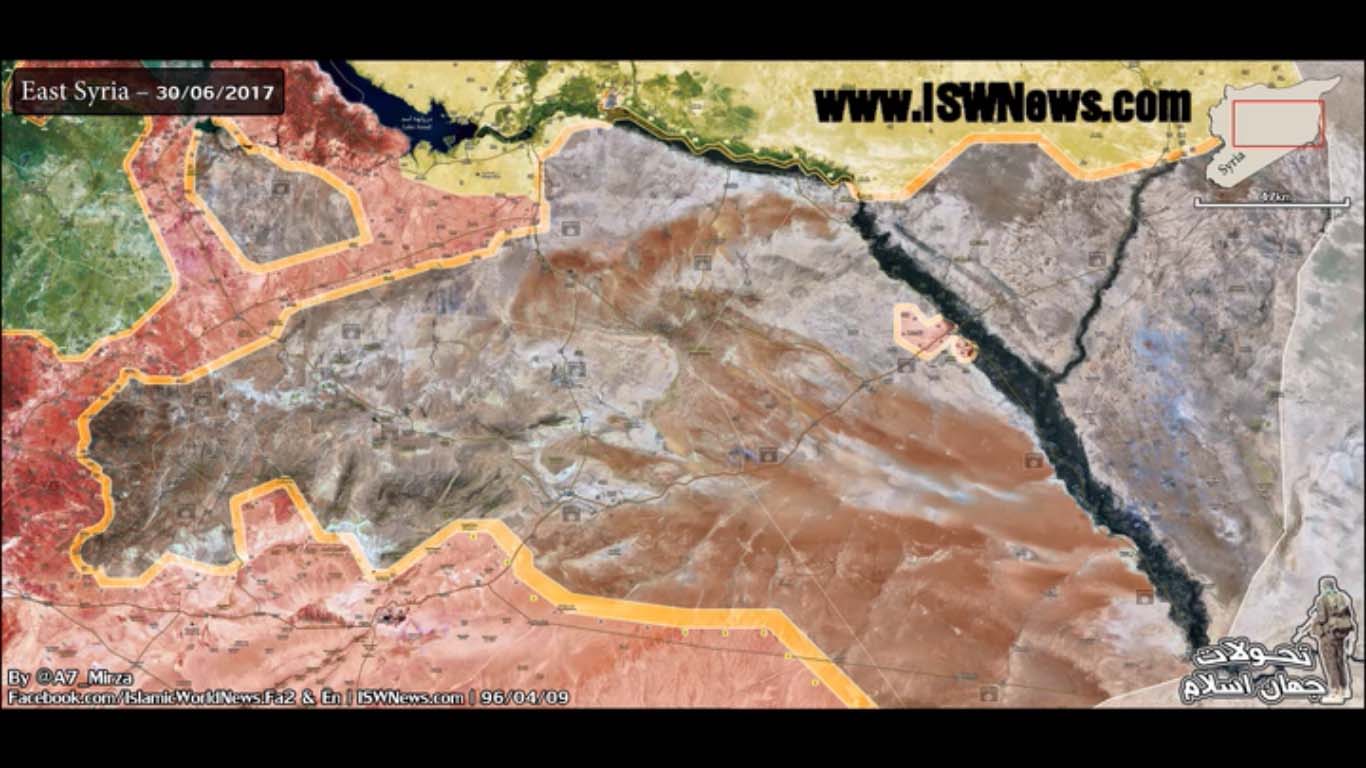
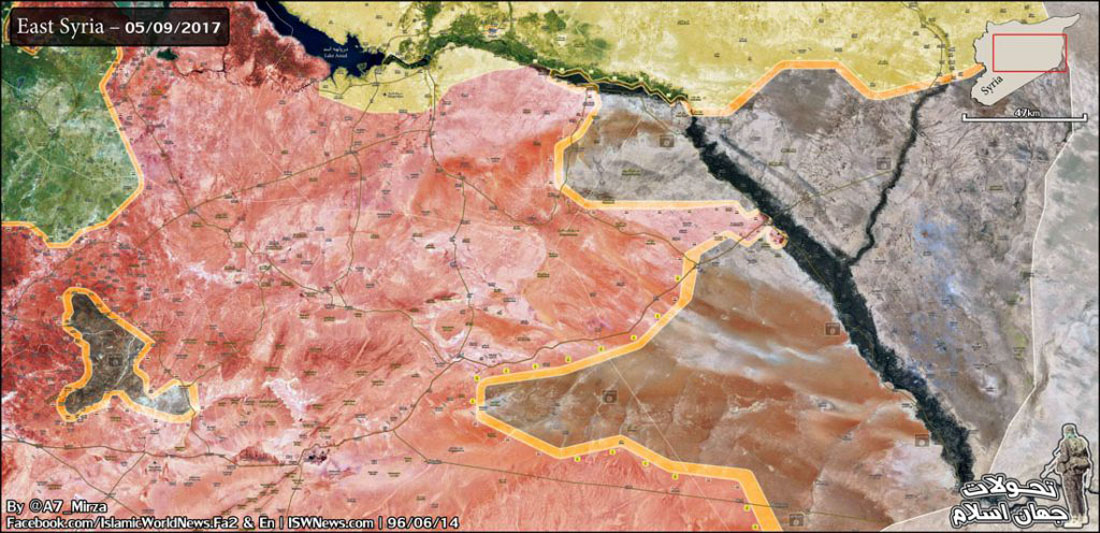
    After liberation of Abu Kamal in 19 November 2017, a few villages between Abu Kamal and Salehiya and from Salehiya to al-Mayadin on the southern bank of Euphrates river are liberated by Moghawemah and Syrian Army troops thus the remaining bases of ISIS fall in east of Syria and ISIS are besieged in an area of 7,200 km2 in east of Homs and south of Deir ez Zor.

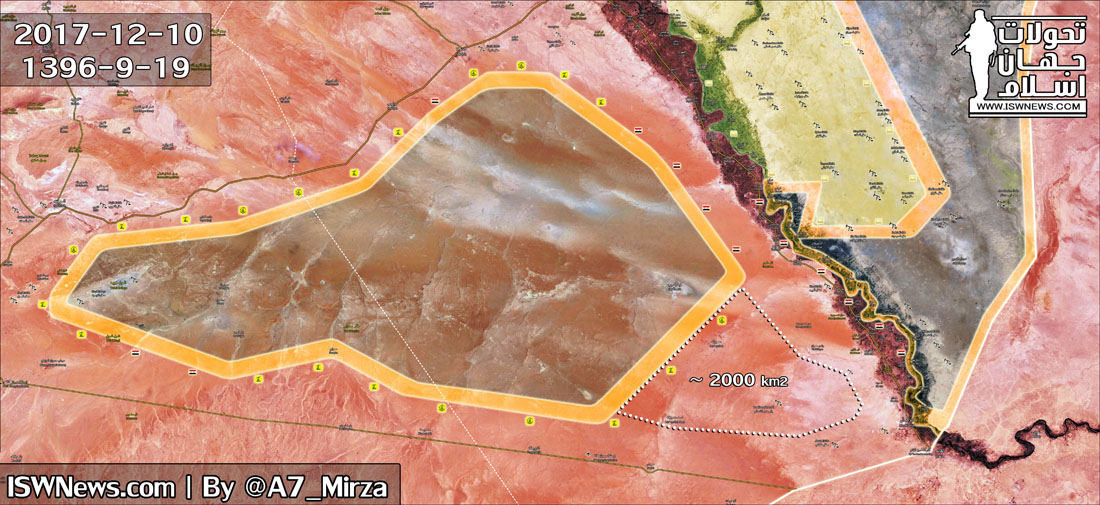
    After that to secure Abu Kamal, some of the deserts until Mu`ayzilah dam are also cleared up. This achievement happens after troops present in T2 area move toward north and Mu`ayzilah dam and some other troops join them from northern axis toward Mu`ayzilah and liberate the besieged area of about 2,000 km2.


    South of Syria

    The most important change in south of Syria is indeed the liberation of occupied areas by militia in strategic region of Beit Jin.

    In the last several years, these areas were safe place of terrorists and with the support of Israel and Jordan, by moving from Daraa to Qalamoun using the connecting roads and valleys, they were a serious threat to Damascus.

    After the operation in last year and liberation of Khan al Shih area in south of Damascus, several committees tried to negotiate with militia in Beit Jinn to avoid any bloodshed to liberate these areas and not harm civilian lives but they did not accept never or demanded out of question privileges.

    Finally in December 2018 when militia using obvious helps of Israel and using their observing posts detoured Syrian Army positions in Hadhar area using occupied Golan and attacked Hadhar to break the siege of Beit Jinn, Syrian Army follows the operation in Beit Jin with more determination and by defending militia attacks, increase their advances.

    The operation carried out using carrot and stick behavior and at each stage, Syrian Army using military activities and negotiations succeed to remove all the militia and their families from Beit Jin area and to raise Syrian flag on the heights and in January 2018, Beit Jin officially rejoins Syria again.


    Northwest of Syria

    As predicted by finishing ISIS in east of Syria (except some desert areas), the attentions and operations are now on Idlib and Hama governorates; therefor after implementing of the “de-escalation zone” plan in northwest of Syria and Turkish forces’ penetration to west of Idlib and Hama governorates, the operation of Syrian and Moghawemah forces in northeast of Hama and northern axis of Sa`an and Sheikh Hilal and inside Idlib governorate starts.

    In the region they advance from several axis; Moghawemat from Khanser and northeast of Hama and Syrian Army from north of Hama toward Abu Dohur airbase could liberate a vast area in a month.

    Overall liberated area from ISIS between Idlib, Aleppo and Hama governorates adds up to near 3,500 km2.

    Click here to Download the video of final steps of operation.


    Afrin area

    The other significant change is invasion of Afrin by Turkey and their militants.

    After the latest of Syrian Peace Talks in Astana which held with presence of different sides in Syria, Russian, Turkish and Iranian officials to investigate the situation of “de-escalation zone” plan, some Turkish troops establish in Idlib and south of Afrin area according to this agreement.

    But after Moghawemah and Syrian Army advances in northwest of Syria, which was according to the areas of “de-escalation zone” agreement as well, using some excuses and preemption, Erdogan invades Afrin.

    An attack which was not agreed on in the peace talk…


    Turkish operation condition is a mixture of Erdogan’s opportunity, Russian distraint, Kurdish and Moghawemat’s stubbornness and passivity, nevertheless Turkish invasion in Afrin is changing the area and if they occupy it completely, its impact on political future of Syria is inevitable and harsh.


    Further information can be found in the article “Russian game, Turkish opportunism and Iranian passivity in the north of Syria”

  • Syrian army clearing the deserts in south of the Deir Ezzor province from the ISIS remnants

    Syrian army clearing the deserts in south of the Deir Ezzor province from the ISIS remnants

    This success happens after forces in “T2” region advanced to north and Mu`ayzila dam and other forces advanced north to Mu`ayzila and join each other and clear 2,000 square km of besieged lands.


    Considering freedom of Iraq from ISIS, freedom of east of Homs and south of Deir ez Zor is achieved with higher pace.


    High quality map


  • Israel’s Strategic Ambitions Thwarted in Iraqi Kurdistan and Will be in Syria’s Deir ez-Zor

    Israel’s Strategic Ambitions Thwarted in Iraqi Kurdistan and Will be in Syria’s Deir ez-Zor

    We live in extraordinary times. The narrative of the “fight against Islamic State” that holds sway in Western society comes from a fantasy land in which nothing is as it seems; these “certain truths” have as much reality as a rainbow, while reality is distorted or obscured behind it.
    Across the “credibility gulf” we may see everything as it is, but speak a different language; no-one over there in the Western bubble can understand what we say, or even recognise it as language. A declaration that should shock this complacent and self-possessed “civilised world” to the core – that the US is fighting with the Islamic State – simply cannot be understood or accepted, regardless of evidence.

    Since the coordinated operation by Al Qaeda groups in Idlib attempted to kidnap a group of Russian military police on September 17th, it has become evident that the US military really is actively supporting and coordinating with terrorists fighting the Syrian Government. Following further attacks, including particularly the assassination of Lieutenant General Valery Asapov in Deir ez-Zor, Russia now evidently has no remaining doubts about the US “fight against ISIS”; there is no such fight.

    So now we are faced with an intolerable paradox. The US and its coalition partners in Syria are actively engaged in lethal attacks on the Syrian army and its allies within sovereign Syrian territory, both directly and in cooperation with ISIS. At the same time these Western countries’ sole stated pretext for entering Syrian territory without UN authorisation has been to fight ISIS terrorists, while the threat of Wahhabi terrorist attacks at home has been ruthlessly exploited to gain support for these foreign military actions from their domestic audiences.

    Not that this apparent US collaboration with ISIS and Al Qaeda in Syria is anything new, but long-held suspicions – now confirmed – constitute a substantial body of evidence. Events such as the transit of ISIS convoys across the Syrian desert without interference from US coalition planes, or the free pass for the tanker-pipeline taking ISIS Oil out through Turkey can also now be seen as acts of facilitation rather than merely a failure to act.

    But nothing now constitutes clearer proof of collusion than the direct and lethal attack on the Syrian Army outpost protecting Deir ez-Zor airport from ISIS fighters, conducted by both US and Australian planes. This attack of September 17th 2016 has now been revealed as a key part of the US coalition plan, as it is fought out in this same area a year later. What is more, with the strangely coincident events over the border in Iraq, where the plan by the Kurdistan Regional Government to sequester the Kirkuk oilfields out of Baghdad’s control has just been thwarted, another player in the game has come into view – Israel.

    It is almost as if Israel has finally broken, and can no longer contain itself at the sight of its own project for Syria going adrift. And it seems as though the “Kurdistan Project” was a central part of this. Following the Kurdish referendum – which even the US purported to oppose – Israel was the first to voice solidarity with this new “democratic state” in the making, that was presented as sharing its values. Notwithstanding that the ethnically-defined Kurdistan can like Israel only pretend to be democratic.

    Israel’s championing of Kurdistan as the most Western-friendly entity in the region can however be seen chiefly as opportunist, and related to its desire to obstruct Iran’s economic and cultural influence. It also betrays the considerable investment made by Israel into the development of Iraqi Kurdistan, dating back to before the first [Persian] Gulf war. While the original plan to bring oil from Kirkuk via pipeline directly to Israel was thwarted, Israel’s strong presence in Erbil, as well as its close involvement in the handling of Syrian oil stolen by ISIS and exported via Turkey has served the same purpose.

    Allegations that Israel was ‘laundering’ ISIS oil, with the profits being returned as weapons and ammunition for the terrorist Caliphate, were made at the time that Russia bombed the guts out of the IS oil tanker convoys. Natural scepticism that this accusation was just Israel bashing now look too cautious, and instead provide additional evidence of Israel’s criminal involvement and deceptions over the war on Syria.

    But something strange is operating here. So great is Israel’s influence on Western media and perceptions that it is those Western observers who are protesting Israel’s innocence of colluding with terrorist groups in Syria. They fail to notice that neither ISIS nor Al Qaeda never criticise Israel or threaten a campaign to “liberate” Al Quds from its Zionist occupation. Nor do they ever appear upset by Israel’s provision of medical care and sanctuary for terrorists escaping the Syrian Army.

    Even when Israeli leaders proclaim support for these Wahhani mercenaries, including the launching of missile strikes at Syrian army posts that threaten them, Israel is excused. In Western eyes Israel is always the victim.

    Well perhaps this is about to change, as it must. Last month Israeli jets fired missiles at a Syrian factory from Lebanese airspace, which they routinely violate. The vacuous claim that they were targeting a factory producing chemical weapons and missiles for Hezbollah was their justification for this act of war, which took place during major military exercises in Northern Israel. Syria was unable to respond to that provocation, but when Israeli jets flew into Lebanese airspace on the Syrian border on Monday, Syria fired missiles at the planes, forcing them to retreat.

    Proclaiming Israel’s right to self-defence – even when engaged in acts of armed aggression beyond its borders – Israeli jets subsequently bombed the Syrian defensive missile battery. As Netanyahu put it:

    “Today there was an attempt to harm our aircraft — this is unacceptable to us. The air force acted quickly and accurately to destroy what needed to be destroyed,” Netanyahu said.

    The timing is also clear – Russia’s Defence Minister Sergei Shoigu is visiting Israel this week. We would hope that Russia’s patience with Israel is wearing just as thin as it has with the US, and that the next time Israel pushes its luck with Syrian air defences it will be dodging Russia’s feared S400 missiles instead. Not only that of course – Israel’s excuse that it is targeting Iranian infiltration and weapons shipments to Hezbollah can no longer cut any slack with Russia, for whom Iran is now a major military and economic ally.

    The recent “intemperate remarks” about the Iranian Nuclear deal by Donald Trump, echoed immediately by Netanyahu only strengthen these ties; who could not gasp at those delusionary claims from two of the world’s most dangerous nuclear weapons states, whose only real concern is that their stranglehold on global power with the threat of nuclear annihilation might be weakened?

    Well at least Iran is under no misconceptions. As reported by the Guardian – “Ali Akbar Velayati, a senior foreign policy adviser to the Iranian supreme leader, praised the Iraqi army’s move to capture Kirkuk, framing it as a blow to Israel’s strategic ambitions.

    “With the defeat of the Kurds in Kirkuk, Barzani’s conspiracy against the region’s security was foiled. Barzani’s aim and Israel’s covert aim were to seize Kirkuk’s oilfields to serve the Israeli interest. In the Kurdistan region, they raise the flag of Israel and this means if Kurds gain independence in Iraq, we will share a border with Israel,” Velayati said, according to the IRGC-affiliated Tasnim news.

    News that the Iraqi army has retaken control of both Kirkuk and Sinjar and their oil resources, on behalf of all the Iraqi people, is welcome indeed – except in Tel Aviv. We await similar news from Deir ez-Zor.

    Source

  • Last Military Situation in Deir Ezzor City / Map

    Last Military Situation in Deir Ezzor City / Map

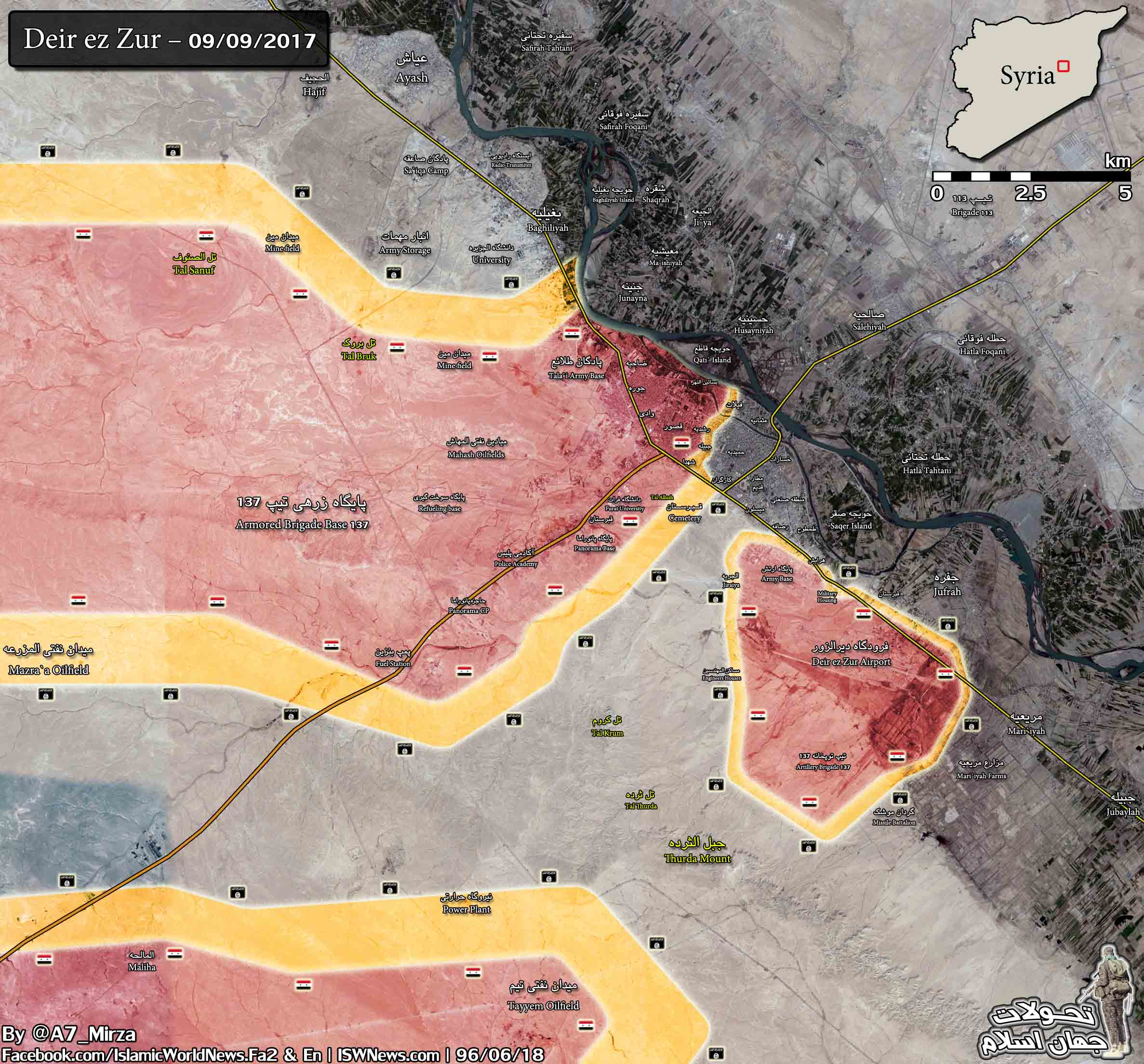
    In the Al-Sukhneh axis after the stabilization of the village of al-Shula and al-Tayyim oil fields, the al-Maliha village was liberated, and distance to Panorama square reduced to 10km.

    In the second axis in Maqaber(cemetery), the army succeeded in liberating of Tal Allush, and they reached 1.5 kilometers of the besieged forces at Deir Ezzor airport.

    Until now, the blockade of the airport has not been broken, but there is a chance that forces will arrive at any moment

    In the northern axis, the Army liberated the Raqqa Bridge in the north of the 137th Brigade, and soon the villages of Ayash and Baghiliah would be liberated.

    Also Syrian Democratic Forces (SDF) with coalition air support, have launched a new operation under the name of the Deir Ezzor Military Parliament in eastern Euphrates and are moving towards the village of Sawr.

    Download Map

  • Breaking the siege of the Deir Ezzor ; strategic and important / Review

    Breaking the siege of the Deir Ezzor ; strategic and important / Review

    The most important news of the military situation in these days of Syria and perhaps the whole region is the breaking of the three-year-old siege of the most strategic city of Deir Ezzor in the eastern desert of Syria , the diamond of Euphrates and the oil-richest province of Syria.

    Perhaps in the first place this is not new or important news, and this massive coverage of the news and the happiness of the Syrian people looks weird. But with a deeper look at the developments in Syria, and especially over the past two years, we will take note of the importance of the issue. The series of events that led to break the siege of Deir Ezzor began with a similar incident in the northwest of the country; the 2-year-old blockade of the Kuwayris military airport in the east of the strategic city of Aleppo, and breaking the siege of Aleppo.

    The reader may ask what is the connection between Aleppo in the northwest of Syria, with the east of this country and the breakdown of the Deir Ezzor siege ?! Let’s go back five years and seven months to clarify.

    After the first sparks of civil protest in early 2011, the protests turned into armed rebellions with the direct engagement, provocation and arming of Western countries, including the United States, France and Britain, as well as regional allies including Saudi Arabia, Turkey, Jordan And Qatar, as well as the Zionist regime, has entered an unprecedented crisis in the political history of the world. During the continuing fall of the Syria’s various cities and regions, it was the turn of emergence of the most dangerous and powerful group, ISIS, the Islamic state of Iraq and Syria.

    ISIL, which transferred its belief from the deserts between Iraq and Syria! and its non-indigenous human resources (more than half its troops) from Turkey into Syria, saw Deir Ezzor as the point of his life. So, after failing to fully control it, ISIL quickly had chosen the Raqqah, the closest city to the strategic location of Deir Ezzor, as its capital. The forces of ISIL which called themselves the forces of “Khalafah” captured with incredible speed small and large cities one after the other and soon over 50% of Syria’s 185,000-kilometer area was lost from the army and other terrorist groups, especially The Free Syrian Army (FSA) has and even they penetrated into some of the southern districts of Damascus, and reached to the hundred meters distance to the holly shrine of Zainab.

    In the meantime, several areas were surrounded by takfiri groups(radicals), including the Kuwayris Military Airport,  Deir-Ezzor City, Nubl and Al-Zahra towns, and then the villages of Fua and Kafraya.

    In the most critical days of Syria, when politicians and military men heard the sound of the war in the presidential palace and actually saw the fall of the government probable, it was the axis of resistance and the thoughtful act of Imam Khamenei and the courage of the commanders and militants, such as Shahid Sardar Hamedani, come to help Syria that was the most important ally in Iraq-Iran war. In the first step, the training of volunteers (National Defense Force, NDF) and the formation of resistance groups to defend neighborhoods and villages, and then the urban warfare training, were put on the agenda of the army.

    The end of 2014 was the first turning point in the developments in the Syrian crisis, which the resistance forces were able to defend first what they had and prevent the collapse of the Assad government, and in a major development in September 2015 convinced Russia to enter with air support, the Syrian army started the offensive phase and cleared the lost areas.

    With a slow and erosive but positive development, the forces of resistance strike the most powerful terrorist group in the world those who imagined to rule Iraq and Syria and then to other parts of the region. Finally, on November 11, 2015, the two-year siege of the Kuwires Airport broke down.

    But the most important victory of the resistance axis was in the city of Aleppo, a city where all the supporters of the terrorists were insisting on expulse Syrian government and led the battles in this city directly by its intelligence officers and managed to occupy more than 40% of this strategic city. The battle of Aleppo was known for its importance for both sides as the “Mother of Wars” or “Stalingrad of Syria.” But after the breaking of the Kuwayris airport blockade and the advance of the united forces towards this city, and after months of heavy clashes and so many martyrs of resistance forces & Syrian army, this was again the will of the resistance, which overcome the international and regional powers and their related terrorists, the city of Aleppo was completely liberated on December 14, December 23rd.

    Aleppo’s liberation had many effects on both the psychological and military dimensions.

    ?In the psychological aspect, it actually meant the end of the dream of the supporters of terrorism in Syria to remove Bashar al-Assad government , as the American senator Lindsay Graham called the victory of Assad in Aleppo as a nightmare for the U.S . This marvelous victory was the second turning point in the Syrian crisis, which led to a fundamental change in the political and military equations of the two sides of the conflict, absolutely after that we had never heard and we will never hear about the theme that Assad must go…

    ?In the military dimension, the withdrawal of armed support from Turkey (in the operation to remove the siege of the cities of Nubl and Al-Zahra), the military groups and the change of the battle lines have caused that hundreds or even thousands of Syrian army forces be free, including the elite forces of Soheil Hasan, commander of the Tiger forces By consolidating its position in the northwest and gradually moving towards the south and east, he has made his decision to liberate the eastern regions, in particular the city of Deir-Ezzor, and in this way, cities and important areas such as the Tadmur (Palmyra), Al-Sukhnah, Eastern Badia, and by liberating whole Homs and Hama provinces they provided a major victory near the Euphrates River.

    ? Deir Ezzor, the strategic bridge of the Euphrates, and the important point of the Syrian desert, is so critical that the United States began to bombed the positions of the Syrian army during several air strikes to take the Deir Ezzor from the central government.

    ? The broken siege of Deir Ezzor and the imminent liberation of the city, such as the liberation of Aleppo, will be the beginning of the total liberation of the Deir Ezzor province, the richest province of Syria in terms of oil resources, and then the ultimate victory of the resistance axis against ISIL terrorists, which is expected Over the next few months – as military experts say, about four months – as a result the illegitimate ISIL caliphate(government) in Syria, will completely be vanished and all the occupied areas of this group will back.

    ? Finally, we can say the first indication of the importance of breaking the Deir Ezzor siege appeared only two days later, with the announcement of expulsion of military groups(terrorists) from the deserts of Damascus and Homs (about 14,000 square kilometers).
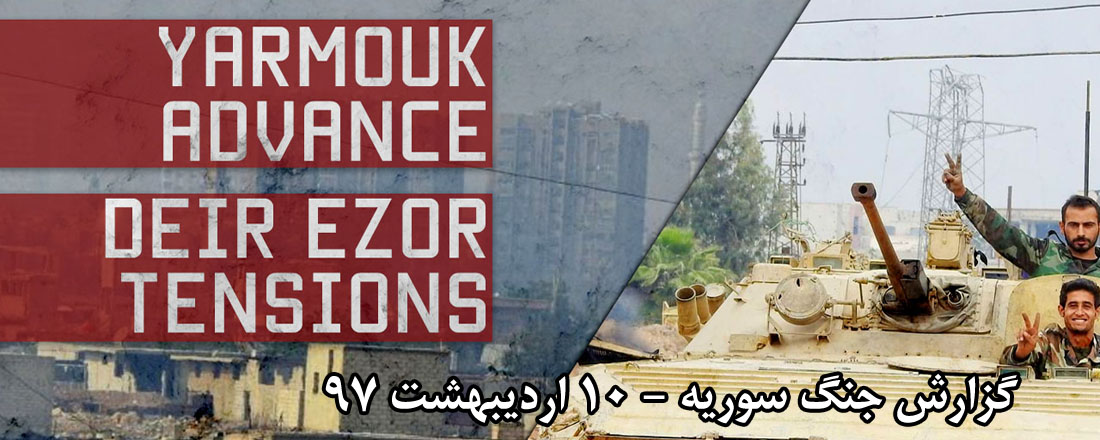
  • The latest military situation in central and eastern Syria after breaking the siege of Deir Ezzor

    The latest military situation in central and eastern Syria after breaking the siege of Deir Ezzor

    The lifting of the siege and the arrival of forces 137th garrison was one of the most memorable events of the Syria war in the past five years, and certainly this as a golden and historic achievement of the resistance of the Syrian people against terrorism will forever be recorded in the Epic of History.

    Such Sacrifice and courage, which the enemies are unable to deny, and who follow the events of Syria, from the beginning of the crisis during the rise and fall of the Syrian battle, are aware of its greatness and magnitude.

    Apart from this great incident, breaking the Deir Ezzor blockade is another step towards fundamental changes in the battlefield of Syria that will also affect regional equations.

    Now only a few more steps left to complete clearing the Homs and Hamah provinces, and then the Deir-Ezzor province will be cleared.

    An exciting operation that promises a more powerful future for the axis of resistance; we’ll talk more about that in the future.

    HD Map: Download