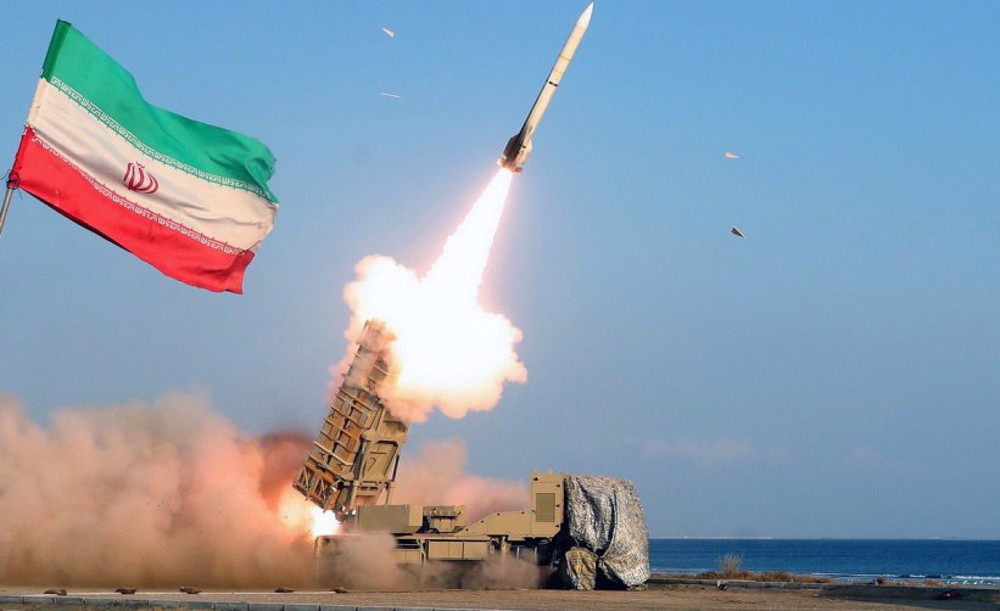
The commander stated in the interview: In 2006, Israeli soldiers abandoned their Spike missile and withdrew from their positions. The Hezbollah fighters seized this missile as a booty and transferred it to the Islamic Republic of Iran. This weapon is considered one of the most modern anti-armor weapons in the world.
Referring to the details of this missile, the field commander of Hezbollah said: This weapon is distinguished by several technical specifications, including the presence of a camera in the missile’s head. When people launch the missile, they can see what the missile sees and choose the target. The distinctive feature of this weapon is that it does not need to see a visible target in front of it. After firing the missile, a Hezbollah fighter can choose the target while being behind enemy lines and remaining invisible. We have a weapon that does not require direct visual of the target. The first time that this weapon was launched, it targeted and demolished a Merkava tank in the Al-Matla area. We used this weapon to attack several targets. The enemy is keeping this information hidden from his soldiers so that they do not become affected and abandon the battlefield.
When the Lebanese commander pointed to the possession of this missile and targeting Israeli tanks with the sophisticated missile, he meant the use of Iranian anti-tank missile called Almas (Dimond). As mentioned, the Almas anti-tank missiles are reverse-engineered from the Israeli Spike anti-tank missiles and are now in the possession of the fighters of the Lebanese resistance movement in Lebanon.
The Almas top attack anti-tank missile is a fire-and-forget anti-tank guided missile and anti-personnel missile with a tandem-charge high-explosive anti-tank warhead, which is an effective weapon for attacking armored targets, fortifications, and vehicles of enemies. This missile has been developed by the Ministry of Defense of the Islamic Republic of Iran in three classes named Almas-1, Almas-2, and Almas-3.
The report claims that a US Coast Guard Cutter succeeded in identifying and seizing a boat carrying advanced weapons and military aid from Iran in the Arabian Sea.
The boat was carrying over 200 packages containing intermediate-range ballistic missile components, explosive materials, drone parts, communication equipment, military network, guided anti-tank missile launchers, and other military components.
The US alleges that by sending these shipments, Iran violated United Nations Security Council Resolution 2216 and is assisting the Ansar Allah movement to threaten shipping in the Red Sea.
The US-led coalition, also known as the Combined Task Force 153 (CTF 153), had previously claimed to have captured four Iranian arms shipments en route to Yemen in the past year by naval ships from the US, the UK, and France in the Yemeni waters. These claims have been denied by Iranian and Yemeni authorities.
In this meeting, after conveying the greetings of the leader and president of Iran to the president of Syria, Amir Abdollahian handed over the official invitation of Ayatollah Raisi from Bashar Assad to visit Iran.
The Minister of Foreign Affairs of Iran declared Syria as one of the front lines of the axis of resistance, and by honoring the prominent role of Bashar al-Assad in Syria, the region and the Arab world, he considered Syria’s historical support for Palestine and the resistance to be worthy of praise and appreciation.
In this meeting, the President of Syria also congratulated the leadership, government and people of Iran on the anniversary of the victory of the Islamic Revolution. Expressing his satisfaction with the growing relations between Iran and Syria in various fields, he thanked Iran for supporting Syria and its stability and security, and added: “What the Islamic Republic of Iran has done in the past 4 months in support of Palestine, once again proved to the world that Iran does not just talk but also acts.”
Iran’s Foreign Minister also met and discussed with Syrian Foreign Minister Faisal al-Mekdad during his visit to Damascus. While expressing his satisfaction with this meeting, Amir Abdollahian called joint consultations on bilateral and regional issues important and emphasized the importance of joint follow-ups to realize and implement the agreements of the two presidents and the documents signed between the two countries during Ayatollah Raisi’s previous visit to Syria. .
Syrian Foreign Minister Faisal Mekdad, called Amir Abdullahian’s visit to Damascus important at this time, referring to regional conditions, emphasized the importance of joint consultations for the two countries.
The Syrian Foreign Minister stated: “The developments of the last four months have shown the true and criminal face of the Israeli regime to the whole world.”
Faisal Al-Mekdad also appreciated Iran’s standing by Syria and added: “Coordination between Iran and Syria on important regional and international issues will continue strongly.”
The Iranian foreign minister and the secretary-general of the Lebanese resistance movement held talks in capital Beirut on February 10.
According to the public relations department of Hezbollah, the Secretary-General of this movement and the Iranian foreign minister discussed the latest political and security developments in the West Asia region, especially the events in the Gaza Strip, southern Lebanon, and issues related to other resistance fronts. The two sides also talked about the current situation in Lebanon.
In this meeting, Ambassador of the Islamic Republic of Iran to Beirut Mojtaba Amani was also present.
On February 9, local sources reported the sound of an explosion in the western outskirts of Damascus and announced that the Syrian army’s air defense systems were activated to track hostile targets.
In this regard, a military source stated that around 14:10 local time on Friday, two drones entered Syrian airspace from the occupied Golan Heights, and the Syrian army’s air defense shot down both drones in the western areas of Damascus.
It is said that one of the drones crashed near the Al-Mezze Military Airport, and further details have not been released.
The place where the Israeli drone crashed
It is worth noting that the Israeli regime fighter jets also fired several missiles towards targets in the city of Homs on February 7, resulting in 10 Syrians being martyred and 13 others injured.
According to a Syrian military source, “at around 04:20 local time on Friday, the Israeli regime carried out an airstrike targeting some points in southern Damascus from the occupied Golan Heights in Syria.The Syrian army’s air defense successfully destroyed a number of the Israeli missiles. This attack resulted in material damage.”
Hours after the attack, it became clear that Saeed Alidadi, one of the Islamic Revolutionary Guard Corps military advisers was martyred during the attack.
It is worth mentioning that on January 20, the fighter jets of Israeli regime fired a number of missiles at a building in al-Mezzeh area of Damascus, which resulted in the martyrdom of five IRGC military advisors and the occurrence of material damages.
Also, on January 29, Israeli military jets fired a number of missiles at targets in the Sayyidah Zaynab town in the Rif Dimashq Governorate of Syria, resulting in the death and injury of several individuals and material damage.
Saeed Alidadi, the deceased Iranian military adviser
By examining the satellite images, the exact geographical location of the Jaish-ul-Adl terrorist group base was identified in Pakistan. This base is located in Panjabuni mountain in the northwest of Panjgur town with coordinates 27.2133, 63.7078. The distance between this terrorist headquarters and the Iranian border is about 40 kilometers.
After Iran’s preemptive attack on the positions of the Jaish ul-Adl terrorist group on January 16, it was said that the headquarters of this group is located in the Green mountain (Koh-i-Sabz) in the northeast of Panjgur; But further investigations showed that the main and correct location of the headquarters is located in another place.
It should be noted that this terrorist base is only one of the headquarters of the Jaish-ul-Adl terrorist group in Baluchistan province of Pakistan, and the militants of this group have a large presence in the southwestern regions of Pakistan.
The names of these servicemen are as follows: Hojatullah Omidvar, Ali Aghazadeh, Hossein Mohammadi, Saeed Karimi and Mohammad Amin Samadi.
The public relations of the Islamic Revolutionary Guard Corps (IRGC): “Once again, the evil and criminal Zionist regime invaded the city of Damascus, the capital of Syria, and during the warplanes attack of the aggressor regime, a number of Syrian forces and four military advisors of the Islamic Republic of Iran were martyred.”
It seems that this attack was in response to the IRGC’s missile attack on the Mossad headquarters in Erbil, Iraq, during which several Mossad officers and associates were killed, including a businessman namely Poror Dezai.
This video was broadcast as a TV report by the official media of Iran and made available to the public.
In this report, the IRGC drone is shown monitoring the headquarters of Jaish ul-Adl terrorists in the mountainous region near the Iran-Pakistan border. The base is one of the main headquarters of the Jaish ul-Adl terrorist group in Pakistani territory. As it is clear in the images, they show different parts of the base, observation hills, armed individuals stationed there, and a training ground for terrorist training and shooting exercise. The terrorist base is located deep in the mountains and valleys of the Kouh-Sabz (Green Mountain), making ground access difficult.
According to IRGC data, terrorists have been using this headquarters for training and planning terrorist operations inside Iranian territory for two decades. Recently, about 50 terrorists entered this headquarters for planning, coordination, and preparation for a large terrorist operation inside Iran. Three days ago (on January 16), they were targeted by Iranian drone and missile attacks, thwarting their evil intentions and resulting in the killing and injury of some terrorists.
Monitoring of Jaish-ul-Adl terrorist headquarters in Pakistan’s Sabz Mountain
The release of this video once again proves the accuracy of Iran’s claim regarding the existence of Jaish ul-Adl terrorist bases in border areas in western Pakistan. Iran had repeatedly informed the friendly and brotherly country, Pakistan, about these bases and had urged them to take action against these terrorist bases by providing information about them to the Pakistani government and army. Unfortunately, due to various reasons, the Pakistani government and army refrained from destroying these bases or taking effective action against Jaish ul-Adl terrorists. Therefore, to prevent new terrorist disasters in Iranian territory, Iran was forced to intensify its targeting of the terrorists’ base in the Kouh-Sabz, which was not welcomed by the Pakistani government.
On the other hand, however, the Pakistani government, in order to escape intense public pressure and scorn by its Indian rivals, was forced to carry out a retaliatory operation; but against whom? Against some Pakistani migrants who had turned into a tragic disaster, resulting in the loss of lives of women and children. However, Pakistan claimed that it has targeted the headquarters and hideouts of the Balochistan Liberation Army-Balochistan Liberation Front (BLA – BLF) in Iranian territory. Some Pakistani media outlets have gone so far as to make a strange claim that Iran is harboring terrorists from BLA-BLF! This claim is being made while the government and army of Pakistan can never find a terrorist base in Iran like the one in the Kouh-Sabz of Pakistan and publish its videos, or release images to prove their claim!
Once again, we refer you to the statements of the Ministry of Foreign Affairs regarding the recent events of the past few days, as well as Friday’s phone conversation between the Iranian foreign minister and his Pakistani counterpart. Iran, before and after the attack, even after Pakistan’s attack on Iranian soil, addressed Pakistan in a friendly and brotherly tone, but strongly reminded them of their previous security commitments and urged them to act in line with them.
As we have said before, Pakistani brothers should not interpret the friendly and brotherly tone in Iranian officials’ statements as a sign of weakness. Iran still emphasizes brotherliness and friendship with the Pakistani people and the preservation of the territorial integrity of this country, but it will not hesitate in facing terrorists and protecting Iranians’ lives. If the security shortcomings of the friendly and brotherly Pakistani government do not turn into active and effective cooperation, Iran will not hesitate to carry out such preemptive operations again in the future.
On Friday, Iran FM Hossein Amirabdollahian also emphasized the serious pursuit of security and military cooperation between the two countries in a phone conversation with Jalil Abbas Jilani. For his part, Jilani emphasized the common approach of the two nations in combating terrorism and stressed the necessity of maintaining constructive and fraternal relations with Tehran, inviting Amirabdollahian to visit Islamabad.
Therefore, it is now possible to hope for a joint security plan between the two countries in border areas of Pakistan and Iran, and perhaps now is the time for Pakistan to seriously consider its fight against terrorist groups in the west of the neighboring country.
The video of the TV report that was broadcasted by the official media of Iran. With English subtitles.
The joint specialized military drills involve the participation of the Islamic Republic of Iran Air Defense Force, the Islamic Revolution Guards Corps (IRGC) Aerospace Force, the Air Force of the Islamic Republic of Iran Army, the Islamic Republic of Iran Navy, the Navy of the Islamic Revolution Guards Corps, as well as units of the Islamic Republic of Iran Army Ground Forces. The conduct the military exercise under the command of the integrated air defense base of Khatam al-Anbiya Construction Headquarter in the general area from Abadan city to Chabahar port city, the coasts of the Persian Gulf, and the Iranian territorial waters of the Sea of Oman. The drills cover an area of 600,000 square kilometers and extend from the coastal strip in southern Iran to a depth of 400 kilometers within the country.
The spokesman for the specialized joint air defense exercise mentioned that establishing secure air defense layers to protect the airspace borders of the Islamic Republic of Iran and comprehensive defense of the country’s sensitive and vital centers are among the objectives of this joint operation, which is being carried out round the clock based on the skill and intelligence of the dedicated and loyal air defense personnel in the armed forces of the Islamic Republic of Iran as well as the Islamic Revolution Guards Corps, under the operational command and control of the integrated base of the country’s air defense.
In the early hours of this morning, the Pakistani army carried out several airstrikes against some points inside Iran on two occasions around 04:30 and 06:00. This attack was carried out by ground-to-ground missiles, fighter jets and drones of the Pakistani Air Force against seven points in Iranian soil.
According to the Pakistani army, in these attacks, Pakistani Baloch terrorists and members of the Balochistan Liberation Front (BLF) and Balochistan Liberation Army (BLA) were targeted, and no Iranian citizen was harmed in these attacks.
The moment of firing a number of rockets towards the border areas of Saravan districtThe moment of firing a number of rockets towards the border areas of Saravan district
According to the Deputy Governor of Sistan and Baluchestan for Security and Law Enforcement Affairs, in Pakistan’s attacks on the border areas of Saravan County, nine people, including two men, three women, and four children all Pakistani migrant have been killed so far. No Iranian citizens were harmed in this attack.
Also, all of the attacks were carried out from outside the territory of Iran and no Pakistani fighter jets or drones entered the Iran’s airspace
The Pakistani Foreign Ministry, in a statement, called the purpose of this action an attack on the hideouts of the terrorist group Balochistan Liberation Front (BLF) and an attempt to defend Pakistan’s national security, stating that this country fully respects Iran’s sovereignty and territorial integrity.
Aftermath of Pakistani airstrikes in Saravan district
The Pakistani Foreign Ministry also added that it will continue its efforts to find joint solutions with Iran against terrorism. The Iranian Foreign Ministry has announced the summoning of the Pakistani embassy’s chargé d’affaires and has demanded an immediate explanation from the Pakistani government about this action. China and Turkiye have also called for restraint by both sides and have declared their readiness to reduce tensions between the two countries.
The Balochistan Liberation Front (BLF) terrorist group has also denied the Pakistani army’s claim about the presence of this group’s elements in Iranian soil and announced that none of the members of this group have been killed in Pakistan’s attacks.
Balochistan Liberation Front (BLF) terrorist group’s statement rejecting the claim of the Pakistani army about the attack on members of this group in Iran. This group also announced that it has no base in Iran.
Pakistan’s unjustified action in bombing Pakistani migrants in Saravan was carried out in response to the anti-terrorist attack of the Islamic Revolution Guards Corps (IRGC) on the positions of the terrorist group known as Jaish ul-Adl. Pakistan sees this act as a reciprocation of Iran’s action, but this escalation of tension can lead to further political and social turmoil in this country.
Aftermath of Pakistani airstrikes in Saravan district
The neighboring country in eastern Iran has been plagued by political and economic instability, as well as extremist ideologies, during its 77 years since its formation in 1947. Despite having a well-equipped military and intelligence agency, the internal turmoil has led to the nurturing of terrorists and the exploitation of various ethnic groups such as Pashtuns and Balochs by intelligence agencies from the UK and the US and more importantly Israeli Mossad.
The consequences of these issues have affected all neighboring countries, from Afghanistan to Iran and India. Therefore, the solution to this problem lies in the actions and reforms of the Pakistani government to rectify the internal structure of the country.
Iran’s preventive attack on Jaish ul-Adl terrorists in Pakistan may have been a wake-up call for the Pakistani government to find a swift solution to this matter. The reminder of this message in the statement of the Ministry of Foreign Affairs of Iran is quite clear. Before the attack, after its attack and even after Pakistan’s attack on Iranian soil, Iran addressed Pakistan with a consistent and friendly and brotherly process and asked it to fulfill its previous security obligations. This fraternal tone of Iran should not be interpreted by Pakistanis as a message of weakness.
The power of terrorist groups like the Taliban, the Baloch Liberation Army, Lashkar-e-Taiba, etc., has increased due to the negligence of the Pakistani government and military, or the conflicting policies of security systems, and this insecurity is now manifesting itself in border conflicts with neighboring countries such as the Islamic Republic of Iran.
According to the statements made by General Amir Ali Hajizadeh, the commander of the Islamic Revolution Guards Corps Aerospace Force as well as the existing field information, these attacks were carried out against the command and espionage headquarters of the Mossad approximately 10 kilometers far from the Iraqi city of Erbil, and also against the hideouts and training centers of Takfiri groups associated with the ISIS Khorasan branch in the Kafr Takharim area in northern Idlib Governorate of Syria.
The attack on the Mossad headquarters in the Iraqi city of Erbil was carried out by firing 11 Fateh-110 and Fateh-313 missiles. Out of this number, four missiles were launched from western Iranian city of Kermanshah (Tange Kenesht military base) and seven other missiles were launched from the northwest Iranian city of Tabriz (Azarshahr missile site) to hit the targets. Additionally, according to the published videos regarding the Erbil attack, one or two suicide drones were also used, but the Islamic Revolution Guards Corps has not hinted to the drone attacks in their four statements; therefore, details about the number and type of suicide drones used in this operation are not available. Nonetheless, it is highly likely that these drones are of the Shahed 131 or 136 types.
It is worth mentioning that during the attack on the Mossad headquarters in Erbil, four people, including Peshraw Dizayee, a leading figure of the traders close to the Israeli regime as well as Ahzi Amin, who was a former intelligence commander of the Kurdish Peshmerga forces, were killed.
The attack on the terrorist groups in Syria was carried out by firing 13 missiles. Out of this number, four Khaybar-Shekan ballistic missiles were launched from the Darkhoveyn area in southern Khuzestan province, which is located in southwestern Iran. The ballistic missiles were fired towards Idlib Governorate in Syria to target the headquarters of terrorist groups in the Talteta area. Furthermore, nine other missiles were launched towards targets in Syria, but there is no information available about the type of missiles or the targets. However, General Hajizadeh announced in an interview that the terrorists’ positions in the east of the Euphrates River have also been targeted by missile attacks. It seems that based on field reports from the Idlib and Aleppo governorates as well as General Hajizadeh’s statements, some of these 9 missiles have hit the pre-planned targets in northern and eastern Syria.
What are the important points of these military operations?
The Islamic Republic of Iran utilized the tactic of “hybrid attack” during conducting of these strikes, which we had previously witnessed in the Aramco attack and over the course of the military operations carried out by the Russian army during the Ukraine war. This means that before the missile strike on Erbil, one or more drones were launched in a bid to engage the US C-RAM defense systems stationed at the Al-Harir air base, and then the ballistic missiles hit the Israeli regime’s headquarters. Additionally, with the firing of 24 missiles, these attacks have been the largest missile operation conducted by Iran up to date.
As stated in the statements of the Islamic Revolution Guards Corps, this operation was conducted in response to terrorist attacks in Kerman city and Sistan and Baluchestan province, as well as the assassinations of the IRGC commander Martyr Sayyed Razi Mousavi and senior leader of Hamas and founding commander of its military wing (the Izz ad-Din al-Qassam Brigades) Martyr Saleh al-Arouri by the Israeli regime. But more importantly, it displays Iran’s missile power and capabilities to the United States and the Israeli regime.
In this operation, the strategic ballistic missile Khaybar Shekan was launched against targets in the battlefield for the first time, which could accurately target objectives within a range of approximately 1260 kilometers (from Darkhoveyn in Khuzestan province to Talteta in northwestern Syria). As the name of this missile suggests, the experts of the Islamic Revolution Guards Corps developed this ballistic missile with the aim of creating the capability to target the Israeli regime’s positions, and the operationalization of Khaybar Shekan in the battlefield serves as a serious and clear warning to the Israeli regime. Furthermore, this operation marks the first missile attack by Iranian forces with a range exceeding 1200 kilometers from inside Iran, and such a missile attack has not been carried out before.