Tag: Iranian drones

  • Military Knowledge: Ababil-2 Reconnaissance and Suicide Drone

    Military Knowledge: Ababil-2 Reconnaissance and Suicide Drone

    The Ababil-2 drone is a target, reconnaissance and suicide drone. Ababil-2, which was initially produced with a reconnaissance and target mission, was later defined as a suicide drone and is now at the disposal of the Iranian Armed Forces with this mission.

    The Ababil series started operating in 1987. Ababil-1 was also used as a suicide drone during the Iraq-Iran war in 80s. Ababil-2 has been in mass production since 1991 by Iran Aircraft Manufacturing Industries (HESA) And since then entered the service of the Iranian Armed Forces.

    The Ababil-2 drone does not need a runway to land and take off. The Ababil can be launched from a zero-length jet-assisted take-off platform or by a pneumatic catapult launcher with the help of a rocket attached to the end of the UAV. For landing and recovery, a parachute or skids can be used for conventional landings on a runway or field.

    This drone with a high operating rate is a potential threat to a variety of enemy equipment from tanks, personnel and defense systems on the battlefield.

    Ababil-2 has an operating range of 100 km, a flight duration of 75 to 120 minutes, a flight ceiling of 11,000 feet (3352.8 m) and a maximum cruising speed of 220 km/h and 370 km/h in dive mode.

    Guidance and control of Ababil-2 is done by the ground control center. In this case, the images are transmitted online to the control and command center. The newer Ababil-2 models are equipped with 123 system (automatic stabilizer) and GPS.
    “123 System” is a new project in the electro avionics engineering department of HESA. This system provides features such as easy flight with more safety by non-professional pilots (in long and short range), automatic take-off and semi-automatic landing, planning and guidance on a desired route with the help of global navigation system, the possibility of disconnecting the control center from the drone and automatic operation of the drone, sending information from the UAV to control center in 17 separate channels, including information on engine speed, ascend and rotation angles, fuel quantity, battery voltage, altitude, and travel speed for Ababil-2.

    Ababil-2 uses a cheap camera with 12 megapixel image quality.

    Ababil-2 is responsible for tasks such as reconnaissance, battlefield surveillance, border patrol, aerial photography, artillery firing correction, as bait to luring air defenses, carrying out suicide missions and training drone personnel.

    Two Ababil-2 models have been observed to date that also have different engines. The difference in appearance of these models is in the tail, the first model has a vertical tail attached to the main body and the second model has two identical vertical tails on the rear wing.
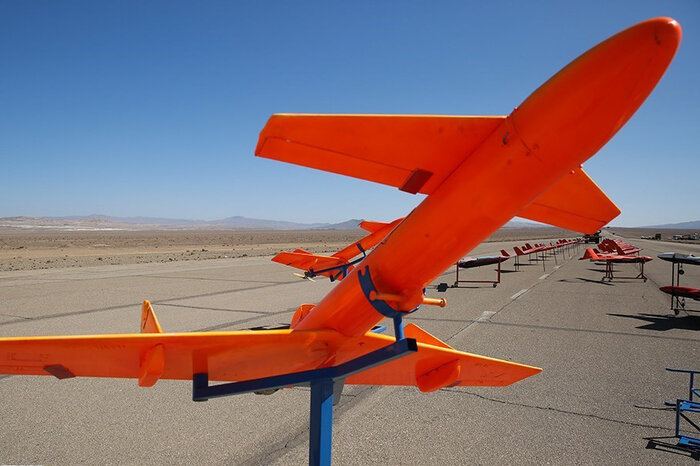
    Ababil-2 specifications:
    Length: 2.88 m
    Wingspan(rear): 3.25 m
    Height: 0.91 m
    Empty weight: ~ 27 kg
    Maximum take-off weight: 83-128 kg
    Payload: 40 kg of cargo or explosives
    Internal fuel capacity: 16 liters
    Engine: W3 or MD series with 20-30 hp
    Maximum speed: 370 km/h
    Cruise speed: 250 km/h
    Combat range: 120 km
    Endurance: 75-120 minutes
    Service ceiling: 3352.8 m
    Origin: Iran

    Click to view full size image

    “Ababil-2 Drone” collection of posters in Arabic, Persian, Kurdish, Russian, Chinese, Azeri and Hebrew for social media:

  • Israel claims downed three Iranian drones + Video

    Israel claims downed three Iranian drones + Video

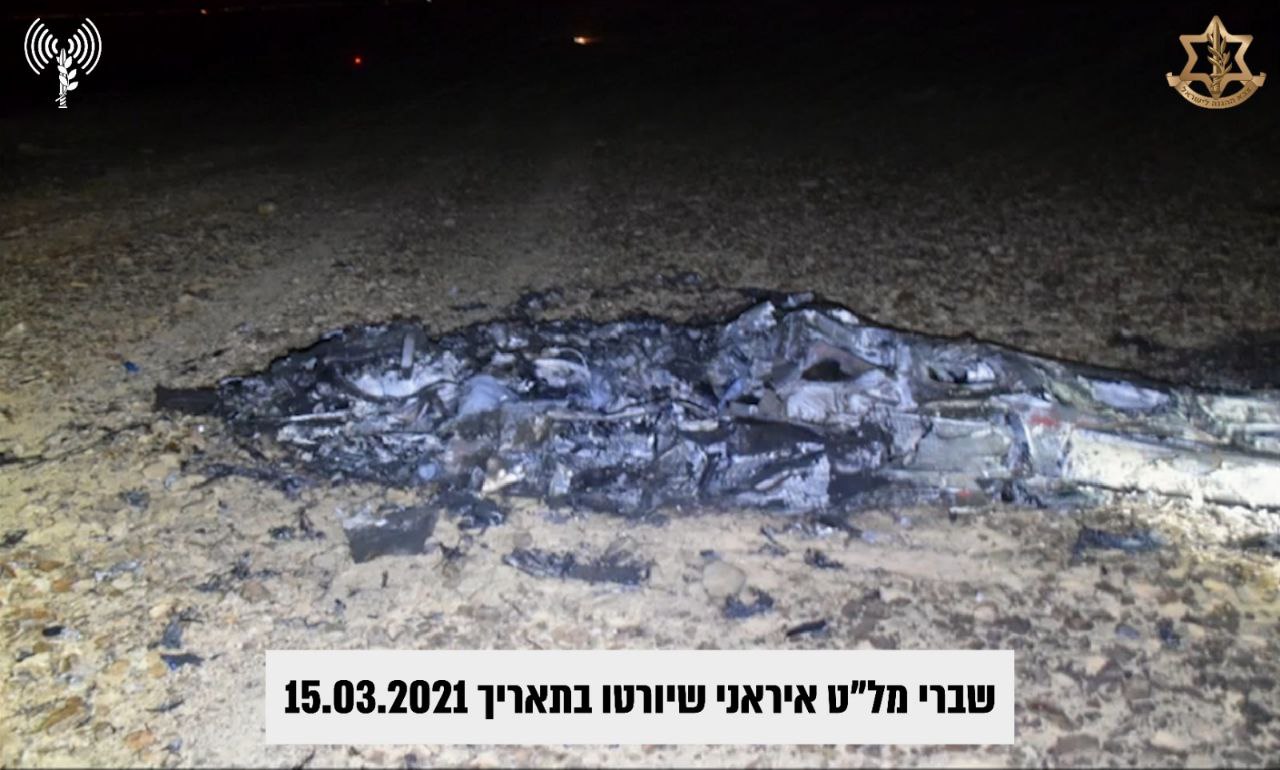
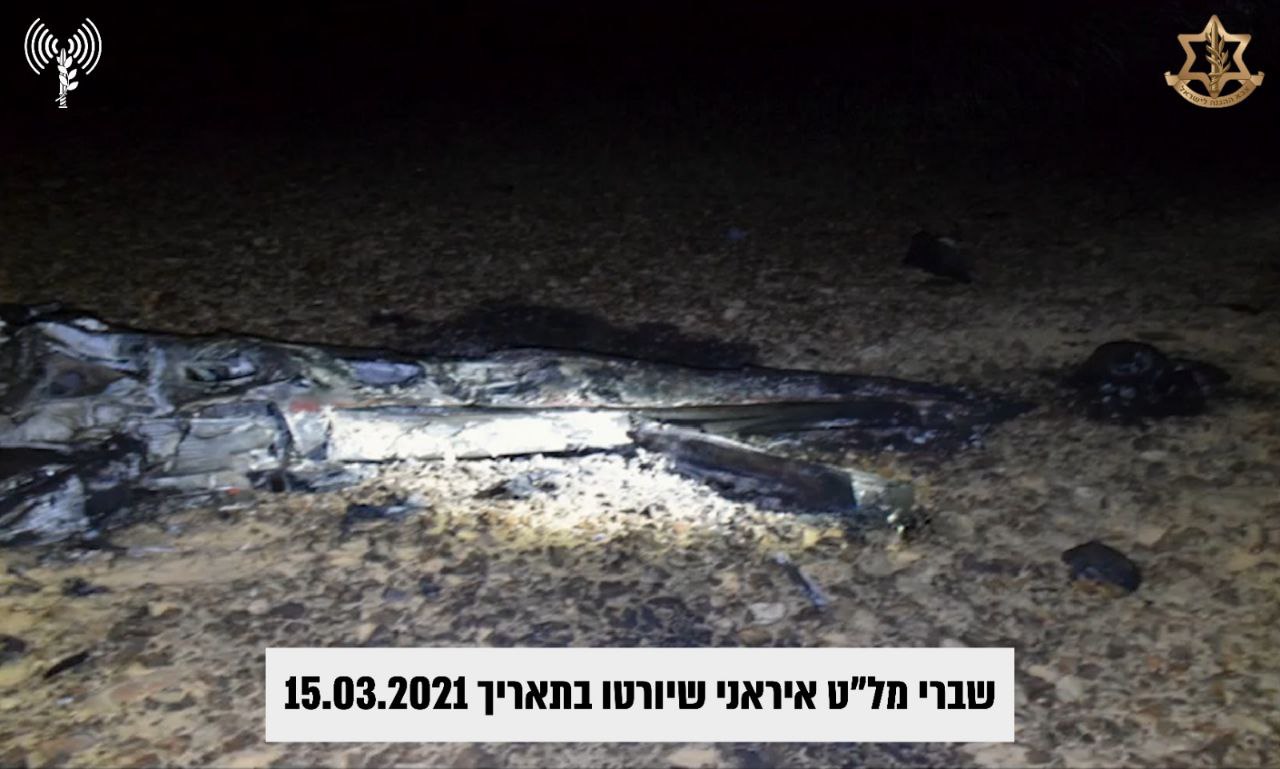
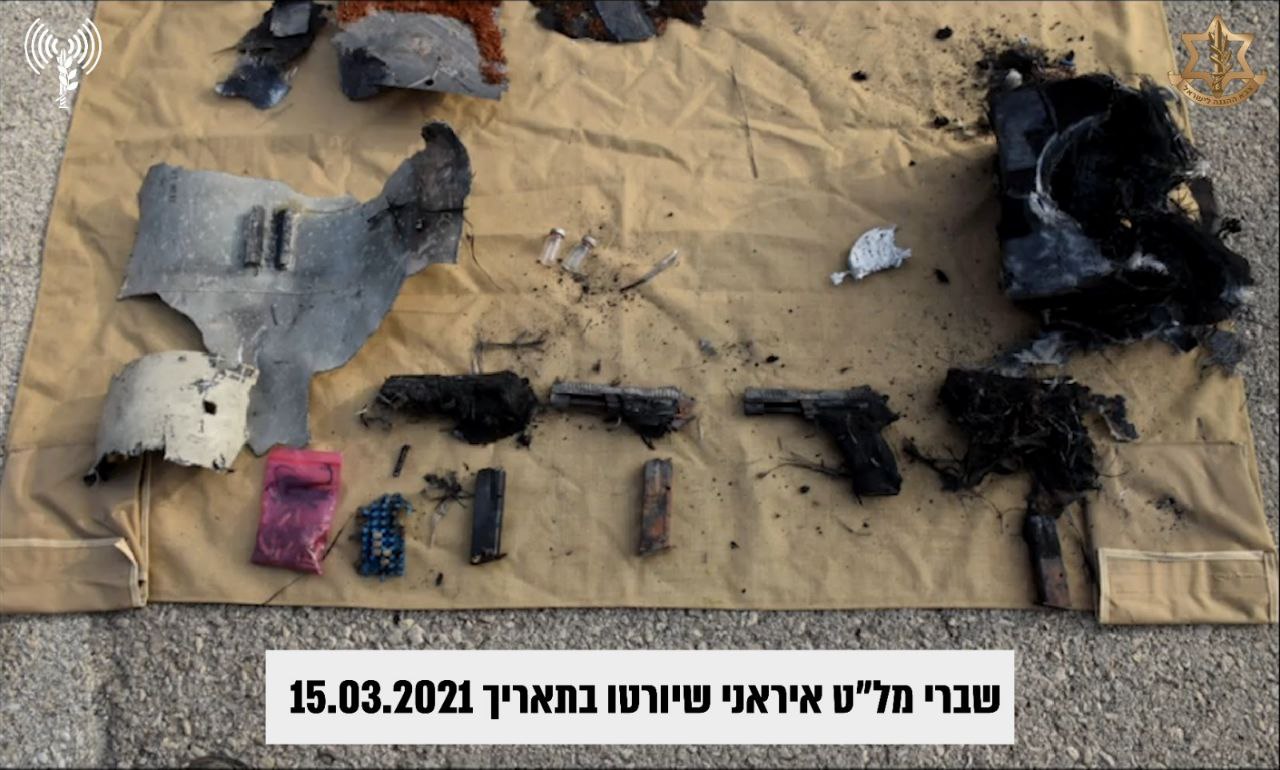
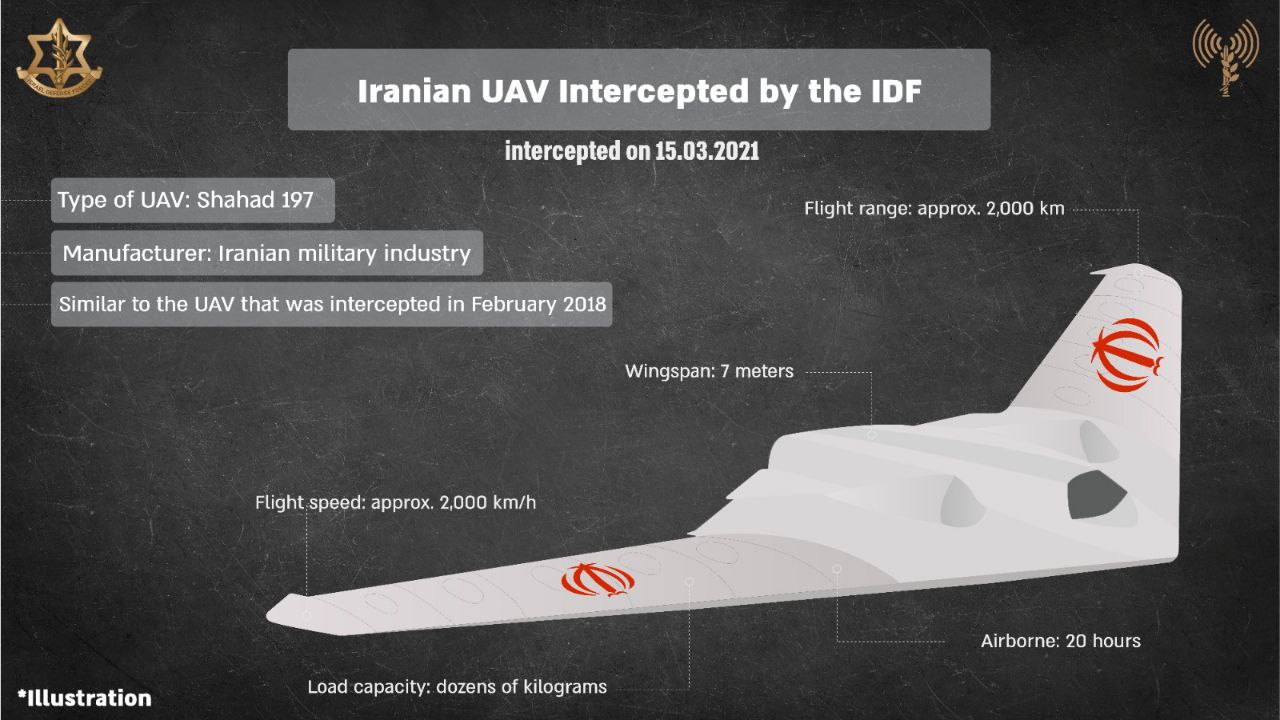
    According to Israeli media, two Iranian Shahed-197 drones attempted to enter the airspace of occupied Palestine on March 15, 2021 and transfer weapons to the Gaza Strip, but were intercepted and destroyed by Israeli F-35 fighter jets.

    Israel claims the drones were moving east and south toward occupied Palestine, and that their destruction was carried out in cooperation with countries in the region (possibly Jordan and Saudi Arabia).

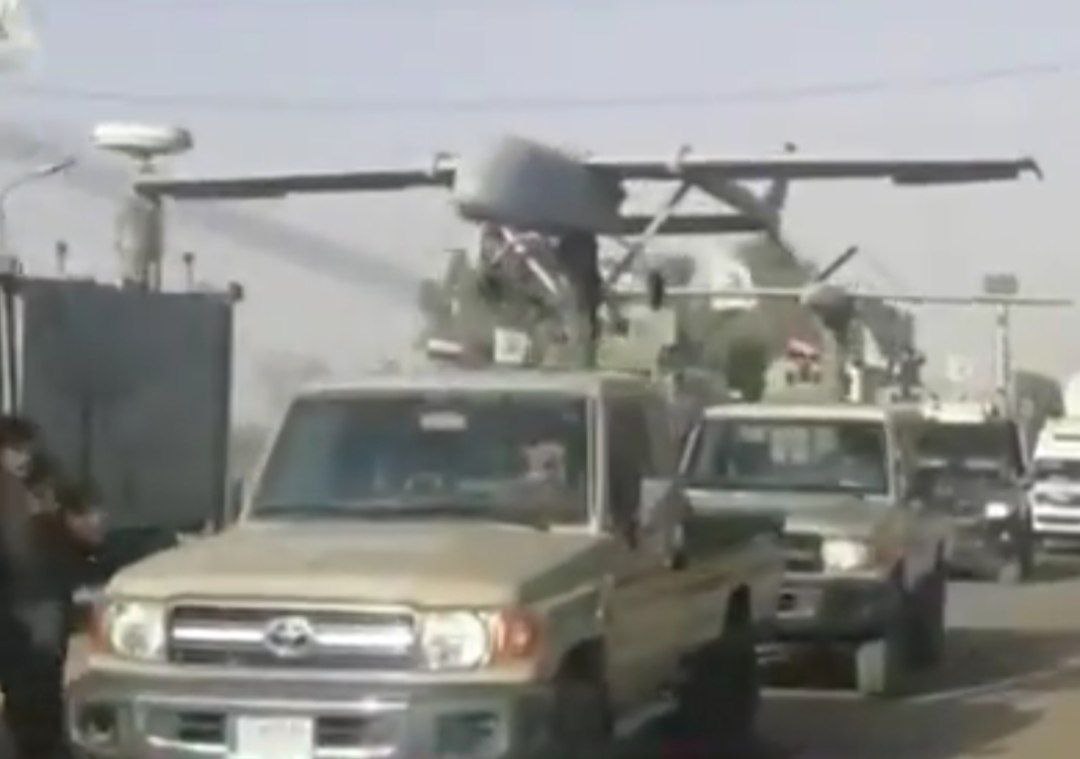
    Also, an Iranian drone (similar to AnsarAllah’s Samad drone) during the recent Israel-Gaza war on May 18, 2021, from Iraq, intended to conduct operations on the territory of occupied Palestine, which is destroyed by Israel. However, according to the infographic provided by Israel, the type of this drone matches the drone unveiled in the parade of the Iraqi Hashad al-Shaabi forces. Therefore, the drone does not belong to Iran and the operation was carried out by Hashad al-Shaabi.

    Iranian officials have not yet responded to the news. However, it is possible that these drones, were used by the resistance groups such as Hezbollah and AnsarAllah, with aim of reconnaissance operations in the occupied Palestinian territories.

    It should be noted that the Israeli claim about the type of drone which they call it as Shahed-197 is wrong and basically such a model is not made in Shahed series. They probably meant the Shahed-181 or 191 drone. According to the video published by Israel, the Iranian drone has a propeller engine, so this drone is a Shahed-181 type.
    The Shahed-181 combat reconnaissance drone is similar to the Shahed-191 drone but with a propeller instead of turbojet engine, and can carry two bombs weighing 40 kilograms and has a range of 1,000 to 1,500 kilometers.

    Video No. 1: Destruction of alleged Iranian drones (probably Shahed-181 drone) by an Israeli fighter jet
    Video No. 2: The third drone that has invaded occupied Palestine from Iraq
  • Iran’s IRGC Unveils New Missile and Drone Bases + Video

    Iran’s IRGC Unveils New Missile and Drone Bases + Video

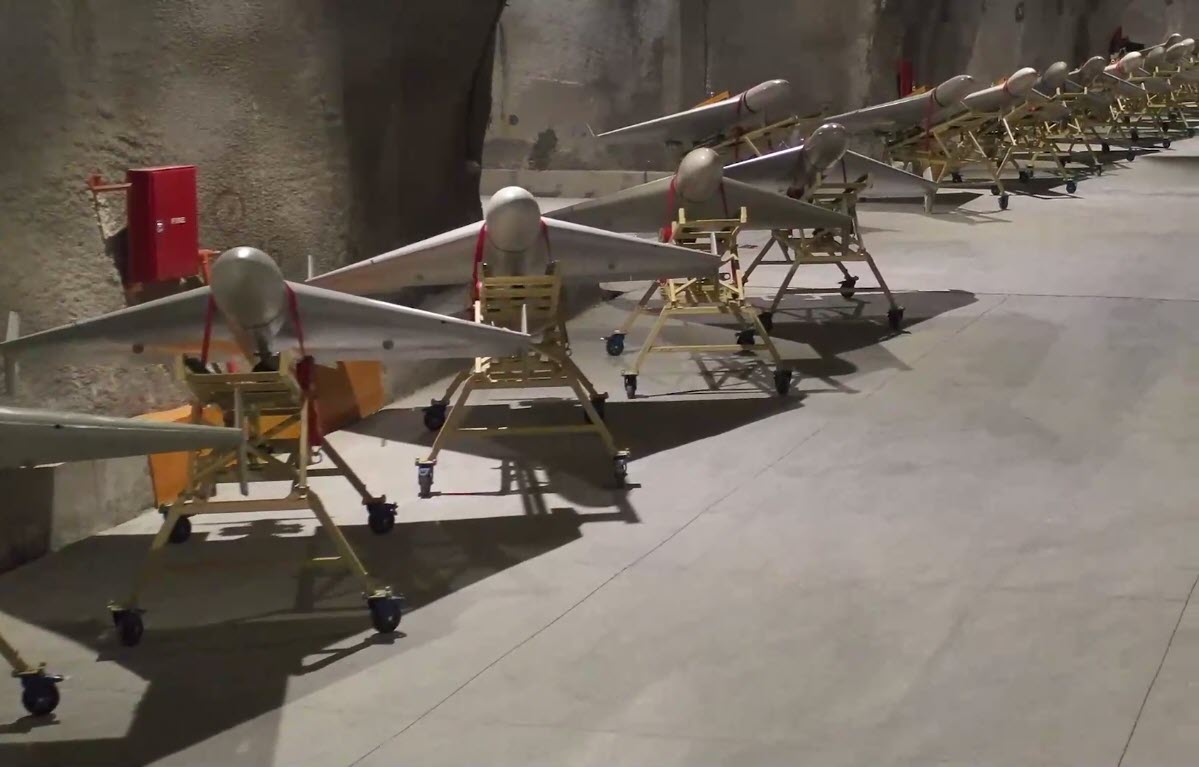
    On the eve of “Revolutionary Guard’s Day” (Guardian’s Day), images of two underground missile and drone bases of the IRGC Aerospace Force were displayed in the presence of Major General Hossein Salami, IRGC Commander-in-Chief, Brigadier General Amir Ali Hajizadeh, IRGC Aerospace Force Commander and a number of other military commanders.

    According to IRGC statement, these bases are built in the heart of the high mountains and house ground-to-ground missile systems with advanced equipment and attack drones. This is the first time that the IRGC Aerospace Force has unveiled its underground drone bases.

    Read more: Shahed-136 Loitering Munition

    Commander of IRGC Aerospace Force stated: “Currently, we can launch 60 drones (swarm mode) from this base in a fraction of a second in the first wave. Because the range of these drones is extended and not limited; We have no target limitations and we can hit any hostile target at any range”
    Brigadier General Amir Ali Hajizadeh emphasized: “Our missile and simultaneous firing power has increased more than 6 to 7 times, and the preparation time for firing have been greatly reduced.”

    Video released from IRGC underground tunnels – contains old footages of ‘Great Prophet 17’ exercise (PBUH)

    Read more: Iran’s Great Prophet 17 Exercise + Images

  • UAV drill of the Army of the Islamic Republic of Iran + Images

    UAV drill of the Army of the Islamic Republic of Iran + Images

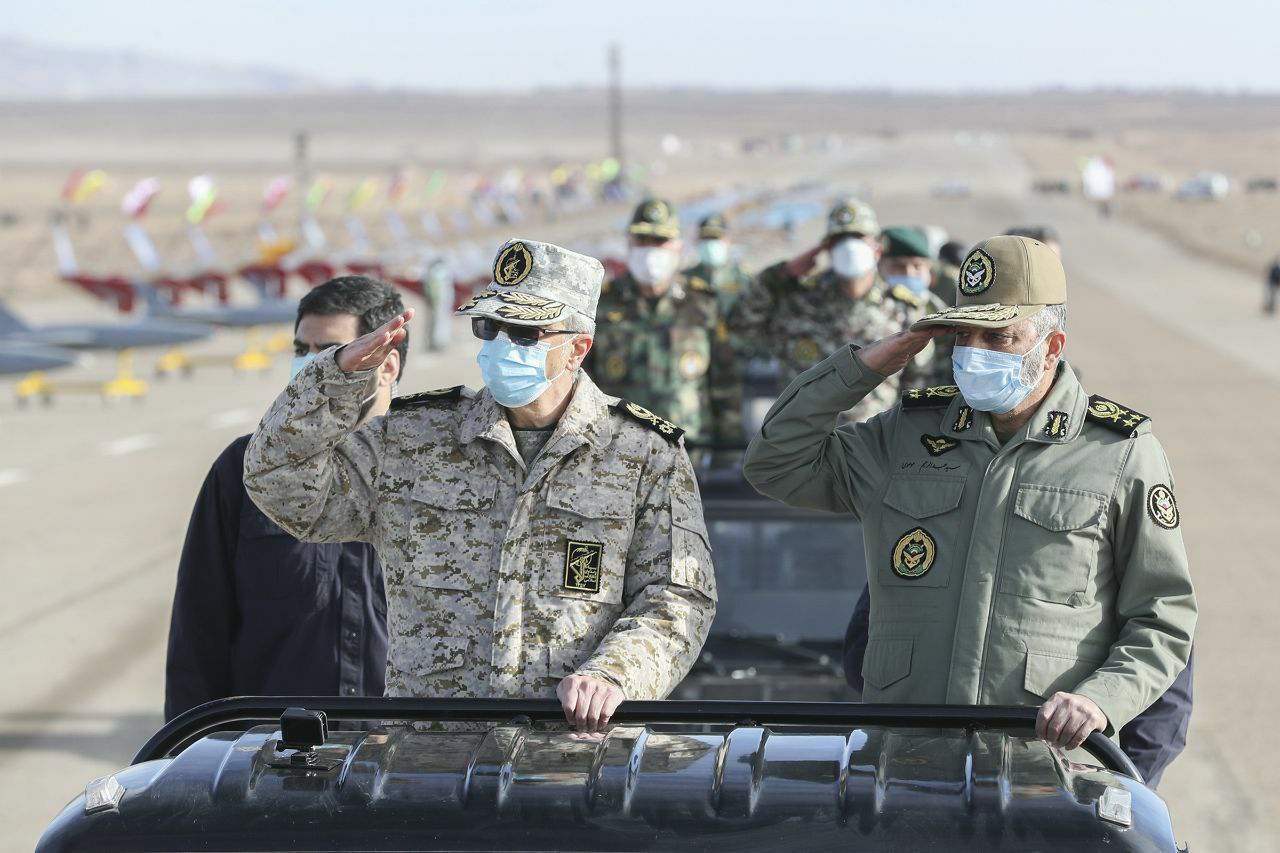
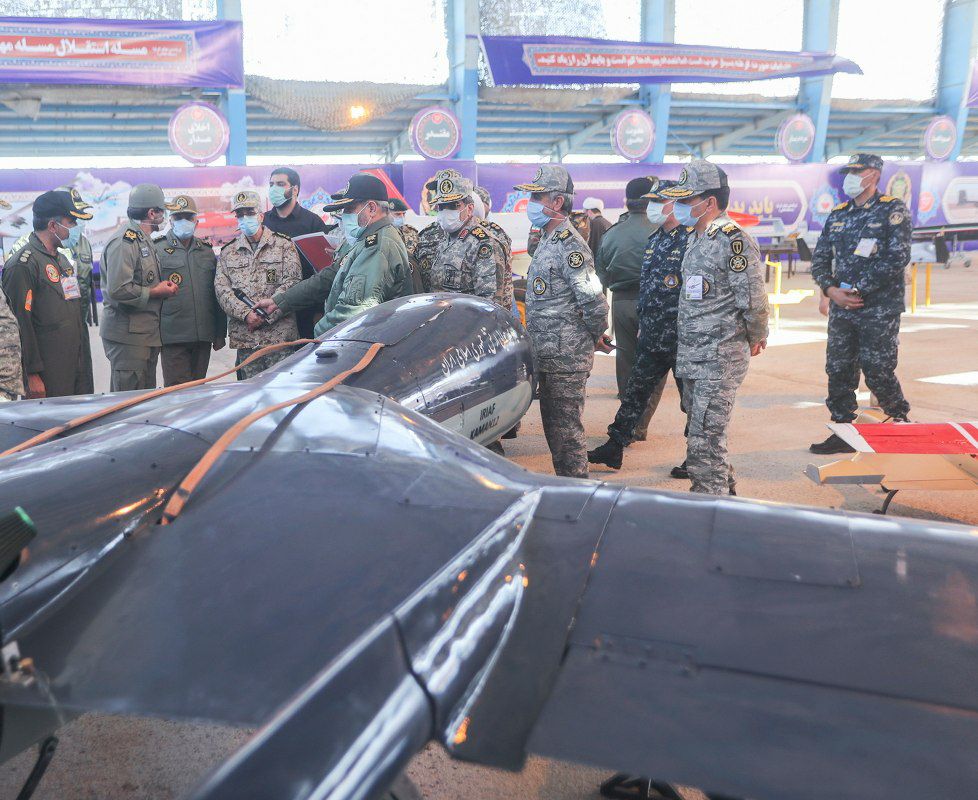
    In this ceremony, Major General “Mohammad Bagheri” Chief of General Staff of the Armed Forces and Major General “Seyed Abdolrahim Mousavi” Commander-in-Chief of the Army, visited the first major drone combat exercise of the army with the participation of hundreds of combat drones including bombers, interceptors, reconnaissance and surveillance, forest, suicide.

    Achievements of army drones including Kaman, Karar, Kian, Simorgh drones, all types of Mohajer, Ababil, Yasir, Sadegh, Hazem, all types of combat multi-rotors and combat support with the ability to perform operations in electronic warfare environment and equipped with radar interception and deception systems from these were the systems that the Chief of General Staff of the Armed Forces and the Commander-in-Chief of the Army visited at the exhibition, and also for the first time a number of new weapons of these forces were unveiled.

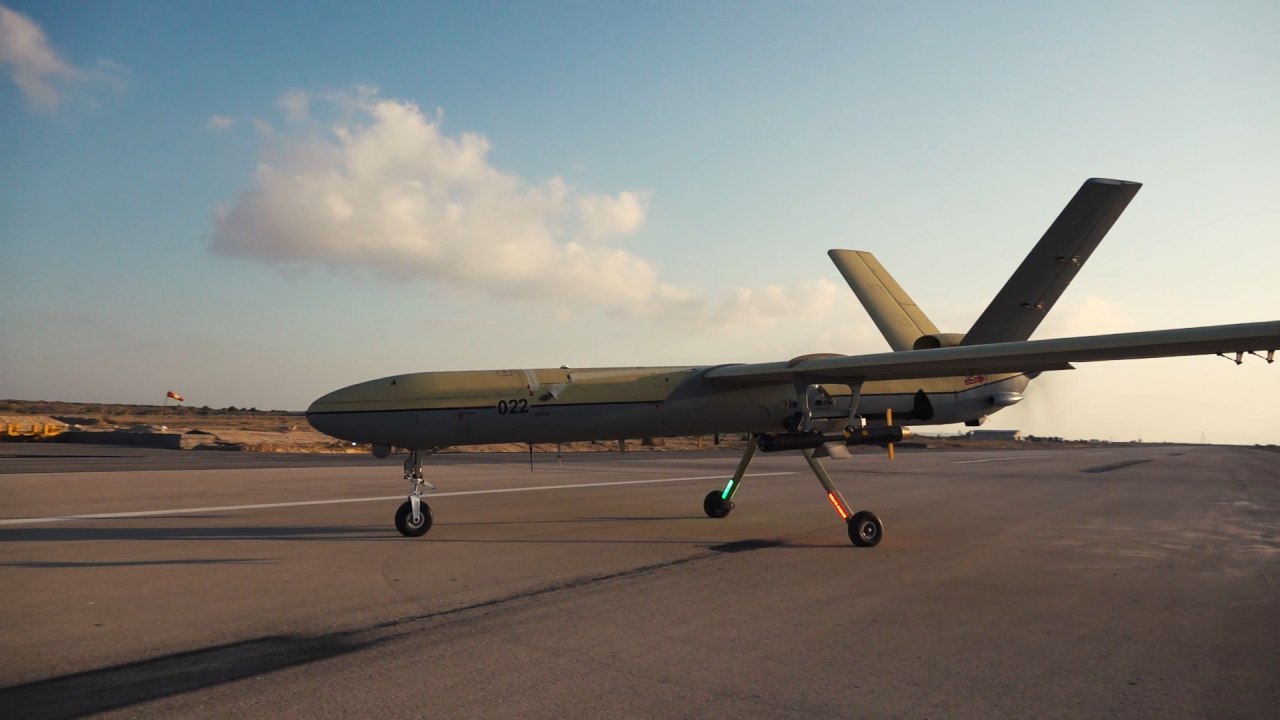
  • Military Knowledge: “Shahed 129” Reconnaissance Combat Drone

    Military Knowledge: “Shahed 129” Reconnaissance Combat Drone

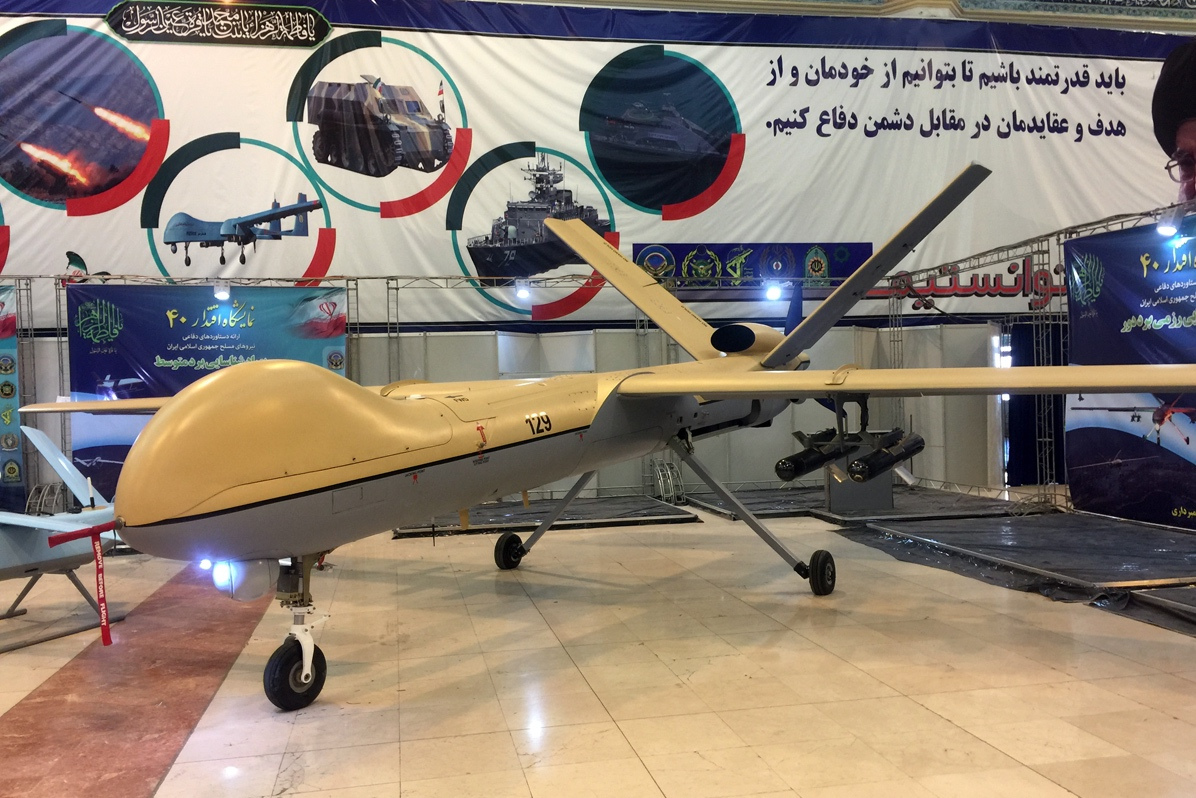
    According to Major General Mohammad Ali Jafari, former commander-in-chief of the Iranian Revolutionary Guard Corps (IRGC), Shahed 129 performs reconnaissance and combat operations with a 24hr endurance and combat range of 1,700 km.

    The control and guidance of this drone is done by fixed or mobile ground control station. Using a mobile control station that can be installed on a trailer or truck increases the useful and effective range of Shahed 129. Also, a version of this drone is equipped with a satellite guidance system.

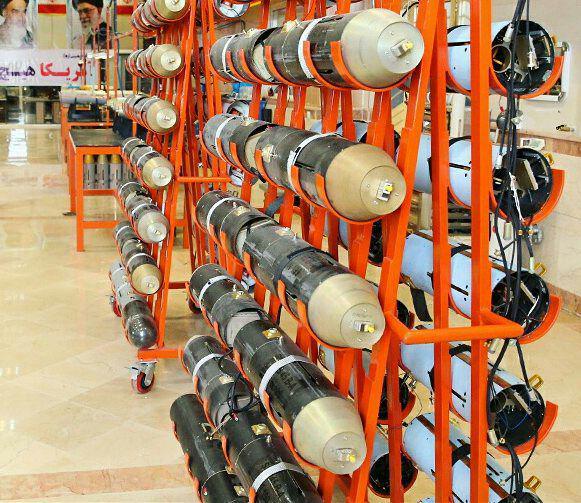
    Shahed 129 UCAV can use a wide range of bombs and missiles that are optimized for use in UAVs, however, Sadid bombs and missiles are mainly used for the Shahed 129. Sadid is the name of a family of Iranian guided bombs and missiles, designed and produced by the Iranian Revolutionary Guard Corps Aerospace Force. So far, various types of Sadid bombs and missiles have been developed by the IRGC.

    Shahed-129 drone can carry eight bombs or four missiles. By installing Sadid guided bombs and missiles on this drone, the Shahed 129 drone can hit the desired targets in its operational area with the highest possible accuracy.

    This UCAV is powered by a Rotax914 turboprop engine and has a flight ceiling of up to 7300 meters.

    The Shahed-129 drone has been widely used by Iran and its allies in the battles of Syria and Iraq against Al-Qaeda and ISIS terrorists, and has a very brilliant but little-known operational history. Shahed 129 drones have so far carried out more than 1000 successful operations in Iraq and Syria.

    Shahed 129 in action

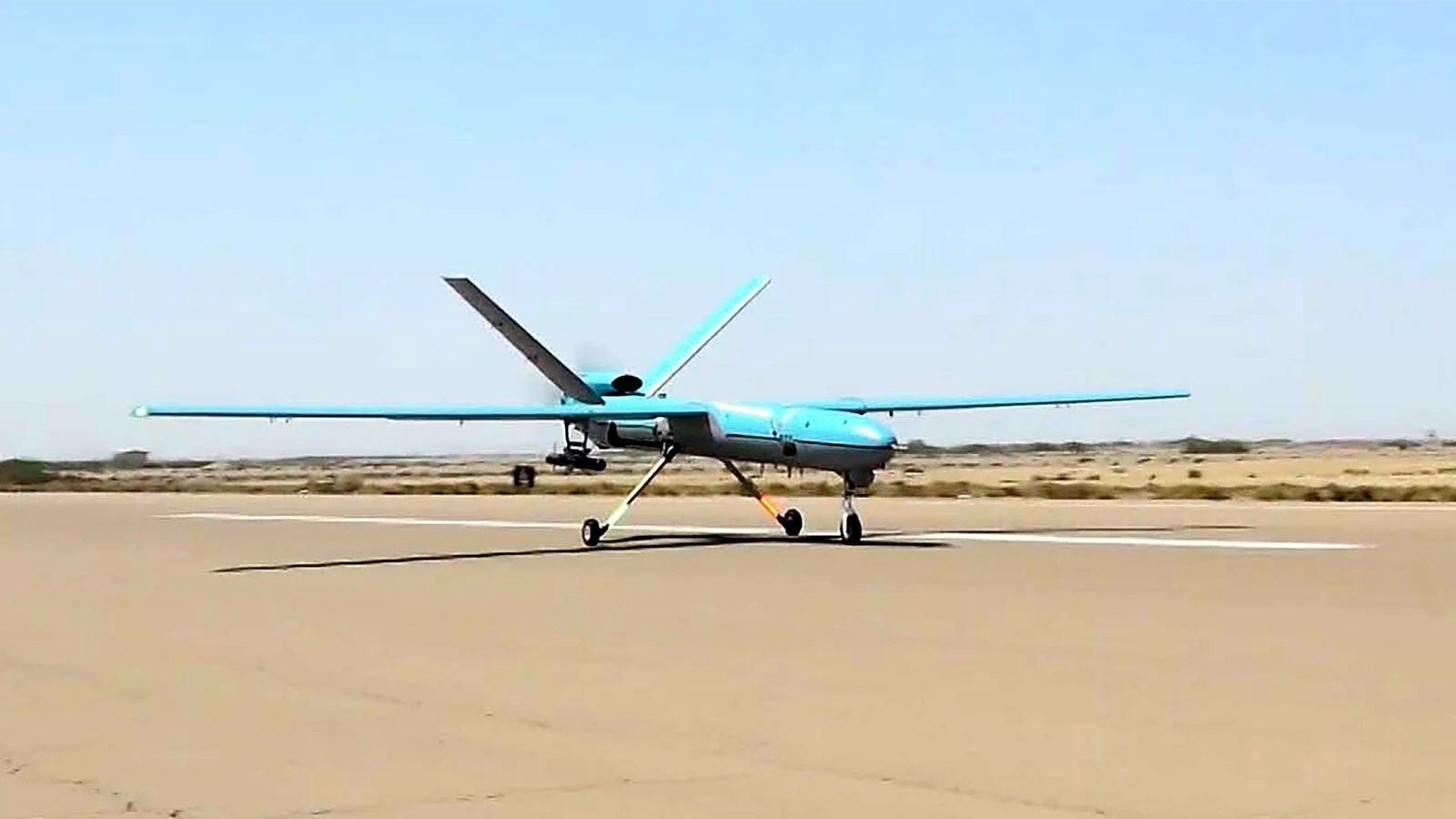
    In February 2016, a new version of Shahed 129 was showcased, which was different from the previous Shahed129 drones. In this variant, there is an arc shape in the nose of the UAV, which is usually used in other drones as a place for the satellite antenna. Therefore, based on the information provided by General Hajizadeh, the commander of IRGC Aerospace Force, it can be said that this drone is equipped with a satellite guidance system, and this potentially increases the range and operational capabilities of the Shahed-129 drone.
    Of course, at the time of the unveiling of this new type, Iran did not have a special military satellite to use this capability and exclusively guide Shahed 129 by a satellite. But it seems that this capability has been designed and implemented with foresight and forecasting the developments of the aerospace industry of the Iranian Armed Forces for the near future. Also, this capability allows Iran’s allies to benefit from its satellite guidance capabilities if this special variant is purchased and used.

    It is also worth mentioning that in December 2019, the first marine variant of this drone, known as the Simorgh drone, was handed over to the Islamic Republic of Iran’s naval forces. This drone has been specially built and optimized for use in the Iranian Navy units.

    Shahed 129 drone specifications:
    – Combat range: 1,700 km
    – Endurance: 24 hour
    – Ceiling: 7,300 m (24,000 ft)
    – Speed: 150 to 200 km
    – Length: 8 m, Wingspan: 16 m
    – Armament: 8 bombs or 4 missiles
    – Weapon payload: Up to 400 kg
    – Mission: Combat / Intelligence / Surveillance / Reconnaissance (CISR)
    – Manufacturer: Iran Aviation Industries Organization (IAIO), Iran Aircraft Manufacturing Industrial Company (HESA)

    Click to view full size

    Shahed-129 posters in English, Arabic (شاهد 129), Russian (Шахед 129), Azeri (Şahid 129), Kurdish (شاهێد 129), Hebrew (שאהד 129) and Chinese (沙赫德 129) for publication on social media:

  • Israeli F-16 shot down by Syria over Golan

    Israeli F-16 shot down by Syria over Golan

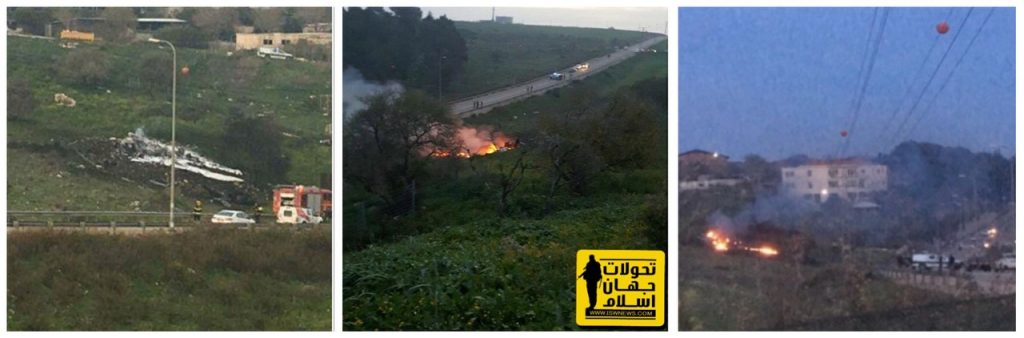
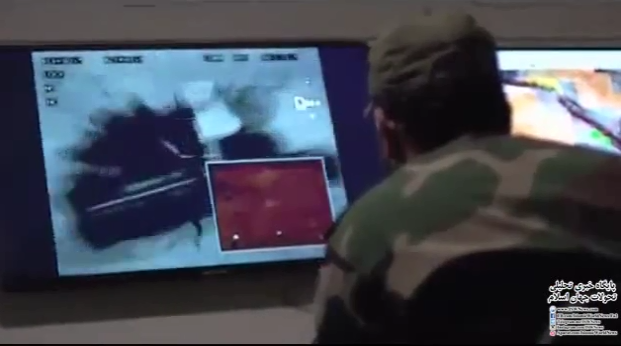
    On Saturday morning Israeli fighters attack a base of UAVs in T4 airbase in the center of Syria and as a reaction to this attack, Syrian air defense unit intercept the assaulters and kill one F-16.

    Israel claim that their fighters only attack an Iranian base which controls UAVs in Syria.


    Before it, during the operation Israel claim to intercept Iranian drones entering Israel as a breaking news and they are going to attack Iranian bases in Syria to answer this violation…


    On the other side, the joint commandment of Syrian allies in a statement decline this allegation and claim that Israel attacked the base for UAVs which were used only to fight with terrorists specially ISIS and played a crucial role in liberation of eastern parts of Syria.

    They also claim that today morning Moghawemat drones flew for reconnaissance and attacking the remainder of ISIS in Badiya in Syria and when they were attacked by Israel they were over Sukhna en route to Badiya in Syria and Israel accusation about drones entering occupied Palestine is an obvious lie…