Tag: ISWNews.com
-

Latest Updates on “Operation Olive Branch”, 12 March 2018 + Latest Map of Fronts in Afrin
As mentioned in previous news, the fall of strategic height Baflun in northeastern axis (Sharan axis) is same as reaching northern gates of Afrin.
The accuracy of this statement was proved by fall of all the northern and eastern villages between Afrin and height Baflun and finally fall of village Qibar, the closest village to Afrin which lays at 1 km northeast of Afrin.
During the previous few days in northern axis, Turkish armed forces could occupy important villages such as Qatma, Kafr Jana, Maryamayn, Jalbul, Qibar, …
In southern axis however, after fall of Jinderes, the Olive Branch Operation commanding center could reach within 3 km of Afrin.
In this axis about 15 small and big villages were occupied by Turkish forces in the last few days.
Considering current situation, Turkish Army and militia led by them surround Afrin soon and this will be costly for those who preferred to be occupied by Turkey than to be embraced by fatherland and civilian are the ones who suffer the most.
The news of civilians evacuation of city are not to be confirmed nor denied; these news are broadcasted mainly by media close to the Operation’s commanding center and some think that the purpose is to destroy the spirit of defendants of city and to justify possible massacres which will happen after city falls.
In other axis such as Bulbule and Rajo, militia are advancing constantly and during yesterday and today several areas in north of Rajo and south of Bulbule such as Jaqmaq Kabir & Saghir, Alamdar, Kutanli, Horan , Taflah, … fell.
Download high quality map

-

Latest Updates on Eastern Ghouta of Damascus; the Ghouta is Divided into Three Parts!
Therefore militia are surrounded in three separate regions.
The first area is in Rayhan and Duma regions, the second is in Harasta region and the third is in south of Ghouta in regions such as Arbin, Zemelka, Hamuriya, Jobar …
Harasta surrounding happened after that forces present in south of al-Biruni hospital reached Duma-Harasta road in north of vehicles’ base.
Aftris region in south region of eastern Ghouta is also liberated by Syrian Army after three days of engagement.
-

Abusing children for propaganda, Repetitive technic of western media from Aleppo to Ghouta
In this video by showing flashbacks of liberating east of Aleppo, mentions the abuse of Bana Alabed a seven years old Syrian girl, the daughter of an opposition from Kataeb Safwah, whose mother twitted from her account to encourage Western countries to attack Aleppo!
The same media trick is still being used in Eastern Ghouta by exploiting children such as Noor, Ala and Muhammad Najem and Western mainstreams are covering them widely.
Max Rosenthal, an assignment editor of Washington Post, is sad to see the number of readership drops about Syria story. An image showing one-sided, linear, hypocritical and exaggerated story told by Western mainstream media about Syrian war.
-
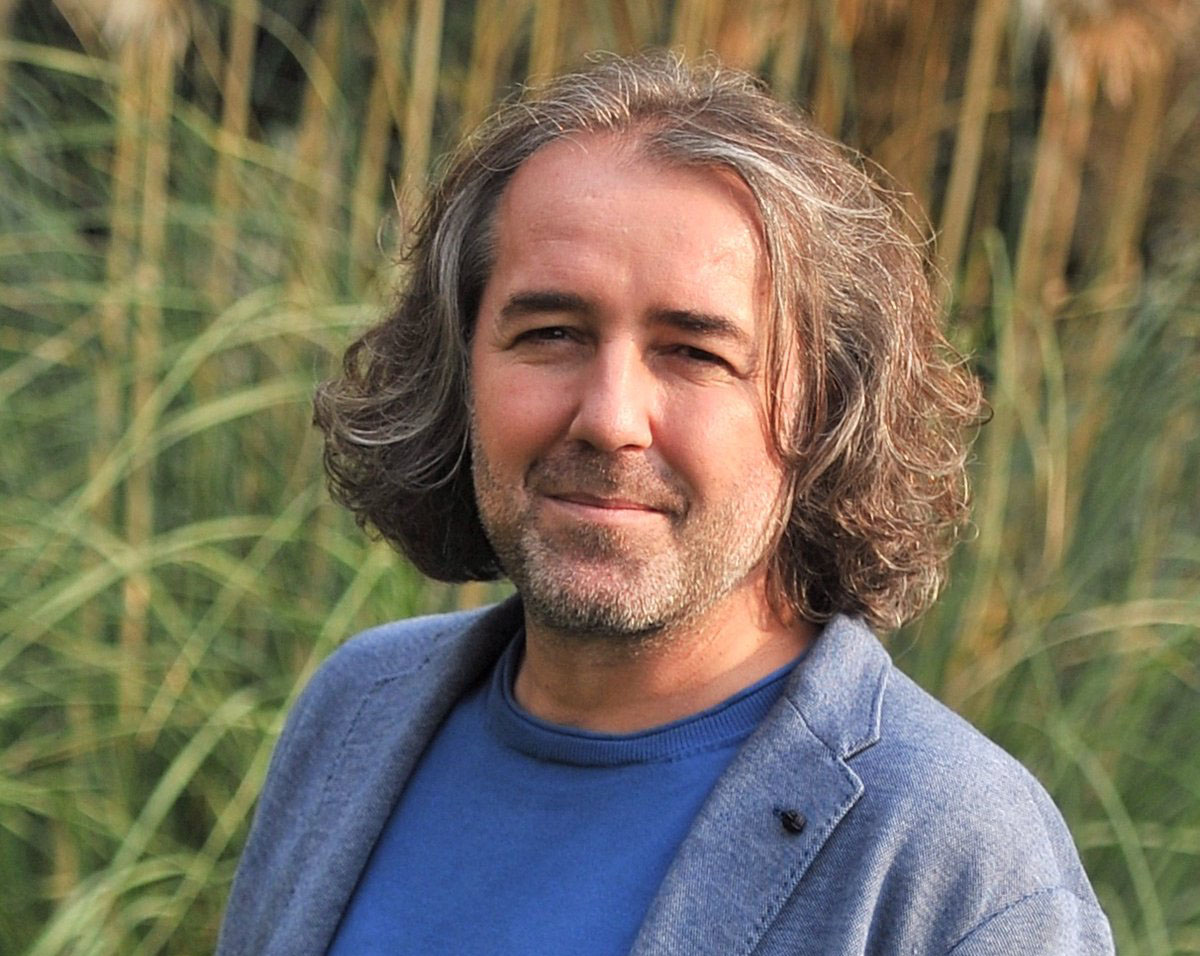
“Everyone knows that the Turks do not leave easily from where they entered”
Threatened with death by salafi jihadists, Fehim Taştekin also undergoes several prosecutions in Turkey for his articles on the Syrian crisis and on president Erdoğan, who he carefully follows since the 1990’s from within the Islamic movement. He now lives in exile, where I met him.
- Since 20th January, the Turkish army is conducting a vast ground and air offensive in the region of Afrin, one of the Rojava’s three autonomous region. Why?
This is related to the Kurdish question and to the Turkish government’s obessionnal plan for Syria. Since 2011, Erdoğan has made many mistakes because of which many jihadist groups haves emerged and established themselves in our region. Moreover, he failed in overthrowing Assad and installing the Muslim Brotherhood. He had to intervene to stay in the game and prevent the formation of a Kurdish-lead autonomous region in north Syria (Rojava), of which Afrin is the most western part.
Already in 2016, while the “Euphrates Shield operation”, the Turkish army halted the advance of the People’s Protection Units (YPG), the defense force of the ‘de facto’ autonomous region (Rojava) who sought to link Kobane and Afrin. This success allowed Erdoğan to gain influence on the Syrian chessboard. Russia, Iran, the United States understood that they had to take Turkey into account.
By launching the “Olive Branch” operation in early 2018, the Turkish President is pursuing the same logic: The consolidation of his influence on the negotiation process. He also wants to break down the alliance between the USA and the YPG.
If Turkish troops succeed in Afrin, the next step will be an offensive on Manbij, where there are american units. This was at the center of discussions between Secretary of State Rex Tillerson and President Erdoğan during their meeting on Thursday 15 February in Ankara.
- In the past, the Afrin authorities seem to have avoided any confrontation with Turkey. Why is the Turkish government aiming this region precisely?
Afrin is a Kurdish area, inhabited mostly by Kurds since at least a thousand years. After 1980, while Abdullah Öcalan, the leader of the PKK [detained by Turkey since 1999], lived in Syria, he was very active in the Kobane, Aleppo (Sheikh Maksud area) and Afrin regions, where Kurds became mostly “Öcalanists”. Here one must be careful: Being an Öcalanist does not mean automatically being member of the PKK. Nevertheless Afrin’s Kurds adhered to many of Öcalan’s ideas.
In cooperation with some members of the Assad family and the regime, Öcalan has created many collectivist cooperatives in Afrin, for example for the cultivation of olives, making olive oil and soap, and setting up transportation chains around Syria. These cooperatives helped local communities work together. The region of Afrin became a sort of applied laboratory of Öcalan’s ideas. This is also what the Turkish government is targeting. While having problems with other Kurdish parties Öcanalist movement had good contacts with ethnic or religious communities in the region like Arabs, Circassians, Chechens, Armenians or Yezidis (Kurds).
Afrin is a strong base of the Öcalanist movement and of the Democratic Union Party (PYD), it is why Turkey will face a fierce resistance. The government says: “We are not fighting against Kurds but a terrorist organization”. But the fact is that the local population supports widely the PYD and its allies in the autonomous project. And even those who do not support this party, take up arms to protect their land. This is why one should not compare the PYD and the Islamic State (IS). The Kurds are fighting for defending their land, their homes, while most of the IS jihadists were foreigners, it is very different. People are aware that they have faced two projects which are absolutely opposite each other. So the one is bringing darkness back with its all forms, the other is offering to share powers, participating to democratic processes, getting women into social and political spheres, securing all ethnic and religious identities. Since 20th January, 31 Turkish soldiers and 194 fighters of the Free Syrian Army died. Things are not going as well as Erdoğan had announced.
- On the ground, the remaining forces of the Free Syrian Army (FSA) fight on the side of Turkey. A British newspaper reported that many of its soldiers were former IS jihadists… Has Turkey got jihadist partners?
Many different groups are taking part in this military operation. Some of those include former Al-Qaeda members, Salafi jihadists and a variety of Islamists such as the Muslim Brotherhood, mercenaries and some volunteers. What unites them is their unfavorable attitudes and ideologies towards the Kurds.
Besides this, the Islamic-nationalist power of Erdoğan has created its own militia. There is a private security company, called SADAT, which trains, equips and advises fighters who fight on behalf of Turkey.
SADAT, composed of former Turkish soldiers, gained in prominence during the Syrian crisis. The budget and weapons that are devolved to this organization is top secret. We do not know how it is financed.
Last month, we saw a picture of Adnan Tanriverdi, former Turkish officer and owner of SADAT, beside Turkish generals in the National Security Council meeting for the Afrin operation. He participated to this meeting without having any official status. This is unusual and very problematic for the orientation given to the national security and to the state tradition of Turkey.
- You mentioned links between the Kurdish PKK and the Assad regime. What about them?
In 1990, the PKK succeeded in sending six “independent” deputies to the Syrian parliament. All came from Afrin. Some of those were directly members of the PKK, others were only “patriots” (Yurtsever) who are not member of PKK but supporting it indirectly. In that election the number of seats had left for independents increased from 18 to 40 percent. This assumed an ‘olive branch’ for Kurds by the regime that time. With this system a total of 15 Kurds could enter the parliament. With the fear of losing control, the old system was re-established at the 1994 election. The Afrin Kurds were essentially “patriots” (Yurtsever) and have always been close to Damascus.
However, in Jazeere the relations between the Kurds and the Syrian regime were getting more tense. Because of the Arab Belt Project (1962), the land of many Kurds was confiscated and civil rights of 120.000 Kurds were revoked after the 1961 census. Because of that some 350.000 Kurds did not have any identity card or passport until 2011.
Otherwise, the Syrian regime tolerated the PKK as long as they fought for the Bakur [Turkish part of Kurdistan], as this was a weapon that the Damascus regime could use against Turkey.
Things changed only after the Adana Agreement of 1998 and the deportation of Öcalan out of Syria [he was arrested in 1999 by Turkish and Israeli services in Nairobi].
In Syria, the Democratic Union Party (PYD) emerged in 2003. Influenced by Öcalan’s ideas (establishment of self-governed communities, emancipation of women…), the PYD presents himself as a party fighting for democracy in Syria. Hence a less tolerant stance of the Syrian government towards it.
Quickly, after the 2011 uprising, the Syrian government withdrew from the northern part of the country or directly gave the control of some provinces to the PYD. There are several reasons for that. First, the PYD is an organized and known structure with which one can anticipate and negotiate. Second, this kept Kurds outside the uprising, and Damascus wanted to focus on the central hubs of contestations which where strategically more important. Third, it was also a message to Turkey: ““If you support Islamist groups against me, you will have to face a Kurdish autonomous region on your border”.
- At the beginning, until 2015, things were not going so badly between Ankara and the PYD – its copresident, Salih Muslim, visited Turkey several times…
Yes, he was invited in Istanbul and Ankara many times. Even more amazingly, a couple of leaders of YPG exchanged in Ankara with Turkish generals. They prepared a joint operation together to move the Suleyman Shah Tomb Tomb to the Eshme, a closer point to the Turkish frontier. This was a unique relationship, and some believed that it would have a positive impact on the peace negotiations between Ankara and the PKK. But after that, Ankara named the PYD a “terrorist organisation” and placed a bounty of 4 millions of TL (more than 850.000 euros) for the arrest of Salih Muslim.
To understand this sudden change, one must take account of the broader peace negotiations with Öcalan. The Turkish authorities made of Rojava issue a pre-condition of the peace process. Through Öcalan, Ankara asked three things to the Syrian Kurds: To end the Rojava as ‘de facto autonomy’; to cooperate with the Free Syrian Army and to fight the Assad regime. Öcalan refused these conditions making Rojava his “red line” too.
The attitude of Erdoğan during the siege of Kobane (autumn 2014) repeating that Kobane was to the point of falling in Daish hands, the fact he didn’t close the roads to the Daish militants, and close his eyes on the militants or materials transfer, legal or illegal: All these led to an outburst of anger in the Turkish Kurdistan, in which dozens of people lost their lives.
After that, the Peoples’ Democratic Party (HDP) [the Turkish and Kurdish pro-autonomy party] declared that it would oppose the presidential dreams of Erdoğan. This is why, in summer 2015, Erdoğan launched a war against Kurds: in Turkey and in Syria.
- Didn’t the Kurdish HDP leaders in Turkey, or the PKK leaders in Qandil (Irak) share some of the responsibility for the failure of these negotiations? Do you believe that the PKK has provoked this uprising?
Of course, the Kurdish movement made some mistakes and provided excellent arguments to Erdoğan. In some cities like Diyarbakır, Kurdish youths dug trenches and closed streets. Some HDP mayors declared the democratic autonomy.
But there was no massive popular uprising. Some youths gave a pretext to Erdoğan which was looking for launching a strong operation on the Kurdish movement, its municipalities and NGO. Some HDP deputies were even not happy at all with the youth’s behavior in the streets for it happened these youths had arrested some deputies to control their identity!
On the 22d of July 2015, two policemen were killed. The PKK first claimed it in retaliation to the massacre conducted by the Islamic State two days before in Suruç (30 people killed). Later on PKK denied.
It was the perfect pretext for Erdoğan to launch his operation against the Kurdish towns. Some neighborhoods were fully or partly torn to the ground, hundreds of thousands of people were displaced. The goal was to completely paralyze and destroy the HDP (who had 80 MP in June 2015, 59 five months later). Thousands of officials and volunteers of the party were arrested. Erdoğan acted with a terrifying brutality.
The Kurdish movement did not expect such a reaction. Öcalan could have dissuaded young people of going into the streets as he did in 2013, but the state isolated Öcalan during the crisis and did not let him address his people. The PKK leaders decided not to intervene, saying that the “youths are acting on their initiative”. They probably believed that if they diverted the attention of the government to the north, it would leave Rojava alone. It was a mistake.
In 2016, the Kurdistan Freedom Hawks (TAK), a PKK affiliate according to the Turkish State, conducted terror attacks in Istanbul, Ankara, Izmir and Bursa to take revenge of the massacres and destructions by the Turkish security forces in the south-east of Turkey since July 2015.
- According to Turkish authorities, the PYD in Syria and the PKK, forbidden in Turkey, is the same thing: two terrorist organizations…
In Syrian, the Democratic Union Party (PYD) follows the ideas of Öcalan. The core leaders of the PYD are linked to the PKK. However, one cannot say that it is the same thing. Most of the youths which fight in the YPG didn’t come from PKK and didn’t participate to the PKK camps. Many PYD members do not have any organizational links with the PKK.
On many points, the PYD looks closer to the Peoples’ Democratic Party (HDP). HDP was also founded on the ideas on Öcalan. Their strategy is the same: they believe that in order to guarantee rights for the minorities, it is necessary to democratize the whole country.
However, the HDP is less monolithic than the PYD. The HDP is a coalition of many movements: around the Kurdish Democratic Region Party (DBP) more than thirty left wing and ecological organizations are agglomerated, while on the other hand, thought the PYD has a few minor partners, it is accused of imposing a “single party regime”.
- The Turkish government wants to break the alliance between the PYD and the USA and make sure that the de facto Kurdish autonomy will never be recognized de jure. What are its chances of success?
Turkey can disturb calculations of other players up to a point but at the end of the day it will gain nothing except enmity between Kurds and Turks.
The aggressive policy of Turkey in Syria strongly affects Turkish Kurds who have very strong ties with Syrian Kurds. Turkish Kurds are as shocked by the attack of Afrin as they would if Diyarbakir itself was attacked. The Turkish government will not be able to erase the enmity that it has itself created. While, by supporting an autonomous Kurdish zone in Syria, he could have more easily solved the Kurdish problem, since the PKK and the PYD are interlinked.
Moreover, Erdoğan does not hide that he wants to send back a few thousand of the three millions million Syrian Arab refugees that Turkey has welcomed. This would overturn the demographic balance at the expense of Kurds. This ethnic cleansing will be perceived as a “genocide” by all Kurds.
- Regarding “ethnic cleansing”, YPG-PYD Kurds also have been deporting Arab populations and confiscating their land…
Yes, they have been accused of “ethnic cleansing” during the Operation against IS in Tel Abyad (Rakka province). YPG have made mistakes by destroying houses used as shelters by IS soldiers and demanding some villagers to evacuate of their houses. But I would not say that any intentional ethnic cleansing took place…
Some measures were temporary bases and after securing areas people started to come back if they have not links to the ISIS. During the war thousands settlements were destroyed because of bombings and their settlers fled in Syria.
Erdoğan has used a report of Amnesty International (2015), very critical on YPG-PYD Kurds, but it was grounded on unreliable and hastily collected information in early stage of the case… After the victory over IS, Kurds of Tel Abyad have established a civil council to govern the town with Arabs and Turkmens. It means they didn’t exclude Arabs and Turkmens as Turkey insisted.
- What is the position of Russia and the USA on the Turkish military offensive in Afrin, and more broadly, on the Kurdish problem?
Russia hopes that thanks to this operation, the YPG will turn away from the United States and cooperate with the Syrian regime. In exchange of Afrin, Russia is expecting a strong cooperation from Turkey to neutralize Islamist and jihadist groups in Idlib. But what Erdoğan is going to do is unclear. He tends to protect fighters in Idlib that are one of the main targets of Russia.
If Turkey takes the control of Afrin it will connect Idlib to the Azez-Cerablus-Al Bab triangle under the control of the Turkish and Free Syrian Army (FSA), which represents another leverage in the hands of Erdoğan and will help the militants against Assad in Idlib. Russia will probably not appreciate it.
However, Moscow, which is always keen to weaken NATO, would not be displeased to see Erdoğan evoke an extension of operations to Manbij, which will push the Americans (allied to the YPG-PYD against Daish) to choose their side: “The Kurds or us”.
It seems that in Ankara, 15 February, Tillerson and Erdoğan discussed the withdrawal of YPG troops from Manbij. In exchange for this city, the USA could try transforming the east of the Euphrates into a secured autonomous Kurdish zone. But this is the opposite of the end of Rojava that Erdoğan promised to his electorate. I do not know how he will defend this deal in front of his people.
- Iranian Shiite militias are now strongly established in Iraq, Syria and Lebanon… but what are the relations between Tehran and the PYD-PKK ?
At the beginning of the Syrian crisis, the Kurdistan Free Life Party (PJAK, PKK’s Iranian branch) and Iran concluded a ceasefire. Iran saw the Kurdish potential in Syria and the necessity of “neutralizing” them to prevent them to take part in the conflict.
Iran does not object a form of Kurdish autonomy in Syria as long as it does not distort the territorial integrity of the country. As Russians, Iranians foremost desire to see Kurds collaborate with Damascus and stay far from Americans. If Kurds line up with the American ambitions in the region, Iranian proxy forces will probably join the Syrian forces which fight them.
In addition, Iran is concerned with the Turkish intervention in Syria. It is well known that Turks don’t get out easily from where they enter. As for Moscow, it is unacceptable for Teheran to see Turkey support radical groups fighting the regime in Idlib. On 11th January 2018, Turkish backed groups started an operation against the Syrian army and the Hezbollah around the Abu Duhur airbase for instance.
To make things more complex, while Turkey, Iran and Russia are partners in the Astana process, it happens on the ground that some groups supported by the Iranians sided with the Kurds. For Iran try to persuade the Kurds not to align with the United States. Otherwise “We’ll leave the Turks to crush you” tells Tehran. Russia and Iran could give Kurds a autonomy status in Syria as for Kurds forget the United States.
The red line of Russia and Iran is the American presence alongside the Kurds. And the Kurds crossed this line at Raqqa, Deir al Zor and when the Americans wanted to build a Kurdish border army. This immediately led Russia to allow Turkey to intervene on Afrin to try to hinder the Americans.
- While many commentators evoke the perspective of the next presidential election of Novembre 2019 to explain Erdoğan’s military activism in Syria, you seem to minimize this motivation…
I do not exclude the internal factors. Of course, Erdoğan must consolidate his base and secure votes from nationalist circles for the 2019 election and for this, nothing is better than a victory over Kurdish “terrorists”.
But reducing this operation to internal policy considerations is irrelevant. Erdoğan did not abandon his Syrian dream, his neo-Ottoman dream. He sees himself not only as the President of Turkey but as the President of the Islamic world, and he acts in this way. This dream does not make sense if you do not have Damascus with you. Without Damascus you cannot do anything in the Arab world.
It reminds me of the Conference of the Syrian Opposition in Exile held in Istanbul in 2011 to which I was invited to speak. Ahmet Ağırakça, a Turkish academic took the floor. “Inshallah” he said, “After the liberation of Damascus, will come the turn of Jerusalem and ‘The Term First Erdoğan’ will come”. This was ridiculous and totally disproportionate, no one in the Arab world is waiting for a new Ottoman Sultan. But it shows the existence of such a neo-Ottoman project for many Turks. This academic is now the dean of Mardin Artuklu University.
- You left Turkey like more than a hundred of your colleagues, according to Reporters sans frontières…
Unfortunately, Turkey became an unsafe country for many journalists and writers. I am in an uneasy situation because of my articles and books on the Syrian crises. I have received some death threats from Turkish and Syrian jihadist groups. Besides, one of my books (Rojava: Time of Kurds) was confiscated as a criminal evidence against several defendants who have been arrested for participating to peace demonstrations or sending messages on social media.
Finally, last summer, a Turkish court banned Rojava: Time of Kurds. The court called my book a “terrorist organisation” in its judgment. How can a juridical system consider a book as a “terrorist organisation” ?
The two opposition parties, the Republican People’s Party (CHP) and People’s Democratic Party (HDP) have submitted parliamentary questions on this ban. And I am under investigation for my articles, books and social messages about the state and Erdoğan. Message of threats against me and my family never cease. This means that we are not in security anymore in our own country.
Interview with Fehim Taştekin conducted by Ariane Bonzon
-

Syrian Army Advances in Eastern Ghoutah of Damascus; Hawsh Dawahira Liberation
After two days of engagements, finally Syrian Army by destroying militia’s tunnels in Hawsh Dawahira area and advance from southern farms, could liberate village Hawsh Dawahira and Shifuniyah square (entrance gate to Shifuniyah) from them.
Village Hawsh Dawahira was partially liberated which today completely liberates.
It is noteworthy that seven field officers of militia are killed, the most important among whom is Abul Rahman Qasim known as of Abu Muhammad from Shifuniyah.
-

Ahrar al Sham and Nour al-Din al-Zenki fighting against Tahrir al Sham; rejection of Tahrir al Sham from west of Aleppo
On 18 February Nour al-Din Zenki group and Ahrar al Sham by releasing a statement announce a new group “Syrian Islamic Liberation Front”.
After it they fight against Tahrir al Sham group (Al-Nusra Front); heavy and sanguinary engagements which cover all Idlib and southwest of Aleppo.
In these advances, the main units of Tahrir al Sham such as Jaish al Malahim(Jund al Aqsa) and Turkistan Islamic Party do not show much resistance.
The pace of advances is so high that during a few days vast areas of Idlib and Aleppo governorates are out of control of Tahrir al Sham or some of groups which were allies of them, separate due to harsh situation of Tahrir al Sham.
Some of important regions occupied by SILF(or SLF) are including Ma`rat al Numan, Ariha, Mastuma, Khan al Sobol, Many villages in Zawiyah Mountain, Khan al Asal, Kafr Naha, 111th regiment, Ma`rat Misrin, Darat Izza, Atmah, Deir Semeon, …
In recent advances by SILF all western parts of Aleppo governorates are occupied by them and militia groups in Andan, Kafr Hamra, Hayyan, Bayanun and Huraytan separate from Tahrir al Sham keeping their frontline with Syrian Army in Nubl and al Zahraa axis.
Mediations by Abdullah al Muhaysini, the Saudi religious judge, between Zanky group and Tahrir al Sham are fruitless so far.
Since Zanky group and Ahrar al Sham have better relations with Turkey than Tahrir al Sham and their figure is better than Tahrir al Sham (al Qaeda), SILF by occupying Tahrir al Sham’s lands are paving Turkey’s advances in northwest of Syria in future and reducing political pressure over Turkey due to alliance with al Qaeda.
Is it possible that Turkey started this inter-militia fights to achieve their own goals?!

Statement of “Syrian Islamic Liberation Front” establishment.
-

Syrian Army Starts Ground Operation In Eastern Ghouta, Captures Four Locations (Map)
Since the start of the operation in the morning, the SAA had already liberated the locations of Nashabiyah Hazrama, Tal Farzat and Salehiya.
The advance is activelly supported by Syrian warplanes and helicopters.
Local National Defense Forces units provide an assistance to the advancing units of the SAA and the Tiger Forces.
Text provided by SouthFront
-

Iran, Syria to Remain Committed to 30-Day Ceasefire: Top General
Major General Mohammad Baqeri, the Chief of Staff of the Iranian Armed Forces, told reporters on Sunday that the Iranian and Syrian governments will stick to the 30-day ceasefire approved by the UN Security Council, but certain parts of Damascus suburbs are still under the control of the terrorists and operations to clear these regions from terrorists will continue.
“As in previous cases, those who do not want the security and tranquility of Syria once again came forth with the idea of truce when they saw the Syrian army and government want to clear the suburbs of Damascus.”
According to a Farsi report by Tasnim News Agency, Baqeri said the Syrian army is seeking to clear its territories from terrorists in order to provide security for the people of Damascus, but so far 1,200 mortar shells have been fired at Damascus to disturb the security and calm of the people.
Therefore, he added, mop-up operations must be continued in these regions.
“The Western Front and the supporters of terrorists were insisting that the ceasefire must be implemented. With a joint effort by Syrians and the friends of Syria along with the opponents of terrorists, including Iran and Russia, this resolution has been slightly moderated, and the fight against the notorious terrorists, such as al-Nusra Front will continue,” he underscored.
He further noted that certain safe zones were specified, in which security and tranquility will be provided for the people and the ceasefire will be implemented so that people in these areas could continue their normal lives.
“However, the terrorists would not continue to exist, and the whole Syria will be cleared from terrorists within the next few months.”
The UN Security Council has unanimously approved a 30-day ceasefire in Syria to allow for what they call humanitarian aid deliveries and medical evacuations in war-ravaged areas.
The resolution called for all parties to “cease hostilities without delay” across the country to enable the “safe, unimpeded and sustained delivery of humanitarian aid and services and medical evacuations of the critically sick and wounded.”
The geographic scope of the cease-fire covers the conflict across Syria, except where military operations are underway against the ISIS, the al-Nusra front, Al Qaeda affiliated groups, and any other groups designated as terrorist organizations, according to the Security Council.
The UN Secretary General António Guterres had called for a ceasefire earlier this week.
Source: ifpnews.com


