Tag: Lebanon

  • Senior Hezbollah Commander Martyred In Israeli Air Strike

    Senior Hezbollah Commander Martyred In Israeli Air Strike

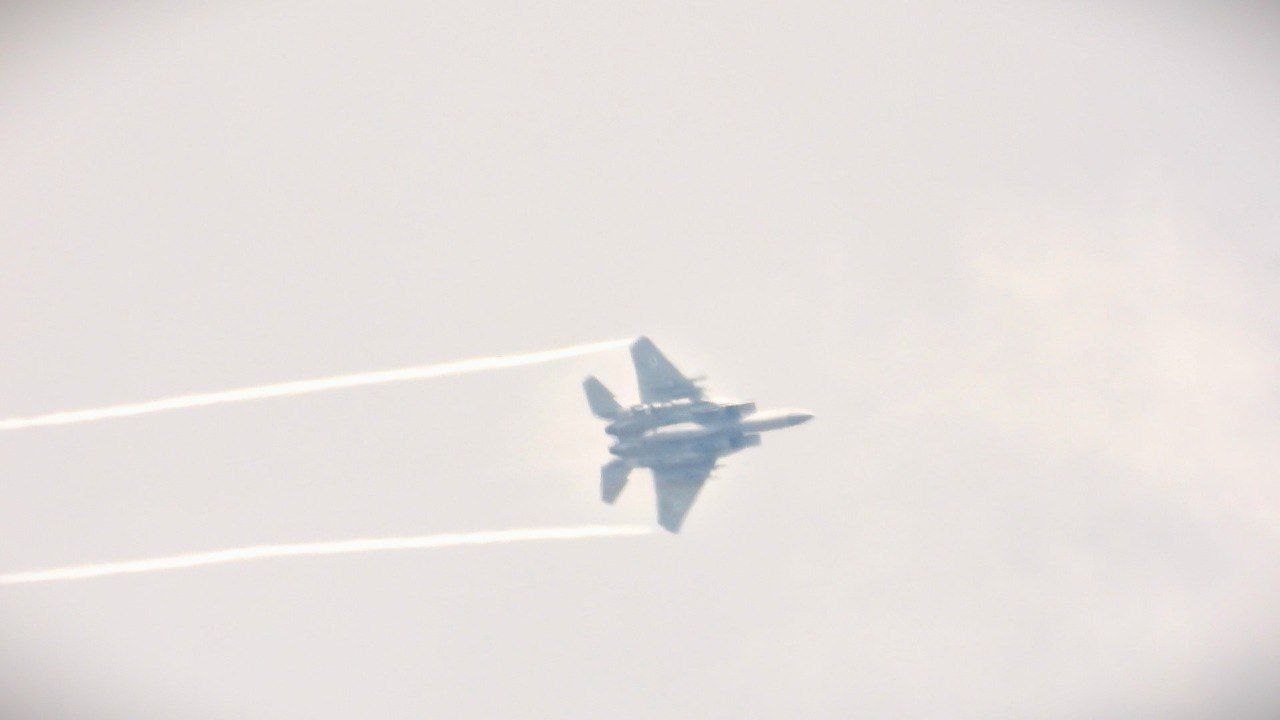
    According to initial reports in the Israeli media, the attack on southern Beirut was carried out by a combat drone and three missiles were fired at a building. However, the Israeli regime army’s spokesperson said in a statement that the attack was carried out by warplanes.

    The Israeli newspaper Yedioth Ahronoth also claimed that the attack was carried out with F-35 fighter jets.

    The target of this terrorist attack was Fouad Shukr, with Jihadi name Haj Mohsen, Hezbollah’s number two and an advisor to Sayyed Hassan Nasrallah.

    Fouad Shukr and Sayyed Hassan Nasrallah

    The latest death toll of attack on southern Beirut is five martyrs, including a woman and two children aged six and ten, and 74 people were wounded.

    Israel’s Channel 14 TV reported that a new assessment in Israel indicates that Fuad Shukr was in the building at the time of the attack and was severely injured and killed.

    Reuters quoted two unidentified security sources as saying that the body of Hezbollah military commander Fuad Shukr has been found in rubble in the southern suburbs of the Lebanese capital Beirut.

    At the same time as the terrorist attack, the cities of Haifa and Tel Aviv spoke of their readiness to face a possible Hezbollah attack. The municipality of the Rishon LeZion settlement on the outskirts of Tel Aviv also announced the reopening of public shelters for fear of a response from Hezbollah.

    In an interview with Kan TV, Rui Sharon said: After the Beirut attack, Israel is in a state of alert as to whether Hezbollah will fire rockets at Tel Aviv, Haifa or just the Galilee.

    Brigadier General Zvika Haimovich, commander of the Israeli army’s reserve forces, also said: We must prepare for more Hezbollah attacks than before. These attacks can reach 100 to 200 or even 300 rockets at a time.

    Hours after the attack, in an official statement, Israeli regime army spokesperson Admiral Daniel Hagari confirmed that the attack by Israeli warplanes in the Beirut suburb led to the martyrdom of Fouad Shukr, alias Haj Mohsen.

    According to the Israeli army’s statement, Shukr is Hezbollah’s most senior military commander and head of the Lebanese resistance’s strategic organization. He is considered the right-hand man of Sayyed Hassan Nasrallah and is the main advisor to the secretary general of Hezbollah in the affairs of planning and managing the war.

    Fouad Shukr has joined Hezbollah since 1985 and in addition to being a member of Hezbollah’s Central Council and Military Council, he has been leading the battles on the southern Lebanese front since October 8.

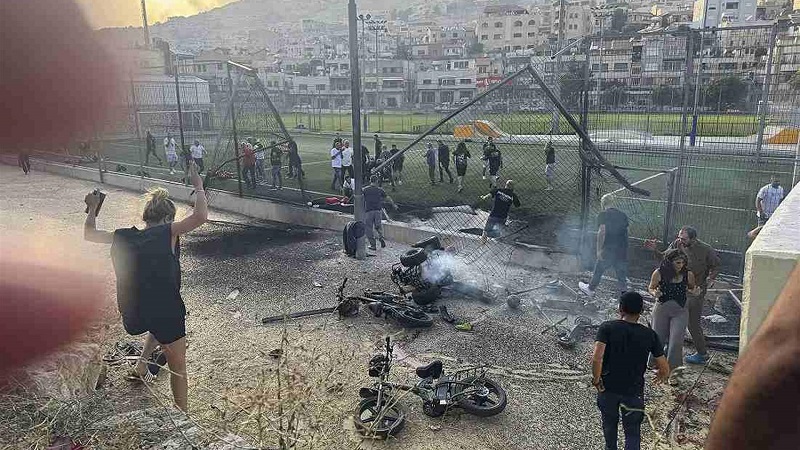
    The terrorist attack by Israeli drone in the Beirut suburb is the second terrorist act carried out by the regime in the Lebanese capital after the assassination of Saleh al-Arouri, the deputy head of Hamas’ Political Bureau. The terrorist attack allegedly was in response to a rocket hitting a football field in the town of Majdal Shams, killing 12 residents. The Israeli regime claims that the missile is a type of Falaq-1 rocket and belongs to Hezbollah and is made in Iran.

    In the first statement about the Israeli terrorist attack in the Beirut suburb, Hezbollah confirmed the presence of Fouad Shukr at the scene of the attack, stressing that it was waiting for the results of the rescue teams to announce the fate of the great commander in order to make a decision.

    Hezbollah’s initial media statement on the Israeli fighter jets attack in the Beirut suburb is as follows:

    “As it turned out, the Zionist enemy attacked a residential building in one of the neighborhoods of the southern suburbs of Beirut on Tuesday, which led to the martyrdom of a number of citizens, the wounding of a number of others, and the complete destruction of a number of floors of the building.

    At that time, the great commander and fighter, our brother Fouad Shukr (Haj Mohsen), were present in this building.

    After the incident, the rescue teams worked hard but slowly to remove the rubble, and the body of this great and dear commander was found from under the rubble after 20 hours of searching.”

  • Israel Claims Responsibility for Hitting Hezbollah Commander In Beirut Attack

    Israel Claims Responsibility for Hitting Hezbollah Commander In Beirut Attack

    The attack resulted in a loud blast and a plume of smoke rising above the area, which is a stronghold of the Lebanese resistance movement Hezbollah.

    Lebanon’s state-run national news agency reported that an Israeli air strike targeted the area around Hezbollah’s Shura Council in the Haret Hreik neighborhood of the capital.

    The Israeli military claimed that the targeted strike was aimed at the commander allegedly responsible for the recent deadly attack in Majdal Shams in the Israeli-occupied Golan Heights, as well as the killing of numerous additional Israelis.

    This comes after at least 12 people, including children, were killed in a rocket strike on Majdal Shams last week, an attack which Hezbollah has denied responsibility for, but which Israel blamed on the Lebanese Hezbollah.

    In response to the Israeli strike, a high-ranking Hezbollah official stated earlier that regardless of the nature of Israel’s actions, Hezbollah would respond.

    Israel’s war minister Yoav Gallant also commented on the situation, stating that “Hezbollah crossed the red line” in a social media post following the Israeli military’s claim of responsibility for the strike.

    The Israeli regime’s army did not provide details about how the strike was carried out. The situation remains tense, with both sides making strong statements and threats of further retaliation.

    Aftermath of Israeli airstrike in Beirut

    The National News Agency (NNA), the Lebanese state news agency, reported that a drone carried out the attack by launching three missiles.

    Within a short time, following a report from Hezbollah’s Al Manar TV, the Israeli army confirmed that a loud explosion was heard in the southern suburbs of Beirut.

    This region, heavily populated and a stronghold of the resistance movement, is located in the Lebanese capital.

  • Israel Will Attack Lebanon, But Limited!

    Israel Will Attack Lebanon, But Limited!

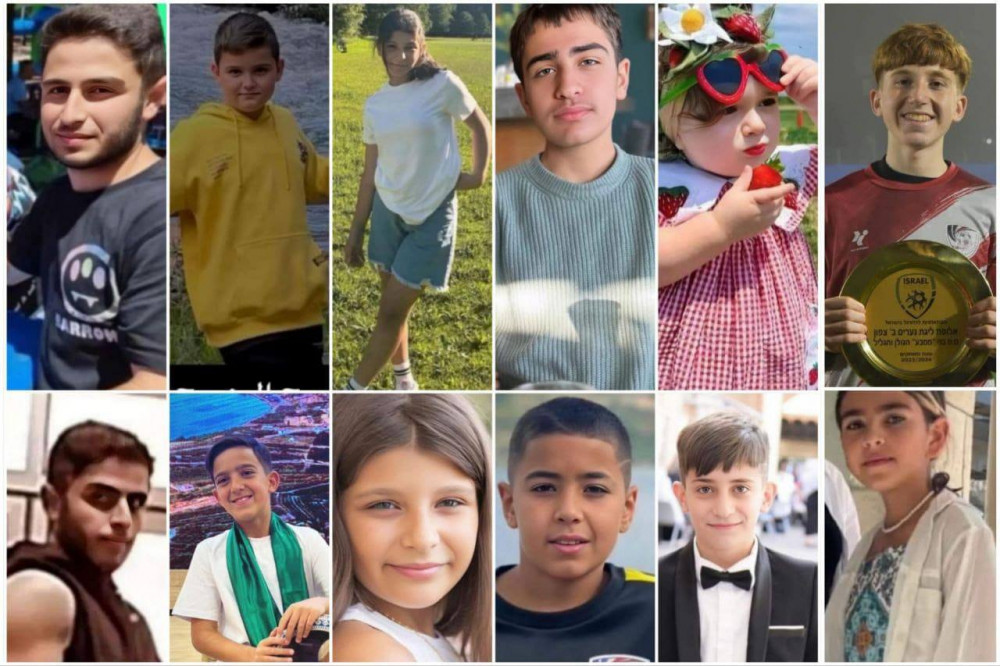
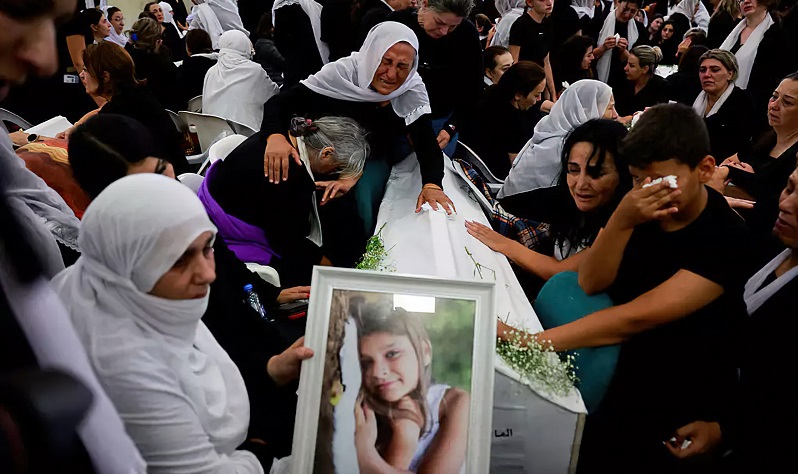
    On July 27, a rocket hit a sports field in the city of Majdal al-Shams in the occupied Golan Heights. As a result of this incident, 14 Druze youths lost their lives and more than 35 others were injured. Immediately after the attack, the Israeli government accused the Lebanese Hezbollah. It claimed that the projectile was fired from inside the Lebanese territory and identified the Lebanese resistance as the cause of this attack.

    On the other hand, Lebanon’s Hezbollah strongly denied this accusation and stated that the Israeli regime’s claims are false and that Hezbollah did not carry out such an attack.

    A rocket hit a sports field in the city of Majdal al-Shams

    Majdal al-Shams in the occupied Golan Heights is situated very close to the UN Alpha line and the areas under the control of the Syrian government. Also, the residents of Majdal al-Shams are Druze, and in general, there are no Israeli military targets in this city.

    Considering these facts, Hezbollah’s rocket attack on Majdal Al-Shams has no rational or military justification; Thus the occurrence of this incident is faced with serious doubts.

    Some experts believe that there is a possibility that this incident is a false flag attack. The Israeli regime is in a tough situation these days and is looking for a way out of these problems.

    The war in the Gaza Strip has been going on for more than 10 months. The Israeli regime’s stated objective to “destroy Hamas and the Palestinian resistance groups” since the start of the war in the Gaza Strip has not been achieved, and there is no clear prospect for the end of the war in the Gaza Strip. Israeli prisoners are still in captivity and the Israeli regime is unable to release them. The Israeli regime’s only accomplishment in the Gaza Strip is destruction, genocide, and the loss of 40,000 Palestinian civilians, mostly women and children.

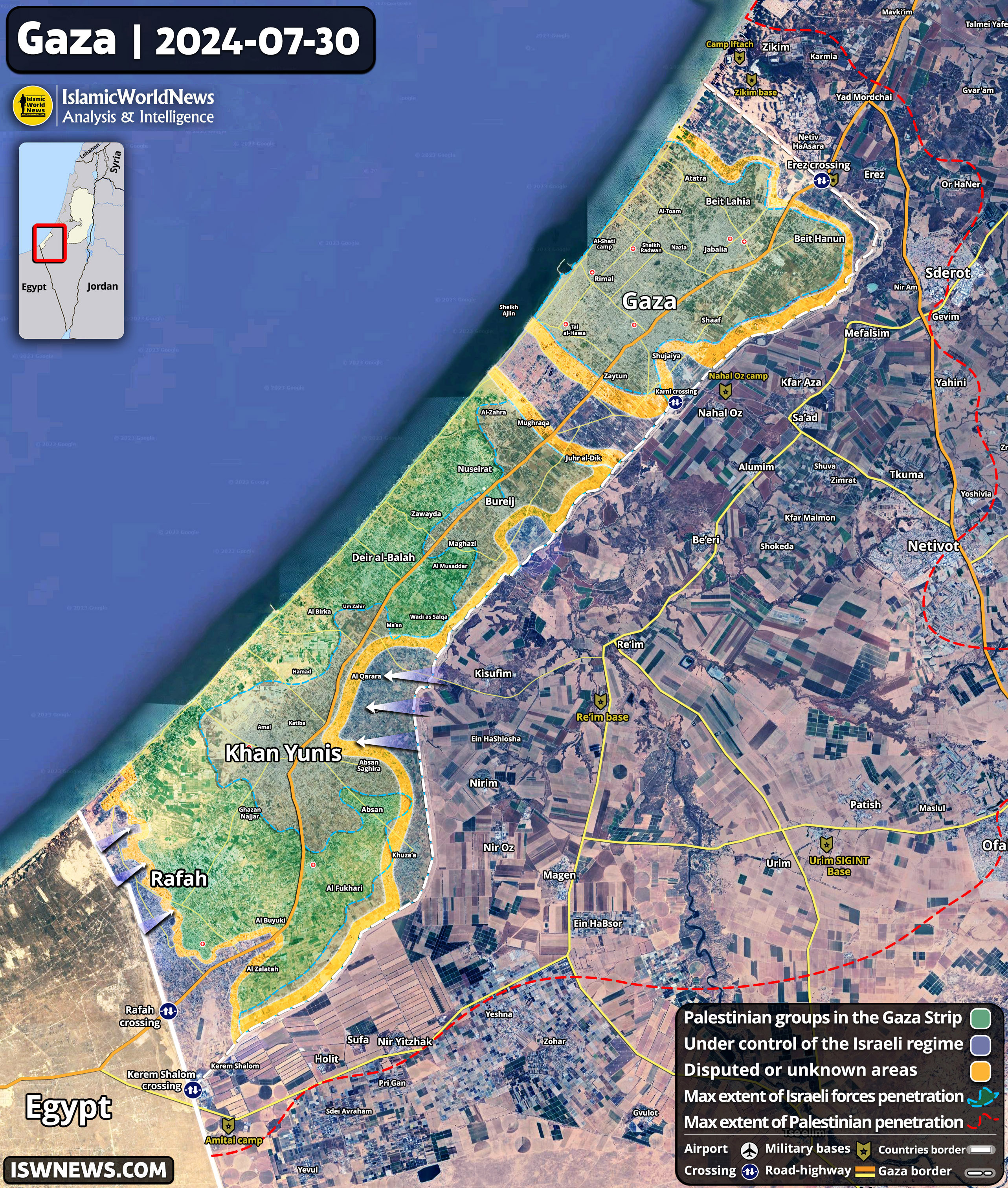
    Military situation in Gaza Strip

    After the start of Israel’s military invasion of the Gaza Strip, Lebanon’s Hezbollah and the Yemeni army entered the field militarily in support of the Palestinian people.

    On the northern front, daily clashes continue between Hezbollah and the Israeli army. Thousands of Israeli settlers have been displaced and almost all the settlements in the north of occupied Palestine have been evacuated and the level of destruction is high.

    Missile and drone attacks by the Yemeni army against Israeli targets in the occupied territories are carried out on a daily and weekly basis, and their economic interests, i.e. commercial ships in the Red Sea, the Mediterranean and the Gulf of Aden, are under numerous attacks.

    In the West Bank, the security situation is extremely tense after the October 7th attacks and the West Bank is on the brink of explosion!

    In Tel Aviv, anti-government demonstrations continue weekly, the political situation is extremely chaotic, and the Israeli government is on the verge of collapse under internal and external pressures.

    The Israeli regime is literally “under multiple blows”. All the evidence supports the theory that the rocket attack on Majdal al-Shams is fabricated.

    At this stage in the conflict, the Israeli government is in desperate need of a new strategy to escape from its current predicament. The start of a new war against Lebanon is the scenario that Israel needs. With the pretext of a “suspicious attack” in Majdal al-Shams and the beginning of a new war in Lebanon, Israel aims to divert attention from the genocide and its strategic failures in the Gaza Strip and northern front to Lebanese territory.

    In any case, all the speculations indicate that the Israeli regime has decided to attack Lebanon. A meeting of Israel’s National Security Commission was held in Tel Aviv and a decision has been made to carry out a massive attack in Lebanon. According to Israel, all targets have been selected but attacks are limited to strategic targets.

    Yediot Aharonot newspaper stated that the response will be limited but significant, which includes infrastructure or targets related to Hezbollah.

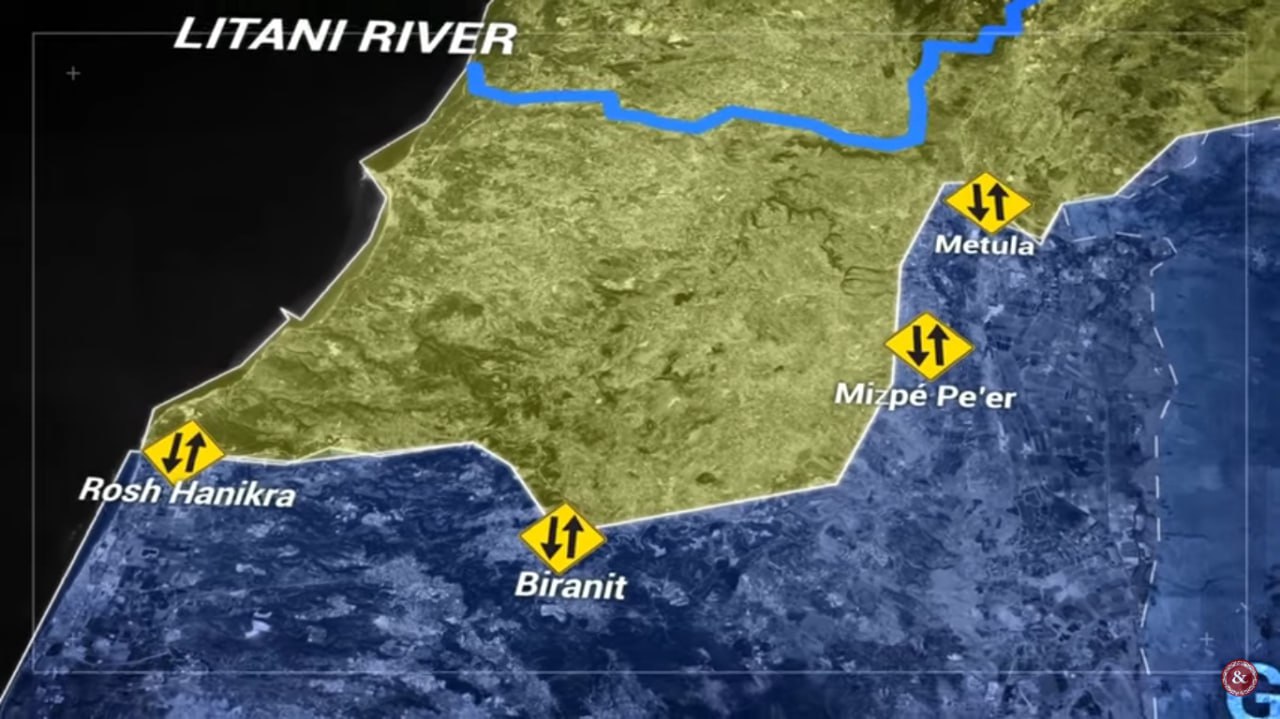
    Some Israeli political and military officials talk about military operations to push Hezbollah back behind the Litani River. But the Israeli regime knows very well that it cannot attack Lebanon by land and has to make do with airstrikes.

    Litani River in South Lebanon

    One of the primary challenges for the Israeli army in conducting a ground invasion of Lebanon is the limited number of passages available for infantry and armored vehicles to enter the country. There are primarily four crossing points for ground forces, many of which are situated in hilly and densely forested areas. The mountainous terrain in southern Lebanon provides Hezbollah with advantageous positions for ambushing the Israeli army.

    The 33-day war is a clear example of what is ahead of the Israeli army. The defeat of the armored and infantry forces of the Israeli army in southern Lebanon will be certain.

    Yesterday, a Lebanese channel, quoting Hebrew channels, stated that Amos Hochstein, the special adviser and special envoy of the US President in Lebanon, informed the Israeli authorities that any attack on Beirut and Dahiya would be countered by Hezbollah’s attack on Ghosh Dan and Jerusalem.

    Lebanon’s Hezbollah has also clearly stated that it will respond to any attack by the Israeli regime on Lebanon with a harsh response.

    The Islamic resistance groups in the region have also supported the Lebanese resistance in separate messages and said that in case of any attack by the Israeli regime on Lebanon, military operations against Israel will be intensified.

    Even according to reports, some Iraqi resistance groups have stated that they will send troops to southern Lebanon if the war starts in Lebanon.

    While diplomatic efforts to prevent war continue, 14 countries have asked their citizens to leave Lebanon or refrain from traveling to it. Lufthansa Airlines and its subsidiaries have suspended flights to/from Beirut until August 5.

    In any case, it seems highly unlikely that the start of a new war in Lebanon will assist the Israeli regime in solving its problems. The Israeli regime’s political and war strategies have not changed over the past decades, but the military and regional conditions of Hezbollah in Lebanon have significantly changed, and they are now much more equipped and capable than before.

    In other words, Israel may be able to start a new war, but the decision to withdraw from it and the consequences of the war will be beyond Israel’s control. Hezbollah is not as besieged as the Palestinian resistance groups in the Gaza Strip and possesses impressive capabilities to surprise Israel. Perhaps, after the start of the new war, Israel may have to make significant concessions to end the conflict, in contrast to its actions in the Gaza Strip and violation of ceasefire agreements.

    Posted in SF

  • Israeli Forces Intercept Drone Targeting Gas Field In Mediterranean Sea (Video)

    Israeli Forces Intercept Drone Targeting Gas Field In Mediterranean Sea (Video)

    According to media reports, the drone attack was carried out at dawn Tuesday from Lebanon.

    This marks the Lebanese resistance movement Hezbollah’s second drone attack in the Mediterranean Sea, with the apparent intention of targeting the Israeli regime’s gas fields in the region.

    Hezbollah drone destroyed over the Mediterranean Economic Zone

    The Israeli regime’s army believes the interception of this drone foiled a potentially devastating attack on the gas field.

    Israeli officials have started carrying out investigations into the incident and are on high alert for any further threats from Hezbollah in the region.

  • Israeli Drone Strikes In Southern Lebanon Leave 5 Injured, 2 Dead

    Israeli Drone Strikes In Southern Lebanon Leave 5 Injured, 2 Dead

    In southern Lebanon on early Monday, Israeli drone strikes killed two people and injured five others, targeting both a car and a motorcycle.

    Lebanon’s official National News Agency reported that the drone first hit a car on the road between the towns of Mays al-Jabal and Chaqra, causing two injuries.

    Aftermath of Israeli airstrike

    A subsequent strike on a motorcycle along the same route near Dubayeh Castle resulted in two fatalities and three additional injuries. A child among the injured is in critical condition, according to the news agency.

    A child severely injured by Israeli airstrikes

    Lebanon’s rescue teams immediately transported the injured to Tebnine Governmental Hospital.

    The Israeli regime’s army has not yet released an official statement regarding the attacks, but they follow a pattern of escalating tensions between Israel and Hezbollah forces in southern Lebanon.

    As the situation develops, the local population is on high alert, fearing potential reprisals and further military action. The international community continues to closely monitor the events in the region, with calls for restraint from both sides amidst growing concerns of an all-out conflict.

  • Objectives, Consequences Of Possible Israeli Attack On Lebanon

    Objectives, Consequences Of Possible Israeli Attack On Lebanon

    Whenever public opinion in the world is focused on a place, the best conditions are provided for the implementation of grand plans, like a magician who draws the minds and senses of the audience to one side with one hand and executes his magic with the other. We are now at a time in history when the West Asia region is prone to great events. The 2024 Olympics in France have attracted the attention of the world and the media, providing the necessary breathing space for the Israeli regime to launch a military attack on Lebanon. A few days have passed since the visit of the prime minister of the Zionist regime to the United States, and speculation is growing about the goals of this trip. From influencing the US presidential elections to receiving financial and military aid, and most importantly, coordinating with the US to launch a military attack on Lebanon’s soil.

    It should be mentioned that in a military battle, more important than the subject of the war itself is the answer to a few basic questions. Questions that determine the beginning, duration, type, level, and end of a war. What is the purpose of the war? What is the way out of the war? What will be the consequences of war for both sides of the conflict? And… If Israel also starts a war against Hezbollah, it will have no choice but to answer these questions. What we are looking for in this article is to provide a general picture of the possible answers to these questions.

    As for the goals of the Israeli regime in this attack, it is certainly not possible to mention a single goal and suffice with that, because basically the realization of the goals is subject to conditions that make it possible to achieve them with ifs and buts. Inevitably, the initiators of conflicts always try to define a range of goals and seek to achieve the maximum of them, and if – for any reason – the maximum goal is not achieved, the other goals are expected to be achieved.

    The most important and maximum objective of the Israeli regime in the fight against Lebanon is the annihilation of the Lebanese Hezbollah. However, it should be noted that this objective cannot be achieved in any way. First, Hezbollah, beyond its military wing, is considered a deep-rooted intellectual and ideological movement in Lebanon, which even beyond the Shia community, has strong supporters in Lebanon among other religions, tribes, sects, etc. As a result, it is not possible to imagine a future for the destruction of a popular and ideological movement by relying on military means.

    From a military perspective, after 10 months of military warfare with its advanced and regular war machine, the Israeli regime has not yet succeeded in destroying the military and combat capabilities of the Palestinian Hamas movement in the Gaza Strip. It is a very small strip that has been surrounded by 360 degrees for many years and is located in a flat geography. The geography that is the most desirable place for the military operations of a well-organized and well-equipped army.

    Now, taking into account the border geography of Lebanon and the Israeli regime, which is mountainous, it can be assumed that the plan of militarily destructing the Hezbollah movement is nothing more than a dream, and the Israeli army will not be able to destroy a tried and tested guerrilla force with all its might. Israel will fight fighters who have decades of experience in a variety of desert, urban and mountainous confrontations, from urban and mountainous battles and the Lebanese plains to later breathtaking fights in the deserts, cities and mountains of Syria.

    Due to its lack of population and lack of geographical depth, the Israeli regime has focused on armor and air power. Both powerful arms of Israel will not be effective in a military conflict with Hezbollah. The Hezbollah movement is equipped with a variety of modern anti-armor weapons, and Israel’s armor in the plains and mountains of Lebanon will be only easy prey, as in the past 10 months, when every movement of the Israeli army in the Lebanese border line has been targeted. The air force of the usurping regime will also not be able to provide effective air support to the armored columns, because there are basically no visible military targets to destroy and bomb in the confrontation against guerrilla groups. From a military point of view, the destruction of Hezbollah is the maximum and at the same time the most unattainable objective for the Israeli regime.

    Another goal of the Israeli regime is to keep Hezbollah fighters away from Israel’s borders so that Israel can reorganize the ordinary lives of its displaced people in the north in light of the decline of the daily attacks on the north of occupied Palestine. This goal has been repeatedly expressed as the demand of the occupying regime, and international and Lebanese officials have been asked to help withdraw Hezbollah fighters to the back of the Litani River. This is not a maximum goal, but it remains to be seen whether it can be achieved or not. From a military point of view, it should be said that the retreat of Hezbollah’s guerrilla forces, which used a vast network of caves, tunnels, concrete positions, etc. is almost impossible. The experience of the world’s great armies proves this, and where the Red Army of the former Soviet Union in Afghanistan and the advanced and large American army in Korea, Vietnam, Afghanistan, and Iraq have been unable to achieve this objective, the small army of Israel will not be able to do so.

    But from another perspective, it is possible to realize this issue. The Israeli regime army’s main strategy is to rely on the destructive capability of the air force’s heavy and ultra-heavy munitions. In the first stage, the Israeli Air Force will brutally bomb all Lebanese military and infrastructure targets. The purpose of this is to increase pressures on the livelihood and lives of the Lebanese people in order to mount pressure of public and political opinion on Hezbollah and to force the Lebanese resistance movement to accept Israel’s conditions. On the other hand, the destruction of Lebanon’s infrastructure, which means the beginning of a period of post-war reconstruction, and naturally, governments that are engaged in providing infrastructure and development funding will not pose a serious threat to their neighbors. If this stage does not lead to the realization of Israel’s demands, in the second stage, the Zionists will start the equation of mass murder. The regime’s goal in killing people is to force the other side to surrender. But now, this equation is not one-sided, and the resistance is capable of implementing both of these methods.

    Addressing the consequences of the conflict is also an important part of the equation of war. On the one hand, Lebanon will be subjected to a heavy Israeli invasion and will certainly suffer a lot of losses. However, according to military analysts, Hezbollah is armed with highly accurate tactical missiles and a vast drone capability that is capable of accurately destroying any target in the small geography of occupied Palestine. As a result, if the Israeli regime starts a war on infrastructure or a genocide, Hezbollah will also be able to target Israel’s public and service infrastructure. Such a war would also be very deadly for Israel. At the same time, if Hezbollah has been able to acquire effective air defense systems in the past years, which is not unexpected, the Israeli regime’s war machine will also be contained in the sky to some extent, which will mean the complete failure of Israel’s military strategy.

    Hezbollah has made the necessary preparations to destroy the armored power of the Israeli regime, as the strength of the Israeli ground forces, and it has sufficient and effective weapons, but the containment of the air force is an undeniable necessity. Targeting Israeli airports does not seem to stop the air force’s activity, as Israel has designed the highway network in such a way that it can be used as an airport, assuming that it is possible to attack airports in future battles. In fact, Israel is a large military garrison. The most effective way for Hezbollah to change the balance of the confrontation is to stop Israeli attacks and force Israel to accept the terms of resistance, which is to strike at Israel’s public and service infrastructure. Concerning targeting military and commercial fleets at sea – Hezbollah is well capable of doing so – and destroying power plants, refineries, silos, and food warehouses, etc. Israel will be under a real siege and will be completely paralyzed.

    It seems that the Israeli regime is muddled about the initiation of war against Lebanon. The regime’s political and war strategies have not changed over the past decades, but the regional and military conditions of Israel’s enemies have undergone a serious change, and the resistance in the region has become highly equipped and capable. Under these conditions, Israel can start a war, but it does not have any plan to get out of it, and it may not achieve its goals, but it would also be forced to accept numerous demands.

  • Hezbollah Denies Responsibility For Suspicious Attack On Majdal Shams

    Hezbollah Denies Responsibility For Suspicious Attack On Majdal Shams

    After Hezbollah’s rocket attacks on the headquarters of the Hermon Brigade in the Ma’aleh Golani barracks and the Za’oura area in the northern occupied Golan, the Zionist regime’s media outlets reported that a rocket hit the soccer field of the town of Majdal Shams.

    As a result of the explosion, 11 people have been killed and 34 injured so far. Some media outlets have also reported that the death toll has risen to 14, which cannot be confirmed at this time.

    Explosion in Majdal Shams

    Senior Israeli officials told the regime’s media outlets that the Lebanese resistance movement had crossed red lines with the attack and that Lebanon would soon receive a response.

    In contrast to this scenario, some media outlets have reported on the mistaken performance of the Israeli regime army’s defense systems in confronting Hezbollah’s rocket attack on the Ma’aleh Golani barracks and the fall of one of the defensive missiles on the Majdal Shams soccer field, which needs further investigation. Therefore, in order to investigate the dimensions and truth of this attack, we must wait for more evidence and citations.

    In a statement, Lebanese Hezbollah movement officially denied responsibility for the attack, writing, “The Lebanese Islamic Resistance categorically denies the allegations published by some of the enemy’s media outlets and various tribunes regarding the targeting of Majdal Shams, and categorically rejects the Islamic Resistance’s connection to this incident.”

    Aftermath of explosion in Majdal Shams

    The Zionist website Walla news also reported that the residents of Majdal Shams were not warned before the attack, and wrote that they had not been ordered to go to the shelters. In response to the incident, the Israel Hayom newspaper’s website reported that initial investigations indicated that the air defense systems had difficulty intercepting the Majdal Shams missiles.

    The incident area in Majdal Shams

    Finance Minister and hardline Zionist politician Bezalel Smotrich called on Israeli Prime Minister Benjamin Netanyahu to return immediately. He claimed that the time has come to take action and that all of Lebanon must pay the price. Smotrich also called for the assassination of Secretary General of Hezbollah Sayyed Hassan Nasrallah in response to the Majdal Shams attack.

    The Zionist regime’s Minister of Internal Security Itamar Ben-Gvir said: “Since October 7, I have said that we are in a state of war in the north and that the enemy must be defeated, and for 10 months the decision-making bodies have been refraining from admitting that we are in a battle with Hezbollah. Today, no one, in any assembly, including the Minister of War, who only sought to contain Hezbollah, can avoid the bloody reality. ‘We are at war.’ I will immediately call the prime minister to a cabinet meeting with an encrypted phone to make a decision that I have been calling for a long time. Now the war is in the north!”

    At a press conference, IDF Spokesperson Rear Admiral Daniel Hagari called the explosion the most serious since the Oct. 7 attack, saying that the minister of war, the chief of the general staff of the armed forces and the head of the Mossad were assessing the situation of Majdal Shams. Hagari went on to blame Hezbollah for the killing of innocent children and said the army would respond to the attack in accordance with the declared framework.

    In another statement, Hagari claimed that the rocket that hit the Majdal Shams football field was Iran-made and carried a 50-kilogram explosive warhead. He also blamed a Hezbollah field commander named Ali Muhammad Yahya for firing the rocket at Majdal Shams.

    In another message, the Israeli regime’s army claimed that an analysis of the army’s operational systems showed that the rocket was fired at Majdal Shams, from an area north of the village of Shebaa in southern Lebanon.

    Image published by the Israeli army about Majdal Shams incident

    The Israeli regime’s Channel 13 TV also reported that the United States has asked Israel not to respond to the Majdal Shams attack because of fears of war in Lebanon. Former US President Donald Trump took a stance that indicated his propaganda campaign in an election contest with the Democratic administration, calling the missile attack on the Golan Heights horrific and claimed that it would not have happened if he had been president. Trump went on to say: We cannot allow these attacks to continue.

    According to the videos and pictures available from the moment the rocket hit the soccer field of the town of Majdal Shams, the incident occurred at the same time as Hezbollah carried out rocket attacks on the Ma’aleh Golani barracks in the northern occupied Golan, but the cause and type of the missile are not related to Hezbollah, and it is most likely that one of the Israeli army’s Iron Dome defensive missiles had a wrong function and fell down towards the city.

    Initial citations of low volumes of smoke, surface destruction of the ground, and the trajectory of other Israeli defense missiles also indicate the same issue. The Israeli regime and its army are taking advantage of this issue to justify their attacks on southern Lebanon and to pave the way for further actions in eastern and northern Lebanon. The expansion of the war on the northern front of occupied Palestine will benefit the Netanyahu cabinet in the short term, but in the long run, it will lead to the collapse of the regime. Netanyahu is waiting for the outcome of the US presidential election and his preferred choice in order to provoke more warmongering policies in the region.

  • Hezbollah Drone Infiltrates Deep Inside Israel, Takes Footage Of Strategic Airbase! (Video)

    Hezbollah Drone Infiltrates Deep Inside Israel, Takes Footage Of Strategic Airbase! (Video)

    Hezbollah had released in June 18 a video showing sensitive military and economic sites of the Israeli regime in the city of Haifa and published another video earlier this month captured over the occupied Golan Heights.

    The new video was published on July 24. As Hezbollah says in the video “What the Hoopoe (Hodhod) brought back from the last night Tuesday”, Hezbollah claims the video was taken on July 23rd.

    The video published by Hezbollah media wing about Ramat David airbase

    The Ramat David airbase is one of the main air bases of the Israeli Air Force, which is located about 50 kilometers from the Lebanese border.

    The release of this high-quality video from the Ramat David air base at the same time as Benjamin Netanyahu, the Prime Minister of the Zionist regime, is visiting the United States is undoubtedly a big shock to him and the heads of the Israeli army.

    The most interesting point of the story is that the Hodhod drone returned safely to Lebanon after the reconnaissance operation.

    The clashes between Hezbollah and Israeli forces first broke out after the start of the war in Gaza last October, with Hezbollah and its allies carrying out regular attacks in support of the Palestinian people and movements in the Gaza Strip.

    The first drone surveillance video from the city of Haifa, which was published by Hezbollah on June 18
    The second drone surveillance video of the occupied Golan was released by Hezbollah on July 9
  • Hezbollah Boasting Its Capabilities In Attacking Israeli Merkavas (Video)

    Hezbollah Boasting Its Capabilities In Attacking Israeli Merkavas (Video)

    The video showcases the 9M113M Concourse-M anti-armor missiles, the Tharallah anti-armor system, the 9M133-1 Kornet-E/Dehlavieh anti-armor missiles, the Almas class anti-armor missiles (Hezbollah has Almas-1, Almas-2, Almas-3 and Almas-4 missiles), the Toofan anti-armor missiles (Iranian TOW) and the Ghadir Tandem rocket (an Iranian version of RPG-29 rocket).

    Read more:
    Military Knowledge: Dehlavieh Dual Missile Launcher
    Lebanon’s Hezbollah Unveils Tharallah Anti-Tank System (Video)
    Dehlavieh 3 anti-tank guided missile, the longest-range Iranian anti-tank missile
    Military Knowledge: Almas Missile

    In this video, the Lebanese Hezbollah threatens the Zionists by stating that “you will not have any more tanks.” Hezbollah has a very large and up-to-date stockpile of anti-armor weapons, and naturally, the Israeli army’s Merkava tank series will not have an easy task in a possible invasion of Lebanese territory.

    The promotional video published by Hezbollah

    Hezbollah’s Military Media Unit has recently released a video showcasing their anti-armor capabilities and operations targeting Israeli Merkava tanks and fighters.

    The video serves as a direct warning to Israeli authorities and occupation forces.

    It features multiple anti-tank guided missile systems and a shoulder-fired anti-tank shell, highlighting Hezbollah’s advanced arsenal.

    The footage demonstrates the effectiveness of their anti-armor forces in scoring destructive hits against Israeli tanks.

  • Number Of Lebanese Martyrs Increases Amid Israeli Assassination Campaign

    Number Of Lebanese Martyrs Increases Amid Israeli Assassination Campaign

    On Thursday, Al-Jamaa Al-Islamiya commander Mohammed Hamed Jbara was martyred when an Israeli drone targeted his vehicle in the village of Ghazze, in the Beqaa valley, located in southern Lebanon.

    Jamaa Islamiya and its armed wing the Fajr Forces issued a statement, confirming that Jbara, also known as Abu Mahmud, was martyred in a “treacherous Zionist raid”.

    CCTV footage of assassination of Mohammed Hamed Jbara by Israeli drones in the village of Ghazze

    In a statement, the Lebanese resistance movement announced the martyrdom of five Hezbollah fighters, namely Ali Hussein Wizani (the jihadi name Ali al-Akbar), Ali Hassan Nahleh (the jihadi name Hazeen), Mahdi Muhammad Khaireddine (the jihadi name Abu Turab), Samir Eid Qabbani (the jihadi name Abu Samra), and Amer Jamil Dagher (the jihadist name Abbas), during the jihadi missions.

    Thus, the number of Hezbollah martyrs since the onset of Operation Al-Aqsa Storm has increased to 354.

    The Israeli regime’s army targeted residential neighborhoods in the town of Kfar Kila (Marjayoun), using heavy machine gun. Israeli artillery also shelled the outskirts of the towns of Houla and Markaba, both in the Marjayoun district, according to locals. Israeli artillery shelling targeted the town of Marwahin.

    Israeli airstrikes south of Lebanon

    In response to the crimes committed by the Israeli regime, Hezbollah announced in two statements that it pounded the Birkat Risha site facing the Lebanese town of Al-Bustan and the Israeli Rahab site facing the Lebanese village of Aita ash-Shab with Burkan rockets.

    On Thursday morning, Hezbollah fighters attacked the towns of Sa’ar and Gesher HaZiv in the northwest of occupied Palestine with dozens of rockets, in response to the Israeli regime’s attack on civilian areas in southern Lebanon, especially the crime of assassinating three children in the village of umm al-Tut.

    Secretary General of Hezbollah Sayed Hassan Nasrallah warned the Israeli regime against attacking civilians in Lebanon during a televised address on Wednesday.

    He warned that continued attacks against civilians would push the resistance to rocket attacks and target new settlements that were not previously targeted.

  • Israeli Regime’s Army Conducts Airstrike In Southern Lebanon

    Israeli Regime’s Army Conducts Airstrike In Southern Lebanon

    On July 18, the warplanes of the Israeli regime’s army attacked targets in the village of Majdel Selm in southern Lebanon. As a result of this attack, 6 people were martyred and 13 others were injured.

    The attack is said to be the deadliest Israeli airstrike in southern Lebanon since the beginning of the war, and it is necessary to wait for Hezbollah’s decisive and heavy response.

    The video released by the Israeli army regarding the air attack on southern Lebanon

    After the attack, the mayor of occupied city of Safed warned Israeli settlers to be wary of a possible Hezbollah attack in response to an airstrike on Majdel Selm.

    Minutes after the attack on the Lebanese village, Hezbollah announced the martyrdom of two of its fighters, Ali Jaafar Ma’touq with the jihadi name “Habib Ma’touq”, and Muhammad Hassan Mustafa with the jihadi name “Murtada”.

    Some Hebrew-language media outlets claimed that Martyr Ali Jaafar Ma’touq was one of the field commanders of Hezbollah’s al-Hajj Radwan Force in southern Lebanon.

  • Hezbollah Leader Says Gaza People Able To Annihilate Israel

    Hezbollah Leader Says Gaza People Able To Annihilate Israel

    Sayed Hassan Nasrallah made the remarks during a speech on Ashura day, the martyrdom anniversary of Imam Hussain (A.S) and his companions. The 10th day of Muharram, known as Ashura, marks the date in 680 CE when Imam Hossein and his followers were martyred in Karbala.

    Seyed Nasrallah argued that scholars of the Israeli enemy estimated that the regime will be gone 70 to 80 years after its establishment, and their natural, historical, and social data prove that the entity has reached a critical stage.

    The Hezbollah secretary general said that the present generations in Gaza and the fronts supporting the oppressed nation will be the ones to eradicate the Israeli regime. He said: “We believe that what the resistance did on October 7 is their full right.”

    He added that if the Arab nations were allowed and borders were opened for them, we would see them fulfilling the duty of supporting Gaza.

    Seyed Nasrallah stated that one of the results of Operation Al-Aqsa Storm was that the negative effects of the US sectarianism project in the region were at a minimum.

    He also valued the solidarity and unity among the resistance forces, which have helped decrease tensions in the area.

    The leader of Hezbollah stated that the Israeli regime has been engaged in significant corruption and aggression against Arab states since 1948.

    He mentioned that certain nations, which have not backed Palestinians in Gaza, have been stirring up sectarian problems.

    Seyed Nasrallah anticipated that Western intelligence agencies will resume their efforts to incite sectarian tensions in the region following the end of Operation Al-Aqsa Storm.

    He further threatened Israel, “If your tanks come to Lebanon and South Lebanon, you will no longer have a shortage of tanks, because you will not have a tank left!”

    Sayed Nasrallah warned Israel that continued attacks against civilians would push the resistance to rocket attacks and target new settlements that were not previously targeted.

    During his speech, the Hezbollah leader offered his sympathies for the death of several mourners following a shooting in Muscat, Oman.