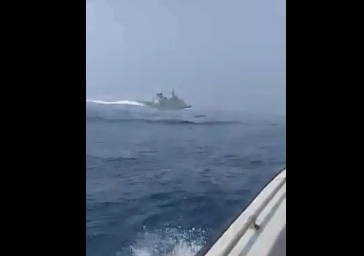
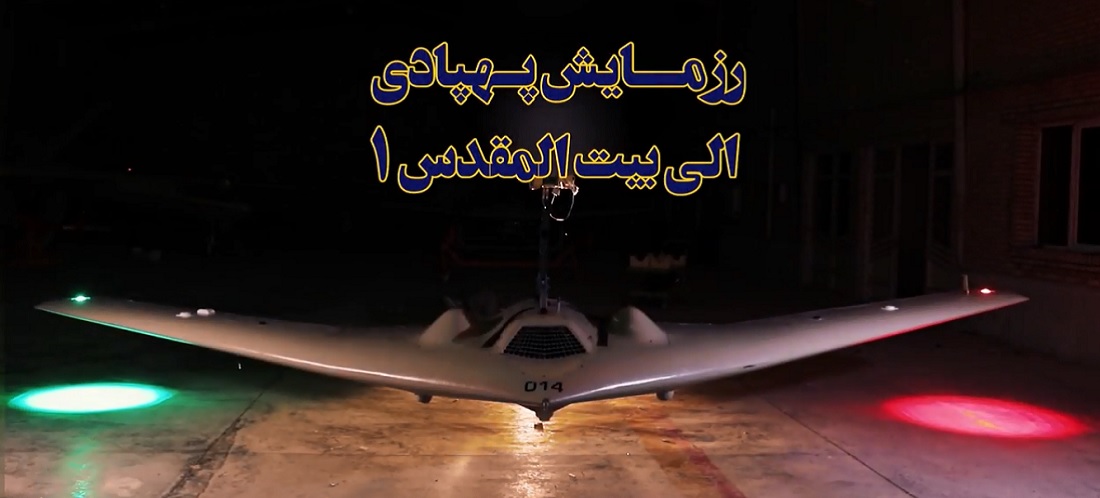
One is to neutralize the relations with Emirs of the region in despite of their public opinion. Second is that the Israel is showing power and sending the message that Tel Aviv is an important player in the security of the region! And finally by presenting in waters near Iran, to show grimace to Iran.
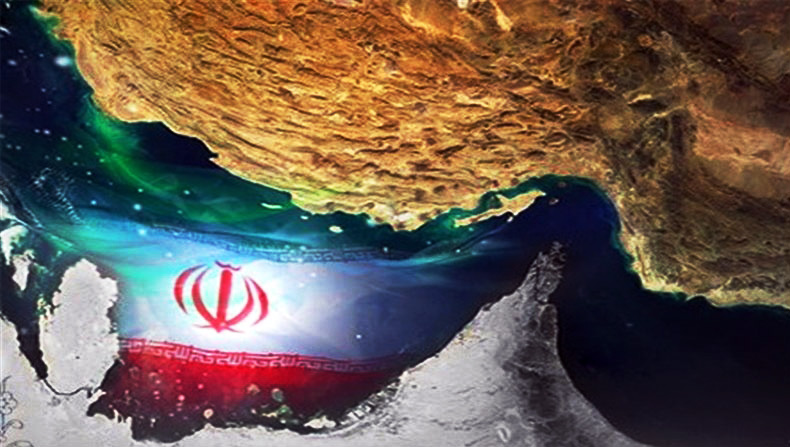
Iran’s stance was described in several forms. One was the statement by Foreign Ministry full of warning using a diplomatic speech, the second was through intelligence and security means that a European country is always involved and in public, a commander gave strict and detailed explanation in case of such presence. The person is the commander of IRGC Navy who counted all the points in an interview with Al Mayadeen network and emphasized that Strait of Hormuz is Iran’s main security loop.
Gen. Tangsiri counted different scenarios of UK and USA and mentioned: UK and USA to legalize their presence in Persian Gulf design different scenarios; by forming an illegal coalition try to pursue their plans; USA and UK should take the responsibility of presence of Zionist Regime in Persian Gulf; we, IRGC Navy, are responsible for the security of the Persian Gulf and Strait of Hormuz and don’t need presence of foreigners; slightest presence of Zionist Regime in Persian Gulf is illegal and can lead to a war in the region.
He was talking as the commander of IRGC Navy and relayed the clear message to everyone via Al Mayadeen network. If Zionist Regime put steps in Persian Gulf, there will be war. The message not only has enough explicitness, considers USA and UK responsible for any tension. He then explains the possible scenarios in case Zionist Regime dares to step inside.
Pay attention to these sentences: “Anytime Iran want to seize any ship, it can, even if it is American or British; we arrested some British and American soldiers before, if Americans and British could protect their ships, they would protect themselves; Iran is the leader of security in Persian Gulf but it depends on our oil export and using the region. We keep Persian Gulf secured until our security is not violated.”
In addition to possibility of a war in case of Zionist Regime presence in the region, USA and UK naval presence could also have severe consequences for them. Detaining tankers and other ships is a possibility any moment, even arresting American and British troops. If before, they were set free, this time it is less likely. Commander of IRGC Navy emphasized that anytime Iran’s oil export is interrupted, the security of Persian Gulf is not provided by us. This is an important sentence needs more analyzing.
Different messages relayed using diplomatic and security means, does not contain more. Warning of a war in case of Zionist Regime presence is a big warning to the countries of the region as well. Saudis and Emiratis, whose securities are weak, will take the biggest blows in case of Zionist Regime presence in Persian Gulf, since any war wipe them completely. We should wait and see if Zionist Regime is still willing to participate in USA and UK coalition and after these warnings, do other sides change their minds?
Tag: Persian Gulf
-
How Did Iran Warn Israel?
-
UAE Positive Message to Iran
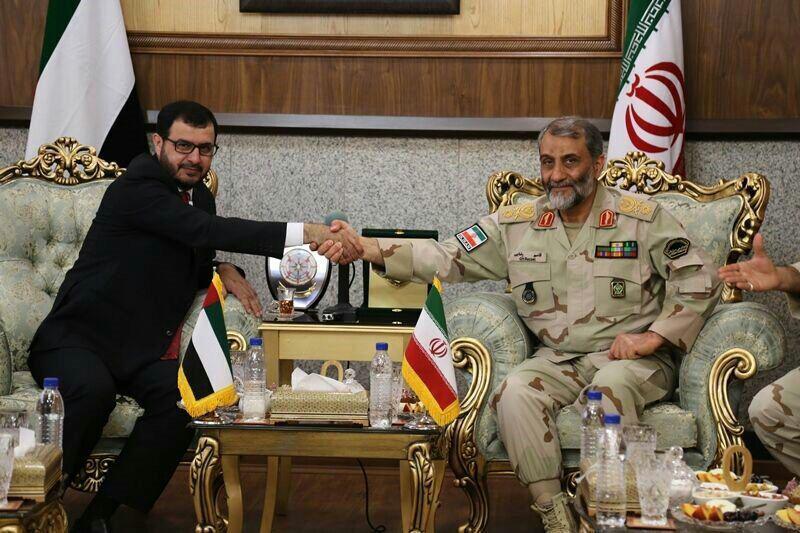
Considering the leave of UAE troops from Yemeni fronts and incipient of negotiation with Iran we see a change in UAE foreign policy direction and we should wait and see if this change results in negotiations about Yemen or not.

-
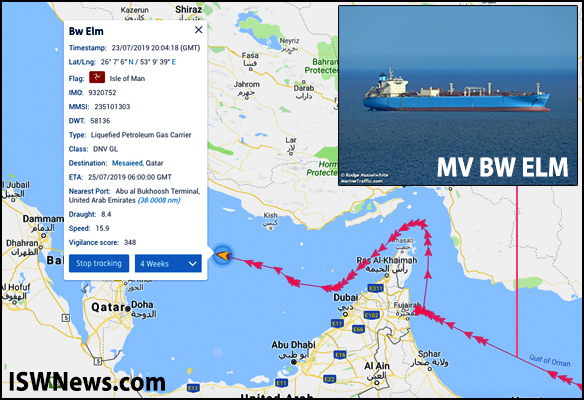
First British Ship Sailed the Strait of Hormuz After Detention of Stena Impero; Iran Is the Security Provider in Persian Gulf Not Western Warships!
The ship sailed through the Strait of Hormuz while UK asked all the British ships to halt sailing through the Strait of Hormuz for now.
It is said that the ship was escorted indirectly by British HMS Montrose.
Some points regarding the news:
– Considering that the Department for Transport in London has raised the security level for British-flagged shipping to Level 3 in Iran’s waters, British ships still take the risk to sail through these waters. Since the world needs the energy of the biggest energy provider of the world, i.e., Persian Gulf. Thus, ships need to sail through the Strait of Hormuz and accept Iran’s requirements, even if USA or UK warn about it.
– Regarding the warships which provide so called escort for trading shops in Persian Gulf. The number of ships sailing through the Strait of Hormuz and Persian Gulf are very high, how many ships can these warships escort? Indeed the capability of these warships to cover the whole area and all ships is very limited and insufficient.
Therefore, if Iran wants to perform an operation against any ship in the Persian Gulf and the Strait of Hormuz, Western and Eastern vessels cannot do much about it.A ready example is detention of Stena Impero. According to UK’s proclaim, a few days before the incident, IRGC naval force wanted to detain British Heritage which was unsuccessful due to HMS Montrose’s interference.
Even if we accept the proclaim, what happened next? Another British tanker was detained by Iran shortly after. In the same day that Stena Impero was detained two more ships were halted but then released by Iran.
It is true for all the ships in Persian Gulf and Iran is the provider of security of maritime in Persian Gulf and not British or other Western countries’ military vessels.
If no more ships have been detained or won’t, it is only since Iran does not have the intention not that it cannot. Detention of Stena Impero was a clear message to western countries specially UK and US and Iran is basically not adventurous like USA and UK.
As Iran sent a message on channel 16 that “If you need help call Iran’s vessels.”, the security of Persian Gulf is to be provided by Iran and no need for Western warships.
 Image of British Heritage which shows HMS Montrose is preventing its detention.
-

New Details on British Tanker Detention + Video
IRGC spokesperson stated today:
– British Tanker “Stena Impero” under escort by British warship ignoring international laws of maritime was entering the Strait of Hormuz. Hormuzgan’s Ports and Maritime Administration requested IRGC first zone command to detain the ship.
– British tanker against maritime rules switched off its navigation system and instead of taking the entrance route, took exit route of the Strait of Hormuz from south.
– After ignoring IRGC numerous warnings and even interference of the British warship by flying 2 helicopters attempting to arrest IRGC marine troops, which were confronted by our troops and the ship was escorted to the harbor for inspection and lawful acts.
– We act seriously in enforcing our sovereignty and law in Persian Gulf and the Strait of Hormuz. -
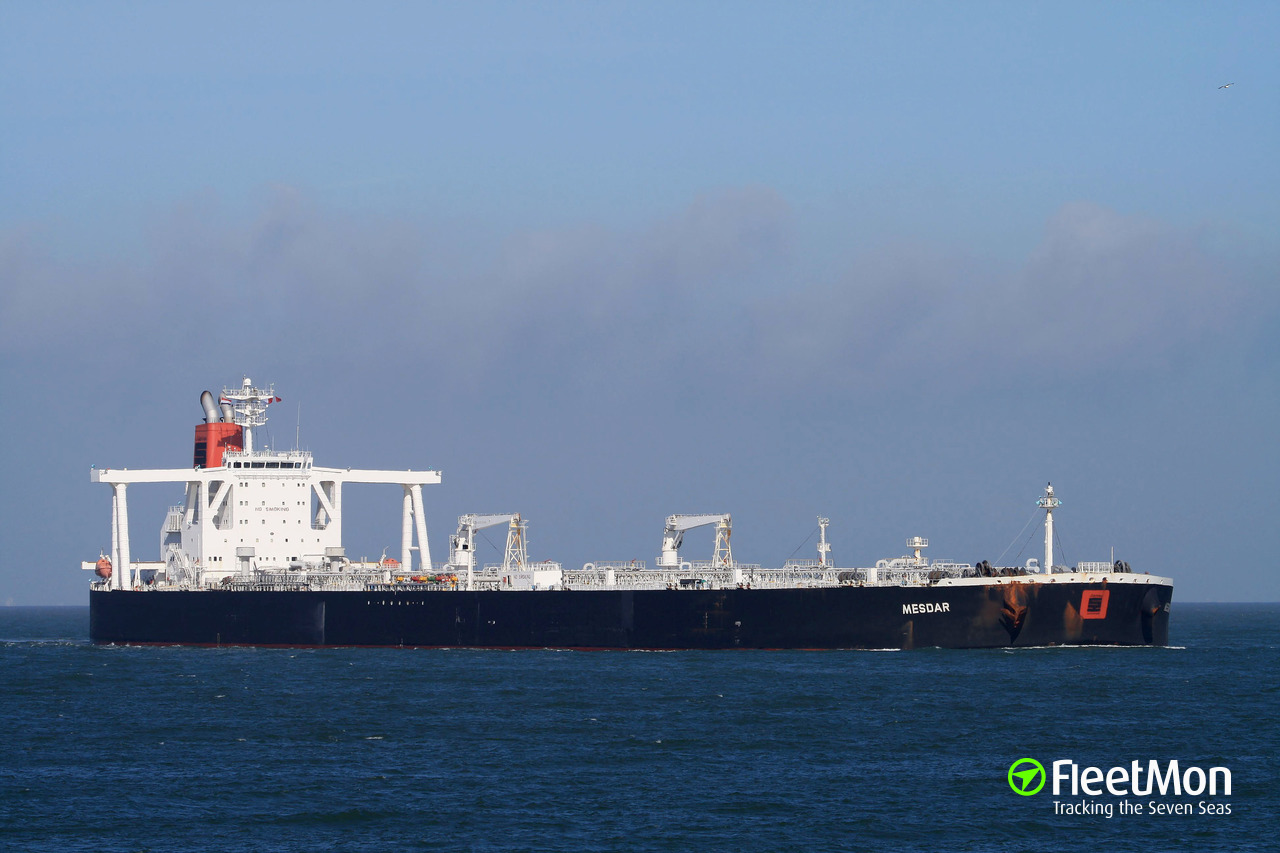
Another British Ship Is Detained in Persian Gulf?! “Mesdar”
Upon confirm of this news, it will be the second British tanker detained by Iran in just a few hours in Persian Gulf.
Some sources speculated that this tanker is not detained and just stopped for answering some questions and explanation of its incident with a Iranian fisher boat… -
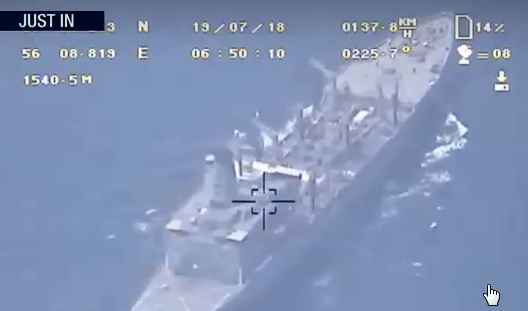
Video: Footages Show US Navy USS Boxer Recorded by Iranian Drone; Trump’s Proclaim in Hitting the Drone is False + IRGC Statement
Following the promise to show the footages recorded by IRGC Aerospace Force’s drones of American USS Boxer, which was proclaimed to be shot down on Thursday over the Strait of Hormuz, IRGC published the footages of the drone’s mission showing the falsehood of the proclaim of American media.
According to IRGC statement, under complete surveillance of Armed Forces, IRGC Aerospace Force yesterday (18 July 2019), in one of the routine missions, recorded USS Boxer and 5 other ships entering Strait of Hormuz for 3 hours under complete watching and during this time, our drone bases did not record any hostile act by US terrorist forces in the aforementioned ship.
Thus, proclaiming to shoot down an Iranian drone over the Strait of Hormuz without any proof and evidence is a lie and was proved Americans’ assertion is false.
Approximate coordinate of USS Boxer in Persian Gulf:


-

Investigating UAE’ Foreign Policy
First part: Africa
Strengthen strategic foreign influence, as Emirates call it, interfere in many Asian and African countries affairs. Its goals being beyond just Emirates’ position, are in the interest of western exploiting countries such as UK.
Controlling Aden Gulf and countries adjacent to it, confronting Islamic Resistance, controlling the situation in African countries and securing Europe’s energy are the main tasks Emirates should do on behalf of Britain.Emirates sees the Resistance Axis (Iran, AnsarAllah, Hezbollah) and Turkey-Qatar Coalition on one hand and Saudi-Bahrain- Egypt-Kuwait axis on the other hand as regional rivals.
– Somalia:
To control Aden Gulf, Emirates infiltrated in self-governed area of Somaliland, north of Somalia and erected a military base in Barbara harbor according to request of the local parliament and it is said by paying high stakes bought the exploitation right of the harbor for 30 years.
Somaliland during Somalia civil war in 1991 claimed independence and no country acknowledged that and is considered as a self-governed land. By donating privileges to countries like UAE, they try to get independence.
– Eritrea and Ethiopia:
To infiltrate in the Horn of Africa and also to help assaulting Yemen, Emirates started building a military coastal base in 2015 in Asab harbor, south of Eritrea at the border with Djibouti and Strait of Bab al Mandeb.
This harbor has benefits for three sides, UAE, Eritrea and Ethiopia. Emirates intensifies its presence in Africa and Yemen providing agriculture and food, Eritrea benefits financially and Ethiopia has access to sea.
– Libya:
Emirates is supporting General Gaddafi and opposed Haftar government (supported by UN and Qatar) widely, after fall of Qaddafi. Libya National Army under command of General Haftar and supported by Emirates could claim vast lands in west, east and center of Libya with several operations.
Emirates not only pays all the costs and provides all the equipment for General Haftar but also deployed 12 fighter jets (6 Mirages and 6 F-16s whose pilots and technicians are mainly European) to eastern airbases of Libya to support the operations.It is said recently that this movement is trying to candidate Saif al-Islam Gaddafi for presidential election.
– Egypt:
After Abdel Fattah el-Sisi took the power from Muslim Brotherhood in Egypt, to confront Turkey-Qatar axis, el-Sisi submitted to Saudi-Emirates axis. Therefore Egypt is a main player in Saudi Coalition and signed numerous contracts with Saudi and UAE.Second Part: Asia
– Yemen:
After accompanying Saudi Coalition in attacking Yemen widely, Emirates follows two policies; to form groups separated from Saudi Coalition and to control southern harbors and islands. Groups adherent to Emirates have formed under the names “Hizam al Amni” and “Quwat an Nukhbah” in southern and eastern parts of Yemen.
UAE’ approach to war in Yemen is first to confront AnsarAllah and then to confront Mansoor Hadi’s forces.Although Emirates apparently supports Mansoor Hadi in confrontation with AnsarAllah but in reality they have deep differences with Muslim Brotherhood and Mansoor Hadi’s idealogy and are continuously looking for positions in parliament or government.
Engagements in different cities such as Taiz, Shabwah and Aden are evidences for it.
After repelling Ali Abdullah Saleh intrigue by AnsarAllah, Emirates is trying to attract his family and movement and trying to have a role beside AnsarAllah and Saudi in Yemen’s political field.
During the last year, Emirates occupied Socotra islands and repelled Mansoor Hadi’s troops out of there. It also is erecting a military base there and buying the lands from Yemeni owners. About Perim island and other islands, Emirates’ approach is same and trying to have cultural and military influence.Conclusions
As mentioned, Emirates expansion based on the resources and wealth out of the Persian Gulf, trying to stabilize its wealth by using other locations such as Aden Gulf countries and north of Africa. Also to confront Iran in western Asia, being Britain’s police of the region.Thus forming coalition with Saudi Arabia and its ambitious crown prince, participating in war against Yemen, investing in Aden Gulf, supporting Sisi and Haftar and etc. are all to serve in UK’s interests and if in future Emirates claim to confront Iran in future, it will not be surprising.
In addition, Emirates interference in civil wars of African countries and Afghanistan and also Pakistan’s financial dependence are among topics to be explained in future articles. -

Emirates; The Pirates’ Shore!
On 2nd December 1971, British under William Luce as head conducted negotiations with administration of Iran and established a country in Persian Gulf which was famous as home of pirates before.
Immigrant Wahhabis who settled in southern shores of Persian Gulf under due to weakness of central administrations of Iran (Zand, Qajar and Pahlavi dynasties) are now called United Arab Emirates which consists of seven Emirates of Abu Dhabi, Dubai, Sharjah, Ras Al Khaimah, Ajman, Fujairah and Umm Al Quwain.Emirates Sheikhs (chiefs) are proclaiming to rule over the three islands Greater and Lesser Tunbs and Abu Musa from the incipient and accusing Iran to be occupier and sometimes have supports from the region or around the globe.
But this proclaim considering Iran’s ruling over the aforementioned islands from old maps and documents, its mention in colonizers contracts with Qajar kings and etc., is not true which was rejected in UN Security Council as well.Authoritarianism and Corruption:
Emirates under support of Britain not only proclaiming of right to rule over the three islands but also supports Iran’s sanctions, assaulting Yemen, condemning Syria and Hezbollah, supporter of Saddam during Iran-Iraq war (Emirates, Saudi Arabia, Kuwait, Bahrain and Qatar donating 50 billion dollars, 1,500 missiles to Saddam and supporting US Navy in confronting Iran), supporter of ISIS financially and military, supporter of Taliban, supporter of General Haftar in Libya’s civil war (sending fighter aircrafts and military equipment), military presence in Afghanistan among others.Confronting Iran:
The reason behind having such a proclaim is not only limited to the rich oil resources of the islands but also to confront Iran’s rule over south of Persian Gulf and Strait of Hormuz, and since the only maritime route for tankers and large vessels is between Abu Musa and Tunbs islands due to depth of water.
To retaliate Iran’s threat over shutting Strait of Hormuz, Emirates started building a 370 km pipeline to transport Arabic countries’ oil from Abu Dhabi to east of Emirates in Fujairah area. This pipeline can transport up to three quarter of Emirates oil export.
They are building the world’s largest underground oil reservoir in Fujairah(eastern shore of Emirates on Gulf of Oman) with capacity of 42 million barrels of oil with help of South Korea.
Emirates also bought or rented oil reservoirs in India and Japan so if Iran’s threat takes place nothing happens to western masters’ oil import.These plans need huge amounts of time and money which are happening under western countries’ long negotiations with Iran and imposing sanction on it.
Thus, everytime Emirates repeats the proclaim over the islands, western countries’ from Obama’s to Trump’s administration to France’s Foreign Ministry and Arab rulers become excited and support the nonsense proclaims… -
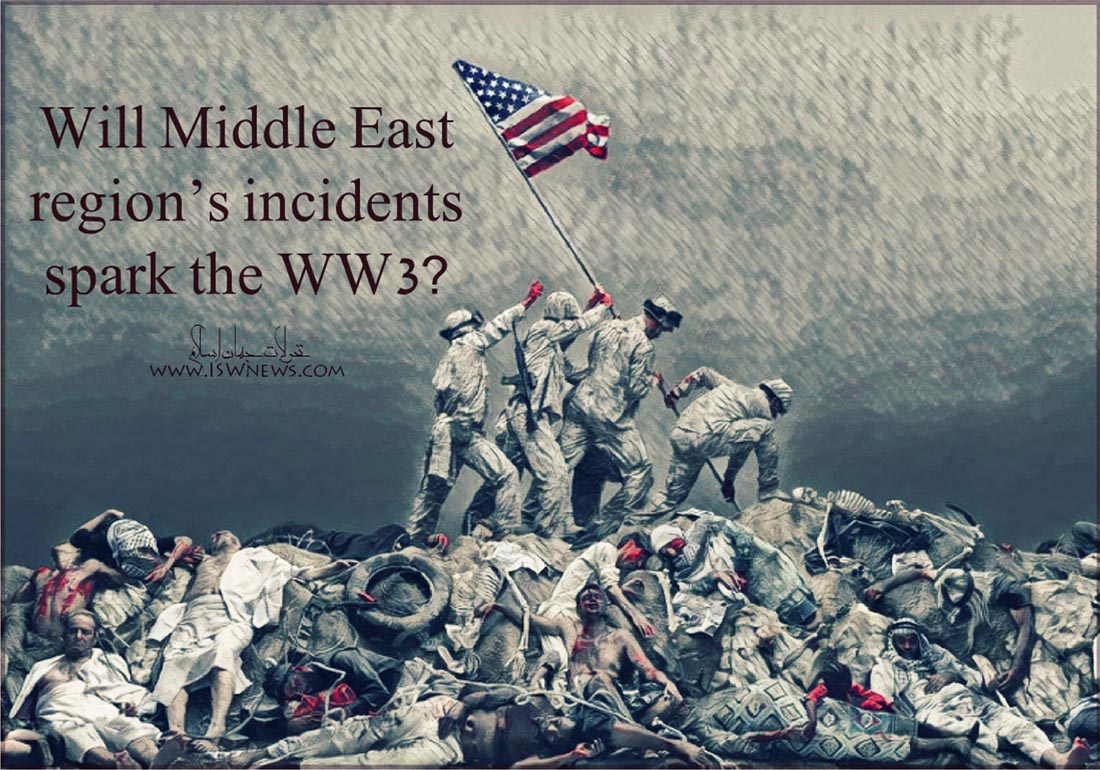
Will Middle East Region’s Incidents Spark The Third World War? Part One
In recent years, countries with power and authority (specially in west of Asia) to achieve their goals form economic, political and recently military alliances.
Shanghai Cooperation Organization, BRICS, NATO (to confront USSR and then Russia), Saudi-led Coalition (to confront Islamic Resistance, Moghawemah) among others are some examples and now in west of Asia and in post-Takfirism (extremism), western countries to implement a new plan.
A plan that Prof. Aleksandr Dugin (Russian strategist) believes Sergei Skripal terror and chemical attack to Douma are introduction to third world war and Abdul Bari Al- Atwan (famous Palestinian analyst) says that according to recent Trump’s assertions, assault of the West will span beyond attacking T4(Tiyas) airbase and even Russian positions are threatened by USA and its allies!
To enlighten different aspects of the recent incidents, answers to some questions out of many questions are examined:
1. What will happen if war starts?
In one plan, USA and the Zionist regime and other allies attack some of the bases in Syria (similar to the missile attack to Shu`ayrat airbase) that Syria answers in three ways:
Foreign bases in occupied Palestine will be targeted or US bases inside Syria such as al-Tanf and Ayn Eissa and etc will be targeted, or even no military retaliation and only diplomatic solutions.
If in these attacks Moghawemah(Resistance) forces are attacked too, probably a response similar to first or second will be used and if USA responses again, Moghawemah responses back and so on until one side stops, otherwise this results in a wide war spanning the whole world similar to the final years of war between Iran-Iraq which resulted in oil export difficulties from Strait of Hormuz in Persian Gulf. In this case, not only Strait of Hormuz but also Bab al-Mandab Strait and Suez Canal are threatened.
2. Does Moghawemah(Resistance) have enough strength to answer USA and its allies or even the recent attack to T4 airbase?
Considering the current situation (economic problems in Iran, Iraq being busy with elections and still dealing with ISIS, Syria engaged in a war and dealing with state decomposition, AnsarAllah under air raids and siege and Russia’s complicated and unknown stands) the answer is very difficult, however there is preparation for engagement at all levels. In addition, Iran’s Sword of Damocles, i.e. Hezbollah, is on the throat of Israel.
3. In the case of a war, what will be the reaction of Saudi Alliance?
There are two possibilities:
First is that they participate in the war, in this case the harshest reaction of Moghawemah(Resistance) will be for Riyadh and Saudi bases after occupied Palestine. Considering troubles of Saudi including domestic protests (suppressions in al Awamiyah and Qatif), war with Yemen and cut relations with Qatar, their engagement with a bigger war will result in their removal from the region.
In second possibility, they do not engage in war and only pay the West for the war. In this context, we refer to crown prince of Saudi who said there is a high chance of engagement with Iran in the next ten to fifteen years and indeed current situation is surprising for him. He is in a trip to Europe and negotiation with powers such as France. However Macron, president of France has always insisted on solving the problem by negotiation and demanded to limit Iran’s missile power and exiting it from the region.
4. Which areas will be involved?
The most immediate points to be attacked are US bases in north of Syria, occupied Palestine and other US bases in the region from Bahrain to Iraq are at higher level of reaction. Military ships and tankers also will not survive.
5. What will be the result of war?
According to studies of American Thinktanks during the time of George Bush (after Afghanistan war and during the military drill of millennium challenge) the cost of fighting with Iran is very high and it causes a high spike in oil price and up to 20 thousand of casualties for US and allies.
On Iran’s side there is no study but indeed the casualties will be severe too.
But it is noteworthy that US tried to attack Iran from 1979 revolution several times and they know that the situation has changed from early years after revolution and Iran-Iraq war time and even after Sadam’s fall. So the casualties should be more than 20 thousand or the oil price should go even higher and also it can result in Saudi and Zionist regimes’ extinction.
This is not a slogan and by studying the recent situation of Saudi Arabia (with reasons mentioned in third question) and Zionist regime (due to Moghawemah preparation in Palestine and the narrow width of this region up to Mediterranean Sea), they are very likely to extinct.
The confrontation between Moghawemah and the West is unavoidable and considering Russia’s effort to reduce the stress, passive assertions and silence of political and military officials, it is not very impossible that a severe war starts in a few days.
Of course Trump’s threats and limited attacks and also sending messages via Russians and other pressure levers are to make Iran withdraw from victory and its position in the region specially in Syria, since the next step of Moghawemah is to end Israel in occupied Palestine and they have not seen themselves closer to extension in recent years than now!
In the end, we can say that there is very high chance that US and Israel attack limitedly to Syria’s or Moghawemat’s positions. Beside military attacks, they will put political pressure to restart negotiations and these pressures might end up in “withdraw-missile negotiation-destiny similar to Libya” or it might end up in a severe war, which is called third world war(WW3) by Aleksandr Dugin or hot war by Abdul Bari Al- Atwan and the winner is the one who persists more.
Read: Will Middle East Region’s Incidents Spark The Third World War? Part Two
-
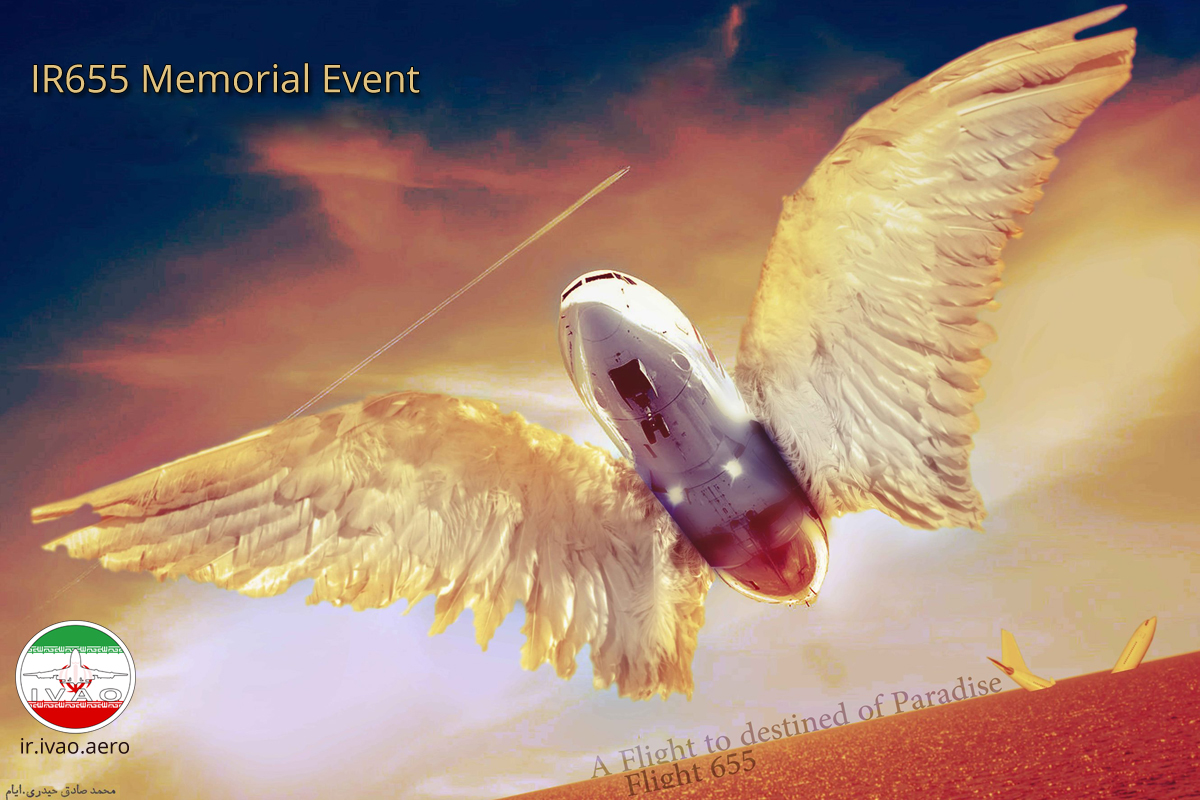
28 years ago today – Iran Air Flight 655 massacre, US navy murder 290 Iranians including women and children
On July 3, 1988, Iran Air Flight 655 (IR655) was shot down by USS Vincennes which led to the loss of life of 290 innocent civilian from six nations including 66 children. There were 38 non-Iranians aboard.
Flight 655, as a commercial flight, operated by Iran Air that flew on a Tehran-Bandar Abbas-Dubai route. While flying in Iranian airspace over Iran’s territorial waters in the Persian Gulf on its usual flight path, it was destroyed by the guided missile cruiser USS Vincennes.
This attack ranks tenth among the deadliest disasters in aviation history, the incident retains the highest death toll of any aviation incident in the Persian Gulf and the highest death toll of any incident involving an Airbus aircraft anywhere in the world.


According to the United States Government, the crew mistakenly identified the Iranian Airbus A300 as an attacking F-14 Tomcat fighter. Contributing to the error was the fact that the aircraft did not respond to several inquiries to change course and did not identify itself clearly as civilian. The Iranian government maintains that Vincennes neglectfully shot down the civilian aircraft. The event produced a great deal of dispute and criticism of the United States. Several analysts have blamed U.S. military commanders and the captain of Vincennes for irresponsible and aggressive behavior in a tense and dangerous environment. The airliner was transmitting an identification friend or foe code for a civilian aircraft, but Captain William C. Rogers III in an interview insisted that he believed the code alone did not mean the aircraft was non-hostile. Captain Rogers described the attack as a self-defense measure to save his ship and the lives of the crew.
While issuing notes of regret over the loss of human life, the U.S. government has, thus far, neither admitted any wrongdoing or responsibility in this disaster, nor apologized, but continues to blame Iranian hostile actions for the event. The crew of the Vincennes were all awarded combat-action.
More than two decades later, the attack continues to pervade Iranian social psychology and fuel the strategic thinking of its military leadership. Many Iranians remember the event with a bitter sense of vulnerability. A foreign government, the United States, which was not in war with them, used brutal and lethal force against Iranian civilians.
For those with a longer memory span, it’s hard to dismiss some of these concerns especially when you recall that the irresponsible behavior of the USS Vincennes commanding officer earned him the Legion of Merits, “a military decoration of the United States armed forces that is awarded for exceptionally meritorious conduct in the performance of outstanding services and achievements.” For many Iranians, this is utterly incomprehensible.